Unknown's avatar

For those of us over 70 (71 for me today)… What to let go of…

For those of us over 70 (71 for me today, 8/22)… What to let go of…

How to spend my birthday? What to blog? How to live the next year(s)? These are my considerations this week.
In my search, I found this video (below) and it became the inspiration for today’s entry and this year’s birthday post.

I am not a fan of long-winded, repetitive videos (and this film is both); and, the title is weird (not appropriate). But, the advice is excellent, so I summarized the key points, below.

The narrator explains each “truth” and gives examples, some seeming case studies, and many platitudes.
You can watch/listen after reading the list (or before).
You may find it kind of comforting.
You can also fast-forward (love that!).

I decided to “grade” myself (how am I doing so far, since I am now an entire year past 70?), and my scores are below. I used a 10-point scale for each recommendation, with “1” being “I haven’t done it at all or even started,” and “10” being “I am acing this one.”
So, possible best score is 80.
I earned a 53, so far. Check in next year!

“8 Buddhist Truths to Let Go of After 70 – For a Lighter, Happier Life”

My Scores TOTAL: 53
Let go of…

  1. …the belief that there is nothing left to learn. 10 (still learning, frequently)
  2. …toxic relationships (without guilt). 9 (took some big leaps this past year)
  3. …clutter (internal and material). 6 (good materially; need help internally)
  4. …the fear of aging. 8 (fear of disability more than aging, but…)
  5. …expecting others to make you happy. 9 (doing very well, here)
  6. …comparing yourself to the young. 5 (mostly, to my younger self)
  7. …regret (forgiveness is key; it lets us remember without the poison/recriminations).
    3 (still harping on regrets and not big on forgiveness)
  8. …the lie that it’s already “too late.” 3 (I have given up on too many things, perhaps)

For me, part 8 of the video was the best. It starts at minute 31.14.
Worth a listen, if only to that 6+ minutes. Many gems in that section.

Basically, if you’re still lucky enough to be alive AND still be capable of rational thought, have most of your faculties/abilities and some ease of circumstances (sufficient food, shelter, companions, safety/peace, value to your life, bearable pain/suffering), stop complaining and enjoy the time you have left.

Be of service. Be of benefit. Do something useful regularly.
Follow the advice in this video: it’s good advice, even if you’re not a Buddhist.

Use this link or watch it below: https://www.youtube.com/watch?v=OwAJBFzdq_Q&ab_channel=QuietWisdom

I hope you find this valuable. Read, comment, share.
Try some of it. Let me know how it goes.

Happy birthday to me. May all beings benefit.

Unknown's avatar

#Meditation is Good for Our (#Aging) #Brains

#Meditation is Good for Our (#Aging) #Brains

In case you were wondering, and I was, why so many of my Buddhist friends and fellow meditators are mentally so healthy and over the ages of 65, 70, 75, I decided to “look it up” and see if my suspicions were correct. They are.

If we’re lucky enough not to have anything else kill us or ruin our brains, meditation DOES have a measurably profound, positive impact on our mental and physical health, particularly on maintaining cognitive functionality into our senior years.

And, it’s not just those in my experience whose brains are doing great: meditators everywhere (if we could study us all) most likely have brains that are younger, more pliable, and less prone to diseases of aging, even as the calendars march us onward. This is a club you want to join!

No need to ditch your current religion, spirituality, atheism or anything: just learn to meditate and do it regularly!

“A [2016] study suggested that taking time from your busy schedule to meditate can actually help preserve your mind and slow Alzheimer’s disease and related dementias. Learn more about how meditation can slow Alzheimer’s.” https://www.jeffersonhealth.org/your-health/living-well/yes-meditating-can-reverse-cognitive-decline-heres-how#:~:text=Yes%2C%20Meditating%20Can%20Reverse%20Cognitive,Here’s%20How%20%7C%20Jefferson%20Health

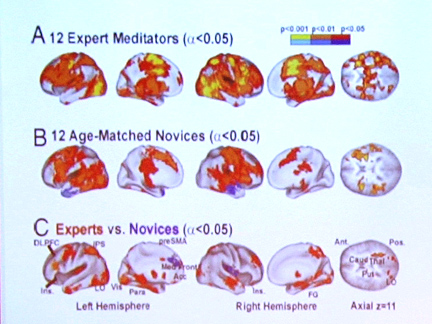
Meditation has been shown to slow the typical aging effects on our brains very specifically. This longitudinal individual study, quoted and linked, below, makes me smile, since I know this Rinpoche (an honorific Tibetan term meaning “precious teacher”).
“Using MRI and a machine learning framework which estimates ‘brain-age’ from brain imaging, [neuroscientist, Richard] Davidson and lead scientist, Nagesh Adluru, studied the mind of Tibetan Buddhist meditation master, [His Eminence] Yongey Mingyur Rinpoche, over the course of 18 years….
Rinpoche was first scanned in 2002 at the age of 27. At the time, he had already completed nine years of meditation retreats. He was scanned again at the respective ages of 30, 32 and 41 years old.
“The last time he was scanned, he had just returned from a four-and-a-half-year wandering retreat, and his brain was calculated to be 33-years-old, eight years younger than his biological age.
“The researchers compared Rinpoche’s aging brain to a control group and his appeared to age much slower than the general focus group.”
https://www.cnn.com/2020/03/20/health/meditation-slows-brain-age-trnd-wellness/index.html#:~:text=A%20recently%20pubished%2018%2Dyear,compared%20to%20a%20control%20group

So, how long does it take and how much meditation do we need to do to gain positive effects? Read on and check out the longer articles in each link.

How long you need to meditate to see results for your body and brain
“…[M]editation can affect the brain and body in myriad ways, from reducing the risk for chronic diseases to lowering the risk for anxiety and depression….
“Research shows meditation reduces stress, anxiety, and depression symptoms. A 2016 study found that longer-term meditation practice was associated with structural changes of the ‘white matter’ in the brain, which is responsible for ‘relaying sensory information’ and can explain why meditation helps people stay in the present moment and may help combat age-related cognitive decline. 
“A more dated study found an increase in gray matter in the brain’s hippocampus, the areas associated with memory, emotional regulation, self-processing, and perspective taking, with regular meditation. 
“‘The practice also enhances attention, and increases the ability to cultivate awareness around emotions so they don’t bubble up later,’ Gonzalez says….
“Studies point to 8-weeks of meditation practice to see results. One study found improvements to memory, emotional regulation, and mood with 8 weeks of 13 minutes of meditation a day. But there isn’t a magic number. 
“Gonzalez, who has trained over numerous leaders in the practice, says: ‘as little as 10 minutes can make a difference. What matters most is dedicating yourself to the technique (that means not checking work notifications in the middle of a practice).'”

How long you need to meditate to see results for your body and brain?
It can take as little as 10 minutes a day to rewire the brain.
Twenty minutes or more: even better!

Neurologists, neuroscientists, gerontologists, psychiatrists and others are VERY interested in these results! More, below.

“‘Mental training that targets stress and attention regulation has the potential to improve both cognitive and emotional aspects of ageing,’ researcher [Dr. Chetelat] says….
“Dr. Chetelat said: ‘Strategies to prevent dementia are urgently needed. Mental training that targets stress and attention regulation has the potential to improve both cognitive and emotional aspects of ageing.
“’Previous studies have shown mindfulness meditation improves cognition, specifically in older adults across multiple domains including attention, executive functions and self-awareness or meta-cognition.
“’Mindfulness meditation can also reduce stress, anxiety and depression – including in older adults.’…
”Dr. Chetelat said: ‘Meditation appears to be a promising approach to preserve brain structure and function as well as cognition and thus to reduce dementia risk by directly targeting psycho-affective factors.’”
“The study is in the journal JAMA Neurology.”
https://www.independent.co.uk/news/health/meditation-dementia-causes-mindfulness-study-b2200022.html

You can learn basic meditation from an app, a book, or a friend.
Advanced or more complicated techniques require a teacher or a class/workshop, but these are not necessary to acquire benefits listed above.

Really. Get to it, NOW! #MEDITATEDAILY!

Unknown's avatar

Going Gluten-Free, Dairy-Free and Healthier: Never a Better Time than Now!

Going Gluten-Free, Dairy-Free and Healthier: Never a Better Time than Now!

disclaimer: I NEITHER WORK FOR, BENEFIT FROM, NOR EARN MONEY FROM PROMOTING ANY PRODUCTS AND THIS BLOG DOES NOT ACCEPT ADS.

Got migraines? Eczema? Suffer from allergies that cause rhinitis (runny nose), itchy eyes and nose, chronic coughs or sinus infections? What about weird rashes, bloating, weight gain, high glucose levels (called “pre-diabetic” by medical peeps), high cholesterol (the “bad” kind), trouble sleeping, sleep apnea and/or drowsiness?

If you eat a “usual American diet,” have you tried radically changing what you eat and drink to mitigate or alleviate these symptoms or conditions? If not, please read on: I think you’ll become convinced that dietary changes are worth trying.

*********

I had had migraines from about age 15 and terrible respiratory and skin-reaction allergies all my life into young adulthood. At 22, I had become disillusioned with public education classroom teaching and schools (after being in my third one by then) and sought a change in my teaching situations (large, public schools, upper elementary and middle school students, up to 125 students/day).

I took a job teaching 14 kindergarten-first graders in a parent cooperative elementary school in Tiverton, Rhode Island (no longer exists, but was called The Learning Tree School). The school had a total of 45 students in three groups; I headed the Youngers. I loved it. The school room had a piano! The building had been a boat house for a defunct Catholic convent, and was right on a beach on Long Island Sound! Fabulous.

I also went from living in a traditional apartment (alone or with one housemate) to living in my first of many collective households with three or more adults and one or more children. This one was made of a newly developed group of people affiliated with Learning Tree, and was in Westport Point, Massachusetts (one town over, actually).

The somewhat older adults (late twenties and early thirties) in it were mostly vegetarians (new to me), mildly macrobiotic (as opposed to some later places’ housemates, whom I labeled “macroneurotic” or “macropsychotic,” depending on how zealous they were). I quickly learned that these people were much healthier eaters than I had ever encountered and knew about many things I had never known existed.

This was 1977 and I was 23.

I had grown up in the middle-class parts of predominantly Jewish sections of the suburbs of St. Louis, Missouri, with a Louisville, Kentucky-born mother. I had had four known (mostly Yiddish-speaking) and four deceased great-grandparents on both sides who had lived in Eastern Europe. They had all emigrated to the USA in the late 1800s to escape being killed, robbed or raped by the Cossacks in pogroms.

The only “exotic” food I had eaten before 1977 had been what was made or bought for Jewish holidays and from Jewish delis (my father’s mother’s family had owned a deli in St. Louis). Otherwise, I ate Miracle Whip for mayonnaise, rye or white bread, bagels, a lot of meat and dairy, canned soups, canned fruit and some fresh, lots of white sugar and refined flour products, and only a few vegetables. My experiences of “foreign” foods were via Chinese restaurants and Italian-ish sources. I cooked, but the way I cooked was so limited.

My ignorance of other cuisines and any kind of healthy eating was deep.

I didn’t know how to go about identifying or using most herbs, spices or natural flavoring choices. I knew Morton’s table salt, ground black pepper, garlic salt, paprika, Lawry’s seasoning mix and Italian seasoning mix.

I had never heard of kale, collards or chard, never seen or eaten an artichoke (except on The Three Stooges!), or most cooked or raw green, yellow or orange vegetables. Sweet peppers only came in green. I couldn’t have identified a Brussels sprout if you paid me. I had never heard of whole grains or whole grain products. I had never used honey or maple syrup (except for special occasions). I couldn’t have begun to create a vegetarian meal, knew next-to-nothing about nutrition and couldn’t name what foods went into which food groups if it wasn’t pictured on the chart. I had never gardened, didn’t know food had “seasons,” and couldn’t name the regions ANY of the foods originated.

I also had never heard there was more than one kind of grain (besides white, short-grain rice), or tasted millet, bulgur, quinoa, spelt, or so many kinds of brown rice. I certainly didn’t know how to shop for or prepare any of these items.

I didn’t know a thing about “health foods”: whole grains vs. processed grains; food additives, preservatives or coloring; cooking rice from a bag or jar (vs. Minute rice); alternatives to white sugar; soy-based foods, like tofu, tempeh, soy milk; other dried beans, to be cooked for soups, salads, main dishes. I was unable to create a menu for a “balanced” meal with healthy foods. I could only follow the most simple and shortest recipes and still don’t know what some cooking terms mean, to this day (2023).

Before 1977, I had never “bought in bulk,” gone to a health-food store (in my defense, there were hardly any back then), or intentionally eschewed meat, wheat or dairy.

The next 21 years (through 1998) were quite a journey, with housemates in each location (Rhode Island, Massachusetts, New Hampshire, Maine) and many friends who taught me so much about improving health through diet, planning and cooking balanced meals, tailoring meals to honor EVERY need and preference, and living better through healthier eating.

I am so grateful to all of them (too many to list here).

I am sharing in this post, below, some of what I’ve learned to improve my health from 1977-1998 in New England (I lived in every state!), and in the last 25 years from years living in southwestern New Mexico, the San Francisco Bay area of California and after returning to St. Louis, Missouri. I have learned through the internet, experimentation, family and friends.

Perhaps reading this will help you get on or keep going on your own path of healthier eating.

*********

First, here are my chosen changes and the most important outcomes/results:

  1. In 1977: by quitting eating most cow’s milk dairy products (still eat butter, a little because margarine was, until very recently, so GROSS, and the only alternative besides olive oil, which I don’t like plain) , I stopped having migraines and most rashes.
  2. Starting in 1977: by removing most foods with additives, colorings, and preservatives and eating mostly organic options for all foods as soon as I could (not all organic produce items are/were available), I have reduced most digestive health concerns to almost zero (indigestion, bloating, gas, irritable bowel, diarrhea).
  3. Starting March, 2022: By eliminating wheat (eating mostly gluten-free products, since that is the easiest way to avoid wheat), I brought my A1C numbers down to 4.7% from over 6%, which is below “pre-diabetic” (“A normal A1C level is below 5.7%, a level of 5.7% to 6.4% indicates prediabetes, and a level of 6.5% or more indicates diabetes. Within the 5.7% to 6.4% prediabetes range, the higher your A1C, the greater your risk is for developing type 2 diabetes”), lowered my cholesterol, reduced my respiratory and rash-based allergic symptoms (no more eczema!), sleep better and feel better.
  4. Starting April, 1986: By reducing or eliminating oil and fat from my diet almost completely for months or years at a time, and using acupuncture, prescribed Chinese herbs, exercise, meditation and hot castor oil packs, I was able to postpone gall bladder surgery for 36 years.

**********

How can a person make these changes? When you’re ready, be careful!
Some warnings:

—It’s important to check with your doctor and pharmacist before making radical changes in your diet because you need to FIRST make sure those change would be compatible with whatever else is going on for you and whatever medications or supplements you’re already taking.

—For example, if you have thyroid problems, you aren’t supposed to eat a lot of soy products (soy interferes with the medication for hypothyroidism).

—If you take blood thinners or stains, there are some foods to avoid all together because foods high in vitamin K (a lot of green veggies!) can counteract the blood-thinning effects: https://www.guthrie.org/blog/dont-eat-these-foods-if-you-take-blood-thinners-or-statins .

—Gluten-free is not for everyone, especially if you do it very strictly. “If you cut all gluten out of your diet, there’s a risk that you could miss out on nutritious whole grains, fiber and micronutrients. Getting enough whole grains in your diet is especially important if you’re at risk for heart disease or diabetes.” https://www.goodforyouglutenfree.com/dangers-associated-with-gluten-free-diet/

—Seriously: don’t do these kinds of changes on your own if you have “conditions” that need tending or if you are new to understanding alternatives and nutrition. Registered dieticians, nutritional consultants, chefs, food co-op and health food stores’ staff, and many home cooks could help you: ASK!

—Biggest problems I have found are: many GF products add sugar, salt and/or fat to compensate for the differences or to better fool our palates/imitate the originals. Many DF products also add fat, salt and sugar for the same reasons. READ LABLES! It is far too easy to gain weight while eating less wheat or dairy, believe me!

*********

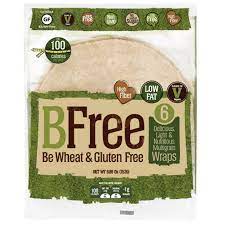
Here are some brands, types of food, and choices my mom and I have explored and some we even like. Most stores (even Walmart, Costco, Aldi’s and regular grocery stores) now have many of these options. You can also buy most online.

Check prices, go for coupons, wait for specials: this stuff is EXPENSIVE!

From the above, we prefer:
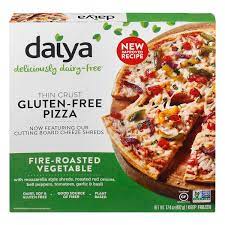
Daiya GF & DF fire-roasted veggie pizza,
Canyon Bakehouse whole grain bread,
Kite Hill and Mikonos “cream cheeses,”
Schar baguettes,
Oatly frozen fudge bars,
SO Delicious frozen mocha nut bars and vanilla “yoghurt,”
Kodiak baking mixes,
any brand of almond milk chocolate puddings (hard to find, though),
Blue Diamond crackers, especially the almond nut thins, and
Snyder’s GF (and fat free) pretzels.
*********

RECIPE BREAK:

I created a coating for fish or chicken as well as veggies that can be used to imitate tempura (without deep frying) and “parmesan-encrusted” foods (if you can have parmesan, or pecorino/romano if non-dairy is preferred) to make entrees and side dishes that my mom LOVES!

HOW: I use tapioca, oat, almond or rice flour for the first coating.
Then, dredge each piece in a mixture of beaten eggs with lemon juice and water.
Then mix several flours together with some corn meal and baking powder with spices you like (my mom likes granulated and/or roasted granulated garlic, onion powder, black pepper, dried parsley flakes, smoked or regular red paprika, Italian mixed herbs [back to my roots!], possibly others), plus grated cheese, for the final coating.
Spray glass baking dishes or whatever you have with olive or coconut oil (but DO NOT USE flat, unrimmed cookie sheets! Coated foods can ooze and drip).
Bake at 375F for about 20 – 30 minutes.
Freezes well if you let it all drain and cool. Then, wrap each piece in parchment or waxed paper and put into a LABELED freezer bag.
Reheat defrosted or refrigerated pieces by frying or in a broiler oven (turning halfway through in both cases).
Enjoy!

*******
Other Important Information

For going dairy-free or limiting dairy products in your diet:
The USA dairy lobby is well-funded and powerful. They prevailed to get all feta cheese made from cows’ milk to be the ONLY cheese sold in the USA allowed to be labeled “feta,” while the original Greek feta (made from sheep’s and/or goats’ milk) has to be labeled “sheep feta” or “goat feta.” Be warned!
That lobby has also tried (and failed, so far) to get all liquids called “milk” to be required to have animals’ milk in them. Jerks.
If you are lactose intolerant, you probably can’t eat ANY animals’ milk without taking supplements.
But, if you just want to get rid of dairy products, focus only on scouting out and eliminating cows’ at first (see list, below), then add in goats’ or sheep’s products, one at a time, and see how you do. I can eat/drink those just fine. I can’t even tell the difference between grated parmesan and percorino/romano blends, anyway. Goat brie, herbed goat, and other cheeses are AMAZING!


Unless you’re specifically allergic to the source(s), you’ll do fine with all plant-based “dairy” products and most have good textures and are quite tasty, these days. Some even melt!

Cow’s milk dairy-laced ingredients to avoid
(READ LABLES!)
[from: https://www.verywellfamily.com/hidden-dairy-ingredients-for-babies-with-milk-allergies-284300]

  • Artificial butter flavor (unless labeled dairy-free, nondairy, etc.)
  • Butter
  • Butterfat
  • Buttermilk
  • Butteroil
  • Casein and Caseinates 
  • Cheese (unless labeled dairy-free, nondairy, plant-based, etc.)
  • Cottage cheese
  • Cream
  • Curds
  • Custard (unless labeled dairy-free, nondairy, etc.)
  • Ghee
  • Half and half
  • Hydrolysates (casein, milk proteins, whey, whey proteins)
  • Kefir
  • Koumis
  • Lactalbumin
  • Lactalbumin phosphate
  • Lactoglobulin
  • Lactose
  • Lactulose
  • Milk (condensed, derivative, dry, evaporated, powder, low fat, malted, nonfat, protein, skim, solids, whole)
  • Milkfat
  • Paneer
  • Pudding (unless labeled dairy-free, nondairy, etc.)
  • Rennet casein
  • Sherbet (but SORBET is all right)
  • Sour cream
  • Sour cream solids
  • Whey (all forms)
  • Yogurt (unless labeled dairy-free, nondairy, etc.)

*********

It’s easier now than it’s ever been to find and use great ingredients and even packaged foods that are wheat-and dairy-free, organic, low sugar, low fat, and additive-free. You’re LUCKY!

If you find any of this interesting or helpful, please share, and please comment, here: http://www.sallyember.com/blog