Unknown's avatar

#Meditation is Good for Our (#Aging) #Brains

#Meditation is Good for Our (#Aging) #Brains

In case you were wondering, and I was, why so many of my Buddhist friends and fellow meditators are mentally so healthy and over the ages of 65, 70, 75, I decided to “look it up” and see if my suspicions were correct. They are.

If we’re lucky enough not to have anything else kill us or ruin our brains, meditation DOES have a measurably profound, positive impact on our mental and physical health, particularly on maintaining cognitive functionality into our senior years.
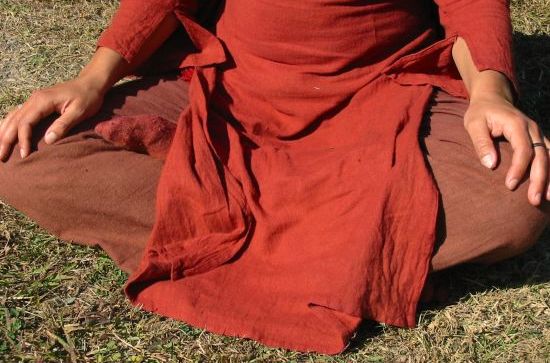
And, it’s not just those in my experience whose brains are doing great: meditators everywhere (if we could study us all) most likely have brains that are younger, more pliable, and less prone to diseases of aging, even as the calendars march us onward. This is a club you want to join!

No need to ditch your current religion, spirituality, atheism or anything: just learn to meditate and do it regularly!
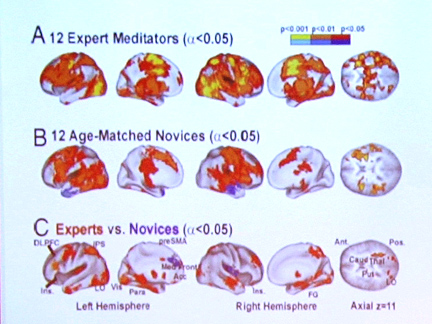
“A [2016] study suggested that taking time from your busy schedule to meditate can actually help preserve your mind and slow Alzheimer’s disease and related dementias. Learn more about how meditation can slow Alzheimer’s.” https://www.jeffersonhealth.org/your-health/living-well/yes-meditating-can-reverse-cognitive-decline-heres-how#:~:text=Yes%2C%20Meditating%20Can%20Reverse%20Cognitive,Here’s%20How%20%7C%20Jefferson%20Health

Meditation has been shown to slow the typical aging effects on our brains very specifically. This longitudinal individual study, quoted and linked, below, makes me smile, since I know this Rinpoche (an honorific Tibetan term meaning “precious teacher”).
“Using MRI and a machine learning framework which estimates ‘brain-age’ from brain imaging, [neuroscientist, Richard] Davidson and lead scientist, Nagesh Adluru, studied the mind of Tibetan Buddhist meditation master, [His Eminence] Yongey Mingyur Rinpoche, over the course of 18 years….
Rinpoche was first scanned in 2002 at the age of 27. At the time, he had already completed nine years of meditation retreats. He was scanned again at the respective ages of 30, 32 and 41 years old.
“The last time he was scanned, he had just returned from a four-and-a-half-year wandering retreat, and his brain was calculated to be 33-years-old, eight years younger than his biological age.
“The researchers compared Rinpoche’s aging brain to a control group and his appeared to age much slower than the general focus group.”
https://www.cnn.com/2020/03/20/health/meditation-slows-brain-age-trnd-wellness/index.html#:~:text=A%20recently%20pubished%2018%2Dyear,compared%20to%20a%20control%20group

So, how long does it take and how much meditation do we need to do to gain positive effects? Read on and check out the longer articles in each link.

How long you need to meditate to see results for your body and brain
“…[M]editation can affect the brain and body in myriad ways, from reducing the risk for chronic diseases to lowering the risk for anxiety and depression….
“Research shows meditation reduces stress, anxiety, and depression symptoms. A 2016 study found that longer-term meditation practice was associated with structural changes of the ‘white matter’ in the brain, which is responsible for ‘relaying sensory information’ and can explain why meditation helps people stay in the present moment and may help combat age-related cognitive decline. 
“A more dated study found an increase in gray matter in the brain’s hippocampus, the areas associated with memory, emotional regulation, self-processing, and perspective taking, with regular meditation. 
“‘The practice also enhances attention, and increases the ability to cultivate awareness around emotions so they don’t bubble up later,’ Gonzalez says….
“Studies point to 8-weeks of meditation practice to see results. One study found improvements to memory, emotional regulation, and mood with 8 weeks of 13 minutes of meditation a day. But there isn’t a magic number. 
“Gonzalez, who has trained over numerous leaders in the practice, says: ‘as little as 10 minutes can make a difference. What matters most is dedicating yourself to the technique (that means not checking work notifications in the middle of a practice).'”

How long you need to meditate to see results for your body and brain?
It can take as little as 10 minutes a day to rewire the brain.
Twenty minutes or more: even better!

Neurologists, neuroscientists, gerontologists, psychiatrists and others are VERY interested in these results! More, below.

“‘Mental training that targets stress and attention regulation has the potential to improve both cognitive and emotional aspects of ageing,’ researcher [Dr. Chetelat] says….
“Dr. Chetelat said: ‘Strategies to prevent dementia are urgently needed. Mental training that targets stress and attention regulation has the potential to improve both cognitive and emotional aspects of ageing.
“’Previous studies have shown mindfulness meditation improves cognition, specifically in older adults across multiple domains including attention, executive functions and self-awareness or meta-cognition.
“’Mindfulness meditation can also reduce stress, anxiety and depression – including in older adults.’…
”Dr. Chetelat said: ‘Meditation appears to be a promising approach to preserve brain structure and function as well as cognition and thus to reduce dementia risk by directly targeting psycho-affective factors.’”
“The study is in the journal JAMA Neurology.”
https://www.independent.co.uk/news/health/meditation-dementia-causes-mindfulness-study-b2200022.html

You can learn basic meditation from an app, a book, or a friend.
Advanced or more complicated techniques require a teacher or a class/workshop, but these are not necessary to acquire benefits listed above.

Really. Get to it, NOW! #MEDITATEDAILY!

Unknown's avatar

#Meditation Rebuilds #Brains: #Harvard’s Research Offers Proof!

#Meditation Rebuilds #Brains: #Harvard’s Research Offers Proof!

The methodology and research conclusions from this recently published study are astonishing for several reasons that matter a lot to me. Some of you know that I fell last April, breaking my nose and causing a concussion which has impaired my cognitive processes AND affected my ability to meditate enormously. I am all for finding out more about what helps brains heal and work better in us all.

My descriptions and opinions are in this post, linking this research to another recently revealed study on brain functionality. Links to original articles, below.

Test subjects taking part in an 8-week program of mindfulness meditation showed results that astonished even the most experienced neuroscientists at Harvard University.

Researchers found that remarkable positive outcomes can occur after only 8 weeks of being in this meditation course, even though, for about half the time, the learners barely knew how to meditate at all. Individuals meditated for an average of “about 27 minutes per day.”

What were they learning? How could such a brief experience and small lifestyle change have such tremendous impacts?

Simple mindfulness sharpens one’s ability to focus. Increasing the skills related to paying attention, following one’s thoughts or one’s breath are the easiest types of meditation to learn. These are also the most basic and accessible forms of meditation for Westerners because the current version contains nothing religious, almost nothing that feels “cultural,” native to the Eastern countries from which these techniques originated.

mindfulness meditation

image from http://www.theguardian.com

In most mindfulness classes (which are not the same as many meditation classes), participants and leaders do NOT bring Eastern “forms” into the experience.

Most mindfulness groups do NOT:

  • light candles
  • burn incense
  • prostrate or bow
  • chant syllables (mantras) in Sanskrit or other foreign languages
  • pray
  • wear special clothing or colors
  • call the teacher by an unusual title (“Lama,” “Rinpoche,” “Guru”)
  • treat the instructor as a spiritual guide or leader
  • use photos or statues of Eastern figures or past teachers
  • discuss “lineage”
  • set up a shrine or altar.

If mindfulness groups use music or musical instruments (drums, bells, horns,”ambient” recorded music), they use them as part of the meditation experience, to set a mood, mark the time or start/stop a session.

Dr. Jon Kabat-Zinn and many others from the Vipassana/Insight Meditation centers have distilled the essence of these beginners’ meditation practices into palatable, sanitized chunks able to be digested in fewer than two months by even the most resistant Western learner. There are now hundreds of books and thousands of resources and settings that you can find that include or teach mindfulness, from the family to corporations, schools, businesses, government and hospitals.

Pain clinics, anxiety/panic and addiction rehabilitation programs, trauma recovery centers and many more segments of the medical and therapy community have been teaching mindfulness without even using the word “meditation” for decades, bringing these techniques to the populations most needing to learn how to deal with strong pain (physical or emotional or both. These participants have been shown (in previous research) to have benefited enormously from mindfulness meditation classes.

What they discovered is brand-new evidentiary proof of the positive effects of mindfulness on the meditator’s brain! Prior to this study, meditation researchers had “found structural differences between the brains of experienced meditation practitioners and individuals with no history of meditation, observing thickening of the cerebral cortex in areas associated with attention and emotional integration” but couldn’t prove these resulted directly from meditation, until this project.

hippocampus-300x227

image from http://meditation-research.org.uk

The MRI (Magnetic Resonance Imager) scans showed “before” and “after” films of these meditators who used “mindfulness exercises” for less than half-an-hour daily. Just utilizing this small amount of beginning meditative techniques achieved: “a major increase in gray matter density in the hippocampus, the part of the brain associated with self-awareness, compassion, and introspection.”

If such results can be seen in merely 8 weeks, with beginners, doing the minimum amount of basic mindfulness, imagine what experienced meditators who use more advanced techniques and who meditate for an hour or more per day can accomplish in effecting changes to our brains and therefore, our self-awareness, compassion and introspection?

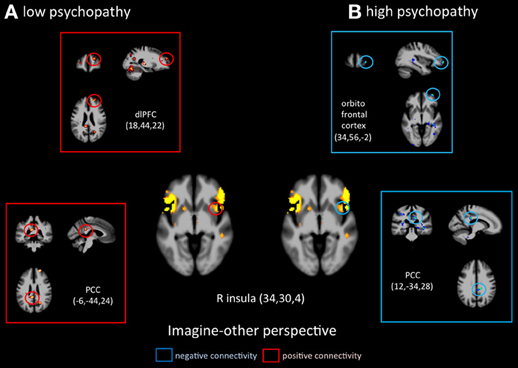
A related and recent study conducted by Dr. Abigail Marsh of Georgetown University, http://college.georgetown.edu/collegenews/why-do-strangers-help.html , used fMRI scans (functional MRI), which involved asking research participants questions while the scan is operating. She then looked at the differences in the amygdalas in the brains of diagnosed psychopaths (those who have little or no reaction to others’ pain and no moral inhibition against causing others pain) compared to social/community altruists (in this case, those who had volunteered to donate a kidney).

Amygdala Altruists

image from http://www.vox.com

Marsh’s fMRI scans showed that there were marked differences in the size and functionality of each group’s amygdalas, the part of the brain associated with processing emotion, inhibiting aggression and encouraging “helpfulness.” Altruists have larger, better formed and functioning amygdalas.

That altruists would have more compassion, less aggression and more helpfulness can’t be surprising. That their/our brains are physically different is now proven but still kind of awe-inspiring, to me.

fMRI psychopath altruist

image from http://journal.frontiersin.org

The logical next steps from a social change standpoint are to find out if engaging in regular meditation of any type could result in psychopaths’ being deterred/cured, AND if we can foster/enhance the development of altruists as well. What part could mindfulness play?

Stay tuned.

Meanwhile, if you already know how to meditate in any way, DO IT! Even 5 minutes per day or more short sessions sprinkled throughout a day matter a lot to our well-being, especially to the gray matter of our brains.

If you do not yet know how to meditate, there are hundreds of ways to learn mindfulness and other forms of meditation: online courses, in-person classes (some are offered for credit at secondary schools, community colleges and universities; some are free), workshops, audiobooks, CDs, online forums or chat rooms abound with opportunities.

If you suffer from a medical or psychological condition that could be improved or managed better by the application of meditation techniques, such as mindfulness, many medical facilities now offer classes such as the one mentioned in this study AND many types of insurance now pay for these classes! Ask your doctor or counselor.

Mindfulness for Psoriasis

image from http://www.mindfulnesscds.com

Also, many religious groups already have been providing and now offer more types of group learning and individual counseling that include meditation instruction even when the religion is “traditional.” So, if you’re a practicing Christian, Jew, Catholic, Muslim or other mainstream religious adherent, ask your religious community where you can learn to meditate.

BREATHE

meditation at college

image from http://iup.collegiatelink.net

Link to full article about Harvard research quoted in this post: http://www.feelguide.com/2014/11/19/harvard-unveils-mri-study-proving-meditation-literally-rebuilds-the-brains-gray-matter-in-8-weeks/

Link to original article first seen by me on Wildmind‘s site: http://www.wildmind.org/blogs/news/harvard-unveils-mri-study-proving-meditation-literally-rebuilds-the-brains-gray-matter-in-8-weeks