Unknown's avatar

My Progress on GENEROSITY: Acquiring the Qualities in the “Six Perfections” (Paramitas) of Buddhism for the 6 Weeks prior to my 72nd Birthday)

My Progress on GENEROSITY: Acquiring the Qualities in the “Six Perfections” (Paramitas) of Buddhism for the 6 Weeks prior to my 72nd Birthday

As readers of my books and blog posts know, I have been a practicing Tibetan Vajrayana Buddhist since 1996/1989/1983 and many lifetimes prior to this.
Fundamental parts of being this type of meditator are studying, attempting to gain the qualities and do the practices (and others) described at the end of this post, known as “The Six Perfections” (Paramitas).
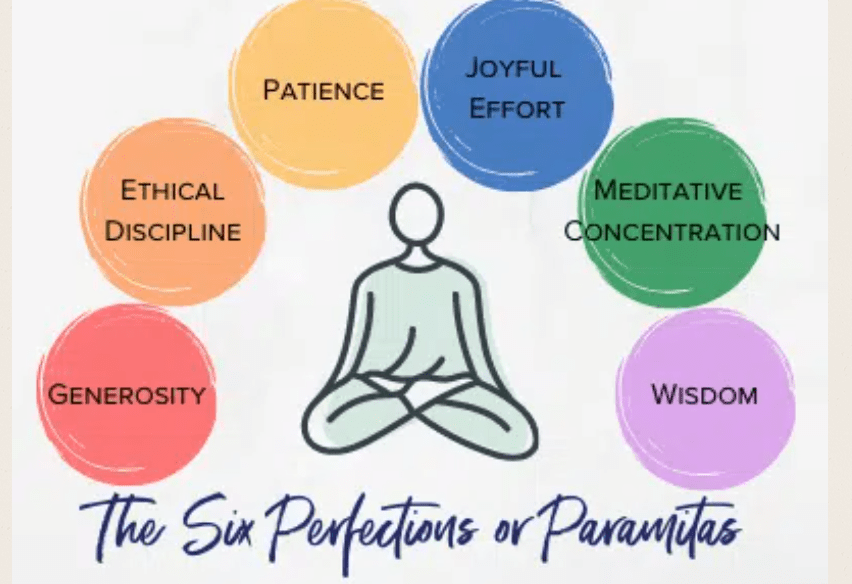
From https://www.namchak.org/community/blog/six-perfections-or-paramitas/

And, also check out: https://act4tibet.wordpress.com/2022/03/27/6paramitas/

For these six weeks prior to my birthday (July 17 – August 22, 2026), I plan to blog once each Friday about each of these qualities and my difficulties and seeming successes over the last 30 years of intensively practicing within this framework.
I have been studying and contemplating them and incorporating these as much as possible into daily life. Time for a self-assessment.

Stay tuned and check in each subsequent week, and please add your own experiences in the comments. Check this location for future posts: https://sallyember.com/2026/07/10/my-progress-on-acquiring-the-qualities-in-the-six-perfections-paramitas-of-buddhism-for-the-6-weeks-prior-to-my-72nd-birthday/

Week One: Generosity
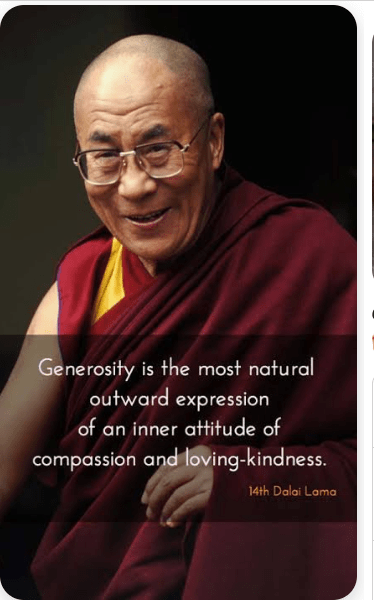
I admit to being very judgmental, critical, impatient, and otherwise ungenerous when it comes to certain kinds of people and situations. I am much better than I was when I was younger, and especially since trying to be better, as part of an ongoing practice of increasing generosity and compassion.

But, I lack sorely in this department when it comes to refraining from calling out incompetence, bullying, greed, violence, stupidity that leads to harming others and many other behaviors and traits in others. I am NOT generous enough in my heart. I am wishing to be more so.

I have to admit I have been failing to be beneficient, especially since late in 2015 (the start of the first illegal occupation of the White House in the USA by the usurper Trump and his gang of thieves, liars and warmongers) and even worse since the second occupation (starting in the late fall of 2024).

I’m sure many of my readers will concur with my negative assessment of those people and maybe even forgive my shortcomings (having their own to content with). However, that doesn’t make my lack of progress with internal generosity acceptable to me.

Mainly, my biggest failure in generosity occurs when I am impatient with regular people, some of whom I encounter almost daily where I live or on public transportation routes and waiting areas in the Seattle area (where I live, which I use almost daily, sometimes twice or more per day). I really suck at this right now.

Successes include being generous with my time, expertise, knowledge, help, caring and assistance to those whom I encounter that need or want my aid. Those aspects I am excellent with showing and feeling. However, I have always been so, in my recollection, so that does not constitute progress of any recognizable type with outer or inner generosity, yet.

I also sometimes give money, (even though I have very little), to show concrete gratitude to those who have been helping me and whose own funds aren’t huge; their time and expertise have made their help to me possible. Again, though, I have always been generous with material or personal assistance, so no points for my progress here.

The only improvements with generosity (and many other positive characteristics and behaviors) that have spontaneously occurred in my life when each noticeable changes happened after an accumulation of time in which I was focusing on doing my main meditation practice, such as during an intensive, private, individual, silent retreat of any length. I do best particularly after the longer ones, but even a long weekend helps. I need to do more of those concentrated practice times, for sure.

Meanwhile, I do try to be less impatient, less critical, and call up more kindness and tolerance. Those kinds of Largesse of the spirit are my biggest challenges regarding developing generosity. I am therefore working on:
Philanthropy, Munificence, Magnanimity, Openhandedness when it comes to others, known and up close as well as distant and less “in my life.”

I found this image and agree with its “levels” a lot. What do you think? “7 Degrees of Generosity,” is from Gonser Gerber: https://www.gonsergerber.com/2023/05/01/7-degrees-of-generosity/ [This article was originally posted on Jason’s Blog in May 2023. To read more, visit www.jasonmcneal.com]
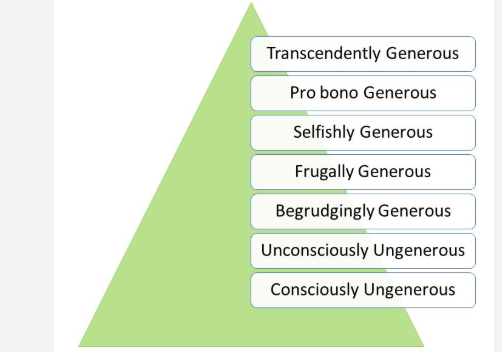
He wrote: “The model posits that there are 2 types of people who are unwilling to give – the Consciously Ungenerous and the Unconsciously Ungenerous.

“The difference is that the Consciously Ungenerous are those who see the need, believe they should give, but decide not to nonetheless.  The Unconsciously Ungenerous are those who see the need but simply do not believe or do not understand that they should give. 
“To better imagine the Unconsciously Ungenerous, think of younger people who, from a human development standpoint, may not embrace their responsibility to give just yet.

“The Begrudgingly Generous will give, but only when the pressure (usually social) is too great to decline.

“The Frugally Generous will give of their own will, but will only make modest, token gifts, far below their financial capacity.

“The Selfishly Generous will give, at times significantly, and will want some sort of public recognition or accolades for their support.

“Like the Selfishly Generous, the Pro bono Generous will give at times significantly as well.  They will not, however, be motivated to give because of any pubic recognition they may receive.  In fact, they may eschew recognition.

“And, finally, the Transcendentally Generous also will give significantly and will not be motivated to give because of public recognition.  The fundamental difference between the Pro bono Generous and the Transcendentally Generous is that the latter willingly give without restrictions….
“The Transcendentally Generous typically view giving as a spiritual exercise.  Giving is not about them, the gift, or even the recipient.  Giving is about learning to experience joy from sharing valuable assets with others in ways that most dignify them.”

In Judaism (the culture in which I was raised), there is a term, “tzedakah,” which loosely translates to mean “charity,” but actually means “to give from behind a closed door with an open hand.” So, being that kind of generous is both “pro bono” and “transcendental” in the above model, because engaging in tzedakah means to give without regard for being noticed and without holding on to any particular outcomes from the giving itself. It is actually an obligation, if one is an observant Jew: “…tzedakah is viewed as a mandatory act of righteousness and fairness that everyone is required to perform, regardless of their financial status.”

Wish me luck in rising to being “Transcendentally Generous,” increasing my righteousness, fairness, compassion and loving kindness, as I strive to improve my own inner and outer generosity.

How are you doing with generosity? Leave a comment?

Unknown's avatar

5 Ways for #Giving 1% to Offset the Splurging Inspired by the Holidays

Immediately after Halloween (and in some cases, even before it came), commercials in both print and video outlets began the holiday onslaught. Many people do begin shopping this early for their gifts, requesting/making lists for what they want and having/attending parties at which enormous amounts of alcohol and food are consumed.

To counterbalance the ridiculous indulging that occurs in many households in the West over the next two months, I offer 5 Ways for #Giving 1% to Offset the Splurging Inspired by the Holidays.

Post this on your refrigerator or visor in your vehicle and DO THESE THINGS. Please.

  • 1. Donate 1% of what you spend in money For every gift you purchase online, from a vendor or in a store, make a point to put aside 1% of that amount paid for charity. 1%, for the math-challenged, is the amount you see when you move the decimal point over two places to the left: e.g., if it costs $100.00, you put aside $1.00; if it costs $5.00, you put aside 5 cents.
    At the end of your holiday season, add that all up and use the 1% you set aside to benefit the charity of your choice. Remember: libraries, pet shelters, homeless and other social service organizations, youth centers, food banks, clothing drives.

    piggy bank

    image from http://getbookedin.com

  • 2. Volunteer 1% of what you spend in time Keep a journal or online calendar/diary of all the time you spend (notating it in a minimum of fifteen-minute intervals, like a lawyer) celebrating, preparing for, decorating, creating or buying gifts, attending, preparing or cleaning up family meals for these holidays. The amount of time you devote to this “season” will probably amaze you, if you are honest and meticulous in your records. At the end of your holidays, add up all those quarter-hours and multiply by four: this equals how many hours, total, you gave to the holidays. Any time during or after your holiday season, schedule yourself to volunteer 1% (see above for math help) of those hours to benefit the charity, cause, family or event of your choice.

    Volunteering

    image from http://www.care2.com

  • 3. Pass on 1% of what you received in gifts Keep a list of what you received from others. Include holiday cards, presents, food, nights out, alcohol, vacation time, clothing, and other gifts for these holidays. If you have/know any, get kids/teens to do this, also. Consider estimating what each of these costs the giver or is worth in actual dollars. The amount of stuff you acquired may add up to many pages for some of you. At the end of your holidays, add up all those estimated amounts to show the dollar value of what you received from this season’s holidays.
    Find a way to pass on actual gifts (“re-gifting”) or gift cards in the amount of 1% (see No. 1 for math help) of that total value to benefit the charity, cause, family or individual of your choice.

    Toy box

    image from http://blog.turbotax.intuit.com

  • 4. Give up 1% of what you want Make or add to your growing list of what you want from others for the holidays. Include holiday cards, presents, food, nights out, alcohol, vacation time, clothing, and other gifts. Consider estimating what each of these would cost or is worth in actual dollars. The amount of stuff you want may add up to many pages for some of you. At the end of your holidays, add up all those estimated amounts to show the dollar value of what you wished to receive from this season’s holidays.
    Whether or not you received all that you wanted, find a way to pass on actual gifts (“re-gifting”) or gift cards in the amount of 1% (see No. 1 for math help) of that total value to benefit the charity, cause, family or individual of your choice.

    wish list

    image from http://www.thisisamericanrugby.com

  • 5. Demonstrate gratitude for at least 1% of what you have Count your blessings. Literally. Consider how to estimate what each of your privileges, benefits, friends, family, housing, employment, art, music, intelligence, abilities, skills, talents, knowledge, education, property and other possessions and all good fortune, including whatever health you enjoy, is worth in actual dollars. The number of ways you can be grateful should keep expanding. Be creative. Some blessings have no monetary value, but you can assign one, anyway. Make a list. Keep adding to it and placing dollar amounts next to each one that you can. At the end of your holidays, total all those estimated amounts to show the dollar value of what you already have this holiday season.
    Find creative ways to demonstrate your gratitude for 1% of the total value of what you already have (see No. 1 for math help) to benefit the charity, cause, family or individual of your choice.

    Giving heart

    image from http://www.empowher.com

    If you engage in these 5 offsetting actions, you will more thoroughly enjoy every part of the holiday season. I promise.

    Happy Holidays, Everyone!

    Happy Holidays

    image from http://www.smashingmagazine.com

Unknown's avatar

5 Ways for #Giving 1% to Offset the Splurging Inspired by the Holidays

Immediately after Halloween (and in some cases, even before it came), commercials in both print and video outlets began the holiday onslaught. Many people do begin shopping this early for their gifts, requesting/making lists for what they want and having/attending parties at which enormous amounts of alcohol and food are consumed.

To counterbalance the ridiculous indulging that occurs in many households in the West over the next two months, I offer 5 Ways for #Giving 1% to Offset the Splurging Inspired by the Holidays.

Post this on your refrigerator or visor in your vehicle and DO THESE THINGS. Please.

  • 1. Donate 1% of what you spend in money For every gift you purchase online, from a vendor or in a store, make a point to put aside 1% of that amount paid for charity. 1%, for the math-challenged, is the amount you see when you move the decimal point over two places to the left: e.g., if it costs $100.00, you put aside $1.00; if it costs $5.00, you put aside 5 cents.
    At the end of your holiday season, add that all up and use the 1% you set aside to benefit the charity of your choice. Remember: libraries, pet shelters, homeless and other social service organizations, youth centers, food banks, clothing drives.

    piggy bank

    image from http://getbookedin.com

  • 2. Volunteer 1% of what you spend in time Keep a journal or online calendar/diary of all the time you spend (notating it in a minimum of fifteen-minute intervals, like a lawyer) celebrating, preparing for, decorating, creating or buying gifts, attending, preparing or cleaning up family meals for these holidays. The amount of time you devote to this “season” will probably amaze you, if you are honest and meticulous in your records. At the end of your holidays, add up all those quarter-hours and multiply by four: this equals how many hours, total, you gave to the holidays. Any time during or after your holiday season, schedule yourself to volunteer 1% (see above for math help) of those hours to benefit the charity, cause, family or event of your choice.

    Volunteering

    image from http://www.care2.com

  • 3. Pass on 1% of what you received in gifts Keep a list of what you received from others. Include holiday cards, presents, food, nights out, alcohol, vacation time, clothing, and other gifts for these holidays. If you have/know any, get kids/teens to do this, also. Consider estimating what each of these costs the giver or is worth in actual dollars. The amount of stuff you acquired may add up to many pages for some of you. At the end of your holidays, add up all those estimated amounts to show the dollar value of what you received from this season’s holidays.
    Find a way to pass on actual gifts (“re-gifting”) or gift cards in the amount of 1% (see No. 1 for math help) of that total value to benefit the charity, cause, family or individual of your choice.

    Toy box

    image from http://blog.turbotax.intuit.com

  • 4. Give up 1% of what you want Make or add to your growing list of what you want from others for the holidays. Include holiday cards, presents, food, nights out, alcohol, vacation time, clothing, and other gifts. Consider estimating what each of these would cost or is worth in actual dollars. The amount of stuff you want may add up to many pages for some of you. At the end of your holidays, add up all those estimated amounts to show the dollar value of what you wished to receive from this season’s holidays.
    Whether or not you received all that you wanted, find a way to pass on actual gifts (“re-gifting”) or gift cards in the amount of 1% (see No. 1 for math help) of that total value to benefit the charity, cause, family or individual of your choice.

    wish list

    image from http://www.thisisamericanrugby.com

  • 5. Demonstrate gratitude for at least 1% of what you have Count your blessings. Literally. Consider how to estimate what each of your privileges, benefits, friends, family, housing, employment, art, music, intelligence, abilities, skills, talents, knowledge, education, property and other possessions and all good fortune, including whatever health you enjoy, is worth in actual dollars. The number of ways you can be grateful should keep expanding. Be creative. Some blessings have no monetary value, but you can assign one, anyway. Make a list. Keep adding to it and placing dollar amounts next to each one that you can. At the end of your holidays, total all those estimated amounts to show the dollar value of what you already have this holiday season.
    Find creative ways to demonstrate your gratitude for 1% of the total value of what you already have (see No. 1 for math help) to benefit the charity, cause, family or individual of your choice.

    Giving heart

    image from http://www.empowher.com

    If you engage in these 5 offsetting actions, you will more thoroughly enjoy every part of the holiday season. I promise.

    Happy Holidays, Everyone!

    Happy Holidays

    image from http://www.smashingmagazine.com