
My Progress on JOYFUL EFFORT: Acquiring the Qualities in the “Six Perfections” (Paramitas) of Buddhism for the 6 Weeks prior to my 72nd Birthday
As readers of my books and blog posts know, I have been a practicing Tibetan Vajrayana Buddhist since 1996/1989/1983 and many lifetimes prior to this.
Fundamental parts of being this type of meditator are studying, attempting to gain the qualities and do the practices (and others) described at the end of this post, known as “The Six Perfections” (Paramitas).
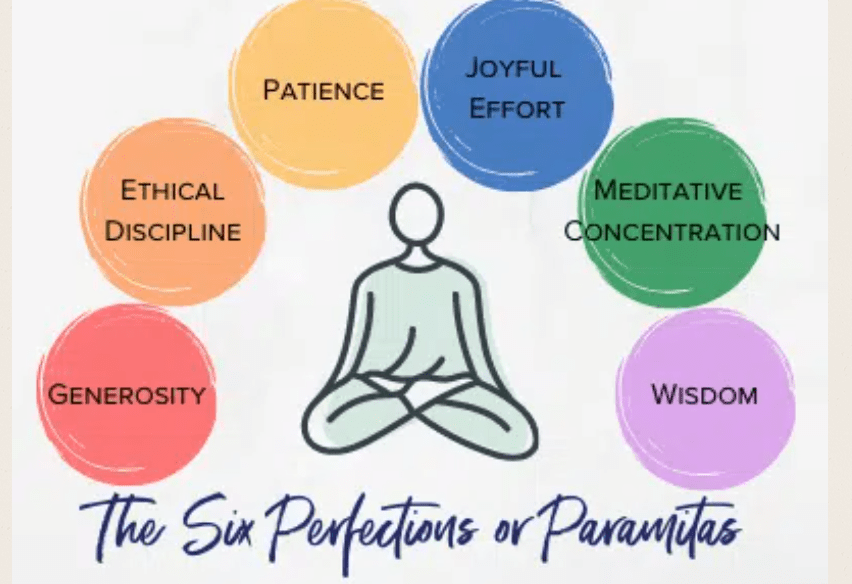
From https://www.namchak.org/community/blog/six-perfections-or-paramitas/
And, also check out: https://act4tibet.wordpress.com/2022/03/27/6paramitas/
For these six weeks prior to my birthday (July 17 – August 22, 2026), I plan to blog once each Friday about each of these qualities and my difficulties and seeming successes over the last 30 years of intensively practicing within this framework.
I have been studying and contemplating them and incorporating these as much as possible into daily life. Time for a self-assessment.
Stay tuned and check in each subsequent week, and please add your own experiences in the comments. Check this location for future posts: https://sallyember.com/2026/07/10/my-progress-on-acquiring-the-qualities-in-the-six-perfections-paramitas-of-buddhism-for-the-6-weeks-prior-to-my-72nd-birthday/
Week Four: Joyful Effort
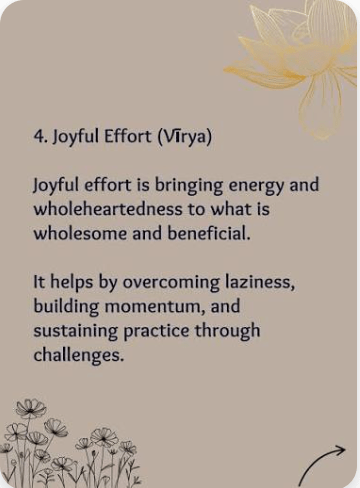
Here we are, Week Four of the six weeks leading up to my 72nd birthday, assessing my progress (and lack thereof) on these Six Perfections/Paramitas, and feeling both joyful and despondent. I realize that is typical of doing this type of exercise, since the ruthless honesty I employ exposes all my shortcomings as well as my paltry successes in sharp contrast. Ahhhh.
How do I think I have been doing with Joyful Effort, working for the benefit of others without resentment, expectation of reward, prompting or external support? PracticeofZen.com states: “[This is] also known as vīrya paramita or ‘the perfection of diligence’ … It means engaging in good actions with energy, enthusiasm, and a deep sense of gladness rather than through forced stress or strain.”
Let’s take these aspects singly and determine how I’ve been doing; you do the same.
Laziness includes spiritual laziness, procrastination or getting sidetracked by distractions.
I give myself a “B” (Better than average, perhaps?) grade for these on some days, an “A” on some days (when I do A lot of practice or volunteering and try to maintain my practice during that), and a “D” or “F” (for DISTRACTED and FORGETTING) on too many parts of too many days. So it goes.
Building Momentum This vibrant energy is “needed to sustain the other paramitas—like generosity, patience, and meditation—turning routine tasks into joyful engagement” (from mindworks.org). I’ve always been a secret fan of “whistle while you work,” or other such Disney nonsense for singing or dancing while doing ordinary chores. Why not? Where are my helper bluebirds, though? Anyway, la la la.
I often enjoy mundane tasks, but only when I’m in the mood. Ha ha. My favorite is cooking. Least-favorite, housecleaning. Middle-ranked (but I love the results) are laundry, grocery shopping, trash/recycling duties and filing.
I regularly do grocery shopping for my upstairs 97-YO neighbor: I get points for that, right? NOT DOING IT FOR POINTS, though. Partly, I started doing it about a year ago because I did it for my mom and she’s gone (over 2 years, now). Partly, because I was already friendly with her when she started needing that help (about 1 year ago after knowing her for about a year). Plus, I am going, anyway, and I have a large pushcart (had to give up my 26-YO car when I moved here from St. Louis almost 2 1/2 years ago).
I get a “B” for this one, I guess.
Sustaining Practice Through Challenges
I have done VERY well with this in my life: meditating EVERY DAY since I first started, and for 25 years, TWICE a day (started in June, 1972). I have meditated twice daily or at least once, formally (and throughout the day, when I remember to do so), in arduous conditions: even when sick (35 years of gallbladder pain); just out of surgery (more than a few of these); after childbirth (and during days of labor, but only one child); when severely in pain (many car accidents and other causes); when distraught (stressing about money, jobs, relationships, child, the world, etc.); when happy (yes, sometimes that, too!); when living for weeks in a tent for meditation retreats and meditating for 15+ hours a day, even though the temperature would be 120°F for days or down to 40°F at night (not kidding); having just moved (I’ve moved 55 times as an adult); and, when heartbroken/lonely (for weeks, months, years, decades).
BUT, I am NOT using my “retirement” time as well as I might/should. I intend to do more individual home retreats for at least a week at a time, but I haven’t arranged that much in these last 2 years (yet). GOAL. Probably start doing that this fall when my granddaughter has more days in school and daycare and I won’t be with her much during the week. I’m also losing my main healthcare provider (acupuncturist, who dumped me out of his insurance as of September 1; very sad about that), so I’ll have more availability for meditation intensives.
GOTTA DO IT. HAIR ON FIRE and all that.
So, another “B.”
Bringing Energy and Wholeheartedness/Gladness/Enthusiasm (vs. forced stress or strain) to What is Wholesome and Beneficial
I generally don’t do things if I resent doing them (any longer; used to). So, I’m doing okay with this one, for sure. However, I could “do more” for others, I’m certain. It’s not selfishness or resistance that stops me, though. I plead tiredness and the problems of the time-suck of using public transportation to go anywhere.
I hope to overcome these or work around them better to do more volunteering this fall and winter/spring (see above, for having more time).
I seem to be getting “B”s all around, here.
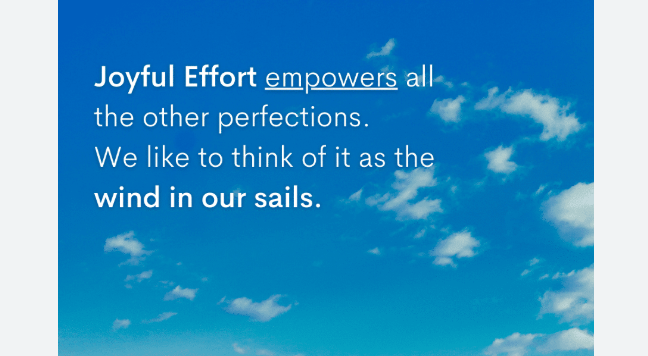
“But keep in mind that winds are always changing. This is natural and normal. Impermanence exists in all parts of our lives, even our meditation practice. Amidst life’s ups and downs, we will experience periods when our motivation for meditation is difficult to find. If we approach the lulls with understanding, then they’re less likely to become overwhelming roadblocks on our path.”
image and quote from: The Namchak Community, https://www.namchak.org/community/blog/practicing-the-perfection-of-diligence-or-joyful-effort/
We can also look at this Paramita as these three kinds of Joyful Effort (from one of my favorite Tibetan Vajrayana spiritual teachers, one of the first Western women to do a 12-year retreat in a cave in Nepal and be ordained as a nun, Jetsunma Tenzin Palmo (her Facebook page had this info, and she has several books out as well; I linked to her website with her name, there):
- Armor-like Effort: A brave and ready attitude that protects the mind from discouragement before any challenge even begins;
- Applying Effort to Virtue: The active, enthusiastic pursuit of wholesome actions, kindness, and learning in daily life; and
- Effort for Others: Working tirelessly to benefit and support other living beings without seeking personal reward.
Either way, I seem to hover around “better than average, but not as good as I would like to be.” What about you? Comment here!



You must be logged in to post a comment.