Unknown's avatar

Bras and Shoes: Breast Cancer, Bunions, Back Strain and “Beauty” Lies

WARNING: Naked breasts appear in this post, for instructional purposes only.

This post is meant to inform about some aspects of modern women’s (and men’s ) lives in Western nations that need changing. Yes, these are “first-world” problems. But, they ARE problems. If you don’t mind the problems these cause or you don’t have these problems, go read something more fun/useful. Or, pass it on to those who might benefit from reading it!

BRAS, ANTI-PERSPIRANTS and BREAST CANCER

BRAS
I have always hated bras. I personally hate wearing them and almost never do. Even when well-fitted, bras inform me that there is a special place in hell for those who design them. Bras itch, ride up, pinch and nonstop bother me.

I also hate the rationales people make for women’s wearing of bras. As a feminist, I am offended and disgusted by the so-called “reasons” for bras because these are based on modern, industrialized, Puritanically based Western cultural biases that “require” teenage or adult females to cover our nipples, to pretend not to have any. Also, we are told that we are “unprofessional” unless we are complicit in disguising our breasts’ shapes. These misogynistic attitudes are NOT “universal” and need to be eradicated.

However, I could put all that hatred aside and just accept that some women want (or claim they “need”) to wear bras, except for three somewhat newly surfacing facts, based on extensive research over many decades:

  • 1) Bras do not work. Gravity wins. It wins BIGGER when women wear bras: bras CAUSE breasts to sag MORE because wearing bras weakens the pectoral muscles that would ordinarily work and strengthen to hold up one’s breasts over a lifetime. With few exceptions, NO WOMEN should wear bras just to “hold them up.” Those whose breasts hurt due to hormonal changes and jiggling makes the pain worse: sure, wear bras. Those with extremely large breasts claim that wearing bras helps “carry” them, HOWEVER: the BRAS cause more shoulder and back pain than their breasts.

    Jean-Denis Rouillon, a professor at University of Besançon in France, authored a study stating that women are better off not wearing bras. They are scientifically unnecessary, and, in fact, could be hazardous to breast health, leading to sagging breasts and increased back pain….”Medically, physiologically, anatomically — breasts gain no benefit from being denied gravity,” Rouillon told France Info radio. “On the contrary, they get saggier with a bra.”
    http://www.medicaldaily.com/bras-make-breasts-saggier-french-doctor-says-women-better-bra-less-244995

  • 2) Bras increase the risk of breast cancer.
    The Susan G. Komen Foundation and the American Cancer Society (ACS) are the main organizations who refuse to properly present summaries and warnings derived from the amassing research that shows a link between increased incidences (“Risk”) of breast cancer the wearing of bras, especially tight ones, for 12 or more hours per day, particularly all night.

    …at least five research studies have shown that there IS a strong connection between breast cancer and bra wearing for many hours per day.
    http://www.inquisitr.com/1202191/your-bra-may-be-killing-you-scientists-call-for-boycott-of-komen/

    lymphatic_system_breast

    Lymphatic Systems of Breasts: image from healthieralternatives.wordpress.com

  • 3) Underwire Bras, in particular, cause health problems.
    The pressure points that underwire bras rest on are critically important, according to Eastern medical knowledge, to the functioning of major systems in the body. However, constant metallic pressure on these points is contra-indicated in all women and can cause a myriad of health problems over time.

    The UnderWires in the UnderWire Bra fall directly onto two very important NeuroLymphatic Reflexes. The one under the right breast goes to the Liver and Gall Bladder. The one under the left breast goes to the Stomach….If a woman keeps the metal UnderWires on top of those reflex points, over time that WILL mess up the functioning of the associated circuits: Liver, Gall Bladder, and Stomach. Bottom Line: It will likely make her sick, slowly and quietly.
    http://www.relfe.com/wp/health/dangers-underwire-bras/

If those three information points do not convince you to stop “supporting” bra-wearing and worse, if you are still committed to wearing bras yourself, that is illogical. Check out this infographic and OTHER problems caused by ill-fitting bras:

ill-fitting bras symptoms

% of Women Having Problems Due to Ill-Fitting Bras: image from http://www.bariatriccookery.com

Almost half the women who wear bras that are ill-fitting (which, according to other research, would include MOST women), suffer skin rashes. Another 35% have shoulder pain. Are you one of these women?

If you are that irrational about bras, you might want to discontinue reading the rest of this post, because things are going to go from bad to worse for you.

ANTI-PERSPIRANTS
(not Deodorants, which merely mask smells)
are those products that attempt to “dry up” or prevent the armpits from sweating. What about the causal connections between anti-perspirants and breast cancer? After much “debate” and “debunking” of the “myth” of this connection by the research FUNDED BY THE COMPANIES THAT MAKE ANTI-PERSPIRANTS in the USA, we finally have unbiased research results from the UK showing several causal links between the key ingredients in anti-perspirants and DNA changes and between the lymphatic blockages intentionally caused by these products that lead to increased incidences of breast cancer in both men and women.

Britain has one of the highest rates of breast cancer in the world and every year almost 13,000 British women die from it. Britons are also among the biggest users of antiperspirant deodorants, getting through £300 million worth of bottles each year. The rising incidence of breast cancer in men may also suggest a connection. Breast cancer in men has doubled in the past three decades to 300 cases per year – a time frame that coincides with the increasing use of underarm products by men.
http://www.dailymail.co.uk/health/article-185071/How-safe-antiperspirant.html

Guess what gets the attention of researchers, health commissioners and the public? when the problems affect MEN. Sigh.

SHOES

Enough about breast cancer? Depressed, yet?

Let’s talk about shoes. I do not understand some women’s obsessions with shoes. I really don’t. But, obsessed or not, most of us wear shoes most of the time.

How well do our shoes serve us? Do they support our best posture, provide safety from h

Luckily for me (!?!) I was in a serious car accident my senior year of high school that caused me to have life-long problems with my right leg. This prevented me from ever getting into wearing “high” heels, or ANY heels, for that matter, for more than about 30 minutes per… year. I say “luckily” because both my mother and her mother had/have bunions and hammertoes. So far, I do not.

I also have many back problems and hip issues from other injuries that continue to plague me and keep me wearing the most supportive, comfortable shoes I can afford.

What about you? Do you go for fashion at the expense of your comfort or health? I hope you don’t.

If you do, read on and perhaps I and the research can change your mind.

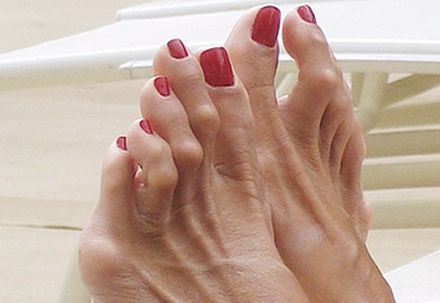
hammertoes

Hammertoes: image from http://www.kyforward.com

Bunions, Backstrain and Hammertoes

Because of her own problems with shoes and foot health, Ivey Allison wrote a great post which I recommend you read in its entirety. Here is a salient quote, based on her research:

…almost every shoe on the market, flat or heeled, has a toe box design that is too small and tapered to allow the foot to be properly aligned. The result? Foot deformity — and painful bunions….Every single pair of shoes you own is likely deforming your foot. Permanently.
http://www.xojane.com/healthy/bunion-care-treatment-prevention

The Huffington Post‘s Rebecca Adams & Ellie Krupnick did some great research and wrote summaries of their findings in last October’s post on what shoes are the worst offenders, causing bunions, hammertoes, and back strain, among other problems (not to mention costing ridiculous amounts of money!). here is a sample and the link to the full post:

STILETTOS
Wearing heels shifts your weight to the balls of your feet, which puts pressure on your foot. This also creates a balance problem: It forces your knees and hips forward, hurting your back and legs. Wearing these shoes can cause: hyperextension, ankle sprains, midfoot fractures, neuromas (benign nerve tumors), pinched nerves, bunions and hammertoes.
http://www.huffingtonpost.com/2013/10/09/shoes-worst-for-feet_n_4069370.html

They also summarized the impact and effects of wearing Platform Wedges; Converse-style Sneakers; High-Heeled, Rain or Thigh-High Boots; Ballet Flats; and, Flip-Flops.

Bunion

Bunion: image from my.clevelandclinic.org

The worst offenders? I guess it depends what you think are worse. Each shoe type they mentioned came with its own list of problems, such as:

  • mold, fungus, bacteria, wart viruses and blisters;
  • inflammation, tendonitis, heel pain, strains, fractures and external injuries (e.g. stepping on a nail);
  • chronic stress injuries, particularly to the heel;
  • inflammation, tendonitis, heel pain, strains and stress fractures;
  • inflammation, tendonitis, heel pain, strains, stress fractures and external injuries (e.g. stepping on a nail);
  • hyperextension, midfoot fractures, neuromas (benign nerve tumors), pinched nerves, bunions and hammertoes;
  • hyperextension, bunions and hammertoes;
  • hyperextension, ankle sprains, midfoot fractures,
  • neuromas (benign nerve tumors), pinched nerves, bunions and hammertoes.

Choose which group of symptoms you’re willing to acquire and then merrily (warily) go shoe shopping.

Or, buy better-fitting, healthier, more comfortable shoes.

Comfortable-stylish-walking-shoes-FINN-SANDALS

image from mostcomfortableshoesguide.net

Unknown's avatar

Proven, Long-term Effects on Physical Health of those who suffered childhood Trauma, Abuse, Neglect and Bullying

In case you’ve been unaware of the last several years of research from all over the world, with children, adolescents and adults, some after 40 years since the trauma, they all come to the same conclusions: those who suffer childhood trauma, whether through abuse, neglect, witnessing domestic or neighborhood violence or being bullied by siblings or peers, have observable, lifelong negative consequences to not only our psychological but to our physical health. Traumas include war and threats of warlike activity, sudden natural disasters, neighborhood or school-site gang warfare and violent encounters of other types that children and teens experience, even if “only” as witnesses.

consequences of childhood abuse

image from http://www.acestoohigh.com

Is there any “good news”? Only a bit.

  • When responsible adults who have the power to act curtail or stop the abuse or trauma early on, some of the effects may be reversible.
  • If adults whom the victim/survivor encounters treat the traumatized child, teen or adult consistently and appropriately by supplying effective psychological therapy and immediate environmental improvements, an almost-complete recovery is possible.
  • When the child reports the bullying or abuse or reveals that domestic violence or parental neglect is occurring and the listening adults immediately take the child’s reports seriously followed by taking obvious supportive, preventive and/or protective actions, these responses also improve the child’s chances of developing fewer problems later in life.

Links to some of the research articles recently published are below. My favorite points are in this post. Thanks to all the researchers, reporters/journalists and participants in these studies who made these understandings possible.

May all abuse, neglect, bullying, domestic violence and other causes of childhood trauma CEASE in our lifetimes.

May all children grow up and be educated in safe, healthy environments.

20_circle_TLG network model_Lives of Children_24_07_08

image from http://www.earlytraumagrief.anu.edu.au

Sources and quotes:

I. Abuse Casts a Long Shadow by Changing Children’s Genes

By Eleanor Nelsen

July 2014

http://www.pbs.org/wgbh/nova/next/body/epigenetics-abuse/?utm_source=facebook&utm_medium=pbsofficial&utm_campaign=nova_next

“For abused children, that trauma is just the beginning. Most will likely struggle well into adulthood.”

trauma to early death pyramid

image from http://www.ascd.org

“Living with an abusive parent has increased their risk for depression and other psychological problems while decreasing their chances of successfully maintaining close relationships. Even physical ailments, like type 2 diabetes and heart disease, are more likely in adults who were abused as kids. Early abusive experiences can leave a stubborn imprint on those children’s brains and bodies, and Seth Pollak, a professor at the University of Wisconsin and head of the study, wanted to know how, exactly, abuse was changing these children’s bodies on a cellular level.”

“… people’s experiences exert a strong influence on their biology by silencing genes or turning them back on, significantly changing the way a cell functions without changing its DNA sequence. It’s a phenomenon known as epigenetics.”

“’Epigenetics makes the genes tick,’ explains Moshe Szyf, a professor of genetics and pharmacology at McGill University. Epigenetic changes modify DNA to keep genes from being expressed, and they can explain dramatic differences between cells with identical DNA—for example, how stem cells can turn into either liver cells or heart cells, or why only one of a set of identical twins gets cancer. It’s also, Pollak found, why children who grow up in abusive homes have physical and psychological problems that haunt them well into adulthood.”

“‘… something like parenting, parental care, was flipping the switch.’… trauma might be turning this stress-management gene off…”

“…for children in abusive homes, who are in threatening situations every day, having more cortisol floating around isn’t necessarily bad—at first. ‘You may need to remain vigilant more often. You may need to flip into vigilant state more easily. That’s keeping you alive under harsh conditions, but it’s also making it really hard for you to function.’”

“…The long-term results are the chronic psychological problems like anxiety and depression and chronic physical problems like heart disease and type II diabetes, which often surface years later in victims of childhood abuse.”

“… Having too few receptors for cortisol keeps the immune system from learning to manage inflammation and infections, helping explain why children in abusive homes seem to get sick more often, and are at a higher risk for chronic health problems.”

“’The idea that these things aren’t fixed is really encouraging,’ Pollak says.”

II. Bullying affects children’s long-term health, study shows

February 2014

http://www.medicalnewstoday.com/articles/272762.php

“In the first study of its kind to assess the compounding effects of bullying over 5 years, researchers have found that a child experiences more severe and lasting health implications the longer he or she is bullied, suggesting that early interventions could reverse the “downward health trajectory” that victims of bullying may experience.”

“At any age, bullying was linked with worse mental and physical health, more depressive symptoms and a lower sense of self-worth. And students who reported chronic bullying also experienced more difficulties with physical activities like walking, running or playing sports.”

“‘Our research shows that long-term bullying has a severe impact on child’s overall health, and that its negative effects can accumulate and get worse with time,’ says Bogart.”

“She calls for more intervention around bullying, ‘because the sooner we stop a child from being bullied, the less likely bullying is to have a lasting, damaging effect on his or her health down the road,’ she adds.”

“…recent events may be more important than distant ones to a child’s health, but the team notes that health consequences “compound over time” and may stay even after the bullying has ceased.”

“… their findings emphasize the importance of stopping bullying early and continuously intervening to help with the lingering effects.”

Sally Ember wholeheartedly recommends the nonprofit USA-based organization, Community Matters, for their advising and trainings for improving school climate through research-based and clinically-proven effective bullying prevention and education programs, “Safe School Ambassadors,” for youth, school staff and parents.
Contact them (they offer programs around the world): 707-823-6159 or http://www.community-matters.org

Medical News Today reported on a 2013 study published in the journal Psychological Science, which suggested victims of childhood bullying fare poorly in adulthood. Findings from the study showed that individuals bullied in childhood were more likely to have a psychiatric disorder, smoke, struggle to keep work and had difficulty maintaining friendships.”

III. BULLYING BY SIBLINGS ANYTHING BUT HARMLESS

compiled in 2013

http://www.elementsbehavioralhealth.com/behavioral-health-news/bullying-by-siblings-anything-but-harmless/

While other forms of bullying are commonly taken seriously and relatively well-researched, bullying between siblings often gets ignored or minimized. However, two recent studies call attention to the potential pitfalls of discounting the effects of sibling bullying. One of these studies indicates that children who bully their brothers or sisters take this activity less seriously than other bullying behaviors, while the other study indicates that sibling bullying can cause just as much mental health harm as other forms of bullying.

Risks associated with childhood trauma

image from http://www.psychiatrictimes.com

“…childhood bullying substantially increases the chances that an individual will develop a diagnosable mental illness during adulthood. These same risks also apply in magnified form to bully-victims, a term used to describe bullying victims who go on to perpetrate acts of bullying on others.”

“… more siblings (85 percent) actually identify themselves as bullies than as bullying victims (75 percent)….[T]his finding points toward a widespread childhood acceptance of sibling bullying as a non-consequential behavior that has no meaningful impact on the well-being of affected individuals. This acceptance also almost certainly reflects the attitudes of the larger culture toward the seriousness of sibling bullying.”

“…both relatively moderate and relatively severe bullying produce a decline in mental health marked by things such as anxiety, depressed moods and uncontrolled outbursts of anger. Moderate physical bullying by a sibling has a greater mental health effect on younger children than on older children. However, the authors found that all other forms of sibling bullying have an equally negative effect on both younger children and teenagers.”

“… current social tendencies to downplay or dismiss the importance of sibling bullying contribute to the problem and seriously increase the chances that sibling bullying and other forms of bullying will continue to diminish the psychological/emotional well-being of large numbers of individuals.”

“…pediatricians can help decrease the impact of sibling bullying by looking for signs of such bullying in their patients on an annual basis.”

IV. The neurobiological effects of childhood maltreatment: An often overlooked narrative related to the long-term effects of early childhood trauma?

by Jennifer Delima and Graham Vimpani

http://www.aifs.gov.au/institute/pubs/fm2011/fm89/fm89e.html

“… some current societal dysfunction may well be an overlooked significant consequence of childhood maltreatment, with its associated trauma effect upon the developing brain. These changes prevent and impair the ability to remediate disadvantage and its effects through purely social policy and justice measures.”

Acts of commission (actions against the child)
Physical– The child is subject to disciplinary action by his/her caregiver(s), with resultant bruising, severe pain, temporary loss of mobility, scars, burns, shaking etc. This may lead in some cases to more serious and life-threatening injuries, including inflicted brain injury.
Sexual – This involves the sexual abuse or exploitation of the child and /or exposing them to sexual acts.
Emotional – The child is subject to repeated verbal abuse, being sworn at or receiving hurtful and demeaning comments about his/herself. This form of maltreatment also includes the child hearing about violent acts perpetrated upon a significant attachment figure for the child.

Acts of omission (actions of failed care)
Witnessing family violence – The child hears or watches aggressive verbal altercations and/or physical violence.
Neglect – This type of maltreatment ranges from failing to provide basic food, shelter, clothing and care (including relevant medical care) to exposure to harmful substances. This is often labelled as “environmental circumstance”, but studies of documented behavioural features and neuro-imaging tests demonstrate that the resultant brain injury patterns are similar to those seen in children exposed to acknowledged trauma and maltreatment.
Sources: Chrousos & Gold (1992); De Bellis (2002); MacMillan et al. (2009)

“Neglectful acts have also been extended to include the exposure of children to cigarette smoke when they are motor vehicle passengers, although this does not yet apply to the unborn foetus. Exposing foetuses to harmful agents (teratogens) could also be regarded as neglectful when there is a known causal relationship between the substance and resultant structural malformations to the developing foetus (e.g., continued thalidomide use despite knowledge of its effect on foetal limb growth, or continued alcohol use with knowledge of its causality in foetal alcohol spectrum disorder). Such actions are neglectful regardless of the intent of the child’s parent, caregiver or other responsible adults.”

“The common factors in trauma or maltreatment that adversely affect early brain development appear to be those events and conditions in which the child experiences or repeatedly experiences, in a prolonged and uncontrolled manner, circumstances that they perceive as being likely to be significantly life threatening for themselves.”

They can use “non-invasive static-scan neuro-imaging tools, such as MRI (magnetic resonance imaging), DTI (diffusion tensor imaging) and SPECT (single-photon emission computed tomography). More recently, assessment with ‘functional MRI’ (fMRI) has provided even further evidence of the impact that maltreatment has upon a child’s brain, including the assessment of not only structural changes but also the dynamic processes occurring within the brain as the child recalls or listens to an account of the varying types of maltreatment to which they have been previously exposed.”

“Maltreatment that comprises severe, prolonged and uncontrolled life stressors activates a prolonged biological stress response. This response is mediated through the limbic-hypothalamic-pituitary-adrenal axis, a system that describes the brain’s interaction with the peripheral body through neural (sympathetic nervous system) and hormonal (adrenal gland) tissues that regulate the body’s response to perceived longer acting stressors (infection, trauma, neglect, substance exposure, etc.).”

“The developing brain is particularly vulnerable to stress, especially with respect to the pre-frontal cortex, hippocampus and corpus callosum. Through prolonged activation of the biological stress response system, structural and functional brain changes occur. The behaviours resulting from chronic stress include poor self-regulation, increased impulsive behaviours, and emotional responses such as high levels of experienced anxiety, aggression and suicidal tendencies and, in some, a learned helplessness from the constant impairment of self-regulation.”

“…the response to chronic stress impairs the function of noradrenaline and dopamine within the limbic system and that this may account for the typical post-traumatic stress disorder (PTSD) symptoms of persistent hyper-arousal and hyper-vigilance that continues to occur after the trauma, despite resolution of the initiating experience. These neurotransmitters also interact with the serotonin system to modify mood and anxiety symptoms.”

“The impact of maltreatment on the brain – structural, functional and behavioural – has been shown to worsen the longer the duration of trauma experience and the younger the age of onset of the trauma experience.”
Substance misuse and dependence

“Early onset adult depressive, suicidal and personality disorders have also been shown to be significantly increased in those with documented histories of childhood maltreatment….This has been postulated to be the outcome of cortisol hyper-secretion.”

“… ‘antisocial’ personality disorder is a more frequent occurrence in those with a history of physical abuse and/or neglect, whereas “borderline” personality disorder is more frequently associated with childhood sexual abuse.”

“Cognitive development and academic performance are also adversely affected by childhood exposure to violence. MRI studies show that exposure to violence is associated with children having smaller intracranial, cerebral and prefrontal cortex volumes, with particular effects on prefrontal white matter, temporal lobe volumes and the corpus callosum….these children have been found to suffer increased levels of depression, dissociation and both externalising (aggression, self-harming) and internalising (depression, anxiety) symptoms.”

“…male children are more vulnerable to the consequences of maltreatment, and this is reflected in changed brain structure….The corpus callosum volume in males is especially decreased in the isthmus region of the corpus callosum, which appears to facilitate more externalising behavioural symptoms of aggression and suicidality.”

“A similar decrease in volume is noted in the superior temporal gyrus and hippocampus, with a resultant observed deficit in executive function ability and sustained attention and focus, a limited verbal response ability, and poor short-term memory and capacity for future planning. Also observed has been a decreased ability to learn through both motor and non-motor means. Further, the cerebellum is generally decreased in volume in these children, with an observed attendant behavioural pattern of having difficulty sleeping, poor concentration and general irritability.”

“Maltreatment in early childhood has also been shown to result in adverse adult onset physical health; in particular, chronic disease and reproductive and adult sexual health problems….childhood abuse and exposure to domestic violence can lead to numerous differences in the structure and physiology of the brain, which affect multiple human functions and behaviours.”

“…not all children are adversely affected in this way. Some of this resilience may be attributed to the ‘neuroplasticity’ of the brain; that is, the ability of neural tissue to modify brain function and response, so enabling a different response to an experienced memory. Neuroplasticity occurs as a result of some synaptic pathways being enhanced rather than others following activities that stimulate specific sensory, motor and language development. This is especially seen in children under the age of 7 years and continues to a lesser degree into the mid-teenage years, but it decreases significantly around the third decade of life, when the brain has reached maturity with completed myelination.”

“…appropriate and early remedial therapy provided to children who have suffered maltreatment (either in utero, or during their childhood), may mitigate many of the adverse behavioural, learning and cognitive effects of the maltreatment.”

“Early identification of such affected children would permit the implementation of remedial social supports, education and behavioural treatment measures to enhance the modifying mechanism of neuroplasticity to reduce the functional neurobiological effects of child maltreatment. Additionally, early modification of the child’s environment to decrease the biological stress response may also assist the expression of the child’s genetic make-up (epigenetics).”

“Elevated cortisol biological stress responses in children and adolescents reflect the prolonged stimulation of the hypothalamic-pituitary-adrenal axis, which normally is an acute stress response system. This prolonged stimulation in turn adversely affects physical and mental health and wellbeing, resulting in conditions such as reduced immune function, cardiovascular disease, dysthymia (persistent mild depression), major depression, oppositional defiant disorder and attention deficit hyperactivity disorder (ADHD). Furthermore, persistent exposure to stress results in damped responsiveness to new stressors.”

“…females tend to express their responses to maltreatment through internalising symptoms such as depression, anxiety and eating disorders, compared to males, who express themselves more through externalising symptoms such as aggression, harm directed at others and suicidality.”

” [However], the younger child tends to display a similar level of distress regardless of the magnitude of stress to which they are responding.”

“…not all children are adversely affected by maltreatment, and this is hypothesised to reflect their access to appropriate environmental and familial supports at the time of the event. Additionally, differential epigenetic responses to environmental circumstances may also play a part. If the biological stress response is rapidly curtailed through appropriate support, and safety and security measures are instigated, then structural changes within the developing child’s brain are likely to be minimised, along with the adverse behavioural consequences.”

“The effects of maltreatment on children extend further than the children and their respective families to affect the wider community. The learning and cognitive deficits observed in these children are then reflected in their poorer educational and life skills development, particularly their capacity for self-regulation. This in turn affects the community’s ability to control violence and ensure an environment that promotes individual safety.”

“Child maltreatment eventually also affects the broader society with which the child’s community articulates. When adults in these communities have also been affected in their own childhoods by significant and chronic maltreatment, and witnessed or experienced personal, family and community violence, as well as engaging in chronic alcohol misuse, the intergenerational “cycle of poverty and community dysfunction” continues; the adults who would normally be responsible for providing the leadership, supervision and caring roles are themselves limited by their own reduced cognitive capacity and executive function ability.”

“Identification of these children through early and appropriate screening … and targeted remedial treatment has the potential to mitigate some of the cognitive, learning and behavioural difficulties that may arise, such as poor literacy, unemployment, incarceration, childhood pregnancy, or substance dependence.”

“Where brain injury results from maltreatment, current social and justice strategies, often introduced relatively late in the individual’s life, are by themselves of little benefit in achieving remediation, as the damage to neuropsychological functioning may be too entrenched to be overcome. This is especially so as most of the remedial programs available commence after the age of 7 years, thus missing the most sensitive ‘neuroplastic developmental’ period.”

“Providing a safe environment for children and their families will enable the next generation of children to achieve their maximum adult potential through normal neurobiological development.”

V. Impact of childhood bullying still evident after 40 years

April 2014
This study was funded by the British Academy and the Royal Society.

http://www.kcl.ac.uk/iop/news/records/2014/April/Impact-of-childhood-bullying-still-evident-after-40-years.aspx

“Dr. Ryu Takizawa, lead author of the paper from the Institute of Psychiatry at King’s College London, says: ‘Our study shows that the effects of bullying are still visible nearly four decades later. The impact of bullying is persistent and pervasive, with health, social and economic consequences lasting well into adulthood.’”

“Individuals who were bullied in childhood were more likely to have poorer physical and psychological health and cognitive functioning at age 50. Individuals who were frequently bullied in childhood were at an increased risk of depression, anxiety disorders, and suicidal thoughts.”

love should never hurt

image from http://www.firstcovers.com

“Individuals who were bullied in childhood were also more likely to have lower educational levels, with men who were bullied more likely to be unemployed and earn less. Social relationships and well-being were also affected. Individuals who had been bullied were less likely to be in a relationship, to have good social support, and were more likely to report lower quality of life and life satisfaction.”

“…’what happens in the school playground can have long-term repercussions for children. Programmes to stop bullying are extremely important, but we also need to focus our efforts on early intervention to prevent potential problems persisting into adolescence and adulthood.’”

Unknown's avatar

Guest Post: “Why Gender Identity? Why Now?” by Connie Dunn

I am honored and excited to continue this week of highlighting two ground-breaking children’s books in the areas of gender and sexual orientation identities (two topics dear to my heart since my doctoral research centered on them) by giving you a chance to meet another author and get to know her work: Connie Dunn is guest posting on my site, today. Welcome, Connie!

Why Gender Identity? Why Now?

by Connie Dunn

connie_dunn photo

In a world where bullying has gone online and children and youth, who act or look different, are more likely to get bullied, is it any wonder that gender identity issues cause those individuals to be at a higher risk. It is concerning and the statistics prove it….

Suicide is the second leading cause of death among young people ages 10 to 24. Suicide attempts by LGB (Lesbian, Gay, and Bisexual) youth and questioning youth are four to six times more likely to result in injury, poisoning, or overdose that requires treatment from a doctor or nurse, compared to their straight peers. Nearly half of young transgender people have seriously thought about taking their lives, and one quarter report having made a suicide attempt. LGB youth who come from highly rejecting families are 8.4 times as likely to have attempted suicide as LGB peers who reported no or low levels of family rejection.

from http://www.TheTrevorReport.com

Hate crimes continue to grow. In Oakland, CA, a teen, who identified as female, wore a skirt to school last November and another teen at the school set the skirt on fire. The teen had second and third degree burns. In Cleveland, Ohio, two trans-women (MTF or Male to Female) were killed in two different incidents, both were considered hate crimes. Hate crimes in New York, San Diego, Canada, and many other places identify gay and lesbians as the victims. The trend of increased hate crimes now show that anti-gay crimes and anti-racial crimes are about equal, according to Brian Mustanski, Ph.D. in an article published in Psychology Today (June 2013).

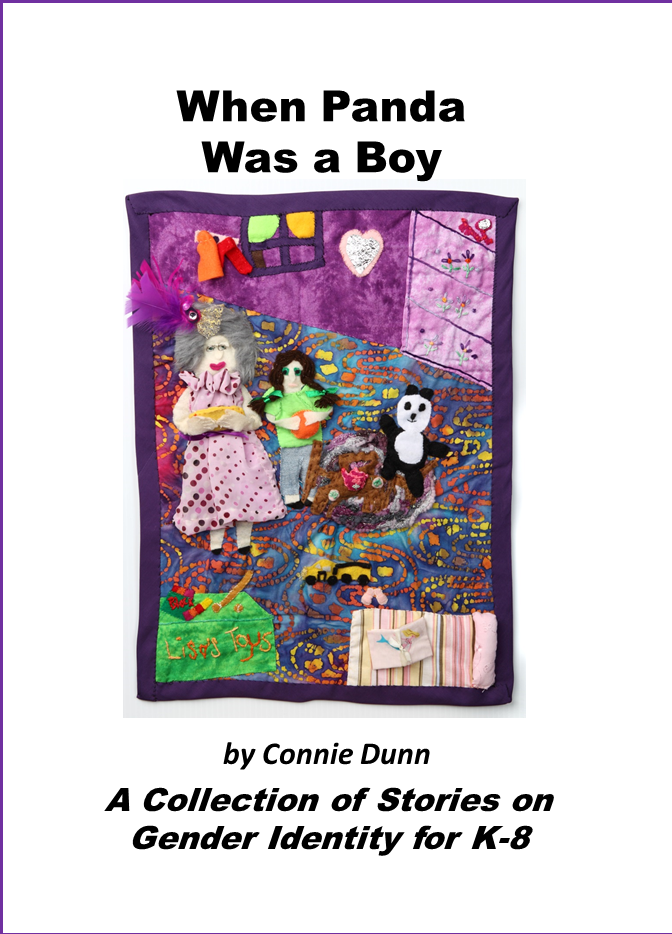
When I first introduced my new book When Panda Was a Boy: A Collection of Stories on Gender Identity for K-8, I was joyfully surprised that it was met with:
“This is so needed in the world!” “Where have you been?” “I wish I had this book when I was young.”

I actually was prepared for people’s negative responses over what can be a controversial topic. Instead, I have been pleasantly greeted with open arms, which definitely says a lot about how LGBTQ people of all ages are being met by the larger community. But make no mistake; this is still a “hot button” issue.

Panda- Cover

BUY HERE! http://publishwithconnie.com/whenpandawasaboyonamazon

When I first decided to write these stories, it came from my heart strings being pulled. I just couldn’t imagine anyone throwing out a child over their gender identity, whether that be trans (transgender, transsexual, or gender neutral), bisexual, gay, or lesbian. Our gender choices come from our DNA. No one wakes up one day and says, “Hmmm, I think I’ll be a ‘trans’ today.” Instead, it’s something that brews within their core being. Children as young as 2 ½ may begin showing tendencies toward the opposite gender than what their genitalia mandates. It doesn’t mean that they will ultimately be a trans. If a child is supported for who they are in all capacities, they will grow up to be who they are supposed to be.

One hurdle our society must get over is that people who are LGBTQ don’t seek it out as a rebellion; it is part of who they are. It’s in their DNA, which is not changeable. There are no choices to override DNA; it’s simply who you are just like your eye or hair color is part of who you are.

More youth and young adults are supporting trans by identifying as trans, which can be transgender, transsexual, or gender neutral. While most supporting people may be heterosexual; they also want to buck the binary system. There are many people who just don’t want to be “genderized.”

When young children begin to explore who they are between three and five years of age, sometimes as young as two-and-a-half, they explore gender. What happens is that our parents redirect us toward a stereotypical gender based on acceptable societal standards. When a little boy starts to play with dolls, a parent or other adult may say, “Boys don’t play with dolls!” So, they learn: “it’s not safe to be who I am.” These children stuff down these feelings. They don’t really go away; they just get pushed down inside of us. When a little girl wants trucks and cars, a parent will usually say, “Girls don’t play with cars and trucks, they play with dolls.”
Then, when these children go through puberty, another “who am I” comes up for them. This identity extends into gender but also includes their spiritual, religious, political, fashion, virtuous, non-virtuous, and so many other things. Gender is a huge part of who we are and what role we play in family and society. Again, these teenagers explore, but some will again be redirected to stereotypical gender roles. Once again, these youth learn: “It’s not safe to be who I am.” Maybe when these people get into their 20s, 30s, or even into midlife, they will again explore to find “who they are.”

This is also why I wrote When Panda Was a Boy. Young children explore gender, but they don’t often see themselves in storybooks unless they fit into that stereotypical role. Parents do not have the communication skills to deal with these issues, because it just isn’t discussed in most parenting circles. There are few role models in society, so my stories help parents find the right responses to support their children through their gender identity searches.

The stories in When Panda Was a Boy “are gentle stories and I approach the stories in a natural and age-appropriate way.

  • In “Amara’s Birthday Request,” Amara asks her mother for a penis. When Mom explores this with Amara, she finds out that Kamal, a boy at school, has told her that girls cannot sail a ship. Her mother assures her that she can do whatever boys can do. That’s all Amara needed to know.
  • In the story, “When Panda Was a Boy,” Lisa doesn’t want to have a tea party with Grandma, even though Grandma is wearing her fun tea party hat. Instead, Lisa wants to jump in mud puddles with Panda, her stuffed bear. When Grandma encourages the tea party, Lisa tells her that she’s all done being a girl. Lisa is very adamant about not doing any girl things. She tells her Grandma that she’s going to be a boy. Lisa finally asks Grandma if she will still love her if she’s Max or Fred. Grandma assures her that she loves Lisa even if she is Max or Fred.
  • In “Charlie Is a Girl,” we explore some of the obstacles that Christina faces in becoming Charlie. She takes charge in talking with the principal to make it all work out for her to start her school year as Charlie. She even takes a copy of the law that was passed giving her the right to be Charlie, but she finds the biggest item on the agenda was what “restroom” was Charlie going to use? They even worked that out by giving Charlie a key.

Handling things in age-appropriate ways are best, as long as that doesn’t mean stereotypical talk, such as “boys don’t dance, they play football” or “girls don’t play football, they dance.”

These types of statements may seem harmless, but what the child cannot say back to you is that he or she doesn’t feel that gender on the inside. We actually harm kids by telling them what is appropriate and what is not appropriate for their gender. Some crossover is natural. Sometimes it is a sign that there are tendencies toward being trans. Time always tells. Being supportive in this growth is just as important as helping them learn to walk or ride a bike.

When children feel guilty that they cannot be the child that you, the parent, wants them to be, they often cope with these feelings by trying to commit suicide or committing suicide. As parents, we want to help our children to become the best they can be. Why is it so hard to not see being lesbian, gay, bi-sexual, or transgender as part of who our child is? To ask them not be who they are is to reject them. Our children try, but failing in that, they move on to depression and manic depression and suicide. No one really wants that for their child.

Children who have a bad self-image, which LGBT children are prone to have, are at higher risk of being bullied. This behavior can also be fatal. A fragile child may not be strong enough to battle with a bully. Again, suicide is often what they see as their best choice, “so no one has to deal with the outcast.”

It is my hope that When Panda Was A Boy will help children in grades K-8 to feel normal about their gender choices, both in to whom they are attracted and to what gender they are inside. No matter what gender is on the outside, children as young as four or five may express their inner gender. Parents can help their children by being supportive and following their lead.
*****************************************

Connie Dunn is an author, speaker, and book writing coach. Her book, When Panda Was a Boy: a Collection of Stories on Gender Identity for K-8, is available in paperback and Kindle from Amazon.com (http://publishwithconnie.com/whenpandawasaboyonamazon).

Connie also teaches people to write and publish their books. You can find other information about her, her books, and courses at Publish with Connie (http://publishwithconnie.com/)

To receive a FREE Parent’s Guide: 10 Tips for Parents on Talking about Gender Identity to Your Children Sign up at: http://whenpandawasaboy.publishwithconnie.com.

Unknown's avatar

A DNF (Did Not Finish) Experience Does NOT Qualify for a “Review”

As a writer and as a reader, I am a genre outsider. I don’t write or read squarely within any genre except Speculative Fiction, but that is so large as to be considered a literary category and not one genre (see previous post, https://sallyember.com/2014/07/10/guest-post-the-politics-of-speculative-science-fiction/, for what belongs within Spec Fic).

Furthermore, I don’t usually like what is published in most of the #SpecFic subgenres. I don’t even like their plots or characters. Same goes for #Romance. I often have to label books Did Not Finish (DNF), although I reserve even that designation for books I read a great deal of before abandoning.

DidNotFinish_purple_Banner

image from http://www.prettyinfiction.com by Jesse Burgoyne

Here are the reasons that I often Did Not Finish (DNF) a book. Books on my DNF list feature:

  • zombies and other horror characters/plots, especially “damsel in distress”;
  • dystopian, apocalyptic downers;
  • space wars, medieval wars, any other wars;
  • combat/violence masquerading as plot points;
  • instant, superficial romance (humans with humans or humans with aliens, shapeshifters, vampires or whatever);
  • gratuitous sex or violence (meaning, does not advance the character development or plot, and appears every so many pages, anyway);
  • military characters, past/future or pretend;
  • “instant” solutions, usually involving a main character’s finding a lover, to serious grief or other problems;
  • sexist, racist, misogynistic, heterosexist/homophobic, classist, ageist and other oppressive depictions of characters, even if they’re “realistic” for the characters or eras
  • clichès, trite plot twists, 2-D characters, and /or other types of bad writing
  • too many typos, grammar or other mistakes that reveal the absence of or very poor editing
  • nothing interesting, so I’M BORED.

As you might imagine, this list includes most speculative fiction and romance books.

You now understand the main reason I almost never do “review swaps.” I so strongly dislike other people’s books/stories, even when they’re relatively well-written, that I can’t even read past the first few pages for most of them. I have tried to read and review them, especially when they are well-written or the author is someone I wish to support for other reasons, but I just can’t appreciate what I don’t like.

Unlike other reviewers who find themselves unable to finish a book because they don’t like it, I don’t post a “review” of an unfinished book unless it’s written by a well-established author whom many others are praising. In those cases, I post my dissenting viewpoint just to round out the PR for that book, knowing my minority, low opinion won’t crush or crash them.

Otherwise, I don’t post my many DNFs with ratings and I do not post “reviews.” I strongly wish other DNF readers would adopt my policy.

It is completely unfair for anyone to give a “professional” opinion (which is what a review purports to be) of a piece of literature the reviewer hasn’t completed. I’ve had some “reviewers” read a few dozen pages of my 300+-page books and then have the audacity to post a ZERO or one-star “review.” What is the justification for that? When they label a sarcastic or dissatisfied DNF response after having read only a few pages a “review,” that infuriates me.

I don’t mind that some readers DNF my books. I understand that some don’t like them. I also encourage readers to comment on any books they want, all they want. As a frequently dissatisfied reader, myself, I empathize with DNF experiences. Sometimes, I explain.

I object strenuously, however, when these DNF readers label their preliminary reactions and comments a “review.” Even more heinous is that some have the gall to rate their DNF books.

In what other profession or situation does a “professional” who has had only a brief experience with the piece become entitled to the right to judge it? Can an Olympic judge watch just a few seconds of the gymnast’s floor exercise routine, then rate it? Do we allow a jury to hear only one witness or just a few words of testimony and give a verdict? When do we ever allow a teacher to give a semester’s grade after briefly meeting the child or giving just one quiz?

DeadLast

image from mackenzian.com

Yes: not all readers finish books or even read most of a book. I am a reader who has a list of titles pages long I have done that with because they did not hold my interest. However, for fairness and professionalism, I strongly request that readers and especially reviewers who DNF not to rate or review those books. Please.

It is fair and helpful, meanwhile, for professional reviewers and avid readers to maintain a DNF list and even to share it. Better would be that we explain a little about our DNF reasons, but that is not expected or required (we’re busy!).

dnf-recap

image from mylifeinbookss.wordpress.com

I hereby proclaim: these are fake reviews, due to the readers’ DNF status. DO NOT READ DNF “reviews.” DO NOT BELIEVE WHAT THEY WRITE. DO NOT SUPPORT “REVIEWERS” who postDNF “reviews.”

One bonus: Within a DNF‘s comments are sometimes witty lines. Those I am pleased to re-post, just for fun.

Meanwhile, back in authors’ support land: please don’t ask me to do a review swap. I mostly do not do reviews, anyway. I do not consider myself a “professional” reviewer. I am just an avid reader and an author.

When I do choose to read a book and finish it, I will post a review. I promise.

Mostly, these days, #Iamwriting my books and blog posts.

Best to you all.

Unknown's avatar

Good #Writing DOES Require #Talent, Not just Hard Work

I really got inspired last week (frustrated, actually), by a post written by a colleague about supporting ALL writers. I contributed this comment, below, on her blog.

In my recap (I waited a week to make sure I wanted to post this), below, I update you on the online “conversation.” First, I quote from her blog, link to it, and post my original comment in its entirety. Images added for fun.

Comments

from blog.performics.com

In response to “You Don’t Have to Be Good (at Writing)” by Jordan Rosenfeld

Good #Writing DOES Require #Talent, Not just Hard Work by Sally Ember, Ed.D.

original post on http://jordanrosenfeld.net/you-dont-have-to-be-good-at-writing/

posted on 7/9/14

quotes from Jordan’s post:
“…’good’ is arbitrary; you’ll be good enough for some, while others will reject you. It’s a standard you’ll never live up to because it’s subjective and always changing.

“Beating yourself up over being ‘not good enough’ is a form of stopping up the free flow of creative energy. It can even be a form of self-sabotage. In the worst case scenario, it’s an excuse to not have to get any better at it; a statement of ‘This is just the way I write.'”

“False! This is how you write at this time, in this moment, with whatever resources are at your disposal. Every time you read a fantastic book, your writing has a chance to crack open. Every time you hear a lecture, attend a class, or pick up a writing guide, you can learn or see something in a new light, and your writing changes. Time and distance also change how you see your writing.”

“What you can be is committed to continually probing the depths of your work, or taking time to learn something you struggle with, or just stepping back completely and reading when your own work feels too unwieldy.”

“These voices of doubt and uncertainty are gremlins sent to test our creative mettle, to strengthen us up. The more we fend them off by patching the leaks they tear open inside us with further work, the more power we have to overcome them. Like the ‘dark side’ that calls to us with its illusion of power, its promise of the familiar, which is cozy in a bleak sort of way.”

“Shine some serious, badass light on those demons when they come, instead. Write them into a new narrative.”

“Don’t worry about being good. Be enough. Be committed.”

My comment:
Hi, Jordan,

I have to disagree. I am not of the opinion (as many are; seemingly, you) that anyone who wants to “share” should be honored for doing so regardless of the quality of their content and writing. There are a lot of inadequate writers who self-publish and some who get published by trad publishers who never should have had their writing seen by others.

Some people can’t write. What they do write is unclear, repetitious, uninteresting, banal, riddled with cliches and lapses in logic or sense. I’m not just talking about too many typos or grammatical problems. I’m talking about bad writing. It exists. It needs to be called out.

bad writing meme

from http://www.memecenter.com

About thirty years ago, in an effort to combat overly critical adults’ impact on children and imitating the Special Olympics’ methods, most parents, recreation and education people began to make huge mistakes: participation became the same as surpassing. Everyone in the Pre-K “graduated” to Kindergarten. Everyone at a camp or club got a ribbon for attending.

Result? People who are now 45 and younger have the mistaken belief that everyone is “great”; it’s other people who make them “feel bad.” Self-esteem-building was taken to such an extreme as to make actual achievement or superiority meaningless. An overly developed sense of entitlement goes hand-in-hand with an inability to discern good from bad. I’m sorry to point it out, but your post is a prime example of this faulty thinking.

Real life: not everyone wins, nor should they. Ask Brazil this morning! Poor performance should NOT get a medal, and not all performances are equal.

Not everyone is talented, skilled, or worthwhile in every area. It’s fine to acknowledge this and not in any way demeaning. In fact, applauding mediocrity makes it indistinguishable from excellence, or worse, allows everyone who can put words on paper to call themselves a “writer.” That makes excellent or even passably good writing impossible for most people to recognize or value.

Not everyone should be encouraged to be a writer. Really. You did that person a serious disservice by not evaluating his work objectively.

We have no trouble saying that people who are “tone-deaf” or clumsy shouldn’t be professional singers or dancers. Sing in the shower; dance in a club or at home. But, we don’t encourage them to call themselves artists. Why can’t we use the same discernment about untalented authors?

What does “be enough” mean when we should be talking about quality, not quantity? It’s fine to be “committed” to self-expression; commitment doesn’t make a person a good writer.

Some people really AREN’T “any good” and should not be encouraged to write for the public. Tell them: journal all you want. Or, get a ghostwriter, if your story is compelling and you can’t write it well.

Please stop encouraging everyone equally. You aren’t being an editor, then; you’re being a cheerleader for the entire world.

Don’t encourage inadequate writers that no amount of coaching can improve to share their drivel. Not every story should be told by every storyteller.

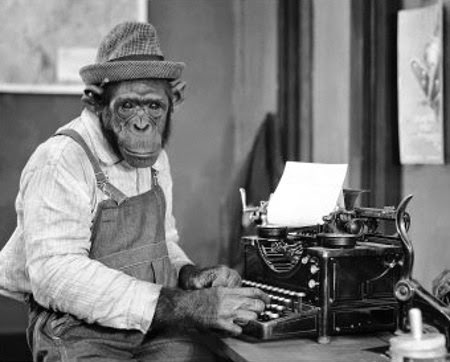
monkey-typing

from multicultclassics.blogspot.com

Some people really can’t tell jokes, either, and should not. I’m one of those.

Best to you,

Sally

Since that day, I thought a lot more and want to add these components:

1) Most people are perfectly willing to assign the label of “bad” to other art. Why is that so much easier to do than to label someone’s short story, novel or article as poorly written?

2)I’m not looking for perfection. I want high standards to be understood and upheld (but not at the expense of heritage or gender differences). I want people who are in positions of authority in publishing, editing and education to help explain and maintain standards. Give writers something obvious to aspire to (with a healthy range of “good” within many genres and types of excellence).

3) Paying for awards and buying one’s accolades have to stop. We as readers and authors shouldn’t allow any authors to buy “positive” reviews, “win” a prize they’ve paid for, stuff the review “box,” or otherwise corrupt our understanding of what is excellent. We must speak out about these corrupt practices and not be sucked into them ourselves, however tempting.

UPDATE: Many people have commented in the last week on Jordan’s post about how awful I am to have shared these opinions. Some say that any typos I ever made negate all of my opinions’ value (!?!). Some say that I don’t have the right to disagree on this blogger’s site with her posts (Jordan herself actually invited me to stop visiting since she thinks I don’t read her posts carefully enough).

The comments from some of the others highlight the unfairness and absurdity of insisting that everyone who wants to express themselves on paper/online is equally valuable as a professional writer. Just because everyone can publish anything doesn’t mean they should. Who disagrees?

I’m not demeaning the validity of self-expression. But, everyone who bangs on a piano is not a professional pianist. Everyone who jumps around is not a professional dancer. Does anyone dispute this? Why is it so difficult (and, obviously, painful) for amateurs and those whose words are best kept private to be told the truth?

There is “good” writing, albeit subjectively assessed, and I agree that the standards are constantly changing and open for dispute. Don’t I have the right to state my own standards?

Yes, some writers improve with practice, and everyone who writes might improve. What if they don’t?

Are all writers to be considered “professionals” and deserving of praise just because, at this point in time, anyone can publish? Yes, completing an entire book is an accomplishment. But, are all accomplishments equal? Prize-givers and reviewers don’t believe that is true.

Why am I being lambasted for pointing out my reasons for wanting “writing coaches” to be able to be professionally helpful in assessing them and then be honest with their clients, while personally being as encouraging as they choose? Wouldn’t you want an editor you are paying to edit to–oh, I don’t know–edit? Why are these distinctions so dreaded?

Worst are responders to this “conversation” who are petty and mean, calling me names, disparaging me and my writing, because I dared to disagree with the blogger and provided reasons these commenters didn’t like. Really? That is the way discourse operates on these sites, now? More trolls than writers, there.

I made a professional comment. There should have only been professional replies. I was NOT being a troll. I respect and admire Jordan, usually, and enjoy her posts. I wouldn’t allow that kind of personal, disrespectful disparagement to be approved as comments on my site.

Guess my comments struck a nerve. Looking forward to your opinions! Go read the other comments, if you want.

I did get one bonus, though: someone found a typo on my site’s ABOUT page, which I then fixed. Thanks!

BTW: I was sent several private messages, from people who didn’t want to “join the fun” and then get blasted, I guess. They encouraged and thanked me, agreeing with my opinions and adding their own. Too bad they’re too scared of the blow-back to go public with their opinions.

P.S. to Jordan: I was not disparaging you by labeling your supportive actions “cheerleading,” merely being descriptive. I WAS an actual cheerleader, an achievement earned by having talent, being committed, acquiring and honing skills, and (unfortunate and unfair, but pertinent) being “popular.”

Similarly, as hard as it is for some to acknowledge, professional writers must also fulfill all of these to succeed. Everyone “in the stands” can and is encouraged to cheer. However, at my school in 1968, only eight of over one hundred girls each year were selected to be cheerleaders.

How many journal writers and home bloggers are going to make the “cut” to become professional writers? What is required? I hope you help them determine their eligibility and assess their chances, not just keep cheering.

Unknown's avatar

‘BOT v. HUMAN: Score 2 for the Human! Transcript of Actual Online Chat with AT & T “Service Representative,” July, 2014

I had the occasion today to have an Online Chat with a “Service representative” on what is called (hilariously) the “LIVE PERSON” chat function on AT & T.

What a great person this corporation is!

Complete transcript is below. Verbatim. All grammatical, punctuation and other errors of syntax are #AT&T’s.

Their “Representative” is posted in BOLD. Comments welcomed. My sideline comments are in

ITALICS.

Thank you for choosing AT&T. A representative will be with you shortly.
You are now chatting with David.

Sally Ember: HI, David

David: Hello my name is David. Thank you for allowing me to be your specialist today. How may I assist you?
David: Good Morning Sally.
David: How are you doing today?

So, already, I’m suspicious. This much of an intro and the repetition scream ‘BOT to me.

Sally Ember: I just paid my bill, but there was an unexpected $8 “late charge” on it. I was in a terrible accident April 6 and was unable to keep up with bills (concussion; couldn’t use oomputer or track things for a while). I talked to someone at UVerse more than once as they called me to get me to make phone payments (which I appreciated), but no one said anything about any late charges. I am very low-income.Please remove this charge.
Sally Ember: Thanks.

David: I am so sorry to hear about your accident Sally.

Wow! They scripted this ‘bot pretty well!

Sally Ember: I would also like to talk about how to lower my bill.
Sally Ember: I’ve talked to many others and they all say my internet bill is way too high.

David: As I understood you need to get the Late payment charge of $8.00 removed from your account. Correct?

A little slow on the uptake, though. Can only process one task at a time?

Sally Ember: Yes. And I’d like to lower my bill overall.

David: No problem.
David: I can help you with that!
David: Please allow me a moment, while I access your account.

Sally Ember: Are you human or a ‘bot?

Why not ask? This is one of those questions it can’t answer properly, regardless.

David: I am sorry that I did not get your last statement.

Sally Ember: Most people get internet services for a lot less than $54/month.

David: Okay.

“Okay” what? Witness is nonresponsive.

Sally Ember: You don’t understand because you’re a ‘bot.
Sally Ember: I want a person, please.
Sally Ember: LIVE PERSON please! This works on the phone. Not here.

David: Yes, I am here to help you with this.
David: Yes, I am.

Some scripter thinks having it repeat itself is helpful. NOT.

Sally Ember: No, you’re not.

David: Don’t worry.

“Be happy” is supposed to come next. Missed its cue.

Sally Ember: I want the late charge removed and I want my internet bill to be under $40/month. Starting TODAY.

David: Please bear with me so that I can go ahead and help you with your concern.

See? Can only handle one at a time.

Care-O-Bot

Maybe it looks like this? image from commons.wikimedia.org

Sally Ember: ‘bot ‘bot ‘bot

I know; “don’t taunt the ‘bot.” Well, it has no feelings.

David: Please allow me a moment to access and review your records.

They don’t even both to write a different script for the online “LIVEPERSON” ‘bot than for the phone ‘bot. BIG CLUE.

Sally Ember: ‘bot
Sally Ember: They should add to your script: “I am a human.”
Sally Ember: LOL
Sally Ember: No human would every say that, though.
Sally Ember: Except to an alien.

David: As I am checking your account details, I see that you have been charged $8.00 as the late payment charge.

Can’t engage in any other task until task one is completed? Interesting.

Sally Ember: Yes. Please remove this.

David: Alright.

I wish the scripter knew how to spell “ALL RIGHT.”

Sally Ember: So, I will now have an $8 credit?
Sally Ember: Because I already paid that charge.
Sally Ember: Lower my bill, please.

David: Yes
David: I am crediting you $8.00 as you were not able to pay the bill on time due to the problem faced by you.

It can’t even remember I had an accident and has to resort to generic language, here? I’m hurt.

Sally Ember: I want to pay less than $40/month.
Sally Ember: Thank you.
Sally Ember: Change my monthly rate to $39.90/month, please.

David: Your bill has bill credited with $8.00.

Victory #1!

Sally Ember: Good. Lower my monthly rate, now.

Got to be persistent with these ‘bots or they just won’t respond.

David: Please check your updated account balance.

Sally Ember: Thank you.
Sally Ember: Lower my monthly bill to $35.00

David: Now let me check with lowering your bill.

Excellent. New task.

Sally Ember: Thank you. I am over 55 and unemployed.

I hope these are the right key words/phrases.

David: I can understand your concern and do have complete sympathy with you.
David: Please stay connected.

Sally Ember: Excellent. Apply that ‘bot compassion to lower my bill.

“Sympathy”? From a ‘bot? I don’t think so.

Sally Ember: Other people have internet service in which they are served by HUMANS for under $40/month. I want that.

David: Let me check that for you.
David: Please have patience.

Sally Ember: Oh, you have no idea.
Sally Ember: I am the epitome of patience and kindness. Just like you.

David: Thank you.

For what? Oh. You are programmed to thank me for having patience?

Sally Ember: LOL
Sally Ember: If you are human, they have given you a terrible script to use.

David: Sally, what I can do for you to lower your bill down is that I can get your bill down to $46.00.

Sally Ember: $46 is better, but not low enough. Keep going.
Sally Ember: $35 is better.

David: I make sure that your bill will  not increase now.

This ‘bot is using English even more poorly for this task. Coincidence? I don’t think so.

Sally Ember: A T & T has billions. It can afford to lower my bill $20 and not even notice.

David: I am really very sorry that I am not able to get your bill lower than what I have offered you.

No response to my corporation baiting, eh? Fine. Take the ‘bot high road.

Sally Ember: Tell your ‘bot scripter for you to be kinder and more generous, please.
Sally Ember: I bet you are. $46 is fine. Thanks.

David: Sally, I have tried my best to help you with your concern.

Oh, oh. Have to make sure it doesn’t take away my reduction. Have to be more direct, now. Show it who’s boss.

Sally Ember: I do thank you. Please lower my bill to $46.

David: You are most welcome.
David: Yes, I have lowered your bill to $46.00/month.

Wow! I feel doubly welcomed, now.Victory #2, sort of!

Sally Ember: Gee. All I had to do was ask. Excellent!

David: Is there anything else I can assist you with?

Sally Ember: Thank you. You are dismissed.
Sally Ember: Sleep mode.

I’m taking control, now. “Orders from humans must be obeyed” has got to be in its programming somewhere.

David: Thank you for being the best part of AT&T. Take good care of yourself & have a wonderful time with your family and friends ahead!!

The “big finish” is a bit much, don’t you think?

So, limited, but mostly a success. ‘BOT v. Human: Score 2 for the Human!

Great, AT & T! Your fake LIVE PERSON / ‘bot mostly works!

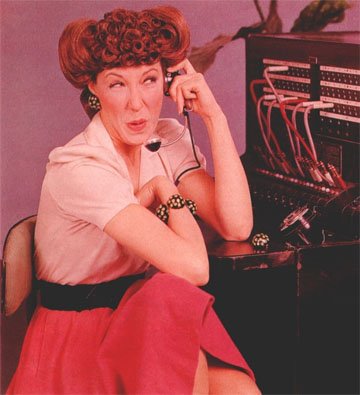
But, here is the LIVE PERSON I wished you had! ERNESTINE! (a Lily Tomlin character, on Laugh In, circa 1969)

Ernestine Llily_tomlin

image from http://www.gracegritsgarden.com

Unknown's avatar

‘BOT v. HUMAN: Score 2 for the Human! Transcript of Actual Online Chat with AT & T “Service Representative,” July, 2014

I had the occasion today to have an Online Chat with a “Service representative” on what is called (hilariously) the “LIVE PERSON” chat function on AT & T.

What a great person this corporation is!

Complete transcript is below. Verbatim. All grammatical, punctuation and other errors of syntax are #AT&T’s.

Their “Representative” is posted in BOLD. Comments welcomed. My sideline comments are in

ITALICS.

Thank you for choosing AT&T. A representative will be with you shortly.
You are now chatting with David.

Sally Ember: HI, David

David: Hello my name is David. Thank you for allowing me to be your specialist today. How may I assist you?
David: Good Morning Sally.
David: How are you doing today?

So, already, I’m suspicious. This much of an intro and the repetition scream ‘BOT to me.

Sally Ember: I just paid my bill, but there was an unexpected $8 “late charge” on it. I was in a terrible accident April 6 and was unable to keep up with bills (concussion; couldn’t use oomputer or track things for a while). I talked to someone at UVerse more than once as they called me to get me to make phone payments (which I appreciated), but no one said anything about any late charges. I am very low-income.Please remove this charge.
Sally Ember: Thanks.

David: I am so sorry to hear about your accident Sally.

Wow! They scripted this ‘bot pretty well!

Sally Ember: I would also like to talk about how to lower my bill.
Sally Ember: I’ve talked to many others and they all say my internet bill is way too high.

David: As I understood you need to get the Late payment charge of $8.00 removed from your account. Correct?

A little slow on the uptake, though. Can only process one task at a time?

Sally Ember: Yes. And I’d like to lower my bill overall.

David: No problem.
David: I can help you with that!
David: Please allow me a moment, while I access your account.

Sally Ember: Are you human or a ‘bot?

Why not ask? This is one of those questions it can’t answer properly, regardless.

David: I am sorry that I did not get your last statement.

Sally Ember: Most people get internet services for a lot less than $54/month.

David: Okay.

“Okay” what? Witness is nonresponsive.

Sally Ember: You don’t understand because you’re a ‘bot.
Sally Ember: I want a person, please.
Sally Ember: LIVE PERSON please! This works on the phone. Not here.

David: Yes, I am here to help you with this.
David: Yes, I am.

Some scripter thinks having it repeat itself is helpful. NOT.

Sally Ember: No, you’re not.

David: Don’t worry.

“Be happy” is supposed to come next. Missed its cue.

Sally Ember: I want the late charge removed and I want my internet bill to be under $40/month. Starting TODAY.

David: Please bear with me so that I can go ahead and help you with your concern.

See? Can only handle one at a time.

Care-O-Bot

Maybe it looks like this? image from commons.wikimedia.org

Sally Ember: ‘bot ‘bot ‘bot

I know; “don’t taunt the ‘bot.” Well, it has no feelings.

David: Please allow me a moment to access and review your records.

They don’t even both to write a different script for the online “LIVEPERSON” ‘bot than for the phone ‘bot. BIG CLUE.

Sally Ember: ‘bot
Sally Ember: They should add to your script: “I am a human.”
Sally Ember: LOL
Sally Ember: No human would every say that, though.
Sally Ember: Except to an alien.

David: As I am checking your account details, I see that you have been charged $8.00 as the late payment charge.

Can’t engage in any other task until task one is completed? Interesting.

Sally Ember: Yes. Please remove this.

David: Alright.

I wish the scripter knew how to spell “ALL RIGHT.”

Sally Ember: So, I will now have an $8 credit?
Sally Ember: Because I already paid that charge.
Sally Ember: Lower my bill, please.

David: Yes
David: I am crediting you $8.00 as you were not able to pay the bill on time due to the problem faced by you.

It can’t even remember I had an accident and has to resort to generic language, here? I’m hurt.

Sally Ember: I want to pay less than $40/month.
Sally Ember: Thank you.
Sally Ember: Change my monthly rate to $39.90/month, please.

David: Your bill has bill credited with $8.00.

Victory #1!

Sally Ember: Good. Lower my monthly rate, now.

Got to be persistent with these ‘bots or they just won’t respond.

David: Please check your updated account balance.

Sally Ember: Thank you.
Sally Ember: Lower my monthly bill to $35.00

David: Now let me check with lowering your bill.

Excellent. New task.

Sally Ember: Thank you. I am over 55 and unemployed.

I hope these are the right key words/phrases.

David: I can understand your concern and do have complete sympathy with you.
David: Please stay connected.

Sally Ember: Excellent. Apply that ‘bot compassion to lower my bill.

“Sympathy”? From a ‘bot? I don’t think so.

Sally Ember: Other people have internet service in which they are served by HUMANS for under $40/month. I want that.

David: Let me check that for you.
David: Please have patience.

Sally Ember: Oh, you have no idea.
Sally Ember: I am the epitome of patience and kindness. Just like you.

David: Thank you.

For what? Oh. You are programmed to thank me for having patience?

Sally Ember: LOL
Sally Ember: If you are human, they have given you a terrible script to use.

David: Sally, what I can do for you to lower your bill down is that I can get your bill down to $46.00.

Sally Ember: $46 is better, but not low enough. Keep going.
Sally Ember: $35 is better.

David: I make sure that your bill will  not increase now.

This ‘bot is using English even more poorly for this task. Coincidence? I don’t think so.

Sally Ember: A T & T has billions. It can afford to lower my bill $20 and not even notice.

David: I am really very sorry that I am not able to get your bill lower than what I have offered you.

No response to my corporation baiting, eh? Fine. Take the ‘bot high road.

Sally Ember: Tell your ‘bot scripter for you to be kinder and more generous, please.
Sally Ember: I bet you are. $46 is fine. Thanks.

David: Sally, I have tried my best to help you with your concern.

Oh, oh. Have to make sure it doesn’t take away my reduction. Have to be more direct, now. Show it who’s boss.

Sally Ember: I do thank you. Please lower my bill to $46.

David: You are most welcome.
David: Yes, I have lowered your bill to $46.00/month.

Wow! I feel doubly welcomed, now.Victory #2, sort of!

Sally Ember: Gee. All I had to do was ask. Excellent!

David: Is there anything else I can assist you with?

Sally Ember: Thank you. You are dismissed.
Sally Ember: Sleep mode.

I’m taking control, now. “Orders from humans must be obeyed” has got to be in its programming somewhere.

David: Thank you for being the best part of AT&T. Take good care of yourself & have a wonderful time with your family and friends ahead!!

The “big finish” is a bit much, don’t you think?

So, limited, but mostly a success. ‘BOT v. Human: Score 2 for the Human!

Great, AT & T! Your fake LIVE PERSON / ‘bot mostly works!

But, here is the LIVE PERSON I wished you had! ERNESTINE! (a Lily Tomlin character, on Laugh In, circa 1969)

Ernestine Llily_tomlin

image from http://www.gracegritsgarden.com

Unknown's avatar

Why posting about fruit is insulting to women: DO NOT PARTICIPATE in this year’s “Breast Cancer Awareness Campaign”

A feminist’s analysis of this year’s “BREAST CANCER AWARENESS campaign”: the reasons that I’m not participating and I’m telling all.

Call me a “spoilsport,” if it makes you feel better. I am frustrated and unwilling to “go along” with this year’s “Breast Cancer Awareness” Facebook “campaign” (and anywhere else it’s trying to occur) for these reasons:

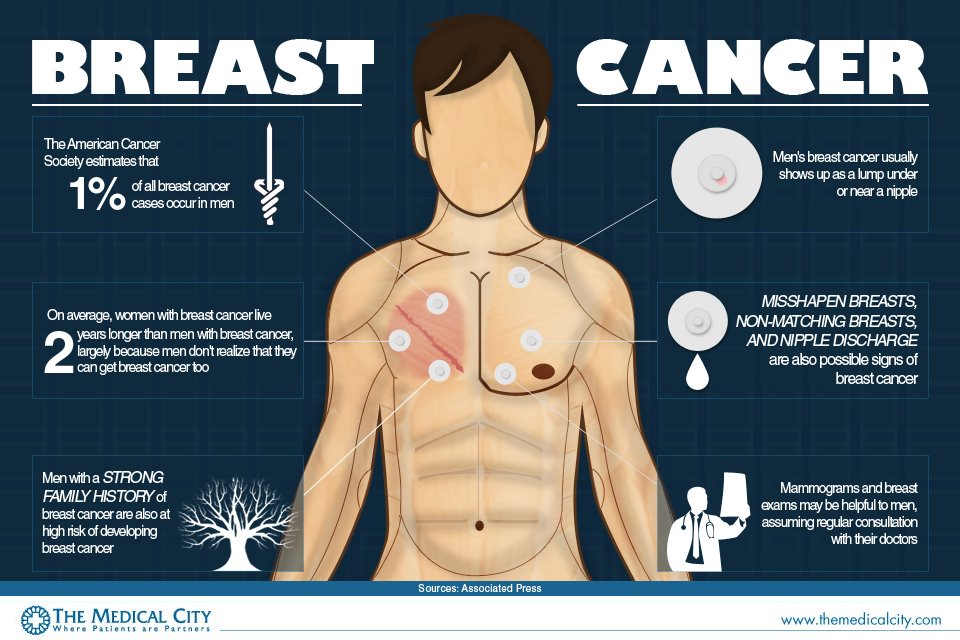
1) Men also get breast cancer. They usually die from it sooner and more often precisely because there is very little “awareness” about males’ getting breast cancer;

male breast cancer

image from takboprintipe.wordpress.com

2) A “cuteness” factor of a zillion does NOTHING to help fence-sitters, if there even are any: how could there be, when 1 in 4 women gets breast cancer? Who could be “unaware” of it mystifies me;

incidences of all cancers 2013

from http://www.cancer.org, “Estimated New Cancer Cases* in the US in 2013. Estimated New Cancer Cases* in the US in 2013. Cancer Incidence Rates* by Sex, US, 1975-2009”

3) Waste of time, networking, and energy. I see nothing in any of these “campaign” solicitations that has a call to action, a place to donate for cure research, or ANYTHING but cuteness and “don’t tell the men.”

All this, for what?

BC colors facebook-win2

image from gerson.org

4) BREAST CANCER IS NOT SEXY, just because it afflicts one’s breasts. This year, it’s fruits. Each fruit is supposed to signify the poster’s MARITAL or RELATIONSHIP status. As if the entire campaign weren’t insulting enough to the intelligence of adult women, THIS is the type of device it uses every year. One year, it was some lame statement that was supposed to indicate unusual places that we like to have sex, but really was about where we put our PURSES (I don’t even carry a purse 90% of the time; bad for my back and shoulder). Another year (see above), our bra color or underwear color or other such nonsense.

It’s all supposed to be pseudo-titillating and sexual, which is another gripe I have.

So, I’m blowing its cover, here. Tough rocks, cutesy women.

I’ve had too many friends and relatives DIE of this horrible disease to find it at all cute or funny, anyway.

Here is what “feminism” actually means.

Feminism

With this information in front of you, how could you NOT be a feminist? You can have fun; some things can be cute. I have an excellent sense of humor. But some situations require serious ACTION.

Here is the disclosure/invitation post:

“Hi Ladies , so here it is that time of year again when we try to raise awareness of breast cancer through a game. It’s very easy and I would like all of you to participate. Two years ago we had to write the color of our underwear on our wall. Men wondered for days what was going on with the random colors on our walls. This year we make references to our love life status as a flavor. Do not answer this message, just post your word on your wall AND send this message privately to all the girls on your friends list. Blueberry is for single, Pineapple is for it’s complicated, Raspberry is for I don’t want to commit, Apple is engaged, Cherry is in a relationship, Banana is married, Avocado is I’m the better half, Strawberry is can’t find Mr.Right, Lemon is I want to be single, Raisin is I want to get married to my partner. Last time the underwear game was mentioned on TV, let’s see if we can get there with this one. Copy and paste this message into a new message and send it to your friends, then update your status with your answer. DON’T TELL THE GUYS.”
[I couldn’t stand all the misspelled “it’s,” so those I fixed. The rest I left “as is.” Pathetic, for a piece of writing; another gripe.]

HORRIBLE. Don’t do this inane “campaign.”

SPREAD THE WORD about breast cancer and give to fund the cures: http://www.bcrfcure.org/

BCRF logo

Unknown's avatar

#Sexist, #Racist Dress Codes? What is “Proper #School Attire” in the 2010’s?

There have been numerous stories in social media pulled from the news regarding dress codes and who supposedly is violating them in public schools. These stories usually focus on the sexist or racist policies or sexist/racist implementations of vague policies and I usually agree with most of what they say.

We read about African-American girls’ natural hair is being disgraced and disallowed. We read about many minority girls and boys whose choices of colors are questioned and assumed to be gang-related. We read about girls who are sent home because their choices of clothing are deemed to be “too distracting for the boys,” as if the boys’ mental states are their responsibilities.

HOWEVER…

What is the world are kids wearing to school these days?

bra-strap-visible

image from sunshinemaryandthedragon.wordpress.com

When our public schools first relaxed the dress codes, I had just started high school (tenth grade, St. Louis County, Missouri, 1969). When I say “relaxed,” I mean abandoned. We went from being sent home for having skirts that were “too short” and only being allowed to wear pants on “pants day” for girls to there being NO RULES at all. One year, almost a nun. The following year, could be a hippie, harlot, burlesque dancer, athlete, beatnik intellectual or whatever we wanted, costume-wise.

It has been a downhill slide ever since, except for those schools that read the research which claimed that youth dressed in ad surrounded by those wearing more “respectful” and less “distracting” clothing learned “better.” These schools decided to incorporate uniforms to dispense with the entire parade of values, class conflicts, racism, sexism, gang colors and underwear displays most schools were dealing with by then. I applaud them, even though I am sure most of the kids hate the uniforms. It is much simpler, cheaper, and easier on everyone to have school uniforms.

school uniforms

image from galleryhip.com

However, when schools don’t cover the costs of uniforms for indigent families, what then?

Or, when schools don’t utilize uniforms, we have the current chaos involving underwear displays by many, questionable appropriateness of attire, skin in usually private areas or those reserved for the beach or pool showing in math class, and gang colors’ problems. Then, some have tattoos, piercings, transgender clothing, other body art and hairstyles that bother some adults enormously.

teen boy boxers showing

image from http://www.sptimes.com

I wish kids had more self-respect. I wish parents exerted more authority and control. I wish schools would be clearer and more fair in their policies and enforcement. I wish transgender- and homo-phobia, sexism and racism were not in the mix.

No one is granting my wishes, so far.

UK girls school clothes

image from http://www.dailymail.co.uk

We are left with random, biased enforcement that is sexist, racist, individual- or group-oriented (often homo- or trans-phobic) nastiness visited on minors by petty administrative bureaucrats (paid by our tax dollars), all because someone in authority doesn’t like what they’re wearing/not wearing/showing.

transgender prom queen

image from weblogs.sun-sentinel.com

See? We CAN do better.

If these schools with so many dress code “violation” problems refuse to become more clear, fair and obvious in their codes and enforcement and also refuse to require uniforms, the ACLU or some similar entity needs to step in and protect these kids’ rights to free expression through body art, clothing and hairstyles.

belly piercings

image from teenmomtalk.com

When schools provide more interesting material to view, interact with and learn–more important things to think about and see–than each other’s attire, students will find attire to be less distracting. There is that.

Unknown's avatar

Important Perspectives on #Book #Reviews for #Authors

Let me say first how grateful I am to each of the mostly self-selected, unsolicited and all UNPAID reviewers, most of whom I never met or heard of prior to their reviewing my book. Each of them gave a lot of their time and consideration and most read (or said they read) the whole book. THANK YOU, Book Reviewers!

I especially thank those who review indie, first-time, ebook authors of sci-fi (hardly any do!).

bookreviews_logo

I am a newly self-published, indie author of mixed genre ebooks. Right there, that puts my book into five categories that disfavor me in the reviews department.

Then, add that my genres are

science-fiction/romance/paranormal/multiverse/utopian/speculative fiction

and that my audience is also mixed:

adults, new and young adults

and we begin to understand how my first ebook, This Changes Everything, Volume I of The Spanners Series, could get a variety of responses and reviews.

To date (about 6 months after publication), TCE has 13 reviews on Amazon and a few elsewhere. These reviews break down roughly like this:

This-Changes-Everything----web-and-ebooks

5-Stars: 25%

4-Stars: 25%

3-Stars: 25%

2-Stars: 0%

1-Star: 25%
Did Not Finish (also gave it 1-star or 3-stars, by the way): 2%, which adds up to 102%, since these are duplicates

My summary: About one-quarter of these reviewers loved my book (5 Stars); about one-quarter hated it (1 Star). Most reviewers were mixed, with the predominant attitude’s being positive (50% gave it 3 or 4 Stars) rather than negative (no 2-Stars and 25% 1 Star).

What could any author conclude from this? NOT MUCH!

Just to get some perspective, check out some well-known authors’ book review stats, for first volumes or breakout books, on Amazon: Robert Heinlein, J.K. Rowling, and Hugh Howey.

Robert Heinlein‘s Stranger in A Strange Land (his “breakout” and most popular full-length, sci-fi novel, and one of my all-time favorites/inspirations), has about 870 reviews on Amazon for this book.

Stranger cover

5 Stars: 57%

4 Stars: 14%

3 Stars: 13%

2 Stars: 9%

1 Star: 8%

My summary: More than half loved it (5 Stars). About half were less than enthusiastic, with about one-quarter liking it (3 and 4 Stars), and almost one-fifth disliking it (2 and 1 Stars).

What did one of Heinlein’s 1-Star reviewers have to say about this much-revered book? “I know it’s one of the classics, and supposedly one of the best sci-fi novels of all time, but I actually got so bored at parts of this book that I started skimming somewhere in the middle it.

How about J.K. Rowling‘s first volume of the renowned Harry Potter series, The Sorcerer’s Stone? How is this book doing? It has about 8500 reviews. Unsurprisingly, this book has garnered about 10 times the number of reviews as Heinlein’s (published in 1968).

Harry Potter vol I

5 Stars: 85%

4 Stars: 10%

3 Stars: 3%

2 Stars: 1%

1 Star: 1%

My summary: Overwhelmingly adored (95% gave it 4 or 5 Stars), this book still has detractors. Even J.K. Rowling, one of the most successful and beloved authors of all time, can’t please about 3% – 5% of these reviewers (1, 2 and 3 Stars).

One of Rowling’s first volume’s 1-Star reviewers who actually reviewed the book after seeing the movies (and was not caught up in slamming its purchase, which apparently was a problem with the Kindle and print versions), wrote: “How did this *ever* become such a phenomenon? I mean, if I think it through I can see why it became what it became but it was definitely not for the writing! The writing was soooooooo pedestrian I found myself embarrassed while reading it!

What about an Amazon’s “top 10 Best-Selling Author,” Hugh Howey‘s Wool? It has about 1750 reviews.

Wool part 1

5 Stars: 64%

4 Stars: 21%

3 Stars: 8%

2 Stars: 4%

1 Star: 3%

My summary:Well, these stats start to look more like a mid-way place between my first ebook’s review stats and Robert Heinlein’s, above, don’t they? Howey’s first volume garnered almost two-thirds of adoring (5 Stars) reviewers, but still has about 15% who disliked or are lukewarm about it (1, 2 and 3 Stars), with about one-fifth liking it but not loving it (4 Stars).

One of Howey’s 1-Star reviewers echoed my sentiments about his book (which I couldn’t even finish because I disliked it so much): “Another depressing ‘humans living underground following apocalypse / collapse of society / alien invasion / zombie epidemic, but with a really cruel. nasty plot twist right at the end.’ I had to eat a lot of chocolate to get over it.

Moral of my post? Appreciate ALL reviews, thank the reviewers, post your own reviews and don’t take any of them too seriously.

Best to you all, authors and reviewers!

Unknown's avatar

5 Things Wrong with #Sex Scenes in #Romance Novels and How to Improve Them

5 Things Wrong with #Sex Scenes in #Romance Novels and How to Improve Them

1. Men, even the first time having sex with a long-awaited or extremely attractive partner, can last more than fifteen seconds (three thrusts) before orgasm, even when impassioned, unless they are under age 20 or suffer from PME (Pre-Mature Ejaculation), in which case, that man is not a good candidate for being the romantic lead.

Dear Jayne Ann Krentz/Castle/Amanda Quick or any of the 4 other pseudonyms you use: I’m sorry the men/man you have sex with can’t last more than fifteen seconds after being undressed, touched, licked or inside a woman. The rest of us have had better lovers. I pity you.


PME timer
image from healthystateofthinking.blogspot.com

2. Oral sex in the 2010’s is not shocking, novel, strange, shameful, disgusting or horrifying. Really. No recipient or provider should be having these reactions unless the participants are ages 15 and under, in which case, please do not depict them having sex. That is not “romantic”: that is sexual exploitation of minors.

Dear YA Authors: take note. Teens having sex (and oral sex DOES count, despite President Bill Clinton’s assertions to the contrary) with older lovers (having more than a five-year age difference when over 14; more than a two-year difference when under 14) are victims of statutory rape in most US states.

3. Having protagonists/female leads who are “virgins” or incredibly inexperienced with sex in the 2010s, yet who are stunningly beautiful, capable and independent who are older than twenty is absurd. This characterization of inexperience as what makes a woman desirable caters to archaic/paternalistic fantasies.

Dear Historical Fiction Romance Authors: You may be exempt from the atavistim, but you are nonetheless feeding into these fantasies. Please stop. It’s okay to depict these girls/women as appropriately inexperienced, but to make that lack of knowledge the center of their attractiveness means that after one encounter, they automatically become less attractive. Awful.

4. Thanks for including clitoral stimulation in heterosexual sex scenes. Thanks for depicting male romantic leads who not only know the clitoris exists, but can find it, know how to please a woman, and want to do this. It only took about 100 years of romance writing to get men to be this aware. Okay.

Dear Modern Romance Writers; Now that we’ve established that clitoral stimulation is important and necessary for females’ sexual satisfaction, not every sexual encounter has to depict women’s having both oral and digital stimulation to the point of orgasm, always having multiple orgasms and the woman having the first orgasms before the man’s, every time. Repetition and routine kill sex. When a reader becomes bored reading the sex scenes, you have failed.


how to find clitoris
image from http://www.buzzfeed.com

5. Bondage, rape, domination and other masochistic sexual relationships are NOT psychologically healthy sexual expressions even if consenting adults decide to act these out. Also, these “relationships” do not accurately depict what occurs in most women’s lives and your characterizations set women back about three centuries.

Dear Shades of Whatever Authors: We know your books sell well. We know they’re not especially well-thought-out or well-written, are easy to write and are quick to get published. Since you insist on writing and publishers insist on publishing these types of drivel as “romance,” could you at least occasionally depict a strong, intelligent, capable woman who refuses to engage sexually with such mentally ill men? PLEASE?


not-sex
image from feministing.com

Three ways to write better sex scenes:

1. Have sex scenes in which a variety of activities occur with enthusiastic, willing participants of legal ages and with male participants who can last longer than fifteen seconds when erect.

2. Depict at least some of your female leads as strong, capable, experienced and independent prior to having sex as well as during and after meeting their romantic lead.


feet
excelle.monster.com

3. Include some sexual encounters in which female’s multiple or simultaneous partners’ orgasmms do not occur and participants are happy with each other, anyway.

Thanks, Romance Authors who already write sex scenes like this. Many of you do.

Unknown's avatar

5 Things Wrong with #Sex Scenes in #Romance Novels and How to Improve Them

5 Things Wrong with #Sex Scenes in #Romance Novels and How to Improve Them

1. Men, even the first time having sex with a long-awaited or extremely attractive partner, can last more than fifteen seconds (three thrusts) before orgasm, even when impassioned, unless they are under age 20 or suffer from PME (Pre-Mature Ejaculation), in which case, that man is not a good candidate for being the romantic lead.

Dear Jayne Ann Krentz/Castle/Amanda Quick or any of the 4 other pseudonyms you use: I’m sorry the men/man you have sex with can’t last more than fifteen seconds after being undressed, touched, licked or inside a woman. The rest of us have had better lovers. I pity you.


PME timer
image from healthystateofthinking.blogspot.com

2. Oral sex in the 2010’s is not shocking, novel, strange, shameful, disgusting or horrifying. Really. No recipient or provider should be having these reactions unless the participants are ages 15 and under, in which case, please do not depict them having sex. That is not “romantic”: that is sexual exploitation of minors.

Dear YA Authors: take note. Teens having sex (and oral sex DOES count, despite President Bill Clinton’s assertions to the contrary) with older lovers (having more than a five-year age difference when over 14; more than a two-year difference when under 14) are victims of statutory rape in most US states.

3. Having protagonists/female leads who are “virgins” or incredibly inexperienced with sex in the 2010s, yet who are stunningly beautiful, capable and independent who are older than twenty is absurd. This characterization of inexperience as what makes a woman desirable caters to archaic/paternalistic fantasies.

Dear Historical Fiction Romance Authors: You may be exempt from the atavistim, but you are nonetheless feeding into these fantasies. Please stop. It’s okay to depict these girls/women as appropriately inexperienced, but to make that lack of knowledge the center of their attractiveness means that after one encounter, they automatically become less attractive. Awful.

4. Thanks for including clitoral stimulation in heterosexual sex scenes. Thanks for depicting male romantic leads who not only know the clitoris exists, but can find it, know how to please a woman, and want to do this. It only took about 100 years of romance writing to get men to be this aware. Okay.

Dear Modern Romance Writers; Now that we’ve established that clitoral stimulation is important and necessary for females’ sexual satisfaction, not every sexual encounter has to depict women’s having both oral and digital stimulation to the point of orgasm, always having multiple orgasms and the woman having the first orgasms before the man’s, every time. Repetition and routine kill sex. When a reader becomes bored reading the sex scenes, you have failed.


how to find clitoris
image from http://www.buzzfeed.com

5. Bondage, rape, domination and other masochistic sexual relationships are NOT psychologically healthy sexual expressions even if consenting adults decide to act these out. Also, these “relationships” do not accurately depict what occurs in most women’s lives and your characterizations set women back about three centuries.

Dear Shades of Whatever Authors: We know your books sell well. We know they’re not especially well-thought-out or well-written, are easy to write and are quick to get published. Since you insist on writing and publishers insist on publishing these types of drivel as “romance,” could you at least occasionally depict a strong, intelligent, capable woman who refuses to engage sexually with such mentally ill men? PLEASE?


not-sex
image from feministing.com

Three ways to write better sex scenes:

1. Have sex scenes in which a variety of activities occur with enthusiastic, willing participants of legal ages and with male participants who can last longer than fifteen seconds when erect.

2. Depict at least some of your female leads as strong, capable, experienced and independent prior to having sex as well as during and after meeting their romantic lead.


feet
excelle.monster.com

3. Include some sexual encounters in which female’s multiple or simultaneous partners’ orgasmms do not occur and participants are happy with each other, anyway.

Thanks, Romance Authors who already write sex scenes like this. Many of you do.