
My Progress on WISDOM/VIEW: Acquiring the Qualities in the “Six Perfections” (Paramitas) of Buddhism for the 6 Weeks prior to my 72nd Birthday
As readers of my books and blog posts know, I have been a practicing Tibetan Vajrayana Buddhist since 1996/1989/1983 and many lifetimes prior to this.
Fundamental parts of being this type of meditator are studying, attempting to gain the qualities and do the practices (and others) described at the end of this post, known as “The Six Perfections” (Paramitas).
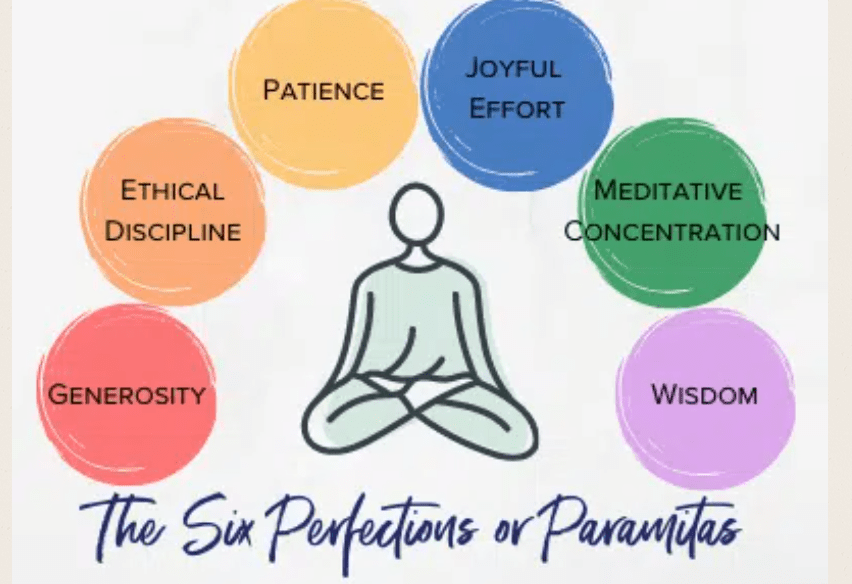
From https://www.namchak.org/community/blog/six-perfections-or-paramitas/
And, also check out: https://act4tibet.wordpress.com/2022/03/27/6paramitas/
For these six weeks prior to my birthday (July 17 – August 22, 2026), I have now blogged once each Friday about these Six qualities and my difficulties and seeming successes over the last 30 years of intensively practicing within this framework.
I have been studying and contemplating them and incorporating these as much as possible into daily life. Time for a self-assessment.
Please add your own experiences in the comments. Check this location for past posts, since this is the final one: https://sallyember.com/2026/07/10/my-progress-on-acquiring-the-qualities-in-the-six-perfections-paramitas-of-buddhism-for-the-6-weeks-prior-to-my-72nd-birthday/
Week Six: Wisdom/View

“Wisdom” in this context does not mean what ordinary definitions would provide to us. Yes, this type of Wisdom does involve knowledge, experience, understanding and implementation, which are parts of ordinary wisdom. It’s great to attempt to improve one’s wisdom in ordinary ways, so that’s okay to focus on, for most people.
However, Wisdom as a Perfection goes beyond that (“Gate, gate, paragate, parasamgate, bodhi soha is the mantra from the Heart Sutra, Prajnaparamita, for this practice, which is loosely translated as “Gone, gone beyond, gone completely beyond, into Wisdom,” or “Gone, gone, gone to the other shore, gone completely to the other shore, awakening, so be it!”).
Yogapedia offers:
Gate (gāte): Gone (repeated for emphasis).
Paragate (pāragate): Gone to the further shore (transcending conventional limits).
Parasamgate (pārasaṃgate): Gone completely to the further shore (reaching total liberation).
Bodhi: Awakening or enlightenment.
Soha (or Svāhā): A sacred exclamation similar to “hail,” “amen,” or “so be it,” used to seal a prayer or ritual.
In other words, “the sixth paramita is wisdom (Sanskrit: prajñā), which is the transcendent perfection of understanding the true nature of reality. It acts as the ultimate guide and ‘eyes’ for the first five perfections, transforming ordinary acts into a path to enlightenment.” from https://tzuchi.us/blog/the-six-perfections
This type of Wisdom inhabits territory I’m not even allowed to specifically discuss, unless the reader/listener has been initiated into this level of Buddhist teachings. Since my blog followers are mostly unknown to me, I can’t go into that kind of detail here.
I will share that striving to embody and live into this Paramita is the most difficult, and cultivating Wisdom is also the most basic of my daily practices, all at the same time.
The Namchak Community offers this perspective, which is the closest to what I’ve been taught and practicing: “Wisdom, or sublime intelligence, as it is sometimes translated, means to know things precisely as they are. In other words, to know reality as it really is. In the context of the Six Perfections, the Perfection of Wisdom means the realization of emptiness—the ultimate nature of all things. It is this wisdom that makes the other five become ‘perfections.’ The first five are the methods that will lead us to the wisdom that realizes emptiness, which is one of the primary causes of enlightenment.”
This site continues:
“Seeing reality: It means knowing things precisely as they are, free from delusion.
“Understanding emptiness: It recognizes that all things lack a permanent, independent self.
“Guiding the path: Without wisdom, the other practices lack direction; with it, they lead to liberation.”
You can learn more here as well: https://openheartproject.com/the-six-paramitas-wisdom/ This site has weekly meditations and teachings, and this perspective on the 6th Paramita, Wisdom:
“…[T]he paramitas are not about ordinary qualities, but about transcendent ones–transcendent generosity, transcendent discipline, and so on. Now we arrive at transcendent wisdom, which is tricky to talk about because it exists beyond concept, beyond words, beyond even thought. But we will do our best!
“The first thing to note is that all the paramitas are about living with an awakened heart and being of benefit to this world. In Buddhism, this is called being a bodhisattva or an awakened being. The paramitas comprise the activities of a bodhisattva–and at the same time they are, in some sense, quite ordinary. Please have a listen to this talk to learn more.”
These quotes, videos and more are from Susan Piver, a well-known Buddhist practitioner, teacher, author and video creator. Check her out!
So, where am I with this, the most basic and most challenging of the Paramitas? Overall, my understanding is sublime. I “get it.” However, do I practice it, consistently, constantly? Is it my way of being, living, seeing? I WISH IT WERE.
I get too caught up in the ordinary, the annoying, the irritating. I get too angry, too attached to others’ words and behaviors, too sad at losses, too outraged at perceived betrayals, and too lost in the mundane. The entire point of this practice, especially of the 6 paramitas, is to TRANSCEND while still being alive, here.
I’m great at being alive, here. It’s managing to keep transcending that I fail at doing.
Sometimes, when I’m doing intensive, silent, prolonged retreat (at least 3 full days, up to 11 weeks, for me), I am immersed enough in meditation and away from ordinary life enough to live as I wish. But, “keeping it,” carrying this into daily life, IS the practice, and, believe me, I am still PRACTICING, and not perfect.
I do try, and I fail, and I try again, and again, and again.

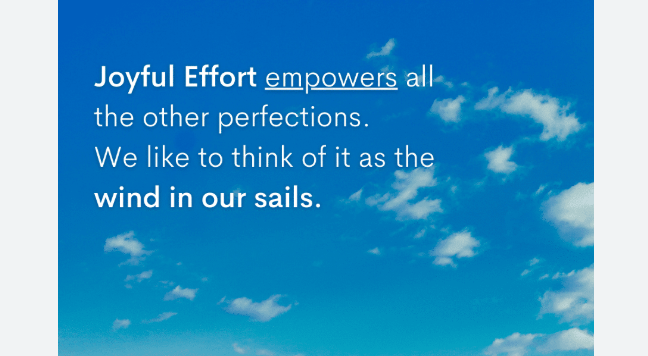
Oh, how I wish I could live like this image exhorts (from https://evaminstitute.org/). So far, I’d give myself an erratic C+, or sometimes a B-, I suppose.
Maybe I’m too hard on myself, you ask?
Or, maybe I’m not critical enough, I say.
I have been meditating for many lifetimes; in this one, over 54 years; in this tradition, almost 30 years. What’s my excuse? I “should” be further along, I believe.
But, being “better” than this at this point is clearly not my karma in this lifetime, so I keep on keeping on.
Do you? How are you doing with this? Let me know? Comment below.
Thanks for going on this self-assessment journey with me. Happy 72nd Birthday to me on Saturday.
Wishing you all well, and may all beings benefit.




You must be logged in to post a comment.