More info about #RobinWilliams’ decision to end his life brings a new perspective to the entire situation. Parkinson’s Disease….

More info about #RobinWilliams’ decision to end his life brings a new perspective to the entire situation. Parkinson’s Disease….

It’s that time, again, when students and adults go back to school. Here’s a report from the point of view of the itinerant substitute teacher in secondary schools in northern California. How much of this story (the “good” and the “bad”) might be true in schools where you live?
Education in the Trenches: My Life as a Substitute Teacher
by D.G. Mitchell
image from writemejenb110.wordpress.com
It’s 5:30 AM when I get my first call for a substitute teaching assignment. A robotic voice tells me “This is the XYZ School District” and instructs me to push “1” if I am interested in a job. I’m only half-awake, but I dutifully push “1” and hear the description of a job at one of the local secondary schools.
PE teacher/wood shop. No, thanks. I press another number, telling them, “I can’t take this job, but call me back if you have another.”
Then, I go back to bed. At 8 AM, I’m having breakfast when the robot calls me again. They need an English teacher at another school. Of course, school has already started, but it was an emergency. They’re also getting a little desperate. So I take the job, rushing to get dressed and get out the door, travel mug in hand.
For about two years, I have had this routine, working as a substitute teacher in several school districts in Northern California . Many jobs are listed online, so one can avoid the early wake up call if one finds an assignment the night before. But, I am never quick enough: those jobs get snapped up in a hurry. More often than not, I get the wake-up call. Not knowing if I’ll be working until early each school day is nerve-wracking, but I am glad for the work.
Walking into a new class for the first time is something I never get used to. Years ago, I taught full-time in a junior high school in San Francisco, so I’m not new to teaching. Now, being in semi-retirement, I can always use the extra money, which is why I signed up as a “sub.” I didn’t realize how different “subbing” is from regular, full-time teaching. It’s also not very easy. Some teachers tell me they would never consider doing it.
It was many years ago that I was a full time teacher. A lot of things have changed.
Computer technology is one of the biggest and arguably more positive changes. Standardized testing is another, not so positive. A relaxation of discipline in the classroom, a lowering of expectations, gang violence on and off the streets: these are all definite negatives. It’s a very different world these days.
Let me describe my worst teaching day as a sub. After that, I will try to balance your understanding of my experiences by presenting one of my best days.
I believe that if one maintains a professional attitude, good days can make up for bad ones. See if you agree.
And just to be fair, I won’t mention any specific schools or teachers. I do think some of these observations apply to all schools at one time or another.
Interestingly, my worst-day experience occurred at one of the “better” high schools in the North Bay. I arrived on time, got handed a key and a folder, and tried to figure out where the classroom was before the bell rang. When I plan it right, I have time to review the lesson plans, scope out the classroom, and act as if I know what I’m doing when the kids come pouring in.

image from doug-johnson.squarespace.com
And they did come pouring in, loud and boisterous, nearly oblivious to my presence as the substitute teacher. When the bell rang, they all but ignored the fact that I was standing there, waiting for the class to settle down. It was First Period. Many of the kids came in with their heavy backpacks, hoodies and hats, holding their cell phones and their breakfasts.
My first request to them was to quiet down so that I could take attendance. That was routinely ignored. So I announced again, much louder, that if I called a name and did not get a response, that person would be marked absent. That request almost worked. But many of the kids had ear buds in their ears, listening to music or the radio, so they still did not hear me. And, they continued eating their breakfasts and texting on their cell phones.
I asked: “Are food and drink allowed in this classroom?” I got what is by now a familiar response: “Our teacher lets us do it.”
I was disgusted. There was food everywhere. It was very hard to maintain some kind of order while kids were eating, texting, or plugging their ears with ear buds and listening to music.
It’s hard to believe a teacher actually allows all this, but unfortunately in many high schools, this turns out to be true more often than not. But that wasn’t the end of the problems.
The school announcements came on, beginning with the Pledge of Allegiance. To my dismay, I noticed that fewer than half the class did not bother to stand up for the Pledge. Worse, those that were standing did not say the Pledge or even mouth the words. Most of the kids stayed in their seats, not even bothering to remove their hats or their hoodies.
I wouldn’t have thought this would bother me, but it actually upset me. Maybe because I’m considerably older than these kids and older than many of their teachers, I can’t help recalling another era, when it was unthinkable to show such disrespect for the flag. Maybe I’m showing my age here, but that “other” era was when I was in high school, in the early 60s. As I said before, a lot of things have changed since then.
At this point, I decided to attempt to utilize what is called a “teachable moment.” I temporarily turned away from the lesson plan the regular teacher had provided. Instead, I asked the class: “Why do so many of you refuse to stand up for the Pledge?”

image from ontheculture.com
I got a variety of sneers and laughs, but I saw that they were actually thinking about this. So, I pressed on.
Becoming the patriot that I never thought I was, I asked: “Do any of you have family members or friends in the military?” I saw many nodding and some raised their hands.
I chose to follow that question by reminding them that, at this very moment, “Some of your family and friends might be risking their lives for that flag. Did you think about that during the Pledge?”
It suddenly became very quiet. I think I made my point. I could have gone further, ignored the lesson plan and insisted on a short essay on a topic like: “What does the flag mean to you?” But then that “teachable moment” was interrupted when someone got a phone call, two kids got into a fight, and, inexplicably, one kid got up and left the room, never to return.
It was going to be a very long day.
With great persistence, I returned to the lesson plan. I should mention that I was fortunate to have been given a good lesson plan. Sometimes, I get just a brief description of what the class is doing, or maybe I get lucky and I can show some videos. At times, I am without a lesson plan or even a seating chart, so I’m completely on my own. In the schools that observe a “block” schedule, where the basic period length is just under two hours, this lack of direction from the absent teacher can create total chaos for a sub.
Meanwhile, back in the class, I had kids read aloud and answer some written questions. It took a while to get kids to read and to make sure the rest of the class could hear the reader. To a casual observer, it looked and sounded totally chaotic, with the food and garbage, the ear buds, and the low clamor of side discussions. But, in fact, the kids were actually doing the assignment.
However, about 45 minutes into the hour, two girls suddenly walked into the class, ignored my questions (“Who are you? Why are you 45 minutes late?”) and simply sat down as if I didn’t even exist. I was appalled at their disrespect. I asked that they leave to get a note from the office explaining their lateness. They stormed out, calling me some horrible names as they exited.
We tried to return to the assignment.
About 20 minutes later, those two girls returned, with the Assistant Principal. I usually never meet the administrators of a school, so I had to admit I had no idea who this person was nor why these girls were returning.
The Assistant Principal told me to admit them. I requested a private conference with this administrator, outside the door. We stepped into the hall where I explained how these girls had been belligerent to me, called me names, refusing to acknowledge me as a teacher. And, “By the way,” I asked, “why is it OK for these kids to have all their garbage all over the floor in this classroom? Is this typical?”
Unfortunately, the administrator did not see this as a problem. She informed me: “Each teacher can make their own rules for their classroom.”
I pointed out that my Substitute Handbook explicitly stated that there should be “no food or drink in the classroom.” I inquired, “Why is this not enforced?”
She dismissed the whole thing, again saying it was “up to the teacher.”

image from http://www.docstoc.com
Not the administration? Doesn’t it work from the top down? I kept those questions to myself, as the Assistant Principal did a quick about-face and walked back to her office.
I re-entered the classroom. That class ended soon after. I collected the papers and the kids left the room, as boisterously as they had entered it. There was a short break, when kids could go out and get snacks (which, of course, students brought back into the classroom the next period).
Things went from bad to worse as the day wore on. The next period was just as bad as the first. Fighting a losing battle with distractions from the food, drinks, cell phones and ear buds, I could not get them to even look at the assignment. I tried to intervene in another very loud and vulgar verbal battle. It could only be resolved by my referring one of the proponents to the Assistant Principal, presumably for detention.
That student also yelled at me as he was leaving, calling me a “faggot” (among other things). At that point, I really started to come apart. I admit, I used some inappropriate language myself to get him out of the classroom. This was not very wise, as I later found out. It was a little better to get him out of the class, but not much was accomplished. In fact, nothing at all. Apparently, the class sided with the disruptive kid so they refused to cooperate with anything I asked them to do after I ejected him
After lunch, as I was preparing for my last class, I had a visit from another administrator, who turned out to be the school’s Principal. She said: “We need to talk.” Those were fighting words; never a good thing.
She arranged for another sub to watch my class so that we could go to an empty classroom. We had a rather uncomfortable discussion. Justifiably, she was appalled that I had used a four-letter word while kicking out the unruly student. Of course, I had been listening to four-letter words all morning, but that was irrelevant. I had to plead guilty.
But, I also recounted some of the “highlights” of my morning, trying to explain to her, based on my having subbed in so many schools in this district, just why this particular school was the most unruly, slovenly and disrespectful (to the teachers, to the flag, to education).
Needless to say, she did not take my criticism of “her” school very well, particularly on the heels of my unprofessional behavior. She told me not to come back to her school. End of discussion.

image from http://www.zazzle.com.au
Thinking I was through as a substitute teacher, I was surprised to continue to get calls from other schools. Luckily, I returned to several junior high/middle schools that I had particularly liked. Since my original teaching experience in San Francisco had been with that age group, I noticed that I was a lot more comfortable with the younger kids.
Middle school kids seemed to have much less “attitude” than the high school students, and they were basically fun to be around. Not that eighth graders can’t also be a handful (raging hormones, etc), but I never took it personally. Bonus: since my original credential was in English, with these gigs, I enjoyed a lot of very fun assignments, teaching poetry, writing in journals, showing movies.
One of my best teaching days was in an eighth-grade English class at a middle school, where kids were expected to work in teams and come up with an original poem by the end of the period. As a former English teacher, I found this to be the perfect assignment. I had them read a few poems to get started, then talked about rhyme schemes and “scanning” a line. This was something new to them, so they actually showed a lot of interest, especially when I threw out some long technical words, like Iambic Pentameter and Anapestic, and challenged them to come up with some lines in those meters (my own favorite, and my alma mater, The University of Michigan, is a perfect line of Iambic Pentameter; I shared that with the class, as we all recited the familiar rhythm.
Typical eighth-graders, they tried to best and put down each other, occasionally getting a little silly or risqué, but actually enjoying the assignment. They were actually writing poetry. By the end of the period, each team was challenging each other, shouting their lines across the room.

image from info.marygrove.edu
Collecting their papers, I felt that they had really learned something and had fun at the same time. I felt validated as a teacher who instructed, not just filling time as another “sub.” On top of that, the school Principal actually came in to see what was going on and gave me a “thumbs up.” That made my day!
Good teaching days are few and far between, as every teacher knows. As a sub, they are even fewer. Returning to the same school and getting to know the kids better each time certainly helps. Getting support from other teachers and administrators also helps. Though I had one bad experience in one particular high school, I had enough good experiences in some of the middle schools to encourage me to continue subbing.
I’ve learned that there are certain things I simply cannot change. Cell phones, texting, electronic devices, computers are here to stay and I have to get used to them. Some teachers will insist that these items stay in the backpacks. As a sub, I don’t always have the authority to make such a rule, but it’s nice to see that some teachers have already instituted it. Food and drink will continue to bother me, as will the ear buds, baggy pants, hoodies, tattoos, and so much more of the current teen culture that I don’t fully understand. But I’m working on it.
It all starts up again in mid-August when the schools resume.

image from miracleon32ndstreet.wordpress.com
I’ll be watching my computer screen to avoid that 5:30 AM wake-up call. And I hope to be seeing some kids that I already know, finding out how they’ve changed over the summer. I always have a hopeful feeling at the beginning of the school year. Maybe this one will be a lot better.

“I went to Google. I saw someone in front of a little monitor, sitting on a red exercise ball. I think that’s how they’re hatching new employees.” — Robin Williams
What a mind. Miss you already, #RobinWilliams.

What an amazing legacy the uniquely talented #RobinWilliams left for us all. I bet he wishes he could respond with some witty improvisations to this outpouring of respect, honor, gratitude and sadness the world is showing at his passing.

First of all, thanks for financial and technical support to my niece, Sarah Miranda, my sister, Ellen Fleischmann, and my son, Merlyn Ember. Thanks, also, to WordPress.com techhies and Q & A and fora participants.
Second, but equally important, I am grateful to all of my readers, responders, rebloggers, guest bloggers and/or followers for your interest, suggestions, support and interactions. My site would be dead air without you!
On my one-year Anniversary of my Blog, what many call a “Blogaversary,” I am summarizing and analyzing my accomplishments and progress, to date. Let me know what you think!
My Blog Stats
I ended my first full year of blogging with 243 Followers. 208 followers are on WordPress; 35 are on Tumblr.
THANKS, all!
I started with a site that was new and unknown so it wasn’t even rated by ALEXA. I had zero “backlinks.”
Today (8/9/14), I have 128 Backlinks. My ALEXA international rating is 419,061 out of over 4 millions sites.
For the USA, sallyember.com is rated 68,034 out of over 2 million sites.
If you want to check your site’s rankings on ALEXA, get the free extension to your toolbar and check about once every few days by going to your main page/splash page, then clicking on that icon on your toolbar.
I aspire to have a Google Page Ranking: yet to be earned.

Total Number of Visitors/Views: 8326
I figured out early on how to cross-post each of my blog entries to my personal/author’s pages on Facebook, Twitter and LinkedIn (although I mysteriously have to “refresh” this connection periodically, according to prompts from WordPress).
Later, I added Goodreads, Amazon, Shelfari, BookLikes, and Google+ as well as my Spanners Series page on Facebook as automatic recipient posting sites.
About twice a month, I utilize one of the images in each of my original content entries and put those posts on my Pinterest “My Blog Posts” board, which then automatically cross-posts to Twitter and Facebook, again.
Mostly due to these cross-posting, my Followers on Twitter, Pinterest, Facebook, LinkedIn and Goodreads have all increased dramatically. When I started my Blog, I was brand-new to Pinterest, Author Central, and my series’ pages, and mostly inactive on LinkedIn and Goodreads; and had only 7 Twitter Followers. Here are the Blogaversary comparison stats.
FOLLOWERS/LIKES/CIRCLES TALLIES, August 10, 2013 – August 10, 2014
(all links are on the right sidebar of my website)
Twitter 7 to 3441
Pinterest 0 to 208
LinkedIn 200 to 500+ (LI maxes out the count at 500)
Facebook personal 232 to 1438
Facebook Series page 0 to 937
Google+ personal 0 to 1301
Google+ Series page 0 to 29 (not much action, here; can’t get blog to cross-post)
Goodreads author page 110 to 1113
Amazon Author Central page 0 to 142
PAGE/POST VIEWS
My highest-ever number of views in one day was 197, spread around several posts and pages.
Month-by-month Views/Visitors:
Aug, 2013 = 114 (first day was August 10)
Sept. 200
Oct. 307
Nov. 528
Dec. 535
Jan., 2014 = 999
Feb. 1,144
Mar. 740
Apr. 580
(concussion/accident 4/6/14; offline a lot April – June)
May 830
June 872
Jul. 1,161
Aug.(to date) 326
Highest single-day Views = 197
Average Views/Day
for 2013 (5 months): 13
for 2014 (7 months): 30
Blog Posts
200 of my 357 posts (about 40 are reblogs) had 10 or fewer views. These include ALL of the Serialized Excerpts of my sci-fi series, Volumes I and II, most of the reports of these books’ reviews, and many others that I thought were more popular than that.

One of my posts was featured on “Freshly Pressed,” the elite selection gleaned from among all daily blog posts, highlighted for that day in WordPress’ Blog Reader!
Views by Country
Views by visitors from 111 countries
Highest = USA, with 5,909
2nd = UK, with 484
3rd = Canada, with 354
4th = Australia, with 155
5th = Germany, with 128
6th = India, with 125
The rest are 60 or fewer; many are just 1 or 2, so far.
Highest page views were for my site’s main pages:
–ABOUT (my blog’s splash page), with 2,001
–the Home page’s Archives, with 1,703
—The Spanners Series page, with 492
For individual posts, the highest number of views were for:
—#Buddhism and #Science: the Facts, the Yogis, the Practices , with 232
—My #Literary #Meh List 2014: 15 Plots, Devices, Characters I’m BORED with, with 205
—Why My First Experience with Using #Pre-Orders Will Help Get My NEXT #Ebook Higher on #Best-Seller Lists, with 185
—15 Points about the #Effects of #Concussions on #Meditators’ #Brains, with 160
—Pros and Cons of #Writers’ Critique Groups, with 112
—When #Spiritual #Teachers Respond with #Countertransference, with 110
Total number of comments (and half or more are my replies): 202
Setting aside the two posts with the most comments that were part of Blog Hops, the next-most commented-upon post was
—15 Points about the #Effects of #Concussions on #Meditators’ #Brains, with 12
BLOGGING and BOOK MARKETING ASSESSMENTS
I learned a lot about how to assess my book marketing efforts from many people. I excerpt from PROMOTING MY BOOK , by Lee Gale Gruen, with my commentaries as to my progress/use of these ideas and link to Lee and her sites at the end of this section.
(I first saw this article posted in “Funds for Writers,” compiled weekly by the wonderful Hope Clark: http://www.chopeclark.com Thanks, Hope!)
I am therefore scoring myself on Book Marketing for my first two self-published ebooks according to Lee’s great list, below, of marketing tips and ideas. Let’s see what I learned!
Lee recommends these activities, below, and I agree:
Lee also talks about “creating” one’s own marketing “tools,” and I get an A+, here! I’ve done them all and I hadn’t even seen this list prior to doing them!
Lee’s advice for how to “Promote Yourself” caused me to realize how much I still have to accomplish here. The BOLD ones are TO BE DONE.

BIO: Lee Gale Gruen is an actress, author, speaker, and blogger. Her book website is: http://AdventuresWithDadTheBook.com. Her blog, “Reinventing Myself in My Senior Years” is at: http://LeeGaleGruen.Wordpress.com
My Overall Grade/Score for Year One in Blogging and Book Marketing
Well, I give myself an A+ for effort
I earned about a B- for effectiveness, I think (but it’s difficult to make comparisons since I don’t have others’ stats nor know their efforts).
If I’m going by the numbers of books sold (Volume II of The Spanners Series, This Changes My Family and My Life Forever, just went on sale June 9) or sold and downloaded since Volume I of The Spanners Series, This Changes Everything, went permafree on April 1 and went on sale December 19, 2013, the dates don’t jibe and the numbers won’t be impressive (to me, anyway). We all have Hugh Howey to thank for that, right?
Plus, even though I can get rankings or paid sales stats from some sites, I can’t get sales or free download numbers from all sites. So, the numbers below are not all-inclusive; they’re just what I can get. Here are the stats for book sales and downloads:
12/19/13 – 3/31/14 Sales and 4/1/14 –> Free downloads for
Volume I of The Spanners Series, This Changes Everything
66 books sold
2296 free downloads (about 40 for reviewers)6/9/14 –> Sales for
Volume II of The Spanners Series, This Changes My Family and My Life Forever
4 sales
4 free downloads (all for reviewers)
I look forward to becoming more “visible” via this and other parts of my “author platform” in my second year blogging and being a fiction author.
Please comment and share your experiences! Best to you all!

We all need to pray, meditate, wish: whatever moves you, to try to get these morons and horrible leaders to STOP THE KILLING!
Meditate every day for world compassion. We are one. Anyone’s suffering is all people’s suffering. War is possible because we are at war within ourselves. Bring compassion to each moment. This is the true power.

Thanks for posting. I see Cetaceans as the most intelligent, or perhaps Cephalopods. Certainly NOT humans. Best to you.
I believe the people of the future will look back on these times and judge us harshly, like we judge the people of the 19th century for slavery, colonialism, genocide and other atrocities those folks committed without any apparent ethical qualms. They will see even the most liberal of us as heartless in our neglect of poor people, animals, the Earth and the environment. I’ve always wondered how people like the abolitionists gained their insight to see beyond the ethical status quo. There have always been a few people that were more empathetic than the common crowd, and I think they were the bellwethers of their times. If you you read and watch the news carefully, there are always stories that portend the future of human kindness. To change requires going against the tide of common opinion, and that’s hard.
We like to think humans are different from animals. That…
View original post 924 more words

John Betts’s review of This Changes My Family and My Life Forever, Volume II, The Spanners Series, from Aug 01, 14 on Goodreads https://www.goodreads.com/review/show/983982709?book_show_action=false&page=1
5 of 5 stars
Read from July 09 to August 01, 2014
I enjoyed reading this following on from book 1, book 1 give the groundwork so you really get into book 2 quickly and understand what is going on from the very beginning, if I had more time to spare, this is a book I would have read cover to cover non stop.

Cover art by Willowraven
Thanks, John! More info about and links for author, John Betts, below.
Twitter https://twitter.com/JohnArthurBetts
LinkedIn http://www.linkedin.com/home?trk=nav_responsive_tab_home
Facebook page https://www.facebook.com/johnarthurbettsfantasyworld
Google+ https://plus.google.com/u/0/115539396811049169679/posts
Mia’s Legacy
http://www.amazon.co.uk/Mias-Legacy-John-Betts-ebook/dp/B00MDIQ0CE
The Twin Rings of Ra https://www.smashwords.com/books/view/327514
An Adventure of Bunny Bertie and Blueberry Elf http://www.amazon.co.uk/Adventure-Bunny-Bertie-Blueberry-Elf/dp/1784075965 and
https://www.smashwords.com/books/view/407885

John Betts’s review of This Changes My Family and My Life Forever, Volume II, The Spanners Series, from Aug 01, 14 on Goodreads https://www.goodreads.com/review/show/983982709?book_show_action=false&page=1
5 of 5 stars
Read from July 09 to August 01, 2014
I enjoyed reading this following on from book 1, book 1 give the groundwork so you really get into book 2 quickly and understand what is going on from the very beginning, if I had more time to spare, this is a book I would have read cover to cover non stop.
Cover art by Willowraven
Thanks, John! More info about and links for author, John Betts, below.
Twitter https://twitter.com/JohnArthurBetts
LinkedIn http://www.linkedin.com/home?trk=nav_responsive_tab_home
Facebook page https://www.facebook.com/johnarthurbettsfantasyworld
Google+ https://plus.google.com/u/0/115539396811049169679/posts
Mia’s Legacy
http://www.amazon.co.uk/Mias-Legacy-John-Betts-ebook/dp/B00MDIQ0CE
The Twin Rings of Ra https://www.smashwords.com/books/view/327514
An Adventure of Bunny Bertie and Blueberry Elf http://www.amazon.co.uk/Adventure-Bunny-Bertie-Blueberry-Elf/dp/1784075965 and
https://www.smashwords.com/books/view/407885

Who knew sampling would overtake covers, genre and anything else to consider for readers? Ebooks are now on an even par with print books for readers who access both, for sure!
In this post, I discussed the findings of a scientifically incontrovertible study (of myself) on the factors which influenced me when buying a self-published book.
The findings surprised me (which surprised me, because I was surveying myself). I found that I knew what made me buy a self-published book when it was in front of me, but not what put that book in front of me, unless I was browsing by genre (e.g. today I feel like reading a romance set in Ulaanbaatar: therefore I will now search specifically for such a story).
It was still hard to know what put those books in front of my eyes in order to buy them; to quote one of the commenters on that post – this is the thorny issue of “discoverability”. How will we find these books in the first place?
So I did the unthinkable, and asked some other people…
View original post 640 more words

From my POV, ALL “romance” books are speculative/science fiction! LOL Check these out!
 Over at the USA Today HEA blog, I’m interviewing ten science fiction romance authors (and myself) today on what we love about SFR and which SF hero is our favorite. I’ve been spending lot of time with these ladies lately, not just because we all love to read and write SFR, but also because we’ve put together a boxed set of eleven stories. I have my award-winning, best seller Escape From Zulaire, as my contribution. The boxed set contains quite a mix of elements from cyborgs to aliens, space opera to adventure on alien planets.
Best of all, the set is priced at $.99! For over 800,000 words of exciting SFR….
Here’s a quick synopsis for the included stories:
Her Cyborg Awakes by Melisse Aires
Her gentle cyborg servant helped her escape violence–but now he’s changed into a warrior! Is he safe?
Removed (The Nogiku Series, #1) by SJ…
View original post 370 more words

Did you miss it? We had a blast! Catch the recorded version of my LIVE conversation on CHANGES with Dr. Shay West here. https://www.youtube.com/watch?v=lrjdj0S8AQo
or here: http://youtu.be/lrjdj0S8AQo

Dr. Shay West http://shay-west.com
We talked about writing, biology, teaching, optimism, gratitude, epigenetics, horror, real-life medical horrors and community support as motivations for writing, writers’ groups, Google + Hangouts on Air, and more!
Next week, August 13, CHANGES welcomes Connie Dunn. 7 – 8 AM Pacific USA Time.
Tune in and get involved with your comments and questions, LIVE, or watch CHANGES Episodes later on YouTube.
If you are an author, philosopher, creative sort who likes free-wheeling conversations and wants to be on CHANGES, watch a show or two, then contact the host, Sally Ember: sallyember@yahoo.com and request a slot in October or beyond.
CHANGES occurs on most Wednesdays, but not all. Watch this space for schedule!
Are YOU ready for the CHANGES?

Did you miss it? We had a blast! Catch the recorded version of my LIVE conversation on CHANGES with Dr. Shay West here. https://www.youtube.com/watch?v=lrjdj0S8AQo
or here: http://youtu.be/lrjdj0S8AQo
Dr. Shay West http://shay-west.com
We talked about writing, biology, teaching, optimism, gratitude, epigenetics, horror, real-life medical horrors and community support as motivations for writing, writers’ groups, Google + Hangouts on Air, and more!
Next week, August 13, CHANGES welcomes Connie Dunn. 7 – 8 AM Pacific USA Time.
Tune in and get involved with your comments and questions, LIVE, or watch CHANGES Episodes later on YouTube.
If you are an author, philosopher, creative sort who likes free-wheeling conversations and wants to be on CHANGES, watch a show or two, then contact the host, Sally Ember: sallyember@yahoo.com and request a slot in October or beyond.
CHANGES occurs on most Wednesdays, but not all. Watch this space for schedule!
Are YOU ready for the CHANGES?

Every #overpaidCEO/President should follow Raymond Burse’s example. We’d all be better off and the economy would BOOM!

View original post 60 more words

Another #writing #contest for newbies or unpublished works!

Please share with pre-teens and teens who read YA books! Dating/relationship violence among youth is on the rise. No excuses. End it.

#Authors: Promo opps!
For all writers, poets, photographers, artists who would like to get a promotional blog post together, this is for you.
Using the contact form makes it all rather cloak and dagger, so to simplify things for those of you with questions about what to include in your post, here are a few guidelines you might want to follow.
1) Introduce yourself in whatever way you prefer, personal or professional, and give us an idea of what you do.
2) Choose a sample of your work—prose, poems, photographs, illustrations—that does you credit. It can be as long as you like. Book excerpts are fine, just bear in mind that reading a lot of unbroken text on the computer is tiring, and you might lose readers if it’s too long.
3) Send any images that are relevant, like book covers, illustrations, author pic if you want. Again, be reasonable. Please don’t send…
View original post 87 more words

#Writers: great info and tips, here, for what kinds of critique/writing groups there are, what to do with the advice you get and the people in them.
I like the names she gives each type of group and I especially appreciate her tips for making the best of even the worst advice or participants! Thanks, Anne!
Full post link is below. It’s well worth your time.
http://annerallen.blogspot.com/2014/08/why-you-should-ignore-most-of-advice.html


I love this sentiment! Thanks!

Fabulous post and great insights, here, Rose. In “The Spanners Series,” the main character, Clara Branon, discusses having had a mobility disability due to a car accident and all the ways it changes her life. She gets the chance to “re-set” her life, from the point of the accident, thereby avoiding it, but when she sees all the ramifications of that one change, she declines.
Thanks for having her on, Tonya! Best to you both!
Sally Ember

For @Mario Cossa and many other fans: Barbra as Mama Rose!

In case you’ve been unaware of the last several years of research from all over the world, with children, adolescents and adults, some after 40 years since the trauma, they all come to the same conclusions: those who suffer childhood trauma, whether through abuse, neglect, witnessing domestic or neighborhood violence or being bullied by siblings or peers, have observable, lifelong negative consequences to not only our psychological but to our physical health. Traumas include war and threats of warlike activity, sudden natural disasters, neighborhood or school-site gang warfare and violent encounters of other types that children and teens experience, even if “only” as witnesses.

image from http://www.acestoohigh.com
Is there any “good news”? Only a bit.
Links to some of the research articles recently published are below. My favorite points are in this post. Thanks to all the researchers, reporters/journalists and participants in these studies who made these understandings possible.
May all abuse, neglect, bullying, domestic violence and other causes of childhood trauma CEASE in our lifetimes. May all children grow up and be educated in safe, healthy environments.

image from http://www.earlytraumagrief.anu.edu.au
Sources and quotes:
I. Abuse Casts a Long Shadow by Changing Children’s Genes
By Eleanor Nelsen
July 2014
“For abused children, that trauma is just the beginning. Most will likely struggle well into adulthood.”

image from http://www.ascd.org
“Living with an abusive parent has increased their risk for depression and other psychological problems while decreasing their chances of successfully maintaining close relationships. Even physical ailments, like type 2 diabetes and heart disease, are more likely in adults who were abused as kids. Early abusive experiences can leave a stubborn imprint on those children’s brains and bodies, and Seth Pollak, a professor at the University of Wisconsin and head of the study, wanted to know how, exactly, abuse was changing these children’s bodies on a cellular level.”
“… people’s experiences exert a strong influence on their biology by silencing genes or turning them back on, significantly changing the way a cell functions without changing its DNA sequence. It’s a phenomenon known as epigenetics.”
“’Epigenetics makes the genes tick,’ explains Moshe Szyf, a professor of genetics and pharmacology at McGill University. Epigenetic changes modify DNA to keep genes from being expressed, and they can explain dramatic differences between cells with identical DNA—for example, how stem cells can turn into either liver cells or heart cells, or why only one of a set of identical twins gets cancer. It’s also, Pollak found, why children who grow up in abusive homes have physical and psychological problems that haunt them well into adulthood.”
“‘… something like parenting, parental care, was flipping the switch.’… trauma might be turning this stress-management gene off…”
“…for children in abusive homes, who are in threatening situations every day, having more cortisol floating around isn’t necessarily bad—at first. ‘You may need to remain vigilant more often. You may need to flip into vigilant state more easily. That’s keeping you alive under harsh conditions, but it’s also making it really hard for you to function.’”
“…The long-term results are the chronic psychological problems like anxiety and depression and chronic physical problems like heart disease and type II diabetes, which often surface years later in victims of childhood abuse.”
“… Having too few receptors for cortisol keeps the immune system from learning to manage inflammation and infections, helping explain why children in abusive homes seem to get sick more often, and are at a higher risk for chronic health problems.”
“’The idea that these things aren’t fixed is really encouraging,’ Pollak says.”
II. Bullying affects children’s long-term health, study shows
February 2014
http://www.medicalnewstoday.com/articles/272762.php
“In the first study of its kind to assess the compounding effects of bullying over 5 years, researchers have found that a child experiences more severe and lasting health implications the longer he or she is bullied, suggesting that early interventions could reverse the “downward health trajectory” that victims of bullying may experience.”
“At any age, bullying was linked with worse mental and physical health, more depressive symptoms and a lower sense of self-worth. And students who reported chronic bullying also experienced more difficulties with physical activities like walking, running or playing sports.”
“‘Our research shows that long-term bullying has a severe impact on child’s overall health, and that its negative effects can accumulate and get worse with time,’ says Bogart.”
“She calls for more intervention around bullying, ‘because the sooner we stop a child from being bullied, the less likely bullying is to have a lasting, damaging effect on his or her health down the road,’ she adds.”
“…recent events may be more important than distant ones to a child’s health, but the team notes that health consequences “compound over time” and may stay even after the bullying has ceased.”
“… their findings emphasize the importance of stopping bullying early and continuously intervening to help with the lingering effects.”
Sally Ember wholeheartedly recommends the nonprofit USA-based organization, Community Matters, for their advising and trainings for improving school climate through research-based and clinically-proven effective bullying prevention and education programs, “Safe School Ambassadors,” for youth, school staff and parents.
Contact them (they offer programs around the world): 707-823-6159 or http://www.community-matters.org
“Medical News Today reported on a 2013 study published in the journal Psychological Science, which suggested victims of childhood bullying fare poorly in adulthood. Findings from the study showed that individuals bullied in childhood were more likely to have a psychiatric disorder, smoke, struggle to keep work and had difficulty maintaining friendships.”
III. BULLYING BY SIBLINGS ANYTHING BUT HARMLESS
compiled in 2013
While other forms of bullying are commonly taken seriously and relatively well-researched, bullying between siblings often gets ignored or minimized. However, two recent studies call attention to the potential pitfalls of discounting the effects of sibling bullying. One of these studies indicates that children who bully their brothers or sisters take this activity less seriously than other bullying behaviors, while the other study indicates that sibling bullying can cause just as much mental health harm as other forms of bullying.

image from http://www.psychiatrictimes.com
“…childhood bullying substantially increases the chances that an individual will develop a diagnosable mental illness during adulthood. These same risks also apply in magnified form to bully-victims, a term used to describe bullying victims who go on to perpetrate acts of bullying on others.”
“… more siblings (85 percent) actually identify themselves as bullies than as bullying victims (75 percent)….[T]his finding points toward a widespread childhood acceptance of sibling bullying as a non-consequential behavior that has no meaningful impact on the well-being of affected individuals. This acceptance also almost certainly reflects the attitudes of the larger culture toward the seriousness of sibling bullying.”
“…both relatively moderate and relatively severe bullying produce a decline in mental health marked by things such as anxiety, depressed moods and uncontrolled outbursts of anger. Moderate physical bullying by a sibling has a greater mental health effect on younger children than on older children. However, the authors found that all other forms of sibling bullying have an equally negative effect on both younger children and teenagers.”
“… current social tendencies to downplay or dismiss the importance of sibling bullying contribute to the problem and seriously increase the chances that sibling bullying and other forms of bullying will continue to diminish the psychological/emotional well-being of large numbers of individuals.”
“…pediatricians can help decrease the impact of sibling bullying by looking for signs of such bullying in their patients on an annual basis.”
IV. The neurobiological effects of childhood maltreatment: An often overlooked narrative related to the long-term effects of early childhood trauma?
by Jennifer Delima and Graham Vimpani
http://www.aifs.gov.au/institute/pubs/fm2011/fm89/fm89e.html
“… some current societal dysfunction may well be an overlooked significant consequence of childhood maltreatment, with its associated trauma effect upon the developing brain. These changes prevent and impair the ability to remediate disadvantage and its effects through purely social policy and justice measures.”
Acts of commission (actions against the child)
Physical– The child is subject to disciplinary action by his/her caregiver(s), with resultant bruising, severe pain, temporary loss of mobility, scars, burns, shaking etc. This may lead in some cases to more serious and life-threatening injuries, including inflicted brain injury.
Sexual – This involves the sexual abuse or exploitation of the child and /or exposing them to sexual acts.
Emotional – The child is subject to repeated verbal abuse, being sworn at or receiving hurtful and demeaning comments about his/herself. This form of maltreatment also includes the child hearing about violent acts perpetrated upon a significant attachment figure for the child.
Acts of omission
(actions of failed care)
Witnessing family violence – The child hears or watches aggressive verbal altercations and/or physical violence.
Neglect – This type of maltreatment ranges from failing to provide basic food, shelter, clothing and care (including relevant medical care) to exposure to harmful substances. This is often labelled as “environmental circumstance”, but studies of documented behavioural features and neuro-imaging tests demonstrate that the resultant brain injury patterns are similar to those seen in children exposed to acknowledged trauma and maltreatment.
Sources: Chrousos & Gold (1992); De Bellis (2002); MacMillan et al. (2009)
“Neglectful acts have also been extended to include the exposure of children to cigarette smoke when they are motor vehicle passengers, although this does not yet apply to the unborn foetus. Exposing foetuses to harmful agents (teratogens) could also be regarded as neglectful when there is a known causal relationship between the substance and resultant structural malformations to the developing foetus (e.g., continued thalidomide use despite knowledge of its effect on foetal limb growth, or continued alcohol use with knowledge of its causality in foetal alcohol spectrum disorder). Such actions are neglectful regardless of the intent of the child’s parent, caregiver or other responsible adults.”
“The common factors in trauma or maltreatment that adversely affect early brain development appear to be those events and conditions in which the child experiences or repeatedly experiences, in a prolonged and uncontrolled manner, circumstances that they perceive as being likely to be significantly life threatening for themselves.”
They can use “non-invasive static-scan neuro-imaging tools, such as MRI (magnetic resonance imaging), DTI (diffusion tensor imaging) and SPECT (single-photon emission computed tomography). More recently, assessment with ‘functional MRI’ (fMRI) has provided even further evidence of the impact that maltreatment has upon a child’s brain, including the assessment of not only structural changes but also the dynamic processes occurring within the brain as the child recalls or listens to an account of the varying types of maltreatment to which they have been previously exposed.”
“Maltreatment that comprises severe, prolonged and uncontrolled life stressors activates a prolonged biological stress response. This response is mediated through the limbic-hypothalamic-pituitary-adrenal axis, a system that describes the brain’s interaction with the peripheral body through neural (sympathetic nervous system) and hormonal (adrenal gland) tissues that regulate the body’s response to perceived longer acting stressors (infection, trauma, neglect, substance exposure, etc.).”
“The developing brain is particularly vulnerable to stress, especially with respect to the pre-frontal cortex, hippocampus and corpus callosum. Through prolonged activation of the biological stress response system, structural and functional brain changes occur. The behaviours resulting from chronic stress include poor self-regulation, increased impulsive behaviours, and emotional responses such as high levels of experienced anxiety, aggression and suicidal tendencies and, in some, a learned helplessness from the constant impairment of self-regulation.”
“…the response to chronic stress impairs the function of noradrenaline and dopamine within the limbic system and that this may account for the typical post-traumatic stress disorder (PTSD) symptoms of persistent hyper-arousal and hyper-vigilance that continues to occur after the trauma, despite resolution of the initiating experience. These neurotransmitters also interact with the serotonin system to modify mood and anxiety symptoms.”
“The impact of maltreatment on the brain – structural, functional and behavioural – has been shown to worsen the longer the duration of trauma experience and the younger the age of onset of the trauma experience.”
Substance misuse and dependence
“Early onset adult depressive, suicidal and personality disorders have also been shown to be significantly increased in those with documented histories of childhood maltreatment….This has been postulated to be the outcome of cortisol hyper-secretion.”
“… ‘antisocial’ personality disorder is a more frequent occurrence in those with a history of physical abuse and/or neglect, whereas “borderline” personality disorder is more frequently associated with childhood sexual abuse.”
“Cognitive development and academic performance are also adversely affected by childhood exposure to violence. MRI studies show that exposure to violence is associated with children having smaller intracranial, cerebral and prefrontal cortex volumes, with particular effects on prefrontal white matter, temporal lobe volumes and the corpus callosum….these children have been found to suffer increased levels of depression, dissociation and both externalising (aggression, self-harming) and internalising (depression, anxiety) symptoms.”
“…male children are more vulnerable to the consequences of maltreatment, and this is reflected in changed brain structure….The corpus callosum volume in males is especially decreased in the isthmus region of the corpus callosum, which appears to facilitate more externalising behavioural symptoms of aggression and suicidality.”
“A similar decrease in volume is noted in the superior temporal gyrus and hippocampus, with a resultant observed deficit in executive function ability and sustained attention and focus, a limited verbal response ability, and poor short-term memory and capacity for future planning. Also observed has been a decreased ability to learn through both motor and non-motor means. Further, the cerebellum is generally decreased in volume in these children, with an observed attendant behavioural pattern of having difficulty sleeping, poor concentration and general irritability.”
“Maltreatment in early childhood has also been shown to result in adverse adult onset physical health; in particular, chronic disease and reproductive and adult sexual health problems….childhood abuse and exposure to domestic violence can lead to numerous differences in the structure and physiology of the brain, which affect multiple human functions and behaviours.”
“…not all children are adversely affected in this way. Some of this resilience may be attributed to the ‘neuroplasticity’ of the brain; that is, the ability of neural tissue to modify brain function and response, so enabling a different response to an experienced memory. Neuroplasticity occurs as a result of some synaptic pathways being enhanced rather than others following activities that stimulate specific sensory, motor and language development. This is especially seen in children under the age of 7 years and continues to a lesser degree into the mid-teenage years, but it decreases significantly around the third decade of life, when the brain has reached maturity with completed myelination.”
“…appropriate and early remedial therapy provided to children who have suffered maltreatment (either in utero, or during their childhood), may mitigate many of the adverse behavioural, learning and cognitive effects of the maltreatment.”
“Early identification of such affected children would permit the implementation of remedial social supports, education and behavioural treatment measures to enhance the modifying mechanism of neuroplasticity to reduce the functional neurobiological effects of child maltreatment. Additionally, early modification of the child’s environment to decrease the biological stress response may also assist the expression of the child’s genetic make-up (epigenetics).”
“Elevated cortisol biological stress responses in children and adolescents reflect the prolonged stimulation of the hypothalamic-pituitary-adrenal axis, which normally is an acute stress response system. This prolonged stimulation in turn adversely affects physical and mental health and wellbeing, resulting in conditions such as reduced immune function, cardiovascular disease, dysthymia (persistent mild depression), major depression, oppositional defiant disorder and attention deficit hyperactivity disorder (ADHD). Furthermore, persistent exposure to stress results in damped responsiveness to new stressors.”
“…females tend to express their responses to maltreatment through internalising symptoms such as depression, anxiety and eating disorders, compared to males, who express themselves more through externalising symptoms such as aggression, harm directed at others and suicidality.”
” [However], the younger child tends to display a similar level of distress regardless of the magnitude of stress to which they are responding.”
“…not all children are adversely affected by maltreatment, and this is hypothesised to reflect their access to appropriate environmental and familial supports at the time of the event. Additionally, differential epigenetic responses to environmental circumstances may also play a part. If the biological stress response is rapidly curtailed through appropriate support, and safety and security measures are instigated, then structural changes within the developing child’s brain are likely to be minimised, along with the adverse behavioural consequences.”
“The effects of maltreatment on children extend further than the children and their respective families to affect the wider community. The learning and cognitive deficits observed in these children are then reflected in their poorer educational and life skills development, particularly their capacity for self-regulation. This in turn affects the community’s ability to control violence and ensure an environment that promotes individual safety.”
“Child maltreatment eventually also affects the broader society with which the child’s community articulates. When adults in these communities have also been affected in their own childhoods by significant and chronic maltreatment, and witnessed or experienced personal, family and community violence, as well as engaging in chronic alcohol misuse, the intergenerational “cycle of poverty and community dysfunction” continues; the adults who would normally be responsible for providing the leadership, supervision and caring roles are themselves limited by their own reduced cognitive capacity and executive function ability.”
“Identification of these children through early and appropriate screening … and targeted remedial treatment has the potential to mitigate some of the cognitive, learning and behavioural difficulties that may arise, such as poor literacy, unemployment, incarceration, childhood pregnancy, or substance dependence.”
“Where brain injury results from maltreatment, current social and justice strategies, often introduced relatively late in the individual’s life, are by themselves of little benefit in achieving remediation, as the damage to neuropsychological functioning may be too entrenched to be overcome. This is especially so as most of the remedial programs available commence after the age of 7 years, thus missing the most sensitive ‘neuroplastic developmental’ period.”
“Providing a safe environment for children and their families will enable the next generation of children to achieve their maximum adult potential through normal neurobiological development.”
V. Impact of childhood bullying still evident after 40 years
April 2014
This study was funded by the British Academy and the Royal Society.
“Dr. Ryu Takizawa, lead author of the paper from the Institute of Psychiatry at King’s College London, says: ‘Our study shows that the effects of bullying are still visible nearly four decades later. The impact of bullying is persistent and pervasive, with health, social and economic consequences lasting well into adulthood.’”
“Individuals who were bullied in childhood were more likely to have poorer physical and psychological health and cognitive functioning at age 50. Individuals who were frequently bullied in childhood were at an increased risk of depression, anxiety disorders, and suicidal thoughts.”

image from http://www.firstcovers.com
“Individuals who were bullied in childhood were also more likely to have lower educational levels, with men who were bullied more likely to be unemployed and earn less. Social relationships and well-being were also affected. Individuals who had been bullied were less likely to be in a relationship, to have good social support, and were more likely to report lower quality of life and life satisfaction.”
“…’what happens in the school playground can have long-term repercussions for children. Programmes to stop bullying are extremely important, but we also need to focus our efforts on early intervention to prevent potential problems persisting into adolescence and adulthood.’”

#SpecFic #Authors: chances to earn money for your writing! Thanks for sharing, Chris White!
 Toy Shop (Sirens) – Simon Cottee, for The Lane of Unusual Traders
Just some interesting speculative fiction markets I’ve come across this month, with a deadline sometime this month – I thought it’d be nice to share. All of these markets are pro-paying, by the way, unless I mention otherwise:
The Lane of Unusual Traders (Short Story component 1500 – 3000 words) – Tiny Owl Workshop, 31st August
The Lane of Unusual Traders is a world building project. The aim is to write or otherwise bring the Lane, the City of Lind and the world of Midlfell into existence through stories, illustrations, comics and, well, through whatever other creative means present themselves as the story grows.
The story begins in a lane known only as The Lane of Unusual Traders.
The Journal of Unlikely Cryptography (less than 5000 words) – Unlikely Story, November 1
Genre isn’t particularly important to us—speculative, mainstream…
View original post 336 more words

Catch Sally Ember’s #Author #Interview with the funny and insightful Scarlett and Nathan from the UK on their amusing, informative, unique site, Intertainment Hub, on their Youtube channel.
The interview (audio only) goes live on 8/2/14.
http://www.youtube.com/intertainmenthub

Intertainment Hub’s logo
Please listen, then comment there and here! Thanks!

Global #Meditation for #Peace! 8/8/14 noon EST USA. DO IT! Meditate with millions!
if you haven’t heard yet, on august 8th at 9am PST (12pm EST) Deepak Chopra, along with Gabrielle Bernstein, India Arie, and other amazing spiritual educators, are hosting the largest global meditation in history. i don’t know much about it, but i’m always so energized by people uniting together under in hopes of peace, love, and meditation. if you’re interested in signing up, click here! only 10 days left!

PERN Dragonriders’ series by Anne McCaffrey (and, later, her son, Scott) is coming to big screens near you, some day! Casting suggestions?

I am honored and excited to continue this week of highlighting two ground-breaking children’s books in the areas of gender and sexual orientation identities (two topics dear to my heart since my doctoral research centered on them) by giving you a chance to meet another author and get to know her work: Connie Dunn is guest posting on my site, today. Welcome, Connie!
Why Gender Identity? Why Now?
by Connie Dunn

In a world where bullying has gone online and children and youth, who act or look different, are more likely to get bullied, is it any wonder that gender identity issues cause those individuals to be at a higher risk. It is concerning and the statistics prove it….
Suicide is the second leading cause of death among young people ages 10 to 24. Suicide attempts by LGB (Lesbian, Gay, and Bisexual) youth and questioning youth are four to six times more likely to result in injury, poisoning, or overdose that requires treatment from a doctor or nurse, compared to their straight peers. Nearly half of young transgender people have seriously thought about taking their lives, and one quarter report having made a suicide attempt. LGB youth who come from highly rejecting families are 8.4 times as likely to have attempted suicide as LGB peers who reported no or low levels of family rejection.
from http://www.TheTrevorReport.com
Hate crimes continue to grow. In Oakland, CA, a teen, who identified as female, wore a skirt to school last November and another teen at the school set the skirt on fire. The teen had second and third degree burns. In Cleveland, Ohio, two trans-women (MTF or Male to Female) were killed in two different incidents, both were considered hate crimes. Hate crimes in New York, San Diego, Canada, and many other places identify gay and lesbians as the victims. The trend of increased hate crimes now show that anti-gay crimes and anti-racial crimes are about equal, according to Brian Mustanski, Ph.D. in an article published in Psychology Today (June 2013).
When I first introduced my new book When Panda Was a Boy: A Collection of Stories on Gender Identity for K-8, I was joyfully surprised that it was met with:
“This is so needed in the world!” “Where have you been?” “I wish I had this book when I was young.”
I actually was prepared for people’s negative responses over what can be a controversial topic. Instead, I have been pleasantly greeted with open arms, which definitely says a lot about how LGBTQ people of all ages are being met by the larger community. But make no mistake; this is still a “hot button” issue.
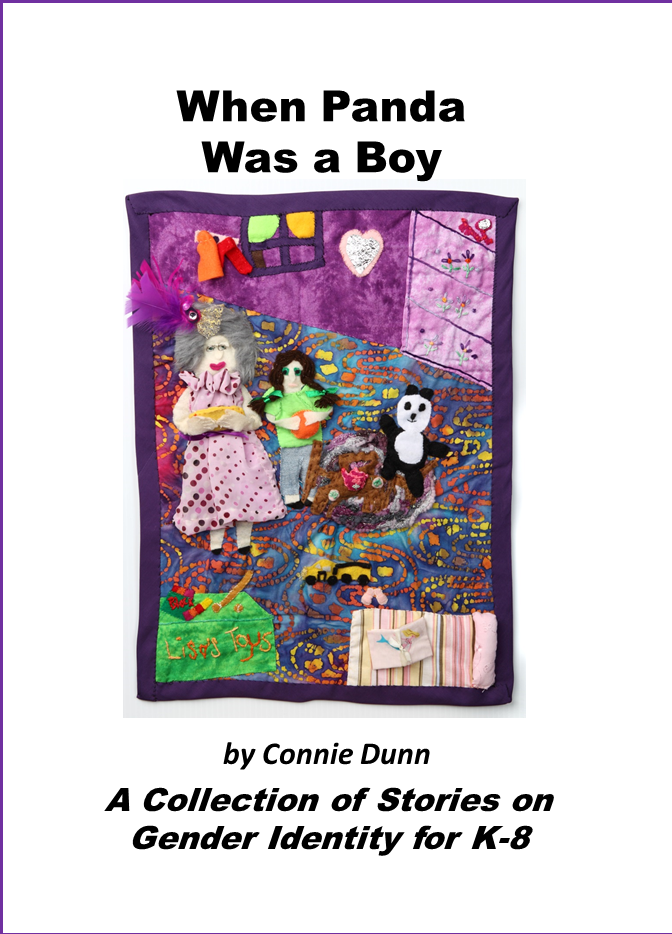
BUY HERE! http://publishwithconnie.com/whenpandawasaboyonamazon
When I first decided to write these stories, it came from my heart strings being pulled. I just couldn’t imagine anyone throwing out a child over their gender identity, whether that be trans (transgender, transsexual, or gender neutral), bisexual, gay, or lesbian. Our gender choices come from our DNA. No one wakes up one day and says, “Hmmm, I think I’ll be a ‘trans’ today.” Instead, it’s something that brews within their core being. Children as young as 2 ½ may begin showing tendencies toward the opposite gender than what their genitalia mandates. It doesn’t mean that they will ultimately be a trans. If a child is supported for who they are in all capacities, they will grow up to be who they are supposed to be.
One hurdle our society must get over is that people who are LGBTQ don’t seek it out as a rebellion; it is part of who they are. It’s in their DNA, which is not changeable. There are no choices to override DNA; it’s simply who you are just like your eye or hair color is part of who you are.
More youth and young adults are supporting trans by identifying as trans, which can be transgender, transsexual, or gender neutral. While most supporting people may be heterosexual; they also want to buck the binary system. There are many people who just don’t want to be “genderized.”
When young children begin to explore who they are between three and five years of age, sometimes as young as two-and-a-half, they explore gender. What happens is that our parents redirect us toward a stereotypical gender based on acceptable societal standards. When a little boy starts to play with dolls, a parent or other adult may say, “Boys don’t play with dolls!” So, they learn: “it’s not safe to be who I am.” These children stuff down these feelings. They don’t really go away; they just get pushed down inside of us. When a little girl wants trucks and cars, a parent will usually say, “Girls don’t play with cars and trucks, they play with dolls.”
Then, when these children go through puberty, another “who am I” comes up for them. This identity extends into gender but also includes their spiritual, religious, political, fashion, virtuous, non-virtuous, and so many other things. Gender is a huge part of who we are and what role we play in family and society. Again, these teenagers explore, but some will again be redirected to stereotypical gender roles. Once again, these youth learn: “It’s not safe to be who I am.” Maybe when these people get into their 20s, 30s, or even into midlife, they will again explore to find “who they are.”
This is also why I wrote When Panda Was a Boy. Young children explore gender, but they don’t often see themselves in storybooks unless they fit into that stereotypical role. Parents do not have the communication skills to deal with these issues, because it just isn’t discussed in most parenting circles. There are few role models in society, so my stories help parents find the right responses to support their children through their gender identity searches.
The stories in When Panda Was a Boy “are gentle stories and I approach the stories in a natural and age-appropriate way.
Handling things in age-appropriate ways are best, as long as that doesn’t mean stereotypical talk, such as “boys don’t dance, they play football” or “girls don’t play football, they dance.”
These types of statements may seem harmless, but what the child cannot say back to you is that he or she doesn’t feel that gender on the inside. We actually harm kids by telling them what is appropriate and what is not appropriate for their gender. Some crossover is natural. Sometimes it is a sign that there are tendencies toward being trans. Time always tells. Being supportive in this growth is just as important as helping them learn to walk or ride a bike.
When children feel guilty that they cannot be the child that you, the parent, wants them to be, they often cope with these feelings by trying to commit suicide or committing suicide. As parents, we want to help our children to become the best they can be. Why is it so hard to not see being lesbian, gay, bi-sexual, or transgender as part of who our child is? To ask them not be who they are is to reject them. Our children try, but failing in that, they move on to depression and manic depression and suicide. No one really wants that for their child.
Children who have a bad self-image, which LGBT children are prone to have, are at higher risk of being bullied. This behavior can also be fatal. A fragile child may not be strong enough to battle with a bully. Again, suicide is often what they see as their best choice, “so no one has to deal with the outcast.”
It is my hope that When Panda Was A Boy will help children in grades K-8 to feel normal about their gender choices, both in to whom they are attracted and to what gender they are inside. No matter what gender is on the outside, children as young as four or five may express their inner gender. Parents can help their children by being supportive and following their lead.
*****************************************
Connie Dunn is an author, speaker, and book writing coach. Her book, When Panda Was a Boy: a Collection of Stories on Gender Identity for K-8, is available in paperback and Kindle from Amazon.com (http://publishwithconnie.com/whenpandawasaboyonamazon).
Connie also teaches people to write and publish their books. You can find other information about her, her books, and courses at Publish with Connie (http://publishwithconnie.com/)
To receive a FREE Parent’s Guide: 10 Tips for Parents on Talking about Gender Identity to Your Children Sign up at: http://whenpandawasaboy.publishwithconnie.com.

The only vow every #Buddhist practitioner makes: Not to harm. His Holiness the 14th Dalai Lama gives the best advice, ever!

Made By Raffi by Craig Pomranz
by Sally Ember, Ed.D.
July, 2014
It’s not often that two people who knew each other as teenagers both become authors around the same time, but here we are, Craig Pomranz and I, both from Olivette, MO (a suburb of St. Louis), finding this new outlet for our creativity!
Craig is one year younger but was two grades behind me in our high school due to district entrance deadlines. It was quite “scandalous” at the time that I chose him to be my among my good friends, because I was a popular, powerful senior and he was a lowly sophomore in our three-year, Ladue Horton Watkins High School in 1971.
Why did I pick Craig out of and lift him from the kiddie pool? Because he was amazingly talented, charismatic, charming, intelligent, fun and earnest, even then. At our almost-clueless ages of 15 and 16, we bonded over musical and dramatic theater, party games, sex, jokes and movies.
We were also both not exactly cis-gender or completely heterosexual. In those ways, we kind of “met in the middle” and found a lot of common ground. We are still doing that, over forty years later. Craig and I both have wanted our experiences to be utilized so that we could be helpful to younger people in our professional work (as I have) and our writing.
This spring, Craig authored and this month published s wonderful, unique children’s book, Made by Raffi, that I’ll let him tell you about from an email he recently sent to me:
“I wrote the book to support young boys and girls who are perceived as ‘different’ because of their appearance or hobbies. It is a funny, colorful book with a serious message and will interest those who care about promoting diversity and embracing our differences, as well as all children seeking to fit in. This is an important topic for today…”
Craig went on to explain: “I have really become interested in the idea of how we tell our kids what is ‘appropriate’ activity based on gender. Most of the parents of young kids I know are trying, on the one hand, to let them follow their own interests, but on the other are concerned about their kid’s fitting in and not being teased. As a result, atypical hobbies and behaviors are only encouraged so far.”
He knows I AGREE with him completely, so he asked me to review and help promote his great book. Here I am, doing just that.
Buy this book. Share it with younger readers and even younger pre-readers. Talk about it. Allow Raffi’s story to raise questions and stimulate important conversations. Donate it to schools, libraries, homeless shelters, runaway hostels, children’s hospitals, youth mental wards, rehab centers.
I mean it. Made by Raffi should be everywhere so that gender disphoric and gender diverse youth can find it. It doesn’t matter that it’s a “children’s book.” That just makes it an easy read, brief but pithy. Also, the brevity and easy language mean that a young person who still has trouble with reading or whose English isn’t great could understand and benefit from it.
Why do I do this when I’m not a professional book reviewer? Because supporting gender and sexual orientation diversity is important: it’s sometimes a matter of life and death.
Craig wrote to me to share “some shocking stories”:
Craig continued in his email to me: “I would love to help those raising children—-and that includes parents, teachers, friends and relatives (the wide range of ‘families’ out there)—-who have had to deal with the issues of teasing and bullying and the difficulty we all have in defining who we are.”
From the book’s description:
Raffi is a shy boy who doesn’t like noisy games and is often teased at school. But when he gets the idea of making a scarf for his dad’s birthday, he is full of enthusiasm even though the other children think it is ‘girly’ to knit. Then the day draws near for the school pageant, and there is one big problem: no costume for the prince. And that’s when Raffi has his most brilliant idea of all — to make a prince’s cape. On the day of the pageant, Raffi’s cape is the star of the show.

Age Range: 5 – 9 years
Grade Level: Kindergarten – 4
Hardcover: 40 pages
Publisher: Frances Lincoln Children’s Books (July 29, 2014)
Illustrated by Margaret Chamberlain
Buy link: http://www.amazon.com/Made-Raffi-Craig-Pomranz/dp/1847804330
If you read the book, let Craig and others know on Twitter @MadeByRaffi
LIKE and comment on the book’s Facebook page: https://www.facebook.com/MadeByRaffi
I am so proud of my dear, longtime friend, Craig Pomranz! Spread the word! Visit his new blog!
http://craigpomranz.com/made-by-raffi/
Bonuses!
Craig sent me some snippets from readers all over the globe who have already shared and appreciated Made by Raffi. Here are a couple of those.
From a man in Istanbul:
Today I enjoyed to preorder your beautiful and meaningful children book for my cousin. Especially here in Turkey we need to learn respect to the one who is different than us. Thanks for your effort to make the world a better place to live.
Another fan wrote and sent Craig a photo:
I just wanted to send you this lovely picture of Isak, 7 years old, who has been inspired by Made by Raffi (Norwegian edition) to knit a scarf for his younger cousin (maybe as a Christmas gift). His mother tells me that they have been reading the book several times now, and that he’s trying to read it by himself, too. Greetings from Norway!


Sally Ember’s G+ HOAs 60-minute shows, CHANGES

from ncedchat.blogspot.com
are going to be on Wednesdays, 9 AM CST (Central Time, USA), about three times/month. Premier show: August 6.
Next shows: August 13, 27, Sept. 10, 17, 24.
CHANGES‘ topics will vary a lot, including insights, humor, information, reviews, tips, personal/professional stories, and more. Sally and special guests will provide whatever we believe is useful and interesting to authors, writers, thinkers, readers, social marketing newbies and others.
I will also be learning how to and then posting these as podcasts as well as on YouTube so the CHANGES HOAs can be accessed as archived videos/audios any time.
If you’d like to be a guest or suggest a topic or guest for CHANGES, please contact Sally: sallyember@yahoo.com

from http://www.webinarsonair.com
Guests must have access to Google+ Hangout On Air/You Tube video tech (webcam, appropriate camera and audio quality, bandwidth) and be comfortable with being on camera and on the air before being on this show.
Suggestion: if you’re a newbie to HOAs or a bit camera-shy but want to get involved and be a guest on Sally Ember’s or anyone else’s, first get acquainted with all the great help available for free “out there.”
Check out some of Sally’s mentors and ongoing inspirations:
Meloney Hall‘s “Lights, Camera, HOA” http://bigupticksocial.com/overcome-live-camera-shyness-introducing-lights-camera-hoa/ Here is a link to the episode that features me, Sally Ember, and Michael Daniels’ and others’ great info, with many laughs! You can then get to the new episodes from that channel. Every Monday, 1 PM PST. https://plus.google.com/u/0/events/ciouo2m50c6vrror6eeei9105hc
Denise Wakeman‘s “Adventures in Visibility” http://denisewakeman.com/hoa
Ryan Hanley‘s “Content Warfare” http://www.ryanhanley.com/
Shawn Manaher‘s “Author Hangout” http://bookmarketingtools.com/blog/category/hangout/
Mia Voss‘ HOAs http://themiaconnect.com/
Ron Bincer‘s youtube tutorials http://www.thehangouthelper.com/
Martin Shervington‘s YoutTube tutorials and PDFs, http://www.martinshervington.com/
Rebekah Radice‘s tips and posts http://rebekahradice.com/
Mike Daniels‘ “User2User-Live!” G+ group https://plus.google.com/u/0/communities/101944073205735325459
Rayne Dowell has her own site and info on it, such as this:
“Your YouTube Channel & HOA Practice Sessions”
If you’d like to practice HOA’s to improve your Hosting skills these are a few things to keep in mind.
You can host an HOA from your personal profile or your Page, each one can have its own YouTube Channel.
There are 3 basic types of HOA’s:
1. SHOAE (Scheduled Hangout On Air) – created from the Hangout option under the Google+ menu
2. Event – created from the Event option under the Google+ menu and can be created in a community
3. Public Event/Private HOA – created from the Event option under the Google+ menu
There is another option, a CCHOA (this is a community centred HOA, which is created by a page and is more advanced (+Heather Kraafter +Michael Daniels and +Andrew Hatchett are the experts on this if you’d like more info)
► In each case, after you’ve hosted any one of these types of HOA’s, your YouTube channel will hold the end product (video).
► If you are planning on using your personal profile or page in the future to host your own HOA shows, you may decide to mark your practice sessions as ‘private’, giving only a circle access to them.
► You cannot assign access to a g+ community on the YouTube side, only a circle.
► For example, I’ve been practising the Public Event/Private HOA-type of HOA, I’m not able to enter the url and add this video to this post, because the video is marked ‘private’ and shared with a circle (those people in the circle will be able to watch the video, those not will see a black screen).
► If you add or remove a name from your g+ circle, YouTube will then give or remove access to that video based on your circle.
This is what I’ve learned so far about HOA’s and YT. If I’ve come to any conclusions you haven’t, please do let me know – questions are welcome!
Here is a link to Rayne’s youtube channel: https://www.youtube.com/channel/UCNh4hA1l5mW_DoM2qtDlVKQ
There are many others who generously and spectacularly teach us/show us how to use G+ HOAs. I honor them all!
If you are a newbie to the entire world of Google+, there are many who can help you learn about it. Here is one link to a great guide: http://www.scottbuehler.com/social-media/beginners-guide-google-plus/
Remember: the only constant is CHANGE!

from meditationstreet.com
Are YOU ready for CHANGES? What will you do with CHANGES?

Sally Ember’s G+ HOAs 60-minute shows, CHANGES
from ncedchat.blogspot.com
are going to be on Wednesdays, 9 AM CST (Central Time, USA), about three times/month. Premier show: August 6.
Next shows: August 13, 27, Sept. 10, 17, 24.
CHANGES‘ topics will vary a lot, including insights, humor, information, reviews, tips, personal/professional stories, and more. Sally and special guests will provide whatever we believe is useful and interesting to authors, writers, thinkers, readers, social marketing newbies and others.
I will also be learning how to and then posting these as podcasts as well as on YouTube so the CHANGES HOAs can be accessed as archived videos/audios any time.
If you’d like to be a guest or suggest a topic or guest for CHANGES, please contact Sally: sallyember@yahoo.com
from http://www.webinarsonair.com
Guests must have access to Google+ Hangout On Air/You Tube video tech (webcam, appropriate camera and audio quality, bandwidth) and be comfortable with being on camera and on the air before being on this show.
Suggestion: if you’re a newbie to HOAs or a bit camera-shy but want to get involved and be a guest on Sally Ember’s or anyone else’s, first get acquainted with all the great help available for free “out there.”
Check out some of Sally’s mentors and ongoing inspirations:
Meloney Hall‘s “Lights, Camera, HOA” http://bigupticksocial.com/overcome-live-camera-shyness-introducing-lights-camera-hoa/ Here is a link to the episode that features me, Sally Ember, and Michael Daniels’ and others’ great info, with many laughs! You can then get to the new episodes from that channel. Every Monday, 1 PM PST. https://plus.google.com/u/0/events/ciouo2m50c6vrror6eeei9105hc
Denise Wakeman‘s “Adventures in Visibility” http://denisewakeman.com/hoa
Ryan Hanley‘s “Content Warfare” http://www.ryanhanley.com/
Shawn Manaher‘s “Author Hangout” http://bookmarketingtools.com/blog/category/hangout/
Mia Voss‘ HOAs http://themiaconnect.com/
Ron Bincer‘s youtube tutorials http://www.thehangouthelper.com/
Martin Shervington‘s YoutTube tutorials and PDFs, http://www.martinshervington.com/
Rebekah Radice‘s tips and posts http://rebekahradice.com/
Mike Daniels‘ “User2User-Live!” G+ group https://plus.google.com/u/0/communities/101944073205735325459
Rayne Dowell has her own site and info on it, such as this:
“Your YouTube Channel & HOA Practice Sessions”
If you’d like to practice HOA’s to improve your Hosting skills these are a few things to keep in mind.
You can host an HOA from your personal profile or your Page, each one can have its own YouTube Channel.
There are 3 basic types of HOA’s:
1. SHOAE (Scheduled Hangout On Air) – created from the Hangout option under the Google+ menu
2. Event – created from the Event option under the Google+ menu and can be created in a community
3. Public Event/Private HOA – created from the Event option under the Google+ menu
There is another option, a CCHOA (this is a community centred HOA, which is created by a page and is more advanced (+Heather Kraafter +Michael Daniels and +Andrew Hatchett are the experts on this if you’d like more info)
► In each case, after you’ve hosted any one of these types of HOA’s, your YouTube channel will hold the end product (video).
► If you are planning on using your personal profile or page in the future to host your own HOA shows, you may decide to mark your practice sessions as ‘private’, giving only a circle access to them.
► You cannot assign access to a g+ community on the YouTube side, only a circle.
► For example, I’ve been practising the Public Event/Private HOA-type of HOA, I’m not able to enter the url and add this video to this post, because the video is marked ‘private’ and shared with a circle (those people in the circle will be able to watch the video, those not will see a black screen).
► If you add or remove a name from your g+ circle, YouTube will then give or remove access to that video based on your circle.
This is what I’ve learned so far about HOA’s and YT. If I’ve come to any conclusions you haven’t, please do let me know – questions are welcome!
Here is a link to Rayne’s youtube channel: https://www.youtube.com/channel/UCNh4hA1l5mW_DoM2qtDlVKQ
There are many others who generously and spectacularly teach us/show us how to use G+ HOAs. I honor them all!
If you are a newbie to the entire world of Google+, there are many who can help you learn about it. Here is one link to a great guide: http://www.scottbuehler.com/social-media/beginners-guide-google-plus/
Remember: the only constant is CHANGE!
from meditationstreet.com
Are YOU ready for CHANGES? What will you do with CHANGES?

Thanks, Nicholas, for doing the “heavy lifting” and summarizing the Smashwords’ Survey results, here. Question: until today, I read many places that it’s after Book 3 in a series that authors can expect to do better/become more “visible.”
Today, you said Book 5 and I want to tear out my hair (I’m halfway done with Book 3 and have done everything else on that survey already and correctly).
Tell me that “5” was a typo???? Please????
Best to you. Sally
 All my author friends spend sleepless nights agonizing over one question: how can I best promote my books? Well, Smashwords recently attempted to answer that question through a survey examining what works and what doesn’t in terms of ebook sales. You can read the whole survey on the Smashwords blog, but, as always, I’ve made a helpful list of the most important (to me) points. So, here are the takeaways from the survey:
View original post 519 more words

5 more days for #SmashwordsJulySale with this and both Volumes of #THESPANNERSSERIES also on sale! Vol II is 50% off: https://www.smashwords.com/books/view/424969 Vol I is Permafree: https://www.smashwords.com/books/view/376197 Cruise the catalog and find great bargains through 7/31!

The Corrupter is a tale of one man’s obsession with a machine in the shape of a beautiful young girl. From the moment Oberon O’baron laid eyes on the robot, he was in love. With just a glance the petite artificial girl set his heart aflame, sending him into an obsessive frenzy that leads him down a dangerous path.

Great article from a new great site, Motherboard.tv Thanks for posting, J!
“Feminist science fiction is a key,” writes the critic Marleen S. Barr, “for unlocking the patriarchy’s often hidden agendas.”

As a writer and as a reader, I am a genre outsider. I don’t write or read squarely within any genre except Speculative Fiction, but that is so large as to be considered a literary category and not one genre (see previous post, https://sallyember.com/2014/07/10/guest-post-the-politics-of-speculative-science-fiction/, for what belongs within Spec Fic).
Furthermore, I don’t usually like what is published in most of the #SpecFic subgenres. I don’t even like their plots or characters. Same goes for #Romance. I often have to label books Did Not Finish (DNF), although I reserve even that designation for books I read a great deal of before abandoning.

image from http://www.prettyinfiction.com by Jesse Burgoyne
Here are the reasons that I often Did Not Finish (DNF) a book. Books on my DNF list feature:
As you might imagine, this list includes most speculative fiction and romance books.
You now understand the main reason I almost never do “review swaps.” I so strongly dislike other people’s books/stories, even when they’re relatively well-written, that I can’t even read past the first few pages for most of them. I have tried to read and review them, especially when they are well-written or the author is someone I wish to support for other reasons, but I just can’t appreciate what I don’t like.
Unlike other reviewers who find themselves unable to finish a book because they don’t like it, I don’t post a “review” of an unfinished book unless it’s written by a well-established author whom many others are praising. In those cases, I post my dissenting viewpoint just to round out the PR for that book, knowing my minority, low opinion won’t crush or crash them.
Otherwise, I don’t post my many DNFs with ratings and I do not post “reviews.” I strongly wish other DNF readers would adopt my policy.
It is completely unfair for anyone to give a “professional” opinion (which is what a review purports to be) of a piece of literature the reviewer hasn’t completed. I’ve had some “reviewers” read a few dozen pages of my 300+-page books and then have the audacity to post a ZERO or one-star “review.” What is the justification for that? When they label a sarcastic or dissatisfied DNF response after having read only a few pages a “review,” that infuriates me.
I don’t mind that some readers DNF my books. I understand that some don’t like them. I also encourage readers to comment on any books they want, all they want. As a frequently dissatisfied reader, myself, I empathize with DNF experiences. Sometimes, I explain.
I object strenuously, however, when these DNF readers label their preliminary reactions and comments a “review.” Even more heinous is that some have the gall to rate their DNF books.
In what other profession or situation does a “professional” who has had only a brief experience with the piece become entitled to the right to judge it? Can an Olympic judge watch just a few seconds of the gymnast’s floor exercise routine, then rate it? Do we allow a jury to hear only one witness or just a few words of testimony and give a verdict? When do we ever allow a teacher to give a semester’s grade after briefly meeting the child or giving just one quiz?

image from mackenzian.com
Yes: not all readers finish books or even read most of a book. I am a reader who has a list of titles pages long I have done that with because they did not hold my interest. However, for fairness and professionalism, I strongly request that readers and especially reviewers who DNF not to rate or review those books. Please.
It is fair and helpful, meanwhile, for professional reviewers and avid readers to maintain a DNF list and even to share it. Better would be that we explain a little about our DNF reasons, but that is not expected or required (we’re busy!).

image from mylifeinbookss.wordpress.com
I hereby proclaim: these are fake reviews, due to the readers’ DNF status. DO NOT READ DNF “reviews.” DO NOT BELIEVE WHAT THEY WRITE. DO NOT SUPPORT “REVIEWERS” who postDNF “reviews.”
One bonus: Within a DNF‘s comments are sometimes witty lines. Those I am pleased to re-post, just for fun.
Meanwhile, back in authors’ support land: please don’t ask me to do a review swap. I mostly do not do reviews, anyway. I do not consider myself a “professional” reviewer. I am just an avid reader and an author.
When I do choose to read a book and finish it, I will post a review. I promise.
Mostly, these days, #Iamwriting my books and blog posts.
Best to you all.

Thanks so much, +Rayne Dowell, +Michael Daniels, +Sheila Strover and, of course, our hostess with the mostest, +Meloney Hall, for having me on, schooling and supporting me in my first working #Google #HOA (#Hangout On Air)!
Watch this #author have a sort-of #interview while I’m learning how to use the technology, right there.
Laugh (and learn!) on YouTube (both links go to the same place):
https://www.youtube.com/watch?v=y1z17xLtttg

Parallel Construction (PC from now on) is a type of sentence structure that confounds even “good” writers and many professional editors. Sorry! If you understand PC, then you must have HATED the title of this post!
YES! Points to you if you recognized that this post’s title is NOT written in proper Parallel Construction! I wrote: “…What it is, what it isn’t, and how to write better…”

image from unilifeapps.curtin.edu.au
When we write a string (a series) of phrases or words, the rule of PC is: the members of any string must be in the same form or format.
When they are not in the same form/format, then they must be separated by giving them different wording and punctuation than when they are Parallel.
Here is what is incorrect about that part of the title, according to PC. In the title’s string, I start with “what it is” and then go on to “what it isn’t.” Fine, so far.
The mistake comes in the next phrase. This phrase seems as if it is part of the same string, but it can’t be, due to its differing format: “how to write better.”
If I can’t write what I want to say in the same format as the two or more members of the series that preceded the next phrase or word, but I insist on including that content in that series’ sentence, I must change the structure of the sentence, like this:
“…what it is and what it isn’t, and how to write better…” adding the “and” between the two similar series’ members and a comma after those before the “and” that precedes the odd one out.
Confused? Here is another example of a mistake in Parallel Construction I lifted from a video description on Youtube today: “Daniel Radcliffe is smart, rich, and has a good sense of humor.”
Here we have two members of the series that are one-word adjectives, “smart” and “rich.” To keep that string in its proper, parallel format, the next quality that describes Radcliffe also should be a one-word adjective, but it is not. Not only that, but the errant final phrase starts with a verb and keeps going.
The third member of that contumacious string is an imposter, not being a one-word adjective. This pretender to the above sentence’s string membership has an entire phrase as its quality’s entourage: “has a good sense of humor.” DISALLOWED!
If the author wishes to describe Radcliffe with these three qualities yet write correctly, s/he could write: “Daniel Radcliffe is smart, rich and funny.” See? The three one-word adjectives are in perfect Parallel form. No comma is needed or desirable after “rich” in this version, by the way.
OR, to maintain the exact meaning even better, try this: “Daniel Radcliffe is smart and rich and has a good sense of humor, too.”
Unfortunately, what I see (and hear) repeatedly are strings with two or more members that are properly Parallel while the final member is not. Errors in Parallel Construction are rampant. Fortunately, they are easy to detect. Unfortunately, they are sometimes awkward to correct.
The trick in correcting errors in PC is to avoid making the edited sentence sound phony or stiff while maintaining the precise meaning the author intends. Not so easy to do in many cases, you will find.
Some Tips to Recognizing and Correcting Errors in Parallel Construction:

image from slideplayer.us Thanks to Walden University for both graphics.
Also, when you start a list of items in which the first item starts with a capital letter or italics, keep doing that. When each point ends with a period, keep that format as well. The first piece of advice concerns Parallel Construction. The next two tips concern parallel formatting.
I hope this brief lesson in Parallel Construction improves your understanding, your speaking and your writing.
If it does not, don’t blame, call or come to find me and kill me.
Correct my (intentional) errors in the comments section, below. That constitutes your final exam.
Thanks for playing Grammar with me!

This explains beautifully why I make soup every week and eat it every day. Really. Thanks. FYI the rest of you: Coping by going on with life is not always a sign of denial. All pain, grief and fear don’t have to be displayed all the time to be recognized and present for the coping person.
Normal has an extraordinary glow of comfort when things are turning to shit. Normal is your mother’s hand on your cheek. Normal is the blanket of your youth pulled up to your neck, your head deep in billowy pillows that only this morning seemed due for replacement. Normal is precious, rich, unique, a reward for suffering long or short.
When something terrible happens, we want normal. It might be just one fine thing that is normal while all around cascades terrible, freakish, unbelievable things but if this one normal thing can occur, then we can settle down, rest, and stop careening around, a BB in a bare room.
This morning’s paper detailed the criticism aimed at President Obama for going about his normal schedule in light of the plane shot down over Ukraine and the ever-ratcheted up conflict between Israel and Palestine. He should be at the White House, act like a Commander in Chief…
View original post 381 more words

A lot of useful tips here for you or a loved one/colleague recovering from/living with a #TBI.
 How can you manage mental and physical fatigue in your daily life? The normal fatigue you feel from brain injury is not like simple feelings of tiredness. It’s far from this. It exhausts all your physical and mental energy and leaves one in a brain fog where you can not think at all or physically accomplish anything. Your limbs feel so weak you just cannot be involved in doing anything until you get rest. Sleep is the only thing that helps you feel better.
View original post 1,853 more words

Great idea! Want!
http://connectdesign.co.kr/front/php/product.php?product_no=616&main_cate_no=1&display_group=2

Sharing books, author voices, and news from the University of Washington Press
Where Adventure, Lifestyle, and Food Come Together
It's a beautiful day in the neighborhood.
Every Second Thursday | 5-8pm
A novelist with a passion for reading and traveling shares his view of the world and his adventures.
Rejuvenate, relax and revitalize with holistic healing.
Information & Analysis on Global Mass Transit Industry
Stories to warm the furry heart and soul
Local Burien News and Stories that support Human Flourishing and Balanced Community Conversations. Topics include Education, Government, Sports, Lifestyle and Community Perspectives.
Updates from King County's School-based Partnerships Program
Community News For All of Seattle's Capitol Hill
News that connects you
An interdisciplinary research project on cities and the night.
Manhattan's little, quieter island and beyond
Smile Always
#Evola #Traditionalism #Metaphysics #Initiation #Esotericism #JuliusEvola #SpiritualHierarchy #Transcendence







 Sally Ember, Ed.D.
You must be logged in to post a comment.