Unknown's avatar

College President Gives $90,000 Of His Salary To Lowest-Paid Employees On Campus

Every #overpaidCEO/President should follow Raymond Burse’s example. We’d all be better off and the economy would BOOM!

Kindness Blog's avatarKindness Blog

Raymond Burse, interim president of Kentucky State University, elected to have his salary decreased from $349,869 to $259,745 in order to boost the paychecks of the university’s lowest-paid workers, according to the Lexington Herald-Leader.

Raymond Burse, interim president of Kentucky State University

Burse’s pay cut will increase the salaries of 24 KSU employees, some of whom were making as littles as $7.25 an hour, to $10.25 an hour, WLKY reported. Burse said that his giving up $90,124.96 is a response to “tough times” and wanting to ensure that university workers know the school’s board and president “care about them and want to do the very best by them,” according to the Herald-Leader.

Burse has experience dealing with KSU employees — he served as KSU president from 1982 to 1989, according to KY Forward. After his presidency, Burse held an executive position at General Electric Co. He retired in 2012 after 17 years with good benefits, the Herald-Leader reported.

View original post 60 more words

Unknown's avatar

Promote yourself: how to do it on this blog

#Authors: Promo opps!

Jane Dougherty's avatarJane Dougherty Writes

For all writers, poets, photographers, artists who would like to get a promotional blog post together, this is for you.
Using the contact form makes it all rather cloak and dagger, so to simplify things for those of you with questions about what to include in your post, here are a few guidelines you might want to follow.

1) Introduce yourself in whatever way you prefer, personal or professional, and give us an idea of what you do.

2) Choose a sample of your work—prose, poems, photographs, illustrations—that does you credit. It can be as long as you like. Book excerpts are fine, just bear in mind that reading a lot of unbroken text on the computer is tiring, and you might lose readers if it’s too long.

3) Send any images that are relevant, like book covers, illustrations, author pic if you want. Again, be reasonable. Please don’t send…

View original post 87 more words

Unknown's avatar

Thanks, Anne Allen: Tips on Best Ways to Utilize #Writing Critique Groups

#Writers: great info and tips, here, for what kinds of critique/writing groups there are, what to do with the advice you get and the people in them.

I like the names she gives each type of group and I especially appreciate her tips for making the best of even the worst advice or participants! Thanks, Anne!

Full post link is below. It’s well worth your time.
http://annerallen.blogspot.com/2014/08/why-you-should-ignore-most-of-advice.html

critique

Unknown's avatar

Disability in Speculative Fiction by Rose B. Fischer

Fabulous post and great insights, here, Rose. In “The Spanners Series,” the main character, Clara Branon, discusses having had a mobility disability due to a car accident and all the ways it changes her life. She gets the chance to “re-set” her life, from the point of the accident, thereby avoiding it, but when she sees all the ramifications of that one change, she declines.

Thanks for having her on, Tonya! Best to you both!

Sally Ember

Unknown's avatar

Proven, Long-term Effects on Physical Health of those who suffered childhood Trauma, Abuse, Neglect and Bullying

In case you’ve been unaware of the last several years of research from all over the world, with children, adolescents and adults, some after 40 years since the trauma, they all come to the same conclusions: those who suffer childhood trauma, whether through abuse, neglect, witnessing domestic or neighborhood violence or being bullied by siblings or peers, have observable, lifelong negative consequences to not only our psychological but to our physical health. Traumas include war and threats of warlike activity, sudden natural disasters, neighborhood or school-site gang warfare and violent encounters of other types that children and teens experience, even if “only” as witnesses.

consequences of childhood abuse

image from http://www.acestoohigh.com

Is there any “good news”? Only a bit.

  • When responsible adults who have the power to act curtail or stop the abuse or trauma early on, some of the effects may be reversible.
  • If adults whom the victim/survivor encounters treat the traumatized child, teen or adult consistently and appropriately by supplying effective psychological therapy and immediate environmental improvements, an almost-complete recovery is possible.
  • When the child reports the bullying or abuse or reveals that domestic violence or parental neglect is occurring and the listening adults immediately take the child’s reports seriously followed by taking obvious supportive, preventive and/or protective actions, these responses also improve the child’s chances of developing fewer problems later in life.

Links to some of the research articles recently published are below. My favorite points are in this post. Thanks to all the researchers, reporters/journalists and participants in these studies who made these understandings possible.

May all abuse, neglect, bullying, domestic violence and other causes of childhood trauma CEASE in our lifetimes.

May all children grow up and be educated in safe, healthy environments.

20_circle_TLG network model_Lives of Children_24_07_08

image from http://www.earlytraumagrief.anu.edu.au

Sources and quotes:

I. Abuse Casts a Long Shadow by Changing Children’s Genes

By Eleanor Nelsen

July 2014

http://www.pbs.org/wgbh/nova/next/body/epigenetics-abuse/?utm_source=facebook&utm_medium=pbsofficial&utm_campaign=nova_next

“For abused children, that trauma is just the beginning. Most will likely struggle well into adulthood.”

trauma to early death pyramid

image from http://www.ascd.org

“Living with an abusive parent has increased their risk for depression and other psychological problems while decreasing their chances of successfully maintaining close relationships. Even physical ailments, like type 2 diabetes and heart disease, are more likely in adults who were abused as kids. Early abusive experiences can leave a stubborn imprint on those children’s brains and bodies, and Seth Pollak, a professor at the University of Wisconsin and head of the study, wanted to know how, exactly, abuse was changing these children’s bodies on a cellular level.”

“… people’s experiences exert a strong influence on their biology by silencing genes or turning them back on, significantly changing the way a cell functions without changing its DNA sequence. It’s a phenomenon known as epigenetics.”

“’Epigenetics makes the genes tick,’ explains Moshe Szyf, a professor of genetics and pharmacology at McGill University. Epigenetic changes modify DNA to keep genes from being expressed, and they can explain dramatic differences between cells with identical DNA—for example, how stem cells can turn into either liver cells or heart cells, or why only one of a set of identical twins gets cancer. It’s also, Pollak found, why children who grow up in abusive homes have physical and psychological problems that haunt them well into adulthood.”

“‘… something like parenting, parental care, was flipping the switch.’… trauma might be turning this stress-management gene off…”

“…for children in abusive homes, who are in threatening situations every day, having more cortisol floating around isn’t necessarily bad—at first. ‘You may need to remain vigilant more often. You may need to flip into vigilant state more easily. That’s keeping you alive under harsh conditions, but it’s also making it really hard for you to function.’”

“…The long-term results are the chronic psychological problems like anxiety and depression and chronic physical problems like heart disease and type II diabetes, which often surface years later in victims of childhood abuse.”

“… Having too few receptors for cortisol keeps the immune system from learning to manage inflammation and infections, helping explain why children in abusive homes seem to get sick more often, and are at a higher risk for chronic health problems.”

“’The idea that these things aren’t fixed is really encouraging,’ Pollak says.”

II. Bullying affects children’s long-term health, study shows

February 2014

http://www.medicalnewstoday.com/articles/272762.php

“In the first study of its kind to assess the compounding effects of bullying over 5 years, researchers have found that a child experiences more severe and lasting health implications the longer he or she is bullied, suggesting that early interventions could reverse the “downward health trajectory” that victims of bullying may experience.”

“At any age, bullying was linked with worse mental and physical health, more depressive symptoms and a lower sense of self-worth. And students who reported chronic bullying also experienced more difficulties with physical activities like walking, running or playing sports.”

“‘Our research shows that long-term bullying has a severe impact on child’s overall health, and that its negative effects can accumulate and get worse with time,’ says Bogart.”

“She calls for more intervention around bullying, ‘because the sooner we stop a child from being bullied, the less likely bullying is to have a lasting, damaging effect on his or her health down the road,’ she adds.”

“…recent events may be more important than distant ones to a child’s health, but the team notes that health consequences “compound over time” and may stay even after the bullying has ceased.”

“… their findings emphasize the importance of stopping bullying early and continuously intervening to help with the lingering effects.”

Sally Ember wholeheartedly recommends the nonprofit USA-based organization, Community Matters, for their advising and trainings for improving school climate through research-based and clinically-proven effective bullying prevention and education programs, “Safe School Ambassadors,” for youth, school staff and parents.
Contact them (they offer programs around the world): 707-823-6159 or http://www.community-matters.org

Medical News Today reported on a 2013 study published in the journal Psychological Science, which suggested victims of childhood bullying fare poorly in adulthood. Findings from the study showed that individuals bullied in childhood were more likely to have a psychiatric disorder, smoke, struggle to keep work and had difficulty maintaining friendships.”

III. BULLYING BY SIBLINGS ANYTHING BUT HARMLESS

compiled in 2013

http://www.elementsbehavioralhealth.com/behavioral-health-news/bullying-by-siblings-anything-but-harmless/

While other forms of bullying are commonly taken seriously and relatively well-researched, bullying between siblings often gets ignored or minimized. However, two recent studies call attention to the potential pitfalls of discounting the effects of sibling bullying. One of these studies indicates that children who bully their brothers or sisters take this activity less seriously than other bullying behaviors, while the other study indicates that sibling bullying can cause just as much mental health harm as other forms of bullying.

Risks associated with childhood trauma

image from http://www.psychiatrictimes.com

“…childhood bullying substantially increases the chances that an individual will develop a diagnosable mental illness during adulthood. These same risks also apply in magnified form to bully-victims, a term used to describe bullying victims who go on to perpetrate acts of bullying on others.”

“… more siblings (85 percent) actually identify themselves as bullies than as bullying victims (75 percent)….[T]his finding points toward a widespread childhood acceptance of sibling bullying as a non-consequential behavior that has no meaningful impact on the well-being of affected individuals. This acceptance also almost certainly reflects the attitudes of the larger culture toward the seriousness of sibling bullying.”

“…both relatively moderate and relatively severe bullying produce a decline in mental health marked by things such as anxiety, depressed moods and uncontrolled outbursts of anger. Moderate physical bullying by a sibling has a greater mental health effect on younger children than on older children. However, the authors found that all other forms of sibling bullying have an equally negative effect on both younger children and teenagers.”

“… current social tendencies to downplay or dismiss the importance of sibling bullying contribute to the problem and seriously increase the chances that sibling bullying and other forms of bullying will continue to diminish the psychological/emotional well-being of large numbers of individuals.”

“…pediatricians can help decrease the impact of sibling bullying by looking for signs of such bullying in their patients on an annual basis.”

IV. The neurobiological effects of childhood maltreatment: An often overlooked narrative related to the long-term effects of early childhood trauma?

by Jennifer Delima and Graham Vimpani

http://www.aifs.gov.au/institute/pubs/fm2011/fm89/fm89e.html

“… some current societal dysfunction may well be an overlooked significant consequence of childhood maltreatment, with its associated trauma effect upon the developing brain. These changes prevent and impair the ability to remediate disadvantage and its effects through purely social policy and justice measures.”

Acts of commission (actions against the child)
Physical– The child is subject to disciplinary action by his/her caregiver(s), with resultant bruising, severe pain, temporary loss of mobility, scars, burns, shaking etc. This may lead in some cases to more serious and life-threatening injuries, including inflicted brain injury.
Sexual – This involves the sexual abuse or exploitation of the child and /or exposing them to sexual acts.
Emotional – The child is subject to repeated verbal abuse, being sworn at or receiving hurtful and demeaning comments about his/herself. This form of maltreatment also includes the child hearing about violent acts perpetrated upon a significant attachment figure for the child.

Acts of omission (actions of failed care)
Witnessing family violence – The child hears or watches aggressive verbal altercations and/or physical violence.
Neglect – This type of maltreatment ranges from failing to provide basic food, shelter, clothing and care (including relevant medical care) to exposure to harmful substances. This is often labelled as “environmental circumstance”, but studies of documented behavioural features and neuro-imaging tests demonstrate that the resultant brain injury patterns are similar to those seen in children exposed to acknowledged trauma and maltreatment.
Sources: Chrousos & Gold (1992); De Bellis (2002); MacMillan et al. (2009)

“Neglectful acts have also been extended to include the exposure of children to cigarette smoke when they are motor vehicle passengers, although this does not yet apply to the unborn foetus. Exposing foetuses to harmful agents (teratogens) could also be regarded as neglectful when there is a known causal relationship between the substance and resultant structural malformations to the developing foetus (e.g., continued thalidomide use despite knowledge of its effect on foetal limb growth, or continued alcohol use with knowledge of its causality in foetal alcohol spectrum disorder). Such actions are neglectful regardless of the intent of the child’s parent, caregiver or other responsible adults.”

“The common factors in trauma or maltreatment that adversely affect early brain development appear to be those events and conditions in which the child experiences or repeatedly experiences, in a prolonged and uncontrolled manner, circumstances that they perceive as being likely to be significantly life threatening for themselves.”

They can use “non-invasive static-scan neuro-imaging tools, such as MRI (magnetic resonance imaging), DTI (diffusion tensor imaging) and SPECT (single-photon emission computed tomography). More recently, assessment with ‘functional MRI’ (fMRI) has provided even further evidence of the impact that maltreatment has upon a child’s brain, including the assessment of not only structural changes but also the dynamic processes occurring within the brain as the child recalls or listens to an account of the varying types of maltreatment to which they have been previously exposed.”

“Maltreatment that comprises severe, prolonged and uncontrolled life stressors activates a prolonged biological stress response. This response is mediated through the limbic-hypothalamic-pituitary-adrenal axis, a system that describes the brain’s interaction with the peripheral body through neural (sympathetic nervous system) and hormonal (adrenal gland) tissues that regulate the body’s response to perceived longer acting stressors (infection, trauma, neglect, substance exposure, etc.).”

“The developing brain is particularly vulnerable to stress, especially with respect to the pre-frontal cortex, hippocampus and corpus callosum. Through prolonged activation of the biological stress response system, structural and functional brain changes occur. The behaviours resulting from chronic stress include poor self-regulation, increased impulsive behaviours, and emotional responses such as high levels of experienced anxiety, aggression and suicidal tendencies and, in some, a learned helplessness from the constant impairment of self-regulation.”

“…the response to chronic stress impairs the function of noradrenaline and dopamine within the limbic system and that this may account for the typical post-traumatic stress disorder (PTSD) symptoms of persistent hyper-arousal and hyper-vigilance that continues to occur after the trauma, despite resolution of the initiating experience. These neurotransmitters also interact with the serotonin system to modify mood and anxiety symptoms.”

“The impact of maltreatment on the brain – structural, functional and behavioural – has been shown to worsen the longer the duration of trauma experience and the younger the age of onset of the trauma experience.”
Substance misuse and dependence

“Early onset adult depressive, suicidal and personality disorders have also been shown to be significantly increased in those with documented histories of childhood maltreatment….This has been postulated to be the outcome of cortisol hyper-secretion.”

“… ‘antisocial’ personality disorder is a more frequent occurrence in those with a history of physical abuse and/or neglect, whereas “borderline” personality disorder is more frequently associated with childhood sexual abuse.”

“Cognitive development and academic performance are also adversely affected by childhood exposure to violence. MRI studies show that exposure to violence is associated with children having smaller intracranial, cerebral and prefrontal cortex volumes, with particular effects on prefrontal white matter, temporal lobe volumes and the corpus callosum….these children have been found to suffer increased levels of depression, dissociation and both externalising (aggression, self-harming) and internalising (depression, anxiety) symptoms.”

“…male children are more vulnerable to the consequences of maltreatment, and this is reflected in changed brain structure….The corpus callosum volume in males is especially decreased in the isthmus region of the corpus callosum, which appears to facilitate more externalising behavioural symptoms of aggression and suicidality.”

“A similar decrease in volume is noted in the superior temporal gyrus and hippocampus, with a resultant observed deficit in executive function ability and sustained attention and focus, a limited verbal response ability, and poor short-term memory and capacity for future planning. Also observed has been a decreased ability to learn through both motor and non-motor means. Further, the cerebellum is generally decreased in volume in these children, with an observed attendant behavioural pattern of having difficulty sleeping, poor concentration and general irritability.”

“Maltreatment in early childhood has also been shown to result in adverse adult onset physical health; in particular, chronic disease and reproductive and adult sexual health problems….childhood abuse and exposure to domestic violence can lead to numerous differences in the structure and physiology of the brain, which affect multiple human functions and behaviours.”

“…not all children are adversely affected in this way. Some of this resilience may be attributed to the ‘neuroplasticity’ of the brain; that is, the ability of neural tissue to modify brain function and response, so enabling a different response to an experienced memory. Neuroplasticity occurs as a result of some synaptic pathways being enhanced rather than others following activities that stimulate specific sensory, motor and language development. This is especially seen in children under the age of 7 years and continues to a lesser degree into the mid-teenage years, but it decreases significantly around the third decade of life, when the brain has reached maturity with completed myelination.”

“…appropriate and early remedial therapy provided to children who have suffered maltreatment (either in utero, or during their childhood), may mitigate many of the adverse behavioural, learning and cognitive effects of the maltreatment.”

“Early identification of such affected children would permit the implementation of remedial social supports, education and behavioural treatment measures to enhance the modifying mechanism of neuroplasticity to reduce the functional neurobiological effects of child maltreatment. Additionally, early modification of the child’s environment to decrease the biological stress response may also assist the expression of the child’s genetic make-up (epigenetics).”

“Elevated cortisol biological stress responses in children and adolescents reflect the prolonged stimulation of the hypothalamic-pituitary-adrenal axis, which normally is an acute stress response system. This prolonged stimulation in turn adversely affects physical and mental health and wellbeing, resulting in conditions such as reduced immune function, cardiovascular disease, dysthymia (persistent mild depression), major depression, oppositional defiant disorder and attention deficit hyperactivity disorder (ADHD). Furthermore, persistent exposure to stress results in damped responsiveness to new stressors.”

“…females tend to express their responses to maltreatment through internalising symptoms such as depression, anxiety and eating disorders, compared to males, who express themselves more through externalising symptoms such as aggression, harm directed at others and suicidality.”

” [However], the younger child tends to display a similar level of distress regardless of the magnitude of stress to which they are responding.”

“…not all children are adversely affected by maltreatment, and this is hypothesised to reflect their access to appropriate environmental and familial supports at the time of the event. Additionally, differential epigenetic responses to environmental circumstances may also play a part. If the biological stress response is rapidly curtailed through appropriate support, and safety and security measures are instigated, then structural changes within the developing child’s brain are likely to be minimised, along with the adverse behavioural consequences.”

“The effects of maltreatment on children extend further than the children and their respective families to affect the wider community. The learning and cognitive deficits observed in these children are then reflected in their poorer educational and life skills development, particularly their capacity for self-regulation. This in turn affects the community’s ability to control violence and ensure an environment that promotes individual safety.”

“Child maltreatment eventually also affects the broader society with which the child’s community articulates. When adults in these communities have also been affected in their own childhoods by significant and chronic maltreatment, and witnessed or experienced personal, family and community violence, as well as engaging in chronic alcohol misuse, the intergenerational “cycle of poverty and community dysfunction” continues; the adults who would normally be responsible for providing the leadership, supervision and caring roles are themselves limited by their own reduced cognitive capacity and executive function ability.”

“Identification of these children through early and appropriate screening … and targeted remedial treatment has the potential to mitigate some of the cognitive, learning and behavioural difficulties that may arise, such as poor literacy, unemployment, incarceration, childhood pregnancy, or substance dependence.”

“Where brain injury results from maltreatment, current social and justice strategies, often introduced relatively late in the individual’s life, are by themselves of little benefit in achieving remediation, as the damage to neuropsychological functioning may be too entrenched to be overcome. This is especially so as most of the remedial programs available commence after the age of 7 years, thus missing the most sensitive ‘neuroplastic developmental’ period.”

“Providing a safe environment for children and their families will enable the next generation of children to achieve their maximum adult potential through normal neurobiological development.”

V. Impact of childhood bullying still evident after 40 years

April 2014
This study was funded by the British Academy and the Royal Society.

http://www.kcl.ac.uk/iop/news/records/2014/April/Impact-of-childhood-bullying-still-evident-after-40-years.aspx

“Dr. Ryu Takizawa, lead author of the paper from the Institute of Psychiatry at King’s College London, says: ‘Our study shows that the effects of bullying are still visible nearly four decades later. The impact of bullying is persistent and pervasive, with health, social and economic consequences lasting well into adulthood.’”

“Individuals who were bullied in childhood were more likely to have poorer physical and psychological health and cognitive functioning at age 50. Individuals who were frequently bullied in childhood were at an increased risk of depression, anxiety disorders, and suicidal thoughts.”

love should never hurt

image from http://www.firstcovers.com

“Individuals who were bullied in childhood were also more likely to have lower educational levels, with men who were bullied more likely to be unemployed and earn less. Social relationships and well-being were also affected. Individuals who had been bullied were less likely to be in a relationship, to have good social support, and were more likely to report lower quality of life and life satisfaction.”

“…’what happens in the school playground can have long-term repercussions for children. Programmes to stop bullying are extremely important, but we also need to focus our efforts on early intervention to prevent potential problems persisting into adolescence and adulthood.’”

Unknown's avatar

Interesting Spec Fic Markets for August and Beyond!

#SpecFic #Authors: chances to earn money for your writing! Thanks for sharing, Chris White!

chriswhitewrites's avatarchris white writes

Toy Shop (Sirens) – Simon Cottee, for The Lane of Unusual Traders

Just some interesting speculative fiction markets I’ve come across this month, with a deadline sometime this month – I thought it’d be nice to share. All of these markets are pro-paying, by the way, unless I mention otherwise:

The Lane of Unusual Traders (Short Story component 1500 – 3000 words) – Tiny Owl Workshop, 31st August

The Lane of Unusual Traders is a world building project. The aim is to write or otherwise bring the Lane, the City of Lind and the world of Midlfell into existence through stories, illustrations, comics and, well, through whatever other creative means present themselves as the story grows.

The story begins in a lane known only as The Lane of Unusual Traders.

The Journal of Unlikely Cryptography (less than 5000 words) – Unlikely Story, November 1

 Genre isn’t particularly important to us—speculative, mainstream…

View original post 336 more words

Unknown's avatar

“Would I rather…? or…?” We had such a rollicking good time! Listen to Sally Ember’s on-air Author Interview!

Catch Sally Ember’s #Author #Interview with the funny and insightful Scarlett and Nathan from the UK on their amusing, informative, unique site, Intertainment Hub, on their Youtube channel.

The interview (audio only) goes live on 8/2/14.

http://www.youtube.com/intertainmenthub

Intertainment hub logo

Intertainment Hub’s logo

Please listen, then comment there and here! Thanks!

Unknown's avatar

global meditation for peace

Global #Meditation for #Peace! 8/8/14 noon EST USA. DO IT! Meditate with millions!

spiritual-warrior's avatarThe Spiritual Warrior

if you haven’t heard yet, on august 8th at 9am PST (12pm EST) Deepak Chopra, along with Gabrielle Bernstein, India Arie, and other amazing spiritual educators, are hosting the largest global meditation in history.  i don’t know much about it, but i’m always so energized by people uniting together under in hopes of peace, love, and meditation.  if you’re interested in signing up, click here!  only 10 days left!

View original post

Unknown's avatar

Guest Post: “Why Gender Identity? Why Now?” by Connie Dunn

I am honored and excited to continue this week of highlighting two ground-breaking children’s books in the areas of gender and sexual orientation identities (two topics dear to my heart since my doctoral research centered on them) by giving you a chance to meet another author and get to know her work: Connie Dunn is guest posting on my site, today. Welcome, Connie!

Why Gender Identity? Why Now?

by Connie Dunn

connie_dunn photo

In a world where bullying has gone online and children and youth, who act or look different, are more likely to get bullied, is it any wonder that gender identity issues cause those individuals to be at a higher risk. It is concerning and the statistics prove it….

Suicide is the second leading cause of death among young people ages 10 to 24. Suicide attempts by LGB (Lesbian, Gay, and Bisexual) youth and questioning youth are four to six times more likely to result in injury, poisoning, or overdose that requires treatment from a doctor or nurse, compared to their straight peers. Nearly half of young transgender people have seriously thought about taking their lives, and one quarter report having made a suicide attempt. LGB youth who come from highly rejecting families are 8.4 times as likely to have attempted suicide as LGB peers who reported no or low levels of family rejection.

from http://www.TheTrevorReport.com

Hate crimes continue to grow. In Oakland, CA, a teen, who identified as female, wore a skirt to school last November and another teen at the school set the skirt on fire. The teen had second and third degree burns. In Cleveland, Ohio, two trans-women (MTF or Male to Female) were killed in two different incidents, both were considered hate crimes. Hate crimes in New York, San Diego, Canada, and many other places identify gay and lesbians as the victims. The trend of increased hate crimes now show that anti-gay crimes and anti-racial crimes are about equal, according to Brian Mustanski, Ph.D. in an article published in Psychology Today (June 2013).

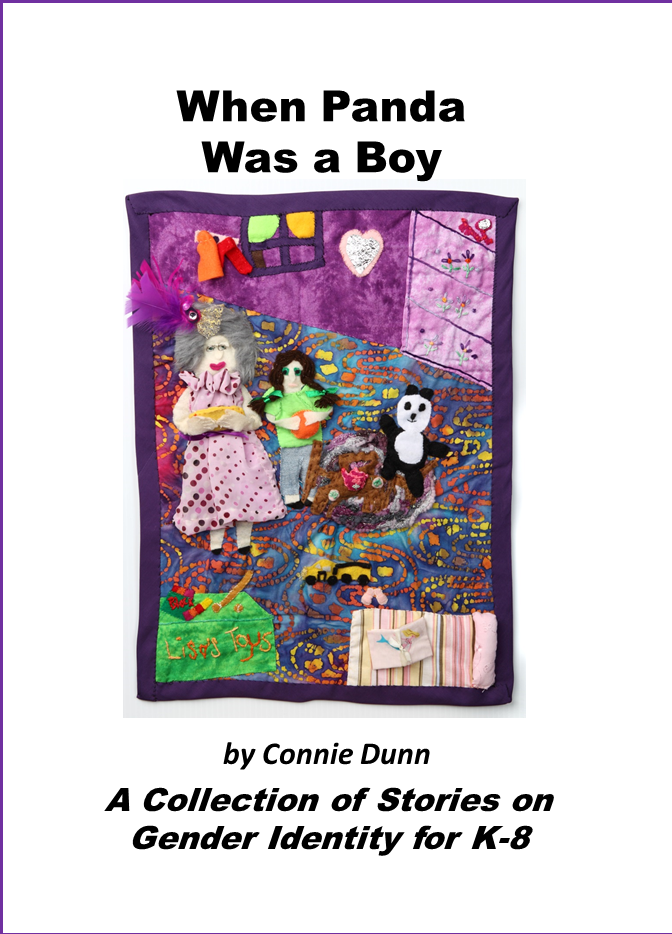
When I first introduced my new book When Panda Was a Boy: A Collection of Stories on Gender Identity for K-8, I was joyfully surprised that it was met with:
“This is so needed in the world!” “Where have you been?” “I wish I had this book when I was young.”

I actually was prepared for people’s negative responses over what can be a controversial topic. Instead, I have been pleasantly greeted with open arms, which definitely says a lot about how LGBTQ people of all ages are being met by the larger community. But make no mistake; this is still a “hot button” issue.

Panda- Cover

BUY HERE! http://publishwithconnie.com/whenpandawasaboyonamazon

When I first decided to write these stories, it came from my heart strings being pulled. I just couldn’t imagine anyone throwing out a child over their gender identity, whether that be trans (transgender, transsexual, or gender neutral), bisexual, gay, or lesbian. Our gender choices come from our DNA. No one wakes up one day and says, “Hmmm, I think I’ll be a ‘trans’ today.” Instead, it’s something that brews within their core being. Children as young as 2 ½ may begin showing tendencies toward the opposite gender than what their genitalia mandates. It doesn’t mean that they will ultimately be a trans. If a child is supported for who they are in all capacities, they will grow up to be who they are supposed to be.

One hurdle our society must get over is that people who are LGBTQ don’t seek it out as a rebellion; it is part of who they are. It’s in their DNA, which is not changeable. There are no choices to override DNA; it’s simply who you are just like your eye or hair color is part of who you are.

More youth and young adults are supporting trans by identifying as trans, which can be transgender, transsexual, or gender neutral. While most supporting people may be heterosexual; they also want to buck the binary system. There are many people who just don’t want to be “genderized.”

When young children begin to explore who they are between three and five years of age, sometimes as young as two-and-a-half, they explore gender. What happens is that our parents redirect us toward a stereotypical gender based on acceptable societal standards. When a little boy starts to play with dolls, a parent or other adult may say, “Boys don’t play with dolls!” So, they learn: “it’s not safe to be who I am.” These children stuff down these feelings. They don’t really go away; they just get pushed down inside of us. When a little girl wants trucks and cars, a parent will usually say, “Girls don’t play with cars and trucks, they play with dolls.”

Then, when these children go through puberty, another “who am I” comes up for them. This identity extends into gender but also includes their spiritual, religious, political, fashion, virtuous, non-virtuous, and so many other things. Gender is a huge part of who we are and what role we play in family and society. Again, these teenagers explore, but some will again be redirected to stereotypical gender roles. Once again, these youth learn: “It’s not safe to be who I am.” Maybe when these people get into their 20s, 30s, or even into midlife, they will again explore to find “who they are.”

This is also why I wrote When Panda Was a Boy. Young children explore gender, but they don’t often see themselves in storybooks unless they fit into that stereotypical role. Parents do not have the communication skills to deal with these issues, because it just isn’t discussed in most parenting circles. There are few role models in society, so my stories help parents find the right responses to support their children through their gender identity searches.

The stories in When Panda Was a Boy “are gentle stories and I approach the stories in a natural and age-appropriate way.

  • In “Amara’s Birthday Request,” Amara asks her mother for a penis. When Mom explores this with Amara, she finds out that Kamal, a boy at school, has told her that girls cannot sail a ship. Her mother assures her that she can do whatever boys can do. That’s all Amara needed to know.
  • In the story, “When Panda Was a Boy,” Lisa doesn’t want to have a tea party with Grandma, even though Grandma is wearing her fun tea party hat. Instead, Lisa wants to jump in mud puddles with Panda, her stuffed bear. When Grandma encourages the tea party, Lisa tells her that she’s all done being a girl. Lisa is very adamant about not doing any girl things. She tells her Grandma that she’s going to be a boy. Lisa finally asks Grandma if she will still love her if she’s Max or Fred. Grandma assures her that she loves Lisa even if she is Max or Fred.
  • In “Charlie Is a Girl,” we explore some of the obstacles that Christina faces in becoming Charlie. She takes charge in talking with the principal to make it all work out for her to start her school year as Charlie. She even takes a copy of the law that was passed giving her the right to be Charlie, but she finds the biggest item on the agenda was what “restroom” was Charlie going to use? They even worked that out by giving Charlie a key.

Handling things in age-appropriate ways are best, as long as that doesn’t mean stereotypical talk, such as “boys don’t dance, they play football” or “girls don’t play football, they dance.”

These types of statements may seem harmless, but what the child cannot say back to you is that he or she doesn’t feel that gender on the inside. We actually harm kids by telling them what is appropriate and what is not appropriate for their gender. Some crossover is natural. Sometimes it is a sign that there are tendencies toward being trans. Time always tells. Being supportive in this growth is just as important as helping them learn to walk or ride a bike.

When children feel guilty that they cannot be the child that you, the parent, wants them to be, they often cope with these feelings by trying to commit suicide or committing suicide. As parents, we want to help our children to become the best they can be. Why is it so hard to not see being lesbian, gay, bi-sexual, or transgender as part of who our child is? To ask them not be who they are is to reject them. Our children try, but failing in that, they move on to depression and manic depression and suicide. No one really wants that for their child.

Children who have a bad self-image, which LGBT children are prone to have, are at higher risk of being bullied. This behavior can also be fatal. A fragile child may not be strong enough to battle with a bully. Again, suicide is often what they see as their best choice, “so no one has to deal with the outcast.”

It is my hope that When Panda Was A Boy will help children in grades K-8 to feel normal about their gender choices, both in to whom they are attracted and to what gender they are inside. No matter what gender is on the outside, children as young as four or five may express their inner gender. Parents can help their children by being supportive and following their lead.
*****************************************

Connie Dunn is an author, speaker, and book writing coach. Her book, When Panda Was a Boy: a Collection of Stories on Gender Identity for K-8, is available in paperback and Kindle from Amazon.com (http://publishwithconnie.com/whenpandawasaboyonamazon).

Connie also teaches people to write and publish their books. You can find other information about her, her books, and courses at Publish with Connie (http://publishwithconnie.com/)

To receive a FREE Parent’s Guide: 10 Tips for Parents on Talking about Gender Identity to Your Children Sign up at: http://whenpandawasaboy.publishwithconnie.com.

Unknown's avatar

Supporting gender and sexual orientation diversity is important: It’s sometimes a matter of life and death

Children’s Book Review

Made By Raffi by Craig Pomranz

by Sally Ember, Ed.D.

July, 2014

It’s not often that two people who knew each other as teenagers both become authors around the same time, but here we are, Craig Pomranz and I, both from Olivette, MO (a suburb of St. Louis), finding this new outlet for our creativity!

Craig is one year younger but was two grades behind me in our high school due to district entrance deadlines. It was quite “scandalous” at the time that I chose him to be my among my good friends, because I was a popular, powerful senior and he was a lowly sophomore in our three-year, Ladue Horton Watkins High School in 1971.

Why did I pick Craig out of and lift him from the kiddie pool? Because he was amazingly talented, charismatic, charming, intelligent, fun and earnest, even then. At our almost-clueless ages of 15 and 16, we bonded over musical and dramatic theater, party games, sex, jokes and movies.

We were also both not exactly cis-gender or completely heterosexual. In those ways, we kind of “met in the middle” and found a lot of common ground. We are still doing that, over forty years later. Craig and I both have wanted our experiences to be utilized so that we could be helpful to younger people in our professional work (as I have) and our writing.

This spring, Craig authored and this month published s wonderful, unique children’s book, Made by Raffi, that I’ll let him tell you about from an email he recently sent to me:

“I wrote the book to support young boys and girls who are perceived as ‘different’ because of their appearance or hobbies. It is a funny, colorful book with a serious message and will interest those who care about promoting diversity and embracing our differences, as well as all children seeking to fit in. This is an important topic for today…”

Craig went on to explain: “I have really become interested in the idea of how we tell our kids what is ‘appropriate’ activity based on gender. Most of the parents of young kids I know are trying, on the one hand, to let them follow their own interests, but on the other are concerned about their kid’s fitting in and not being teased. As a result, atypical hobbies and behaviors are only encouraged so far.”

He knows I AGREE with him completely, so he asked me to review and help promote his great book. Here I am, doing just that.

Buy this book. Share it with younger readers and even younger pre-readers. Talk about it. Allow Raffi’s story to raise questions and stimulate important conversations. Donate it to schools, libraries, homeless shelters, runaway hostels, children’s hospitals, youth mental wards, rehab centers.

I mean it. Made by Raffi should be everywhere so that gender disphoric and gender diverse youth can find it. It doesn’t matter that it’s a “children’s book.” That just makes it an easy read, brief but pithy. Also, the brevity and easy language mean that a young person who still has trouble with reading or whose English isn’t great could understand and benefit from it.

Why do I do this when I’m not a professional book reviewer? Because supporting gender and sexual orientation diversity is important: it’s sometimes a matter of life and death.

Craig wrote to me to share “some shocking stories”:

  • “A principal told a boy he could not bring his ‘My Little Pony’ lunchbox to school because it was a ‘trigger’ for teasing and bullying.

  • “The same week, a girl was expelled from a Christian school because of her short hair, perceived masculine look and interest in sports.

  • “A woman in Portland killed her child of four because she thought he ‘acted, walked and spoke like a gay person.'”

Craig continued in his email to me: “I would love to help those raising children—-and that includes parents, teachers, friends and relatives (the wide range of ‘families’ out there)—-who have had to deal with the issues of teasing and bullying and the difficulty we all have in defining who we are.”

From the book’s description:

Raffi is a shy boy who doesn’t like noisy games and is often teased at school. But when he gets the idea of making a scarf for his dad’s birthday, he is full of enthusiasm even though the other children think it is ‘girly’ to knit. Then the day draws near for the school pageant, and there is one big problem: no costume for the prince. And that’s when Raffi has his most brilliant idea of all — to make a prince’s cape. On the day of the pageant, Raffi’s cape is the star of the show.

Raffi cover

Age Range: 5 – 9 years

Grade Level: Kindergarten – 4

Hardcover: 40 pages

Publisher: Frances Lincoln Children’s Books (July 29, 2014)

Illustrated by Margaret Chamberlain

Buy link: http://www.amazon.com/Made-Raffi-Craig-Pomranz/dp/1847804330

If you read the book, let Craig and others know on Twitter @MadeByRaffi

LIKE and comment on the book’s Facebook page: https://www.facebook.com/MadeByRaffi

I am so proud of my dear, longtime friend, Craig Pomranz! Spread the word! Visit his new blog!
http://craigpomranz.com/made-by-raffi/

Bonuses!

Craig sent me some snippets from readers all over the globe who have already shared and appreciated Made by Raffi. Here are a couple of those.

From a man in Istanbul:
Today I enjoyed to preorder your beautiful and meaningful children book for my cousin. Especially here in Turkey we need to learn respect to the one who is different than us. Thanks for your effort to make the world a better place to live.

Another fan wrote and sent Craig a photo:
I just wanted to send you this lovely picture of Isak, 7 years old, who has been inspired by Made by Raffi (Norwegian edition) to knit a scarf for his younger cousin (maybe as a Christmas gift). His mother tells me that they have been reading the book several times now, and that he’s trying to read it by himself, too. Greetings from Norway!

Isak

Unknown's avatar

Sally Ember’s CHANGES Google + HOA (Hangouts On Air) Start August 6

Sally Ember’s G+ HOAs 60-minute shows, CHANGES

G+ HOA with G+ logo

from ncedchat.blogspot.com

are going to be on Wednesdays, 9 AM CST (Central Time, USA), about three times/month. Premier show: August 6.

Next shows: August 13, 27, Sept. 10, 17, 24.

CHANGES‘ topics will vary a lot, including insights, humor, information, reviews, tips, personal/professional stories, and more. Sally and special guests will provide whatever we believe is useful and interesting to authors, writers, thinkers, readers, social marketing newbies and others.
I will also be learning how to and then posting these as podcasts as well as on YouTube so the CHANGES HOAs can be accessed as archived videos/audios any time.

If you’d like to be a guest or suggest a topic or guest for CHANGES, please contact Sally: sallyember@yahoo.com

google-youtube

from http://www.webinarsonair.com

Guests must have access to Google+ Hangout On Air/You Tube video tech (webcam, appropriate camera and audio quality, bandwidth) and be comfortable with being on camera and on the air before being on this show.

Suggestion: if you’re a newbie to HOAs or a bit camera-shy but want to get involved and be a guest on Sally Ember’s or anyone else’s, first get acquainted with all the great help available for free “out there.”

Check out some of Sally’s mentors and ongoing inspirations:

Meloney Hall‘s “Lights, Camera, HOA” http://bigupticksocial.com/overcome-live-camera-shyness-introducing-lights-camera-hoa/ Here is a link to the episode that features me, Sally Ember, and Michael Daniels’ and others’ great info, with many laughs! You can then get to the new episodes from that channel. Every Monday, 1 PM PST. https://plus.google.com/u/0/events/ciouo2m50c6vrror6eeei9105hc

Denise Wakeman‘s “Adventures in Visibility” http://denisewakeman.com/hoa

Ryan Hanley‘s “Content Warfare” http://www.ryanhanley.com/

Shawn Manaher‘s “Author Hangout” http://bookmarketingtools.com/blog/category/hangout/

Mia Voss‘ HOAs http://themiaconnect.com/

Ron Bincer‘s youtube tutorials http://www.thehangouthelper.com/

Martin Shervington‘s YoutTube tutorials and PDFs, http://www.martinshervington.com/

Rebekah Radice‘s tips and posts http://rebekahradice.com/

Mike Daniels‘ “User2User-Live!” G+ group https://plus.google.com/u/0/communities/101944073205735325459

Rayne Dowell has her own site and info on it, such as this:
“Your YouTube Channel & HOA Practice Sessions”

If you’d like to practice HOA’s to improve your Hosting skills these are a few things to keep in mind.

You can host an HOA from your personal profile or your Page, each one can have its own YouTube Channel.

There are 3 basic types of HOA’s:
1. SHOAE (Scheduled Hangout On Air) – created from the Hangout option under the Google+ menu
2. Event – created from the Event option under the Google+ menu and can be created in a community
3. Public Event/Private HOA – created from the Event option under the Google+ menu

There is another option, a CCHOA (this is a community centred HOA, which is created by a page and is more advanced (+Heather Kraafter +Michael Daniels and +Andrew Hatchett are the experts on this if you’d like more info)

► In each case, after you’ve hosted any one of these types of HOA’s, your YouTube channel will hold the end product (video).
► If you are planning on using your personal profile or page in the future to host your own HOA shows, you may decide to mark your practice sessions as ‘private’, giving only a circle access to them.
► You cannot assign access to a g+ community on the YouTube side, only a circle.
► For example, I’ve been practising the Public Event/Private HOA-type of HOA, I’m not able to enter the url and add this video to this post, because the video is marked ‘private’ and shared with a circle (those people in the circle will be able to watch the video, those not will see a black screen).
► If you add or remove a name from your g+ circle, YouTube will then give or remove access to that video based on your circle.

This is what I’ve learned so far about HOA’s and YT. If I’ve come to any conclusions you haven’t, please do let me know – questions are welcome!

Here is a link to Rayne’s youtube channel: https://www.youtube.com/channel/UCNh4hA1l5mW_DoM2qtDlVKQ

There are many others who generously and spectacularly teach us/show us how to use G+ HOAs. I honor them all!

If you are a newbie to the entire world of Google+, there are many who can help you learn about it. Here is one link to a great guide: http://www.scottbuehler.com/social-media/beginners-guide-google-plus/

Remember: the only constant is CHANGE!

impermanace Buddha changes

from meditationstreet.com

Are YOU ready for CHANGES? What will you do with CHANGES?

Unknown's avatar

Sally Ember’s CHANGES Google + HOA (Hangouts On Air) Start August 6

Sally Ember’s G+ HOAs 60-minute shows, CHANGES

G+ HOA with G+ logo

from ncedchat.blogspot.com

are going to be on Wednesdays, 9 AM CST (Central Time, USA), about three times/month. Premier show: August 6.

Next shows: August 13, 27, Sept. 10, 17, 24.

CHANGES‘ topics will vary a lot, including insights, humor, information, reviews, tips, personal/professional stories, and more. Sally and special guests will provide whatever we believe is useful and interesting to authors, writers, thinkers, readers, social marketing newbies and others.

I will also be learning how to and then posting these as podcasts as well as on YouTube so the CHANGES HOAs can be accessed as archived videos/audios any time.

If you’d like to be a guest or suggest a topic or guest for CHANGES, please contact Sally: sallyember@yahoo.com

google-youtube

from http://www.webinarsonair.com

Guests must have access to Google+ Hangout On Air/You Tube video tech (webcam, appropriate camera and audio quality, bandwidth) and be comfortable with being on camera and on the air before being on this show.

Suggestion: if you’re a newbie to HOAs or a bit camera-shy but want to get involved and be a guest on Sally Ember’s or anyone else’s, first get acquainted with all the great help available for free “out there.”

Check out some of Sally’s mentors and ongoing inspirations:

Meloney Hall‘s “Lights, Camera, HOA” http://bigupticksocial.com/overcome-live-camera-shyness-introducing-lights-camera-hoa/ Here is a link to the episode that features me, Sally Ember, and Michael Daniels’ and others’ great info, with many laughs! You can then get to the new episodes from that channel. Every Monday, 1 PM PST. https://plus.google.com/u/0/events/ciouo2m50c6vrror6eeei9105hc

Denise Wakeman‘s “Adventures in Visibility” http://denisewakeman.com/hoa

Ryan Hanley‘s “Content Warfare” http://www.ryanhanley.com/

Shawn Manaher‘s “Author Hangout” http://bookmarketingtools.com/blog/category/hangout/

Mia Voss‘ HOAs http://themiaconnect.com/

Ron Bincer‘s youtube tutorials http://www.thehangouthelper.com/

Martin Shervington‘s YoutTube tutorials and PDFs, http://www.martinshervington.com/

Rebekah Radice‘s tips and posts http://rebekahradice.com/

Mike Daniels‘ “User2User-Live!” G+ group https://plus.google.com/u/0/communities/101944073205735325459

Rayne Dowell has her own site and info on it, such as this:
“Your YouTube Channel & HOA Practice Sessions”

If you’d like to practice HOA’s to improve your Hosting skills these are a few things to keep in mind.

You can host an HOA from your personal profile or your Page, each one can have its own YouTube Channel.

There are 3 basic types of HOA’s:
1. SHOAE (Scheduled Hangout On Air) – created from the Hangout option under the Google+ menu
2. Event – created from the Event option under the Google+ menu and can be created in a community
3. Public Event/Private HOA – created from the Event option under the Google+ menu

There is another option, a CCHOA (this is a community centred HOA, which is created by a page and is more advanced (+Heather Kraafter +Michael Daniels and +Andrew Hatchett are the experts on this if you’d like more info)

► In each case, after you’ve hosted any one of these types of HOA’s, your YouTube channel will hold the end product (video).
► If you are planning on using your personal profile or page in the future to host your own HOA shows, you may decide to mark your practice sessions as ‘private’, giving only a circle access to them.
► You cannot assign access to a g+ community on the YouTube side, only a circle.
► For example, I’ve been practising the Public Event/Private HOA-type of HOA, I’m not able to enter the url and add this video to this post, because the video is marked ‘private’ and shared with a circle (those people in the circle will be able to watch the video, those not will see a black screen).
► If you add or remove a name from your g+ circle, YouTube will then give or remove access to that video based on your circle.

This is what I’ve learned so far about HOA’s and YT. If I’ve come to any conclusions you haven’t, please do let me know – questions are welcome!

Here is a link to Rayne’s youtube channel: https://www.youtube.com/channel/UCNh4hA1l5mW_DoM2qtDlVKQ

There are many others who generously and spectacularly teach us/show us how to use G+ HOAs. I honor them all!

If you are a newbie to the entire world of Google+, there are many who can help you learn about it. Here is one link to a great guide: http://www.scottbuehler.com/social-media/beginners-guide-google-plus/

Remember: the only constant is CHANGE!

impermanace Buddha changes

from meditationstreet.com

Are YOU ready for CHANGES? What will you do with CHANGES?

Unknown's avatar

Conclusions from Smashword’s Survey: How to Sell your Books

Thanks, Nicholas, for doing the “heavy lifting” and summarizing the Smashwords’ Survey results, here. Question: until today, I read many places that it’s after Book 3 in a series that authors can expect to do better/become more “visible.”
Today, you said Book 5 and I want to tear out my hair (I’m halfway done with Book 3 and have done everything else on that survey already and correctly).
Tell me that “5” was a typo???? Please????
Best to you. Sally

Nicholas C. Rossis's avatarNicholas C. Rossis

SmashwordsAll my author friends spend sleepless nights agonizing over one question: how can I best promote my books? Well, Smashwords recently attempted to answer that question through a survey examining what works and what doesn’t in terms of ebook sales.  You can read the whole survey on the Smashwords blog, but, as always, I’ve made a helpful list of the most important (to me) points. So, here are the takeaways from the survey:

  • A few titles sell really well, and many don’t sell that well. However, a lot of Smashwords authors earn a good income from their books. This agrees with Hugh Howev’s Author Earning surveys.
  • It’s important to climb in sales ranks, as this leads to geometrically increased sales. This is what some people sometimes call reaching a critical mass of readers.
  • Readers prefer longer books. A few days ago, a reader gave me 4 stars for The Power of…

View original post 519 more words

Unknown's avatar

The Corrupter: Now Available on Smashwords!

5 more days for #SmashwordsJulySale with this and both Volumes of #THESPANNERSSERIES also on sale! Vol II is 50% off: https://www.smashwords.com/books/view/424969 Vol I is Permafree: https://www.smashwords.com/books/view/376197 Cruise the catalog and find great bargains through 7/31!

Richard Evans's avatarRichard Evans - Raven Heisenberg

The Corrupter is a tale of one man’s obsession with a machine in the shape of a beautiful young girl. From the moment Oberon O’baron laid eyes on the robot, he was in love. With just a glance the petite artificial girl set his heart aflame, sending him into an obsessive frenzy that leads him down a dangerous path.

View original post

Unknown's avatar

A DNF (Did Not Finish) Experience Does NOT Qualify for a “Review”

As a writer and as a reader, I am a genre outsider. I don’t write or read squarely within any genre except Speculative Fiction, but that is so large as to be considered a literary category and not one genre (see previous post, https://sallyember.com/2014/07/10/guest-post-the-politics-of-speculative-science-fiction/, for what belongs within Spec Fic).

Furthermore, I don’t usually like what is published in most of the #SpecFic subgenres. I don’t even like their plots or characters. Same goes for #Romance. I often have to label books Did Not Finish (DNF), although I reserve even that designation for books I read a great deal of before abandoning.

DidNotFinish_purple_Banner

image from http://www.prettyinfiction.com by Jesse Burgoyne

Here are the reasons that I often Did Not Finish (DNF) a book. Books on my DNF list feature:

  • zombies and other horror characters/plots, especially “damsel in distress”;
  • dystopian, apocalyptic downers;
  • space wars, medieval wars, any other wars;
  • combat/violence masquerading as plot points;
  • instant, superficial romance (humans with humans or humans with aliens, shapeshifters, vampires or whatever);
  • gratuitous sex or violence (meaning, does not advance the character development or plot, and appears every so many pages, anyway);
  • military characters, past/future or pretend;
  • “instant” solutions, usually involving a main character’s finding a lover, to serious grief or other problems;
  • sexist, racist, misogynistic, heterosexist/homophobic, classist, ageist and other oppressive depictions of characters, even if they’re “realistic” for the characters or eras
  • clichès, trite plot twists, 2-D characters, and /or other types of bad writing
  • too many typos, grammar or other mistakes that reveal the absence of or very poor editing
  • nothing interesting, so I’M BORED.

As you might imagine, this list includes most speculative fiction and romance books.

You now understand the main reason I almost never do “review swaps.” I so strongly dislike other people’s books/stories, even when they’re relatively well-written, that I can’t even read past the first few pages for most of them. I have tried to read and review them, especially when they are well-written or the author is someone I wish to support for other reasons, but I just can’t appreciate what I don’t like.

Unlike other reviewers who find themselves unable to finish a book because they don’t like it, I don’t post a “review” of an unfinished book unless it’s written by a well-established author whom many others are praising. In those cases, I post my dissenting viewpoint just to round out the PR for that book, knowing my minority, low opinion won’t crush or crash them.

Otherwise, I don’t post my many DNFs with ratings and I do not post “reviews.” I strongly wish other DNF readers would adopt my policy.

It is completely unfair for anyone to give a “professional” opinion (which is what a review purports to be) of a piece of literature the reviewer hasn’t completed. I’ve had some “reviewers” read a few dozen pages of my 300+-page books and then have the audacity to post a ZERO or one-star “review.” What is the justification for that? When they label a sarcastic or dissatisfied DNF response after having read only a few pages a “review,” that infuriates me.

I don’t mind that some readers DNF my books. I understand that some don’t like them. I also encourage readers to comment on any books they want, all they want. As a frequently dissatisfied reader, myself, I empathize with DNF experiences. Sometimes, I explain.

I object strenuously, however, when these DNF readers label their preliminary reactions and comments a “review.” Even more heinous is that some have the gall to rate their DNF books.

In what other profession or situation does a “professional” who has had only a brief experience with the piece become entitled to the right to judge it? Can an Olympic judge watch just a few seconds of the gymnast’s floor exercise routine, then rate it? Do we allow a jury to hear only one witness or just a few words of testimony and give a verdict? When do we ever allow a teacher to give a semester’s grade after briefly meeting the child or giving just one quiz?

DeadLast

image from mackenzian.com

Yes: not all readers finish books or even read most of a book. I am a reader who has a list of titles pages long I have done that with because they did not hold my interest. However, for fairness and professionalism, I strongly request that readers and especially reviewers who DNF not to rate or review those books. Please.

It is fair and helpful, meanwhile, for professional reviewers and avid readers to maintain a DNF list and even to share it. Better would be that we explain a little about our DNF reasons, but that is not expected or required (we’re busy!).

dnf-recap

image from mylifeinbookss.wordpress.com

I hereby proclaim: these are fake reviews, due to the readers’ DNF status. DO NOT READ DNF “reviews.” DO NOT BELIEVE WHAT THEY WRITE. DO NOT SUPPORT “REVIEWERS” who postDNF “reviews.”

One bonus: Within a DNF‘s comments are sometimes witty lines. Those I am pleased to re-post, just for fun.

Meanwhile, back in authors’ support land: please don’t ask me to do a review swap. I mostly do not do reviews, anyway. I do not consider myself a “professional” reviewer. I am just an avid reader and an author.

When I do choose to read a book and finish it, I will post a review. I promise.

Mostly, these days, #Iamwriting my books and blog posts.

Best to you all.

Unknown's avatar

“Getting Comfortable with #Technology Takes Time,” Meloney Hall’s “Lights, Camera, #HOA” with Sally Ember, Ed.D., from 7/21/14

Thanks so much, +Rayne Dowell, +Michael Daniels, +Sheila Strover and, of course, our hostess with the mostest, +Meloney Hall, for having me on, schooling and supporting me in my first working #Google #HOA (#Hangout On Air)!

Watch this #author have a sort-of #interview while I’m learning how to use the technology, right there.

Laugh (and learn!) on YouTube (both links go to the same place):

https://www.youtube.com/watch?v=y1z17xLtttg

http://youtu.be/y1z17xLtttg

Unknown's avatar

Parallel Construction: What it is, what it isn’t, and how to write better despite hating your 8th-grade English teacher

Parallel Construction (PC from now on) is a type of sentence structure that confounds even “good” writers and many professional editors. Sorry! If you understand PC, then you must have HATED the title of this post!

YES! Points to you if you recognized that this post’s title is NOT written in proper Parallel Construction! I wrote: “…What it is, what it isn’t, and how to write better…”

parallel construction defn

image from unilifeapps.curtin.edu.au

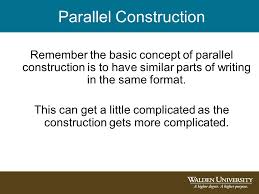
When we write a string (a series) of phrases or words, the rule of PC is: the members of any string must be in the same form or format.
When they are not in the same form/format, then they must be separated by giving them different wording and punctuation than when they are Parallel.

Here is what is incorrect about that part of the title, according to PC. In the title’s string, I start with “what it is” and then go on to “what it isn’t.” Fine, so far.

The mistake comes in the next phrase. This phrase seems as if it is part of the same string, but it can’t be, due to its differing format: “how to write better.”

If I can’t write what I want to say in the same format as the two or more members of the series that preceded the next phrase or word, but I insist on including that content in that series’ sentence, I must change the structure of the sentence, like this:
“…what it is and what it isn’t, and how to write better…” adding the “and” between the two similar series’ members and a comma after those before the “and” that precedes the odd one out.

Confused? Here is another example of a mistake in Parallel Construction I lifted from a video description on Youtube today: “Daniel Radcliffe is smart, rich, and has a good sense of humor.”

Here we have two members of the series that are one-word adjectives, “smart” and “rich.” To keep that string in its proper, parallel format, the next quality that describes Radcliffe also should be a one-word adjective, but it is not. Not only that, but the errant final phrase starts with a verb and keeps going.

The third member of that contumacious string is an imposter, not being a one-word adjective. This pretender to the above sentence’s string membership has an entire phrase as its quality’s entourage: “has a good sense of humor.” DISALLOWED!

If the author wishes to describe Radcliffe with these three qualities yet write correctly, s/he could write: “Daniel Radcliffe is smart, rich and funny.” See? The three one-word adjectives are in perfect Parallel form. No comma is needed or desirable after “rich” in this version, by the way.

OR, to maintain the exact meaning even better, try this: “Daniel Radcliffe is smart and rich and has a good sense of humor, too.”

Unfortunately, what I see (and hear) repeatedly are strings with two or more members that are properly Parallel while the final member is not. Errors in Parallel Construction are rampant. Fortunately, they are easy to detect. Unfortunately, they are sometimes awkward to correct.

The trick in correcting errors in PC is to avoid making the edited sentence sound phony or stiff while maintaining the precise meaning the author intends. Not so easy to do in many cases, you will find.

Some Tips to Recognizing and Correcting Errors in Parallel Construction:

Parallel construction advice

image from slideplayer.us Thanks to Walden University for both graphics.

  • Notice sentences that have lists. Check the form/format of each part of the list. A series or string of three or more words or phrases is the only place PC can be used correctly (or incorrectly). Some editors talk about non-Parallel Construction of paragraphs or even chapters, but they are using the term incorrectly. What they mean is this author has problems with consistency in formatting or length of paragraphs, perhaps, or has style similarities that aren’t carried over properly among paragraphs or chapters (these are common problems but are not correctly called non-PC).
  • When the members of the string are verbs, make sure they are in the same form. For example, verbs in a string that have “ing” as their endings can’t suddenly change form. “She was glad to be eating, reading and walking…” should have no errant infinitives, such as “to take a walk,” sneaking in at the end.
  • Each member of a string that has phrases should have identical phrasing. That means that when the first two phrases each has three words, so the third and subsequent members should each have three words. Example: “I hate people who talk on the phone, eat at their desks, yell across rooms and pick their noses during lunch breaks” is correct. However, “I hate people who talk on their cell phones, eat whatever smelly food they want at their desks or cubicles, yell at their friends across the room, down the halls, or wherever they are, and pick their noses during lunch breaks” is not. Though presenting funny images vividly, the second sentence is a mess, grammatically.
  • Make sure the beginning of each bullet point or list is written in the same form/format. When you start a list (numbered or bulleted) with an action verb (“Make sure”), or an adverb (“How”), keep using that.
  • Also, when you start a list of items in which the first item starts with a capital letter or italics, keep doing that. When each point ends with a period, keep that format as well. The first piece of advice concerns Parallel Construction. The next two tips concern parallel formatting.

    I hope this brief lesson in Parallel Construction improves your understanding, your speaking and your writing.

    If it does not, don’t blame, call or come to find me and kill me.

    Correct my (intentional) errors in the comments section, below. That constitutes your final exam.

    Thanks for playing Grammar with me!

    Unknown's avatar

    On Doing What’s Normal When Things are Turning to Shit

    This explains beautifully why I make soup every week and eat it every day. Really. Thanks. FYI the rest of you: Coping by going on with life is not always a sign of denial. All pain, grief and fear don’t have to be displayed all the time to be recognized and present for the coping person.

    Jan Wilberg's avatarRed's Wrap

    Normal has an extraordinary glow of comfort when things are turning to shit. Normal is your mother’s hand on your cheek. Normal is the blanket of your youth pulled up to your neck, your head deep in billowy pillows that only this morning seemed due for replacement. Normal is precious, rich, unique, a reward for suffering long or short.

    When something terrible happens, we want normal. It might be just one fine thing that is normal while all around cascades terrible, freakish, unbelievable things but if this one normal thing can occur, then we can settle down, rest, and stop careening around, a BB in a bare room.

    This morning’s paper detailed the criticism aimed at President Obama for going about his normal schedule in light of the plane shot down over Ukraine and the ever-ratcheted up conflict between Israel and Palestine. He should be at the White House, act like a Commander in Chief…

    View original post 381 more words

    Unknown's avatar

    Simple Tips to Manage Fatigue with Brain Injury, Memory Problems, and Chronic Illness to Self Rehabilitate

    A lot of useful tips here for you or a loved one/colleague recovering from/living with a #TBI.

    brain injury self rehabilitation (BISR)'s avatarbraininjuryselfrehabilitation

    How can you manage mental and physical fatigue in your daily life? The normal fatigue you feel from brain injury is not like simple feelings of tiredness.  It’s far from this. It exhausts all your physical and mental energy and leaves one in a brain fog where you can not think at all or physically accomplish anything.  Your limbs feel so weak you just cannot be involved in doing anything until you get rest. Sleep is the only thing that helps you feel better.  

    View original post 1,853 more words

    Unknown's avatar

    Good #Writing DOES Require #Talent, Not just Hard Work

    I really got inspired last week (frustrated, actually), by a post written by a colleague about supporting ALL writers. I contributed this comment, below, on her blog.

    In my recap (I waited a week to make sure I wanted to post this), below, I update you on the online “conversation.” First, I quote from her blog, link to it, and post my original comment in its entirety. Images added for fun.

    Comments

    from blog.performics.com

    In response to “You Don’t Have to Be Good (at Writing)” by Jordan Rosenfeld

    Good #Writing DOES Require #Talent, Not just Hard Work by Sally Ember, Ed.D.

    original post on http://jordanrosenfeld.net/you-dont-have-to-be-good-at-writing/

    posted on 7/9/14

    quotes from Jordan’s post:
    “…’good’ is arbitrary; you’ll be good enough for some, while others will reject you. It’s a standard you’ll never live up to because it’s subjective and always changing.

    “Beating yourself up over being ‘not good enough’ is a form of stopping up the free flow of creative energy. It can even be a form of self-sabotage. In the worst case scenario, it’s an excuse to not have to get any better at it; a statement of ‘This is just the way I write.'”

    “False! This is how you write at this time, in this moment, with whatever resources are at your disposal. Every time you read a fantastic book, your writing has a chance to crack open. Every time you hear a lecture, attend a class, or pick up a writing guide, you can learn or see something in a new light, and your writing changes. Time and distance also change how you see your writing.”

    “What you can be is committed to continually probing the depths of your work, or taking time to learn something you struggle with, or just stepping back completely and reading when your own work feels too unwieldy.”

    “These voices of doubt and uncertainty are gremlins sent to test our creative mettle, to strengthen us up. The more we fend them off by patching the leaks they tear open inside us with further work, the more power we have to overcome them. Like the ‘dark side’ that calls to us with its illusion of power, its promise of the familiar, which is cozy in a bleak sort of way.”

    “Shine some serious, badass light on those demons when they come, instead. Write them into a new narrative.”

    “Don’t worry about being good. Be enough. Be committed.”

    My comment:
    Hi, Jordan,

    I have to disagree. I am not of the opinion (as many are; seemingly, you) that anyone who wants to “share” should be honored for doing so regardless of the quality of their content and writing. There are a lot of inadequate writers who self-publish and some who get published by trad publishers who never should have had their writing seen by others.

    Some people can’t write. What they do write is unclear, repetitious, uninteresting, banal, riddled with cliches and lapses in logic or sense. I’m not just talking about too many typos or grammatical problems. I’m talking about bad writing. It exists. It needs to be called out.

    bad writing meme

    from http://www.memecenter.com

    About thirty years ago, in an effort to combat overly critical adults’ impact on children and imitating the Special Olympics’ methods, most parents, recreation and education people began to make huge mistakes: participation became the same as surpassing. Everyone in the Pre-K “graduated” to Kindergarten. Everyone at a camp or club got a ribbon for attending.

    Result? People who are now 45 and younger have the mistaken belief that everyone is “great”; it’s other people who make them “feel bad.” Self-esteem-building was taken to such an extreme as to make actual achievement or superiority meaningless. An overly developed sense of entitlement goes hand-in-hand with an inability to discern good from bad. I’m sorry to point it out, but your post is a prime example of this faulty thinking.

    Real life: not everyone wins, nor should they. Ask Brazil this morning! Poor performance should NOT get a medal, and not all performances are equal.

    Not everyone is talented, skilled, or worthwhile in every area. It’s fine to acknowledge this and not in any way demeaning. In fact, applauding mediocrity makes it indistinguishable from excellence, or worse, allows everyone who can put words on paper to call themselves a “writer.” That makes excellent or even passably good writing impossible for most people to recognize or value.

    Not everyone should be encouraged to be a writer. Really. You did that person a serious disservice by not evaluating his work objectively.

    We have no trouble saying that people who are “tone-deaf” or clumsy shouldn’t be professional singers or dancers. Sing in the shower; dance in a club or at home. But, we don’t encourage them to call themselves artists. Why can’t we use the same discernment about untalented authors?

    What does “be enough” mean when we should be talking about quality, not quantity? It’s fine to be “committed” to self-expression; commitment doesn’t make a person a good writer.

    Some people really AREN’T “any good” and should not be encouraged to write for the public. Tell them: journal all you want. Or, get a ghostwriter, if your story is compelling and you can’t write it well.

    Please stop encouraging everyone equally. You aren’t being an editor, then; you’re being a cheerleader for the entire world.

    Don’t encourage inadequate writers that no amount of coaching can improve to share their drivel. Not every story should be told by every storyteller.

    monkey-typing

    from multicultclassics.blogspot.com

    Some people really can’t tell jokes, either, and should not. I’m one of those.

    Best to you,

    Sally

    Since that day, I thought a lot more and want to add these components:

    1) Most people are perfectly willing to assign the label of “bad” to other art. Why is that so much easier to do than to label someone’s short story, novel or article as poorly written?

    2)I’m not looking for perfection. I want high standards to be understood and upheld (but not at the expense of heritage or gender differences). I want people who are in positions of authority in publishing, editing and education to help explain and maintain standards. Give writers something obvious to aspire to (with a healthy range of “good” within many genres and types of excellence).

    3) Paying for awards and buying one’s accolades have to stop. We as readers and authors shouldn’t allow any authors to buy “positive” reviews, “win” a prize they’ve paid for, stuff the review “box,” or otherwise corrupt our understanding of what is excellent. We must speak out about these corrupt practices and not be sucked into them ourselves, however tempting.

    UPDATE: Many people have commented in the last week on Jordan’s post about how awful I am to have shared these opinions. Some say that any typos I ever made negate all of my opinions’ value (!?!). Some say that I don’t have the right to disagree on this blogger’s site with her posts (Jordan herself actually invited me to stop visiting since she thinks I don’t read her posts carefully enough).

    The comments from some of the others highlight the unfairness and absurdity of insisting that everyone who wants to express themselves on paper/online is equally valuable as a professional writer. Just because everyone can publish anything doesn’t mean they should. Who disagrees?

    I’m not demeaning the validity of self-expression. But, everyone who bangs on a piano is not a professional pianist. Everyone who jumps around is not a professional dancer. Does anyone dispute this? Why is it so difficult (and, obviously, painful) for amateurs and those whose words are best kept private to be told the truth?

    There is “good” writing, albeit subjectively assessed, and I agree that the standards are constantly changing and open for dispute. Don’t I have the right to state my own standards?

    Yes, some writers improve with practice, and everyone who writes might improve. What if they don’t?

    Are all writers to be considered “professionals” and deserving of praise just because, at this point in time, anyone can publish? Yes, completing an entire book is an accomplishment. But, are all accomplishments equal? Prize-givers and reviewers don’t believe that is true.

    Why am I being lambasted for pointing out my reasons for wanting “writing coaches” to be able to be professionally helpful in assessing them and then be honest with their clients, while personally being as encouraging as they choose? Wouldn’t you want an editor you are paying to edit to–oh, I don’t know–edit? Why are these distinctions so dreaded?

    Worst are responders to this “conversation” who are petty and mean, calling me names, disparaging me and my writing, because I dared to disagree with the blogger and provided reasons these commenters didn’t like. Really? That is the way discourse operates on these sites, now? More trolls than writers, there.

    I made a professional comment. There should have only been professional replies. I was NOT being a troll. I respect and admire Jordan, usually, and enjoy her posts. I wouldn’t allow that kind of personal, disrespectful disparagement to be approved as comments on my site.

    Guess my comments struck a nerve. Looking forward to your opinions! Go read the other comments, if you want.

    I did get one bonus, though: someone found a typo on my site’s ABOUT page, which I then fixed. Thanks!

    BTW: I was sent several private messages, from people who didn’t want to “join the fun” and then get blasted, I guess. They encouraged and thanked me, agreeing with my opinions and adding their own. Too bad they’re too scared of the blow-back to go public with their opinions.

    P.S. to Jordan: I was not disparaging you by labeling your supportive actions “cheerleading,” merely being descriptive. I WAS an actual cheerleader, an achievement earned by having talent, being committed, acquiring and honing skills, and (unfortunate and unfair, but pertinent) being “popular.”

    Similarly, as hard as it is for some to acknowledge, professional writers must also fulfill all of these to succeed. Everyone “in the stands” can and is encouraged to cheer. However, at my school in 1968, only eight of over one hundred girls each year were selected to be cheerleaders.

    How many journal writers and home bloggers are going to make the “cut” to become professional writers? What is required? I hope you help them determine their eligibility and assess their chances, not just keep cheering.

    Unknown's avatar

    RT and SHARE! TODAY! July 14 = “Digital Book Day”

    From CJ Lyons of No Rules, Just WRITE!, http://www.norulesjustwrite.com/:

    “If you’re as sick of hearing about the industry woes as I am, then here’s a chance to celebrate our readers (and maybe get some new ones!)

    DBDsquare-300x300

    “I’m declaring Monday, July 14th Digital Book Day!”
    (that’s also Bastille Day, btw!)

    [I included This Changes Everything, Volume I, The Spanners Series, ’cause it’s PERMAFREE!–Sally Ember]

    This-Changes-Everything----web-and-ebooks

    cover art by Aidana Willowraven.

    Come to http://www.digitalbookday.com TODAY, July 14th to grab your book and others.

    “CJ Lyons”

    “PS: please, please share this with any review site/blog/book club/writers group that you know!”

    Today is the day! http://www.digitalbookday.com
    Go get some new *free ebooks*! Find some new #ebook #authors! Start with me/mine: be patient and keep trying! Site is very busy!

    Unknown's avatar

    The #Freedom to Die without Regret: Post for #RaveReviewsBookClub #Blog #Recruitment Day

    What will you do today to be able to end your life at the uncertain time of your death with as little regret as possible? The freedom to die without regret is the aim of many meditators and those with spiritual practices of other types. I have been living a better life, striving to be a better person, doing meditation practice intensively for many decades as part of my “live-and-die-without-regret” plan.

    One day last fall, I walked through my neighborhood in northern California in a new direction, on streets I hadn’t walked before. There was a wide variety of landscaping, from untended dirt piles (for what purpose?) to blooming plants, featuring some very large, standing roses bushes all in a line. The dwellings ranged from assisted living, small buildings with apartments, and tinier cottages than mine to large homes and a few of what I’m sure were mansions when they were built in the early 1900s. To my eye, this “neighborhood” contained a haphazard mix of land use and varied conditions of the habitations.

    mansion with ponds

    Mansions’ grounds looked something like this. image from betterdecoratingbible.com

    I lingered in front of the beautiful fountains and shrubbery of one of the mansions, moved on to adore two little landscaped ponds and wondered what inspired their creation. I then went to sit in the neighborhood park on this beautiful fall day.

    The combination of the 70-degree temperature, the bright sun, the park’s peacefulness, the sweet-smelling breezes, the cloudless skies, my own independence and freedom (having recently been laid off), created a “perfection moment.” Into this scene walked two more people.

    A girl of about four pranced in and began to play with her “papi” (a Spanish term for “father,” but is used for almost any older male relative or even one’s boyfriend or husband; he appeared to be her grandfather). Papi had carried in a large bubble wand and jar of bubble mixture. Their game involved his dipping the wand and waving it to let the bubbles flow toward her in the light breeze. She would then shriek in delight and leap, run, stretch high, crouch and kick to get the bubbles within her reach to pop them.

    She buzzed around the playground, laughing and calling out, “Papi! Papi!” with joy each time she popped a rainbow bubble. He laughed with her delight and kept sending them to her. At one point, his enthusiasm and the breeze conspired to put the bubbles a bit ahead of her, coming too fast and out of her reach.

    bubbles

    image from http://www.designdazzle.com

    Indignant and out of breath, she went over to him, stomped her foot, put her hands at her hips (in her best imitation of her mom?) and said, “Papi! Wait for me to come to you!”

    “Oh, yes, of course, mi Princesa!” he replied, bowing, and did as she asked.

    Satisfied, she resumed her annihilating spree with vigor.

    Life sometimes is just like that: everything is beautiful, within reach, delightful, fun and able to be changed at our command. As humans, especially many who are living in relative peace, many of us live long lives, replete with splendor and abundance of all that we could possibly desire.

    Yet, our lives, as any, are actually just rainbow bubbles, able to be burst at any time by another’s actions, or the breezes, or by striking an object, or just by our coming to the ends of our bubble existences: POP and life is over, royal or not.

    Then, unlike a bubble, which seems to be free of self-reflection, we know we just died. Some of us die slowly, having time to contemplate our lives and deaths as we die; that’s part of our existence. A few of us have long, self-recriminating death throes that go on and on, all the way until we land in our next incarnation or experience whatever we believe is “next.”

    Our death-bed remorse and self-castigations are for naught: no matter how many ways we imagine we could have done things differently, as we lay dying, it’s too late. Regrets are not what we want to be left with when we die.

    Many spiritual teachers often say that the best departure any human can hope for is to die without regret. How many of us could die today without regret? Do you have that freedom?

    no_regrets medallion

    image from http://www.chfi.com/

    Some ways to reduce regrets (add your own): Spend more time with loved ones. Finish that project. Offer apologies. Go on a vacation. Appreciate, love, thank people, repeatedly, for their presence in your lives, out loud, to their faces, and/or write thank-you letters. Give to charities. Take that chance. Share your possessions, time, other resources. Tell stories. Learn another language. Play music. Make art. Dance. Sing. Read. WRITE. Ask for others’ stories. Donate land, restore something, fix things. Organize your papers. Toss embarrassing “evidence” NOW.

    If you become incapacitated, have you designated someone to have financial/legal Power of Attorney, a Health Care Power of Attorney? Do you have a Living Will that includes a declaration of intent when “heroic measures” are indicated? What about a DNR (Do Not Resuscitate) order? Who knows where all these papers are located?

    Who is your “executor”? That is a role EVERYONE needs to have filled, not just those with a lot of money or property.

    For those left behind: Write a Will and have it witnessed and notarized. Sort through and discard things so your friends and relatives won’t have to do that. Designate who gets what, clearly.

    Plan for your death: what about your body’s disposal or burial (organ donor? cremation?). Your funeral? Do you have or need to purchase a burial plot? Are your death expenses covered? What ceremonies do you want and to whom have you described them? Has the music been chosen? The guest list provided?

    Something to aim for: the freedom of dying without regret. And, since we do not know the time, manner or date of our death, start NOW on that course.

    What will you do today to be able to end your life at the uncertain time of your death with as little regret as possible? I encourage you to do that. And more tomorrow. That is freedom.

    *******************************
    Today’s post, on the theme of “Freedom,” is part of a the Rave Reviews Book Club’s July Blog Hop. Please click on this link and VOTE on my post if you like it best. Go read some others, too!

    rave-reviews-badge
    Blog Recruiting Day Voting Link

    Are you an author who wants to belong to a supportive, helpful group? Please read the FAQs, here, and if you like what you read, join the Rave Reviews Book Club today (click below). Join the Twitter Team, exchange reviews, support each others’ cover and book releases, share tips and be part of great network of authors.

    Click on the link for more information and a membership sign-up form.
    Mention ME: Sally Ember, @sallyembedd. Thanks!

    Unknown's avatar

    46 Top Websites to Promote Your Book for FREE

    Even better: http://www.bookmarketingtools.com has a database in which you enter your free book(s)’s info ONCE and it can be posted to many sites. Small fee to use the tool, but saves HOURS of retyping time. Check it out!

    ebooksinternational's avatarSavvy Writers & e-Books online

    Book Store Stand out Against Thousands of Books

    .
    Added June 23, 2013:

    Dear Reader:  This list of websites, which we compiled in March 2012, grew in the meantime to almost 100.  Please visit our two new blog posts with even more possibilities to announce your work for free:

    http://savvybookwriters.wordpress.com/2012/11/03/50-web-links-to-let-your-book-go-viral/

    http://savvybookwriters.wordpress.com/2012/11/04/part-2-45-more-websites-to-promote-your-book/

    All three blog posts are officially copyright registered.  To link to our blog posts, and let your own readers know about these websites, please use the RE-BLOG link on top of this page. Thanks!  Please learn about re-blogging here:
    http://savvybookwriters.wordpress.com/2013/06/01/re-blogging-vs-copyright-infringement/

    .

    Original Article from March 11, 2012:

    1. Goodreads
    Use your free membership to promote yourself and your books. Reviews are essential and reviews on Goodreads site help your book to really stand out to millions of visitors.

    2. Wattpad
    Wattpad has experienced explosive growth since its inception and has become the world’s most popular destination to publish and…

    View original post 771 more words

    Unknown's avatar

    “You Are Triggering Me!” The Neo-Liberal Rhetoric of Harm, Danger and Trauma

    Brilliant, Jack: “…saying that you feel harmed by another queer person’s use of a reclaimed word like ‘tranny’ and organizing against the use of that word is NOT social activism. It is censorship.” I applaud your considered thinking on these difficult topics.

    I have lived through and participated in most of the “eras” you describe. You forgot t mention the part where some claim that my recognition of my bisexuality is considered false by others. I also insist that most people are bisexual (biologically correct), and that anyone who has even a modicum of attraction, in dreams or otherwise, to both or all genders is bi-, or omnisexual. I get a lot of hate mail for that.
    My pet peeve: applauding EVERYONE and exalting mediocrity in the process. Good on ya!

    halberst's avatarBully Bloggers

    by Jack Halberstam

    I was watching Monty Python’s The Life of Brian from 1979 recently, a hilarious rewriting of the life and death of Christ, and I realized how outrageous most of the jokes from the film would seem today. In fact, the film, with its religious satire and scenes of Christ and the thieves singing on the cross, would never make it into cinemas now. The Life of Brian was certainly received as controversial in its own day but when censors tried to repress the film in several different countries, The Monty Python crew used their florid sense of humor to their advantage. So, when the film was banned in a few places, they gave it a tagline of: “So funny it was banned in Norway!”

    12fdfd9731cdf4f49bdc347bb7841489

    Humor, in fact, in general, depends upon the unexpected (“No one expects the Spanish Inquisition!”); repetition to the point of hilarity “you can…

    View original post 2,329 more words

    Unknown's avatar

    Leaving Reviews for Indie Authors

    Great idea, #THESPANNERSSERIES’ READERS: *please* continue, in these weeks before my 60th birthday on August 22, by leaving reviews for both the series’ ebooks EVERYWHERE, especially Amazon… GRATITUDE eternal!

    authorssmith's avatar

    You know that friend who’s always pleading harassing  asking you to leave them a book review on Amazon? The one whose book you read? Possibly you even got the book for free? Okay, so ME for some of you.

    This is just a little tutorial/explanation of why it is so important and how to do it. One more encouragement to get you over there, leave the review, and drop the guilt. 🙂

    First of all, is one more review really important? YES! Unless the book has over 100 reviews, it’s important. And the author checks every day on occasion to see if there is a new review. And it really makes the author’s day to see a new review (unless it is 2 stars or less and then they feel kind of bummed).

    I. WHY REVIEWS ARE IMPORTANT

    1) When a potential buyer goes to an author’s book’s Amazon…

    View original post 950 more words

    Unknown's avatar

    Guest Post: “The Politics of Speculative/ Science-Fiction”

    Research, quotes, opinions, infographics, questions for readers/authors, and more. Read my Guest Post on Heather Jacobs’ site: “The Politics of Speculative/Science-Fiction”

    Here are the first two paragraphs, to warm you up and inspire you to go read the rest:

    The Politics of Speculative/Science-Fiction

    by Sally Ember, Ed.D.

    No author can leave politics, religion or culture out of our writing. It’s not possible. We are gendered, classed, raced/heritaged, abled/differently-abled, language-based, value-laden, belief-ridden individuals. We are products of our culture and political systems, even if we resist the indoctrination.

    A writer may not realize the impact of his/her experiences arising from culture but these permeate every idea, word, sentence. The author who builds worlds may not see the veiled political structure undergirding their dystopian or utopian societies. Nevertheless, Speculative-Fiction, of which Science-Fiction is a subgenre, arises from politics, religion and culture.

    Spec Fic and subgenres

    Visit, comment, share, follow! Thanks!

    http://www.hmjacobs.com/blog/guest-post-politics-of-speculativescience-fiction

    Unknown's avatar

    Writing Contest by the RRBC

    I am also a member of this fine club and highly recommend YOU join if you are an indie author! Well worth it, and you can also enter this writing context.

    When you join , mention me and I might win some more recognition time! @sallyemberedd #RaveReviewsBookClub

    Nicholas C. Rossis's avatarNicholas C. Rossis

    You may remember the Rave Reviews Book Club, a club devoted to promoting, reviewing and generally supporting authors, from my previous posts, where I described what they have done for me (apart from the aqueducts and the roads, obviously).

    Now, the Club is running a writing competition. Sunday, July 13th, 2014 is the final day to register and submit your entry into the “A DAY IN THE LIFE OF A WRITER” Writing Contest. This contest is offering the biggest prize package offered thus far in the short history of the club.

    The first place winner will receive:

    • A week long “SPOTLIGHT” author slot (that’s the one that quadrupled my sales);
    • A #PUSHTUESDAY slot (a big, day-long promotion on Twitter that has taken member rankings from the high millions down to as low as #22 on Amazon’s Top 100 list in a mere 24 hour period);
    • Automatic inclusion in the…

    View original post 181 more words

    Unknown's avatar

    World-Building: Can Sci-Fi Help Build a Better World?

    Love this: “…science also suffers from its own fundamentalism; a materialist philosophy that rejects all internal experience as invalid, meaning that art of all kinds is also devalued and pushed aside.”

    Damien Walter's avatarDamien Walter

    Science shows us how the world is built. Can science fiction help us build a better world?

    Follow @damiengwalter on Twitter

    The Blue Marble

    Astronaut Jack Schmitt released the shutter on the 70 millimeter Hasselblad camera at 5:39 AM on 7th December 1972. The Apollo 17 mission to the moon was 45,000 kilometers from Earth. The image that it captured was not the first of its kind. Other photos of Earth had been recorded by previous space missions, but none so clear and potent as this one.

    “The Blue Marble”, as it would later be nicknamed, shows a fully illuminated Earth of white clouds, blue oceans and the continental landmasses of Africa, the Arabian peninsula, and the south polar ice cap. For hundreds of thousands of years, humankind lived on Earth’s surface. Now we could look back and see Earth as a whole, like a child’s marble, shining against the…

    View original post 3,172 more words

    Unknown's avatar

    ‘BOT v. HUMAN: Score 2 for the Human! Transcript of Actual Online Chat with AT & T “Service Representative,” July, 2014

    I had the occasion today to have an Online Chat with a “Service representative” on what is called (hilariously) the “LIVE PERSON” chat function on AT & T.

    What a great person this corporation is!

    Complete transcript is below. Verbatim. All grammatical, punctuation and other errors of syntax are #AT&T’s.

    Their “Representative” is posted in BOLD. Comments welcomed. My sideline comments are in

    ITALICS.

    Thank you for choosing AT&T. A representative will be with you shortly.
    You are now chatting with David.

    Sally Ember: HI, David

    David: Hello my name is David. Thank you for allowing me to be your specialist today. How may I assist you?
    David: Good Morning Sally.
    David: How are you doing today?

    So, already, I’m suspicious. This much of an intro and the repetition scream ‘BOT to me.

    Sally Ember: I just paid my bill, but there was an unexpected $8 “late charge” on it. I was in a terrible accident April 6 and was unable to keep up with bills (concussion; couldn’t use oomputer or track things for a while). I talked to someone at UVerse more than once as they called me to get me to make phone payments (which I appreciated), but no one said anything about any late charges. I am very low-income.Please remove this charge.
    Sally Ember: Thanks.

    David: I am so sorry to hear about your accident Sally.

    Wow! They scripted this ‘bot pretty well!

    Sally Ember: I would also like to talk about how to lower my bill.
    Sally Ember: I’ve talked to many others and they all say my internet bill is way too high.

    David: As I understood you need to get the Late payment charge of $8.00 removed from your account. Correct?

    A little slow on the uptake, though. Can only process one task at a time?

    Sally Ember: Yes. And I’d like to lower my bill overall.

    David: No problem.
    David: I can help you with that!
    David: Please allow me a moment, while I access your account.

    Sally Ember: Are you human or a ‘bot?

    Why not ask? This is one of those questions it can’t answer properly, regardless.

    David: I am sorry that I did not get your last statement.

    Sally Ember: Most people get internet services for a lot less than $54/month.

    David: Okay.

    “Okay” what? Witness is nonresponsive.

    Sally Ember: You don’t understand because you’re a ‘bot.
    Sally Ember: I want a person, please.
    Sally Ember: LIVE PERSON please! This works on the phone. Not here.

    David: Yes, I am here to help you with this.
    David: Yes, I am.

    Some scripter thinks having it repeat itself is helpful. NOT.

    Sally Ember: No, you’re not.

    David: Don’t worry.

    “Be happy” is supposed to come next. Missed its cue.

    Sally Ember: I want the late charge removed and I want my internet bill to be under $40/month. Starting TODAY.

    David: Please bear with me so that I can go ahead and help you with your concern.

    See? Can only handle one at a time.

    Care-O-Bot

    Maybe it looks like this? image from commons.wikimedia.org

    Sally Ember: ‘bot ‘bot ‘bot

    I know; “don’t taunt the ‘bot.” Well, it has no feelings.

    David: Please allow me a moment to access and review your records.

    They don’t even both to write a different script for the online “LIVEPERSON” ‘bot than for the phone ‘bot. BIG CLUE.

    Sally Ember: ‘bot
    Sally Ember: They should add to your script: “I am a human.”
    Sally Ember: LOL
    Sally Ember: No human would every say that, though.
    Sally Ember: Except to an alien.

    David: As I am checking your account details, I see that you have been charged $8.00 as the late payment charge.

    Can’t engage in any other task until task one is completed? Interesting.

    Sally Ember: Yes. Please remove this.

    David: Alright.

    I wish the scripter knew how to spell “ALL RIGHT.”

    Sally Ember: So, I will now have an $8 credit?
    Sally Ember: Because I already paid that charge.
    Sally Ember: Lower my bill, please.

    David: Yes
    David: I am crediting you $8.00 as you were not able to pay the bill on time due to the problem faced by you.

    It can’t even remember I had an accident and has to resort to generic language, here? I’m hurt.

    Sally Ember: I want to pay less than $40/month.
    Sally Ember: Thank you.
    Sally Ember: Change my monthly rate to $39.90/month, please.

    David: Your bill has bill credited with $8.00.

    Victory #1!

    Sally Ember: Good. Lower my monthly rate, now.

    Got to be persistent with these ‘bots or they just won’t respond.

    David: Please check your updated account balance.

    Sally Ember: Thank you.
    Sally Ember: Lower my monthly bill to $35.00

    David: Now let me check with lowering your bill.

    Excellent. New task.

    Sally Ember: Thank you. I am over 55 and unemployed.

    I hope these are the right key words/phrases.

    David: I can understand your concern and do have complete sympathy with you.
    David: Please stay connected.

    Sally Ember: Excellent. Apply that ‘bot compassion to lower my bill.

    “Sympathy”? From a ‘bot? I don’t think so.

    Sally Ember: Other people have internet service in which they are served by HUMANS for under $40/month. I want that.

    David: Let me check that for you.
    David: Please have patience.

    Sally Ember: Oh, you have no idea.
    Sally Ember: I am the epitome of patience and kindness. Just like you.

    David: Thank you.

    For what? Oh. You are programmed to thank me for having patience?

    Sally Ember: LOL
    Sally Ember: If you are human, they have given you a terrible script to use.

    David: Sally, what I can do for you to lower your bill down is that I can get your bill down to $46.00.

    Sally Ember: $46 is better, but not low enough. Keep going.
    Sally Ember: $35 is better.

    David: I make sure that your bill will  not increase now.

    This ‘bot is using English even more poorly for this task. Coincidence? I don’t think so.

    Sally Ember: A T & T has billions. It can afford to lower my bill $20 and not even notice.

    David: I am really very sorry that I am not able to get your bill lower than what I have offered you.

    No response to my corporation baiting, eh? Fine. Take the ‘bot high road.

    Sally Ember: Tell your ‘bot scripter for you to be kinder and more generous, please.
    Sally Ember: I bet you are. $46 is fine. Thanks.

    David: Sally, I have tried my best to help you with your concern.

    Oh, oh. Have to make sure it doesn’t take away my reduction. Have to be more direct, now. Show it who’s boss.

    Sally Ember: I do thank you. Please lower my bill to $46.

    David: You are most welcome.
    David: You are most welcome.
    David: Yes, I have lowered your bill to $46.00/month.

    Wow! I feel doubly welcomed, now.Victory #2, sort of!

    Sally Ember: Gee. All I had to do was ask. Excellent!

    David: Is there anything else I can assist you with?

    Sally Ember: Thank you. You are dismissed.
    Sally Ember: Sleep mode.

    I’m taking control, now. “Orders from humans must be obeyed” has got to be in its programming somewhere.

    David: Thank you for being the best part of AT&T. Take good care of yourself & have a wonderful time with your family and friends ahead!!

    The “big finish” is a bit much, don’t you think?

    So, limited, but mostly a success. ‘BOT v. Human: Score 2 for the Human!

    Great, AT & T! Your fake LIVE PERSON / ‘bot mostly works!

    But, here is the LIVE PERSON I wished you had! ERNESTINE! (a Lily Tomlin character, on Laugh In, circa 1969)

    Ernestine Llily_tomlin

    image from http://www.gracegritsgarden.com