Unknown's avatar

MIT & Harvard Scientists Create Light Sabers

We need more Jedi Masters, then.

Al Philipson's avatarAl Philipson, Science Fiction Author

LightSabersUsing an effect called a Rydberg blockade to create the first “photonic molecule” — a sort of quantum bromance (what a pun).

“The team made no mention of the potential for weaponizing the new molecules to take on any Sith lords, but I suppose DARPA or any number of Jedi masters who follow Crave could come calling at any moment.”

… This new bond between photons could also have practical applications for contemporary chipmakers working to convert light into electric signals.

Most mind-blowing of all, … the breakthrough could one day lead to technologies that allow for the creation of complex 3D structures, like crystals, made out of light.

For the complete article by Eric Mack, go here.

View original post

Unknown's avatar

Why you need a writing process more than a writing ritual (and a 12-step writing process to slay your writing demons)

I want to check out these FILES soon! Thanks for posting!

Suddenly Jamie (@suddenlyjamie)'s avatarLive to Write - Write to Live

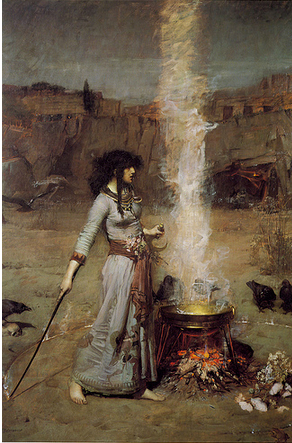
I wish I could recall which of the masters painted this piece. If anyone knows, please let me know in the comments. I wish I could recall which of the masters painted this piece. If anyone knows, please let me know in the comments.

Are you fascinated by other people’s writing habits and routines? I am. There’s a great series on Copyblogger called The Writer Files that profiles the writing lives of different business writers and authors. I hardly ever miss an installment.

I’m a sucker for the allure of the writerly way.

Though I love knowing who uses Scrivener vs. who uses a yellow legal pad and a blue felt-tip pen, I think as writers we have a penchant for getting overly caught up in the romance of the craft. We are, most of us, confessed addicts when it comes to new notebooks and writing utensils. We each of us crave a room of our own and aren’t shy about drooling (metaphorically or literally) over another writer’s creative space. We believe…

View original post 1,832 more words

Unknown's avatar

Roundup: New LGBTQ YA Fiction, Dystopian YA Romance, and Book Clubs

A LOT to like and check out in these lists! Thanks for gathering and posting!

Molly Wetta's avatarwrapped up in books

I haven’t had much time for blogging here, but I thought I’d share what I’ve recently written for other spots around the bookish corners of the internet.

New and Forthcoming LGBTQ YA Fiction at YALSA’s The Hub

New-LGBTQ-YA-Fiction-FallWinter-2014-2015-994x1024

I’m always excited to see more LGBTQ YA, and these are six titles I’m really excited about or have already enjoyed.

Dystopian + Post-Apocalyptic Romance for NoveList’s Readers’ Advisory Newsletters

Dystopian YA Romancedystopian YA romance

When my editor asked if I’d be willing to write about dystopian romance, I took it as an opportunity to spotlight several titles that are less well known or that I personally enjoyed and think deserve more attention. Even though I’m burnt out on the genre, I still get tons of request for it in my library, and I’m sure I’m not the only one.

Library as Incubator Project’s Book to Art Club: Leviathan by Scott Westerfeld

Book-to-art-logo-with-salmon-rectangle_edited-4-11-762x302

I’m thrilled to be part of one…

View original post 67 more words

Unknown's avatar

Being #Single vs. Social #Isolation: Benefits and Costs of #Solitude

Headlines and talk show jokes pervaded last week, screaming about the latest research in the USA claiming that being #single is now the “norm” for adults for the first time. What are the benefits and costs of this #solitude? What about increasing social #isolation, especially for #Seniors?

from Bloomberg news, we get these insights and facts:
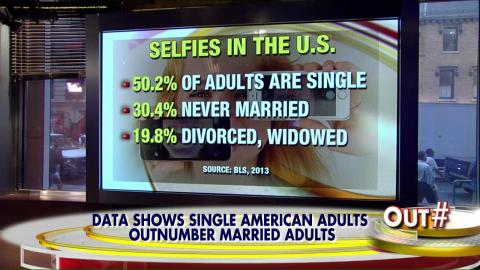
“Single Americans make up more than half of the adult population for the first time since the government began compiling such statistics in 1976….[That is] 50.2 percent of those who were 16 years or older, according to data used by the Bureau of Labor Statistics in its monthly job-market report.”

single stats

image from: http://www.nbcnews.com

More specifically: “The percentage of adult Americans who have never married has risen to 30.4 percent from 22.1 percent in 1976, while the proportion that are divorced, separated or widowed increased to 19.8 percent from 15.3 percent…”

Among other results of this change, “this exaggerates income inequality…” This worries and affects me and should concern us all in the USA. When so many for so long are un- or under-employed, living on fixed incomes that are unable to cover necessities and bills, we are ALL living in economically unstable situations and we ALL pay.

Singles Bloomberg graphic

image from: http://www.bloomberg.com

For their full article:
http://www.bloomberg.com/news/2014-09-09/single-americans-now-comprise-more-than-half-the-u-s-population.html

From another source, we get these “spins” on the topic: http://www.feelguide.com/2014/09/11/the-united-states-of-bachelors-single-people-now-make-up-more-than-50-of-u-s-adult-population/

“The United States Of Bachelors: Single People Now Make Up More Than 50% Of U.S. Adult Population” and “…there’s new research which indicates that being single can have enormous benefits on your wellbeing.”

Singles Fox Graphic

image from: http://foxnewsinsider.com

Clicking on that link brings us to this headline and the real link for its list. http://www.feelguide.com/2014/02/17/the-top-5-scientific-reasons-why-being-single-is-good-for-your-mind-body-and-spirit/

“The Top 5 Scientific Reasons Why Being Single Is Good For Your Mind, Body, And Spirit” [with its own sources for each of the points in the article; link below this list, here]:

  • 1. Healthier Heart: “…rates of heart disease were lowest among those who had never been married. The difference between those who had been married the whole time and those who had been single the whole time was not significant, but those who were ‘remarried,’ “divorced,’ and ‘widowed’ — all statuses that can come from getting hitched — were significantly worse off.”
  • 2. Fitter Body: “…the ones who had never been married exercised more each week than those who were either married or divorced.”
  • 3. Stronger and more Diverse Social Network: “…’married people are less likely than single people to help, support, visit, and maintain contact with friends, family, and neighbors’…The same is true for partners who are unmarried but living together…. once people get married, they have less contact with their siblings….Single people…may have more emotional energy to share with friends, siblings, parents — and themselves.”
  • 4. “No Settling“: “People who can embrace being single are less likely to end up settling for unhappy partnerships, feeling stuck and unfulfilled.”
  • 5. Enjoy the Benefits of Solitude: “…[T]he solo state has been linked to ‘freedom, creativity, intimacy, and spirituality.’ Singles — especially those who live alone — may have more time for solitude and its many psychological benefits.”

http://www.businessinsider.com/why-its-better-to-be-single-2014-2

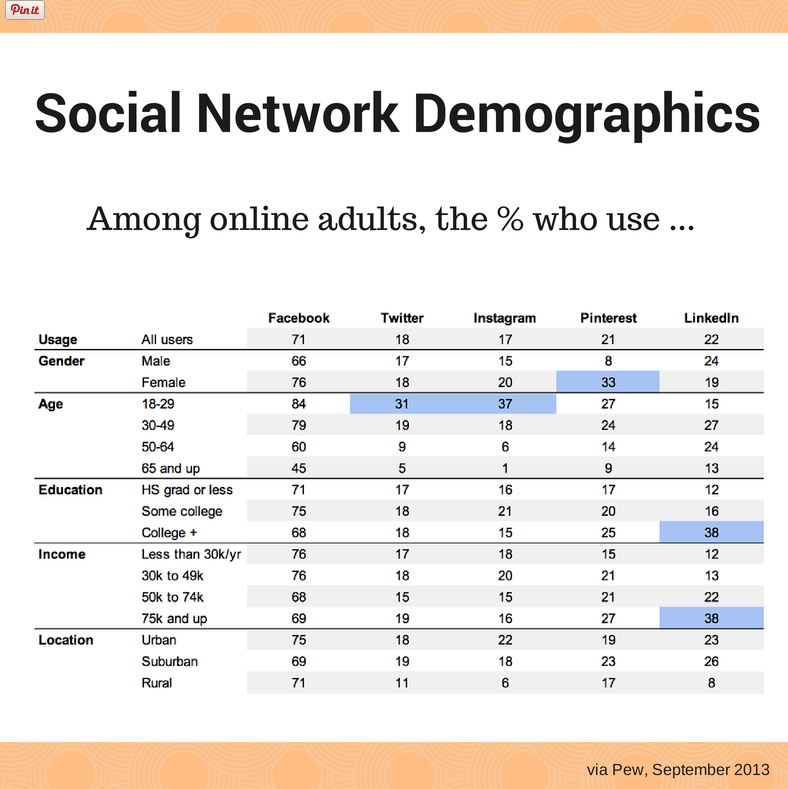
One of the correlations to being single, and in my and others’ opinions, a chief reason that being single is more popular, feasible and enjoyable now than ever? The use of social networking sites, especially via internet accessing devices such as phones and tablets, is higher than ever and rising among adults in the USA. Can’t be a coincidence.

Social-Network-Demographics 2014

image from: http://www.linkedmediagroup.com

I am astonished by these stats, which are the highest for FACEBOOK: 76% of adult females and 66% of males online use Facebook! In the age group of 30 – 49, that total is 79%! Even in rural and suburban areas, that figure stays around 70% and higher. In older age groups, that percentage is still quite high: among those ages 50 – 64, 60% are using it, with 45% of Seniors using Facebook.

There has been a meme going around that shows various faces or graphics with these words: “I just spent the day on Facebook instead of being with people” or words to that effect. Truer than ever, now, for most adults, it seems.

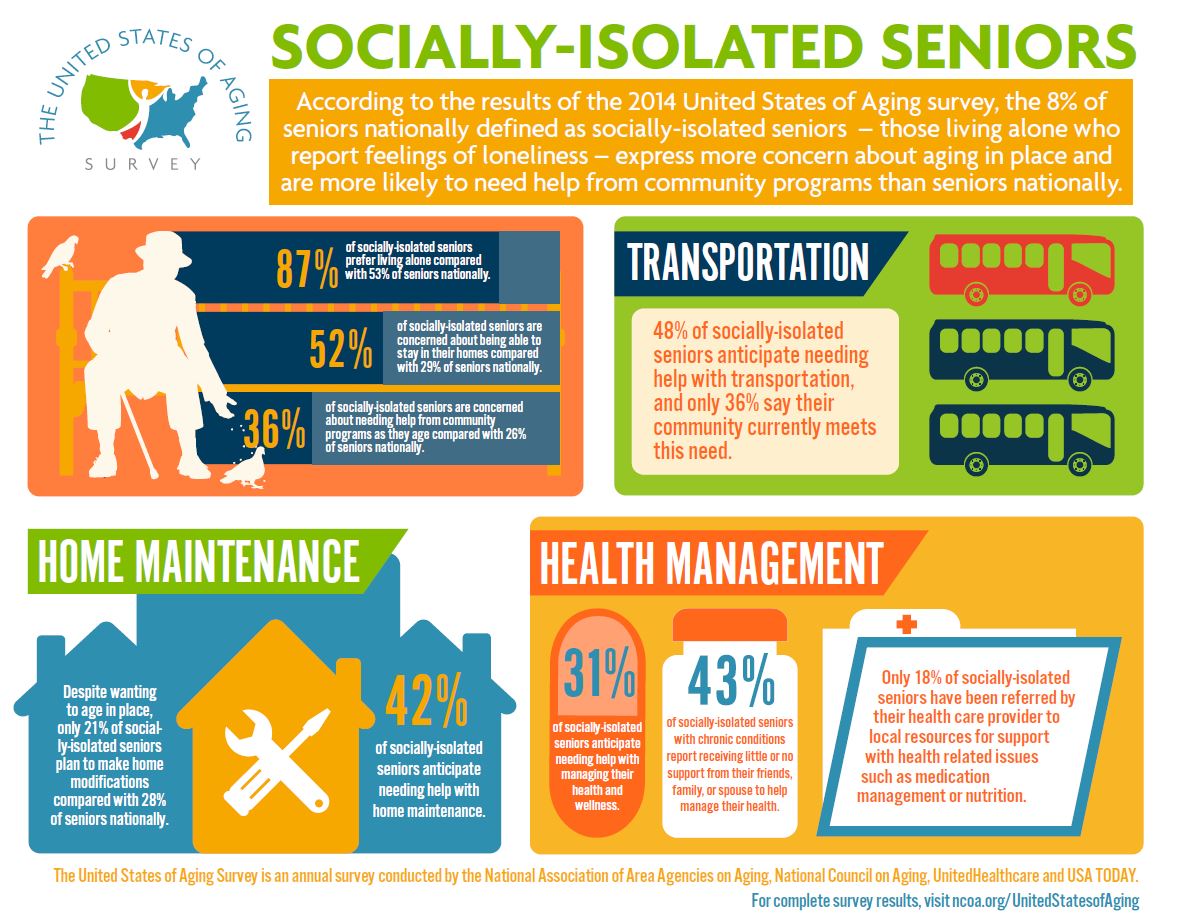
Singlehood may be beneficial for many, especially women (many research studies have pointed this out repeatedly in recent years) but social isolation is not beneficial and is increasing, with extremely negative results for Seniors (mostly women) in the USA.

social-isolated-seniors

image from: http://nassembly.com

Being alone does not equal being lonely. Being single does not equate with being unhappy. Okay. Got that. I and many others could fill many blog posts with personal stories of poor relationships’ escape stories, relief at being single, joy in alone time, happiness while on our own.

I have been saying for years that my “chooser” must be broken and therefore, I’m finished with choosing an intimate partner and happier being on my own than in another wrong relationship. If a suitable partner finds me, that might work. But my being the chooser? not going to happen again. I therefore firmly agree with the “not settling” part, above, for myself.

In a major life change spurred by many factors (personal, economic, familial), currently, as many of you know, my mother and I started sharing her condo a few weeks ago. This takes care of many of both of our social and other interpersonal needs just fine. We have our own time and our together time. We help each other and we leave each other to our own devices. We are fortunate to have rhythms and personalities that mesh well.

But, there are actual social and other needs for many adults in the USA that require interaction and assistance from live humans that are largely going unmet, especially for Senior women. What are we as a nation going to do about this? Comments and suggestions, here, please.

Senior woman alone

image from: http://www.goodtherapy.org

Unknown's avatar

#Injuries to the #Mind, #Brain and #Psyche that Cause Difficulties with #Meditation

I have been noticing, since the fall that injured my brain via a #concussion in early April, that I have had unusual and unique (to me) difficulties with meditation (and life) ever since. Add to this several other “injuries” to my mind and psyche due to: disastrous #heartbreak; a difficult #move cross-country (i.e., getting rid of almost everything, going far away from my spiritual/ meditation teacher and spiritual community/ sangha to relocate to my childhood hometown); long-term, chronic #unemployment; disappointing #ebook sales (due to my having been incapacitated during key #marketing time after my accident); unexpected and painful changes to my #health; turning 60, which have led to my noticing many other problems with my #meditation practice in the last several months that I’ve never had before this (I’ve been meditating since 1972 and doing this practice since 1999).

I think, under these circumstances, which would put me over the top on any stressors test, I am doing quite well. However, I want to meditate, not just do well. Why does my mind keep skittering away from my focus when I try to meditate? What is happening in this brain/mind of mine? I have done many retreats, some as long as eleven weeks, and never had anything like these problems before. My talks with other meditators without brain injuries confirmed that only we injured seem to have these types of difficulties.

But, why? And, what to do about them?

I kept hearing this quote as I continued my attempts:

meditation better than nothing

I pray that this is true….

Since I am a life-long researcher and the internet provides endless opportunities for me to look for “answers,” I looked around for others’ stories, cautionary tales or suggestions. I wanted to find more injured meditators I could commiserate with or teachers who could offer me advice.

What did I find? See below.

Not surprisingly, when I looked for links between “stress” and “meditation,” I found millions of links (17,700,000) referring to the help that meditation provides us when we’re stressed. Meditation for stress reduction, managing stress, alleviating stress, etc., abound on the internet and elsewhere.

NOT ONE article or study to be found that discusses how stress impacts meditation. Really? Really.

Here was my “path”:
“Searches related to meditation problems life stressors” which then provided these other key word strings:

  • meditation for stress

  • meditation for stress relief

  • guided meditation for stress

  • meditation for stress and anxiety

  • meditation for stress management

  • meditation depression

  • meditation for stress or sudden shock

  • meditation for stress and anger

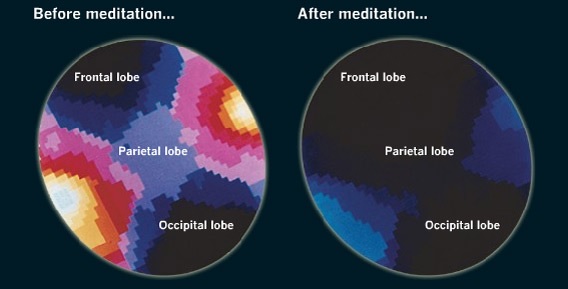
Frontal lobe meditation before and after

image from: http://www.paramyogaindia.wordpress.com

I also tried: “Searches related to impact of stress on meditation,” which yielded about 6 million results, but always in the reverse: how meditation helps with stress.

Okay. I must be going about this all wrong. I tried the verbal “OKAY GOOGLE” command and asked: “OKAY GOOGLE: Why am I having trouble meditating?”

I got 1,020,000 results, but these all revolved around problems “beginners” have with “monkey-mind,” or problems many have with setting aside time, being consistent, staying with meditation once they start, etc. I couldn’t look at all one million results, but the associated key word strings confirmed my suspicions: OKAY GOOGLE still did not understand my problem.

Google did offer other choices (some quite hilarious, under the circumstances):

“Searches related to why am I having trouble meditating”:

  • i am having trouble pooping

  • i am having trouble getting pregnant

  • i am having trouble sleeping at night

  • i am having trouble breathing

  • i am having trouble breathing and my chest hurts

  • i am having trouble swallowing

  • i am having trouble breathing deeply

  • i am having trouble logging into my facebook account

I even tried getting more specific with OKAY GOOGLE, asking: “Why does my concussion make it hard for me to meditate?” This query led me to even stranger associations than before, including recommendations for those with concussions to meditate to help heal from their concussions.

Huh?

I don’t know whether to be flattered or to cry when this also had my own article from my blog post in May as the number 3 listing among 11,000,000 results:

concussion | Sally Ember, Ed.D.

sallyember.com/tag/concussion/

May 2, 2014

If I’m one of the “experts,” here, we’re all in trouble.

Don't follow me I'm already lost

image from http:///funny-pictures.picphotos.net

So, I was going to give up on finding “help” but then I tried this search string: “research meditation frontal lobe injuries” and hit the jackpot.

First, this quote (unattributed) kept appearing: “Meditation is a frontal lobe activity,” which affected me deeply. My accident, for those who don’t know, involved my hitting a wall face-first, breaking my nose and impacting my forehead, behind which is the frontal lobe.

Here are some selected quotes from the best article I found, from the UK, that clarifies a lot about the functions of the frontal lobe, its effects on and participation in the activity of meditation, and many other aspects of my experience: very illuminating and helpful.

Case study on function of the frontal lobe

“The frontal lobes play a major role in the regulation of our emotions and behaviour as well as planning, decision making, social conduct, and executive functions. They are vulnerable to damage… [and] are thought to be our emotional control centre [sic; UK spelling] and home to our personality.”

“The frontal lobes are vulnerable to injury and damage due to their location at the front of the skull and their ample size. Magnetic Resonance Imaging studies have revealed that the frontal area is the most frequent region of damage following brain injury (Levin et al., 1987). Statistics show that there is no other component of the brain in which impairment can cause such a wide array of symptoms (Kolb and Wishaw, 1990).”

This began to intrigue me, especially the part about the “wide array of symptoms,” which I can attest to experiencing. Some of my “symptoms” have seemed to be unclearly connected to the concussion until I read more of this article.

“The frontal lobes are involved in problem solving, spontaneity, memory, language, initiation, judgement [sic; UK spelling], impulse control, social cognition (Benson, 1996) and sexual behaviour. Motor function is also seen to be controlled by the frontal lobes (Leonard et al., 1988).”

I have noticed my balance is off, my proprioceptors are off, my sense of security on my feet is reduced, but until I read this, I wasn’t sure if I was suffering from a bit of PTSD and wariness about falling again or actually having trouble. The latter, I believe now, is the case.

“Broca’s Aphasia has also been linked with frontal lobe damage (Brown, 1972). It is supported that frontal lobe damage has an effect on memory and attention (Stuss et al., 1985).”

Ding ding ding: points for all. Unfortunately.

“Mesulam (1986) pointed out from his studies, that some people who have suffered frontal lobe damage show impairments in their everyday life; however they show little or no impairment on clinical neurological assessment tests….[One injured patient was] unable to make decisions and plan…often unable to make simple everyday decisions, such as which toothpaste to buy, what restaurant to go to, or what to wear even after endless comparisons and contrasts Damasio (1985)….This may be characterised as a failure of future memory, the ability to encode delayed intentions, and act on those intentions when the appropriate time arrives.”

Usually I am extremely decisive. Even when there are complex factors, even when I feel ambivalence: before this accident and its injuries to my brain, I was considered a person others could rely on to make the choices they could or would not make. Since then, I have had hesitation, confusion, bewilderment, inability to weigh costs and benefits and many other unusual reactions to being asked to choose even the simplest things. Now I know the reasons for this befuddlement. Good.

“Interestingly, some patients who suffer from frontal lobe damage often do not show any defects on neuropsychological tests. However, when observed in unstructured real world settings, patients frequently demonstrate cognitive difficulties, neurobehavioral symptoms, and deficits in their executive functions.”

I would say, without a doubt, that the most severe deficit to my executive functions has been first my complete inability and then my reduced ability to meditate, since meditation has become the foundation for all the thinking, choosing and behaving in my life via values, personality and habit changes.

TBI as a puzzle

image from: http://www.brainline.org

I can see ways I’ve regressed since the accident and these are disturbing in deep and superficial ways. I’m more impatient, more quick to anger, easily provoked to sadness or hurt. I hide it from those close to me but take it out on customer service representatives of mega-corporations which happen to provide terrible service. Not proud of this at all.

“Studies have found high frontal lobe activation during meditation (Herzog et al, 1990; Lazer et al, 2000).”

IF I COULD MEDITATE, I would, also. I miss meditating so much. But, now I know a bit more about the reasons for my difficulties.

I hope this post and the rest of this article (link, below) help others in similar predicaments.

http://www.ukessays.com/essays/psychology/case-study-on-function-of-the-frontal-lobe-psychology-essay.php#ixzz3ClAyyWOc

Keep trying, keep going: got to believe it will improve.

I’m also going to see if I can talk (or video chat) with my meditation teacher some time soon. I need something.

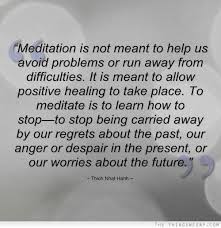
A quote from Thich Nhat Hanh is what I plan to contemplate until my meditation practice gets back on track.

Thich Nhat Hanh quote

Unknown's avatar

“Mrs. G” Reviewed This Changes Everything, Volume I, The Spanners Series

An open letter to a reviewer:

Thanks, Mrs. G., for your thoughtful review of This Changes Everything, Volume I, The Spanners Series, on Amazon. I appreciate your candor, your thoroughness and your specificity of what you liked and what didn’t work for you. I wish all readers and reviewers took the time and gave the attention to their reviewed books and reviews as you have!

I am sorry the linked Table of Contents didn’t work for you. What version of ereader are you using? I haven’t heard of that problem from other readers and I wish that hadn’t happened for you.

Thanks, again, for your considered review. I would be happy to send you a copy of Volume II, This Changes My Family and My Life Forever.

Best to you,

Sally Ember, Ed.D. (author)
http://www.sallyember.com

This-Changes-Everything----web-and-ebooks

P.S. I agree that The Spanners Series‘ stories would make an excellent T.V. series! I hope your wish comes true!

Here are her review and a link to it:

* * * of 5: Great concept–difficult translation into written form. September 6, 2014
DO NOT read this if you want a normal, linear story that makes complete sense and introduces ideas in a logical sequence.
DO read this if you want to try something very new and think about the universe in a completely different way.

I’m actually not even sure how to review this in a traditional way because the book was so very bizarre in its format. Let’s go with this…

What I liked:
The aliens and the whole concept of the multiverses working together to make life better.
The characters (a lot of them) and how they felt real.
The whole idea of alternate time lines–something I’ve loved since Isaac Asimov’s “The End of Eternity”.
The enormous attention to detail in the whole world-building thing.

What irked me:
The fact that shortly after meeting the aliens, we are thrust into the future (or is it a flashback–that’s how hard this is to follow) and a ton of acronyms and entities are suddenly taken for granted. There is an “appendix” with a glossary of terms. That might have worked for me except that in the ebook format at least, that meant jumping to the end and then there was no way to navigate back (no table of contents to take me back to the chapter I’d left). Perhaps in paperback form where I could dog ear the pages…?
As other reviewers have mentioned, the whole matter of tense and the writing style that makes it hard to know *when* I am. Which, yeah… Is a little moot when we’re talking about alternative timelines and the fact that time is not linear. Yeah, I get it. But the readers still are used to linear, so we need to have it explained to us in that way.

I really think this would work better as a TV series where the visual clues might make it easier to tell “when” the reader is reading. It vaguely reminded me of Cloud Atlas, but harder to follow.

http://www.amazon.com/product-reviews/B00HFELTG8/#reviews-container?sortBy=recent&reviewerType=all_reviews&formatType=all_formats&filterByStar=all_stars

Unknown's avatar

“Mrs. G” Reviewed This Changes Everything, Volume I, The Spanners Series

An open letter to a reviewer:

Thanks, Mrs. G., for your thoughtful review of This Changes Everything, Volume I, The Spanners Series, on Amazon. I appreciate your candor, your thoroughness and your specificity of what you liked and what didn’t work for you. I wish all readers and reviewers took the time and gave the attention to their reviewed books and reviews as you have!

I am sorry the linked Table of Contents didn’t work for you. What version of ereader are you using? I haven’t heard of that problem from other readers and I wish that hadn’t happened for you.

Thanks, again, for your considered review. I would be happy to send you a copy of Volume II, This Changes My Family and My Life Forever.

Best to you,

Sally Ember, Ed.D. (author)
http://www.sallyember.com

This-Changes-Everything----web-and-ebooks

P.S. I agree that The Spanners Series‘ stories would make an excellent T.V. series! I hope your wish comes true!

Here are her review and a link to it:

* * * of 5: Great concept–difficult translation into written form. September 6, 2014
DO NOT read this if you want a normal, linear story that makes complete sense and introduces ideas in a logical sequence.
DO read this if you want to try something very new and think about the universe in a completely different way.

I’m actually not even sure how to review this in a traditional way because the book was so very bizarre in its format. Let’s go with this…

What I liked:
The aliens and the whole concept of the multiverses working together to make life better.
The characters (a lot of them) and how they felt real.
The whole idea of alternate time lines–something I’ve loved since Isaac Asimov’s “The End of Eternity”.
The enormous attention to detail in the whole world-building thing.

What irked me:
The fact that shortly after meeting the aliens, we are thrust into the future (or is it a flashback–that’s how hard this is to follow) and a ton of acronyms and entities are suddenly taken for granted. There is an “appendix” with a glossary of terms. That might have worked for me except that in the ebook format at least, that meant jumping to the end and then there was no way to navigate back (no table of contents to take me back to the chapter I’d left). Perhaps in paperback form where I could dog ear the pages…?
As other reviewers have mentioned, the whole matter of tense and the writing style that makes it hard to know *when* I am. Which, yeah… Is a little moot when we’re talking about alternative timelines and the fact that time is not linear. Yeah, I get it. But the readers still are used to linear, so we need to have it explained to us in that way.

I really think this would work better as a TV series where the visual clues might make it easier to tell “when” the reader is reading. It vaguely reminded me of Cloud Atlas, but harder to follow.

http://www.amazon.com/product-reviews/B00HFELTG8/#reviews-container?sortBy=recent&reviewerType=all_reviews&formatType=all_formats&filterByStar=all_stars

Unknown's avatar

How I Benefit from the Celebrities I Grew Up /Worked with and Still Do

How many famous and important people do you actually know (besides yourself, of course)? How does this benefit you?

Do I know more than you, or more than most? I’m in the mood to brag, by association, about having such amazing friends and former associates and colleagues. I also want to share how knowing these extraordinary people benefits me.

Some definitions seem helpful, here.

By “grew up/worked with” I mean: I KNOW/KNEW these people. We ate together, went to school or camp together, swam or canoed together, were friends/colleagues for more than a few minutes (some I’m still connected to strongly; several were lovers). Not only would I claim them, but they all know and remember me well.

By “celebrities,” I mean that these are people who have:

  • been on the covers of national magazines and/or featured speakers/presenters at national/international events/conferences;
  • won national or international awards or positions of great importance;
  • invented/started something significant;
  • wrote/starred in/produced something significant in the way of art/music/books/movies/plays;
  • achieved a high level of renown in their chosen field;
  • are known by many others as “great” in their field;
  • been stars of series TV shows and/or featured on popular talk shows;
  • are known by and hang out with other celebrities.

(in no particular order)
From Ladue Schools in St. Louis, MO (apparently, a disproportionate number of important contributors to society, culture, science and justice are graduates from my well-known and -regarded Horton Watkins Ladue High School, not just the ones I list, below):

Dr. Jonathan D. Fleischmann, M.D. My older brother is a urological oncologist who has patented surgical techniques, medications and other treatments as well has being the mentor/teacher for many other surgeons/researchers in these areas. Our mother lost a kidney to cancer in the 1960s and is fortunately still alive today.

Jon

D. Scott Bassinson, J.D., one of my first serious boyfriends and long-time friend, is an Attorney who has argued at the USA Supreme Court, now a Judge and always, a Musician/Composer. It is due to Scott and his brother, Kevin (also a celebrity)’s resignations that I became Ladue High School’s rehearsal and performance accompanist and a professional accompanist for musicals, choruses and performances.

scottbassinson

Karen S. Raskin Kleiman, MSW, author of several books, founder of the Postpartum Stress Center, and leading researcher in Postpartum Depression and its treatments (featured on many TV talk shows, including OPRAH, in magazines and websites).

Karen Kleiman

Rich Rubin, journalist, playwright, Founder/Producing/Artistic Director, Quince Productions and GayFest! (Philadelphia), was my first piano-playing duet partner under Deborah Rosenblum in the early 1960s, and we graduated from Ladue together in 1972.

R Rubin

Craig Pomranz, singer, recording artist, live cabaret performer, children’s book author, was another one of my high school “more than friends” that I’m still in touch with and regard highly.

Raffi cover

Dr. Alice Conway, J.D., Ph.D., attorney and philanthropist, blind since aged three, first blind Board Chair of the The St. Louis Society for the Blind and Visually Impaired. Alice and I had many classes together in junior and senior high school.

Alice Conway

Dr. Michael Green, M.D., Ph.D., Professor at UMASS Medical Center in Gene Function and Expression, the recipient of the Searle Scholar Award, the Presidential Young Investigators Award, and the McKnight Neuroscience Award and Investigator of the Howard Hughes Medical Institute. Michael was my second serious high school boyfriend and I went to the first college I attended partly because he was there (sorry, feminists). I knew his little brother, Eric, as well (see below).

Green

Dr. Eric Green, M.D., Ph.D., director of the National Human Genome Research Institute, recipient of numerous awards and author of many scholarly articles.

Eric Green

Joel Meyers, longtime sports broadcaster (currently play-by-play announcer of the New Orleans Pelicans of the National Basketball Association). Joel and I went to school together from Kindergarten through high school, but we weren’t exactly friends.

Joel Meyers

Frances Ginsberg, Opera Singer (deceased) with the New York City and Spanish operas before her death several years ago sang in our high school’s Chorale and musicals. I accompanied her solos.

Fran ginsberg

Want to see more about some of these Ladue alums and more? In 2012 (the year of my 40th high school reunion), Ladue held its 60th “Distinguished Alumni” Awards Ceremony and it is on YouTube: http://bit.ly/10vTEaP

From Camp Hawthorn (the St. Louis Jewish Community Center Association’s Missouri Ozarks overnight camp, until 1969):

Sheldon Mirowitz (also from Ladue Schools), soloist musician, producer/arranger and sideman, professor at Berklee College of Music in Boston, film and TV composer, winner of awards at the Sundance Film Festival and other accolades for his music,including three Emmy nominations and one Peabody Award. I met Sheldon in 8th grade at camp and then we we re-met in high school and have been friends ever since.

Sheldon

Chuck Blitz, became independently wealthy in the first dot.com boom and turned that to opportunities to be a philanthropist, environmentalist, social/environmental activist, particularly in the Santa Barbara, CA, area, and with Ram Dass and the White Lotus Foundation (ecological, social community and world service (SEVA) programs and yoga teacher training). I went to camp with Chuck; his sister, Judy (“Jay”) was my first counselor, but he and Glenn Savan were/are my brother, Jon’s, age, so we weren’t really friends.

Glenn Savan, (deceased in 2002), author of White Palace, a semi-autobiographical novel turned into the film in 1987, starring James Spader in Glenn’s role and Susan Sarandon as the love interest, using the local “White Castle” hamburger joints as the setting. I knew Glenn from camp, but we weren’t exactly friends.

White Palace

Colleges and New England living (University of Wisconsin/Madison and University of Bridgeport/Connecticut (undergrad) and University of Massachusetts/Amherst (graduate)

Dr. Hans van der Giessen, Ph.D., Provost and Vice-President for Academic Affairs for and Political Science Professor at the Univ. of Bridgeport, Hans was a close personal friend for many years. We aren’t still in touch, though.

Dr. Rahima Wade, Ph.D. (deceased, 2012), almost single-handedly brought “service learning” into public schools in the 1990’s. She also introduced me to the idea of returning to school as a parent of young children and we both attended UMASS/Amherst at the same time. I first met her in Keene, NH, since we belonged to several of the same community groups.

Rahima

Dr. Mary Kalanzis, Ph.D., and Dr. Bill Cope, Ph.D., Professors, authors/researchers in Multicultural Education and Workplace Diversity globally. I met them when Mary came to Keene State College in New Hampshire as a Fulbright Scholar from Australia in 1990-91 with her husband and colleague/co-writer, Bill, and son, Philip. I then traveled with my partner to visit them in Australia in 1996. Mary and Bill are now at the University of Illinois/Champagne, where she is the Dean of the College of Education.

Mary and Bill

Dr. Sonia Nieto, Ed.D., Dr. Jerri Willett, Ph.D., Dr. Peter Elbow, Ph.D., Dr. Masha Rudman, Ed.D., Dr. Barbara Love, Ed.D., Dr. Maurianne Adams, Ed.D., Dr. Pat Griffin, Ed.D., among others at UMASS/Amherst, when I studied there in the early to mid-1990s. These particular professors taught/advised me and are authors/ researchers/ activists of great renown in their respective fields (Teacher Education, Curriculum Development, Multicultural Education, Second Language Acquisition, Social Justice Education, Writing Education, Lesbian/Gay Studies, Literacy/Children’s Literature). Because of them, I have held positions as an instructor/trainer in various subjects at various colleges/universities and several nonprofits around the USA.

Dr. Caroline Myss, Ph.D., best-selling author, speaker, medical clairvoyant, teacher. I met Caroline in 1983 in New Hampshire and we became close friends, seeing each other almost weekly until she moved to back to Chicago in 1992. Since then, we stayed in touch, sporadically, but she travels internationally and is unusually busy even when she “lands” somewhere. She mentions me and our friendship in several of her books’ dedications/acknowledgements.

caroline_sitting

Other notables from the Antioch/New England Graduate School in Keene, NH: Faculty members/authors/ researchers, David Sobel, Rick (Youst) van der Poll, and Mario Cossa (who is also a longtime good friend and colleague). Mario, two of our students and I co-authored one book about the program he started that I helped fun for many years in Keene, ACTING OUT,

Acting Out book

and I edited Mario’s second book.

Rebels

Recently, Mario was introduced to some colleagues in Israel as “the most prominent psychodramatist in California.” How exciting!

From Camp Med-O-Lark (in Washington, ME)

Bari K. Willerford, actor in the National Deaf Theatre and star of MathNet children’s TV show on PBS as well as continuing to appear in many other TV series, movies (American Gangster) and TV episodes.

Bari

From Community Matters in Sebastopol, CA:

Rick Phillips, M.S. Ed., co-author and co-creator of the Safe School Ambassadors anti-bullying program and book, which I helped edit, write and edit. I worked at CM for almost five years, up to 2010.

SSA book

From Northern California:

David “Gus” Garelick, musician, composer, conductor, teacher, author/researcher, D.J., founder/artistic director of “The Hot Frittatas,” “The Gravenstein Mandolin Ensemble” (both of these groups have CDs available) and “The Wild Catahoulas,” also plays/has played in many other duos and bands and on many recordings, including with Queen Ida.

David and I are friends (meshpucha, Yiddish for extended family [by blood and not by blood]) who also play music together (he rather well, I rather badly). I posted our last California duets on my YouTube Channel! Have a listen/look when you’re in the mood!
https://www.youtube.com/channel/UCqnZuobf0YTCiP6silDDL2w/feed

David has planned a series of three volumes about mandolin music, including his own and others’ tunes. Here is Volume I:

Mando book cover 1

Allegra Broughton and Sam Page, singers/songwriters, musicians, founders of “Solid Air,” members of “The Wild Catahoulas,” also play/have played in many other duos and bands. Author of a series of books about and original tunes for mandolins, David also writes a column for Fiddler Magazine and is a national, state and regional fiddle champion and often, judge of fiddle contests. Solid Air has many great CDs available.

Solid Air

Don Coffin, singer/songwriter, musician, teacher, former husband and member of Kate Wolf’s band, member of the “The Hot Frittatas,” Don also plays/has played in many other duos and bands. Don taught well-known guitarist, Nina Gerber, when she was first learning guitar.

Don C

Dennis Hadley, musician, singer, member of “The Hot Frittatas,” “The Wild Catahoulas,” also plays/has played in many other duos and bands. Legally blind since birth, Dennis is one of the best accordion players and enthusiastic vocalists in northern California.

Dennis

From Chagdud Gonpa, my Buddhist Community (Sangha):

Our main teacher, deceased in 2002, His Eminence, Chagdud Tulku Rinpoche, was a meditation master, teacher, author and Buddhist scholar. A contemporary of His Holiness the 14th Dalai Lama, Rinpoche studied with him under many of the same teachers and escaped Tibet to India at about the same time as the Dalai Lama. His books are well-known and -regarded, and the Western students he taught and groomed to become teachers before his death are well-known and -regarded as Buddhist meditation masters and teachers in their own rights. Among them are my teachers, Lama Padma Drimed Norbu (known as Lama Drimed) and Lama Padma Shenphen Drolma (known as Lama Shenphen), who are also authors and Buddhist scholars.

CTR

Rinpoche’s books are well-known and -regarded, and the Western students he taught and groomed to become teachers before his death are well-known and -regarded as Buddhist meditation masters and teachers in their own rights. Among them are my teachers, Lama Padma Drimed Norbu (known as Lama Drimed) and Lama Padma Shenphen Drolma (known as Lama Shenphen), who are also authors and Buddhist scholars.

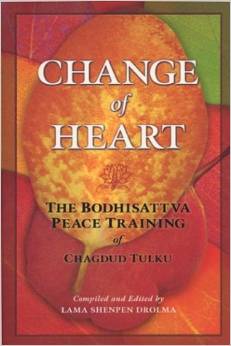
Change of heart

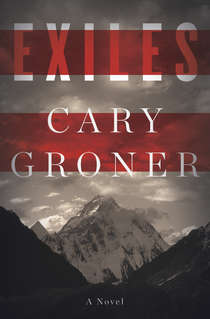
Among our sangha members whom I know personally are two authors: Barbara Gates, who wrote a thinly fictionalized novel about her early years at Chagdud Gonpa’s main residential meditation center, Rigdzin Ling, with these and other teachers and sangha members, In the Buddha’s Kitchen; and, photographer/teacher, Cary Groner.

Exiles-210

Now, all of these (still living) celebs can brag that they know ME!

Unknown's avatar

Easily Connect with Authors and Readers with these 232 Hashtags!

Fabulous #guide to #hashtags for #authors for #marketing!

Nicholas C. Rossis's avatarNicholas C. Rossis

Image: http://jpundits.com/ Image: http://jpundits.com/

Leeland Artra recently posted over at the FSFN group on Facebook a link to a list by Book Marketing Services, containing no less than 205 Author Hashtags to use on Google+, Twitter, Facebook etc. In short, you can use these hashtags to easily connect with other authors and/or readers on any social media platform. Since I added a couple of dozens more, they’re now 232!

How to use them

Hashtags are words or acronyms that serve like clusters, by allowing people with common interests to easily search for them. Some are rather esoteric, like #FF meaning #FollowFriday. This is commonly used on Twitter to suggest each Friday the people that have proven supportive in the previous week, therefore others may also benefit from following them.

Other hashtags explain what you’re doing (eg #AmWriting) or what you’re promoting (eg #FreeBook). This list allows you to select the most suitable, therefore effective, hashtag for…

View original post 617 more words

Unknown's avatar

Moving back “home” after living elsewhere for over 40 years

What does it mean, exactly, “home”? I left St. Louis County when I went to college. I have visited frequently because many relatives, including my mom, still live here, but have lived elsewhere since 1972.

When I told people I was coming to live here, people asked “How do you feel about moving back home?” How is a place I lived for only seventeen years over forty years ago “home”? It’s not even the same house.

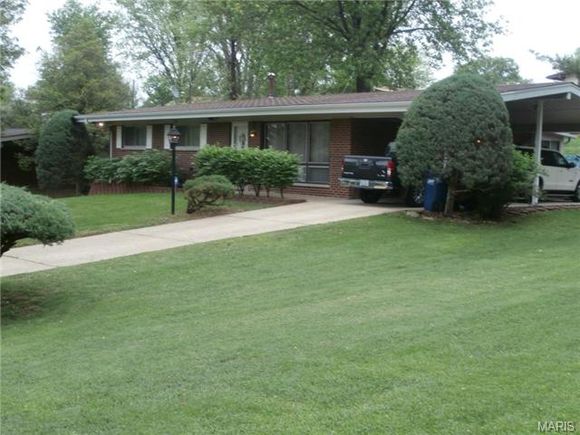
Olivette house

I lived in a house very much like this one, 1959-1972.

I have been peripatetic in my adult life. I lived in Wisconsin (Madison, 1972-74) and Connecticut (several places in and near Bridgeport, 1974-76) during college. I then lived in every other state in New England for twenty-eight more years, from northern Vermont (St. Albans) in 1976 to southeastern Massachusetts (Westport Point) and Rhode Island (Tiverton) in 1977-78, to my longest stint anywhere (20 years) in southwestern New Hampshire, while living more than a dozen places there (New Ipswich, Sharon, Stoddard, Sullivan and East Sullivan, Nelson, then several places in Keene), ending with southwestern Maine (Saco) in 1998. After New England, southwestern New Mexico (Silver City) for 2 1/2 years, then several places in northern California (near San Francisco: two in Santa Rosa, then one each in Sebastopol, El Cerrito, Hayward) for twelve years.

City, country, suburb and small town: I’ve lived in them all. Now, back in St. Louis. Even in St. Louis, the longest I lived in one spot was our family’s house on Old Bonhomme Road (twelve years), which is the same number of years I lived in one collective/family house in Keene (Water Street).

Water Street likeness

Here is a similar house to the one we lived in on Water Street in Keene for twelve years.

A few times, towards the end of my twelve years in Keene, NH, upon returning from times away I’d feel a sense of coming home as we crossed the city limits’ sign. But, soon after, I moved away from there.

If longevity prevails as the criterion, which of these, then, is “home”?

My mom’s condo is not the “home” I spent my school years in, although this location is “in the neighborhood,” meaning, same school district [LADUE (derived from a French word for those who work for a Duke)]. BTW, LADUE is considered to be one of the best school districts in the USA and in the top 25 of the Midwest. Bragging on that.

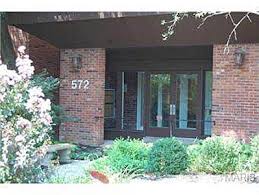
572 Coeur de Royale

Now we live in a condo very much like ones in this building.

She now lives in CREVE COEUR (meaning “broken heart,” in French), along with many others from the “old neighborhood” (OLIVETTE, meaning “little Olive”). Not a big change, since this is about a ten minutes’ drive from Olivette.

Many of the landmarks, businesses and roads have changed, moved, been eliminated, but there are still some fixtures I recognize after over forty years. The old are populated/interspersed with the new, as everywhere.

The shell of a fast-food place about to be finished (“BIG BOY”) in which I had my first make-out sessions (with Eric) in 6th grade is now a grassy, flat field after having been two different fast-food restaurants. The bowling alley (NELSON BURTON LANES) where I learned to play pinball and to bowl (badly), and behind which I had my first kiss (from Bobby) is still there, but changed owners and names. The elementary school my siblings and I attended (CENTRAL SCHOOL, which we lived almost across the street from and used to treat as our personal playground) became an alternative high school soon after my youngest sibling went to junior high school.

What makes a place feel like “home”? Here is my test: How does it feel to return after I have been away? Does it seem that I am visiting or coming back?

For about twenty-five years, I considered Boston/Cambridge my hub. I had friends who went to college and then lived there. I took classes, saw clients, attended meetings, visited friends and went to events there often. Logan was the airport we used most often until Hartford’s and then Manchester’s grew. Beantown was the BIG CITY we would go to for those experiences. Cambridge was the intellectual/artsy center of existence. I also went to New York City from New Hampshire, but not as often or as easily (it was more than twice as far by car).

Whenever we’d drive to Boston, as our car crested the first hill that would give us a view of “The Pru” and the John Hancock buildings, my heart would lift. Exciting things happened here.

Boston skyline

The “Pru” and the John Hancock buildings in Boston.

I walked all around both Boston and Cambridge, had several lovers in and around there, used the T (subways/trains) and frequented cafes. I loved going there for many years. But, Boston was never “home.”

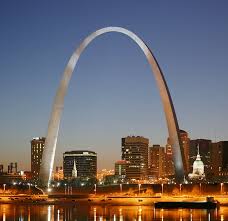
Flying or driving into St. Louis, I would look for the Arch as the landmark. But, seeing it, I never felt “Oh. Now I’m home.”

Arch

But, here, unlike many places I’ve lived since I left Keene, NH, I am recognized. After being “invisible” for about fifteen years, it is startling to be called out in public. Last week, while perusing the deli section at Whole Foods, “Sally Fleischmann!” reached my ears. A seemingly strange man called out to me, in surprise at seeing me; a classmate from my high school saw and knew me after not having seen me for many years. I went to a friend’s father’s funeral/shiva and many people there recognized me, called out my name, knew my father. I exercise at the local Jewish Community Center’s building and often know people there or they know me or knew my dad or know my mom or siblings. Does being known or recognized make one feel at home?

Maybe it’s that I just moved back to St. Louis about two weeks ago and I haven’t completely unpacked. I have had visits that lasted over a month here before this, living out of suitcases and drawers as I do now.

I think, as I told one friend, recently, once I pass the five-week mark (and I plan to be completely unpacked by then), I could realize that I now am not visiting and actually live here.

How much longer will it take to feel like “home”? Ask me in 2027.

home

Unknown's avatar

Book Sales are like PotLucks: You Don’t Know Who Appreciates Your Creation

Authors and potluck cooks have a lot in common. I’ve been giving this a lot of thought lately, especially since I set Volume I of The Spanners Series, This Changes Everything, as permanently free.

This-Changes-Everything----web-and-ebooks

http://www.amazon.com/dp/B00HFELTG8 

How does any author know who actually reads our ebooks, much less appreciates them, as opposed to going by assessments based on the raw numbers of how many people now have it on their ereaders? Do sales figures really equal popularity and does popularity actually correlate to appreciation? How could we possibly know that?

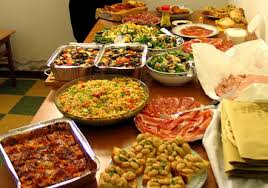
potluck dishes

image from: http://1000awesomethings.com

I, as a cook, would bring a homemade dish to a potluck feeling a mixture of pride, anxiety and hope, my mind brimming with questions as I lay my dish on the table: Will anyone take any? Is it pretty enough? Does it taste good enough? Who will like it? What if there are others similar to mine, but theirs are taken while mine is left mostly untouched?

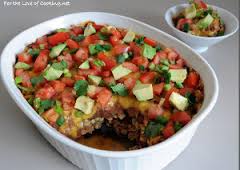
casserole with small portion taken

image from: http://www.allfreecasserolerecipes.com

This Changes Everything now has about 2000 combined sales and free downloads since its release in December, 2013. However, it only has a dozen or so reviews (mostly positive, especially by those who actually read the entire book!). Unfortunately, sales/downloads and positive reviews of Volume I do not seem to be leading to sales or reviews of Volume II, This Changes My Family and My Life Forever, which released for $3.99 in early June (after selling in pre-orders for half-price for two months).

final cover print

http://www.amazon.com/dp/B00KU5Q7KC

People at a potluck line up to look at the food offered in casserole dishes, baskets, pans and plates. Rarely does anyone list ingredients or even names of the food/dish, so it’s all a guessing game. Hungry, we ask: What is it? What is in it? Will I like this? Will it taste good along with the other things I’m taking?

Furthermore, knowing that the cook will rarely, if ever, know what I think of his/her contribution, I can safely leave it on my plate after one taste if I do not like it. Likewise, readers who download ebooks never have to report to anyone, much less an author, whether or not they even looked at the ebook, much less offer their opinions after reading an entire book.

The remains of potluck dishes’ portions taken and not eaten are not evaluated: they are invisibly trashed. Similarly, ebooks on ereaders can be stories that the owner never reads or only glances at, but the author will never know. Readers may like the ebook, even love it—eat it all up (I’m liking this metaphor) and even share it, rave about it to friends—if we’re lucky, they’ll review it. Or, readers, like potluck eaters, may feel any of a dozen ways about what they take in but never say a word to anyone about their reactions.

Yes: I’d very much like to sell a lot more books, but even more importantly, I’d like to have a lot more reviews, enjoy the positive comments, interactions and feedback from happy readers, be certain that at least some owners of my ebooks are glad to be in possession of my creations.

I “cooked” for you: I want to know if you tasted my concoction. How much of it did you ingest? Tell me what you think of it. Will you come back for more “food” from this “cook”?

Cooking-up-a-Tasty-Story

image from: http://www.towriteastory.com

A plea to readers
If you like a book, PLEASE respond to what you read. Put comments on Goodreads, rate/rank the books, post reviews on book sales sites (Amazon, nook, iBooks, Kobo) or Shelfari, BookLikes, etc. We authors (cooks) will be forever grateful to hear your opinions, even if you don’t like what we create. You help us become better “cooks.”
THANKS!

Unknown's avatar

Scrambled Brain Challenge!

“The Scrambled Brain Challenge” makes me laugh. Great idea!

Danielle!'s avatarInside Danielle's mind

As most of you know, this page is called TBI triumphs! I have a Traumatic Brain Injury, which I have gotten from a car accident that I was in high school, 16 years old, 17 years ago. My friend, Kristin, who I met through the TBI support group that I have recently begun attending [it’s at Fairfax Hospital, every 4th Friday of the month; comment on here or email me if you’d like further information].  The Scrambled Brain Challenge, is for TBI awareness, you can learn more about this condition and donate money on the Brain Injury Association.  It’s fun to show your support by cracking an egg on your head and post it on facebook-   but if you don’t want to crack an egg, please go to BIAUSA.org and read about these injuries.  Brain injuries DON’T discriminate, and can happen to anyone.

There’s a cute video…

View original post 1,159 more words

Unknown's avatar

Deadly Eye Makeup and other “Beauty” “Aids”: STOP USING THESE!

I know many people are squeamish about our eyes, as I am. I have had many years of allergies (itchy and runny eyes) and now I have “dry” eyes (ironically? relatedly?), which also makes them itchy and runny. Go figure.

I would be a horrible contact lens wearer; luckily, I am far-sighted, so that never came up. I have “baby cataracts,” which means I have to have surgery in about 10 or 15 years. Just the thought of eye-surgery already gives me the willies.

Perhaps it isn’t necessary, but I will tell you, mostly due to my distaste for having anything near or in/on my eyes: I have almost never worn any make-up, especially eye make-up, unless I was in a play. I hate the way make-up feels and it always bothers my eyes, even when it’s “hypoallergenic.” My eyelids are practically invisible with my eyes open, anyway, so lid makeup is a complete waste.

Furthermore, and increasingly more importantly, I am politically and socially against the entire concept of women’s “needing” to change the ways we look to attempt to conform to some random social norms (which keep changing and, once again, are NOT “universal”).

As a feminist, I have had many arguments with others who are unclear on the concept. They say inane things like: “Feminists are supposed to be in support of whatever women want to do.”

Really? Following that line of irrational thought, we would have no uniformity in the Domestic Violence Prevention movement and no mandatory reporting of DV to give “teeth” to anti-abuse laws that made violence against one’s partner a crime, since many women “choose” to stay with abusive partners and refuse to report the violence. We would also be without a whole host of other improvements to women’s lives. Should feminists “support whatever women want to do?” Of course not.

Mindlessly supporting women’s “right” OR “choice” to wear make-up is no different. Most of make-up is not harmful, I suppose, unless the creation of it harmed animals or the wearer happens to be allergic to it. At least, some make-up is not harmful in any physical way.

But what about the types of make-up, particularly eye makeup, that ARE harmful? These culprits can cause infections, irritations, even blindness or death!

Keep reading, then tell me these types of “choices” are what feminists ought to support.

I realize I’m preaching to the choir, here, since many of my followers are feminists, men, and/or don’t wear much/any make-up. So, please SHARE this post so it finds the women/girls who need to read it!

First, we “look” at make-up/alterations for Eyelashes.

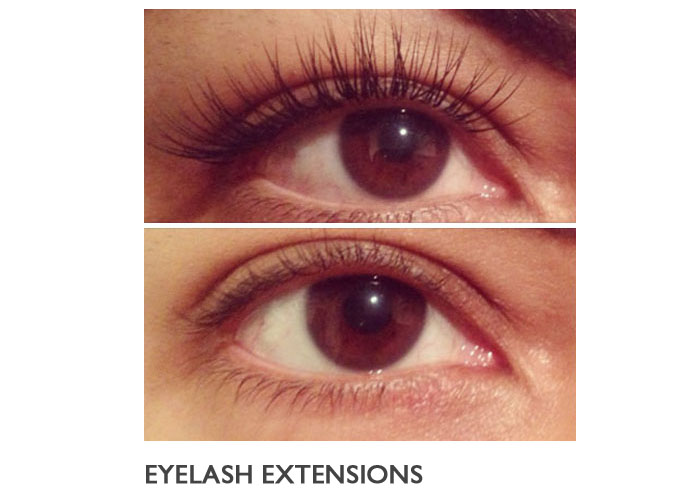
EYELASH EXTENSIONS

Eyelash extensions

With and Without Eyelash Extensions. Image from: http://skinclinicny.com

I’ll give you the conclusion, first: DON’T. Or, if you MUST use eyelash extensions (and I can’t imagine who must, but I guess some of you could), please read the entire article (link below).

“The risks of eyelash extensions are not only an allergic reaction to the glue [used to attach the extensions], but erosion of the inner surface of the eyelid,” says Dr. Orly Avitzur, M.D., one of our medical advisors. “And that can cause permanent damage to your eyelashes.”

eye infection

Eye Infection. Image from: http://unnaturalmakeup.wordpress.com

All right. Suppose I have now convinced you not to “extend” your eyelashes in this way. What about changing their color or trying to give them more “fullness”?

Latisse, which is an FDA-approved treatment for thin lashes, has potential side effects as well, including:

  • Permanent changes in eye color—turning blue, green, or hazel eyes brown
  • Permanently darkened eyelids
  • Hair growth elsewhere on your face, if you’re not careful
  • Itching, redness
  • Lower eye pressure, which could potentially mask glaucoma or other eye problems

So, if I have this right, people who use Latisse to give themselves “better” eyelashes may also give themselves hairy cheeks, itchy, red eyes, changes in their iris’ color, and even make worse (by hiding) their actual eye diseases?

Sure, that’s worthwhile. Going out right now to get myself some of that. Gotta be “pretty,” don’t I?

But, how “pretty” are itchy, swollen, darkened eyelids and/or hairy cheeks?

Some make-up must be safe, you claim. You use/you know women who use it all the time with no ill effects. All right.

But, what about doing a serious costs-gains analysis, weighing the potential ill effects and the potential “benefits”: how can you compare impairing your eyes’ health or even the loss of your eyesight with the “benefits” of having a few hours of “looking better”?

Go ahead, ignore me, the research, the warnings: dye your eyelashes, anyway. What harm could it do?

EYELASH DYES

Eyelash dyes are a big beauty don’t. Currently, there are no color additives approved by U.S. Food and Drug Administration for dyeing or tinting eyelashes, and the FDA cautions against doing so. The dyes can cause blindness.

eyelash-infection

Eyelash/eyelid infection due to make-up. Image from: http://www.beautyglimpse.com

Read the entire article for the list of do’s and don’ts. SHARE!

http://www.shopsmart.org/2014/02/skip-eyelash-extensions-stick-with-mascara.html

What about PERMANENT EYELINER, another way to dye one’s eyelids?

It’s a great idea to get one’s eyeliner inked in permanently, right? Save money, save time: one and done. Until someone goes home crying….

While often cheap, work done by untrained, unlicensed practitioners may require expensive corrections and revisions later. This happens because in order to cut costs, such practitioners use cheap, low quality pigments and do not invest much into acquiring and updating their permanent makeup skills.

Some of the typical problems requiring corrections are odd eyebrow and lip colors, unflattering or asymmetric shapes and pigment migration…. Corrections are a two-step process.

OLYMPUS DIGITAL CAMERA

Image of permanent eyeliner fail and info, above, from: http://www.chicagopermanentcosmetics.com

EYELASH MASCARA

“Well,” you say, “I refuse to go out without a little mascara. That can’t be that bad!”

Oh, yes. Mascara CAN be that bad.

About seven years ago. one brand of $160-tubes of mascara was recalled from the market because it was found to cause infections and other problems, many leading to blindness. Did you hear about that? Probably not. http://consumerist.com/2007/11/17/160-mascara-seized-by-fda-because-it-can-cause-blindness/

What about other types of mascara? Since we know expensive doesn’t equal better, now, what to think?

There are still problems with ALL types of mascara. The tubes are hotbeds for bacteria and some of those DO lead to infections and blindness, regardless of how careful the user is. What to do?

Side effects of mascara

“Mascara is used by most women to lengthen their eyelashes, make them appear thicker and to lay emphasis on the eye area. However, its applicants rarely have knowledge on the adverse side effects of mascara. Mascara contains harmful ingredients that affect the users’ lashes and skin. Mercury, bronopol, parabens and benzyl alcohol are just but a few of the harmful ingredients used to manufacture mascara.”

Some of the adverse effects associated with the use of mascara include:
–Mascara may lead to eyesight problems such as blurred vision and blindness
The presence of an ingredient known as pseudomonas aeruginosa is associated with eye blindness in mascara users.
Occurrence of cancers and breast tumors
Parabens is a preservative for many cosmetic products including mascaras. When mascara is applied, parabens is absorbed into the body. Frequent application leads to large deposits of the parabens in the body. This has been linked to the presence of breast cancers and tumors amongst women.

Thinning of eyelashes
–As much as mascara makes your eyelashes appear thicker and linger, its chemical composition reacts with the eyelashes to make them thinner. Mascara clogs up the hair follicles making the growth of eyelashes difficult.
They cause irritation to the eye
–Ingredients such as triethanolamine and methylparaben act as irritants to the eyes. This may lead to eye related problems and skin irritations especially around the eyes.
Loss of eyelashes
–When applied frequently, mascara tends to dry the eyelashes. Mascara is therefore one of the causes for eyelashes falling out.
Eye infections
Mascara may enter the eye of the applicant during application or thereafter by rubbing the eyes. The presence of these harmful ingredients may lead to eye infections.
–Mascara has been linked to neurotoxicity and infertility.

All above mascara info is from http://www.foodlve.com/food/how-to-make-your-eyelashes-longer-without-mascara-6744385

If you are that committed to altering your appearance or you’re wearing a costume or something, try the safer alternatives listed in the above article.

COLORED CONTACT LENSES

“Fine,” you say, now. “I won’t use mascara, eyelash extenders, eyelash alterations or dye my eyelids. What about colored contact lenses? They have to be all right, don’t they”

Nope. Look what CBS reported last year (2103) after Halloween! “Color[ed] contact lenses for Halloween may carry blindness risk”

http://www.cbsnews.com/news/color-contact-lenses-for-halloween-may-carry-blindness-risk/

CBS reported:

Part of the risk is that people often don’t go to the ophthalmologist or optometrist to make sure that the contacts fit properly. Improper fit can lead to scratches on the cornea, which is the clear dome of tissue above the colored iris portion of the eye. People can also get an ulcer on the cornea, known as a corneal infection. There’s also the risk of getting conjunctivitis, or pink eye, and having decreased vision. It some cases, these problems could lead to blindness.

And the health risks could occur with only one wearing.

“Wearing it for a couple seconds could cause damage,” Dr. Edward Kondrot, an ophthalmologist and the founder of the Healing The Eye & Wellness Center in Dade City, Fla., said to CBSNews.com. “If it’s poorly fit, you could develop a scratch on the cornea, and it becomes an open wound.”

colored contacts

Colored Contacts for Costume Wearers. Image from: http://buycoloredcontacts.blogspot.com

CBS News reporters then warned/recommended: “If you still really want to wear the decorative lenses, the FDA recommended getting an eye exam from a qualified professional and getting a valid prescription. Buy the lenses from a retailer that requires a prescription and take care to follow the directions.”

So, go ahead: have fun with altering your eyes. Just be safe out there!

Unknown's avatar

from Anne R. Allen, HOW TO/how not to #BLOG, for #author/#bloggers

Another great post from Anne R. Allen, filled with details, concrete advice, tips and warnings for #author/#bloggers.

My favorite part (and there are MANY great parts):

4) DON’T limit yourself with a restrictive niche

“For product bloggers and reviewers, niche is important. It’s better to be the #1 blogger for jelly doughnut reviews or vegan baby food recipes than the 10 millionth blogger “musing about stuff”.

“But you’re an author. Your product is YOU. Don’t keep yourself hemmed in by a limited niche.

“For a long time, I believed all the stuff about how you have to have a niche. So this is a niche blog. It’s serving us well, but it hems us in.

“Remember people surf the Web looking for two things: information and entertainment. Your blog can spin a good yarn, make people laugh, provide information, or all three, as long as you are putting it all in your own honest, unique voice.

“I used to caution writers against putting fiction on blogs. It is still less likely to be read, because people are mostly skimming blogs for information, but there’s been growth in the “story blog” recently, so if you have flash fiction you don’t intend to send to contests or journals, it’s okay to put it on your blog. But do realize it will be officially “published” so you have given away first rights.

“NOTE: It’s still not smart to post raw bits of a novel in progress. [italics are mine; Sally Ember, here] Agents and publishers won’t consider that book because it’s now published (unless you’re getting 100,000 hits a post.) Also, readers respond much better to self-contained short fiction than unedited bits of novels. And remember your job is to entertain, not seek free editorial advice.

“Another caveat: one of the least interesting topics to readers is your writing process [italics are mine; Sally Ember, here]. Hardly any potential reader wants to know your daily word count or your rejection sorrows. Other writers may stop by to commiserate, and you do want to network with other authors, but don’t make your writer’s block or attempts to get published the main focus of your blog.

“You simply want to offer your unique voice talking about the things you feel passionate about: the research you’re doing on medieval armor; your theories on why raccoons are going to take over the planet; the hilarious adventures of an erotica writer running for PTA president. Anything that will draw in readers will work.”

THANKS! Reblogging! Link is below. PLEASE visit and read the whole post if you are an author/blogger. Well worth your time!

http://annerallen.blogspot.com/2014/06/how-to-blog-essential-dos-and-donts-for.html

Unknown's avatar

#60for60 ENDS Today! 6/21 – 8/22/14

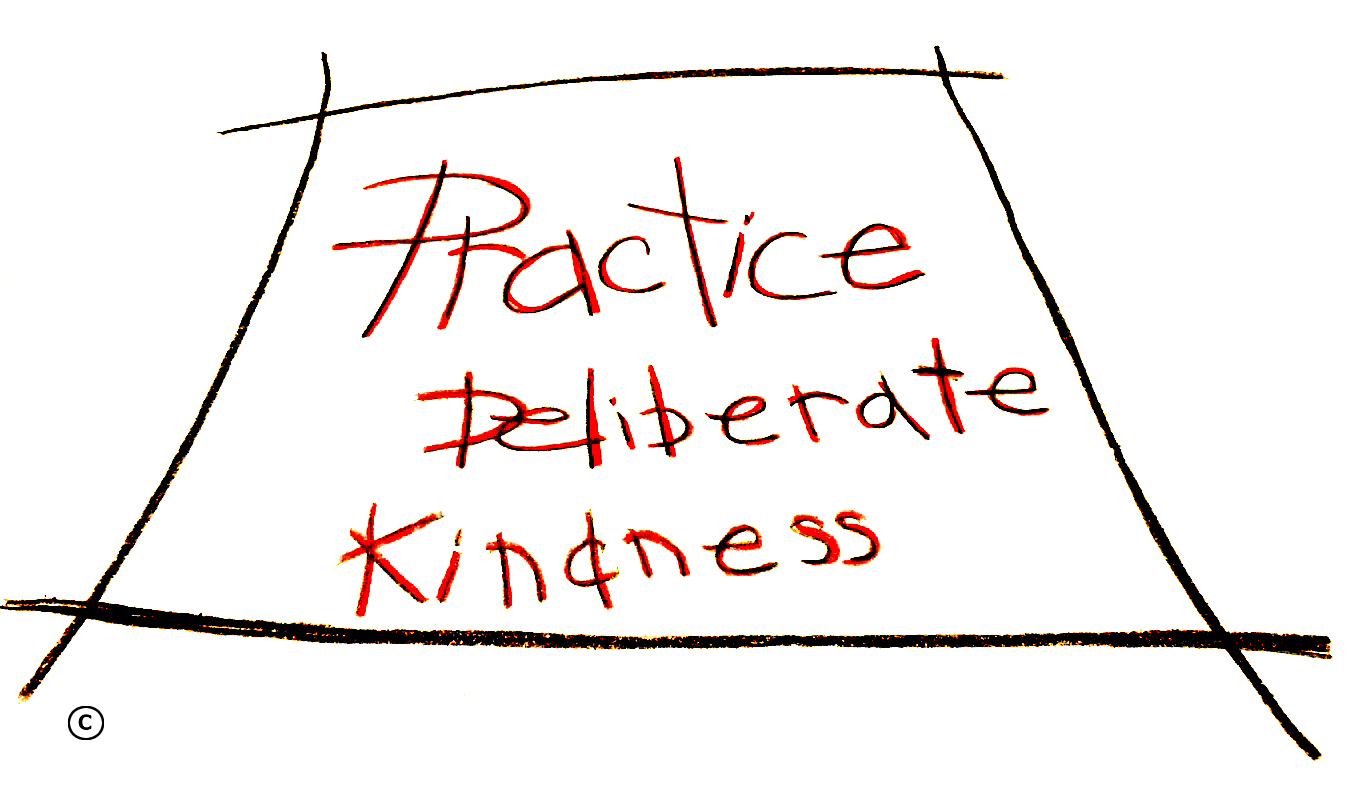
Read about my outcomes for #60for60, for my attempts to engage in acts of kindness and gratitude in the 60 days leading up to my 60th birthday.

Practice-deliberate-kindness-cartoon-final-cropped

image from ulovesomethingmore.com

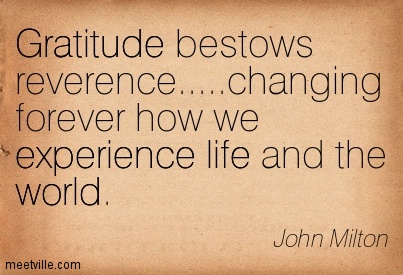
Pick one or more and engage in them yourself, any time!

Quotation-John-Milton-gratitude-life-manners-experience-blessings-world-kindness-Meetville-Quotes-264505

image from meetville.com

Comment on my blog to wish me “Happy Birthday” and tell your stories on or after 8/22/14.

Enjoy! 6/21 – 8/22/14

60 BD

60 FOR 60:
60 ACTS OF KINDNESS AND GRATITUDE
FOR THE 60 DAYS PRECEDING MY 60TH BIRTHDAY

June 21, 2014 to 8/22/14

1. $
Give a very good tip. SEVERAL times.
2. $
Pay for someone’s gas. No opportunities (not enough extra funds)
3. $
Pay someone’s fees to foster a dog or cat from shelter. No opportunities (not enough extra funds)
4. $
Leave change in a vending machine. No opportunities (not near any machines)
5. –
Volunteer.
6. $
Donate a random amount of money to a homeless person. No opportunities where it would have been private.
7.
Open doors for people. SEVERAL times.
8.
Give genuine compliments to someone’s very unseen blogs. SEVERAL times.
9.
Donate supplies I don’t use. SEVERAL times: Turns out I’m moving!
10.
LetsSayThanks.com Didn’t do.
11. $
Give someone an umbrella: Brought an extra one on my cross-country move. Maybe my sister will use it!
12.
Let someone behind me go in front of me in a line. SEVERAL times.
13.
Clean a neighbor’s curb area or put their garbage cans back after pick-up. SEVERAL times.
14. $
Buy someone’s groceries in the checkout. No opportunities (not enough extra funds, but gave away a LOT of food during my move give-aways)
15. $
Pick up the tab for a random family/person. No opportunities (not enough extra funds, but gave away so many items to single parents and seniors during my move give-aways)
16. $
Buy some carry-out lunch and deliver it to a homeless person. Told story about this in previous post.
17.
Give compliments to people. Several times
18. $
Buy some toys a child might like and leave them on their porch. Gave to a parent, instead.
19.
Post about something useful to others.Several times, according to comments and thanks.
20. $
Go to the bank and deposit money into other’s account. No opportunities (not enough extra funds)
21. $
Pay off someone’s layaway at a store. No opportunities (not enough extra funds)
22. $
Cook lunch or dinner for someone I know and bring to them.Several times, served here rather than delivered.
23. $
Buy a college student’s textbook or lunch. No opportunities (not enough extra funds)
24.
Leave a thank -you note at every farmers’ market vendor’s stall. Thanked them orally, instead.
25.
Collect coupons and leave at laundromats. Didn’t do. Don’t collect coupons. 
26. –
Leave Buddhist magazines at homeless shelters. Donated them to someone who is working at organization that serves homeless youth and families, instead.
27.
Donate clothes, coats, shoes. SEVERAL times: Turns out I’m moving!
28. $
Reserve a coffee at coffee shop. I don’t go to coffee shops.
29.
Read someone’s writing and give constructive feedback, for free, even though I’m a professional editor. Several times.
30.
Send a thank-you note to every family member. Done by email and Facebook posts.
31.
Send a thank-you note to every friend. Done by email and Facebook posts.
32.
Offer to edit, rewrite, or help write something for someone for free. Did four+ times. Great responses.
33.
Respond to someone’s comments with positive statements in FB, LinkedIn, Google+ groups. Several times.
34.
Thank group moderators in above groups.Haven’t done all, but have done some.
35.
Tweet about someone else’s writing, music or art. Several times.
36.
RT or repost someone’s great quote. Several times.
37.
Vote up someone’s submission on Reddit, StumbleUpon, Youtube. Several times.
38.
Thank every cashier and waitron I can’t tip. Several times.
39.
Offer to help someone who seems to need help at stores, farmers’ market, library. Several times.
40.
Donate books to library book sale. Several times.
41. $
Donate food to food bank. Several times.
42.
Offer a ride to someone with burdens walking to the BART or bus. No opportunity.
43. $
Buy a BART ticket and give it away. No opportunities (haven’t been near BART)
44. $
Leave tips in tip jars even when I don’t buy anything. Tipped two people who usually don’t get tipped.
45. $
Donate to my spiritual teacher even when I don’t see him. Actually, got to see him. Wonderful.
46.
Get and give coupons for free ebooks to teachers. No opportunities. 
47.
Write positive reviews for books and rank them on Amazon. Several times.
48. $
Visit one church or temple per month and donate to charity tray/basket Didn’t do.
49.
Send thank-you notes to musicians, writers, artists whose work I appreciate Did a few.
50.
Send thank-you notes to teachers or their children/spouses. No opportunities.
51.
Scan then post/email photos from albums for friends, family and let them know. Several times.
52.
Make Youtube vids thanking writing support groups leaders/members and cover artist, Willowraven, reviewers and beta readers then post. Started CHANGES Hangout On Air 8/6 and do THANK-YOUs in every episode.
53. $
Pay someone’s parking meter. No opportunity (no meters around here).
54.
Compliment a parent on their parenting in public place. Done twice. Fabulous responses.
55.
Compliment/thank a public servant. Thanked some BART guards walking around the Farmers’ Market (near the BART).
56.
Write letter to editor thanking honest, dedicated local politicians. Wish I knew any around here.
57.
Blog about gratitude to my/one’s ancestors. Not done, yet.
58.
Share positive stories about people I knew who are now dead to their living descendants. Not done, yet.
59.
Thank Buddhist sangha members and/or support one’s retreat. Donated books, clothing, ritual items to retreatants/practitioners./strong>
60.

I LOVED doing 60 for 60, even though I didn’t get to them all, I did a lot more than 60 acts!

Find someone else whose birthday is today and wish them “Happy Birthday!” Do kind and generous acts of your own choosing, any day, every day.

https://sallyember.com/2014/06/20/60-for-60-60-acts-of-kindness-and-gratitude-for-the-60-days-preceding-my-60th-birthday/

Unknown's avatar

Bras and Shoes: Breast Cancer, Bunions, Back Strain and “Beauty” Lies

WARNING: Naked breasts appear in this post, for instructional purposes only.

This post is meant to inform about some aspects of modern women’s (and men’s ) lives in Western nations that need changing. Yes, these are “first-world” problems. But, they ARE problems. If you don’t mind the problems these cause or you don’t have these problems, go read something more fun/useful. Or, pass it on to those who might benefit from reading it!

BRAS, ANTI-PERSPIRANTS and BREAST CANCER

BRAS
I have always hated bras. I personally hate wearing them and almost never do. Even when well-fitted, bras inform me that there is a special place in hell for those who design them. Bras itch, ride up, pinch and nonstop bother me.

I also hate the rationales people make for women’s wearing of bras. As a feminist, I am offended and disgusted by the so-called “reasons” for bras because these are based on modern, industrialized, Puritanically based Western cultural biases that “require” teenage or adult females to cover our nipples, to pretend not to have any. Also, we are told that we are “unprofessional” unless we are complicit in disguising our breasts’ shapes. These misogynistic attitudes are NOT “universal” and need to be eradicated.

However, I could put all that hatred aside and just accept that some women want (or claim they “need”) to wear bras, except for three somewhat newly surfacing facts, based on extensive research over many decades:

  • 1) Bras do not work. Gravity wins. It wins BIGGER when women wear bras: bras CAUSE breasts to sag MORE because wearing bras weakens the pectoral muscles that would ordinarily work and strengthen to hold up one’s breasts over a lifetime. With few exceptions, NO WOMEN should wear bras just to “hold them up.” Those whose breasts hurt due to hormonal changes and jiggling makes the pain worse: sure, wear bras. Those with extremely large breasts claim that wearing bras helps “carry” them, HOWEVER: the BRAS cause more shoulder and back pain than their breasts.

    Jean-Denis Rouillon, a professor at University of Besançon in France, authored a study stating that women are better off not wearing bras. They are scientifically unnecessary, and, in fact, could be hazardous to breast health, leading to sagging breasts and increased back pain….”Medically, physiologically, anatomically — breasts gain no benefit from being denied gravity,” Rouillon told France Info radio. “On the contrary, they get saggier with a bra.”
    http://www.medicaldaily.com/bras-make-breasts-saggier-french-doctor-says-women-better-bra-less-244995

  • 2) Bras increase the risk of breast cancer.
    The Susan G. Komen Foundation and the American Cancer Society (ACS) are the main organizations who refuse to properly present summaries and warnings derived from the amassing research that shows a link between increased incidences (“Risk”) of breast cancer the wearing of bras, especially tight ones, for 12 or more hours per day, particularly all night.

    …at least five research studies have shown that there IS a strong connection between breast cancer and bra wearing for many hours per day.
    http://www.inquisitr.com/1202191/your-bra-may-be-killing-you-scientists-call-for-boycott-of-komen/

    lymphatic_system_breast

    Lymphatic Systems of Breasts: image from healthieralternatives.wordpress.com

  • 3) Underwire Bras, in particular, cause health problems.
    The pressure points that underwire bras rest on are critically important, according to Eastern medical knowledge, to the functioning of major systems in the body. However, constant metallic pressure on these points is contra-indicated in all women and can cause a myriad of health problems over time.

    The UnderWires in the UnderWire Bra fall directly onto two very important NeuroLymphatic Reflexes. The one under the right breast goes to the Liver and Gall Bladder. The one under the left breast goes to the Stomach….If a woman keeps the metal UnderWires on top of those reflex points, over time that WILL mess up the functioning of the associated circuits: Liver, Gall Bladder, and Stomach. Bottom Line: It will likely make her sick, slowly and quietly.
    http://www.relfe.com/wp/health/dangers-underwire-bras/

If those three information points do not convince you to stop “supporting” bra-wearing and worse, if you are still committed to wearing bras yourself, that is illogical. Check out this infographic and OTHER problems caused by ill-fitting bras:

ill-fitting bras symptoms

% of Women Having Problems Due to Ill-Fitting Bras: image from http://www.bariatriccookery.com

Almost half the women who wear bras that are ill-fitting (which, according to other research, would include MOST women), suffer skin rashes. Another 35% have shoulder pain. Are you one of these women?

If you are that irrational about bras, you might want to discontinue reading the rest of this post, because things are going to go from bad to worse for you.

ANTI-PERSPIRANTS
(not Deodorants, which merely mask smells)
are those products that attempt to “dry up” or prevent the armpits from sweating. What about the causal connections between anti-perspirants and breast cancer? After much “debate” and “debunking” of the “myth” of this connection by the research FUNDED BY THE COMPANIES THAT MAKE ANTI-PERSPIRANTS in the USA, we finally have unbiased research results from the UK showing several causal links between the key ingredients in anti-perspirants and DNA changes and between the lymphatic blockages intentionally caused by these products that lead to increased incidences of breast cancer in both men and women.

Britain has one of the highest rates of breast cancer in the world and every year almost 13,000 British women die from it. Britons are also among the biggest users of antiperspirant deodorants, getting through £300 million worth of bottles each year. The rising incidence of breast cancer in men may also suggest a connection. Breast cancer in men has doubled in the past three decades to 300 cases per year – a time frame that coincides with the increasing use of underarm products by men.
http://www.dailymail.co.uk/health/article-185071/How-safe-antiperspirant.html

Guess what gets the attention of researchers, health commissioners and the public? when the problems affect MEN. Sigh.

SHOES

Enough about breast cancer? Depressed, yet?

Let’s talk about shoes. I do not understand some women’s obsessions with shoes. I really don’t. But, obsessed or not, most of us wear shoes most of the time.

How well do our shoes serve us? Do they support our best posture, provide safety from h

Luckily for me (!?!) I was in a serious car accident my senior year of high school that caused me to have life-long problems with my right leg. This prevented me from ever getting into wearing “high” heels, or ANY heels, for that matter, for more than about 30 minutes per… year. I say “luckily” because both my mother and her mother had/have bunions and hammertoes. So far, I do not.

I also have many back problems and hip issues from other injuries that continue to plague me and keep me wearing the most supportive, comfortable shoes I can afford.

What about you? Do you go for fashion at the expense of your comfort or health? I hope you don’t.

If you do, read on and perhaps I and the research can change your mind.

hammertoes

Hammertoes: image from http://www.kyforward.com

Bunions, Backstrain and Hammertoes

Because of her own problems with shoes and foot health, Ivey Allison wrote a great post which I recommend you read in its entirety. Here is a salient quote, based on her research:

…almost every shoe on the market, flat or heeled, has a toe box design that is too small and tapered to allow the foot to be properly aligned. The result? Foot deformity — and painful bunions….Every single pair of shoes you own is likely deforming your foot. Permanently.
http://www.xojane.com/healthy/bunion-care-treatment-prevention

The Huffington Post‘s Rebecca Adams & Ellie Krupnick did some great research and wrote summaries of their findings in last October’s post on what shoes are the worst offenders, causing bunions, hammertoes, and back strain, among other problems (not to mention costing ridiculous amounts of money!). here is a sample and the link to the full post:

STILETTOS
Wearing heels shifts your weight to the balls of your feet, which puts pressure on your foot. This also creates a balance problem: It forces your knees and hips forward, hurting your back and legs. Wearing these shoes can cause: hyperextension, ankle sprains, midfoot fractures, neuromas (benign nerve tumors), pinched nerves, bunions and hammertoes.
http://www.huffingtonpost.com/2013/10/09/shoes-worst-for-feet_n_4069370.html

They also summarized the impact and effects of wearing Platform Wedges; Converse-style Sneakers; High-Heeled, Rain or Thigh-High Boots; Ballet Flats; and, Flip-Flops.

Bunion

Bunion: image from my.clevelandclinic.org

The worst offenders? I guess it depends what you think are worse. Each shoe type they mentioned came with its own list of problems, such as:

  • mold, fungus, bacteria, wart viruses and blisters;
  • inflammation, tendonitis, heel pain, strains, fractures and external injuries (e.g. stepping on a nail);
  • chronic stress injuries, particularly to the heel;
  • inflammation, tendonitis, heel pain, strains and stress fractures;
  • inflammation, tendonitis, heel pain, strains, stress fractures and external injuries (e.g. stepping on a nail);
  • hyperextension, midfoot fractures, neuromas (benign nerve tumors), pinched nerves, bunions and hammertoes;
  • hyperextension, bunions and hammertoes;
  • hyperextension, ankle sprains, midfoot fractures,
  • neuromas (benign nerve tumors), pinched nerves, bunions and hammertoes.

Choose which group of symptoms you’re willing to acquire and then merrily (warily) go shoe shopping.

Or, buy better-fitting, healthier, more comfortable shoes.

Comfortable-stylish-walking-shoes-FINN-SANDALS

image from mostcomfortableshoesguide.net

Unknown's avatar

#iamsubject story: I Find Myself Wherever I Live and I Move A Lot!

I am participating in Diane DeBella’s #iamsubject project http://www.iamsubject.com/the-iamsubject-project/. Here is my #iamsubject story.

I Find Myself Wherever I Live and I Move A Lot!

#iamsubject story: I Find Myself Wherever I Live and I Move A Lot!

Whenever I interact closely with females, my menstrual cycle changes its start date. I am never the anchor. I am a mover.

Why?

Maybe because I was born near the beginning of the last hour for a Leo to be born in St. Louis, MO, 1954, so I am almost a Virgo. Being on the cusp shows up all over my life. I don’t completely believe in astrology, but one astrologer read my chart and told me: “You will always be in transition. This is good for being a Buddhist. You are quite familiar with impermanence!”

Or, perhaps it’s due to my never quite belonging in any one place, group or category. Whenever I take a personality or any other kind of test whose results divide people into groups or types, my answers put me in more than one, straddling two or more, often.

Then, there is the ridiculous number of times I have relocated. I lived in fourteen places before the age of 22. During one three-year period, I moved with my infant, then toddler, and his father, my full upright piano, his woodworking tools and wood collection, three times every year)!

The number is about to hit 30 more, totaling 52 places of residence before I turn 60, averaging out to almost one per year. Most of those moves were not of my own choice, meaning: I didn’t want to be a nomad; I had to go. Next month (July, 2014), I have to move again.

I have lived in this place for fewer than eighteen months. Before that, I was housesitting nearby for three months. Before that–almost a record–I had practically seven years in my own place. Luckily, my next move is back to that same town, north of San Francisco, an area I dearly appreciate.

Some people believe that roots are important. I do not know.

The longest I’ve ever lived in one place is twelve years (twice), but even during those periods, I was away for two to four weeks during some summers, attending or working at camps. The longest circumstances have allowed me to stay in one job is almost five years (also twice).

How do I “find myself” when I am not located anywhere in particular? Many philosophers say: “Wherever you go, there you are.” I have become a lifetime believer in that aphorism.

By others’ reports, I am reliable, organized, stable and calm, yet I am also unpredictable, unusual and “different.” How am I “different” and from whom?

  • I do not identify with “stuff.” I do not collect anything for the sake of having a collection.

  • Even though I have framed pictures and art, I do not often hang or display most of it. In this current, almost 18-month tenure, I “never got around to it.”

  • I read constantly, but the books I own do not even fill one bookcase. I always belong to and avidly use libraries.

  • I don’t talk like anyone else in my family of origin. I have no regionally identifiable accent.

Because I’ve lived in so many places–Missouri, Wisconsin, every state in New England, New York state, New Mexico, California, the Philippines), I have an unusual conglomeration of ways to pronounce and articulate certain words, phrases and concepts. I also know some Spanish, Italian, Hebrew, Yiddish, German, French and Tibetan. It’s impossible to determine where I’m “from” by hearing me talk.

Another way I’m a “mover” is that I adapt to and adopt others’ cuisine, ways of living, schedules, customs, preferences and styles rather quickly. Most people see me as having my own unique, eclectic “style.” Little do they know that most of these “ways” aren’t originally “mine” or even from any one person or place.

“My weird ways”:

  • I get up between 3 and 5 AM.
    Because I attended or set up on my own several ten-day to eleven-week Buddhist meditation retreats for the last fifteen years, I got used to rising early. Before that, not my schedule.

  • I eat very differently from the way I was raised.
    Housemates brought me into eating and cooking organic, whole, healthy, mostly local foods in 1977. After a few years of that, the new food habits “stuck.”

  • For over thirty years, I hated and altered my curly hair, then set it free.
    I tried to get my curly hair to “go straight”–I ironed it with a clothing iron, used chemicals, wrapped it in giant curlers or used my head as the largest curler, used hand dryers in public bathrooms–all in the pursuit of unnaturally straight/er hair. Every day, even when I stopped using methods, I brushed and tried to “tame” my wavy/curly hair, usually unsuccessfully. One day, one of my younger sisters who shares these genes of mine showed wearing her hair in an abundance of curls. I asked her how she managed them? She said: “I stopped brushing my hair.” This was a revelation! I haven’t brushed my hair since. It is cooperatively curling on most days.

  • For almost twelve years, I suffered through shaving, then happily stopped.
    I acquired numerous scars from cuts, had painfully ingrown hairs, developed awful deodorant rashes and a host of other problems. I hated shaving, but I kept doing it. One day in 1977, I arrived at an interview to teach in a parent-cooperative school in Rhode Island. The director, a woman a few years older than I, didn’t shave. I was fascinated. Since I was spending the late summer weekend with the group of parents, teachers and staff, I plucked up my courage to ask her about not shaving. She said: “Why shave? It wastes time, causes problems and isn’t necessary. Men have the choice. Why shouldn’t women? I choose not to shave.” Dumbfounded at the simplicity of her argument and eager to discard this horrible habit, I happily haven’t shaved since that day in 1977.

  • I hate bras. Always have.
    I used to wear bras. Mostly I don’t, now. Similarly, this same mentor demonstrated the irrelevance of bras. That was an amazing liberation to my 23-year-old self. I have eschewed bras ever since and research has vindicated us on that choice: bras are BAD for circulation, ventilation, and overall lymphatic health. PLUS, they do NOT prevent, but rather exacerbate gravity’s sagging effects. Unless aging hormones cause me to need “holders,” I do not wear them.

I can attribute my “personality quirks,” “life choices,” and many “unique characteristics” of “mine” to others’ influences. Yet, I don’t feel off-balance each time I incorporate a new aspect or habit, often from someone I am newly acquainted with or getting to know better. I am actually very choosy about which traits I adopt and whom I select to emulate. Having been around thousands of people spanning many places, I can be that particular.

My friends, bosses, colleagues, relatives, neighbors, housemates and acquaintances often offer up one habit of speaking, dressing, interacting, leading, thinking, living that I decided to make my own. THANKS to you all!

With each “move,” I re-affirm the central parts that comprise “me” and jettison everything extraneous. Paring down, weeding out, separating the wheat from the chaff, I spend time being grateful for and treasuring what (and whom) I keep in this peripatetic life.

Here I go, again. Let’s see who I become this time!

Unknown's avatar

My best Give-Away Story: Our Family Table becomes Ryan and Gina’s Family Table

As most of you know, I am moving cross-country this week and spent the last month giving away almost everything substantial I own. By the time I leave, I will have shipped only 5 cardboard boxes and filled just my car (including my sister and HER carry-on bag!).

My mid-Swis, Ellen, and I are driving (after she flies up from LA to Oakland) from northern California to St. Louis, MO, where I will live with our mom. I grew up about 10 minutes from where my mom now lives.

I have had the BEST time arranging for where my “stuff” would next live. Friends, family members and then, strangers arrived in a steady stream to peruse and take things almost every day for the last three weeks. This relinquishing has been poignant, fun, interesting and a bit strange. I actually like to watch “my” things walk out the door, one by one (or by the bag or box), quickly becoming someone else’s possessions.

One of the last things to go (and I wasn’t sure I’d get anyone to take it) was my 5′-round, plywood table and its iron stand, which lived outdoors for the last 18 months.

Please read these emails to find out its story, then look at the photos.

Life can be very sweet!

One bit of background:
After Gina and I emailed back and forth a few times, it was determined, based on all of our schedules, that Gina’s father and Ryan, Gina’s financé, would come to get the table on Friday, mid-day, two days before I left. Ryan and Gina are about to be married.

I told them a few things about the table as they circled it, preparing to move it. As Ryan and his father-in-law picked up the tabletop to carry it to the truck, I asked Ryan: “How are you going to use the table?”
Ryan told me: “We are going to use it for our wedding!”
I smiled and asked: “And then what?”
He replied: “Then, we’re going to keep using it!”

Yeah!

On Friday, August 15, 2014 9:53 PM, Ryan wrote:

Hi Sally,

My father and I got right to work on the table. I attached some photos of the finished top and primered legs.

We will take great care of the table for you.

Thanks again,
Ryan & Gina

I wrote back on Saturday, 8/16, at 7 AM:

Hi, Ryan and Gina,

This makes me so happy!

Thanks so much for taking care of, fixing up and bringing our family/community table which hosted, from 1982 – 2013, countless holiday, birthday, graduation and other rituals’ parties, costume-making and other crafts and arts projects, games’ and toys’ foundations, family meals, work project meetings, tutoring sessions and homework/homeschooling (this table was even featured in the local newspaper in Keene, NH, in 1986, showing my son and me playing an educational game during a homeschool lesson!) into your lives and ceremonies.

This table started out on Court Street in Keene, New Hampshire, in 1982, our family’s first collective households in Keene. It was mounted on a tall barrel that was temporarily filled with fabric; the top was made to be removable so the co-maker, Bonnie, who was doing many sewing projects, could utilize the fabric. We were low on storage space, so, there it was! We celebrated our son’s 2nd birthday and many others’ birthdays in the three years we lived on Court Street with several housemates. We had Thanksgivings, Chanukahs, Christmases and other parties there.

The table came with us in 1985 when we moved to Leverett Street and then in 1986 when we moved to Water Street, also in Keene. We stayed on Water Street for 12 years. During that time, both my son and I had two graduations, each (my master’s and doctorate; his 8th-grade and high school), dozens of birthdays of our families and others, up to 11 people around it for holidays and other parties.

The barrel eventually dried out/fell apart despite many years of repairing and re-circling it with extra metal bands, so Christopher found/made its 4-legged, removable iron stand.

A fledgling Assisted Living/Buddhist Center my then-partner and others started with me in Saco, Maine, received the table when we moved to it in 1998, but then we sold that and we then moved the table and this community to Silver City, New Mexico, in 1999.

The table then followed my peripatetic existence as I lived in five different houses (and it lived on one patio) in Silver City before finding its way with me to Santa Rosa, CA, in late 2001.

There the table was in storage above my housemate’s garage for almost five years. In late 2005, the table happily came out to live with me in Sebastopol, CA, where I used it well for about 8 years.

In late 2013, I had to leave Sebastopol, so the table again went into storage until early 2014, when I moved to Hayward. The table didn’t fit into my little Cherryland house, so it lived outside (that is the way it became so weathered and needed your great craftspersonship to refinish and restore it!). Living alone and not knowing anyone in Hayward, it didn’t get much use but I knew it was there.

So, here we are. I gave the table to you! May you and your loved ones get to enjoy this well-used table in good health and happiness for another 30 years or more!

I’m CC’ing this to: the makers of the table (our friend, Bonnie Insull and my son’s father, Christopher [please forward this, Christopher, to Bonnie]); our son, Merlyn; my mom and some friends and family who lived with and/or enjoyed the use of this table many times with us: they will also be made happy by this news!

I feel much better about leaving it “behind” knowing it’s in such good hands! I love this whole story, so I’m posting it on my blog, with your photos and others I have. http://www.sallyember.com/blog The story will appear Monday, 8/18.

Best to you,

Sally

Sally Ember, Ed.D.
nonprofit manager/educator
author, The Spanners Series

PHOTOS of the Table

Original Craig’s List Give-Away photo, August, 2014:

table

Before and After Refinishing, 2014

BEFORE:

table legs unfinished

table top unfinished

AFTER:

table top finished

table legs finished

Unknown's avatar

#RazorSocial’s Ian Cleary’s latest Social Media Tools

Thanks, +Ian Cleary and #RazorSocial for posting your quarterly finds. This time, 9 Social Media Tools we can all understand and benefit from using!

My favorite one TO BE TRIED is:

2. Optimize Your Content for Google with Seologies
Seologies is an SEO tool that can help you optimize your content to improve its relevance for Google.

If you want to rank for a particular keyword combination in Google, you need to make sure your content is very relevant to that keyword. If it’s relevant, then Google will expect to see a lot of content related to that keyword within your content. Also, when you rank for a particular keyword combination, you have a good chance of getting more traffic for other, similar keywords so it’s useful to consider these within the content.

This is not about just throwing in content for the sake of it. You use Seologies to find out if there’s content that you haven’t considered for your post.

There’s a couple of ways of using it. For example, you can put in an existing post and enter the keywords you want to optimize it for. Or you can just enter in keywords and get a list of words that it considers to be related.

In the example below, I entered ‘surfing’ and got a wide variety of keywords. When you hover over the keywords, it will show you the relevance of the keyword on the right-hand side, and it will also show you some sites with articles related to that keyword. These are sites that could be worth linking to.

seologies

Go to Ian’s site for the rest of this and the entire post!

http://www.razorsocial.com/9-interesting-social-media-tools-q2-report/

Unknown's avatar

Notes from the SUBstitute Teacher Underground: Back-to-School Special Guest Post!

It’s that time, again, when students and adults go back to school. Here’s a report from the point of view of the itinerant substitute teacher in secondary schools in northern California. How much of this story (the “good” and the “bad”) might be true in schools where you live?

Education in the Trenches: My Life as a Substitute Teacher

by D.G. Mitchell
substitute gratitude

image from writemejenb110.wordpress.com

It’s 5:30 AM when I get my first call for a substitute teaching assignment. A robotic voice tells me “This is the XYZ School District” and instructs me to push “1” if I am interested in a job. I’m only half-awake, but I dutifully push “1” and hear the description of a job at one of the local secondary schools.

PE teacher/wood shop. No, thanks. I press another number, telling them, “I can’t take this job, but call me back if you have another.”

Then, I go back to bed. At 8 AM, I’m having breakfast when the robot calls me again. They need an English teacher at another school. Of course, school has already started, but it was an emergency. They’re also getting a little desperate. So I take the job, rushing to get dressed and get out the door, travel mug in hand.

For about two years, I have had this routine, working as a substitute teacher in several school districts in Northern California . Many jobs are listed online, so one can avoid the early wake up call if one finds an assignment the night before. But, I am never quick enough: those jobs get snapped up in a hurry. More often than not, I get the wake-up call. Not knowing if I’ll be working until early each school day is nerve-wracking, but I am glad for the work.

Walking into a new class for the first time is something I never get used to. Years ago, I taught full-time in a junior high school in San Francisco, so I’m not new to teaching. Now, being in semi-retirement, I can always use the extra money, which is why I signed up as a “sub.” I didn’t realize how different “subbing” is from regular, full-time teaching. It’s also not very easy. Some teachers tell me they would never consider doing it.

It was many years ago that I was a full time teacher. A lot of things have changed.

Computer technology is one of the biggest and arguably more positive changes. Standardized testing is another, not so positive. A relaxation of discipline in the classroom, a lowering of expectations, gang violence on and off the streets: these are all definite negatives. It’s a very different world these days.

Let me describe my worst teaching day as a sub. After that, I will try to balance your understanding of my experiences by presenting one of my best days.

I believe that if one maintains a professional attitude, good days can make up for bad ones. See if you agree.

And just to be fair, I won’t mention any specific schools or teachers. I do think some of these observations apply to all schools at one time or another.

Interestingly, my worst-day experience occurred at one of the “better” high schools in the North Bay. I arrived on time, got handed a key and a folder, and tried to figure out where the classroom was before the bell rang. When I plan it right, I have time to review the lesson plans, scope out the classroom, and act as if I know what I’m doing when the kids come pouring in.
Substitute seating problem

image from doug-johnson.squarespace.com

And they did come pouring in, loud and boisterous, nearly oblivious to my presence as the substitute teacher. When the bell rang, they all but ignored the fact that I was standing there, waiting for the class to settle down. It was First Period. Many of the kids came in with their heavy backpacks, hoodies and hats, holding their cell phones and their breakfasts.

My first request to them was to quiet down so that I could take attendance. That was routinely ignored. So I announced again, much louder, that if I called a name and did not get a response, that person would be marked absent. That request almost worked. But many of the kids had ear buds in their ears, listening to music or the radio, so they still did not hear me. And, they continued eating their breakfasts and texting on their cell phones.

I asked: “Are food and drink allowed in this classroom?” I got what is by now a familiar response: “Our teacher lets us do it.”

I was disgusted. There was food everywhere. It was very hard to maintain some kind of order while kids were eating, texting, or plugging their ears with ear buds and listening to music.

It’s hard to believe a teacher actually allows all this, but unfortunately in many high schools, this turns out to be true more often than not. But that wasn’t the end of the problems.

The school announcements came on, beginning with the Pledge of Allegiance. To my dismay, I noticed that fewer than half the class did not bother to stand up for the Pledge. Worse, those that were standing did not say the Pledge or even mouth the words. Most of the kids stayed in their seats, not even bothering to remove their hats or their hoodies.

I wouldn’t have thought this would bother me, but it actually upset me. Maybe because I’m considerably older than these kids and older than many of their teachers, I can’t help recalling another era, when it was unthinkable to show such disrespect for the flag. Maybe I’m showing my age here, but that “other” era was when I was in high school, in the early 60s. As I said before, a lot of things have changed since then.

At this point, I decided to attempt to utilize what is called a “teachable moment.” I temporarily turned away from the lesson plan the regular teacher had provided. Instead, I asked the class: “Why do so many of you refuse to stand up for the Pledge?”

Teachable Moments

image from ontheculture.com

I got a variety of sneers and laughs, but I saw that they were actually thinking about this. So, I pressed on.

Becoming the patriot that I never thought I was, I asked: “Do any of you have family members or friends in the military?” I saw many nodding and some raised their hands.

I chose to follow that question by reminding them that, at this very moment, “Some of your family and friends might be risking their lives for that flag. Did you think about that during the Pledge?”

It suddenly became very quiet. I think I made my point. I could have gone further, ignored the lesson plan and insisted on a short essay on a topic like: “What does the flag mean to you?” But then that “teachable moment” was interrupted when someone got a phone call, two kids got into a fight, and, inexplicably, one kid got up and left the room, never to return.

It was going to be a very long day.

With great persistence, I returned to the lesson plan. I should mention that I was fortunate to have been given a good lesson plan. Sometimes, I get just a brief description of what the class is doing, or maybe I get lucky and I can show some videos. At times, I am without a lesson plan or even a seating chart, so I’m completely on my own. In the schools that observe a “block” schedule, where the basic period length is just under two hours, this lack of direction from the absent teacher can create total chaos for a sub.

Meanwhile, back in the class, I had kids read aloud and answer some written questions. It took a while to get kids to read and to make sure the rest of the class could hear the reader. To a casual observer, it looked and sounded totally chaotic, with the food and garbage, the ear buds, and the low clamor of side discussions. But, in fact, the kids were actually doing the assignment.

However, about 45 minutes into the hour, two girls suddenly walked into the class, ignored my questions (“Who are you? Why are you 45 minutes late?”) and simply sat down as if I didn’t even exist. I was appalled at their disrespect. I asked that they leave to get a note from the office explaining their lateness. They stormed out, calling me some horrible names as they exited.

We tried to return to the assignment.

About 20 minutes later, those two girls returned, with the Assistant Principal. I usually never meet the administrators of a school, so I had to admit I had no idea who this person was nor why these girls were returning.

The Assistant Principal told me to admit them. I requested a private conference with this administrator, outside the door. We stepped into the hall where I explained how these girls had been belligerent to me, called me names, refusing to acknowledge me as a teacher. And, “By the way,” I asked, “why is it OK for these kids to have all their garbage all over the floor in this classroom? Is this typical?”

Unfortunately, the administrator did not see this as a problem. She informed me: “Each teacher can make their own rules for their classroom.”

I pointed out that my Substitute Handbook explicitly stated that there should be “no food or drink in the classroom.” I inquired, “Why is this not enforced?”

She dismissed the whole thing, again saying it was “up to the teacher.”

Substitute handbook

image from http://www.docstoc.com

Not the administration? Doesn’t it work from the top down? I kept those questions to myself, as the Assistant Principal did a quick about-face and walked back to her office.

I re-entered the classroom. That class ended soon after. I collected the papers and the kids left the room, as boisterously as they had entered it. There was a short break, when kids could go out and get snacks (which, of course, students brought back into the classroom the next period).

Things went from bad to worse as the day wore on. The next period was just as bad as the first. Fighting a losing battle with distractions from the food, drinks, cell phones and ear buds, I could not get them to even look at the assignment. I tried to intervene in another very loud and vulgar verbal battle. It could only be resolved by my referring one of the proponents to the Assistant Principal, presumably for detention.

That student also yelled at me as he was leaving, calling me a “faggot” (among other things). At that point, I really started to come apart. I admit, I used some inappropriate language myself to get him out of the classroom. This was not very wise, as I later found out. It was a little better to get him out of the class, but not much was accomplished. In fact, nothing at all. Apparently, the class sided with the disruptive kid so they refused to cooperate with anything I asked them to do after I ejected him

After lunch, as I was preparing for my last class, I had a visit from another administrator, who turned out to be the school’s Principal. She said: “We need to talk.” Those were fighting words; never a good thing.

She arranged for another sub to watch my class so that we could go to an empty classroom. We had a rather uncomfortable discussion. Justifiably, she was appalled that I had used a four-letter word while kicking out the unruly student. Of course, I had been listening to four-letter words all morning, but that was irrelevant. I had to plead guilty.

But, I also recounted some of the “highlights” of my morning, trying to explain to her, based on my having subbed in so many schools in this district, just why this particular school was the most unruly, slovenly and disrespectful (to the teachers, to the flag, to education).

Needless to say, she did not take my criticism of “her” school very well, particularly on the heels of my unprofessional behavior. She told me not to come back to her school. End of discussion.

Substitute Vegas button

image from http://www.zazzle.com.au

Thinking I was through as a substitute teacher, I was surprised to continue to get calls from other schools. Luckily, I returned to several junior high/middle schools that I had particularly liked. Since my original teaching experience in San Francisco had been with that age group, I noticed that I was a lot more comfortable with the younger kids.

Middle school kids seemed to have much less “attitude” than the high school students, and they were basically fun to be around. Not that eighth graders can’t also be a handful (raging hormones, etc), but I never took it personally. Bonus: since my original credential was in English, with these gigs, I enjoyed a lot of very fun assignments, teaching poetry, writing in journals, showing movies.

One of my best teaching days was in an eighth-grade English class at a middle school, where kids were expected to work in teams and come up with an original poem by the end of the period. As a former English teacher, I found this to be the perfect assignment. I had them read a few poems to get started, then talked about rhyme schemes and “scanning” a line. This was something new to them, so they actually showed a lot of interest, especially when I threw out some long technical words, like Iambic Pentameter and Anapestic, and challenged them to come up with some lines in those meters (my own favorite, and my alma mater, The University of Michigan, is a perfect line of Iambic Pentameter; I shared that with the class, as we all recited the familiar rhythm.

Typical eighth-graders, they tried to best and put down each other, occasionally getting a little silly or risqué, but actually enjoying the assignment. They were actually writing poetry. By the end of the period, each team was challenging each other, shouting their lines across the room.

Substitute middle school hands up

image from info.marygrove.edu

Collecting their papers, I felt that they had really learned something and had fun at the same time. I felt validated as a teacher who instructed, not just filling time as another “sub.” On top of that, the school Principal actually came in to see what was going on and gave me a “thumbs up.” That made my day!

Good teaching days are few and far between, as every teacher knows. As a sub, they are even fewer. Returning to the same school and getting to know the kids better each time certainly helps. Getting support from other teachers and administrators also helps. Though I had one bad experience in one particular high school, I had enough good experiences in some of the middle schools to encourage me to continue subbing.

I’ve learned that there are certain things I simply cannot change. Cell phones, texting, electronic devices, computers are here to stay and I have to get used to them. Some teachers will insist that these items stay in the backpacks. As a sub, I don’t always have the authority to make such a rule, but it’s nice to see that some teachers have already instituted it. Food and drink will continue to bother me, as will the ear buds, baggy pants, hoodies, tattoos, and so much more of the current teen culture that I don’t fully understand. But I’m working on it.

It all starts up again in mid-August when the schools resume.

substitute costume

image from miracleon32ndstreet.wordpress.com

I’ll be watching my computer screen to avoid that 5:30 AM wake-up call. And I hope to be seeing some kids that I already know, finding out how they’ve changed over the summer. I always have a hopeful feeling at the beginning of the school year. Maybe this one will be a lot better.

Unknown's avatar

My Blogaversary and 1st year of Book Marketing: Report Card

First of all, thanks for financial and technical support to my niece, Sarah Miranda, my sister, Ellen Fleischmann, and my son, Merlyn Ember. Thanks, also, to WordPress.com techhies and Q & A and fora participants.

Second, but equally important, I am grateful to all of my readers, responders, rebloggers, guest bloggers and/or followers for your interest, suggestions, support and interactions. My site would be dead air without you!

On my one-year Anniversary of my Blog, what many call a “Blogaversary,” I am summarizing and analyzing my accomplishments and progress, to date. Let me know what you think!

My Blog Stats

I ended my first full year of blogging with 243 Followers. 208 followers are on WordPress; 35 are on Tumblr.
THANKS, all!

I started with a site that was new and unknown so it wasn’t even rated by ALEXA. I had zero “backlinks.”
Today (8/9/14), I have 128 Backlinks. My ALEXA international rating is 419,061 out of over 4 millions sites.
For the USA, sallyember.com is rated 68,034 out of over 2 million sites.

If you want to check your site’s rankings on ALEXA, get the free extension to your toolbar and check about once every few days by going to your main page/splash page, then clicking on that icon on your toolbar.

I aspire to have a Google Page Ranking: yet to be earned.

followed-blog-200-1x

Total Number of Visitors/Views: 8326

I figured out early on how to cross-post each of my blog entries to my personal/author’s pages on Facebook, Twitter and LinkedIn (although I mysteriously have to “refresh” this connection periodically, according to prompts from WordPress).
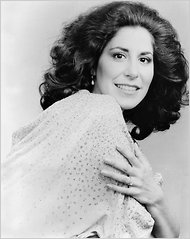
Later, I added Goodreads, Amazon, Shelfari, BookLikes, and Google+ as well as my Spanners Series page on Facebook as automatic recipient posting sites.

About twice a month, I utilize one of the images in each of my original content entries and put those posts on my Pinterest “My Blog Posts” board, which then automatically cross-posts to Twitter and Facebook, again.

Mostly due to these cross-posting, my Followers on Twitter, Pinterest, Facebook, LinkedIn and Goodreads have all increased dramatically. When I started my Blog, I was brand-new to Pinterest, Author Central, and my series’ pages, and mostly inactive on LinkedIn and Goodreads; and had only 7 Twitter Followers. Here are the Blogaversary comparison stats.

FOLLOWERS/LIKES/CIRCLES TALLIES, August 10, 2013 – August 10, 2014
(all links are on the right sidebar of my website)
Twitter 7 to 3441
Pinterest 0 to 208
LinkedIn 200 to 500+ (LI maxes out the count at 500)
Facebook personal 232 to 1438
Facebook Series page 0 to 937
Google+ personal 0 to 1301
Google+ Series page 0 to 29 (not much action, here; can’t get blog to cross-post)
Goodreads author page 110 to 1113
Amazon Author Central page 0 to 142

PAGE/POST VIEWS

My highest-ever number of views in one day was 197, spread around several posts and pages.

Month-by-month Views/Visitors:
Aug, 2013 = 114 (first day was August 10)
Sept. 200
Oct. 307
Nov. 528
Dec. 535
Jan., 2014 = 999
Feb. 1,144
Mar. 740
Apr. 580
(concussion/accident 4/6/14; offline a lot April – June)
May 830
June 872
Jul. 1,161
Aug.(to date) 326

Highest single-day Views = 197

Average Views/Day
for 2013 (5 months): 13
for 2014 (7 months): 30

Blog Posts
200 of my 357 posts (about 40 are reblogs) had 10 or fewer views. These include ALL of the Serialized Excerpts of my sci-fi series, Volumes I and II, most of the reports of these books’ reviews, and many others that I thought were more popular than that.

Freshly Pressed

One of my posts was featured on “Freshly Pressed,” the elite selection gleaned from among all daily blog posts, highlighted for that day in WordPress’ Blog Reader!

Views by Country
Views by visitors from 111 countries
Highest = USA, with 5,909
2nd = UK, with 484
3rd = Canada, with 354
4th = Australia, with 155
5th = Germany, with 128
6th = India, with 125
The rest are 60 or fewer; many are just 1 or 2, so far.

Highest page views were for my site’s main pages:
–ABOUT (my blog’s splash page), with 2,001
–the Home page’s Archives, with 1,703
The Spanners Series page, with 492

For individual posts, the highest number of views were for:
#Buddhism and #Science: the Facts, the Yogis, the Practices , with 232
My #Literary #Meh List 2014: 15 Plots, Devices, Characters I’m BORED with, with 205
Why My First Experience with Using #Pre-Orders Will Help Get My NEXT #Ebook Higher on #Best-Seller Lists, with 185
15 Points about the #Effects of #Concussions on #Meditators’ #Brains, with 160
Pros and Cons of #Writers’ Critique Groups, with 112
When #Spiritual #Teachers Respond with #Countertransference, with 110

Total number of comments (and half or more are my replies): 202

Setting aside the two posts with the most comments that were part of Blog Hops, the next-most commented-upon post was
15 Points about the #Effects of #Concussions on #Meditators’ #Brains, with 12

BLOGGING and BOOK MARKETING ASSESSMENTS

I learned a lot about how to assess my book marketing efforts from many people. I excerpt from PROMOTING MY BOOK , by Lee Gale Gruen, with my commentaries as to my progress/use of these ideas and link to Lee and her sites at the end of this section.
(I first saw this article posted in “Funds for Writers,” compiled weekly by the wonderful Hope Clark: http://www.chopeclark.com Thanks, Hope!)

I am therefore scoring myself on Book Marketing for my first two self-published ebooks according to Lee’s great list, below, of marketing tips and ideas. Let’s see what I learned!

Lee recommends these activities, below, and I agree:

  • 1. Read websites and books such as APE by Guy Kawasaki and Michael Kremer’s books. I also join and watch many free webinars, teleseminars, and Google+ Hangouts On Air regularly for more tips.
  • 2. Join writer’s organizations. Learn from your peers. I joined several here in California with great successes. I will be looking for writers’ groups/clubs in St. Louis in September. Any recommendations?
  • 3. Network at writers’ groups, conferences, online forums, etc. I’ve only been to one conference, so far, but may go to more. How are they worthwhile?
  • 4. Check writers’ websites, materials, author talk/book signings. Learn from their examples. I need to more of this but I do follow quite a few writers’ blogs and learn from their posts.

Lee also talks about “creating” one’s own marketing “tools,” and I get an A+, here! I’ve done them all and I hadn’t even seen this list prior to doing them!

  • 1. Have a website to refer interested people. I have that via my blog, http://www.sallyember.com
  • 2. Purchase your website name (domain) immediately. Thanks to my niece, Sarah Miranda, I did this right off! sallyember.com is MINE!
  • 3. Print flyers with your book cover, synopsis, photo, and bio to hand out at events. I have done this and gotten some new readers from it by handing them out at my writers’ groups.
  • 4. Get business cards. I got free ones from KLOUT, at first, then ordered almost-free ones from Vistaprint.com.
  • 5. Compose a cover letter to email to prospects. I have done this for, in my case, book reviewers.
  • 6. Post a video of yourself discussing your book on http://www.YouTube.com. I did this by accident: the Q & A for my Book Launch talk didn’t work, so there is a 2-hour monologue of me on my youtube channel. Also, 2 more vids of me reading chapters from each of my ebooks and book trailers are on that channel. Starting August 6, almost-weekly episodes from CHANGES, my Google+ HOA, are also there.
  • 7. Add an electronic signature to your emails with links to your website and video. I had done this, but then my son said a signature with many links after it is viewed as “spam” and “shouting” at email recipients, so I removed them. What do you think?

Lee’s advice for how to “Promote Yourself” caused me to realize how much I still have to accomplish here. The BOLD ones are TO BE DONE.

  • 1. Sell yourself as well as your book. Develop a useful message other than just “buy my book.” I mostly do this by curating interesting content and creating it on my blog, Facebook, Twitter, Google+ and LinkedIn. I also repost on some sites like Suvudu, StumpleUpon, Reddit, etc. I’ve also joined and interact with folks in a lot of Groups on Goodreads, Facebook, LinkedIn and Communities on Google+
  • 2. Give author talk/book signings.
  • 3. Volunteer to speak at book clubs, speakers’ bureaus, panels, etc. I have volunteered to some book clubs, but no invitations have arrived, yet.
  • 4. Mention your book in conversations using your “elevator speech:” a one-minute synopsis of your book with a hook to grab the listener. I don’t do this as often as I should, but I do it.
  • 5. Ask readers to post a review on Amazon and Goodreads. If I could find my readers, I would do this more! I wish readers could “opt in” to “author can find me” lists.
  • 6. Submit articles. I’ve been published in my local newspaper and my retirement newsletter. I want to do this.
  • 7. Join HARO (http://www.helpareporter.com) to submit yourself as an interview subject for writers and journalists. I’ve had 6 interviews and will be in an upcoming book. I’ve started my own Google+ Hangout On Air, submitted responses as an Expert on Quora and Ask an Expert, and am considering joining this org, next.
  • 8. Write a blog of interest to your target audience. http://www.sallyember.com is mine. Is it of interest?
  • 9. Look online for similar blogs. Submit guest blogs. Links to my guest posts are on my site. Look to the right and scroll down.

    guest-blogging-image

  • 10. Build an email address list. Email a notice of each appearance, blog, etc. I’ve been slowly building this list, but many commenters or followers don’t provide and I can’t find their email addresses, only Twitter handles or website URLs. How do I get email addresses without paying to get them via a service?
  • 11. Host a book giveaway on http://www.Goodreads.com. Goodreads still doesn’t allow ebook giveaways. SNOBS.
  • 12. Network or search online for professional reviewers. I submitted my book to http://www.midwestbookreview.com for small press publishers. I only do this when there is no fee. I refuse to pay for book reviews.

BIO: Lee Gale Gruen is an actress, author, speaker, and blogger. Her book website is: http://AdventuresWithDadTheBook.com. Her blog, “Reinventing Myself in My Senior Years” is at: http://LeeGaleGruen.Wordpress.com

My Overall Grade/Score for Year One in Blogging and Book Marketing

Well, I give myself an A+ for effort
I earned about a B- for effectiveness, I think (but it’s difficult to make comparisons since I don’t have others’ stats nor know their efforts).

If I’m going by the numbers of books sold (Volume II of The Spanners Series, This Changes My Family and My Life Forever, just went on sale June 9) or sold and downloaded since Volume I of The Spanners Series, This Changes Everything, went permafree on April 1 and went on sale December 19, 2013, the dates don’t jibe and the numbers won’t be impressive (to me, anyway). We all have Hugh Howey to thank for that, right?
Plus, even though I can get rankings or paid sales stats from some sites, I can’t get sales or free download numbers from all sites. So, the numbers below are not all-inclusive; they’re just what I can get. Here are the stats for book sales and downloads:

12/19/13 – 3/31/14 Sales and 4/1/14 –> Free downloads for
Volume I of The Spanners Series, This Changes Everything
66 books sold
2296 free downloads
(about 40 for reviewers)

6/9/14 –> Sales for
Volume II of The Spanners Series, This Changes My Family and My Life Forever
4 sales
4 free downloads
(all for reviewers)

I look forward to becoming more “visible” via this and other parts of my “author platform” in my second year blogging and being a fiction author.

Please comment and share your experiences! Best to you all!

Unknown's avatar

A mantra and mudra of compassion for all beings

We all need to pray, meditate, wish: whatever moves you, to try to get these morons and horrible leaders to STOP THE KILLING!

Unknown's avatarBlazing Light, Love's Song

Meditate every day for world compassion. We are one. Anyone’s suffering is all people’s suffering. War is possible because we are at war within ourselves. Bring compassion to each moment. This is the true power.

View original post

Unknown's avatar

Are Humans Superior Creatures?

Thanks for posting. I see Cetaceans as the most intelligent, or perhaps Cephalopods. Certainly NOT humans. Best to you.

jameswharris's avatarAuxiliary Memory

I believe the people of the future will look back on these times and judge us harshly, like we judge the people of the 19th century for slavery, colonialism, genocide and other atrocities those folks committed without any apparent ethical qualms.  They will see even the most liberal of us as heartless in our neglect of poor people, animals, the Earth and the environment.  I’ve always wondered how people like the abolitionists gained their insight to see beyond the ethical status quo.  There have always been a few people that were more empathetic than the common crowd, and I think they were the bellwethers of their times.  If you you read and watch the news carefully, there are always stories that portend the future of human kindness.  To change requires going against the tide of common opinion, and that’s hard.

We like to think humans are different from animals.  That…

View original post 924 more words

Unknown's avatar

5-Stars for Volume II of The Spanners Series on Goodreads!

John Betts’s review of This Changes My Family and My Life Forever, Volume II, The Spanners Series, from Aug 01, 14 on Goodreads https://www.goodreads.com/review/show/983982709?book_show_action=false&page=1

5 of 5 stars

Read from July 09 to August 01, 2014

I enjoyed reading this following on from book 1, book 1 give the groundwork so you really get into book 2 quickly and understand what is going on from the very beginning, if I had more time to spare, this is a book I would have read cover to cover non stop.

final cover print

Cover art by Willowraven

Thanks, John! More info about and links for author, John Betts, below.

Twitter https://twitter.com/JohnArthurBetts

LinkedIn http://www.linkedin.com/home?trk=nav_responsive_tab_home

Facebook page https://www.facebook.com/johnarthurbettsfantasyworld

Google+ https://plus.google.com/u/0/115539396811049169679/posts

Mia’s Legacy
http://www.amazon.co.uk/Mias-Legacy-John-Betts-ebook/dp/B00MDIQ0CE

The Twin Rings of Ra https://www.smashwords.com/books/view/327514

An Adventure of Bunny Bertie and Blueberry Elf http://www.amazon.co.uk/Adventure-Bunny-Bertie-Blueberry-Elf/dp/1784075965 and
https://www.smashwords.com/books/view/407885

Unknown's avatar

5-Stars for Volume II of The Spanners Series on Goodreads!

John Betts’s review of This Changes My Family and My Life Forever, Volume II, The Spanners Series, from Aug 01, 14 on Goodreads https://www.goodreads.com/review/show/983982709?book_show_action=false&page=1

5 of 5 stars

Read from July 09 to August 01, 2014

I enjoyed reading this following on from book 1, book 1 give the groundwork so you really get into book 2 quickly and understand what is going on from the very beginning, if I had more time to spare, this is a book I would have read cover to cover non stop.

final cover print

Cover art by Willowraven

Thanks, John! More info about and links for author, John Betts, below.

Twitter https://twitter.com/JohnArthurBetts

LinkedIn http://www.linkedin.com/home?trk=nav_responsive_tab_home

Facebook page https://www.facebook.com/johnarthurbettsfantasyworld

Google+ https://plus.google.com/u/0/115539396811049169679/posts

Mia’s Legacy
http://www.amazon.co.uk/Mias-Legacy-John-Betts-ebook/dp/B00MDIQ0CE

The Twin Rings of Ra https://www.smashwords.com/books/view/327514

An Adventure of Bunny Bertie and Blueberry Elf http://www.amazon.co.uk/Adventure-Bunny-Bertie-Blueberry-Elf/dp/1784075965 and
https://www.smashwords.com/books/view/407885

Unknown's avatar

What Makes People Buy Self-Published Books?

Who knew sampling would overtake covers, genre and anything else to consider for readers? Ebooks are now on an even par with print books for readers who access both, for sure!

Tara Sparling's avatarTara Sparling writes

In this post, I discussed the findings of a scientifically incontrovertible study (of myself) on the factors which influenced me when buying a self-published book.

The findings surprised me (which surprised me, because I was surveying myself). I found that I knew what made me buy a self-published book when it was in front of me, but not what put that book in front of me, unless I was browsing by genre (e.g. today I feel like reading a romance set in Ulaanbaatar: therefore I will now search specifically for such a story).

It was still hard to know what put those books in front of my eyes in order to buy them; to quote one of the commenters on that post – this is the thorny issue of “discoverability”. How will we find these books in the first place?

So I did the unthinkable, and asked some other people…

View original post 640 more words

Unknown's avatar

Nebula Nights A Science Fiction Romance Boxed Set

From my POV, ALL “romance” books are speculative/science fiction! LOL Check these out!

veronicascott's avatarVeronica Scott

NN_squareOver at the USA Today HEA blog, I’m interviewing ten science fiction romance authors (and myself) today on what we love about SFR and which SF hero is our favorite. I’ve been spending  lot of time with these ladies lately, not just because we all love to read and write SFR, but also because we’ve put together a boxed set of eleven stories. I have my award-winning, best seller Escape From Zulaire, as my contribution. The boxed set contains quite a mix of elements from cyborgs to aliens, space opera to adventure on alien planets.

Best of all, the set is priced at $.99! For over 800,000 words of  exciting SFR….

Here’s a quick synopsis for the included stories:

Her Cyborg Awakes by Melisse Aires
Her gentle cyborg servant helped her escape violence–but now he’s changed into a warrior! Is he safe?

Removed (The Nogiku Series, #1) by SJ…

View original post 370 more words

Unknown's avatar

*CHANGES* Episode 1 on Youtube Google+ HOA with Sally Ember and Shay West

Did you miss it? We had a blast! Catch the recorded version of my LIVE conversation on CHANGES with Dr. Shay West here. https://www.youtube.com/watch?v=lrjdj0S8AQo

or here: http://youtu.be/lrjdj0S8AQo

Shay West photo

Dr. Shay West http://shay-west.com

We talked about writing, biology, teaching, optimism, gratitude, epigenetics, horror, real-life medical horrors and community support as motivations for writing, writers’ groups, Google + Hangouts on Air, and more!

Next week, August 13, CHANGES welcomes Connie Dunn. 7 – 8 AM Pacific USA Time.

Tune in and get involved with your comments and questions, LIVE, or watch CHANGES Episodes later on YouTube.

If you are an author, philosopher, creative sort who likes free-wheeling conversations and wants to be on CHANGES, watch a show or two, then contact the host, Sally Ember: sallyember@yahoo.com and request a slot in October or beyond.

CHANGES occurs on most Wednesdays, but not all. Watch this space for schedule!

Are YOU ready for the CHANGES?

Unknown's avatar

*CHANGES* Episode 1 on Youtube Google+ HOA with Sally Ember and Shay West

Did you miss it? We had a blast! Catch the recorded version of my LIVE conversation on CHANGES with Dr. Shay West here. https://www.youtube.com/watch?v=lrjdj0S8AQo

or here: http://youtu.be/lrjdj0S8AQo

Shay West photo

Dr. Shay West http://shay-west.com

We talked about writing, biology, teaching, optimism, gratitude, epigenetics, horror, real-life medical horrors and community support as motivations for writing, writers’ groups, Google + Hangouts on Air, and more!

Next week, August 13, CHANGES welcomes Connie Dunn. 7 – 8 AM Pacific USA Time.

Tune in and get involved with your comments and questions, LIVE, or watch CHANGES Episodes later on YouTube.

If you are an author, philosopher, creative sort who likes free-wheeling conversations and wants to be on CHANGES, watch a show or two, then contact the host, Sally Ember: sallyember@yahoo.com and request a slot in October or beyond.

CHANGES occurs on most Wednesdays, but not all. Watch this space for schedule!

Are YOU ready for the CHANGES?