“Healing is Violent” is very much my life these days
I have been doing an intense amount of processing, healing and uncovering these last two years (ever since I stopped living with my elderly mom, where I had been for 9 and 1/2 years; she subsequently died about 5 months after we parted), moved to Seattle and started working with an amazing acupuncturist (email me or leave a comment asking for that referral!). It’s the first time in my entire life that I have had so little responsibility (retired and not caregiving anyone), such good physical health (gall bladder and uterus both gone, nerve-damaged leg mostly okay, other injuries not bothering me terribly), and time to work on the somaticizing (“Somaticizing or somatization is the conversion of psychological distress, such as anxiety, depression, or stress, into physical symptoms”) and psychological, interpersonal and psychosocial effects imprinted from multiple traumas incurred during my childhood and my young adult years.
Sure, many people have had and do have worse experiences and still suffer more than I do. I am very sorry for that and understand where I and my experiences fit in to the panoply of suffering in the world (somewhere in the low middle, I imagine). However, that doesn’t negate what I have endured and continue to be negatively affected by.
Therefore, I do endeavor to do the inner and outer “work” in order to live better, be more healthy, and be of more benefit before I die (I’m 71; no one knows how long I have left to live). I offer this post and my ruminations in case my experiences and ideas might support and encourage anyone else to keep going and do the healing work required to live better. Every little bit could help.
While cruising through Facebook and Instagram, I found the following ideas and quotes in several posts. The truth in them caught me by surprise, made me cry (multiple sources and versions; here are two, below), and I have shared them with friends and family ever since. So, here you go:
“Healing isn’t soft. It’s violent, in the most awakening way. Because nothing shatters you quite like realizing your entire personality was built on survival, that your calm was actually emotional numbness, that your strength and independence were born from having no one to lean on, that your high standards were fear, dressed up as control. “Healing is the grief no one talks about: mourning the version of you who did whatever it took just to feel safe, the you who adapted, endured, and stayed standing when no one came to help. “And the hardest part? Loving yourself enough to release that version of you, to thank them…and let them rest. “That’s when it all finally made sense.”
and,
“‘Healing is violent’ describes the painful, disruptive process of dismantling old survival mechanisms, ego structures, and traumatic patterns to create space for growth. “It is ‘violent’ because it forces a confrontation with uncomfortable truths, causing intense emotional release, grief, and the destruction of the person you once were to survive. “Key aspects of this concept include:
Dismantling Identity: Healing forces you to realize that many personality traits or behaviors were actually trauma responses, such as perfectionism, hyper-independence, or suppression.
Emotional Turmoil: The process involves intense ‘violent’ emotions, including deep rage, grief, and profound sadness as you process past experiences.
Physical and Mental Release: As the body and mind release stored trauma, it can manifest as extreme fatigue, anxiety, and disorienting discomfort.
Destroying the Old Self: It requires letting go of the coping mechanisms that once kept you safe, which can feel terrifying and destabilizing.
“This perspective challenges the idea that healing is a soft, gentle, ‘feel-good’ experience, emphasizing that true recovery requires breaking down before building back up.”
There is so much turmoil, awful events and governmental cock-ups going on here in the USA and globally that it seems petty and small to be talking about one person’s healing work. However, do you really think ANY of these situations would be occurring if the leaders and architects of them weren’t also victims of trauma and many ACEs themselves?
Unresolved trauma paralyzes and motivates people alternately, causing them to wreak havoc on themselves and EVERYONE around them, especially if they are mistakenly provided with the ability to affect many people, hoard and utilize resources, and marshal political power.
That is what we are witnessing and enduring every day here in the USA: very screwed-up people with too much power and too many weapons, given too much leeway. So, they are making many others miserable, ruining the environment, and destroying everything in their wakes.
As a Buddhist, I can have compassion for them, seeing their horrible choices and the extremely negative karma they are accumulating, WHILE condemning them all, and wishing I/we could stop them from doing more damage. As a feminist, Jewish, pansexual, partly disabled, very low-income senior, dependent on governmental services and funding to survive, I am terrified for myself and many others as things get worse all around me with more awfulness seeming to be closing in on us all.
“Think globally, act locally” must be our guide these days. Write letters, send emails, go to protests, support political leaders who aren’t as screwed up as the rest, be active and vocal about your wishes for everything to improve and the madness to stop.
Listen to and talk with friends on the journey. Support each other.
AND, do your own healing, as you are able. Got to put on your own oxygen mask before trying to put masks on others. Can’t save anyone if you drown first. Etc.
It can only make us more likely to be effective in whatever ways we attempt to be helpful if we aren’t still hauling around all the after-effects of our own personal trauma.
Notice, as we try to engage with others to stop the current administration and others from ruining our country and killing/harming more of us, how we are doing that. If we are inadvertently making it worse, STOP and regroup. It doesn’t help anyone if we spread more hate, anger or violence.
But, we can’t make an omelet without breaking eggs…. Change can hurt.
Do your own recovery work, and don’t expect it to feel “good.” Healing is violent.
If you like to sing, join a local nonviolent, activist group, Singing Resistance, near you (there are now hundreds of them around the country and world!): “Singing resistance groups, such as the Minneapolis-based Singing Resistance and the NYC-based Resistance Revival Chorus, use choral music, protest songs, and communal singing to challenge injustice, fight authoritarianism, and support social causes. These movements, often born from grief and, utilize nonviolent, high-visibility actions to foster solidarity.” Check them out: Singers (@singingresistance) • Instagram photos and videos and search for them locally on Facebook. They use the Signal mobile app for communication, and you have to ask to join. They are being careful, as you should, also.
If you like to protest, make signs, march, etc., find a local group to join or form your own. https://www.womensmarchfoundation.org/stopice# Today is International Women’s Day (March 8), so it seems fitting to base your activism here. This site has a lot to offer, and a state-by-state listing (scroll down).
#DoYou10Q? Rosh Hashona through Yom Kippur, September 22 – October 2, 2025
(#Jewish New Year High Holidays), Read, Respond, Review, Forecast
You don’t have to be Jewish or celebrate #Jewish High Holy Days (Rosh Hashona, Jewish New Year’s, and Yom Kippur, the “Day of Atonement”) to want to spend some time considering your life and your goals/ accomplishments each year. I was raised Jewish, but I am a practicing #Buddhist.
Again this year, the group running this event (http://www.rebooters.net/) has offered new AND the usual questions.
Check out any local Partners with 10Q: http://doyou10q.com/partners: Reach out to Josh Kanter, Reboot’s outreach and partnership manager, at josh @ rebooters DOT net or (go to the site for his phone number (in the USA)].<
You can respond to all 10 Questions from September 22 – October 2, 2025, online, and have them put into the “vault” for yourself for next year’s reflections.
10Q: “Reflect. React. Renew. Life’s Biggest Questions. Answered By You.”
The title and all the info, below, come from the 10Q site. Visit! Sign up! Do it! http://doyou10q.com/
“Answer one question per day [or more than one per day, if you have some to catch up on] in your own secret online 10Q space. Make your answers serious. Silly. Salacious. However you like. It’s your 10Q. When you’re finished, hit the magic button and your answers get sent to the secure online 10Q vault for safekeeping.
“One year later (September 21, this year), the ‘vault’ will open and your answers will land back in your email inbox for private reflection.
“Want to keep them secret? Perfect. Want to share them, either anonymously or with attribution, with the wider 10Q community? You can do that, too.
“Next year, the whole process begins again. And the year after that, and the year after that.
“Do you 10Q? You should. If you have, already, enter the “giveaway” by sharing one or more experiences and using the hashtag, as directed:
Is there something that you wish you had done differently this past year? Alternatively, is there something you’re especially proud of from this past year?
Your Answer:
I am very proud of becoming an on-site grandmother in Seattle/Burien for my now 18-month-old granddaughter and a support for my son and his wife. I gave them the gift of a date night (FIRST ONE since the birth) this past weekend, for her 41st birthday, and now they want to do that monthly or even more often. I already come weekly, every Friday, to babysit while my DIL attends professional meetings and catches up with her work-life. So glad and grateful to be here. My granddaughter knows me, loves me, is excited to be with me, and doesn’t even miss her parents much while I’m there. Fantastic!
7.
How would you like to improve yourself and your life next year? Is there a piece of advice or counsel you received in the past year that could guide you?
Your Answer:
Want to obsess less, perseverate less, be less attached to the wrong person/circumstances.
Also, keep losing weight and getting healthier, recovering from trauma, swimming.
For those of us over 70 (71 for me today, 8/22)… What to let go of…
How to spend my birthday? What to blog? How to live the next year(s)? These are my considerations this week. In my search, I found this video (below) and it became the inspiration for today’s entry and this year’s birthday post.
I am not a fan of long-winded, repetitive videos (and this film is both); and, the title is weird (not appropriate). But, the advice is excellent, so I summarized the key points, below.
The narrator explains each “truth” and gives examples, some seeming case studies, and many platitudes. You can watch/listen after reading the list (or before). You may find it kind of comforting. You can also fast-forward (love that!).
I decided to “grade” myself (how am I doing so far, since I am now an entire year past 70?), and my scores are below. I used a 10-point scale for each recommendation, with “1” being “I haven’t done it at all or even started,” and “10” being “I am acing this one.” So, possible best score is 80. I earned a 53, so far. Check in next year!
“8 Buddhist Truths to Let Go of After 70 – For a Lighter, Happier Life”
My ScoresTOTAL: 53 Let go of…
…the belief that there is nothing left to learn. 10 (still learning, frequently)
…toxic relationships (without guilt). 9 (took some big leaps this past year)
…clutter (internal and material). 6 (good materially; need help internally)
…the fear of aging. 8 (fear of disability more than aging, but…)
…expecting others to make you happy. 9 (doing very well, here)
…comparing yourself to the young. 5 (mostly, to my younger self)
…regret (forgiveness is key; it lets us remember without the poison/recriminations). 3 (still harping on regrets and not big on forgiveness)
…the lie that it’s already “too late.” 3 (I have given up on too many things, perhaps)
For me, part 8 of the video was the best. It starts at minute 31.14. Worth a listen, if only to that 6+ minutes. Many gems in that section.
Basically, if you’re still lucky enough to be alive AND still be capable of rational thought, have most of your faculties/abilities and some ease of circumstances (sufficient food, shelter, companions, safety/peace, value to your life, bearable pain/suffering), stop complaining and enjoy the time you have left.
Be of service. Be of benefit. Do something useful regularly. Follow the advice in this video: it’s good advice, even if you’re not a Buddhist.
My mom, at age 90, above, was born Carole Anne Cytron in Louisville, Kentucky, USA, on April 27, 1932, the fourth child (third living) of her parents, Mildred (Mimi) Klein Cytron and Stanley Cytron. Her family moved to St. Louis, Missouri, when she was twelve.
She first married my father, Ira Fleischmann, of St. Louis, Missouri, where they mostly lived, in 1952, and began having their four children in 1953, starting with my brother, Jonathan, then me in 1954, then had a couple of miscarriages before having my middle sister, (Wendy) Ellen, in 1960, then a few more failed pregnancies before ending with my youngest sibling, Lauri Anne, in 1965.
In 1971, she finally threw my abusive, adulterous, lying father out of our house and divorced him in 1973. He had two other marriages after theirs and died suddenly at age 60 of a heart attack. She supported each of us in that grief and hosted us for the funeral and shiva (mourning week) times, even attending the funeral herself.
After being single for about ten years, she married Sylvester (Les) Harris, and she stayed with him until his death in 2000, at age 72. They enjoyed gambling and going to Las Vegas, which they did many times when he was well enough to do that.
She was a talented poet/lyricist/playwright who wrote many parodies and shows for fundraisers and political candidates while raising her children and after that. She also was a great dancer (chosen to do a ballroom dance demo while still in high school at a fancy hotel, the Chase Park Plaza, in midtown St. Louis), could still do cartwheels after having three children, and went to almost all of my and my siblings’ sports and performance events.
Not a great piano player herself, she made sure we each had music lessons (drums for my brother and piano for my sisters and me). She also sang a lot to us and around us, something we all do, still. She played fun record albums on our stereo turntable, and the radio was usually on if the TV was not.
She didn’t much like cooking, but she was a passable cook, a great shopper and excellent planner for large family meals and regular dinners while she was able. Unfortunately, she was ill for most of my adolescence, having been forced to have an unnecessary hysterectomy which put her into early menopause in her mid-thirties and sent her into chronic pain and depression. She gave me cooking lessons and instructions from her bed, which I followed and I made most of the family meals from age 12 to almost 18. Once she got better, she returned to having large family meals, especially when her far-flung children would come “home” for holidays, weddings, funerals and other occasions. Her blueberry cake was legendary, and she would make it every year. She loved to see people enjoy being together, laughing and eating.
Her favorite group pastime was to play games, and the Hearts game (often with two decks, since we numbered so many) became a tradition of after-dinner gatherings for decades. Laughing until we peed or coughed, shouting, taunting some into tears, and accusations of cheating and slamming cards on the table were regular occurrences at these rousing games of at least 5 and sometimes 10 players. She usually won! We also played Cribbage, Spite and Malice (cutthroat double solitaire), Scrabble, and Go Fish (for the younger ones) regularly with two to five people, which still involved much laughing, shouting and some crying. She made a point of playing whatever games anyone wanted to play, with grandchildren and great-grandchildren, until she couldn’t any longer. She loved to teach each new one the rules and see them get better. It was a milestone in each of our lives if we could ever beat her at any of these games (rarely!).
For decades, until she was unable to do it any longer, she would spend months and many dollars to purchase or acquire gifts for EACH of us and EACH of her 12 grandchildren EACH year for all 8 nights of Chanukah (and MAIL BOXES across the country as needed), even if one gift was a pair of socks or a pen. For her decades of being a marketing purchaser for Seven-Up, Phillip Morris, and other companies, she had lots of free swag and “bribes” she accumulated each year that she could offload to us as well. We got beach towels with Snoopy or Joe Camel on them, Seven-Up toy trucks, real phones that looked like a soda can, emblazoned sunglasses, T-shirts and sweatshirts with casino logos, imprinted mugs and glasses, branded coasters and tableware, and so much more.
She had her group of “girls” with whom she played mah jong and canasta for decades, until, one-by-one, they each died, went into nursing care, moved to Florida, or became too infirm to play. Until age-related macular degeneration (AMD) took most of her eyesight and COVID removed her from playing these games, she had been playing mah jong four times a week, well into her 80s. She and one other mah jong friend, known from her junior high days and ever since, were the last ones standing right before she died.
When she could still do it (and we got her many assistive devices, but they all eventually weren’t helpful enough), she read or listened to many books per week her entire life. She took me and my brother to get our library cards when I was 3 and he was 4, and I have used the library ever since, as did she. She also liked to guess the Sunday Puzzler answers along with (BEFORE) the live contestant on the NPR Weekend Edition radio show, hosted by Will Shortz.
From all her reading, she could use her wide-spread knowledge. We watched Jeopardy together most nights and she would call out the questions to answers from many categories. When she could still see, she loved Wheel of Fortune and usually got the clues way before the contestants.
She would get me to watch her beloved St. Louis baseball Cardinals when the games were on early enough (I go to bed early) and narrate what she couldn’t see any longer, since the TV hosts were AWFUL at saying what was actually happening in the games. We would also watch many TV crime, medical, and other drama shows together (she got me in the NCIS, Blue Bloods, Chicago, and FBI series), and many other specials and awards shows we liked to comment on as we viewed them. I got some great DVDs from the library and we would watch those when the shows were in reruns.
Mom, a few weeks before she died, at 92.
I miss her smile, her laugh, her kindness, her cool under pressure, and her generosity. She was always available to listen to anyone who called, even the repetitive ones (and many of her friends were such). She had more patience than I could even imagine having.
She and I share our VERY short stature (she got down to 4’6″; I am down to 4’10”), love of reading, games, music and singing, certain movies and TV shows (we watched together a lot while I lived with her for the last 10 years of her life). I wish she were still here so she could have met her 13th great-grand and my only grandchild.
Luckily, we made over a dozen videos when she was still feeling good, the two of us singing and doing hand motions, reading poems, and talking to the camera for my granddaughter, who recently has been watching them with me and loving them. She now “knows” Mama C (as her grands and great-grands knew her), which I am so grateful for.
Here is one: This is the two of us singing a melody she wrote for a Robert Louis Stevenson poem from A Child’s Garden of Verses, The Swing. It’s one of my granddaughter’s favorites, and she asks me to sing it every time I am pushing her on a swing. Thanks, Mom.
I am putting flowers all around you this week, Mom: violets, irises, lilacs, tulips and roses, all your favorites. I also planted purple irises in the garden I have here, the Mama C Memorial Garden, which will bloom next year, near the tulips.
Not too late for #DoYou10Q? Rosh Hashona through Yom Kippur, October 2 – October 12, 2024 (#Jewish New Year/ High Holidays),Read, Respond, Review, Forecast
You don’t have to be Jewish or celebrate the #Jewish High Holy Days (Rosh Hashona, Jewish New Year, and Yom Kippur, the “Day of Atonement”) to want to spend some time considering your life and your goals/ accomplishments each year. I was raised Jewish, but I am a practicing #Buddhist.
In the last 8 months, I have even more than ever to be grateful for and take none of this for granted: —I am an onsite grandparent! I got to meet my granddaughter in May, 2023, and again in November; then, I moved to Seattle in March, 2024; —My mom celebrated her 92nd birthday in Los Angeles, where she was moved in February, 2024, but passed away in July; —I marked my 70th with “no fanfare (my choice)”70 for 70.” Check out my blog for details; —KAMALA! TIM!
Again this year, the group running this event (http://www.rebooters.net/) has offered 10 important reflective and predictive questions. These are only available through October 12 or 13, so get going!
You can respond to all 10 Questions from October 2 through October 12 (and a day or so afterwards), online, and have them put into the “vault” for yourself for next year’s reflections.
10Q: “Reflect. React. Renew. Life’s Biggest Questions. Answered By You.”
The title and all the info, below, come from the 10Q site. Visit! Sign up! Do it! http://doyou10q.com/
“Answer one question per day [or more than one per day, if you have some to catch up on] in your own secret online 10Q space. Make your answers serious. Silly. Salacious. However you like. It’s your 10Q. When you’re finished, hit the magic button and your answers get sent to the secure online 10Q vault for safekeeping.
“One year later [a few days before Rosh Hashona, so, October 1, 2024, this year], the ‘vault’ will open and your answers will land back in your email inbox for private reflection. [The Hebrew lunar calendar has 13 months, so you can’t go by the Western calendar’s “year.” If you sign up, the site will send you a reminder and an “opening the vault” day email.]
“Want to keep them secret? Perfect. Want to share them, either anonymously or with attribution, with the wider 10Q community? You can do that, too.
“Next year, the whole process begins again. And the year after that, and the year after that.”
Here is one of my 2023 questions and responses, from the Vault:
6.
Describe one thing you’d like to achieve by this time next year. Why is this important to you?
Your Answer:
I would like my plans for moving to the Seattle area in 2025 to become more clear [I moved here in March, 2024!] …. I want to be close by to help my son and his wife with my granddaughter and have her know me well before I die.
As some of you know, I embarked on my “70 for 70” activities on the ramp-up to my 70th birthday on June 13, so this is my tenth (FINAL) Weekly Report on those activities. Please read the previous posts for details on each week’s activities.
I hope you’re considering doing something similar or supporting what I do by leaving comments, encouragement, applause…. If you want to send money, use PayPal and I’ll donate it. The button is on my cover page of this blog: http://www.sallyember.com
May all beings benefit.
August 16 Found out I am moving into the apartment I most wanted on September 4! Started the moving change-of-address process by registering to vote for the USA national election and state/local elections here in Washington at my new address (already voted in the primary August 6 by mail for local elections)! VOTE BLUE!
August 17 Yesterday (Saturday) I did some grocery shopping for the household so that my housemate didn’t have to do it (she doesn’t like doing it). I made sure to get things each of her daughters and she would like.
August 18 Today, the older daughter returned after being with her dad for a week. The younger one is at overnight camp until Wednesday afternoon, so the older one and I got to spend the evening together today while her mom was at a social gathering/concert with some friends. I made her food she liked and we had some interesting conversations on topics she was glad to talk about; we had fun.
August 19 Short women get wet blouses/shirts in public bathrooms (and private ones, too) when we wash our hands or use the sinks because the previous users of the counters and sink do not wipe them down/dry them off. I did the wipe downs in three bathrooms today. Today, at a doctor’s office, a young Resident (student doctor) was part of my intake. He wanted me to call him by his first name. I refused, explaining my reasons: A) he had earned that title; B) some people would feel uncomfortable calling him by anything else; C) he needed to own what he was to “grow into it”; and, D) it was his duty to be fulfilling that role to help people trust him. I insisted he call me “Doctor Ember” to demonstrate. I called him “Doctor” from then on. I know I did him a huge favor, even if he doesn’t know it, yet.
August 20 Two more days until I turn 70. I am leading one of our Buddhist group’s Saturday sangha Zoom sessions with this topic (doing good deeds before one’s birthday), so today I compiled all these posts into one document to prepare for that leading (for August 31, since I have another appointment on August 24). I hope learning about this project inspires others to do the same.
August 21 Today and last night I managed to put my housemate’s children’s clothes from camp and the week into and through the laundry late last night and early today so she could go to the doctor and rest. She has had a respiratory virus (not COVID or RSV) and a nasty cough from it that won’t quit.
August22— MY 70th BIRTHDAY! May all beings who need comfort, shelter, love, safety, food, friendship and employment find and have what they need and maintain it as long as they need it.
As some of you know, I embarked on my “70 for 70” activities on the ramp-up to my 70th birthday on June 13, so this is my ninth Weekly Report on those activities. Please read the previous and upcoming posts for details on each week’s activities.
I hope you’re considering doing something similar or supporting what I do by leaving comments, encouragement, applause…. If you want to send money, use PayPal and I’ll donate it. The button is on my cover page of this blog: http://www.sallyember.com
May all beings benefit.
August 9 Went to babysit my granddaughter today and agreed to come back tomorrow so my DIL can get more personal time, since I have the use of my housemate’s car, which cuts the travel time by 1/3.
August 10 Today I avoided at least 3 car accidents. You’re welcome, strangers. In a driver’s ed/”Defensive Driving” class I had to take for a job many decades ago, this mandate stuck in my mind and has become a guiding edict/metaphor for many of my life’s choices: “The person who has the last clear chance to avoid an accident is OBLIGATED to do so.” Words to live by.
August 11 Doing extra cleaning up in preparation for my housemate’s return from her family trip/vacation later today. Shopped for produce today at the local small produce market to help them stay in business.
August 12 Made some extra seafood salad yesterday and left some for my housemate, then brought a container to my acupuncturist, because he’s great. And, even though I wanted privacy, at the gentle (NO PRESSURE, really) request of my acupuncturist, I agreed to let a recent graduate of acupuncture college observe the intake/check-in part of my session today. As a trade, my doctor then did not let him return for the rest of the session, and I got to have the private parts (the actual two-part treatment) with just the two of us. Perfect.
August 13 Took the local county public transportation survey online to help them assess their services AND enter for a chance to win a $100 gift card! There was no place to put comments, so I also signed up to be contacted if they want more info from me.
August 14 Attended a volunteer orientation last night on Zoom for the local Vietnamese community Today, I filled out their forms to become one of their ESL/EFL or other instructors, help with grant writing or other nonprofit admin (all of which I have extensive experience in), or other things I could do, for after I move in to my new place in September.
August 15 I explained the “one bus away” metro bus system texting and app for finding out exactly where the awaited bus is at any given moment, and the next several as well, to people at my bus stop today. They were happy to find out about both.
As some of you know, I embarked on my “70 for 70” activities on the ramp-up to my 70th birthday on June 13, so this is my eighth Weekly Report on those activities. Please read the previous and upcoming posts for details on each week’s activities.
I hope you’re considering doing something similar or supporting what I do by leaving comments, encouragement, applause…. If you want to send money, use PayPal and I’ll donate it. The button is on my cover page of this blog: http://www.sallyember.com
May all beings benefit.
August 2 Shared the playlist I made on Spotify for grieving the loss of my mom with my youngest sister (the only one I am currently speaking to among the 3 of them). She was grateful.
August 3 Cleaned the shared bathroom, stovetop/range, sinks, microwave, refrigerator door/handle. Emptied toaster crumb tray. Took trash, compost and recycling to bins. Filled, ran, and emptied dishwasher. Made shopping list. All is prepared for their return tomorrow.
August 4 Heading down to see my son, DIL and granddaughter because one of my nephews is visiting from LA. Before going, since my housemate let me use her car while she was gone, I did almost all the grocery shopping for them (and me) since I know she doesn’t like to do it and I do like to do it. While at one of the stores, I helped someone pick out a better bargain for toasted sesame oil at the Asian Market.
August 5 The girls I live with and their mom were all jet-lagged/exhausted and on different schedules than usual this morning. I get up early, anyway, so I made the girls’ breakfast and spent time with them to let their mom sleep in a bit (the girls came in from Europe Saturday and aren’t on Pacific time, yet).
August 6 The dental clinic student who is seeing me this week texted that she has to change our appointment due to her mis-handling her schedule. She knows that this has happened to me with this clinic’s other students several times in the last few weeks and apologized, but she didn’t have a choice, she said. I was not happy, but I agreed to change my appointment (even though I asked her to change someone else’s instead). It’s HUGELY inconvenient for me and I don’t know when we can reschedule, I told her, but it didn’t matter. Bummer. I didn’t tell her how mad I was. That was my good deed.
August 7 Helped my housemate and her two daughters get ready for and off to their next airplane trip/vacation to a family reunion in California. Cleaned the kitchen last night and this morning, helped the girls choose travel clothes and did their laundry to help them pack yesterday, and today and yesterday, made one of them breakfast.
August 8 Listening to podcasts on Spotify (free account) related to healing from/surviving trauma, getting trauma out of one’s body, using one’s abilities and gifts to help heal oneself and others. Great Episodes. Left some appreciative comments, which I know podcasters treasure.
As some of you know, I embarked on my “70 for 70” activities on the ramp-up to my 70th birthday on June 13, so this is my seventh Weekly Report on those activities. Please read the previous and upcoming posts for details on each week’s activities.
I hope you’re considering doing something similar or supporting what I do by leaving comments, encouragement, applause…. If you want to send money, use PayPal and I’ll donate it. The button is on my cover page of this blog: http://www.sallyember.com
May all beings benefit.
July 26 Babysat for my granddaughter again today (LOVING THIS) so my DIL could attend her online work meeting.
July 27 When I did my laundry this morning, I also did the “house” laundry, since my housemate is not here much these weeks due to work and personal travel commitments. Also, hard-boiled some eggs for her to take “on the go,” as she loves to do.
July 28 Made a lot of marinated veggie salad for me and my housemate (she really likes this) for the week (cukes, tomatoes, red onions, homemade dressing). I may bring some on Monday to my medical appointment to share with the office people, since she is going to be out of town again Thursday – Saturday.
July 29 Had a housing application paperwork meeting with an assistant housing manager of a large, all-ages, low-income apartment complex in a terrible location that has openings for vacant studios that are a lot larger than the one I might get in Pike Place. However, I probably won’t live there, mostly because it’s unwalkable (very steep hills all around it), too close to the freeway (polluted, noisy), and has many very unstable people living there. Also, I am required to accept the first place I am offered (low-income, subsidized housing rules), and, luckily, the one I most want was also the first one offered. Crossing fingers it comes through. She was quite helpful and very nice. Brought her some dark chocolate with nuts because “doing paperwork should be sweet.” She was very pleased.
July 30 First full appointment (cleaning, x-rays, exam) at dental clinic (couldn’t find a dentist who took my insurance). Students do almost everything and it all takes longer, but very inexpensive and not far away. Lucky they exist here, or I’d have no dental care at all. Complimented and thanked each student, giving them positive and constructive feedback as much as I could along the way. They seemed pleased.
July 31 Went to babysit my granddaughter today since I can’t come Friday due to doctor’s appointment and DIL invited me to come today.
August 1 I meditated most of the day, to benefit all beings.
As some of you know, I embarked on my “70 for 70” activities on the ramp-up to my 70th birthday on June 13, so this is my sixth Weekly Report on those activities. Please read the previous and upcoming posts for details on each week’s activities.
I hope you’re considering doing something similar or supporting what I do by leaving comments, encouragement, applause…. If you want to send money, use PayPal and I’ll donate it. The button is on my cover page of this blog: http://www.sallyember.com
May all beings benefit.
July 19 Babysat granddaughter again this morning so her mom could get some things done in her office. Very delightful. Before I got to my son and DIL’s house, I went swimming at the local pool, again. While there, I got the lifeguard to do two things for others: put the stairs in (instead of the installed ladders, they’re easier ways for exiting and entering the pool for many of us; they’re are portable and not always “in”), and turn the music down (it was horribly and unnecessarily loud) so people talking to her or each other could actually hear one another. Soon after the stairs were put in, two women came who definitely needed them but didn’t speak much English. I was glad I had asked for the stairs before they got there. Several others thanked me for getting the music turned down. If so many wanted it that way, why am I the only one who asked for lower volume?
July 20 My housemate comes home today to pick up her car, then drives to her ex’s to take their kids and him to the airport. I parked right in front of the house, left the door unlocked and the inner door open, because she’s always running late and in a hurry. I also made some seafood salad that she can gobble down before she leaves because she needs food with protein and doesn’t usually have anything planned or prepared, nor does her BF usually feed her very well (although breakfast is usually his strong suit, so we’ll see).
July 21 The buses weren’t stopping at several of the regular stops today due to Sunday’s road construction, and the only signs about it at the usual stops were posted in English only. Some non-English speakers at the stop I usually use weren’t understanding the situation. I don’t know what language they were speaking (sounded African or Middle Eastern to my untrained ears), but with gestures, facial expressions and body language, I managed to convey the detour information to them. They followed me to the substitute bus stop successfully.
July 22 Today I made and purchased some food that I knew my housemate would like because she’s in-and-out for just one day and then travels again tomorrow. I am also helping her set up her schedule for when she returns and her kids return from their vacation. I may drive her to the airport tomorrow as well.
July 23 Gave my housemate a ride to the airport and postponed my swimming time to do that. That lets me keep her car, which she often lets me use, for which I am very grateful. I will stock up on food while she’s gone, getting ready for her return and for her daughters to come back in another week as well.
July 24 Read up on the candidates for the Washington State primary elections and marked up the information booklet so my housemate (whose politics are in alignment with mine) can review it quickly and vote (we vote by absentee ballot) when she returns. No presidential candidates on this ballot; only state and local positions. Ballots are due August 5.
July 25 I had the first massage in several months today at a local place I had never been to before. The massage was great, not too expensive, and at a nice atmosphere. I tipped 20%. I also left a positive review on Google and Yelp.
As some of you know, I embarked on my “70 for 70” activities on the ramp-up to my 70th birthday on June 13, so this is my fifth Weekly Report on those activities. Please read the previous and upcoming posts for details on each week’s activities.
I hope you’re considering doing something similar or supporting what I do by leaving comments, encouragement, applause…. If you want to send money, use PayPal and I’ll donate it. The button is on my cover page of this blog: http://www.sallyember.com
May all beings benefit.
July 12 Today I babysat my 15-month-old granddaughter so her mom could attend a professional meeting online, as I have been doing every Friday since late June, and I am so delighted to be doing this. She is a treasure. I also made some food to bring Monday: more meals for my wonderful healthcare provider, a gifted acupuncturist who has proven repeatedly that I am extremely fortunate to have found him and be working with him to heal old, physically stored traumas, and be currently healthier, both.
July 13 Talked with a long-time friend on the phone today about my mom’s passing, her mom’s failing health, her great adult children and their upcoming plans, and lots of other things. Great to catch up. Sent her some book and other recommendations afterwards.
July 14 Spent a lot of time on the phone last night and in a video call today discussing next steps and offering my experiences/advice for a friend’s friend’s career/job/possible live-in positions, and then got on to some very interesting topics and intersecting life experiences. May have made a new friend!
July 15 Brought the food I made (as part of my mourning period and good deeds) to my medical provider today, which should be enough for at least 2 and maybe 3 meals. Tuesday is the “long” day in which I fed him last week and he was very grateful. I hope he likes this week’s offerings. I won’t be seeing him for two weeks, next, and probably won’t bring food unless he requests it.
July 16 I have been spending a lot of time alone these last two weeks, with my housemate and her kids out of town. Doing my meditations, swimming, cooking, resting, and, mostly, grieving. Today, at the pool, someone was seemingly having a hard time, sitting on the stairs and looking very flushed. I asked her if she was all right, and she said she was, but then she wanted to talk. I listened. Turned out, she had recently suffered a loss. Her story brought me to tears and let hers flow. I explained my recent loss, and we bonded for a few minutes, two strangers, in grief and connection as humans. Sweet.
July 17 My son and his wife invited me to spend the day with them so I wouldn’t be alone all week, grieving, and I very much appreciated that. So, I went to their place after swimming in their local pool (one I used to swim in often when I visited them from Missouri). My granddaughter is now 15.5 months old, and has suddenly (really, suddenly) gone from being a baby to being a toddler. She looks and acts so differently from just a few days ago. My DIL said this happened “over the weekend”! I was there last Friday, so from then to today is only 5 days! Amazing. We had a great time together, just the two of us and with her parents, reading books, singing, dancing, playing with her toys, eating, walking around her house and on the beach at the park nearby, with lots of laughing, which is healing in itself.
When I was getting ready to leave, I told her “I love you,” and she said it back and gave me a hug! Sweetest, ever!
July 18
My housemate is coming back late tonight, and called me a few days ago to ask me to put her hiking boots outside for her BF to pick up on Friday. Somehow, I knew he would come sooner, so I put them out before I left yesterday. Sure enough, she called after I was already with my family to ask if I could put them out since he would be dropping by to get them Wednesday. “I already put them out,” I told her, “since i’m not there today.” She was relieved. Today, I am cleaning up the house (already cleaned the bathroom), giving the refrigerator and kitchen and the living room (when they left, it was somewhat chaotic) a bit more attention, for her return.
As some of you know, I embarked on my “70 for 70” activities on the ramp-up to my 70th birthday on June 13, so this is my fourth Weekly Report on those activities. Please read the previous and upcoming posts for details on each week’s activities.
I hope you’re considering doing something similar or supporting what I do by leaving comments, encouragement, applause…. If you want to send money, use PayPal and I’ll donate it. The button is on my cover page of this blog: http://www.sallyember.com
May all beings benefit.
July 5 Went to my son and DIL’s home to babysit my granddaughter again today. So happy to be doing that! For this week’s session, my son had called Wednesday to ask if I could stay longer so they could get some renovation work started in their home. I gladly agreed and was there most of the day today.
July 6 My housemate and her children are going on a vacation/family reunion trip Monday. While she went to exercise, I helped them both pack and do their household chores. Left her a list of what she needs to do to finish their packing. She was extremely relieved and grateful.
July 7 Our mom took a bad fall, broke her leg, and is in the hospital in Los Angeles since Friday night. She is now quickly deteriorating and may not survive (she’s over 92). Early Sunday, I asked the floor nurse to get someone to hold the phone up to her working ear and talked to her. She couldn’t talk since she had an oxygen mask on, but they said she gave me a thumbs up twice. I’m so sad. She went into a coma and palliative care by mid-morning. By early evening, they were reducing her oxygen and increasing her morphine so that she could die without stress. It’s what she had said she wanted. She died at 10:15 PM today: three 7’s. She got her lucky numbers on purpose.
July 8 Dealing with my mom’s passing yesterday and my housemate’s and her children’s leaving this morning on their 2-week vacation. Letting friends and family know about Mom. Helping get the family here off to the airport. Crying intermittently, but generally all right. I swam today for the first time in 10 days since I had a small biopsy (NEGATIVE) done and couldn’t immerse for that period of time. Felt so great to be back in the pool, especially today (VERY HOT for Seattle; 90 F–ish peaks for a few days, now). Spent a lot of time on the phone with some grieving people.
July 9 I spent a lot of time preparing, then delivering some great chicken salad to a medical provider I saw today because I’m very grateful to him. He said he had a very full day on Tuesdays and hardly any time to eat and was very pleased I had brought him some food.
July 10 My youngest sister created a playlist for our mother’s funeral service today with some songs I suggested and Mom had loved. I thanked her and told her it was perfect. I called some people Mom had been friends to tell them about her passing and her funeral, in case they hadn’t heard, but they all had. Today, I posted the funeral info and a photo of the two of us on Facebook and that informed more people, so I think “everyone” knows who needs to know, by now. Funeral is today at 2:30 PM CDT at the graveside only. I’m attending via Zoom.
July 11 Since I was the only immediate family member to attend via Zoom, I “hosted” and coordinated the arrivals and introductions yesterday. I also sent a list of who attended to my youngest sibling for the records. Today I cried a lot and also talked with her. At the pool, I allowed someone to go ahead of me and get a lane. Usually wouldn’t do that, but my mom would have….
As some of you know, I embarked on my “70 for 70” activities on the ramp-up to my 70th birthday on June 13, so this is my third Weekly Report on those activities. Please read the previous and upcoming posts for details on each week’s activities.
I hope you’re considering doing something similar or supporting what I do by leaving comments, encouragement, applause…. If you want to send money, use PayPal and I’ll donate it. The button is on the cover page of this blog: http://www.sallyember.com
May all beings benefit.
June 28 I babysat for my granddaughter yesterday for the first “official” time, so that her mom could attend an online meeting in the home and her dad could work at home as well. We did great together! I am so happy to be included in her/their lives this way; it’s the main reason I moved to this area. Full heart. I am doing this every week, most weeks, for the summer and perhaps beyond.
June 29 I did some chores that weren’t “mine” yesterday and today to help out my housemate. She has been so generous to me, I want to be helpful wherever I can.
June 30 There are many ways that I have had an unusual life, and most people know nothing about me, especially where I’m now living. Deciding what to tell, whom to tell, when to tell: are these “good deeds,” or what are these decisions? I have been putting myself into a tizzy trying to figure all this out, but I am trying not to overwhelm people or tell them anything they might be uncomfortable knowing. Maybe trying to be super-considerate is a “good deed”?
July 1 While my housemate was away yesterday and today, I did some “house” laundry, which I did not have to do. Washed, dried, folded, and put away (when I could do that alone; some items are stored too high for me to reach).
July 2 On the bus today, two tourists were sitting in front of me turning an actual paper map as well as their phone’s GPS every which way and looking confused. I leaned forward and asked if they’d like some help. They readily agreed, and I was able to point them to the bus stop and location they needed. I got to see them get off and walk to their location (right next to the bus stop) before I got off.
July 3 Did housemate’s children’s and house laundry along with my own while they’re away. Clean sheets: so great!
As some of you know, I embarked on my “70 for 70” activities on the ramp-up to my 70th birthday on June 13, so this is my second Weekly Report on those activities. Please read the previous and upcoming posts for details on each week’s activities.
I hope you’re considering doing something similar or supporting what I do by leaving comments, encouragement, applause…. If you want to send money, use PayPal and I’ll donate it. The button is on the cover page of this blog: http://www.sallyember.com
May all beings benefit.
June 20 Happy Solstice (summer or winter, depending on where you are)! Today I helped my housemate get her children’s lunches ready for school, spent time with them at breakfast, and kept them on track to leave on time while she was getting ready to go herself. The older one gets promoted from elementary school to middle school today and I guess that is now a big deal. The younger one (finishing 3rd grade) seems a bit envious of all the attention her older sister is getting, so the rest of us are giving her some extra squeezes these days. RANT: Unlike when I was young, or even when my son was in school prior to the millennium, there are now elaborate “promotion” ceremonies, “graduations,” and other celebrations for almost every school transition these days. Sheesh. That’s just too many times to be “honored,” IMO, merely for getting older and going to school as planned. I think it loses all meaning when pre-schoolers and everyone else have a “graduation” or some similar ceremony almost every year. Rant over.
June 21 I spent a wonderful morning with my amazing granddaughter in order for my DIL to begin to trust me with her, and for my granddaughter to get familiar enough with me to happily let me stay with her while her mom and dad (my DIL and my son) are both working in the house. We had a BLAST! The plan is for me to come almost every week and spend about 100 minutes alone with her. I am so happy to be doing this; it’s the main reason I moved to Seattle! I have to travel about 90 minutes each way and take two buses to get there and get home. Totally worthwhile.
June 22 Plans with my housemate’s daughters changed due to one of them getting sick, so we (her grandmother and I) agreed to have the well one here for longer and overnight instead of just for the original few hours during dinner. I made popcorn for the three of us, we had fun talking and telling/hearing stories, I made dinner for her and her grandmother, and we told more stories and had fun before bedtime.
June 23 Usually, I get to use my housemate’s car about once a week to do major grocery shopping. However, due to her daughter’s illness and changes in plans, that can’t happen until much later today. Meanwhile, we’re mostly out of fresh produce. So, today, after swimming, I went to the locally owned produce market right across the street from the pool and picked up two bags of produce for our house to bring home on the buses (two; about 20 minutes’ riding). Cherries were the biggest hit. We’ll see later how the rest is received (probably very well) by both girls, their mom and their grandmother.
June 24 My housemate and one of her daughters have been having some kind of respiratory virus/cold (not COVID or RSV, thankfully), so I got to use her car. I took her older daughter to her play date, did all the grocery shopping for the week. After putting all the groceries away and getting one of her daughters to “help,” I made dinner plus food for the next several days for the adults (her, her mom, me) while also making the separate and different dinners for each of her daughters (don’t ask). They were all very pleased and kept thanking me. Nice.
June 25 The older girl I live with turns 11 in 11 days. After hearing about my “70 for 70” project, she decided to do “11 for 11,” which starts today. She already has four ideas for her 11 days. I told her if she did all 11 and kept track of the deeds, I would invite her to be a Guest Blogger on my site and share her 11 good deed days with my readers. She is a very gifted writer and excited to be “published” for the first time online. I would be lucky to have her post, I told her.
June 26 At the pool today, the rope closest to where I wanted to swim was being repaired by the Spanish-speaking maintenance man I’d seen there often. I greeted him in Spanish and asked if he needed help. We continued to speak in Spanish. He said he would need help, in a few minutes. So, I swam my first lap and then asked again. He said he was ready for me to take the rope and swim it to the other side. First, he asked me to attach it to the wall we were both near, but it didn’t work. Turns out it was the wrong end, which he figured out and fixed. Then I swam it down and it fit fine. I told him all was “Bueno,” and he gave me a thumbs up and left. Gracias to Señor Sellars, Señorita Queensen (and then Señora Kirchhoeffer, after her marriage in my junior year), and Señora Weiss for my four years of high school Spanish, which have stood me in good stead all these 50+ years later!
June 27 It has been important during these “70 for 70” days not to stress about what to do but to let it unfold naturally, and today was a great day for good deeds unfurling as I moved through the day. The younger child who lives here (aged 9) was feeling a bit “at sea” with the second day of summer vacation, and her older sister was independently occupied quite happily. I decided to spend some of my free time playing/teaching her card games, which she really liked. She especially liked the one-on-one time and attention from me, and it was very fun for us both.
On June 13, as some of you know, I embarked on my “70 for 70” activities on the ramp-up to my 70th birthday, so this is my first Weekly Report on those activities. I hope you’re considering doing something similar or supporting what I do by leaving comments, encouragement, applause…. If you want to send money, use PayPal and I’ll donate it. The button is on my cover page of this blog: http://www.sallyember.com
May all beings benefit.
June 13 My housemate is a single mom with two daughters, 9 and almost 11. They know about my project and wanted to get involved, so when I picked up the girls from school today, we agreed to go to the local supermarket parking lot and help put away stray shopping carts, then I would buy them each a small treat for their after-school snacks. We found three shopping carts and put them away. We also found one locked (immobilized so no one can take it off the premises) and reported it to the security guard, who told us “Thank You” as we were leaving and reported that the shopping cart had been unlocked and put back in the carrel. SUCCESS! I also drove their visiting grandmother (about 8 years older than I am) to the dentist and picked her up after a 3.5-hour procedure. She was very grateful.
June 14 The older daughter of the woman I live with (Mom is away at a wedding this weekend) inadvertently left her homework packet at school and was upset that she couldn’t finish it and turn it in (school ends next week, so this was the last day of acceptance of homework). Her grandmother suggested that I (as an EdD) write her a “doctor’s note,” explaining this student’s unusual circumstances and asking for extra time and/or support for her forgetfulness so she could finish the work without penalty. I was happy to do that. Daughter approved the letter and was delighted; brought the note to school. When we picked her up, she reported that her teacher had been absent that day. We all laughed.
June 15 Planned and led my Buddhist sangha’s weekly Zoom meeting. Very enjoyable, too.
June 16 Doing research for my trauma work with my wonderful new acupuncturist and plan to share it with him this coming week. I know he’ll appreciate it. Also sent an email to another acupuncturist who blogged about already being experienced in doing trauma work via acupuncture to see if she has any tips, advice, suggestions. Took my housemate’s mother to the local high school pool this morning to go lap swimming with me and lent her a $1 and quarter for her $4.50 fee and the locker (had to have exact change). She really enjoyed the swim and I was glad she could come.
June 17 Gave up my seat on the bus to a woman with many more packages than I had (the bus was filled), since all I had was a backpack and one more stop to go. Is that a good deed, or merely good manners?
June 18 Encouraged each of my ride share drivers today in their pursuit of their meditation and spiritual/personal growth, tailored to what they told me and what they asked about. Very fun conversations, both, and they both thanked me a lot.
June 19 On this beautiful Seattle day in June, I was able to go swimming at the gym I belong to for free (with my health insurance plan) and ride the bus both ways easily. On the bus going to the gym, a wheelchair-bound rider was about to get on, but the seats he needed to be raised to make space for this chair weren’t raised. I raised them. Then, we talked about the (currently) great weather, the recent improvements in access on public transportation, and how we both liked Seattle.
On to Week 2 of “70 for 70” tomorrow.
If you do any “good deeds” or want to suggest any for me, please comment on this post.
“70 for 70” Runs June 13 – August 21, 2024: Suggest a Good Deed for One of Those Days!
Born in 1954, I turned 60 in 2014. For the “ramp up” to my 60th birthday, I decided to borrow an idea I had seen from other bloggers, which was to be inspired each day of the 60 days prior to my 60th birthday to do some good deed, whether acknowledged or not. I LOVED it and did write about it and post the summary here after my birthday, August 22.
So, since I’m turning 70 this August 22, I plan to start on June 13 with “70 for 70.” I have a VERY low income, so most day’s deeds must involve little to no expenditure of funds.
I now live in Seattle, if that’s relevant to anyone’s suggestions. I do not have a car any longer, BTW, but public transportation here is great, and I do get around just fine.
If you’d like to weigh in on these 70 days’ deeds by suggesting some or commenting on any, please do! Send suggestions to me directly by email or on my contact page on this site: https://www.sallyember.com and write comments on my weekly blog posts or on the summary page.
[The photo depicts the reason I moved this past February from St. Louis, Missouri, to Seattle, Washington: to live so much closer to my son, his wife and their daughter, my first (and probably only) grandchild! What a treasure! She is now over one year old!]
If any of you decides to do something similar for your birthday or some other occasion, put a link to your lists/activities summary in the comments as well.
I am almost 69 years old and I have only had used cars my entire car-driving life, starting with my father’s 1968 Ford Mustang, which I “inherited” in 1971 (shared with my brother for one year, than all mine the second). That was the “newest” used car I ever had.
My “Car Sense”
(The above resembles my first car, but isn’t it.)
During my solo year of using this mustang (YES, as “Mustang Sally”), the right front axle suddenly broke on my way to school one fall morning, making that tire go horizontal to the ground which sent me crashing (thankfully, very slowly, and, on an infrequently used road) into the private property barrier (luckily, a very low) bordering stone wall.
Turns out, though, this was GOOD FORTUNE. After it got towed in, the mechanic said that the battery had fallen over just prior to that and almost started an engine fire.
This became a theme in my car-using life: something in a car gets my attention (what is that, it sounds wrong, something smells bad, what is that wobble?), because it is actually something (else) that NEEDS fixing/replacing, FAST. It isn’t always my own car I’m driving or riding in, but, nevertheless, this has happened more times than I can count.
My friends, family and colleagues and I have all learned to trust my intuition when it comes to cars. If it feels wrong to me, something in that car IS broken. Some mechanics have been slow to get comfortable with my expertise, but I find those who believe me and stay with them.
I could write a book about all the engine, mechanical, electrical, structural and (ir)regular maintenance problems I/we have encountered and (co-)managed over the last 43 years, but I will not. How boring would that be?
Suffice it to say: I KNOW ABOUT CARS. I have had: Fords, Chevys, Toyotas, Dodge Ramblers, Volvos, VWs, Subarus, Renaults, Mitsubishis, Pontiacs, and Jeeps; manual and automatic transmissions; two-, four- and five-doors; small, compact, full-size and compact station wagons, hatchbacks, SUVs, vans and buses; butterfly/pull manual chokes and fuel injection; only AM radios to CD players; crank-lever seats and power seats, and on and on. Some cars I had to jump start or roll start; some cars had almost no heat (in NEW ENGLAND).
I am not a mechanic, and I don’t know all the lingo. BUT, I know when something is in need of repair, when I’m being lied to or “managed” condescendingly, and when to give up on a car and get a replacement.
Recent Car Search Experiences in and around St. Louis, Missouri, and Online
Finding and buying a used car is not something I’ve done a lot with actual dealers, though, and this time around, I am (so far), and IT SUCKS. All that is wrong with our terrible, selfish, dishonest, capitalist culture, replete with misogyny, classism, ageism, and the rest, THRIVES in car dealerships among sales people. So sad.
Online or in person, doesn’t matter: deliberately or “accidentally,” websites and conversations reveal incorrect features, inaccurate mileage, and other problems. Truth-in-advertising flaws and sales agents’ ignorance abound.
Worse, when I catch these “mistakes,” inevitably the person I’m talking with tries to pass it off as a problem caused by someone else, or not an actual problem at all. A few have bullied, lied to, argued with, and patronized me to point of my hanging up on/refusing to deal further with them.
I give the dealers and agents a very detailed list of my criteria, tell them these are non-negotiable and inflexible, even provide reasons for each feature. They STILL send me other cars and try to convince me that these are “just as good” or that I “don’t need” the car to be the way I’ve stated. STOP WASTING MY TIME!
Here are pictures of the cars I want to buy and NEED to get. Both are Volkswagens with SEL “trim,” and these are almost identical: Sportwagen and Alltrack.
The car I get must have: — all-ways powered driver’s seat (12-ways); —at least 30 cubic feet cargo space with all seats UP; —back-up/rear camera; —cruise control; —ground clearance lower than 6.9″; —automatic transmission; —low mileage (50K maximum); —pricing below $28K; —clean CarFax/title; —no unrepaired recalls; —space on the floor for my left-foot accelerator pedal and mechanism to fit (smallish left foot driver’s foot rest, e.g.) and room for my right foot to rest OFF the regular accelerator. If you know of any, please contact me imnmediately!
Money, Money, Money
Then, let’s talk about the bullshit of trade-in values, shall we? I’ve had offers (online and in person) ranging from $500 to $2,147 for the same car, same day or week. WTF? My car is almost 24 years old and has over 155K miles. They’re just going to junk it, right? Why can’t they be generous about it, then?
What about financing, e.g., required downpayment and interest rates? Same BS: APRs are bouncing from 4.99% – 9.99% (48 months) to 5.99% – 11.99% (60 months) to 5.99% -14.99% (72 months). Downpayment demands go from ZERO to $15K+!! Really? Same buyer, here. Same or similar potential car.
Finally, what is up with the “certification” and “warranty” offers? I understand that only a dealer can certify that model car (Subaru dealers must be the ones to certify Subarus, etc.). But, when a dealer gets a used car into its service bay and tells the potential buyer it’s been “gone over,” why isn’t there more than a powertrain warranty to go with that car? What nasty upcoming maintenance surprises are they planning to be loading onto the unsuspecting buyer?
I had one sales agent tell me that a car with 98K miles was “just as good or better” than one with under 50K miles (my criterion) because “the owner took good care of it and our service people gave it a green light. It passed emissions and other inspections.” “Oh?” I replied, “Then why do I not see a replaced timing belt? Brand new exhaust system? Entirely new braking system? New battery? New spark plugs and other tune-up components? Where are the new valve cover and head gaskets listed? Did I miss seeing that someone checked the O2 sensor and replaced the catalytic converter recently? What about the tie rod ends, wheel bearings, shock absorbers and struts? These AND MORE are the things cars with 75 – 100K miles usually get done, and if this car hasn’t gotten them done, it’s about to need them. That’s thousands of dollars in maintenance and repairs coming due in the next 20K miles, I predict. Are you going to reduce the sales price accordingly?” Agent: {Blustering, lies, bullying, more lies.} I hung up.
To Keep or Not to Keep?
Below is an image of a car similar to mine. I actually LOVE my car. A dear friend helped me buy it and still hasn’t demanded I pay him back entirely (knowing I can’t). That’s one. Another, it fits me and all my needs (see above criteria) except for the mileage and back-up camera. It needs about $1200 repairs right away and about $3000 in the next year or so. Ongoingly, about $2000 a year, maybe. I can’t buy a car for that!
If I can’t get an appropriate used car before 8/25/23, I’m getting the first repairs done. Then, we’ll see.
Going Gluten-Free, Dairy-Free and Healthier: Never a Better Time than Now!
disclaimer: I NEITHER WORK FOR, BENEFIT FROM, NOR EARN MONEY FROM PROMOTING ANY PRODUCTS AND THIS BLOG DOES NOT ACCEPT ADS.
Got migraines? Eczema? Suffer from allergies that cause rhinitis (runny nose), itchy eyes and nose, chronic coughs or sinus infections? What about weird rashes, bloating, weight gain, high glucose levels (called “pre-diabetic” by medical peeps), high cholesterol (the “bad” kind), trouble sleeping, sleep apnea and/or drowsiness?
If you eat a “usual American diet,” have you tried radically changing what you eat and drink to mitigate or alleviate these symptoms or conditions? If not, please read on: I think you’ll become convinced that dietary changes are worth trying.
*********
I had had migraines from about age 15 and terrible respiratory and skin-reaction allergies all my life into young adulthood. At 22, I had become disillusioned with public education classroom teaching and schools (after being in my third one by then) and sought a change in my teaching situations (large, public schools, upper elementary and middle school students, up to 125 students/day).
I took a job teaching 14 kindergarten-first graders in a parent cooperative elementary school in Tiverton, Rhode Island (no longer exists, but was called The Learning Tree School). The school had a total of 45 students in three groups; I headed the Youngers. I loved it. The school room had a piano! The building had been a boat house for a defunct Catholic convent, and was right on a beach on Long Island Sound! Fabulous.
I also went from living in a traditional apartment (alone or with one housemate) to living in my first of many collective households with three or more adults and one or more children. This one was made of a newly developed group of people affiliated with Learning Tree, and was in Westport Point, Massachusetts (one town over, actually).
The somewhat older adults (late twenties and early thirties) in it were mostly vegetarians (new to me), mildly macrobiotic (as opposed to some later places’ housemates, whom I labeled “macroneurotic” or “macropsychotic,” depending on how zealous they were). I quickly learned that these people were much healthier eaters than I had ever encountered and knew about many things I had never known existed.
This was 1977 and I was 23.
I had grown up in the middle-class parts of predominantly Jewish sections of the suburbs of St. Louis, Missouri, with a Louisville, Kentucky-born mother. I had had four known (mostly Yiddish-speaking) and four deceased great-grandparents on both sides who had lived in Eastern Europe. They had all emigrated to the USA in the late 1800s to escape being killed, robbed or raped by the Cossacks in pogroms.
The only “exotic” food I had eaten before 1977 had been what was made or bought for Jewish holidays and from Jewish delis (my father’s mother’s family had owned a deli in St. Louis). Otherwise, I ate Miracle Whip for mayonnaise, rye or white bread, bagels, a lot of meat and dairy, canned soups, canned fruit and some fresh, lots of white sugar and refined flour products, and only a few vegetables. My experiences of “foreign” foods were via Chinese restaurants and Italian-ish sources. I cooked, but the way I cooked was so limited.
My ignorance of other cuisines and any kind of healthy eating was deep.
I didn’t know how to go about identifying or using most herbs, spices or natural flavoring choices. I knew Morton’s table salt, ground black pepper, garlic salt, paprika, Lawry’s seasoning mix and Italian seasoning mix.
I had never heard of kale, collards or chard, never seen or eaten an artichoke (except on The Three Stooges!), or most cooked or raw green, yellow or orange vegetables. Sweet peppers only came in green. I couldn’t have identified a Brussels sprout if you paid me. I had never heard of whole grains or whole grain products. I had never used honey or maple syrup (except for special occasions). I couldn’t have begun to create a vegetarian meal, knew next-to-nothing about nutrition and couldn’t name what foods went into which food groups if it wasn’t pictured on the chart. I had never gardened, didn’t know food had “seasons,” and couldn’t name the regions ANY of the foods originated.
I also had never heard there was more than one kind of grain (besides white, short-grain rice), or tasted millet, bulgur, quinoa, spelt, or so many kinds of brown rice. I certainly didn’t know how to shop for or prepare any of these items.
I didn’t know a thing about “health foods”: whole grains vs. processed grains; food additives, preservatives or coloring; cooking rice from a bag or jar (vs. Minute rice); alternatives to white sugar; soy-based foods, like tofu, tempeh, soy milk; other dried beans, to be cooked for soups, salads, main dishes. I was unable to create a menu for a “balanced” meal with healthy foods. I could only follow the most simple and shortest recipes and still don’t know what some cooking terms mean, to this day (2023).
Before 1977, I had never “bought in bulk,” gone to a health-food store (in my defense, there were hardly any back then), or intentionally eschewed meat, wheat or dairy.
The next 21 years (through 1998) were quite a journey, with housemates in each location (Rhode Island, Massachusetts, New Hampshire, Maine) and many friends who taught me so much about improving health through diet, planning and cooking balanced meals, tailoring meals to honor EVERY need and preference, and living better through healthier eating.
I am so grateful to all of them (too many to list here).
I am sharing in this post, below, some of what I’ve learned to improve my health from 1977-1998 in New England (I lived in every state!), and in the last 25 years from years living in southwestern New Mexico, the San Francisco Bay area of California and after returning to St. Louis, Missouri. I have learned through the internet, experimentation, family and friends.
Perhaps reading this will help you get on or keep going on your own path of healthier eating.
*********
First, here are my chosen changes and the most important outcomes/results:
In 1977: by quitting eating most cow’s milk dairy products (still eat butter, a little because margarine was, until very recently, so GROSS, and the only alternative besides olive oil, which I don’t like plain) , I stopped having migraines and most rashes.
Starting in 1977: by removing most foods with additives, colorings, and preservatives and eating mostly organic options for all foods as soon as I could (not all organic produce items are/were available), I have reduced most digestive health concerns to almost zero (indigestion, bloating, gas, irritable bowel, diarrhea).
Starting March, 2022: By eliminating wheat (eating mostly gluten-free products, since that is the easiest way to avoid wheat), I brought my A1C numbers down to 4.7% from over 6%, which is below “pre-diabetic” (“A normal A1C level is below 5.7%, a level of 5.7% to 6.4% indicates prediabetes, and a level of 6.5% or more indicates diabetes. Within the 5.7% to 6.4% prediabetes range, the higher your A1C, the greater your risk is for developing type 2 diabetes”), lowered my cholesterol, reduced my respiratory and rash-based allergic symptoms (no more eczema!), sleep better and feel better.
Starting April, 1986: By reducing or eliminating oil and fat from my diet almost completely for months or years at a time, and using acupuncture, prescribed Chinese herbs, exercise, meditation and hot castor oil packs, I was able to postpone gall bladder surgery for 36 years.
**********
How can a person make these changes? When you’re ready, be careful! Some warnings:
—It’s important to check with your doctor and pharmacist before making radical changes in your diet because you need to FIRST make sure those change would be compatible with whatever else is going on for you and whatever medications or supplements you’re already taking.
—For example, if you have thyroid problems, you aren’t supposed to eat a lot of soy products (soy interferes with the medication for hypothyroidism).
—Gluten-free is not for everyone, especially if you do it very strictly. “If you cut all gluten out of your diet, there’s a risk that you could miss out on nutritious whole grains, fiber and micronutrients. Getting enough whole grains in your diet is especially important if you’re at risk for heart disease or diabetes.” https://www.goodforyouglutenfree.com/dangers-associated-with-gluten-free-diet/
—Seriously: don’t do these kinds of changes on your own if you have “conditions” that need tending or if you are new to understanding alternatives and nutrition. Registered dieticians, nutritional consultants, chefs, food co-op and health food stores’ staff, and many home cooks could help you: ASK!
—Biggest problems I have found are: many GF products add sugar, salt and/or fat to compensate for the differences or to better fool our palates/imitate the originals. Many DF products also add fat, salt and sugar for the same reasons. READ LABLES! It is far too easy to gain weight while eating less wheat or dairy, believe me!
*********
Here are some brands, types of food, and choices my mom and I have explored and some we even like. Most stores (even Walmart, Costco, Aldi’s and regular grocery stores) now have many of these options. You can also buy most online.
Check prices, go for coupons, wait for specials: this stuff is EXPENSIVE!
From the above, we prefer: Daiya GF & DF fire-roasted veggie pizza, Canyon Bakehouse whole grain bread, Kite Hill and Mikonos “cream cheeses,” Schar baguettes, Oatly frozen fudge bars, SO Delicious frozen mocha nut bars and vanilla “yoghurt,” Kodiak baking mixes, any brand of almond milk chocolate puddings (hard to find, though), Blue Diamond crackers, especially the almond nut thins, and Snyder’s GF (and fat free) pretzels. *********
RECIPE BREAK:
I created a coating for fish or chicken as well as veggies that can be used to imitate tempura (without deep frying) and “parmesan-encrusted” foods (if you can have parmesan, or pecorino/romano if non-dairy is preferred) to make entrees and side dishes that my mom LOVES!
HOW: I use tapioca, oat, almond or rice flour for the first coating. Then, dredge each piece in a mixture of beaten eggs with lemon juice and water. Then mix several flours together with some corn meal and baking powder with spices you like (my mom likes granulated and/or roasted granulated garlic, onion powder, black pepper, dried parsley flakes, smoked or regular red paprika, Italian mixed herbs [back to my roots!], possibly others), plus grated cheese, for the final coating. Spray glass baking dishes or whatever you have with olive or coconut oil (but DO NOT USE flat, unrimmed cookie sheets! Coated foods can ooze and drip). Bake at 375F for about 20 – 30 minutes. Freezes well if you let it all drain and cool. Then, wrap each piece in parchment or waxed paper and put into a LABELED freezer bag. Reheat defrosted or refrigerated pieces by frying or in a broiler oven (turning halfway through in both cases). Enjoy!
******* Other Important Information
For going dairy-free or limiting dairy products in your diet: The USA dairy lobby is well-funded and powerful. They prevailed to get all feta cheese made from cows’ milk to be the ONLY cheese sold in the USA allowed to be labeled “feta,” while the original Greek feta (made from sheep’s and/or goats’ milk) has to be labeled “sheep feta” or “goat feta.” Be warned! That lobby has also tried (and failed, so far) to get all liquids called “milk” to be required to have animals’ milk in them. Jerks. If you are lactose intolerant, you probably can’t eat ANY animals’ milk without taking supplements. But, if you just want to get rid of dairy products, focus only on scouting out and eliminating cows’ at first (see list, below), then add in goats’ or sheep’s products, one at a time, and see how you do. I can eat/drink those just fine. I can’t even tell the difference between grated parmesan and percorino/romano blends, anyway. Goat brie, herbed goat, and other cheeses are AMAZING!
Unless you’re specifically allergic to the source(s), you’ll do fine with all plant-based “dairy” products and most have good textures and are quite tasty, these days. Some even melt!
It’s easier now than it’s ever been to find and use great ingredients and even packaged foods that are wheat-and dairy-free, organic, low sugar, low fat, and additive-free. You’re LUCKY!
Anagnorisis: “The point in a play, novel, etc., in which a principal character recognizes or discovers another character’s true identity or the true nature of their own circumstances.”
What, Who and When is YOUR Anagnorisis?
Let’s talk about personal epiphanies. Imagine (and we all do, don’t we?) that your life IS a novel, play, film, etc.: What, Who and When is YOUR Anagnorisis?
Don’t know? Never considered this? Know, but haven’t yet shared?
We are the protagonists of our own stories, so consider your real-life anagnorisis/es: A) insight in a story’s plot in which a key character shifts from ignorance to awareness, and/or B) making a critical realization, leading to a dramatic turn in the plot.
Sally Ember, EdD, author’s excerpt reading, from This Changes Everything, Volume I of The Spanners Series, bookstore (now closed), Newark, California, 2013.
—Could you detail your most significant moments of self-awareness/insightful knowledge? —Did psychotherapy lead you to recognize your most damaging/challenging life patterns and your responsibility to change them —How have meditation, yoga, prayer, martial arts, Continuum, massage, Polarity, Reiki, Feldenkrais, body work of other kinds, and/or other spiritual/religious practices and experiences led to profound understandings about your self and your life?
Here is a lengthy and very informative post that leads you to develop insight, understand and utilize what your learn to alter your own behavior patterns: https://mantracare.org/therapy/self-care/patterns-behavior/ “Patterns Behavior: Signs And Steps.”
OR: Consider the times that someone “fooled” you: they “showed their true colors” MORE THAN ONCE, but you failed to act on the first demonstration. When we’re HONEST with ourselves, we can review our interactions with that person and recognize that we saw but ignored the signs for far too long. We may have had “good reasons” for downplaying these flaws or temporarily decided that “the good outweighed the bad. That means that we allowed ourselves to be swayed by other emotions, priorities, desires, and/or needs, overriding the appropriate responses to the “red flags” that we did see. We HAD A CHOICE and chose incorrectly. THIS insight allows us to stop feeling so “betrayed” and end viewing ourselves as “the victim.” Then, we can take responsibility for our choices and choose different paths in the future. Read this and view this image, below, for more help: https://www.choosingtherapy.com/victim-mentality/
—When/How did the person(s) you care about FIRST “show you who they are,” and —How long did it take/what had to happen for you (finally) to acknowledge that some of who they were/are with you was/is unacceptable to you, AND —What did/does it require for you to begin to take appropriate action?
A helpful video to watch if you’re just beginning these analytical journeys about someone in your life’s “true colors”: Jenniffer Weigel explains, briefly. *********************************
If any of these experiences has occurred for you, what would you share, here (in the comments) about them? I’ll show you mine if you show me yours….
If you have not yet had a flash of your life’s anagnorisis/es, perhaps you could go on a search for that….How would you begin?
What kinds of support and encouragement did/do you need to handle these points of intensity?
What can you offer in the way of support or tips for others facing them right now?
Ad Fontes Does Us All a Great Service: Checking for Accuracy and Bias in the News
Find out everything you ever wanted to know about news sources, critical thinking, accuracy and more fact checking in the news from Ad Fontes‘ website (https://www.adfontesmedia.com/), including a great Media Bias Chart® showing the relative positions of each outlet regarding many factors (horizontal axis shows each one’s right, left, center-leanings; the other axis runs from top to bottom, all facts to complete lies and fiction).
image from Paperpile
“Ad Fontes Media, Inc. is a company founded in 2018 by Vanessa Otero, creator of the Media Bias Chart®. The mission of Ad Fontes Media is ‘to make news consumers smarter and news media better.’
“We rate the news for reliability and bias to help people navigate the news landscape. Ad Fontes is Latin for ‘to the source,’ because at the heart of what Ad Fontes Media does is look at the source—analyze the very content itself—to rate it. We have created a system of news content ratings that has beneficial applications for all stakeholders in a healthy news media landscape, including consumers, educators, publishers, researchers, advertisers, and social media platforms.
“Ad Fontes Media is incorporated as a Public Benefit Corporation (PBC)[1] in Colorado. The stated public benefit of Ad Fontes Media is the same as its mission.
“Funding for Ad Fontes Media is currently used to fund 1) ongoing analysis of new and existing news sources by our team of analysts, and 2) the continued development of software and technology for improving the Media Bias Chart.
“[1] The difference between a PBC and a regular C-corporation is that a PBC’s shareholders are required to consider the stated public benefit of the corporation in addition to the financial interests of the stakeholders when making business decisions. This is a formation option that has recently become available to companies in most states. A PBC can receive grants and donations, but those are not tax-deductible. It can also sell shares like a C-Corporation. This information about PBCs is not tax or legal advice.”
They do need funding, so they charge for swag, courses, their SUMMA News Literacy Curriculum, and memberships, and to download their frequently-updated Media Bias Chart, but online viewing is free:
“We produce new editions of the Media Bias Chart frequently! One-time downloads ($14.99) give you the most recent major version, licensed in high resolution, with no watermark. Membership (starting at $9.99/mo) gets you all licensed hi-res editions, the premium downloadable interactive version, plus much more.”
Many other great resources, here. They employ a large, diverse team of reporters/researchers, librarians and more.
We Can’t Compromise with Bigots and Haters, Liars and Criminals
In case you don’t know me or my social identities and background, here I am: born and raised Reformed (liberal) Jewish, but not observant by choice since 1970, as a 3rd-generation Ashkenazi (Eastern European, white) Jew; southern and mid-western American; mostly cis-gender female (she/her), but/and bisexual and somewhat varied in my gender displays over the decades (I’m now 66); feminist since age 3; anti-oppression worker and educator/trainer since the 1970s; meditator since 1972, and Buddhist (Tibetan Vajrayana) since 1996); partially disabled (injury-induced mobility issues) for about 25 years (1972 – 1997), and since then, cautious and somewhat limited, physically (due to other injuries and illnesses); Zionist (in favor of Israel’s existence) but anti-Israeli government’s oppression of Palestinians; politically, left of Liberal, voting Democrat, Green or Independent/Progressive in every election since 1972.
I am/have been active in/believe in: — anti-nuclear power and arms movements —pro-choice and pro-ERA passage —pro-justice and -school reforms —pro-active union membership and support —pro-USA universal healthcare passage —pro-Democrats in the majority, especially in the USA Senate, for 2022 and beyond
—anti-racism —anti-private prisons —anti-oppression —anti- incarceration of all non-criminal and minor immigrants and minorities, women, disabled, other targeted groups —anti-death penalty —pro-election rights —anti-capitalism & democratic socialist —pro-guaranteed annual income and anti-poverty —pro-forgiving ALL student debt and making USA higher education FREE —pro-decriminalizing ALL drugs and -releasing all incarcerated recreational drug users and -erasing recreational drug sales convictions —pro-allowing felons to vote —pro-changing our environmental policies and other regulations to reduce Carbon emissions and avert worsening Climate Change —pro-animal rights (e.g., pro-treating animals better, pro-eliminating factory farming, pro-stopping inappropriately housing animals in zoos and theme parks) —pro-Indigenous peoples’ autonomy and rights —pro-HUGE police, military and law enforcement reorientation and reform, especially with regard to encountering minorities and women, with harsher penalties and expulsion for those in positions of authority who are violators of human rights. Hope that gives you a clearer picture of my perspective and intentions, here
So much is wrong with the ways we treat each other, particularly in the USA, since FOREVER, that I can’t possibly cover it all, here. But, I am trying to provide a starting place for those new to social justice and/or looking for reasons, resources, support. Begin by putting your efforts where they most will count.
We must all begin with changing OURSELVES, then widen our scopes. But, some causes and people are not worth our time. Be choosy.
******************************************** Maybe you’ve seen these studies: altruists have enlarged amygdalae (the part of our brains that engender compassion, generosity, empathy and kindness, which have a primary role in the processing of memory, decision-making and emotional responses of all types, including fear, anxiety, and aggression), while psychopaths’, narcissists’ and other sociopaths’ amygdalae are shrunken and deficient. Abigail Marsh‘s research was pivotal in this area. It “has yielded more information about the amygdala, showing that in altruists, the amygdalae tend to be larger, and in psychopaths it tends to be smaller.” This brain part is responsible for determining one’s emotional intelligence (EQ), so it’s no surprise that those adults with long-standing low EQs are usually damaged beyond repair.
Amygdala and its Functions
For children, there are ameliorating or mediating repairs that could occur: trauma-informed care has many options and some are quite effective. But, for those well into an healed adulthood, not so much can be done.
We can’t negotiate with damaged brains. This means some people are beyond the reach of dialogue: these confused thinkers can’t be persuaded or have their views altered through rational discourse or multiple examples, or even their own experiences. They can’t unlearn their conditioning; they’ve been brainwashed.
But, most people aren’t lost causes. We/they can learn, change for the better, develop into better humans.
We need to put our energy into helping those we can help, and give up on the rest. I mean it. I have spent most of my life ‘trying to help,” with some success. BUT, everyone who attempts to effect change has to know when to give up. There are times to surrender.
************************************ If you already know about the ADL (Anti-Defamation League), good. If not, keep reading: “ADL is a leading anti-hate organization. Founded in 1913 in response to an escalating climate of antisemitism and bigotry, its timeless mission is to stop the defamation of the Jewish people, and to secure justice and fair treatment to all. Today, ADL continues to fight all forms of hate with the same vigor and passion. ADL is a global leader in exposing extremism and delivering anti-bias education, and is a leading organization in training law enforcement. ADL is the first call when acts of antisemitism occur. ADL’s ultimate goal is a world in which no group or individual suffers from bias, discrimination or hate….
from ADL
“In 1913, our founders understood that America would only be safe for its Jews if it was safe for all its people. “And, since then, we have defended American values like dignity. Equality. Justice. And Fair Treatment for us all…. “We will expose bigotry for what it is, whether it’s cloaked in political rhetoric, academic theories or calls for boycotts. “We don’t care how you vote, but we do care what you value. “We are principled, not political. “We choose action, not sides.” FMI, please visit, here: https://www.adl.org/
************************************************ For those of us and those we know who ARE teachable and willing, here are some ways to discern who is who, and to determine when to discontinue efforts vs. when to utilize resources. Need some methods for making those choices? Here you are:
“Not only is civility ineffective, but, more often than not, it’s dangerous….
“The first reason civility doesn’t work is because it substitutes the goal of unity and respecting both sides of the aisle over directly confronting systemic racism. This only empowers reactionary forces who want to maintain the status quo….
“The second reason civility doesn’t work is because it provides ammunition for reactionaries to more enthusiastically stifle anti-racist protest. The language of civil and uncivil, good and bad, sets the stage for purported uncivil actors to be punished….
“To reject civility isn’t to embrace violence. Far from it. It’s to anchor your political claims in an unapologetic criticism of bad policies and use disruptive public action—strikes, marches, protests—to support emancipatory ones….
“Civility doesn’t work. Justice does.”
Best national resource center for understanding, working to rectify discrimination and collaborate for social justice is the Southern Poverty Law Center: https://www.splcenter.org/ 400 Washington Avenue, Montgomery, AL 36104
“Civil rights lawyers, Morris Dees and Joseph Levin, Jr. founded the SPLC in 1971 to ensure that the promise of the civil rights movement became a reality for all. Since then, we’ve won numerous landmark legal victories on behalf of the exploited, the powerless and the forgotten.
“Our lawsuits have toppled institutional racism and stamped out remnants of Jim Crow segregation; destroyed some of the nation’s most violent white supremacist groups; and protected the civil rights of children, women, the disabled, immigrants and migrant workers, the LGBTQ community, prisoners, and many others who faced discrimination, abuse or exploitation.” ****************************************
What about unlearning racism, and other oppressions ingrained in many of us? “Unlearning requires that we rid ourselves of something that we previously learned that may no longer be serving us or that might truly be hurting us (or others).” Here are some options and resources that lead to others.
A youngish (aged 38), white, employed man—one with great health insurance in the USA—first noticed a pea-shaped/-sized nodule in one testicle while doing a manual self-exam over 10 years ago. At that time and for each subsequent year, he kept having that testicle checked by his doctor.
He noticed that that testicle had felt and looked different from the other one almost right away. During these 10 years, that testicle kept shrinking (and he never took steroids, which are known to cause shrinking balls), but otherwise, it didn’t change much.
Every doctor he saw told him that this shrinking testicle problem was “nothing to be concerned about.” Some diagnosed it as something like a “varicose vein” problem (varicocele); others said it was a “dysfunctional” or “atrophied” testicle. No one seemed concerned.
NO ONE suggested, nor did this young man know to request, an ultrasound, which is what SHOULD have happened, right away.
The major change that occurred about 6 months ago (over 10 years later) was that this shrunken testicle began to grow, to swell and to hurt. He said it felt as if he had pulled a groin muscle. It also looked even more different from his other testicle, on the outside of the scrotum.
When he went in to his doctor, he was having trouble walking because he was in some pain, but he still thought he may have pulled a groin muscle. That internist again did not suggest an ultrasound and only gave him the most cursory manual exam.
The doctor told him: “If it hurts more or changes again, I’ll refer you to a specialist.”
Six months later, in early November, those types of changes happened: more pain, even more swelling. This time, the young man knew that this was not a pulled muscle.
When he called his doctor, he was referred to and then quickly scheduled an appointment to be seen by a urologist.
That doctor did a much more thorough manual and visual examination, asked a lot more questions, spent more time. This doctor concluded without hesitation that this testicle was a problem and ordered an ultrasound, to occur a few days later.
The ultrasound (which was painful and that pain lasted several days, BTW), confirmed that the testicle had “multiple masses” internally, something no man wants to hear.
The urologist explained the possibilities (none great) and then immediately scheduled for that testicle’s contents to be removed one week later. This inguinal (through the lower abdomen) surgery was to be done in order to find out, by removing and sending the contents for pathological analysis, whether or not these masses were cancerous (probably were), and, if so, what kind.
The surgery took about one hour. Luckily, everything went fine.
Cross-Sectional Diagram of Inguinal Surgery Procedure to Remove Testicular Mass
Post-surgery, the urologist seemed optimistic about the “containment” or “encapsulation” of these masses within the scrotum (best possible outcome). The urologist mentioned that, by his observations of the scrotal contents’ look, color and texture, the masses were likely to be seminomas (also known as pure seminomas or classical seminomas).
Seminoma is “a germ cell tumor of the testicle or, more rarely, the mediastinum or other extra-gonadal [outside the scrotum] locations. It is a malignant neoplasm and is one of the most treatable and curable cancers, with a survival rate above 95%, if discovered in early stages.” https://en.wikipedia.org/wiki/Seminoma
Seminoma “is a slow-growing form of testicular cancer found in men in their 30s, 40s and 50s. The cancer is in the testes, but it can spread to the lymph nodes. Lymph node involvement is either treated with radiotherapy or chemotherapy. Seminomas are very sensitive to radiation therapy.” https://medlineplus.gov › Medical Encyclopedia
However, the man had to wait for pathology (to be available five – seven days later or sooner) to hear if he had to have any “next steps” (e.g., radiation or chemotherapy), or if he’s “clear” (presumed to be cancer-free).
If he’s presumed to be cancer-free at this first checkpoint, he and his doctor are on “watch and report frequently” duty, which means that, for about 10 years, the man is to:
1) continue doing monthly self-exams of the other testicle and the empty scrotum and
2) schedule visits for ultrasound or CAT scans every 3 – 6 months.
If, at any time, post-surgery, the cancer seems to have spread or MAY have spread, a treatment regime is proposed, agreed to and then started. This could include radiation, chemotherapy, and/or more surgery, depending upon what is detected.
For THIS man, his story has this “outcome” (for now):
This man’s blood tests were clear: no tumor cancer markers, but the surgeon said there was some “leakage” outside of the testis. There were no signs of any other masses.
The urologist ordered CT scans to determine if any of these masses had spread (metastasized. which everyone always hopes cancer does not do). he told this man that getting the scans was “not urgent,” but should be done “soon.”
The surgeon also referred him to an oncologist (cancer specialist), who would go over all these results with him and help him understand his options and decide how to proceed at that point. [I will update this saga after all that has occurred.]
—Get better-informed internists, so that early detection via ultrasound is routine.
If you know a or you are a human under 50 with testicles (self-identified as “male” or not), spread the word!
ANY nodules, masses, pain, changes in size or texture of a testicle MUST be reported to a doctor AND that doctor should refer to a urologist and/or should request immediately to have an ultrasound, for diagnostic purposes.
Unless scans can prove a mass/nodule is only a fluid-filled cyst (epididymal cysts, which are quite common, painless and harmless), the affected testicle will probably be emptied out from within (an inguinal surgery, which this man, above, had), or the testicle itself is to be removed completely, ASAP.
This surgery generally works very well and urologists do it frequently, so they have the procedure down. This does involve having general anaesthesia and cutting, and, therefore, has associated risks, but most do fine with this procedure.
The surgery is usually done as an “outpatient” procedure, meaning, the person goes home that same day/night.
Depending on several factors—the general health of the person and the type of surgery done as well as the pathology results—full recovery may take 4 – 6 weeks or longer. During this time, the recovery may have restrictions (no heavy lifting or pulling, no airline travel, limited sitting, lots of rest vs. work or ordinary schedule) but walking and other non-strenuous exercises are encouraged right away.
Success and recovery rates for this type of cancer are quite high:
There are several causes of testicular lumps and swellings:
varicocele – caused by enlarged veins in the testicles (may look like a bag of worms)
hydrocele – a swelling caused by fluid around the testicle
epididymal cyst – a lump caused by a collection of fluid in the epididymis
testicular torsion – a sudden painful swelling that occurs when a testicle becomes twisted (this is a medical emergency and requires surgery as soon as possible)
epididymitis – a chlamydia infection in the epididymis can cause inflammation, swelling and tenderness inside the scrotum (ball sack); a few men will notice that the whole of the scrotum is red and tender (this is called epididymo-orchitis)
testicular cancer – an estimated 4 in 100 lumps are cancer, so this is an uncommon cause of lumps
The different types of testicular cancer are classified by the type of cells the cancer begins in.
The most common type of testicular cancer is “germ cell testicular cancer,” which accounts for around 95% of all cases. Germ cells are a type of cell that the body uses to create sperm.
There are two main subtypes of germ cell testicular cancer. They are:
seminomas – which have become more common in the past 20 years and now account for 50 to 55% of testicular cancers
non-seminomas – which account for most of the rest and include teratomas, embryonal carcinomas, choriocarcinomas and yolk sac tumors
Both types tend to respond well to chemotherapy.
Less common types of testicular cancer include:
Leydig cell tumors – which account for around 1 to 3% of cases
Sertoli cell tumors – which account for around 1% of cases
Our Ball Checker mobile app provides a few facts every guy and girl should know about testicular cancer as well as how to do a testicular self exam. If you have testicles or know someone that does, then you should get this app.
With early detection testicular cancer is almost 100% survivable but lack of awareness leads to late diagnosis and unfortunate outcomes. The lack of awareness and education is one of the biggest challenges we have in the fight against testicular cancer.
Make sure you and the men in your life have the knowledge that could end up saving their life.
A Moment of Awkwardness Could Save A Lifetime. Talk About Testicular Cancer.
**************************************
Best of luck and good health to you all!
****************************************
Some other info and worst-case scenarios information:
“Dr Turnbull and her team uncovered new genetic mutations in testicular germ cell tumours, which make up the vast majority of testicular cancers. They found new chromosome duplications and other abnormalities that could contribute to the development of this cancer, as well as confirming a previous association with a gene called KIT.
“Their study also found defective copies of a DNA repair gene called XRCC2 in a patient who had become resistant to platinum-based chemotherapy. They were able to support the link between XRCC2 and platinum resistance by sequencing an additional platinum-resistant tumour.
“’Although generally testicular cancer responds well to treatment, resistance to platinum-based chemotherapy is associated with a poor long-term survival rate,’ explains Dr Turnbull. ‘The repercussions of these findings could be significant for men suffering with this disease. In the future, men who are destined to fail platinum treatment— currently around 3% of cases—could be identified before they endure courses of chemotherapy and be offered different treatments, more suited to their particular type of tumour.’”
“If the cancer has spread, the patient may get treatments like radiation or chemotherapy. The cancer will come back in about 15% to 20% of patients, most often as spread to lymph nodes , but if it does, radiation or chemo can still usually cure the cancer.”
*************
Seminomas
Stage I
“These cancers can be cured in nearly all patients. You first have surgery to remove the testicle and spermatic cord (called a radical inguinal orchiectomy). After surgery, you have many treatment choices:
“Careful observation (surveillance): If the cancer has not spread beyond the testicle, the plan most experts prefer is that you be watched closely by your doctor for up to 10 years. This means getting physical exams and blood tests every 3 to 6 months for the first year, and less often after that. Imaging tests (CT scans and sometimes chest x-rays) are done every 3 months for 6 months, and then once or twice a year.
“If these tests do not find any signs that cancer has spread beyond the testicle, no other treatment is needed. If the cancer has spread, you may get treatments like radiation or chemo. The cancer will come back in about 15% to 20% of patients, most often as spread to lymph nodes , but if it does, radiation or chemo can still usually cure the cancer.
“Radiation therapy: Radiation aimed at para-aortic lymph nodes is another option. These nodes are in the back of your abdomen (belly), around the large blood vessel called the aorta. Because seminoma cells are very sensitive to radiation, low doses can be used and you’ll get about 10 to 15 treatments over 2 to 3 weeks.
“Chemotherapy: An option that works as well as radiation is 1 or 2 cycles of chemotherapy with the drug carboplatin after surgery. Many experts prefer chemo over radiation because it seems to be easier to tolerate.”
Survival by stage
“There are no UK-wide statistics available for testicular cancer survival.
“Survival statistics are available for the different stages of testicular cancer in one area of England. These figures are for men diagnosed between 2002 and 2006. They don’t provide information about the type of testicular cancer or tumour marker level.
“The [data] below are for 4 stages of testicular cancer. Your doctor may use a different system that only has 3 stages.
Stage 1
“Almost all men survive their cancer for five years or more after diagnosis.
“Stage 1 means the cancer is only in the testes.”
Stage 2
“Almost 95 out of 100 men (almost 95%) survive their cancer for 5 years or more after diagnosis.
“Stage 2 means the cancer has spread to nearby lymph nodes.”
Pure seminoma
“Pure seminoma means that there are no teratoma cells in the tumour. You will have normal Alpha fetoprotein (AFP) marker levels if you have pure seminoma.
“There are two categories of outlook for pure seminoma testicular cancer – good prognosis and intermediate prognosis. No one with pure seminoma is classified as having a poor prognosis.”
Good prognosis
“Almost 90 out of every 100 men (almost 90%) survive for 5 years or more after they are diagnosed.
“Most men have a good prognosis. Good prognosis means that the seminoma has spread only to the lymph nodes or the lungs. It has not spread anywhere else.”
Intermediate prognosis
“More than 70 out of every 100 men (more than 70%) survive for 5 years or more after diagnosis.
“Intermediate prognosis means that the seminoma has spread beyond the lung or lymph nodes to other parts of the body, such as the brain or liver.”
Survival for all stages of testicular cancer
“The outlook for testicular cancer is one of the best for all cancers. Nearly all men survive their disease.” [NOTE: in the 1970s, this statistic was almost the opposite: 90% DIED from it!]
“In England and Wales:
almost all men will survive their cancer for 1 year or more after they are diagnosed
almost all men (98%) will survive their cancer for 5 years or more after diagnosis
“Unlike some other cancers, it is rare for testicular cancer to come back more than 5 years later.”
“First Targeted Cancer Drug Approved Based on Mutation Rather than Tumor Type”
Please read and share this detailed, informative article about new ways to treat cancer, especially unusual types, particularly in those individuals with specific mutations.
I spent a wonderful (but kind of sad; see below) evening last week (Friday, May 4), at Emerson Unitarian Universalist Chapel in St. Charles, Missouri, USA, listening to the fabulous Roy Zimmerman sing, talk, and cleverly satirize many social, political, cultural and legal developments and issues from the last several decades.
Roy Zimmerman, ReZist show, performing in St. Charles, MO, 5/4/18
Roy Zimmerman is the most recent addition to my life’s intentional collection of dozens of extremely talented and special musicians, writers, filmmakers, poets, playwrights, other artists and performers and, of course, political/social leaders who continue to inspire, encourage and demonstrate commitment to whatever movements they believe most in. These often outspoken heroes and heroines also collaborate with and support others day after day, week after week, year after year, decades on decades.
Is there a category—a title—for such a role in our culture? I wish I knew what it is or could invent one. IDEAS HERE, please: http://www.sallyember.com/blog
I wanted to take a moment, here, to name the ones I can remember best who have personally inspired, entertained, encouraged and led me, and without whom I would certainly have given up feeling optimistic and collectively working for positive change a long time ago.
“Big Mike” Lainoff
—My first and most treasured inspiration is the recently-deceased and much-missed former director of the four JCCA (Jewish Community Center Association [of St. Louis]) summer camps I attended as a child and teen: Camp Council (a day camp), and residential Lake of the Ozark area camps, Camp Hawthorn, Red Bud Camp and their successor, Camp Sabra, Harold “Big Mike” Lainoff (I wrote about him prior to this). In addition to being a recreation manager/leader, Big Mike was a gifted guitar player/singer/songleader and storyteller who could captivate, involve and educate a mess hall or a campfire of over a hundred rowdy kids, teens and staff for long periods of time despite pouring rain, high humidity, blazing heat and roaring wind. Amazing.
“Big Mike” Lainoff, circa 1965, Camp Hawthorn, Kaiser, MO (Lake of the Ozarks)
When I first heard Pete Seeger and Woody Guthrie‘s songs and stories, I thought they had stolen them from Big Mike (I was 7 when I met Big Mike…). Later, I realized it was the other way around. But, who cares? Big Mike brought Pete Seeger, Bob Dylan, Woody Guthrie, Arlo Guthrie, Bob Dylan, Joan Baez, Peter, Paul & Mary, Phil Ochs, John Lennon, Tom Paxton, Donovan, Jackson Browne, Tom Lehrer, Judy Collins, Odetta, Buffy Sainte-Marie, Joni Mitchell and many more USA civil rights’ and social activists’ songwriters’ lyrics and melodies directly to us—mostly Jewish kids, from the suburbs of St. Louis, in the 1960s—while we learned to swim, make campfires, pitch tents, hike, canoe, sail, waterski and so much more.
I grew to love these songs whose lyrics explained class differences, racial injustices, yearnings for peace and equality, deep and abiding love for each other and for a special person, recognitions of mistakes and ways to rectify them, inchoate longings for a better world and to be a better person. I learned the words and melodies and sang them to myself all year long, for decades. I still remember most of them: “Banks of Marble,” “Blowin’ in the Wind,” “Respect,” “The Song is Love,” “Both Sides Now,” “Fountain of Sorrow,” “Changes,” “Peaceful Easy Feeling,” “Reel, Oh Reel,” “Oleanna,” “Ain’t Gonna Study War No More,” “Summertime,” “Leavin’ on a Jet Plane,” “If I Had a Hammer,” “We Shall Overcome,” “There But For Fortune,” “The Draft Dodger’s Rag,” “Imagine,” “One Tin Soldier,” “The Sounds of Silence,” “This Land Is Your Land,” “Universal Soldier,” “Big Yellow Taxi,” “Black and White,” “What Have They Done to the Rain?” “Oh, Freedom,” “Hair,” “The Power and the Glory,” “I Ain’t Marchin’ Any More,” “Waist Deep in the Big Muddy,” “Outside Of A Small Circle Of Friends,” “The Circle Game,” “Fixin’ to Die Rag,” “Turn! Turn! Turn!” “We Shall Not Be Moved,” “Four Strong Winds,” “Where Have All the Flowers Gone?” “I Can’t Help But Wonder (Where I’m Bound),” “The Last Thing on My Mind,” “Ramblin’ Boy,” “Last Night I Had the Strangest Dream,” “Eve of Destruction,” “How Can I Keep From Singing?” “Let There Be Peace on Earth.” I can’t ever list them all.
Big Mike helped create and then raised my social consciousness, informing without indoctrination so that we became subliminally aware of social/political music and key movements: 1963 was the height of the Civil Rights Movement in the USA, and the middle- to late 1960s were the Vietnam War’s protests’ heydays.
I hadn’t yet heard of the Freedom Riders (which was going on every summer I was first at camp!), I was too young to march in anti-war protests (14 in 1968) even if I had known about them. I was old enough to understand “Jim Crow” segregation and discrimination laws in St. Louis, Missouri, and HATED them. Big Mike and other camp songleaders chose songs whose lyrics’ sentiments felt right to me. I needed to sing, to protest, to be wishing and working for everyone’s equality and freedom. I was excited that more people felt that way I did than I had ever known existed.
At the above-mentioned camps, joining and adding to Big Mike‘s contributions, were several talented musical counselors and staff: special shout-outs to the Kean brothers, Ron and the late Mike (“Nix”); the cook, Maxine; “Fitz“; “Howdy” (Howard Schwartz) and “Twinkle” (Laura Resnick), for international and Israeli folk dancing fun; and, so many more, for adding to the songs and artistic experiences.
Big Mike‘s stories and songs my nascent ideas about social justice, fairness, anti-racism, anti-war, collaborating for peace and practicing nonviolence were developed and nurtured first. Blessings on Big Mike and his inspirations as well as his heirs and successors, forever.
Some places and people are pivotal in our lives, right? These people formed the foundations for mine, preparinhg me for the ones who came later.
Further creating a foundation and launching me into adulthood was a group of people I met in several places in the late 1970s in New England. Many of these key people lived at/founded or attended events at Boston’s mid-1970s spin off of Project Place, the Another Place Conference Center in Greenville, New Hampshire, and its spin-off, Spring Hill, Massachusetts, were then and later became great leaders of artistic social and political movements, personal growth and community-building for me and many others. Here are the “stars,” below.
Robert Gass
—It was through Another Place that I got to go to Spring Hill and meet Robert Gass and The Wings of Song band. Briefly, I performed with and sang in the band’s chorus (I am listed as “Sallie Fleishmann [neither name spelled correctly] on their first album, Many Blessings, pressed in 1980). Singing with this chorus was my first experience of spiritual uplifting through song. It had happened without my understanding it through some camp songs; Robbie‘s songs were intentionally written and selected to raise up the singers and the listeners, the audience and the dancers. We were inspired, connecting, infused with desires to serve and to love.
Robbie and his wife, Judith Ansara (Epstein) and a few others, created the formats for the popular personal growth Opening the Heart workshops (which I attended with my then-partner in 1979) which morphed into their current work, Sacred Union. Robert (as he became known, later) still sings, makes albums and leads people to inner and outer growth (now living in Colorado). Judith is also a dancer and a poet.
Robert Gass, circa 1989
I still hum and sing some of Wings of Song‘s tunes/songs to myself, but I can’t find my favorite anywhere online or for sale. Sad.
“Not My Will, but Thine” is the first line of the chorus, but I don’t know what title the song actually has. Perhaps “Teach Me to Love,” or “Kindle my Heart’s Flame” (all in the lyrics)?
If you know where to find a recording of this song, please email me at sallyember AT yahoo DOT com
Medicine Story
—I also met Medicine Story (Manitonquat, Francis Story Talbot) at Another Place in 1978. He is an author and storyteller as well as Native American activist who also lived at Another Place. Story, with his then-wife, Emmy (Emilia) “Rainwalker” Ianniello and their first son, formed the nucleus of the second of my many communal households in New England. Story and Emmy introduced me and dozens of others to Native American sweat lodges (building, experiencing ceremonies in, learning about) and to living in wiki-ups (outdoor structures more sturdy than tents), as well as to praying and connecting with the earth and animals and many other sacred rituals, origin songs and songs/chants.
Add these sweat lodge experiences to my Finnish saunas in Rhode Island (1977-78) and the Dutch-esque saunas at Stepping Stone Farm in the 1980s. When I went camping with some friends in the 1980s and 1990s (before hypertension took me out of the game) who were offering sweat lodges, they wondered how a Jewish girl from St. Louis knew so much about how to build them, use them, be in them? Why was I so comfortable with nudity in high heat and various ceremonial rituals that involved sweating and chanting? I mentally thanked Emmy and Medicine Story.
We would go into the sweat lodge to settle conflicts, build teams, get inspiration, celebrate a birth or birthday, prepare for a marriage, strengthen commitments, purify, cleanse, dream, remember, honor, be grateful, grieve, pray, sing and chant. Some participants used mind-altering substances in small amounts before or during; I did not. Many would fast beforehand; it’s recommended not to go into a sweat lodge on a full stomach.
This photo, below, is of a sweat lodge that looks a lot like the ones we built.
If you’ve never built, prepared and then been in a sweat lodge, it’s probably impossible to imagine how close relative strangers can get and the kind of bonding that occurs during such experiences: unmatched.
Story and his second wife, Ellika Lindén, a playwright, actor, director, and collaborator, created Circle Way and currently travel around the globe to raise awareness of earth-related preservation and community-building.
Medicine Story and Ellika Linden
Bill Whyte and Katie Schwerin
—Several other songleaders, ritual organizers and community activists lived at and were my friends from that era, including those who shared our first New Hampshire collective household with Story, Emmy and their first son. Katie Schwerin and Bill Whyte and Katie’s daughter joined our group to live in Sharon, NH, in 1978-79.
In addition to learning many songs and chants from each of them, I also credit them with showing me how to live collectively, since we shared a household for two more years after that in several SW NH locations. We were pregnant at the same time and had our two home births (Katie‘s second; Bill‘s first and my only) in one of those homes in 1979-80 in Stoddard, NH. Katie and Emmy, with Cindy Dunleavy, all lay midwives, then (Cindy still delivers babies), attended the homebirth of our son.
Katie, along with director an co-creator, Pamela Faith Lerman (also someone I met in 1978 at Another Place), with about eight other women and I were in a show in Peterborough, NH, in 1980 that included poetry, songs and dramatic scenes from many feminist artists and sources, a fundraiser for a women’s health center we were trying to start for the Monadnock region.
Katie and Bill also founded and, with two of their adult daughters, operate the family-friendly Badger Balm, a “B” (Benefit” Corporation, that “makes certified organic and all-natural body & skin care products including healing balms, natural sunscreens, skin moisturizers, muscle rubs, aromatherapy and other personal care products,” Bill Whyte and Katie Schwerin, who run the business with their award-winning two daughters, Emily Schwerin-Whyte and Rebecca Hamilton.
Badger Balm‘s 2016 founders, family and staff
Katie and Bill taught me a lot about organic food (gardening and cooking), herbal and natural healing, nutrition, raising children respectfully and living collectively, starting me on a life-long path in those areas, beginning in 1978. Bill also introduced me to creative visualization and “green” building via his company, Whyte Light Builders.
Additionally, Katie brought Waldorf education (Rudolf Steiner’s schools) and the Unitarian Universalist (UU) community into our family’s life. Because of her influence and connections, I was hired to accompany the Eurythmy movement program classes for one year, in 1987, at the newly created Monadnock Waldorf School in Keene, NH, where we then lived. The following year, our son attended the Monadnock Waldorf School from 3rd – 8th grades (1988-1994). I took over the Director of Religious Education (DRE) position at the Keene UU Church in 1988 from her when Katie left on maternity leave and then to go back to school for her master’s in Waldorf education, where I stayed until 1990, when I decided to return school to get my master’s and doctorate in education myself.
FUN FACTS:
1) The Monadnock Waldorf School‘s Eurythmy teacher then is the mother of ER and The Good Wife star, actor, Julianna Margulies;
2) Before he became my Buddhist teacher, Wyn Fischel (Lama Drimed)’s first wife, Susan, was a Eurythmy teacher;
3) Before I met him, Wyn taught woodworking at the other nearest Waldorf school, Pine Hill, in Wilton, NH.
4) For several dramatic productions, both I and my then-partner, Christopher Briggs Ember, helped with music, blocking, directing, make-up and other aspects of the plays for Monadnock Waldorf School.
It is not an exaggeration to say that my entire adult life would have been different (and much smaller and less satisfying) had I not had the great good fortune to become involved with the Schwerin-Whyte family. I am so grateful to know them. We all had so much hope, optimism, energy, faith…
Katie is also a performer whose interest in drama brought me to my long-time collaboration with Mario Cossa, playwright, actor, performer, dancer, singer, lyricist, songwriter, director, choreographer, and nonprofit manager who became a counselor and then psychodramatist.
—Mario Cossa is yet another person I met at Another Place in 1978 whose contact with me altered my life’s trajectory profoundly and for the better.
Because of and often with Mario, I was able to earn money through part-time and full-time work in areas I loved and have many amazing experiences, including:
working in several youth-serving nonprofits;
co-writing and -directing, performing in, narrating/facilitating audience-interactive performances for and touring with several plays and dozens of improvisational scenes (the play I wrote, Crystal Dreams, won a prize that featured a performance of it at a professional public theatre, the Portsmouth Theatre-By-The-Sea, in 1984);
Cast of Crystal Dreams, 1984
learning to tap dance;
learning some A.S.L. (American Sign Language) and using it in a few plays;
learning to and performing as a clown;
becoming involved in Co-Counseling International (CCI);
meeting Caroline Myss, who became a close friend of mine for many years;
practicing and learning more about conflict resolution and mediation;
improving my storytelling and writing;
expanding my repertoire for improvisational acting;
learning about and leading prevention/mitigation and education groups on topics ranging from substance/alcohol abuse/use, pregnancy postponement, HIV/AIDs, suicide, teen homelessness/running away, Tourette’s Syndrome, learning and behavioral disorders to family systems conflicts;
co-leading groups for kids, youth & adults/families that utilized expressive arts;
participating in collaborations with other organizations and individuals;
becoming more familiar with and meeting/working with interns and faculty at Antioch/New England Graduate School who were part of the Dance Movement Therapy profession (which my daughter-in-law graduated from in 2016, over twenty-five years after my first exposure to it);
taking groups of students to see live musical theatre productions in Boston and New York City for several years (we saw Rent, Big, Miss Saigon, and a murder mystery audience-interactive play whose name I can’t remember);
conducting ethnographic research on gender and sexual orientation social identities that became the basis of my dissertation for my doctorate degree;
editing and assisting with other pieces and books Mario wrote which also were published in the 1990s and 2000s;
Acting Out book cover
learning to write grants (to solicit funding from individual donations and family foundations for as low as $50 to multi-million/multi-agency federal proposals);
developing/designing and implementing program evaluations;
preparing and managing budgets; and,
working in outreach/marketing for nonprofits (something I did for many years for several other nonprofits).
Mario founded and runs Motivational Arts Unlimited, based in Bali, Indonesia, and travels around the globe doing psychodrama and sociodrama trainings, educational programs and certifications.
Mario Cossa, circa 2008
More in each about the impact, feelings, uses, singing spiritually
Ellen Fleischmann, my singer/songwriter, conductor/pianist middle sister, introduced me to Holly Near in 1978. THANK YOU, again!
I had told my sister that I was bored and needed music because I worked as a packer for a wholesaler/warehouse that packaged and shipped herbs, spices and essential oils to specialty and health food shops all around the USA, Attar, in New Ipswich, New Hampshire. I spent 30 hours each week NOT using my college degree in elementary education, having been burned by several jobs and needing a break. All day, I hefted huge barrels, bags and bottles and wrestled their contents into smaller containers/bags, boxed, labeled and prepared the boxes for shipping. I was usually there alone since it was a “mom-and-pop” shop and they had a young child. So, very under-stimulated, I craved music. Ellen sent me tapes from her dorm room at Brown University to play on my boom box.
—Oh, Holly! What a revelation it was to hear Holly Near‘s amazing voice, lyrics and energy pouring into my otherwise silent space. She also sent me tapes of James Taylor, Carole King and a few others, but it was Holly I kept coming back to and memorizing. “It Could Have Been Me,” from A Live Album, 1974, inspired by the government-sanctioned murders of college students at Kent State University in Ohio during an anti-Vietnam War demonstration in 1970, made me cry, rage and want to continue to/return to ACT UP.
Her songs included sentiments about being bisexual and discovering her love for women for the first time in “Imagine my Surprise,” moved me because it spoke directly of my experiences. After my male partner and I had a child, her song “Started Out Fine,” made me laugh and cry. So many songs, so many inspirations, such great lyrics.
Holly‘s songs have supported and propelled movements, such as the “zipper” song (we can insert other lyrics in key places and keep singing): “We are a gentle, angry people, and we are singing, singing for our lives,” which became the AIDS’ activists’ anthem and the LGBT-rights’ marching song. I also memorized and sang, often:
We will have peace;
we will because we must;
we must because we cherish life, and believe or not, as daring as it may seem, it is not an empty dream, to walk in a powerful path;
either the first nor the last, on the Great Peace March:
Life is a great and mighty march.
Forever, for love and tor life, on the Great Peace March.
from “The Great Peace March,” by Holly Near
I listened to Holly for several more albums/years, but never got to see her live. UNTIL I found out that my good friend, the dearly missed Jaye Alper (her death anniversary/Yahrzeit was this past Tuesday, 5/8/18; gone 6 years; I miss her all the time), had a connection. Her mother, Jackie Alper, had been an original member of the singing group, The Weavers, which had included Ronnie Gilbert, Lee Hays, Fred Hellerman , and Pete Seeger (Jackie had left the group to stop touring when she became pregnant with Jaye and to help fight the HUAC (McCarthy-era “witch hunts”).
Jackie Alper, Ronnie Gilbert, Pete Seeger,
the remaining Weavers, reunited, circa 1998.
Jackie had stayed active in the social justice/women’s music scene, having her own radio show (“Mostly Folk” on WRPI) for decades, helping start and run the Old Songs Festival (see below) in the Albany area, and staying friends with “Aunt” Ronnie, as Jaye knew her.
In the 1990s, Jaye contacted Ronnie, since Ronnie was performing, making albums and touring with Holly, and they were coming to the Boston area (where Jaye then lived). Jaye brought me backstage to meet them. I stood, starstruck, as Jaye and Ronnie hugged and talked. Holly was standing in the doorway, smiling at me and eating spaghetti, which she offered (I declined).
Holly Near, 1970
Holly Near, 2017
Holly started Redwood Records in 1972, “to produce and promote music by ‘politically conscious artists from around the world.'” She has included so many political activists/musicians on her albums, tours, and concert stages over the decades, many of which I was lucky enough to attend.
Beyond being a renowned and beloved singer songwriter, Holly is a former TV/film/Broadway star and ongoing political activist, still going strong at age 68. Holly Near has mentored dozens of others (see below) and continues to fill my life with inspiration and songs. THANK YOU!
In addition to introducing me directly to Holly Near, Jaye and Jackie Alper had invited me and my family to the Albany-area’s annual Old Songs Festival (officially, the Old Songs Festival of Traditional Music and Dance in Altamont, NY) where we got in free to help Jaye (as “Crystal,” the name she had gone by in the 1970s) sell iced tea and her famous baklava, chocolava and maplelava each June. The musicians there played music which has often been featured or discussed in Sing Out! magazine walked amongst and camped with us. We encountered, met, had lunches with and heard the late Utah Phillips, Sally Rogers, The Amidon Family, Arlo Guthrie, Pat Humphries, Cheryl Wheeler, John McCutcheon, Tom Chapin, and many more. Quite a scene, for a folk music lover like me!
Beyond and including Holly Near, I met fans of “women’s music” through friends, lovers, colleagues and family members throughout the 1980s and 1990s, attending many concerts/performances and enjoying festivals outdoors when possible, which expanded my repertoire to include Margie Adam. “The Unicorn Song,” “We Shall Go Forth,” “We Are The Women We’ve Been Waiting For,” “Sweet Friend of Mine,’ and many excellent piano-accompanied songs became favorites I learned to sing and play on the piano (and lead in sing-alongs, sometimes).
After I moved to California in 2002, I went to many concerts and performances that featured Holly 9she lived about an hour from where I lived) and felt lucky to be able to see her perform and hear her speak so often. She was always on top of knowing what cause needed championing, available for fundraisers, awareness-raising shows and gatherings of all kinds. Holly always remembered me; in the smaller venues, she would smile and come over to say “hello” after her last encore. Before the spring of 2012 (when Jaye passed away), she had always asked about Jaye.
Both Jaye and Jackie had passed on before Pete Seeger (who left us in the winter of 2014), so I went to the Freight & Salvage in Berkeley to attend the tribute concert for Pete, which Ronnie, ill and using a cane, also performed in and which Holly was the emcee and main performer for; Holly and Ronnie had organized most of it. During intermission, Holly came over to me and we shared a few tears and a hug. What treasures these people are/were!
—Cris Williamson, solo and with Meg Christian, Teresa Trull, Tret Fure, Barbara Higbie, Linda Tillery, Lucie Blue Tremblay, and many more great women musicians, brought me and my family the inspiring and beautiful, fun-to-sing songs from Cris‘ albums, The Changer and the Changed and the musical play, Lumiere, and other amazing songs, like “Waterfall,” “The Changer and The Changed,’ “The Rock Will Wear Away,” “Lullaby” (“Like a Ship in the Harbor”), and “Lean On Me (I Am Your Sister).”
Meg & Cris at Carnegie Hall, 1982, album cover
I learned so much about feminism, bisexuality, intersectionality, positive parenting, social activism, many types of love, community and collective efforts from these wonderful musicians.
—The talented brothers, the late Happy Traum and the late Artie Traum were some of the musicians I met when I worked at Camp Med-O-Lark in Washington, Maine, in the early 1980s, because of my enduring friendship with yet again a contact from Another Place from 1978, Zea Moore. In addition to getting me and my then-partner two wonderful summers with jobs at this camp (because her then-partner, Neal Goldberg, owned and directed it), Zea introduced me to Wiccan & Goddess Chants, Libana, and so much more of the newly emerging women’s spirituality music and rituals.
Thanks to these live music venues, without whom I would not have heard most of these singers live: The Folkway (Peterborough, NH), The Iron Horse (Northampton, MA), The Colonial Theatre and the Keene State College’s 1990s Coffeehouse (Keene, NH), The Common Ground (Brattleboro, VT), Temple Mountain Ski Area (Temple, NH, outdoor concerts in the not-snowy weather), Passim Coffeehouse (Cambridge, MA), Brighton Music Hall (Brighton, MA), The Freight & Salvage (Berkeley, CA), ACTING OUT’s 1990s coffeehouse series (Keene, NH), and many more.
PLUS, radio stations that play and support “Americana,” “Women’s Music,” “Folk Music,” and many other overlapping genres that play music to inspire and activate us all. Here are some: KPFA (“Across the Great Divide” and “American’s Back 40” are my favorites, there); KRCB (used to have many shows; now, not so many); other NPR affiliates, everywhere; KDHX; WRSI; college/university radio stations also often have shows/D.J.s that feature great music like this. Check our your local or online options.
SUPPORT LIVE MUSIC!
—If you haven’t heard Christine Lavin‘s story songs, parodies and other political music, please give her a listen!
Please also go find and listen to the songs of any of the amazing individual singer/songwriters/activitists who also sometimes play as the group that includes Lavin, 4 Bitchin’ Babes:
Patty Larkin (“Not Bad for a Broad,” “Metal Drums”) Megon McDonough (“Amazing Things,” “Wake Up And Dream”) Sally Fingerett (“Home is Where the Heart Is,” “Here’s to the Women”) Julie Gold (“From a Distance,” “America,” “The New World,” “Love is Love is Love,” “Goodnight, New York/Ellis Island”)
and others have comprised this fun, talented quartet.
Also, these musicians/singers/songwriters are great to find/remember:
—Nanci Griffith (“Cold Hearts/Closed Minds,” “If These Old Walls Could Speak”),
— Fred Small (who began his career as a lawyer and later became a Unitarian Universalist minister and climate change activist/leader; “Peace Is,” “Only Love,” “No More Vietnams,” “The Peace Dragon”),
—Judy Small (unrelated to Fred, and a judge of the Federal Circuit Court of Australia who was previously an Australian entertainer, folk singer, songwriter, and guitarist. Known for her feminist, often patriotic, and political songs, usually following a traditional theme, she produced twelve albums) (“You Don’t Speak for Me,” “How Many Times?” “Montreal, December ’89 (What is it about men?”),
—the late Rosalie Sorrels (“I am a Union Woman,” “Always a Lady,” “The Baby Rocking Medley”),
—the late Stan Rogers (“The Wreck of the Edmund Fitzgerald,” “The Mary Ellen Carter”),
—RosenShontz, Bill Shontz and the late Gary Rosen (“Hugga Hugga,” “Share It!”)
—Betsy Rose (“I Can’t Imagine Life Without … (Popcorn),” “For the Mothers,” “Welcome to the Circle,” and who shares others’ songs, such as, “Return Again,” “Sending You the Light”),
—the late Malvina Reynolds (“Little Boxes,” “It Isn’t Nice,” “Turn Around,” “What Have They Done to the Rain?” “Magic Penny”),
—the late Peggy Seeger (half-sister to Pete, full sister to Mike) (“I Want to be an Engineer”),
—the late Dave van Ronk,”The Mayor of MacDougal Street,” who re-arranged and covered many “traditional” and others’ songs so well,
—Gould and Stearns (Stephen Stearns and Peter Gould),
—Ani DiFranco, founder/owner of Righteous Babe record label, a la Redwood Records and Oliva Records,
—Ruth Pelham, founder of “The Music Mobile,” which “brought singalongs, simple musical instrument construction, merriment and a message of hope to generations of youths at inner-city parks” in the Albany area for 39 years (“Look to the People,” “The Turning of the World,” “Under One Sky”),
—Bill Staines (“The Roseville Fair,” “A Place in the Choir,” “Child of Mine,” “River”),
—David Mallett (“The Garden Song,” “Open Doors and Windows,” Parallel Lives”),
—The Roches–Maggie, Terre, and Suzzy Roche (“Dear Mr. Sellack,” “Another World”),
—Eric Bogle (“The Band Played ‘Waltzing Matilda,'” “No Man’s Land/The Green Fields of France”),
—Cosy Sheridan (“Quietly Led,” “The Losing Game,” “Sharp Objects”)
—Catie Curtis (“People Look Around,” “Truth from Lies”),
—Dar Williams (“When I Was A Boy,” “The Christians and the Pagans”),
—Lucy Kaplansky (“This Morning I am Born Again,” “Reunion”),
—Susan Werner (“Sunday Morning,” “Help Somebody,” “Heaven So Small,” “Did Trouble Me”),
—Cry Cry Cry, = Dar Williams, Lucy Kaplansky and Richard Shindell, with many others accompanying/doing back-up vocals (“Arrowhead,” “Ascent” — Shindell; “I Know What Kind of Love This Is,” “Fall on Me”—Cry Cry Cry),
—Molly Scott—not the politician! (“Centering Home,” “We Are All One Planet”),
—Si Kahn (“Gone, Gonna Rise Again,” “Aragon Mill”),
—Sarah Pirtle (“Earth, My Body” and more, here: http://sarahpirtle.com/hope-sings/index.htm)
—Susan Osborne, Paul Winter, David Darling and the rest of the Paul Winter Consort,
and many others previously mentioned in this post or which you find while wandering around YouTube and the internet listening to these. These singers/musicians share songs that are inspiring, moving, intelligent, funny, thought-provoking and insightful as well as musically very fine.
—There are many ministers, singers and song leaders I met through the Unitarian Universalist (UU/UUA) Association’s events and fellowships/churches, starting with Rev. Rick Paine (co-founder of Spring Hill and co-creator of the Opening the Heart workshops, with Robert Gass, Judith Epstein and others) and Rev. Sydney Amara Morris (co-founder of Another Place, with Bill Whyte and Mark Sarkady). Later, I met and sang with Nick Page (who doesn’t love to sing “More Love”?), and so many others. In 2011, the UUA published a great compilation of their music, 50 YEARS OF UU MUSIC, available here: https://www.uua.org/ga/past/2011/worship/185029.shtml , which features “Let It Be a Dance”). Also, check here: https://www.uua.org/worship/music and here: http://www.recessionals.org/ and here: https://www.uua.org/worship/music/hymnals
—Have to mention the great storyteller, singer, performer, Jay O’Callahan, since his stories and songs kept us happy on long car trips across the country in the 1980s, and we got to see him perform live in Boston during that time.
A Cappella Women’s and Other Choruses Respecting Socially Conscious Diversity
—I sang with and joined several choirs that are part of the Threshold Choirs as founded and formatted by Kate Munger,who led two groups I was part of in California in the mid 2000s. If you know someone ill, dying, or giving birth, that is the time these singers will come when asked (if there is a choir near you): A Capella singing at its best.
—The A Cappella singing of the singers of Sweet Honey in the Rock inspired many women to start community women’s choruses, and I was lucky enough to belong to two: the /Brattleboro Women’s Chorus, founded and conducted by Becky Graber, and Keene, NH’s Animaterra Women’s Chorus, founded and conducted by Allison Aldrich Smith (but now also conducted by Becky since 2016, after Allison moved to Maine), in the 1990s.
I miss those groups a lot and have never found any like them since then that met close enough to other places I have lived. If you are looking for a women’s chorus like these, check out this site and see if you get fortunate enough to live near one!
The Sister Singers Network is an international, “cooperative web of feminist choruses and ensembles, composers, arrangers, and individual singers working together to support and enrich the women’s choral movement.” http://www.sistersingers.net/index.shtml#.WvNEeKQvypo
The Threshold Choirs (see above) are a part of this network, but have a specific mission.
[NOTE: I found and temporarily joined Charis: The St. Louis Women’s Chorus here in St. Louis, MO, and it is all females (except for the conductor, which I found odd), but the style, the music, the format, the ambiance weren’t at all like the A Cappella choirs in New England that I’d loved, so I dropped out after a few months. Not for me. Many love it, though, so if you’re local, you should try it out!]
As I said at the beginning of this post, this is what I meant when I said that attending and listening to Roy Zimmerman‘s lyrics and being at that performance was somewhat sad, bittersweet, in this horribly disappointing, discouraging, horrifying period in our lives.
Our generation, and specifically, some of the people I knew and admired enough to mention in this and other posts, HAVE accomplished a lot. However, so much of what we fought for and won is threatened, unraveling, already destroyed beyond repair: it’s happening RIGHT NOW.
What else can do besides sing, listen to and make music? VOTE! ORGANIZE! MARCH! OBJECT! RESIST! Please?
I end with this, one of my favorites, written by Sally Rogers, who also gives us “What Can One Little Person Do?” “In the Name of All of Our Children,” and so many more great songs,
My Notes, Thoughts, Resources and Recommendations
for “Trauma-Informed” Education/Care
and ACEs (Adverse Childhood Experiences)
For those of us old enough to remember or who have studied sociology, psychology and/or education prior to 2000, there were precursors to this research: Risk Factors, which ACEs are a subset of, as well as Protective Factors and Resilience. For more about this important research, go here or https://youth.gov/youth-topics/youth-mental-health/risk-and-protective-factors-youth:
Relevant to ACEs are the Common Risk Factors for Childhood and Adolescent Problems, by Level of Influence
image from Devereux Center for Resilient Children
Environmental Risk Factors Factors
—Laws and norms favorable to antisocial behavior
—Poverty and economic deprivation
—Low economic opportunity
—Neighborhood disorganization
—Low neighborhood attachment
Interpersonal and Social Risk Factors Factors
—Family communication and conflict
—Poor parent–child bonding
—Poor family management practices
—Family alcohol and drug use
—School failure
—Low commitment to school
—Rejection by conforming peer groups
—Association with antisocial peers
Individual Risk Factors Factors
—Family history of alcoholism
—Sensation-seeking orientation
—Poor impulse control
—Attention deficits
—Hyperactivity
Some heart-wrenching causation connections between childhood stress and adult medical problems have already been made:
—“…[M]ost adult women with fibromyalgia [emphasis mine]… have had stressful childhoods as reported by the journal, Stress and Health in 2009….The early chronic experience of stress appears to exert a much larger influence in contributing to the pain of fibromyalgia than any current stressful life event, as a 2006 study reported in the journal, Psychoneuroendocrinolgy. from http://medicalhealthnews.info/fibromyalgia-linked-childhood-stress-unprocessed-negative-emotions-2/
The relationships between childhood experiences (“nurture”) and adult health have long been the subject of research. One precursor to ACEs research, for almost thirty years, the information derived from the biannual Youth Risk Behavior Survey (YRBSS) has been instrumental in determining what communities’ needs were, what prevention areas to focus upon, and how prevalent certain risky behaviors were over time because the USA government, in conjunction with state and municipal authories and school systems, began administering the YRBSS in 1990 and continues to this day, in odd years. Much of the data from the YRBSS overlaps with data needed and gathered about ACEs. See below.
The YRBSS (https://www.cdc.gov/healthyyouth/data/yrbs/overview.htm) was developed in 1990 to monitor priority health risk behaviors that contribute markedly to the leading causes of death, disability, and social problems among youth and adults in the United States. These behaviors, often established during childhood and early adolescence, include
Behaviors that contribute to unintentional injuries and violence.
Sexual behaviors related to unintended pregnancy and sexually transmitted infections, including HIV infection.
Alcohol and other drug use.
Tobacco use.
Unhealthy dietary behaviors.
Inadequate physical activity.
In addition, the YRBSS monitors the prevalence of obesity and asthma and other priority health-related behaviors plus sexual identity and sex of sexual contacts.
From 1991 through 2015, the YRBSS has collected data from more than 3.8 million high school students in more than 1,700 separate surveys.
ACEs research and subsequent work are building on all of these studies their data to help us advance in our understands, prevention, intervention and mitigation of trauma. The ACEs researchers began with this survey and its 10 categories (see below).
The 10 ACEs (Adverse Childhood Experiences) are, in summary form:
If you want to have each category be more fully defined (and some of them do include aspects you might not usually consider, so I recommend reviewing these if you haven’t, yet), go here, where you can actually “fill out” the survey at the same time: https://www.ncjfcj.org/sites/default/files/Finding%20Your%20ACE%20Score.pdf
However, if you find all this obvious, so is your score: you get one point for each of the ACEs that occurred in your childhood (before age 18 years old). The total of these = your ACEs score.
This ACEs number is important for examining the likelihood (statiscally speaking) of your having adverse consequences later in life (see below). The stats have three sections:
—> 0, 1 or 2 ACEs
—> 3 – 7 ACEs
—> more than 7 ACEs
The statistics tended to group in these ways in recognition of what types and how many negative consequences were most likely to occur for those with those ACEs numbers. Below is a description of the original study.
The Adverse Childhood Experiences (ACEs) Original Research:
“From 1995 to 1997, Kaiser Permanente’s Health Appraisal Clinic, in collaboration with Centers for Disease Control and Prevention, implemented one of the largest studies ever conducted on the origins of risk factors that have negative health and social consequences and the cumulative incidence and influence of psychological and physical abuse including: neglect, sexual abuse, witnessing violence, exposure to substance abuse, mental illness, suicidal behavior, and imprisonment of a family member (independent variables) on dependent variables that were measures of both mental health (depression, suicidality) and physical health (heart disease, cancer, chronic lung disease, skeletal fractures, liver disease, obesity) and health-related behaviors (alcoholism, drug abuse, smoking, high numbers of sexual partners) and poor self-rated health (Felitti et al. 1998).
“The ACE questionnaire was constructed using selected questions from published surveys (American Journal of Preventive Medicine, 2017). Prior to the survey there had been little study of the relationship between early childhood adverse experiences and adult medical problems and behaviors (Felitti et al. 1998).
“The ACE survey data was collected by mail from two waves of a sample of 17,000 adult members of Kaiser’s Health Maintenance Organization in San Diego, California between 1995 and 1997. The sample size itself was impressive. The release of the study findings was shocking to many when they showed the extent to which adverse childhood events negatively shaped future social and physical health outcomes, including life expectancy.
“Perhaps less surprising, the findings showed that the more negative events a child experienced the higher the likelihood s/he had as an adult of suffering an array of health and behavior problems including alcoholism, chronic pulmonary disease, depression, illicit drug use, liver disease, adolescent pregnancy and many more (Centers for Disease Control and Prevention 2014a, b). Further, adults with the highest level of ACEs had a life expectancy 20 years less than those without high levels of ACEs. The study sample did not consist primarily of low-income minority adults, a demographic often found to be “at risk.” It was mainly comprised of white, middle and upper income employed people; people who might be expected to have had more stable childhood environments because of parents’ employment and income.
“The original ACE study has generated more than 70 scientific articles, scores of conference presentations, and has shaped the design of research and as well as social programs. It is beyond the scope of this article to present a comprehensive review of the studies of the ACE survey, but ACEs Too High (2017) provides a list of ACE studies by year.
“Studies using the ACE questionnaire have expanded beyond Kaiser’s sample of white, HMO patients to include, for example, special populations such as children of alcoholics (Dube et al. 2001), and children with an incarcerated parent (Geller et al. 2009) and have found higher prevalences of ACEs than in the original Kaiser sample.
“ACE Studies of justice-involved populations (Baglivio et al. 2014; Messina and Grella 2006; Miller and Najavits 2012; Reavis et al. 2013) including juvenile justice-involved youth (Dierkhising et al. 2013) are raising awareness of the association of early childhood trauma and offender behaviors and needs, as are studies of justice-involved samples that include a focus on childhood trauma without using the ACE questionnaire (Wolff and Shi 2012). The studies consistently find elevated rates of childhood trauma in incarcerated populations and offender groups. For example, the Reavis et al. study (2013) of incarcerated males found ACE scores above 4 to be four times higher than in a normative male population.
“By bringing attention to the powerful impact that negative childhood experiences have on future health and functioning, the ACE study demonstrates the importance of gathering information early in the lives of children and their families and designing early intervention programs that target violence and neglect. It also points to the importance of collecting trauma histories from clients and highlights the essential role of prevention in program design. A particularly important contribution the Ace survey has made to offender and incarcerated groups is to emphasize the importance of trauma-targeted interventions in jails and prisons as well as in diversion programs.”
This is a depiction of ACEs and their impacts in the form of a “pyramid of bad consequences”: if 3 or more ACEs form our lives’ “foundation,” we are much more likely to have a lot of other problems, including physical and mental health issues, suicidal ideation, criminal tendencies to the point of incarceration, and possible early death in our futures.
Even having 1 or 2 ACEs can wreck a person’s life and/or health if enough mitigating factors aren’t present, especially when the adverse experience was
—horrific,
—happened at a formative time, and/or
—was prolonged/repeated.
This excellent 2014 TEDMED talk on ACEs from a health care perspective
is on video, with presenter, Dr. Nadine Burke Harris, MD
Burke offers the best summary of the study, its origins and findings, and their immediate and long-term applications for health care and other professionals as well as anyone affected by multiple ACEs.
“Childhood trauma isn’t something you just get over as you grow up. Pediatrician Nadine Burke Harris explains that the repeated stress of abuse, neglect and parents struggling with mental health or substance abuse issues has real, tangible effects on the development of the brain.
“This unfolds across a lifetime, to the point where those who’ve experienced high levels of trauma are at triple the risk for heart disease and lung cancer. An impassioned plea for pediatric medicine to confront the prevention and treatment of trauma, head-on.”
ACEs High Scores Linked
to Adult Emotional and Physical Health Problems
There is a cycle regarding ACEs that usually occurs. Learning about how this cycle works is first. Then, figuring out how to intervene, interrupt and contravene the impacts can occur next.
Know that Adverse Childhood Experiences (ACEs) are common
In case you were wondering about the prevalence of ACEs, here are some recent statistics from a small but supposedly representative sample and their source.
Of the 17,337 individuals surveyed, here is the prevalence of each possible adverse experience, from most to least, represented as a percentage:
—Physical abuse towards the child – 28.3%
—Substance abuse in the household – 26.9%
—Parental separation/divorce – 23.3%
—Sexual abuse toward the child – 20.7%
—Mental Illness in the household – 19.4%
—Emotional neglect towards the child – 14.8%
—Domestic violence in the household – 12.7%
—Emotional abuse towards the child – 10.6%
—Physical neglect towards the child – 9.9%
—Imprisoned household member – 4.7%
ACEs are linked with a greater risk
of many problems in later life
These include:
Alcohol abuse and dependence
Early smoking initiation and current smoking status
Illicit drug use
IV drug abuse
Obesity
Suicide attempts
Depression
Anxiety
Hyperactivity
Sleep Disturbances
Hallucinations
Eating disorders
Suicide attempts
Post-traumatic stress disorder
Conduct disorder
Teen or unintended pregnancies
Intimate partner violence
Improper brain development
Impaired learning ability and general cognitive difficulties
Attention and memory difficulties
Visual and/or motor impairment
Lower language development
Impaired social and emotional skills
Poorer quality of life
Nikki Gratix offers more links and stats about ACEs and long-term effects, with our first glimmers of hope (link is below the text, here):
“Another long-term study indicated that approximately 80% of young adults who had previously been abused qualified for at least one psychiatric diagnosis at the age of 21 (Silverman, Reinherz & Gianconia, 1996).
“Neglected or abused children are also
—59% more likely to be arrested during their childhood,
—28% more likely to engage in criminal behaviour as adults, and
—30% more likely to engage in violent crime as an adult (Widom & Maxfield, 2001).
“Abuse and neglect during childhood can also negatively impact the ability of individuals to effectively establish and maintain healthy romantic adult relationships (Colman & Widom, 2004). As relationship warmth and social connection are key protective factors for long-term health and happiness, many of these greater risks could at least be partially explained by the greater risk of interpersonal conflict, disconnection and isolation.
“Individuals who have had negative experiences during their childhood can still grow and flourish as adults, and can also be more resilient as a result of learning how to overcome significant challenges when they are younger.
This diagram, below, depicts the Risk Factors, Protective Factors and Resilience interactive model clearly:
“A major longitudinal study even found that what goes right during childhood is often more important than what goes wrong [emphasis mine], and having even one safe, stable and nurturing figure in a child’s life can reduce the later risk of psychological and physical health problems [emphasis mine] (Vaillant, 2015).
“Creating safe, stable and nurturing environments (SSNREs) is the key to having a positive impact on reducing ACEs going forward.”
I found this set of connections (below) to be a very helpful rubric for understanding the ways trauma impacts our ability to choose appropriate partners/friends, even colleagues and form positive relationships when we suffer from many ACEs because it brings in the main principles of John Bowlby‘s attachment theory quite intelligently.
secure = consistent, responsive early care
= low anxiety, low avoidance
= positive views of self and others; comfortable relying on others, easily comforted
preoccupied = inconsistent early care
= high anxiety, low avoidance
negative view of selves but positive views of others; emotionally dependent, negative affects, hyper vigilance, low self-esteem
dismissive = early unresponsive care
= low anxiety, high avoidance
positive view of selves (see selves as resilient and not needing others), but negative views of others; uncomfortable with closeness, denial of attachment needs, avoidance of closeness, intimacy, dependency or close relationships; high self-reliance and independence
fearful = frequent rejection/abandonment by early caregivers
= high anxiety, high avoidance
seek social contact but inhibited by fear of rejection; approach/avoidance behavior in relationships; high negative affects and poor self-esteem
INTERVENTIONS & SOLUTIONS:
Trauma-Informed Care vs. Ordinary Care
As mentioned previously in this post, Protective Factors contribute to Resilience, and both are great predictors of how well a child or adult will do when affected by ACEs (or any other Risk Factors). The basic formula is that when any of the Risk Factors is present (and the higher the number, the worse the situation is for that person), increasing the number and types of Protective Factors for that person is very likely to increase their Resilience, which, in turn, decreases the likelihood that the person will succumb to peer pressure or inner motivation to engage in risky behaviors or fall victim to other risks and those consequences.
Similarly to Risk Factors (see above), researchers have divided Protective Factors into three categories: Individual, Family and Community
Researchers are also discovering that these same Protective Factors, particularly those that arise from within the Community and Individual (since Family is presumed to be the source/cause of the ACEs) can increase that person’s tendency toward Resilience, which then can mitigate the effects of ACEs as well.
Individual Protective Factors include:
—Positive physical development
—Academic achievement/intellectual development
—High self-esteem
—Emotional self-regulation
—Good coping skills and problem-solving skills
—Engagement and connections in two or more of the following contexts: school, with peers, in athletics, employment, religion, culture
Family Protective Factors include:
—Family provides structure, limits, rules, monitoring, and predictability
—Supportive relationships with family members
—Clear expectations for behavior and values
Community (School, Neighborhood, and Community) Protective Factors include:
—Presence of mentors and support for development of skills and interests
—Opportunities for engagement within school and community
—Positive norms
—Clear expectations for behavior
—Physical and psychological safety
from: https://youth.gov/youth-topics/youth-mental-health/risk-and-protective-factors-youth
Some researchers have further divided these Factors into three age groupings: Early Childhood (ages newborn – 5 or 6 [school-age]), Childhood (ages 5 or 6 – 11 or 12 [ending before middle school or junior high school age]), and Adolescence (middle/junior high school and high school ages, 11 or 12 – 18). This classification is used to study each sector and period of a youth’s life more closely.
“Once you know your ACEs score and its impact, there are personal strategies and community resources that exist to help you. Asking for help, developing trusting relationships, forming a positive attitude, and paying attention to your instincts and feelings are ways to improve your life. These can assist in breaking the cycle of ACEs in your family.
“Reaching out to a trusted member of your community such as a doctor, a counselor, a teacher, or a church or spiritual leader is another way to get help [emphsis mine]….Using these suggestions, both early in a child’s life and as an adult, can lessen the impact of ACEs on you and your family.”
“Trauma-Informed” (for educational settings, care, caregivers, institutions, youth programs, prisons, juvenile detention centers, court and police officers, etc.) is the newest way to describe what we MUST create and strengthen given our understanding of ACEs and the impacts of trauma throughout one’s lifetime. When society has better methods for prevention, we hope this won’t be as necessary. Until then, we are in dire need of more training, better programs, and more awareness. https://www.rchc.net/wp-content/uploads/2017/08/Trauma-Informed-Care-slides.pdf
Research confirms that a person’s ability to Cope with trauma (and the neurodevelopmental effects) is rooted in the presence or absence of these circumstances and factors:
– Frequency – Single vs. repeated trauma (obviously, even one trauma is terrible, but more often is worse)
– Age when trauma occurred or began (the younger a person is, the worse off the person is likely to be)
– Agent – natural vs. human (weather disasters, earthquakes and fires are horribly traumatic, but war, interpersonal and domestic violence (being the victim OR the witness), and other human-inflicted harm are WORSE than “natural” causes of trauma when it comes to effects on the victims)
– Nature of the trauma – accidental vs. purposeful (particularly when the perpetrator was supposed to have been trustworthy and purported to “love” the victim, intentional harm is the worst type of trauma for a child)
– Environmental supports – Innate Resilience (there is some evidence in the fairly new field of epigenetics that some of us are “naturally” more resilient, particularly when it comes to resisting or lessening the effects of ACEs in the forms of bad health/diseases. Let’s find out WHY!)
A lot of research on what contributes to resilience is happening NOW and recently.
From 2017, we can read: “Epigenetic Embedding of Early Adversity and Developmental Risk,” from Marla B. Sokolowski, PhD, F.R.S.C., W. Thomas Boyce, MD, Co-Directors of the Child and Brain Development Program, Canadian Institute for Advanced Research (CIFAR), Canada, who discovered: “[T]he embedding of adversity-related epigenetic marks is associated with increased susceptibility to compromised development and mental health….
“[A]dverse conditions in early childhood affect the number and placement of epigenetic marks on the DNA sequence. The developmental and health effects of early exposures to adversity and stress are socioeconomically partitioned, with children from the lower ranks of social class sustaining greater and more severe threats to normative development. Epigenetic processes that affect gene expression almost certainly have an impact on adversity-related, maladaptive outcomes….
“Adverse early childhood experiences can leave lasting marks on genes that are involved with stress responses, immunity and mental health, underscoring the importance of creating an optimal early childhood environment for each and every child.”
A great podcast/radio show, On Being, with host, Krista Tippett, provides many informative, entertaining and important audio experiences. This one is very relevant, here: RACHEL YEHUDA talks about “How Trauma and Resilience Cross Generations.”
“The new field of epigenetics sees that genes can be turned on and off and expressed differently through changes in environment and behavior. Rachel Yehuda is a pioneer in understanding how the effects of stress and trauma can transmit biologically, beyond cataclysmic events, to the next generation. She has studied the children of Holocaust survivors and of pregnant women who survived the 9/11 attacks.
“But her science is a form of power for flourishing beyond the traumas large and small that mark each of our lives and those of our families and communities [emphasis mine].”
If you have more time and prefer the video format, Bruce McEwen, Ph.D., talks about “The Resilient Brain: Epigenetics, Stress and the Lifecourse,” at Cornell University in 2017.
For science geeks, this study is awesome! “Epigenetic modulation of inflammation and synaptic plasticity promotes resilience against stress in mice”: https://www.nature.com/articles/s41467-017-02794-5
“Three key neuroscience concepts are recommended for inclusion in Trauma-Informed Care programs and practices in ways that can enrich program design and guide the development of practical, Resilience -oriented interventions that can be evaluated for outcomes.
“A Resilience -oriented approach to TIC is recommended that moves from trauma information to neuroscience-based action with practical skills to build greater capacity for self-regulation and self-care in both service providers and clients.”
Another source of info about ACEs comes from this report, below (audio-only, with some text), from my former home-town public radio station, KRCB, in the North Bay, San Francisco Bay Area, California:
Individual Protective Factors and Professional Training and Environmental Factors that Assist with Coping with ACEs are:
—Social support
—Supervision and consultation
—Resolution of one’s personal issues
—Strong ethical principles of practice
—Knowledge of theory
—On-going training
—Emotional intelligence/regulation
—Awareness of the potential and impact of Violent Trauma (VT).
This video also mentions two important area of research about the brain and mental health related to ACEs or positive experiences. Good to know, but I’m still wanting more about what HELPS post-ACEs. Here we go!
“Winfrey speaks to Dr. Bruce Perry, a psychiatristand neuroscientist who authorities have consulted on high-profile events, such as school shootings. She also visits two organizations that treat their clients with the so-called “trauma-informed care” approach shaped by Dr. Perry. Both the agencies, SaintA and the Nia Imani Family Center, are in Milwaukee, where Winfrey spent part of her youth and experienced her own instances of childhood trauma.”
So, we know that chaos, threats, inconsistency, uncertainty, neglect, violence each constitutes a kind of traumas for children, and experiencing even one of these increases vulnerability in later life to many types of issues (academic, physical and mental health, interpersonal difficulties, employment problems).
That is the reason we need to move from focusing on consequences to preventing/mitigating early traumas/wounds.
One main “movement” is to bring in more institutions that provide “trauma-informed care.” Installing these changes is the best way to transform education, social and human services programming and treatment.
ACEs and I
I have written about ACEs before, disclosing that I have a very high ACEs score (9.5 out of 10). By the statistics reported since the early 1990s (see below), I should be in prison, institutionalized, or already dead. But, I’m not. Why is that?
Again, we need to ask “what happened?” rather than “what’s wrong?” to/with a child. Then, we need to build on strengths rather than focus on deficiencies or problems.
Why do some of us not have PTSD after many ACEs? Our reactions seem to be proportional to the numbers and frequency of whatever positive, protective, nurturing relationships we have had in early life. I am an example of an unusual case. See below.
I decided to look more deeply into this topic: what fosters Resilience? How do children and youth with high trauma scores not be completely unhealthy or miserable as adults? My discoveries are in this post and will keep coming.
Alice Miller‘s work = relevant because her main recommendation and research evidence are in alignment with ACEs’ researchers and therapists: it only takes ONE significant adult in a traumatized child’s life to greatly mitigate and even ameliorate the effects and later consequences of the trauma. I can attest to that truth.
Some local/regional resources (near both USA coasts), and more on their site, from CHCS (Center for Healthcare Strategies):
Center for Youth Wellness, San Francisco, CA, will implement adverse childhood experiences (ACE) screening, care coordination, and data management strategies to further its integrated care approach for addressing the physical and behavioral health needs of families with ACE exposure.
Greater Newark Healthcare Coalition, Newark, NJ, will establish care coordination, trauma screening and treatment, professional development, and data integration practices.
Montefiore Medical Group, Bronx, NY, will train all staff within its 22-practice outpatient ambulatory care network in trauma-informed approaches to care using a multi-disciplinary train-the-trainer model including patient representatives.
San Francisco Department of Public Health, San Francisco, CA, will develop a leadership model, learning community, and collaborative work group that will infuse trauma-informed systems’ principles and practices into public health and other child-, youth-, and family-serving agencies.
Stephen and Sandra Sheller 11th Street Family Health Services, Philadelphia, PA, will train all staff to adopt a standard approach to collective mindfulness practice and use an integrated mind-body treatment model in working with patients who have experienced trauma.
Women’s HIV Program at the University of California, San Francisco, CA, will develop a formal service integration partnership with the Trauma Recovery Center at San Francisco General Hospital to address the effects of lifetime trauma on adults.
Wild, Wild Country, a Documentary about Spiritual Guru, Bhagwan Shree Rajneesh, and His Followers: My Opinions, Personal Experiences and Reactions
There are many similarities between “traditional” or “organized” religions around the world and all their sects and cults. The valuation of these distinctions depends entirely on the describer’s perspective, the point in history they existed, who is doing the defining, what the underlying politics and economics are for such definitions, what fears already lie in wait, and what the circumstances surrounding the group’s existence were/are.
Watch Jesus Christ Superstar or Godspell to see the cult of Jesus in effect, with songs and dances. Study the modern-day equivalents, such as the disasters that occurred when the USA government went against Waco‘s (around David Koresh) or Ruby Ridge‘s cults, or the suicide cult of Jim Jones and The People’s Temple, or Charles Manson and the murders he inspired, to see modern-day versions of the Jesus cult’s influences. Visit any Mormon polygamy family or group to see Joseph Smith‘s influence morphed into a cult. On and on.
There are many intentional religious communities, such as the Mormons, the Shakers, the Essenes, that would be (or are) considered cults. There are other groups of individuals that decided to live together in communes, communities, even towns or cities, whose organizations were eventually legitimized politically and socially, such as Puritans, Quakers, Twin Oaks, Findhorn and others.
Many first came to the USA from other countries to escape religious persecution. In their countries of origin, they were undoubtedly banned and were definitely considered dangerous criminals, heretics and illegal, which motivated or forced their unethical occupation of these lands. Even if these people had been exiled to the “New World” as recently freed or still-incarcerated prisoners, they soon formed or joined “colonies” that, after a bloody revolutionary war to declare independence, became “states” or “commonwealths.” When does incorporating legitimize a cult?
“History is written by the victors,” proclaimed Winston Churchill, the former Prime Minister of Great Britain (when it was still the heart of a formidable United Kingdom)…. He should know. Nothing we hear or read regarding controversial historical events can ever be exactly what it seems.
Howard Zinn‘s A People’s History of The United States proves repeatedly and painfully how many lies are told by the “winners” to justify and glorify their victories. The actual stories of the invaders and thieves who came to the Western Hemisphere’s continents and islands and subsequently raped, pillaged, enslaved, lied, kidnapped, burned down and stole their ways across and all around these lands—which were already occupied—was recast to frame these criminals and slave-owners and those who benefited from/were related to them as “explorers,” “Pilgrims,” “colonists,” “settlers,” “Pioneers,” “plantation owners,” “farmers,” etc.
We want the divine to be visible on earth. We want a Messiah. We want to belong and be inspired. These are human desires.
Watching the six episodes of Wild, Wild Country, I was flooded with memories, emotions, thoughts and observations due to my own connections to these and similar people and groups. In this post, I reveal my own herstory and also share my opinions, observations and emotions stimulated by my viewing of this documentary about the Rajneeshees.
Wherever you are reading this, please post your own experiences, comments, insights here, or find the post’s comments section on my site on or after April 5, 2018: http://www.sallyember.com/blog
My herstory, with full disclosures:
—By the definitions, checklists and assessments offered as to what constitutes a “cult” (listed and quoted at the end of this post), I have been a member of, somewhat involved in, or around leaders/members of about twenty of these so-called “cults” in my life already. A few were great, start to finish/currently. Others started out all right and turned bad. Several started out weird and became familiar and helpful. There were many that exist(ed) somewhere in between these poles of experience.
—I have had personal friends, acquaintances and known several community members who were very involved with and were staunch supporters/members of the Rajneeshees Oregon community (featured in this documentary), although none of them lived there for very long or had only visited. I called them “Orange People” and treated them with varying degrees of indulgence, disrespect, acceptance, interest, derision, bewilderment, curiousity.
—I was born into the edges of one “traditional religious” cult that my brother and his family are all happily members of—Modern Orthodox Judaism—but I’m sure they would object to having their portion of Judaism classified as a cult, even though it meets most of the criteria.
—In addition to Rajneeshees`, I have known well/had reconnections with more than 100 roommates, friends, family members, colleagues and acquaintances involved in cults and cult-like groups since 1972.
Here are the key groups I have been connected to over these decades:
The self-proclaimed Reverend Sun Yung Moon‘s Unification Church‘s (followers known as “Moonies”) bought and took over the University of Bridgeport (UB) in Connecticut in the late 1970s.
I earned a Bachelors degree right before their takeover and was friends with a professor there who stayed through the takeover and after they departed. He did not become a Moonie, but during their administration, he became a Dean, then Provost, before retiring a few years ago.
I became ashamed to have earned my B.A. from the place that became known as “Moonie U.,” always hastily adding after being forced to admit I had graduated from UB that I had left before the Moonies had come.
I joined the teaching staff of a small but vibrant parent cooperative, private elementary educational institution, The Learning Tree School, that was nested within a larger community in southeastern Rhode Island and southeastern Massachusetts. The staff and parents had created some living situations that included at least three multi-member households.
I joined one that had a single parent, her daughter and her partner (brother of one of my co-teachers), a VISTA (AmeriCorps, now) volunteer for the school, myself, and a man who knew many of these people and needed a place to live who would become one of my life partners (see below).
I first learned about many things that became central to my life while part of this community: Finnish saunas (VERY hot, with steam on wood stovetops in outdoor buildings, and always done while naked and with the cold /ice water interludes), massage, chiropractic care, The Ovulation Method of fertility awareness, medicinal herbs and organic gardening, vegetarianism, macrobiotics, Re-Evaluation Counseling (RC; see below), communal households and collective living (which I lived in/organized from 1977 – 2005), “open” relationships/non-monogamy, positive classroom discipline, collaborative/consensus decision-making, arts in education, “free” school philosophies, child-centered classrooms and so much more.
The aforementioned male addition to our collective household and I started a relationship that continued for almost twenty years. He is the father of my only child, a Mevlevi Sufi (see below), and still a good friend.
But, interestingly, as a somewhat traditional teacher and person going into this teaching position and community, I remained an outsider. They decided that I was too “strict” when I objected to the other teachers’ lack of supervision of the children during icy recess afternoons or at the beachfront (our school occupied the former boathouse of a mostly inactive convent in Tiverton, Rhode Island), and not “loose” enough with the students (I didn’t like it when they got u[ and left in the middle of a lesson and called them back inside). We parted ways after only one year.
Followers of Prem Rawat, known as “The Maharishi,” (followers known as “Premies”) included my first-year college roommate, my former brother-out-law and his wife, several of their friends and a housemate’s sister. Although I participated in a few satsangs (Hindu-esque rituals, listening to audio or watching video of the teacher, chanting, singing, incense), this was not at all appealing to me.
I know three types of Sufis:
1) those who started The Abode of the Message—one of the places my partner and I considered living—an “Eco-Sufi Village,” in Lebanon, New York, which spun off into Omega Institute for Holistic Studies, a “New Age” educational conference center in Rhinebeck, New York, and now, five other locations all still operating today. Both centers’ leaders follow(ed) the now-late Pir Vilayat Khan, and, later, his successor, Vilayat Inayat Khan but Omega welcomes all traditions, hosting many other leaders and educators.
We weren’t drawn to The Abode community when we visited, so I didn’t return until I attended a week-long educational seminar at Omega in Rhinebeck about twenty years later. Great place! Just not for me;
image of indoor meeting space, Omega Institute, Rhinebeck, NY
2) those who are considered Mevlevi, often Turkish, who follow the teachings of the late poet, Rumi (Jalal ad-Din Muhammad Balkhi-Rumi). I knew/know many of these Sufis, including their now-deposed (due to a sex scandal) leader, Kabir [Ed] Helminski, in southwestern New Hampshire and southeastern Vermont (because my son’s father is a follower).
My son’s father became a world-renowned master among the specialized Sufi Dancers known as Whirling Dervishes. He has traveled all over the world to whirl, starting in the mid-1980s, including at Carnegie Hall in New York City.
Despite attending numerous Sufi family events and Semas, I never felt drawn to this path, either;
and,
3) students/followers of Sufi Sam Lewis (also known as Murshid Samuel Lewis and Sufi Ahmed Murad Chisti), who helped invent a type of spiritual dances that were done in circles with partners and groups, in spirals and other patterns, which he called “Sufi Dancing.”
My son’s father had lived at and known Sam at the Lama Foundation in New Mexico before Sam’s death in 1971. I first encountered and participated in Sufi dancing at Another Place Conference Center in 1978 (see below). Sufi dancing has spread throughout the USA and Canada and the world. In several USA places on both coasts and in New Mexico for over thirty years, I learned a lot of these dances and songs, some in English, some in Arabic. I love them because they were easy to learn and the dancing/singing quickly infused us dancers with sweet messages of love, hope, peace, joy and community camaraderie.
But, group arts activity is not a path and nothing about it appealed to me besides the Sufi dancing.
I was friends with and knew personally several leaders/founders of the Contact Improvisation Dance groups and Dance/Movement Therapy that inspired “Dance Free” (in Cambridge, MA), “Dance New England,” dance camps, “Dance Spree” at Keene State College in New Hampshire, and the Counseling Psychology/Dance Movement Therapy Masters’ degree program at Antioch New England Graduate School in Keene, New Hampshire.
I have had several housemates and good friends who taught at and/or attended Antioch New England’s various graduate programs, including this one, and the DMT/CP program is the one from which my daughter-in-law graduated in 2016.
But, since I hurt my leg severely in high school and suffered greatly from nerve pain for about twenty years, vigorous dancing was not my path, either.
MSIA (Movement of Spiritual Inner Awareness) founded by John-Roger, “The Mystical Traveler” (a close associate of Arianna Huffington), had many other well-known followers/adherents. Jack Canfield of Chicken Soup for the Soul was an early leader.
One of my sisters was very involved with this in the late 1970s. After she graduated college, she and her partner (later, husband) moved to Los Angeles, California, and that’s where she met up with these people. She decided to earn a master’s degree in counseling from their questionable and uncertified Koh-I-Nor University in Los Angeles. She worked for and was friends with Jack Canfield and his second wife for a year or so, then started having children and didn’t go back.
My sister’s involvement scared more than appealed to me. I was glad when she left the group.
Re-Evaluation Counseling (RC), founded by Harvey Jackins, was created from what Harvey stole from the work, philosophies and techniques of Gestalt/Fritz Perls, Psychodrama/J.L. Moreno, L. Ron Hubbard/Scientology/Dianetics, and Alcoholics Anonymous/”Bill,” and the Big Book. Harvey and a few other “peer counselors” began to “train”and recruit participants and local, regional and global leaders (“Reference Persons”) through free introductory workshops, then pushing members into increasingly expensive beginning and required classes, that become more elite (and costly). The sequences of more “advanced” classes (like EST, Esalen, and many other groups/conference centers, what they offer gets pricey; see below) keep the organization funded. RC is a “peer counseling” technique which became the foundation of an international movement of anti-oppression, especially social, political, personal growth and activism, which I greatly appreciated and learned about intensively. Based in Seattle, Washington, the organization continues to this day and still sells information through Rational Island Publishers. A lot of the anti-oppression, anti-isms movements’ language, concepts, techniques and workshop leadership sprung from RC roots.
After Harvey‘s death in 1999, his son, Tim Jackins, took it over as the newly selected “International Liberation Reference Person.” RC leaders started multiple magazines/newsletters and used their increasing political savvy and leadership influence to help/staff many of the most significant civil rights and improvement movements of the 1950s, 60s, 70s, 80s, 90s, and the new millenium (environment, feminism/sexism, ableism, racism, sexual abuse memory recovery, ageism, peace and social justice, to name a few) that are still having an impact and still active worldwide.
I started with RC in 1980 despite having had bad experiences with it in The Learning Tree School community (some co-counselors did not maintain confidentiality, e.g.; see above), then left it in 1984 to join and become a leader of CCI. I credit my ability to deal effectively and with courage when my own and others’ emotions arise, my raised consciousness (now called being “woke”) regarding all types of internalized and external oppression, my first understanding of the “isms,” social and political systems, leadership, group dynamics, catharsis (known as discharge, here) and much more to my experiences in RC and CCI.
I met some great people who became lifelong friends, colleagues, inspirations and mentors for me through these organizations. I am eternally grateful that these organizations existed and were accessible to me in my early adult and new parent years. My first teachers and co-counselors earned my gratitude forever: Bonnie Insull, the late Jaye Alper, Anna Aasgard, Diane Balser, Katie Schwerin, Emmy Ianello, Sydney Amara Morris, Bill Whyte, Zea Moore, Jeremy Youst, Mario Cossa, Pamela Lerman, Susan Link, Beth Pearson, Thom Herman, and David Eisenberg.
But, the rigidity turned me off, so I turned to CCI (see below).
Co-Counseling International (CCI) was a spin-off/rip-off of RC that formed in 1973 when a few disgruntled leaders and practitioners of RC didn’t want to follow the “blue pages” (stolen from Alcoholics Anonymous‘ “Big Book,” these were originally printed on blue paper; these list the guidelines/rules for social conduct for AA groups that Harvey adapted for RC groups), particularly rebelling against the strictly enforced rules that forbid socializing/befriending and having sex with people whom co-counseling participants knew only through RC as leaders or co-counselors. CCI-ers also wanted more respect for and inclusion of the “spiritual” component than Harvey and his co-leaders seemed to value or would permit. Adding the spiritual component and escaping the rigidity of RC appealed to me, so I switched alliances in 1983.
I rose quickly in the local ranks, leading/teaching classes and workshops, weekend conferences and other events. However, there was too much irresponsible and non-monogamous sex going on among co-counselors, especially at weekend workshop events, even for me (who was in “open” relationships for more than half my adult life), For example, there were many public displays of kissing and fondling, seemingly required at the end of some weekend conferences in a kind of good-bye dance line set-up, that made me very uncomfortable. I usually declined to participate in these “group gropes,” but, as a co-leader, I wish I had tried to stop them completely.
I stayed about three years with CCI, but left CCI once I started going to traditional therapy in 1986 (after the Choy/cult experiences—see below—destroyed my main friendships and co-teaching partnerships within CCI).
Some Sikhs were those who followed Yogi Bhajan and Kirpal Singh and his successors. Some started and ran the Golden Temple of Conscious Cookery restaurant in Cambridge, Massachusetts.
One of these Sikhs was a 3-year roommate (1987-1989) and friend of mine in New Hampshire.
Being a complete vegan did not appeal to me, nor did that eating plan work for my body. I didn’t like the worshipping a human teacher aspects much. Plus, the turbans were a big turn-off.
The Farm in Summertown, Tennessee, founded and led by Stephen and Ina May Gaskin, inspired/wrote Spiritual Midwifery. The Farm was one intentional community that my partner and I considered living in and visited in 1978. But, while we were visiting, they were experiencing a hepatitis outbreak: big turn-off.
Spiritual Midwifery by Ina May Gaskin of The Farm
We knew several couples who had lived there but who had left and moved to New Hampshire and Massachusetts in the late 1970s (two couples had been in a “four-marriage,” which meant each of them had fathered a child with the other’s wife, but that child was raised as in ignorance until adulthood, believing him/herself to have been the child of the originally married couple). One of the families that we knew well (because my partner had been college friends with the mom) had had one of their children’s birth stories featured in the midwifery book.
Because of The Farm‘s great information dissemination, we had access to one of the best books on home births, a great cookbook for home cooking for vegetarians (especially how to cook beans, tips on using pressure cookers, recipes for making everything from scratch), pamphlets on making/using tofu (The Farm community was instrumental in popularizing the use of soy in many forms). I became an excellent vegetarian cook, we had a home birth for our son, and we had several friends who were lay midwives (three midwives attended our son’s home birth).
My son, his father and I, he in a Native American-style, homemade (by two of our midwives) cradleboard, May, 1980, Stoddard, New Hampshire
I am very grateful to the Gaskins and their followers for all they have contributed to my and many others’ lives.
I knew a lot of “Mukties,” followers of Muktananda—born Krishna Rai— who was the founder of Siddha Yoga and popularized the spiritual residential centers known as “ashrams” in the USA.
Students of Muktananda and his successors were leaders/members of several groups I was affiliated with, including Another Place Conference Center, Spring Hill Community, Opening the Heart, and Robert Gass and the Wings of Song band/chorus in the late 1970s and early 1980s (I am listed as “Sallie Fleischman,” a chorus member, on the second album, Many Blessings, released in 1980; I performed with the band from 1978 – 1980). We also had two Siddha Yoga practitioners for housemates. I also knew some Buddhist sangha members who were Siddha Yoga practitioners/leaders (known as “Swamis”) who had lived at the main ashram in New York state.
But, other than the chanting and singing kirtan (Hindu sacred music), I was never drawn to visit an ashram or practice in this path.
Mettanokit (a Wampanoag—Native American—language name given to several communal households that were part of an intentional community in southwestern New Hampshire that my partner and I moved from Massachusetts to be a part of, attracted by this flyer:
Mettanokit flyer, circa 1978
This community was started by Native American activist and author, Medicine Story (Francis Story Talbot, Manitonquat, who has written extensively on his philosophies ad done a lot of work in the world related to these concepts), and his then-wife, Emmy Ianello, and several others. I lived in collective households with some of these members (Story, Emmy, Toqueem [child], Katie, Bill, Mia [child], Charlie, Aaron [child], Christopher and I were in the first group household, in Sharon, New Hampshire, 1978-79) in some combination for three years (and there were several home births in these households, including ours; see above).
Although the community splintered and some moved to form other households—in Massachusetts, Another Place Conference Center (where many had lived prior to this; see above and below) who then bought and ran it for years, in other parts of New Hampshire, and some scattered—I became lifelong friends with the family who founded and still run Badger Balm, Bill Whyte, Katie Schwerin, and their daughters, Emily Schwerin-Whyte and Rebecca Hamilton, and Katie‘s daughter, Neumia Mason Burroughs.
Joining this community was the reason I landed in New Hampshire, and these connections formed the foundation for my adult life, parenting and community for over twenty years. I am very grateful to have known and been a part of this venture at its inception.
Wiccans: I was close friends with several practicing witches whose beliefs were sometimes labeled “Wiccan,” “Pagan,” and “Womancraft.” I attended a workshop with USA’s most famous modern witch, activist and author, Starhawk, and visited and did rituals with several covens and Goddess groups that practiced “White Magic” in the 1980s.
I learned to read Tarot cards, scry (see visions in crystal balls), do healings with placing crystals on people’s bodies and faces, cast a circle (create a safe/sacred space for rituals) and use the tools of Wicca. I had several crystals, crystal balls and my own athame (ritual dagger) as well as specific types of candles and incense.
I learned a lot and enjoyed some of the rituals and gatherings, but when my closest friends who were committed practitioners of the Craft moved away, my interest dwindled.
Shamanism: (the Michael Harner-/Brant Secunda-inspired types). I knew a few who had studied with these leaders who brought the techniques back to New Hampshire.
I attended some drumming/shamanic dreaming/vision circles in the 1980s.
But, I had more interest in one of the drummers than the path, and when our friendship blew up (see Choy experience, below), my interests in Shamanism and drumming vision quests ended as well.
Robert Bly followers/drum circle men permeated several communities I was part of in southwestern New Hampshire and northern California.
As a woman, this was not for me.
Radical feminism: I am still an adherent.
I belonged to several feminist groups over the years, including the Rising Sun Feminist Health Alliance, which had founding members who were in the Boston Women’s Health Book Collective (the authors of Our Bodies/Ourselves) as its leaders. I was also briefly on the Board of New Hampshire-NARAL (National Abortion Rights Action League). I also visited and/or belonged to vision groups, study groups, Grandmothers’ groups, Goddess groups, several women’s choruses, women’s groups, lesbian-bisexual women’s groups, LGBT groups, and feminist activist organizations in five states (some of which overlapped with Wicca, above).
I attended a weekend workshop at Rowe Conference Center in Rowe, Massachusetts, in 1990, led by ex-communicated, feminist, former two-time presidential candidate, public speaker and author, Sonia Johnson. Sonia kissed any participant who wanted to kiss her at the closing circle ceremony. I did not volunteer.
image from Citizens’ Party
Because of my having attended a panel of the authors of Women’s Ways of Knowing and a workshop with Carol Gilligan and some of her co-authors and researchers of In A Different Voice in the 1980s, I decided to return to school to earn my masters’ and doctoral degrees in the early 1990s. I briefly belonged to the AWP (Association of Women in Psychology) feminist professional organization during that time.
I have been a feminist since 1957, when I objected to traditional Reformed Jewish rituals and traditions that excluded or marginalized girls/women. I am still a feminist.
Eco-warriors and Peace Activists: I knew/was friends with some of the original recyclers, permaculturalists, organic farmers, people who started several food co-ops, a founder of Erewhon Natural Foods, founders/members of the New England Organic Farmers Association [NOFA], several environmental educators/faculty at Sargent Camp and Antioch/New England Graduate School in southwestern New Hampshire, and members of several similar groups I was loosely affiliated with for many years. Anti-war/Peace activism: included me and fellow high school students, starting in 1969 for the first Moratorium Day (anti Vietnam War national demonstration, for which I was suspended from school for wearing the black armband; 10/15/69), and continued for every war after that.
I wish we prevailed more often.
Anti-nuclear power activists: I was a member of The Clamshell Alliance, which helped stop the building of the Seabrook, New Hampshire, nuclear power plant’s second tower, close down the Rowe, Massachusetts, aging plant, and stop the building of several others around the USA in the 1970s-1980s, particularly successful after the Harrisburg, Pennsylvania, nuclear power plant meltdown/disaster.
Again, I wish we prevailed more often.
I learned T.M. (Transcendental Meditation, as taught by the followers of the Beatles’ guru, Maharishi Mahesh Yogi), right after graduating high school in 1972, but I didn’t join the group. I practiced T.M. twice daily for over 20 years.
I have had friends and acquaintances who went to live at the USA’s T.M. center in Iowa, attended Maharishi University there and lived at the center in India. Some became leaders in the T.M. movement.
But, I was in my thirties before I realized that this was a Hindu-based meditation practice, since I had stayed out of the groups (and was glad I had). I did the practice, which turned out to be a component of shamatha meditation (calm abiding) in Buddhism, but not the Hindu path.
Scientology briefly grabbed my brother’s attention in 1970, but he didn’t continue pursuing it after high school. In 2013, I met some colleagues who had been more involved in that and its spin-off, Dianetics, but who had also left by the time I worked with them.
Neither of these appealed to me at all.
I was in, around, friends with, sent my child to daycare/preschool and school at/with several intentional communities in southwestern New Hampshire between 1978 – 1998, including Rudolf Steiner/Waldorf Schools/Anthroposophism groups (which I did not join, myself, but many friends became Waldorf teachers). I was the accompanist for the Monadnock Waldorf School‘s (MWS) Eurythmy program in 1987-88, before our son became a student there. Our son attended MWS from 1988-1994 (3rd – 8th grades), and we were active parents. I helped with drama productions, sex/health education, conflict resolution, craft fairs and childcare.
I appreciated MWS‘ existence in our community, and most of my friends sent their kids to this and other Waldorf schools. But, I always felt like an outsider/dissenter to Anthroposophism because I never bought in completely. The Christian components, especially in the MWS school/community, were excessive and oppressive to me, as a Jewish Buddhist. I was relieved to be “done” with MWS when our son graduated.
In 1983, I first met author, channeler/clairvoyant, public speaker and workshop leader, Caroline Myss [pronounced “Carolyn Mace”] when she agreed to meet with me and my friend/colleague, Mario Cossa, to discuss the lost city of Atlantis for two children’s /youth plays we were writing. We became very good friends from then on, seeing each other almost weekly until she left New Hampshire to return to Chicago in 1992.
I also met and became friendly with the other founders and staff at Stillpoint Publishing, where she and Meredith Young (author of Agartha: Journey to the Stars) wrote and worked and two other friends of mine soon worked. I coordinated a workshop for Caroline to lead that took place at Another Place Conference Center (see above) in the fall of 1985 on the topic of her second book, Sacred Contracts and Your Archetypes, and I am mentioned in the forewords of three of her books.
It was from Caroline and Meredith that I first learned about and became interested in “channeling,” so I was ripe to meet with and study with Lisa Leghorn in the early spring of 1985 (see below).
I have happily been a member and practitioner, myself, of another cult-like group (according to many definitions), Vajrayana Tibetan Buddhists, as led by the late His Eminence Chagdud Tulku Rinpoche. I spent about fifteen years co-leading and living in/participating in several of Chagdud Gonpa‘s meditation groups/centers (since 1988–first meetings/1996–joined up). First studying with Lama Lisa Leghorn/Lama Shenphen (see below), my then-partner and I helped start, lead, coordinate, sat on the boards of, and lived in several of these Gonpas (meditation centers/communities).
I have done several “long” retreats—up to eleven weeks, all in silence—and many that lasted two – three weeks or a long weekend. I attended three 10-day Drubchens and several Drubchods (closed or open retreats with music, chanting, dancing and other rituals that lasted 24 hours a day), weekly or daily meditation sessions (pujas), and even trained to be and functioned as the leader (umzei) for these weekly sessions at several centers. I spent ten years exchanging English language tutoring for Tibetan language tutoring with a Tibetan man I met through one of these centers who became a good friend. I learned to read and write in Tibetan, but not to speak much and was never fluent.
After philosophical differences among its leaders/Lamas caused schisms (between 2007 – 2009), I “spun-off” with Rinpoche‘s successor, who was already my main/”root” Lama, Lama Padma Drimed Norbu ([Al]Wyn Fischel; see below). He left Chagdud Gonpa‘s main center, Rigdzin Ling in Junction City (northern California, near Redding), in 2009 and moved to the San Francisco Bay Area of California, where I already had been living for about seven years.
Lama Drimed (Wyn Fischel), my teacher
I returned to Missouri in August, 2014, after the accident that caused a TBI for me in the spring of 2014; up until then, I met with Lama Drimed about once every few months for most of those years. Since I moved, I only returned to California once, in 2016, when I did get to meet with him. Otherwise, we email and have phone calls periodically and I still consider him to be my spiritual teacher. There are a few Buddhist groups here in St. Louis that I have visited, attended some events and kind of affiliated with, but none is the exact same kind of Vajrayana Tibetan Buddhism as mine, although three are very close “cousins.” I’ve gotten used to being a solo practitioner, though, at this point (spring, 2018).
image from http://www.vijayatemple.orgA Tibetan Vajrayana Buddhist class, similar to the ones I attended for many years
I practice meditation in the Tibetan Vajrayana Buddhist tradition daily and throughout the day, formally and informally, to date (April, 2018), and plan to continue through my death and into other lifetimes.
I have always really wanted to be a part of a healthy intentional community, but NOT a cult. I knew the editors/founders of Communities Magazine, Paul Freundlich and his then-partner, in 1978.
I knew and visited dozens of people who lived at variously located small- and large-group intentional community experiments, always searching for the “right” one for me.
I was part of a group that tried to get a co-housing community started in 1990-91, but we disintegrated.
I still long to live in that kind of setting and wish I could find the right community.
There are many more cult-like groups and people affiliated with them that I’ve known, but I’m stopping, here, since these are the main ones, including the story, below.
My Worst Cult-like Experience, with the Same Two Leaders as my Best
Some local teachers, Lisa Leghorn, with whom I was already studying, and, later, Wyn Fischel (who later were briefly married to each other), were pivotal influences in my life, beginning in 1985. They brought me into meeting and studying Tibetan Vajrayana Buddhism with H.E. Chagdud Tulku Rinpoche because they each became Buddhist teachers/Lamas; see above), which saved and enhanced my life and spiritual development, unlike anything I have ever known before or since (and, by now, you can see I’ve “known” a lot of “paths”).
Lisa and, secondarily, Wyn were the connections that led me to meet with and join what became a briefly formed cult. This group centered around a Filipino faith healer known as Choy who lived in Baguio City, the Philippines. [NOTE: I can’t remember his real name. A Google search didn’t turn up any mention of him by his nickname. The only photos I have are personal, casual or posed group shots.]
This part of my cult experiences story started for me in March of 1985.
I had seen some flyers and ads and then heard from several friends about a “Psychic and Spiritual Development” teacher from Hillsborough, New Hampshire, Lisa Leghorn, who was going to speak and teach in Peterborough, New Hampshire. Lisa apparently offered private psychic readings by “Channeling” her “Spirit Guides” (this was very big in the 1980s). She taught classes in giving readings as well as how to dowse, use crystals for healing and focusing our energies, and learn to “awaken our psychic potentials. The flyers said that Lisa was going to give an introductory lecture and start a series of weekly classes in April of 1985. Since I had been seeing/hearing about it multiple times, it seemed significant and I was interested. I brought about a dozen people with me to this first meeting/lecture, a meeting that turned out to be momentous for many of us.
For Lisa, the story started when, in the fall of 1984, she had first met this Filipino faith healer, “Choy,” because a friend of hers had invited him to teach a workshop in northern New Hampshire which Lisa had attended. It was around that same time that Lisa started dating Wyn Fischel.
Lisa taught her Peterborough classes for about a year; Wyn started attending ours and her other one, in Hillsborough, then teaching his own classes himself in Keene, which several of my friends attended, in the summer of 1985. Lisa and Wyn then invited all their students to meet Choy when he came back to New Hampshire to lead another weekend workshop in September, 1985.
During Lisa‘s weekly psychic and personal development classes (which I attended from April, 1985, to March, 1986) and Choy‘s workshop, I discovered that I had strong and accurate clairvoyant medical and psychological diagnosis skills, similar to those of Caroline Myss (who was a close friend of mine for several years, while she and I both lived in New Hampshire; see above). In these class, I learned about chakras, energy fields, ley lines, light bodies, “layers of the field” of our auras and auras in general, NLP (Neuro-Linguistic Programming), polarity, past lives and regression, dream interpretations, and much more.
These were all topics that interested me a lot, so I soaked in all in and returned for more, signing up for advanced classes, weekend workshops, and eventually, the trip to the Philippines (see below).
Lisa arranged for a group of us to go study with Choy in Baguio City, but we had to wait because of political unrest in the Philippines. While waiting for Ferdinand and Imelda Marcos to be deposed and flee and Corazon Aquino to be elected President, a dozen of us led by Lisa prepared through evenings, weekends, long weekends, and even a one-week retreat, under Lisa‘s tutelage, with weekend seminars and more classes during the late fall and winter of 1985-86. When it was safe, we went with Lisa and Wyn to study with Choy. Everyone stayed for one month; eight stayed longer; four of us stayed for two months.
After we had all returned, Lisa and Wyn (now married) hosted ChoyChoy at Wyn‘s property (which had two buildings, a house and a studio/classroom) for Choy to do healings/see patients and teach weekly classes, which occurred three or four times each week through early September of 1986. The classes included a mix of esoteric/mystical Catholicism, shamanism, psychic/personal development and “New Age” components. I became somewhat of a “senior student” due to my quickly developing skills and knowledge of the local community. I and others brought many friends and family members to Choy‘s groups/classes or to see him as a patient. We sometimes had over 100 people coming visiting Wyn‘s Temple, NH, property per week, for about twelve weeks.
Near the end of that time, however, Lisa and Wyn, then those close to them, began to hear disturbing reports from patients and students: Choy was somewhat of a healing fraud. Turned out that he had told some patients that their conditions were “cured,” but these patients had come back, irate, waving CAT scans showing that their cancers had spread, for example. Worse, we found out that Choy had been sexually abusing some of his patients and my fellow students.
While I and others were first learning of the extent of Choy‘s horrendous behaviors and lies, it turned out that Lisa and Wyn were not so new to this information. They had known about some of the “lesser” sexual improprieties since the first impropriety, back in Baguio City. Then, for months, they had hidden that and other complaints from the rest of us, allowing Choy to stay while their silence protected and enabled Choy to continue and to escalate his abuses.
The ways that these lies were exposed imploded my community. In the aftermath, my credibility and trust between me and some of my friends were destroyed, since some of them believed—I was so close to Lisa and Wyn, how could I not have known what they knew?—that I had known more and sooner than I had. I completely understood their skepticism and mistrust; I was feeling that about Lisa and Wyn, myself, and I was furious with and felt horribly betrayed by Choy. These betrayals and abuses of trust devastated several key friendships and CCI (see above) co-teaching relationships for me and damaged my friendships with and trust for Lisa and Wyn for years.
The group-think that developed around Choy and the related events were, by far, the most cult-like of my personal experiences, and the worst. Some of my relationships never recovered because I was not believed or forgiven.
Even more difficult, Lisa and Wyn left soon after this all blew up. They said they had to go looking for a true spiritual teacher and community. They left me, and with them gone, I got all the blame and was the recipient of everyone’s hurt feelings for months after they left. This caused me great stress and sent me into traditional therapy (see above).
One good part: since I had already learned a lot and seemingly had a lot of clairvoyant and counseling/teaching skills, and as one of the most successful and senior students, many asked me to take over/help them out, and I was very willing and able to do that. Not everything Choy had done or taught was fraudulent, at least, not for me and many others.
That is often the case with cults: things with the leader/group start out good or even great, or everything is a mix of good/bad, until it all goes sour. I was traumatized and grieving, but through therapy, I began to heal.
I agreed to continue seeing clients, doing the counseling/hands-on healings/diagnoses, first in New Hampshire at my own home, then at offices I borrowed and eventually rented in Cambridge/Watertown, Massachusetts, once a week. I also started teaching classes that were very similar to Lisa‘s, which I had liked a lot and learned so much from that I wanted to share all that with others. I worked in this field for about two years.
In 1988, after two of my sponsors, who had also been clients and friends, were brutally murdered while on vacation, I stopped abruptly—out of overwhelming grief and guilt—because I had had no premonition of their being in danger. This tragedy and my powerlessness to prevent or protect them from it, as well as my increasing realization that these “classes” and “counseling” were not empowering, but rather, making my clients dependent on me, destroyed what had remained of my faith, motivation and confidence. So, I quit it all.
Meanwhile, in the summer of 1987, Lisa and Wyn returned briefly to New Hampshire to pack up and sell their homes. Their search had succeeded: they had discovered Tibetan Vajrayana Buddhism as taught by H.E. Chagdud Tulku Rinpoche (see above), and his sangha (spiritual communities) had met with their approval. They had started studying with him right away and then decided to move to California to join his sangha. They helped to create the main center in Junction City, which was bought, up and running by early 1988.
Their decision to leave New Hampshire was not completely understandable, and I was devastated, furious, sad and bewildered. How could they do this? Another Asian male teacher? Really? I was derisive and disgusted.
Wyn did try to teach me some of what they had been learning (“The Four Thoughts That Turn the Mind”) before they left, even though I was less than receptive. This short “conversation,” which we had while he was hanging laundry outside to dry, was my first Buddhist teaching from him.
We did not part on great terms, but we stayed in touch (mostly, Lisa and I did, then Wyn and I). First Lisa was my Buddhist teacher, starting in Colorado in 1996, continuing in New York City and Boston when she and Rinpoche came to teach and give empowerments and Refuge. Lama Lisa was our guiding lama when I lived at and helped coordinate Buddhist centers in the Chagdud Gonpa Foundation network, one in Maine (1998-99) and two in Arizona/New Mexico (1999-2001).
While I was finishing my doctoral degree and then working full time, 1996-1998, I meditated daily to complete the Preliminary Practices (ngondro) and other accumulations of 100,000 mantras, utilizing visualization and other meditation techniques that qualified me to attend the first-year Dzogchen (“Great Perfection”) retreat with Lama Drimed as its leader. That is the way that Wyn became my “root” Buddhist Lama.
Lama Drimed and I, 1999, at Rigdzin Ling, Junction City, CA
This part of our journey took almost 15 years (see above). THAT is some strong karma, eh?
However, first, I felt very alienated from Buddhism for many years, even though I had met Rinpoche and his wife, Jane (who became Chagdud Khadro when he ordained her as a Lama) when Rinpoche and Jane came to Hew Hampshire at the invitation of my best friend (who had been involved with Lisa, Wyn, Choy, the Philippines, etc., then gone to study with Rinpoche at Lisa‘s request) in 1988.
Missing them and wanting to see what they had created and where they were living, I had even gone out to Rigdzin Ling (see above) to visit Lisa and Wyn, see their new Center/Gonpa, and to attend a 10-day Bodhisattva Peace Training that Lisa had insisted I go to, in the winter of 1989. But, it “didn’t take.” I wasn’t moved to start practicing.
I continued to see Lisa when she came to the East Coast with Rinpoche, as his attendant and translator (he had terrible English that few could understand) almost every year. During one visit, I half-jokingly told Lisa I wouldn’t start studying Buddhism until SHE started teaching it. In 1995, Rinpoche ordained Wyn as Lama Padma Drimed Norbu (Lama Drimed), whom he also made his “lineage heir” (an unheard-of move, since Rinpoche already had an adult son who was a Lama whom he bypassed for this honor) along with another senior student, Lama Tsering. Rinpoche was one of the first to ordain Western women (starting with Lama Inge Sandvoss) and continued to ordain Westerners until his death in 2002.
In 1996, Lisa was ordained by Rinpoche. She became Lama Lisa, then Lama Shenphen Drolma, and started teaching. I kept my word.
For more about this journey, see my two-part series, published online in 2015 in Buddhist Door, “A Reluctant Buddhist: How it Took Me Eight Years to Start Practicing in This Life,” Part I and Part II.
So, watching this documentary, Wild, Wild Country, about Rajneesh and all that, was a little like watching my own and others’ lives. Some of the Orange people/Rajneeshees were close friends, housemates, co-counseling partners, community acquaintances and others whom I had known and understood very well (see above). I had already read some books about this group, but there were a lot of facts and footage that shocked me during my viewing.
The Rajneesh meditation community started out so sweetly, with so much love, hope, utopian visions and plans, in the late 1970s and early 1980s, in India and then many other countries, before they started the community/city in Oregon, USA.
image from documentary/Netflix; Ma Anand Sheela and Rajneesh, early years, in Poona, India
But, watching this documentary and remembering the friends and others I knew who had been involved with Rajneeshees made me feel so much sadness, anger, ad compassion. I was hurting for those—like the people I knew personally—who had been innocent followers and believers but who had been horribly betrayed, led astray, influenced unduly to do atrocious things or didn’t even know about them.
Some of what they set out to accomplish, some of the good they wanted to do in the region and world, did occur. But, so much damage was also done.
Watch, and do more research. Then, do more, if you want. Decide for yourselves. Here are my observations, reactions and options. See what you think…
Episodes 1 & 2, late 1970s – early 1980s:
—The promise, the joy, spiritual path and personal growth work, music and dance that infused the gatherings and parties. Recruitment, voluntary joining, friends and family members joining together made this lifestyle seems to appealing to many around the world.
—There were interviews, videos and photographs that showed so many people’s involvement being touted as “the best thing that ever happened to them.”
—They built an amazing, somewhat utopian-seeming city in a very short amount of time and housed and fed thousands. They lived without crime and seemingly in harmony for a few years while the numbers of those who followed Rajneesh exploded worldwide.
Episodes 3 & 4, 1983 – 1984:
Depicting all the ways in which it all goes to shit.
—Rajneeshpuram sent buses and advocates to many cities in the USA in the summer of 1984 to recruit homeless people into its community. They welcomed all of these formerly abandoned people (mostly males) and gave them a lot that they had been missing: security, housing, food, work, friends, respect. But, they did this in order to get these new residents to register to vote so the Sannyasin could take over government by choosing the leaders of Oregon.
—Wasco County, Oregon, refused to allow these newly legitimate residents to register to vote in the November, 1984, election, which shows how crazy the politicians and leaders of Oregon had become.
Rajneeshpuram, 1985, Welcome sign
—Bhagwan was instructing Sheela; she did not act on her own or from her own ideas, solely.
—One of these new residents, a formerly homeless man who was mentally ill and violent, attacked and almost strangled Sheela to death. He was quickly removed from the community completely.
—Sheelaand other leaders of Rajneeshpuram then made the decision to secretly (without the knowledge or consent of the affected community members) put Haldol (a strong anti-psychotic and sedative) into the homeless residents’ drinks (beers, mostly), which shows how crazy Rajneeshpuram leaders had become.
—Ma Anand Sheela and other leaders soon evicted most of the “street” people/homeless people, only keeping those who could/would follow the rules. Sannyasins left the violent, mentally ill Rajneeshpuram rejects in nearby Oregon towns and cities, mostly Portland, showing automatic weapons to those who tried to stop these drop offs.
—Law enforcement came to “inspect” Rajneeshpuram. They were met with roads that were blocked by sannyasin vehicles and “road closure” signs. Officers’ cars went off-road and attempted to enter some buildings, but weren’t allowed in (“We can’t find the keys”), so they left. They missed seeing the labs in which bio-terrorism weapons were being developed.
—Sheela planned and sannyasin carried out attacks, which included bio-terrorism (putting salmonella into the food of several salad bars in Portland) prior to the election in order to keep legitimate voters from voting in the November election. 750 people became ill in The Dalles from food poisoning. Many had to be hospitalized.
—Sheela and other leaders continued to exhort the sannyasin into even more heinous acts (more threats to Oregonians, violence, including murders). Some sannyasin rebelled/refused or left; some followed her edicts and acted as her “soldiers.” They had disguises, safe houses, weapons, plans for assassinations and other crimes (including bombings) to be carried out against politicians and USA lawyers/leaders.
—Oregonians succeeded in outmaneuvering and thereby, outvoting the sannyasins, some of whom then refused to vote. So, their political take-over plan failed.
—Conflicts escalated after the election, with Sheela‘s making comparisons between Oregon’s leaders and citizens to Nazis and Hitler occurring frequently.
—Oregon set up a “hotline” for people to report possible crimes and dangers, statewide.
—Sannyasins committed arson in Wasco.
—Poisoned chocolates from Rajneeshpuram were delivered to Oregonian activists.
—Sannyasins poisoned water of USA attorneys and other Oregon leaders.
—Ma Anan Hasya (a part of the so-called “The Hollywood Crowd”) became one of Rajneeshees‘s spokespeople and fundraisers and married Bhagwan’s doctor. Hasya helped sannyasins to buy mansions in Los Angeles and throwing huge parties to recruit members and donors. Huge amounts started to be spent to give Rajneeshees Rolls Royces, jewelry, property, and money. These gifts gave them access to Bhagwan, without Sheela.
—Divisions arose surrounding Bhagwan, with the starting of new corporations and leaders, creating jealousies, anger, and even more craziness among sannysins and leaders, between the LA and Oregon communities.
—Bhagwan began using and became addicted to mind-altering drugs, His talks became less coherent. He became more paranoid, predicting chaos and dystopian futures. Talks began about building underground compounds, etc., to survive the apocalypse.
—Sheela tried to get Bhagwan off the drugs, tried to rein him, to keep the police away. He refused her help and advice.
—Sheela became more paranoid, distraught, isolated and dispirited, according to followers, in which many more factions/ divisions arose.
Episodes 5 & 6, 1984 – 1990 – 2018: Discovered, caught, arrested, imprisoned, freed, sold, disbanded, resurging, continuing
—Sheela and her soldiers had electronically eavesdropped on Bhagwan‘s home and meeting rooms, every phone call, and every building in Rajneeshpuram, for years.
—Bhagwan and his doctor were recorded discussing how to inject drugs to kill people, that they had ordered the drugs and buried them in Bhagwan‘s garden and began to build a crematorium.
—Sheela believed Bhagwan and his doctor were planning Bhagwan’s death. Sheela asked who would kill the doctor to prevent this?
—One sannyasin volunteered, gathered the injection and syringe, planned and carried out this doctor’s attempted murder during the summer festival of 1985, believing she was saving Bhagwan, but only after that (in September, 1985) did she and Sheela and about 18 others loyal to Sheela leave Rajneeshpuram, fleeing their crimes and leaving a leadership vacuum.
—The USA government became even more intent on destroying/removing Rajneesh and Rajneeshpuram. Immigration, the IRS, zoning and other departments, including the DEA (Drug Enforcement Administration) and the Bureau of Alcohol, Tobacco and Firearms (the ATF, famous for blowing up many other communities in the USA), and the FBI conducted investigations.
—Investigative journalists helped provide the necessary clues and evidence which brought about the demise of the plans, leaders and the city of Rajneeshpuram. The FBI and other departments within the USA and Oregon government law enforcement groups uncovered crimes going back to their time in Poona, India (money-laundering, immigration fraud, theft, tax evasion, weapons charges, financial crimes of other kinds).
—Rajneesh (sometimes called “Osho“) and the followers who didn’t flee with or feel loyal Sheela threw her “under the bus,” blaming Sheela and her alone for every bad thing the community members had done. They publicly burned her robes, called her horrible names, stated that she had written one of “his” books and burned those, and vilified Sheela.
—It was soon discovered that Bhagwan had actually ordered Sheela to do most of the illegal and unethical things she and some others had done. Bhagwan’s claims of innocence and ignorance were false.
—Public speaking, media appearances and newspaper interviews with accusations by Sheela and Bhagwan, each making claims against the other, continued for months.
—It always comes down to money. Sheela‘s posing naked for magazine spreads was one of her “exile” activities meant to earn/raise money.
—The former mayor of Rajneeshpuram, KD, had left and secretly made a deal with the Federal government. He pled guilty to some crimes to avoid other charges and got some immunity as well as placement in Witness Protection by testifying against both Sheela and Bhagwan and 5 others involved in planning/plotting the poisonings, wiretapping/eavesdropping, immigration fraud, financial misdeeds and murder attempts.
—The presence of multiple firearms, explosives and other weapons on each side made violence seem inevitable if authorities had tried to enter Rajneeshpuram.
—Ten followers who still lived in Rajneeshpuram were supposed to be arrested there along with Bhagwan but Bhagwan and they had fled using their own Lear jets, heading to Bermuda where they would not have been extraditable. But, both planes had to refuel. The FAA discovered their plans and arrested them when the planes landed to refuel while still in the USA (Charlotte, North Carolina). They had $50K, a lot of jewelry, his “throne,” and personal belongings.
—Sheela and 2 others were arrested and extradited from Germany to the USA on the same day as Bhagwan was arrested in the USA.
—Sheela pled guilty to all charges. She paid fines, did some prison time, then was deported after her release.
—Although Bhagwan had been allowed in 1984 to remain in the USA as a “religious teacher/leader,” he was found, arrested and brought up on on criminal charges in 1985.
—Many considered Bhagwan to have been a political prisoner, religiously persecuted and unfairly prosecuted and sentenced.
—While under arrest, Bhagwan was brought to several prisons, strip-searched repeatedly, put into cells with dangerous criminals, and paraded before the media while “being returned to Oregon.” They had him on buses, planes, cars for almost three weeks, succeeding in forcing him to “surrender.”
—Bhagwan and his attorneys made a plea deal instead of going on trial, even though the case against him was very weak. He probably would have won, but they settled because they believed the USA government would never have stopped going after him and his health wasn’t good enough for a protracted trial or legal fight.
—In November, 1985, Bhagwan agreed to be permanently deported back to India rather than go on trial or serve more prison time in the USA. His departure was filmed and his followers were very sad to see him go, but some followed him to India later.
—Sannyasin began to leave Oregon soon after Bhagwan‘s departure.
—The city/ranch was shut down, then sold. Some of later became a Christian summer camp and retreat center.
—Bhagwan was only 58 when he died, in 1990, of heart disease…or, was he murdered by his physician and looted by this doctor and his “inner circle,” as Sheela and others claim?
—There are still Rajneesh individuals and groups of followers, new and original, worldwide: devotees, readers, meditators who learn(ed) about and do the practices Osho and his leaders promulgate(d), with the Osho Foundation and many other ways to earn/collect money continuing, to date, 2018.
—Bhagwan was powerful and leading groups for not even 20 years; only about 4 of those years was he active and in the USA. Yet, Bhagwan/Rajneesh/Osho attracted, gathered and still has hundreds of thousands of followers/believers, some who have remained loyal to him and his “vision” for over thirty years.
Part of Rajneesh‘s (then called Osho) obituary, in 1990: “Baghwan [sic] Shree Rajneesh, the Indian guru who attracted thousands of followers at his Oregon commune in the early 1980’s before being deported from the United States, died yesterday of heart disease at his commune in Poona, in southern India, members of his entourage there told reporters. He was 58 years old.” from The New York Times, https://www.nytimes.com/1990/01/20/obituaries/baghwan-shree-rajneesh-indian-guru-dies-at-58.html
My comment on this article was left on the article’s site and reprinted, here:
I was personally friends and housemates with several “orange people” who went back-and-forth between Southwestern New Hampshire (where we lived) and Oregon during Rajneeshpurim’s heydey. I knew them “before,” “during,” and “after.”
Seeing this documentary brought back some powerful memories and even more questions. Many of the people I knew had already decided not to continue as sannyasin (renunciates; members of this spiritual community) and stop following Bhagwan years prior to the collapse and prosecutions, but some had continued and may still, to this day, in some form, follow those meditation and therapeutic practices.
How many local groups have continued for these 30+ years and how they managed interests me.
It’s really sad, to me, that the purer motivations, missions and plans of the committed, dedicated members of this community were hijacked and destroyed by the powerful and pathological leaders in the group. The conflicts created by them with the town were not inevitable, since I know of several Buddhist communities who came and co-existed peacefully, even as they grew, with small towns in Oregon, California and Washington during and after this same time period.
In my view, and I think in the view of the filmmakers, this intense, creative, innovative and very spiritual community DID become a dangerous cult, but it did not start out that way and it didn’t have to become that. This transformation was very sad for all involved and affected.
Best to you all.
For further reading, learning, discussing:
{NOTE: I haven’t read these books so I can’t comment on or recommend them. For more info, you can find many other summaries and references via Google, Wikipedia, etc.]
—Charisma and Control in Rajneeshpuram: A Community Without Shared Values
by Lewis F. Carter
His blurb for the book, on Goodreads (link, below):
The Rajneeshpuram religious community established in Oregon attracted national attention when the group leaders were arrested and subsequently deported. The spiritual leader of the internationally based sannyasin religious group, guru Bhagwan Shree Rajneesh, founded Rajneeshpuram as a model of sannyasin community formation. The sannyasin deny the legitimacy of all human institutions, accepting neither any general code of conduct nor any shared system of beliefs. This book is a narrative account of the controversial methods of group formation and control practiced by the sannyasin and of the events that resulted in the violence between the settlement and the surrounding community that led to the group’s dissolution. Based on first-hand observation and interviews, the book describes the conditions of life in the settlement and the causes of conflicts both within the community and with outsiders. The author argues that the sannyasin method of group control, relying on confrontation among members, the threat of banishment, and charismatic authority, restricted the sannyasin in resolving conflicts with outsiders for whom these methods of control were ineffectual. The first treatment of the subject informed by sociological scholarship, this study provides unique insight into the importance of shared values in regulating group processes and relationships with other groups.
The Bhagwan Shree Rajneesh and his followers were involved in nefarious activities including prostitution, drug smuggling, sexual abuse of children, and murder conspiracy. The Rajneesh Chronicles explains this behavior–and why the cult that committed the first act of bioterrorism in the U.S. was trying to cultivate a live AIDS virus.
Bhagwan Shree Rajneesh, widely known as the “sex guru,” fled India in 1981 and came to settle on a ranch in central Oregon, where he and his followers established the illegal city of Rajneeshpuram. In their effort to preserve the city, the Rajneeshees attempted during the 1984 election to take control of the Wasco County government by poisoning two county commissioners and over 700 potential voters in The Dalles, the county seat, with salmonella―the first act of bio-terrorism in U.S. history. Armed to the teeth with semiautomatic weapons, they threatened to defend the city to the death against any governmental intrusion, and hatched a plot to assassinate a U.S attorney. When the commune finally imploded and authorities arrived on the scene, they discovered that the Rajneesh nurse who had cultivated salmonella bacteria in the commune’s biological warfare laboratory was also trying to cultivate a live AIDS virus―–which deranged group leaders clearly hoped to unleash on the rest on the world.
The Rajneesh Chronicles is a collection of in-depth investigative and analytical articles published in Oregon Magazine covering the entire period from the time of the cult’s arrival in Oregon in mid-1981 to its dramatic disintegration at the end of 1985 (with an introductory chronology that extends the story up to the present). While most press treated the cult’s antics as a humorous sideshow typified by the Bhagwan’s dozens of Rolls-Royces, editor in chief Win McCormack and other of the magazine’s writers systematically exposed the full range of the Rajneeshees’ depraved behavior, including their involvement in prostitution and international drug smuggling, sexual exploitation of children, abuse of homeless people they imported into Rajneeshpuram to register as voters, and the use of brainwashing techniques bordering on torture. The tale of the Rajneesh has become an amorphous legend few inside or outside of Oregon actually understand. The Rajneesh Chronicles fully illuminates the shocking reality behind that legend.
[Books on Amazon written by other followers and journalists are listed below these titles.]
As His personal secretary between 1981 and 1985, and the second-in-command of His organization, Ma Anand Sheela enjoyed an enviably close relationship with Bhagwan Shree Rajneesh. Bhagwan called upon her when He wanted to discuss personal issues, crucial administrative matters, run minor errands, and to even place an order for a new Rolls-Royce. Ma Sheela was His confidante, His closest aide, the person He trusted more than anyone else. She ruled the entire commune under His guidance… until differences crept up. What followed next, soon became part of Bhagwan‘s infamous history, as after years of loyal service, Ma Sheela resigned from her position, left the commune, and fled to Europe with fellow members. An infuriated Rajneesh wasted no time in accusing her of planning a bio-terror attack, conspiring to murder important public officials, and running away with fifty-five million dollars. Ma Sheela pled guilty to some of the charges in court and spent thirty-nine months in prison. Now, almost two decades later, Ma Sheela, still in love with Bhagwan and His teachings, finally tells her side of the story, claiming that the truth was very different, and sheds light on that part of Bhagwan‘s life which has so far been shrouded in a cover of secrecy and darkness.
—Many books written by Rajneesh himself are also still available online and in libraries.
7 Ways to Recognize a Cult:
1. Opposing critical thinking
2. Isolating members and penalizing them for leaving
3. Emphasizing special doctrines outside scripture
4. Seeking inappropriate loyalty to their leaders
5. Dishonoring the family unit
6. Crossing Biblical boundaries of behavior (versus sexual purity and personal ownership)
7. Separation from the Church
from https://www.tennessean.com/story/news/religion/2016/09/15/what-makes-cult-cult/90377532/, we have: “What is a cult? A cult is a group or movement held together by a shared commitment to a charismatic leader or ideology. It has a belief system that has the answers to all of life’s questions and offers a special solution to be gained only by following the leader’s rules. It requires a high level of commitment from at least some of the members.”
4 dimensions to a cultic group:
1) Charismatic leader
2) Transcendent belief system
3) Systems of control
4) Systems of influence
6 Sociological Signs of a Cult:
1) Authoritarian Leadership
2) Exclusivism
3) Isolationism
4) Opposition to Independent Thinking
5) Fear of Being “Disfellowshiped”
6) Threats of Satanic Attack
from http://www.csj.org/infoserv_cult101/checklis.htm, we have: “This checklist [has been] published in the [new] book, Take Back Your Life: Recovering from Cults and Abusive Relationships, by Janja Lalich and Madeleine Tobias (Berkeley: Bay Tree Publishing, 2006). It was adapted from a checklist originally developed by Michael Langone.”
Checklist of Cultic Characteristics includes:
1) The group displays excessively zealous and unquestioning commitment to its leader and (whether he is alive or dead) regards his belief system, ideology, and practices as the Truth, as law.
2) Questioning, doubt, and dissent are discouraged or even punished.
3) Mind-altering practices (such as meditation, chanting, speaking in tongues, denunciation sessions, and debilitating work routines) are used in excess and serve to suppress doubts about the group and its leader(s).
4) The leadership dictates, sometimes in great detail, how members should think, act, and feel (for example, members must get permission to date, change jobs, marry�or leaders prescribe what types of clothes to wear, where to live, whether or not to have children, how to discipline children, and so forth).
5) The group is elitist, claiming a special, exalted status for itself, its leader(s) and members (for example, the leader is considered the Messiah, a special being, an avatar�or the group and/or the leader is on a special mission to save humanity).
6) The group has a polarized us-versus-them mentality, which may cause conflict with the wider society.
7) The leader is not accountable to any authorities (unlike, for example, teachers, military commanders or ministers, priests, monks, and rabbis of mainstream religious denominations).
8) The group teaches or implies that its supposedly exalted ends justify whatever means it deems necessary. This may result in members’ participating in behaviors or activities they would have considered reprehensible or unethical before joining the group (for example, lying to family or friends, or collecting money for bogus charities).
9) The leadership induces feelings of shame and/or guilt iin order to influence and/or control members. Often, this is done through peer pressure and subtle forms of persuasion.
10) Subservience to the leader or group requires members to cut ties with family and friends, and radically alter the personal goals and activities they had before joining the group.
11) The group is preoccupied with bringing in new members.
12) The group is preoccupied with making money.
13) Members are expected to devote inordinate amounts of time to the group and group-related activities.
14) Members are encouraged or required to live and/or socialize only with other group members.
15) The most loyal members (the �true believers�) feel there can be no life outside the context of the group. They believe there is no other way to be, and often fear reprisals to themselves or others if they leave (or even consider leaving) the group.
from https://aeon.co/essays/theres-no-sharp-distinction-between-cult-and-regular-religion, we have: “Often (just as with pornography), what we choose to see as a cult tells us as much about ourselves as about what we’re looking at….Groups that have approved, ‘orthodox’ beliefs are considered legitimate, while groups whose interpretation of a sacred text differs from established norms are delegitimised on that basis alone. Such definitions also depend on who is doing the defining.”
and
“There might not be Satanists lurking round every corner, lying in wait to kidnap children or sacrifice bunny rabbits to Satan, but the dangers of spiritual, emotional and sexual abuse in small-scale, unsupervised religious communities, particularly those isolated from the mainstream or dominant culture, is real enough.”
and
“Of course, the uncomfortable truth here is that even true church (large, established, tradition-claiming church) and cult aren’t so far apart – at least when it comes to counting up red flags. The presence of a charismatic leader? What was John Calvin? (Heck, what was Jesus Christ?) A tradition of secrecy around specialised texts or practices divulged only to select initiates? Just look at the practitioners of the Eleusinian mysteries in Ancient Greece, or contemporary mystics in a variety of spiritual traditions, from the Jewish Kabbalah to the Vajrayāna Buddhist tradition [happens to be mine]. Isolated living on a compound? Consider contemporary convents or monasteries. A financial obligation? Christianity, Judaism and Islam all promote regular tithing back into the religious community. A toxic relationship of abuse between spiritual leaders and their flock? The instances are too numerous and obvious to list.”
and
“…no amount of commonsense reasoning can amount to a legitimate deterrent [to a member of a cult]: the ultimate cosmic meaningfulness of one’s actions transcends any other potential need. And to be in a community of people who can help reinforce that truth, whose rituals and discourse and symbols help not only to strengthen a sense of meaningfulness but also to ground it in a sense of collective purpose, then that meaningfulness becomes more vital still: it sits at the core of what it is to be human.”
and, finally
“Cults don’t come out of nowhere; they fill a vacuum, for individuals and, as we’ve seen, for society at large.”
The above statement was yelled by a major character in the Jessica Jones series, Trish (played wonderfully by Rachael Taylor), when asked by Jessica (played amazingly by Krysten Ritter) why Trish hadn’t said “yes” to her lover’s very public, romantic, planned-out, catered marriage proposal. It certainly was appropriate, as explanations go, since Trish’s aspirations were to transition from being a radio talk show personality into becoming a serious journalist (which her erstwhile fiance already was).
Interestingly, this sentiment also gave me pause, personally and as a writer. That contemplation urther inspired me to pose the following questions, to myself and to you all:
What causes us to fail in relationships?
What attracts us to others?
Could what attracts us and what dooms us be the same?
Are YOU attracted to people who have qualities you wish YOU possessed, in an unconscious attempt to acquire those qualities for yourself? This can apply to people you are cultivating as friends, people you work with or for, and/or people you are considering as lovers.
These types of feelings of attraction could have elements of:
—admiration (personal)
—respect (professional)
—envy (wanting what they have but not wishing they would lose it)
—jealousy (wanting what they have and wanting to take it from them, believing they do not deserve to have it as much as you do)
—intimidation (feeling inferior or afraid)
—possessiveness (showing off your connection to this person, “owning” their time or status as yours)
—sexual lust (perhaps believing your becoming lovers gives you power over this person)
—status hunger (wanting to improve your own and/or share theirs)
—aspirations for greatness (believing being closer to this person elevates you)
—desire for more intimacy (see above)
—wishes for shared glory (believing stardom “rubs off”)
—bids for approval (parentifying this person, to some degree)
and many more complications to simple attraction, most of which are based in our own insecurities.
A list of the usual qualities that could be aspects of that person which you believe that you lack and they already have include:
—components of physical appearance/style
—personality traits, especially charisma/star quality
—social or professional status
—employment/work situation
—education/training/skills
—property/finances
—talents
—fame/celebrity
—community respect or position
—family or other relationships
or, any other accomplishments/circumstances
The next question: How well does it work to hook up with, become friends or lovers with, even commit to, someone in order to gain one or more of the above for oneself?
Speaking for my own experiences, this quest doesn’t work at all, or not for very long.
When people have attempted to do that with me, it was like the situation described, but in reverse: they wanted what I already seemed to possess. At first, they admired me, liked me, complimented me, wanted to “show me off” to others. However, inevitably, they grew to resent me. They seemed to feel increasingly jealous of me. They ascribed negative motivations to me, believing I was patronizing or condescending to them (even though I was not feeling or thinking in those ways at all). Usually, we ended with their being intimidated by me or afraid of my view of them to the point of ruining our relationship.
I had one intimate friend beg me: “Stop looking at me with those eyes!”
I protested, perplexed: “These are the only eyes I have!”
Turned out, he was unable to cope with my seeing him as clearly as I did. Apparently, his self-esteem was so low that the ways I reflected him were unbearable to him. His fears and self-loathing are what destroyed our friendship.
When I have been attracted to someone’s “star quality,” wishing I could be more like them in their profession, have their talent, or enjoy their status, I would initially be so happy to become their friend or lover. But, as we grew closer, it became clear that I did not gain what I had hoped to gain. Our relationship never availed me of their circumstances.
I often would make myself indispensable to them, hoping to maintain our connection. This tactic often worked, as long as I could tolerate the unrequited nature of my love and they could appreciate my contributions to their life/work.
While I did enjoy getting to know each of them better and usually felt special for having been chosen to be closer to them, for however long it lasted (usually, not long), I was not as positively changed as I had wished to be; certainly, I was not turned “into” them by our intimacy.
Luckily, I am not the jealous or envious type to the point of losing my own self-regard to those feelings. So, often, we would become good friends or lovers and enjoy each other’s company, IF they could tolerate my fawning over them…. If not, we parted.
When we could work all this out, we continued in some capacity as companions, sometimes becoming life-long friends (you know who you are!). I continue to admire them; they seem not to be bothered by my adulation. I suppose they have their own reasons for enjoying me, for which I am grateful.
For more about this and other aspects of the lived multiverse in a fictional context, please pick up my ebooks or paperbacks in the utopian science-fiction/romances for adults/NA/YA in The Spanners Series; links, blurbs, trailers, covers, more for the first three Volumes {Volume I, This Changes Everything, is permafree in ebook format} are here: http://www.sallyember.com/Spanners
My current and alternate timelines’ professions/work activities:
(I have worked as/in most of these, but not to the extent of having any be the focus of my entire life. My Curriculum Vitae [professional rèsumè] is over 5 pages long!)
How would my life have been different had I worked in/stayed longer in any one of these?
—recreation leader
—field hockey coach
—girls’ softball coach
—cheerleading coach
—camp counselor/camp director
—WSI [Water Safety Instructor]/waterfront director/lifeguard trainer/supervisor/swimming teacher
—canoeing instructor
—umpire (home plate and base), adult softball leagues
—classroom teacher (elementary, middle or high school) through retirement
—college professor (writing, teacher education) through tenure and retirement/Emerita status
—preschool teacher through retirement
—adult/community education instructor through retirement
—mother of more than one (birthing, fostering, adopting, step-parenting)
—world traveler
—princess/queen
cast of Crystal Dreams, a play I wrote, directed and narrated
1984, Keene, New Hampshire
[I am second from the left, as “The Woman from the Well of Memories.”]
cast of Rainbow Over the Junkyard, a play I starred in, co-wrote songs for and accompanied, conceived and directed by Mario Cossa
1983, Keene, New Hampshire
[I am in the back row, second from the left, as “Megan Andrews” and the color, orange.]
Sexual Predators or Impatient Young Adults?: What to do with Adults who Date Teens?
And, what to do with “violators” when mores, laws, policies, attitudes and values change but behaviors are slower to “catch up”? How do we judge others when the context changes before the people do? What we have here is a conflict between Absolute and Relative Values, right?
I ask for myself (see below), many men and some women caught up in the #MeToo explosion of accusations and reports, and a former student of mine (see below).
I welcome your considered opinions, but PLEASE don’t waste my time (and I will delete your comments) with diatribes or accusations of your own. I also am NOT inviting your stories of being victimized or being a perpetrator/violator. I am ONLY accepting and asking for actual suggestions on ways to handle these difficult categories of behavior during tough transitions in cultural norms.
Sexism/double-standards, ageism, and changing standards of what is legal and what is proper all enter into these stories.
Trying to decriminalize teen sexual activity is one thing; protecting teens from “adults” who prey upon teens who are only a few years older than they are is another. How much of an age difference is “too much,” and when does that change? Can one partner be 20 and the other 30? What about 23 and 53? What about 14 and 34? 60 and 30?
Does the gender of either partner matter? Why or why not?
Isn’t the policing of teens’ sexual activity mostly about prevention of teen pregnancy, which is really about policing teen GIRLS?
What about international age of consent differences? Regional USA age of consent differences?
Are people that different in maturity or their ability to give consent or “deserve” to be prosecuted merely by living in another location?
You see some of these thorny issues?
When I was teaching adults in the Brattleboro, Vermont, Corrections education program for parolees and probationers during the 1990s, I encountered a student whose crimes were difficult to understand. At first, I was disgusted, having only heard that he had been convicted and was now on parole for “L & L with a minor,” which means he had been caught having some kind of sex (Lewd and Lascivious behavior) but not intercourse (so not “statutory rape”), with an underage (at that time, under 16) girl in his rural area. When I met “Jack,” he was almost 40. I learned that he had committed this “crime” at age 34, when his girlfriend/fiance was 14. Sounds shocking, right?
So, I asked him, in the third or fourth class, once we had established a kind of rapport, what had happened? This is his story (paraphrased).
Jack lived in an area of Vermont that his family and neighbors had inhabited for many decades, perhaps over 150 years. According to tradition, males in that area dated and married “late,” which meant that boys and girls hung out in groups and went to dances or parties until well over 25-30 years old, with teens and peers in their 20s and 30s all mixing together at these events. Eventually, each male was expected to find a girl (yes, GIRL) of about 13 – 16 to get engaged to and marry, usually by the age of 35.
Generation after generation, this “May-December” arrangement had been their way. All were fine with it, supposedly, until the laws changed around them and no one had told Jack. Doing what everyone around him and before him had “always done” now landed him in jail for “L & L with a minor.”
What had he actually done? He said they had “made-out in my pick-up truck after every party and dance,” since they were engaged and that was what everyone did. No one who respected their ways and their partners went “all the way” until after the wedding. Jack and his teen sweetie had been adhering to that restriction with great discipline and pride, but a jealous girl who wanted Jack for her own AND who had paid attention to the changing laws had called the police and gotten him caught, arrested, jailed. Jack’s parents, his girlfriend’s parents and community members were outraged and spoke on his behalf, but “the law was the law” and that was that. He spent five years (!?!) in jail/prison, and had just gotten out when I first met him.
Jack’s story appalled and saddened me, and made me rethink my own prejudices and biases a lot. This all also had reminded me of one of my own stories, which was not all that different, in many ways, but had taken a very different turn, decades later.
When I was almost 24, I met an almost-16-year-old boy who was the son of a neighbor. Said neighbor, about 38 herself, was a long-time friend of the man I was newly dating/living with, who was then almost 34.
If you do the math, here, you’ll see that there was more of an age difference between me and MY partner (10 years) than there was between me and this teen boy (8 years), whom I’ll call “Alan.” If we had waited to be sexual 2 more years, no one would have looked twice at us, particularly if I had been the male and Alan had been the female.
My primary partner and I had agreed to have an “open” relationship (it was 1978) with regular communication and many opportunities to be with others that we optioned (temporarily, usually) while together as “primaries.” This agreement predated my meeting Alan by many months, but meant my considering having other sexual partners was not unusual at that time.
I lived near Alan for about 6 months; for the last three months or so, he periodically came on to me, begging me to have sex with him. At first, I had laughed; I told him “no” many times. As a middle-school teacher in the years prior to that, I told him, I had students his age. It felt too weird, I told him, and I just couldn’t manage to feel good about our age gap. He kept point to me and my primary and calling me a hypocrite, and I couldn’t totally disagree with that assessment.
As we continued to spend time together: we hung out, smoked pot (his), attended neighborhood birthday parties and other events with others and became friends, of a sort: we talked, sharing books we had read; I let him use my 1967 VW Bug to learn to drive a stick shift for his driver’s license; we took beach walks.
In early August, after Alan’s repeated requests for sex for weeks and our having gotten to know each other better, I relented. I told him that we could make out a little but nothing further. Plus, we could only do that after he turned 16 and I turned 24 (later that month).
I reminded him that my partner and I were moving out of state in September or October. He told me that was fine with him, since he was going to go to an elite boarding school that fall for his junior and senior years, also out of state. It all felt very casual and short-term to us both, I thought.
With a sense of “summer romance” cast over our time together and an impending separation, after both of our birthdays we had a few “make-out” sessions, but never intercourse, as agreed. Our sexual encounters were brief, seemingly fun, and mostly involved smoking pot (again, his) and talking.
That fall, we parted ways for our northerly moves.
Turned out that his boarding school was only a thirty minutes’ drive from where we moved, so we got in touch later that fall. I visited him once at his new campus. I saw his dorm room, took him off campus for dinner (a rare treat for a boarder and much-appreciated), brought him back. No sex nor a hint of it, just friendship.
My partner and I moved further north soon after that. Alan and I drifted apart, as people at different stages in their lives do. My partner and I intentionally became parents about a year later and moved in with several others to live in community for many years. I assumed Alan had graduated high school, had gone on to college and had had his own life. I was correct: my partner had kept in touch with Alan’s mother over the years and would update me.
A few years ago, when we were both in our 50s, I received a PR notice about a film and a book she thought I’d like, by another friend who didn’t know I had known Alan. Alan had become somewhat famous: he had written/published one book, and a documentary of his book and life had been produced. The film was available online, so I then watched it. After viewing it and reading some reviews of his book, I visited his website. I got his email address from that and wrote to congratulate him.
To my shock, I received an angry email from Alan. He claimed in his message that I had “sexually abused” him when he had been 14. He said that it had taken him “years to get over it.” He was indignant that I would “get back in touch as if everything were fine between us.” He said that I “should have been arrested.” He demanded that I never contact him again.
I was flabbergasted.
I reviewed my memories and considered how to respond. Then, I emailed Alan back. I told him that I was very sorry that he felt that way and that he was so upset with me, but that he had gotten the facts wrong.
I then informed him/reminded him of these facts:
—First, I hadn’t even known Alan when he had been 14. I had met him in the winter of 1978, when he had been 15 1/2. I had only lived near him for those 6 months, until just after his 16th birthday.
—Second, while I realized that many laws and attitudes had changed since 1978, at that time it had not been all that unusual and had certainly not been illegal or abusive for us to have had sexual contact.
—Third, we had been a part of a larger community that had multigenerational skinny dipping, nude-optional Finnish-style saunas and pot lucks afterwards, and many other events that put teens and young adults together socially.
—Next, he had pursued me.
—Finally, even though he had not been “the adult,” I had not been that much older than he had been at that time and I certainly did not prey upon him (or anyone else).
I also admitted that perhaps I had not used the best judgment in agreeing to be sexual with him a few times, but he had been persistent and I, too, was a survivor of sexual abuse and didn’t have a lot of clarity at that age. I apologized, again, for any pain I may have caused him.
I sympathized, I told him, because of my own history, and I had no doubt that something abusive and inappropriate must have happened to him when had been 14 or even younger, but that the perpetrator was not I. Somehow, he had conflated the two situations and people.
I ended by honoring his wishes: I agreed not to contact him further and I wished him well.
He wrote back that I was forbidden ever to contact him again, but he did not respond directly to my corrections or apologies.
I have not contacted him since then (this was about five years ago).
Having remembered and had extensive therapy for all the sexual attacks, harassment, assaults and other problems I have actually endured/suffered in my life, I now wonder: What should I have done differently when Alan emailed me those accusations? Should I have merely apologized and slunk away? Was it wrong or irrelevant for me to have corrected his “facts”?
Can someone retroactively be considered a sexual predator or to have broken a law that did not yet exist when the actions occurred?
What about intentionality? Mutuality?
Some say an older teen (15-17 years old) cannot “give consent” because only adults (18+ years old) can give informed consent. BUT many states allow older teens to have adult privileges: teens ages 14 – 17 can (or could, until recently) get married (some without parental/guardian permission), leave high school, attend college, become legally emancipated and otherwise function as adults.
As someone who knows how sexual abuse and memories can become distorted in one’s mind over time, I do believe that Alan had been abused by someone when he was around 14 (or, perhaps, even younger). I am sad for him, but I do not feel guilty about what we did nor did I cause him that trauma.
I feel some regret. I especially felt remorse once I knew (decades later) that he probably had pursued having sex with me because of his having been abused two years or more prior to having known me; confusion and sexual acting out occur a lot in abuse survivors.
But, I did not feel at the time nor do I feel now that I was a “sexual predator” who “abused” Alan at age 16 when I was 24. I also do not think Jack should have been jailed for having sex with his fiance when he was 34 and she was 14, but that age difference is a harder one to accept, still.
What do we do, how do we talk to and treat, these men and women accused in #MeToo? Some of these “perpetrators” are of a different generation, familial or corporate culture, one in which those behaviors, attitudes, values and choices used to fit but do not now find acceptance into current cultural norms. Some of them are even guilty now of breaking laws, but some of those behaviors were “de rigueur” for dozens of years prior to that.
I am NOT excusing rape, child sexual exploitation and/or sexual assault, drugging or forcing a sexual partner (especially one who can’t fight back, is unconscious, is intoxicated). I reject anyone’s engaging in coercing, threatening or exhibitionism that constitutes uninvited and unwelcomed sexual activity, regardless of anyone’s cultural norms. I also do not accept cat-calls, lewd gestures or other sexual “claims” or threats, especially when perpetrated on strangers or one’s students, step-children or employees.
But, what about the “grey areas” of confusion, getting caught in between major changes, meaning no harm but now being found guilty of harm?
#Sexual Coercion/Force vs. Sexual/Peer Pressure: #Assault or Regret?
With all the reports pinging us daily—almost hourly—from women and men who report having been sexually assaulted, intimidated, forced/coerced, raped, tormented and otherwise abused by those in power, and with my own personal and professional experiences to add to #metoo, I am a great proponent of #timesup and have posted about my excitement about this cultural change before this.
HOWEVER, there are some cases in which an adult was NOT forced, not raped, not assaulted, but somehow felt pressured during or regret/remorse after a sexual encounter. Unfortunately, this person had apparently not verbally or physically clearly communicated to said partner their desire for the sexual activity to stop.
Those types of experiences are unpleasant for the person who felt less-than-good after the sexual encounter. However, these occurrences are NOT criminal or ethical violations of any kind and MUST NOT BE REPORTED as such.
I can’t emphasize enough how sympathetic and compassionate I am and hope others are for those who feel regret after having a sexual encounter. I certainly have had experiences like that, myself. BUT, it is unfair, illegal and inappropriate to blame, accuse or report to legal authorities that an incident was a sexual assault when it was not.
—Yes, we can, as adults (especially when younger, less powerful, beholden to the partner), feel intimidated and enter into sexual activity against our own preferences or better judgment.
—Yes, we, as adults, can and do feel or have been silenced by our own conditioning, wishes, emotions, family or trauma histories, into “going along” with someone else’s sexual lead.
—Yes, we, as adults, may frequently feel helpless, overwhelmed, unable to say “no” to sexual activity, particularly when we have been ambivalent about being sexual at that time with that person.
—We may repeatedly have gotten ourselves into sexual situations that we then regret but we were unwilling to leave or say “stop.”
BUT, the above situations (and their aftermaths) ARE NOT OUR PARTNERS’ FAULTS.
Who is responsible for the way we feel after being sexual with someone?
Ask yourself:
Was I clear?
Was I audible?
Was I putting into action what I said after I said “NO”? That is, did I leave, call for help, fight, yell? Unless we are being threatened with harm, these follow-ups are always options that should be utilized to enforce a “no” statement.
Was any force involved?
Was I threatened in any way?
Does this person have power over me, my job, my grade, my status, and therefore, made me feel forced to comply?
We can see which of these puts the responsibility onto us and which onto the other person. It should be obvious which are actually assault and which are not.
Here are some ways NOT to say “NO”: behaviors and statements that do not communicate “NO” clearly: and should not, by themselves, be expected to get our partners to stop or to know that we want to stop sexual contact or activity.
Saying: “I’m pretty tired…” or “I’ve got to go…” and nothing else, then NOT LEAVING.
Pushing our partners away but not getting up to leave when we physically can.
Saying: “I don’t really want to…” but not getting up to leave when we physically can and not saying “NO, I don’t want to do that!” forcefully and clearly.
Laughing when we say “Stop!” or “No!” or “Come on!” and only half-heartedly protesting (spaghetti-arms pushing instead of iron-arms pushing and punching, when necessary)—THESE are what make people think “NO” doesn’t mean “NO.”
Crying but not saying anything, even when asked “Why are you crying?” Some people cry during orgasm, cry when in love and/or happy, cry when frustrated or otherwise upset but not objecting to sex. Clarify verbally and clearly WHY we are upset.
Moving things along: Helping our partners take off our own or taking off our partner’s clothes, putting our partner’s hands on our body, kissing our partners and acting as if we like having sexual contact. These do NOT communicate “NO,” regardless of how little we actually enjoy(ed) the sexual contact.
Telling our partners “I’m scared,” but not saying “I want to STOP… [sexual activity] RIGHT NOW!”
Pretending we’re (or actually)
—a) having our periods
—b) saying that we are not feeling well
—c) indicating that we have to leave early
—d) showing that we have to take this call, etc.
Any of these COULD stop sex, but may not, especially when we are NOT LEAVING when we physically can and have not said “NO” or “STOP!”
When we have not been clear with our partners, we cannot blame our partners for our dissatisfaction, unhappiness, regret or anger afterwards.
We HAVE TO communicate clearly and verbally when we do not want to be sexual at a particular time. Even once sex starts or even if we have had sex with this person before, we have every right to stop sexual activity, any time, anywhere. BUT, there is no way for our partner to be certain that they should stop if we do not SAY “STOP.”
I am very disturbed by this dilemma. I have heard reports from people I love, admire, respect and trust (and I do not trust many people, believe me!) who have told me that they have been falsely accused of sexual misconduct. I BELIEVE THEM (even though my first instinct is to believe those who claim to have been mistreated) because they tell me there was no communication that let them know that their partner was unhappy or wanted to stop the sexual encounter at the time.
We are complicated beings. We often have “buyer’s remorse” or we feel “morning after” regret after we have been sexual with someone. However, FEELINGS are not FACTS. Just because you felt pressured does not mean that you were forced.
Once we have our clearer-sighted review of our actions and the accompanying feelings, we could feel terribly sad or bad about having been sexual with that person. BUT, these feelings do not become actual reasons for us to accuse our sexual partners—quite unfairly and illegally—of having assaulted us. WE HAVE TO STOP DOING THAT.
Everyone who abdicates our own responsibility and falsely accuses someone of sexual assault puts all legitimate reports of sexual assault at risk of being disbelieved.
If we decide to be sexual with someone and later regret it, or, even in the moment, feel ambivalent but continue, anyway, we have no one to blame but yourselves. We need to get some therapy, some personal support, not an attorney.
FREE ADVICE:
GET CONSENT! If the person you are wanting to be sexual with is a minor (not a legal adult), or is not in their right mind, or is passed out or asleep or otherwise unable to give consent, DO NOT HAVE SEX. Simple.
Stop being sexual if you are drunk, on drugs, too tired or somehow unable to advocate for yourself.
Be celibate until you can be responsible. THAT is a decision you will not regret.
2 personal and 3 national/global feasible #goals and some optimistic personal and national/global goals to reach by 1/1/18 or during 2018
My two personal #feasiblegoals to reach by 1/1/18:
— ART: to have completed 365 #coloring pages for 2017 (I am at 354 for 12/16/17; began 1/1/17);
—HEALTH: to have attained a body weight of and remain in “onederland” (I am 2 pounds away from that goal, 12/15/17), which represents a weight loss of at least 50# since April, 2017.
Prediction of environmental trends. Scenarios. Goals.
SMART: specific, measurable, attainable, realistic, and time.
Resources. Feasible but stretching.
Actions. Specific, clear, integrated, fit with goals.
Changes: flexible and creative.
National/Global #feasiblegoals for 2018:
— for the USA Congress to defeat the outrageous “tax cut” bill
— for the USA Congress repeal/outvote the ridiculous, greedy FCC vote so that we can maintain Net Neutrality
— for Special Counsel Robert Mueller to have definitely demonstrated the complicity/treason and guilt of Trump and his sons, Kushner, and VP Pence, signing their subpoenas and guaranteeing their removals, paving the way for a special election in 2018
National/Global #optimisticgoals for 2018:
from davidjrogersftw
— world peace/ending/preventing all wars and violent military actions, especially those with USA involvement
— an end to hunger and poverty around the world
— talks about a guaranteed personal annual income to have started in the USA
— cancellation of all student college debt and removal of all those who hold and offer such predatory loans
— national healthcare with no limitations and no cost to/for all
— for the USA to implement compassionate addiction programs including the decriminalizing and release from incarceration for all drug and alcohol violations/violators that do/did not involve other crimes (like in Portugal), and more adequate social support and counseling provided, free
— STOP all sexual harassers/assaulters (make sure they are all revealed, removed, incarcerated, stopped)
— all men removed from leadership/authority positions for sexual misconduct to be replaced by competent women (when possible) and non-offending men (when necessary)
— housing for all, such as tiny homes, apartments, platform tents and other appropriate housing provided free to all those without secure housing around the world
— freeing of all innocent and unfairly incarcerated individuals, and financial compensation provided to them for all time imprisoned and for losses (of family, jobs, reputation and mental/physical health)
— STOP GREED: removal of all tax shelters, foreign bank accounts and other hoarding locations (extra housing, yachts, cars, jewelry) from all who gained their wealth illegally and immorally; release of these ill-gotten gains to pay for many of the above
— release of all “illegal” immigrants from incarceration, no more criminalizing immigration/immigrants. Granting immediate citizenship to all who seek it, unless they are known to be criminals; OPEN THE BORDERS
— clean and accessible water and sufficient, healthy food for all those around the world
My personal #optimisticgoals:
— WRITING: finish writing and acquire funds to cover the costs of the cover for Volume IV and make a lot of progress with Volume V of The Spanners Series
— LIFE: make some more friends/have more of a social life
— do at least one 2-week Buddhist meditation retreat
— earn more money! get a PT job and/or find another way to earn more money regularly, within “right livelihood” principles. Could be from editing/proofreading, selling my sci-fi books, writing coaching/tutoring, working at a nonprofit organization, teaching
REPOSTING, from 2014:
Because of the uproar over the continually surfacing reports of sexual assault perpetrated by [SO MANY MORE THAN] Bill Cosby on now-adult (or then-adult) women, these topics are now front-and-center in the media and, I hope, in private as well. Why do people refrain from reporting right after having been assaulted? Many reasons.
Let’s NOT give them reasons to keep silent any more!
Here are TEN Ways to Encourage #Victims of Any Age to #Report #Sexual and Other #Abuse. Learn, use them, SHARE!
ONE Believe what they tell you until you’re sure one way or the other. This is the one situation in which the accused should be considered guilty until proven innocent, especially when children are the victims. It is hard enough to come forward with a report of an assault, especially after a long time has passed. The likelihood that this report is false is very low.
TWO Be outraged on their behalf. Consider that this IS true and this DID happen: aren’t you incensed? This is NOT the time to be doubting or dismissive. If, in the very rare cases that it occurs, this turns out not to be an accurate report or did not happen, you have lost nothing but some time and your trust in this person.
If, however, it is TRUE—a report of assault usually is—this crime or repeated crimes occurred. If you do not respond as an advocate, you will regret it for the rest of your life. It will do irreparable harm to the victim, to you and to your relationship for you to have doubted him/her in a time of great need. If you had been in a position to prevent or protect and you did not succeed prior to this, you are especially culpable. By not believing, you will have doubly failed him/her in a way that is usually unforgivable. If you do not actively support ending the crimes against him/her by continuing to fail to protect, you may actually be liable.
In some states, knowing of assault crimes and not preventing, reporting or otherwise behaving in ways that protect future victimization makes you a criminal: you are seen as a collaborator, an accessory, by knowing what you now know and keeping silent. This makes you potentially likely to be prosecuted yourself.
THREE Allow your protective, compassionate aspects to prevail. You may feel very intense emotions as you listen to this report of a crime that hurt this person very badly: angry, helpless, scared, worried, anxious. However, this is NOT your time to vent. It is inappropriate to behave in such a way that the attention refocuses on YOU and your “hard time.” Be there for the victim right now, even if you were somehow involved or feel guilty. Control your emotions enough so that you can vent some other time, with someone else.
NOTE: If you know the perpetrator, especially if the perpetrator is someone you are related to by family or friendship, is a workplace or school peer, is someone you live near or have to see often, protect yourself.
DO NOT CONFRONT the perpetrator by yourself unless you are sure you are safe to do so. There are authorities, support groups, other friends or family members who can accompany you or do the confronting. Let them do it.
FOUR Ignore any past dishonesty, prevarication, or other “reasons” to doubt the reporter or the report. The “rape shield” law is there for many reasons, and this is the major one: the VICTIM’s past behaviors, character or misdeeds DO NOT MATTER here.
The only person responsible for an assault is the perpetrator. Period. No one “made” him/her do it. It doesn’t matter what the perpetrator claims were “causes,” particularly if the perpetrator tries to turn it back on the victim. “She asked for it,” “He liked it,” “We’ve been close like that plenty of times before” are all excuses and do not absolve the perpetrator from criminal charges if an assault occurred. “No” means “No.”
FIVE Treat sexual assault, abuse of children, rape, child molestation as the CRIMES that they are. Assault is not an “accident,” a “misunderstanding,” a “joke,” a “one-time thing,” “just the way things are.” We each have the right NOT to be violated by another person. Period.
Also, DO NOT AGREE to keep this a “secret,” even if the victim begs you not to tell. Maintaining secrecy is NOT doing any favors for this victim. Really.
If the victim is a legal adult, you can discuss how, when, to whom this report should be made, and ways you can support the further reporting. However, if s/he won’t agree to tell anyone else, you should not promise to maintain this secret. The perpetrator WILL NOT STOP until s/he is forced to stop. Usually, stopping happens only when the criminal is arrested and incarcerated.
Remind him/her: potential future victims could be protected—saved—by this victim’s report because every report helps lead to subsequent arrest, prosecution and imprisonment of the perpetrator.
Reporting is empowering and liberating. Keeping the crime a secret is neither of those.
Some people who are members of religious, cultural or family groups are victimized repeatedly but group sanctions prevent reporting. YOU CAN HELP by following these guidelines and being sensitive to the extra barriers for victims in these groups.
For more about reporting requirements when USA adult women are the victims: http://goo.gl/eT2lA2 The National Center for the Prosecution of Violence Against Women
American Prosecutors Research Institute
1-703-549-9222
For more information about male victims of violence in the USA: http://www.ncadv.org/files/MaleVictims.pdf
from The Public Policy Office of the National Coalition Against Domestic Violence
(NCADV)
NOTE: If you are listening to a report from a minor, a child, and you are an adult, in many states ALL adults are “mandatory reporters.” This means you MUST take notes and call or send in your notes to authorities when you hear of child victimization, even if you’re uncertain as to the veracity of the claim. You are a mandatory reporter and MUST report if you work or volunteer in certain occupations in most states. Find your county, province, parish or state’s reporting phone number or email and USE IT.
Ethically, legally, morally, you SHOULD report in order to stop crimes by this perpetrator from recurring and to protect the victim from future assaults. You must try to make sure the child is safe going forward. HOWEVER, if you are NOT a mandatory reporter, not in social services, not a family member, get some advice and support.
SIX Keep any shame, guilt, humiliation or other baggage of yours or from his/her past OUT of this conversation. Whatever they said/did not say, wore, did/did not do, wherever they were located, however he/she conducted his/her life, THIS IS NOT THE VICTIM’s FAULT.
Also, use the correct language: language is powerful. Calling someone a “pedophile” doesn’t even sound as bad as “child molester,” so use “child molester” or “perpetrator of sexual assault on a minor child.” Both are accurate and give appropriate weight to the crimes. “Sexual harassment” is NOT the same as “rape,” but they are both crimes. Learn what each of those circumstances includes.
“Date rape,” “acquaintance rape” or “dating violence” labels reduce the significance of the assault by positioning familiarity as the main label. Don’t downgrade the importance and don’t minimize the impact in these ways, because studies have shown that victims who knew their perpetrators suffered longer and more intensely.
Why? Because victims who knew their assaulters were not just physically assaulted, they were often emotionally terrorized prior to and after the assault, devastated by the breach of trust, intimidated and threatened by the perpetrator to prevent reporting, and forced to continue to be in the presence of the perpetrator after the assault occurred or while assaults continued.
SEVEN Recognize and honor the trust this person is putting in you by revealing this information. THANK THEM for telling you. Become his/her advocate. Guide him/her to understand that secrecy only protects the perpetrator. Strongly, kindly encourage him/her to tell more people, especially police or other legal officials, even if the statute of limitations prevents arrest or prosecution.
NOTE: Almost ALL perpetrators have more than one victim, over many years. Every accusation publicly recorded helps police follow the perpetrator’s trail to a newer victim so that arrest and prosecution CAN occur.
EIGHT Acknowledge the courage it took for them to come forward, regardless of how long it took them to do so. It doesn’t matter if the assault occurred twenty minutes or twenty years ago: right now, the violation and injury are “current” for the victim. Consider that while they are telling you about their pain, fear, sorrow, confusion, hurt, anger.
NINE DO NOT ASK them what they were doing, “how it happened,” or any other victim-blaming questions. There will be plenty of time to get the “whole story.” While they talk, you LISTEN. When they are finished talking, help him/her decide what to do next. Speak soothingly. Hold them while they cry. Offer tissues. You are not the prosecutor. It is NOT your role to cross-examine or overly question them at this time. Be kind. Remember your relationship.
TEN Encourage them to go/go with them to a hospital if the assault happened within the last 24-48 hours. This is the critical time to collect evidence, get examined, be treated, etc. If the victim has not yet bathed or showered, convince him/her not to do that until after the forensic and medical exams. Take charge. Drive/accompany him/her.
For more information and to report assault of USA women (applies to men as well): Rape and Sexual Assault Reporting Laws, from The National Center for the Prosecution of Violence Against Women (NCPVAW) http://www.ndaa.org/pdf/the_voice_vol_1_no_3_2006.pdf
For more information and to understand the laws about reporting crimes against USA children/youth: Child Help USA (for victims, offenders and parents) 800-4-A-CHILD or (800-422-4453)
Help for USA youth victims:
National Youth Crisis Home (a referral hotline for youth in crisis)
1-800-HIT- HOME (800-448-4663)
I hope this post helps you and future victims experience better receptivity, support and aid. SHARE.
REBLOGGING: A Letter to Survivors of Sexual Assault
NOVEMBER 10, 2017 / JOHN PAVLOVITZ
A beautifully written, heartfelt, supportive and sympathetic message to/for all survivors of sexual assault and related traumas.
An excerpt: “My friend, I’m sorry for both your initial injury—–and for the way the world causes you further damage when you take the risk of stepping forward, or simply as you endure our daily oblivion. You deserve far better.”
(link to full post, below)
REPOSTING, from about one year ago, adding the new hashtag: #metoo
It is with great sadness and anger that I have heard about (and read a few of) the disgusting responses on social media to the bringing forward of reports of the sexual predation prevalent in Hollywood, politics, academia: EVERYWHERE. These remarks have been cruelly and ignorantly denigrating and re-traumatizing sexual assault survivors.
I noticed that whatever details a survivor provided, some creeps decide to question, argue, judge or condemn, doubting and despising her for reporting her experiences.
Give them nothing to respond to except a number, I say. Then, where is the argument?
#justyournumber (mine is a countable 46, but decidedly higher) allows survivors to report our sexual assaults, molestations, public exposures, sexual coercions, rapes, and any other kinds of private or public sexual threats, to be counted. No arguing.
Then, I thought, what about locations or one or two salient facts? Let’s provide those lucky enough to have no or low numbers or anyone else who is interested with some context. We need more people to begin to grasp the breadth of the problem.
By the way, when you read my or anyone’s list, imagine trying to “report” these incidents: to whom? with what results?
#justyournumbers is now joined by #wherewhatwhowhen
46
—30+ assaults by “family friends,” teachers and family members, starting at age 5, including a step-uncle who was a teacher. This man assaulted me (at age 10) in his classroom after school while my grandmother and his father (her second husband) were talking in the hallway outside the classroom. Our 6th-grade teacher, Ken Weber (long dead), at Central School in Olivette, Missouri, molested almost every girl in my class whose breasts had begun to develop by “dropping” paper clips, chalk or pencils down the fronts of our blouses and retrieving them with his own hand. As a freshman at the University of Wisconsin/Madison, all the female students were required to strip down to our underwear and pose for “posture pictures” during our Physical Education “exam.” I later found out that these questionably obtained “soft porn” shots were circulated, sold and posted in multiple locations for many decades;
—3 assaults on a bus (2 public exposures and 1 molestation), all while in my pre-teen/teen years. One very large young adult who was one of my “campers” had Down’s Syndrome. When he molested me by trapping me in the aisle of the bus (he was 6′ tall and about 225 pounds to my 5’1″ and 120 pounds) and mashing his hands all over my breasts, the older counselor told me “he couldn’t help it” and not to yell at him, but just to “push him away and go sit down.” This was in 1972 in St. Louis, Missouri;
—2 assaults/maulings while walking in daylight in public spaces on a college campus. One was a teen on a bicycle who grabbed my breast, squeezed hard, laughed and rode away; I was in my 30s. I DID go to the “campus police” who practically laughed and didn’t even write down my report. This was at Yale University in the 1980s (I was there attending a professional conference).
—3 molestations/assaults by employers/supervisors, starting in college and continuing through my young adult years. While working in Food Service in the dorms’ cafeteria as part of my Work-Study financial aid program at the University of Wisconsin/Madison in 1972, a supervisor trapped me in the storage area, assaulted and tried to rape me. I managed to kick him in the groin and get away. I never went back to that job and had to find another one;
—3 sexual coercions involving drugs in private homes at parties, by high school peers;
—5 sexual assaults by “dates” (whom I did not date again) who grabbed/fingered me without asking before I even knew they were going to do that, starting in my early twenties and spanning into my late 50s, in cars, private homes, an outdoor party, a beach.
There were also uncountable male psychopaths, strangers who felt entitled to engage in assaults on my body via random ass-grabbing, “accidental brush-bys” and other groping and sexual attacks, including making kissing or sucking sounds, while I rode on public transportation vehicles or stood in waiting areas and hallways in various USA cities, throughout my teen and young adult years.
Some jerks repeatedly yell out horrible, horrendous street harassment comments, known unaffectionately as “cat-calls,” most accompanied by graphic gestures, pseudo-sexual sound-effects along with vulgar and completely offensive language whenever any female happens to be in sight of them by being on a sidewalk or an urban construction site’s walkway. These are also too numerous to track, occurring throughout my life until quite recently (I am now 63).
2017 #MacArthur Fellows: 24 Creative, Genius, Unique Leaders Who Inspire
Let’s celebrate extraordinary and amazing and beneficial and FUN people! I first heard about these annual awards when they were only about $200,000 and they were called “Genius Grants.” The stipend for the MacArthur Fellowship is currently set at $625,000, paid in quarterly installments over five years.
The cool thing about this award is that the group of people who nominate and select these individuals every year are ANONYMOUS and it is apparently impossible to discover their identities. This protects the process from corruption, one would hope.
Their FAQs page states: “All of the participants in the selection process—–nominators, evaluators, and selectors—–serve anonymously, and we keep their communications confidential. Anonymity protects them from being inundated with unsolicited requests. In addition, our experience shows that people readily provide frank impressions if they have an assurance that their responses will not be disseminated beyond the program staff and Selection Committee.”
I’ve heard that each recipient gets a phone call “out of the blue,” since they don’t even know they’re being considered, to announce that they are selected and about to receive one of our highest honors and a huge cash award.
The idea behind these awards is that the Fellows can then “quit their day jobs” or work less for money while living on the investments/cash they get/accumulate from this award. That award liberates Fellows to pursue their genius ideas even further! YEA!
There are three criteria for selection of Fellows:
—Exceptional creativity
—Promise for important future advances based on a track record of significant accomplishments
—Potential for the Fellowship to facilitate subsequent creative work.
Again, from the FAQs: “The MacArthur Fellowship is designed to provide seed money for intellectual, social, and artistic endeavors. We believe that highly motivated, self-directed, and talented people are in the best position to decide how to allocate their time and resources. By adopting a ‘no strings attached’ policy, we provide the maximum freedom for the recipients to follow their creative vision, whether it is moving forward with their current activities, expanding the scope of their work, or embarking upon an entirely new endeavor. There are no restrictions on how the money can be spent, and we impose no reporting obligations.”
I also love that they make a concerted effort and usually succeed in finding obscure, diverse, interesting and helpful people to whom to give this important award each year. Check out the 2017 cohort!
Anybody a fan of the CMT TV series, Nashville, as I have been? One of the recurring roles has been being played in 2015-2017 by one of this year’s recipients, Rhiannon Giddens, a gifted “Singer, Instrumentalist, and Songwriter,” who won for: “Reclaiming African American contributions to folk and country music and bringing to light new connections between music from the past and the present.”
Sometimes, though, they do not pick the “thought-leader” in a particular area, but one who is using others’ work in new ways or places. I wish they’d give credit to the originators of this recipient’s work: Betsy Levy Paluck uses the thinking and program components of Community Matters‘ Safe School Ambassadors program’s creators, Rick Phillips, John Linney and Chris Pack. I know this because I worked for/with them and helped write the book they created about their anti-bullying work over 10 years ago. Oh, well. Can’t win them all!
Spread the word! Read about these people and their projects to youth and adults to inspire us all to be better! There is no upper age limit on recipients, either!
This year’s recipients include artists/designers, social scientists/humanities scholars, physical scientists/mathematicians, writers, community leaders/ strategists/ activists, and more.
There are, as usual (2016 was an exception), fewer female (9) than male (15) recipients. Most are under 50 years old, but a few are older.
However, more than usual (15) are people of non-Caucasian/ non-Western European ethnicities. Click on this link for an interactive map showing each of the recipient’s place of birth or location at the time of their award: https://www.macfound.org/maps/2/
A few are academics or work in other large organizations, but most are independent owners/operators or work in small businesses or in the nonprofit sectors.
2017 MacArthur Fellows: 24 Extraordinarily Creative People Who Inspire Us All
The MacArthur Foundation named the 2017 MacArthur Fellows this week (10/10/17). Fellows will each receive a no-strings-attached stipend of $625,000, allowing recipients maximum freedom to follow their own creative visions.
“From transforming conditions for low-wage workers to identifying internet security vulnerabilities, from celebrating the African American string band tradition to designing resilient urban habitats, these new MacArthur Fellows bring their exceptional creativity to diverse people, places, and social challenges. Their work gives us reason for optimism and inspires us all.”
Visit the MacArthur Foundation website for Fellows’ bios and more info about each recipient as well as videos, the lists and descriptions/bios of previous years’ recipients, and the remaining FAQs/Answers:
Some other blogger suggested that we bloggers could post our own rèsumès (or C.V.s [Curriculum Vitae], in my case, since I have a doctorate), on our own sites to ‘drive traffic”/get attention.
I thought: “Oh, but my C.V. doesn’t even begin to tell my employment story or full history.”
So, I decided to list, in chronological order and with some commentary, ALL the 93+ jobs (paid positions as well sa volunteer gigs) I have had since I first started earning money at age 12. (All positions were paid unless otherwise noted.)
I’ve been a poet, a writer (including ghostwriter), a singer, a accompanist (piano), a theatre director/playwright/assistant director/performer, piano teacher, packer/shipper, proofreader, teacher, supervisor, teacher trainer, writing teacher, facilitator, group leader, trainer, office worker, retail clerk, nonprofit manager, grant writer, author, blogger, talk show host (video), personal assistant, declutter-er, homeschooling parent, childcare worker, and SO MUCH MORE!
You will be delighted, surprised, entertained and impressed. Maybe I will even get a new job or contract work out of this! (much-needed, BTW)
I’m accepting:
— proofreading jobs (see “Last Pass” Proofreading Services on my website, http://www.sallyember.com;
—nonprofit upper-level management, consultant, Board development, budget and strategic planning, trainer/facilitator, evaluator positions [PT or FT] in St. Louis, MO;
—instructor/curriculum development positions in adult/older youth education [if they pay properly, which most around here do NOT])
Contact me: sallyember AT yahoo DOT com for genuine offers
(NO SALES! NOTHING ON COMMISSION!).
Ages, Jobs, Comments, by geographic region or state
Missouri
12-14
Babysitting Unpaid, when for my little sisters; paid when for neighbors ($0.50/hour) 13-15
Office Worker (typing letters, filing, addressing & stuffing envelopes), for my dad (sometimes paid) 14-15
Junior Counselor (JC), Camp Nat Koplar, St. Louis Jewish Community Center Association, for pre-school-agers 15
JC, Nat Koplar, for three weeks (and my younger little sister, Lauri, was a camper there) 15-16
Babysitting for Assistant Director’s infant at Camp Sabra, JCCA overnight summer camp, Lake of the Ozarks 16
Tutor, 2nd grade, Reading and Math, Wright Elementary School, Ladue, MO (unpaid) 16-17
JC, Camp Ben Akiva, summer traveling overnight & day camp, JCCA St. Louis, for 11 – 14-yr-olds 16-17
Accompanist (piano), for choirs and annual musicals (rehearsals and performances) and on album, Horton Watkins (Ladue) High School, Ladue, MO (unpaid) 17
Tutor/Classroom Aide, 3rd grade, ? Elementary School (no longer there), City of St. Louis, MO (unpaid) 17-18
Senior Counselor (SC), Camp Ben Akiva (see previous summer)
Wisconsin & New York
18
Food Service worker, Univ. of Wisconsin/Madison (Work-study) (one month; work-study “ran out”) 18-19
After-School Day Care Staff, two different elementary school locations, Madison, WI (school year)
18-19
SC, Camp Leah, summer overnight camp, Lake Tiorati/Bear Mt., NY 19
SC, Camp Leah, summer overnight camp, Lake Tiorati/Bear Mt., NY (only 6 weeks due to acceptance into Teacher Corps)
Connecticut
19-21
Intern/Student (paid stipend and all school expenses paid), Teacher Corps, Univ of Bridgeport, CT (started mid-August, so had to leave Camp Leah 3 weeks early) 20
Student Teacher, 7th & 8th grades, Reading/Language Arts, Turn-of-River Middle School, Stamford, CT 20-22
“Big Sister” to Cathy ____________, Stamford, CT (2 hours/week, 2 years) 20-21
Bilingual Aide, Los Ojos, Spanish-speaking elders’ nursing home, summer only, Stamford, CT 21
Student Teacher, 5th and 2nd grades, all subjects, Toquam Elementary School, Stamford, CT 21
Interim Substitute, 5th grade, all subjects, Toquam Elementary School, Stamford, CT (the classroom teacher went out on maternity leave in late April; I graduated in mid-May but finished the year as classroom teacher, through mid-June) 21-22
Music, Drama & Arts Director, New Canaan Summer Recreation Summer Programs, New Canaan, CT
Vermont
22
Classroom Teacher, 8th-grade Language Arts (5 class/day), St. Albans City Elementary School, VT 22
Cheerleading, Field Hockey and Softball Faculty Sponsor, St. Albans City Elementary School, VT 22
Singer, St. Albans Community Choir (unpaid)
22-23 First summer I did not work since I was 12; job-hunting
Rhode Island & Massachusetts
23
Classroom teacher, Kdg – 1st grades combined, Learning Tree School (private, family cooperative), Tiverton, RI 23
Music & Drama teacher, Kdg – 8th grades, Learning Tree School (private, family cooperative), Tiverton, RI
23-24
Arts & Crafts Director/Counselor, Westport Summer Recreation Program, Westport, MA
New Hampshire, Vermont, Maine & Massachusetts
23-27
Lay Health Educator, Women’s/Girls’ Reproductive Health, around Peterborough/Keene, NH 24
Herbs packer and essential oils filler and shipper, Attar Herbs & Spices wholesaler, New Ipswich, NH 24
Co-Coordinator, “Getting to the Same Place” weekend event, Another Place Conference Center, Greenville, NH 24-25
Singer, Wings of Song (Robert Gass) choir (on Many Blessings album and many performances), Spring Hill/Boston, MA (unpaid) 25
Office worker & proofreader, Solar Age Magazine, Harrisville, NH 25-26
Instructor, Piano, private lessons, NH 26
Office worker/Music Assistant, Apple Hill Chamber Players, summer program, Nelson, NH 26-28
National Abortion Rights Action League (NARAL) state board member and community educator, in and around Keene/Concord, NH (unpaid) 26-now
Proofreading, editing, writing coach, ghostwriting, news releases, press releases, interviews 28-31
Tutor, E.S.L. & Literacy, Monadnock Literacy Coalition, NH (unpaid) 28
Catering assistant/prep cook, Linda Stavely Catering, Keene, NH 28
Learning Disabilities Tutor, three elementary schools, northern sector of Monadnock Regional District, NH 28-29
Co-Founder/Board Member, Community Kitchen, Keene, NH (unpaid) 28-30
Board Member, Monadnock Task Force on Child Abuse, Keene, NH (unpaid) 28-35
Actor/Performer/Instructor, Music & Dramatic Arts, Children’s Performing Arts Center (CPAC), southern NH & VT 28-44
Playwright/Co-Creator/Facilitator/Group Leader/Assistant Director/Director, many plays and performances and expressive arts groups, CPAC, S.A.V.E. & ACTINGOUT, southern NH & VT & northern MA (Rainbow Over the Junkyard, Crystal Dreams, Atlantis is Rising, Scenes from Narnia, What the Dragon Stole, Grading System and others) (some unpaid) 29
Founding Board Member, National Dance Institute (NDI), Monadnock Region, NH (unpaid) 29
Retail Sales Clerk, Simon Pearce Glass/Goblets & Garments, Colony Mill Marketplace, Keene, NH 30
Internal Supervisor/Trainer, Head Start preschool program, Keene, NH 30
Waitron, Henry David’s restaurant, Keene, NH 30-33
Regional Leader/Group Facilitator/Teacher/Trainer/Workshop & Event Coordinator, Co-Counseling International (CCI), NH, MA & VT 31-35
Energy worker/faith healer/personal evaluations counselor, mostly in MA but also worked as a psychic with police in NH & VT 31-40
Staff Development in Creative Arts, many school districts, CPAC, S.A.V.E. (Share Acting & Vital Energy) & ACTINGOUT, southern NH & VT & northern MA 32-33
Accompanist, Eurythmy program, Monadnock Waldorf School, Keene, NH 32-39
Accompanist/Musical Director, cabaret & musicals, WoodBound Inn, Keene State College and Keene, NH 33-35
Director of Religious Education, Unitarian Universalist Church, Keene, NH 34-35
Director, Unitarian Universalist Religious Education Family Camp, Ferry Beach, ME 34-35
Board Member, Religious Education, Unitarian Universalist Association, USA, Northeast Region 35-36
Co-Leader, Problem-Solving/Decision-Making Groups for Court-Adjudicated Youth, Youth Services, Keene, NH 36-38
Supervising Instructor for Student Teachers, Elementary Teacher Education Program, Univ of MA/Amherst 36-41
Instructor and Academic Coordinator/Theme Coordinator/Staff Development Trainer, Upward Bound, Keene State College, Keene, NH (summers only) 38-39
Co-Author/Editor, ACTING OUT: The Workbook, published in 1993 (still selling on Amazon & elsewhere) 39-41
Instructor, First-Year Writing Program (Peter Elbow), Univ of MA/Amherst 39-41
Instructor, Health/Sex Education/Theatre Consultant, Monadnock Waldorf School, Keene, NH (unpaid) 39-44
Instructor/Curriculum Developer, Literacy, Numeracy, Adult Corrections Education, Brattleboro Corrections Program, VT 39-44
Singer, Brattleboro Women’s Chorus, VT (unpaid) 40-41
Leadership Development Trainer and Diversity Coordinator (for students/faculty), several high schools, Brattleboro & Putney, VT 40-44
Co-Creator/Group Leader/Grant Writer, “Building Strength,” “wrap-around” after-school program for 11-14-year-olds & parents, Monadnock Family Services (MFS) Consortium for Youth Programs, Winchester & Keene, NH 40-44
Group Leader/Consultant, Drama Workshops, Orchard School, NH (summers) 40-44
Assistant Director/Group Leader/Grant Writer/Evaluation Designer, ACTINGOUT, Keene, NH 41-43
Group Leader/Instructor, “Nobody’s Fools” Conflict Resolution/Mediation/Drama Teen Program, summers, MFS Consortium for Youth Programs, Keene, NH 42-44
Singer, Animaterra Women’s Chorus, Keene, NH (unpaid) 42-44
Instructor/Curriculum Developer, classes for Foster Parents/Youth Workers, College of LifeLong Learning, Concord, NH 43-44
Instructor, Evaluation Methodologies, Graduate School of Education, Keene State College, NH 43-47
Co-Founder, Secretary/Treasure of Board/Coordinator/Cook, Chagdud P’hande Ling, Keene, NH, Saco, ME and Silver City, NM 44
Instructor/Director/Accompanist, The Moving Company summer youth drama production, scenes from Really Rosie, Keene, NH
Maine & Vermont
45
Instructor, Writing Program/Tutor, Writing Lab, York Technical College, Wells, ME 45
Instructor, E.S.L., Literacy, Numeracy, Adult Education, Old Orchard Beach Adult Education, ME 45-46
Instructor/Academic Advisor, Vermont College of Norwich University adult “university without walls” low-residency program, Montpelier, VT
New Mexico & Arizona
46
Instructor, G.E.D./Pre-G.E.D. classes, Western New Mexico University, Silver City, NM 46
Proofreader, several magazines, local publisher, Silver City, NM 46-47
Events Coordinator/Bookkeeper/Cook, Lhundrup Ling/Iron Knot Ranch, Silver City, NM and Duncan, AZ 46-47
Instructor/Curriculum Developer, Computer & Job Skills, Interviewing, COMP USA, Bayard, NM 46-47
Facilitator/Trainer/Grant writer, Creative Response to Conflict/New Mexico, NM and AZ 47-48
Evaluator/Needs Assessment Consultant, Grant County Community Health Council, Silver City, NM
California (San Francisco Bay Area)
48-50
Program Coordinator/Director, California Human Development Corporation, Santa Rosa, CA 50-51
Editor/Proofreader/Co-Author (not credited), Safe School Ambassadors, Community Matters, Sebastopol, CA 51-53
Bilingual Receptionist, Jewish Community Free Clinic, Cotati, CA (unpaid) 51-55
Outreach Director, Community Matters, Sebastopol, CA 53-54
Webinar creator/presenter, Community Matters, Sebastopol, CA 53-55
“Friendly Visitor” to youth in detention, Sonoma County, CA (unpaid) 56
Freelance Writer, Interact Media, online 56-now
Freelance editor/proofreader/ghostwriter: http://www.sallyember.com 56-now
Nonprofit consultant: Board trainer, strategic planner, evaluation, needs assessment, mission/vision creation, budget planning, grant research and writing, staff supervision/training sallyember @ yahoo DOT com 56
Outreach Designer, Schools for Hope, Sonoma County Volunteer Center, CA (unpaid) 56
Admin Assistant, Sonoma County Task Force for the Homeless, CA 56
Program Director/Instructor, Foster & Kinship Care Education programs, Santa Rosa Junior College, Sonoma County, CA 56-59
Trainer/Facilitator/Curriculum Developer/Board Member/Grant Writer/Mentor, Women’s Global Leadership Institute, (WGLI) Sonoma County, CA (unpaid) 56-60
Educational Researcher/Proofreader/Evaluator, Emergency University, Redwood City, CA 57-now
Author, The Spanners Series and owner/operator, Timult Books/blogger (mostly unpaid); http://www.sallyember.com/Spanners 58
Program Director/Grant Writer/Mentors Coordinator/Trainer, Be A Mentor, Hayward, CA 59
Outreach Designer/Grant Writer, WGLI (had to quit due to Traumatic Brain Injury, April, 2014)
Missouri (St. Louis County)
58-59
On-Air Host, CHANGES** conversations between authors, video talk show, YouTube (unpaid) (started when couldn’t write due to TBI) 60-61
Nanny/Tutor/Driver/Piano Tutor, family in Creve Coeur, MO 62
Instructor/Curriculum Creator, “Doors to Success” G.E.D. program, Hazelwood/Spanish Lake, MO (Parkway-Rockwood Schools Adult Education) 62-now
“Last Pass” proofreading services: http://www.sallyember.com
It’s not to late, and you don’t have to be Jewish or celebrate #Jewish High Holy Days (Rosh Hashona, Jewish New Year’s, and Yom Kippur, the “Day of Atonement”) to want to spend some time considering your life and your goals/accomplishments each year. I was raised Jewish, but I am a practicing #Buddhist.
It’s free! http://doyou10Q.com and #DoYou10Q are the connection points. This year is 10Q‘s 10-year anniversary, so many new events and giveaways are occurring. Check them out!
Check out any local Partners with 10Q: http://doyou10q.com/partners: Reach out to Josh Kanter, Reboot’s outreach and partnership manager, at josh @ rebooters DOT net or (go to the site for his phone number (in the USA)].<
You can still respond to all 10 Questions through September 30, online, and have them put into the "vault" for yourself for next year's reflections.
10Q: “Reflect. React. Renew. Life’s Biggest Questions. Answered By You.”
The title and all the info, below, come from the 10Q site. Visit! Sign up! Do it! http://doyou10q.com/
“10 Days. 10 Questions.”
“Answer one question per day [or more than one per day, if you have some to catch up on] in your own secret online 10Q space. Make your answers serious. Silly. Salacious. However you like. It’s your 10Q. When you’re finished, hit the magic button and your answers get sent to the secure online 10Q vault for safekeeping.
“One year later, the ‘vault’ will open and your answers will land back in your email inbox for private reflection.
“Want to keep them secret? Perfect. Want to share them, either anonymously or with attribution, with the wider 10Q community? You can do that, too.
“Next year, the whole process begins again. And the year after that, and the year after that.
“Do you 10Q? You should. If you have, already, enter the “giveaway” by sharing one or more experiences and using the hashtag, as directed:
Here are some of my responses to the Questions, from 2016, 2015 and 2014:
2016
–Describe a significant experience that has happened in the past year. How did it affect you? Are you grateful? Relieved? Resentful? Inspired?
My Answer:
I had an up-close-and-personal experience with the American judicial and jury system and I was very disappointed and discouraged from it all. From the attorneys to the judges, the jurors to the laws: all crap, and not in favor of actual justice for the plaintiff, ever, as far as I could tell.
I was severely injured (and still recovering) in a trip-and-fall in a restaurant that was clearly liable and negligent, causing there to be obstacles in the path of a patron which a patron could not easily see. The jury actually agreed on that. However, due to archaic laws, lobbying by the insurance greedies and other mistakes in jurisprudence (which disallowed anyone from actually informing the jury how the “awards” they intended to go to me would be apportioned or the fact the restaurant owner would not pay a dime due to his having insurance), I got nothing, my lawyer was out $30K, and I owe many thousands of dollars to family and friends. I am grateful to all who have helped and continue to help me, but resentful and angry at the unfair outcome of my two+ years of misery.
I am an educated, white, older woman with intelligent and supportive friends and family. I can only shudder to imagine how this “justice” system grinds up those without support or resources and other people who are already on the short end of every stick.
USA justice isn’t.
–Describe an event in the world that has impacted you this year. How? Why?
My Answer:
The Marriage Equality Act’s being confirmed as the law of the USA by the Supreme Court was a giant step in the right direction for equal rights for all individuals regardless of sexual orientation. As a bisexual woman who eschewed marriage for many reasons, inequality being among them, I am glad to see people who want to get married being able to do.
2015
—Describe a significant experience that has happened in the past year. How did it affect you? Are you grateful? Relieved? Resentful? Inspired?
My Answer:
I was able to reconnect with my meditation practice in March & May and again in early Sept. through instruction and connection with my spiritual teacher, Lama Drimed, after many false starts, attempts, painful absences and confusions as well as hurt feelings on my part.
So happy about all that!
—Describe an event in the world that has impacted you this year. How? Why?
My Answer:
The upholding of Marriage Equality laws and the enforcing of them across the USA and in other countries feels like a giant victory.
Looser laws, releasing noncriminals from prison when their only “crime” is possession of marijuana, and eventual legalization of marijuana/cannabis use across the USA and other countries also seem imminent, due to the vast success (economic and social) of those places in which it is already legal and those changes have already occurred; another set of great victories.
I appreciate the egalitarians’ winning. I appreciate common sense’s prevailing. I appreciate nondiscrimination’s being enforced. Feels right and good.
—Have you had any particularly spiritual experiences this past year? How has this experience affected you? “Spiritual” can be broadly defined to include secular spiritual experiences: artistic, cultural, and so forth.
My Answer:
Due to a TBI [Traumatic Brain Injury] in April, 2014, I went from not being able to meditate for almost one year (after meditating consistently for over 42 years) to restoring my practice, slowly, bit by bit. Very grateful to my spiritual teacher, sangha and good fortune that this has been possible.
Returning to my practice is like coming home.
—How would you like to improve yourself and your life next year? Is there a piece of advice or counsel you received in the past year that could guide you?
My Answer:
My meditation teacher reminded me that meditation practice in our tradition comes from our heart center, not our brain area. The Tibetans use a term that means “heart-mind” when talking about the mind.
My wish to improve myself and my practice is to keep it centered in my heart. “Meditation: it’s not what you think.”
2014
—Describe an event in the world that has impacted you this year. How? Why?
My Answer:
Many science discoveries: proof of the multiverse, ability to teleport particles, invention of pre-tractor beam technology, getting paralyzed rats and others to walk, moving limbs and other things with just the mind: so much!
Very exciting, and all goes into research I use for The Spanners Series books!
—What is a fear that you have and how has it limited you? How do you plan on letting it go or overcoming it in the coming year?
My Answer:
Fear getting more unhealthy instead of more healthy over the next several years. Fear not getting my full meditation practice/brain function restored. Fear being unconnected to community/friends, no lover, no one close to me where I live.
Plan to keep exercising, eating better, reaching out to Buddhist and other groups (writers, Jews, work) to make friends.
Plan to stay in touch with my teacher.
—What are your predictions for 2015?
My Answer:
Movement toward reducing and ending full-impact football, hockey, etc. (headers in soccer, e.g.), in youth and college sports.
Celebrating an Extraordinary Teacher and Person:
Bill Heyde, R.I.P., 10/26/16, reported by the Ladue Education Foundation in St. Louis, MO, USA
Mr. Heyde, circa 1973, courtesy of the Ladue Horton Watkins High School yearbooks, as published for his obituary in the St. Louis Post Dispatch
Dear Friends of Mr. Heyde,
I am saddened to share with you the news that our wonderful Mr. Heyde passed away on Wednesday. His health had recently been improving, and he was scheduled to return to his assisted living facility, but his life came to a close on October 26, 2016. As you all know, he had a life-changing impact on many of his students’, colleagues’, and friends’ lives.
Visitation will be on Sunday, October 30, from 2:00-6:00 p.m. at Bopp Chapel, 10610 Manchester Road in Kirkwood, MO.
The funeral service will be Monday, October 31 at 10:00 a.m. at Bopp Chapel.
Burial will be immediately following the service in Cape Girardeau.
Condolences may be sent to Bill’s sister: Adelaide Parsons and her husband Robert, 3120 Independence, Cape Girardeau, MO 63703.
In lieu of flowers, the family has asked that donations be made to two of Bill’s favorite organizations: Missouri Scholars Academy Development Fund
c/o Honors College
210 Lowry Hall
University of Missouri-Columbia
Columbia, MO 65211
and
The Ladue Education Foundation
9703 Conway Road
St. Louis, MO 63124
For those of you who missed it the first time around, here is the link to the clever rap written and performed by 1972 alumnus Steve Levin to honor Mr. Heyde in 2015: https://youtu.be/tA5F3XdNcwI
As a grateful former student of Mr. Heyde’s, I’m so glad I was in St. Louis for the wonderful event honoring him as an amazing teacher and person in April, 2015!
Mr. Bill Heyde and students, Ladue High School, circa 1970?
We had a BLAST!
Bill Heyde and Bill Weiss
Doug Cassel and Tom Newmark (sorry it’s blurry)
Jim McKelvy and ??
Mark Zooie (sp?) in mock debate
Randy Rubin in mock debate
Scott Anderson and Glenn Caplin (former Debate captain)
Tripp Frolichstein in mock debate
At the actual event, many people contributed to a large scrapbook and to the event’s festivities, including an amazing speech by former Missouri state debate champ, Neal Osherow, and an incredible original poem/rap, written and performed by former debater, Steve Levin https://youtu.be/tA5F3XdNcwI, and a mock debate (pictures, above) with many former debaters. So much fun! So much respect, admiration, love, re-connecting.
Mr. Heyde gave a prepared speech (but mostly from his memory!!) of the history of the debate team at Ladue Horton Watkins High School in St. Louis and that was fascinating. There were many former debaters and Speech competitors there (as I was, having won 4th place at the Missouri state level with my acting partner, Karen Raskin, in Duet Acting!), and students of Mr. Heyde’s. Excellent turnout: many had to be turned away due to fire code restrictions!
Thanks, Ladue Education Foundation organizers, for imagining, creating and hosting this excellent festival!
Here is my letter, sent to Mr. Heyde in 2012 and again in 2015 for this event:
Hi, Mr. Heyde,
I just found out how to contact you and wanted to thank you. You may not remember me, since you have had thousands of students, so let me jog your memory: I was then Sally Fleischmann (Jonathan’s next-younger sister) at Ladue High School (we have 2 younger sibs you may also have taught, Wendy [now, Ellen] and Lauri). I took your Advanced Composition class in 1970-71. I was one of the only students to get a “B+” on a first draft, while most received “D”s and “F”s. So, I suppose I can’t give you credit for ALL of my writing skills and abilities, but please, read on.
Another memory jog: One of the essays written for your class (about game-playing imagery in a short story by William James) was published in that year’s LHS creative writing journal. I then went on to torment Ms. Cannon in the Advanced Placement English class my senior year by never getting less than a “B” on any written paper, while acting up in her class a lot (I did win the vote [along with our class President, Andy Eder] for “Class Clown” in our yearbook’s “Senior Superlatives,” after all…).
Although I had been published, starting as a 4th-grader, in school and camp newsletters, for short stories, articles, poetry and songs, and again as a freshman, in Missouri Youth Writes, for a poem, prior to having your class, I felt that this essay’s being published was my first “adult” placement. As an actual adult, I have had short stories, poetry, articles, nonfiction books, songs and plays published and produced by others, and served as an editor/rewriter/proofreader for many publications.
In 2013, I became a blogger (Sally Ember, Ed.D., http://www.sallyember.com), and a self-published science-fiction author with Volume I, This Changes Everything, of The Spanners Series</strong>; in 2014, I added Volume II, This Changes My Family and My Life Forever, and I hope to add Volume III, This Is/is Not the Way I Want Things to Change, in 2015 and seven more after that! In 2014, I began hosting my own talk show, conversations between authors, CHANGES, and I often think of you while talking to others about their writing. I also write reviews for Goodreads and Amazon, and while critiquing others’ books, your phrases about what constitutes “good” or “bad” writing often come to mind.
I credit you and want to thank you for modeling for me (and many others, I’m sure) how to teach and inspiring me to teach composition and writing to adolescents and young adults. I went on, after teaching elementary school and middle school language arts, to teach writing: for five summers at Upward Bound; for several years at three community colleges; for five years at two different universities; and, for six years in community education locales, including Corrections Education, in several states. While acquiring my Master’s and doctorate at UMASS/Amherst, I taught writing in Peter Elbow’s peer review process’ domain. I also have had occasional contract work as a researcher/ writer/ editor/ proofreader. I know that your recognition of my writing as “good” (a characterization you did not give out to many pieces) set me on this path.
I think of you often, as a great teacher and someone who inspired me to write more and to teach writing. Even 43 years later, I can picture you perfectly, gesticulating strongly, your necktie blowing about as you passionately enjoined us to become literary critics, not just essay-writers. “Literary criticism” was a foreign concept to me as a junior in high school, until your class. I had learned about symbolism, metaphor and allusion, even how to cite quotations. But, putting it all together analytically, originally, and interestingly? Never even crossed my mind, until you gave us your assignments.
You opened me to a whole new intellectual world. I remember with intense clarity the exact moment when I first “got” what you were trying to convey, and understood (in a very basic way, but still, understood) how to construct a critique. I was astonished. It was as if you had been decrypting a code, helping us to begin using a secret language within English. I really was thrilled to be part of this new “club.”
Yes, I am a geek. I usually read over 250 books a year. Yes; I do. I have, since elementary school, been an avid reader. I was also an athlete: a runner, a cheerleader in 9th grade, a gymnast and field hockey player; also, I am a musician and singer/actor; and, in high school, I was “popular,” including having been elected/selected to that pinnacle for girls in that era, a cheerleader. This is to say to your students that these “identities” are not mutually exclusive: being inducted into the National Honor Society and having lots of friends happily co-exist in many, and I heartily encourage your students to cultivate both their brains and their hearts.You will help them, I’m sure.
I mainly wanted you to know what a great influence and help you were in my professional life, and what warm memories I have of your class. Never think your import was forgotten or unsung, even if we don’t find you to tell you: THANK YOU!
Best to you and your students, past, current and future. Write on!
Take care,
Sally (Fleischmann) Ember, Ed.D.
Do you have a teacher, coach or other mentor you’d like to thank? Start by commenting here and keep on sharing! #thankateacher
Mr. Bill Heyde and student, Ladue High School, circa 1970?
Many people light a special, 24-hours-burning yahrzeit candle each year to commemorate the anniversary of a loved one’s death and most Jewish people light one tonight, the Eruv (evening before) Yom Kippur.
I have not been a practicing Jew for over 45 years, but almost every tradition and religion has ceremonies to honor the dead at least once every year.
In the Nyingma Vajrayana Tibetan Buddhist I am a a part of, we do a daily practice (puja) that includes prayers for the recently deceased (“recently” means anyone who departed within the last 49 days, which has special meaning for Buddhists) and an annual practice for all who have ever died whose karma we pray to improve, during an extended set of prayers and commemorations (a Drubchen). Want to know more? Red Tara (Jetsunma) is the daily pujasadhana (text) and Red Vajrasattva is the Drubchen‘s practice referred to, here. Here is my spiritual community’s (sangha‘s) website, which has a lot of information, including a link to its bookstore, Tibetan Treasures: http://chagdudgonpa.org/
For whatever reasons, maybe because my step-uncle, Jerry Leavitt, died somewhat suddenly (but he was 90 years old…) last week, this week I am especially moved to remember all those I/we have lost, who have passed “too soon” or even those who have had a “good, long life.”
Meg Christian’s beautiful memorial song, “The Ones Who Aren’t Here,” is at 19:45 on this wonderful concert recording from 1983, “Meg & Cris at Carnegie Hall.” Tears and memories abound.
I “recite” some of their names, here. May their memories be a blessing. A”h, z”l, and zt”l
“A”h is short for alav/aleha hashalom, which means ‘peace be upon him/her.’ Alternately, z”l stands for zikhrono/zikhronah livrakha, meaning ‘May his/her memory be a blessing,’ and zt”l stands for zekher tzadik livrakhah ‘May the memory of this righteous one be a blessing.'” (From the above “My Jewish Learning” website.)
Passed during high school or college years, from Horton Watkins High School, Ladue, Missouri, USA, in the 1970s: Jim Haller (motorcycle accident, 1971) Barbie Dietchmann (cancer, 1988) Alan Bierman (car accident, 1970) Lisa Brie (car accident, 1970)(and 2 more I didn’t know, killed in the same car accident as Lisa and Alan) Barbie Korman (cancer, 1970) Ellis Markman (a distant cousin of ours and from my class; accident/drug overdose) Gary Fonarow (heart attack)
Passed later, but “too soon,” from my graduating class or the one before mine (my older brother, Jon’s, class), from Horton Watkins High School, Ladue, Missouri, USA: Debbie Kean (the sister of two dear Camp Hawthorn counselors; Mike passed before she did) Elice (Liccey) Bierman (Alan’s sister, friend from Camp Hawthorn and school) David Ross (my first high school boyfriend) Jeff Gall (a cousin of my sister, Lauri’s, husband, and in my class) Joel Roufa (the only kid who punched me in the stomach in grade school)
Passed friends and teachers, taken “too soon,” from the 1970s – 2000’s: Joan Levinson (the person who most supported and inspired me to get my advanced degrees) (cancer) Mary Buren (one of my first New Hampshire friends) (cancer) Marcia Watermolen (my son, Merlyn’s, first Waldorf teacher) (cancer) David Taylor (fellow actor and star of plays I helped direct; taken by AIDs, in the 1980s) Cynthia Toth (former housemate, sangha member, friend, my age) (cancer) Russell Wilfand (one of my best friends at the time of his untimely and sudden death, December, 2007) (stroke) Jaye Alper (long-time friend and “sister”, of kidney disease, then cancer, April, 2012) Martha Alsup and Susan Galvin (murdered while on vacation, in their late 30’s) Iris Markman (Ellis’ mother, theatre/dance teacher at Ladue, also distant cousin of ours; cancer) “Papa” Joe Richardson (chorus teacher at Ladue; cancer)
Family: Great-grandparents, great aunts/uncles, aunts/uncles and grandparents, cousins (the ones I knew) , and my father, Ira Fleischmann “Les” (Sylvester) Harris (stepfather) “Mama” Sarah Epstein Klein and “Papa” Samuel Klein Mildred “Mimi” Klein Cytron Bright Stanley Cytron William Grosblatt and Agnes Pickle Grosblatt Bea Grosblatt Samuel Fleischmann and “Yetta” (Gertrude) Grosblatt Fleischmann Ben Fleischmann and Ruth Fleischmann Janice Cytron Rosen and Milton Rosen Melissa “Missy” Rosen and Lisa Rosen Nancy Fleischmann Levin Ethel Klein Trost, Florence Klein Switow, Harry, Jimmy and Eddie Klein Naomi Leonson Wagner
Family Friends, “Aunts” and “Uncles,” and Friends’ Children: Margie Klearman Betty Hoffman Karky Gitlin and Maury Gitlin Ed Sorg Aram Gurian Max Bassinson Isabell Schwerin-Whyte Emily Weiss Harvey Mizes
My First Buddhist Teacher and the Teacher of my Teachers, His Excellence Chagdud Tulku Rinpoche
If I have inadvertently forgotten anyone, please add/include them and forgive my poor memory.
HUGS to all who have lost someone recently or who miss them, still.
You don’t have to be Jewish or celebrate #Jewish High Holy Days (Rosh Hashona, Jewish New Year’s, and Yom Kippur, the “Day of Atonement”) to want to spend some time considering your life and your goals/accomplishments each year. I was raised Jewish, but I am a practicing #Buddhist.
It’s free! doyou10Q.com and #DoYou10Q are the connection points.
10Q: Reflect. React. Renew.: “Life’s Biggest Questions. Answered By You.”
The title and all the info, below, come from the 10Q site. Visit! Sign up! Do it! http://doyou10q.com/
10 Days. 10 Questions.
Answer one question per day in your own secret online 10Q space. Make your answers serious. Silly. Salacious. However you like. It’s your 10Q. When you’re finished, hit the magic button and your answers get sent to the secure online 10Q vault for safekeeping.
One year later, the vault will open and your answers will land back in your email inbox for private reflection.
Want to keep them secret? Perfect. Want to share them, either anonymously or with attribution, with the wider 10Q community? You can do that, too.
Next year the whole process begins again. And the year after that, and the year after that.
—Describe a significant experience that has happened in the past year. How did it affect you? Are you grateful? Relieved? Resentful? Inspired?
Your Answer:
I was able to reconnect with my meditation practice in March & May and again in early Sept. through instruction and connection with my spiritual teacher, Lama Drimed, after many false starts, attempts, painful absences and confusions as well as hurt feelings on my part.
So happy about all that!
—Describe an event in the world that has impacted you this year. How? Why?
Your Answer:
The upholding of Marriage Equality laws and the enforcing of them across the USA and in other countries feels like a giant victory.
Looser laws, releasing noncriminals from prison when their only “crime” is possession of marijuana, and eventual legalization of marijuana/cannabis use across the USA and other countries also seem imminent, due to the vast success (economic and social) of those places in which it is already legal and those changes have already occurred; another set of great victories.
I appreciate the egalitarians’ winning. I appreciate common sense’s prevailing. I appreciate nondiscrimination’s being enforced. Feels right and good.
—Have you had any particularly spiritual experiences this past year? How has this experience affected you? “Spiritual” can be broadly defined to include secular spiritual experiences: artistic, cultural, and so forth.
Your Answer:
Due to a TBI [Traumatic Brain Injury] in April, 2014, I went from not being able to meditate for almost one year (after meditating consistently for over 42 years) to restoring my practice, slowly, bit by bit. Very grateful to my spiritual teacher, sangha and good fortune that this has been possible.
Returning to my practice is like coming home.
—How would you like to improve yourself and your life next year? Is there a piece of advice or counsel you received in the past year that could guide you?
Your Answer:
My meditation teacher reminded me that meditation practice in our tradition comes from our heart center, not our brain area. The Tibetans use a term that means “heart-mind” when talking about the mind.
My wish to improve myself and my practice is to keep it centered in my heart. “Meditation: it’s not what you think.”
2014
—Describe an event in the world that has impacted you this year. How? Why?
Your Answer:
Many science discoveries: proof of the multiverse, ability to teleport particles, invention of pre-tractor beam technology, getting paralyzed rats and others to walk, moving limbs and other things with just the mind: so much!
Very exciting, and all goes into research I use for The Spanners Series books!
—What is a fear that you have and how has it limited you? How do you plan on letting it go or overcoming it in the coming year?
Your Answer:
Fear getting more unhealthy instead of more healthy over the next several years. Fear not getting my full meditation practice/brain function restored. Fear being unconnected to community/friends, no lover, no one close to me where I live.
Plan to keep exercising, eating better, reaching out to Buddhist and other groups (writers, Jews, work) to make friends.
Plan to stay in touch with my teacher.
—What are your predictions for 2015?
Your Answer:
Movement toward reducing and ending full-impact football, hockey, etc. (headers in soccer, e.g.), in youth and college sports.
Local Burien News and Stories that support Human Flourishing and Balanced Community Conversations. Topics include Education, Government, Sports, Lifestyle and Community Perspectives.


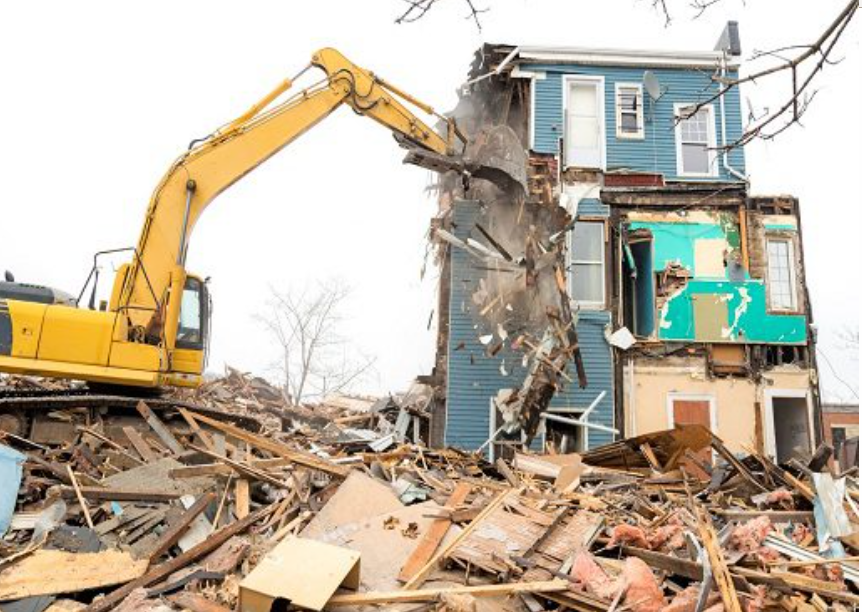



 2024
2024


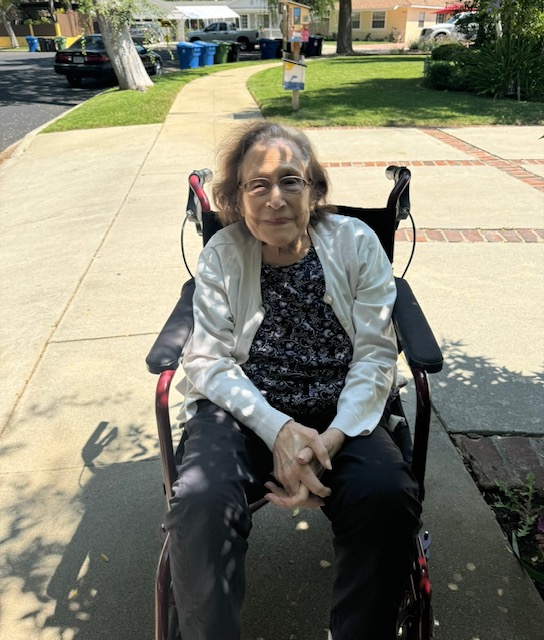


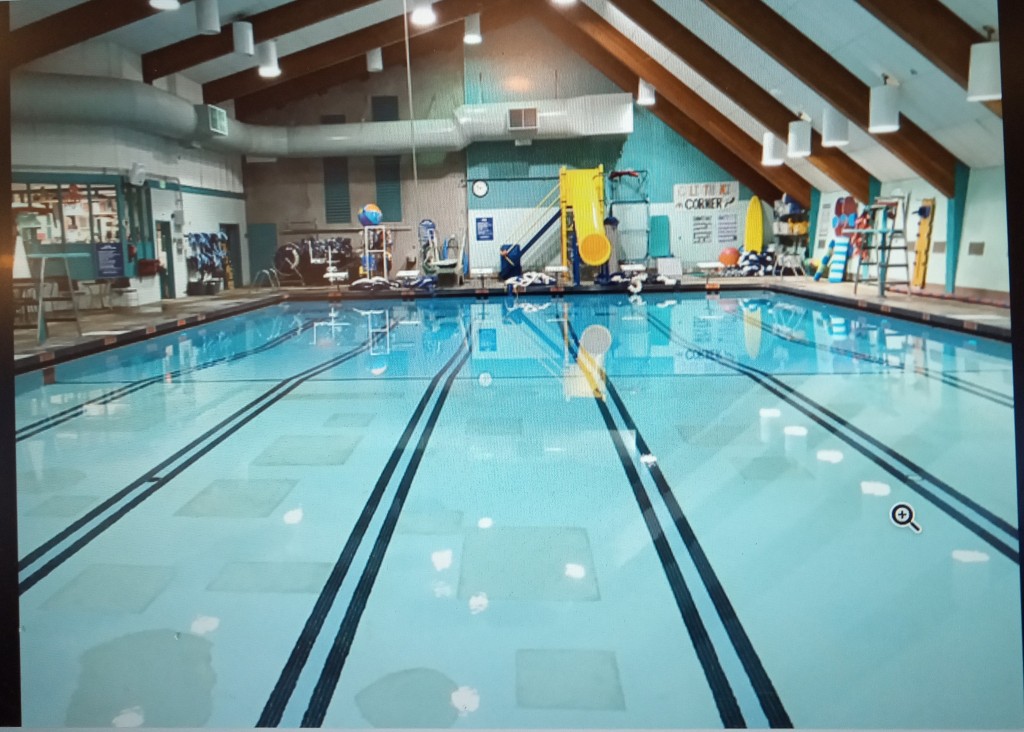
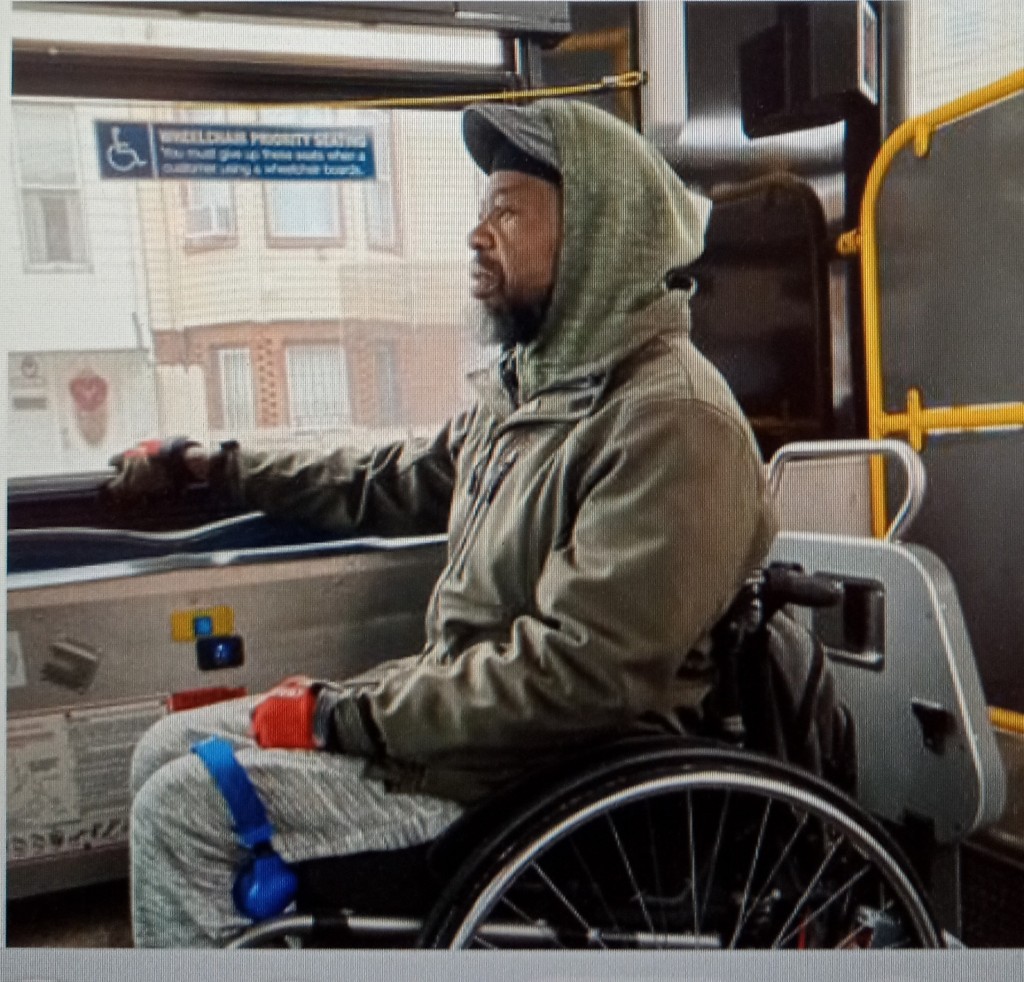

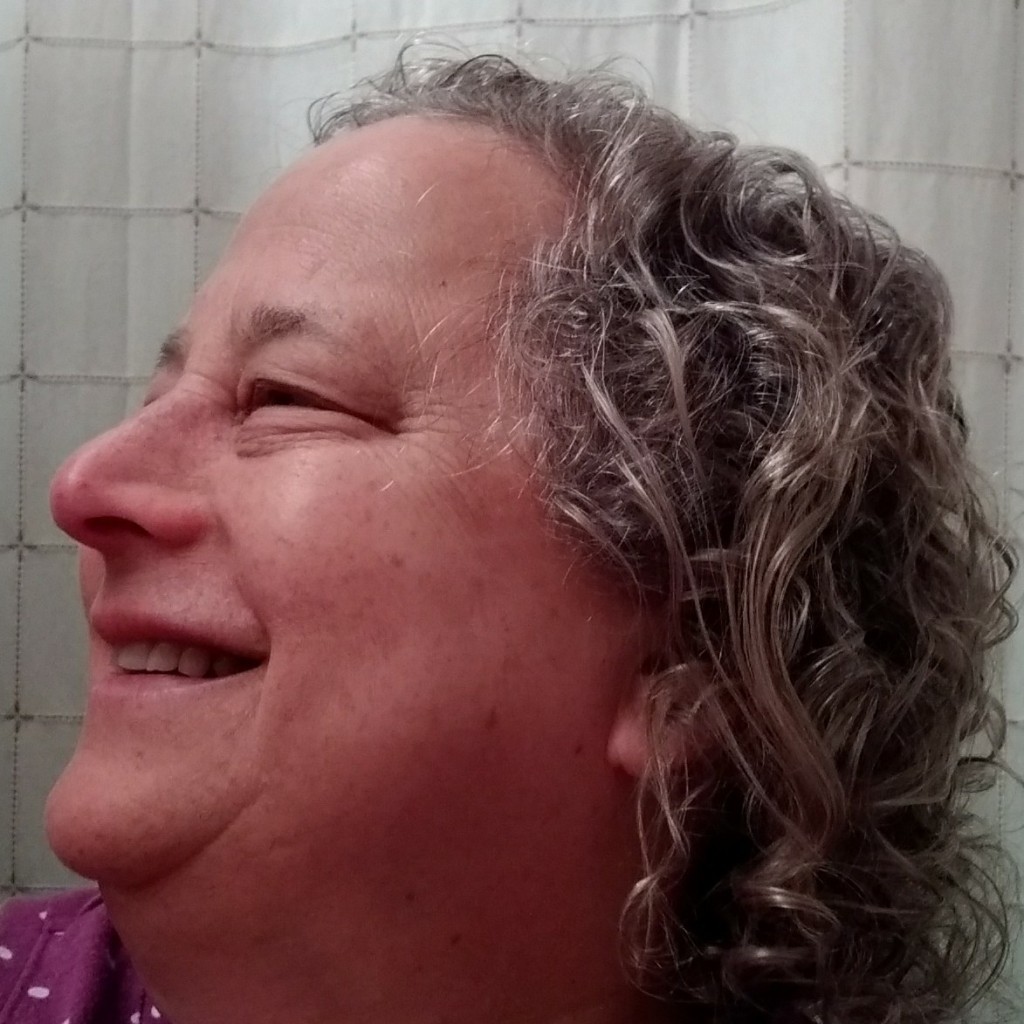
























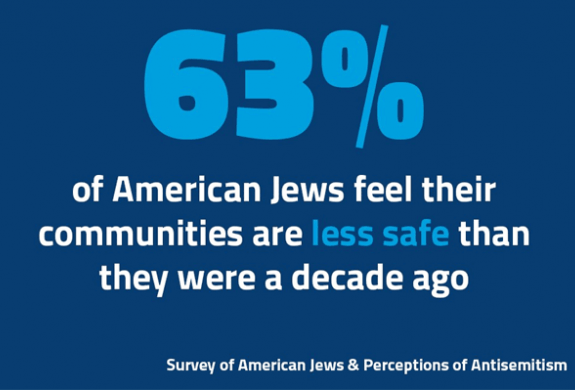
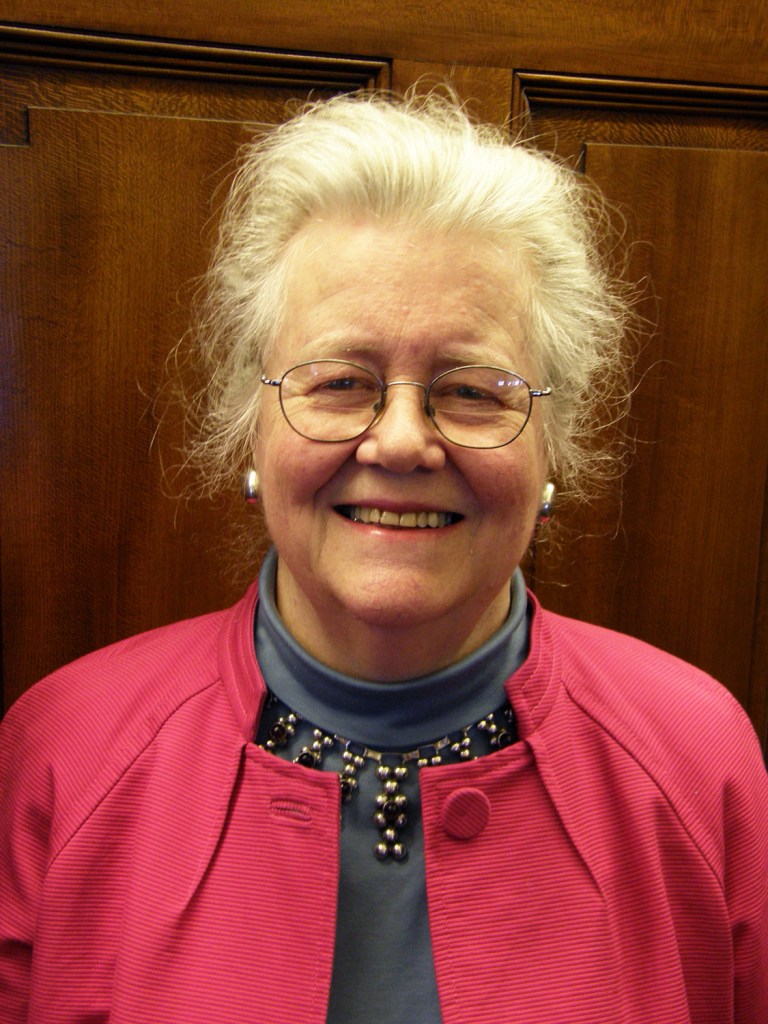


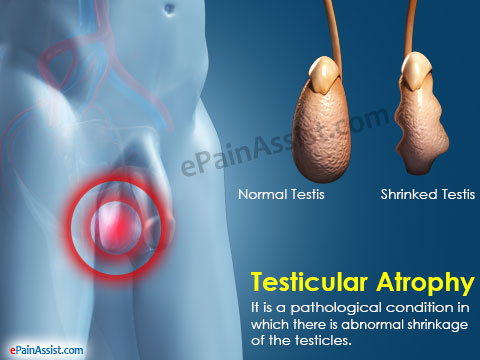
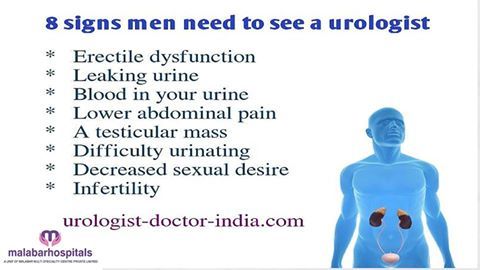

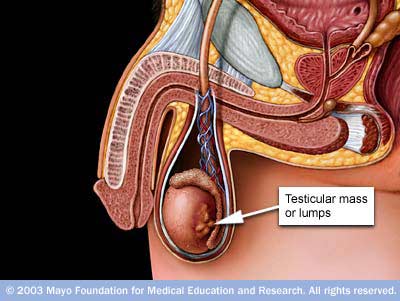
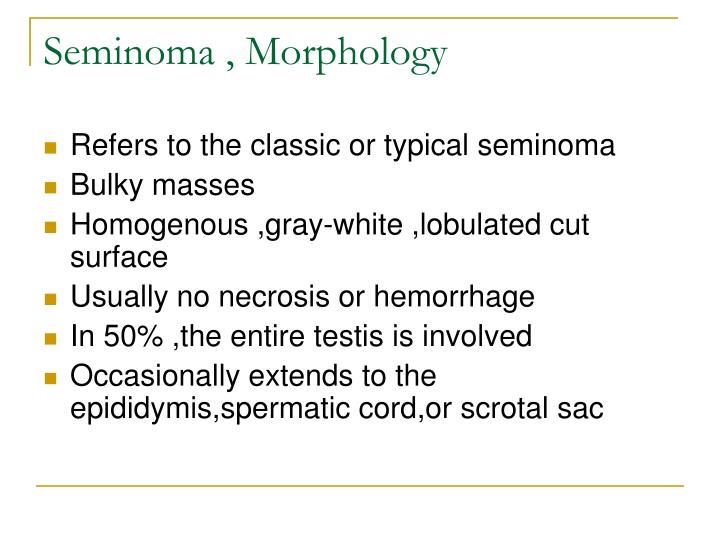
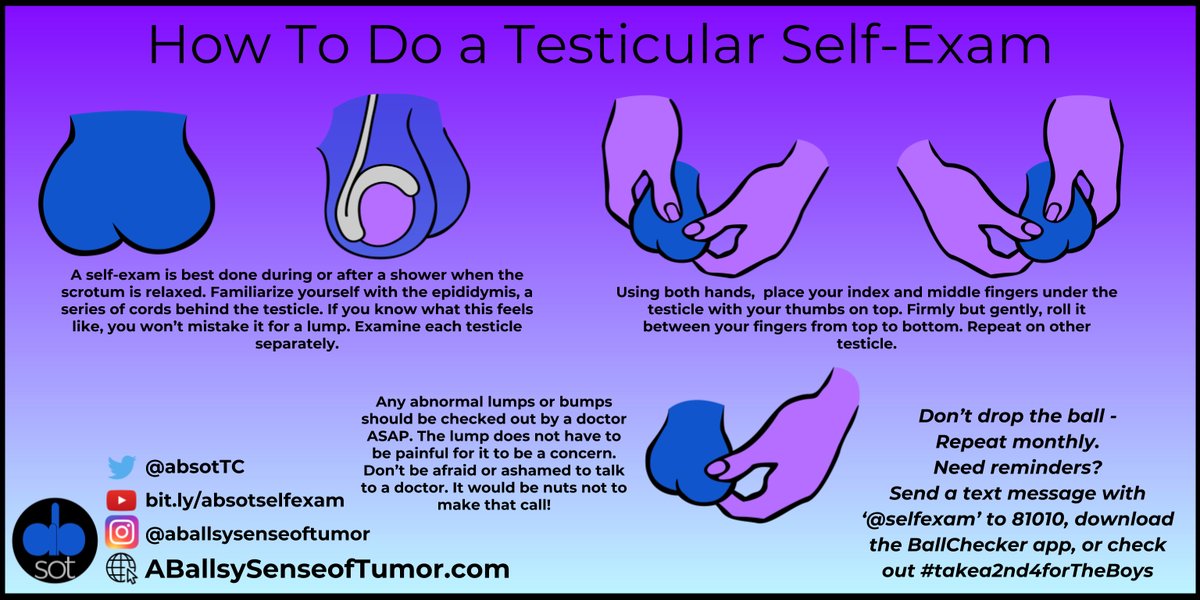




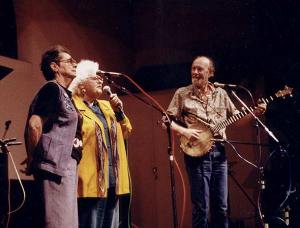
 Holly Near, 1970



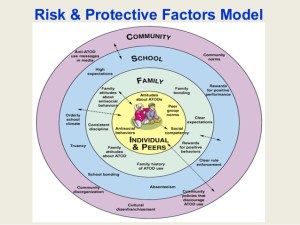




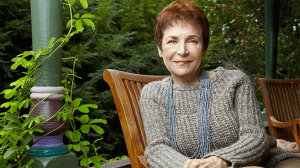







 “Comparison kills joy”
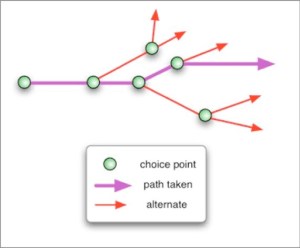



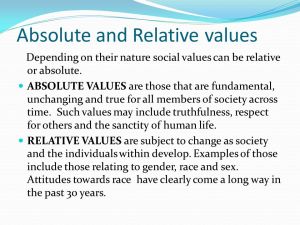

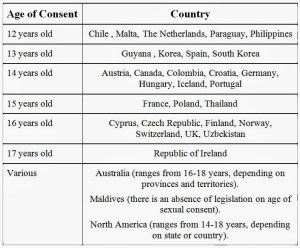




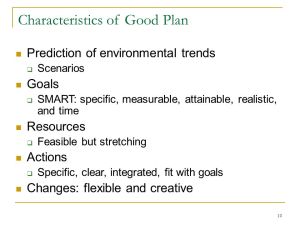
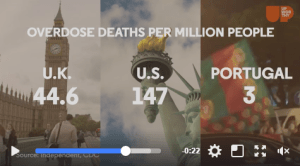






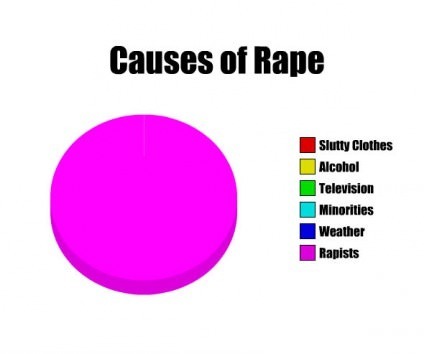









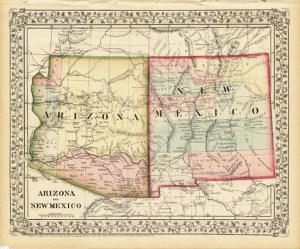





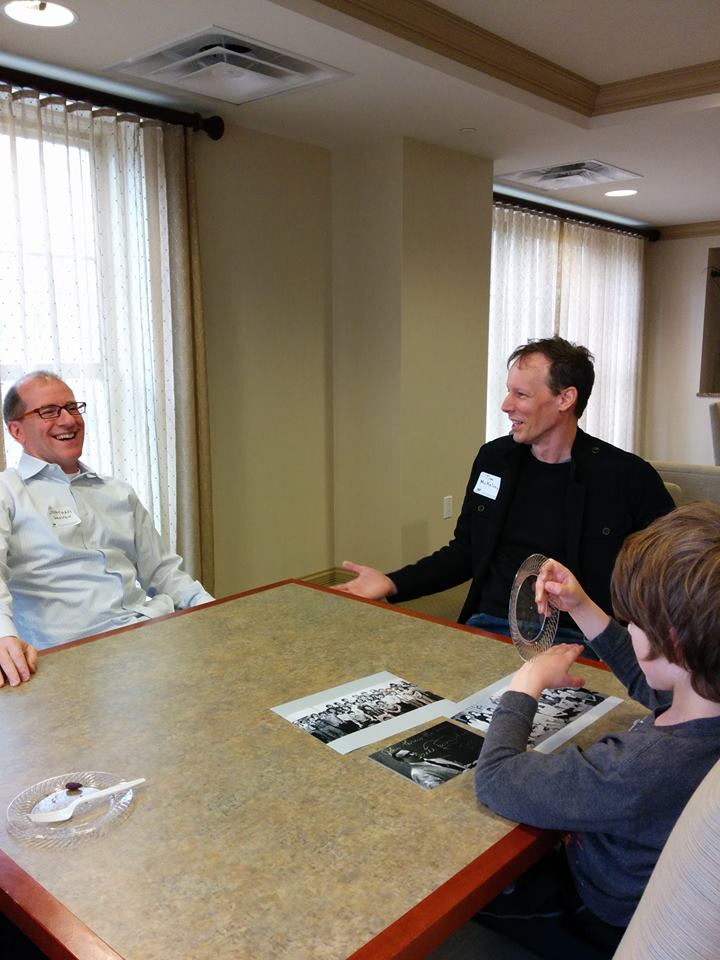
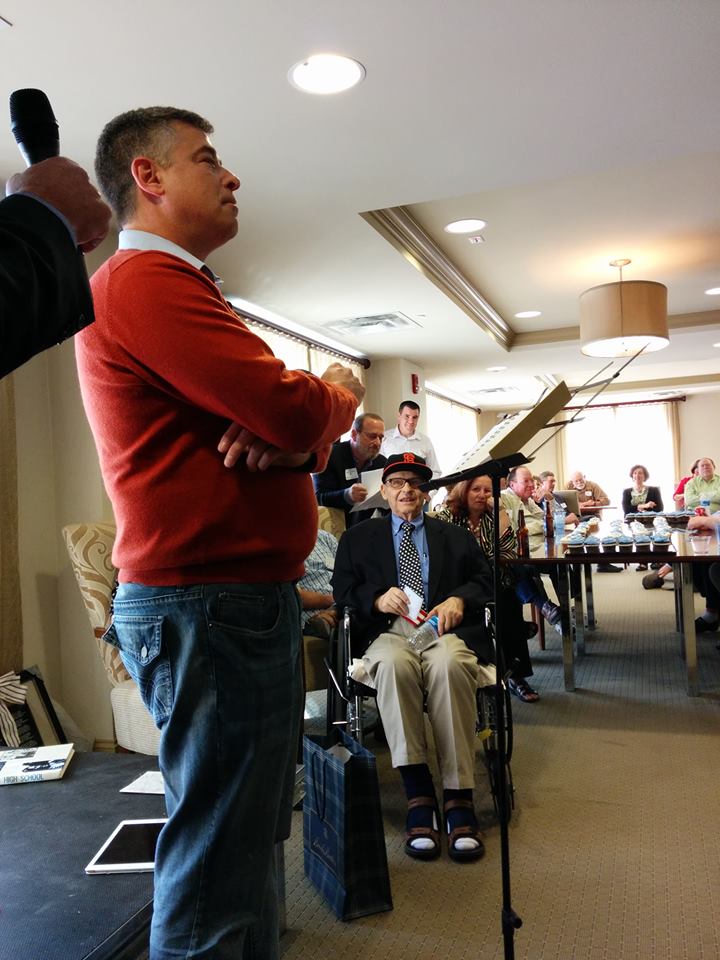




 Sally Ember, Ed.D.
You must be logged in to post a comment.