Unknown's avatar

The Very Inspiring #Blogger# Award Landed Here!

My blog and I have been nominated for the The Very Inspiring Blogger Award!

very-inspiring-blogger-award

Thank you so much, Dale Furse, for nominating my blog for The Very Inspiring Blogger Award! I am honored!

Dale is a children’s and YA fantasy author/ playwright/ songwriter/ poet who writes science-fiction novels, as I do. Please visit Dale: https://dalefurse.wordpress.com to find out more about her, her books, her reviews and more. She lives in Australia, so be aware of the time difference between there and where you live, if you’re not also Down Under!

The Very inspiring Blogger Award rules are as follows:
–Display the award on your blog
–Link back to the person who nominated you
–State 7 things about yourself that most people may not know
–Nominate 15 (I CHOSE 16!) bloggers, link to them, and notify them about their nominations

Seven things most people do not know about me…

  • I am no longer even 5 feet tall (I used to be almost 5’2″).
  • My first publication experience was to have a poem placed in my elementary school’s newsletter; I was 9 years old.
  • I studied faith healing in the Philippines in 1986.
  • My play, Crystal Dreams, was selected to be and was performed at Theatre-by-the-Sea at its end-of-summer New Playwrights’ Festival in 1984.
  • I began playing the piano and composing at age 3 but didn’t get formal lessons until age 9 because someone told my parents to wait until my hands got larger. I was aiming to become a concert pianist, having placed highly in a regional competition at age 13, but my hands did not grow from age 11 on.
  • I am now living about ten minutes’ drive from where I grew up after having lived elsewhere (on both coasts and in New Mexico) for 42 years.
  • I learned to swim and to read at age 3; I still do both.

I nominate these 16 bloggers, my first CHANGES Google + Hangouts On Air (HOA) talk show guests:

  1. Dr. Shay West, Ph.D.: http://shay-west.com/
  2. Marianne Jones: http://www.mariannejones.ca
  3. Connie Dunn: http://publishwithconnie.com/
  4. Janice Ross: http://culturalcocktails.com
  5. Tonya Moore: http://www.signalpositive.wordpress.com
  6. Charlee Allden: http://www.smartgirlsscifi.wordpress.com/
  7. Dr. Nicholas Rossis, Ph.D.: http://www.nicholasrossis.me
  8. Chase Knightly: http://www.chaseknightly.com
  9. Charles E. Yallowitz: http://legendsofwindemere.com
  10. Stefan Bolz: http://www.TheThreeFeathers.com
  11. Victoria Noe: http://www.friendgrief.com
  12. Dr. Anna Faktorovich, Ph.D.: http://www.anaphoraliterary.com/
  13. Dr. Olga Nuñez Mirét, M.D., Ph.D.: http://www.olganm.wordpress.com/
  14. John W. Howell: http://www.johnwhowell.com
  15. Krysten Lindsay Hager: http://www.krystenlindsay.com/
  16. Colette Vernon Black: http://www.coletteblack.net

Watch conversations with my previous CHANGES guests any time: https://www.youtube.com/playlist?list=PLPbfKicwk4dFdeVSAY1tfhtjaEY_clmfq

CHANGES Trailer Image_3

#AUTHORS: Learn more about and get yourself or #READERS: recommend someone to be scheduled as a guest: CHANGES G+ HOA https://sallyember.com/changes-videocasts-by-sally-ember-ed-d/

Best to you all and Happy New Year!

Unknown's avatar

Sally Ember’s #Crowdfunding Song

Watch/listen to Sally singing this song (not very well, including a sneeze, mid-song):
http://www.youtube.com/watch?v=Eehr3F0TZzs
OR
http://youtu.be/Eehr3F0TZzs

For more info and to donate:
http://www.patreon.com/sallyember Thanks!

Sally Ember’s #Crowdfunding Song
(lyrics by Sally; based on You’re Gonna Miss me When I’m Gone, or The Cups Song)

I tripped and fell and broke my nose and head
…. About 8 months ago
I also lost my job, had to move and lost my house:
Crowdfunding is the way to go.

Way to go
Way to gooooooo:
PLEEEEEEASE help me meet my goals?
Turn my vids into podcasts,
Fund my other worthy tasks:
I have a long way still to go.

I’m not a super singer or a poet, true:
This video is proof of that;
But I need to catch your eye, wake your urge to open wide:
Pockets, purses: share your stash.

Share your stash
Share your staaaaash:
Convert your good vibes into cash!
Help this writer stay on course,
You will feel no remorse
If you decide to share your stash.

If you help me, I can help you, too:
Edit, proof or entertain.
If you donate just a few
I will give ebooks to you
More dough helps us both and quells my pain.

Ease my pain
Make it raaaaaain
Crowdfunding could relieve my pain.
Buy a cover; do not stint;
Turn my ebooks into print;
Please donate to reach my aims.

I tripped and fell and broke my nose and head
…. About 8 months ago
I also lost my job, had to move and lost my house:
Crowdfunding is the way to go.

Way to go
Way to gooooooo:
PLEEEEEEASE help me met my goals?
Turn my vids into podcasts,
Fund my other worthy tasks:
I have a long way still to go.

CHANGES Theme Image_3

logoAuthorsDen

Unknown's avatar

“My Writing Process: Revealed!” Guest Blog Post on The Indie Writer’s Guide

Visit The Indie Writer’s Network, The Indie Writer’s Guide (link, below) to read my guest blog post, “My Writing Process: Revealed!” and many other great posts. Check out their other resources as well. Thanks, Amy Joy and the crew at TIWG.

writing process three parts

http://indiewritenet.com/writersguide/2014/05/08/my-writing-process-revealed/

Unknown's avatar

Linda Ronstadt’s Rendition of Desperado Burst my Grief Dam

Some of you know I that in April recently suffered a concussion and broken nose and am still recovering. The injury impacted my frontal lobe and deeper parts of my brain were also affected. One ongoing issue has been that, except for brief, mostly mild occurrences (often apropos of nothing), I have been unable to experience much beyond irritation or fatigue.

Mostly, I feel upbeat, sunnily similar, day after day. I’m not apathetic or depressed, but the variety of emotions I experience has been vastly curtailed, as have their intensity.

If you knew me before this, you’d be shocked by my lack of affect, particularly by my lack of sadness or other reactions to the series of shocking (to my life, system, and existence) events, Lemony Snicket -style, I have endured because of and directly after this accident, including a forced cross-country move in August.

About a week ago, during a discussion that became more of an argument with my son (a more frequent occurrence, he believes, since my fall), I heard him say how “different” I am, now, and I cried. Hard. That’s the first actual cry I had had in more than eight months.

To his surprise, I thanked him for upsetting me “enough.” I explained how important this was, that he and I had a strong enough connection that his criticism could penetrate my blandness, piercing all the way to the fear and loss beneath the façade. He was gallant and supportive (great young man).

Since then, I’ve been waiting for what I thought would be inevitable crying jags or other bouts of sadness, but nothing. Until yesterday, at the pool.

There I am, swimming laps in the “cold” pool next to the warmer “walking” pool, which was simultaneously having a water aerobics class to music. Usually I ignore the music, meditating and getting into the lap rhythm, glad when I can’t even hear it as my ears go beneath the water at every stroke. I was turning to go back for one last length when the strains of Linda Ronstadt’s cover of the Eagles’ Desperado pierced my meditative trance and got my attention, bringing my momentum to a dead stop, at the wall.

Linda Ronstadt’s Desperado in Atlanta, 1977

I stood up (luckily, this was the shallow end) and realized I was trembling. I listened to the song, transfixed by my reaction. I began to cry, then to sob. I happened to be in a corner of the aqua center that no one was inhabiting at the moment; two other lap swimmers continued, unaware of my sudden catharsis.

I let it happen. I could hardly have stopped it, anyway.

A kaleidoscope of images and concomitant emotions captured my inner eye: a young Linda juxtaposed with her now-Parkinson’s Disease-ridden, no-longer-singing older self; my former California cottages, in locations I sorely missed; my younger self and some of my former loves, particularly the ones this song reminded me of, unrequited (luckily, as it turns out, but heartbreaking, nonetheless); my former spiritual community’s center and its pond, also a place I missed tremendously; my spiritual teacher, whom I missed most of all. People, places, inchoate yearning and losses spun by, each one intensifying my sobs.

The dam had burst.

dam

My shoulders shaking and my face wet, I climbed out and began to make my way to the locker room. I hadn’t realized how much the silencing of Linda Ronstadt’s amazing voice had upset me and I was overcome by the magnitude of my heretofore unexpressed grief for the rest.

I had to stop walking because I couldn’t see through my tears. Leaning on the back of the water slide, hidden by its bulk from the exercisers, sobs took me over again. I felt grateful even amidst this onslaught, knowing this uncontrollable crying was a great sign of healing even as my knees buckled from the pain of my grief and loss. There wasn’t anyone walking by, so I could have my bawl without having to explain or have some well-meaning person try to quell it, erroneously believing that the cessation of my tears would be a better outcome.

I let them flow, heaving and shuddering until they subsided. As my feelings ebbed, I thought of how fortunate I am that mine are the types of injuries I am likely to recover from completely. Many are not so lucky.

I walked on shaky legs into the locker room, hiccuping and smiling. Having a wet face in that part of the locker room is unremarkable; even red eyes can be explained by being in the pool. I smiled murkily at a few fellow showerers and stepped into a stall.

As soon as I turned on the water, more tears came with the spray. “Good,” I thought. “Let ’em come.”

By my suffering and through my relief, may all beings benefit, becoming as healed and happy as possible.

For more information about Traumatic Brain Injuries, my experiences and research, check many other post on my blog: http://www.sallyember.com/blog

Unknown's avatar

Linda Ronstadt’s Rendition of Desperado Burst my Grief Dam

Some of you know I that in April recently suffered a concussion and broken nose and am still recovering. The injury impacted my frontal lobe and deeper parts of my brain were also affected. One ongoing issue has been that, except for brief, mostly mild occurrences (often apropos of nothing), I have been unable to experience much beyond irritation or fatigue.

Mostly, I feel upbeat, sunnily similar, day after day. I’m not apathetic or depressed, but the variety of emotions I experience has been vastly curtailed, as have their intensity.

If you knew me before this, you’d be shocked by my lack of affect, particularly by my lack of sadness or other reactions to the series of shocking (to my life, system, and existence) events, Lemony Snicket -style, I have endured because of and directly after this accident, including a forced cross-country move in August.

About a week ago, during a discussion that became more of an argument with my son (a more frequent occurrence, he believes, since my fall), I heard him say how “different” I am, now, and I cried. Hard. That’s the first actual cry I had had in more than eight months.

To his surprise, I thanked him for upsetting me “enough.” I explained how important this was, that he and I had a strong enough connection that his criticism could penetrate my blandness, piercing all the way to the fear and loss beneath the façade. He was gallant and supportive (great young man).

Since then, I’ve been waiting for what I thought would be inevitable crying jags or other bouts of sadness, but nothing. Until yesterday, at the pool.

There I am, swimming laps in the “cold” pool next to the warmer “walking” pool, which was simultaneously having a water aerobics class to music. Usually I ignore the music, meditating and getting into the lap rhythm, glad when I can’t even hear it as my ears go beneath the water at every stroke. I was turning to go back for one last length when the strains of Linda Ronstadt’s cover of the Eagles’ Desperado pierced my meditative trance and got my attention, bringing my momentum to a dead stop, at the wall.

Linda Ronstadt’s Desperado in Atlanta, 1977

I stood up (luckily, this was the shallow end) and realized I was trembling. I listened to the song, transfixed by my reaction. I began to cry, then to sob. I happened to be in a corner of the aqua center that no one was inhabiting at the moment; two other lap swimmers continued, unaware of my sudden catharsis.

I let it happen. I could hardly have stopped it, anyway.

A kaleidoscope of images and concomitant emotions captured my inner eye: a young Linda juxtaposed with her now-Parkinson’s Disease-ridden, no-longer-singing older self; my former California cottages, in locations I sorely missed; my younger self and some of my former loves, particularly the ones this song reminded me of, unrequited (luckily, as it turns out, but heartbreaking, nonetheless); my former spiritual community’s center and its pond, also a place I missed tremendously; my spiritual teacher, whom I missed most of all. People, places, inchoate yearning and losses spun by, each one intensifying my sobs.

The dam had burst.

dam

My shoulders shaking and my face wet, I climbed out and began to make my way to the locker room. I hadn’t realized how much the silencing of Linda Ronstadt’s amazing voice had upset me and I was overcome by the magnitude of my heretofore unexpressed grief for the rest.

I had to stop walking because I couldn’t see through my tears. Leaning on the back of the water slide, hidden by its bulk from the exercisers, sobs took me over again. I felt grateful even amidst this onslaught, knowing this uncontrollable crying was a great sign of healing even as my knees buckled from the pain of my grief and loss. There wasn’t anyone walking by, so I could have my bawl without having to explain or have some well-meaning person try to quell it, erroneously believing that the cessation of my tears would be a better outcome.

I let them flow, heaving and shuddering until they subsided. As my feelings ebbed, I thought of how fortunate I am that mine are the types of injuries I am likely to recover from completely. Many are not so lucky.

I walked on shaky legs into the locker room, hiccuping and smiling. Having a wet face in that part of the locker room is unremarkable; even red eyes can be explained by being in the pool. I smiled murkily at a few fellow showerers and stepped into a stall.

As soon as I turned on the water, more tears came with the spray. “Good,” I thought. “Let ’em come.”

By my suffering and through my relief, may all beings benefit, becoming as healed and happy as possible.

For more information about Traumatic Brain Injuries, my experiences and research, check many other post on my blog: http://www.sallyember.com/blog

Unknown's avatar

Part III: Letter to my Earlier Self about #Preorders, Guest Blogger Post on The Book Cove Reviews 

Part III: Letter to my Earlier Self about #Preorders, Guest Blogger Post on The Book Cove Reviews

This is Letter Three of Four of my “open letter to my earlier self” series that appears on The Book Cove Reviews, http://www.thebookcove.com/2014/12/author-sally-ember-edd-letter-to-my.html, late November – December, 2014, on consecutive Mondays. Letter One appeared 11/24/14; Letter Two on 12/1/14; Letter Four will appear on 12/15/14. This same series will repost on my own site, http://www.sallyember.com 3/26/15 – 4/18/15, on consecutive Mondays as well

SWpreorders

Unknown's avatar

Part III: Letter to my Earlier Self about #Preorders, Guest Blogger Post on The Book Cove Reviews

Part III: Letter to my Earlier Self about #Preorders, Guest Blogger Post on The Book Cove Reviews

This is Letter Three of Four of my “open letter to my earlier self” series that appears on The Book Cove Reviews, http://www.thebookcove.com/2014/12/author-sally-ember-edd-letter-to-my.html, late November – December, 2014, on consecutive Mondays. Letter One appeared 11/24/14; Letter Two on 12/1/14; Letter Four will appear on 12/15/14. This same series will repost on my own site, http://www.sallyember.com 3/26/15 – 4/18/15, on consecutive Mondays as well

SWpreorders

Unknown's avatar

What I Wish I had Known for #Indiepub #Ebooks 1 and 2: An Open Letter to my Earlier Self Guest Post on The Book Cove

What I Wish I had Known for #Indiepub #Ebooks 1 and 2: An Open Letter to my Earlier Self Guest Post on The Book Cove goes LIVE today and is part of a series.

http://www.thebookcove.com/2014/11/author-sally-ember-edd-what-i-wish-i.html

Social media icons

Check on Mondays in December for the rest of the series! http://www.thebookcove.com

Unknown's avatar

What I Wish I had Known for #Indiepub #Ebooks 1 and 2: An Open Letter to my Earlier Self Guest Post on The Book Cove

What I Wish I had Known for #Indiepub #Ebooks 1 and 2: An Open Letter to my Earlier Self Guest Post on The Book Cove goes LIVE today and is part of a series.

http://www.thebookcove.com/2014/11/author-sally-ember-edd-what-i-wish-i.html

Social media icons

Check on Mondays in December for the rest of the series! http://www.thebookcove.com

Unknown's avatar

Stale writing? 4 Underused Literary Devices: Aphorism, Hyperbole, Tmesis and Zeugma

Stale writing? 4 Underused Literary Devices:
Aphorism, Hyperbole, Tmesis and Zeugma

[Definitions and examples culled and summarized from http://literarydevices.net/]

In the last days of NaNoWriMo [National Novel Writing Month, November] or any other intensive writing period, we authors often suffer from ennui from the endless repetition of putting thousands of words on screen (or, if you are a Luddite, on paper).

We get bored with our style. We are tired of the way we phrase things. We depict the same thing repeatedly. We use similar sentence structure too often. Our dialogue sounds forced, our imagery is trite and our comparisons are about as subtle as the proverbial freight train.

Like, here.

baby yawning

image from http://radioink.com

A reviewer counted the number of times the main character “rolled her eyes” in a best-selling fiction novel: 14 eye-rolls in a book that had fewer than 200 pages. She was described as “gaping” 23 times. Inexcusably poor editing and boring writing, yet that particular book featured sexual bondage and a billionaire lover, so it sold a bizillion copies. Sigh.

Meanwhile, back in literature…. How do we spice up our writing so that we and our readers stay interested, feel stimulated (and not by a cattle prod or whip), and want to keep going? Underused Literary Devices to the rescue, here.

The above-mentioned and other websites have a panoply of Literary Devices, many of which I had never heard of or spent decades forgetting I’d learned in school. Some are only for poetry, but below are four that are usable in any kind of writing.

Have fun!

WAKE UP!

APHORISM
DEFINITION: …is an original thought, spoken or written in a laconic/concise and memorable form, as a statement of truth or opinion. Aphorisms are expressed in a pithy, witty manner which expresses a philosophical, moral or literary principle. Proverbs (as religiously or culturally promoted), Maxims, Adages and (when overused) Clichés are types of Aphorisms.

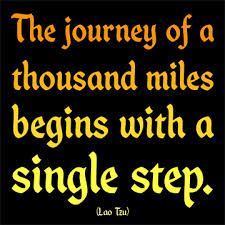
EXAMPLES: “To err is human, to forgive divine.” from An Essay on Criticism by Alexander Pope

Lao Tsu

image from http://popphilosophy.typepad.com

HYPERBOLE
DEFINITION: Adynaton is an extreme form of Hyperbole, one that is completely impossible to happen in reality, presented as an exaggerated comparison or contrast.

EXAMPLE:

I’ll love you till the ocean
Is folded and hung up to dry

from As I Walked Out One Evening by W.H. Auden

dryingscarf

image from http://cupcakesncraftsbyg.com

TMESIS
DEFINITION: …is a rhetorical device that involves the breaking down of a phrase or a word into two parts as an insertion of a word between a word, a compound word or a phrase (phrasal verbs usually). Tmesis is accomplished by dividing a phrase or word into its components by inserting another word in the middle of that phrase or word. Tmesis works best with words that have more than three syllables.

Fun fact: In Australian English, Tmesis is called tumba rumba.

EXAMPLES:
“This is not Romeo, he’s some other where.” from Romeo and Juliet by William Shakespeare

Eliza Dolitttle: “Fan-bloody-tastic or abso-blooming-lutely” from Pygmalion by George Bernard Shaw)

Audrey Hepburn as Eliza

Audrey Hepburn as “Eliza Doolittle” in the film of My Fair Lady, based on Pygmalion, image from http://www.listal.com

ZEUGMA
DEFINITION: … is a word, usually a verb or an adjective, applied to more than one noun, blending together grammatically and logically different ideas to produce a unique artistic effect, making the literary works more interesting and effective as it serves to adorn expressions and to add emphasis to ideas in impressive style.

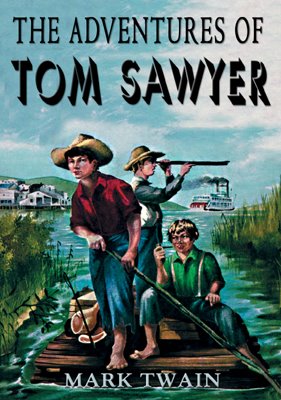
EXAMPLE: “[They] covered themselves with dust and glory.”
from The Adventures of Tom Sawyer by Mark Twain (Samuel Clemens)

Tom Sawyer

Aaahhh. Did you feel that?

Zephyr god

image from http://www.gotbrainy.com

It’s a breath of fresh air blowing in through the million drafty doors and windows in your gi-friggin-normous memory palace, a zephyr that brings in new ideas and high heating bills.

Use them well.

Unknown's avatar

NOT DOING #NaNoWriMo Writing Plans

People keep asking me: Are you doing NaNoWriMo (National Novel Writing Month)?
I say, “No.”
They seem surprised.

I decided to explain.
Here are my NOT DOING #NaNoWriMo Writing Plans:

    1. Job-hunting. Must do. Have to get some income besides the trickle of pennies my 2 ebooks currently provide. Hope to add GAINFUL EMPLOYMENT to my list of November activities by November 30, which is more important than adding thousands of words to my computer. For me. This involves writing: cover letters, emails, queries. Hundreds of words. To people (or ‘bots….).

    cover-letter-words

    image from http://www.nerdwallet.com

      2. Marketing Ongoing. Trying to upgrade my trickle of ebooks’ sales’ pennies to a stream to a flow to a… .well, you get the idea. Includes blogging, tweeting, commenting on others’ blogs, guest blogging, reblogging with comments added, promoting my ebooks in The Spanners Series, begging for more reviews for my ebooks, writing reviews on Goodreads and posting them to Amazon of books I may get a chance to read and review, promoting my G+ HOA, *CHANGES*, and hosting the almost-weekly talk show on Wednesdays (10 AM EST USA).
      This involves writing: blog posts, site posts, tweets, comments, reviews, promos, emails (mostly to *CHANGES* guests and reviewers). Hundreds and probably thousands of words. For social media.

      begging

      image from http://www.rexrobotreviews.com

        3. Writing novels Ongoing. I am about half-way through Volume III, This Is/Is Not the Way I Want Things to Change of The Spanners Series and wish to finish it this fall. I had planned to finish Vol III and work more on Vol IV, which I’ve barely started, by the end of August but a serious accident/concussion postponed achieving these goals by many months. I also have to finish collecting and reworking the researched bits that belong to these Volumes and perhaps future ones. This includes coming up with and agreeing on a cover design for Vol III with my cover artist, Aidana Willowraven.
        This involves writing: For the rest of Vol III and I hope some of Vol IV, Changes in Attitude/Changes in Latitude, as well. Tens of thousands of words. For novels.

        Cut pieces of paper with text on SEO theme. Isolated on white.

        image from http://thenovelfactory.blogspot.com

          4. Editing/Proofreading All of the above require both, and perhaps I will do some for hire (I hope). I’m available. Will negotiate: sallyember AT yahoo DOT com
          This involves writing by rewriting, hundreds and thousands of words, many times. For improving all writing. Everywhere.

        needs-to-be-edited

        image from http://hsquiresnovels.com
        (“edit” should have quotes around it…)

        Why am I not doing NaNoWriMo? I’m BUSY writing!

        I wish I could take a month and work only on ONE novel/project!

        Good luck to all who are doing NaNoWriMo!

Unknown's avatar

No Woman Wants to Have An Abortion, but We MUST Support EVERY Woman’s Right To Choose

No Woman Wants to Have An Abortion, but
We MUST Support EVERY Woman’s Right To Choose

Of course that is true. Books about women’s experiences in choosing to have an abortion, having it, living with the decision, have these titles:

In Necessity and Sorrow, Peace after an Abortion, Healing after an Abortion, Dealing with the Emotional Aftermath of an Abortion, and similar.

Why in 2014, DECADES AFTER after the clarity of the Supreme Court’s 1973 decision in Roe v Wade, is women’s right-to-choose to terminate a pregnancy in the USA even in question?

Here is one main reason: MEN. More than a few very loud, conservative/reactionary, unfeeling, uncaring, ignorant and idiotic men. I call these men names with great care: they deserve every one of these appellations.

Men do not get pregnant

image from http://msmagazine.com

Last winter, Republican Allan Rothlisberg (Junction City, CA) who serves on a major House Committee (Commerce, Labor and Economic Development), stated: “If I was a woman over 50, I wouldn’t need gynecological services” (1/14/14). Bad grammar aside, the guy is a moron when it comes to women’s health care requirements.

Unfortunately, he is TYPICAL of the men in leadership positions spouting garbage. Offensive ridiculousness comes regularly out of those such as Todd Akin (R-Missouri), who invented the delightful term “legitimate rape” and claimed that there is no need for abortion to be legal in the case of rape because “women can just shut that down,” meaning, decide not to become fertilized, when we are raped.

I am not making this up.

Here is the other reason: RELIGION. Or, rather, the co-optation of Christian religious tenets and beliefs, tailoring and lying about the original teachings to “support” their platform. Nevermind that the same people who call themselves “pro-life” vote down tax increases or any funding for FEEDING, HOUSING, EDUCATING, and MAINTAINING HEALTH for actual, living children and adults, and that these same politicians and their supporters also want to exclude immigrants all together from ALL services. So much for being “pro-life” or even following their own Christian precepts.

Jesus policy preferences

image from http://www.criminalizeconservatism.com

As we approach another election, one in which the entire House of Representatives is up for grabs (and this part of Congress is the most culpable when it comes to misappropriation of politics and abusing their power in the name of religion), some facts seem important to know regarding abortion, a key issue (again). Please share. Please talk about this. I know I’m probably “preaching to the choir,” but we all have friends and relatives who could be better informed, and we ALL need to VOTE!

Who gets abortions in the USA?

What are the ages of women having abortions?

Anti-choice marketers would have us believe that most abortion-seekers are “irresponsible teenagers” who need “counseling” and “guidance,” implying that ignorance, carelessness, selfishness and a wanton disregard for life are influencing circumstances and driving abortion decisions.

However (big shock), they are incorrect. Only a small percentage (0.4%) of females who obtained abortions in this time period were under 15 years old. Interestingly, almost equal percentages (7 – 8%) were for women ages 15 – 17 and also for women 35-39. What types of circumstances and emotional characteristics could these demographic groups have in common, besides having an unwanted pregnancy?

ages of women abortion

82% of the women who had abortions in the 11-year period, 1999-2010, were between the ages of 18 – 34, with 34% as the largest single group, and it was for women ages 20 – 24.

Unsurprisingly, “older” women (NOT “ignorant” or in need of “guidance”) also get pregnant and decided to terminate the pregnancy: about 3% were over 40 years old.

What the reasons women choose abortion?

The conservative, anti-choice movement wants us to believe that the “primary” reasons for women’s choosing abortion are “selfish” and therefore not to be supported by law or community attitude. Their pie chart tries to illustrate that “most” women who have abortions do so because a pregnancy comes at the “wrong time” and /or they are “not ready” to have a child at that time. Even so, by their own research (which is questionable), only about one-quarter (27%) of the women gave that as their “primary” reason.

However, look at what the other survey options were and you can understand how so many chose the “not ready” category:

  • “Lack of maturity” Who is going to self-select that reason? Very few: 8%
  • “Relationship Issues” This is so broad as to be almost useless as a survey option. Only 9% selected this.
  • “Fetal Health Concerns” and “Maternal Health Concerns” each received about the same, 3% – 4%, matching “School or Career Concerns” with 4% as well. These combined total about 12%, or one-eighth of the respondents.
  • “Can’t afford the baby” (whose wording is already emotionally loaded, labeling the fetus a “baby” and then impugning the woman’s financial status at the same time) still garnered an almost equal percentage to those who said they weren’t “ready,” at 25%.
  • “Finished childbearing” is fraught with judgment as well, but nonetheless, 20% selected this as their primary reason for terminating the pregnancy.
  • “Rape” unsurprisingly received less than any, at 0.1%, while “Incest” isn’t on this chart (one could argue that all incest is rape, but to exclude it as a reason is significant, since conservatives keep voting down the right to choose, even in the case of rape or incest….).

AbortionReasons

image from http://www.conservapedia.com

The actual facts about USA women and abortion

About half of all women experience at least one unintended pregnancy in our lifetimes. This occurs mostly due to the fact that ALL birth control, even when used correctly and consistently, has a failure rate of at least 1% and most are worse.

Birth control failure rates

image from http://www.abovetopsecret.com

The “Pill,” which is usually thought of as “effective,” fails almost 9% of the time. That means almost 1 out of every 10 women who rely on the Pill for birth control will become pregnant while taking it. In addition to causing all kinds of problems for the women that they were not expecting (no pun intended), pregnant women do not know they are pregnant until many months into the pregnancy (usually when the baby moves), which means the mothers are taking these hormones throughout the crucial first trimester. Birth control pills can have adverse effects on developing fetuses which usually causes birth defects and/or problems for these people later in life because of hormonal imbalances while they were developing in utero. The risk of ectopic pregnancies is also higher in women taking oral contraceptives after conception (which shouldn’t have occurred, but does).

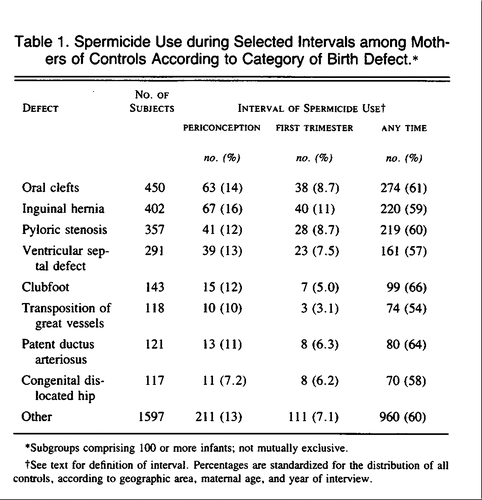
Even worse, women who conceive while using spermicidal forms of birth control are counseled to have abortions because babies born to women using spermicides have astronomical rates of birth defects, up to and including stillbirth. The lesser problems include dwarfism, muscles missing or non-functional (eyelids’ muscles do not work, for example, so the eyes can’t fully open, which, without surgery, leads to blindness in newborns), hip displasia, clubfoot, cleft palate, and worse (New England Journal of Medicine), most of which, if reparable, require one or more surgeries and expensive rehabilitation.

Spermicide problems

image from http://www.nejm.org

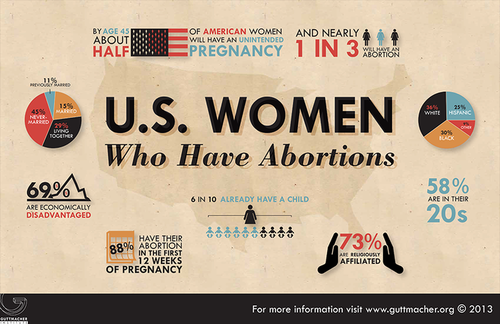
Despite these facts, only about one-third of women who unintentionally become pregnant choose to have an abortion. This could be due to the fact that, of those with unintended pregnancies, about 60% already have one child. As I mentioned at the start: NO woman WANTS to have an abortion, and those who have already carried a pregnancy to term, parented a child, are even less likely to terminate. Statistics bear this out: most mothers choose NOT to terminate.

Furthermore, to refute another of the conservatives’ most specious arguments: the majority (73%) of women who choose to terminate a pregnancy ARE “religiously affiliated,” which means we are not ALL “godless heathens” (although, as a Buddhist, I am proud to be “godless” and couldn’t care less about being called a “heathen”).

Abortion stats actual

image from http://naralprochoicewashington.tumblr.com

I could, but I won’t, tell my entire personal story, here. Bare facts: I was “typical” in that I was in my middle-twenties, educated, and pro-child (I was teaching Kindergarten-First Grade at the time). I chose to terminate due to my having been financially and emotionally unready and unable to care for a child at the time I got pregnant, which occurred due to a birth control failure (diaphragm, which has a 4% failure rate).

Please, whatever your story or gender, VOTE in or keep in a pro-choice candidate this November. The right to choose to terminate a pregnancy is a HUMAN right and, unfortunately, sometimes a necessity. Even if the choices are often made in sorrow, they must be safe and legal to make.

Vote smart

image from http://www.kylelife.com

Unknown's avatar

No Woman Wants to Have An Abortion, but We MUST Support EVERY Woman’s Right To Choose

No Woman Wants to Have An Abortion, but
We MUST Support EVERY Woman’s Right To Choose

Of course that is true. Books about women’s experiences in choosing to have an abortion, having it, living with the decision, have these titles:

In Necessity and Sorrow, Peace after an Abortion, Healing after an Abortion, Dealing with the Emotional Aftermath of an Abortion, and similar.

Why in 2014, DECADES AFTER after the clarity of the Supreme Court’s 1973 decision in Roe v Wade, is women’s right-to-choose to terminate a pregnancy in the USA even in question?

Here is one main reason: MEN. More than a few very loud, conservative/reactionary, unfeeling, uncaring, ignorant and idiotic men. I call these men names with great care: they deserve every one of these appellations.

Men do not get pregnant

image from http://msmagazine.com

Last winter, Republican Allan Rothlisberg (Junction City, CA) who serves on a major House Committee (Commerce, Labor and Economic Development), stated: “If I was a woman over 50, I wouldn’t need gynecological services” (1/14/14). Bad grammar aside, the guy is a moron when it comes to women’s health care requirements.

Unfortunately, he is TYPICAL of the men in leadership positions spouting garbage. Offensive ridiculousness comes regularly out of those such as Todd Akin (R-Missouri), who invented the delightful term “legitimate rape” and claimed that there is no need for abortion to be legal in the case of rape because “women can just shut that down,” meaning, decide not to become fertilized, when we are raped.

I am not making this up.

Here is the other reason: RELIGION. Or, rather, the co-optation of Christian religious tenets and beliefs, tailoring and lying about the original teachings to “support” their platform. Nevermind that the same people who call themselves “pro-life” vote down tax increases or any funding for FEEDING, HOUSING, EDUCATING, and MAINTAINING HEALTH for actual, living children and adults, and that these same politicians and their supporters also want to exclude immigrants all together from ALL services. So much for being “pro-life” or even following their own Christian precepts.

Jesus policy preferences

image from http://www.criminalizeconservatism.com

As we approach another election, one in which the entire House of Representatives is up for grabs (and this part of Congress is the most culpable when it comes to misappropriation of politics and abusing their power in the name of religion), some facts seem important to know regarding abortion, a key issue (again). Please share. Please talk about this. I know I’m probably “preaching to the choir,” but we all have friends and relatives who could be better informed, and we ALL need to VOTE!

Who gets abortions in the USA?

What are the ages of women having abortions?

Anti-choice marketers would have us believe that most abortion-seekers are “irresponsible teenagers” who need “counseling” and “guidance,” implying that ignorance, carelessness, selfishness and a wanton disregard for life are influencing circumstances and driving abortion decisions.

However (big shock), they are incorrect. Only a small percentage (0.4%) of females who obtained abortions in this time period were under 15 years old. Interestingly, almost equal percentages (7 – 8%) were for women ages 15 – 17 and also for women 35-39. What types of circumstances and emotional characteristics could these demographic groups have in common, besides having an unwanted pregnancy?

ages of women abortion

82% of the women who had abortions in the 11-year period, 1999-2010, were between the ages of 18 – 34, with 34% as the largest single group, and it was for women ages 20 – 24.

Unsurprisingly, “older” women (NOT “ignorant” or in need of “guidance”) also get pregnant and decided to terminate the pregnancy: about 3% were over 40 years old.

What the reasons women choose abortion?

The conservative, anti-choice movement wants us to believe that the “primary” reasons for women’s choosing abortion are “selfish” and therefore not to be supported by law or community attitude. Their pie chart tries to illustrate that “most” women who have abortions do so because a pregnancy comes at the “wrong time” and /or they are “not ready” to have a child at that time. Even so, by their own research (which is questionable), only about one-quarter (27%) of the women gave that as their “primary” reason.

However, look at what the other survey options were and you can understand how so many chose the “not ready” category:

  • “Lack of maturity” Who is going to self-select that reason? Very few: 8%
  • “Relationship Issues” This is so broad as to be almost useless as a survey option. Only 9% selected this.
  • “Fetal Health Concerns” and “Maternal Health Concerns” each received about the same, 3% – 4%, matching “School or Career Concerns” with 4% as well. These combined total about 12%, or one-eighth of the respondents.
  • “Can’t afford the baby” (whose wording is already emotionally loaded, labeling the fetus a “baby” and then impugning the woman’s financial status at the same time) still garnered an almost equal percentage to those who said they weren’t “ready,” at 25%.
  • “Finished childbearing” is fraught with judgment as well, but nonetheless, 20% selected this as their primary reason for terminating the pregnancy.
  • “Rape” unsurprisingly received less than any, at 0.1%, while “Incest” isn’t on this chart (one could argue that all incest is rape, but to exclude it as a reason is significant, since conservatives keep voting down the right to choose, even in the case of rape or incest….).

AbortionReasons

image from http://www.conservapedia.com

The actual facts about USA women and abortion

About half of all women experience at least one unintended pregnancy in our lifetimes. This occurs mostly due to the fact that ALL birth control, even when used correctly and consistently, has a failure rate of at least 1% and most are worse.

Birth control failure rates

image from http://www.abovetopsecret.com

The “Pill,” which is usually thought of as “effective,” fails almost 9% of the time. That means almost 1 out of every 10 women who rely on the Pill for birth control will become pregnant while taking it. In addition to causing all kinds of problems for the women that they were not expecting (no pun intended), pregnant women do not know they are pregnant until many months into the pregnancy (usually when the baby moves), which means the mothers are taking these hormones throughout the crucial first trimester. Birth control pills can have adverse effects on developing fetuses which usually causes birth defects and/or problems for these people later in life because of hormonal imbalances while they were developing in utero. The risk of ectopic pregnancies is also higher in women taking oral contraceptives after conception (which shouldn’t have occurred, but does).

Even worse, women who conceive while using spermicidal forms of birth control are counseled to have abortions because babies born to women using spermicides have astronomical rates of birth defects, up to and including stillbirth. The lesser problems include dwarfism, muscles missing or non-functional (eyelids’ muscles do not work, for example, so the eyes can’t fully open, which, without surgery, leads to blindness in newborns), hip displasia, clubfoot, cleft palate, and worse (New England Journal of Medicine), most of which, if reparable, require one or more surgeries and expensive rehabilitation.

Spermicide problems

image from http://www.nejm.org

Despite these facts, only about one-third of women who unintentionally become pregnant choose to have an abortion. This could be due to the fact that, of those with unintended pregnancies, about 60% already have one child. As I mentioned at the start: NO woman WANTS to have an abortion, and those who have already carried a pregnancy to term, parented a child, are even less likely to terminate. Statistics bear this out: most mothers choose NOT to terminate.

Furthermore, to refute another of the conservatives’ most specious arguments: the majority (73%) of women who choose to terminate a pregnancy ARE “religiously affiliated,” which means we are not ALL “godless heathens” (although, as a Buddhist, I am proud to be “godless” and couldn’t care less about being called a “heathen”).

Abortion stats actual

image from http://naralprochoicewashington.tumblr.com

I could, but I won’t, tell my entire personal story, here. Bare facts: I was “typical” in that I was in my middle-twenties, educated, and pro-child (I was teaching Kindergarten-First Grade at the time). I chose to terminate due to my having been financially and emotionally unready and unable to care for a child at the time I got pregnant, which occurred due to a birth control failure (diaphragm, which has a 4% failure rate).

Please, whatever your story or gender, VOTE in or keep in a pro-choice candidate this November. The right to choose to terminate a pregnancy is a HUMAN right and, unfortunately, sometimes a necessity. Even if the choices are often made in sorrow, they must be safe and legal to make.

Vote smart

image from http://www.kylelife.com

Unknown's avatar

Lead Lipsticks, Folliculitis with MRSA from Hair Removal, and other Deadly “Beauty” Choices

Deadly Lipsticks

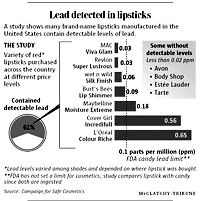
Hold on just a minute: what are you putting on your lips? What are you kissing on someone else’s? LEAD, if you use commercial lipsticks these days, and other poisons.

lipstick-lead

image from: http://rosearden.blogspot.com

Don’t believe me?

“[Researchers in 2013 and earlier found that] women who apply lipstick two to three times daily can ingest a significant amount—–20 percent of the daily amount that’s considered safe in drinking water or more—–of aluminum, cadmium, chromium, and manganese. Depending on the lipstick, in some cases women who slathered it on (14 times a day or more) were meeting or surpassing the daily recommended exposure to chromium, aluminum, and manganese.”

How many ways does the “beauty” industry despise, disrespect and want to murder women? It’s enough to make anyone sick.

Here are some lipstick facts.

Lead in Lipsticks inforgraphic

As of 2007, Burt’s Bees, owned by Clorox but which claims to be a down-home, “natural” product company, had lead in its chapsticks and did not respond to Mother Jones‘ inquiries as of 2013 asking what they had done to eliminate lead. This does NOT just affect adult women: children and men use Burt’s Bees’ lip balms.

Not to single out Burt’s Bees, but I’m hitting that company harder than others because of its atrocious pretense to “natural” ingredients. FRAUD.

Instead of getting the lead out, lipsticks tested in 2007, 2009 and 2013 got WORSE over those years, with products made by Maybelline, Cover Girl, L’Oreal, Revlon, Stargazer, and others, including Burt’s Bees, all selling popular colors/brands of lipstick containing lead.

“Lead, a metal that humans should avoid exposure to entirely, was detected in 75 percent of the samples.”

What if you are lucky enough to have a lipstick that does not have lead? Are you safe, then?

Oh, no, you’re not.

“…[L]ead isn’t the only toxin lurking in your lippy—–a new study finds cadmium, aluminum, and other heavy metals, too.”

The research showed that only a few companies, notably Wet n’ Wild, Bobbi Brown, and Shiseido, had zero lead in their lipsticks as of 2012. However, these companies’ products are not necessarily “healthy” for you, just not deadly.

To learn know more about the toxic and disease-inducing effects of these chemicals when they are ingested by humans (not to mention getting into our water system when wearers wash their faces and hands), please read the article.

(Original article is By Maggie Severns | published 5/6/13 in Mother Jones magazine. Read it!
Lead in your Lipsticks link:
http://www.motherjones.com/environment/2013/05/study-lead-metals-lipstick-top-20)

You want to cover/decorate your lips, anyway?

Please use healthy, all-natural, proven and tested as well as beautiful products: lip glosses, tinted “shimmers” and balms from Badger. Badger Balm‘s products and the company itself are winning significant “green” and “B” Corporation awards annually. ALL Badger products are completely safe, mostly organic, and never tested on animals. They have hair oils, a line of products for men, skin products and much more than lip treatments.

Please check them out: http://www.badgerbalm.com

badger-logo

Now, what about that “extra” hair? If you insist on removing it, how to remove body hair safely?

Hair Removal is Causing Infections: Folliculitis with MRSA and others that can Kill

First, some definitions:
Folliculitis

Folliculitis is an inflammation and infection of hair follicles, the tiny openings in the skin from which hair grows. Folliculitisis due to an invasion of bacteria that enter the follicles and cause a bacterial infection. Folliculitisis most commonly the result of an infection of staphylococcal bacteria. This causes inflammation and a red rash that is bumpy and itchy. The rash can occur anywhere on the skin or scalp.”

How does one get Folliculitis? Let me count the ways…

Folliculitisis often caused by an infection that occurs after shaving, waxing, tweezing and other types of hair removal methods.” (The above info is from: http://www.rightdiagnosis.com/f/folliculitis/intro.htm)

The ONLY method that does NOT lead to Folliculitis is mentioned, below. I still do NOT recommend removing unwanted hair, though. Just my personal preference: cut it.

MRSA
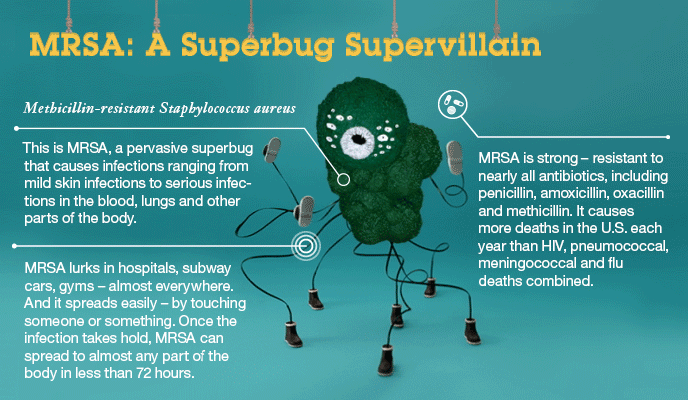
Methicillin-Resistant Staphylococcus Aureus = MRSA is basically a “staph” infection that is resistant to treatment/cure by most/conventional antibiotics, which means MRSA is much more dangerous and can be deadly. Some have called MRSA a “flesh-eating” bacteria, but that is a misnomer. MRSA can erode flesh, but not any more often or thoroughly than other untreated bacteria in the staph family.

MRSA ninjas

image from http://www.research.ibm.com

Let’s say you’re a “modern” female or male who wants to get rid of some (or all!?!) of your body hair who doesn’t want infections that maim or kill. Picky, picky. What to do?

First of all, WHY do you have to remove body hair? I haven’t used a razor since 1978 and I am quite happy with that choice. Misplaced vanity and age inspire me to cut my chin hairs, but trimming is very different from actual removal (and completely harmless).

Unless you suffer from a disorder that covers your face, arms, legs and other parts with hair and you are NOT okay with that, I just don’t understand why anyone “needs” to remove hair. Don’t send me comments explaining, though: I am not interested in your rationales. I just want you to do it more safely.

Let’s go on to safe(r) hair removal methods.

HOW are you going to engage in /have you already been doing removal of YOUR body hair? What will result from your chosen method(s)? Are you DIY or do you go to a “salon” or “spa” or other commercial establishment and have them do the removal?

BEWARE!

MRSA, HIV, Hepatitis B, STDs and other infectious/contagious diseases lurk in public spas/salons, worldwide!

“No matter how posh or pricey a salon or spa is, if it isn’t keeping up with health and safety standards, it can easily be a breeding ground for harmful bacteria and germs. Be sure that all non-disposable instruments used are sterilised in an autoclave, a medical-grade device that uses superheated steam to sterilise. It’s the only way to be sure that infectious organisms have been destroyed.”

The article I am quoting, here, was published in India, but the safety recommendations and problems it researched apply everywhere. Not only women are affected, either.

“Men need to make sure that disposable razor blades are used to trim their hair (shaving) so as to avoid hepatitis B and HIV.” This may seem obvious, but you’d be surprised at how many men go to barber shops to get haircuts and never ask if the razors used to shave their NECKS (which is part of providing all “short” haircuts) have been sterilized or used prior to their shaves without having been replaced. This warning applies to electric as well as manual razors.

man-holding-a-blue-razor-in-hand

image from http://www.wisegeek.com

What is required to keep hair removal equipment safe? More than some shops do.

“Dipping the instruments in some solution is not going to kill bacteria and fungi. The place should use either a proper disinfectant or an autoclave for sterilising the instruments. Check the labels. Spa or salon disinfectant should be EPA-registered hospital-level liquid that is virucidal, bactericidal and fungicidal that is 10 per cent bleach; 70 per cent or higher isopropyl or ethyl alcohol.”

Think about ALL the re-usable instruments/tools that come into contact with your body in commercial establishments. I’ve had a pedicure and manicure occasionally in recent years, but I have never asked these questions or checked out these procedures.

I will NOW! This article is worth reading (link below).

Let’s talk about waxing safety measures, since waxing is currently THE most popular and commercialized hair removal method, especially for younger women and most men.

“Body hair removal techniques like waxing sometimes can cause redness, breakouts, severe infections, irritant reactions and ingrown hair. Always check if salon staff doing waxing are using a fresh wax jar and maintaining proper hygiene and sanitation. Confirm that there is no double-dipping (putting an earlier used tool back into the wax) and no double-using (reusing wax) policies to avoid product contamination.”

Re-using wax? Ewww. That is truly disgusting to contemplate. How do they remove all the hair from the wax? Yuck.

There are so many ways for hair removal methods to be done sloppily that I shudder to consider them all, especially due to the severity of the potential outcomes.

“…[If] hygiene and sanitary measures during waxing (especially bikini waxing) go haywire, then there is a risk of getting infected by viruses like herpes, molluscum contagiosum and genital warts, which, otherwise in adults, are sexually transmitted. These can be transferred from an infected client to a healthy customer specially while getting waxed in and around bikini and gluteal areas.”

Picture this: a woman (or man) goes in to get her hair removed. Waxing ensures. All seems to go well UNTIL a few weeks later, s/he develops herpes or warts in the groin area. These diseases are incurable, painful, contagious and recurring. For the rest of the victim’s LIFE and possibly any future partners’ lives.

Don’t even get me started on what imbalance or illness has developed in a modern girl’s or woman’s self-regard that makes her believe her vaginal area is supposed to be almost or completely hairless (making it resemble a pre-pubescent girl’s) or for males to believe that a hairless chest or back (again, relegating “attractiveness” in adult males to pre-pubescence) is all their partners will accept. These cultural constructs make me both sad and furious.

I like hairy, adult, male chests? Am I the only one left who remembers Sean Connery as James Bond, hairy chest exposed, with great affection and attraction? Ahhh.

Sean Connery

Are the so-called benefits of waxing worth the risks?

I say not.

Read on. Please regard and share these extra and specific cautions, below.

Other wax warnings:

  • Do not wax over an area that has had a botox injection for at least 72 hours.
  • Do not wax if you have protruding varicose veins, diabetes, skin eczema or infection.
  • Do not wax if you are using any anti-ageing or acne creams that may contain a retinoid, as skin will be extra susceptible to getting burned and peeled off.

Read full article here:
http://www.tribuneindia.com/2014/20140727/spectrum/fitness2.htm

Deciding you may want to keep your “unwanted” hair rather than acquire even more seriously unwanted problems? Good choice!

Or, if you INSIST or removing hair, try lasers! These are expensive if you buy one for your home or get treatments at dermatologists’ offices, BUT laser removal methods are considered safer than other methods because laser removal “damages the hair follicle at its root without damaging the surrounding skin tissue.”

I usually ignore or deride Fox “NEWS,” but this article quoted above and below seems well-researched and the info corresponds to many others I read. (Credit goes to Julie Revelant (who is a freelancer and does NOT work for Fox NEWS), published 8/29/14: http://www.foxnews.com/health/2014/08/29/4-hair-removal-methods-that-really-work/ ) for the following list (and she gives more info) about SAFE HAIR REMOVAL methods, to date.

  • 1. Diode laser hair removal (GETS MY VOTE)
  • 2. Sugaring (THIS IS STILL WAXING, though)
  • 3. Threading (STILL too much like TWEEZING)
  • 4. Electrolysis (STILL too much like TWEEZING)

If you want to know more about these methods, please go read her article. (Julie Revelant is a freelance writer and copywriter specializing in parenting, health, healthcare, nutrition, food and women’s issues. She’s also a mom of two. Learn more about Julie at http://revelantwriting.com)

I’m sticking with my Badger Balm lip balms and lip shimmers and my hair-cutting scissors for my errant chin hairs.

hair scissors

Meanwhile, I plan to visualize that everyone gains more positive self-esteem, higher self-acceptance and an expanded view of “beauty.”

Also, I wish you all the best, whatever you choose.

Unknown's avatar

#Love According to #Psychology and #Biology

I was going to write an entire post on the biology and psychology of love, but I realized many have already done so and several have collected/written great books on the subjects. There are even videos. So, instead of adding my less-than-expert two cents’ worth, I compiled what I believe to be the best of these and guide you to them, here.

If you, as I do, feel mystified, bamboozled, defeated and enraptured in our lives by love, you WILL find answers, explanations, reasons and perhaps excuses in these researchers’ contributions to the subject. You can find ideas that help you choose better (or refrain from choosing) when deciding how to proceed in your relationship life.

You will not, however, get that person to love you, find a way to get over a broken heart any faster, or make yourself more lovable by reading these books. In fact, if you do read/review all of this material, you’ll probably be a royal pain in most people’s behinds as you quote from them. But, so what? Would you rather be informed or falsely loved?

Okay, okay: that’s a false choice. So, read away, but don’t spout too much from your research.

falling in love sign

image from http://twistales.com

Here is the selection, numbered but not in any priority order:

1. Molecules of Emotion:The Scientific Basis Behind Mind-Body Medicine, the late Candace Pert, Ph.D., pharmacologist and biologist

2. A General Theory of Love, Thomas Lewis, Ph.D., Fari Amini, Ph.D. and Richard Lannon, Ph.D., psychologists

3. Falling in Love: Why We Choose the Lovers We Choose, social psychologist and researcher, Ayala Malach Pines

4. Why We Love: The Nature and Chemistry of Romantic Love, biological anthropologist, Helen Fisher

5. Biology of the Mind: Helen Fisher, Ph.D., biologist, video from TEDxEast

http://youtu.be/fW6AndSUByo

6. Why We Love: 5 Books on the Psychology of Love by Maria Popova, including some of the above with more info about them, on:
http://www.brainpickings.org/2011/04/18/5-must-read-books-on-love/

7. The Science of Love, from Your Amazing Brain‘s site
http://www.youramazingbrain.org/lovesex/sciencelove.htm

In case you thought falling in love was so special, check this out, from the above article: “York psychologist, Professor Arthur Arun, has been studying why people fall in love. He asked his subjects to carry out the[se] 3 steps and found that many of his couples felt deeply attracted after the 34-minute experiment [below]. Two of his subjects later got married.”

how to fall in love:

  • Find a complete stranger.
  • Reveal to each other intimate details about your lives for half an hour.
  • Then, stare deeply into each other’s eyes without talking for four minutes.

And, this:

Dr Donatella Marazziti, a psychiatrist at the University of Pisa advertised for twenty couples who’d been madly in love for less than six months. She wanted to see if the brain mechanisms that cause you to constantly think about your lover, were related to the brain mechanisms of Obsessive-Compulsive Disorder.

By analysing blood samples from the lovers, Dr Marazitti discovered that serotonin levels of new lovers were equivalent to the low serotonin levels of Obsessive-Compulsive Disorder [OCD] patients.

8. What Is Romantic Love? on The Anatomy of Love site:
http://theanatomyoflove.com/what-is-love/what-is-love/

Providing this list of usual “symptoms” of “falling in love” makes one wonder why ANYONE would want to do so and why, once we do, we aren’t immediately taking psychotropic medications to help us get over it!

Behavioral traits of early stage romantic love:

  • Special meaning: the romantic partner is the center of the world, and you like anything they like
  • Intense energy and it’s hard to sleep
  • Loss of appetite
  • Mood swings
  • Separation anxiety
  • Craving
  • Intense motivation for emotional union
  • Possessive[ness]
  • Intrusive thinking

Sure; fall in love. Just don’t get too attached….

Unknown's avatar

FALLING LEAVES, FALLING PRICES: CLEAN INDIE READS (#CIR) Fall #Book #Sale Blog Tour

cir-fall-sale-graphic
http://arcaniarts.com/index.php/fall-clean-book-sale

FALLING LEAVES, FALLING PRICES
Clean Indie Reads, the home of Flinch-Free Fiction, is having a #Fall #Book #Sale 

October 5 thru October 11!

Check out all the sale books HERE! http://arcaniarts.com/index.php/fall-clean-book-sale

Or, if you would like to go directly to Amazon and peruse the sale books by genre, check out these on Listmania: http://www.amazon.com/gp/richpub/listmania/byauthor/A1DSK2JI3W8GDJ/ref=cm_aya_bb_lists

To celebrate, we are having a #blog #hop where you can learn more about some of our authors and their books. Our bloggers will also be answering the question: “Do the changing seasons influence your writing and/or choice of books to read?”

Please join the discussion on this site by commenting, below, and please visit all the participating blog sites: you might win a prize or two! Happy Hopping!

My post:

The Sirian Experiments‘ Take on Changing Seasons

The best science-fiction series I have ever read that utilizes the idea of changing seasons is Doris Lessing’s The Sirian Experiments, which won the Man Booker Prize in 1981. It is Volume III of her Canopus in Argos: Archives Series, a masterwork of new ideas in philosophy, gender identity, sexuality, social relationships, ecology, geology, psychology and so much more. I highly recommend you start at the beginning and read the entire series. Then, start over. Really.

The main premise of The Sirian Experiments which relates to today’s thematic question is this: Humans and Earth itself are an experiment conducted by those from the planet Siria. Part of that experiment was to tilt Earth on its axis, creating seasons in most parts of the planet, and then to track the effects of this tilt on humans.

The main way that humans responded to this tilt was that we developed varying emotions. According to the Sirian experimenters, humans’ becoming emotionally labile, meaning quite reactive, sometimes inexplicably positive or negative, was a direct result of the planet’s switch from having temperate, monochromatic climates to having changing/seasonal climates.

Fascinating, right? After many centuries of observation, the Sirian experimenters further theorized that the more extreme the climate seasons changes were, the more radical the changes in the emotions of the humans living in those latitudes became. Those that lived closer to Earth’s equator and therefore experienced fewer and smaller annual seasonal changes were the least emotional, for example.

With the more recent understandings of the ways reduced sunlight affects many people, bringing to our attention extreme reactions, such as SAD (Seasonal Affective Disorder) and high rates of suicide in latitudes of Earth that have fewer annual days/hours of sunlight, we now have support for Lessing’s “far-fetched” propositions.

Interestingly, SAD wasn’t “discovered” until after Lessing’s books had been published (SAD was formally described and named in 1984). Hmmmm…..

I recently moved from a more monochromatic climate (the San Francisco Bay Area) back to a more temperate/seasonal climate (Missouri). I wonder if I will become more “emotional”? I grew up here and I lived in temperate climates for most of my life, only inhabiting the more monochromatic climates for the last 15 years or so. However, that time also coincided with intensification in my Buddhist meditation practice, higher attendance at more and longer meditation retreats, many periods (years, not months) of unemployment, and fewer intimate relationships, so the experimental “controls” fail for THIS experiment.

All that being known, I am interested to find out how returning to a place that has actual seasons affects me. I’ll let you know!

First: have to buy some new winter boots. Mine rotted and molded from lack of use. LOL.

Second: get some more good books!

If you, as I do, like to curl up with a good book as we sit by a warming fire or other heating source as the weather gets rainier, colder, snowier or frosty, please consider getting the volumes in Lessing’s Sci-Fi series.

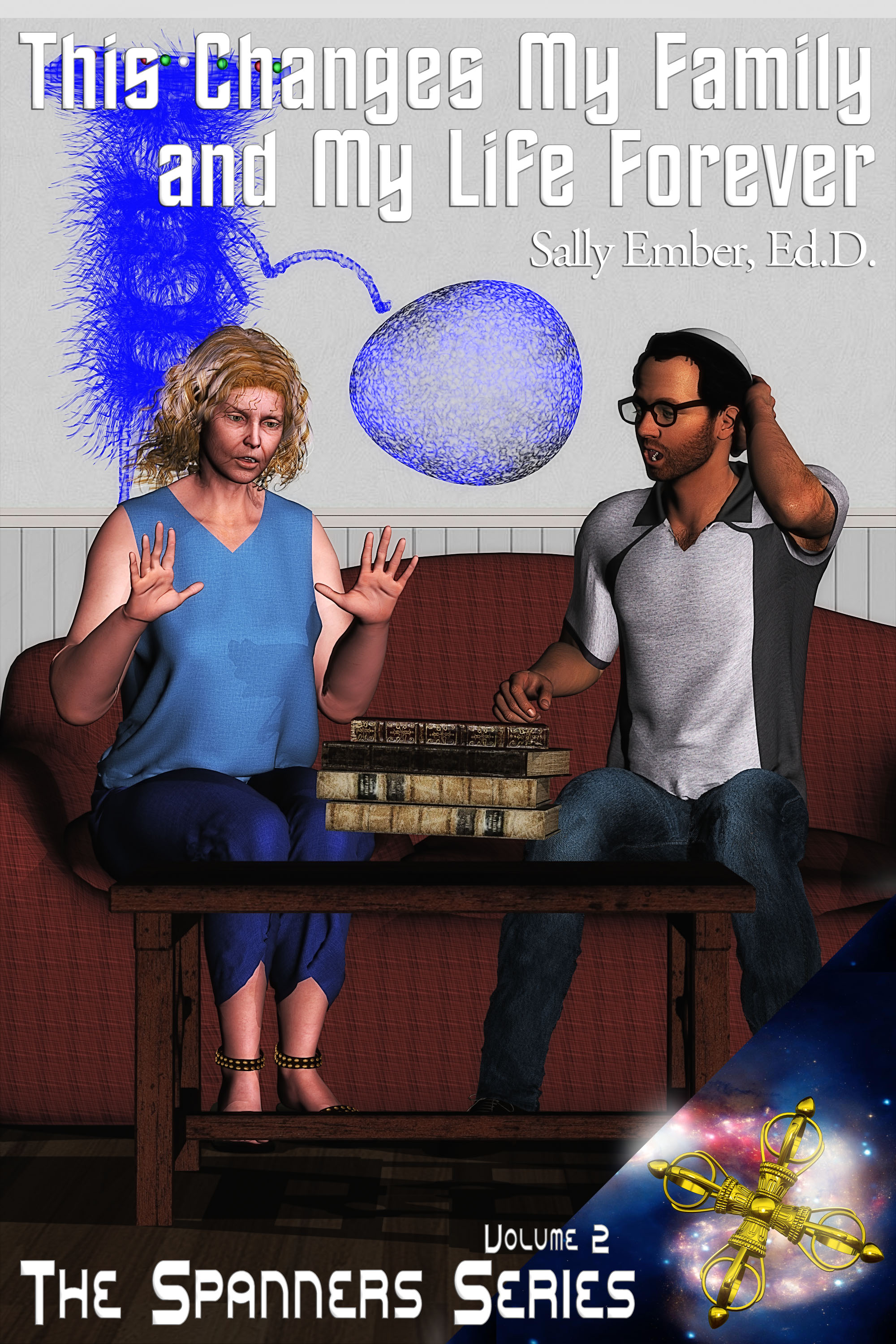
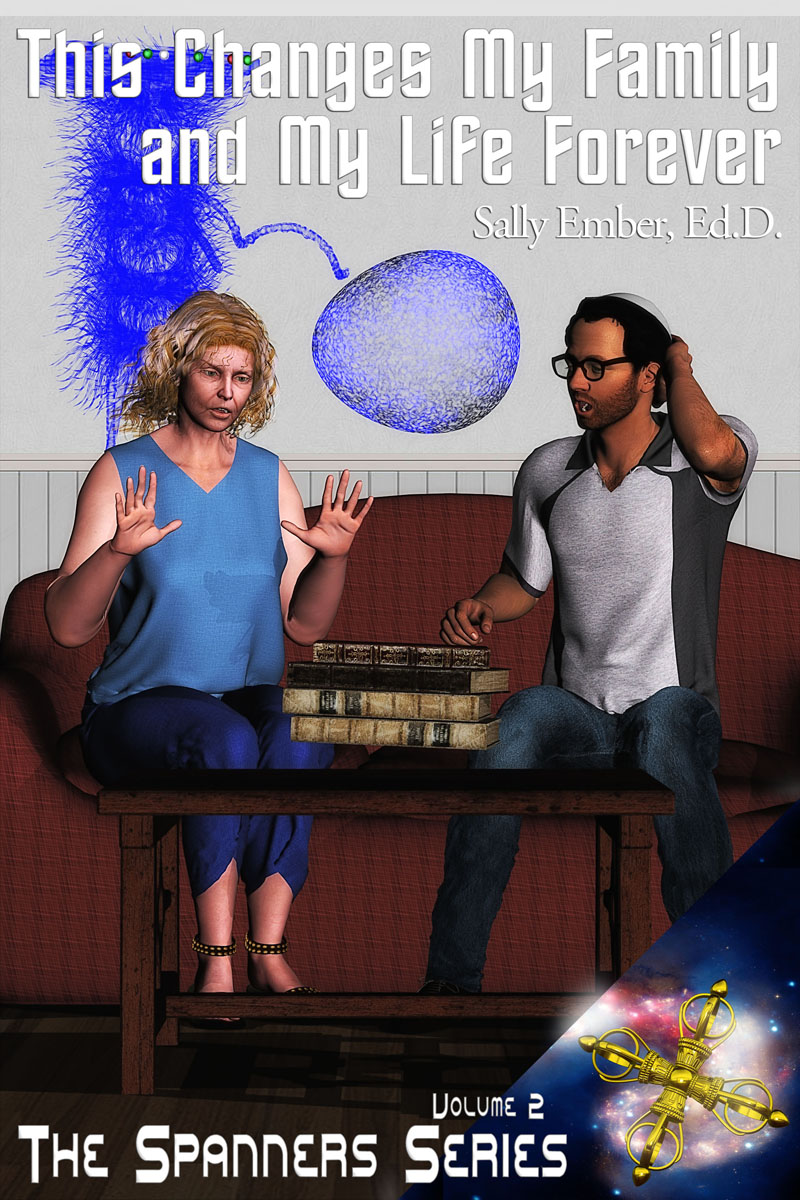
Then, for even more fun, download the first volume of my own sci-fi/ romance/ multiverse/ utopian Spanners Series, This Changes Everything (which is free) and then, Volume II, This Changes My Family and My Life Forever, as well. Also, please try some of the others’ books in this CIR Blog Hop!

Here are my books. All links can be found on my website: http://www.sallyember.com Look right and scroll.

This-Changes-Everything----web-and-ebooks

Now PERMA-FREE everywhere ebooks are sold.

final cover print

Now $3.99 wherever ebooks are sold.

logoAuthorsDen

Volume III, This Is/Is Not the Way I Want Things to Change, due out early in 2015. Volumes IV – X in process.
All Spanners‘ cover and logo art by Aidana Willowraven.

As always, REVIEWS ARE APPRECIATED!

Blog Hop Schedule
(please note: not all bloggers will be offering giveaways):

Check out all the sale books here.

Disclaimer: Comment by 11:59:59 PM Central time on October 10, 2014 for your chance to win. Please leave your email address with your comment. Winners will be contacted by the blog owner by October 13, 2014. Only one entry per ISP address. The contest is open to international readers unless stated by the blog owner. No purchase necessary to enter. Odds of winning depend on number of entries received. The giveaway is the sole responsibility of the blogger. Clean Indie Reads is in no way responsible for providing prizes during this blog hop. Void where prohibited

 
Please visit the other sites in this Blog Tour! Schedule/URLs above and here: http://lindacovella.com/events-news/clean-indie-reads-fall-sale/

Many thanks to Linda Covello for organizing this and to all who participate as bloggers, all of you who visit, and especially all of your readers who comment, buy, download, read, and review our CIR books!

Enjoy your Clean Indie Reads!

Share /reblog this post!

Proud member of Clean Indie Reads!

CIR_Logo
 

Unknown's avatar

FALLING LEAVES, FALLING PRICES: CLEAN INDIE READS (#CIR) Fall #Book #Sale Blog Tour

cir-fall-sale-graphic
http://arcaniarts.com/index.php/fall-clean-book-sale

FALLING LEAVES, FALLING PRICES
Clean Indie Reads, the home of Flinch-Free Fiction, is having a #Fall #Book #Sale 

October 5 thru October 11!

Check out all the sale books HERE! http://arcaniarts.com/index.php/fall-clean-book-sale

Or, if you would like to go directly to Amazon and peruse the sale books by genre, check out these on Listmania: http://www.amazon.com/gp/richpub/listmania/byauthor/A1DSK2JI3W8GDJ/ref=cm_aya_bb_lists

To celebrate, we are having a #blog #hop where you can learn more about some of our authors and their books. Our bloggers will also be answering the question: “Do the changing seasons influence your writing and/or choice of books to read?”

Please join the discussion on this site by commenting, below, and please visit all the participating blog sites: you might win a prize or two! Happy Hopping!

My post:

The Sirian Experiments‘ Take on Changing Seasons

The best science-fiction series I have ever read that utilizes the idea of changing seasons is Doris Lessing’s The Sirian Experiments, which won the Man Booker Prize in 1981. It is Volume III of her Canopus in Argos: Archives Series, a masterwork of new ideas in philosophy, gender identity, sexuality, social relationships, ecology, geology, psychology and so much more. I highly recommend you start at the beginning and read the entire series. Then, start over. Really.

The main premise of The Sirian Experiments which relates to today’s thematic question is this: Humans and Earth itself are an experiment conducted by those from the planet Siria. Part of that experiment was to tilt Earth on its axis, creating seasons in most parts of the planet, and then to track the effects of this tilt on humans.

The main way that humans responded to this tilt was that we developed varying emotions. According to the Sirian experimenters, humans’ becoming emotionally labile, meaning quite reactive, sometimes inexplicably positive or negative, was a direct result of the planet’s switch from having temperate, monochromatic climates to having changing/seasonal climates.

Fascinating, right? After many centuries of observation, the Sirian experimenters further theorized that the more extreme the climate seasons changes were, the more radical the changes in the emotions of the humans living in those latitudes became. Those that lived closer to Earth’s equator and therefore experienced fewer and smaller annual seasonal changes were the least emotional, for example.

With the more recent understandings of the ways reduced sunlight affects many people, bringing to our attention extreme reactions, such as SAD (Seasonal Affective Disorder) and high rates of suicide in latitudes of Earth that have fewer annual days/hours of sunlight, we now have support for Lessing’s “far-fetched” propositions.

Interestingly, SAD wasn’t “discovered” until after Lessing’s books had been published (SAD was formally described and named in 1984). Hmmmm…..

I recently moved from a more monochromatic climate (the San Francisco Bay Area) back to a more temperate/seasonal climate (Missouri). I wonder if I will become more “emotional”? I grew up here and I lived in temperate climates for most of my life, only inhabiting the more monochromatic climates for the last 15 years or so. However, that time also coincided with intensification in my Buddhist meditation practice, higher attendance at more and longer meditation retreats, many periods (years, not months) of unemployment, and fewer intimate relationships, so the experimental “controls” fail for THIS experiment.

All that being known, I am interested to find out how returning to a place that has actual seasons affects me. I’ll let you know!

First: have to buy some new winter boots. Mine rotted and molded from lack of use. LOL.

Second: get some more good books!

If you, as I do, like to curl up with a good book as we sit by a warming fire or other heating source as the weather gets rainier, colder, snowier or frosty, please consider getting the volumes in Lessing’s Sci-Fi series.

Then, for even more fun, download the first volume of my own sci-fi/ romance/ multiverse/ utopian Spanners Series, This Changes Everything (which is free) and then, Volume II, This Changes My Family and My Life Forever, as well. Also, please try some of the others’ books in this CIR Blog Hop!

Here are my books. All links can be found on my website: http://www.sallyember.com Look right and scroll.

This-Changes-Everything----web-and-ebooks

Now PERMA-FREE everywhere ebooks are sold.

final cover print

Now $3.99 wherever ebooks are sold.

logoAuthorsDen

Volume III, This Is/Is Not the Way I Want Things to Change, due out early in 2015. Volumes IV – X in process.
All Spanners‘ cover and logo art by Aidana Willowraven.

As always, REVIEWS ARE APPRECIATED!

Blog Hop Schedule
(please note: not all bloggers will be offering giveaways):

Check out all the sale books here.

Disclaimer: Comment by 11:59:59 PM Central time on October 10, 2014 for your chance to win. Please leave your email address with your comment. Winners will be contacted by the blog owner by October 13, 2014. Only one entry per ISP address. The contest is open to international readers unless stated by the blog owner. No purchase necessary to enter. Odds of winning depend on number of entries received. The giveaway is the sole responsibility of the blogger. Clean Indie Reads is in no way responsible for providing prizes during this blog hop. Void where prohibited

 
Please visit the other sites in this Blog Tour! Schedule/URLs above and here: http://lindacovella.com/events-news/clean-indie-reads-fall-sale/

Many thanks to Linda Covello for organizing this and to all who participate as bloggers, all of you who visit, and especially all of your readers who comment, buy, download, read, and review our CIR books!

Enjoy your Clean Indie Reads!

Share /reblog this post!

Proud member of Clean Indie Reads!

CIR_Logo
 

Unknown's avatar

Latest #Author #Interview with Sally Ember, Ed.D., on Connie Dunn’s page, goes live TODAY!

Thanks for a fun and great #interview, Connie, conducted/recorded on September 4, 2014, despite numerous technical difficulties!

My interview goes live TODAY, September 29, 2014. We talked about #writing, #science-fiction, The Spanners Series and its #aliens, the Series’ #cover art and Aidana Willowraven as the cover artist,

logoAuthorsDen

my #utopian views, writing in the present tense to emphasize the #multiverse/#paranormal/#psi elements, #science/#research, book #reviews, “crowd creating” and other #collaborations, ghost writing, #series writing, writing across #genres and for multiple audiences/age groups, inspiration/creativity, my writing history (from age 9 on), #editing, #indie publishing and much more.

http://publishwithconnie.com/mondaymorning is the link to Connie’s website. Please visit, look at her books and what she offers to authors!

From there, you can go listen to my interview: http://publishwithconnie.com/teleseminar-dashboard/sally-ember/

Unknown's avatar

#Injuries to the #Mind, #Brain and #Psyche that Cause Difficulties with #Meditation

I have been noticing, since the fall that injured my brain via a #concussion in early April, that I have had unusual and unique (to me) difficulties with meditation (and life) ever since. Add to this several other “injuries” to my mind and psyche due to: disastrous #heartbreak; a difficult #move cross-country (i.e., getting rid of almost everything, going far away from my spiritual/ meditation teacher and spiritual community/ sangha to relocate to my childhood hometown); long-term, chronic #unemployment; disappointing #ebook sales (due to my having been incapacitated during key #marketing time after my accident); unexpected and painful changes to my #health; turning 60, which have led to my noticing many other problems with my #meditation practice in the last several months that I’ve never had before this (I’ve been meditating since 1972 and doing this practice since 1999).

I think, under these circumstances, which would put me over the top on any stressors test, I am doing quite well. However, I want to meditate, not just do well. Why does my mind keep skittering away from my focus when I try to meditate? What is happening in this brain/mind of mine? I have done many retreats, some as long as eleven weeks, and never had anything like these problems before. My talks with other meditators without brain injuries confirmed that only we injured seem to have these types of difficulties.

But, why? And, what to do about them?

I kept hearing this quote as I continued my attempts:

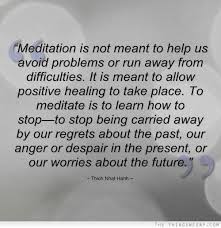
meditation better than nothing

I pray that this is true….

Since I am a life-long researcher and the internet provides endless opportunities for me to look for “answers,” I looked around for others’ stories, cautionary tales or suggestions. I wanted to find more injured meditators I could commiserate with or teachers who could offer me advice.

What did I find? See below.

Not surprisingly, when I looked for links between “stress” and “meditation,” I found millions of links (17,700,000) referring to the help that meditation provides us when we’re stressed. Meditation for stress reduction, managing stress, alleviating stress, etc., abound on the internet and elsewhere.

NOT ONE article or study to be found that discusses how stress impacts meditation. Really? Really.

Here was my “path”:
“Searches related to meditation problems life stressors” which then provided these other key word strings:

  • meditation for stress

  • meditation for stress relief

  • guided meditation for stress

  • meditation for stress and anxiety

  • meditation for stress management

  • meditation depression

  • meditation for stress or sudden shock

  • meditation for stress and anger

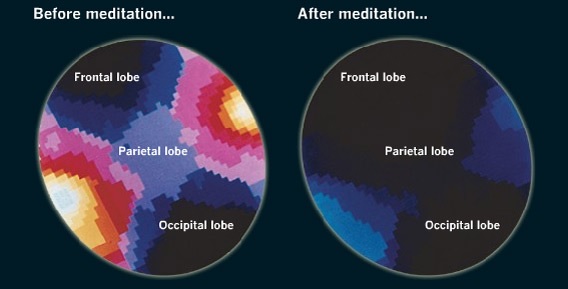
Frontal lobe meditation before and after

image from: http://www.paramyogaindia.wordpress.com

I also tried: “Searches related to impact of stress on meditation,” which yielded about 6 million results, but always in the reverse: how meditation helps with stress.

Okay. I must be going about this all wrong. I tried the verbal “OKAY GOOGLE” command and asked: “OKAY GOOGLE: Why am I having trouble meditating?”

I got 1,020,000 results, but these all revolved around problems “beginners” have with “monkey-mind,” or problems many have with setting aside time, being consistent, staying with meditation once they start, etc. I couldn’t look at all one million results, but the associated key word strings confirmed my suspicions: OKAY GOOGLE still did not understand my problem.

Google did offer other choices (some quite hilarious, under the circumstances):

“Searches related to why am I having trouble meditating”:

  • i am having trouble pooping

  • i am having trouble getting pregnant

  • i am having trouble sleeping at night

  • i am having trouble breathing

  • i am having trouble breathing and my chest hurts

  • i am having trouble swallowing

  • i am having trouble breathing deeply

  • i am having trouble logging into my facebook account

I even tried getting more specific with OKAY GOOGLE, asking: “Why does my concussion make it hard for me to meditate?” This query led me to even stranger associations than before, including recommendations for those with concussions to meditate to help heal from their concussions.

Huh?

I don’t know whether to be flattered or to cry when this also had my own article from my blog post in May as the number 3 listing among 11,000,000 results:

concussion | Sally Ember, Ed.D.

sallyember.com/tag/concussion/

May 2, 2014

If I’m one of the “experts,” here, we’re all in trouble.

Don't follow me I'm already lost

image from http:///funny-pictures.picphotos.net

So, I was going to give up on finding “help” but then I tried this search string: “research meditation frontal lobe injuries” and hit the jackpot.

First, this quote (unattributed) kept appearing: “Meditation is a frontal lobe activity,” which affected me deeply. My accident, for those who don’t know, involved my hitting a wall face-first, breaking my nose and impacting my forehead, behind which is the frontal lobe.

Here are some selected quotes from the best article I found, from the UK, that clarifies a lot about the functions of the frontal lobe, its effects on and participation in the activity of meditation, and many other aspects of my experience: very illuminating and helpful.

Case study on function of the frontal lobe

“The frontal lobes play a major role in the regulation of our emotions and behaviour as well as planning, decision making, social conduct, and executive functions. They are vulnerable to damage… [and] are thought to be our emotional control centre [sic; UK spelling] and home to our personality.”

“The frontal lobes are vulnerable to injury and damage due to their location at the front of the skull and their ample size. Magnetic Resonance Imaging studies have revealed that the frontal area is the most frequent region of damage following brain injury (Levin et al., 1987). Statistics show that there is no other component of the brain in which impairment can cause such a wide array of symptoms (Kolb and Wishaw, 1990).”

This began to intrigue me, especially the part about the “wide array of symptoms,” which I can attest to experiencing. Some of my “symptoms” have seemed to be unclearly connected to the concussion until I read more of this article.

“The frontal lobes are involved in problem solving, spontaneity, memory, language, initiation, judgement [sic; UK spelling], impulse control, social cognition (Benson, 1996) and sexual behaviour. Motor function is also seen to be controlled by the frontal lobes (Leonard et al., 1988).”

I have noticed my balance is off, my proprioceptors are off, my sense of security on my feet is reduced, but until I read this, I wasn’t sure if I was suffering from a bit of PTSD and wariness about falling again or actually having trouble. The latter, I believe now, is the case.

“Broca’s Aphasia has also been linked with frontal lobe damage (Brown, 1972). It is supported that frontal lobe damage has an effect on memory and attention (Stuss et al., 1985).”

Ding ding ding: points for all. Unfortunately.

“Mesulam (1986) pointed out from his studies, that some people who have suffered frontal lobe damage show impairments in their everyday life; however they show little or no impairment on clinical neurological assessment tests….[One injured patient was] unable to make decisions and plan…often unable to make simple everyday decisions, such as which toothpaste to buy, what restaurant to go to, or what to wear even after endless comparisons and contrasts Damasio (1985)….This may be characterised as a failure of future memory, the ability to encode delayed intentions, and act on those intentions when the appropriate time arrives.”

Usually I am extremely decisive. Even when there are complex factors, even when I feel ambivalence: before this accident and its injuries to my brain, I was considered a person others could rely on to make the choices they could or would not make. Since then, I have had hesitation, confusion, bewilderment, inability to weigh costs and benefits and many other unusual reactions to being asked to choose even the simplest things. Now I know the reasons for this befuddlement. Good.

“Interestingly, some patients who suffer from frontal lobe damage often do not show any defects on neuropsychological tests. However, when observed in unstructured real world settings, patients frequently demonstrate cognitive difficulties, neurobehavioral symptoms, and deficits in their executive functions.”

I would say, without a doubt, that the most severe deficit to my executive functions has been first my complete inability and then my reduced ability to meditate, since meditation has become the foundation for all the thinking, choosing and behaving in my life via values, personality and habit changes.

TBI as a puzzle

image from: http://www.brainline.org

I can see ways I’ve regressed since the accident and these are disturbing in deep and superficial ways. I’m more impatient, more quick to anger, easily provoked to sadness or hurt. I hide it from those close to me but take it out on customer service representatives of mega-corporations which happen to provide terrible service. Not proud of this at all.

“Studies have found high frontal lobe activation during meditation (Herzog et al, 1990; Lazer et al, 2000).”

IF I COULD MEDITATE, I would, also. I miss meditating so much. But, now I know a bit more about the reasons for my difficulties.

I hope this post and the rest of this article (link, below) help others in similar predicaments.

http://www.ukessays.com/essays/psychology/case-study-on-function-of-the-frontal-lobe-psychology-essay.php#ixzz3ClAyyWOc

Keep trying, keep going: got to believe it will improve.

I’m also going to see if I can talk (or video chat) with my meditation teacher some time soon. I need something.

A quote from Thich Nhat Hanh is what I plan to contemplate until my meditation practice gets back on track.

Thich Nhat Hanh quote

Unknown's avatar

How I Benefit from the Celebrities I Grew Up /Worked with and Still Do

How many famous and important people do you actually know (besides yourself, of course)? How does this benefit you?

Do I know more than you, or more than most? I’m in the mood to brag, by association, about having such amazing friends and former associates and colleagues. I also want to share how knowing these extraordinary people benefits me.

Some definitions seem helpful, here.

By “grew up/worked with” I mean: I KNOW/KNEW these people. We ate together, went to school or camp together, swam or canoed together, were friends/colleagues for more than a few minutes (some I’m still connected to strongly; several were lovers). Not only would I claim them, but they all know and remember me well.

By “celebrities,” I mean that these are people who have:

  • been on the covers of national magazines and/or featured speakers/presenters at national/international events/conferences;
  • won national or international awards or positions of great importance;
  • invented/started something significant;
  • wrote/starred in/produced something significant in the way of art/music/books/movies/plays;
  • achieved a high level of renown in their chosen field;
  • are known by many others as “great” in their field;
  • been stars of series TV shows and/or featured on popular talk shows;
  • are known by and hang out with other celebrities.

(in no particular order)
From Ladue Schools in St. Louis, MO (apparently, a disproportionate number of important contributors to society, culture, science and justice are graduates from my well-known and -regarded Horton Watkins Ladue High School, not just the ones I list, below):

Dr. Jonathan D. Fleischmann, M.D. My older brother is a urological oncologist who has patented surgical techniques, medications and other treatments as well has being the mentor/teacher for many other surgeons/researchers in these areas. Our mother lost a kidney to cancer in the 1960s and is fortunately still alive today.

Jon

D. Scott Bassinson, J.D., one of my first serious boyfriends and long-time friend, is an Attorney who has argued at the USA Supreme Court, now a Judge and always, a Musician/Composer. It is due to Scott and his brother, Kevin (also a celebrity)’s resignations that I became Ladue High School’s rehearsal and performance accompanist and a professional accompanist for musicals, choruses and performances.

scottbassinson

Karen S. Raskin Kleiman, MSW, author of several books, founder of the Postpartum Stress Center, and leading researcher in Postpartum Depression and its treatments (featured on many TV talk shows, including OPRAH, in magazines and websites).

Karen Kleiman

Rich Rubin, journalist, playwright, Founder/Producing/Artistic Director, Quince Productions and GayFest! (Philadelphia), was my first piano-playing duet partner under Deborah Rosenblum in the early 1960s, and we graduated from Ladue together in 1972.

R Rubin

Craig Pomranz, singer, recording artist, live cabaret performer, children’s book author, was another one of my high school “more than friends” that I’m still in touch with and regard highly.

Raffi cover

Dr. Alice Conway, J.D., Ph.D., attorney and philanthropist, blind since aged three, first blind Board Chair of the The St. Louis Society for the Blind and Visually Impaired. Alice and I had many classes together in junior and senior high school.

Alice Conway

Dr. Michael Green, M.D., Ph.D., Professor at UMASS Medical Center in Gene Function and Expression, the recipient of the Searle Scholar Award, the Presidential Young Investigators Award, and the McKnight Neuroscience Award and Investigator of the Howard Hughes Medical Institute. Michael was my second serious high school boyfriend and I went to the first college I attended partly because he was there (sorry, feminists). I knew his little brother, Eric, as well (see below).

Green

Dr. Eric Green, M.D., Ph.D., director of the National Human Genome Research Institute, recipient of numerous awards and author of many scholarly articles.

Eric Green

Joel Meyers, longtime sports broadcaster (currently play-by-play announcer of the New Orleans Pelicans of the National Basketball Association). Joel and I went to school together from Kindergarten through high school, but we weren’t exactly friends.

Joel Meyers

Frances Ginsberg, Opera Singer (deceased) with the New York City and Spanish operas before her death several years ago sang in our high school’s Chorale and musicals. I accompanied her solos.

Fran ginsberg

Want to see more about some of these Ladue alums and more? In 2012 (the year of my 40th high school reunion), Ladue held its 60th “Distinguished Alumni” Awards Ceremony and it is on YouTube: http://bit.ly/10vTEaP

From Camp Hawthorn (the St. Louis Jewish Community Center Association’s Missouri Ozarks overnight camp, until 1969):

Sheldon Mirowitz (also from Ladue Schools), soloist musician, producer/arranger and sideman, professor at Berklee College of Music in Boston, film and TV composer, winner of awards at the Sundance Film Festival and other accolades for his music,including three Emmy nominations and one Peabody Award. I met Sheldon in 8th grade at camp and then we we re-met in high school and have been friends ever since.

Sheldon

Chuck Blitz, became independently wealthy in the first dot.com boom and turned that to opportunities to be a philanthropist, environmentalist, social/environmental activist, particularly in the Santa Barbara, CA, area, and with Ram Dass and the White Lotus Foundation (ecological, social community and world service (SEVA) programs and yoga teacher training). I went to camp with Chuck; his sister, Judy (“Jay”) was my first counselor, but he and Glenn Savan were/are my brother, Jon’s, age, so we weren’t really friends.

Glenn Savan, (deceased in 2002), author of White Palace, a semi-autobiographical novel turned into the film in 1987, starring James Spader in Glenn’s role and Susan Sarandon as the love interest, using the local “White Castle” hamburger joints as the setting. I knew Glenn from camp, but we weren’t exactly friends.

White Palace

Colleges and New England living (University of Wisconsin/Madison and University of Bridgeport/Connecticut (undergrad) and University of Massachusetts/Amherst (graduate)

Dr. Hans van der Giessen, Ph.D., Provost and Vice-President for Academic Affairs for and Political Science Professor at the Univ. of Bridgeport, Hans was a close personal friend for many years. We aren’t still in touch, though.

Dr. Rahima Wade, Ph.D. (deceased, 2012), almost single-handedly brought “service learning” into public schools in the 1990’s. She also introduced me to the idea of returning to school as a parent of young children and we both attended UMASS/Amherst at the same time. I first met her in Keene, NH, since we belonged to several of the same community groups.

Rahima

Dr. Mary Kalanzis, Ph.D., and Dr. Bill Cope, Ph.D., Professors, authors/researchers in Multicultural Education and Workplace Diversity globally. I met them when Mary came to Keene State College in New Hampshire as a Fulbright Scholar from Australia in 1990-91 with her husband and colleague/co-writer, Bill, and son, Philip. I then traveled with my partner to visit them in Australia in 1996. Mary and Bill are now at the University of Illinois/Champagne, where she is the Dean of the College of Education.

Mary and Bill

Dr. Sonia Nieto, Ed.D., Dr. Jerri Willett, Ph.D., Dr. Peter Elbow, Ph.D., Dr. Masha Rudman, Ed.D., Dr. Barbara Love, Ed.D., Dr. Maurianne Adams, Ed.D., Dr. Pat Griffin, Ed.D., among others at UMASS/Amherst, when I studied there in the early to mid-1990s. These particular professors taught/advised me and are authors/ researchers/ activists of great renown in their respective fields (Teacher Education, Curriculum Development, Multicultural Education, Second Language Acquisition, Social Justice Education, Writing Education, Lesbian/Gay Studies, Literacy/Children’s Literature). Because of them, I have held positions as an instructor/trainer in various subjects at various colleges/universities and several nonprofits around the USA.

Dr. Caroline Myss, Ph.D., best-selling author, speaker, medical clairvoyant, teacher. I met Caroline in 1983 in New Hampshire and we became close friends, seeing each other almost weekly until she moved to back to Chicago in 1992. Since then, we stayed in touch, sporadically, but she travels internationally and is unusually busy even when she “lands” somewhere. She mentions me and our friendship in several of her books’ dedications/acknowledgements.

caroline_sitting

Other notables from the Antioch/New England Graduate School in Keene, NH: Faculty members/authors/ researchers, David Sobel, Rick (Youst) van der Poll, and Mario Cossa (who is also a longtime good friend and colleague). Mario, two of our students and I co-authored one book about the program he started that I helped fun for many years in Keene, ACTING OUT,

Acting Out book

and I edited Mario’s second book.

Rebels

Recently, Mario was introduced to some colleagues in Israel as “the most prominent psychodramatist in California.” How exciting!

From Camp Med-O-Lark (in Washington, ME)

Bari K. Willerford, actor in the National Deaf Theatre and star of MathNet children’s TV show on PBS as well as continuing to appear in many other TV series, movies (American Gangster) and TV episodes.

Bari

From Community Matters in Sebastopol, CA:

Rick Phillips, M.S. Ed., co-author and co-creator of the Safe School Ambassadors anti-bullying program and book, which I helped edit, write and edit. I worked at CM for almost five years, up to 2010.

SSA book

From Northern California:

David “Gus” Garelick, musician, composer, conductor, teacher, author/researcher, D.J., founder/artistic director of “The Hot Frittatas,” “The Gravenstein Mandolin Ensemble” (both of these groups have CDs available) and “The Wild Catahoulas,” also plays/has played in many other duos and bands and on many recordings, including with Queen Ida.

David and I are friends (meshpucha, Yiddish for extended family [by blood and not by blood]) who also play music together (he rather well, I rather badly). I posted our last California duets on my YouTube Channel! Have a listen/look when you’re in the mood!
https://www.youtube.com/channel/UCqnZuobf0YTCiP6silDDL2w/feed

David has planned a series of three volumes about mandolin music, including his own and others’ tunes. Here is Volume I:

Mando book cover 1

Allegra Broughton and Sam Page, singers/songwriters, musicians, founders of “Solid Air,” members of “The Wild Catahoulas,” also play/have played in many other duos and bands. Author of a series of books about and original tunes for mandolins, David also writes a column for Fiddler Magazine and is a national, state and regional fiddle champion and often, judge of fiddle contests. Solid Air has many great CDs available.

Solid Air

Don Coffin, singer/songwriter, musician, teacher, former husband and member of Kate Wolf’s band, member of the “The Hot Frittatas,” Don also plays/has played in many other duos and bands. Don taught well-known guitarist, Nina Gerber, when she was first learning guitar.

Don C

Dennis Hadley, musician, singer, member of “The Hot Frittatas,” “The Wild Catahoulas,” also plays/has played in many other duos and bands. Legally blind since birth, Dennis is one of the best accordion players and enthusiastic vocalists in northern California.

Dennis

From Chagdud Gonpa, my Buddhist Community (Sangha):

Our main teacher, deceased in 2002, His Eminence, Chagdud Tulku Rinpoche, was a meditation master, teacher, author and Buddhist scholar. A contemporary of His Holiness the 14th Dalai Lama, Rinpoche studied with him under many of the same teachers and escaped Tibet to India at about the same time as the Dalai Lama. His books are well-known and -regarded, and the Western students he taught and groomed to become teachers before his death are well-known and -regarded as Buddhist meditation masters and teachers in their own rights. Among them are my teachers, Lama Padma Drimed Norbu (known as Lama Drimed) and Lama Padma Shenphen Drolma (known as Lama Shenphen), who are also authors and Buddhist scholars.

CTR

Rinpoche’s books are well-known and -regarded, and the Western students he taught and groomed to become teachers before his death are well-known and -regarded as Buddhist meditation masters and teachers in their own rights. Among them are my teachers, Lama Padma Drimed Norbu (known as Lama Drimed) and Lama Padma Shenphen Drolma (known as Lama Shenphen), who are also authors and Buddhist scholars.

Change of heart

Among our sangha members whom I know personally are two authors: Barbara Gates, who wrote a thinly fictionalized novel about her early years at Chagdud Gonpa’s main residential meditation center, Rigdzin Ling, with these and other teachers and sangha members, In the Buddha’s Kitchen; and, photographer/teacher, Cary Groner.

Exiles-210

Now, all of these (still living) celebs can brag that they know ME!

Unknown's avatar

Moving back “home” after living elsewhere for over 40 years

What does it mean, exactly, “home”? I left St. Louis County when I went to college. I have visited frequently because many relatives, including my mom, still live here, but have lived elsewhere since 1972.

When I told people I was coming to live here, people asked “How do you feel about moving back home?” How is a place I lived for only seventeen years over forty years ago “home”? It’s not even the same house.

Olivette house

I lived in a house very much like this one, 1959-1972.

I have been peripatetic in my adult life. I lived in Wisconsin (Madison, 1972-74) and Connecticut (several places in and near Bridgeport, 1974-76) during college. I then lived in every other state in New England for twenty-eight more years, from northern Vermont (St. Albans) in 1976 to southeastern Massachusetts (Westport Point) and Rhode Island (Tiverton) in 1977-78, to my longest stint anywhere (20 years) in southwestern New Hampshire, while living more than a dozen places there (New Ipswich, Sharon, Stoddard, Sullivan and East Sullivan, Nelson, then several places in Keene), ending with southwestern Maine (Saco) in 1998. After New England, southwestern New Mexico (Silver City) for 2 1/2 years, then several places in northern California (near San Francisco: two in Santa Rosa, then one each in Sebastopol, El Cerrito, Hayward) for twelve years.

City, country, suburb and small town: I’ve lived in them all. Now, back in St. Louis. Even in St. Louis, the longest I lived in one spot was our family’s house on Old Bonhomme Road (twelve years), which is the same number of years I lived in one collective/family house in Keene (Water Street).

Water Street likeness

Here is a similar house to the one we lived in on Water Street in Keene for twelve years.

A few times, towards the end of my twelve years in Keene, NH, upon returning from times away I’d feel a sense of coming home as we crossed the city limits’ sign. But, soon after, I moved away from there.

If longevity prevails as the criterion, which of these, then, is “home”?

My mom’s condo is not the “home” I spent my school years in, although this location is “in the neighborhood,” meaning, same school district [LADUE (derived from a French word for those who work for a Duke)]. BTW, LADUE is considered to be one of the best school districts in the USA and in the top 25 of the Midwest. Bragging on that.

572 Coeur de Royale

Now we live in a condo very much like ones in this building.

She now lives in CREVE COEUR (meaning “broken heart,” in French), along with many others from the “old neighborhood” (OLIVETTE, meaning “little Olive”). Not a big change, since this is about a ten minutes’ drive from Olivette.

Many of the landmarks, businesses and roads have changed, moved, been eliminated, but there are still some fixtures I recognize after over forty years. The old are populated/interspersed with the new, as everywhere.

The shell of a fast-food place about to be finished (“BIG BOY”) in which I had my first make-out sessions (with Eric) in 6th grade is now a grassy, flat field after having been two different fast-food restaurants. The bowling alley (NELSON BURTON LANES) where I learned to play pinball and to bowl (badly), and behind which I had my first kiss (from Bobby) is still there, but changed owners and names. The elementary school my siblings and I attended (CENTRAL SCHOOL, which we lived almost across the street from and used to treat as our personal playground) became an alternative high school soon after my youngest sibling went to junior high school.

What makes a place feel like “home”? Here is my test: How does it feel to return after I have been away? Does it seem that I am visiting or coming back?

For about twenty-five years, I considered Boston/Cambridge my hub. I had friends who went to college and then lived there. I took classes, saw clients, attended meetings, visited friends and went to events there often. Logan was the airport we used most often until Hartford’s and then Manchester’s grew. Beantown was the BIG CITY we would go to for those experiences. Cambridge was the intellectual/artsy center of existence. I also went to New York City from New Hampshire, but not as often or as easily (it was more than twice as far by car).

Whenever we’d drive to Boston, as our car crested the first hill that would give us a view of “The Pru” and the John Hancock buildings, my heart would lift. Exciting things happened here.

Boston skyline

The “Pru” and the John Hancock buildings in Boston.

I walked all around both Boston and Cambridge, had several lovers in and around there, used the T (subways/trains) and frequented cafes. I loved going there for many years. But, Boston was never “home.”

Flying or driving into St. Louis, I would look for the Arch as the landmark. But, seeing it, I never felt “Oh. Now I’m home.”

Arch

But, here, unlike many places I’ve lived since I left Keene, NH, I am recognized. After being “invisible” for about fifteen years, it is startling to be called out in public. Last week, while perusing the deli section at Whole Foods, “Sally Fleischmann!” reached my ears. A seemingly strange man called out to me, in surprise at seeing me; a classmate from my high school saw and knew me after not having seen me for many years. I went to a friend’s father’s funeral/shiva and many people there recognized me, called out my name, knew my father. I exercise at the local Jewish Community Center’s building and often know people there or they know me or knew my dad or know my mom or siblings. Does being known or recognized make one feel at home?

Maybe it’s that I just moved back to St. Louis about two weeks ago and I haven’t completely unpacked. I have had visits that lasted over a month here before this, living out of suitcases and drawers as I do now.

I think, as I told one friend, recently, once I pass the five-week mark (and I plan to be completely unpacked by then), I could realize that I now am not visiting and actually live here.

How much longer will it take to feel like “home”? Ask me in 2027.

home

Unknown's avatar

#60for60 ENDS Today! 6/21 – 8/22/14

Read about my outcomes for #60for60, for my attempts to engage in acts of kindness and gratitude in the 60 days leading up to my 60th birthday.

Practice-deliberate-kindness-cartoon-final-cropped

image from ulovesomethingmore.com

Pick one or more and engage in them yourself, any time!

Quotation-John-Milton-gratitude-life-manners-experience-blessings-world-kindness-Meetville-Quotes-264505

image from meetville.com

Comment on my blog to wish me “Happy Birthday” and tell your stories on or after 8/22/14.

Enjoy! 6/21 – 8/22/14

60 BD

60 FOR 60:
60 ACTS OF KINDNESS AND GRATITUDE
FOR THE 60 DAYS PRECEDING MY 60TH BIRTHDAY

June 21, 2014 to 8/22/14

1. $
Give a very good tip. SEVERAL times.
2. $
Pay for someone’s gas. No opportunities (not enough extra funds)
3. $
Pay someone’s fees to foster a dog or cat from shelter. No opportunities (not enough extra funds)
4. $
Leave change in a vending machine. No opportunities (not near any machines)
5. –
Volunteer.
6. $
Donate a random amount of money to a homeless person. No opportunities where it would have been private.
7.
Open doors for people. SEVERAL times.
8.
Give genuine compliments to someone’s very unseen blogs. SEVERAL times.
9.
Donate supplies I don’t use. SEVERAL times: Turns out I’m moving!
10.
LetsSayThanks.com Didn’t do.
11. $
Give someone an umbrella: Brought an extra one on my cross-country move. Maybe my sister will use it!
12.
Let someone behind me go in front of me in a line. SEVERAL times.
13.
Clean a neighbor’s curb area or put their garbage cans back after pick-up. SEVERAL times.
14. $
Buy someone’s groceries in the checkout. No opportunities (not enough extra funds, but gave away a LOT of food during my move give-aways)
15. $
Pick up the tab for a random family/person. No opportunities (not enough extra funds, but gave away so many items to single parents and seniors during my move give-aways)
16. $
Buy some carry-out lunch and deliver it to a homeless person. Told story about this in previous post.
17.
Give compliments to people. Several times
18. $
Buy some toys a child might like and leave them on their porch. Gave to a parent, instead.
19.
Post about something useful to others.Several times, according to comments and thanks.
20. $
Go to the bank and deposit money into other’s account. No opportunities (not enough extra funds)
21. $
Pay off someone’s layaway at a store. No opportunities (not enough extra funds)
22. $
Cook lunch or dinner for someone I know and bring to them.Several times, served here rather than delivered.
23. $
Buy a college student’s textbook or lunch. No opportunities (not enough extra funds)
24.
Leave a thank -you note at every farmers’ market vendor’s stall. Thanked them orally, instead.
25.
Collect coupons and leave at laundromats. Didn’t do. Don’t collect coupons. 
26. –
Leave Buddhist magazines at homeless shelters. Donated them to someone who is working at organization that serves homeless youth and families, instead.
27.
Donate clothes, coats, shoes. SEVERAL times: Turns out I’m moving!
28. $
Reserve a coffee at coffee shop. I don’t go to coffee shops.
29.
Read someone’s writing and give constructive feedback, for free, even though I’m a professional editor. Several times.
30.
Send a thank-you note to every family member. Done by email and Facebook posts.
31.
Send a thank-you note to every friend. Done by email and Facebook posts.
32.
Offer to edit, rewrite, or help write something for someone for free. Did four+ times. Great responses.
33.
Respond to someone’s comments with positive statements in FB, LinkedIn, Google+ groups. Several times.
34.
Thank group moderators in above groups.Haven’t done all, but have done some.
35.
Tweet about someone else’s writing, music or art. Several times.
36.
RT or repost someone’s great quote. Several times.
37.
Vote up someone’s submission on Reddit, StumbleUpon, Youtube. Several times.
38.
Thank every cashier and waitron I can’t tip. Several times.
39.
Offer to help someone who seems to need help at stores, farmers’ market, library. Several times.
40.
Donate books to library book sale. Several times.
41. $
Donate food to food bank. Several times.
42.
Offer a ride to someone with burdens walking to the BART or bus. No opportunity.
43. $
Buy a BART ticket and give it away. No opportunities (haven’t been near BART)
44. $
Leave tips in tip jars even when I don’t buy anything. Tipped two people who usually don’t get tipped.
45. $
Donate to my spiritual teacher even when I don’t see him. Actually, got to see him. Wonderful.
46.
Get and give coupons for free ebooks to teachers. No opportunities. 
47.
Write positive reviews for books and rank them on Amazon. Several times.
48. $
Visit one church or temple per month and donate to charity tray/basket Didn’t do.
49.
Send thank-you notes to musicians, writers, artists whose work I appreciate Did a few.
50.
Send thank-you notes to teachers or their children/spouses. No opportunities.
51.
Scan then post/email photos from albums for friends, family and let them know. Several times.
52.
Make Youtube vids thanking writing support groups leaders/members and cover artist, Willowraven, reviewers and beta readers then post. Started CHANGES Hangout On Air 8/6 and do THANK-YOUs in every episode.
53. $
Pay someone’s parking meter. No opportunity (no meters around here).
54.
Compliment a parent on their parenting in public place. Done twice. Fabulous responses.
55.
Compliment/thank a public servant. Thanked some BART guards walking around the Farmers’ Market (near the BART).
56.
Write letter to editor thanking honest, dedicated local politicians. Wish I knew any around here.
57.
Blog about gratitude to my/one’s ancestors. Not done, yet.
58.
Share positive stories about people I knew who are now dead to their living descendants. Not done, yet.
59.
Thank Buddhist sangha members and/or support one’s retreat. Donated books, clothing, ritual items to retreatants/practitioners./strong>
60.

I LOVED doing 60 for 60, even though I didn’t get to them all, I did a lot more than 60 acts!

Find someone else whose birthday is today and wish them “Happy Birthday!” Do kind and generous acts of your own choosing, any day, every day.

https://sallyember.com/2014/06/20/60-for-60-60-acts-of-kindness-and-gratitude-for-the-60-days-preceding-my-60th-birthday/

Unknown's avatar

#iamsubject story: I Find Myself Wherever I Live and I Move A Lot!

I am participating in Diane DeBella’s #iamsubject project http://www.iamsubject.com/the-iamsubject-project/. Here is my #iamsubject story.

I Find Myself Wherever I Live and I Move A Lot!

#iamsubject story: I Find Myself Wherever I Live and I Move A Lot!

Whenever I interact closely with females, my menstrual cycle changes its start date. I am never the anchor. I am a mover.

Why?

Maybe because I was born near the beginning of the last hour for a Leo to be born in St. Louis, MO, 1954, so I am almost a Virgo. Being on the cusp shows up all over my life. I don’t completely believe in astrology, but one astrologer read my chart and told me: “You will always be in transition. This is good for being a Buddhist. You are quite familiar with impermanence!”

Or, perhaps it’s due to my never quite belonging in any one place, group or category. Whenever I take a personality or any other kind of test whose results divide people into groups or types, my answers put me in more than one, straddling two or more, often.

Then, there is the ridiculous number of times I have relocated. I lived in fourteen places before the age of 22. During one three-year period, I moved with my infant, then toddler, and his father, my full upright piano, his woodworking tools and wood collection, three times every year)!

The number is about to hit 30 more, totaling 52 places of residence before I turn 60, averaging out to almost one per year. Most of those moves were not of my own choice, meaning: I didn’t want to be a nomad; I had to go. Next month (July, 2014), I have to move again.

I have lived in this place for fewer than eighteen months. Before that, I was housesitting nearby for three months. Before that–almost a record–I had practically seven years in my own place. Luckily, my next move is back to that same town, north of San Francisco, an area I dearly appreciate.

Some people believe that roots are important. I do not know.

The longest I’ve ever lived in one place is twelve years (twice), but even during those periods, I was away for two to four weeks during some summers, attending or working at camps. The longest circumstances have allowed me to stay in one job is almost five years (also twice).

How do I “find myself” when I am not located anywhere in particular? Many philosophers say: “Wherever you go, there you are.” I have become a lifetime believer in that aphorism.

By others’ reports, I am reliable, organized, stable and calm, yet I am also unpredictable, unusual and “different.” How am I “different” and from whom?

  • I do not identify with “stuff.” I do not collect anything for the sake of having a collection.

  • Even though I have framed pictures and art, I do not often hang or display most of it. In this current, almost 18-month tenure, I “never got around to it.”

  • I read constantly, but the books I own do not even fill one bookcase. I always belong to and avidly use libraries.

  • I don’t talk like anyone else in my family of origin. I have no regionally identifiable accent.

Because I’ve lived in so many places–Missouri, Wisconsin, every state in New England, New York state, New Mexico, California, the Philippines), I have an unusual conglomeration of ways to pronounce and articulate certain words, phrases and concepts. I also know some Spanish, Italian, Hebrew, Yiddish, German, French and Tibetan. It’s impossible to determine where I’m “from” by hearing me talk.

Another way I’m a “mover” is that I adapt to and adopt others’ cuisine, ways of living, schedules, customs, preferences and styles rather quickly. Most people see me as having my own unique, eclectic “style.” Little do they know that most of these “ways” aren’t originally “mine” or even from any one person or place.

“My weird ways”:

  • I get up between 3 and 5 AM.
    Because I attended or set up on my own several ten-day to eleven-week Buddhist meditation retreats for the last fifteen years, I got used to rising early. Before that, not my schedule.

  • I eat very differently from the way I was raised.
    Housemates brought me into eating and cooking organic, whole, healthy, mostly local foods in 1977. After a few years of that, the new food habits “stuck.”

  • For over thirty years, I hated and altered my curly hair, then set it free.
    I tried to get my curly hair to “go straight”–I ironed it with a clothing iron, used chemicals, wrapped it in giant curlers or used my head as the largest curler, used hand dryers in public bathrooms–all in the pursuit of unnaturally straight/er hair. Every day, even when I stopped using methods, I brushed and tried to “tame” my wavy/curly hair, usually unsuccessfully. One day, one of my younger sisters who shares these genes of mine showed wearing her hair in an abundance of curls. I asked her how she managed them? She said: “I stopped brushing my hair.” This was a revelation! I haven’t brushed my hair since. It is cooperatively curling on most days.

  • For almost twelve years, I suffered through shaving, then happily stopped.
    I acquired numerous scars from cuts, had painfully ingrown hairs, developed awful deodorant rashes and a host of other problems. I hated shaving, but I kept doing it. One day in 1977, I arrived at an interview to teach in a parent-cooperative school in Rhode Island. The director, a woman a few years older than I, didn’t shave. I was fascinated. Since I was spending the late summer weekend with the group of parents, teachers and staff, I plucked up my courage to ask her about not shaving. She said: “Why shave? It wastes time, causes problems and isn’t necessary. Men have the choice. Why shouldn’t women? I choose not to shave.” Dumbfounded at the simplicity of her argument and eager to discard this horrible habit, I happily haven’t shaved since that day in 1977.

  • I hate bras. Always have.
    I used to wear bras. Mostly I don’t, now. Similarly, this same mentor demonstrated the irrelevance of bras. That was an amazing liberation to my 23-year-old self. I have eschewed bras ever since and research has vindicated us on that choice: bras are BAD for circulation, ventilation, and overall lymphatic health. PLUS, they do NOT prevent, but rather exacerbate gravity’s sagging effects. Unless aging hormones cause me to need “holders,” I do not wear them.

I can attribute my “personality quirks,” “life choices,” and many “unique characteristics” of “mine” to others’ influences. Yet, I don’t feel off-balance each time I incorporate a new aspect or habit, often from someone I am newly acquainted with or getting to know better. I am actually very choosy about which traits I adopt and whom I select to emulate. Having been around thousands of people spanning many places, I can be that particular.

My friends, bosses, colleagues, relatives, neighbors, housemates and acquaintances often offer up one habit of speaking, dressing, interacting, leading, thinking, living that I decided to make my own. THANKS to you all!

With each “move,” I re-affirm the central parts that comprise “me” and jettison everything extraneous. Paring down, weeding out, separating the wheat from the chaff, I spend time being grateful for and treasuring what (and whom) I keep in this peripatetic life.

Here I go, again. Let’s see who I become this time!

Unknown's avatar

My best Give-Away Story: Our Family Table becomes Ryan and Gina’s Family Table

As most of you know, I am moving cross-country this week and spent the last month giving away almost everything substantial I own. By the time I leave, I will have shipped only 5 cardboard boxes and filled just my car (including my sister and HER carry-on bag!).

My mid-Swis, Ellen, and I are driving (after she flies up from LA to Oakland) from northern California to St. Louis, MO, where I will live with our mom. I grew up about 10 minutes from where my mom now lives.

I have had the BEST time arranging for where my “stuff” would next live. Friends, family members and then, strangers arrived in a steady stream to peruse and take things almost every day for the last three weeks. This relinquishing has been poignant, fun, interesting and a bit strange. I actually like to watch “my” things walk out the door, one by one (or by the bag or box), quickly becoming someone else’s possessions.

One of the last things to go (and I wasn’t sure I’d get anyone to take it) was my 5′-round, plywood table and its iron stand, which lived outdoors for the last 18 months.

Please read these emails to find out its story, then look at the photos.

Life can be very sweet!

One bit of background:
After Gina and I emailed back and forth a few times, it was determined, based on all of our schedules, that Gina’s father and Ryan, Gina’s financé, would come to get the table on Friday, mid-day, two days before I left. Ryan and Gina are about to be married.

I told them a few things about the table as they circled it, preparing to move it. As Ryan and his father-in-law picked up the tabletop to carry it to the truck, I asked Ryan: “How are you going to use the table?”
Ryan told me: “We are going to use it for our wedding!”
I smiled and asked: “And then what?”
He replied: “Then, we’re going to keep using it!”

Yeah!

On Friday, August 15, 2014 9:53 PM, Ryan wrote:

Hi Sally,

My father and I got right to work on the table. I attached some photos of the finished top and primered legs.

We will take great care of the table for you.

Thanks again,
Ryan & Gina

I wrote back on Saturday, 8/16, at 7 AM:

Hi, Ryan and Gina,

This makes me so happy!

Thanks so much for taking care of, fixing up and bringing our family/community table which hosted, from 1982 – 2013, countless holiday, birthday, graduation and other rituals’ parties, costume-making and other crafts and arts projects, games’ and toys’ foundations, family meals, work project meetings, tutoring sessions and homework/homeschooling (this table was even featured in the local newspaper in Keene, NH, in 1986, showing my son and me playing an educational game during a homeschool lesson!) into your lives and ceremonies.

This table started out on Court Street in Keene, New Hampshire, in 1982, our family’s first collective households in Keene. It was mounted on a tall barrel that was temporarily filled with fabric; the top was made to be removable so the co-maker, Bonnie, who was doing many sewing projects, could utilize the fabric. We were low on storage space, so, there it was! We celebrated our son’s 2nd birthday and many others’ birthdays in the three years we lived on Court Street with several housemates. We had Thanksgivings, Chanukahs, Christmases and other parties there.

The table came with us in 1985 when we moved to Leverett Street and then in 1986 when we moved to Water Street, also in Keene. We stayed on Water Street for 12 years. During that time, both my son and I had two graduations, each (my master’s and doctorate; his 8th-grade and high school), dozens of birthdays of our families and others, up to 11 people around it for holidays and other parties.

The barrel eventually dried out/fell apart despite many years of repairing and re-circling it with extra metal bands, so Christopher found/made its 4-legged, removable iron stand.

A fledgling Assisted Living/Buddhist Center my then-partner and others started with me in Saco, Maine, received the table when we moved to it in 1998, but then we sold that and we then moved the table and this community to Silver City, New Mexico, in 1999.

The table then followed my peripatetic existence as I lived in five different houses (and it lived on one patio) in Silver City before finding its way with me to Santa Rosa, CA, in late 2001.

There the table was in storage above my housemate’s garage for almost five years. In late 2005, the table happily came out to live with me in Sebastopol, CA, where I used it well for about 8 years.

In late 2013, I had to leave Sebastopol, so the table again went into storage until early 2014, when I moved to Hayward. The table didn’t fit into my little Cherryland house, so it lived outside (that is the way it became so weathered and needed your great craftspersonship to refinish and restore it!). Living alone and not knowing anyone in Hayward, it didn’t get much use but I knew it was there.

So, here we are. I gave the table to you! May you and your loved ones get to enjoy this well-used table in good health and happiness for another 30 years or more!

I’m CC’ing this to: the makers of the table (our friend, Bonnie Insull and my son’s father, Christopher [please forward this, Christopher, to Bonnie]); our son, Merlyn; my mom and some friends and family who lived with and/or enjoyed the use of this table many times with us: they will also be made happy by this news!

I feel much better about leaving it “behind” knowing it’s in such good hands! I love this whole story, so I’m posting it on my blog, with your photos and others I have. http://www.sallyember.com/blog The story will appear Monday, 8/18.

Best to you,

Sally

Sally Ember, Ed.D.
nonprofit manager/educator
author, The Spanners Series

PHOTOS of the Table

Original Craig’s List Give-Away photo, August, 2014:

table

Before and After Refinishing, 2014

BEFORE:

table legs unfinished

table top unfinished

AFTER:

table top finished

table legs finished

Unknown's avatar

Proven, Long-term Effects on Physical Health of those who suffered childhood Trauma, Abuse, Neglect and Bullying

In case you’ve been unaware of the last several years of research from all over the world, with children, adolescents and adults, some after 40 years since the trauma, they all come to the same conclusions: those who suffer childhood trauma, whether through abuse, neglect, witnessing domestic or neighborhood violence or being bullied by siblings or peers, have observable, lifelong negative consequences to not only our psychological but to our physical health. Traumas include war and threats of warlike activity, sudden natural disasters, neighborhood or school-site gang warfare and violent encounters of other types that children and teens experience, even if “only” as witnesses.

consequences of childhood abuse

image from http://www.acestoohigh.com

Is there any “good news”? Only a bit.

  • When responsible adults who have the power to act curtail or stop the abuse or trauma early on, some of the effects may be reversible.
  • If adults whom the victim/survivor encounters treat the traumatized child, teen or adult consistently and appropriately by supplying effective psychological therapy and immediate environmental improvements, an almost-complete recovery is possible.
  • When the child reports the bullying or abuse or reveals that domestic violence or parental neglect is occurring and the listening adults immediately take the child’s reports seriously followed by taking obvious supportive, preventive and/or protective actions, these responses also improve the child’s chances of developing fewer problems later in life.

Links to some of the research articles recently published are below. My favorite points are in this post. Thanks to all the researchers, reporters/journalists and participants in these studies who made these understandings possible.

May all abuse, neglect, bullying, domestic violence and other causes of childhood trauma CEASE in our lifetimes.

May all children grow up and be educated in safe, healthy environments.

20_circle_TLG network model_Lives of Children_24_07_08

image from http://www.earlytraumagrief.anu.edu.au

Sources and quotes:

I. Abuse Casts a Long Shadow by Changing Children’s Genes

By Eleanor Nelsen

July 2014

http://www.pbs.org/wgbh/nova/next/body/epigenetics-abuse/?utm_source=facebook&utm_medium=pbsofficial&utm_campaign=nova_next

“For abused children, that trauma is just the beginning. Most will likely struggle well into adulthood.”

trauma to early death pyramid

image from http://www.ascd.org

“Living with an abusive parent has increased their risk for depression and other psychological problems while decreasing their chances of successfully maintaining close relationships. Even physical ailments, like type 2 diabetes and heart disease, are more likely in adults who were abused as kids. Early abusive experiences can leave a stubborn imprint on those children’s brains and bodies, and Seth Pollak, a professor at the University of Wisconsin and head of the study, wanted to know how, exactly, abuse was changing these children’s bodies on a cellular level.”

“… people’s experiences exert a strong influence on their biology by silencing genes or turning them back on, significantly changing the way a cell functions without changing its DNA sequence. It’s a phenomenon known as epigenetics.”

“’Epigenetics makes the genes tick,’ explains Moshe Szyf, a professor of genetics and pharmacology at McGill University. Epigenetic changes modify DNA to keep genes from being expressed, and they can explain dramatic differences between cells with identical DNA—for example, how stem cells can turn into either liver cells or heart cells, or why only one of a set of identical twins gets cancer. It’s also, Pollak found, why children who grow up in abusive homes have physical and psychological problems that haunt them well into adulthood.”

“‘… something like parenting, parental care, was flipping the switch.’… trauma might be turning this stress-management gene off…”

“…for children in abusive homes, who are in threatening situations every day, having more cortisol floating around isn’t necessarily bad—at first. ‘You may need to remain vigilant more often. You may need to flip into vigilant state more easily. That’s keeping you alive under harsh conditions, but it’s also making it really hard for you to function.’”

“…The long-term results are the chronic psychological problems like anxiety and depression and chronic physical problems like heart disease and type II diabetes, which often surface years later in victims of childhood abuse.”

“… Having too few receptors for cortisol keeps the immune system from learning to manage inflammation and infections, helping explain why children in abusive homes seem to get sick more often, and are at a higher risk for chronic health problems.”

“’The idea that these things aren’t fixed is really encouraging,’ Pollak says.”

II. Bullying affects children’s long-term health, study shows

February 2014

http://www.medicalnewstoday.com/articles/272762.php

“In the first study of its kind to assess the compounding effects of bullying over 5 years, researchers have found that a child experiences more severe and lasting health implications the longer he or she is bullied, suggesting that early interventions could reverse the “downward health trajectory” that victims of bullying may experience.”

“At any age, bullying was linked with worse mental and physical health, more depressive symptoms and a lower sense of self-worth. And students who reported chronic bullying also experienced more difficulties with physical activities like walking, running or playing sports.”

“‘Our research shows that long-term bullying has a severe impact on child’s overall health, and that its negative effects can accumulate and get worse with time,’ says Bogart.”

“She calls for more intervention around bullying, ‘because the sooner we stop a child from being bullied, the less likely bullying is to have a lasting, damaging effect on his or her health down the road,’ she adds.”

“…recent events may be more important than distant ones to a child’s health, but the team notes that health consequences “compound over time” and may stay even after the bullying has ceased.”

“… their findings emphasize the importance of stopping bullying early and continuously intervening to help with the lingering effects.”

Sally Ember wholeheartedly recommends the nonprofit USA-based organization, Community Matters, for their advising and trainings for improving school climate through research-based and clinically-proven effective bullying prevention and education programs, “Safe School Ambassadors,” for youth, school staff and parents.
Contact them (they offer programs around the world): 707-823-6159 or http://www.community-matters.org

Medical News Today reported on a 2013 study published in the journal Psychological Science, which suggested victims of childhood bullying fare poorly in adulthood. Findings from the study showed that individuals bullied in childhood were more likely to have a psychiatric disorder, smoke, struggle to keep work and had difficulty maintaining friendships.”

III. BULLYING BY SIBLINGS ANYTHING BUT HARMLESS

compiled in 2013

http://www.elementsbehavioralhealth.com/behavioral-health-news/bullying-by-siblings-anything-but-harmless/

While other forms of bullying are commonly taken seriously and relatively well-researched, bullying between siblings often gets ignored or minimized. However, two recent studies call attention to the potential pitfalls of discounting the effects of sibling bullying. One of these studies indicates that children who bully their brothers or sisters take this activity less seriously than other bullying behaviors, while the other study indicates that sibling bullying can cause just as much mental health harm as other forms of bullying.

Risks associated with childhood trauma

image from http://www.psychiatrictimes.com

“…childhood bullying substantially increases the chances that an individual will develop a diagnosable mental illness during adulthood. These same risks also apply in magnified form to bully-victims, a term used to describe bullying victims who go on to perpetrate acts of bullying on others.”

“… more siblings (85 percent) actually identify themselves as bullies than as bullying victims (75 percent)….[T]his finding points toward a widespread childhood acceptance of sibling bullying as a non-consequential behavior that has no meaningful impact on the well-being of affected individuals. This acceptance also almost certainly reflects the attitudes of the larger culture toward the seriousness of sibling bullying.”

“…both relatively moderate and relatively severe bullying produce a decline in mental health marked by things such as anxiety, depressed moods and uncontrolled outbursts of anger. Moderate physical bullying by a sibling has a greater mental health effect on younger children than on older children. However, the authors found that all other forms of sibling bullying have an equally negative effect on both younger children and teenagers.”

“… current social tendencies to downplay or dismiss the importance of sibling bullying contribute to the problem and seriously increase the chances that sibling bullying and other forms of bullying will continue to diminish the psychological/emotional well-being of large numbers of individuals.”

“…pediatricians can help decrease the impact of sibling bullying by looking for signs of such bullying in their patients on an annual basis.”

IV. The neurobiological effects of childhood maltreatment: An often overlooked narrative related to the long-term effects of early childhood trauma?

by Jennifer Delima and Graham Vimpani

http://www.aifs.gov.au/institute/pubs/fm2011/fm89/fm89e.html

“… some current societal dysfunction may well be an overlooked significant consequence of childhood maltreatment, with its associated trauma effect upon the developing brain. These changes prevent and impair the ability to remediate disadvantage and its effects through purely social policy and justice measures.”

Acts of commission (actions against the child)
Physical– The child is subject to disciplinary action by his/her caregiver(s), with resultant bruising, severe pain, temporary loss of mobility, scars, burns, shaking etc. This may lead in some cases to more serious and life-threatening injuries, including inflicted brain injury.
Sexual – This involves the sexual abuse or exploitation of the child and /or exposing them to sexual acts.
Emotional – The child is subject to repeated verbal abuse, being sworn at or receiving hurtful and demeaning comments about his/herself. This form of maltreatment also includes the child hearing about violent acts perpetrated upon a significant attachment figure for the child.

Acts of omission (actions of failed care)
Witnessing family violence – The child hears or watches aggressive verbal altercations and/or physical violence.
Neglect – This type of maltreatment ranges from failing to provide basic food, shelter, clothing and care (including relevant medical care) to exposure to harmful substances. This is often labelled as “environmental circumstance”, but studies of documented behavioural features and neuro-imaging tests demonstrate that the resultant brain injury patterns are similar to those seen in children exposed to acknowledged trauma and maltreatment.
Sources: Chrousos & Gold (1992); De Bellis (2002); MacMillan et al. (2009)

“Neglectful acts have also been extended to include the exposure of children to cigarette smoke when they are motor vehicle passengers, although this does not yet apply to the unborn foetus. Exposing foetuses to harmful agents (teratogens) could also be regarded as neglectful when there is a known causal relationship between the substance and resultant structural malformations to the developing foetus (e.g., continued thalidomide use despite knowledge of its effect on foetal limb growth, or continued alcohol use with knowledge of its causality in foetal alcohol spectrum disorder). Such actions are neglectful regardless of the intent of the child’s parent, caregiver or other responsible adults.”

“The common factors in trauma or maltreatment that adversely affect early brain development appear to be those events and conditions in which the child experiences or repeatedly experiences, in a prolonged and uncontrolled manner, circumstances that they perceive as being likely to be significantly life threatening for themselves.”

They can use “non-invasive static-scan neuro-imaging tools, such as MRI (magnetic resonance imaging), DTI (diffusion tensor imaging) and SPECT (single-photon emission computed tomography). More recently, assessment with ‘functional MRI’ (fMRI) has provided even further evidence of the impact that maltreatment has upon a child’s brain, including the assessment of not only structural changes but also the dynamic processes occurring within the brain as the child recalls or listens to an account of the varying types of maltreatment to which they have been previously exposed.”

“Maltreatment that comprises severe, prolonged and uncontrolled life stressors activates a prolonged biological stress response. This response is mediated through the limbic-hypothalamic-pituitary-adrenal axis, a system that describes the brain’s interaction with the peripheral body through neural (sympathetic nervous system) and hormonal (adrenal gland) tissues that regulate the body’s response to perceived longer acting stressors (infection, trauma, neglect, substance exposure, etc.).”

“The developing brain is particularly vulnerable to stress, especially with respect to the pre-frontal cortex, hippocampus and corpus callosum. Through prolonged activation of the biological stress response system, structural and functional brain changes occur. The behaviours resulting from chronic stress include poor self-regulation, increased impulsive behaviours, and emotional responses such as high levels of experienced anxiety, aggression and suicidal tendencies and, in some, a learned helplessness from the constant impairment of self-regulation.”

“…the response to chronic stress impairs the function of noradrenaline and dopamine within the limbic system and that this may account for the typical post-traumatic stress disorder (PTSD) symptoms of persistent hyper-arousal and hyper-vigilance that continues to occur after the trauma, despite resolution of the initiating experience. These neurotransmitters also interact with the serotonin system to modify mood and anxiety symptoms.”

“The impact of maltreatment on the brain – structural, functional and behavioural – has been shown to worsen the longer the duration of trauma experience and the younger the age of onset of the trauma experience.”
Substance misuse and dependence

“Early onset adult depressive, suicidal and personality disorders have also been shown to be significantly increased in those with documented histories of childhood maltreatment….This has been postulated to be the outcome of cortisol hyper-secretion.”

“… ‘antisocial’ personality disorder is a more frequent occurrence in those with a history of physical abuse and/or neglect, whereas “borderline” personality disorder is more frequently associated with childhood sexual abuse.”

“Cognitive development and academic performance are also adversely affected by childhood exposure to violence. MRI studies show that exposure to violence is associated with children having smaller intracranial, cerebral and prefrontal cortex volumes, with particular effects on prefrontal white matter, temporal lobe volumes and the corpus callosum….these children have been found to suffer increased levels of depression, dissociation and both externalising (aggression, self-harming) and internalising (depression, anxiety) symptoms.”

“…male children are more vulnerable to the consequences of maltreatment, and this is reflected in changed brain structure….The corpus callosum volume in males is especially decreased in the isthmus region of the corpus callosum, which appears to facilitate more externalising behavioural symptoms of aggression and suicidality.”

“A similar decrease in volume is noted in the superior temporal gyrus and hippocampus, with a resultant observed deficit in executive function ability and sustained attention and focus, a limited verbal response ability, and poor short-term memory and capacity for future planning. Also observed has been a decreased ability to learn through both motor and non-motor means. Further, the cerebellum is generally decreased in volume in these children, with an observed attendant behavioural pattern of having difficulty sleeping, poor concentration and general irritability.”

“Maltreatment in early childhood has also been shown to result in adverse adult onset physical health; in particular, chronic disease and reproductive and adult sexual health problems….childhood abuse and exposure to domestic violence can lead to numerous differences in the structure and physiology of the brain, which affect multiple human functions and behaviours.”

“…not all children are adversely affected in this way. Some of this resilience may be attributed to the ‘neuroplasticity’ of the brain; that is, the ability of neural tissue to modify brain function and response, so enabling a different response to an experienced memory. Neuroplasticity occurs as a result of some synaptic pathways being enhanced rather than others following activities that stimulate specific sensory, motor and language development. This is especially seen in children under the age of 7 years and continues to a lesser degree into the mid-teenage years, but it decreases significantly around the third decade of life, when the brain has reached maturity with completed myelination.”

“…appropriate and early remedial therapy provided to children who have suffered maltreatment (either in utero, or during their childhood), may mitigate many of the adverse behavioural, learning and cognitive effects of the maltreatment.”

“Early identification of such affected children would permit the implementation of remedial social supports, education and behavioural treatment measures to enhance the modifying mechanism of neuroplasticity to reduce the functional neurobiological effects of child maltreatment. Additionally, early modification of the child’s environment to decrease the biological stress response may also assist the expression of the child’s genetic make-up (epigenetics).”

“Elevated cortisol biological stress responses in children and adolescents reflect the prolonged stimulation of the hypothalamic-pituitary-adrenal axis, which normally is an acute stress response system. This prolonged stimulation in turn adversely affects physical and mental health and wellbeing, resulting in conditions such as reduced immune function, cardiovascular disease, dysthymia (persistent mild depression), major depression, oppositional defiant disorder and attention deficit hyperactivity disorder (ADHD). Furthermore, persistent exposure to stress results in damped responsiveness to new stressors.”

“…females tend to express their responses to maltreatment through internalising symptoms such as depression, anxiety and eating disorders, compared to males, who express themselves more through externalising symptoms such as aggression, harm directed at others and suicidality.”

” [However], the younger child tends to display a similar level of distress regardless of the magnitude of stress to which they are responding.”

“…not all children are adversely affected by maltreatment, and this is hypothesised to reflect their access to appropriate environmental and familial supports at the time of the event. Additionally, differential epigenetic responses to environmental circumstances may also play a part. If the biological stress response is rapidly curtailed through appropriate support, and safety and security measures are instigated, then structural changes within the developing child’s brain are likely to be minimised, along with the adverse behavioural consequences.”

“The effects of maltreatment on children extend further than the children and their respective families to affect the wider community. The learning and cognitive deficits observed in these children are then reflected in their poorer educational and life skills development, particularly their capacity for self-regulation. This in turn affects the community’s ability to control violence and ensure an environment that promotes individual safety.”

“Child maltreatment eventually also affects the broader society with which the child’s community articulates. When adults in these communities have also been affected in their own childhoods by significant and chronic maltreatment, and witnessed or experienced personal, family and community violence, as well as engaging in chronic alcohol misuse, the intergenerational “cycle of poverty and community dysfunction” continues; the adults who would normally be responsible for providing the leadership, supervision and caring roles are themselves limited by their own reduced cognitive capacity and executive function ability.”

“Identification of these children through early and appropriate screening … and targeted remedial treatment has the potential to mitigate some of the cognitive, learning and behavioural difficulties that may arise, such as poor literacy, unemployment, incarceration, childhood pregnancy, or substance dependence.”

“Where brain injury results from maltreatment, current social and justice strategies, often introduced relatively late in the individual’s life, are by themselves of little benefit in achieving remediation, as the damage to neuropsychological functioning may be too entrenched to be overcome. This is especially so as most of the remedial programs available commence after the age of 7 years, thus missing the most sensitive ‘neuroplastic developmental’ period.”

“Providing a safe environment for children and their families will enable the next generation of children to achieve their maximum adult potential through normal neurobiological development.”

V. Impact of childhood bullying still evident after 40 years

April 2014
This study was funded by the British Academy and the Royal Society.

http://www.kcl.ac.uk/iop/news/records/2014/April/Impact-of-childhood-bullying-still-evident-after-40-years.aspx

“Dr. Ryu Takizawa, lead author of the paper from the Institute of Psychiatry at King’s College London, says: ‘Our study shows that the effects of bullying are still visible nearly four decades later. The impact of bullying is persistent and pervasive, with health, social and economic consequences lasting well into adulthood.’”

“Individuals who were bullied in childhood were more likely to have poorer physical and psychological health and cognitive functioning at age 50. Individuals who were frequently bullied in childhood were at an increased risk of depression, anxiety disorders, and suicidal thoughts.”

love should never hurt

image from http://www.firstcovers.com

“Individuals who were bullied in childhood were also more likely to have lower educational levels, with men who were bullied more likely to be unemployed and earn less. Social relationships and well-being were also affected. Individuals who had been bullied were less likely to be in a relationship, to have good social support, and were more likely to report lower quality of life and life satisfaction.”

“…’what happens in the school playground can have long-term repercussions for children. Programmes to stop bullying are extremely important, but we also need to focus our efforts on early intervention to prevent potential problems persisting into adolescence and adulthood.’”

Unknown's avatar

‘BOT v. HUMAN: Score 2 for the Human! Transcript of Actual Online Chat with AT & T “Service Representative,” July, 2014

I had the occasion today to have an Online Chat with a “Service representative” on what is called (hilariously) the “LIVE PERSON” chat function on AT & T.

What a great person this corporation is!

Complete transcript is below. Verbatim. All grammatical, punctuation and other errors of syntax are #AT&T’s.

Their “Representative” is posted in BOLD. Comments welcomed. My sideline comments are in

ITALICS.

Thank you for choosing AT&T. A representative will be with you shortly.
You are now chatting with David.

Sally Ember: HI, David

David: Hello my name is David. Thank you for allowing me to be your specialist today. How may I assist you?
David: Good Morning Sally.
David: How are you doing today?

So, already, I’m suspicious. This much of an intro and the repetition scream ‘BOT to me.

Sally Ember: I just paid my bill, but there was an unexpected $8 “late charge” on it. I was in a terrible accident April 6 and was unable to keep up with bills (concussion; couldn’t use oomputer or track things for a while). I talked to someone at UVerse more than once as they called me to get me to make phone payments (which I appreciated), but no one said anything about any late charges. I am very low-income.Please remove this charge.
Sally Ember: Thanks.

David: I am so sorry to hear about your accident Sally.

Wow! They scripted this ‘bot pretty well!

Sally Ember: I would also like to talk about how to lower my bill.
Sally Ember: I’ve talked to many others and they all say my internet bill is way too high.

David: As I understood you need to get the Late payment charge of $8.00 removed from your account. Correct?

A little slow on the uptake, though. Can only process one task at a time?

Sally Ember: Yes. And I’d like to lower my bill overall.

David: No problem.
David: I can help you with that!
David: Please allow me a moment, while I access your account.

Sally Ember: Are you human or a ‘bot?

Why not ask? This is one of those questions it can’t answer properly, regardless.

David: I am sorry that I did not get your last statement.

Sally Ember: Most people get internet services for a lot less than $54/month.

David: Okay.

“Okay” what? Witness is nonresponsive.

Sally Ember: You don’t understand because you’re a ‘bot.
Sally Ember: I want a person, please.
Sally Ember: LIVE PERSON please! This works on the phone. Not here.

David: Yes, I am here to help you with this.
David: Yes, I am.

Some scripter thinks having it repeat itself is helpful. NOT.

Sally Ember: No, you’re not.

David: Don’t worry.

“Be happy” is supposed to come next. Missed its cue.

Sally Ember: I want the late charge removed and I want my internet bill to be under $40/month. Starting TODAY.

David: Please bear with me so that I can go ahead and help you with your concern.

See? Can only handle one at a time.

Care-O-Bot

Maybe it looks like this? image from commons.wikimedia.org

Sally Ember: ‘bot ‘bot ‘bot

I know; “don’t taunt the ‘bot.” Well, it has no feelings.

David: Please allow me a moment to access and review your records.

They don’t even both to write a different script for the online “LIVEPERSON” ‘bot than for the phone ‘bot. BIG CLUE.

Sally Ember: ‘bot
Sally Ember: They should add to your script: “I am a human.”
Sally Ember: LOL
Sally Ember: No human would every say that, though.
Sally Ember: Except to an alien.

David: As I am checking your account details, I see that you have been charged $8.00 as the late payment charge.

Can’t engage in any other task until task one is completed? Interesting.

Sally Ember: Yes. Please remove this.

David: Alright.

I wish the scripter knew how to spell “ALL RIGHT.”

Sally Ember: So, I will now have an $8 credit?
Sally Ember: Because I already paid that charge.
Sally Ember: Lower my bill, please.

David: Yes
David: I am crediting you $8.00 as you were not able to pay the bill on time due to the problem faced by you.

It can’t even remember I had an accident and has to resort to generic language, here? I’m hurt.

Sally Ember: I want to pay less than $40/month.
Sally Ember: Thank you.
Sally Ember: Change my monthly rate to $39.90/month, please.

David: Your bill has bill credited with $8.00.

Victory #1!

Sally Ember: Good. Lower my monthly rate, now.

Got to be persistent with these ‘bots or they just won’t respond.

David: Please check your updated account balance.

Sally Ember: Thank you.
Sally Ember: Lower my monthly bill to $35.00

David: Now let me check with lowering your bill.

Excellent. New task.

Sally Ember: Thank you. I am over 55 and unemployed.

I hope these are the right key words/phrases.

David: I can understand your concern and do have complete sympathy with you.
David: Please stay connected.

Sally Ember: Excellent. Apply that ‘bot compassion to lower my bill.

“Sympathy”? From a ‘bot? I don’t think so.

Sally Ember: Other people have internet service in which they are served by HUMANS for under $40/month. I want that.

David: Let me check that for you.
David: Please have patience.

Sally Ember: Oh, you have no idea.
Sally Ember: I am the epitome of patience and kindness. Just like you.

David: Thank you.

For what? Oh. You are programmed to thank me for having patience?

Sally Ember: LOL
Sally Ember: If you are human, they have given you a terrible script to use.

David: Sally, what I can do for you to lower your bill down is that I can get your bill down to $46.00.

Sally Ember: $46 is better, but not low enough. Keep going.
Sally Ember: $35 is better.

David: I make sure that your bill will  not increase now.

This ‘bot is using English even more poorly for this task. Coincidence? I don’t think so.

Sally Ember: A T & T has billions. It can afford to lower my bill $20 and not even notice.

David: I am really very sorry that I am not able to get your bill lower than what I have offered you.

No response to my corporation baiting, eh? Fine. Take the ‘bot high road.

Sally Ember: Tell your ‘bot scripter for you to be kinder and more generous, please.
Sally Ember: I bet you are. $46 is fine. Thanks.

David: Sally, I have tried my best to help you with your concern.

Oh, oh. Have to make sure it doesn’t take away my reduction. Have to be more direct, now. Show it who’s boss.

Sally Ember: I do thank you. Please lower my bill to $46.

David: You are most welcome.
David: Yes, I have lowered your bill to $46.00/month.

Wow! I feel doubly welcomed, now.Victory #2, sort of!

Sally Ember: Gee. All I had to do was ask. Excellent!

David: Is there anything else I can assist you with?

Sally Ember: Thank you. You are dismissed.
Sally Ember: Sleep mode.

I’m taking control, now. “Orders from humans must be obeyed” has got to be in its programming somewhere.

David: Thank you for being the best part of AT&T. Take good care of yourself & have a wonderful time with your family and friends ahead!!

The “big finish” is a bit much, don’t you think?

So, limited, but mostly a success. ‘BOT v. Human: Score 2 for the Human!

Great, AT & T! Your fake LIVE PERSON / ‘bot mostly works!

But, here is the LIVE PERSON I wished you had! ERNESTINE! (a Lily Tomlin character, on Laugh In, circa 1969)

Ernestine Llily_tomlin

image from http://www.gracegritsgarden.com

Unknown's avatar

‘BOT v. HUMAN: Score 2 for the Human! Transcript of Actual Online Chat with AT & T “Service Representative,” July, 2014

I had the occasion today to have an Online Chat with a “Service representative” on what is called (hilariously) the “LIVE PERSON” chat function on AT & T.

What a great person this corporation is!

Complete transcript is below. Verbatim. All grammatical, punctuation and other errors of syntax are #AT&T’s.

Their “Representative” is posted in BOLD. Comments welcomed. My sideline comments are in

ITALICS.

Thank you for choosing AT&T. A representative will be with you shortly.
You are now chatting with David.

Sally Ember: HI, David

David: Hello my name is David. Thank you for allowing me to be your specialist today. How may I assist you?
David: Good Morning Sally.
David: How are you doing today?

So, already, I’m suspicious. This much of an intro and the repetition scream ‘BOT to me.

Sally Ember: I just paid my bill, but there was an unexpected $8 “late charge” on it. I was in a terrible accident April 6 and was unable to keep up with bills (concussion; couldn’t use oomputer or track things for a while). I talked to someone at UVerse more than once as they called me to get me to make phone payments (which I appreciated), but no one said anything about any late charges. I am very low-income.Please remove this charge.
Sally Ember: Thanks.

David: I am so sorry to hear about your accident Sally.

Wow! They scripted this ‘bot pretty well!

Sally Ember: I would also like to talk about how to lower my bill.
Sally Ember: I’ve talked to many others and they all say my internet bill is way too high.

David: As I understood you need to get the Late payment charge of $8.00 removed from your account. Correct?

A little slow on the uptake, though. Can only process one task at a time?

Sally Ember: Yes. And I’d like to lower my bill overall.

David: No problem.
David: I can help you with that!
David: Please allow me a moment, while I access your account.

Sally Ember: Are you human or a ‘bot?

Why not ask? This is one of those questions it can’t answer properly, regardless.

David: I am sorry that I did not get your last statement.

Sally Ember: Most people get internet services for a lot less than $54/month.

David: Okay.

“Okay” what? Witness is nonresponsive.

Sally Ember: You don’t understand because you’re a ‘bot.
Sally Ember: I want a person, please.
Sally Ember: LIVE PERSON please! This works on the phone. Not here.

David: Yes, I am here to help you with this.
David: Yes, I am.

Some scripter thinks having it repeat itself is helpful. NOT.

Sally Ember: No, you’re not.

David: Don’t worry.

“Be happy” is supposed to come next. Missed its cue.

Sally Ember: I want the late charge removed and I want my internet bill to be under $40/month. Starting TODAY.

David: Please bear with me so that I can go ahead and help you with your concern.

See? Can only handle one at a time.

Care-O-Bot

Maybe it looks like this? image from commons.wikimedia.org

Sally Ember: ‘bot ‘bot ‘bot

I know; “don’t taunt the ‘bot.” Well, it has no feelings.

David: Please allow me a moment to access and review your records.

They don’t even both to write a different script for the online “LIVEPERSON” ‘bot than for the phone ‘bot. BIG CLUE.

Sally Ember: ‘bot
Sally Ember: They should add to your script: “I am a human.”
Sally Ember: LOL
Sally Ember: No human would every say that, though.
Sally Ember: Except to an alien.

David: As I am checking your account details, I see that you have been charged $8.00 as the late payment charge.

Can’t engage in any other task until task one is completed? Interesting.

Sally Ember: Yes. Please remove this.

David: Alright.

I wish the scripter knew how to spell “ALL RIGHT.”

Sally Ember: So, I will now have an $8 credit?
Sally Ember: Because I already paid that charge.
Sally Ember: Lower my bill, please.

David: Yes
David: I am crediting you $8.00 as you were not able to pay the bill on time due to the problem faced by you.

It can’t even remember I had an accident and has to resort to generic language, here? I’m hurt.

Sally Ember: I want to pay less than $40/month.
Sally Ember: Thank you.
Sally Ember: Change my monthly rate to $39.90/month, please.

David: Your bill has bill credited with $8.00.

Victory #1!

Sally Ember: Good. Lower my monthly rate, now.

Got to be persistent with these ‘bots or they just won’t respond.

David: Please check your updated account balance.

Sally Ember: Thank you.
Sally Ember: Lower my monthly bill to $35.00

David: Now let me check with lowering your bill.

Excellent. New task.

Sally Ember: Thank you. I am over 55 and unemployed.

I hope these are the right key words/phrases.

David: I can understand your concern and do have complete sympathy with you.
David: Please stay connected.

Sally Ember: Excellent. Apply that ‘bot compassion to lower my bill.

“Sympathy”? From a ‘bot? I don’t think so.

Sally Ember: Other people have internet service in which they are served by HUMANS for under $40/month. I want that.

David: Let me check that for you.
David: Please have patience.

Sally Ember: Oh, you have no idea.
Sally Ember: I am the epitome of patience and kindness. Just like you.

David: Thank you.

For what? Oh. You are programmed to thank me for having patience?

Sally Ember: LOL
Sally Ember: If you are human, they have given you a terrible script to use.

David: Sally, what I can do for you to lower your bill down is that I can get your bill down to $46.00.

Sally Ember: $46 is better, but not low enough. Keep going.
Sally Ember: $35 is better.

David: I make sure that your bill will  not increase now.

This ‘bot is using English even more poorly for this task. Coincidence? I don’t think so.

Sally Ember: A T & T has billions. It can afford to lower my bill $20 and not even notice.

David: I am really very sorry that I am not able to get your bill lower than what I have offered you.

No response to my corporation baiting, eh? Fine. Take the ‘bot high road.

Sally Ember: Tell your ‘bot scripter for you to be kinder and more generous, please.
Sally Ember: I bet you are. $46 is fine. Thanks.

David: Sally, I have tried my best to help you with your concern.

Oh, oh. Have to make sure it doesn’t take away my reduction. Have to be more direct, now. Show it who’s boss.

Sally Ember: I do thank you. Please lower my bill to $46.

David: You are most welcome.
David: Yes, I have lowered your bill to $46.00/month.

Wow! I feel doubly welcomed, now.Victory #2, sort of!

Sally Ember: Gee. All I had to do was ask. Excellent!

David: Is there anything else I can assist you with?

Sally Ember: Thank you. You are dismissed.
Sally Ember: Sleep mode.

I’m taking control, now. “Orders from humans must be obeyed” has got to be in its programming somewhere.

David: Thank you for being the best part of AT&T. Take good care of yourself & have a wonderful time with your family and friends ahead!!

The “big finish” is a bit much, don’t you think?

So, limited, but mostly a success. ‘BOT v. Human: Score 2 for the Human!

Great, AT & T! Your fake LIVE PERSON / ‘bot mostly works!

But, here is the LIVE PERSON I wished you had! ERNESTINE! (a Lily Tomlin character, on Laugh In, circa 1969)

Ernestine Llily_tomlin

image from http://www.gracegritsgarden.com

Unknown's avatar

I can #Meditate, Again! Ahhhh!

Good news! First time, since the fall that caused a broken nose and concussion on April 1, that I spontaneously dropped into meditative awareness/rigpa!

Dzogchen_A

image of DzoghchenAh” seed syllable for Rigpa from en.wikipedia.org

As some of you know, since the concussive injury to my brain, meditation was, at first, painful/impossible, then elusive/difficult and NOT recommended by the neurosurgeon (who commanded I REST my brain) (see earlier post on concussions’ effects on the brain regarding meditation and other effects from April).

This week I began returning to intentional meditation, slowly, in small sessions, coming up to the day (TODAY, 6/23/14) the doctor will (hopefully) clear me for all mental activities.

Reading a blog post in which the word “wisdom” appeared is what triggered the “ahh” moment! Thanks to fellow bloggers!

It’s like returning home. Tearfully happy today.

Rigpa3-225x300

image from http://www.artsyshark.com (Terri Lloyd): “Rigpa 3″

As I kept reading others’ posts and perusing online sites, every slightly related word or image seems to trigger the same spontaneous meditation response!

I feel a bit like Helen Keller in Patty Duke’s depiction of her in The Miracle Worker: after Helen first realizes that the finger spelling Annie Sullivan has been doing for so many weeks has meanings, Helen runs around touching things and people and returning to Annie, asking for the spelling/word that goes with each.


https://www.youtube.com/watch?v=lUV65sV8nu0

I’m in that dashing-around phase, testing my new meditative “chops.”

It’s a kind of ecstasy!

Heartfelt and many lifetimes of gratitude to my wonderful teachers, especially my root teacher, Lama Padma Drimed Norbu.

Lama D laughing on throne

Lama Padma Drimed Norbu at Rigdzin Ling, 2008

May all beings benefit, may all of our precious our teachers’ lives be long, healthy and happy, benefiting all beings in all lifetimes.

Unknown's avatar

#60for60: 60 ACTS OF #KINDNESS AND GRATITUDE– each of the days before my 60TH

#60for60: 60 ACTS OF #KINDNESS AND GRATITUDE– each of the days before my 60TH (birthday)
June 21, 2014 to 8/22/14

happy-60th-birthday-5-x-3-flag-3922-p

I may not do these in the order listed, but I do intend to do them by August 22. I plan to blog about any that merit mentioning. Otherwise, just assume the following are occurring, somehow. I hope this inspires YOU!

Those with a $ next to them require some money to be expended (not much, usually).
1. $
Give a very good tip
2. $
Pay for someone’s gas.
3. $
Pay someone’s fees to foster a dog or cat from shelter
4. $
Leave change in a vending machine
5.
Volunteer
6. $
Donate a random amount of money to a homeless person
7.
Open doors for people
8.
Give genuine compliments to someone’s very unseen blogs
9.
Donate supplies I don’t use
10. $
Donate to classrooms at local school.

support teachers

11. $
Give someone an umbrella
12.
Let someone behind me go in front of me in a line
13.
Clean a neighbor’s curb area or put their garbage cans back after pick-up
14. $
Buy someone’s groceries in the checkout or provide what someone on assistance is “missing” to complete a purchase
15. $
Pick up the tab for a random family/person
16. $
Buy some carry-out lunch and deliver it to a homeless person
17.
Give compliments to at least two people.
18. $
Buy some toys a child might like and leave them on their porch.
19.
Post about something useful to others
20. $
Go to the bank and deposit money into someone else’s account
21. $
Pay off someone’s layway at a store
22. $
Cook lunch for someone I know and bring to them
23. $
Buy a college student’s textbook or lunch

college textbooks

24.
Leave a thank -you note at farmers’ market vendor’s stall (or more than one)
25.
Collect coupons and leave at laundromats 
26.
Leave Buddhist magazines at homeless shelters
27.
Donate clothes, coats, shoes
28. $
Reserve a coffee at coffee shop
29.
Read someone’s writing and give constructive feedback
30.
Send a thank-you note to a family member (or more than one)
31.
Send a thank-you note to a friend (or more than one)
32.
Offer to edit, rewrite, or help write something for someone for free
33.
Respond to someone’s comments with positive statements in FB, LinkedIn, Google+ groups
34.
Thank group moderators in above groups
35.
Tweet about someone else’s writing, music or art

SUPPORT-INDIE-ART

36.
RT or repost someone’s great quote
37.
Vote up someone’s submission on Reddit, StumbleUpon, Youtube
38.
Thank every cashier and waitron I can’t tip
39.
Offer to help someone who seems to need help at stores, farmers’ market, library
40.
Donate books to library book sale
41. $
Donate food to food bank
42.
Offer a ride to someone with burdens walking to the BART or bus
43. $
Buy a BART (public transportation) ticket and give it away
44. $
Leave tips in tip jars even when I don’t buy anything
45. $
Donate to my spiritual teacher even when I don’t see him
46.
Get and give coupons for free ebooks to teachers 
47.
Write positive reviews for books and rank them on Amazon or businesses on YELP or other sites
48. $
Visit one church or temple per month and donate to charity tray/basket
49.
Send thank-you notes to musicians, writers, artists whose work I appreciate
50.
Send thank-you notes to teachers or their children/spouses
51.
Scan then post/email photos from albums for friends, family and let them know
52.
Make youtube vids thanking writing support groups leaders/members and cover artist, Willowraven, reviewers and beta readers, then post
53. $
Pay someone’s parking meter or give a hard-to-find space up to someone else

parking fairy
image from: http://offhandcomics.com

54.
Compliment a parent on their parenting in public place
55.
Compliment/thank a public servant in person or online
56.
Write letter to editor of local paper thanking honest, dedicated local politicians
57.
Blog about gratitude to my/one’s ancestors
58.
Share positive stories about people I knew who are now dead to their living descendants
59.
Thank Buddhist sangha members and/or support one’s retreat
60.

Find someone else whose birthday is today and wish them “Happy Birthday!”

60 BD

Unknown's avatar

16 Ways I Use #Goodreads

I’m wondering how you, as a reader, use Goodreads? What about if you are an author: do you visit often and use it? How do you use #Goodreads?

Goodreads logo

At first, I just visited, as a #reader. I noticed what books are being featured or recommended (paid ads or in groups’ discussions), what types of groups there are, what groups are active, and what lists exist on Listopia. I marked books I had read and ranked a few, but didn’t write any reviews or read any.

As a reader, I now have: 905 ratings | 102 reviews | avg rating:4.10

When I began to come closer to launching my first book as an #author, I re-established myself on Goodreads with an author page. I added the nonfiction book I had co-authored many years ago, then I added my first science-fiction/romance ebook to my page.

https://www.goodreads.com/author/show/7237845.Sally_Ember

As a reader/author, my use of Goodreads changed a lot after that. I began not only to list books I had already read, but I started to use Goodreads as a kind of readers’ journal, and I:

1) put books on my “want to read” shelf. This means Goodreads posts and could email me (but I shut that down) “Recommendations” based on what I read and ranked highly.

https://www.goodreads.com/review/list/15085128?shelf=read

https://www.goodreads.com/recommendations

2) put books on my “currently reading” shelf and kept up the status of where I was in reading each one (I usually read several books simultaneously, one or two nonfiction, one or two fiction.

https://www.goodreads.com/review/list/15085128-sally-ember?shelf=currently-reading

3) began to acquire friends/fans and to respond to “friends” requests moer promptly.

I now have 1005 “Friends” and dozens of “followers”: I have 83 “fans”; follow almost 288 GR members (mostly authors or reviewers) myself
https://www.goodreads.com/friend

https://www.goodreads.com/user/15085128-sally-ember/followers

https://www.goodreads.com/author/fans/7237845.Sally_Ember

https://www.goodreads.com/user/15085128-sally-ember/following
(GR has an algorithm, like Facebook, that limits how many new “friends” a person can add per day, so sometimes I added an author or reviewer as a “fan” or “follower” instead. It seems arbitrary and silly, to me, but that is the deal. This policy means I seem to have 295 “favorite authors,” but that just means I had to become a “fan” rather than a friend, so this list includes authors I support but haven’t read anything from, yet.)

4) joined several groups as a reader, several more as an author, and started one of my own, as an author.

https://www.goodreads.com/group

5) made an effort to keep up with “notifications” from these groups, responding when I felt inspired, commenting or asking questions occasionally. I also get some notification sent directly to my email, but I don’t read them in both places.

6) posted about my own ebook(s), including their launches, pre-orders, sales, becoming permafree, reviews (needing and getting). I also posted each of the related videos (author readings, Q & A, Book trailers) on my Author’s Page and my own Videos page. I also created and will create launch “events” on GR for each ebook’s sales launch date. If I had print books, I would/could do “giveaways,” but GR doesn’t provide avenues for ebooks giveaways (yet).

https://www.goodreads.com/author/list/7237845.Sally_Ember

https://www.goodreads.com/videos/list_author/7237845.Sally_Ember

7) linked my Goodreads page to my blog so that the feed appears on it and put a Goodreads widget on my blog that shows what I’m reading.

https://www.goodreads.com/author/show/7237845.Sally_Ember/blog

8) linked my Goodreads reviews to my blog and Facebook pages so that my reviews and activities appear on those.

9) voted on and added my ebooks to lists and voted on others’ books on Listopia; also became more aware of and using Shelves more and putting books I’m reading/want to read on Shelves.

https://www.goodreads.com/book/show/18772075-this-changes-everything

This Changes Everything cover

https://www.goodreads.com/book/show/21841757-this-changes-my-family-and-my-life-forever

final cover - digital and web

I have also listed my Series as a Series on GR, which means it can appear on those pages/groups that seeks series books.

Scroll all the way down on any book’s page to see its first lists and then click on “more” to see pages and pages of lists my ebooks are on. VOTE on them, please!

10) added more books to my ‘want to read” lists to support other authors, especially those who became my friends/fans.

11) noticed what books others in my groups, friends/fans communities had read/were reading and put some of those on my “want to read” lists.

12) began to write an ongoing status/review and final review of every book I was reading, which then posted on my blog and on Facebook. These comments and activity appear on my author’s page as recent “updates.”

13) recently began pasting those reviews from Goodreads onto Amazon for those books, with the rating and slight editing (when necessary). I have a way to go to “catch up,” but it’s a good way to remember what I’ve read these last 12 months or so.

14) developed a new interest in and respect for book reviewers, prolific authors, new authors, and readers who populate Goodreads, reading more of the posts to groups and noticing their authors’ pages and blogs. I

15) followed a few of the blogs I saw excerpted on Goodreads due to what I read on these authors’ pages.

16. added “metadata” to my books and plan to add more. This is a tricky maneuver I needed help from a GR “Librarian” to accomplish and don’t know much about accessing on my own, but apparently this data helps my ebooks appear in more searches.

Please comment on how YOU use Goodreads and what you think of its usefulness to the readers/authors communities! Thanks.

Happy reading, reviewing, writing, commenting, ranking, voting, and shelving!

Unknown's avatar

#Writing Opp/#Publication Opp for #Women #Writers: Deadline June 1, 2014

Dear Friends of Women Writers, Women Books,

Warm spring greetings from North Carolina to all of you who have commented on our online magazine at http://www.booksbywomen.org Your participation is what makes the difference on our site.

WRITING OPPORTUNITY

Our Site Sponsor, Diane DeBella, author of a powerful and disclosing memoir, I Am Subject: Sharing Our Truths to Reclaim Our Selves, is inviting submissions of your stories for an anthology she will edit, and we will publish.

You don’t have to call yourself a writer. You don’t have to be previously published. You don’t have to have a blog.
All you need for this opportunity is the desire to share a powerful moment in your life when you claimed, or reclaimed your self.

Women writer upholding book

image from writersrelief.com

DETAILS

Under 1250 words.
Written specifically for this project, the #iamsubject project.
Email: diane@iamsubject.com or anora@booksbywomen.org with any questions.
Deadline June 1, 2014. (Email us if you need a little more time.)

Submit by email to diane@iamsubject.com OR Read more about the #iamsubject project:
http://booksbywomen.us8.list-manage.com/track/click?u=40251f201df2e2c799764d2d5&id=5f0ec05277&e=777d21d198

The Call for Submissions information:
http://booksbywomen.us8.list-manage.com/track/click?u=40251f201df2e2c799764d2d5&id=be30d2dac6&e=777d21d198

Read submissions here: http://booksbywomen.us8.list-manage.com/track/click?u=40251f201df2e2c799764d2d5&id=269003237f&e=777d21d198

We will select a collection from the essays submitted for an anthology, which will give you a publishing credit, important if you’re just starting out, and fun to be part of no matter what your writing experience is.

NEWS: DIANE DEBELLA’S MEMOIR

Diane DeBella teaches writing and women’s studies at the University of Colorado in Boulder, and has just published an analytical memoir that draws from the lives of important women writers. It is a powerful book, and through May 31 is available internationally as an ebook for our readers at the equivalent of $2.99 US.
http://booksbywomen.us8.list-manage2.com/track/click?u=40251f201df2e2c799764d2d5&id=7519bc9987&e=777d21d198

We would be thrilled to hear that you would like to submit an essay!

Anora McGaha
Founder and Co-Editor of Women Writers, Women Books
anora@booksbywomen.org

Unknown's avatar

#Writing Opp/#Publication Opp for #Women #Writers: Deadline June 1, 2014

Dear Friends of Women Writers, Women Books,

Warm spring greetings from North Carolina to all of you who have commented on our online magazine at http://www.booksbywomen.org Your participation is what makes the difference on our site.

WRITING OPPORTUNITY

Our Site Sponsor, Diane DeBella, author of a powerful and disclosing memoir, I Am Subject: Sharing Our Truths to Reclaim Our Selves, is inviting submissions of your stories for an anthology she will edit, and we will publish.

You don’t have to call yourself a writer. You don’t have to be previously published. You don’t have to have a blog.
All you need for this opportunity is the desire to share a powerful moment in your life when you claimed, or reclaimed your self.

Women writer upholding book

image from writersrelief.com

DETAILS

Under 1250 words.
Written specifically for this project, the #iamsubject project.
Email: diane@iamsubject.com or anora@booksbywomen.org with any questions.
Deadline June 1, 2014. (Email us if you need a little more time.)

Submit by email to diane@iamsubject.com OR Read more about the #iamsubject project:
http://booksbywomen.us8.list-manage.com/track/click?u=40251f201df2e2c799764d2d5&id=5f0ec05277&e=777d21d198

The Call for Submissions information:
http://booksbywomen.us8.list-manage.com/track/click?u=40251f201df2e2c799764d2d5&id=be30d2dac6&e=777d21d198

Read submissions here: http://booksbywomen.us8.list-manage.com/track/click?u=40251f201df2e2c799764d2d5&id=269003237f&e=777d21d198

We will select a collection from the essays submitted for an anthology, which will give you a publishing credit, important if you’re just starting out, and fun to be part of no matter what your writing experience is.

NEWS: DIANE DEBELLA’S MEMOIR

Diane DeBella teaches writing and women’s studies at the University of Colorado in Boulder, and has just published an analytical memoir that draws from the lives of important women writers. It is a powerful book, and through May 31 is available internationally as an ebook for our readers at the equivalent of $2.99 US.
http://booksbywomen.us8.list-manage2.com/track/click?u=40251f201df2e2c799764d2d5&id=7519bc9987&e=777d21d198

We would be thrilled to hear that you would like to submit an essay!

Anora McGaha
Founder and Co-Editor of Women Writers, Women Books
anora@booksbywomen.org

Unknown's avatar

5 Things Wrong with #Sex Scenes in #Romance Novels and How to Improve Them

5 Things Wrong with #Sex Scenes in #Romance Novels and How to Improve Them

1. Men, even the first time having sex with a long-awaited or extremely attractive partner, can last more than fifteen seconds (three thrusts) before orgasm, even when impassioned, unless they are under age 20 or suffer from PME (Pre-Mature Ejaculation), in which case, that man is not a good candidate for being the romantic lead.

Dear Jayne Ann Krentz/Castle/Amanda Quick or any of the 4 other pseudonyms you use: I’m sorry the men/man you have sex with can’t last more than fifteen seconds after being undressed, touched, licked or inside a woman. The rest of us have had better lovers. I pity you.


PME timer
image from healthystateofthinking.blogspot.com

2. Oral sex in the 2010’s is not shocking, novel, strange, shameful, disgusting or horrifying. Really. No recipient or provider should be having these reactions unless the participants are ages 15 and under, in which case, please do not depict them having sex. That is not “romantic”: that is sexual exploitation of minors.

Dear YA Authors: take note. Teens having sex (and oral sex DOES count, despite President Bill Clinton’s assertions to the contrary) with older lovers (having more than a five-year age difference when over 14; more than a two-year difference when under 14) are victims of statutory rape in most US states.

3. Having protagonists/female leads who are “virgins” or incredibly inexperienced with sex in the 2010s, yet who are stunningly beautiful, capable and independent who are older than twenty is absurd. This characterization of inexperience as what makes a woman desirable caters to archaic/paternalistic fantasies.

Dear Historical Fiction Romance Authors: You may be exempt from the atavistim, but you are nonetheless feeding into these fantasies. Please stop. It’s okay to depict these girls/women as appropriately inexperienced, but to make that lack of knowledge the center of their attractiveness means that after one encounter, they automatically become less attractive. Awful.

4. Thanks for including clitoral stimulation in heterosexual sex scenes. Thanks for depicting male romantic leads who not only know the clitoris exists, but can find it, know how to please a woman, and want to do this. It only took about 100 years of romance writing to get men to be this aware. Okay.

Dear Modern Romance Writers; Now that we’ve established that clitoral stimulation is important and necessary for females’ sexual satisfaction, not every sexual encounter has to depict women’s having both oral and digital stimulation to the point of orgasm, always having multiple orgasms and the woman having the first orgasms before the man’s, every time. Repetition and routine kill sex. When a reader becomes bored reading the sex scenes, you have failed.


how to find clitoris
image from http://www.buzzfeed.com

5. Bondage, rape, domination and other masochistic sexual relationships are NOT psychologically healthy sexual expressions even if consenting adults decide to act these out. Also, these “relationships” do not accurately depict what occurs in most women’s lives and your characterizations set women back about three centuries.

Dear Shades of Whatever Authors: We know your books sell well. We know they’re not especially well-thought-out or well-written, are easy to write and are quick to get published. Since you insist on writing and publishers insist on publishing these types of drivel as “romance,” could you at least occasionally depict a strong, intelligent, capable woman who refuses to engage sexually with such mentally ill men? PLEASE?


not-sex
image from feministing.com

Three ways to write better sex scenes:

1. Have sex scenes in which a variety of activities occur with enthusiastic, willing participants of legal ages and with male participants who can last longer than fifteen seconds when erect.

2. Depict at least some of your female leads as strong, capable, experienced and independent prior to having sex as well as during and after meeting their romantic lead.


feet
excelle.monster.com

3. Include some sexual encounters in which female’s multiple or simultaneous partners’ orgasmms do not occur and participants are happy with each other, anyway.

Thanks, Romance Authors who already write sex scenes like this. Many of you do.

Unknown's avatar

5 Things Wrong with #Sex Scenes in #Romance Novels and How to Improve Them

5 Things Wrong with #Sex Scenes in #Romance Novels and How to Improve Them

1. Men, even the first time having sex with a long-awaited or extremely attractive partner, can last more than fifteen seconds (three thrusts) before orgasm, even when impassioned, unless they are under age 20 or suffer from PME (Pre-Mature Ejaculation), in which case, that man is not a good candidate for being the romantic lead.

Dear Jayne Ann Krentz/Castle/Amanda Quick or any of the 4 other pseudonyms you use: I’m sorry the men/man you have sex with can’t last more than fifteen seconds after being undressed, touched, licked or inside a woman. The rest of us have had better lovers. I pity you.


PME timer
image from healthystateofthinking.blogspot.com

2. Oral sex in the 2010’s is not shocking, novel, strange, shameful, disgusting or horrifying. Really. No recipient or provider should be having these reactions unless the participants are ages 15 and under, in which case, please do not depict them having sex. That is not “romantic”: that is sexual exploitation of minors.

Dear YA Authors: take note. Teens having sex (and oral sex DOES count, despite President Bill Clinton’s assertions to the contrary) with older lovers (having more than a five-year age difference when over 14; more than a two-year difference when under 14) are victims of statutory rape in most US states.

3. Having protagonists/female leads who are “virgins” or incredibly inexperienced with sex in the 2010s, yet who are stunningly beautiful, capable and independent who are older than twenty is absurd. This characterization of inexperience as what makes a woman desirable caters to archaic/paternalistic fantasies.

Dear Historical Fiction Romance Authors: You may be exempt from the atavistim, but you are nonetheless feeding into these fantasies. Please stop. It’s okay to depict these girls/women as appropriately inexperienced, but to make that lack of knowledge the center of their attractiveness means that after one encounter, they automatically become less attractive. Awful.

4. Thanks for including clitoral stimulation in heterosexual sex scenes. Thanks for depicting male romantic leads who not only know the clitoris exists, but can find it, know how to please a woman, and want to do this. It only took about 100 years of romance writing to get men to be this aware. Okay.

Dear Modern Romance Writers; Now that we’ve established that clitoral stimulation is important and necessary for females’ sexual satisfaction, not every sexual encounter has to depict women’s having both oral and digital stimulation to the point of orgasm, always having multiple orgasms and the woman having the first orgasms before the man’s, every time. Repetition and routine kill sex. When a reader becomes bored reading the sex scenes, you have failed.


how to find clitoris
image from http://www.buzzfeed.com

5. Bondage, rape, domination and other masochistic sexual relationships are NOT psychologically healthy sexual expressions even if consenting adults decide to act these out. Also, these “relationships” do not accurately depict what occurs in most women’s lives and your characterizations set women back about three centuries.

Dear Shades of Whatever Authors: We know your books sell well. We know they’re not especially well-thought-out or well-written, are easy to write and are quick to get published. Since you insist on writing and publishers insist on publishing these types of drivel as “romance,” could you at least occasionally depict a strong, intelligent, capable woman who refuses to engage sexually with such mentally ill men? PLEASE?


not-sex
image from feministing.com

Three ways to write better sex scenes:

1. Have sex scenes in which a variety of activities occur with enthusiastic, willing participants of legal ages and with male participants who can last longer than fifteen seconds when erect.

2. Depict at least some of your female leads as strong, capable, experienced and independent prior to having sex as well as during and after meeting their romantic lead.


feet
excelle.monster.com

3. Include some sexual encounters in which female’s multiple or simultaneous partners’ orgasmms do not occur and participants are happy with each other, anyway.

Thanks, Romance Authors who already write sex scenes like this. Many of you do.

Unknown's avatar

What are the Four Major Upsides and Downsides of #Paranormal #Presentiment?

How does someone with no small measure of psychic ability and numerous accurate “previews” of the future incur so many injuries? I’ll tell you, exactly.

psychic-predictions

After several days of intensive foreboding and weeks of a feeling of impending doom, last Sunday night I walked into a restaurant and tripped over an unseen hazard that partially blocked the entryway. I went flying parallel to the ground, smashing face-first into the wall beneath the ordering/pick-up counter, breaking my nose, injuring my forehead, incurring a concussion and numerous impact injuries, including whiplash.

Many negative results, obviously, which I am still recovering from, but one positive one: the sensations of ominousness that had been hanging around and inside me for weeks were gone.

How does that all work, exactly?

My definition of presentiment includes: prescience, precognition, premonition, which, taken together, translate into vague or specific feelings, knowledge, images, words, or other sensations of the future for oneself and/or others.

Key problem with the kind of presentiment I had been experiencing: VAGUENESS. Meaning, nonspecific: No details, images, words, dates, times, locations, circumstances; not even a list of who’s involved or who’s to be negatively affected.

I developed the following list, the Four Major Upsides and Downsides of #Paranormal #Presentiment, to explain my precise predicament.

UPSIDES
1. Time for advance planning.
For me, this meant I did a lot of cooking/shopping for food, laundry, blog posts, writing/editing and other tasks much more in advance than usual so that when I became mostly incapacitated, “life went on.”

preparation is the key
Image from scottsactingtips.blogspot.com

2. Emotional preparation .
Even as I was literally facing disaster, I wasn’t surprised, emotionally shocked or refusing to acknowledge the extent of my injuries. I immediately understood, as soon as I went flying, that “this was it.” Fortunately, I was remained conscious. Because I had been “warned,” I was not in denial. Therefore, I was able to make several key decisions with a clear head that helped me later.

3. Advance warnings for self and others.
See #numbers 1 & 2, above. Also, I had followed my intuition and cleared my schedule for this week without knowing exactly why. Having almost no obligations during the first crucial week of recuperation left me with less stress, aiding recovery.
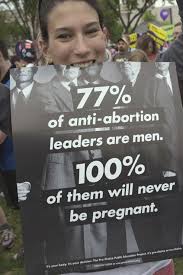
4. Possible avoidance of the worst aspects by being especially cautious and observant.
In the weeks immediately prior to this accident, I had had three near-misses on the road, including having a tree branch fall just in front of my car during a bad storm (but I was able to swerve around it since I was going very slowly) and several other small mishaps that could have been a lot worse had I not been exceedingly cautious already.

DOWNSIDES
1. Vague premonitions of doom and general senses of tension and foreboding cause elevated stress levels for indeterminate periods of time.
Human bodies do not do well with chronic stress. Mine has had way too much from actual stress as well as perceived or anticipated stress: not recommended.

2. Focusing on the negative can cause undue paranoia and suspicion.
When I have this strong sense of impending disaster, I get very jumpy, especially when I have no idea the scope, timing, location, cause or target. Everyone is a bad driver, every rumble of a truck sounds like an earthquake (I live in California on a fault line), every airplane overhead sounds as if it might be flying too low (I live under the flight paths of two major and one minor airport), every passerby might be a mugger… you get the idea. Nischt gut.

3. Intensive self-referentialism and self-absorption to the point of unhealthy obsession does no one any good, ever.
Did you know there is a serious mental illness diagnosis consisting of a person having the unshakable belief that everything is a sign, message or communication meant just for him/her, like the character played by Russell Crowe in A Beautiful Mind? Also, it is antithetical to Buddhism to spend much time focusing on oneself, which is a temporary embodiment of an illusory existence, at best. Try sitting around believing that disaster is about to strike while trying to meditate: bad plan.

4. Once any negative circumstance arises, one may relax prematurely and then lose special cautiousness just when it’s most needed.
Three small mishaps had already occurred, however (stubbed my toe very badly at the pool; cut my finger when a knife slipped; hit my foot on the edge of the shower/tub enclosure). After the third one, I made the mistake of believing I had encountered all the negativity associated with this premonition. I did not see nor did I expect the floor obstacles in the restaurant. Hence, the face-plant.

presentiments-death
Image from weirdaustralia.com

Perhaps, next time, I won’t believe the doom warnings have been fully heeded until the presentiment actually passes.

Unknown's avatar

What are the Four Major Upsides and Downsides of #Paranormal #Presentiment?
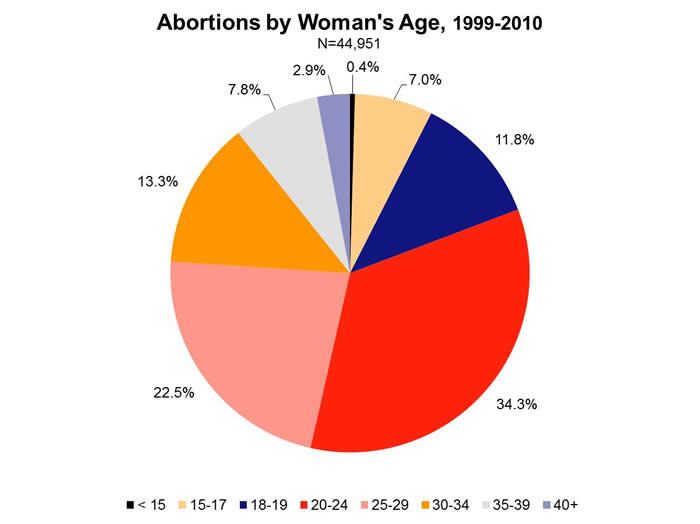
How does someone with no small measure of psychic ability and numerous accurate “previews” of the future incur so many injuries? I’ll tell you, exactly.

psychic-predictions

After several days of intensive foreboding and weeks of a feeling of impending doom, last Sunday night I walked into a restaurant and tripped over an unseen hazard that partially blocked the entryway. I went flying parallel to the ground, smashing face-first into the wall beneath the ordering/pick-up counter, breaking my nose, injuring my forehead, incurring a concussion and numerous impact injuries, including whiplash.

Many negative results, obviously, which I am still recovering from, but one positive one: the sensations of ominousness that had been hanging around and inside me for weeks were gone.

How does that all work, exactly?

My definition of presentiment includes: prescience, precognition, premonition, which, taken together, translate into vague or specific feelings, knowledge, images, words, or other sensations of the future for oneself and/or others.

Key problem with the kind of presentiment I had been experiencing: VAGUENESS. Meaning, nonspecific: No details, images, words, dates, times, locations, circumstances; not even a list of who’s involved or who’s to be negatively affected.

I developed the following list, the Four Major Upsides and Downsides of #Paranormal #Presentiment, to explain my precise predicament.

UPSIDES
1. Time for advance planning.
For me, this meant I did a lot of cooking/shopping for food, laundry, blog posts, writing/editing and other tasks much more in advance than usual so that when I became mostly incapacitated, “life went on.”

preparation is the key
Image from scottsactingtips.blogspot.com

2. Emotional preparation .
Even as I was literally facing disaster, I wasn’t surprised, emotionally shocked or refusing to acknowledge the extent of my injuries. I immediately understood, as soon as I went flying, that “this was it.” Fortunately, I was remained conscious. Because I had been “warned,” I was not in denial. Therefore, I was able to make several key decisions with a clear head that helped me later.

3. Advance warnings for self and others.
See #numbers 1 & 2, above. Also, I had followed my intuition and cleared my schedule for this week without knowing exactly why. Having almost no obligations during the first crucial week of recuperation left me with less stress, aiding recovery.

4. Possible avoidance of the worst aspects by being especially cautious and observant.
In the weeks immediately prior to this accident, I had had three near-misses on the road, including having a tree branch fall just in front of my car during a bad storm (but I was able to swerve around it since I was going very slowly) and several other small mishaps that could have been a lot worse had I not been exceedingly cautious already.

DOWNSIDES
1. Vague premonitions of doom and general senses of tension and foreboding cause elevated stress levels for indeterminate periods of time.
Human bodies do not do well with chronic stress. Mine has had way too much from actual stress as well as perceived or anticipated stress: not recommended.

2. Focusing on the negative can cause undue paranoia and suspicion.
When I have this strong sense of impending disaster, I get very jumpy, especially when I have no idea the scope, timing, location, cause or target. Everyone is a bad driver, every rumble of a truck sounds like an earthquake (I live in California on a fault line), every airplane overhead sounds as if it might be flying too low (I live under the flight paths of two major and one minor airport), every passerby might be a mugger… you get the idea. Nischt gut.

3. Intensive self-referentialism and self-absorption to the point of unhealthy obsession does no one any good, ever.
Did you know there is a serious mental illness diagnosis consisting of a person having the unshakable belief that everything is a sign, message or communication meant just for him/her, like the character played by Russell Crowe in A Beautiful Mind? Also, it is antithetical to Buddhism to spend much time focusing on oneself, which is a temporary embodiment of an illusory existence, at best. Try sitting around believing that disaster is about to strike while trying to meditate: bad plan.

4. Once any negative circumstance arises, one may relax prematurely and then lose special cautiousness just when it’s most needed.
Three small mishaps had already occurred, however (stubbed my toe very badly at the pool; cut my finger when a knife slipped; hit my foot on the edge of the shower/tub enclosure). After the third one, I made the mistake of believing I had encountered all the negativity associated with this premonition. I did not see nor did I expect the floor obstacles in the restaurant. Hence, the face-plant.

presentiments-death
Image from weirdaustralia.com

Perhaps, next time, I won’t believe the doom warnings have been fully heeded until the presentiment actually passes.

Unknown's avatar

My #1980s #Computer Tutors: Thanks to Jaye Alper (sorely missed ) and Mario Cossa

This week is heralded as the 25th anniversary of the roll-out of the World Wide Web (now known as the #Internet) for laypeople’s use. In commemoration of that, I want to give a belated shout-out to my first computer teachers, one long-time friend, unfortunately the late and very sorely missed Jaye Alper, and my long-time friend, Mario Cossa. Both were early users, smart and talented people who “got it” years before most people.

Mario ran a nonprofit at the time called The Children’s Performing Arts Center (CPAC). For this, he had the use of a tiny, front-room “office” on the first floor of a 100-year-old Victorian mansion on Court Street in Keene, New Hampshire. He had acquired an Apple IIe and a printer.

apple2c.big

This beast took a long time to “boot up,” meaning, minutes. We’d turn it on, go do other things, come back and there it would be: green script, black/grey screen, blinking white cursor. No mouse. Instead, a DOS that required us to learn keyboard commands which Mario had posted on the wall and in a notebook. Floppy disks. No internet hook-up (hook-up to what?).

To see what we created, we had a dot matrix printer, loud and slow, that fed paper up through a slit in the bottom shelf of the new-fangled computer stand/desk or from the floor. It had to use specially designed computer paper that we had to pull out and separate at each perforated page ending and cut the edges off before using or it wouldn’t fit into manila file folders.

Dot matrix printer and paper

All files’ “back up” had to be done to the floppies, which Mario painstakingly labeled. IBM floppies and old Apples used very large, flexible diskettes that later became the harder, plastic diskettes that the “save” icon is modeled on.

With no other system for remembering, Mario invented and we kept a running log of each disk’s contents in a spiral notebook, with each disk’s name at the top of a page and its ever-increasing contents listed below, by file name and date updated (constantly changing). This was a system we continued to use through three more nonprofit incarnations and 15 more years!.

Floppy_disk_2009_G1

Meanwhile, Jaye was an early Apple adopter, also, and she had the first Macintosh I’d ever seen. In 1991, I got an LC because of her tutelage. I remember my many years of “tutoring” sessions with Jaye. I especially remember the earliest ones, in which she patiently and carefully tried to get me to understand “files,” “documents,” “folders,” “saving,” “save as,” “cut,” “paste,” “copy.” Without her help, all of Mario’s great notebooks would have gone for naught. Understanding needs to precede use. I was a slow learner in this area.

LC Mac

To “get” a file in the new world wide web to “live” on my computer’s hard drive, I had to learn a complicated FTP (File Transfer Protocol) and “write” the code language for it to download. To help me and because Jaye was very busy, I took workshops in Hypercard programming language, Filemaker Pro, Microsoft Works and then Word, databases and spreadsheets. Fifteen years later, I taught computer user classes to beginners, in a “great circle of life” moment.

Learning software programs for graphics in the days when there were no “snap to grid” options, all graphics had to be hand-drawn and positioned.This now seems hilarious, but then: what a pain. And, believe me, I am no artist.

The first time I decided to copy a file from a floppy disk to my hard drive, I didn’t know the “rule”: THE MOVING FILE WINS! Whatever is being dragged or introduced takes precedence over what it’s moved to when they have the same file name. Rookie mistake: I lost all my updates, edits and improvements. Lesson learned.

Very excited to have a “mouse” with my Mac LC and not have to remember (or look up) all the commands. But, I still use a lot of the keyboard commands (they haven’t changed much over the decades, luckily). Having “menus” was novel and exciting, a huge time-saver.

First modem: very loud, long time to get connected, many failures and restarts needed. Took minutes for one page to appear on the screen and often only part of it would appear. “Refresh” meant waiting many more minutes each time. Also, “surfing the web” took just a few minutes because besides American Online (AOL) and a few other locations, there were almost no pages to visit, yet. Individuals, businesses, government and other entities had no web presence.

original-mac-accessories

For grant-writing and research, I had to go physically, in person, and use the library’s no-circulating grants compendia, photocopy machines. I had to take notes, use snail mail and keep paper copies of what I sent or, amazingly (for the time), faxed. In the 1980s, fax machines were just beginning to appear in ordinary business offices and homes, using that thin, fragile paper.

When my 97-year-old grandfather was close to dying in 1998, we were talking about all the changes he’d witnessed. Suddenly, he said to me: “One thing I don’t understand: fax machines.” I laughed and said I didn’t understand them, either. Still don’t.

Thirty-one years after that Apple IIe, having worked on both PCs and Macs and now using a PC, being all over the internet with social media and research, uploading and downloading with relative ease, the days of rampant confusion, frustration, modem noises and waiting many minutes for a page to appear seem distantly in the past.

Gratitude to all the programmers, creators, builders, thinkers, teachers, leaders and early adopters, especially my friends, Jaye and Mario, for bringing me into the computer age. I hope you all enjoy the fruits of these people’s and your own tutors’/teachers’ labors as you read this post.

Thanks to Steve Jobs
image from blog.wefeelsecure.com

Unknown's avatar

The Swan Song of my #Buddhist Mini Home #Retreat Sung a Bit Early

Some of you have been reading/following the posts about my #Buddhist mini home #retreat which began in mid-October, 2013, and was supposed to end March 1, to coincide with #Tibetan New Year (Losar) on March 2, 2014. However due to the schedules of Alameda County’s jury duty roster (which tapped me starting March 6, perhaps) and my teacher, Padma Drimed Norbu, or Lama Drimed, my close-of-retreat meeting is scheduled for tomorrow, February 26.

So, the Swan Song of my Retreat is being sung today. I plan to finish with a tsog (see first posting, in October, for detailed explanation of this ritual), since that is the way I began and I appreciate the function and symbolic bookends of that choice.

Here, to finish my posts about this experience, I give an honest report, comparing my plans with the actuals, now that it is closing.

clock
image from http://www.jadcotime.com.au

TIME: I had planned to spend 4 – 6 hours/day on meditation, contemplation, study and practices for this retreat. I was unable to do this for most of the days for many reasons.

Self-publishing my first ebook, which uploaded for pre-orders Nov. 9 and for sales Dec. 19-20 while writing and then finishing Volume II while job-hunting and going to (unsuccessful, so far) interviews while doing extensive marketing and learning about all that MAY have something to do with the change in time allotments. I was a tad optimistic.

I did spend at least one and sometimes three hours or more, but never 4 – 6 hours on any day except the first two and this last day (the tsog takes at least 4 hours, from prep to clean up).

Except for a family visit for one week in December, I did not take any days off. Even during that week, I practiced every day, just not for more than one hour.

ACTIVITIES: For some parts of the contemplations of the Realms., I was supposed to enact them. I was also supposed to sit and chant a mantra. However, I could not enact most of these beings’ experiences in the Realms nor sit and chant the mantras.

When I tried to sit and chant the mantra (which was just one word), I would get immediately foggy, sleepy and unable to continue.

Furthermore, my lower back, injured and unhappy about sitting even on chairs, refused to allow me to sit in an upright position on the floor or a cushion, even on my bed, for more than 10 minutes without agony.

back-pain-

I utilized an alternative method that kept me awake: a walking meditation. I could complete the accumulations and meditations in that way. This did not quite evoke an enactment, but I was outside and observing with ongoing attempts to internalize each Realm’s beings’ experiences in my mind and body. Limited, but some success.

However, I can only walk for one hour or so on any given day due to a chronic injury to one leg, so my progress in these accumulations (to get to 100,000 for each of the Six Realms) took many days per Realm.

walking meditation
image from http://www.peerfit.com

I had plenty of time, so 9 – 11 days per Realm seemed all right, but somewhat disappointing. Although, from today’s perspective, I wonder why I was in any kind of rush?

I was tasked next with reading and contemplating the readings/teachings of Chagdud Tulku Rinpoche’s original teachings, transcribed in 1989. That was an amazing experience because I knew him then and I knew many of the people who attended that retreat when it occurred, so I could picture his giving the teachings and the others gathered there, the translator’s comments and facial expressions very clearly. Many blessings and gratitude for them during this next phase of my retreat.

Chagdud Rinpoche
Chagdud Tulku Rinpoche and his tulku

At one point near the end of the booklet, though, I wondered if I had the wrong set of teachings, but I contacted Lama Drimed and he assured me it was correct; I had written the title down incorrectly in my original notes. Why did I fixate on that, I wonder?

Next, in tandem, I was to do some physical as well as meditative activities I can’t describe here. I can say, however, that I failed miserably (and not surprisingly) at doing the physical ones, and almost as miserably (and quite surprisingly) and the meditative ones. Need to discuss these with Lama D tomorrow, for sure.

I was also supposed to do some of the recommended sadhana (written/chanted) practices almost daily (my choice which of them to do, Lama D said) and tsogs on each full moon.

Epic Fails, both.

For reasons I still can’t explain, even to myself, I did not do the tsogs except for the first one and the one today, even though I purchased supplies for doing them.
After about day 4, I did not do the sadhana practices. Not at all. Not once. I do not like them, Sam I Am. I do not like Green Eggs and Ham.

Well, you get the picture. I just didn’t feel it.

Should I have done them, anyway? If I had been part of a group that was doing them daily, I would have done them. I would have been there and attended and participated. Left to myself, I did not feel moved to do them. So, I did not.

discipline lacking
Discipline Quote by Marie Chapian

Can’t understand my reluctance, but it was insurmountable, or I just gave in to it. Can’t say for sure how things would have been different if I had been more diligent, reliable, responsible.

I do have all these proud and arrogant parts that tell me and others stories about how disciplined and reliable I am, so it’s ironic and kind of sad that it turned out that I’m not so much of either, even though I also say that my practice is the most important part of my life.

OUTCOMES:
Mixed.

Glad I blogged. In-reading my posts, which are a kind of journal, I can see I did get quite a lot out of many parts and was more devoted and disciplined than I give myself credit for, today. Not great, but good (in some parts).

Obsessing today about whether my lack of accomplishments in those or any of the activities may disqualify me from continuing or receiving the next teachings. Should have done something about that before, when I was overly indulgent, lazy or just unable, eh?

Well, if that happens, all right. Can’t go forward until I’m ready.

Lama Drimed will know.

One thing I am is honest.

metta-prayer

May all beings benefit from my retreat, however it may be assessed. That I do wish, fervently.

Unknown's avatar

Why My First Experience with Using #Pre-Orders Will Help Get My NEXT #Ebook Higher on #Best-Seller Lists

Thanks to Mark Coker, Founder/CEO of #Smashwords, #indie #authors have lots of information in FREE slide shows and several webinars to help indie ebook authors succeed in self-publishing.

Mark provided excellent instructions, tips and support for my first ebook’s publication last fall, the sci-fi/romance which has been getting great reviews, This Changes Everything, Volume I, The Spanners Series, including persuading me to engage in a “Pre-order” period prior to full sales release.

In his post (link to full post, below), Mark defines Pre-orders:
preorder defn

Mark gives great info on how to schedule a Pre-Order, here:
preorder timing

Furthermore, he details the benefits of Pre-Orders for Authors and Readers:
preorders 5 benefits 1

A great realist, Mark also provided great info as to what to expect, a “Reality Check”:
preorder reality check

So, how did my first experience with pre-orders go?
Not so well.

Let’s review the Tips Mark provided and my own experiences:

Tip One: Plan and implement AGGRESSIVE, multi-week marketing campaign
This was my first time as any kind of book marketer, but luckily (?), I was laid off in August, 2013, which gave me family support (thanks, Ellen Fleischmann, Merlyn Ember, Sarah Miranda, Lauri Stern and Carole Harris) to move my unpublished book forward into self-publication. I began immediately to learn, via Mark Coker’s and others’ Google Hangouts, free webinars, blog posts, groups’ posts and articles, all about the publication and marketing processes for indie authors.

I did it ALL, except pay for PR (no extra funds): I started a new website and blog; I became active on Goodreads and Twitter; I opened Pinterest Boards; I became more active on Facebook, both on my personal and Series pages; I became more active on LinkedIn; I joined Google+ and began to use it more. I joined many Groups/Communities on Facebook, LinkedIn, and Google+ as well as Goodreads. I engaged a professional cover artist (thanks, Willowraven!) and started tracking my KLOUT, SNAP and ALEXA scores.

I had OUTSTANDING results (I thought) in the first few months, bringing my KLOUT score from 31 to 61 by release day (12/19/13) and my website went from no ranking at all to being in the top 3.5 million via ALEXA. I gave up on Snap. My Twitter #FF went from 7 to over 1600; my blog gained almost 40 #FF (NOT my family, either!). I had almost 300 LIKES on my FB Series page and over 300 contacts personally there and on LinkedIn and Goodreads. 60 were #FF on Pinterest. Seemed good, to me.

I also worked hard networking on Wattpad, Goodreads, and Authonomy as well as the above groups and individuals’ websites to garner several very positive pre-sales day reviews which were posted on/into my front matter, my website, Goodreads and all other social media.

I joined Shelfari and BookLikes, Authors’ Database and other sites with author and then book pages. I created and updated my Author’s book page on Amazon (which doesn’t do Pre-orders, but I already had a nonfiction book authorship, so I could do this prior to uploading my ebook). I provided copy for and linked to postings of several author interviews on several websites and BlogTalkRadio’s IndieBooks show. I gave public readings and then videoed myself doing them and posted these on youtube, to start my Series’ Channel.

Using the Cover, I printed up 50 flyers (second time I spent money on this endeavor, first being the cover) and gave them out everywhere I went (which wasn’t many places, but I tried!).

This Changes Everything cover
cover and logo art by Willowraven

I talked it up everywhere I went, also. I sent out FB and GR reminders of the release date and planned an Author Q & A on Google Hangout and Goodreads for release day as an “EVENT,” which I extensively promoted, along with the pre-orders themselves, for weeks prior to sales date.

I believe I did everything I could to create a strong “Author Platform.” But, being a new author to sci-fi/romance and to ebooks, and an indie, self-published author in a very crowded field, the “splash” I was making, despite KLOUT’s encouraging stats, was not feeling large.

Social media icons
from http://www.bakerviewconsulting.com

Furthermore, I had no way to gauge the success of either my Pre-order marketing via the numbers of Pre-orders, because Smashwords, iBooks, KOBO and nook do not provide ANY kind of info as to the numbers of Pre-orders accumulating to authors, EVER. This is very frustrating and I wish this would change.

It is now two months since TCE’s release date, and I still have no figures, other than ranks on nook and KOBO, to tell me how many actual sales TCE has had.

Smashwords does provide “sales” numbers, but mixes “free” or coupon-use downloads with cash sales. This is mixing apples and oranges since my ebook is only free to reviewers and a select few others. Even with a cash total, this is a net profit figure, not a gross sales total: I have to do the math myself to estimate actual cash sales numbers, something else I wish would change.

iBooks sets up threshold before it puts out even a ranking that my ebook hasn’t met up to now (and neither the gate nor my sales number is known, which is frustrating; also needs to change).

As a regular Kindle (KDP), not Kindle Select, author, I did not have the option to do Pre-orders on Amazon, but at least I can check in on any day, any hour and get not only several different sales and author relative ranks, but go look at my actual sales figures online, including total sales, gross cash intake and net royalties. Yeah, Amazon!

Going solely by Amazon’s and Smashwords’ sales figures (the only ones I have), my Pre-Order and regular sales periods have not yet been huge successes, to say the least. I just got my first royalty checks, from Amazon (since Smashwords only pays quarterly and includes all the other vendors in one check). The total would not even pay for one tank of gas.

BUT, I am now a professional, paid ebook author, nonetheless! Woohoo!

My Recommendations: Every book sales site should provide real-time and accumulated stats to authors during Pre-orders as well as regular sales updates if not hourly, then daily, with no “qualifying” threshold to become eligible to see stats. AND, please do not mix free downloads with paid sales in the figures.

Tip Two: Mobilize fans
I tried to first gather fans (see above) and then mobilize them. However, as a first-time ebook author with no other fiction sales before this, my “fan base” is minimal even now, two months later, and nonexistent prior to Pre-orders. So, great tip, but I couldn’t use it for TCE.

I plan to use my growing fan base extensively for This Changes My Family and My Life Forever, Volume II, however, which goes into Pre-Orders in April 15-18 (because of policies and schedules not in Smashwords’ control, other ebook vendor sites do not open Pre-orders on the same days as each other) and on sale June 9, 2014.

Tip Three: Special pricing
I took Mark’s advice about pricing all the way. He suggested lower prices or free for Pre-orders, but strongly suggested NOT offering it free if the ebook has no others before it in the Series.

Mark also suggested, based on his extensive research, the “sweet spot” balancing sales with profits for ebooks, currently is set at $3.99.

So, I set TCE’s Pre-Order price at $1.99.
The sales price for TCE has been $3.99 and will stay that way until Volume II goes into Pre-orders, 4/15/14, at which point Volumes I and II will both be set at $1.99.

On Volume II’s release date, 6/9/14, TCMF&MLF will go up to $3.99 and Volume I will become FREE forever more, to all, as recommended for series authors.

When The Spanners Series ebooks start selling well and my fan base has grown even more, I will bump up Volume II’s price to $5.99 during Volume III’s Pre-order period, November – December, 2014, making This Is/Is Not the Way I Thought Things Would Change, Volume III’s Pre-order price $2.99.

Volume III’s sales price, starting in mid-December, 2014, will then probably be $5.99.

If sales aren’t great (YET), I’ll follow my previous pricing plan for a while longer for upcoming Volumes (the series has 10, total).

I do not believe the exact pricing made that much difference, but I really can’t tell. I also don’t know about the switch from Pre-order’s lower price to the higher sales price regarding sales impact. See Tip One: I don’t know, yet, about any sales figures, except on Smashwords, for Pre-orders, and those were not strong the first time, an understatement.

Tip Four: Use your other books to help
Wish I could. Will do for Volumes II onward. Good tip!

Tip Five: (MY TIP): Do it better each time
Yes, I plan to do it all better, as mentioned above.

CHANGES and IMPROVEMENTS:
1) I’m doing more about getting Beta readers for Volume II.

2) I’m turning reviewers for Volume I into reviewers for Volume II. I have more fans, I am involved in several networks of authors and others that help with promoting each others’ social media sites.
3) I now have 3 Book Trailers ( which I created myself, free, via Animoto) so that my youtube Spanners Series Channel GROWS. Each time I released a Book Trailer, my sales went UP on Amazon. Don’t know about the other sites, but my ranks did go up slightly.

4) I now have 50 more flyers and first, via KLOUT, free business cards via MOO, and when those ran out, got inexpensive ones via Vistaprint which I designed. They have my links, TCE book cover and Series logo on them. I give them out EVERYWHERE.

5) I joined and attend workshops with several local writers’ groups.
6) I comment on and re-blog/re-post others’ blog posts instead of always writing my own

7) I use StumbleUpon, Reddit, Quora, AllExperts.com and other sites to raise the visibility of my “brand” and drive traffic to my website (via WordPress.com). My website now has over 120 #FF, which I know is still small, but it’s a 300% increase since launch date 2 months ago!

8) I set up cross-posting and opened a Tumblr website that receives all posts from my WordPress blog, so my blog posts are re-posted on Twitter, LinkedIn, Facebook, Google +, Goodreads, Shelfari, BookLikes and Amazon.

9) I use JustUnfollow to keep my Twitter #FF useful, active and not ‘bots. Now up over 2300!

10) I continue to use author networks to share and collaborate for increasing each other’s visibility, rankings and comments. All of my numbers are fairly high and staying there on the book and author sites mostly due to these efforts.

So, with all the above, I am READY for the next Pre-order period much more than I was before. I hope this one ROCKS!

Links to TCE’s Reviews, Author Interviews, Book Trailers and more on http://www.sallyember.com

Link to Mark Coker’s full Pre-order Slide Show post here, which is well worth viewing: take notes! Please share, tweet, USE!
http://www.slideshare.net/Smashwords/hit-the-ebook-bestseller-lists-with-preorders-a-guide-to-preorder-strategy

Thanks, Mark. Next time, I’m ALL OVER IT!

Unknown's avatar

How Having a #Buddhist #Spiritual #Teacher Changes Me

Some of you may remember I began an at-home, mini-#retreat to study and practice in the #Tibetan #Vajrayana #Nyingma tradition of preliminary practices for #T’hödgal—the #Rushan exercises—with meditation, contemplation and study, in October, 2013. I planned to end this sequence by Tibetan New Year, Losar, March 2, 2014. I have written a few posts about some of these experiences and my reactions to them (the ones I’m allowed to publicize).

My spiritual teacher’s schedule is very full and it is often difficult to arrange to see him. Luckily, I found out yesterday that I was able to receive an appointment to see him February 26, which means my retreat ends in a week.

Immediately upon having the date and time for our next meeting confirmed (called an “interview” in this tradition), I could feel the familiar internal reactions that signal other responses that will occur over the next week, in anticipation and preparation for our meeting and my receiving the next teachings. Physically, I feel internal tremors, “butterflies,” flutters of fear and excitement in my mid-section and heart. My heart rate speeds up, my breathing gets shallow and I have to remind myself to take deeper breaths.

Mentally, my mind starts racing around to gather up what I might want to ask, tell, find out in our meeting, which is always too short no matter how long it is. I keep a notebook and start writing down my questions and reactions to the practices during my retreat and always moreso in the days right before we meet. The time with my teacher is precious and I want to use every moment well.

Last night, I again have lucid dreams and more dreams that I remember. Lucid dreams are the kind that occur when I, as the dreamer, know I am dreaming during the dream, waking up to some extent while having the dream experiences and notice that I am awake. Remembered dreams are the ones that wake me up completely or that are with me when I first get up in the morning.

LucidDreaming
image from givnology.com

Sometimes I remember dreams from the night before at random moments during the day as well. In each of these dreams, lucid or remembered, I’m having some conversation or encounter with my teacher.

In my dreams, we are talking about my experiences in this retreat. Or, I am asking questions and he is teaching on some related subject. Or, we are walking, preparing food, washing vegetables or dishes, cleaning a room together.

I had a dream that we were swimming in the pond at our retreat center together at night. Somehow, we could both go underwater and still breathe, talk, and relate to each other for many minutes without difficulty, all the while the moon shone through the water, lighting us.

I dreamed we were in a hot tub together, naked but unembarrassed, talking about accomplishments and experiences in one type of meditation (often termed experiencing “naked awareness” in English translations).

Many times in the “ramp up” to a scheduled interview, I hear him talking to me in my sleep. His speaking voice wakes me up. He is instructing, explaining, teaching on a relevant topic but not one I have actually heard him talk about before in our actual encounters. Although it wakes me up, I try to go back into the dream to hear the rest of what he’s saying, but that never works. I lie there, recalling what he said and what I understand of it. When I have a pen and paper handy, I write down what I can remember.

Also in the days or weeks preceding a scheduled interview with my teacher, I am more keenly aware of my faults and flaws. I try to remember to bring compassion to my self-critique. I also notice any small progress signs I might have and note them down.

Chagdud Rinpoche
H.E. Chagdud Tulku Rinpoche and his reincarnation

Our teacher (his teacher and, for a while, mine), His Eminence Chagdud Tulku Rinpoche, often told us that there are several sure signs of progress to watch for which he offered in a series of questions to ask ourselves:

“Am I more patient?”
“Am I less angry?”
“Am I more kind?”
“Does compassion arise spontaneously within me?”
“Am I more generous?”

If the answers to any or most of these questions is “Yes,” then we can be assured that our practice is having good effects. If not, we need to adjust/rectify: our practice, our motivation, our commitment, our understanding.

In the Tibetan Buddhist tradition, the spiritual teacher is said to hold the key to one’s heart. Opening the heart (or, in Tibetan terms, the heart/mind) is fundamental to becoming receptive to the spiritual practices and their impact on us, allowing us to change, inviting the methods to work within us without impediment.

A teacher may play many roles. The only limitations to the impact of a qualified teacher are in our own minds.

Teacher-Roles
image from http://www.unfetteredmind.org

The story of how I “found” my spiritual teacher is a bit unusual in that I knew him before he became a Lama. However, I hadn’t seen him in ten years, only talked with him twice on the phone, before coming to accept teachings from him in 1999 and decide with him if he could be my teacher. He had told me on the phone that people who knew him “before” had had difficulty accepting him as a teacher and was warning me that it might not work for us, either.

I told him that I had already had many dreams in which he IS my teacher and I was confident it would work. Secretly, though, I was nervous and a bit doubtful, myself. I knew what he meant because the first person I had considered as my teacher was also someone I had known before and things were very difficult for both of us.

The day the retreat started that June day in 1999, we were all gathered in the shrine room (large space for meditation practice and teachings), waiting for him to arrive. I had no idea how the retreat would be structured, what went on, even where he would sit. There were thrones in the front of the room, but I had a hard time imagining that he would actually sit on one. Because Rinpoche then lived in Brazil, Rinpoche’s picture was framed and occupied the highest throne, in the center. There was one on the right side of it that was empty.

There was a curtain, a drapery wall, separating the shrine room from the porch eating area. It rippled and a man entered. At first, I didn’t recognize him as the man I had known. His hair was down past his waist and flowed as he moved. Last time I’d seen him, his hair was barely to his ears.

Even more different was the way he moved. More startling and unexpected was that I felt my heart burst open. My eyes filled with tears. In total silence and surprise, half bowed along with everyone else, I stood there staring at him. There was a glow around him that I could not actually see with my physical eyes but which I could perceive nonetheless. He emanated peace, confidence, warmth.

My heart was pounding and the tears increased as I watched him glide smoothly across the room carrying a single, long-stemmed rose in one hand.

He walked up to the throne with Rinpoche’s framed face on it. Gently and reverently, with immense love that I could feel from across the room, Lama Drimed placed the rose in front of the picture. Then, he gracefully stepped back several paces and did three full-body prostrations in front of that throne, offering respect and devotion to his teacher. I felt his devotion as pinpricks in my heart and my tears flowed.

long stem red rose

He finished his prostrations and walked over to the empty throne. Climbing up onto it, I could feel the rightness of it: it was his seat, his rightful place.

As soon as he sat down, the room of about thirty students erupted in motion: everyone began prostrating to him as he had done to Rinpoche’s picture. I stood there, trembling. Up until then, despite having attended several teachings, one retreat and several empowerments with other teachers, including Chagdud Tulku Rinpoche, when I had done prostrations, I hadn’t felt anything. I did them out of respect, but without my heart engaged.

This time, as I bent to the floor to join the others in this ritual, tears fell on the carpet and my heart felt as if it would burst. The English translation for the words to the prayer we say as we do the prostrations echoed in my mind with new meaning:

“From now until I reach the heart of enlightenment, I take refuge in the Lama, who is the Three Jewels.”
Not “the” Lama: THIS Lama. I felt gnosis resonating in me as I prostrated.

My devotion and dedication awakened that afternoon as it had on no other day in this lifetime, yet it felt as if I were coming home. I had found my teacher, my spiritual guide and friend, the key to my heart/mind. Right there, that day.

Now, almost fifteen years later, I am even more devoted, dedicated, grateful and certain of my good fortune to have Lama Padma Drimed Norbu as my teacher. He scares me, he amuses me, he teaches and guides me. We argue, we talk, we laugh, we discuss. Lama Drimed as a Lama represents the embodiment of enlightenment. As a man, puts kale into his juicer and talks to me about my being a new sci-fi author. He makes me cry in gratitude, frustration, discouragement and awe.

I stretch, I learn, I grow. So does he.

In other times and now, in Tibet, India, Burma, Nepal, many Buddhist students have (had) to endure much hardship, danger, long journeys and infrequent opportunities to be with their teachers. Sometimes only once in a lifetime are they physically in the same places; being able to have an interview is even rarer.

snow travel
image from http://www.ornotmagazine.com

I am so lucky that he is alive and teaching, willing to have me as a student. The grace, good karma, great coincidence of our living in the same geographic area after many years of living other places allow me to see him next week just by driving my car about ninety minutes on good roads.

May all beings benefit. May all find their spiritual teachers and meet with them in this and every lifetime.

Thank you for being the key to my heart/mind, Lama Drimed. May you have a long, healthy, wonderful life filled with benefit and happiness.

Lama Drimed
Lama Padma Drimed Norbu