Unknown's avatar

What I got from The Schrödinger Sessions II: Physics for Science -Fiction Writers, First Installment

What I got from The Schrödinger Sessions II: Physics for Science-Fiction Writers, First Installment
JULY 28, 2016 to JULY 30, 2016

jqi-logo
http://jqi.umd.edu/Schrodinger-sessions-II

I have over thirty pages of notes and comments. Not going to put them all in one post, so here is the first installment.

For any terms or concepts I don’t define or which I define poorly, please refer to: http://www.physicsoftheuniverse.com/glossary.html

I don’t have any more than what I’m posting, here. Physicists: please add, comment, correct, elaborate, explain! Thanks!

NOTE: the superscripted and subscripted numbers and letters won’t copy/paste correctly here; sorry.


Session I, Professor Steve Rolston, Ph.D.

A. Measuring diameter by diffraction
the smaller the diameter of the hair, the greater the distance from the hair to each point of diffraction, and therefore, light is a wave

B. electrons eject from light and become collectible as charged particles when light bounces off a hard (metallic) surface, becoming photoelectric or photovoltaic

light color shows the frequency, so “yes” = blue”; “no” = red

materials also cause variations in the number of electrons emitted, so light is particles/ photons (corpuscles, in old language)

C. frequency = the inverse of wavelength

Planck’s constant is usually written as “h,” but if the reference/formula already includes h/2π, then the “h” represents that and gets a diagonal bar across its stem, “ħ” and is called “h bar

FORMULA: 6.626 * 10-34 m2 kg/s = h
(VERY SMALL number)

this refers to frequency at varying temperatures

E. a micron = 1 millionth of a meter; a human hair is about 30 – 80 microns in width

F. Lasers are usually emitting a single color of light at 10K watts, brightly focused
an incandescent light bulb is emitting about 100 watts and many colors, so this is called incoherent light

G. photons could be interacting but physicists can’t measure, observe or predict any of their interactions (yet), so physicists say that photons “do not interact”

Session II, Professor Chad Orzel, Ph.D.

A. http://dogphysics.com = his website
he handed out diffraction slides (grading)

B. Energy per photon depends on frequency

FORMULA: E*photon = hv

C. Particles have wave nature (atoms, molecules, photons, electrons, neutrons, positrons)

D. Excited gases are heated or electrified to move more quickly

E. every element emits and absorbs light uniquely, which is one way to identify them, even when they are isotopes (missing one or more electrons, and therefore “charged ions”)

F. there is a simple mathematical pattern to all light on the known spectrum (each color makes discrete “lines”)

G. Rutherford effect: scattering/deflecting pattern, “back-scattering,” occurs when using “alpha” particles, e.g., heavy atomic particles
light atomic particles, e.g., nucleus of Helium, do not have this

H. Use the Planck constant to explain energy differences between frequencies of light

FORMULA: hf = E1 – E2

I. mass (m) * velocity (v) = linear momentum

J. angular momentum = spinning or orbiting

FORMULA: MeVeR = n * h/2π

R = orbit; n = an integer; M = mass

K. electrons emit X-rays

L. wavelength, from de Broglie, λ = an object and this formula shows how to calculate its angular momentum

FORMULA: λ = h/p

M. Electron waves = the way electrons wrap around the atom’s orbital pattern

N. Standing waves = peaks and valleys of or a bit that is repeated and fixed, from start = finish
if number of peaks are high enough, then these can create a pattern

O. stringed instruments’ pitch is created by the frequency of standing waves, and are adjusted by changing the start or finish point (loosening or tightening one end of the string’s attachment pin)

P. electrons as particles behave as waves when there are high enough numbers create a pattern

Q. random numbers can be generated/derived from background radiation, which are the decay patterns of the atomic isotopes

R. molecules behave like waves, as do all other particles, even those without mass
electrons, protons and neutrons have mass
photons have no mass and always move at the speed of light (c)

S. Stanford University has an interferomoter

T. bigger objects have smaller wavelengths (a dog running has wavelengths to its running pattern of about 10-35

U. wavelength graphs become blobs because peaks of waves are touching on the paper/surface we use to show them

V. everything physical vibrates/oscillates

W. even when separated by ½ a meter , very large atoms resume wave behavior when reunited (there is no permanent divorce possible within an atom’s parts)


See below for more information about The Schrödinger Sessions.

Who was in charge?
Coordinators:
Chad Orzel, Union College
Emily Edwards, JQI
Steve Rolston, JQI

Organizing Institutions
Joint Quantum Institute (JQI)
National Institute of Standards and Technology (NIST)

Sponsoring Institutions
This workshop was made possible by a Public Outreach and Informing the Public grant from the American Physical Society (APS) and support from the National Science Foundation (NSF)

Location
Joint Quantum Institute
2136 Physical Sciences Complex
University of Maryland
College Park, MD 20742
USA

How did I get to go?
I applied in March and was accepted in April!

The Schrödinger Sessions II was the second of two (first was 2015) three-day (2.5 days, really) sets of seminars, Physics for Science-Fiction Writers, offering a “crash course” in modern physics for non-scientists who utilize physics and other sciences in our work and wish to do it better. It was held at the Joint Quantum Institute (JQI), one of the world’s leading research centers for the study of quantum mechanics. [The organizers kept their promises to] introduce participants to phenomena like superposition, entanglement, and quantum information through a series of lectures by JQI and NIST scientists and tours of JQI laboratories. [They most certainly DID] inform and inspire new stories [and sharing information, like this] in print, on screen, and in electronic media, that will in turn inspire a broad audience to learn more about the weird and fascinating science of quantum physics and the transformative technologies it enables.

The workshop was held at JQI from Thursday, July 28 through Saturday, July 30, 2016. Participants were housed locally at a university dorm with breakfast offered at a dining commons near the dorm and lunch provided at the workshop, which was at the Physical Sciences building. Evenings were free to allow participants to explore the Washington, D.C. area (but I was much too tired at each day’s end to do any exploring).

Participants were selected on the basis of an application asking about personal background, interest, and publication history. [Organizers worked] work to ensure the greatest possible diversity of race and gender as well as type of media (print, television, etc.) with an eye toward reaching the broadest audience. Applications were accepted online from March 1 through March 20, 2015, and acceptance decisions were made around April 15, 2015.

FYI: Next year, 2017, JQI plans to offer a similar seminar for a different professoinal group, Physics for Journalists, and then, pending funding, re-offer this same session as I attended, Physics for Sci-Fi Writers, in the summer of 2018.

Watch this space for more of my notes, reactions and ideas catalyzed by these great seminars, after 8/8/16! http://www.sallyember.com/blog

Unknown's avatar

Current Research in Speculative Fiction Liverpool, UK, (CRSF) Conference was June 27, 2016

Current Research in Speculative Fiction Liverpool, England, UK (CRSF) Conference was Monday, June 27, 2016, at the University of Liverpool!

CRSF logo

Here is their report:

CRSF 2016 Post-conference Report
Posted: 04 Jul 2016 05:26 AM PDT
The sixth annual Current Research in Speculative Fiction [CRSF] conference was held last week on Monday 27th June and was a great success.

As usual, the papers delivered were of a high quality and a diverse range of topics from D&D bestiaries to feminist utopia, ecological disaster to Harry Potter, medieval English horror to Japanese dystopian YA and far more besides. As usual huge thanks go to those who presented a paper: thank you for the enthusiasm with which you approached the task and for the hard work you did preparing for the conference, a conference – no matter how the organising goes – is nothing without its delegates.

CRSF 2016 represents a record year for number of delegates, with non-presenting delegates outnumbering presenters for the first time. This was in no small part thanks to the excellent Science Fiction Research Association (SFRA) conference also held in Liverpool on the 28th-30th June, a number of whose delegates came along to see CRSF in action. There were, however, a number of non-presenting delegates, including former presenters from previous years, who made the trip to Liverpool especially to see CRSF, I cannot think of a better endorsement for the atmosphere and organisation of the conference than for those who have been before to want to come back, even if they’re no longer eligible to present.

In total we had fifty-six attendees and thirty papers presented, over three parallel streams, by delegates from institutions throughout the UK, as well as Ireland, Belgium, Germany, Finland, Spain, Russia, Israel, Canada, and the United States, among others.

Thank you to all who attended. Additional thanks to all those who engaged with the conference on social media. I’m a firm believer in the Twitter back channel for conferences, and CRSF performed ably in this regard too. If you’re not on Twitter and you want to (re)discover the tweet-by-tweet coverage of the conference it’s been conveniently archived on Storify here for you.

Thanks also to our wonderful keynote speakers: Dr. Caroline Edwards (Birkbeck University of London) and Dr. Pat Wheeler (University of Hertfordshire) who not only gave fascinating and insightful keynote lectures, but also attended numerous panels, asking insightful and constructive questions throughout, and offering many a kind and supportive word for delegates in the breaks and more informal moments of the conference. Caroline’s paper opened the conference and was entitled ‘”But there is still such beauty”: Post-Apocalyptic Fiction and Eco-Eschatological Time in the 21st-Century’, it took us through such post-apocalyptic novels as Emily St. John Mandel’s Station Eleven and Maggie Gee’s The Flood, highlighting the pastoral beauty often found in these texts and the implications of that for our vision of the apocalypse and the future (if any) of humanity’s role on the Earth. Pat’s keynote was entitled ‘”She can’t love you, she’s just a machine’: Metal-fevered Boys and their Passion for New Eves’, which challenged how we should read gynoids in the twenty-first century: as either challenge or constriction to women’s agency.

Thanks as ever to the University of Liverpool staff who provided support both in the build up to, and during, the conference: the Rendall Building staff, and Filomena Saltao, the Administrator of the School of the Arts, and Siobhan Quinn. Thanks also to Andy Sawyer, academic librarian for the Science Fiction Foundation collection at the University of Liverpool’s Sydney Jones Library, for once again arranging for all delegates to receive free copies of Foundation: The International Review of Science Fiction. Thanks also to the staff at Il Forno, our traditional restaurant of choice, who once again dealt with our large numbers with aplomb.

As always we welcome your feedback on CRSF 2016, all comments are useful and appreciated. Please leave a comment on our website’s post at http://currentresearchinspeculativefiction.blogspot.com, or e-mail them to us at crsf.team@gmail.com.

CRSF will return in 2017….

Glyn Morgan,
Molly Cobb,
Leimar Garcia-Siino,
Chris Pak

I wish I could have been there.

To refresh, if you missed my explanatory pre-conference post, read below:

CRSF is a postgraduate conference designed to promote the research of speculative fictions including, but not limited to, science fiction, fantasy and horror.

Our aim is to showcase some of the latest developments in this dynamic and evolving field, by providing a platform for the presentation of current research by postgraduates. The conference will also encourage the discussion of this research and the construction of crucial networks with fellow researchers.

The planned schedule was as follows:

9:00-9:30: Registration and Refreshments

9:30-10:30: Keynote Lecture #1: Dr Caroline Edwards,

“But there is still such beauty”: Post-Apocalyptic Fiction and Eco-Eschatological Time in the 21st-Century

10:30 -12:00: First Round of Panels

1.1: Press START to Play
Andrew Ferguson – Clipping Out of Bounds: Reading House of Leaves Through Portal

House_of_leaves

  • Britanny Kuhn – [Awaiting Title]
  • Ivaylo Shmilev – Oppression, Warfare and Transcultural Memory in the Complex Post- Apocalyptic Environments of the S.T.A.L.K.E.R. Game Series

    STALKER game image

1.2: Horrific Narratives
Travis Gasque – The New Cosmic Horror: A Genre Molded by Tabletop Roleplaying Games and Postmodern Horror
Matthew McCall – “My manez mynde to maddyng malte”: Tracing Horror in the Middle English Pearl

Pearl_Poet

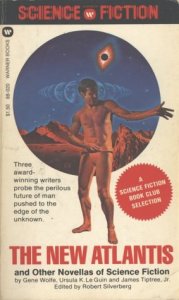
  • Selena Middleton – Climate Collapse and the Uncontained Body in James Tiptree Jr.’s A Momentary Taste of Being

    Momentary taste (in the 1975 anthology, The New Atlantis and Other Novellas of Science-Fiction)
1.3: You’re Only Young Once
Lan Ma – Censorship and Resistance: Information Control in Japanese Dystopian Young Adult Fiction in the 21st Century
Alison Baker – Protocols for the education of young witches and wizards
Arunima Dey – The Grotesque in the Harry Potter Series

Potter box set

12:00 -13:00: Second Round of Panels

2.1: Beasts and Bestiaries
Rob O’Connor – “The History of All Hitherto-Existing Societies is the History of Monsters”: The Bestiary and the Depiction of Monsters as Social Commentary
Sandra Mänty – Representation and function of animals in the world of Harry Potter

Potter collection cover

2.2: The Greater Good
Maxine Gee – “If something stinks put a lid on it, don’t see it”: Self-censorship and the brave new world of Psycho Pass

Psycho Pass

  • Jonathan Ferguson – Crimes Against The Greater Good are Victimless Crimes?

2.3: Character Studies
Beata Gubacsi – Monstrous Transformations: Becoming posthuman through art in Vandermeer’s Ambergris novels

Ambergris 1

  • Matteo Barbagallo – Do we have a deal? Petyr Baelish, Varys, Rumpelstiltskin and their role as Doppelganger

13:00 -13:45: Lunch Break

13:45 -14:45: Keynote Lecture #2: Dr Patricia Wheeler

“She can’t love you, she’s just a machine”: Metal-fevered Boys and their Passion for New Eves

14:45 -16:15: Third Round of Panels

3.1: Revenge of the Film
Pablo Gómez Muñoz – Greening Apocalypse: Eco-Conscious Disaster in Twenty-First Century Science-Fiction Cinema
Josephine Swarbrick – Monstrous Men and Masculine Monsters: Gender and the Cyborg in Paul Verhoeven’s Robocop (1987) and José Padilha’s Robocop (2014)

Robocop

  • David Contreras – Gothic Surrealism in Mexican Cyberpunk Short Film: The Borderlands Strike Back

3.2: Theoretically Speaking
Jo Lindsay Walton – The Dystopian Glimpse
Artem Zubov – Science-fiction studies and genre theory
Pascal Lemaire – Fans of history first, fans of S-F more distantly ? Alternate History as a form of History’s fan fiction

3.3: Tell Me a Tale
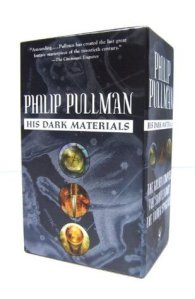
Kanta Dihal – Science and Religion in Madeleine L’Engle’s A Wrinkle in Time and Philip Pullman’s His Dark Materials

Wrinkle coverPullman box set

  • Rina Jean Baroukh – “Your Light Has Come” : Fantasy and Reality in Shimon Adaf’s Sunburnt Faces

    Sunburnt faces cover

  • Laura-Marie von Czarnowsky – Re-Defining the Bildungsroman: Traumatic Journeys as a Trend in Contemporary Fantasy Fiction

16:15 -16:30: Refreshment Break [YES: English Tea Time!]

16:30 -18:00: Fourth Round of Panels

4.1: Perceptions of the Female Self
Sonya Dyer – aPOCalypso: Janelle Monae and (Science) Fictional Black Feminisms
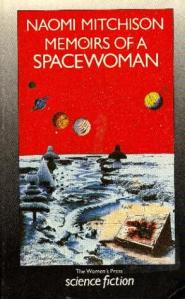
Sarah Lohmann – “Solar Loyalties”: The Utopian Ethics of Posthumanism in Naomi Mitchison’s Memoirs of a Spacewoman

Spacewoman cover

  • Mylène Branco – The Construction of the Female Self in L.P. Hartley’s Facial Justice

    Facial cover

4.2: Alternate Beings
Tom Kewin – ‘A Society of Screens’: The State of Digital Surveillance and the Repercussions for the Humanist Subject
Mattia Petricola – From mesmeric trance to living avatars: Rethinking consciousness and death after Mr. Valdemar

Valdemar

4.3: Dystopian Time, Resurgent Space
Gabrielle Bunn – Future Ruins: The intersection of nature and culture in the post-apocalyptic landscape of J. G. Ballard’s The Drowned World (1962)

Drowned cover

  • Hollie Johnson – Anarchy, Nostalgia, and Resistance: The Role of Nature in We, Brave New World, Nineteen Eighty-Four

    We cover1984

  • Thomas Connolly – “There was a thing called Heaven”: The end of time in Huxley’s Brave New World

    Brave New World cover

18.00 -19.00: Post-Conference Wine Reception and Official Conference Group Photo

Download a PDF of the entire schedule here: https://drive.google.com/file/d/0B4DNnD_AmJQmeWdEREJfemd1YWs/view

Want to present or attend next year? The “Call for Papers” usually occurs in early December for the following June’s annual conference. Check out past conferences/calls and get more information here and visit their
website: http://currentresearchinspeculativefiction.blogspot.com/
or contact their team (the team members’ list has not been recently updated, yet: CRSF.team@gmail.com and follow their Tweets: ‎@CRSFteam

Their website is not very “interesting,” IMHO, but the topics ARE. Here is a sampling of Q & A from their FAQs…

FAQ

What is CRSF?
CRSF is short for Current Research in Speculative Fiction, an annual conference organised by postgraduate students for postgraduate students. The conference was first held in 2010 at the University of Liverpool and has been held annually since, attracting an international selection of speakers from as far afield as Turkey and the USA. The conference aims to provide a welcoming and friendly atmosphere for researchers who are at the very beginnings of their fields to test ideas, network with others, and gain valuable conference experience.

What is Speculative Fiction?
Simply put, we consider speculative fiction to be the collective name for the non-mimetic genres of science-fiction, fantasy, horror, and their related sub-genres. Essentially, if it’s a bit weird, it’s probably eligible. If in doubt, feel free to run your idea by us. At this juncture, it’s probably also worth us pointing out that the conference doesn’t discriminate among media: papers on television, film, video games, music, fan culture, etc., are as welcome at CRSF as papers on literature.

I’m an undergraduate student/ university faculty member/ speculative fiction fan/ author, can I attend?
We welcome non-presenting delegates from all aspects of speculative fiction whether you be a non-academic fan or a professor at a university.

How much does CRSF cost to attend?
Since CRSF is funded entirely off the delegate fees we can never be 100% sure of our budget until we know how many papers we will be accepting for the conference. As such, confirmed fees are not available until after abstracts have been processed and invitations to present accepted. However, as a guide, past conferences have charged £30 (about $44 USA) for the day with an early bird discount available for those who register early. This fee includes lunch and refreshments.

Unknown's avatar

How do #authors actually find #readers? I’m stumped.

How do #authors actually find #readers? I’m stumped.

3 paperbacks

So far, since becoming a fiction author in 2013, I have spent time on most popular sites and established a presence on several, I have yet to find a lot of readers. I mostly find: authors (a LOT); those providing services to authors (even more); potential authors (a few); and, trolls (I block, but they do pop up).

I first published my ebooks via Smashwords which then distributed my ebooks for me to iTunes/iBooks, nook (Barnes & Noble), Kobo and many other affiliates globally. I then published to Amazon Kindle. As of last fall, I now have paperback formats available via CreateSpace (where I offer discounts; see below) and Amazon as well.

You may ask: what else have I done, so far? A LOT!…

—I belong to several dozen and am active in several Facebook, LinkedIn and Google+ groups/communities and I am less active but do belong to a few groups on Goodreads.
—I have author and book pages pretty much everywhere they’re free to have and manage to update them regularly (I hope).
—I have posted my free ebook (see below) on dozens of sites that allow free books to be posted for free.
—My first Spanners Series ebook, This Changes Everything, is permafree.
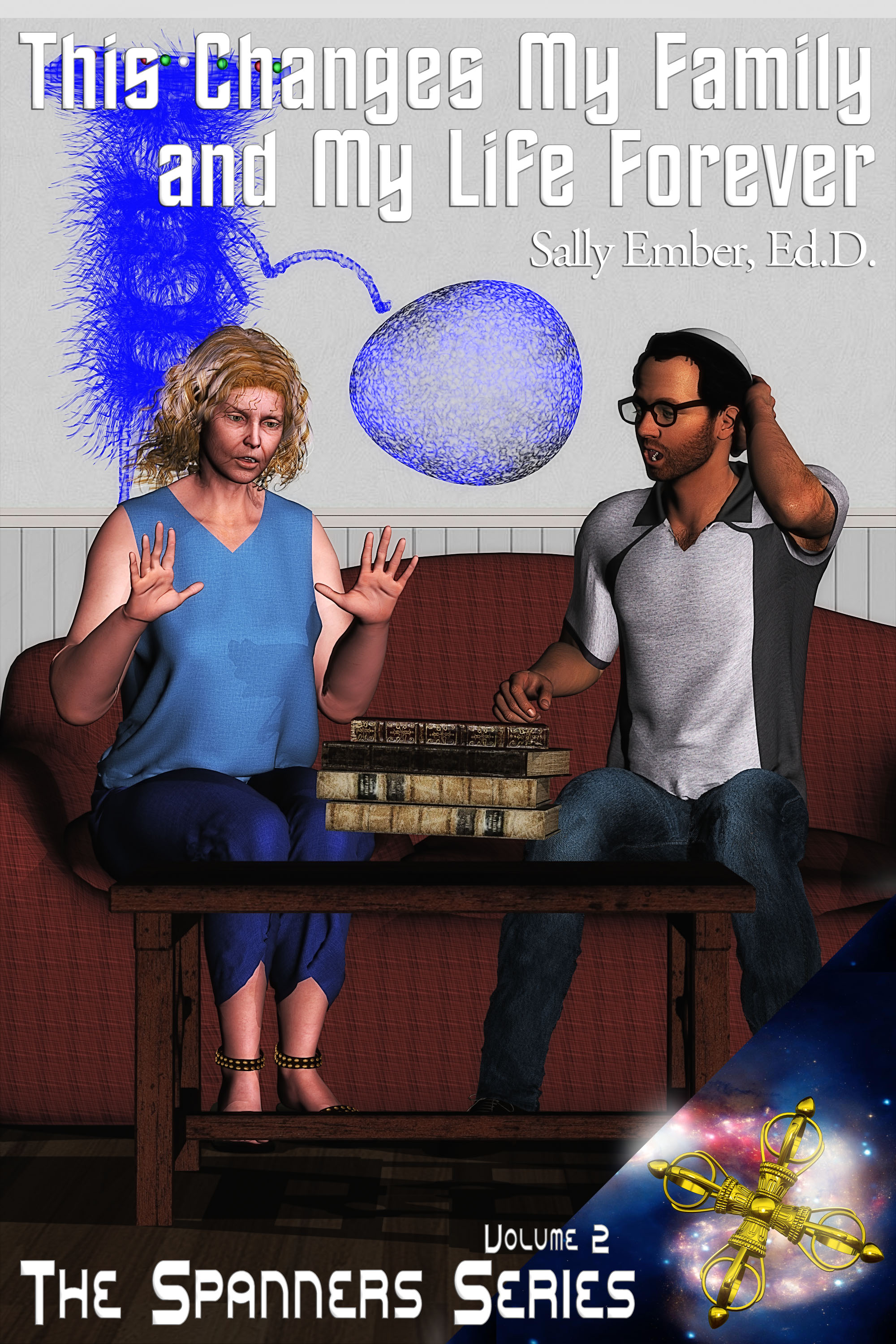
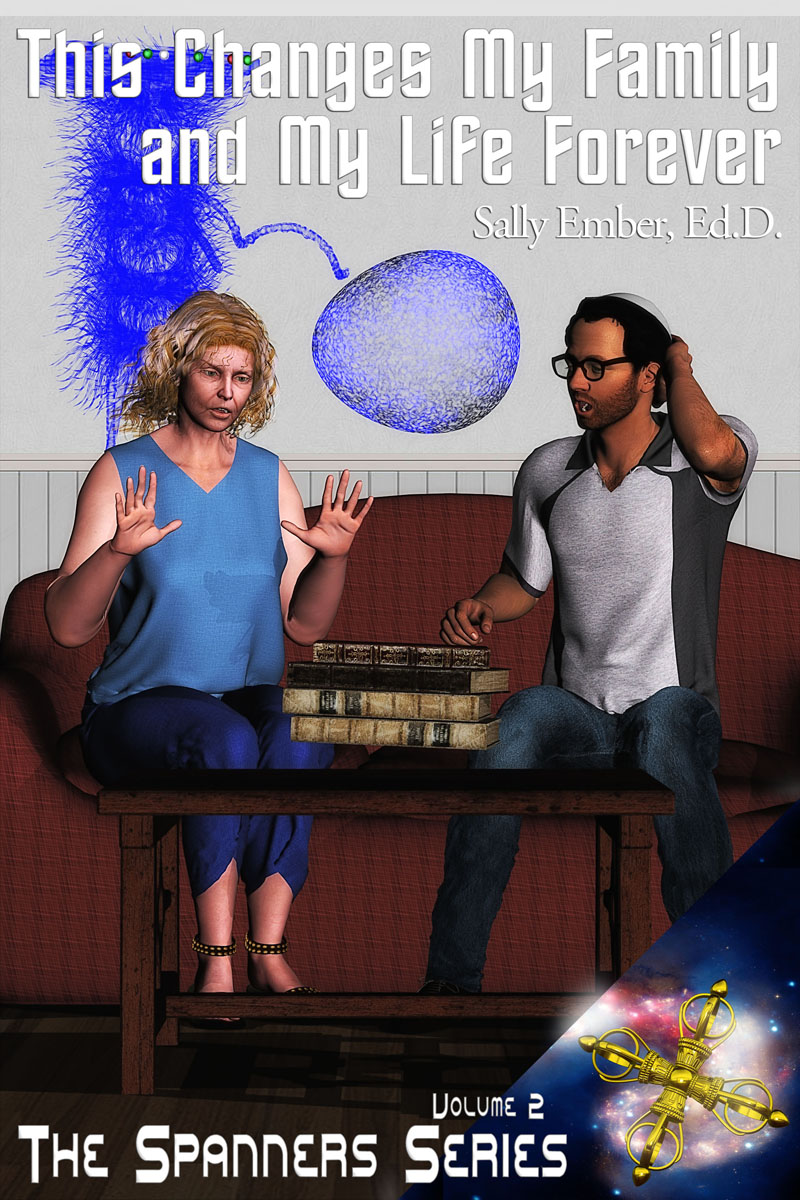
—The second volume, This Changes My Family and My Life Forever, came out about a year ago and the third one, This Is/Is Not the Way I Want Things to Change, released last December, so I have the supposedly magic number of 3 books out, now.
—All 3 are out since late 2015 in both ebook and paperback formats.
—I offer discount codes for the paperbacks on my own site.
—I participate in occasional sales organized by two Facebook groups (Clean Indie Reads #CR4U and Fantasy and Science-Fiction Network #FSFnet) I am actively involved in (several per year).
—I give free ebooks to reviewers and always follow their guidelines and wait to be invited before sending the ebook to them.
—I have had more than a few reviews for each book, but not up to 50 for any (yet).
—I actively sought readers/reviewers on BuView and got a few but not as many as who accepted my free ebooks.
—I never pay for reviews or participate in review swaps.
—I post interesting, varied non-fiction content (never all about my books or asking others please to buy my books).
—I re-blog.
—I re-share posts.
—I thank others for re-sharing (not always).
—I retweet (but not everything).
—My posts go up on many sites.
—My WordPress blog is cross-posted on Tumblr and on several other sites automatically.
—I re-post my own on Pinterest and StumbleUpon about once a month, to give them another set of views.
—I put most of my Google+ posts into Collections about once/month, which also gives them a boost in views.
—I do occasional reviews, usually outside my own genre (#scifi) and post my reviews on Goodreads, Amazon, and sometimes my own blog as well.
—I invite and host guest bloggers on my site.
—I guest blog/give interviews on others’ sites regularly.
—I have articles/reviews that have appeared on very popular sites, some of which have paid me for my posts.
—I have buy links, interview and review links and other links on my own site (look right; scroll down).

I am frequently on

Twitter.
Facebook with both an individual and a Spanners Series page.
Google+ with both an individual and a Spanners Series page.
Pinterest, with many Boards and not all related to my books, either.
YouTube (I have my own channel and a video talk show, CHANGES conversations between authors, since 8/2014 and posted book trailers, author readings).
LinkedIn.
—I started a Patreon #crowdfunding campaign over a year ago, but haven’t garnered much dough.

I am also on/use

Authors’ Database
Authors’ Den
New Book Journal
Koobug
Bublish

I am occasionally on

Goodreads.
Library Thing.
Shelfari.
BookLikes.
—and other many other author/book sites.
—I visit and comment on many blogs.
—I have been on and listen to/comment on a few Blog Talk Radio shows’ sites.
—I was on Authonomy (it closed, but I did get some great reviews from posting my WIP on that site) and am still on Wattpad with excerpts.
—I used the Pre-order function, with half-price discounts for all three ebooks, several weeks prior to each book’s release on Smashwords and Amazon and other sites.
—I post excerpts from my books while they’re in Pre-orders on my blog.
—At the end of each book, I post the first Chapter of the next volume in the The Spanners Series.
—I post a CTA (Call To Action) asking for reviews, followers and readers at the end of each book.
Started but stopped…

—I joined and posted for a while on Ask the Expert and Quora, but got too busy to keep doing that.
—I joined Reddit but I hated the way the monitors interacted with posters and the rules are too rigid, so I quit.
—I joined Medium and some other sites (can’t even remember them all) but hardly use them. Apparently I have followers, but unless my blog is cross-posted on a site, I don’t know what they are following.

I’ve learned to do/decided to do these actions and listings because I spent a lot of time researching prior to and since publishing my first ebook. I read and followed the instructions for “how to find readers” from many “experts,” but I still usually encounter the above categories of people. Not to say authors and others aren’t readers, but I’m looking for those who identify as such and not elsewise in the industry.

I want more people to read, review, enjoy and comment on my books: doesn’t everyone?

added TODAY (3/15/16): Share! #Booksales best achieved NOT on #TWITTER, FB, LI or G+! Use #Youtube! http://www.digitalbookworld.com/2016/the-authors-three-step-test-for-sellability/

How do YOU attract more readers?
How do you know what works among all the things you’re doing to market yourself and your books?

All suggestions and anecdotes welcomed, except forget recommending I go on Instagram. I hate that site.

Thanks!

Sally Ember, Ed.D.

Please comment here: http://www.sallyember.com/blog or email me: sallyember AT yahoo DOT com

Unknown's avatar

“Family-Friendly” is a Thin Disguise for Discrimination: They are on the Wrong Side of History

“Family-Friendly” is a Thin Disguise for Discrimination:
They are on the Wrong Side of History

Who else is on the “wrong side of history” regarding expressions of and legal sanctions toward and behaviors sourced by prejudice, bias, discrimination, hatred against ethnic, racial, religious, gender and other social identity groups?

Adolph Hitler. Austria and Germany. George Wallace. Richard Nixon. Phyllis Schlafly. Anita Bryant. The United States of America. Several Catholic Popes. Margaret Thatcher. Great Britain. Mao Tse Tung. China.

The list is, unfortunately, endless, if we keep going into history and across the globe. Humans seem to have an unlimited ability to be irrational and small-minded.

Fortunately, we do learn. We do grow. Some more slowly than others, as we see all too often, but change we do. One of the main ways people change is through exposure, a personal “eye-opening” moment that educates them (“leads them out”) away from their irrationality and biases.

The other way is through enforcement, such as the enlightened few and the majority collaborating to change the laws that require citizens to change behaviors accordingly. When behaviors change, minds can follow: not always, and not completely, as we see with the laws of integration and other civil rights for Blacks in the USA NOT eliminating racial biases and racism, but these are certainly steps in the right direction.

The current social and political landscapes—right here, right now—are changing rapidly with respect to fairness, acceptance and legal rights for those with all sexual orientations and gender identities exactly as they did with racial intolerance in the 1960s.

As usual, some are being dragged, kicking and screaming, into this new way of being. They are simply not keeping up, are they? Laws often get “ahead” of some people’s mindsets. AREN’T WE LUCKY? The haters may keep on hating, but they have no legal, moral or individual “right” to impose their “opinions” any longer.

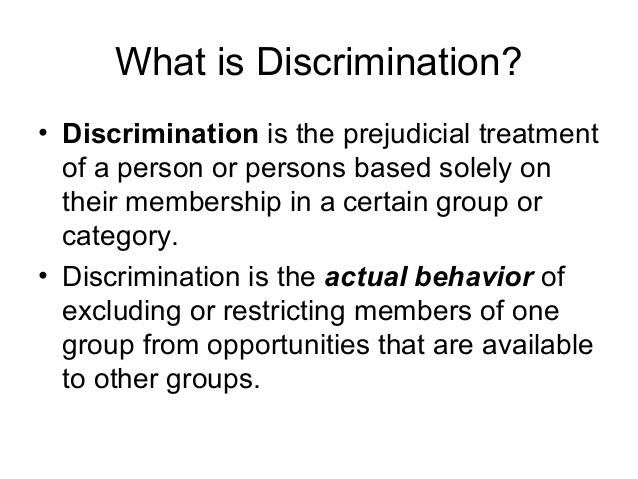
Some definitions, for those unclear on these concepts:

3definitions
from: http://littlelaughter.wordpress.com

bias-prejudice-discrimination-5-638
from http://pt.slideshare.net

Current circumstances:
I am an author who publicly proclaims myself a feminist. Anyone who knows me or reads me online or reads my books also knows I am Buddhist, Jewish, and bisexual, and I am vocally an anti-discrimination, anti-oppression activist.

I am also a reader who occasionally does reviews. Therefore, I do agree that each reviewer has the right to refuse to review any book we do not want to review. We do not have to give reasons, either.

However, I do not agree with the opinions, prejudices and biases this reviewer expresses when she gives some (but not all) of her reasons for discontinuing her reading of and refusing to review my book.

In fact, when we allow such actions to be fueled in these ways, not commenting, not confronting, we are aiding and abetting the institutional oppression rampant in literary circles. “If you’re not part of the solution, you’re part of the problem” is never truer than in these circumstances.

Some would say that she would have been off not saying anything, but since she did, here we are.

Read below and comment, please! http://www.sallyember.com/blog

After finding me on a reviews-seeking site, this reviewer emailed me, saying that she wanted to review all three books in The Spanners Series. She wrote a few days later, saying she had started and was liking my first book.

Then, the next day, this potential reviewer sent me this email:

From: xxx

I will not be able to review your books. I have just come to a part that is [sic] conflict with my site. I have a family friendly blog and your book contains content that my readers would find offensive. It would also put at risk some of my advertising spots on my site that demand only family friendly content.

I understand that you were just trying to get across the point about non-discrimination but your content concerning sexual affiliation will not work with my site.

Best of luck to you,

xxx

“Hi, xxx,

“I have no idea what you mean by ‘not family-friendly’ or ‘offensive,’ since my books are accepted by ‘[Facebook authors’ group],’ a strict group on Facebook which promises readers fiction that won’t make them recoil. For example, I use no swear words stronger than ‘damn’ or ‘shit,’ there are no explicit sex scenes, no gratuitous or obvious violence, and no traumatic scenes in my books: they are PG-13.

“If you are objecting to any mention of or acceptance of alternative sexual orientations and gender identities to heterosexual or straight people or cis-gender people, if that would be something you or your followers find ‘offensive,’ then, please: DO NOT READ MY BOOKS.

“And, by the way, discrimination, bias and prejudice are NOT ‘family-friendly’ to any families I would want to be connected with, ever. Use of that terminology to describe what you are perhaps claiming is absurd.

“Since more than 10% of every population of humans on this planet are actually gay, lesbian or bisexual and at least 5% are transgendered, whose families are you ‘protecting’?

“If what I am assuming, in fact, are your positions, I find your views to be extremely offensive, and so would most of the rest of the world, at this point in time. Marriage equality and sexual identity acceptance are legal in many countries, including this one, and discrimination is NOT.

“I welcome you and your readers into the 21st century any time you’re ready to come.

“If I have misunderstood, I apologize. Please explain. I would welcome your further description of what, exactly, is ‘in conflict with’ your site and specifics as to your presumptions about your advertisers’ objections to the content of my books.”

Sally

She responded:

From: xxx

What is offensive is that you mention any sexual affiliation at all. I would not blurt out in a book that I was heterosexual. I would not refer to sex at all. It is irrelevant and has no place in a family friendly book. You can have any sexual orientation you want and that is your business but I don’t have to and will not promote it on my site. The fact that you felt you needed to make a political statement with your book is your business but I won’t be a part of it.

As I said Good Luck to you but I will not be doing this review.

xxx

Curious as what others who might be “in her camp” would say, I posted our email exchange on the group site I am part of, the one I mentioned, above, and asked for opinions.

I received the following anonymized responses (I didn’t include them all; some are repetitive or off-topic).

Then, I wrote a few responses, below.
Why do I bother? Because Education.

stop_prejudice_now_prop_watermark
from: http://teachersteachfromtheheart.blogspot.com

“Need[ Facebook Group members]’ opinions, please! Just had this exchange with a potential reviewer and I’m burning mad. (She approached me, BTW, asking to review my books via a [reviews-seeking/reviewers-finding site] last week!).

“She emailed me this earlier today…” (same as above, posted)

FB group’s responses:

From AAA:
“She has the right to her viewpoint, and I don’t think she should be dressed down, scolded, or insulted for it. I thought your words were rather condescending and insulting.

“OTOH, she should have done her research first before approaching you, and rather than try to take YOU to task for what she didn’t agree with in your books, she should have just politely said ‘sorry, I was wrong, it’s not going to work out this time.'”

From BBB:
“The old saying I’ve tried to remember is not to lower oneself to another’s level in order to argue or debate. It’s not ever worth it.”

From CCC:
“It’s her site, she can do as she wishes, just as you are able to write about anything you want to. This enters into the forbidden realm of writers who snap at reviewers for not liking what they wrote. She didn’t give you a bad review on her site, which she could have. She simply declined to review at all. It could have gone a LOT worse for you.”

From DDD:
“Sally, I totally get where you’re coming from, having experienced this kind of reaction (my books include gay characters who are treated as normal people). I’m living vicariously through your email because I’ve wished I could say something like that to reviewers who’ve one-started me because of it. smile emoticon But I’m inclined to agree that it’s better to steer clear of these rhetorical boondoggles. I’d just let this go and get on with writing. Your audience is out there, but it’s not this lady or her blog followers.”

From EEE:
“It’s her site. She is entitled to her opinion and the way she manages her site. We have our rules here, but IMHO, even shit and damn are not family friendly. She was polite. I’m sorry that you were not.”

From FFF:
“I have to say also, the reviewer could have gone ahead with her review, as she’d promised you one. She could have been completely open and honest about her opinion, and put it on her public site.
“Instead, when she saw it was something that she didn’t believe she could endorse, she privately messaged you, letting you know that she’d have to back out.
“This was gracious of her to do.
“So to be treated badly was not something that I feel she deserved.”

From GGG:
“PG-13 does not constitute ‘family-friendly’ in my mind. I have a 9, 7 and 4 year old, and I don’t even let them watch most PG movies.”

From HHH:
“Unfortunately, I have to agree with what many others here have commented. In addition, I have to point out that you ASSUMED her problem with your book was the fact that there are gay characters. She simply wrote that she came ‘to a part’ that conflicted with her site. The thing that may have bothered her could’ve been profanity, or whatever else is in your book. It can be dangerous to reprimand someone for their stance – especially since she could always turn around and decide to write a poor review, or even one-star your book.

“On a personal note, I write both Christian AND secular stories (things that would give Junot Diaz a run for his money in the department of shock value). So I can honestly say that even the words you listed are not ‘family friendly,’ meaning appropriate for all ages. As far as homosexuality is concerned, I have a #LiveAndLetLive philosophy on life. That means that I do not judge someone else for their lifestyle choice. However, that doesn’t mean I want my six year old reading about it. Again, it’s a subject not necessarily appropriate for all ages.”

From Me:
to HHH: “She came right out and stated what her concerns were. I didn’t assume what she objected to at all. I assumed her reasons, because she did not state them. Also, I did not expect any 6-year-olds to read this book; it’s way too complicated and sophisticated. PG-13 is the rating i always state. Thanks for your comments, though.”

From JJJ:
“Wow. And she was so polite…”

From Me:
“Since when are expressions of bias, prejudice and discrimination ‘polite’??? If her objections were obviously about my having Jewish or Black characters, would you be defending her ‘family-friendly’ smokescreen???”

From JJJ:
“She made her reasons for choosing not to include your work on her site clear to you in a very polite manner. Tolerance works both ways.”

From Me:
“To JJJ and others here: I appreciate all your comments, but for some of you, I am disappointed. SOME don’t seem to know the difference between being ‘impolite’ and being against someone else’s being discriminatory, Number 1.

“Number 2, it is not the job of those who are not being tolerated to return such intolerance with tolerance. I was not ‘impolite’ to her: I was direct and I expressed my thoughts and feelings. I did not call her names, I did not insult her.

“Remember: she VOLUNTEERED to read my books and had already sent me an email prior to this saying how much she was enjoying the first one. Then, she came to a part she didn’t ‘tolerate,’ which she and her groups, of which some of you are obviously members, seem to think it’s just fine to insult and demean. That is plain wrong. She doesn’t have to like it. She could have just said “It’s not for me” and DNF or not even written me. But, she chose to ‘explain.’

“Those who are not heterosexual or cis-gender do not deserve to be treated as if we are threats, are wrong to be ‘this way,’ or by our very existence, are ‘problems’ for ‘families.’ We ARE in families!

“I will defend to my dying day the right of all who are discriminated against to object strenuously to such discrimination, wherever it appears, however ‘nicely’ it is phrased.

“Maybe some of you are too young or didn’t have these experiences, but I grew up in Missouri under Jim Crow laws. I grew up with signs on stores and country clubs that said : ‘No Dogs, No Jews, No Niggers Allowed.’ Should I have greeted those racists with ‘tolerance’????? I am a Jewish, female bisexual. Our country is in the exact same place now with LGBT rights and biases as it was then with Jews and Blacks.

“Remember when women weren’t treated as ‘humans,’ weren’t allowed to vote, sit with men, drive, own property? Would you all be so ‘tolerant’ if she had said her ‘family-friendly’ group doesn’t want to read books with autonomous female characters, that all women be subservient to their families’ males to be considered ‘family-friendly’? Whoever doesn’t see the connections, here, I’m sad for all of you.”

From JJJ:
“Comments about the relative politeness of exchanges of views are not an automatic acceptance of intolerance or prejudice. In fact they are no comment at all about the relative merits of the content of the exchange – just the manner in which comments have been delivered.”

From Me:
“Thanks for all of your ideas, comments, and responses, here. Group. I am sorry that some of you still believe that strongly worded disagreement is ‘impolite,’ but we’re going to have to agree to disagree, there. Best to you all.”

hate-crimes-305
from: http://www.calgary.ca

Okay, Followers/Readers and Other Peeps: Weigh in! What do you believe/do?

Please leave comments on this blog! Thanks! Best to you all!

1) Should we authors all just “be polite” when confronted with reviewers’ prejudices?

2) Should we authors “be silent” when potential or actual reviewers express their biases and refuse to “serve” us at the “review” lunch counter because our books or characters don’t meet with their “approval” (don’t have a right to exist)?

3) Is it incumbent upon us all not to allow any reviewer to give or imply that their personal, political, religious or other biases as/are sufficient “reasons” for refusing to review a book? Or, do you recommend letting that go unchallenged?

4) Does simply having LGBT characters make a book “unfriendly” to “families” and/or inappropriate for youth?

Unknown's avatar

What is it like to host a live talk show? My guest post on Inger Kenobi’s site!

What is it like to host a live talk show?.

ALSO: watch Inger’s and my Episode 20 on CHANGES: https://www.youtube.com/playlist?list=PLPbfKicwk4dFdeVSAY1tfhtjaEY_clmfq and look: OPENINGS 8/26 and beyond! Welcome new authors of any age, genre, publication method!
Watch conversations with my previous CHANGES guests any time!

Learn more about and get yourself on or recommend someone to be scheduled as a guest for CHANGES conversations between authors:  https://sallyember.com/changes-videocasts-by-sally-ember-ed-d/

Unknown's avatar

OPENINGS on *CHANGES* conversations between authors: 7/8 and beyond!

OPENINGS on CHANGES conversations between authors 7/8/15 and beyond!

CHANGES Theme Image_3

CHANGES is a unique Google+ Hangout On Air (HOA) simulcast on YouTube most Wednesdays, LIVE, 10 – 11 AM Eastern time, USA, with host Sally Ember, Ed.D., in spontaneous dialogue with an author from any fiction type or genre and also from nonfiction, poetry, screenwriting, playwriting, and blogging.

The show is NOT an “author interview,” although some of those elements do occur during the show (promoting/talking about one’s writing, books, origins, plot, characters, ideas).

CHANGES YouTube Image_3 best

#Authors, especially those in sci-fi/speculative fiction and who blog, learn more about and get yourself on CHANGES, and #Readers, recommend an #author to be scheduled as a guest: http://goo.gl/1dbkZV

Watch conversations with my previous CHANGES 30+ guests any time: http://goo.gl/eX0D8T

CHANGES Trailer Image_3

Unknown's avatar

*CHANGES*conversations between authors updates

TODAY in a few hours, Raymond Bolton and I will chat on CHANGESconversations between authors.

ALSO: unexpected opening for an #author guest for next Wed., 5/13, but must inquire about it by TOMORROW, Thursday, 5/7.  http://goo.gl/WL9NFp or http://goo.gl/Sgecwl 

CHANGES Trailer Image_3

https://sallyember.com/changes-videocasts-by-sally-ember-ed-d/  for more information.

Unknown's avatar

IndieReCon2 = April 15-17, 2015, ONLINE and FREE! #IndieReCon #IRC15

ALLi_IRC2015-RGB_websitetabsolid

The online IndieReCon2 conference is “a 3-day global event to promote quality and craft in #indie #publishing…scheduled for April 15-17, 2015, with online seminars, workshops, discussions and master classes culminating in a reader-centered, Indie #Author Fringe Fest live!”

Our posts, talks and online seminars cover all stages of the publishing process:

—Author Education: How to Write and Publish Well
—Author Empowerment: Finding Your Best Pathways to Publication
—Reaching Readers: Understanding and Serving Your Readers

“10 Reasons to Attend IndieReCon2” HERE:
ONE: “IndieReCon2 is FREE to attend.”
TWO: “IndieReCon2 is a conference for authors by authors.”

Click link below for the other 8 reasons:
http://www.selfpublishingadvice.org/wp-content/uploads/2015/04/10ReasonsToAttendIndieReCon2.pdf

REGISTER HERE:
http://indierecon.org/register/

SPEAKERS LIST HERE:
Mark Coker, founder of Smashwords, and Orna Ross, founder of the Alliance of Independent Authors (sponsor of this event), and many others!
http://www.selfpublishingadvice.org/wp-content/uploads/2015/04/All-you-need-for-IndieReCon-2015.pdf

…and more info, plus photos and bios of speakers HERE:
http://indierecon.org/speakers/

EVENTS LIST HERE:
http://indierecon.org/events/

PRIZES/COMPETITIONS LIST HERE:
http://indierecon.org/competitions/

Learn more about the ALLi and its Ethical Code HERE:
http://allianceindependentauthors.org

ALLiEthicalAuthor_Final-Outlines-300x173

Unknown's avatar

Part II: Letter to my Earlier Self about #Book #Reviews and #Reviewers

Part II: Letter to my Earlier Self about #Book #Reviews and #Reviewers

This is Letter Two of Four of my “open letter to my earlier self” series that first appeared on The Book Cove, http://www.thebookcove.com/2014/12/author-sally-ember-edd-open-letter-to.html, late November – December, 2014.
Letter One appeared on my site, http://www.sallyember.com/blog, on 3/26/15.
Letters Three and Four post on April 11 and 18, 2015.

bookreviews_logo

I published my first ebook in December, 2013, and my second in June, 2014. My third just published last month, March, 2015. What I wish I had known before my first ebook went into pre-sales in November, 2013, about book reviews and reviewers could probably fill a book all by itself. I will try to make my life lessons more pithy, here.

Dear Sally,

You undoubtedly feel all excited about your first science-fiction/romance ebook’s publication, as you should. You are eager to read the first reviews, wondering how readers will respond, right?

Part of your preparation has been to read reviews and write reviews yourself on Goodreads. You have mostly been reading books you get from the library from rather well-known authors and writing reviews of those.

Alternatively, you have been reading a few works-in-progress by new and indie authors on http://www.Authonomy.com and http://www.Wattpad.com and leaving comments. Some authors have been commenting on your excerpts, also.

Several authors and bloggers are volunteering to review your first ebook and you are searching sites for other possible reviewers. You have been lucky: several have agreed, so you are able to put some of their choice reviewers’ comments into the final epub version’s front matter of your first Volume of The Spanners Series, This Changes Everything, prior to its actual release!

5 stars and lower

image from http://mandydegeit.wordpress.com

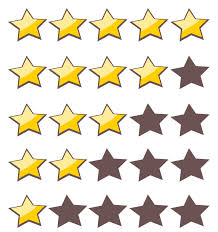
You are feeling great! Many of the reviewers are quite positive, giving the book 5 and 4 stars. Even the 3-star reviews have positive comments amidst the critiques and offer valuable points of view. You are psyched!

Then, the DNF (Did Not Finish) “reviews” start to appear, with 1- or 2-star ratings even though they didn’t read even half (and in some cases, even one-quarter) of your 323-pg book. Now come the lessons.

DNF quote

image from http://authorceo.com

  • Reviews and Reviewers Lesson No. 1: Do not expect all reviewers actually to read your book or to behave like professional reviewers.

    What? How do non-readers get to call themselves “reviewers”?

    People who only watch a few minutes of a movie or TV show or walk out at intermission for a live performance aren’t entitled to submit a full review much less a rating. Why are these readers doing this? What gives them any right to even comment, much less evaluate your book with so little experience of it? Reviewers are supposed to READ the book, first, aren’t they?

    HA HA HA HA HA! You wish!

    It’s all right. Calm down. Blog about DNFs and move on. Enjoy their snarky comments(some of the are quite witty and even funny), post them right along with the other reviewers’ insightful remarks. What do you care? It’s not as if their DNF opinions matter: they did not read your book! Ignore.

    NO DNF logo

    image from http://frodosco.com

  • Reviews and Reviewers Lesson No. 2: Not all readers will comment; not all downloads lead to readers.

    Do not expect all readers to leave comments or reviews.

    No comment bubble

    image from http://oscarmini.com

  • Reviews and Reviewers Lesson No. 3: Reviewers are all volunteers (or mostly) and often do not have the ability to meet stated deadlines.

    Do not expect all reviewers who say they will review your book to do it in a timely fashion or at all. Waiting for reviews? May as well be waiting for Godot. “There is nothing to be done.”

    Waiting for Godot

    image from http://blogs.mprnews.org

  • Reviews and Reviewers Lesson No. 4: Reviewers will not always respond to requests.

    Do not be surprised when requests for reviews are ignored even when you follow all the reviewers’ guidelines and fill out their forms, even when your book falls within their genre specifications and meets their criteria perfectly, not even when they claim they will respond to all requests.

  • Reviews and Reviewers Lesson No. 5: Be open to a “swap” or don’t join the clubs.

    When you say that you are not a “review swap” kind of author, explaining that, on the rare occasion you do accept another author’s book to read and review (because you’re very busy writing), that:
    a) you cannot promise to provide their book with a 4- or 5-Star ranking,
    b) you do not know what you will think of their book prior to reading it, and
    c) you can’t promise a “positive” review,
    do not be surprised when some reviewers/authors refuse to review your book at all (and some are quite snarky about it).

    The Alliance of Independent Authors (ALLi) developed a Code of Ethics(#ethicalauthor) http://www.selfpublishingadvice.org/ethical-author-campaign/ in November, 2014, that included these statements in the Reviewing and Rating books section, which I like (except for the missing apostrophe on the final use of reader):
    “I do not review or rate my own or another author’s books in any way that misleads or deceives the reader. I am transparent about my relationships with other authors when reviewing their books.

    “I am transparent about any reciprocal reviewing arrangements, and avoid any practices that result in the reader being deceived.”

    Then, they also included this part in Reacting to reviews, which I thoroughly agree with:

    “I do not react to any book review by harassing the reviewer, getting a third party to harass the reviewer, or making any form of intrusive contact with the reviewer. If I’ve been the subject of a personal attack in a review, I respond in a way that is consistent with professional behaviour.”

    Read the entire Ethical Author Code and decide if you, as an author, want to adhere to it, or you as a reader want authors to adhere to it. If you do, download the badge, below, and spread the word! http://www.selfpublishingadvice.org/alli-campaigns/ethical-author/

    ALLiEthicalAuthor_Final-Outlines-300x173

  • Reviews and Reviewers Lesson No. 6: Most reviews and authors’ groups do not accept “negative” reviews.

    Some even have agreements up front that they will not post or give any books lower than a 3-Stars ranking. They consider a 3 (out of 5) to be a “terrible” rating.

    When you are involved with some authors’ groups which require “review swaps” as part of “belonging” to their “club” (which I heartily recommend AGAINST joining for precisely that reason and more besides) and you read the book you have chosen or been assigned and discover that it is a book you have to give a 2-star rating to (and that is being generous, in your opinion), do not be surprised when the club leaders seem supportive but it turns out that they are not.

    Be prepared for the author to tell you that s/he is “too thin-skinned” to talk to you about your responses prior to your posting the review. You do wonder, however, how anyone can publish books, put their writing out in public, expect all their readers to react positively every time and make no emotional preparations for the eventuality of rejection or negative feedback from readers.

    Take it in stride when the leaders refuse to post your review even though it meets all their stated criteria, you warned them in advance that it was not “positive,” and they emailed you that “an honest opinion was all they wanted or expected from their members.” Do not take their lack of integrity personally, even when they cast aspersions on your character and hint that you are “being unfair” and “unkind.” Do not take the bait, even when they keep asking you questions that imply how heartless you are to rate that book so low, such as, “Don’t you know how hard this author worked on that book?”

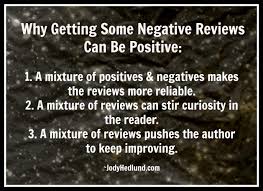
    We wish everyone realized that rational, negative reviews can be helpful, as blogger Jody Hedlund points out in this great meme:

    Negative reviews can be helpful

    image from http://jodyhedlund.blogspot.com

  • Reviews and Reviewers Lesson No. 7: Even the readers who chose to review your book may not like your genre or understand your book, yet will blame you for their lack of enjoyment and comprehension.

    Why, you wonder, would a reader who already knows she doesn’t like science-fiction choose to read, much less claim to want to review, a science-fiction book? There are ALIENS on the cover. There is no mistaking the genre of this book! What is the deal?

    The components of Buddhism and Judaism figure prominently in your books and you make that clear in blurbs and your bio. So, why would a born-again Christian, a devout Muslim or Catholic or any other religious-leaning person who has problems accepting Buddhism or Judaism in fictional characters and plots (or in real life, actually) choose YOUR books to review? What were they imagining would happen?

    You put information right in the first chapters of your books regarding its format (all in the present tense on purpose, for example, and presentations of multiple timelines), yet some reviewers will criticize your writing for these exact components, commenting that you “needed a better editor” since you “obviously don’t know how to use verb tenses,” or complain that “there were too many versions of the same story.”

We authors can’t please everyone, nor should we even try. Write your best book, Sally. Appreciate ALL reviews, even the DNFs. Keep going. By the time you get to Volume III or IV, this “newbie indie author” phase will seem as if it happened in another lifetime.

Meanwhile, support other indie authors. Write and leave reviews, rankings, comments and LIKES.

Support indie authors 2

image from http://alifeboundbybooks.blogspot.com

Unknown's avatar

WRITING AND PROMOTING A SERIES: Series authors, Nicholas C. Rossis and Charles Yallowitz

WRITING AND PROMOTING A SERIES:

by series authors, Nicholas C. Rossis, Pearseus series, and

Charles Yallowitz, Legends of Windemere series

Guest bloggers and former guests on CHANGES conversations between authors
(Episodes 7 and 9), http://www.sallyember.com

PEARSUS VIGIL NOW AVAILABLE ON AMAZON

PEARSEUS: VIGIL NOW AVAILABLE ON AMAZON

This joint post was made possible by the invitation of Sally Ember, who has been gracious enough to allow us to speak on her blog. She has done this knowing that Mr. Rossis and Mr. Yallowitz have a history of crazy antics. Indeed, some of these antics occurred on Sally’s very own LIVE video show *CHANGES* conversations between authors, which you can find online. Thank you to Sally Ember and we hope everyone enjoys this post on writing a series.

Check out Nicholas’s newest release, Pearseus: Vigil, by clicking on the above cover art and
prepare for a March/April debut of Charles’s next book, Legends of Windemere: Sleeper of the Wildwood Fugue.

Charles: First, I would like to say that I’m happy to be working with Nicholas again and on a post this time. Our back and forth on our blogs is a lot of fun and he has a very sharp, creative mind that keeps me on my toes. This carries over into his writing, which impressively spans several genres.

Nicholas: Same goes for me. I’m very impressed by Charles, both as an author and as a person. Plus, it’s great to have someone who gets my weird sense of humor!

What is the hardest part about promoting a series?
Charles: It’s really easy at the beginning because you can play around with teasers and you only have one book out. Then you get the second and try to find ways to promote without revealing everything in the first book. Around the third book, if you go higher than a trilogy, you get caught between avoiding big revelations in the earlier books and spoilers for the next one. It’s a really hectic balancing act because you don’t want to say too much. Yet, you have to say enough to keep people interested and lead to them to the rest of the series.

I’ve found that you have to make sacrifices in this, for example, revealing a minor spoiler to promote the next book while keeping the big stuff secret. A teaser helps, too, because it isn’t so much a spoiler, but a hint that something is going to happen or a foreshadowed event is coming to pass. Oddly enough, I found that Twitter is the less nerve-wracking social media site to promote a series on because the 140-character limit means you can’t say much and it’s hard to tiptoe around spoilers like that; you have to stick to catchy blurbs or small quotes from the book.

CLICK FOR AMAZON SITE Cover Art by Jason Pedersen

CLICK FOR AMAZON SITE
Cover Art by Jason Pedersen

Nicholas: I agree with Charles that Twitter is a great promotional medium for a series, as my marketing relies on a short quote and a link.

One of the best things about having a series is that you can have a different book on sale each month and it will help the others’ sales as well. However, unlike Charles, I have also made a book bundle available. This contains all the books published so far in Pearseus. Obviously, when this is on sale, no one buys the rest of the books. However, it does attract a lot of attention as it offers great value for money. So, it’s all a bit of a balancing act.

How difficult is it to maintain continuity in a series and what tricks do you use to accomplish this?
Charles: I once switched one of my main character’s eye colors and a minor recurring character lost his hair. So some of the details can be messed up if one isn’t careful. Perhaps the biggest challenge to story continuity is that you can forget some foreshadowing or you do something that alters a previously established rule. Middle books can also have events that change the finale because what you plan in your head might not always be what comes out on paper. It really is a game of memory and concentration or like putting together a 5,000-piece puzzle with no picture to guide you.

There are two tricks that I use. One is that I keep notes on a lot of things that I believe I will forget. For example, I had some minor characters who step into the spotlight in a later book and I never gave them much description in their first appearances. There was just enough that they stood out and I had to make sure I had those identifiers written down. The other trick is never to be afraid to look back at your earlier books to confirm information. If you have even an inkling that you’re off on a fact, then jump back to the book where you know the information has already been written. This helps with plot lines, character descriptions, world-building and anything else that carries over from book to book.

Nicholas: LOL—I love the idea of “a 5,000-piece puzzle with no picture to guide you.” Indeed, it can feel that way at times.

I have a .doc file that includes all sorts of minor details, from names to subplots. Also, when I write, I always have my older books open as well. That way, I’m instantly able to jump back and forth and check things out. For example, a lot of the action takes place in a place called the “Chamber of Justice.” Every now and again, I’ll catch myself typing “Chambers of Justice” (plural) instead, so I have to remember it’s actually singular. I have no idea why some days it feels self-evident it’s singular and others that it’s plural, but that’s just how it is.

Pearseus Bundle on Amazon

Pearseus Bundle on Amazon

Do you have any suggestions for readers who wish to get into reading a long series?
Charles: I’m a fan of starting from the beginning, but I know many who start at the most recent book. If you do this, then I highly suggest that you read the earlier books at some point for more context and to see events that don’t get mentioned again. Also, one must be patient with a series because the story is stretched out and every book will have an opening. Also, not everything gets cleared up at the end of the earlier books. That understanding helps a reader accept that questions will remain. The only other tip I have is that you have to trust that the author knows what he or she is doing. I see a lot of readers try to demand that certain events happen in a story, but those desires might not fall in line with what the author has planned.

Nicholas: This is a typical “patience is a virtue” situation. Writing a series is a serious responsibility. Reading a series is an investment of both time and money, so we have to make sure that each and every book not only meets the readers’ expectations, but exceeds them. We owe them as much. That is why I’m grateful to all my readers, but those who have invested in Pearseus hold a special place in my heart.

There are several things we can do to make it easier on the reader, of course. For example, all my Pearseus books have a map with the cities and places that have been revealed so far, plus any new ones. Also, I have a character list at the beginning (and in “X-ray,” if reading on a Kindle), with a two-sentence description of who that person is. Another good idea is to offer a quick reminder each time a minor character first appears. For example, you can say something along the lines of:

“Parad walked into the room. He spotted Angel, his daughter, and smiled.”
This helps people who may have forgotten who Angel is.

Yet another trick I use is to give names to as few people as possible. For example, a minor character may be safely referred to by their property or occupation. Readers don’t need to know the name of every healer that tends a hero’s wounds or every blacksmith that sharpens his weapons.

Finally, the best thing to do is to make sure each book can stand on its own. That means no cliffhangers and no obscure references—at least not without a reminder.

Sadly, this is not always possible. Mad Water, the third book in the series, ends on a cliffhanger because the subplots raised there are not resolved for another 400 pages. So I could either have an 800-page-long book or two 400-page ones, the first of which ends on a cliffhanger.

Obviously, I chose the latter, which brings me back to readers’ patience. 🙂


CLICK FOR AMAZON SITE Cover Art by Jason Pedersen

CLICK FOR AMAZON SITE
Cover Art by Jason Pedersen

Charles Yallowitz‘s Information

charles_author_photo_bw
Blog: www.legendsofwindemere.com
Twitter: https://twitter.com/cyallowitz
Facebook:https://www.facebook.com/CharlesYallowitz
Amazon Author Page: http://www.amazon.com/Charles-E-Yallowitz/e/B00AX1MSQA/
Website: www.charleseyallowitz.com
Jason Pedersen, Legends of Windemere‘s Cover Artist: http://www.jasonpedersen.com/

Nicholas Rossis‘ Information

Nicholas Rossis
Blog:http://nicholasrossis.me/ .
Amazon Author Page: http://www.amazon.com/Nicholas-C.-Rossis/e/B00FXXIBZA/
Goodreads: Pearseus: Schism can be read for free on Goodreads.
Twitter: www.twitter.com/Nicholas_Rossis
Google+: https://plus.google.com/+NicholasRossis
Facebook: www.facebook.com/NicholasCRossis

Sally Ember, Ed.D., is the author of the sci-fi/romance/utopian ebooks in The Spanners Series. Volume I, This Changes Everything, is permafree. Volume II, This Changes My Family and My Life Forever, is usually $3.99. Look for Volumes III and IV in 2015.
All reviews, info, excerpts, links: http://www.sallyember.com/Spanners

Unknown's avatar

Pros and Cons of #Writers’ Critique Groups

Pros and Cons of #Writers’ Critique Groups
Reposting from one year ago, since it’s all still true and useful and I have new Followers/Readers

Everyone know the biggest drawback to #self-publishing is the isolation. Yes, every #author who doesn’t collaborate in their #writing writes alone. However, prior to the explosion in self-publishing, most books and ebooks that came to readers went through several other sets of eyes and had several editing and revision drafts done by others that helped polish and tighten the writing prior to publication.

artsy-writer-working
image from vidyasury.com

Today more than ever before, pieces of writing from short stories, blogs and articles to full-length books, both nonfiction and fiction, are getting all the way to a reader with no other editor than the writer. This is not a great situation for most readers or writers.

Because many writers seek professional companionship and critiques as well as audiences for drafts and new ideas, writers’ groups have sprung up for many centuries, both formal and informal. These groups usually meet regularly. Size can vary from a pair to a large group of a dozen or more.

The activities in the group can include public readings and/or sharing of written material with participants’ immediate oral comments, pages returned with mark-ups and discussions of the shared pieces. Locations can vary and many are not available free, so some groups charge a fee or require members to pay dues to cover costs and perhaps invite a speaker/presenter to conduct a workshop or give a talk on occasion.

writers_group 1
image from http://www.audreypress.com

Writers’ groups often appoint or hire a facilitator to guide and contribute to the critique. In better-run groups, this leader also keeps time and makes sure the comments are constructive and fair.

However, some groups are not well-run. The ground rules are not clear. Time is not equally distributed because it isn’t tracked well. Comments are not always fair and constructive. The facilitator dominates the discussion. Discussions veer away from the writing into personal stories and tangents introduced by participants. Suggestions are made that are not conducive to the writer’s intent, restrictions, topic, genre or format.

The diverse types of knowledge and experience among participants and in a leader of a writers’ group can be rich sources of varied perspectives OR generate too many irrelevant and unhelpful comments.

Pros and Cons of #Writers’ Critique Groups

CONS: An unskilled or distracted facilitator
— allows too many destructive comments to occur and this encourages more of the same
— allows the exposed author to experience immediate hurt feelings or bewilderment
— allows the writers to leave the critique session discouraged and confused by conflicting advice and too many off-topic remarks
— offers too many comments and dominates the discussion, shutting down, arguing with or interrupting other participants.

Writers in poorly-run groups can be led astray, which can causes them to depart from writing in their own voices and to lose sight of their personal or professional writing purposes. Many writers get discouraged or even “blocked” by attending poorly run writers’ groups.

BEWARE! Better to be isolated than to attend a group that operates negatively.

critique
image from thewildwriters.com

PROS: An skilled or focused facilitator
— leads a well-run group peopled by dedicated, experienced writers as well as “newbies” who each feels comfortable sharing and contributing
— trains and supports members to utilize the time effectively for receiving and offering constructive critiques, with newbies learning from old-timers the most effective methods for delivering and receiving criticism
— can foster an atmosphere of professional support that provides many gems of advice and new points of view for each member, even ones who don’t share in every meeting.

These productive sessions are wonderful catalysts for the writers who share drafts and any who attend. Authors in well-run writers’ groups return from each meeting with new vigor for editing, revising and creating new content.

Tips for Writers’ Groups:
1) Productive critique sessions are NOT riddled with “we loved it,” “it’s great,” and “keep going” with little or nothing else.
Critics must provide reasons for their opinions, especially when they’re positive, so that writers learn what we do well and can replicate our successes.
Critics must also defend their opinions that tell a writer to make changes by offering suggestions for revision or reasons for the ways the writing doesn’t “work” for the reader/listener.

2) Without the prompting of a skilled, focused leader, opinions may be offered with insufficient or no reasons given. Offering positive or negative opinions without rationales is not useful to a writer and should not be allowed.

3) Focus, clear ground rules (e.g., the requirement to give reasons for opinions, taking turns, sharing time equally) and giving both emotional and cognitive responses to a piece of writing are all parts of a productive writers’ group.

4) If YOUR writers’ group is not productive and positive enough, make an effort to change it or leave it. Start your own or join a different group.

5) Networking has never been easier. http://www.Meetup.com is a source of in-person writers’ groups. You can also check your local library’s, college’s, county’s/parish’s, state’s/province’s and country’s organizational listings for professional writers’ groups in your geographic area or genre. Check Facebook, LinkedIn, Google, and many writers’ associations and genre-centered groups online and around the world for possible writers’ groups, critique opportunities and other networking options. Some groups are now meeting online and virtually via SKYPE, iCHAT, Google Hangouts, etc.

CA writers club logo

If you are a writer seeking a group, I hope you find or start a great one!

Best of luck in your writing.

Unknown's avatar

“Grade Inflation”—the Widespread Awards and Exalting of Effort—are Ruining Writing and Writers

I am hereby and for an undetermined length of time giving low credence to most book reviews, awards, contests and other honors conferred upon books/authors.

Why? I know some of the awardees’ writing. Many are undeserving of any accolades.

“Grade Inflation”—the widespread awards and the exalting of effort—are ruining writing and writers.

inflated A
image from http://www.wrkcapital.com

Why does anyone reward mediocrity and worse? How many “open mikes” have you attended in which EVERYONE, no matter how badly they perform or how horribly they read aloud or recite poetry, gets wild applause or even a standing ovation? Does the audience believe that everyone deserves the same response regardless of the quality of their presentation?

I do not.

How does it help any author/artist grow when no one is honest with them about the areas they need to improve and all they hear are overly exuberant praises? Neither are we helping authors or keeping faith with readers when so many provide undeserved 5-star “reviews” for shoddy writing. We are helping our writers and performers when we honestly and with specificity critique their work.

We are not doing our children any favors to give everyone who participates a “winner” ribbon, unless everyone understands that showing up and participation are what get awarded. However, I contend that, for professionals, the industry should not be labeling greatness on effort alone.

Grading on effort makes greatness lose all significance and confuses us all. When everyone “wins,” no one does. For evaluations and competitions to matter, the creation being evaluated of any top-ranking writer or other artist must be excellent by objective standards to have earned that award.

When all are given “A”s, or 5 Stars, or First Place, the rankings become meaningless. Participants can’t begin to discern their actual place among their peers or the value of their work in the world when reviewers and judges do not provide accurate, meaningful, thoughtful critiques and feedback, in the form of awards to the deserving.

participation trophy
image from http://cutemonster.com

At the end of a sports event, such as a foot race or team game, the winners and losers are indisputable. Those that swim are racing each other and the clock, which are immutably obvious regarding who swam the fastest for that race and for all recorded events of that type.

Art assessments should not merely be based on the creator’s intention or your affection for the creator.

Exceptions: if the artist is a child or disabled in some way, then that participation alone is sufficient to earn an award. Obstacles that participant has already overcome just to be involved in that competition or performance do deserve to be honored. THOSE types of contests, in which “everyone wins,” I wholeheartedly honor, e.g., the Special Olympics.

BTW: I strongly believe in and promote cooperative games, the postponement of competition, and an “everybody wins” concept for most activities for children and youth. I wish more youth sports and other harshly competitive games would be permanently removed from options so that everyone could play, learn and grow without that pressure.

This post is not to remove those cooperative and noncompetitive games or friendly, networking-type of awards passed around for fun and support. We all need encouragement.

However, when the competition is on a supposedly “level playing field” (more or less: let’s not get into gender, socio-economic class, age, racial and ethnic biases that unfairly prejudice judging and preclude fairness; that’s another subject), I strenuously object to fairly set competitors’ receiving awards, praises, great reviews or any other merit when the subject of the assessment is insufficiently unscrutinized.

I know some awards are merely a matter of “taste” or “current trends,” and that what anyone “likes” is always subjective.

Fine. Let those competitions be labeled clearly as having someone’s personal preferences, not accepted standards of excellence, as the main criteria for winning.

I’m talking about competitions that adults, professionals, and mostly, writers enter that supposedly have criteria that winners have to meet or exceed, in which the “best” is supposed to be honored the most. I wish that all of these competitions would be judged by obvious and agreed-upon standards of excellence and not determine winners based on effort, affection or popularity, or worse, payment of entry fees.

Also, I’m not talking about what people “like.” I’m asking for awards based on what is excellent, as objectively measured as possible.

Maybe it’s easier to talk about what is NOT excellent. I believe these components, below, are not purely subjective measures and therefore can be evaluated fairly and “blindly.”

FYI: For professional writers, grammar matters. Spelling counts. Syntax is significant. Context is not everything.

grammar shit
image from http://the-modern-housewife.blogspot.com

Here are my “what not to award” components for all types of fiction, whatever length.

[NOTE: I do not believe these need any explanations, but comment here or wherever you see this or email me if you are not sure what I mean, below.]

  • Poorly plotted stories
  • Superficially drawn or insufficiently motivated characters
  • Illogical, incomplete or inconsistent world-building
  • Triteness in storyline, characterization or setting
  • Not credible settings and/or situations
  • Poorly edited, insufficiently copyedited, badly spelled and/or incorrectly written sentences, paragraphs, entire works
  • Repetitious language, situations, characters and plots across one or more works by the same author
  • Sexism, racism, ageism, classism, ethnocentrism and other oppressive biases as expressed through one’s characters and plots/situations

The next time I hear a writer “won” an award, I hope s/he deserved it. I really do.

In case you need a reminder of what quality is and how deserving some authors are…

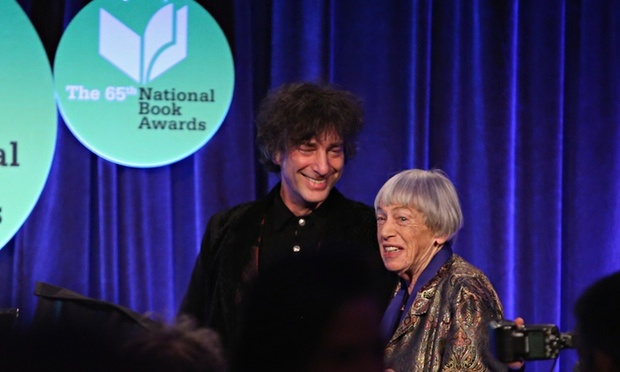
Ursula--Le-Guin-and-Neil--010
Ursula K. Le Guin and Neil Gaiman at the National Book Awards, 2014, in New York.
image from http://www.theguardian.com Photograph: Robin Marchant/Getty

P.S. I find Gaiman unreadable (personal preference) and adore Le Guin, but I recognize the similar greatness in their writing.

Unknown's avatar

10 Criteria for Joining #Online #Groups/#Communities for #Writers

10 Criteria for Joining #Online #Groups/#Communities for #Writers

What is the value of social networks in easing the loneliness of the solo writer? How do online groups/communities provide opportunities for sharing ideas? How do today’s writers, especially for those newly published or about to seek options in publication, benefit from building communities of virtual friends?

There are now thousands of online groups/communities a writer can join. Some are only available via membership in existing social media sites, such as Goodreads, Facebook, LinkedIn or Google+. Others are stand-alone groups that have their own websites and memberships but may also host a page on any of the other social media sites to attract and inform potential members and continue to post info to members regularly.

Then, there are the groups, chat rooms or fora one can join, lurk on and/or contribute to on Yahoo, KindleBoards, Smashwords, Bublish, Authonomy, Jukepop Serial, Wattpad, and probably hundreds more, Add to that specific professional sites’ groups, such as Romance Writers of America, Science Fiction Writers of America, Mystery Writers of America, etc., plus international groups and marketing sites and it makes one’s head spin.

If you are a blogger as well as a fiction writer, if you are a new and/or indie pub author or just one of millions who has no outside PR firm hired to market your books, you NEED groups/communities to get your “brand” known, find readers, attract followers and fans, get “pingbacks,” improve your ALEXA rating, your KLOUT or SNAP scores, get a Google Page Ranking for your website….

Don’t you?

How does a busy writer wade through all these opportunities to decide where to plant one’s online presence “flag” and still have time to write? The discerning writer who actually wants to protect your time and keep writing while marketing effectively can use these 10 criteria to choose your online memberships.

10 Criteria for Joining #Online #Groups/#Communities for #Writers

Join-us-banner

image from: http://www.tabularasa.com.au

DECIDE whether or not to:

1. PAY or stick with FREE memberships?
Some groups are free; some start out free or have a free level but change into/have paid memberships that provide additional services or opportunities to those who pay. If you have an unlimited budget or find yourself drawn to one or more of these groups and can afford it, go ahead and become a paid (upper-level) member. Some of these groups’ upper levels really do offer services to authors that are useful; some just say they do but when you read carefully, the “services” are not much more than occasional tweets.

Beware of those that over-promise, do not deliver, or are vague about what paid membership avails members of before paying. Research them: search for the group’s hashtag or tweet handle and then privately message someone [not the leader] about specific ways that being a paid member benefits him/her.

So far, the most I have paid to “belong” to any group or purchase any “marketing” service was $15 and it wasn’t worthwhile. If you do join a group and pay your fees or dues, make sure you’re getting what you pay for and only renew if it’s worth it: no automatic renewals!

pay dues

2. Participate in “review swaps”?
As a newbie desperate for reviews for seemingly invisible books, I found these groups to be so tempting. They seemed so supportive. They offer REVIEWS, sometimes in great quantity, sometimes with rankings and votes as well. But, free or not, these review “exchanges” come with several “prices,” and I personally decided the prices were too high.

For one, I am not comfortable providing pre-arranged and necessarily positive reviews (usually these swaps require/request a review rating of 4 or higher) for books I haven’t yet read in order to get the same for my own books (which the “reviewers” may or may not fully read). I “got into trouble” for daring to critique the books I read for being under-edited, overwritten, poorly constructed, badly plotted, shallow, etc.

Second, and much more chilling: if you join these groups and participate, you run the risk of having any or all of your reviews summarily removed from Amazon for not being inauthentic (some rightly so).

Third, some social media sites (Goodreads, for one) monitors members’ activities and sends messages to those members it believes are abusing the site, such as by “buying” or “trading” votes on Listopia, for example, or providing “fake” 5-star reviews to numerous members’ books. If you even get accused and especially when caught, you will discover that most sites’ TOS say they can suspend your account permanently and remove your books’ reviews, rankings, votes, etc., often with no warning and no recourse.

banned from Amazon

Although I joined some of these groups initially, I found out all of this later. Then, I removed myself within a few months of joining. I never paid to join.

If you are comfortable with the risks and conditions, go right ahead and participate.

3. Participate in Blog Hops and other “required” activities?
Some of these are great and worth doing. Others, not so much.

Look around, visit a few, comment, see what happens. THEN, decide.

4. Join a “Tweet” team or use group hashtags when posting?
This is highly recommended by some, disregarded by many. When someone posts nothing on Twitter but lists of others’ handles and the group’s hashtag, NO ONE CARES. Don’t do that.

But, if your group actually retweets, comments, replies, shares, ENGAGES with each others’ tweets or posts, that is worthwhile and those groups are worth joining.

5. Become a regular responder/poster or stay in the “shadows” (read/lurk but don’t comment, “LIKE,” +1 or post)?
I highly recommend lurking/reading many days’ or months’ worth of posts for some “Boards,” Communities or Groups before posting yourself. Get the “culture” of the group: the tone, the topics, the length, the repartee, the purposes. See if these resonate with you and your “brand” or style. If yes, go right ahead and join in the conversation. If not, move on.
Do not join a group to argue, criticize, lambast or attack.

Remember: the internet is “forever”: if you get into a “flame war,” readers/fans and publishers (and employers) can find it years later. Perhaps use a pseudonym for controversial posts.

Zooey Deschanel quote about trolls

6. Become a “help offered,” “help requested” or both type of participant?
You can become a resource to others on many sites (Quora, Ask an Expert, Reddit, etc.) or request help yourself.

Respect, assistance and expertise are admired. Whining, complaining, false information or bragging: not.

7. Join as yourself, your brand/books/website, your pseudonym?
EVERYTHING you post becomes part of your brand unless you use pseudonyms. The intentional and judicious use of pseudonyms is recommended, particularly if you write in vastly different genres (children’s books and erotica) or want to comment on controversial topics but not affect your brand.

If you become a “content curator,” offering information, help, creative/fun posts, and these are consistent (or at least not contradictory) with your brand, go for it! Join groups and comment/post frequently as yourself. Get to know/be known by the members, become a fan /follower of theirs.

I belong to several groups whose members and I are becoming virtual friends. We support each other’s efforts.

encouragers-wanted

image from: http://anupturnedsoul.wordpress.com

These are the groups worth joining and continuing to be active in and are valuable even when you have little time. If you comment here with one of yours, I’ll share some of mine!

Dump the rest.

8. Join any genre-specific or topic-specific groups?
If you are a “genre” writer, then, YES: join one or more of these groups.

I belong to sci-fi, romance, paranormal, ebooks, indie pub, fantasy, “clean” indie, female-oriented, YA, speculative fiction, blogger, author, writer, marketing, science, tech, G+ HOA help and many other groups that I interact with, enjoy and learn from weekly.

Be sure to read and follow each group’s posting guidelines carefully to avoid getting disliked, kicked out or otherwise censored.

9. Offer any giveaways, have contests, provide guest spots yourself?
If you have print books or swag, go right ahead and offer it/them. I highly recommend that you think of what you have to offer and start offering (e.g., free PDFs of writing tips, samples of your writing, free passes, discount coupons) whenever you can.

I have a blog (http://www.sallyember.com/blog) and an almost-weekly Google+ Hangout On Air (CHANGES HOA), so I can and do offer guest blog opportunities and guest starring spots. If you’d like to propose a guest blog topic and date and/or be on CHANGES, get in touch with me here: sallyember@yahoo.com

I am also a series ebooks novelist, so I offer the first book in The Spanners Series, This Changes Everything, as “permafree,” which is highly recommended for newbies to do, once we have subsequent books for sale.

When you are doing many other types of writing and interacting regularly with several online groups/communities, you can occasionally plug your own books! Like, NOW!

logoAuthorsDen

10. Enter any contests or pay for reviews or marketing?

When a group’s entire purpose is to further its own ends and fill its coffers with entry fees, service charges, etc., these make me suspicious. But, I am naturally cynical.

I decided early on not to pay to enter any writing contests, not to pay for reviews, not to pay for “members’ services” and mostly not to pay for marketing. These are my decisions and not everyone agrees with them.

Some individuals offer a combination of free and for sale services/marketing, so you can decide which you want to participate in/join. I have met several great people and had excellent experiences in some groups in this way: I participated in their free activities and then did not continue when the next steps required payment since I couldn’t afford or did not need those services at that point. I do give these “helpers” regular “shout-outs” and thank them publicly for all they do/have done, actions which I hope make up for my lack of financial support to them.

The professionals left me alone when I asked them to do so. The ones who wouldn’t stop emailing and kept on when I asked them to stop or when I told them I wasn’t buying got relegated to spam and ignored.

You have to decide for yourself. However, if you are considering paying for any of these, please research the contest, reviewers, PR person, etc., thoroughly.

Writing Community

It’s bad enough not to win or not to get what you paid for; it’s worse when you’ve paid a lot. BEWARE!

If/when you find groups worth joining, please comment about them here.

Best of luck to you all!

Unknown's avatar

15 reasons I could only give a 2-Star #Review for The Self-Publisher’s Ultimate Resource Guide, 2015

I received an Advance Review Copy (ARC) of The Self-Publisher’s Ultimate Resource Guide and promised to write and post an honest review here on my own blog and on at lesat one other ebook site (see links, below) in exchange.

Self-publishing Ultimate cover

According to the co-editors, this Guide “is the first and largest collection of curated and verified resources for independent authors who plan to publish their own books. Produced by a team with long experience in both traditional and independent publishing, the over 850 resources are listed in an easy-to-use format that includes live links, phone numbers, email addresses and brief descriptive copy. The Guide makes vendors and other resources easy to find by separating them into 33 distinct categories within the 3 main tasks the self-publisher must deal with. How to Prepare, Publish, and Promote their books.”

15 reasons I could only give a 2-Star #Review for

The Self-Publisher’s Ultimate Resource Guide

PERSONAL NOTE: This Guide already received some excellent endorsements from “heavy-hitters” in the Indie-Publishing industry, several of whom happen to be my unofficial mentors: Mark Coker of Smashwords, Joanna Penn of The Creative Penn, and Joan Stewart, The Publicity Hound, to name a few.

I’m daring to add to and not to agree with these experts’ opinions, here. If I were you, I’d also go read theirs! And, please: I’m trying to be constructive, so I give a lot of recommendations and make many pleas. It’s not just a pan.

I wanted to like this book. I wanted to give it 5 stars. I cannot.

The best thing I can say about this is that the editors promise that they want it to be improved and added to quarterly or annually.

I am NOT trying to be snarky or mean. I genuinely went in with high hopes and expectations, given all the hype and positive endorsements this Guide has had. These hopes were dashed in the first few chapters and it did not get better as I went along.

I hope they will take my critique and others’ feedback to make the Guide better, not just longer.

Here are my 15 reasons for giving Guide only 2 stars:

  1. Why isn’t this an actual GUIDE? Why is the Guide almost entirely just a lot of somewhat organized lists?
    Instead of directing, informing, and assisting new indie authors with each selected aspect (and I do like the aspects, or chapters, they decided to include), there is a lot of information not given. This info is either missing, such as the reasons a writer would need to use a section or how to use the information provided, or withheld, such as the providing of a rating system or users’ experiences for each resource—annotations, as in YELP or Angie’s List—for each entry.
    If we wanted to acquire a list of resources, we could do that from many other places.
    The editors say these have been vetted, but where is the evidence of that? What did they assess? Why don’t they include their assessments, or a summary of why each listing is “better” than those not included, and for what, exactly?
    I was very disappointed in the editors’ lack of interaction with each listing provided. They seem to have merely collected a lot of self-written descriptions or blurbs about each entry (meaning, written by each resource provider, not the editors or users) and put the selected listings in alphabetical order.
    Since they say they vetted each entry and rejected some, why aren’t we reading more about WHY they included each entry?
    If I had paid for this “GUIDE,” I’d want a refund.

  2. This book was poorly written and edited. However, the authors’ long, impressive bios (see below) list extensive experiences in editing and proofreading. They also exhort the need for both in this Guide .
    However, even though I wasn’t looking for or expecting to find mistakes, find them I did. There were numerous mistakes in grammar, punctuation and syntax as well as inexcusably sloppy and poor writing in almost every one of their brief intros/summaries for each section/chapter. Finding so many problems was surprising and very disappointing.

  3. The editors mention more than once a warning to readers to “read the fine print” if they choose to enter into contracts, but nowhere do they provide any tips or hints about exactly what to watch out for, what to avoid, what to accept. Why?
    Their advice is so vague as to be trite and useless; without specifics, they’re not helping anyone. Why not a chapter on “Don’ts” or “Beware of…”?
    [It’s as if they started to write a guide and then, halfway through, made it a listing service instead. It makes me wonder if there was some money exchanging hands, ensuring certain listings and keeping out others.
    Is that just my inner cynic talking? There is no evidence of resource providers’ purchasing their listings….]

  4. Why did they not include a chapter on authors’ support networking? There are so many indie authors’ forums, Kindle Boards, authors’ groups, etc.
    If they take my advice and add that chapter, I hope they make notations as to which resources/ groups/ providers are fee-based and which are free, and what the fee ranges are, if applicable, and what the fees avail members of, specifically.
    Fee information is crucial but missing from every chapter.
    Also, I hope they weed out the “review swap” groups, since these violate Amazon’s Terms of Service, and I hope they would EXPLAIN the TOS violation consequences (removal of reviews, for example) in their new chapter.

  5. Why is there a chapter on websites for authors? What makes a website for authors particularly unique vs. a website for bloggers, e.g., or vs. any other small business? This claim of distinction is never explained, yet there is a chapter devoted to a list of people they are supporting who supposedly create websites “for authors.”
    I’m scratching my head over this. If the editors explained their rationale, I might be on board. However, again, no explanations are given.

  6. There is a chapter devoted to Book Reviews with no mention of the extremely important and controversial issue of paid vs. free reviews, and no annotations as to which of those listed charges authors for providing reviews nor how much they charge.
    These omissions are significant oversights. Must correct in future revisions, please.

  7. There are several chapters that are devoted to formatting one’s book—ebooks vs. print vs. Print On Demand vs. “Short Run” [sic]—with no explanation as to the differences among these formats or which to do first and the reasons.
    Also, what about the issue of whether or not even to have a print version: why? when? at what cost? Many of us do not have any print versions: what are the consequences of going ebook-only for each genre?
    Furthermore, when introducing each type of formatting, there is no explanation about the reasons/ bases for ebooks’ formatting issues or the assistance offered, via Smashwords vs. Amazon, for example, or about difficulties of passing through Smashwords‘ “meatgrinder” successfully and what that success generates in benefits; no mention is made of that nor that Digital2Digital does not use such gate-keeping, for example.
    If this is truly going to serve as a guide, MORE ANNOTATIONS and information are needed.

  8. What is a Short Run [sic]? I have never heard of it (since I have no print books, yet) and it was not sufficiently explained (nor hyphenated?). Why include it if not also to explain more completely what it is?

  9. Several key “players” were omitted, which I know can be corrected, but since some of them provided endorsements or reviews, I’m baffled by their absences. Many of those missing are very prominent in the blogosphere, Google+ or Twitter but not so much on Facebook. What about those who shine on Pinterest, Instagram, or Tsu?
    Maybe these editors not as active on the other social media platforms? The Book Marketing Tools and its free ebooks listing tool, e.g., were not included.
    In order to be an actual GUIDE and not just a list, part of this chapter should include annotations giving pros and cons of authors’ activity on each platform and who the leaders are on each.

  10. Social media platforms are the not the only places authors need to “go” or be “seen.” Start with: Blog Talk Radio shows that feature authors and books, like Indie Books with Will Wilson, The Backporch Writer with Kori Miller, and so many more; Google+ LIVE and taped Hangouts on Air, such as my show, CHANGES, which then go to Youtube; D’vorah Lansky’s and others’ teleseminars and webinars devoted to books, book marketing and authors; The Authors Show, A Book and a Chat and many others on their own “channels”; podcasts and other shows, such as The Author Hangout, with Shawn Manaher and R.J. Adams, via iTunes and other sources, and so many more.
    Please request and create a chapter with annotated listings of opportunities of this type and how to access them.

  11. There was no mention of Amazon’s Kindle Unlimited and the controversies/problems indie authors face regarding this, nor was a distinction made between Kindle Select and Kindle Direct.
    These are exactly the types of explanations missing from this book that need to be put in, please.

  12. Why was there such a small number of “Social Media Consultants” included? I could come up with more than that, yet I am not one myself nor have I used one.
    The editors need to do better outreach, here, and a LOT of annotating, since many who call themselves “experts” are NOT; I know vetting is something these editors say they have been doing, so let’s see the results.

  13. There needs to be more info about money. For example, if the chapter on contests and awards is going to be useful as more then an incomplete list, each entry needs to be annotated to include info on entry fees and deadlines as well as more about the actual value of winning or placing in each.
    These contests can take a lot of time: show us what’s required, specifically, to enter, please, and what we might gain from winning.
    Great to include a chapter on acquiring funding, too, but that also seemed a bit “light.” There are many more opportunities out there, but at least there were several clearinghouses, like C. Hope Clark’s Funds for Writers, listed.
    Such lacks make this book more of a jumping-off point than a guide, though.

  14. I also don’t understand why those who provide services in more than one area (as delineated by these editors) are not dually or triply listed, as often ought to be the case. Readers/users will find resources only in the chapters they go to skim and may not read other chapters at all.
    For example, Judith Briles is listed for her private site, but Author U is not listed at all, anywhere I could find.
    I know it would make the Guide longer, but there must be a way to show readers that a listing appears elsewhere in the book, or could appear elsewhere (and in what chapters) but editors decided to list each resource only once for space reasons, right?

  15. I do not think Book Promoters are the same as book PR people, but perhaps I’m alone in this. In any case, I think having the word “Promoters” missing from the chapter headings is confusing.

If/when most or all of these omissions, errors and improvements are managed, I’d love to see that version. Or, maybe they should change the title from “Ultimate Resource Guide” to “Resource Compendium” or “Resource Listings.” They’d have fewer changes to make if they did that.

I wouldn’t think that would be as useful, though, as my revised version could be. I hope SOMEONE makes that version!

Meanwhile, although I believe The Self-Publisher’s Ultimate Resource Guide may be worthwhile as a starting point, it is far from being the “Ultimate Resource Guide” at this point.

Any newbie to self-publishing would have to pick up many other and better guides to make this one useful.


On their book’s website, in the FAQs, they state: “We plan to update the ebook edition of The Self-Publisher’s Ultimate Resource Guide monthly after the launch, eventually moving to a quarterly update. The print edition will be updated once each year, so we’ll have a new edition reflecting all the changes at the end of 2015.”

Proof? they post this excellent exhortation/invitation on the “CONTACT” page:

The Self-Publisher’s Ultimate Resource Guide is a living document.

Although we have tried to gather the most valuable resources for indie authors, it’s inevitable that some have been missed, and new products and services are constantly being introduced. We want your help to make it even better. If you know of a person, company, product, or service of value to independent authors that’s not included in this guide, please let us know. You can send submissions to be included in the next edition of The Self-Publisher’s Ultimate Resource Guide by the contact form below. Thank you.

Essential Qualification Guidelines for those who wish to be listed in The Self-Publisher’s Ultimate Resource Guide.

Extensive, professional experience in serving the self-publishing community.
A current, informative, interactive website.
Complete contact information; location (city, state/province, country), phone number, email address, and contact person if applicable.
Outstanding reputation; positive client/customer testimonials and/or reviews.
The final decision on all listings is at the editors’ discretion.

Note: Personal connection or recommendation of resource/business, is meant for anyone who is recommending someone else’s business. Say you are an author and use an editor not listed in the book. You can put that into the submission as your connection (I am an author who uses these services) and recommendation (what you think of the services you receive). It would not apply to someone who is asking for their own company to be included.


For more information: http://www.spresourceguide.com/

Ebook Purchase and Review Links:
Amazon (Kindle): http://www.amazon.com/dp/B00QSKUS2Q/
B&N (Nook): http://www.barnesandnoble.com/w/the-self-publisherr-joel-friedlander/1120927172?ean=2940150138957
Kobo: http://store.kobobooks.com/en-US/ebook/the-self-publisher-s-ultimate-resource-guide
Apple (iBooks): https://itunes.apple.com/us/book/self-publishers-ultimate-resource/id950440919?mt=11

The Authors/Editors:

Joel Friedlander
“…is an award-winning book designer and blogger who has been launching the careers of self-publishers since 1994 from his book design and consulting practice at Marin Bookworks in San Rafael, California. Joel is a self-published author and the blogger behind http://TheBookDesigner.com, a popular and award-winning blog on book design, book marketing, and the future of the book. Joel is also the founder of The Self-Publishing Roadmap, a training course for authors, and http://TheBookMakers.com and http://BookDesignTemplates.com, where he provides tools and services for authors who publish their own books. He speaks often at publishing industry events and is a past president of the Bay Area Independent Publishers Association.”

Joel-2014-headshot-300x

Betty Kelly Sargent
“…is the founder of BookWorks, and the founder of The Educated Author, and writes a monthly column on self-publishing for Publishers Weekly. She is a member of the Independent Editors Group (EIG) and has spent more than 30 years in the traditional publishing business, most recently as editor-in-chief of William Morrow, where at one point she had three books on the New York Times best-seller list at once. She has also been executive editor at HarperCollins, executive editor at Delacorte Press, Fiction and Books editor at Cosmopolitan magazine, and book reviewer for CNN. She is the author of seven traditionally published books and one self-published book. She moderates panels and workshops in New York City and Los Angeles and is passionate about helping indie authors learn to navigate the ever-changing landscape of self-publishing.”

Betty-photo-1

Copyright © 2015 Marin Bookworks, All rights reserved.

CONTACT:
The Self-Publisher’s Ultimate Resource Guide Editors,
Joel Friedlander and Betty Kelly Sargent
Marin Bookworks
369-B THIRD STREET #572
SAN RAFAEL, CA 94901
editor@spresourceguide.com

Unknown's avatar

#Crowdfunding with #Patreon: Sally Ember’s Campaign Needs Your Support!

#Crowdfunding with #Patreon: Sally Ember’s Campaign Needs Your Support!

If you are in the “giving” mood this month, as many are, or any time after December, 2014, please consider becoming a Patreon member (free) and supporter of creative people? You could help us to achieve particular goals, complete projects, and acquire enough general financial support to keep being creative.

WIN_20141113_151113
Sally Ember, Ed.D.

What’s unique about Patreon‘s site and its campaigns is that donors and creative petitioners have the chance to interact via messages and also by the recipient’s offer of “rewards” as “thank-you” gifts, services, or products.

Sally (I) put on this campaign’s “rewards” page several options based on amounts of donations (first starts with a donation as low as $4.00), which include free ebooks, editing/proofreading services of increasing size for increasing donations, and other rewards in the future.

THE PITCH VIDEO:
http://youtu.be/f8nYsfjm_aU?list=UUqnZuobf0YTCiP6silDDL2w

Please visit, watch the pitch video, share, and consider becoming a Patreon patron.

Help fund a book cover, sound equipment upgrade and conversion of videos to podcasts, conversion of ebooks to print books and becoming available as Print-On-Demand (POD) books and/or provide any size donation to go towards the general financial support of a working #writer, CHANGES Google+ Hangout On Air (#HOA) talk show host and blogger who supports other #indie #authors.

Thanks, Happy Holidays, happy creating and happy reading!

THE PATREON PAGE:

http://www.patreon.com/sallyember

Unknown's avatar

#Crowdfunding with #Patreon: Sally Ember’s Campaign Needs Your Support!

#Crowdfunding with #Patreon: Sally Ember’s Campaign Needs Your Support!

If you are in the “giving” mood this month, as many are, or any time after December, 2014, please consider becoming a Patreon member (free) and supporter of creative people? You could help us to achieve particular goals, complete projects, and acquire enough general financial support to keep being creative.

WIN_20141113_151113
Sally Ember, Ed.D.

What’s unique about Patreon‘s site and its campaigns is that donors and creative petitioners have the chance to interact via messages and also by the recipient’s offer of “rewards” as “thank-you” gifts, services, or products.

Sally (I) put on this campaign’s “rewards” page several options based on amounts of donations (first starts with a donation as low as $4.00), which include free ebooks, editing/proofreading services of increasing size for increasing donations, and other rewards in the future.

THE PITCH VIDEO:
http://youtu.be/f8nYsfjm_aU?list=UUqnZuobf0YTCiP6silDDL2w

Please visit, watch the pitch video, share, and consider becoming a Patreon patron.

Help fund a book cover, sound equipment upgrade and conversion of videos to podcasts, conversion of ebooks to print books and becoming available as Print-On-Demand (POD) books and/or provide any size donation to go towards the general financial support of a working #writer, CHANGES Google+ Hangout On Air (#HOA) talk show host and blogger who supports other #indie #authors.

Thanks, Happy Holidays, happy creating and happy reading!

THE PATREON PAGE:

http://www.patreon.com/sallyember

Unknown's avatar

Goodreads’ Genre-Specific Review Group’s Fall 2014 Blog Hop Tour: “COMFORT”

Do you like to read and/or write: mysteries, fantasy, science-fiction, romance, children’s, young adult (YA) or any combination of these? Genre is what we call those types of stories and novels, and if you say “YES!” then this Blog Tour is for YOU! Visit, read, comment, LIKE, share, reblog!

My “COMFORT” post appears in a week, on Sept. 27, so visit these sites, below, and then please come back!

Goodreads’ Genre-Specific Review Group’s Fall 2014 Blog Hop Tour: “COMFORT” is this year’s theme.

GSRG-blog-hop-Sept

TOUR DATES and SITES

September 21http://www.elizabethlos.com AS OF 9/25: NOT POSTED
http://thebaffledkingcomposing.wordpress.com AS OF 9/25: NOT POSTED
http://www.melindabrasher.com/ AS OF 9/25: NOT POSTED

September 22http://kchrisbacherauthor.weebly.com AS OF 9/25: NOT POSTED
http://sue-blake.com/ AS OF 9/25: NOT POSTED

September 23http://www.elainepcantrell.blogspot.com AS OF 9/25: NOT POSTED

September 24https://www.goodreads.com/author/show/387792.Marilyn_Peake/blog
http://www.marilynpeake.com

September 25http://rjcrayton.com/blog

September 26http://www.susandayauthor.com

September 27http://www.sallyember.com/blog
http://michelle-abbott.weebly.com/

Unknown's avatar

“Actualists” vs. “Realists”: The Evolution of Modern #Fiction thanks to #Quantum #Physics

FULL DISCLOSURE: I have not read the book, FICTION IN THE QUANTUM UNIVERSE, being reviewed in the blog post I am quoting, written by Marti. I probably won’t.

quantum-fiction cover

But, I’m fascinated by the topic, which relates directly to my own writing and choices in The Spanners Series ebooks and appreciate her review and snippets enormously.

logoAuthorsDen

I’m sharing some of Marti’s review, linking to her blog (below) and commenting here on mine.

Of course, I encourage anyone interested to read the full review AND read Susan Strehle’s book. Some day, I will.

FICTION IN THE QUANTUM UNIVERSE by Susan Strehle

Reviewed by Marti on What has Been Read Cannot Be Unread book blog

9/15/14

Marti characterizes this as an “interesting but academic book” which is hard to argue with, for sure. Her summary of Strehle’s premise is: “a new fiction has developed from the influence of modern physics.”

I LOVE this idea! As a new-ish speculative fiction writer (This Changes Everything, Volume I, and This Changes My Family and My Life Forever, Volume II, published as ebooks, so far) who would definitely fit into this category, I’m glad to have these choices honored and recognized as parts of a trend.

This-Changes-Everything----web-and-ebooks

final cover print

Strehle calls this new fiction actualism, which I like as a term. However, I don’t like her positioning realism as its opposite, since Buddhists and quantum physicists all realize that NOTHING is “REAL” in the sense of the word as we currently know it.

Marti writes that Strehle claims we actualists are writing the way we do “in order to reflect more accurately what we now understand as real.”

This I do agree with. For example, I am choosing to write my novels in the present tense (which aggravates and confounds many readers and reviewers; too bad) to emphasize the simultaneity of time and the “nowness” of everything. I also write about the existence of multiple timelines and some people’s abilities to know facts, events, circumstances, etc., across these timelines in the multiverse. How would I and and other sci-fi writers be doing this without the influences of quantum physics?

I adore these quotes from Marti’s review, some of which are double quoted, since they’re from the book:

[Strehle] says that in the new physical or quantum universe, reality is discontinuous, energetic, relative, statistical, subjectively seen, and uncertainly known — all terms taken from new physics, and that rather than choosing between art and actuality, contemporary novelists pursue both in fiction.

“Contemporary fiction departs from realism without losing interest in reality. Reality is no longer realistic; it has more energy and mystery, rendering the observer’s position more uncertain and more involved.”

Actualist fiction is characterized by incompletions, indeterminacy, and “open” endings unsatisfying to the readerly wish for fulfilled promises and completed patterns. Gravity’s Rainbow [by Thomas Pynchon], for example, ends not with a period but with a dash. Strehle argues that such innovations in narrative reflect on twentieth-century history, politics, science, and discourse.

Read Marti’s full review by following the link, here, and read Strehle’s book by following her links to it or getting it from your local library. Enjoy!

http://whathasbeenread.wordpress.com/2014/09/15/fiction-in-the-quantum-universe-by-susan-strehle/

Unknown's avatar

“Actualists” vs. “Realists”: The Evolution of Modern #Fiction thanks to #Quantum #Physics

FULL DISCLOSURE: I have not read the book, FICTION IN THE QUANTUM UNIVERSE, being reviewed in the blog post I am quoting, written by Marti. I probably won’t.

quantum-fiction cover

But, I’m fascinated by the topic, which relates directly to my own writing and choices in The Spanners Series ebooks and appreciate her review and snippets enormously.

logoAuthorsDen

I’m sharing some of Marti’s review, linking to her blog (below) and commenting here on mine.

Of course, I encourage anyone interested to read the full review AND read Susan Strehle’s book. Some day, I will.

FICTION IN THE QUANTUM UNIVERSE by Susan Strehle

Reviewed by Marti on What has Been Read Cannot Be Unread book blog

9/15/14

Marti characterizes this as an “interesting but academic book” which is hard to argue with, for sure. Her summary of Strehle’s premise is: “a new fiction has developed from the influence of modern physics.”

I LOVE this idea! As a new-ish speculative fiction writer (This Changes Everything, Volume I, and This Changes My Family and My Life Forever, Volume II, published as ebooks, so far) who would definitely fit into this category, I’m glad to have these choices honored and recognized as parts of a trend.

This-Changes-Everything----web-and-ebooks

final cover print

Strehle calls this new fiction actualism, which I like as a term. However, I don’t like her positioning realism as its opposite, since Buddhists and quantum physicists all realize that NOTHING is “REAL” in the sense of the word as we currently know it.

Marti writes that Strehle claims we actualists are writing the way we do “in order to reflect more accurately what we now understand as real.”

This I do agree with. For example, I am choosing to write my novels in the present tense (which aggravates and confounds many readers and reviewers; too bad) to emphasize the simultaneity of time and the “nowness” of everything. I also write about the existence of multiple timelines and some people’s abilities to know facts, events, circumstances, etc., across these timelines in the multiverse. How would I and and other sci-fi writers be doing this without the influences of quantum physics?

I adore these quotes from Marti’s review, some of which are double quoted, since they’re from the book:

[Strehle] says that in the new physical or quantum universe, reality is discontinuous, energetic, relative, statistical, subjectively seen, and uncertainly known — all terms taken from new physics, and that rather than choosing between art and actuality, contemporary novelists pursue both in fiction.

“Contemporary fiction departs from realism without losing interest in reality. Reality is no longer realistic; it has more energy and mystery, rendering the observer’s position more uncertain and more involved.”

Actualist fiction is characterized by incompletions, indeterminacy, and “open” endings unsatisfying to the readerly wish for fulfilled promises and completed patterns. Gravity’s Rainbow [by Thomas Pynchon], for example, ends not with a period but with a dash. Strehle argues that such innovations in narrative reflect on twentieth-century history, politics, science, and discourse.

Read Marti’s full review by following the link, here, and read Strehle’s book by following her links to it or getting it from your local library. Enjoy!

http://whathasbeenread.wordpress.com/2014/09/15/fiction-in-the-quantum-universe-by-susan-strehle/

Unknown's avatar

How I Benefit from the Celebrities I Grew Up /Worked with and Still Do

How many famous and important people do you actually know (besides yourself, of course)? How does this benefit you?

Do I know more than you, or more than most? I’m in the mood to brag, by association, about having such amazing friends and former associates and colleagues. I also want to share how knowing these extraordinary people benefits me.

Some definitions seem helpful, here.

By “grew up/worked with” I mean: I KNOW/KNEW these people. We ate together, went to school or camp together, swam or canoed together, were friends/colleagues for more than a few minutes (some I’m still connected to strongly; several were lovers). Not only would I claim them, but they all know and remember me well.

By “celebrities,” I mean that these are people who have:

  • been on the covers of national magazines and/or featured speakers/presenters at national/international events/conferences;
  • won national or international awards or positions of great importance;
  • invented/started something significant;
  • wrote/starred in/produced something significant in the way of art/music/books/movies/plays;
  • achieved a high level of renown in their chosen field;
  • are known by many others as “great” in their field;
  • been stars of series TV shows and/or featured on popular talk shows;
  • are known by and hang out with other celebrities.

(in no particular order)
From Ladue Schools in St. Louis, MO (apparently, a disproportionate number of important contributors to society, culture, science and justice are graduates from my well-known and -regarded Horton Watkins Ladue High School, not just the ones I list, below):

Dr. Jonathan D. Fleischmann, M.D. My older brother is a urological oncologist who has patented surgical techniques, medications and other treatments as well has being the mentor/teacher for many other surgeons/researchers in these areas. Our mother lost a kidney to cancer in the 1960s and is fortunately still alive today.

Jon

D. Scott Bassinson, J.D., one of my first serious boyfriends and long-time friend, is an Attorney who has argued at the USA Supreme Court, now a Judge and always, a Musician/Composer. It is due to Scott and his brother, Kevin (also a celebrity)’s resignations that I became Ladue High School’s rehearsal and performance accompanist and a professional accompanist for musicals, choruses and performances.

scottbassinson

Karen S. Raskin Kleiman, MSW, author of several books, founder of the Postpartum Stress Center, and leading researcher in Postpartum Depression and its treatments (featured on many TV talk shows, including OPRAH, in magazines and websites).

Karen Kleiman

Rich Rubin, journalist, playwright, Founder/Producing/Artistic Director, Quince Productions and GayFest! (Philadelphia), was my first piano-playing duet partner under Deborah Rosenblum in the early 1960s, and we graduated from Ladue together in 1972.

R Rubin

Craig Pomranz, singer, recording artist, live cabaret performer, children’s book author, was another one of my high school “more than friends” that I’m still in touch with and regard highly.

Raffi cover

Dr. Alice Conway, J.D., Ph.D., attorney and philanthropist, blind since aged three, first blind Board Chair of the The St. Louis Society for the Blind and Visually Impaired. Alice and I had many classes together in junior and senior high school.

Alice Conway

Dr. Michael Green, M.D., Ph.D., Professor at UMASS Medical Center in Gene Function and Expression, the recipient of the Searle Scholar Award, the Presidential Young Investigators Award, and the McKnight Neuroscience Award and Investigator of the Howard Hughes Medical Institute. Michael was my second serious high school boyfriend and I went to the first college I attended partly because he was there (sorry, feminists). I knew his little brother, Eric, as well (see below).

Green

Dr. Eric Green, M.D., Ph.D., director of the National Human Genome Research Institute, recipient of numerous awards and author of many scholarly articles.

Eric Green

Joel Meyers, longtime sports broadcaster (currently play-by-play announcer of the New Orleans Pelicans of the National Basketball Association). Joel and I went to school together from Kindergarten through high school, but we weren’t exactly friends.

Joel Meyers

Frances Ginsberg, Opera Singer (deceased) with the New York City and Spanish operas before her death several years ago sang in our high school’s Chorale and musicals. I accompanied her solos.

Fran ginsberg

Want to see more about some of these Ladue alums and more? In 2012 (the year of my 40th high school reunion), Ladue held its 60th “Distinguished Alumni” Awards Ceremony and it is on YouTube: http://bit.ly/10vTEaP

From Camp Hawthorn (the St. Louis Jewish Community Center Association’s Missouri Ozarks overnight camp, until 1969):

Sheldon Mirowitz (also from Ladue Schools), soloist musician, producer/arranger and sideman, professor at Berklee College of Music in Boston, film and TV composer, winner of awards at the Sundance Film Festival and other accolades for his music,including three Emmy nominations and one Peabody Award. I met Sheldon in 8th grade at camp and then we we re-met in high school and have been friends ever since.

Sheldon

Chuck Blitz, became independently wealthy in the first dot.com boom and turned that to opportunities to be a philanthropist, environmentalist, social/environmental activist, particularly in the Santa Barbara, CA, area, and with Ram Dass and the White Lotus Foundation (ecological, social community and world service (SEVA) programs and yoga teacher training). I went to camp with Chuck; his sister, Judy (“Jay”) was my first counselor, but he and Glenn Savan were/are my brother, Jon’s, age, so we weren’t really friends.

Glenn Savan, (deceased in 2002), author of White Palace, a semi-autobiographical novel turned into the film in 1987, starring James Spader in Glenn’s role and Susan Sarandon as the love interest, using the local “White Castle” hamburger joints as the setting. I knew Glenn from camp, but we weren’t exactly friends.

White Palace

Colleges and New England living (University of Wisconsin/Madison and University of Bridgeport/Connecticut (undergrad) and University of Massachusetts/Amherst (graduate)

Dr. Hans van der Giessen, Ph.D., Provost and Vice-President for Academic Affairs for and Political Science Professor at the Univ. of Bridgeport, Hans was a close personal friend for many years. We aren’t still in touch, though.

Dr. Rahima Wade, Ph.D. (deceased, 2012), almost single-handedly brought “service learning” into public schools in the 1990’s. She also introduced me to the idea of returning to school as a parent of young children and we both attended UMASS/Amherst at the same time. I first met her in Keene, NH, since we belonged to several of the same community groups.

Rahima

Dr. Mary Kalanzis, Ph.D., and Dr. Bill Cope, Ph.D., Professors, authors/researchers in Multicultural Education and Workplace Diversity globally. I met them when Mary came to Keene State College in New Hampshire as a Fulbright Scholar from Australia in 1990-91 with her husband and colleague/co-writer, Bill, and son, Philip. I then traveled with my partner to visit them in Australia in 1996. Mary and Bill are now at the University of Illinois/Champagne, where she is the Dean of the College of Education.

Mary and Bill

Dr. Sonia Nieto, Ed.D., Dr. Jerri Willett, Ph.D., Dr. Peter Elbow, Ph.D., Dr. Masha Rudman, Ed.D., Dr. Barbara Love, Ed.D., Dr. Maurianne Adams, Ed.D., Dr. Pat Griffin, Ed.D., among others at UMASS/Amherst, when I studied there in the early to mid-1990s. These particular professors taught/advised me and are authors/ researchers/ activists of great renown in their respective fields (Teacher Education, Curriculum Development, Multicultural Education, Second Language Acquisition, Social Justice Education, Writing Education, Lesbian/Gay Studies, Literacy/Children’s Literature). Because of them, I have held positions as an instructor/trainer in various subjects at various colleges/universities and several nonprofits around the USA.

Dr. Caroline Myss, Ph.D., best-selling author, speaker, medical clairvoyant, teacher. I met Caroline in 1983 in New Hampshire and we became close friends, seeing each other almost weekly until she moved to back to Chicago in 1992. Since then, we stayed in touch, sporadically, but she travels internationally and is unusually busy even when she “lands” somewhere. She mentions me and our friendship in several of her books’ dedications/acknowledgements.

caroline_sitting

Other notables from the Antioch/New England Graduate School in Keene, NH: Faculty members/authors/ researchers, David Sobel, Rick (Youst) van der Poll, and Mario Cossa (who is also a longtime good friend and colleague). Mario, two of our students and I co-authored one book about the program he started that I helped fun for many years in Keene, ACTING OUT,

Acting Out book

and I edited Mario’s second book.

Rebels

Recently, Mario was introduced to some colleagues in Israel as “the most prominent psychodramatist in California.” How exciting!

From Camp Med-O-Lark (in Washington, ME)

Bari K. Willerford, actor in the National Deaf Theatre and star of MathNet children’s TV show on PBS as well as continuing to appear in many other TV series, movies (American Gangster) and TV episodes.

Bari

From Community Matters in Sebastopol, CA:

Rick Phillips, M.S. Ed., co-author and co-creator of the Safe School Ambassadors anti-bullying program and book, which I helped edit, write and edit. I worked at CM for almost five years, up to 2010.

SSA book

From Northern California:

David “Gus” Garelick, musician, composer, conductor, teacher, author/researcher, D.J., founder/artistic director of “The Hot Frittatas,” “The Gravenstein Mandolin Ensemble” (both of these groups have CDs available) and “The Wild Catahoulas,” also plays/has played in many other duos and bands and on many recordings, including with Queen Ida.

David and I are friends (meshpucha, Yiddish for extended family [by blood and not by blood]) who also play music together (he rather well, I rather badly). I posted our last California duets on my YouTube Channel! Have a listen/look when you’re in the mood!
https://www.youtube.com/channel/UCqnZuobf0YTCiP6silDDL2w/feed

David has planned a series of three volumes about mandolin music, including his own and others’ tunes. Here is Volume I:

Mando book cover 1

Allegra Broughton and Sam Page, singers/songwriters, musicians, founders of “Solid Air,” members of “The Wild Catahoulas,” also play/have played in many other duos and bands. Author of a series of books about and original tunes for mandolins, David also writes a column for Fiddler Magazine and is a national, state and regional fiddle champion and often, judge of fiddle contests. Solid Air has many great CDs available.

Solid Air

Don Coffin, singer/songwriter, musician, teacher, former husband and member of Kate Wolf’s band, member of the “The Hot Frittatas,” Don also plays/has played in many other duos and bands. Don taught well-known guitarist, Nina Gerber, when she was first learning guitar.

Don C

Dennis Hadley, musician, singer, member of “The Hot Frittatas,” “The Wild Catahoulas,” also plays/has played in many other duos and bands. Legally blind since birth, Dennis is one of the best accordion players and enthusiastic vocalists in northern California.

Dennis

From Chagdud Gonpa, my Buddhist Community (Sangha):

Our main teacher, deceased in 2002, His Eminence, Chagdud Tulku Rinpoche, was a meditation master, teacher, author and Buddhist scholar. A contemporary of His Holiness the 14th Dalai Lama, Rinpoche studied with him under many of the same teachers and escaped Tibet to India at about the same time as the Dalai Lama. His books are well-known and -regarded, and the Western students he taught and groomed to become teachers before his death are well-known and -regarded as Buddhist meditation masters and teachers in their own rights. Among them are my teachers, Lama Padma Drimed Norbu (known as Lama Drimed) and Lama Padma Shenphen Drolma (known as Lama Shenphen), who are also authors and Buddhist scholars.

CTR

Rinpoche’s books are well-known and -regarded, and the Western students he taught and groomed to become teachers before his death are well-known and -regarded as Buddhist meditation masters and teachers in their own rights. Among them are my teachers, Lama Padma Drimed Norbu (known as Lama Drimed) and Lama Padma Shenphen Drolma (known as Lama Shenphen), who are also authors and Buddhist scholars.

Change of heart

Among our sangha members whom I know personally are two authors: Barbara Gates, who wrote a thinly fictionalized novel about her early years at Chagdud Gonpa’s main residential meditation center, Rigdzin Ling, with these and other teachers and sangha members, In the Buddha’s Kitchen; and, photographer/teacher, Cary Groner.

Exiles-210

Now, all of these (still living) celebs can brag that they know ME!

Unknown's avatar

Book Sales are like PotLucks: You Don’t Know Who Appreciates Your Creation

Authors and potluck cooks have a lot in common. I’ve been giving this a lot of thought lately, especially since I set Volume I of The Spanners Series, This Changes Everything, as permanently free.

This-Changes-Everything----web-and-ebooks

http://www.amazon.com/dp/B00HFELTG8 

How does any author know who actually reads our ebooks, much less appreciates them, as opposed to going by assessments based on the raw numbers of how many people now have it on their ereaders? Do sales figures really equal popularity and does popularity actually correlate to appreciation? How could we possibly know that?

potluck dishes

image from: http://1000awesomethings.com

I, as a cook, would bring a homemade dish to a potluck feeling a mixture of pride, anxiety and hope, my mind brimming with questions as I lay my dish on the table: Will anyone take any? Is it pretty enough? Does it taste good enough? Who will like it? What if there are others similar to mine, but theirs are taken while mine is left mostly untouched?

casserole with small portion taken

image from: http://www.allfreecasserolerecipes.com

This Changes Everything now has about 2000 combined sales and free downloads since its release in December, 2013. However, it only has a dozen or so reviews (mostly positive, especially by those who actually read the entire book!). Unfortunately, sales/downloads and positive reviews of Volume I do not seem to be leading to sales or reviews of Volume II, This Changes My Family and My Life Forever, which released for $3.99 in early June (after selling in pre-orders for half-price for two months).

final cover print

http://www.amazon.com/dp/B00KU5Q7KC

People at a potluck line up to look at the food offered in casserole dishes, baskets, pans and plates. Rarely does anyone list ingredients or even names of the food/dish, so it’s all a guessing game. Hungry, we ask: What is it? What is in it? Will I like this? Will it taste good along with the other things I’m taking?

Furthermore, knowing that the cook will rarely, if ever, know what I think of his/her contribution, I can safely leave it on my plate after one taste if I do not like it. Likewise, readers who download ebooks never have to report to anyone, much less an author, whether or not they even looked at the ebook, much less offer their opinions after reading an entire book.

The remains of potluck dishes’ portions taken and not eaten are not evaluated: they are invisibly trashed. Similarly, ebooks on ereaders can be stories that the owner never reads or only glances at, but the author will never know. Readers may like the ebook, even love it—eat it all up (I’m liking this metaphor) and even share it, rave about it to friends—if we’re lucky, they’ll review it. Or, readers, like potluck eaters, may feel any of a dozen ways about what they take in but never say a word to anyone about their reactions.

Yes: I’d very much like to sell a lot more books, but even more importantly, I’d like to have a lot more reviews, enjoy the positive comments, interactions and feedback from happy readers, be certain that at least some owners of my ebooks are glad to be in possession of my creations.

I “cooked” for you: I want to know if you tasted my concoction. How much of it did you ingest? Tell me what you think of it. Will you come back for more “food” from this “cook”?

Cooking-up-a-Tasty-Story

image from: http://www.towriteastory.com

A plea to readers
If you like a book, PLEASE respond to what you read. Put comments on Goodreads, rate/rank the books, post reviews on book sales sites (Amazon, nook, iBooks, Kobo) or Shelfari, BookLikes, etc. We authors (cooks) will be forever grateful to hear your opinions, even if you don’t like what we create. You help us become better “cooks.”
THANKS!

Unknown's avatar

My Blogaversary and 1st year of Book Marketing: Report Card

First of all, thanks for financial and technical support to my niece, Sarah Miranda, my sister, Ellen Fleischmann, and my son, Merlyn Ember. Thanks, also, to WordPress.com techhies and Q & A and fora participants.

Second, but equally important, I am grateful to all of my readers, responders, rebloggers, guest bloggers and/or followers for your interest, suggestions, support and interactions. My site would be dead air without you!

On my one-year Anniversary of my Blog, what many call a “Blogaversary,” I am summarizing and analyzing my accomplishments and progress, to date. Let me know what you think!

My Blog Stats

I ended my first full year of blogging with 243 Followers. 208 followers are on WordPress; 35 are on Tumblr.
THANKS, all!

I started with a site that was new and unknown so it wasn’t even rated by ALEXA. I had zero “backlinks.”
Today (8/9/14), I have 128 Backlinks. My ALEXA international rating is 419,061 out of over 4 millions sites.
For the USA, sallyember.com is rated 68,034 out of over 2 million sites.

If you want to check your site’s rankings on ALEXA, get the free extension to your toolbar and check about once every few days by going to your main page/splash page, then clicking on that icon on your toolbar.

I aspire to have a Google Page Ranking: yet to be earned.

followed-blog-200-1x

Total Number of Visitors/Views: 8326

I figured out early on how to cross-post each of my blog entries to my personal/author’s pages on Facebook, Twitter and LinkedIn (although I mysteriously have to “refresh” this connection periodically, according to prompts from WordPress).

Later, I added Goodreads, Amazon, Shelfari, BookLikes, and Google+ as well as my Spanners Series page on Facebook as automatic recipient posting sites.

About twice a month, I utilize one of the images in each of my original content entries and put those posts on my Pinterest “My Blog Posts” board, which then automatically cross-posts to Twitter and Facebook, again.

Mostly due to these cross-posting, my Followers on Twitter, Pinterest, Facebook, LinkedIn and Goodreads have all increased dramatically. When I started my Blog, I was brand-new to Pinterest, Author Central, and my series’ pages, and mostly inactive on LinkedIn and Goodreads; and had only 7 Twitter Followers. Here are the Blogaversary comparison stats.

FOLLOWERS/LIKES/CIRCLES TALLIES, August 10, 2013 – August 10, 2014
(all links are on the right sidebar of my website)
Twitter 7 to 3441
Pinterest 0 to 208
LinkedIn 200 to 500+ (LI maxes out the count at 500)
Facebook personal 232 to 1438
Facebook Series page 0 to 937
Google+ personal 0 to 1301
Google+ Series page 0 to 29 (not much action, here; can’t get blog to cross-post)
Goodreads author page 110 to 1113
Amazon Author Central page 0 to 142

PAGE/POST VIEWS

My highest-ever number of views in one day was 197, spread around several posts and pages.

Month-by-month Views/Visitors:
Aug, 2013 = 114 (first day was August 10)
Sept. 200
Oct. 307
Nov. 528
Dec. 535
Jan., 2014 = 999
Feb. 1,144
Mar. 740
Apr. 580
(concussion/accident 4/6/14; offline a lot April – June)
May 830
June 872
Jul. 1,161
Aug.(to date) 326

Highest single-day Views = 197

Average Views/Day
for 2013 (5 months): 13
for 2014 (7 months): 30

Blog Posts
200 of my 357 posts (about 40 are reblogs) had 10 or fewer views. These include ALL of the Serialized Excerpts of my sci-fi series, Volumes I and II, most of the reports of these books’ reviews, and many others that I thought were more popular than that.

Freshly Pressed

One of my posts was featured on “Freshly Pressed,” the elite selection gleaned from among all daily blog posts, highlighted for that day in WordPress’ Blog Reader!

Views by Country
Views by visitors from 111 countries
Highest = USA, with 5,909
2nd = UK, with 484
3rd = Canada, with 354
4th = Australia, with 155
5th = Germany, with 128
6th = India, with 125
The rest are 60 or fewer; many are just 1 or 2, so far.

Highest page views were for my site’s main pages:
–ABOUT (my blog’s splash page), with 2,001
–the Home page’s Archives, with 1,703
The Spanners Series page, with 492

For individual posts, the highest number of views were for:
#Buddhism and #Science: the Facts, the Yogis, the Practices , with 232
My #Literary #Meh List 2014: 15 Plots, Devices, Characters I’m BORED with, with 205
Why My First Experience with Using #Pre-Orders Will Help Get My NEXT #Ebook Higher on #Best-Seller Lists, with 185
15 Points about the #Effects of #Concussions on #Meditators’ #Brains, with 160
Pros and Cons of #Writers’ Critique Groups, with 112
When #Spiritual #Teachers Respond with #Countertransference, with 110

Total number of comments (and half or more are my replies): 202

Setting aside the two posts with the most comments that were part of Blog Hops, the next-most commented-upon post was
15 Points about the #Effects of #Concussions on #Meditators’ #Brains, with 12

BLOGGING and BOOK MARKETING ASSESSMENTS

I learned a lot about how to assess my book marketing efforts from many people. I excerpt from PROMOTING MY BOOK , by Lee Gale Gruen, with my commentaries as to my progress/use of these ideas and link to Lee and her sites at the end of this section.
(I first saw this article posted in “Funds for Writers,” compiled weekly by the wonderful Hope Clark: http://www.chopeclark.com Thanks, Hope!)

I am therefore scoring myself on Book Marketing for my first two self-published ebooks according to Lee’s great list, below, of marketing tips and ideas. Let’s see what I learned!

Lee recommends these activities, below, and I agree:

  • 1. Read websites and books such as APE by Guy Kawasaki and Michael Kremer’s books. I also join and watch many free webinars, teleseminars, and Google+ Hangouts On Air regularly for more tips.
  • 2. Join writer’s organizations. Learn from your peers. I joined several here in California with great successes. I will be looking for writers’ groups/clubs in St. Louis in September. Any recommendations?
  • 3. Network at writers’ groups, conferences, online forums, etc. I’ve only been to one conference, so far, but may go to more. How are they worthwhile?
  • 4. Check writers’ websites, materials, author talk/book signings. Learn from their examples. I need to more of this but I do follow quite a few writers’ blogs and learn from their posts.

Lee also talks about “creating” one’s own marketing “tools,” and I get an A+, here! I’ve done them all and I hadn’t even seen this list prior to doing them!

  • 1. Have a website to refer interested people. I have that via my blog, http://www.sallyember.com
  • 2. Purchase your website name (domain) immediately. Thanks to my niece, Sarah Miranda, I did this right off! sallyember.com is MINE!
  • 3. Print flyers with your book cover, synopsis, photo, and bio to hand out at events. I have done this and gotten some new readers from it by handing them out at my writers’ groups.
  • 4. Get business cards. I got free ones from KLOUT, at first, then ordered almost-free ones from Vistaprint.com.
  • 5. Compose a cover letter to email to prospects. I have done this for, in my case, book reviewers.
  • 6. Post a video of yourself discussing your book on http://www.YouTube.com. I did this by accident: the Q & A for my Book Launch talk didn’t work, so there is a 2-hour monologue of me on my youtube channel. Also, 2 more vids of me reading chapters from each of my ebooks and book trailers are on that channel. Starting August 6, almost-weekly episodes from CHANGES, my Google+ HOA, are also there.
  • 7. Add an electronic signature to your emails with links to your website and video. I had done this, but then my son said a signature with many links after it is viewed as “spam” and “shouting” at email recipients, so I removed them. What do you think?

Lee’s advice for how to “Promote Yourself” caused me to realize how much I still have to accomplish here. The BOLD ones are TO BE DONE.

  • 1. Sell yourself as well as your book. Develop a useful message other than just “buy my book.” I mostly do this by curating interesting content and creating it on my blog, Facebook, Twitter, Google+ and LinkedIn. I also repost on some sites like Suvudu, StumpleUpon, Reddit, etc. I’ve also joined and interact with folks in a lot of Groups on Goodreads, Facebook, LinkedIn and Communities on Google+
  • 2. Give author talk/book signings.
  • 3. Volunteer to speak at book clubs, speakers’ bureaus, panels, etc. I have volunteered to some book clubs, but no invitations have arrived, yet.
  • 4. Mention your book in conversations using your “elevator speech:” a one-minute synopsis of your book with a hook to grab the listener. I don’t do this as often as I should, but I do it.
  • 5. Ask readers to post a review on Amazon and Goodreads. If I could find my readers, I would do this more! I wish readers could “opt in” to “author can find me” lists.
  • 6. Submit articles. I’ve been published in my local newspaper and my retirement newsletter. I want to do this.
  • 7. Join HARO (http://www.helpareporter.com) to submit yourself as an interview subject for writers and journalists. I’ve had 6 interviews and will be in an upcoming book. I’ve started my own Google+ Hangout On Air, submitted responses as an Expert on Quora and Ask an Expert, and am considering joining this org, next.
  • 8. Write a blog of interest to your target audience. http://www.sallyember.com is mine. Is it of interest?
  • 9. Look online for similar blogs. Submit guest blogs. Links to my guest posts are on my site. Look to the right and scroll down.

    guest-blogging-image

  • 10. Build an email address list. Email a notice of each appearance, blog, etc. I’ve been slowly building this list, but many commenters or followers don’t provide and I can’t find their email addresses, only Twitter handles or website URLs. How do I get email addresses without paying to get them via a service?
  • 11. Host a book giveaway on http://www.Goodreads.com. Goodreads still doesn’t allow ebook giveaways. SNOBS.
  • 12. Network or search online for professional reviewers. I submitted my book to http://www.midwestbookreview.com for small press publishers. I only do this when there is no fee. I refuse to pay for book reviews.

BIO: Lee Gale Gruen is an actress, author, speaker, and blogger. Her book website is: http://AdventuresWithDadTheBook.com. Her blog, “Reinventing Myself in My Senior Years” is at: http://LeeGaleGruen.Wordpress.com

My Overall Grade/Score for Year One in Blogging and Book Marketing

Well, I give myself an A+ for effort
I earned about a B- for effectiveness, I think (but it’s difficult to make comparisons since I don’t have others’ stats nor know their efforts).

If I’m going by the numbers of books sold (Volume II of The Spanners Series, This Changes My Family and My Life Forever, just went on sale June 9) or sold and downloaded since Volume I of The Spanners Series, This Changes Everything, went permafree on April 1 and went on sale December 19, 2013, the dates don’t jibe and the numbers won’t be impressive (to me, anyway). We all have Hugh Howey to thank for that, right?

Plus, even though I can get rankings or paid sales stats from some sites, I can’t get sales or free download numbers from all sites. So, the numbers below are not all-inclusive; they’re just what I can get. Here are the stats for book sales and downloads:

12/19/13 – 3/31/14 Sales and 4/1/14 –> Free downloads for
Volume I of The Spanners Series, This Changes Everything
66 books sold
2296 free downloads
(about 40 for reviewers)

6/9/14 –> Sales for
Volume II of The Spanners Series, This Changes My Family and My Life Forever
4 sales
4 free downloads
(all for reviewers)

I look forward to becoming more “visible” via this and other parts of my “author platform” in my second year blogging and being a fiction author.

Please comment and share your experiences! Best to you all!

Unknown's avatar

Supporting gender and sexual orientation diversity is important: It’s sometimes a matter of life and death

Children’s Book Review

Made By Raffi by Craig Pomranz

by Sally Ember, Ed.D.

July, 2014

It’s not often that two people who knew each other as teenagers both become authors around the same time, but here we are, Craig Pomranz and I, both from Olivette, MO (a suburb of St. Louis), finding this new outlet for our creativity!

Craig is one year younger but was two grades behind me in our high school due to district entrance deadlines. It was quite “scandalous” at the time that I chose him to be my among my good friends, because I was a popular, powerful senior and he was a lowly sophomore in our three-year, Ladue Horton Watkins High School in 1971.

Why did I pick Craig out of and lift him from the kiddie pool? Because he was amazingly talented, charismatic, charming, intelligent, fun and earnest, even then. At our almost-clueless ages of 15 and 16, we bonded over musical and dramatic theater, party games, sex, jokes and movies.

We were also both not exactly cis-gender or completely heterosexual. In those ways, we kind of “met in the middle” and found a lot of common ground. We are still doing that, over forty years later. Craig and I both have wanted our experiences to be utilized so that we could be helpful to younger people in our professional work (as I have) and our writing.

This spring, Craig authored and this month published s wonderful, unique children’s book, Made by Raffi, that I’ll let him tell you about from an email he recently sent to me:

“I wrote the book to support young boys and girls who are perceived as ‘different’ because of their appearance or hobbies. It is a funny, colorful book with a serious message and will interest those who care about promoting diversity and embracing our differences, as well as all children seeking to fit in. This is an important topic for today…”

Craig went on to explain: “I have really become interested in the idea of how we tell our kids what is ‘appropriate’ activity based on gender. Most of the parents of young kids I know are trying, on the one hand, to let them follow their own interests, but on the other are concerned about their kid’s fitting in and not being teased. As a result, atypical hobbies and behaviors are only encouraged so far.”

He knows I AGREE with him completely, so he asked me to review and help promote his great book. Here I am, doing just that.

Buy this book. Share it with younger readers and even younger pre-readers. Talk about it. Allow Raffi’s story to raise questions and stimulate important conversations. Donate it to schools, libraries, homeless shelters, runaway hostels, children’s hospitals, youth mental wards, rehab centers.

I mean it. Made by Raffi should be everywhere so that gender disphoric and gender diverse youth can find it. It doesn’t matter that it’s a “children’s book.” That just makes it an easy read, brief but pithy. Also, the brevity and easy language mean that a young person who still has trouble with reading or whose English isn’t great could understand and benefit from it.

Why do I do this when I’m not a professional book reviewer? Because supporting gender and sexual orientation diversity is important: it’s sometimes a matter of life and death.

Craig wrote to me to share “some shocking stories”:

  • “A principal told a boy he could not bring his ‘My Little Pony’ lunchbox to school because it was a ‘trigger’ for teasing and bullying.

  • “The same week, a girl was expelled from a Christian school because of her short hair, perceived masculine look and interest in sports.

  • “A woman in Portland killed her child of four because she thought he ‘acted, walked and spoke like a gay person.'”

Craig continued in his email to me: “I would love to help those raising children—-and that includes parents, teachers, friends and relatives (the wide range of ‘families’ out there)—-who have had to deal with the issues of teasing and bullying and the difficulty we all have in defining who we are.”

From the book’s description:

Raffi is a shy boy who doesn’t like noisy games and is often teased at school. But when he gets the idea of making a scarf for his dad’s birthday, he is full of enthusiasm even though the other children think it is ‘girly’ to knit. Then the day draws near for the school pageant, and there is one big problem: no costume for the prince. And that’s when Raffi has his most brilliant idea of all — to make a prince’s cape. On the day of the pageant, Raffi’s cape is the star of the show.

Raffi cover

Age Range: 5 – 9 years

Grade Level: Kindergarten – 4

Hardcover: 40 pages

Publisher: Frances Lincoln Children’s Books (July 29, 2014)

Illustrated by Margaret Chamberlain

Buy link: http://www.amazon.com/Made-Raffi-Craig-Pomranz/dp/1847804330

If you read the book, let Craig and others know on Twitter @MadeByRaffi

LIKE and comment on the book’s Facebook page: https://www.facebook.com/MadeByRaffi

I am so proud of my dear, longtime friend, Craig Pomranz! Spread the word! Visit his new blog!
http://craigpomranz.com/made-by-raffi/

Bonuses!

Craig sent me some snippets from readers all over the globe who have already shared and appreciated Made by Raffi. Here are a couple of those.

From a man in Istanbul:
Today I enjoyed to preorder your beautiful and meaningful children book for my cousin. Especially here in Turkey we need to learn respect to the one who is different than us. Thanks for your effort to make the world a better place to live.

Another fan wrote and sent Craig a photo:
I just wanted to send you this lovely picture of Isak, 7 years old, who has been inspired by Made by Raffi (Norwegian edition) to knit a scarf for his younger cousin (maybe as a Christmas gift). His mother tells me that they have been reading the book several times now, and that he’s trying to read it by himself, too. Greetings from Norway!
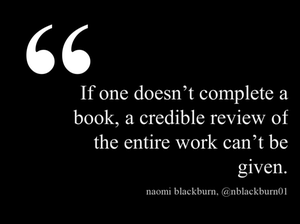
Isak

Unknown's avatar

Good #Writing DOES Require #Talent, Not just Hard Work

I really got inspired last week (frustrated, actually), by a post written by a colleague about supporting ALL writers. I contributed this comment, below, on her blog.

In my recap (I waited a week to make sure I wanted to post this), below, I update you on the online “conversation.” First, I quote from her blog, link to it, and post my original comment in its entirety. Images added for fun.

Comments

from blog.performics.com

In response to “You Don’t Have to Be Good (at Writing)” by Jordan Rosenfeld

Good #Writing DOES Require #Talent, Not just Hard Work by Sally Ember, Ed.D.

original post on http://jordanrosenfeld.net/you-dont-have-to-be-good-at-writing/

posted on 7/9/14

quotes from Jordan’s post:
“…’good’ is arbitrary; you’ll be good enough for some, while others will reject you. It’s a standard you’ll never live up to because it’s subjective and always changing.

“Beating yourself up over being ‘not good enough’ is a form of stopping up the free flow of creative energy. It can even be a form of self-sabotage. In the worst case scenario, it’s an excuse to not have to get any better at it; a statement of ‘This is just the way I write.'”

“False! This is how you write at this time, in this moment, with whatever resources are at your disposal. Every time you read a fantastic book, your writing has a chance to crack open. Every time you hear a lecture, attend a class, or pick up a writing guide, you can learn or see something in a new light, and your writing changes. Time and distance also change how you see your writing.”

“What you can be is committed to continually probing the depths of your work, or taking time to learn something you struggle with, or just stepping back completely and reading when your own work feels too unwieldy.”

“These voices of doubt and uncertainty are gremlins sent to test our creative mettle, to strengthen us up. The more we fend them off by patching the leaks they tear open inside us with further work, the more power we have to overcome them. Like the ‘dark side’ that calls to us with its illusion of power, its promise of the familiar, which is cozy in a bleak sort of way.”

“Shine some serious, badass light on those demons when they come, instead. Write them into a new narrative.”

“Don’t worry about being good. Be enough. Be committed.”

My comment:
Hi, Jordan,

I have to disagree. I am not of the opinion (as many are; seemingly, you) that anyone who wants to “share” should be honored for doing so regardless of the quality of their content and writing. There are a lot of inadequate writers who self-publish and some who get published by trad publishers who never should have had their writing seen by others.

Some people can’t write. What they do write is unclear, repetitious, uninteresting, banal, riddled with cliches and lapses in logic or sense. I’m not just talking about too many typos or grammatical problems. I’m talking about bad writing. It exists. It needs to be called out.

bad writing meme

from http://www.memecenter.com

About thirty years ago, in an effort to combat overly critical adults’ impact on children and imitating the Special Olympics’ methods, most parents, recreation and education people began to make huge mistakes: participation became the same as surpassing. Everyone in the Pre-K “graduated” to Kindergarten. Everyone at a camp or club got a ribbon for attending.

Result? People who are now 45 and younger have the mistaken belief that everyone is “great”; it’s other people who make them “feel bad.” Self-esteem-building was taken to such an extreme as to make actual achievement or superiority meaningless. An overly developed sense of entitlement goes hand-in-hand with an inability to discern good from bad. I’m sorry to point it out, but your post is a prime example of this faulty thinking.

Real life: not everyone wins, nor should they. Ask Brazil this morning! Poor performance should NOT get a medal, and not all performances are equal.

Not everyone is talented, skilled, or worthwhile in every area. It’s fine to acknowledge this and not in any way demeaning. In fact, applauding mediocrity makes it indistinguishable from excellence, or worse, allows everyone who can put words on paper to call themselves a “writer.” That makes excellent or even passably good writing impossible for most people to recognize or value.

Not everyone should be encouraged to be a writer. Really. You did that person a serious disservice by not evaluating his work objectively.

We have no trouble saying that people who are “tone-deaf” or clumsy shouldn’t be professional singers or dancers. Sing in the shower; dance in a club or at home. But, we don’t encourage them to call themselves artists. Why can’t we use the same discernment about untalented authors?

What does “be enough” mean when we should be talking about quality, not quantity? It’s fine to be “committed” to self-expression; commitment doesn’t make a person a good writer.

Some people really AREN’T “any good” and should not be encouraged to write for the public. Tell them: journal all you want. Or, get a ghostwriter, if your story is compelling and you can’t write it well.

Please stop encouraging everyone equally. You aren’t being an editor, then; you’re being a cheerleader for the entire world.

Don’t encourage inadequate writers that no amount of coaching can improve to share their drivel. Not every story should be told by every storyteller.

monkey-typing

from multicultclassics.blogspot.com

Some people really can’t tell jokes, either, and should not. I’m one of those.

Best to you,

Sally

Since that day, I thought a lot more and want to add these components:

1) Most people are perfectly willing to assign the label of “bad” to other art. Why is that so much easier to do than to label someone’s short story, novel or article as poorly written?

2)I’m not looking for perfection. I want high standards to be understood and upheld (but not at the expense of heritage or gender differences). I want people who are in positions of authority in publishing, editing and education to help explain and maintain standards. Give writers something obvious to aspire to (with a healthy range of “good” within many genres and types of excellence).

3) Paying for awards and buying one’s accolades have to stop. We as readers and authors shouldn’t allow any authors to buy “positive” reviews, “win” a prize they’ve paid for, stuff the review “box,” or otherwise corrupt our understanding of what is excellent. We must speak out about these corrupt practices and not be sucked into them ourselves, however tempting.

UPDATE: Many people have commented in the last week on Jordan’s post about how awful I am to have shared these opinions. Some say that any typos I ever made negate all of my opinions’ value (!?!). Some say that I don’t have the right to disagree on this blogger’s site with her posts (Jordan herself actually invited me to stop visiting since she thinks I don’t read her posts carefully enough).

The comments from some of the others highlight the unfairness and absurdity of insisting that everyone who wants to express themselves on paper/online is equally valuable as a professional writer. Just because everyone can publish anything doesn’t mean they should. Who disagrees?

I’m not demeaning the validity of self-expression. But, everyone who bangs on a piano is not a professional pianist. Everyone who jumps around is not a professional dancer. Does anyone dispute this? Why is it so difficult (and, obviously, painful) for amateurs and those whose words are best kept private to be told the truth?

There is “good” writing, albeit subjectively assessed, and I agree that the standards are constantly changing and open for dispute. Don’t I have the right to state my own standards?

Yes, some writers improve with practice, and everyone who writes might improve. What if they don’t?

Are all writers to be considered “professionals” and deserving of praise just because, at this point in time, anyone can publish? Yes, completing an entire book is an accomplishment. But, are all accomplishments equal? Prize-givers and reviewers don’t believe that is true.

Why am I being lambasted for pointing out my reasons for wanting “writing coaches” to be able to be professionally helpful in assessing them and then be honest with their clients, while personally being as encouraging as they choose? Wouldn’t you want an editor you are paying to edit to–oh, I don’t know–edit? Why are these distinctions so dreaded?

Worst are responders to this “conversation” who are petty and mean, calling me names, disparaging me and my writing, because I dared to disagree with the blogger and provided reasons these commenters didn’t like. Really? That is the way discourse operates on these sites, now? More trolls than writers, there.

I made a professional comment. There should have only been professional replies. I was NOT being a troll. I respect and admire Jordan, usually, and enjoy her posts. I wouldn’t allow that kind of personal, disrespectful disparagement to be approved as comments on my site.

Guess my comments struck a nerve. Looking forward to your opinions! Go read the other comments, if you want.

I did get one bonus, though: someone found a typo on my site’s ABOUT page, which I then fixed. Thanks!

BTW: I was sent several private messages, from people who didn’t want to “join the fun” and then get blasted, I guess. They encouraged and thanked me, agreeing with my opinions and adding their own. Too bad they’re too scared of the blow-back to go public with their opinions.

P.S. to Jordan: I was not disparaging you by labeling your supportive actions “cheerleading,” merely being descriptive. I WAS an actual cheerleader, an achievement earned by having talent, being committed, acquiring and honing skills, and (unfortunate and unfair, but pertinent) being “popular.”

Similarly, as hard as it is for some to acknowledge, professional writers must also fulfill all of these to succeed. Everyone “in the stands” can and is encouraged to cheer. However, at my school in 1968, only eight of over one hundred girls each year were selected to be cheerleaders.

How many journal writers and home bloggers are going to make the “cut” to become professional writers? What is required? I hope you help them determine their eligibility and assess their chances, not just keep cheering.

Unknown's avatar

RT and SHARE! TODAY! July 14 = “Digital Book Day”

From CJ Lyons of No Rules, Just WRITE!, http://www.norulesjustwrite.com/:

“If you’re as sick of hearing about the industry woes as I am, then here’s a chance to celebrate our readers (and maybe get some new ones!)

DBDsquare-300x300

“I’m declaring Monday, July 14th Digital Book Day!”
(that’s also Bastille Day, btw!)

[I included This Changes Everything, Volume I, The Spanners Series, ’cause it’s PERMAFREE!–Sally Ember]

This-Changes-Everything----web-and-ebooks

cover art by Aidana Willowraven.

Come to http://www.digitalbookday.com TODAY, July 14th to grab your book and others.

“CJ Lyons”

“PS: please, please share this with any review site/blog/book club/writers group that you know!”

Today is the day! http://www.digitalbookday.com
Go get some new *free ebooks*! Find some new #ebook #authors! Start with me/mine: be patient and keep trying! Site is very busy!

Unknown's avatar

Guest Post: “The Politics of Speculative/ Science-Fiction”

Research, quotes, opinions, infographics, questions for readers/authors, and more. Read my Guest Post on Heather Jacobs’ site: “The Politics of Speculative/Science-Fiction”

Here are the first two paragraphs, to warm you up and inspire you to go read the rest:

The Politics of Speculative/Science-Fiction

by Sally Ember, Ed.D.

No author can leave politics, religion or culture out of our writing. It’s not possible. We are gendered, classed, raced/heritaged, abled/differently-abled, language-based, value-laden, belief-ridden individuals. We are products of our culture and political systems, even if we resist the indoctrination.

A writer may not realize the impact of his/her experiences arising from culture but these permeate every idea, word, sentence. The author who builds worlds may not see the veiled political structure undergirding their dystopian or utopian societies. Nevertheless, Speculative-Fiction, of which Science-Fiction is a subgenre, arises from politics, religion and culture.

Spec Fic and subgenres

Visit, comment, share, follow! Thanks!

http://www.hmjacobs.com/blog/guest-post-politics-of-speculativescience-fiction

Unknown's avatar

16 Ways I Use #Goodreads

I’m wondering how you, as a reader, use Goodreads? What about if you are an author: do you visit often and use it? How do you use #Goodreads?

Goodreads logo

At first, I just visited, as a #reader. I noticed what books are being featured or recommended (paid ads or in groups’ discussions), what types of groups there are, what groups are active, and what lists exist on Listopia. I marked books I had read and ranked a few, but didn’t write any reviews or read any.

As a reader, I now have: 905 ratings | 102 reviews | avg rating:4.10

When I began to come closer to launching my first book as an #author, I re-established myself on Goodreads with an author page. I added the nonfiction book I had co-authored many years ago, then I added my first science-fiction/romance ebook to my page.

https://www.goodreads.com/author/show/7237845.Sally_Ember

As a reader/author, my use of Goodreads changed a lot after that. I began not only to list books I had already read, but I started to use Goodreads as a kind of readers’ journal, and I:

1) put books on my “want to read” shelf. This means Goodreads posts and could email me (but I shut that down) “Recommendations” based on what I read and ranked highly.

https://www.goodreads.com/review/list/15085128?shelf=read

https://www.goodreads.com/recommendations

2) put books on my “currently reading” shelf and kept up the status of where I was in reading each one (I usually read several books simultaneously, one or two nonfiction, one or two fiction.

https://www.goodreads.com/review/list/15085128-sally-ember?shelf=currently-reading

3) began to acquire friends/fans and to respond to “friends” requests moer promptly.

I now have 1005 “Friends” and dozens of “followers”: I have 83 “fans”; follow almost 288 GR members (mostly authors or reviewers) myself
https://www.goodreads.com/friend

https://www.goodreads.com/user/15085128-sally-ember/followers

https://www.goodreads.com/author/fans/7237845.Sally_Ember

https://www.goodreads.com/user/15085128-sally-ember/following
(GR has an algorithm, like Facebook, that limits how many new “friends” a person can add per day, so sometimes I added an author or reviewer as a “fan” or “follower” instead. It seems arbitrary and silly, to me, but that is the deal. This policy means I seem to have 295 “favorite authors,” but that just means I had to become a “fan” rather than a friend, so this list includes authors I support but haven’t read anything from, yet.)

4) joined several groups as a reader, several more as an author, and started one of my own, as an author.

https://www.goodreads.com/group

5) made an effort to keep up with “notifications” from these groups, responding when I felt inspired, commenting or asking questions occasionally. I also get some notification sent directly to my email, but I don’t read them in both places.

6) posted about my own ebook(s), including their launches, pre-orders, sales, becoming permafree, reviews (needing and getting). I also posted each of the related videos (author readings, Q & A, Book trailers) on my Author’s Page and my own Videos page. I also created and will create launch “events” on GR for each ebook’s sales launch date. If I had print books, I would/could do “giveaways,” but GR doesn’t provide avenues for ebooks giveaways (yet).

https://www.goodreads.com/author/list/7237845.Sally_Ember

https://www.goodreads.com/videos/list_author/7237845.Sally_Ember

7) linked my Goodreads page to my blog so that the feed appears on it and put a Goodreads widget on my blog that shows what I’m reading.

https://www.goodreads.com/author/show/7237845.Sally_Ember/blog

8) linked my Goodreads reviews to my blog and Facebook pages so that my reviews and activities appear on those.

9) voted on and added my ebooks to lists and voted on others’ books on Listopia; also became more aware of and using Shelves more and putting books I’m reading/want to read on Shelves.

https://www.goodreads.com/book/show/18772075-this-changes-everything

This Changes Everything cover

https://www.goodreads.com/book/show/21841757-this-changes-my-family-and-my-life-forever

final cover - digital and web

I have also listed my Series as a Series on GR, which means it can appear on those pages/groups that seeks series books.

Scroll all the way down on any book’s page to see its first lists and then click on “more” to see pages and pages of lists my ebooks are on. VOTE on them, please!

10) added more books to my ‘want to read” lists to support other authors, especially those who became my friends/fans.

11) noticed what books others in my groups, friends/fans communities had read/were reading and put some of those on my “want to read” lists.

12) began to write an ongoing status/review and final review of every book I was reading, which then posted on my blog and on Facebook. These comments and activity appear on my author’s page as recent “updates.”

13) recently began pasting those reviews from Goodreads onto Amazon for those books, with the rating and slight editing (when necessary). I have a way to go to “catch up,” but it’s a good way to remember what I’ve read these last 12 months or so.

14) developed a new interest in and respect for book reviewers, prolific authors, new authors, and readers who populate Goodreads, reading more of the posts to groups and noticing their authors’ pages and blogs. I

15) followed a few of the blogs I saw excerpted on Goodreads due to what I read on these authors’ pages.

16. added “metadata” to my books and plan to add more. This is a tricky maneuver I needed help from a GR “Librarian” to accomplish and don’t know much about accessing on my own, but apparently this data helps my ebooks appear in more searches.

Please comment on how YOU use Goodreads and what you think of its usefulness to the readers/authors communities! Thanks.

Happy reading, reviewing, writing, commenting, ranking, voting, and shelving!

Unknown's avatar

#AUTHORS: #Plot Spice, or the 5 Worst Places to Wake Up Unexpectedly

#AUTHORS: In case your plots need some spice, just thought I’d remind you of the 5 Worst Places to Wake Up Unexpectedly. I put them in reverse order, according to my preferences, with One being the worst-case scenario.

If you disagree about my rankings or have your own to add, please put them in the comments at http://www.sallyember.com/blog

  • 5. Wearing your clothes but no shoes, restrained, on a cushioned table, several thousand light-years away from Earth, surrounded by aliens.

    alien abduction
    image from http://www.educatinghumanity.com

  • 4. Without your outerwear, stiff, cold, without ID, keys, money or facts, in the middle of a place you don’t recognize.

    lost woman
    image from http://www.alternet.org

  • 3. Wearing a johnnie, intubated, foggy, in pain, at least one limb in traction, in the ICU.

    ICU man
    image from helifreak.com

  • 2. Naked, hung-over, ashamed and chagrined, having had regrettable sex with someone inappropriate several hours ago.

    morning after drunk
    image from thealcoholenthusiast.com

  • 1. Dressed in your best clothes, surrounded by satin, in a closed coffin.

2011, COFFIN
image from http://www.dailymail.co.uk

Unknown's avatar

#AUTHORS: #Plot Spice, or the 5 Worst Places to Wake Up Unexpectedly

#AUTHORS: In case your plots need some spice, just thought I’d remind you of the 5 Worst Places to Wake Up Unexpectedly. I put them in reverse order, according to my preferences, with One being the worst-case scenario.

If you disagree about my rankings or have your own to add, please put them in the comments at http://www.sallyember.com/blog

  • 5. Wearing your clothes but no shoes, restrained, on a cushioned table, several thousand light-years away from Earth, surrounded by aliens.

    alien abduction
    image from http://www.educatinghumanity.com

  • 4. Without your outerwear, stiff, cold, without ID, keys, money or facts, in the middle of a place you don’t recognize.

    lost woman
    image from http://www.alternet.org

  • 3. Wearing a johnnie, intubated, foggy, in pain, at least one limb in traction, in the ICU.

    ICU man
    image from helifreak.com

  • 2. Naked, hung-over, ashamed and chagrined, having had regrettable sex with someone inappropriate several hours ago.

    morning after drunk
    image from thealcoholenthusiast.com

  • 1. Dressed in your best clothes, surrounded by satin, in a closed coffin.

2011, COFFIN
image from http://www.dailymail.co.uk

Unknown's avatar

The Anguish of Posting a 2-Star Review of a Colleague’s Book

As an #Indie #Author, I am keenly sensitive to the ways we are each other’s main support. We have no publishing house, no “team” dedicated to our book unless we gather that team ourselves and pay them individually. Because of this, I have made it a point to join groups on Facebook, Google+ and elsewhere in the blogosphere of fellow indie authors, bloggers and reviewers in order to support one another and be part of a “team.”

Some of these teams are better than others, and I have left a couple of them already (in less than a few months of membership) due to a lack of the very support I joined to acquire. However, some are excellent. #RaveReviewsBookClub is one of those. Its founder, president and fellow author, Nonnie Jules, and the team she has gathered to moderate and administrate the site and its activities (which are many!) are top-notch.

RRBC GOVERNING BOARD MEMBERS:

President – @nonniejules

V. President & Mentor Program Director – @bruceaborders

Secretary & Blog Tour Host Co-Ordinator – @mlh42812

Membership Director – @kathrynctreat

PR/Marketing Director – @DanicaCornell

Newsletter Co-Ordinator – @sharrislaughter

Reviews Co-Ordinator – @voiceofindie

“SPOTLIGHT” Author Consultant – @TeriGarringer

I highly recommend joining this FREE group if you are an indie author wanting to get and provide reviews and other types of support: Nonnie’s own site (which leads to the RRBC site) is: http://ravereviewsbynonniejules.wordpress.com/

I belong to several other great Facebook groups: Clean Indie Reads, Amazon Author Support, Female Writers, Science-Fiction Romance Brigade, Gutsy Indie Publishers, eNovel Authors at Work, and more. Many have their own blog or websites and activities beyond Facebook cross-postings and support.

On Google+, I have recently joined several groups that I appreciate. Except for #BookMarketingTools, which provides biweekly Google On Air tools and info shows called “The Author Hangout,” hosted by Shawn Manahar (@ShawnManaher), I am not yet “known” or know many members since I’m not very active, yet.

I am “in” many groups on Goodreads and LinkedIn, but mostly as a reader or sometimes visiting poster/”liker”. Not active, often, as an author, yet. Very much appreciate the tips, tools, ideas and support these offer, regardless of how often I visit, comment or post.

All this is by way of saying: I am anguished to have to post a low rating and poor review of a fellow club member’s indie book. But, I just did. I had to. I do not do many reviews mostly because I am usually writing, marketing and job hunting or working as a consultant: in short, too busy. But,a requirement of joining some groups is to do reviews occasionally.

So, I recently chose a book from the options provided that I thought I’d like and began to read. You can see the results, below.

BTW: When I knew I wasn’t going to be able to give the book a positive review, I reached out to the club moderator, who was very helpful and supportive of my honesty and professional opinions. I also reached out directly to the author. I told her my dilemma and offered her some minimal feedback and also to provide more. She responded and thanked me, but declined.

Since we couldn’t communicate privately, I put my feedback into this review. I sincerely hope my comments and questions inform the author so that, when she is ready to hire an editor and a proofreader for her next book, some new team members could be hired who are better than this book had.

Review of C.E. Wolff‘s Common Denominator

Disappointing: unrealistic and 2-D characters, horrible story arc, unbelievable plot points, poorly proofread /unevenly edited

Common Denominator cover
http://www.amazon.com/Common-Denominator-C-E-Wolff-ebook/dp/B00G8SE5RC

I rarely give bad reviews and hesitate to post this one. I wanted to like this book. I was pulled in, at first. Somewhat interesting story, main characters, situations. Despite some proofreading errors, I continued. Wanted to give a new author the benefit of the doubt.

Then, the number of mistakes became ridiculous. Simple things, but signs of amateurish teamwork that are very frustrating and give indie pubs a bad name. Examples: confusions between “their” and “they’re,” “your” and “you’re,” other spelling and grammar mistakes and overall sentence structure. These all fell short of good publishing standards by a lot. Whatever this author paid the proofreader, it was too much. She should get a refund.

Not wanting to give up because I had made a commitment to review this book, I continued. Parts of the story line and the two main characters showed some promise. However, every one of the secondary characters was a stereotype, without exception. They were 2-dimensionally and boringly depicted or came across as numbingly inconsistent. Each character was an insult to some group: women, men, British citizens, gays, mothers and criminals of all kinds. “Bimbo”? Really? Calling her own sister a “wench”? Harping on age differences between lovers, then going along with it: which is it?

Why are the criminals all “sinister” with zero back stories? Why does the main antagonist have no obvious motivation? We learn more about her taste in clothes and plastic surgery than we ever do about what makes her do what she does.

The main plot, a supposed thirty-year “love” story, is flat-out ridiculous.Maybe if these characters were in their mid-twenties, we could believe they didn’t yet acknowledge/know their true feelings for each other, having been childhood friends, blah blah blah. But, they’re hovering around and over 40, have stayed “best friends” all their lives, and work together every day. Meanwhile, they continually trash each others’ dates/lovers. Unless they have recurring amnesia or personality disorders, the concept is absurd.

The female main character’s obsession with her appearance, physical attributes, clothing and underwear, even in the middle of public places, might have been funny if it weren’t so dysfunctional and unbelievable. What 39-year-old professional, educated woman, the VP of a large corporation, doesn’t know how to dress and conduct herself in public?

And, what 42-year-old male behaves sexually as if he’s seventeen? i could just be out of touch, I suppose. A president of a successful corporation who has remained unmarried and not become a parent obviously has issues.

This begs the question: what do these two see in each other? They’re each a mess. Are they supposed to be anti-heroes? Success.

Whatever she paid the editor: also too much. There is a horrible amount of repetition: I swear, the main character and her sister have the exact same conversations, about two basic topics, more than three times. So do the two main characters. Why? Does this book’s editor not know how to tell an author to CUT and when to insert new material?

The subplots are so thin as to be pulled directly from someone else’s novels and plopped into this one. Not even worth recounting. Cliche after cliche abounds without even one redeeming original moment. Could have phoned it all in.

I stuck it out to the end, hoping she would redeem it, and then POOF: it just stops. No actual ending, no resolution worth discussing.

Up until the non-ending, i was willing to give it three stars for effort and blame most of the problems on her “helpers,” but I just can’t. Two stars. Readers: not worth your time.

I was not paid to review nor did I get the book for free.

P.S. I posted the review on Goodreads and Amazon about two days prior to posting this entry on my blog. On the night of the second day the review appeared, I received this notice: “Fred liked your review of Common Denominator on Goodreads!” This book is also receiving a lot of 5-Star reviews. So it goes!

Unknown's avatar

Forget your “#authorplatform” and BE NICE! Write better, make connections

Building Platform: What Most Writers are Getting Wrong
Mar 23, 2014 EXCELLENT POST by Anne R. Allen

Thank you Anne! Your blog is the BEST!

Best part?

“But guess what is the #1 thing an agent, editor or reviewer wants to find out when they Google you?

“Whether you’re a pain in the butt.

“Seriously.”

http://annerallen.blogspot.com/2014/03/building-platform-what-most-writers-are.html

Part I to this topic, also from Anne: “7 Ways Authors Waste Time ‘Building Platform’ on Social Media”

“The best way to sell books is to write more books. Good ones.”
http://annerallen.blogspot.com/2013/06/7-ways-authors-waste-time-building.html

Unknown's avatar

READ AN #EBOOK WEEK AT #SMASHWORDS, 3/2-9/14!

swlogo

READ AN #EBOOK WEEK AT #SMASHWORDS, 3/2-9/14! Please consider including MORE #EBOOKS in your library!

RAEW 2 girlreading

KS67Q is the coupon code for 50% off through March 9, 2014, for my first ebook, a sci-fi/ romance/ paranormal/ multiverse/ utopian series, Volume I, This Changes Everything, usually $3.99. https://www.smashwords.com/books/view/376197

This Changes Everything cover

is from The Spanners Series, which is for adults, NA and YA,

logoAuthorsDen

and prepares you for the more YA/NA Volume II, This Changes My Family and My Life Forever, coming out in June! Thanks!

Many other deals for free or very discounted ebooks all week. https://www.smashwords.com/ebookweek

RAEWbanner1

http://www.sallyember.com/spanners

Unknown's avatar

Why My First Experience with Using #Pre-Orders Will Help Get My NEXT #Ebook Higher on #Best-Seller Lists

Thanks to Mark Coker, Founder/CEO of #Smashwords, #indie #authors have lots of information in FREE slide shows and several webinars to help indie ebook authors succeed in self-publishing.

Mark provided excellent instructions, tips and support for my first ebook’s publication last fall, the sci-fi/romance which has been getting great reviews, This Changes Everything, Volume I, The Spanners Series, including persuading me to engage in a “Pre-order” period prior to full sales release.

In his post (link to full post, below), Mark defines Pre-orders:
preorder defn

Mark gives great info on how to schedule a Pre-Order, here:
preorder timing

Furthermore, he details the benefits of Pre-Orders for Authors and Readers:
preorders 5 benefits 1

A great realist, Mark also provided great info as to what to expect, a “Reality Check”:
preorder reality check

So, how did my first experience with pre-orders go?
Not so well.

Let’s review the Tips Mark provided and my own experiences:

Tip One: Plan and implement AGGRESSIVE, multi-week marketing campaign
This was my first time as any kind of book marketer, but luckily (?), I was laid off in August, 2013, which gave me family support (thanks, Ellen Fleischmann, Merlyn Ember, Sarah Miranda, Lauri Stern and Carole Harris) to move my unpublished book forward into self-publication. I began immediately to learn, via Mark Coker’s and others’ Google Hangouts, free webinars, blog posts, groups’ posts and articles, all about the publication and marketing processes for indie authors.

I did it ALL, except pay for PR (no extra funds): I started a new website and blog; I became active on Goodreads and Twitter; I opened Pinterest Boards; I became more active on Facebook, both on my personal and Series pages; I became more active on LinkedIn; I joined Google+ and began to use it more. I joined many Groups/Communities on Facebook, LinkedIn, and Google+ as well as Goodreads. I engaged a professional cover artist (thanks, Willowraven!) and started tracking my KLOUT, SNAP and ALEXA scores.

I had OUTSTANDING results (I thought) in the first few months, bringing my KLOUT score from 31 to 61 by release day (12/19/13) and my website went from no ranking at all to being in the top 3.5 million via ALEXA. I gave up on Snap. My Twitter #FF went from 7 to over 1600; my blog gained almost 40 #FF (NOT my family, either!). I had almost 300 LIKES on my FB Series page and over 300 contacts personally there and on LinkedIn and Goodreads. 60 were #FF on Pinterest. Seemed good, to me.

I also worked hard networking on Wattpad, Goodreads, and Authonomy as well as the above groups and individuals’ websites to garner several very positive pre-sales day reviews which were posted on/into my front matter, my website, Goodreads and all other social media.

I joined Shelfari and BookLikes, Authors’ Database and other sites with author and then book pages. I created and updated my Author’s book page on Amazon (which doesn’t do Pre-orders, but I already had a nonfiction book authorship, so I could do this prior to uploading my ebook). I provided copy for and linked to postings of several author interviews on several websites and BlogTalkRadio’s IndieBooks show. I gave public readings and then videoed myself doing them and posted these on youtube, to start my Series’ Channel.

Using the Cover, I printed up 50 flyers (second time I spent money on this endeavor, first being the cover) and gave them out everywhere I went (which wasn’t many places, but I tried!).

This Changes Everything cover
cover and logo art by Willowraven

I talked it up everywhere I went, also. I sent out FB and GR reminders of the release date and planned an Author Q & A on Google Hangout and Goodreads for release day as an “EVENT,” which I extensively promoted, along with the pre-orders themselves, for weeks prior to sales date.

I believe I did everything I could to create a strong “Author Platform.” But, being a new author to sci-fi/romance and to ebooks, and an indie, self-published author in a very crowded field, the “splash” I was making, despite KLOUT’s encouraging stats, was not feeling large.

Social media icons
from http://www.bakerviewconsulting.com

Furthermore, I had no way to gauge the success of either my Pre-order marketing via the numbers of Pre-orders, because Smashwords, iBooks, KOBO and nook do not provide ANY kind of info as to the numbers of Pre-orders accumulating to authors, EVER. This is very frustrating and I wish this would change.

It is now two months since TCE’s release date, and I still have no figures, other than ranks on nook and KOBO, to tell me how many actual sales TCE has had.

Smashwords does provide “sales” numbers, but mixes “free” or coupon-use downloads with cash sales. This is mixing apples and oranges since my ebook is only free to reviewers and a select few others. Even with a cash total, this is a net profit figure, not a gross sales total: I have to do the math myself to estimate actual cash sales numbers, something else I wish would change.

iBooks sets up threshold before it puts out even a ranking that my ebook hasn’t met up to now (and neither the gate nor my sales number is known, which is frustrating; also needs to change).

As a regular Kindle (KDP), not Kindle Select, author, I did not have the option to do Pre-orders on Amazon, but at least I can check in on any day, any hour and get not only several different sales and author relative ranks, but go look at my actual sales figures online, including total sales, gross cash intake and net royalties. Yeah, Amazon!

Going solely by Amazon’s and Smashwords’ sales figures (the only ones I have), my Pre-Order and regular sales periods have not yet been huge successes, to say the least. I just got my first royalty checks, from Amazon (since Smashwords only pays quarterly and includes all the other vendors in one check). The total would not even pay for one tank of gas.

BUT, I am now a professional, paid ebook author, nonetheless! Woohoo!

My Recommendations: Every book sales site should provide real-time and accumulated stats to authors during Pre-orders as well as regular sales updates if not hourly, then daily, with no “qualifying” threshold to become eligible to see stats. AND, please do not mix free downloads with paid sales in the figures.

Tip Two: Mobilize fans
I tried to first gather fans (see above) and then mobilize them. However, as a first-time ebook author with no other fiction sales before this, my “fan base” is minimal even now, two months later, and nonexistent prior to Pre-orders. So, great tip, but I couldn’t use it for TCE.

I plan to use my growing fan base extensively for This Changes My Family and My Life Forever, Volume II, however, which goes into Pre-Orders in April 15-18 (because of policies and schedules not in Smashwords’ control, other ebook vendor sites do not open Pre-orders on the same days as each other) and on sale June 9, 2014.

Tip Three: Special pricing
I took Mark’s advice about pricing all the way. He suggested lower prices or free for Pre-orders, but strongly suggested NOT offering it free if the ebook has no others before it in the Series.

Mark also suggested, based on his extensive research, the “sweet spot” balancing sales with profits for ebooks, currently is set at $3.99.

So, I set TCE’s Pre-Order price at $1.99.
The sales price for TCE has been $3.99 and will stay that way until Volume II goes into Pre-orders, 4/15/14, at which point Volumes I and II will both be set at $1.99.

On Volume II’s release date, 6/9/14, TCMF&MLF will go up to $3.99 and Volume I will become FREE forever more, to all, as recommended for series authors.

When The Spanners Series ebooks start selling well and my fan base has grown even more, I will bump up Volume II’s price to $5.99 during Volume III’s Pre-order period, November – December, 2014, making This Is/Is Not the Way I Thought Things Would Change, Volume III’s Pre-order price $2.99.

Volume III’s sales price, starting in mid-December, 2014, will then probably be $5.99.

If sales aren’t great (YET), I’ll follow my previous pricing plan for a while longer for upcoming Volumes (the series has 10, total).

I do not believe the exact pricing made that much difference, but I really can’t tell. I also don’t know about the switch from Pre-order’s lower price to the higher sales price regarding sales impact. See Tip One: I don’t know, yet, about any sales figures, except on Smashwords, for Pre-orders, and those were not strong the first time, an understatement.

Tip Four: Use your other books to help
Wish I could. Will do for Volumes II onward. Good tip!

Tip Five: (MY TIP): Do it better each time
Yes, I plan to do it all better, as mentioned above.

CHANGES and IMPROVEMENTS:
1) I’m doing more about getting Beta readers for Volume II.

2) I’m turning reviewers for Volume I into reviewers for Volume II. I have more fans, I am involved in several networks of authors and others that help with promoting each others’ social media sites.

3) I now have 3 Book Trailers ( which I created myself, free, via Animoto) so that my youtube Spanners Series Channel GROWS. Each time I released a Book Trailer, my sales went UP on Amazon. Don’t know about the other sites, but my ranks did go up slightly.

4) I now have 50 more flyers and first, via KLOUT, free business cards via MOO, and when those ran out, got inexpensive ones via Vistaprint which I designed. They have my links, TCE book cover and Series logo on them. I give them out EVERYWHERE.

5) I joined and attend workshops with several local writers’ groups.

6) I comment on and re-blog/re-post others’ blog posts instead of always writing my own

7) I use StumbleUpon, Reddit, Quora, AllExperts.com and other sites to raise the visibility of my “brand” and drive traffic to my website (via WordPress.com). My website now has over 120 #FF, which I know is still small, but it’s a 300% increase since launch date 2 months ago!

8) I set up cross-posting and opened a Tumblr website that receives all posts from my WordPress blog, so my blog posts are re-posted on Twitter, LinkedIn, Facebook, Google +, Goodreads, Shelfari, BookLikes and Amazon.

9) I use JustUnfollow to keep my Twitter #FF useful, active and not ‘bots. Now up over 2300!

10) I continue to use author networks to share and collaborate for increasing each other’s visibility, rankings and comments. All of my numbers are fairly high and staying there on the book and author sites mostly due to these efforts.

So, with all the above, I am READY for the next Pre-order period much more than I was before. I hope this one ROCKS!

Links to TCE’s Reviews, Author Interviews, Book Trailers and more on http://www.sallyember.com

Link to Mark Coker’s full Pre-order Slide Show post here, which is well worth viewing: take notes! Please share, tweet, USE!
http://www.slideshare.net/Smashwords/hit-the-ebook-bestseller-lists-with-preorders-a-guide-to-preorder-strategy

Thanks, Mark. Next time, I’m ALL OVER IT!

Unknown's avatar

#Female #ebook #Authors: Getting Checked Out More at #Libraries

#Libraries’ Top Circulating Print #Books and #Ebooks in Jan, 2014: How Ebooks are Leveling the #Gender Playing Field

library facade

FICTION (PRINT) = 11:4
NONFICTION (PRINT) = 11:4
TOTAL (PRINT) = 22:8, male #authors to female authors (about 3:1)

Female Authors in both print nonfiction and print fiction are outnumbered by male authors almost 3:1. In 2014. This does not bode well for 2014.

How about these figures: Fiction = 15:0. That is the ratio of already published and known authors on the Print Fiction list to unknown/previously unpublished authors.
Fifteen to NONE.

ZERO new authors are among the top circulating Print Fiction in libraries (nationwide, USA) for the first month of 2014. (Link and full list, below, from Library Journal.)

We can’t view a comparable list of ebooks because 1) not all publishers or authors of ebooks provide them to libraries and 2) not all ebooks available are purchased by libraries.

I realize the same could be said for print books, particularly #2, but the vast majority of print books published by major publishers ARE purchased by libraries, whereas there is no such comparable circumstance for the mostly independently published/uploaded ebooks regarding ebooks’ presence in library collections.

Just for thinking purposes, look at what authors’ ebooks are on the “front page” of the lists of 2013’s top circulating e-books that are available to borrow from the Toronto, Ontario, Canada’s public libraries (six or seven, total, on each “page”):
FICTION (EBOOKS) = Kate Atkinson, Sophie Kinsella, Eleanor Cattin, Robert Galbraith and J.K. Rowling, Linwood Barclay, Herman Koch, Dan Brown. 4:3
NONFICTION (EBOOKS) = Kristine Barnett, Kelly Oxford, Shelley Sandberg, Sonali Deraniyagala, Reza Aslan, Michael Moss. 2:4
TOTAL (EBOOKS) = 6:7, males to females.

http://torontopubliclibrary.typepad.com/news_releases/2013/12/2013s-most-popular-ebooks-available-for-borrowing.html

For all of 2013, the authors who wrote the top 30 ebooks (still in Toronto) are:
Mixed, FICTION and NONFICTION (EBOOKS) = 21:9 = 7:3, males to females

http://toronto.lib.overdrive.com/B90B1104-76FA-4C84-B329-CC1A56561D25/10/50/en/SearchResults.htm?SearchID=33874100

You might think: Oh, that is just in Canada, or just Toronto. All right.

Here are Sacramento, California’s figures for 2013, Top 20 physical (print), which are all Fiction, and Top 20 Virtual (ebooks and audiobooks), which are mixed Fiction and Nonfiction, most-circulated titles.
FICTION (PRINT) = 12:10 (three have joint authors), = 6:5
MIXED FICTION/NONFICTION (EBOOKS & AUDIOBOOKS) = 12:10 (two have joint authors) = 6:5
a TIE!

What about the people in “middle America”? Let’s check Marion County, Indiana, which published a list of its 15 most popular (top circulation) ebooks for 2013.
FICTION (EBOOKS): 8:7, male to female authors.
Almost a tie!

Let’s check the New York (City) Public Library, or NYPL top 10 circulating print books’ authors for 2013.
FICTION (PRINT): 3:7
NONFICTION (PRINT): 6:4
TOTAL (PRINT): 10:11, males to females

I requested the top ebooks from NYPL; waiting for that.

http://www.nypl.org/blog/author/miriam-tuliao

My tentative conclusions are these:
1) ebooks are “leveling” the playing field for female authors since, for the first time in publishing history, authors do not have to wait for the largesse or permission from publishers to get our books into the hands of readers, and traditional publishing has always favored males (to date).
2) once more ebooks are available in libraries (still to come), even more ebooks authored by women will be in the hands of readers.
3) since public library patrons are skewed, economically, to the less affluent among us, ebooks and particularly female authored ebooks may not get into everyone’s hands until ebook tech (ereaders) will be borrowable.
4) Because of Indy publications for both print and ebook formats, more female authors are getting published and therefore getting purchased by libraries and into the hands of readers.
5) Don’t have exact numbers, but general stats show that there are more females than males borrowing both print and ebooks from USA libraries. If I had to make an educated guess, I’d say the ratio of readers in the entire USA, using libraries or not, is about 1:2 or 1:3, males to females.

PREDICTION:
More female than male authors are going to be on best-seller and top circulating lists of both print and ebooks in future months and years.

Meanwhile, please donate money, give your used print books and sponsor the purchase of ebooks for your local public libraries so that ALL authors’ work becomes available to more readers! Thanks!

donate to library

http://reviews.libraryjournal.com/2014/01/best-sellers/best-sellers-books-most-borrowed-january-2014/

FICTION
RANK
1 Sycamore Row. John Grisham.
2 The Goldfinch. Donna Tartt.
3 Never Go Back. Lee Child.
4 Gone. James Patterson & Michael Ledwidge.
5 Identical. Scott Turow.
6 Takedown Twenty. Janet Evanovich.
7 Doctor Sleep. Stephen King.
8 W Is for Wasted. Sue Grafton.
9 The Longest Ride. Nicholas Sparks.
10 Storm Front. John Sandford.
11 And the Mountains Echoed. Khaled Hosseini.
12 Doing Hard Time. Stuart Woods.
13 The Cuckoo’s Calling. Robert Galbraith.
14 The Valley of Amazement. Amy Tan.
15 The Gods of Guilt. Michael Connelly.

NONFICTION
RANK
1 David and Goliath: Underdogs, Misfits, and the Art of Battling Giants. Malcolm Gladwell.
2 Killing Jesus: A History. Bill O’Reilly & Martin Dugard.
3 I Am Malala: The Girl Who Stood Up for Education and Was Shot by the Taliban. Malala Yousafzai & Christina Lamb.
4 Zealot: The Life and Times of Jesus of Nazareth. Reza Aslan.
5 Still Foolin’ ’Em: Where I’ve Been, Where I’m Going, and Where the Hell Are My Keys? Billy Crystal.
6 Johnny Carson. Henry Bushkin.
7 Orange Is the New Black: My Year in a Women’s Prison. Piper Kerman.
8 The Reason I Jump: The Inner Voice of a Thirteen-Year-Old Boy with Autism. Naoki Higashida.
9 The Bully Pulpit: Theodore Roosevelt, William Howard Taft, and the Golden Age of Journalism. Doris Kearns Goodwin.
10 Things That Matter: Three Decades of Passions, Pastimes, and Politics. Charles Krauthammer.
11 One Summer: America, 1927. Bill Bryson.
12 Lean In: Women, Work, and the Will To Lead. Sheryl Sandberg.
13 My Story. Elizabeth Smart & Chris Stewart.
14 Grain Brain: The Surprising Truth About Wheat, Carbs, and Sugar—Your Brain’s Silent Killers. David Perlmutter & Kristin Loberg.
15 This Town: Two Parties and a Funeral—Plus, Plenty of Valet Parking!—in America’s Gilded Capital. Mark Leibovich.

Unknown's avatar

#SciFi and #Fantasy #Books into #Films Upcoming

READ THEM NOW, WATCH THEM LATER: SCIENCE FICTION, FANTASY AND HORROR ADAPTATION WATCH by John DeNardo on January 15, 2014 | Posted in Science Fiction and Fantasy

John DeNardo is the editor of SF Signal, a Hugo Award-winning group science-fiction and fantasy blog featuring news, reviews and interviews. You can follow him on Twitter as @sfsignal.

Read these books, then go see this year’s film adaptations:
Divergent by Veronica Roth
Wool by Hugh Howey
Beta by Rachel Cohn

More about each here, including DeNardo’s summaries, opinions and links:
https://www.kirkusreviews.com/features/read-them-now-watch-them-later-science-fiction-2/

Unknown's avatar

Opps for Guest Blogging/Posting

Authors/Writers and others are often looking for ways to become more visible, become associated with “better” (and more well-known) bloggers, and reach a new audience. Guest blogging/posting is a great way to do this. Here are some opportunities and ways to find opps that I’ve come across. Check them out! [FYI: I am not endorsing, merely curating others’ content, here.]

First, be careful! Your writing, including all comments and blogs you post, comprises a key part of your professional/ personal brand. Anything online is public and stays around forever. Make your visible, online presence the one you want to have. Protect it, use it well, be intentional!

Belinda Summers provides some warnings: “5 Things to Consider Before Guest Blogging.” Belinda “works as a Business Development Consultant for CallboxInc. She helps businesses improve and maximize their marketing campaigns by providing expert advice on lead generation and appointment setting. She provides tips and trainings on telemarketing, email, social media, and other marketing strategies.”

5-Things-to-Consider-before-Guest-Blogging2

The Word is looking for guest posters/bloggers (400 wds) on the topic of writing. Andre Cruz is the owner of this site.

Ways to find guest blogging opps are laid out well by Rae Hoffman, “(AKA “Sugarrae”) is a veteran in the affiliate marketing space and the CEO of PushFire, a digital marketing agency that provides SEO and PPC management services.”

Mackenzie Fogelsen has “5 Steps to finding the right guest blogging opps,” given with examples and details, a different approach (largely good for nonfiction writers, but easily adapted for fiction authors) from Rae’s to finding guest blogging opps. “Mack is the Founder, CEO, and full-on Evangelist for Mack Web Solutions. She is a Moz Fan and honored to be an Associate. Mack is a firm and passionate believer in user experience and the building of community.”

On my site, since it’s only a few months old, I’ve been the only blogger (although I reblog and link to others’ content regularly). I’ve now finished my first quarter of having my own blog and am ready to open it up to guest bloggers.

guest-blogging-image

Become a follower so you don’t miss the announcement! http://www.sallyember.com

That’s more than enough to get you started! Blog away!

Unknown's avatar

Twitter This and Twitter That: Tips, Tricks, and Basics to Get You Off the Ground and Running

Twitter for Newbies: BEST explanation and instructions/tips for for authors EVER! Read and use! Thanks, Anmarea (Melodie Ramone, #ASMSG leader)!

anmarea's avatarAnmarea Writes

Twitter. It’s reminds me of the Tardis. Only because it’s so little on the outside and so HUGE on the inside. And, depending on who’s managing the thing, there might be a mad doctor at the helm. Ah, Twitter. It’s like a little home away from home. 

People don’t like Twitter. “It’s too hard to say what I want under 140 characters!” They say. I say, “Oh, come on now! Are we not writers? Have we never mastered the art of using just a few words to express many?” I also say, “HAIKU, People! HAIKU!” but that’s beside the point. 

140 character limit messages or not, Twitter is a platform that, undeniably, can be more than massive effective if you use it right. Sure, it’s just another social media trap to get stuck in and not be able to pull yourself away from to finish your writing, but…wait. No. No…

View original post 5,573 more words