Self-Publisher’s Legal Handbook, Helen Sedwick, copyright laws, writing, D.G. Kaye
Source: Book Review – Self Publisher’s Legal Handbook – Helen Sedwick

Self-Publisher’s Legal Handbook, Helen Sedwick, copyright laws, writing, D.G. Kaye
Source: Book Review – Self Publisher’s Legal Handbook – Helen Sedwick

World Poetry Day is March 21st, 2016: Celebrate Poetry Globally
To honor this day and #Women’s History Month, both, I’m reviewing and discussing some of the poems from one of my favorite poets and authors, fellow #feminist/#Buddhist Ursula K. Le Guin. Her latest collection, Late in the Day: Poems 2010-2014, is a delight.
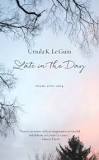
Late in the Day: Poems 2010-2014, by Ursula K. Le Guin
http://www.ursulakleguin.com/Index-LateInTheDay.html
Ursula K. Le Guin is my favorite writer. No contest. In fact, I wrote a review of another poetry collection early this year, which I enjoyed enormously: https://sallyember.com/2016/01/19/homage-to-and-review-of-ursula-k-le-guins-finding-my-elegy-new-and-selected-poems/ Some of the explanations of my connection to Le Guin are repeated from that post, below.
I have enjoyed, admired, appreciated, envied and learned from her novels, novellas, short stories, essays, and poetry for over forty years. She is about my mom’s age (in her early 80s, now) and still going strong. She is my idol, my mentor, and my role model. I also found out, after reading a recent collection, that she and I share not only a love of writing, speculative fiction, feminism, social justice, pacifism and environmentalism, but also, Buddhism and meditation. Frabjous day!
Poetry is meant to be read aloud. I enjoy reading poetry aloud as if I am the poet, wondering as I hear each word, line, idea, image, stanza, what the poet was imagining and how this exact turn of phrase came to capture it. Knowing how long many poets take to conjure the precise manner in which to describe and evoke every part of their intention, I want to savor it.
I do NOT read in that artificial, almost-questioning (upturned inflection on the end of lines), drawling almost-monotone that many poetry readers make the horrible mistake of using.
No.
I read poetry aloud as if each poem is its own story, because this unique version of that story is interesting, new, and not mine. I use the line breaks and punctuation as suggestions to help me go with the poet’s flow. I smile, I laugh, I pause, I taste the words on my tongue.
Try it. You’ll like it!
In her introduction, Le Guin discusses the interdependent relationships among seemingly inanimate objects (whose apparent lack of sentience she and others challenge), places, humans, animals, life events and circumstances with eloquence and grace. As in all of her public writing and speeches, she has a way of turning things around with her verbal kaleidoscope to inspire us to see things from new perspectives with each turn. Her unique points of view become more accessible as one continues to read and ponder her body of work, which I’ve been doing for over forty years (she’s been writing for over 60).
This collection is divided into eight sections: Relations, Contemplations, Messengers, Four Lines, Works, Times, The Old Music and Envoi, but I couldn’t explain them or why some poems are in one but not another section. I was very impressed, though, with her poems about things, especially kitchen objects. Amazing.
Enough of all that explanatory stuff. You can get that elsewhere and any time. Let’s enjoy some of her poems!
I marked pages of this book with pieces of scrap paper so I’d remember which stanzas, poems, titles, lines caught my heart. Here are some, in no particular order. I sometimes annotate or explain. Find your own parts to love and for your own reasons.
Le Guin has many poems rooted (pun intended) in nature, and those in this collection follow that trend. She is also the child of two anthropologists and somewhat of a social and physical scientist herself. I love this opinion she expressed poetically and eloquently, from the introduction to this volume (excerpted from a speech she gave in May, 2014, at a conference that occurred at the University of California/Santa Cruz, “Anthropocene: Arts of Living on a Damaged Planet”), in which she explained her view of the relationship between poetry and science and why we need both:
Science describes accurately from outside, poetry describes accurately from inside. Science explicates, poetry implicates. Both celebrate what they describe. We need the languages of both science and poetry to save us from merely stockpiling endless “information” that fails to inform our ignorance or our irresponsibility.
By replacing unfounded, willful opinion, science can increase moral sensitivity; by demonstrating and performing aesthetic order or beauty, poetry can move minds to the sense of fellowship that prevents careless usage and exploitation of our fellow beings, waste and cruelty. (p. ix)
One of my favorites from this collection, Constellating, situates relationships between people as if between stars:
Constellating
Mind draws the lines between the stars
that let the Eagle and the Swan
fly vast and bright and far
above the dark before the dawn.Between two solitary minds
as far as Deneb from Altair,
love flings the unimaginable line
that marries fire to fire.
How beautifully she depicts that intangible bond humans create to connect us which is like nothing else, yet she finds the commonality in constellations.
In The Games, Le Guin manages to indicate our views on aging and reflecting on past accomplishments in a perfect metaphor:
The Games
The crowds that cheered me when I took the Gold,
who were they then? Where are they now?
It’s queer to think about. Do they know how
you look at the hurdles, long before you’re old,
and wonder how you ever ran that race?
I’m not sorry, now all’s said and done,
to lie here by myself with nowhere to run,
in quiet, in this immense dark place.
Definition, or, Seeing the Horse is the type of poem about poetry that I usually eschew. But, one stanza from it is so perfect I have to share it, here, because it perfectly captures the limitations of poetry:
Definition, or, Seeing the Horse
from iii. Judith’s Fear of Naming
To define’s not to confine,
words can’t reach so far.
Even the poet’s line can only hold
a moment of the uncontainable.
The horse runs free.
Le Guin has written many essays, books and articles about the art and craft of writing, but never have I read or heard her convey what she feels about being a writer so well as in this poem, My Job. She lyricizes about writing’s being something she first learned as a child (“I started out as a prentice”) and is still learning. My favorite of her sentiments are these:
from My Job
Sometimes the pay is terrible.
Sometimes it’s only fairy gold.
Then again sometimes the wages
are beyond imagination and desire.
I am glad to have worked for this company.
Two poems, side-by-side in this book (which cannot be an accident), show her wonderful deployment of language and imagery: Sea Hallowe’en and Between. In all of her poems, she demonstrates her mastery of many different poetic forms: rhyming and non-rhyming, exploding into free verse and staying within those more formally ruled for meter, line length, repetition and other constraints. She calls herself a “caperer,” in her essay about her poetic choices and learning to write in various forms in her Afterword, meaning, one who moves among all forms and free verse as she wishes. She also writes here about how a form can “give” her a poem. Fascinating stuff. Love to read about her process.
From Between, I especially admire this final couplet:
A winter wind just whispers where
two winter trees stand tense and bare.
And, from Sea Hallowe’en, who can’t love this whimsical phrasing that ends each of the stanzas?
west to the tide rising,
cold, cold and wild.a ghost on a north wind blowing
wild, wild and cold.
At best, I am a mediocre poet, despite having been published and won poetry prizes at a younger age, having written songs that were performed, and including my poetry in my science-fiction books as if written by its protagonist, Clara (http://www.sallyember.com/Spanners for more information). I make no claims to being an actual poet if Ursula K. Le Guin is an example. I yield and bow to her and many others for entertaining, informing, inspiring and enlivening us with their use of words and images.
She writes and speaks often about the rewards of writing and art and the politics and capitalism that haunt the industry. This poetry collection is ended with a speech she gave on these topics. The final lines are very moving:
I’ve had a long career as a writer, and a good one, in good company. Here at the end of it, I don’t want to watch American literature get sold down the river. We who live by writing and publishing want and should demand our fair share of the proceeds, but the name of our beautiful reward isn’t profit. its name is freedom.
Yes.

image from her website, photo ©by Marian Wood Kolisch
Thank you, Ursula, for sharing your deep and soulful moments with us all. May your contributions to our literary and emotional landscapes always be known as blessings while you still live and after you die, and may all beings benefit.
Find these poems, this and all her other work here: http://www.ursulakleguin.com
For more information about poetic forms and World Poetry Day:
Poetry adds moments of beauty to our everyday lives, connects our emotions in unique ways, and helps people everywhere express themselves in amazing ways. Poetry of all kinds is definitely something to celebrate, so join us in looking around the world for inspiration. In honor of World Poetry Day, we (The New Rivers Press) wanted to share with you some unique global poetry styles.
Ghazal: an ancient form of poetry dating back to 700 CE in the Arab lands, and later Persia. It is fairly intricate, but contains anywhere from 5 to 15 independent couplets that create a beautiful whole, all with lines of the same length, meter, or syllable count. It is an extremely well-known form in Iran, where the 14th-century Persian writer, Hafez, published his famous ghazal collection, the Divan of Hafez. For examples of ghazals and more detailed information, visit http://poets.org or The Ghazal Page.
Haiku: arguably one of the most well-known types of international poetry forms, this form comes from ancient Japan. It consists of three short lines with five, seven, and five syllables each. The subject of a haiku was originally restricted to nature and the seasons, but that later was opened up to many different subject matters. Some of the most famous Japanese haiku writers include Basho (the “saint of haiku” in Japan), Buson, and Issa. For more in-depth history of the haiku, check out Poetry through the Ages or Encyclopedia Brittanica.
Doha: another ancient form of poetry common in India. It is a 24-syllable couplet, typically in Hindi. The lines are split unevenly, with the first line having 13 syllables and the second having 11 syllables. It was made more famous by such poets as Kabir and Nanak at the end of the 15th century and beginning of the 16th century, as well as Goswami Tulsidas, whose work, Ramcharitmanas, is still famous among Hindus across northern India. To find out more about this and many other poetry forms, explore the book A Poet’s Glossary, by Edward Hirsch.
from The New Rivers Press‘ newsletter, Riverine, Volume 3, Issue 7, http://www.newriverspress.com/
Also, the Poetry Foundation has a great website and mobile phone app that can put almost any poem and poet right into your hands any time: http://www.poetryfoundation.org They also put out Poetry Magazine and a poetry podcast.

Awesome help for #POD #authors doing our own #image #formatting within our manuscripts. Thanks, Jo! Sharing!
An author emailed me recently and said that he couldn’t understand why CreateSpace was telling him that the images in his book did not meet their requirements. He had made sure that they were all 300dpi and they were all large resolution files. He’d made sure to insert them into his Word manuscript rather than using copy and paste, so as far as he was concerned all should have been well when he loaded his PDF file. He hit the ignore button and went ahead with publishing his book as it was. When he received his proofs though, he realised that something had gone wrong with image quality after all.
One thing that a lot of new to paper publishing scribblers don’t know is that Microsoft Word will always try to automatically compress any images in your document to 220ppi. Often we’ll just assume that CreateSpace is mistaken as we…
View original post 237 more words

How do #authors actually find #readers? I’m stumped.

So far, since becoming a fiction author in 2013, I have spent time on most popular sites and established a presence on several, I have yet to find a lot of readers. I mostly find: authors (a LOT); those providing services to authors (even more); potential authors (a few); and, trolls (I block, but they do pop up).
I first published my ebooks via Smashwords which then distributed my ebooks for me to iTunes/iBooks, nook (Barnes & Noble), Kobo and many other affiliates globally. I then published to Amazon Kindle. As of last fall, I now have paperback formats available via CreateSpace (where I offer discounts; see below) and Amazon as well.
You may ask: what else have I done, so far? A LOT!…
—I belong to several dozen and am active in several Facebook, LinkedIn and Google+ groups/communities and I am less active but do belong to a few groups on Goodreads.
—I have author and book pages pretty much everywhere they’re free to have and manage to update them regularly (I hope).
—I have posted my free ebook (see below) on dozens of sites that allow free books to be posted for free.
—My first Spanners Series ebook, This Changes Everything, is permafree.
—The second volume, This Changes My Family and My Life Forever, came out about a year ago and the third one, This Is/Is Not the Way I Want Things to Change, released last December, so I have the supposedly magic number of 3 books out, now.
—All 3 are out since late 2015 in both ebook and paperback formats.
—I offer discount codes for the paperbacks on my own site.
—I participate in occasional sales organized by two Facebook groups (Clean Indie Reads #CR4U and Fantasy and Science-Fiction Network #FSFnet) I am actively involved in (several per year).
—I give free ebooks to reviewers and always follow their guidelines and wait to be invited before sending the ebook to them.
—I have had more than a few reviews for each book, but not up to 50 for any (yet).
—I actively sought readers/reviewers on BuView and got a few but not as many as who accepted my free ebooks.
—I never pay for reviews or participate in review swaps.
—I post interesting, varied non-fiction content (never all about my books or asking others please to buy my books).
—I re-blog.
—I re-share posts.
—I thank others for re-sharing (not always).
—I retweet (but not everything).
—My posts go up on many sites.
—My WordPress blog is cross-posted on Tumblr and on several other sites automatically.
—I re-post my own on Pinterest and StumbleUpon about once a month, to give them another set of views.
—I put most of my Google+ posts into Collections about once/month, which also gives them a boost in views.
—I do occasional reviews, usually outside my own genre (#scifi) and post my reviews on Goodreads, Amazon, and sometimes my own blog as well.
—I invite and host guest bloggers on my site.
—I guest blog/give interviews on others’ sites regularly.
—I have articles/reviews that have appeared on very popular sites, some of which have paid me for my posts.
—I have buy links, interview and review links and other links on my own site (look right; scroll down).
I am frequently on…
—Twitter.
—Facebook with both an individual and a Spanners Series page.
—Google+ with both an individual and a Spanners Series page.
—Pinterest, with many Boards and not all related to my books, either.
—YouTube (I have my own channel and a video talk show, CHANGES conversations between authors, since 8/2014 and posted book trailers, author readings).
—LinkedIn.
—I started a Patreon #crowdfunding campaign over a year ago, but haven’t garnered much dough.
I am also on/use…
—Authors’ Database
—Authors’ Den
—New Book Journal
—Koobug
—Bublish
I am occasionally on …
—Goodreads.
—Library Thing.
—Shelfari.
—BookLikes.
—and other many other author/book sites.
—I visit and comment on many blogs.
—I have been on and listen to/comment on a few Blog Talk Radio shows’ sites.
—I was on Authonomy (it closed, but I did get some great reviews from posting my WIP on that site) and am still on Wattpad with excerpts.
—I used the Pre-order function, with half-price discounts for all three ebooks, several weeks prior to each book’s release on Smashwords and Amazon and other sites.
—I post excerpts from my books while they’re in Pre-orders on my blog.
—At the end of each book, I post the first Chapter of the next volume in the The Spanners Series.
—I post a CTA (Call To Action) asking for reviews, followers and readers at the end of each book.
Started but stopped…
—I joined and posted for a while on Ask the Expert and Quora, but got too busy to keep doing that.
—I joined Reddit but I hated the way the monitors interacted with posters and the rules are too rigid, so I quit.
—I joined Medium and some other sites (can’t even remember them all) but hardly use them. Apparently I have followers, but unless my blog is cross-posted on a site, I don’t know what they are following.
I’ve learned to do/decided to do these actions and listings because I spent a lot of time researching prior to and since publishing my first ebook. I read and followed the instructions for “how to find readers” from many “experts,” but I still usually encounter the above categories of people. Not to say authors and others aren’t readers, but I’m looking for those who identify as such and not elsewise in the industry.
I want more people to read, review, enjoy and comment on my books: doesn’t everyone?
added TODAY (3/15/16): Share! #Booksales best achieved NOT on #TWITTER, FB, LI or G+! Use #Youtube! http://www.digitalbookworld.com/2016/the-authors-three-step-test-for-sellability/
How do YOU attract more readers?
How do you know what works among all the things you’re doing to market yourself and your books?
All suggestions and anecdotes welcomed, except forget recommending I go on Instagram. I hate that site.
Thanks!
Sally Ember, Ed.D.
Please comment here: http://www.sallyember.com/blog or email me: sallyember AT yahoo DOT com

Thanks to author and blogger, Charles Yallowitz, who was my guest on Episode 9 of CHANGES conversations between authors and is in my Guest Bloggers’ Hall of Fame, for inviting me to be a guest on his site today (12/10/15) which occurs during the week of the release of another in my #scifi (science-fiction)/ #romance/ #multiverse/ #utopian/ #paranormal (psi skills) series for adults/Young Adults and New Adults: Volume III, This Is/Is Not the Way I Want Things to Change, of The Spanners Series, now available in both ebook and paperback formats.
This is also the season of my expanding both Volume I, This Changes Everything, and Volume II, This Changes My Family and My Life Forever, into paperback formats on #CreateSpace and #Amazon.
Please check below and on my website for blurbs, covers, links and more information as well as #discount codes!
Skills I Don’t Have
Yes, I do have a lot of skills, talents, experience areas and abilities. BUT, there are many I lack and never so obviously as these last two months, as I attempted and finally succeeded in getting Volume III of my science-fiction ebook series to completion, in time for its 12/8/15 planned release date and all three of The Spanners Series‘ first Volumes into paperback format (after not having been able to work on the half-finished draft for over a year or to think clearly or organize appropriately and while still being very slowed down and impaired as well as fatigued from a TBI [Traumatic Brain Injury] in April, 2014).
I had no idea how to approach getting my ebooks (which I had formatted myself [pre-TBI], using Smashwords’ excellent Guides) into print formats for paperback sales. I knew they needed to be reformatted but I had no experience with making that happen.
I also am very limited, even pre-TBI, with layout and desktop publishing: mechanical, physical, graphic art-type skills and software are not my things. I don’t have much experience with Adobe Create Suite and do not own that program. I don’t do newsletters on the newer software and don’t have any art ability whatsoever.
My mottos: keep trying and ask for help.
When it doesn’t work (the first dozen times!), keep trying.
When I can’t figure it out (after days of attempts), ask for help.
Fortunately, I have a great cover artist, WillowRaven, for The Spanners Series’ ebook covers. She and I collaborated on all three of my covers and plan to for the next seven: I provide ideas and some photos; she does the deciding-what-works and the actual art.
I can’t draw.

image from http://designyoutrust.com
Therefore, since I knew from previous conversations that I needed new covers, I started the paperback conversion process by emailing with WillowRaven. She immediately wrote back that I should have told her from the beginning I wanted paperback formats and that it would have been a lot easier/better if she had created those versions first.
Challenge number one. But, that damage was not irreparable, luckily.
From our email conversations and other research I had already done, I realized I needed to incorporate with my own imprint. I next emailed with local writers/ publishing network folks and found out what to do.
It took a few days, but I managed to name, create and start my own imprint, Timult Books, complete with free logo (Thanks, Logo Garden!).

I then learned how to get (from Bowker) and found out about a huge sale on (thanks for my online network!) my first self-owned ISBNs. Registered Timult Books with the state and Bowker, bought 20 ISBNs at a great discount and was then ready to send the extra materials (blurb, review quote—for the new back covers and “spines”) to Willowraven.
WillowRaven also needed accurate page counts so that the covers would fit correctly. I had never put my ebooks into print before and had no clue how many pages each book was (about 130K words), especially given the new sizing (5″ x 8″) and formatting (mirrored margins, with inner at 1.25″ and the rest at 0.5″). I also found MANY inconsistencies and typos that had to be corrected for each Volume as I reformatted, which changed the pagination as I went along.
Plus, paperbacks require and I decided to add some new pages of “front matter.” Then, I added a new page of “back matter” about the series.
It took me several days and many attempts to get the formatting right on CreateSpace (with lots of help from online forum people, Facebook group members and others: THANKS!)
AND, for whatever reasons, every time my computer went to sleep, the formatting reverted from 5″ x 8″ to 5″ x 7.99″ and changed the margins!!!??? I had to check each time I reopened the document, for each section (there are more than a dozen), to make sure they were correct AGAIN before converting each Volume to a PDF for uploading the new versions to CreateSpace for approval.
So, of course, the first page counts I sent WillowRaven were WRONG.
As were the second batch.
Third time, CHARM.
The three new paperback “wrap” covers were ready very quickly. Thanks, Aidana!
Fail better.
image from http://stuffaverylikes.com
I know a lot about MS Word and use Open Office’s version of it, but there are still many formatting details I’m unfamiliar with and don’t understand. I read many online forum posts, instructions online, etc., and STILL don’t understand some of that (TBI problems, I’m sure).
Why do the page numbers keep changing when I move a page break?
What’s with the “CONVERT” and “NEXT CONVERT” Sections thing?
Why do my running headers not always “run”?
Why does my computer’s “sleep” mode tell Open Office to revert its formatting?
I am IRRITATED beyond description and very impatient by the fourth day of these glitches. But, I persevere. Another good thing for this time period: I’m not around a lot of people.
Incompetent and Annoying.

image from http://quotesgram.com
I do finally get everything to work well enough to upload and order my proofs. So excited when they arrive, but then I start reading them aloud.
OY, VEY!
SO HUMBLING!
Despite my own and others’ having proofread each Volume, reading each book aloud allows/forces me to notice a ridiculous number of typos, inconsistencies, mistakes and other things that must be fixed on EACH PAGE! I had to use long-form, lined post-its to list each mistake because I had to mark each page multiple times. Every few pages had a post-it filled with edits to be made.
I ended up with hundreds of fixes needed to input in order to complete the revision of each of the books, all to be accomplished without changing the starting page of any Chapter or section (didn’t want to have to change the Table of Contents AGAIN, which I had done by hand since I couldn’t figure out how to have it happen automatically), and WITHOUT CHANGING THE PAGE NUMBER TOTALS!!! (see above)
The space between my skills level and what I needed to get these tasks done on my timetable was growing daily. Also, the TBI-induced fatigue and slowed-down aspects made everything take many times longer than pre-TBI.
Mind the Gap.

image from http://www.brillianceflooring.com
Once I had the proofs proofed, I could re-submit them and then they were ready to be sold.
Yeah! It’s happening! I have paperbacks!
I have been hearing from family and friends that “if only you had your books in paperback, I would read them.” Now, I do! So excited!
I emailed and messaged everyone the great news! Now, those without ereaders or those who don’t like reading longer books on them CAN read my books. I even sent them discount codes, specially large, just for my friends and family.
I sat back and awaited the sales to come pouring in (I have a large family and dozens of colleagues and friends on that email list).
Two weeks later: I have sold one book.
ONE.
Nothing can mend a broken heart (except the old BeeGees, of course). And, duct tape.
Duct tape for every repair.
image from http://www.destinationmadness.be
Okay. Perhaps science-fiction novels, especially those that are over 500 pages long, a unique mixture of Ursula K. Le Guin, Tom Robbins, Robert Heinlein, Sherri Tepper and Marge Piercy with a little of Linda Hirschhorn and His Holiness the XIVth Dalai Lama mixed in, aren’t for everyone.
But, ONE sale from all of those who supposedly love/like and support me? That’s close to two hundred people!
I know I have trouble connecting the dots….These kind of tests, below, confound me, even pre-TBI.
Limited Spatial Intelligence.

image from http://www.sciencedaily.com
But, even I know what one book sale in two weeks means (week ending December 5, 2015, as I write this post).
It’s too soon! Chanukah doesn’t start until December 6 and Christmas is weeks away!
I come from a family and friendship circle of procrastinators! I am one of only a handful who gets things done early or on time. Really! They’ll start buying/gift-giving soon. I’m sure of it.
Right?
Still learning (at age 62).

For those who are ready to gift-give and/or add to your own to-be-read lists, here you go:
Three paperback books here.

NOW available in #paperback on #CreateSpace and on Amazon:
This Changes Everything, Volume I, The Spanners Series by Sally Ember, Ed.D., is only $17.99 in paperback https://www.createspace.com/5837347
and FREE as ebook everywhere ebooks are sold, such as http://www.amazon.com/dp/B00HFELTG8
https://www.smashwords.com/books/view/376197
This Changes My Family and My Life Forever, Volume II, is $19.99 https://www.createspace.com/5844431
ebook @$3.99, https://www.smashwords.com/books/view/424969
http://www.amazon.com/dp/B00KU5Q7KC
This Is/Is Not the Way I Want Things to Change, Volume III, is $19.99 https://www.createspace.com/5844474
ebook @$3.99 https://www.smashwords.com/books/view/588331
http://www.amazon.com/dp/B0177Z1KRM
Happy Holidays!
Go to my website: http://www.sallyember.com/Spanners for book trailers, blurbs, discount codes and more!
#scifi #romance #utopian #adults #YA #NA #fiction #createspace #selfpublishing #indiepub #indieauthor #formatting #ebooks #paperbacks #TheSpannersSeries #SallyEmberEddAuthor #CHANGES


From Olga, one of my earliest guests on my video talk show, CHANGES conversations between authors, and a guest blogger on my site, who is offering her translation services at 50% off to authors who read and respond to her post!
Added bonus: Olga is an author herself of both fiction and nonfiction, as well as a physician, psychiatrist and forensic specialist, so send her your mysteries, romances, police procedurals and anything else!
Those of you who have been following my blog for a while will know that apart from writing, reviewing books, and talking about books, I also translate books from English to Spanish and from Spanish to English…
Source: #Writers Reach New Markets, #Translationpromotion English-Spanish @ 50% OFF…

If there is a companion video to this excellent one of our sister sangha and main center in Brazil, Chagdud Khadro Ling, for Chagdud Gonpa’s Rigdzin Ling in California, our main center, I don’t know of it. If you do, please share! If you’ve already seen this, sorry for the repetition.

Khadro Ling‘s main temple in Tres Coroas, Brazil.
In Portuguese with English subtitles, beautiful photography and informative narration and scenes of #Tibetan #Buddhist practice, shrines, temples, items, meditation and practitioners, this video captures the quality and feeling of the land, buildings, intention, activities–the ambiance–very well.
The center (Rigdzin Ling) I spent so much time in from 1999 – 2008 (first visited in 1989; did up to 11-week-long retreats there, two more that were 6 -7 weeks and several that were 2 – 4 weeks, silent retreats, and several 11-day-long ceremonies/meditation practices, Drubchods) is in northern California between Eureka and Redding, but it looks a lot like these photos and our practices are the same.

Rigdzin Ling‘s main temple, Tara House, in Junction City, CA USA
For those who do not know, some background: This is my sangha (spiritual community of practitioners and teachers), started by my original teacher, His Eminence Chagdud Tulku Rinpoche, the teacher discussed in this video. Rinpoche passed in 2002. His newest (15th) incarnation/yangshi/tulku is about 10 years old, now.

H.E. Chagdud Tulku Rinpoche in 2001 and his yangshi in about 2009
To give perspective, Rinpoche was a contemporary of His Holiness the 14th Dalai Lama: they studied with many of the same teachers before the Chinese invaded Tibet and both escaped to India in 1959 as young men. Rinpoche came to the USA (California) in the mid-1980s with his American wife (second), Jane, who became known as Chagdud Khadro (in the video as well). They started building centers along the USA’s West Coast. In 1991, as the video states, they visited South America/Brazil and moved there in 1995.

Tulku Jigme Rinpoche (Rinpoche’s son), Chagdud Tulku Rinpoche, and Chagdud Khadro, Brazil, 2001
The person Rinpoche designated to be his spiritual heir and director is my root/main teacher, Lama Padma Drimed Norbu, known as Lama Drimed.

Lama Drimed, forest ceremony (tsog), 2013
May all beings benefit, all Lamas live long and continue to teach, and all practitioners continue to meditate and serve all beings.
Watch the video here:
or
https://www.youtube.com/watch?v=S0d5KoF8288
or
For more information: http://www.chagdud.org
Enjoy! Write back with comments, questions! Share!
http://www.sallyember.com is my main site and blog and has info about my Buddhist-themed science-fiction/ romance/ utopian/ multiverse novels, with discount codes and links, reviews, book trailers, more, about the first 3 ebooks and paperbacks in The Spanners Series, as well as posts about my #meditation practice and retreats.

Advocacy, Entitlement and Knowing When to Complain: The Rights of Poor People
If you are new to this blog, you may not know that I was in an accident about two years ago that resulted in a broken nose and concussion as well as other injuries. The concussion was not one of the “good” kind, meaning, I have still not completely recovered.
This deterioration in my health caused me to run through my savings and unemployment benefits in California and have to rely on others. Finally, I am privileged to benefit from my mother’s having space and a generous heart, allowing me to move in with her in St. Louis about 18 months ago.
Missouri, however, is not a great place to live if you are indigent. This post is the third in a series about my experiences here. This third one is on poor people’s rights. The second was on food for indigent people in Missouri (published February 16, 2016, http://wp.me/p2bP0n-1BL). The first one was on health care (published February 9, 2016, http://wp.me/p2bP0n-1By).
This post is important because it looks at the underlying issues that make a difficult situation (being poor) worse or better for each person. The intersections of perceived or claimed race/ethnicity, perceived or claimed gender, perceived or claimed social class, perceived or claimed age, home/best language, physical and mental health and (dis)abilities, perceived or claimed religion, perceived or claimed sexual orientation, and economic status in the city of St. Louis, Missouri, USA, in the mid-20teens, can adversely influence, improve or neutrally affect one’s experiences every moment.
“Intersectionality” is an important part of understanding how poverty impacts each person and family differently. Therefore, in this series, I need to bring in the politics of social identity. We all have to learn to address these overlapping oppressions and unfair treatments to help ourselves understand how everything is NOT actually “equal” regardless of the similarities in two people’s incomes.

Intersectionality includes all of these components of one’s social identity.
It’s not “all good.”
It doesn’t have to be this way.
It ISN’T what it IS “naturally”: people and then institutions run by people make things this way and create/perpetuate systems that keep them this way.
Missouri is one of the worst places to be if you’re poor, but it’s not even the worst by any standards. Your experience all depends on the other components of your social identity. If you’re believed to be a white male, seemingly in good health and able-bodied, perceived to be heterosexual, assumed to be Christian, speaking mid-Western-accented English like a native, have at least some college education and otherwise seeming to be a USA “mainstream” guy between the ages of 25 – 65, you are going to be much better treated and fare better even when you’re poor than if you do not claim or cannot pull off having others believe you have all or any of those social identities.
If you’re also not a felon, have a place to live (a legal address) and (the use of) a car, you’re probably not going to be poor for very long.
Unless you’re obese. Unless you’re smelly. Unless you’re an addict. Unless you’re perceived to be “not one of us” in whatever way “us” is defined: then, you’re in some trouble. But, even with those cards stacked against you, as a poor assumed-to-be-white & -Christian with some education who speaks adequate English and can pass for straight and male and under age 65, you’re still going to be better off than anyone who isn’t.

Change one aspect—gender—and things automatically get much worse. Change two—ethnicity/race and gender—and you’re doomed.
Check this out, from Everyday Feminism, June 20, 2015 by Carmen Rios “These 5 Statistics Prove That We’re Feminizing Poverty (And Keeping Women Down in the Process)” http://everydayfeminism.com/2015/06/feminizing-poverty/
— “Despite the overall poverty rate declining in America, 18 million women remain below the poverty line.”
—“Women are poorer than men in every state, regardless of education or geographic location. And for women of color, elderly women, and LGBTQIA+ women, it’s even worse.”
—“The poverty rate for Native American, Black, and Latina women is almost double the poverty rate for white women.”
—“For women, and especially women of color, the fight to raise the minimum wage to $10.10 or $15 is very personal—and could be the difference, for them, between barely surviving and finally thriving.”
—“…over a lifetime, women lose an average of $434,000 to the wage gap.”
—“One of the most important aspects of intersectional feminism is the understanding that when we fight for the most marginalized women, we liberate all women along with them.”
And, from other sources (see below) that add in education and other factors to race/ethnicity and gender with income levels:
—“White households take home between $10,000 to $20,000 more per year than their Black counterparts in every age bracket”
—“Enrollment in ‘high poverty’ schools for Black children is 41 percent, 38 percent for Hispanic children, 31 percent for American Indian/Alaska Native and a mere six percent for Whites.”
—“Even when Black and minority children attend mixed schools, they are more likely to be tracked into remedial or basic classes while their White counterparts take advanced, honors level courses.”
—“70 percent of students arrested or referred to law enforcement for school-related infractions were Black or Latino.”
—“While people of color only comprise about 30 percent of the US population, they account for 60 percent of those imprisoned.”
—“There is no such thing as unbiased, unpolitical education.”
—“People with ‘Black’ or ‘ethnic-sounding’ names are less likely to get callbacks for interviews.”
—“Blacks are more likely to be born into poverty and are less likely to escape it.”
—“Whites are 2-3 times more likely to make it into the middle class in their lifetimes compared to their black counterparts.”

from http://iamarevolutionary.wordpress.com
Poverty IS violence. It has to stop.
Find a well-vetted nonprofit that advocates and works to end poverty and understands intersectionality and contribute, volunteer, blog about their work! Here is one: http://www.results.org/
Good news! We made this mess; we can clean it up.

Nelson Mandela, Audre Lorde, Martin Luther King, Jr., Angela Davis, Gloria Steinem and so many more have spoken out about the nature of the human-made elements of our social and political systems and the oppressions they systematize.
WE are the ones who must advocate, complain, recognize that we are entitled to better and that so is everyone else, and ACT!
—Do not sit by and watch passively when others are mistreated, disrespected, unfairly scheduled or managed, especially when you are in any position of better privilege: it is your DUTY to advocate whenever you are able.
—Write letters, blog, make phone calls, picket, march, show up and let those in power know you are not satisfied with the “status quo.” Be specific.
—VOTE! It is your DUTY and responsibility as a USA citizen who can vote (if you are one) to use that right in EVERY election. It is the LOCAL elections that most affect people who live near you, and regional and state office holders who make laws that affect us all. Federal elections matter, too, but not as obviously or as immediately.
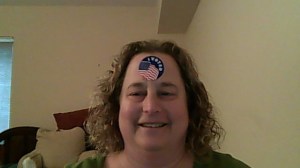 I VOTE! And, as of early March, I am working as a election-day supervisor at a local polling place!
—THEREFORE, do not ignore bond issues, council and mayoral elections, county positions, state office holders’ elections and only vote on presidential ballots. ALL VOTES MATTER!
Want to know more? Have a read:
From October, 2015, inGenere.it: “Intersectionality. Putting together
things that are often kept apart” by Jeff Hearn
http://www.ingenere.it/en/articles/intersectionality-putting-together-things-are-often-kept-apart
From February, 2015, NPR: “Study: Black Girls Are Being Pushed Out of School” by Karen Grigsby Bates
http://www.npr.org/sections/codeswitch/2015/02/13/384005652/study-black-girls-are-being-pushed-out-of-school
From February, 2015, the the Frisky: “18 Things White America Needs To Reconcile To Truly Become Colorblind” by Tiffanie Drayton
http://www.thefrisky.com/2015-02-26/18-things-white-america-needs-to-reconcile-to-truly-become-colorblind/
If you appreciated this series, please reblog/share it, comment, ask to be a guest blogger and contribute your own point of view or write on a related topic: http://www.sallyember.com
This third post was on advocacy and intersectionality (published on February 23, 2016, http://wp.me/p2bP0n-1C2).
The second was on food for indigent people in Missouri (published February 16, 2016, http://wp.me/p2bP0n-1BL).
The first one was on health care (published February 9, 2016, http://wp.me/p2bP0n-1By).

Congrats to the 2015 Nebula Award nominees!
Invitation to each of them to be a guest on my online video talk show, CHANGES conversations between authors!
Readers and Authors, watch CHANGES Episodes on my YouTube channel, over 45 shows archived: https://www.youtube.com/playlist?list=PLPbfKicwk4dFdeVSAY1tfhtjaEY_clmfq
If you are an author, visit and read about how to become a guest on my CHANGES page:
https://sallyember.com/changes-videocasts-by-sally-ember-ed-d/
Source: Comment on FINALISTS: 2015 Nebula Awards (With FREE FICTION Links) by Soon Lee

Source: The gender-industrial complex, Part VI (Teens and twentysomethings)

Reblogged on WordPress.com
Source: How to write a One-Page Synopsis & Write a Query Letter Infographics…

Food Stamps (SNAP, EBT) and Food Issues for Poor People in St. Louis
If you are new to this blog, you may not know that I was in an accident about two years ago that resulted in a broken nose and concussion as well as other injuries. The concussion was not one of the “good” kind, meaning, I have still not completely recovered.
This deterioration in my health caused me to run through my savings and unemployment benefits in California and have to rely on others. Finally, I am privileged to benefit from my mother’s having space and a generous heart, allowing me to move in with her in St. Louis about 18 months ago.
Missouri, however, is not a great place to live if you are indigent. This post is the second in a series about my experiences here. This one is on food for indigent people in Missouri. The first one was on health care (published February 9, 2016, http://wp.me/p2bP0n-1By).
This post is about the government-subsidized “food support,” formerly called “Food Stamps,” now called “SNAP” for Supplemental Nutrition Assistance Program.
What makes Missouri so bad for poor people? For one thing, this state is very Republican-dominated. Despite many of the speeches given by congressional and senatorial representatives from this party, their votes speak loudly: they keep lowering the amounts poor people can receive in all types of assistance and have repeatedly voted to reduce food support. This state also still calls its program “Food Stamps,” but adds “SNAP” so people will know what it is. http://dss.mo.gov/fsd/fstamp/
Missouri’s unfortunate and lethal combination of machismo, arrogance, obstinacy and ignorance have caused millions of Missourians who cannot afford to buy sufficient amounts or types of food for themselves and/or their children to go without food, especially near the end of each month’s benefits period (the food money runs out). Not only are the benefits woefully and abysmally low, even at their highest levels, they arrive in one lump at the beginning of each monthly period. Even the best budgeters can’t make insufficient funds last throughout a month.
“Missouri is among states where legislators this year have considered bills that would curb welfare benefits” and continues to demonstrate its disdain for the poor, blaming the victims and putting economic pressure on the weakest of us to try to shore up the state’s failing budget. The Democratic Governor, Jay Nixon, vetoes these bills, but then the “representatives” usually have the votes to override his vetoes. On it goes, this heinous battle for who can sink the lowest first. http://www.huffingtonpost.com/2015/05/04/missouri-welfare-restrict_n_7209458.html
Missouri and other state SNAP programs are now in the computer age. SNAP currently issues a debit-type card to recipients which is an EBT (Electronic Benefits Transfer) unit that looks a lot like any other debit card. I’m sure this has alleviated a lot of the embarrassment many users had previously felt when producing their pink paper food stamps at the grocery check-out line. Now, we kind of “blend in,” putting our card through the same reader everyone who uses credit or debit cards uses to make our payments.

from http://www.snaptohealth.org
Except when we don’t. Most times, even when I tell the register operator that I am using an EBT for SNAP, they punch in the wrong codes and it doesn’t work. Or, they do it correctly, but neither of us knows exactly how much the receipt total will be for until the card is used (SNAP card users get to avoid paying the tax on food that others pay). Worse, there is no way prior to being in the check-out process for a user to know exactly how much is left on the EBT to use.
Here is a typical process for me.
—I get in line (can’t use the self-service machines for EBT/SNAP)
—I put my food on the conveyor
—I get to the card reader while the register operator is still scanning my food so that I am sure to mention to him/her that I am using SNAP
—S/he nods or otherwise acknowledges that I told him/her this (important to get confirmation: they often do not hear me or don’t know what I mean)
—I put my EBT card through the reader.
Hopefully, it reads my card correctly (doesn’t always) and
—I press the right buttons (always confusing, since the buttons are arranged differently in every card reader I’ve seen, so far: not always using the same colors designating the choices or putting the choices in the same position)
—We get to the end of the food scanning
—S/he presses whatever buttons (not always correctly) to accept my EBT card as payment
—I either do or do not have sufficient funds on the card to pay for this amount of food (which I only know at this point)
—If so, we proceed and I am done
—If not, we have to start over with the reader, putting only the amount I actually have into the register operator’s process to take only that amount from my EBT
—Then I have a choice: pay in cash or use a debit card (if I have the funds) for the rest, or put the rest of the food back/don’t take it home.
I think it’s obvious that this process is not quick, or at least, not as quick as using cash or a debit/ credit card. When the lines are long, I dread getting into one because these “delays” cause impatience to arise in those in line behind me. I have a fairly thick skin, so to speak, so I don’t care about how impatient people are. We all have to wait, sometimes.
However, others do care about others’ opinions, so it makes many SNAP users anxious to go through the check-out process, as you can well imagine. Many times, when I was more flush, I gave the SNAP users in lines ahead of me some money when their EBT cards were shown to carry insufficient amounts for the entire purchase and the users clearly didn’t have any cash or funds to cover the rest of the food.
Confession: I was less likely to offer money when the purchases of the SNAP user seemed “frivolous” or “junky” to me. Awful judgment call on my part and really, none of my business. But, at the time, I felt quite high-and-mighty, telling myself I was “doing them and their kids a favor” if they didn’t get to bring home that sugary or salty treat. Why, I wonder now, does anyone believe we suddenly have the right or ethical duty to pass judgment on someone’s food purchases simply because they’re poor? We leave all the horrible choices of the middle- and upper-class to themselves, so why do we believe we are entitled to assess those of the poorest among us?
News flash; poor people are not stupider, less informed, less competent or any other judgment the better-off can levy just by being currently without enough money. Money does NOT make anyone smarter, more informed, competent or anything else, automatically. We all know plenty of wealthier people without a clue, don’t we?
In other horrible news, SNAP makes us “re-qualify” every year even if our benefits are for a two-year period. This means recipients are able to be—and, in my case, I was—penalized if we earn even a little bit of money. My SNAP benefits were reduced by half (and were insufficient to begin with) when I reported that I had earned some income from freelance proofreading/editing and doing occasional childcare, even though the total earned was less than $1000/month and more often, not even half that. Look at the chart below for how low these monthly benefits are for an entire month and picture this: you have ONLY this amount to pay for all food for 4.3 weeks (30 – 31 days):
Family size: 1 2 3 4
Maximum benefit level: $155 $284 $408 $518
So, if you’re math-impaired, consider these actual figures:
—the individual SNAP allotment comes to about $36/week, or $5.14/day per individual.
—For a family of two, it comes to $33/week/person, not even $4.70/day, which is LESS per week than if you’re on your own.
—For a family of three, usually one parent and two children, they get only $32/week/person, which is $4.53/day per person!
—The larger the family, the less the family gets per person.
What is the logic, here? That kids eat less than adults? Incorrect, unless they’re under 7 years old.
Or, maybe they live in a fairy-tale land, in which they believe larger families can buy “in bulk.” Well, that only works if a family has enough money in hand to purchase the larger amount of chicken or rice or beans, which they often would not have, since the total amount provided by SNAP and workers’ wages is insufficient. When a family doesn’t have enough money to buy food, how can anyone buy MORE food per grocery visit?
Doesn’t work.
Over the last 2 years of my own experiences as a poorer person but one who has many resources others do not have (a great and safe place to live, family members to help me, a car, higher education and advocacy skills, among the best) and seeing these SNAP figures, above, I understand the motivation that spurs poorer people to become criminals just to make ends meet. Why the hell not?
I’m not advocating a life of crime, but I certainly can empathize the reasoning better, now.
When our government fails to support those in the most need, what are the needy supposed to do?
Meanwhile, some help is better than none. How can people get fed, then?
—If a family has young children or the mother is pregnant, that mom and kids can also get further food support (very restricted, but food and juice, nonetheless) from WIC (Women and Infant Care) and (minimal) cash from TANF (Temporary Aid to Need Families, formerly known as “welfare”).
—If one is disabled and/or a senior, one can get Social Security disability and/or retirement benefits to supplement these paltry SNAP monthly allotments.
For basic SNAP information and links to your state’s SNAP website: http://www.fns.usda.gov/snap/supplemental-nutrition-assistance-program-snap
Good news! Many health food stores, farmers’ markets and alternative grocery stores now accept SNAP.

However, the poorer among us face an entirely different problem that I personally don’t experience (that good fortune is due to my being able to live with my mom). Those who live in “high-poverty” areas now often inhabit regions that have become what are known as “food deserts”: because the larger chains and independent grocery stores refuse to locate or stay in these neighborhoods, there is literally nowhere to go grocery shopping. If you live in a “food desert,” you are screwed. Bad enough that you already have less means (no car, no money for gas), horribly skimpy SNAP funds and little time (those who do have jobs work hourly and must show up on time and leave when they’re scheduled to leave, period). You now are somehow also supposed to travel great distances (often when there is no viable public or any public transportation, so how are you going to accomplish that?) to get to a decent, fairly priced grocery store or to get anywhere that sells any fresh food at all.
People who live in “food deserts” can sometimes purchase food that is close to where they live, but it is usually from “convenience” stores or gas stations’ stores. Their “food shelves” and “hot bars” are typically stocked with low-nutrition, high-fat, high-sodium, high-sugar, deep-fried or microwavable, high in “empty” (simple) carbs, over-priced options only: no fresh fruit, no fresh vegetables, not much good protein, almost no complex carbs and very few choices that are even close to being healthy.
YOU might be able to help change this! https://www.dosomething.org/facts/11-facts-about-food-deserts Help populate “food deserts” with good food sources and/or bring better public transportation to these areas.
And, just when you thought things couldn’t get much worse, now it’s 2016. SNAP recipients between ages 18 – 49 stand to lose what little SNAP benefits we do get if we aren’t working “sufficiently,” but more of us than ever still need SNAP and many cannot work or work “sufficiently.”
Want to know more? Have a read:
From January, 2016, Cleveland.com: “Over 1 million face loss of food stamps over work requirements”
http://www.cleveland.com/nation/index.ssf/2016/01/over_1_million_face_loss_of_fo.html
From January, 2016, American Enterprise Institute: “Are SNAP benefits really too low?” by Angela Rachidi
https://www.aei.org/publication/are-snap-benefits-really-too-low/
From February, 2016, the Times-Picayune of Greater New Orleans: “Despite ‘recovery,’ more Americans using food stamps, at a higher cost”
http://www.nola.com/politics/index.ssf/2016/02/despite_recovery_more_american.html
Next in this series, February 23, 2016: Advocacy, Entitlement and Knowing When to Complain: The Rights of Poor People http://wp.me/p2bP0n-1C2
This second is on food for indigent people in Missouri, published on February 16, 2016, http://wp.me/p2bP0n-1BL.
The first one is on health care, published on February 9, 2016, http://wp.me/p2bP0n-1By.
The third post is/was on advocacy and intersectionality, (to be) published on February 23, 2016, http://wp.me/p2bP0n-1C2.

Live in or want to go to #Bali to study #music, #dance, #psychodrama, #yoga? Check out Motivational Arts Unlimited/ Consultants, Mario Cossa’s upcoming classes, workshops, retreats and other events!
Musical Theatre Dancing Class- Starts 21 Feb, 2016
Intro To Psychodrama Group- 22 Feb, 2016
Tending The Garden Of The Soul: A Retreat For Personal Restoration And Renewal- 17-23 July, 2016
What is MAU? MOTIVATIONAL ARTS UNLIMITED is established to provide training and personal growth experiences using creative and expressive arts (especially drama and movement) in combination with yoga and other types of body work to support positive life change while reflecting the cultural and spiritual awareness of its community in Bali, Indonesia.
MUSICAL THEATRE DANCING FOR FUN AND FITNESS
Sundays 10-11am : 21 & 28 Feb and 6 & 13 March
Tuesdays 3-4pm : 23 Feb and 1 & 15 march
(no class Tues, 8 March in preparation for Nyepi)
at Ubud Fitness Bottom Floor – Jalan Jero Gadung – Ubud, Bali, Indonesia

Mario Cossa is in the center of this photo of Dames at Sea
Musical Theatre Dancing For Fun And Fitness
Whether you have been tapping your toes for years or have never heard of “jazz hands,” you can join the fun and enjoy a good aerobic workout set to an assortment of musical numbers from a wide range of shows. Simple choreography will keep it lite and easy as we soft shoe and Busby Berkeley (etc.) our way through a fun workout.
See video »https://www.facebook.com/926608724051297/videos/1111316422247192/
Tuition: Rp 100,000 per class (including tax), come with a friend and pay 2 for Rp. 150,000 (tax included) or pre-pay 4 classes : Rp 350,000 (including tax)
Pre-registration requested
e-mail: mario AT dramario.net or call (0)361 479 2782 or go to our FB Event Page.
PSYCHODRAMA FOR PERSONAL GROWTH
A 2-hour introductory session
Monday, 22 Feb, 2016 – 6-8pm
In Ubud, Bali, Indonesia
(Directions provided when you pre-register.)

Psychodrama For Personal Growth
“Psychodrama,” from its Greek roots, literally means “the soul in action!” Developed initially by J.L. Moreno in the 1920s, it is currently practiced, with many variations, throughout the world. Moreno was also a pioneer in Improvisational Theatre and Social Network Theory and felt that since our lives are lived in action and interaction, sitting (or laying down as the Freudians practiced) and merely talking was not an effective means of promoting greater health and developing a broader role repertoire. Join in the co-creation of a safe and supportive group environment for personal exploration and transformation.
See video
Tending the Garden of the Soul
I think it is essential sometimes to retreat, to stop everything that you have been doing, to stop your beliefs and experiences completely, and look at them anew…
If you can do so, you would be open to the mysteries of nature and to things that are whispering about us, which you would not otherwise reach. ~ J. Krishnamurti
Join us for a 6-night, restorative retreat in the magical garden island of Bali to renew your connection to nature and to the Self. In the lush sanctuary of Villa Gaia (http://www.gaiaretreatcenter.com), we will use the concepts and practices of Jungian depth psychology and Morenian psychodrama to co-create sacred spaces in which soul-making can take place.
For C.G. Jung, the Soul is visible in the rich images of our dreams and imaginings. For J.L. Moreno, the Soul is encountered in action and in our social relationships. This retreat offers grace-filled opportunities to share with others an exploration of your inner garden landscape and to encounter your inner gardener – the One Who Tends the Soul.
DATES: Sunday 17th July to Saturday 23rd July 2016
TUITION: US$1,250 for shared room or US $ 1800 for private room. (Residents of Bali who elect to reside off site may participate in the retreat and enjoy shared meals for a fee of US $650.)
Please Note: Participation is limited to 14 on a first-registered-first-served basis.
A registration deposit of US$500 is required to hold your space. Deposit is refundable through 1 April, 2016; half-refundable through 15 May, 2016. Bank transfer fees are the responsibility of the participant. Balance of payment due 1 July, 2016.

Gaia Retreat Center
Residential Tuition Includes:
Transport from airport to Villa Gaia Retreat Center
Accommodation, Tax and Service Charge
Buffet breakfast – Monday through Saturday
Four lunches (one on your own during Wednesday’s free afternoon)
Four dinners (two on your own during Tuesday’s and Thursday’s free evenings)
Eleven Facilitated action exploration sessions
Facilitated Opening and Closing Ceremonies
Facilitated By: Mario Cossa, RDT/MT, TEP, CAWT and J. Kaya Prpic, PhD, Diploma Candidate – CG Jung Institute, Zurich.
Registration Enquiries and Forms:
soulgardendreaming AT gmail.com

Thanks for a great post. To answer this point: ” Why have utopias gone out of fashion? Sure utopias are impossible almost by definition, but getting close might be possible,” please check out my UTOPIAN sci-fi in The Spanners Series: http://www.sallyember.com/Spanners A concurrent and near-future with many example of how aliens and involvement with other species right here on Earth could help us avert many disasters and co-create a better future for us all.
Best to you,
Sally Ember, Ed.D.
By James Wallace Harris, Friday, February 12, 2016
Science fiction has always used world-wide worries to inspire story ideas, and since we have more problems than ever, no science fiction writer should have writer’s block. Science fiction about climate change is a growing sub-genre, and our lists of future-shaking events keeps growing. Any current concern in the news can be extrapolated into the future, becoming a muse for science fiction. But how effective is fiction at solving real world problems? Can science fiction save us?
When I was growing up the future was so bright we had to wear mirror shades. Now, our tomorrows are clouded over by menacing speculative storms. Most of the 7.3 billion passengers on spaceship Earth are so preoccupied with their day-to-day survival that any thoughts about the future are reserved for escapes into imaginary wonderlands. And I can dig that too — who desires realism…
View original post 2,345 more words

Source: Giveaway! The Best of Apex Magazine

Part II of a thought-provoking series. READ and DISCUSS. You don’t have to agree, but it’s great to get these topics out here and talk about them.
Warning: Any hateful, threatening, abusive comments will be deleted and the commenters blacklisted. Go to YouTube, Reddit, and Tumblr if you can’t deal with honest concerns about the very troublesome direction of contemporary transactivist politics. Seriously, these things weren’t happening as recently as 10 years ago. Normal, reasonable voices have been drowned out by a bunch of kneejerk, keyboard warrior zealots.
I do believe there’s a legitimate, TINY minority of people who truly suffer from such severe gender identity disorder (now officially termed gender dysphoria), for whom medical and surgical transition is useful and therapeutic if years of psychiatric counseling don’t take away these feelings. Such people used to be less than 1% of the population, but now we’re seeing news story after news story about younger and younger kids who are allegedly trans. I’ve even heard 3% of all teens in San Francisco high schools now identify as trans.
There is…
View original post 541 more words

I highly recommend reading this entire series. Great food for thought and many discussion topics, here. Thanks, Carrie-Anne!
Warning: Any hateful, threatening, abusive comments will be deleted and the commenters blacklisted. There are plenty of places on YouTube, Reddit, and Tumblr for your unquestioned groupthink.
Children are notorious for being very literal thinkers, viewing the world in very concrete, black-and-white terms. Due to their necessary lack of metacognition (thinking about thinking), they can’t understand longterm consequences or why they think a certain way. They also can’t think very far ahead, or understand how we change and grow so much as we go through life. At least until very recently, parents instituted normal boundaries and rules for a reason. Now we have SJWs immediately running off to the gender therapist if a little boy dresses up in his mother’s clothes, instead of understanding that’s a normal thing pretty much all kids do.

Since when do preschoolers and elementary school kids know more than adults? When your 2-year-old shouts that her name isn’t…
View original post 621 more words

National Book Giving Day 2/12/16: 25% off Sally Ember, Ed.D.‘s The Spanners Series’ paperbacks and other discounts!

For print formats on CreateSpace, use 25% off discount code: H93664AM
If purchasing both ebook and print formats of the same Volume, use Kindle Matchbook program to get discounts on the ebooks on Amazon!
Ebooks also available on Smashwords (all formats), nook, iBooks and Kobo
This Changes Everything, Volume I: ebooks are permafree everywhere!

Dr. Clara Ackerman Branon, 58, begins having secret visits from holographic representations of beings from the Many Worlds Collective, a consortium of planet and star systems in the multiverse. When Earth is invited to join the consortium, the secret visits are made public. Now Earthers must adjust their beliefs and ideas about life, religion, culture, identity and everything they think and are.
Clara is selected to be the liaison between Earth and the Many Worlds Collective and she chooses Esperanza Enlaces to be the Chief Media Contact. They team up to provide information to stave off riots and uncertainty. The Many Worlds Collective holos train Clara and the Psi-Warriors for the Psi Wars with the rebelling Psi-Defiers, communicate effectively with many species on Earth and off-planet, eliminate ordinary, elected governments and political boundaries, convene a new group of Global Leaders, and deal with family’s and friends’ reactions.
In what multiple timelines of the ever-expanding multiverse do Clara and her long-time love, Epifanio Dang, get to be together and which leave Clara alone and lonely as the leader of Earth?
This Changes Everything spans the 30-year story of Clara’s term as Earth’s first Chief Communicator, continuing in nine more Volumes of The Spanners Series.
Are YOU ready for the changes?
Volume I: Ebooks are PERMAFREE on: http://www.amazon.com/dp/B00HFELTG8
https://www.smashwords.com/books/view/376197
PRINT $17.99 on: https://www.createspace.com/5837347
This Changes My Family and My Life Forever, Volume II

Intrigued by multiple timelines, aliens, psi skills, romance and planetary change? Clara and the alien “Band” are back.
Now as Chief Communicator, Clara leads the way for interspecies communication on- and off-planet. Fighting these changes are the Psi-Defiers, led by one of the oldest friends of the Chief of the Psi-Warriors, its reluctant leader, Rabbi Moran Ackerman. Stories from younger Spanners about the first five years of The Transition fill Volume II.
How would YOU do with the changes?
Volume II: EBOOKS $3.99 on: https://www.smashwords.com/books/view/424969
http://www.amazon.com/dp/B00KU5Q7KC
PRINT $19.99 on: https://www.createspace.com/5844431
http://www.amazon.com/dp/0996999817
This Is/Is Not the Way I Want Things to Change, Volume III

Clara, Moran, Espe, Epifanio and the alien Band of holos are back. Psi-Defiers launch increasingly violent protests during this five-year Transition, attempting to block Earth’s membership into the Many Worlds Collective. Earth’s nations and borders must dissolve and Psi-Warriors must strengthen in their battle against the rebels.
Clara, as Earth’s first Chief Communicator, also juggles family conflicts and danger while creating psi skills training Campuses to help Earth through the Psi Wars. Clara timults alternate versions of their futures as the leaders’ duties and consciences force them to make difficult choices across multiple timelines, continuing to train and fight.
Will the Psi-Warriors’ and other leaders’ increasing psi skills, interspecies collaborations and budding alien alliances be enough for Earth to make it through The Transition intact? If there is no clear path for Clara’s and Epifanio’s love, does she partner with Steve or go it alone?
What do YOU do with wanted/unwanted changes?
Volume III: EBOOKS $3.99 on: https://www.smashwords.com/books/view/588331
http://www.amazon.com/dp/B0177Z1KRM
PRINT $19.99 on: https://www.createspace.com/5844474
http://www.amazon.com/dp/0996999823
Print editions and ebooks published under Timult Books

OTHER LINKS
http://www.sallyember.com/Spanners main website has all book trailers, reviews, links, interviews, excerpts, blog, more.
http://www.amazon.com/-/e/B00HEV2UEW author page
The Spanners Series‘ cover art and logo by WillowRaven: http://www.willowraven-illustration.blogspot.com/

My Experiences with being Indigent in Missouri: County/Federally Funded Clinics
If you are new to this blog, you may not know that I was in an accident almost two years ago that resulted in a broken nose and concussion as well as other injuries. The concussion was not one of the “good” kind, meaning, I have still not completely recovered.
This deterioration in my health caused me to run through my savings and unemployment benefits in California and have to rely on others. Finally, I am privileged to benefit from my mother’s having space and a generous heart, allowing me to move in with her in St. Louis about 18 months ago.
Missouri, however, is not a great place to live if you are indigent. This post is the first in a series about my experiences here. This one is on health care for indigent people in Missouri.
What makes Missouri so bad for poor people? For one thing, this state is very Republican-dominated. Among other horrors, this means its idiotic legislature refused to approve the expansion of Medicaid in 2013, 2014, 2015 or 2016 for the new USA health care systems (Affordable Care Act, or “Obamacare”) that some other states, like California, were smart enough to utilize.
Missouri’s unfortunate and lethal combination of machismo, arrogance, obstinacy and ignorance have caused millions of Missourians who cannot afford even the minimal payments (over $200/month plus co-pays, for me) to be without any health care or insurance if we are not over 65 and/or disabled or under 18, because these the only groups Medicaid and Medicare cover in Missouri at this time.
St. Louis is somewhat Democratically dominated, which means some of its legislators and leaders applied for and received federal and state funds to create a health insurance “work-around,” called “Gateway to Better Health.” https://www.stlgbh.com/programoverview

They are quick to tell us that this is NOT an insurance plan because it is not “portable” excerpt for emergencies, and even then, not so much. What it does do is entitle its few qualified users to avail ourselves of its paltry network of federally qualified health care clinics located within St. Louis County and surrounds.
The closest clinics in these networks to where my mom lives are minimally (with no traffic) about a 30-minute drive in any of three directions, and only one houses the pharmacy (the furthest one, of course). I chose the one that was “closest,” which is about 28 minutes from our condo. It is in Ferguson.
Yes. That Ferguson.
Despite having been only a few months since the demonstrations, riots and protests surrounding the murder and announcement of the appalling lack of indictment of the murderer of Michael Brown, I decided to utilize this clinic solely because of its location. However, I didn’t understand until I got there that Ferguson is very spread-out, geographically. This clinic is not located close to the site of any of the disturbances. Even so, this clinic has an unarmed (at least, no visible gun) guard. I found out later that all the clinics have guards; the pharmacy has two.
Prior to this set of experiences, my only contact with federally qualified health care clinics had been as a volunteer reception clerk/translator for the Jewish Community Free Clinic in Sonoma County (no guards) in the mid-2000’s which served many farmworkers and other newly arrived immigrants with little English and no health insurance, and as a co-writer of a grant to start a regional clinic in southwestern New Mexico in the early 2000s (which was funded and is still running but which I never visited because I moved to California before it opened). I had never been a patient in such a clinic before 2014.
Here are some of my experiences as a patient, 2014 – 2016, in the Betty Jean Kerr People’s Health Center on West Florissant, in the city of Ferguson, and the main BJK PHC clinic in St. Louis city on Delmar Boulevard (to access the pharmacy). http://www.phcenters.org/
Some are positive, many negative, some neutral.
Let me start by saying I am grateful for many aspects of this stop-gap health care coverage (NOT insurance), such as:
—- to have access to three necessary prescription medications at no or low-cost (the BJK PHC pharmacy does not carry my alternative thyroid medicine, even though CVS does)
—- to have a clinic to go to when I need to check on my health status for chronic conditions (hypertension, hypothyroid)
— to have regular blood work done and reviewed to make sure my medications are the right dosage and are working (hypertension, hypothyroid; very nice and competent phlebotomists whom I found out are NOT clinic employees but located on site from another agency; the internist never discusses my results with me at the time and rarely provides any follow-up from these results until three months later, so what is the point of that?)
— to get a referral from my “primary care doctor” (whom I saw four times, then switched away from because he was awful) to a neurologist to continue my care and get further diagnoses/prognoses for the after-effects of the concussion/Traumatic Brain Injury (very useful)
— to have another colonoscopy procedure (I turned 60 in 2014, and since my grandmother had died of colon cancer, I was supposed to have had my second check-up last year but had missed it due to having moved and having had no health care for a while) (thankfully, clear)
— to have a biannual mammogram (thankfully, clear, but the technician was rough with me and cut my skin which caused a stubborn infection that took months to heal)
— to have a triannual pap smear and gynecological check-up (thankfully, all clear as well, but with an awful ob/gyn who insulted me and treated me disrespectfully; won’t be seeing her again; see below)
— to have a dental check-up and cleaning (thankfully, no problems) up to twice a year (I have gone twice but the second visit was horrendous and did not result in my having services; see below)
— to have a clinic to go to when I need to check on my health status for acute conditions (which I haven’t done and probably would not use it for, since I use homeopathics and herbs for most viruses and infections).
Here is the main problem: this clinic (and probably many others like it) are health care “mills.” They get reimbursed for procedures, not time. If doctors order blood work, diagnostics that require machines or surgery to provide the data for the diagnoses, like urinalysis, the clinic gets paid for each component. If they just talk to a patient, very little money comes to them.
So, guess what?
These doctors order a lot of unnecessary diagnostics:
— annual X-rays for dental patients even when we don’t need or want them and national and regional guidelines do NOT recommend having X-rays every year any more for anyone without serious dental problems that require them (I do not have any serious problems, luckily); they would not give me an exam, a cleaning or a polishing of my teeth because I refused to allow X-rays 12 months after the first set were done
— blood work every three months to “qualify” me for my prescriptions even though the results are NOT used to determine whether I receive them nor what dosage to provide for me; I cannot get my prescriptions refilled unless I submit to these blood tests
— urinalysis every three months even though I have no symptoms and have had none for problems that these diagnostic could analyze and I never hear about the results then or later; however, patients are not allowed to use the urinalysis rest room while still in the waiting area, and because many of us need to use the rest room while we are waiting for our appointments (which are never on time), we therefore, can’t provide a usable sample by the time we are called
— annual mammogram (which I will not do that frequently, since biannual or triannual are now recommended for my age group and health status) and annual pap smear (ditto) when national and global guidelines do NOT recommend doing these so often for any women without history of cancer
— X-rays for muscular problems which show nothing, since X-rays cannot show muscles well; my former internist insisted I get an X-ray prior to getting any other diagnostics when I told him I was having pain in the muscles and nerves of one hip; my bones are fine and have been for many decades, but he wouldn’t listen to my patient-provided information at all (another reason I ditched him); then he “forgot” to order the other diagnostics for six more months (two more visits; another reason I switched internists last fall)
Is it relevant or irrelevant that I was one of only two Caucasian-looking people in the entire clinic— staff and patients included—for all of my 10 visits, to date? FYI, the actual population of St. Louis County, demographically (2010 and updated census) is: 70% “White,” 24% “Black,” about 4% “Asian,” 3% “Hispanic,” and about 1% “other.”
How significant is it that I have to wait more than 20 minutes every time I go, even when my appointment is supposedly the first one scheduled? For about 5 minutes or fewer per visit with my internist, I have to be at the clinic for over 2 hours, mostly waiting: between blood work and being seen, urinalysis and being seen, nurses checking my vitals and being seen, etc. Who, besides those who are under- or unemployed or on salary (and wouldn’t be here, then) has time for this insult to our value?
The doctors I have seen are almost without exception disrespectful to the patients: they don’t listen to or regard the information I provide with careful consideration.
For example, even when I told him I had no interest in getting any unnecessary medications, even for pain, this internist insisted on putting unnecessary and unwanted prescriptions into my record and making those recommendations in a print-out they gave me after each visit (which I did not fill).
Worse, the ob/gyn doctor was mean-spirited in her language (which I won’t repeat here) when describing my genitals and tried to scare/threaten/shame me into getting an unnecessary procedure. Luckily, I am informed and I remembered what my previous ob/gyns had told me about my body, so I felt fine about ignoring her, but what if I hadn’t been so fortunate?
Third, and what prompted this blog post, the dentist was horrible. This dentist insisted that I get X-rays. I told her that I didn’t need or want them after only one year since the last set and that the current guidelines agreed with me. She then adamantly refused to clean or examine my teeth if I did not agree to having these unnecessary X-rays. She claimed this was the clinic’s “policy,” but when I asked to see this supposed policy in writing, she refused to provide it. She then went to get the guard, who threatened to call the police if I didn’t immediately leave. According to him, even though this was during my appointment time, this dental chair was “needed for another patient” (!?). I told them both I was not leaving until they showed me this X-ray requirement in writing.
They started yelling. I yelled back. Despite my lack of fear and not feeling intimidated, I was finally so disgusted and frustrated that I no longer wanted her or anyone else there even to touch my teeth.
I left.
What kind of “health care” clinic tries to force unnecessary procedures, medications and diagnoses on its patients and then threatens us when we refuse to comply?

USA federal clinics, I now know. So do many others. Want to know more? Have a read:
From May, 2015, New Yorker magazine: “Overkill: An avalanche of unnecessary medical care is harming patients physically and financially. What can we do about it?” by Atul Gawande http://www.newyorker.com/magazine/2015/05/11/overkill-atul-gawande
and, from the MinnPost, also in May, 2015: “How an ‘avalanche of unnecessary medical care’ is harming us — and what can be done about it,” by Susan Perry
https://www.minnpost.com/second-opinion/2015/05/how-avalanche-unnecessary-medical-care-harming-us-and-what-can-be-done-about-
And, right here in good ole’ Missouri, August 13, 2015: “Missouri Hospital Agrees to Pay United States $5.5 Million to Settle Alleged False Claims Act Violations”
http://www.justice.gov/opa/pr/missouri-hospital-agrees-pay-united-states-55-million-settle-alleged-false-claims-act
Furthermore, recent nation-wide problems: “Top 5 Healthcare Fraud Cases in 2015”: http://www.medicfp.com/top-5-healthcare-fraud-cases-in-2015/
This is so awful: “Even though the amount of money recovered in 2015 is impressive, that is just a drop in the bucket for the amount of healthcare fraud that occurs, and is never reported or recovered each year. The U.S. spends over 3 trillion dollars on healthcare benefits each year, and according to a recent FICO study, roughly 10% of healthcare expenditures are fraud. This means that our country loses over 300 billion a year to healthcare fraud, nearly 1 billion dollars every day!”
From Florida to California, including almost every state, here the “worst offenders of 2015”:
http://www.healthcarefinancenews.com/slideshow/biggest-healthcare-frauds-2015-running-list
Users, beware.
Next in this series: Food Stamps and Food Issues for Poor People in St. Louis http://wp.me/p2bP0n-1BL
This first one is on health care, published on February 9, 2016, http://wp.me/p2bP0n-1By.
The second is/was on food for indigent people in Missouri (to be) published on February 16, 2016, http://wp.me/p2bP0n-1BL.
The third post is/was on advocacy and intersectionality, (to be) published on February 23, 2016, http://wp.me/p2bP0n-1C2.

The main graphic joke made me laugh out loud! Thanks, Viv! Reblogged on WordPress.com
Source: Some funnies on Facebook this week- Customer Complaints – Handyman! -What’s Your Band Name?

Thank you SO MUCH, Chris! I am new to needing to file and this came at exactly the right time for me (and many others, I’m sure). You ROCK!
Sally Ember

I received 12 different 1099-MISC forms for tax year 2015 from Kindle Direct Publishing (KDP), and 3 more 1099-MISC forms from CreateSpace. I obtained my KDP tax forms online, but received my CreateSpace forms in the mail (on February 5).
Check yours against my list below to see if you’ve received them all.
Also, my list below will help you check which international marketplace each form corresponds to.
Verify that the amounts are correct. Occasionally, a mistake is made. (One year, they issued replacements a few weeks after mailing the originals.)
Note that, contrary to rumor, there is NO limit of $600 for book royalties. For book royalties, the limit is $10, meaning that if you earned at least $10 in royalties, you should account for this in your tax return. Amazon will have sent the information to the IRS. Most…
View original post 483 more words


5 Stars: Delighted to Read and #Review Mary Oliver’s Felicity: Poems

Cover of Felicity: Poems by Mary Oliver
published in October, 2015
Mary Oliver, winner of the Pulitzer Prize and National Book Award for her poetry several decades ago, has long been one of my favorite poets. If you have not found her poetry, you are missing out on many delights from dozens of publications. Go catch up or start here. Either way, you’ll be glad you did.
She, like Ursula K. Le Guin and many others whose poetry I admire and resonate with, utilizes many of her walks in the natural world to populate and explain her inner experiences and outer relationships.
As I have written before (about to quote myself, here): “Poetry is meant to be read aloud. I enjoy reading poetry aloud as if I am the poet, wondering as I hear each word, line, idea, image, stanza, what the poet was imagining and how this exact turn of phrase came to capture it. Knowing how long many poets take to conjure the precise manner in which to describe and evoke every part of their intention, I want to savor it.
“I do NOT read in that artificial, almost-questioning (upturned inflection on the end of lines), drawling almost-monotone that many poetry readers make the horrible mistake of using.
“No.
“I read poetry aloud as if each poem is its own story, because this unique version of that story is interesting, new, and not mine. I use the line breaks and punctuation as suggestions to help me go with the poet’s flow. I smile, I laugh, I pause, I taste the words on my tongue.
“Try it. You’ll like it!”
As I usually do, I marked pages of this book with pieces of scrap paper so I’d remember which stanzas, poems, titles, lines caught my attention. Here are some, in no particular order. I sometimes annotate or explain. Find your own parts to love and for your own reasons.
Moments was so important to me that I gave it to my Cognitive Rehabilitation Therapist on the occasion of my last of 12 sessions with her in my TBI recovery treatment this month, as a kind of “Thank You” and a window into my psyche she might not formerly have had, otherwise. It is brief, so here it is in its entirety.
Moments
There are moments that cry out to be fulfilled.
Like, telling someone you love them.
Or giving your money away, all of it.Your heart is beating, isn’t it?
You’re not in chains, are you?There is nothing more pathetic than caution
when headlong might save a life,
even, possibly, your own.
As I read this collection, I realized that somewhere between her last collection of poetry and this one, Mary Oliver seems to have fallen—quite unexpectedly, to her—in passionate love in her 70s. That gives me hope, long single myself at the age of 61 and not having met anyone suitable for many years; I had given up. Thanks, Mary!
Many of the poems in this new collection are about that first wonder, doubt, then acceptance of her “condition,” being in love again at her “advanced” age, and then some extremely sweet descriptions of their relationship’s minutiae and tender times.
Here is a short poem like that, This and That:
This and That
In this early dancing of a new day—
dogs leaping on the beach,
dolphins leaping not far from shore—
someone is bending over me,
is kissing me slowly.
Oliver divides this collection into three parts, like a symphony or play. Part I, “Journey,” is followed by Part II, “Love,” and is capped by Part III, “Felicity.”
Very intentionally, Oliver begins this collection with Don’t Worry and ends with A Voice From I Don’t Know Where—the only poem in Part III. The two pieces she chose to sandwich these romantic but challenging years do it quite elegantly and sweetly. This "voice" tells her to be happy with this new love, but in much better language than that. The book ends with a strong acknowledgment, giving her permission to enjoy her life:
A Voice From I Don’t Know Where
It must surely, then, be very happy down there
in your heart.
“Yes,” I said. “It is.”
During this “Journey” (the title of Part I), Oliver ruminates on trees, meadowlarks, storms, swans and many other beings and land formations that give her pause and inspiration, show her delight and her curiosity at her state of affairs (pun intended).
I love this metaphoric romp a lot, given her (and my) ages, especially this part, from Cobb Creek:
Cobb Creek
I jump
and for the first time in seventy-seven years
I fall in.What a beautiful splash!
She uses epigrams to start each section from Rumi, which I appreciate, but I like her own pithy quotes the best. Here is my favorite, from A House, or a Million Dollars:
a House, or a Million Dollars
Love is the one thing the heart craves
and love is the one thing
you can’t steal.
Thank you, Mary, for sharing your thoughtful and joyful moments with us all.

image from Oliver’s appearances/reviews in several newspapers
May your contributions to our literary and emotional landscapes always be known as blessings while you still live and after you die, and may all beings benefit.
Find this collection and all of Oliver’s other work here: http://maryoliver.beacon.org/

Cozy Up to Reading” with Clean Indie Reads’ Mid-Winter Sale:
FINAL DAY IS TODAY! 1/30/16! #CR4U
All genres except erotica, all ages #fiction #ebooks at low prices, discounted, free!
Home of “Flinch-Free Fiction”!

https://cleanindiereadsale.wordpress.com/
Timult Books‘ ebook format of The Spanners Series‘ first Volume, #scifi, This Changes Everything, is included. AND extra 20% off on paperbacks on CreateSpace for readers of THIS POST ONLY! Keep reading!
Other two ebooks in The Spanners Series could be 25% off and all three paperbacks could be 20% off here. See below! Amazon Kindle and Smashwords, Kobo, iBooks and nook for ebooks; Amazon and CreateSpace for paperbacks.
All links to the right, http://www.sallyember.com and please scroll down)!
Vol I’s ebook, This Changes Everything, is PermaFree everywhere. Paperback on Amazon is $17.99. BUT use this DISCOUNT code 7LUC23CY on CreateSpace for 20% off the paperback! All links: to the right and scroll down on http://www.sallyember.com
Vol II’s ebook, This Changes My Family and My Life Forever, is $3.99 UNLESS purchased along with the paperback ($19.99) on Amazon, through Kindle Matchbook. THEN, it is only $2.99!
OR, here is a DISCOUNT code 7LUC23CY, special for my readers, for getting 20% off the paperback on CreateSpace
All links to the right; scroll down on http://www.sallyember.com
Vol III’s ebook, This Is/Is Not the Way I Want Things to Change, is $3.99 UNLESS purchased along with the paperback ($19.99) on Amazon, through Kindle Matchbook. THEN, it is only $2.99!
OR, here is a DISCOUNT code 7LUC23CY, special for my readers, for getting 20% off the paperback on CreateSpace
All links to the right; scroll down on http://www.sallyember.com
https://cleanindiereadsale.wordpress.com/
Go, browse, download/ purchase over 110 choices, great G, PG and PG-13-rated ebooks of all types!


I am sorry to have to post this review, but I have given the author, Amy Collins, over a month to make this right. Despite many emails preceding and after the one I quote, below, including promises of payment by a certain date and apologies for its lateness and a new promise, she has posted no payment and provided an unusually bizarre response to my having given her the deadline to respond by the end-of-business yesterday (Thursday, January 28)—see below.
I am appalled and surprised that someone who is publishing a book on writing entitled The Write Way: Everything You Need to Know about Publishing, Selling and Marketing Your Book, would unironically send out ARCs and then another version pre-publication that are both riddled with errors for reviewers.
Know this: the Author and her “publisher” (which I now think is comprised of Collins and one other person in the business) INVITED ME TO REVIEW THIS; I did not solicit her and I rarely do reviews.
After I had read about twenty pages and marked up every page, including the cover, with up to 15 errors PER PAGE, I sent her emails, left voicemails, asked her to communicate with me before I continued. I couldn’t believe this was her final draft. Maybe there was another version, I hoped?
She wrote to tell me that she had had a death in her family and while she was out, that “someone at her office sent out the wrong ARC” (there are two?). Then, for many days, she mostly did not respond (except via automated emails saying she would respond within 24 hours) for this entire communication stream.
She did send me a PDF of another ARC version which was supposedly “the right one,” but it, too, was filled with most of the same errors and some new ones. I read about twenty pages into that and emailed her back, telling her that this PDF ARC was a “new” but not a better version.
I asked for a newer, final ARC; no response. I now think there isn’t a better version (yet).
I waited a few days and sent the email, below. After reading my proposal, the author wrote back to say that she knew that I had given her a break on my editing rate (I did have sympathy for her at that point). She wrote to say that she was very grateful for my offer and agreed to pay me for my editing and postage for me to ship the marked-up edition back to her upon receipt of payment. She promised to pay “by the middle of January.”
I told her that I didn’t want to post a negative review. I’d rather that she revise and improve the book before publication: win-win. Plus, I had already completed reading and marking up the book and had marked up every page. I would be happy to get paid for my work.
January 15 came and went; no payment. More emails, more promises, and no payment, and here we are, January 28: nothing. The author said on January 18 that she had been traveling (and still is, apparently; now she’s on a cruise with other authors and publishers, publicists, etc.), but has she obviously access to the internet, since she’s live tweeting from the cruise ship!
I sent her this on Twitter yesterday (1/28/16):
from Sally Ember, Ed.D. @sallyemberedd
to @NewShelvesBooks AMY: Deadline is EOB today Central USA time. My review goes live at 2 AM CST USA Friday, 1/30/16 if no payment is posted
She responded, astonishingly and terribly unprofessionally:
from Amy Collins @NewShelvesBooks
Hi @sallyemberedd Grateful for all the time you put in. Had to redirect the $ to a project I am afraid. I know your review will be spot on.
To which I replied, with a quoted retweet of the above:
from Sally Ember, Ed.D. @sallyemberedd
Sally Ember, Ed.D. Retweeted Amy Collins
This is known as “breach of contract” by professionals. We had a written agreement. #Youoweme #Payup
I won’t bore you with all of our previous correspondence.
In this post, then, the review occurs, starting with the email I sent the author in which I detailed for her many of her book’s most frequent and egregious errors.
Dear Amy,
I don’t know who your developmental, copy and proofreaders/editors are, but they should all be fired.
Here are a sampling of the errors I’ve found, so you know I’m not being a “troll” or pretending to know what I’m doing. You have these types and/or numbers of errors:
—3 errors ON THE COVERS (back and front and spine) in that your formatting is inconsistent (font color, size, style)
—1 error on the TITLE page (do not capitalize “by” or use it at all, actually; this is not a college essay)
—5 errors on the copyright page (no city of publication is listed; no proper copyright symbol was inserted; no need for “by”; missing colons)
—up to 15 errors(!) per page, with at least one and usually more errors on every page throughout the entire book
—TOC has no page numbers in either version, or the page numbers are wrong, and is on the verso rather than recto side
—Some pages have no numbers (the entire Glossary; all front matter)
—paragraphs and some sentences inexplicably start and end mid-sentence on many pages
— bullets are not formatted in a standard fashion within your own book; most of them are formatted incorrectly; AND, you inserted rhetorical questions within them while you BULLETED those questions(!?)
—seem to have no idea how to use (or when to use) the Oxford comma, apparently, and neither do your editors
—random sections (not consistent as to which or why) in italics
—show no permissions granted from the original authors, nor even where the pieces end, when you quote entire articles within your book
—repeating entire sentences and/or paragraphs and/or concepts from one page to the next within the same chapter, sometimes on facing pages. Word for word, sometimes
—use “so” over a hundred times, mostly inappropriately and without proper punctuation
—no standardization I could fathom for/ among and between your levels of headings regarding font, font size, font styles, alignment and/or purposes
—chapters do not all start on the proper side and you have random blank pages between some chapters (which do not result in their staring on the proper side—recto)
This and much more are wrong. I can’t even group or list all your errors.
All unacceptable, wouldn’t you agree?
I had one idea: You could use this as an opportunity to discuss the very things you warn other indies against within your book, and I would work with you on that if you choose to be honorable and do that.
Or, you could pretend it’s all fine, try to fix the errors yourself (good luck with that; you obviously have no clue how to edit your own work), and hope my review sinks to the bottom beneath all your sycophants’ fake ones.
Anyone who gives this book more than 2 stars (and that would be for content, not professionalism), is lying or has no idea how to read or what to expect from a professional nonfiction book.
I actually got quite a lot of good information from this book and do not want to slam you, but your whole “death-in-the-family—someone sent the wrong version” (in a two-person office?) sounds to me, now, like “the dog ate my homework.”
I am sorry for anyone who buys a poorly edited version of this book.
Here is another idea: if you pay me $400 (which is low-balling my rates, considering how much time I put into my mark-up and these emails), plus $5 shipping, I will send you my marked-up copy.
Then, when you complete all the revisions, send me a new one and I’ll review it at that point.
And, now, as we know, I will not receive any payment for my work, despite her emailed promise to do so. I still have the edited copy.
Here are some photos of the mark-ups:

front cover of The Write Way with font, color, size errors and inconsistencies.

There are multiple errors on almost every page and not one page without an error.

Apparently, can’t even keep paragraphs together; this occurs on several pages. How on earth does a copyeditor/proofreader not see these types of formatting mistakes?

There are up to 15 errors on some pages; this one has only 8.
Believe me, I take no pleasure in this.
I would certainly have preferred to have been paid for my time and expertise and to have had a positive relationship with this author.
I also wanted this book to be everything it said it would be and for it to live up to its title and promises. Many other authors would then be able to benefit from it.
However, since Ms. Collins doesn’t keep her word and seems to be clueless as to how to behave professionally, I am no longer surprised by the poor quality of the writing, the editing and the proofreading. Very disappointing, though, wouldn’t you agree?
Whoever did the editing and proofreading should have to refund their money to Ms. Collins. If she or anyone else continues to hire them, s/he/they should fire these horrible excuses for professionals immediately.
As I already stated, there are many great points, tips, ideas and resources in this book, if readers can ignore or get past all the mistakes and problems with the formatting, writing, proofreading and repetitions.
Especially for any writers who are new to self-publishing, such writers would benefit from reading this book and taking notes. Do as she says, not as she does!
Try to borrow it; don’t buy this version!
Reluctantly, I give this mess of a book 2 stars, but buyer beware!
Definitely do not hire the author or her team for anything at all, ever. She calls herself a “teacher” and an “expert,” but I also found mistakes on her website (no surprise, now), which is: http://www.newshelves.com/ Do not contract with New Shelves for anything since they seem to have with no respect for agreements, unless you’re willing for her/them to decide arbitrarily to put time and money into other projects.
Sorry to have to post this saga and review. I would vastly have preferred the other plan to have occurred, as we had agreed.
When you get back from your cruise, fix your book and try to behave more professionally in the future.

image from http://www.michellerenegoodhew.com

New Release in a great YA/MG Series: Landry in Like (Landry’s True Colors Series: Book 3) by Krysten Lindsay Hager is now out!
Krysten has been a guest on my talk show, CHANGES conversations between authors (Episode 15; link is below) and an occasional guest blogger (http://www.sallyember.com/guest-bloggers-hall-of-fame for posts) who also shares my love for supporting other authors. Her Young Adult (YA)/ Middle Grades (MG) series about a fascinating young woman, Landry, now has a new Volume!

Blurb: Things seem to be going well in Landry Albright’s world—she’s getting invited to be on local talk shows to talk about her modeling career, her best friends have her back, and her boyfriend Vladi has becoming someone she can truly count on…and then everything changes. Suddenly it seems like most of the girls in school are into hanging out at a new teen dance club, while Landry just wants to spend her weekends playing video games and baking cupcakes at sleepovers. Then, Yasmin McCarty, the most popular girl in school, starts to come between Landry’s friendship with Ashanti. Things take a turn when Yasmin tells Vladi that Landry is interested in another boy. Can Landry get her relationships with Ashanti and Vladi back or will she be left out and left behind?
Series Info: The Landry’s True Colors Series is a clean reads young adult humor series about friendship, self-esteem, fitting in, middle school and high school, frenemies, crushes, and self-image.
Genre: contemporary, clean teen fiction
What people are saying about True Colors (Landry’s True Colors Series, Book 1), from Teenage Book Recommendations in the UK:
This is a fantastically relatable and real book which I feel captures all of the insecurities and troubles which haunt the modern teenage girl. It is about a young model who has to go through tough times when she is torn between a life as a model and managing her friendships. You learn which friends she can most trust and which will create the drama typical of teenage life. Follow the life of Landry and try to see if you can find out which are her true friends before their true colours are revealed. This book is all about relationships, hopes and truth. I loved this book!

Landry in Like cover
Excerpt from Landry in Like:
I wanted to call my friends and tell them about being on the talk show, but Mom said we had to be at the TV station super early—–even before school started. She said I could text them, but I had to turn off my phone and go to bed.
“I’m waking you up at four a.m.,” she said. “You have to be there at five-thirty.”
“Can I just call Peyton and Ashanti? Please?”
“Fine, but you have five minutes and then that phone is mine and you’re in bed.”
I dialed Peyton, but her mom said she was in the shower. I told her mom about the show tomorrow and said my mom wouldn’t let me stay up any later to call Peyton back.
“How exciting! I will make sure Peyton knows, and I will be watching you tomorrow. Good luck, honey,” Mrs. Urich said.
I called Ashanti next and told her.
“Get out. Get. Out. No way. This is so exciting!”
“I’m so nervous. My stomach is already doing cartwheels. I can’t do one, but my stomach can. Seems unfair. What if I throw up before I go on? I did that right before I went on at the statewide Ingénue modeling competition in Detroit, and my mom had to give me a cough drop to cover up the smell.”
“I’m sure you’ll be fine, but… just in case, take a cough drop with you,” Ashanti said. “Good luck. You’ll be great and I’ll go set the DVR now.”
I hung up and sent a text to Vladi, India, Devon, Thalia, Tori, and Ericka, so no one would be mad and feel left out. Then I shut off my phone. Mom poked her head in the door to make sure I was in bed.
“Night, hon. Try to get some rest,” she said.
Easier said than done. I stared at my ceiling while thinking about all the things that could possibly go wrong tomorrow. Seeing as the show was on in the morning, I never got to watch it, so I had no idea what the set was like — did it have super high chairs and I’d struggle to get into them? And what if it had those higher stools that were kind of tippy and my rear overshot the seat and I fell off? Or what if the prep questions got lost and the interviewer asked me random things like my feelings on nuclear war or asked me about some foreign political leader who I had never heard of before, and I appeared stupid? Why did I say I’d do this? I tried to get comfortable and it felt like I had just dozed off when I felt my mom shaking my shoulder.
“Rise and shine, TV star,” she said.
Book trailer: https://www.youtube.com/watch?v=2CsGREKFQco&feature=youtu.be
Purchase LINKS:
Amazon: http://www.amazon.com/Landry-Like-Landrys-True-Colors-ebook/dp/B01AL6AUA2/ref=asap_bc?ie=UTF8
Amazon UK: http://www.amazon.co.uk/Landry-Like-Landrys-True-Colors-ebook/dp/B01AL6AUA2/ref=sr_1_2?ie=UTF8&qid=1453196883&sr=8-2&keywords=krysten+hager
Barnes & Noble: http://www.barnesandnoble.com/w/landry-in-like-krysten-lindsay-hager/1123253456?ean=2940157767242
Nook UK: http://www.nook.com/gb/ebooks/landry-in-like-by-krysten-lindsay-hager/2940157767242
Kobo: https://store.kobobooks.com/en-us/ebook/landry-in-like
iTunes/iBooks: https://itunes.apple.com/us/book/landry-in-like/id1076225388?mt=11
Author bio:
Krysten Lindsay Hager is the author of the Landry’s True Colors Series, a clean reads young adult series and the new Star Series. Krysten writes about friendship, self-esteem, fitting in, middle school and high school, frenemies, modeling, crushes, values and self-image in True Colors, Best Friends…Forever? and Landry in Like (Landry’s True Colors Series), as well as in Next Door to a Star (Star Series). Her sequel to Next Door to a Star will be out March 22, 2016.

Krysten Lindsay Hager caricature
Krysten is a book addict who has never met a bookstore she didn’t like. She’s worked as a journalist and writes YA, MG, humor essays, and adult fiction. She is originally from Michigan and has lived in Portugal, South Dakota, and currently resides in southwestern Ohio where you can find her reading and writing when she’s not catching up on her favorite shows. She received her master’s degree from the University of Michigan-Flint.
Follow:
Website: http://www.krystenlindsay.com/
Instagram: http://instagram.com/krystenlindsay
Amazon: http://www.amazon.com/Krysten-Lindsay-Hager/e/B00L2JC9P2/
Pinterest: http://www.pinterest.com/krystenlindsay/
Facebook: https://www.facebook.com/KrystenLindsayHagerAuthor
Twitter: https://twitter.com/KrystenLindsay @KrystenLindsay
Goodreads: https://www.goodreads.com/author/show/8298036.Krysten_Lindsay_Hager
Next Door to a Star cover
Author talk show interviews: http://wdtn.com/2014/11/06/true-colors/
True Colors (Landry’s True Colors Series Book One)
and CHANGES Episode 14: https://plus.google.com/u/0/events/cqqct9l8rnpi2o2e9kusu9mav6k or Youtube: http://www.youtube.com/watch?v=2ukIWKpyDKI
Authors: ontact Sally Ember, Ed.D.: sallyember AT yahoo DOT com to be on her almost-weekly talk show, CHANGES conversations between authors, after visiting this page https://sallyember.com/changes-videocasts-by-sally-ember-ed-d/ and reading (following) the instructions.
Bloggers: If you’d like to be a guest blogger, visit this page http://www.sallyember.com/guest-bloggers-hall-of-fame and then contact Sally:

“MacArthur [Foundation] Announces [a year-long series of] Performances, Discussion to Celebrate 35 Years of Iconic Fellowship Program”
https://www.macfound.org/press/press-releases/macarthur-announces-performances-discussion-celebrate-35-years-iconic-fellowship-program/#sthash.wuDoFQcB.dpuf
AND
Events Calendar
https://www.macfound.org/events/fellows35/?all=1
These events are happening mostly in Chicago and on the East Coast (Washington, D.C., New York City), but will be broadcast/put online as well. Awesome! And, “Most of the events will be open to the public for free or at low cost.”
I have always been fascinated by and love seeing who gets these grants each year. I adore the entire secrecy of the process (no one knows, supposedly, who does the selecting, no one can be nominated, and no one can self-nominate). So, one day, my friends and I imagine, someone gets this phone call or email saying: You have been selected as a MacArthur Foundation Fellow for a “Genius Grant”! What an amazing thing to happen!
The panel chooses such an excellent variety of creative, intelligent, talented and skilled individuals, also. Each year, we can learn about their Fellows and meet jugglers, dancers, scientists, writers, playwrights, poets, musicians, choreographers, youth workers and other educators, environmentalists and activists of other types and whoever strikes their fancy all honored in this way. Usually they choose about 20 people from all around the country. Not all are young, not all are older; not all are men or women; not all are Caucasian. Fabulous.
The MacArthur Fellowship[s], called “genius grants” by the media, recognize[s] exceptionally creative individuals with a track record of achievement and the potential for significant contributions in the future.
Fellows each receive a no-strings-attached stipend of $625,000, which comes with no stipulations or reporting requirements and allows recipients maximum freedom to follow their own creative visions. Since 1981, 942 people have been named MacArthur Fellows.
Fellows are selected through a rigorous process that has involved thousands of expert and anonymous nominators, evaluators, and selectors over the years.
The Foundation does not accept unsolicited nominations.
This year “is expected to include the following events as well as others to be announced later.
Attend! View! Learn! Appreciate! Enjoy!
More info about the Fellows Eligibility, Criteria and Selection Process, from their website:
Criteria:
“There are three criteria for selection of Fellows: exceptional creativity, promise for important future advances based on a track record of significant accomplishment, and potential for the fellowship to facilitate subsequent creative work.
“The MacArthur Fellows Program is intended to encourage people of outstanding talent to pursue their own creative, intellectual, and professional inclinations. In keeping with this purpose, the Foundation awards fellowships directly to individuals rather than through institutions. Recipients may be writers, scientists, artists, social scientists, humanists, teachers, entrepreneurs, or those in other fields, with or without institutional affiliations. They may use their fellowship to advance their expertise, engage in bold new work, or, if they wish, to change fields or alter the direction of their careers.
“Although nominees are reviewed for their achievements, the fellowship is not a lifetime achievement award, but rather an investment in a person’s originality, insight, and potential. Indeed, the purpose of the MacArthur Fellows Program is to enable recipients to exercise their own creative instincts for the benefit of human society.
“The Foundation does not require or expect specific products or reports from MacArthur Fellows and does not evaluate recipients’ creativity during the term of the fellowship. The MacArthur Fellowship is a “no strings attached” award in support of people, not projects. Each fellowship comes with a stipend of $625,000 to the recipient, paid out in equal quarterly installments over five years.”
How Fellows are Chosen:
“Nominees are brought to the Program’s attention through a constantly changing pool of invited external nominators. The nominators are encouraged to nominate the most creative people they know within their field and beyond. They are chosen from as broad a range of fields and areas of interest as possible.
“Nominations are evaluated by an independent Selection Committee composed of about a dozen leaders in the arts, sciences, humanities professions, and for-profit and nonprofit communities. Each nomination is considered with respect to the program’s selection criteria, based on the nomination letter along with original works of the nominee and evaluations from other experts collected by the program staff.
“After a thorough, multi-step review, the Selection Committee makes its recommendations to the President and Board of Directors of the MacArthur Foundation. Announcement of the annual list is usually made in September. While there are no quotas or limits, typically 20 to 30 Fellows are selected each year. Since 1981, 942 people have been named MacArthur Fellows.
“Nominators, evaluators, and selectors all serve anonymously and their correspondence is kept confidential. This policy enables participants to provide their honest impressions independent of outside influence.
“The Fellows Program does not accept applications or unsolicited nominations.”
Eligibility:
“There are no restrictions on becoming a Fellow, except that nominees must be either residents or citizens of the United States, and must not hold elective office or advanced positions in government as defined by the statute.”

Cozy Up to Reading” with Clean Indie Reads’ Mid-Winter Sale:
1/24 – 30/16! #CR4U
All genres except erotica, all ages #fiction #ebooks at low prices, discounted, free!
Home of “Flinch-Free Fiction”!
https://cleanindiereadsale.wordpress.com/
Timult Books‘ ebook format of The Spanners Series‘ first Volume, #scifi, This Changes Everything, is included. AND extra 20% off on paperbacks on CreateSpace for readers of THIS POST ONLY! Keep reading!
Other two ebooks in The Spanners Series could be 25% off and all three paperbacks could be 20% off here. See below! Amazon Kindle and Smashwords, Kobo, iBooks and nook for ebooks; Amazon and CreateSpace for paperbacks.
All links to the right, http://www.sallyember.com and please scroll down)!
Vol I’s ebook, This Changes Everything, is PermaFree everywhere. Paperback on Amazon is $17.99. BUT use this DISCOUNT code 7LUC23CY on CreateSpace for 20% off the paperback! All links: to the right and scroll down on http://www.sallyember.com
Vol II’s ebook, This Changes My Family and My Life Forever, is $3.99 UNLESS purchased along with the paperback ($19.99) on Amazon, through Kindle Matchbook. THEN, it is only $2.99!
OR, here is a DISCOUNT code 7LUC23CY, special for my readers, for getting 20% off the paperback on CreateSpace
All links to the right; scroll down on http://www.sallyember.com
Vol III’s ebook, This Is/Is Not the Way I Want Things to Change, is $3.99 UNLESS purchased along with the paperback ($19.99) on Amazon, through Kindle Matchbook. THEN, it is only $2.99!
OR, here is a DISCOUNT code 7LUC23CY, special for my readers, for getting 20% off the paperback on CreateSpace
All links to the right; scroll down on http://www.sallyember.com
https://cleanindiereadsale.wordpress.com/
Go, browse, download/ purchase over 110 choices, great G, PG and PG-13-rated ebooks of all types!

Even to look at this is to fail at the first one, right? LOL. But, a great list to aspire to, anyway. Thanks for posting!

Adjust to be non-dairy, lower fat, add veggies, remove meat: breakfast on the run, your style!
Reblogged on WordPress.com
Source: Frittata Muffins

Excellent advice for anyone, NT or not (NT meas “Neuro-Typical,” as opposed to those on the Autism Spectrum or in any other way neurologically atypical to the point of that’s being noticeable to oneself and/or others).
Thanks for posting! Reblogging!

Sure would love to see one of my books nominated (Volume III came out in 2015…. hint, hint). The Planetary Awards especially include indies/self-published authors’ sci-fi! Share and nominate (if you’re eligible to do so).
It’s time for book bloggers, podcasters, and booktubers to nominate their favorite science fiction and fantasy books and short stories published in 2015. There are three categories for the 2015 awards:
1) Shorter story (under 40,000 words/160 paperback pages)
2) Traditionally published novel
3) Small press / self-published novel
Nominations must be received by February 14th, 11:59PM US Pacific time.
Here are the steps required to nominate a story (A, B, and C are required. D, E, and F are optional):
A) Establish your credentials. Make a comment to this blog post, with links to three reviews posted in 2015 on your blog, podcast, or booktube channel. If you have a multi-topic podcast/video, please give us time references.
B) Post on your blog (or podcast/booktube channel) nominating a story and explaining why you think it’s the best.
View original post 219 more words

To read this article, click on the link or photo of Author Laurie Boris below: almost-everything-you-need-to-know-about-isbns/
Source: Almost Everything You Need to Know about ISBNs

To see this list and article, Click on the link or image below: 8-writing-competitions-to-enter-in-jan-feb-2016/
Source: 8 writing competitions to enter in January and February 2016…

Homage to and #Review of Ursula K. Le Guin’s
Finding My Elegy: New and Selected Poems, 1960 – 2010

Ursula K. Le Guin is my favorite writer. No contest.
I have enjoyed, admired, appreciated, envied and learned from her novels, novellas, short stories, essays, and poetry for over forty years. She is about my mom’s age (in her early 80s, now) and still going strong. She is my idol, my mentor, and my role model. I also found out, after reading this collection, that she and share not only a love of writing, speculative fiction, feminism, social justice, pacifism and environmentalism, but Buddhism and meditation. Ah, pure bliss!
This latest collection of her poetry so delighted me that I had to write not just a short review on Amazon or Goodreads, but an entire blog post, complete with images, video, quotes. I hope you run right out and buy, borrow or sit and read aloud from this collection ASAP. You will be glad you did.
Poetry is meant to be read aloud. I enjoy reading poetry aloud as if I am the poet, wondering as I hear each word, line, idea, image, stanza, what the poet was imagining and how this exact turn of phrase came to capture it. Knowing how long many poets take to conjure the precise manner in which to describe and evoke every part of their intention, I want to savor it.
I do NOT read in that artificial, almost-questioning (upturned inflection on the end of lines), drawling almost-monotone that many poetry readers make the horrible mistake of using.
No.
I read poetry aloud as if each poem is its own story, because this unique version of that story is interesting, new, and not mine. I use the line breaks and punctuation as suggestions to help me go with the poet’s flow. I smile, I laugh, I pause, I taste the words on my tongue.
Try it. You’ll like it!
Le Guin has many poems rooted (pun intended) in nature. This little bird caught her attention several times. She mentions the Swainson’s Thrush by name; sometimes it is unnamed and alluded /referred to throughout this collection.
I had to find what the Swainson’s Thrush looks and sounds like. Enjoy!
I marked pages of this book with pieces of scrap paper so I’d remember which stanzas, poems, titles, lines caught my heart. Here are some, in no particular order. I sometimes annotate or explain. Find your own parts to love and for your own reasons.
I want to give this poem, For the New House, to my son and his wife when they find their first home to purchase. I adore the entire poem, and here are my favorite lines:
For the New House
And may you be in this house
as the music is in the instrument.
I also welled up with tears reading this next one, Song for a Daughter, imagining myself as a new mom hearing this from my mom, and sharing this with my son’s wife should she/they be lucky enough to have a child. Le Guin captures so much of the complexity of these relationships elegantly and succinctly, with beautiful turns of phrase, like these from the first and final stanzas:
Song for a Daughter
Mother of my granddaughter
listen to my song:
A mother can’t do right,
a daughter can’t be wrong….Granddaughter of my mother,
listen to my song:
Nothing you do will ever be right,
nothing you do is wrong.
Soldiers perfectly depicts the horribleness of most wars, particularly our most recent USA-led wars, in which the military industrial complex—to enrich corporations—sends/inspires young men (and women) to go to their deaths or disfigurements with lies and for specious causes. The anguished images of this powerful poem end with this, which completed the breaking of my heart:
Soldiers
And soldiers still will fill the towns
In blue or khaki clad,
The brave, the good, who march to kill
What hope we ever had.
Unsurprisingly, given the title, and with Le Guin’s being both a Buddhist (we meditate daily on impermanence) and in her 80s, much of the poems in this collection are concerned with the end of life: the end of her own life, the changing of the seasons, the ruination of nature and places. She draws upon rich and varied imagery from many religious/spiritual traditions, employing words and phrases from several languages and invoking aspects of the rituals of Native Americans/Native Canadians and other indigenous peoples (harkening to her anthropologist father’s influence, as always), among others.
I especially liked Every Land (which starts with an epigram from Black Elk), in which she repeats this line, “Every land is the holy land,” at the end of each of the three stanzas, like a wistful refrain.
From one of the longer poems, At Kishamish, which is divided into named sections, these lines from “Autumnal” were quite moving. They eloquently evoke the juxtaposition of being somewhere now, when we’re so much older, suffused with so many memories of having lived and been at that same place so many times with our children as our younger selves:
At Kishamish
AUTUMNAL
It’s strange to see these hills with present eyes
I hold so clear in my mind always, strange once more
to hear the hawk cry down along the meadows
and smell the tarweed, to be here—here at the ranch,
so old, where I was young—it hurts my heart.
One of the “good-bye” poems here could make a statue cry: Aubade, which means “a song or poem to greet the dawn.” The term is unironically used here as the poem’s title. Le Guin simply depicts what might be said between lovers or long-time intimate friends or family members who must now part due to death. She frames it perfectly in two gorgeous stanzas, which I quote here in their entirety:
Aubade
Few now and faint the stars that shone
all night so bright above you.
The sun must rise, and I be gone.
I leave you, though I love you.We have lived well, my love, and so
let not this parting grieve you.
Sure as the sunrise you must know
I love you, though I leave you.
Tibetan Buddhists talk about the “between place,” the Bardo, the state between a person’s pre-birth to our birth, and of the time between our body’s death and the shifting of our consciousness to our next incarnation. Le Guin speaks to this and illustrates her readiness, willingness, almost eagerness to “move on” to be In the Borderlands. Fittingly, this poem is placed on one of the last pages of this collection. Le Guin leaves us considering her perspective in this way, putting her thoughts of yearning to leave her body into this poem in the form of a conversation between her soul and her body, ending it in this final stanza with gentle humor and grace:
In the Borderlands
Soon enough, my soul replies,
you’ll shine in star and sleep in stone,
when I who troubled you a while with eyes
and grief and wakefulness am gone.
Thank you, Ursula, for sharing your deep and soulful moments with us all. Once again, due to your artistry with words and your generosity and intelligence, you have paved the way for me and others to follow with some surcease from pain and lighter hearts as we face our own partings, disappointments and deaths.
image from her website, photo ©by Marian Wood Kolisch
May your contributions to our literary and emotional landscapes always be known as blessings while you still live and after you die, and may all beings benefit.
Find these poems, this and all her other work here: http://www.ursulakleguin.com Her latest poetry collection, Late in the Day, is my next poetry read!

As a lifelong Feminist, I can’t believe I didn’t know about Feminist Fridays. How do I get hooked into it?
Sally Ember, Ed.D.
The first volume I published last year was a free eBook that gathered the several Feminist Friday posts that had been written by multiple authors during the year 2014. It is available for free on Smashwords in multiple digital formats.
This collection of 20 feminist essays by 8 authors, covers a broad range of topics from feminism as a political label, to rape culture, to various perspectives on education. This volume also includes several pieces about how marketing addresses women and how mass media represent them. Every essay was originally published as part of a blog series hoping to generate a discussion.
If you’d like to find out more about the Feminist Friday discussions, you can find all links on this page on Part Time Monster.
 Cover designed by Jennifer Miller.

Thanks, August. So glad for you!
Keep going!
Sally Ember, Ed.D.
About four and a half years ago, I asked my then agent what I could do to better my odds of success as an author, other than writing and writing some more. Among his chief suggestions? Start a blog.
Write for free in the spare time I don’t exactly have? It sounded like dreadful homework, but like many writers, I was eager to do whatever it took to move forward. That “whatever” turned out to be one of the most important professional decisions I’ve made.
Over the weekend, my blog reached 1 million views. While numbers are by far not the most important thing and all relative, this felt pretty awesome—especially considering I recall very well a time I nearly pleaded people to check it out. (Uh, that’s not a suggestion.)
 PLEASE? I’ll do anything!
Some writers might hear “a million views” and think, “Yeah, but it was all for FREE!”…
View original post 667 more words

The James Jones Fellowship Contest is now in its 25th year. It awards $10,000 to an American writer with a first fiction novel in progress in 2016.
Source: James Jones $10,000 Fellowship Contest for First-time Fiction Novelists: Entries Close 15 March

Great post. Thanks!

Sharing books, author voices, and news from the University of Washington Press
Where Adventure, Lifestyle, and Food Come Together
It's a beautiful day in the neighborhood.
Every Second Thursday | 5-8pm
A novelist with a passion for reading and traveling shares his view of the world and his adventures.
Rejuvenate, relax and revitalize with holistic healing.
Information & Analysis on Global Mass Transit Industry
Stories to warm the furry heart and soul
Local Burien News and Stories
Updates from King County's School-Based Partnerships Program
Community News For All of Seattle's Capitol Hill
News that connects you
An interdisciplinary research project on cities and the night.
Manhattan's little, quieter island and beyond
Smile Always
#Evola #Traditionalism #Metaphysics #Initiation #Esotericism #JuliusEvola #SpiritualHierarchy #Transcendence


 Sally Ember, Ed.D.
You must be logged in to post a comment.