Unknown's avatar

How I use Science Research in my Science-Fiction Writing for The Spanners Series

How I use #Science #Research in my #Science-Fiction #Writing for The Spanners Series

First, Some #Tech History

Typewriters to Word Processors
I am old enough to remember learning to type on a manual typewriter whose action was so “hard” or difficult that I had to slam each finger onto the keys to get them to hit the ribbon with enough force to get sufficient ink to mark the typing paper. If I were trying to make carbon copies, I had to hit the keys even harder or the copy wouldn’t be impressed with the keys enough for the carbon paper to work properly.

Luckily, I was already a piano student (from the age of 9) by the time I started typing (age 10) and I took my only formal typing class the summer I turned twelve. By then, my fingers were very strong. I do not know how others learned to type and made it work without being pianists. Even with my hours of piano playing every week, I still found it tiring and challenging to type with enough force on these typewriters to make the keys impress the carbon paper, especially when making more than one copy.

manual typewriter
Keys on a Manual Typewriter

The first revolution was the IBM “Selectric” (invented in 1961, but got to me and my part-time jobs in St. Louis, MO, in the late 1960s and early 1970s), which had a spinning ball rather than key action. This made the typing of the letters cause the ball to spin, putting the typed letter in contact with the ink ribbon without having to use as much force. My days of a typewriter jam were almost over (I became an extremely fast typist, but the machine could not keep up!).

The early 1970s brought further great relief from typewriter drudgery with the electric typewriters (soft-touch, less force-required) and then the amazing automatic carriage return. Remember that lever we had to yank on at the end of every line? Gone!

typewriter_jam
Typewriter Jam
image from http://ecocatlady.blogspot.com

Finally, the best invention for writers and secretaries: the correction key, which worked by back-space-erase-retype action. Before this functional key existed, typists had to use special typewriter erasers (those round ones with the feathery ends so we could brush off the eraser dust from each part of the page) and carbon paper erasers for any mistakes, OR (usually) retype the entire page for one mistake! For larger mistakes or the carbon copies, we newly could use “Liquid Paper” or “Wite-Out”(THANKS, Bette Nesmith Graham, who invented this in her kitchen in 1956!), which also was a revolution in making typed pages appear mistake-free even when they were not.

Liquid_paper_products_Womens_Museum
Liquid Paper display at the Women’s Museum
image from http://en.wikipedia.org

Card Catalogs and Index Cards
Along with these trips down memory lane for typists, which brought us to word-processing/computer-like typewriters and, finally, word-processing software for home computers (the BEST!), we have the trajectory across the last fifty years for researchers. Remember those little pencils that were ubiquitous in libraries for use near the card-catalogs?

I used to spend hours or days or weeks cross-referencing, by hand, with my fingers and tired eyes, to find authors, titles, types of printed works, or microfiche/ microfilm copies of materials. Then, some were not allowed to be “checked out,” only used “in-house.” Or, some had to be requested via Interlibrary Loan, which could take months.

The photocopier was an electrifying (LOL) invention that allowed us to take home pages we wanted to study or read. We could mark them up and use them to take further notes on when items couldn’t be taken out of the library, but they cost a lot per page for my budget. I invented my own shorthand to take copious notes very quickly, a system I learned to use in lecture classes as well. I could quickly crib information from precious materials I couldn’t afford to make copies of in the large numbers of pages I needed for a project.

I am a speed-reader, fast note-taker, and quick thinker. Still, this type of research was slow and laborious since I had to read each page to determine what I wanted to notate, photocopy or ignore. Every resource also had long lists of their own resources which I usually had to follow-up on (and was grateful for the “trail”), but many items were one-of-a-kind and not available when I needed them.

Index cards, notebooks, looseleaf binders, photocopies, smudged ink and so much paper, paper, paper: I was drowning in it. We had to ORGANIZE: color coding, use of tabs, physically taping-moving-retaping the cards or notes on large pieces of paper or a bulletin board, wall or floor. It is at this point I would notice the gaps and have to trudge back (often through snow and ice; not kidding) to the library.

floor outlining
Floor Outlining
image from http://fairfieldwriter.wordpress.com

I was SO excited to use removable tags and “post-it” notes when they came into our lives: 1968, serendipitous discovery by Dr. Spencer Silver at 3-M, of the reusable glue; and Arthur Fry, mid-1970s for the mass-market applications, like “post-it” notes and removable tabs. If I only could keep it all straight and remember my own process. For example, was I using blue for my thoughts or quotations…?

Art Fry oppfant Post-it-lappene og forandret måten vi kommuniserer på. Gul lapp på pannen med lys idé tegnet .
Arthur Fry, inventor of the “Post-It” note
image from http://en.wikipedia.org

Research Access and Writing, First Major Innovations
Fast-forward to the 1990s and (thanks to Al Gore…), the World Wide Web, or as it’s now known, the Internet. At first, not a lot was available to “laypeople.” Research didn’t change for me much during my graduate schools years (1991-96, for my Master’s and doctorate). The scanning interfaces were horrible: grainy and hard to read, with many odd mistakes and quirky formatting problems. Plus, most items weren’t scanned in and scanners were still prohibitively expensive and large, so not widely utilized. Professional journals, esoteric sources and other materials still needed to be found and used at libraries or in person.

The biggest boon and the one I still praise daily is the word processing personal computer. Best parts of that: copy, cut and paste functions. Gone forever are the days of using actual scissors (although I love that the “cut” icon is a pair of scissors). I no longer use sticky tape or post-its to move text around and it’s easy to create outlines that I can change quickly.

First-time, ever: specialized software programs that allowed us to create bibliographies as we write, using sources freely in our properly-positioned footnotes and endnotes, all automatically formatted to the chosen “style” guide, if we were clever enough to input the data correctly. Incredible!

endnote foot note dialogue box
Endnote/Footnote Dialogue Box

Using Science Research in my Science-Fiction Writing

A Researcher’s Paradise!
Now, in the mid-20-teens, the Internet is alive, well, thriving and chock-full of information. Google, Yahoo, MSN, Wikipedia and other -pedias, specialized news sources and wikis along with nonprofit organizations’, professional associations’ and corporate websites populate the web with more facts than anyone could gather. I can capture and bring them to me via my home computer’s browser with the entry of a few simple search terms.

I am now overflowing with science breakthroughs, breaking news and older sources, with accompanying images, data and video/audio files. I am in a researcher’s paradise!

Word-Processing Software’s References and Resources
We have our own dictionary and thesaurus right within our word processing programs, with grammar and spell-checking functions operating within our own preferences and parameters. We can change these, add words and terms, personalize it all at will.

We can also become completely autonomous as bloggers, authors, producers of content of all sorts. We can independently research, write, edit and format an entire book in electronic or print format from our homes or offices: this is the true revolution of “desk-top publishing.”

My Evolving Research and Writing Process
Best part, for this sci-fi writer: science information on any topic, any time, at my fingertips. I have changed the way I write because of what is available and how I can use it in my books. I used to be an avid outliner (remember the notecards and color-coded tabs?), but usually, now, I mentally sketch out what I want to write about and what characters to include.

Then, throughout the year, I gather tidbits of information that I believe I may want to use. I get links to articles from organization’s or group’s pages’ and friends’ posts on Facebook, Google+, LinkedIn, Pinterest, Twitter and other social media sites.

When something piques my interest, I don’t have to go anywhere to read it. I don’t have to take notes or pay to copy the entire article. I don’t have to carry backpacks filled with heavy books, research journals and articles home.

Oh, no; I do not!

Instead, with a few “clicks,” I travel online to the site to copy and paste part or all of the article and its URL to a word processing document. It is then stored in my research folder with a specific title and date. I review it in its entirety or portions of it later, usually on the day I plan to consider using it.

Screenshot (28)
Screenshot of my research folder’s contents

When I’m ready to write, I begin to mine my research folder for its gold and other ores. When I find something I may want to use (for its facts, explanations, ideas or announcements), I copy and paste parts or all of each article right into my story or book draft. Sometimes, early on in my writing a book for The Spanners Series, I’m not sure what I’ll use, exactly, so I paste them all “at the end.”

When I’m ready to place items by subject somewhere in the chapters set-up, I move the paragraphs or entire articles to that chapter, by topic. As I write, I read more carefully to learn from the parts I’ve captured.

BUT, I am careful NOT to not use these authors’ exact words or do much paraphrasing. Instead, these snippets become my “notes,” acting like outlines, as guides. The sections I’ve pasted show me where I want to take my characters, my plot, or even my series by providing me with the science and facts to back up the next part of the world I’m building and the story I want to tell.

Once I’ve utilized this chapter’s store of ideas and facts (of course, attributing and giving credit in my Appendices when I use any part more literally than conceptually), I put each accessed article into my “USED” folder in my computer. Then, as I write, I delete the “notes” from the copied-pasted nonfiction/research articles’ sections of the draft.

All that is left in each chapter are my own ideas, in my words, with my characters, my plot. I then move on to another source or chapter section.

Summary of All the Changes: Pros and Cons
This process sometimes wreaks havoc with daily word counts, but I’ve learned how to distinguish consistently the “notes” sections separately from the written portions. What I love about this evolving process is how time- and resource-efficient and budget-friendly it is. There are only a few steps, with nothing to photocopy or borrow, no handwritten notes and bits of paper to misplace, fewer or no pieces of paper.

Plus, when I find out I’m missing something crucial or want to go in a new direction, I can open a browser tab and find a new information source in about one minute on my computer, from where I am already sitting. When inspiration strikes, I can “scratch” my creative “itch” immediately. Right away, I can find out if my new idea is feasible by setting the data up right within my draft, look it over, consider it all, then resume writing.

I can easily and quickly re-arrange entire sections, chapters, and themes, distributing ideas and information among my draft volumes as I write each one of my 10-book Spanners Series. For each of the three Volumes I have completed and the one I’m currently midway through, I have re-organized the chapters multiple times. I have changed sections, moved paragraphs and altered the events in timelines (my series includes multiple timelines) so that the chapter sequence changes almost weekly for a while.

I keep track of all these events, data and movement by using header dates for each chapter. I list them in my series’ spreadsheet by chapter and title. I also include some of the chapter’s content, characters and its current Volume number in the cell.
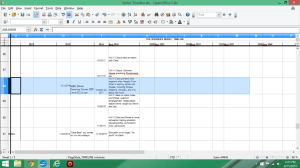
Screenshot (27)
The Spanners Series’ timeline spreadsheet, screenshot

Given the fluid nature of ebooks and self-publishing, it would not surprise me to find out, years from now, that I want to re-arrange the sequence within or of the Volumes I’ve already published significantly! Doing that wouldn’t even be difficult, since self-publishers can withdraw and resubmit Volumes for distribution whenever we want.

Of course, there is one big problem: too much sitting! I have to remind myself to take breaks, get up, walk around, go swimming 5 – 6 times each week, take naps, go outside and walk around. The temptation to stay inside and keep working is so much greater than in the past because everything I need is “right here”!

I also have to be careful not to have another incident of RPI (Repetitive Stress Injury) to my arms, fingers, hands and wrists, which I had severely in my first semester of graduate school. I learned exercises, ways to sleep, the use of ice and NSAIDs to avoid overusing my home computer as I transitioned from relying on an electric typewriter. When there is no paper to load, no carriage level for returns, no ribbon to change and no carbon paper, we don’t move around physically enough.

We have to remember: raise our eyes to look out a window to change our eyes’ focus from near to far, remove our hands from the keyboard to stretch our arms, shoulders, necks, backs, fingers. We need to get up and actually (HORRORS!) leave the keyboard and screen for frequent breaks, or we will ruin our bodies.

Many (like my son, not pictured, but his set-up is similar) now use standing desks and ergonomically designed keyboards with vertical access to prevent the worst harm and future injuries. However, exercise and frequent “away” periods are the best ways to avoid physical problems from developing due to computer overuse.

ergonomic desk set up
Ergonomic Desk and Keyboard Set-up
image from http://www.instructables.com

However, I would not trade the convenience of this era for all the manual typewriters and liquid paper in the multiverse. Thanks to all the inventors, developers, creators, scientists, researchers and writers who made/make this all possible for the rest of us!


This Changes Everything, Volume I, The Spanners Series, by Sally Ember, Ed.D., Permafree
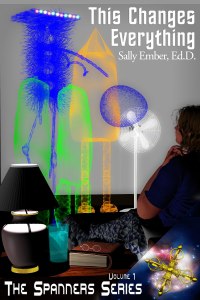
This-Changes-Everything----web-and-ebooks
Volume I cover

Dr. Clara Ackerman Branon, 58, begins having secret visits from holographic representations of beings from the Many Worlds Collective, a consortium of planet and star systems in the multiverse. When Earth is invited to join the consortium, the secret visits are made public. Now Earthers must adjust their beliefs and ideas about life, religion, culture, identity and everything they think and are.

Clara is selected to be the liaison between Earth and the Many Worlds Collective and she chooses Esperanza Enlaces to be the Media Contact. They team up to provide information to stave off riots and uncertainty. The Many Worlds Collective holos train Clara and the Psi-Warriors for the Psi Wars with the rebelling Psi-Defiers, communicate effectively with many species on Earth and off-planet, eliminate ordinary, elected governments and political boundaries, convene a new group of Global Leaders, and deal with family’s and friends’ reactions. 

In what multiple timelines of the ever-expanding multiverse do Clara and her long-time love, Epifanio Dang, get to be together and which leave Clara alone and lonely as the leader of Earth?

This Changes Everything spans the 30-year story of Clara’s term as Earth’s first Chief Communicator, continuing in nine more Volumes of The Spanners Series.

Are YOU ready for the changes?
http://www.amazon.com/dp/B00HFELTG8 </a
https://www.smashwords.com/books/view/376197

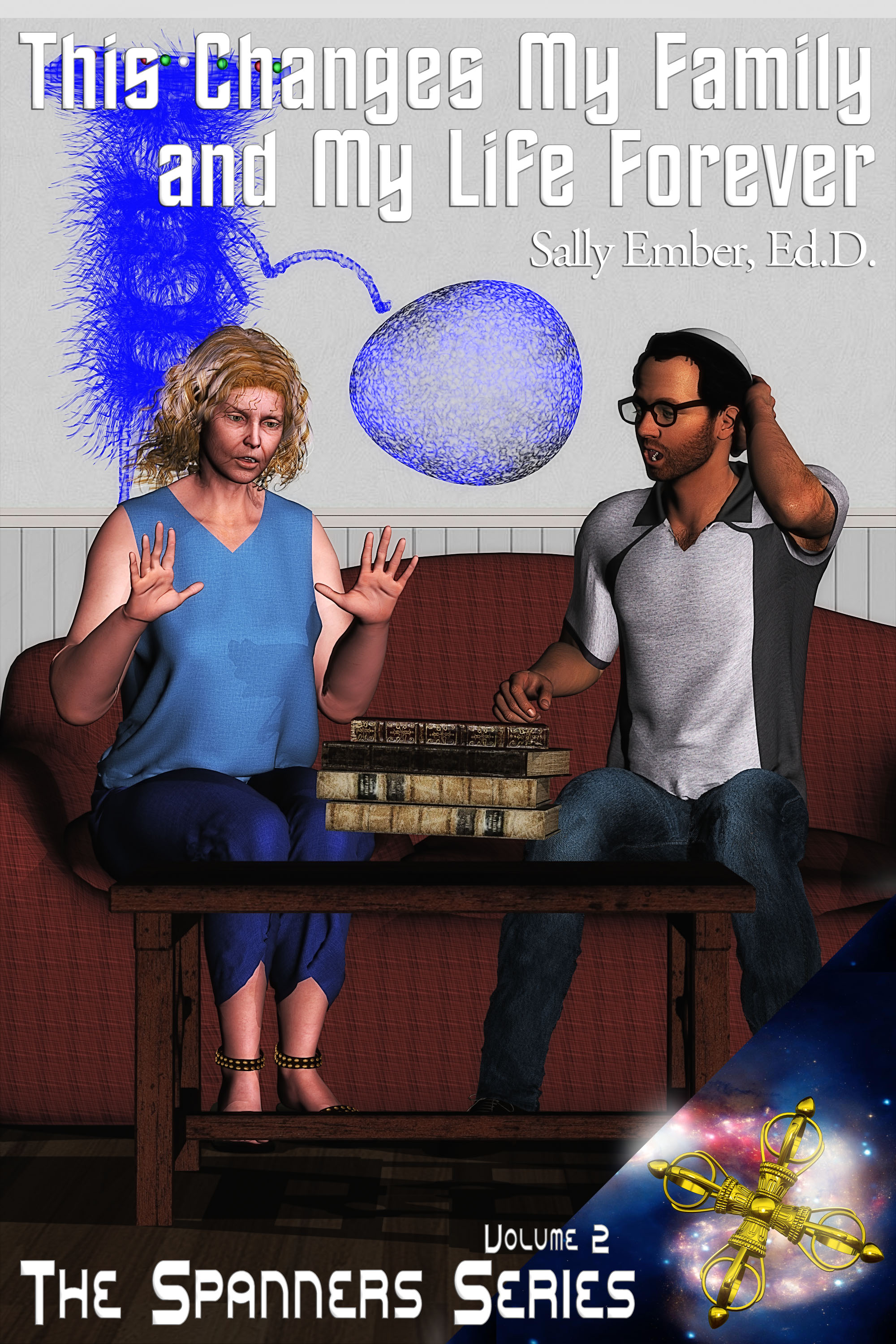
This Changes My Family and My Life Forever, Volume II, The Spanners Series, by Sally Ember, Ed.D., @$3.99
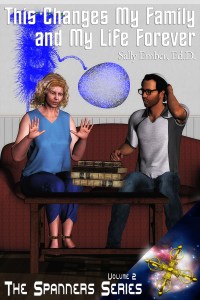
final cover print
Volume II cover

Intrigued by multiple timelines, aliens, psi skills, romance and planetary change? Clara and the alien “Band” are back.

Now as Chief Communicator, Clara leads the way for interspecies communication on- and off-planet. Fighting these changes are the Psi-Defiers, led by one of the oldest friends of the Chief of the Psi-Warriors, its reluctant leader, Rabbi Moran Ackerman. Stories from younger Spanners about the first five years of The Transition fill Volume II.

How would YOU do with the changes?
https://www.smashwords.com/books/view/424969  
http://www.amazon.com/dp/B00KU5Q7KC

This Is/Is Not the Way I Want Things to Change, Volume III, The Spanners Series, by Sally Ember, Ed.D., planned pre-orders 11/1/15 – 12/7/15 @$1.99; planned release 12/8/15 @$3.99; Cover Reveal 10/26/15!

logoAuthorsDen
The Spanners Series logo

Clara, Moran, Espe, Epifanio and the alien Band of holos are back. Psi-Defiers launch increasingly violent protests during this five-year Transition, attempting to block Earth’s membership into the Many Worlds Collective. To join, Earth’s nations and borders must dissolve and Psi-Warriors must strengthen in their battle against the rebels.

Clara, continuing as Earth’s first Chief Communicator, also juggles family conflicts and danger while creating psi skills training Campuses to help Earth through the Psi Wars. Clara timults alternate versions of their futures as the leaders’ duties and consciences force them each to make difficult choices across multiple timelines while continuing to train and fight.

Will the Psi-Warriors’ and other leaders’ increasing psi skills, interspecies collaborations and budding alien alliances be enough for Earth to make it through The Transition intact? If there is no clear path for Clara’s and Epifanio’s love, does she partner with Steve or go it alone?

What do you do with wanted/unwanted changes?


LINKS

http://www.sallyember.com  main website
http://www.amazon.com/-/e/B00HEV2UEW  author page
https://www.twitter.com/sallyemberedd Twitter: @sallyemberedd
https://www.facebook.com/TheSpannersSeriesbySallyEmber Spanners Series’ page on FB
https://www.facebook.com/sally.ember
http://www.pinterest.com/sallyember
http://goo.gl/tZKQpv Spanners Series’ page on Google+
https://plus.google.com/u/0/+SallySueEmber/about/p/pub Sally Sue Ember on Google+
https://www.youtube.com/channel/UCqnZuobf0YTCiP6silDDL2w/videos
https://www.goodreads.com/author/show/7237845.Sally_Ember  

More purchase/free links on Kobo, ibooks and nook as well as reviews, book trailers, author interviews and readings, blog posts, research, series updates and more on Sally’s website: look right, scroll down. http://www.sallyember.com

Cover art and logo by Aidana Willowraven: http://www.willowraven-illustration.blogspot.com/

Unknown's avatar

Part III: Science Alert, Serious Wonder and Cosmos Up

Part III: Science Alert, Serious Wonder and Cosmos Up

[All three posts in this series have the same introduction, but I choose info from each of the four science compilation sites separately for each post. This post focuses on gleanings from Cosmos Up]

INTRO: I should have been a research scientist. I love science. I’m extremely intelligent, determined, creative, and organized. I coulda been a contenda for a Nobel prize. That’s my story and I’m stickin’ to it.

Why am I not a scientist? I had a series of misogynistic (one of my teachers hated the four girls in my advanced science class so much he would pith [paralyze] the frogs by holding them in the air directly in front of one of us so that each frog would urinate on our blouses), anti-Semitic (another one wore his “John Birch Society” pin to school every day, displayed prominently on his lapel; there were three girls in my class and he insulted each of us daily), incompetent (in an lab accident at his “real” job, this poor man had lost most of his sight and drive and spent each class time mostly ignoring all of us) and otherwise horrible science teachers in 8th, 9th, and 10th grades.

With better teachers in those critical years, my life could have turned out very differently. Those terrible teachers turned me so far off science I only took one more “hard” science course (because it was required, in undergraduate college), despite many more years of education, through getting a doctorate.

As an adult, I became enthralled with quantum physics, health/anatomy, nutrition, child development/learning and the multiverse/astrophysics, so I read. A lot. I also watch documentaries. I am not even close to understanding some of the physics stuff, but the rest I got quite adept at utilizing. To “keep up,” I subscribe to many science-oriented blogs and curation sites.

My favorites are: Science Alert, Serious Wonder, Brain Pickings Weekly and Cosmos Up. I will excerpt from some of the “best of the best” of what I’ve recently perused.

Part III is all from Cosmos Up, which means this month’s offerings are all astronomical! I hope you enjoy! Go subscribe!


CosmosUp.com

Cosmos Up logo

Astrophysics and Quantum Physics/Mechanics
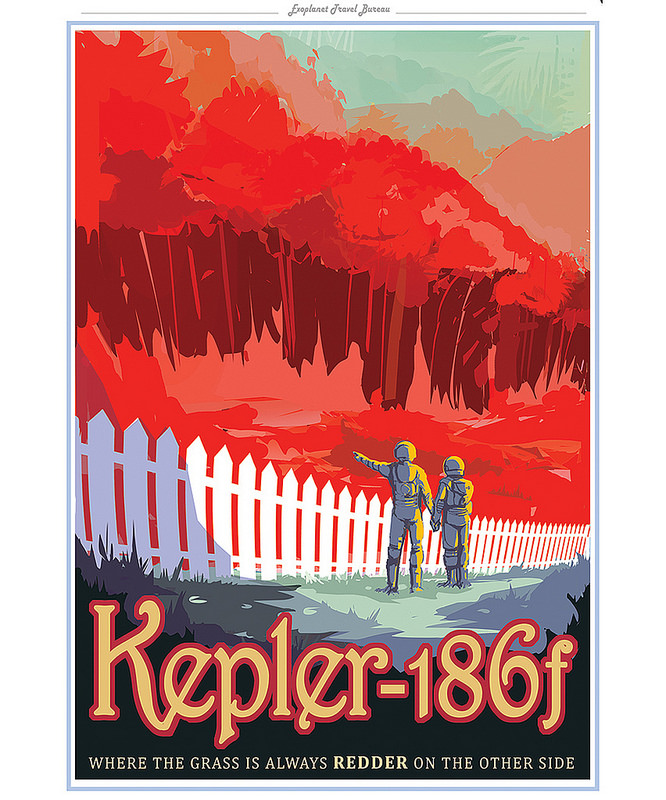
1. Jan 11, 2015, “NASA Reveals Three Amazing Travel Posters for Earth-Like Planets”
http://goo.gl/gfZgB1
“NASA has marked the discovery of potentially habitable worlds by its Kepler space observatory with a poster series imagining the ‘out of this world’ holiday options they may one day offer. Drawing inspiration from travel billboards of the 20s, 30s and 40s, the posters are the brainchild of NASA visual strategists Joby Harris, David Delgado and Dan Goods.”

NASA travel poster 1
and

NASA travel poster 2
and

NASA travel poster 3
“These posters are even available online and can be downloaded for free via JPL’s website. There are additional exoplanet posters in the works, NASA said.”

  1. January 14, 2015, “Rare Phenomenon In The Solar System, What Has Cassini Photographed?”
    http://goo.gl/EiDpnM
    “Cassini…captures a strange hexagonal formation present at one pole of Saturn. The diameter of the ‘hexagon’ is 30,000 miles. This formation is present at the north pole of the planet. Inside the formation…the wind blows up with a colossal speed [of] about 322 kilometers per hour. The center of this strange formation is actually a very powerful storm. Scientists say that…it isn’t present on any other planet in our solar system.”

    Cassini photo Saturn hexagon

  2. January 27, 2015, “Oldest Star System in Galaxy Discovered by NASA ‘could Point to Extremely Advanced Alien Civilisations’”
    http://goo.gl/kJG1Ue
    “’There are far-reaching implications for this discovery [of a sun-like star with 5 orbiting planets ranging in size from Mercury to Venus],’ lead researcher Tiago Campante said in a statement. ‘We now know that Earth-sized planets have formed throughout most of the Universe’s 13.8 billion year history, which could provide scope for the existence of ancient life in the Galaxy.’
    “’Planetary systems around stars have been a common feature of our galaxy for a long, long time.’”

    Kepler 444 and 5 planets

  3. February 11, 2015, “New Crazy Theory: The Universe has ‘No End and No Beginning’”
    http://goo.gl/t7HUkr
    “They showed that quantum particles can never meet or cross paths.’As far as we can see, since different points in the universe never actually converged in the past, it did not have a beginning,’ Professor Saurya Das said.”

  4. April 14, 2015, “New Map Reveals Distribution Of Dark Matter At Cosmic Scale”
    http://goo.gl/8uIp6G

  5. April 15, “NASA: No Signs Of Advanced Alien Civilizations In 100000 Galaxies”
    http://goo.gl/DNhEEy
    “Either they don’t exist, or they don’t yet use enough energy for us to recognize them.”

MY VIEW: Or, they don’t use energy in the form we expect them to be using it, which is “high levels of mid-infrared radiation.” Why do earth-based scientists presume that signs of alien “intelligence” will be recognizable to humans from great distances or at all? We could be looking for “life” in all the wrong ways.

  1. July 7, 2015, “There Are Millions Of Hidden Supermassive Black Holes In The Universe, Scientists Says”
    http://goo.gl/A97g4h
    The closest supermassive black hole to Earth is V4641 Sagitarii which is 1,600 light years away.
    “Astronomers have spotted five monster black holes previously hidden by dust and gas in space and they suggests that there might be millions more of them lurking around our universe.”

Look for Part I, published on June 1, which focused on info gathered by Alert.

ScienceAlert.com

Science Alert logo

Part II was published June 30, with info from Serious Wonder

SeriousWonder.com

SeriousWonderLogo

and Brain Pickings Weekly.

Brain pickings logo

Unknown's avatar

Part II: Science Alert, Serious Wonder, Brain Pickings Weekly and Cosmos Up

Part II: Science Alert, Serious Wonder, Brain Pickings Weekly and Cosmos Up

[All three posts in this series have the same introduction, but I choose info from each of the four science compilation sites separately for each post. This post focuses on gleanings from Serious Wonder and Brain Pickings Weekly]

INTRO: I should have been a research scientist. I love science. I’m extremely intelligent, determined, creative, and organized. I coulda been a contenda for a Nobel prize. That’s my story and I’m stickin’ to it.

Why am I not a scientist? I had a series of misogynistic (one of my teachers hated the four girls in my advanced science class so much he would pith [paralyze] the frogs by holding them in the air directly in front of one of us so that each frog would urinate on our blouses), anti-Semitic (another one wore his “John Birch Society” pin to school every day, displayed prominently on his lapel; there were three girls in my class and he insulted each of us daily), incompetent (in an lab accident at his “real” job, this poor man had lost most of his sight and drive and spent each class time mostly ignoring all of us) and otherwise horrible science teachers in 8th, 9th, and 10th grades.

With better teachers in those critical years, my life could have turned out very differently. Those terrible teachers turned me so far off science I only took one more “hard” science course (because it was required, in undergraduate college), despite many more years of education, through getting a doctorate.

As an adult, I became enthralled with quantum physics, health/anatomy, nutrition, child development/learning and the multiverse/astrophysics, so I read. A lot. I also watch documentaries. I am not even close to understanding some of the physics stuff, but the rest I got quite adept at utilizing. To “keep up,” I subscribe to many science-oriented blogs and curation sites.

My favorites are: Science Alert, Serious Wonder and Cosmos Up. I also subscribe to Brain Pickings Weekly, which I include in the Serious Wonder post. I will excerpt from some of the “best of the best” of what I’ve recently perused. Part II is all from Serious Wonder.

I hope you enjoy! Go subscribe!


SeriousWonder.com

SeriousWonderLogo

Astrophysics and Quantum Physics/Mechanics
1. 9/11/14, Your Cosmic Address, BY STEPHEN P. BIANCHINI of Serious Wonder

When you were younger, didn’t you sometimes write your “return” address in a similar way? Well, now you have a more exact way to locate yourself…In case you send mail to aliens, for example.

“…[T]his is the cosmic address you may want to use: Earth, Solar System, Milky Way, Local Group, Virgo Supercluster, Laniakea,” in case someone not from this planet needs to know.

What/where the heck is “Laniakea,” and why do we not already know about it?

Astronomers informed us recently about “the large-scale structure of the Universe” which has “…four huge areas identified so far: Laniakea, its neighbouring Perseus-Pisces supercluster, and two other superclusters, Shapley and Coma, on the far side of the universe.”

Elmo Temple from Estonia explained: “‘[The name Laniakea]… is taken from the Hawaiian words lani, which means heaven, and akea, which means spacious or immeasurable.'”

So, time to re-do those multiverse business cards, eh?

http://goo.gl/9wPLOJ

  1. 2/1/15, The Absurdity of Infinity: Astrophysicist Janna Levin Explains Whether the Universe Is Infinite or Finite in Letters to Her Mother, by Maria Popova of Brain Pickings Weekly

It is so illuminating for the rest of us when highly intelligent, inquisitive people ruminate on deep questions and share their thoughts with us, isn’t it?

“In 1998, while on the cusp of becoming one of the most significant theoretical cosmologists of our time, mathematician-turned-astrophysicist Janna Levin left her post at Berkeley and moved across the Atlantic for a prestigious position at Cambridge University. During the year and a half there, she had the time and space to contemplate the question that would eventually become the epicenter of her career — whether the universe is infinite or finite. What began as a series of letters to her mother, Sandy, eventually became an unusual diary of Levin’s ‘social exile as a roaming scientist,’ and was finally published as How the Universe Got Its Spots: Diary of a Finite Time in a Finite Space (public library) — a most unusual and absorbing account of the paradoxes of finitude.”

From Levin’s book/letters: “‘We’re all intrinsically of the same substance. The fabric of the universe is just a coherent weave from the same threads that make our bodies. How much more absurd it becomes to believe that the universe, space and time could possibly be infinite when all of us are finite.'”

Levin concluded: “‘I welcome the infinite in mathematics, where … it is not absurd nor demented. But I’d be pretty shaken to find the infinite in nature. I don’t feel robbed living my days in the physical with its tender admission of the finite. I still get to live with the infinite possibilities of mathematics, if only in my head.'”

Where do you stand on the multiverse as infinite-not infinite subject? I tend to veer way from her inescapable logic into the infinite possibilities of the multiverse, but where each of the versions of the universe so conceived is probably finite.

http://goo.gl/p6ucpj

Child Development/Learning
3. 9/11/14, Telepathy is now a Thing, Thanks to Technology , BY B.J. Murphy of Serious Wonder

It warms my telepathic heart-mind when tech geeks prove what the rest of us with E.S.P. already know!

“As experiments like the one above show, telepathy is a very real concept which need be aided by our own innovations – the creation of techno-telepathy.”

“Could you imagine what our world will transform into when our predominant means of communication is via thought? Everything will change fundamentally, from our markets to our governance.”

Then they have to go and ruin it, with scare tactics….

http://goo.gl/IIblvE

  1. 3/8/15, This Idea Must Die: Some of the World’s Greatest Thinkers Each Selects a Major Misconception Holding Us Back, by Maria Popova of Brain Pickings Weekly

I ADORE this book, which “Edge founder, John Brockman, collected by posing his annual question — ‘What scientific idea is ready for retirement?’ — to 175 of the world’s greatest scientists, philosophers, and writers,” and the accompanying article/review. So inspiring!

Here is my favorite excerpt, based on the responses from one of my favorite scientists, biological anthropologist, Helen Fischer, “…who studies the brain on love….[She] points to romantic love and addiction as two concepts in need of serious reformulation and reframing — one best accomplished by understanding the intersection of the two. Fisher argues that we ought to broaden the definition of addiction and do away with science’s staunch notion that all addiction is harmful. Love, she argues, with a wealth of neurobiological evidence in hand, is in fact a state that closely resembles that of addiction in terms of what happens in the brain during it — and yet love, anguishing as it may be at times, is universally recognized as the height of positive experience. In that respect, it presents a case of ‘positive addiction.’…'[B]esotted lovers express all four of the basic traits of addiction: craving, tolerance, withdrawal, and relapse.’”

And, even though this excerpt belongs in my post’s section on quantum physics and the astrophysics, above, I had to put it here, since it comes from this article:

“Science writer, Amanda Gefter, takes issue with one particular manifestation of our propensity for oversimplification — the notion of the universe. She writes: ‘…[T]here’s my universe and there’s your universe — but there’s no such thing as the universe.'”

An expansion of many of my own thoughts on a variety of subjects and more than I could ever have thought of on others await me. Gotta get this book!

http://goo.gl/7Z5Weo

Anatomy/Biology/Zoology and Gender
5. 4/18/15, AIR SHEPHERD: ANTI-POACHING DRONES SEEK CROWDFUNDING, BY B.J. MURPHY of Serious Wonder

I’m not a fan of drones (given most of their current uses, but this is a great idea! To protect elephants, rhinos, and other endangered species: “‘We fly drones, unmanned aerial vehicles (UAVs) that have infrared cameras and GPS on them and can send back thermal images of animals . . . and poachers.’ – Air Shepherd.”

Air Shepherd‘s crowdfunding campaign deadline has passed (April, 2015), but the goal was not met and they would appreciate donations at any time: https://goo.gl/hfi9u1 for the IndieGogo page and more info, including http://www.AirShepherd.org for the website itself.

http://goo.gl/uaqlMu

  1. 3/8/15, The Best LGBT Children’s Books: A Sweet and Assuring Celebration of Diversity and Difference, by Maria Popova of Brain Pickings Weekly

As a parent, a bisexual, a feminist and a long-time educator, I am extremely committed to enlarging perspectives, particularly for young children. This list of excellent children’s books on gender, sexual orientation and other related “differences” whose authors embrace diversity in all its guises makes me very happy since it helps many who work with and raise children to find great reads on these important topics.

Plus, who doesn’t love Maurice Sendak’s books, regardless of your age and politics? We lost one of the 20th Century’s greatest writers for children (and adults) when he passed recently.

Books in this list were published in the 1990s and afterwards and range to one about gay penguins, a grandmother who speaks about lesbians to a granddaughter who asks, a prince seeking a spouse (not a bride, as it turns out), a gay human father and more. Each has excellent illustrations, demonstrates acceptance values, and provides the types of dialogue and storylines adults will be glad to read and re-read to the young children until they can read them on their own.

You might think this list of children’s books doesn’t belong in a post about “science,” but science includes advances in social and emotional health, right? Include these books in every library, school, daycare facility, summer camp and home and we’ll see a huge rise in the mental health of LGBT youth and a great increase in the number of LGBT Allies as well.

http://goo.gl/BNr6qJ

Health and Nutrition
7. 2/1/15, How Playing Music Benefits Your Brain More than Any Other Activity, by Maria Popova of Brain Pickings Weekly

I am a musician. I come from a family of musicians. My son and his father are musicians. Many of my lifelong and new friends are musicians. I am currently helping two kids (ages 7 & 11) learn about music and to play the piano. I have been a paid accompanist, musical director and songwriter. To say I believe in the value of music would be a vast understatement, but this article about the health benefits of music encourages and uplifts me enormously, particularly since I am in the unexpectedly long process of recovering from a Traumatic Brain Injury (TBI)/concussion which occurred over a year ago.

According to the latest research: “…[P]laying music benefits the brain more than any other activity…[and] it impacts executive function and memory…” which are two of the areas most affected in me by my recent TBI.

I love the way musician/author, Glenn Kurtz, explains in his book, Practicing, exactly in what ways playing (not just listening to) music improves our brains: “‘Because making music also involves crafting and understanding its emotional content and message, musicians also have higher levels of executive function — a category of interlinked tasks that includes planning, strategizing, and attention to detail, and requires simultaneous analysis of both cognitive and emotional aspects.

“‘This ability also has an impact on how our memory systems work. And, indeed, musicians exhibit enhanced memory functions — creating, storing, and retrieving memories more quickly and efficiently. Studies have found that musicians appear to use their highly connected brains to give each memory multiple tags, such as a conceptual tag, an emotional tag, an audio tag, and a contextual tag — like a good internet search engine.'”

http://goo.gl/aF3y3z

Brain pickings logo
Brain Pickings WeeklyBrain Pickings Weekly


Look for Part I, published on June 1, which focused on info gathered by Alert.

ScienceAlert.com

Science Alert logo

Next, look for Part III in late July, info from Cosmos Up.

CosmosUp.com

Cosmos Up logo

Unknown's avatar

Part I: Science Alert, Serious Wonder and Cosmos Up

Part I: Science Alert, Serious Wonder and Cosmos Up

I should have been a research scientist. I love science. I’m extremely intelligent, determined, creative, and organized. I coulda been a contenda for a Nobel prize. That’s my story and I’m stickin’ to it.

Why am I not a scientist? I had a series of misogynistic (one of my teachers hated the four girls in my advanced science class so much he would pith [paralyze] the frogs by holding them in the air directly in front of one of us so that each frog would urinate on our blouses), anti-Semitic (another one wore his “John Birch Society” pin to school every day, displayed prominently on his lapel; there were three girls in my class and he insulted each of us daily), incompetent (in an lab accident at his “real” job, this poor man had lost most of his sight and drive and spent each class time mostly ignoring all of us) and otherwise horrible science teachers in 8th, 9th, and 10th grades.

With better teachers in those critical years, my life could have turned out very differently. Those terrible teachers turned me so far off science I only took one more “hard” science course (because it was required, in undergraduate college), despite many more years of education, through getting a doctorate.

As an adult, I became enthralled with quantum physics, health/anatomy, nutrition, child development/learning and the multiverse/astrophysics, so I read. A lot. I also watch documentaries. I am not even close to understanding some of the physics stuff, but the rest I got quite adept at utilizing. To “keep up,” I subscribe to many science-oriented blogs and curation sites.

My favorites are: Science Alert, Serious Wonder and Cosmos Up. I will excerpt from some of the “best of the best” of what I’ve recently perused. Part I is all from Science Alert.

I hope you enjoy! Go subscribe!


ScienceAlert.com

Science Alert logo

Astrophysics and Quantum Physics/Mechanics
19 Jan 2015 http://goo.gl/TRtzJD
“For the first time, scientists in Australia have detected a gigantic burst of radio waves from outside our galaxy in real time. Called blitzars [also known as ‘fast radio bursts’ (FRB’s)], these bursts generate as much energy as the Sun does in a day, but they do it in mere milliseconds….The source of these ‘blitzars’ has so far remained a mystery….[T]hey’ve calculated the blitzar to be up to 5.5 billion light-years away from Earth.”

22 Jan 2015 http://goo.gl/v6Q8S4
“Researchers have found that have found that quantum mechanics can cause more than two optical systems to become entangled, potentially across large distances….[Q]uantum entanglement states that two particles can be implicitly linked and can seemingly influence each other no matter how far apart they are….[Q]uantum entanglement exists and forms the basis of teleportation and quantum cryptography. [In 2014], researchers from the University of Geneva managed to teleport a photon across a distance 25 kilometres….[This new experiment] provides an important step towards validation of mesoscopic quantum mechanics. Mesoscopic refers to the discipline of physics that deals with matter in between micro and macroscopic.”

10 Feb 2015 http://goo.gl/v9nm44
“New model suggests the Big Bang never occurred. Instead, the Universe has simply been going forever….A new quantum equation suggests that the Universe has no beginning or end, and it could also account for dark matter and dark energy.”

05 Apr 2015 http://goo.gl/BAKoZa
“The LHC [Large Hadron Collider]…the monstrous underground atom smasher that hurls particles at near light speed, has been restarted….Here’s how it could change physics forever! ”
“The hunt for dark matter is on.”
These new LHC experiments may also resolve as-yet-unanswered questions regarding supersymmetry, antimatter, gravity and dark energy as well!

08 Apr 2015 http://goo.gl/i8yQw4
“NASA’s chief scientist predicts we’ll find signs of alien life by 2025: ‘I think we’re going to have strong indications of life beyond Earth within a decade, and I think we’re going to have definitive evidence within 20 to 30 years,’ NASA chief scientist, Ellen Stofan…
“‘It’s definitely not an if, it’s a when,’ said Jeffery Newmark, NASA’s interim director of heliophysics….
“‘[O]bservations by NASA’s Kepler space telescope suggest that nearly every star in the sky hosts planets – and many of these worlds may be habitable,’ says Mike Wall at Space.com.”

16 Apr 2015 http://goo.gl/jdGFtQ
“Big news: Dark matter may not be as dark as we originally thought. Astronomers have found the first evidence that dark matter interacts with forces other than gravity.”

Child Development/Learning
05 Jan 2015 http://goo.gl/5POY6W
“If you want to sure up your child’s communication and problem-solving skills, chatting…to your baby about nothing in particular while you’re getting ready or doing work around the house…can be even more important than reading to them, new research suggests….[R]eading is great for young kids, but… on its own, it’s not enough to shore up their cognitive development.”

Anatomy/Biology/Zoology and Gender
09 Jan 2015 http://goo.gl/60Zmfi

butterfly_480
“Is it a male, or female? This unusual butterfly, apparently, couldn’t decide on its sex, resulting in beautiful and starkly different sets of wings….[I]t was a Common Archduke (Lexias pardalis) butterfly, with a condition known as bilateral gynandromorphy…[which] also been reported in crustaceans, such as lobsters, as well as in birds….”

23 Mar 2015 http://goo.gl/aQyTet
“Scientists have found a drug that makes people more compassionate. It turns out altering people’s brain chemistry can stop them from being selfish jerks….The drug, called tolcapone, prolongs the effect of dopamine in the prefrontal cortex of the brain, a region involved in the regulation of complex thought and our emotions. And early tests suggest that it encourages people who take it to be more fair-minded when it comes to money.” I posit the biological bases for better or worse humans, particularly regarding behavior and selfishness, in my sci-fi ebooks, The Spanners Series.

09 Apr 2015 http://goo.gl/ED8UKh
“Brain ‘gender’ is more fluid than originally thought, research reveals….[C]ontinual Dnmt [DNA methyltransferase (Dnmt), an enzyme that usually silences certain genes] exposure is necessary throughout development to ensure that a brain turns female.”
“Scientists have managed to neurologically switch newborn rats from female to male….Not only did their behaviour change dramatically, but the rats’ brains also structurally transformed.”
In the 1990s, I conducted my doctoral research and wrote my dissertation on the mutability of both gender and sexual orientation identities with the factors of interpersonal safety and connection being pivotal in how frequently, fluidly and diversely each individual’s identities might fluctuate, inventing a term for this contextualized fluctuation: differential authenticity. http://goo.gl/IOcCWJ
“‘”It was thought that once established, sexual differentiation could not be undone,’ Nugent told PBS. ‘Our work shows that sex differences in brain and behaviour are epigenetically regulated, meaning that sex differences are not hardwired in our DNA but programmed during development.'”
I would add: and identities could change throughout life, regulated by circumstances and experiences.

21 May 2015 http://goo.gl/oSpB7e
“Octopuses are able to ‘see’ with their skin, new research finds….[T]he same kind of skin perception might be happening in other cephalopods, too. In other words, these creatures can feel changes in light as well as see them.”
Cephalopods are featuredin my sci-fi ebooks, The Spanners Series.

Health and Nutrition
05 Feb 2015 http://goo.gl/RFcvRZ and https://goo.gl/2HhO4z [with two videos from ASAP Science]
“Want to know how to decrease your odds of developing a cold by 58.8 percent, and if you do get one, how to shave 1.5 days off the length of it? The latest episode of AsapSCIENCE has got all the – scientifically approved – answers.” The two accompanying videos provide tips and advice and then debunk 6 common myths about how to behave/what to do/not do/eat/not eat when getting sick or already sick with a cold.

18 Mar 2015 http://goo.gl/iU4jW4
“The longer you’re breastfed, the higher your IQ and adult earnings, study suggests, but not too long, or the benefits become disadvantages….And the difference was pretty huge. If a child had been breastfed for an entire year, they scored on average four more IQ points, had almost another year of formal education, and earned an extra 341 reais a month – which is about about a third more than the average income level in Brazil – than those who had breastfed for less than a month. But beyond 12 months, and the benefits in later life dropped off significantly – in adulthood, these people were on average poorer, and less educated.”

08 April 2015 http://goo.gl/1ImN59
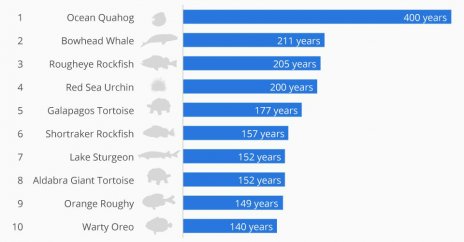
“Amazing chart shows the planet’s longest-living animals. See how your puny human lifespan compares.” Humans don’t even make the top 10! The longest-living (an ocean quahog [an edible clam, pronounced in Massachusetts, USA, “co-hog”] exists for over 400 years! Eight of the top 10 longest-lived animals are all sea-dwelling creatures; the other two are land tortoises. I guess living on land shortens our lifespan considerably. Humans should have stayed in the sea.

LongestAnimals_web_480


Look for Part II in late June, focusing on info gathered by Serious Wonder.

SeriousWonder.com

SeriousWonderLogo

After that, look for Part III in late July, info from Cosmos Up.

CosmosUp.com

Cosmos Up logo

Unknown's avatar

#Astrobiology, #Electrochemistry: Yes! These are #Scientific Fields of Study

If you have any interest in #microbiology, #astrobiology, #electrochemistry, #alien life, general #science, check out these excerpts and then read the entire article.

MIND BLOWN! Amazing scientists! Excellent article. I LOVE THIS!

Electric Bacteria
image from http://www.bibliotecapleyades.net

Dr. Shelley Minteer, Ph.D., electrochemist, University of Utah

Shelley Minteer

discovered that mitochondria—–the power-generating units inside the cells of all complex cellular organisms, including humans—–can interact electrically with surfaces outside themselves. That fits with a well-accepted theory that mitochondria evolved as free-living bacteria that later merged with other cells, forming a permanent partnership. Even after a billion years, mitochondria may retain some of the capabilities they had in their days of independence. It is possible, then, that we all have a smidgen of electric alien behavior locked away inside us.

Dr. Kenneth Nealson, Ph.D., University of Southern California

kenneth-nealson

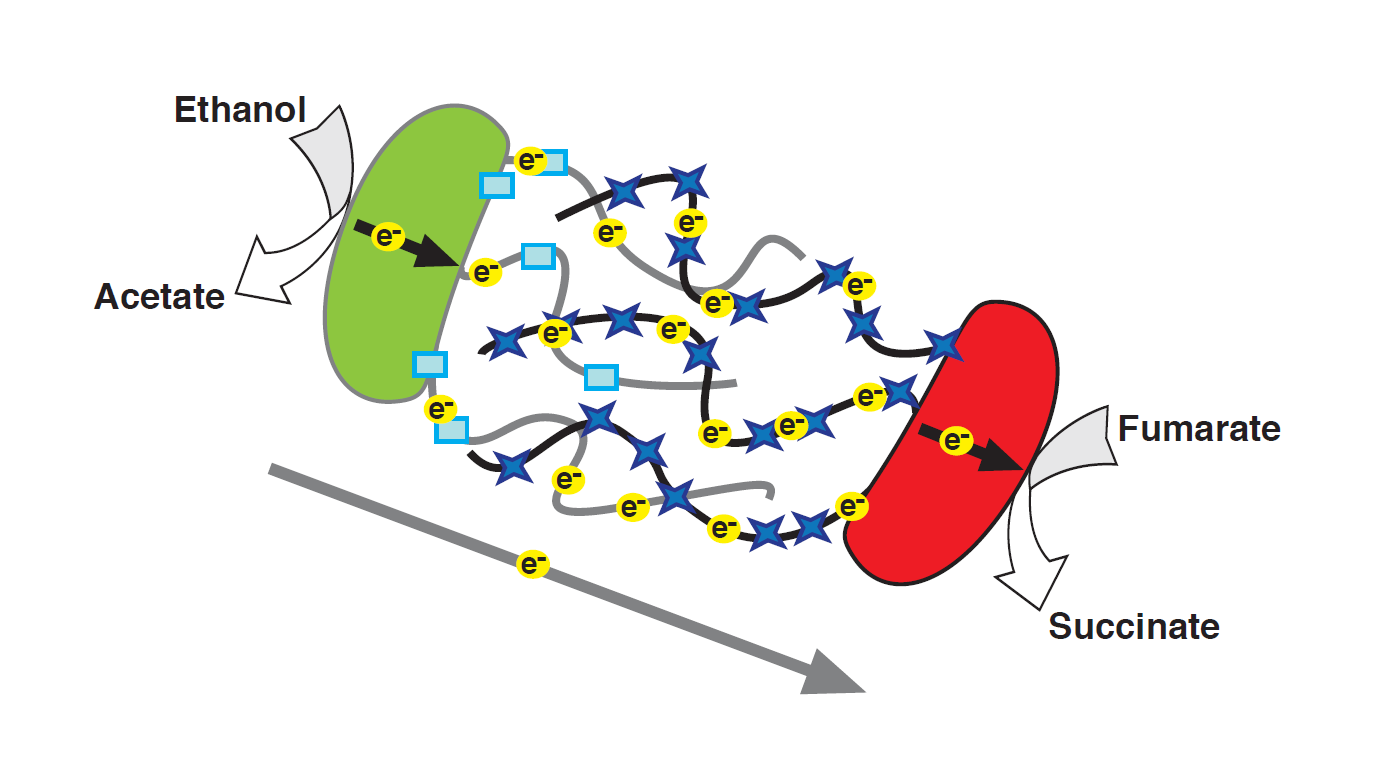
discovered that Shewanella oneidensis can deposit electrons directly on minerals—”breathing” a solid substance—via tiny chemical wires.

Shewanella
image from techportal.eere.energy.gov

Dr. Annette Rowe, Ph.D., a postdoc researcher in Nealson’s group, ‘… isolated a whole slew of electrode-oxidizing bugs,” she says—roughly a thousand strains in total. So far, she’s identified 30 of them, all previously unknown….Six of Rowe’s new bacterial strains can live on electrons alone.”

“The vast majority of Rowe’s strains must be grown on a cathode, not in a petri dish. And they indicate an immense and largely alien ecosystem here on Earth. The National Science Foundation calls it the ‘dark energy biosphere’ and is funding Rowe to learn more about this parallel microbial universe.”

Because Geobacter metallireducens can eat waste and produce electricity, the bacteria could prove useful in microbial fuel cells.

Dr. Moh El-Naggar, Ph.D., also at USC, created a series of videos showing

electric nanowires stretch from the outer membranes of Shewanella oneidensis bacteria….[H]e [shot] a series of mind-boggling movies in which you can watch Shewanella reach out to an electrode in search of a place to deposit electrons. Sometimes the bacteria will link up with one another, possibly fobbing off electrons on cells that are able to accept them. [link to one video in original article, below]

moh-el-neggar

How does this all fit together? Maybe this helps you….

Astrobiology chart
image from http://astrobiology.nasa.gov

Or, just enjoy this:

cartoon of geobacters at work
image from http://biobasedpod.blogspot.com

The article’s author wrote: “Their Earth seems to be a world built on cooperation and sharing, a far cry from the more familiar world of cutthroat Darwinian competition. ‘Unless I miss my bet, that’s what we’re going to see when we get to the subsurface: little pockets of life with a socialist community, all working there together. But I won’t tell that to my Republican father because he won’t like it,’ Nealson says.”

Inspired by and drawn from HAVE WE FOUND ALIEN LIFE? MICROBES THAT EAT AND BREATHE ELECTRICITY HAVE FORCED SCIENTISTS TO REIMAGINE HOW LIFE WORKS—ON THIS PLANET AND OTHERS, by Corey S. Powell, in February, 2015, Popular Science, pages 32-39 http://www.popsci.com/have-we-found-alien-life

Unknown's avatar

#Buddhism and #Science: the Facts, the Yogis, the Practices

A repost from 1/30/14 from my own blog.

quantum-buddha-side

The above image is entitled “Quantum Buddha,” and it captures the essence of this post: the intersection of Buddhism and modern science. Meditation as medicine, mindfulness for many purposes, research data to support their usefulness seem to be in the headlines almost daily. Some links are below to articles like that.

http://ideas.time.com/2014/01/17/we-need-to-take-meditation-more-seriously-as-medicine/

Being called The Third Metric, and The Way of the Future for politics, leadership, business and family life, mindfulness is now almost mainstream.

http://www.huffingtonpost.com/2014/01/21/third-metric_n_4612396.html

Will meditation cure your depression? Your cancer? Your diabetes? Your stress?

http://www.wildcat.arizona.edu/article/2014/01/heat-the-body-heal-the-mind

What are the facts? What is true? What is correct? How do you know?

Einstein and Buddhism

There was recently a forum on meditation led by the actor, Goldie Hawn, at a World Economics conference!

http://www.bloomberg.com/news/2014-01-20/at-davos-rising-stress-spurs-goldie-hawn-meditation-talk.html

You decide, after learning to meditate, researching via personal experience as well as reading and watching videos, attending conferences and talking with others, what YOU believe. The Buddha would want you to do that. Really.

reject buddha Dalai Lama

When you have time and want to learn a lot more, watch this amazing documentary. Yogis of Tibet.
https://www.youtube.com/watch?v=DctQTDm-HdU

Unknown's avatar

“Fever-reducing drugs may help spread flu”: People End Up With More Virus In Their Bodies

reblog from post from a year ago: VERY USEFUL TO KNOW during ‘flu season.
http://www.nydailynews.com/life-style/health/fever-reducing-drugs-raise-spread-flu-study-article-1.1588812

I and my “alternative health” friends and practitioners have been saying for decades (centuries): FEVER is helpful. Let the accompanying fever do its thing, which is to kill the virus/bacteria, unless a fever is dangerously high.

IMPORTANT: Stay away from people throughout the fever period and for at least 24 hours after fever passes: then, you’re no longer contagious.

Salty's avatarThis and That

View original post

Unknown's avatar

Young Blood Fixes Old, Reversing the Aging Process: The End of Independence

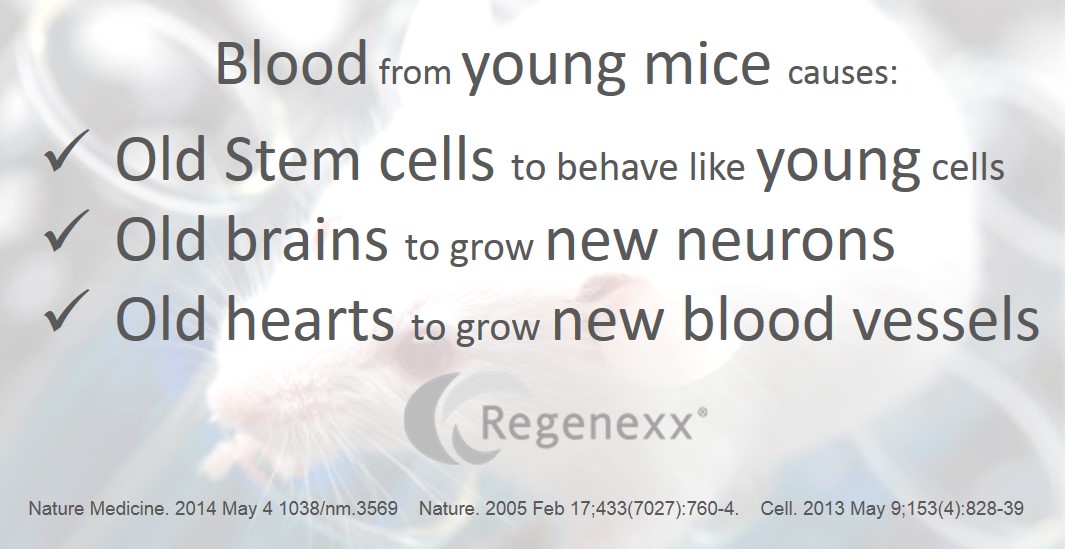
In one video clip of an annual summary of scientific discoveries for 2014, the narrator calmly stated this astonishing description and conclusion from research conducted this past year (https://www.youtube.com/watch?v=Hjrt0hcv4Qk), using the headline Young Blood Fixes Old:

Scientists stitched [!?!] two [living] mice together, one young, one old, connected their circulatory systems. The connection rejuvenated the brain and the muscle of the older mouse. It appears young blood contains a factor that can turn back the clock on the aging process.

stem-cell-aging-info
image from http://www.regenexx.com

Exactly how long do you think older, wealthier humans are going to wait before purchasing, enslaving and continuing to exploit younger humans in even more ways, including keeping them STITCHED to their bodies just to utilize their young blood to reverse their own aging???

I am nauseated.

Oh, sure. Scientists could isolate this “factor” and package only that.

But, where will this blood-borne factor be obtained? Exactly how legal, voluntary and frequent (or ongoing!?!) will the processes be for arranging for the young blood donors to fulfill ever-increasing requests for portions (how much?) of their blood?

We already have illegal and questionably-legal markets and practices for:

  • organs that can be transplanted, in whole or in part, preserving the donor’s life or not;
  • fertilizable human eggs;
  • gestational wombs;
  • siblings conceived to be organ donors for a needy sibling;
  • sexual surrogates (underaged or legal-aged sex slaves of both sexes).

Are you shuddering at the implications of this research, yet? Young people on this planet who have less power and wealth to protect them than those elders who wield power and money like weapons already, should RUN!

mouse-effect-circulation-young-blood
image from http://scitechdaily.com

Read Susan Young Rojahn’s May 9, 2014, article, Can Compounds in Young Blood Fix Aging?
Animal studies on the revitalizing power of young blood suggest new drug targets for treating conditions like dementia and heart disease
, which summarizes several research studies and their implications, then read the quotes, below.
http://www.technologyreview.com/news/527146/can-compounds-in-young-blood-fix-aging/

Based on Wagers’s new and previous results, the Boston-area venture capital firm Atlas Venture has started a still-unnamed company. Wagers’s previous findings caught the eye of the VC firm in 2013, and the new results “increased the excitement for the role of GDF11 in aging,” says partner Peter Barrett. “Now it’s the blocking and tackling of trying to understand what would be the best therapeutic approach to make this a commercial product.”

The wealthier, more powerful of the elders will soon be able to co-opt young blood to keep them from aging. What will stop them?

One of the Stanford researchers, Tony Wyss-Coray, has cofounded a biotech company called Alkahest to test the therapeutic potential of his group’s findings.

bring me blood
image from http://imgur.com

If you’re not terrified, you’re not paying attention.

Unknown's avatar

#Meditation Rebuilds #Brains: #Harvard’s Research Offers Proof!

#Meditation Rebuilds #Brains: #Harvard’s Research Offers Proof!

The methodology and research conclusions from this recently published study are astonishing for several reasons that matter a lot to me. Some of you know that I fell last April, breaking my nose and causing a concussion which has impaired my cognitive processes AND affected my ability to meditate enormously. I am all for finding out more about what helps brains heal and work better in us all.

My descriptions and opinions are in this post, linking this research to another recently revealed study on brain functionality. Links to original articles, below.

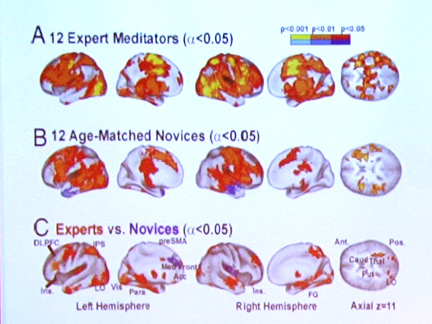
Test subjects taking part in an 8-week program of mindfulness meditation showed results that astonished even the most experienced neuroscientists at Harvard University.

Researchers found that remarkable positive outcomes can occur after only 8 weeks of being in this meditation course, even though, for about half the time, the learners barely knew how to meditate at all. Individuals meditated for an average of “about 27 minutes per day.”

What were they learning? How could such a brief experience and small lifestyle change have such tremendous impacts?

Simple mindfulness sharpens one’s ability to focus. Increasing the skills related to paying attention, following one’s thoughts or one’s breath are the easiest types of meditation to learn. These are also the most basic and accessible forms of meditation for Westerners because the current version contains nothing religious, almost nothing that feels “cultural,” native to the Eastern countries from which these techniques originated.

mindfulness meditation

image from http://www.theguardian.com

In most mindfulness classes (which are not the same as many meditation classes), participants and leaders do NOT bring Eastern “forms” into the experience.

Most mindfulness groups do NOT:

  • light candles
  • burn incense
  • prostrate or bow
  • chant syllables (mantras) in Sanskrit or other foreign languages
  • pray
  • wear special clothing or colors
  • call the teacher by an unusual title (“Lama,” “Rinpoche,” “Guru”)
  • treat the instructor as a spiritual guide or leader
  • use photos or statues of Eastern figures or past teachers
  • discuss “lineage”
  • set up a shrine or altar.

If mindfulness groups use music or musical instruments (drums, bells, horns,”ambient” recorded music), they use them as part of the meditation experience, to set a mood, mark the time or start/stop a session.

Dr. Jon Kabat-Zinn and many others from the Vipassana/Insight Meditation centers have distilled the essence of these beginners’ meditation practices into palatable, sanitized chunks able to be digested in fewer than two months by even the most resistant Western learner. There are now hundreds of books and thousands of resources and settings that you can find that include or teach mindfulness, from the family to corporations, schools, businesses, government and hospitals.

Pain clinics, anxiety/panic and addiction rehabilitation programs, trauma recovery centers and many more segments of the medical and therapy community have been teaching mindfulness without even using the word “meditation” for decades, bringing these techniques to the populations most needing to learn how to deal with strong pain (physical or emotional or both. These participants have been shown (in previous research) to have benefited enormously from mindfulness meditation classes.

What they discovered is brand-new evidentiary proof of the positive effects of mindfulness on the meditator’s brain! Prior to this study, meditation researchers had “found structural differences between the brains of experienced meditation practitioners and individuals with no history of meditation, observing thickening of the cerebral cortex in areas associated with attention and emotional integration” but couldn’t prove these resulted directly from meditation, until this project.

hippocampus-300x227

image from http://meditation-research.org.uk

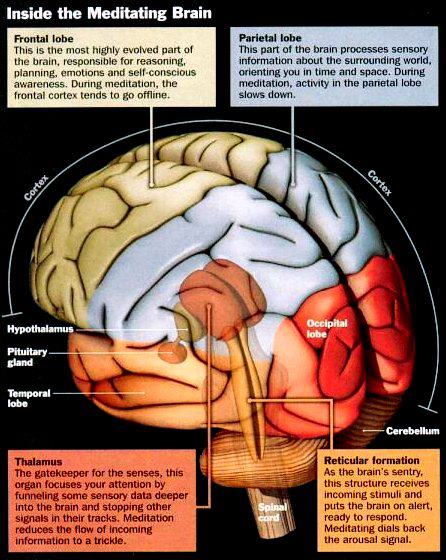
The MRI (Magnetic Resonance Imager) scans showed “before” and “after” films of these meditators who used “mindfulness exercises” for less than half-an-hour daily. Just utilizing this small amount of beginning meditative techniques achieved: “a major increase in gray matter density in the hippocampus, the part of the brain associated with self-awareness, compassion, and introspection.”

If such results can be seen in merely 8 weeks, with beginners, doing the minimum amount of basic mindfulness, imagine what experienced meditators who use more advanced techniques and who meditate for an hour or more per day can accomplish in effecting changes to our brains and therefore, our self-awareness, compassion and introspection?

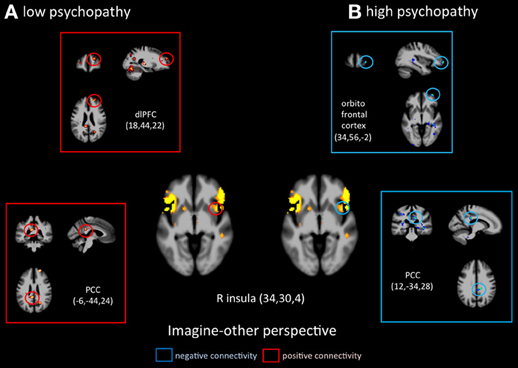
A related and recent study conducted by Dr. Abigail Marsh of Georgetown University, http://college.georgetown.edu/collegenews/why-do-strangers-help.html , used fMRI scans (functional MRI), which involved asking research participants questions while the scan is operating. She then looked at the differences in the amygdalas in the brains of diagnosed psychopaths (those who have little or no reaction to others’ pain and no moral inhibition against causing others pain) compared to social/community altruists (in this case, those who had volunteered to donate a kidney).

Amygdala Altruists

image from http://www.vox.com

Marsh’s fMRI scans showed that there were marked differences in the size and functionality of each group’s amygdalas, the part of the brain associated with processing emotion, inhibiting aggression and encouraging “helpfulness.” Altruists have larger, better formed and functioning amygdalas.

That altruists would have more compassion, less aggression and more helpfulness can’t be surprising. That their/our brains are physically different is now proven but still kind of awe-inspiring, to me.

fMRI psychopath altruist

image from http://journal.frontiersin.org

The logical next steps from a social change standpoint are to find out if engaging in regular meditation of any type could result in psychopaths’ being deterred/cured, AND if we can foster/enhance the development of altruists as well. What part could mindfulness play?

Stay tuned.

Meanwhile, if you already know how to meditate in any way, DO IT! Even 5 minutes per day or more short sessions sprinkled throughout a day matter a lot to our well-being, especially to the gray matter of our brains.

If you do not yet know how to meditate, there are hundreds of ways to learn mindfulness and other forms of meditation: online courses, in-person classes (some are offered for credit at secondary schools, community colleges and universities; some are free), workshops, audiobooks, CDs, online forums or chat rooms abound with opportunities.

If you suffer from a medical or psychological condition that could be improved or managed better by the application of meditation techniques, such as mindfulness, many medical facilities now offer classes such as the one mentioned in this study AND many types of insurance now pay for these classes! Ask your doctor or counselor.

Mindfulness for Psoriasis

image from http://www.mindfulnesscds.com

Also, many religious groups already have been providing and now offer more types of group learning and individual counseling that include meditation instruction even when the religion is “traditional.” So, if you’re a practicing Christian, Jew, Catholic, Muslim or other mainstream religious adherent, ask your religious community where you can learn to meditate.

BREATHE

meditation at college

image from http://iup.collegiatelink.net

Link to full article about Harvard research quoted in this post: http://www.feelguide.com/2014/11/19/harvard-unveils-mri-study-proving-meditation-literally-rebuilds-the-brains-gray-matter-in-8-weeks/

Link to original article first seen by me on Wildmind‘s site: http://www.wildmind.org/blogs/news/harvard-unveils-mri-study-proving-meditation-literally-rebuilds-the-brains-gray-matter-in-8-weeks

Unknown's avatar

Latest News in #ParallelUniverses and/or the #Multiverse, According to #Science in 2014

A scientific truth does not triumph by convincing its opponents and making them see the light, but rather because its opponents eventually die and a new generation grows up that is familiar with it. –Max Planck

What is the latest News in #ParallelUniverses and/or the #Multiverse, According to #Science in 2014?

I’ve been collecting “Google Alerts” on these topics for the entire year. In this post, I will curate/annotate/collect some of the best of the news so you can decide what to think about it all. Or, if you’re older and entrenched in old thinking, keep right on going like that to your grave.

Those of us ready to embrace new thinking will ignore you! The Tractor Beam has become an actuality, too, and has got us all, so just relax and let it suck you in.

tractor-beam

image from http://physicsworld.com

We are finding out almost daily that what we know is limited, biased and incomplete, at best, and flat-out wrong, at its worst. Whether or not you adhere to the tenets of a particular religion or faith or consider yourself outside of all that, science is blowing most ontological beliefs out of existence. I am excited, interested and thrilled by the latest discoveries.

I’m psyched! We’re getting more into White and Black Holes, Dark Energy and Dark Matter, Quantum Physics, Astronomy, Cosmology, Ontology and so much more! Can’t even do more than skim the surface in a blog post curating so much content, but here are some great tidbits.

Parallel Universes

How many of YOU can exist, and where are YOU all? Not just one “twin,” and not just an “evil” one, but infinite versions of every part of existence must exist somewhere. That is what physicists conclude after studying for decades. Whatever can happen is happening, many times, in every possible way, even ways we can’t even conceive of, to paraphrase many of them.

Most humans do not have direct knowledge of these alternate versions of ourselves, our world, the universe we inhabit. Some get the occasional “déjà vu” experience or dream. A few have psychic or extra-sensory perception understandings of a variety of futures or pasts. But, usually, what we live in is what we know.

parallel universes image 1

image from http://www.rdanderson.com

Posted on November 2 by Talha’s Physics Academy on Google+ was a summary of some research conclusions that confirmed the existence of Parallel Universes. Here are some excerpts, below, and the link to the source material.

“Academics at Griffith University have published a paper stating that not only are there infinite parallel universes, but those worlds actually interact with each other all the time — and that interaction is what makes everything else not make sense.

“Yeah.

“parallel universes

“The Many Worlds theory was first proposed in 1957 by Hugh Everett, who said that the ability of quantum particles to occupy two states seemingly at once could be explained by both states co-existing in different universes. Instead of a ‘waveform collapse’ in which quantum particles ‘decide’ to occupy one state or another, they actually occupy both, simultaneously. And a new branch opens up every time such a ‘decision’ is made.

“This theory has risen in popularity since being initially dismissed, and while it’s still a subject of intense debate, a new paper seeks to move the theory on.

“In a new study, published in the Physical Review X, Professor Howard Wiseman and Dr. Michael Hall from Griffith’s Centre for Quantum Dynamics, and Dr. Dirk-Andre Deckert from the University of California, argue that parallel worlds aren’t just a bizarre get-out clause for why quantum mechanics is so strange. They argue that their existence itself explains quantum mechanics.

“They argue that parallel universes are able to repel each other with a subtle force. The interaction of these Newtonian worlds creates a more complex quantum substructure.

“‘In the well-known “Many-Worlds Interpretation,” each universe branches into a bunch of new universes every time a quantum measurement is made,’ said Wiseman to Phys.org via Griffith University.

“All possibilities are therefore realised – in some universes the dinosaur-killing asteroid missed Earth. In others, Australia was colonised by the Portuguese.

“But critics question the reality of these other universes, since they do not influence our universe at all. On this score, our ‘Many Interacting Worlds’ approach is completely different, as its name implies.’

“He argues that our world is just one among many, but that the repulsion between them leads to the very quantum mechanics that so confuse physicists.

“‘The beauty of our approach is that if there is just one world, our theory reduces to Newtonian mechanics, while if there is a gigantic number of worlds, it reproduces quantum mechanics'” said Hall.

“He suggests that physicists might even be able to test for the existence of these other worlds—and that by modelling their existence we might be able to explore new forms of maths and physics, potentially with practical implications.”

Summary from: talhaphysicsacademy.blogspot.com
Original source: http://www.huffingtonpost.co.uk/2014/10/31/parallel-universes-exist_n_6080934.html

Proof seems to be what 2014 is filled with, so far.

The Multiverse

Multiverse Theory: Avoiding Evidence of Design was posted Youtube on Jan 30, 2014, an 8-minute lecture (podcast with no video component) by David Boze. Boze supports the “Bubble Multiverse” theory and avoids supporting “intelligent design” or “God” as either is currently configured.

The intro offered: “Which requires more faith: a belief in multiple universes or a belief in the intelligent design of our universe? On this episode of ID The Future, host, David Boze, explores the ideas found in a recent Harper’s Magazine article by MIT physicist and author, Alan Lightman. Some physicists attempt to side-step the intelligent design implications of our finely-tuned universe by suggesting that ours is merely one of countless universes, each with its own laws and constants.

Then, Lightman is quoted as saying: “‘If the multiverse idea is correct, then the historic mission of physics to explain all the properties of our universe…is futile, a beautiful philosophical dream that simply isn’t true.'”
http://youtu.be/iM6nMiDMKNU

More like this from: http://www.idthefuture.com

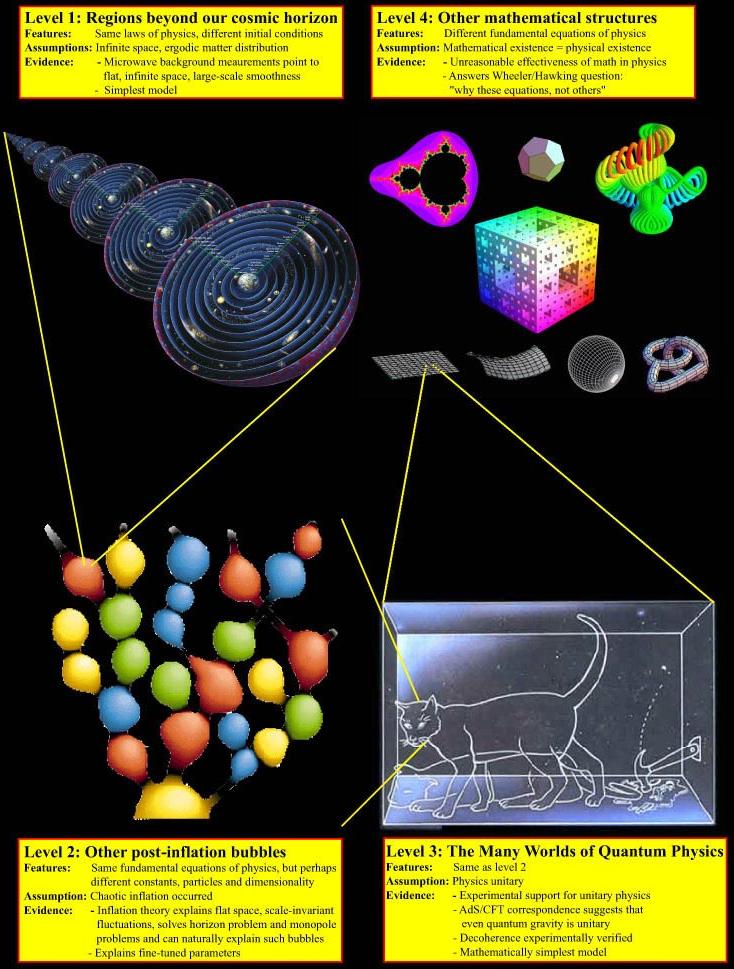
multiverses by Max Tegmark

image from http://space.mit.edu, The 4 Multiverse Theories of Max Tegmark

Then, the BIGGEST news (pun intended) of the year came in mid-March: “Big Bang discovery opens up possibility of multiverse” with this quote that reverberated across the globe: “…scientists announced this week that they found evidence of cosmic inflation, or the rapid expansion of the early universe, it supported the Big Bang theory. It also opened up the possibility of the existence of the multiverse — the idea that universes other than our own exist.”

This video from the article provided this evidence: “‘It’s hard to build models of inflation that don’t lead to a multiverse,’ said MIT theoretical physicist, Alan Guth (yes; the same Alan Guth who predicted inflation in 1980!). ‘It’s not impossible, so I think there’s still certainly research that needs to be done. But most models of inflation do lead to a multiverse, and evidence for inflation will be pushing us in the direction of taking [the idea of a] multiverse seriously.'”

A great summary statement: “The existence of other universes could also explain many of the weird astral phenomena scientists have witnessed.”

http://www.upi.com/Science_News/2014/03/21/Big-Bang-discovery-opens-up-possibility-of-multiverse/2011395411235/

Another article about similar topics later in the same month offered this insight about scientific experimentation: “The null result of the experiment should in no way color our perception of these tests as a failure; they are simply veils of ignorance being pulled away from the truths of the Universe.”
http://beforeitsnews.com/science-and-technology/2014/03/comments-of-the-week-4-from-null-results-to-the-multiverse-starts-with-a-bang-2684654.html

Cosmic-Inflation-Discovery

image from http://consciouslifenews.com

Then, on April 1, Katia Mosvitch posted that a Middle Ages’ mathematician/scientist/philosopher and Catholic Bishop, Robert Grosseteste, had written De Luce, which was recently translated from Medieval Latin into English. In it, Grosseteste posited the existence of the Multiverse mathematically and scientifically, using many astronomy facts not known in Medieval times but since proven true.

Upon learning of this early astrophysicist’s genius, one modern UK physicist, Richard Bower, stated: “…in future centuries, a new generation of physicists will look back at how we understand the universe today, and think, ‘How could they not see that?’ Bower said. “‘Modern cosmology is a grasping towards a more complete understanding of creation, but we do not yet see the full picture.'”
http://www.space.com/25301-multiverse-concept-middle-ages-grosseteste.html

This story, of the middle ages scientist’s having first heralded what is now a recent discovery, continued to spread across the globe via the internet and print journalism for many weeks.

Making an excellent connection to my sci-fi novels in The Spanners Series, especially Volume I, This Changes Everything, I have to mention that I “solve” problems of and offer explanations of seemingly out-of-sequence knowledge-holders by listing previously unrevealed dream-time or hologram visitations by our benevolent aliens from the Many Worlds Collective.

How would YOU explain these time warps? How could we know what we know before we seem to have been able to know it?

a-stubbornly-persistent-illusion-albert-einstein-56432

image from http://xi4.com

On 4/2/14, Marcelo Gleiser posted on the Cosmos and Culture blog of NPR (National Public Radio in the USA) using this title: What Universe Is This, Anyway? and this description of the multiverse and our place in it: “…an eternally replicating cosmos, filled with bubbles within bubbles. Ours would be but one of them.”

He went on to pose and then not answer some key questions: “…how common is our universe and its laws among the myriad universes belonging to the multiverse[?] Are we the exception or the rule? The problem is that we have no way to tell.”

Why is there “no way to tell” what is typical or common? Because of this quandary: “How are we to establish what is normal when, in the realm of the infinite, everything is possible?”

Sit with that for a while.
http://www.npr.org/blogs/13.7/2014/04/02/297853038/what-universe-is-this-anyway

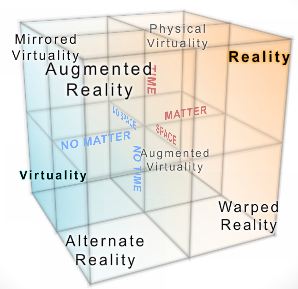
many realities

image from http://customerthink.com

Here is a 4/3/14 piece from a fun site with a great name and tagline: Exponential Times: THE FUTURE COMES FASTER THAN YOU THINK, posted by filmmaker and physicist, David Kaplan. The short video he narrates includes the transcript of it: Multiverse and Particle Fever. Kaplan asks basic questions, such as: “Is all the information we want…accessible? …Is it in our universe?”

He plainly states the ongoing scientific dilemma: “We are biased by what we measure by the fact that we are here measuring it” in reference to his team’s discovery of the Higgs-Boson particle (“The ‘God Particle'”) via the Large Hadron Collider (LHC).

Kaplan and others repeatedly remind us that some of the most intelligent, creative, knowledgeable scientists in our generation can only know what we know and only know it the way we know it, but there is infinitely much more to know.

http://www.exponentialtimes.net/videos/david-kaplan-multiverse-and-particle-fever?utm_source=feedburner&utm_medium=feed&utm_campaign=Feed%3A+exponentialtimes+(Exponential+Times)

level-ii-multiverse

image from http://richarddawkins.net

On 4/4/14, the creationists (Darwin/evolution-deniers, recently re-branded as “natural scientists” and/or “intelligent design” proponents) weigh in on the multiverse revelations (pun intended). Their website is unironically named “Evolution News.” Fabulous.

The author, Bruce Gordon (“Dr. Gordon is a Senior Fellow with the Center for Science & Culture and Associate Professor of the History and Philosophy of Science at Houston Baptist University. He is the co-editor with William Dembski of The Nature of Nature: Examining the Role of Naturalism in Science (Intercollegiate Studies Institute, 2011″), makes many wild claims, surrounding them with complicated sentences intended to make him sound smart, but succeeding only in obfuscating the points he wants to make. Here is my favorite: “… taken seriously, the inflationary multiverse proposal completely undermines scientific rationality.”

This lengthy, pseudo-scientific post concludes with this punchy statement: “…it’s intelligent design all the way through and all the way down and that theophobic scientific materialists, once they get past knee-jerk denials, must come to terms with what is, for them, a worldview-defeating fact.”

I love how the author decides to allude to the infinite regression fable of creation—“nothing but turtles, all the way down”—making me laugh even more at his ridiculousness.

http://www.evolutionnews.org/2014/04/a_matter_of_con084001.html

Posted on 11/1/14, scientists revisited the same questions we started with back in early 2014 and before in a debate hosted in late October by Pioneer Works in Brooklyn, NY, USA, entitled: “An infinite multiverse: a bad idea or inescapable? Two areas of physics say there may be another you in a different universe.” They invited this trio to discuss/debate these topics:

Janna Levin, a mathematician and theoretical cosmologist who declared herself agnostic about the multiverse, acted as a moderator. Arguing in favor was Max Tegmark, a cosmologist at MIT. His MIT colleague, Frank Wilczek, (winner of the Nobel for his work on the strong force) took the opposing position.

What did this conversation offer? John Timmer wrote the summary. I quote from him above and here:

“Levin pointed out that some infinities are bigger than others, so we’re not sure whether there really is enough universe to produce infinite copies of us.”

“But Tegmark countered that if there are a finite number of ways to arrange quarks–—and some indications are that this is the case–—then ‘in that case, a small infinity should work to get us all the possibilities.'”

“But Wilczek’s issue wasn’t so much one of whether this form of infinite universes is likely to exist. He made it clear that he privileges the reality that we can interact with, and thus do science with. Even if multiple universes are a necessary outcome of the physics we discover in this one, he’d still rather focus on what goes on here.”

http://arstechnica.com/science/2014/11/an-infinite-multiverse-a-bad-idea-or-inescapable/

What do you think? And, which you is thinking it, when and where?

many yous

Unknown's avatar

CONTROVERSY: #Buddhists and #Organ Donation at #Death

As some of you know, I have been a practicing #Buddhist in the #Tibetan #Vajrayana #Nyingma tradition since 1989, informally, and since 1996, formally (in this life, anyway…). These traditions, as taught to me originally by the late His Eminence Chagdud Tulku Rinpoche and by many of the Western Lamas he ordained, including my current teacher, Lama Padma Drimed Norbu (Lama Drimed, as he is known), include very specific preparations for death which we do as a part of our daily practices as well as recommendations as to how we want others to handle our dying and death processes and manage our dead bodies.

CTR

H.E. Chagdud Tulku Rinpoche

In fact, packets and instructions have been sent to students detailing what to give loved ones, friends, medical professionals and hospice workers–anyone attending our dying process and death event—so that, if we are unable to verbally convey our last wishes, everyone will know what we want to happen (and not happen). These written instructions, which each person can modify to their choosing, have been very comforting and useful for the friends and sangha (Buddhist community) members who have faced this while dying or being around meditators who are dying or who have just died.

Because Buddhists in our tradition (and many others) believe that a recently deceased person’s consciousness stays in or around the body for many days after death (up to 49, but certainly the first 3 – 7, for meditators), most directions talk about not moving or even touching the body (or touching it only in specific places, avoiding touching the bottoms of the feet, for example) in order to help the deceased meditators maintain the meditation and move our consciousness intentionally onward while we are are “in” this bardo period (between place/time, rough translation).

Buddhists have special rituals, such as Sur and P’howa, taught and practiced daily or weekly, which involve visualizations and prayers. We also usually include “offerings” of incense or other burnt substances (as in Sur) and music, such as the clanging of the tingshas (small, heavy ritual cymbals) or ringing of bells, and chanting specific mantras to honor, assist and “feed” the recently deceaseds’ wandering spirits during this time.

To commemorate someone’s death, we also light butterlamps (oil lamps or candles suffice), release animals from captivity who were marked for death (bait fish, worms and prey animals in pet stores, for example), dedicating the merit of these actions to their passing more positively while in the bardo and when entering into their next lifetime.

fish release saving lives

“Taiwanese Buddhists release catfish into a river during a ‘mercy release’ ceremony in Taipei.” image from http://www.telegraph.co.uk

With all of this attention to maintaining the dignity and meditation of the dying and dead person, how/when could one donate organs? Sangha members posed these questions to Rinpoche before he passed and to living teachers, with mixed responses. Some indicate that if you want to be an organ donor, you have to choose to give up your chance to do these practices during and after dying/death. Personally, I think this view is an opinion that could be challenged. However, it is widely circulated.

So far, I don’t know of any sangha members who died who also donated their organs, and several have died in the last ten years whom I knew personally and well. I decided to be an organ donor before practicing Buddhism in this life and I have signed up in every state I’ve lived in since, including my most recent move to Missouri, whenever I get a new driver’s license.

I believe in organ donation because it’s the right thing to do, in my mind. Also, six people I know and love received life-saving organ and/or bone marrow donations. I was tested (but not selected) to be one of those donors about twelve years ago.

Jaye Laughing

My dear, recently departed friend, Jaye Alper, enjoying her extra years because of a donated kidney.

How do I reconcile being an organ donor with being a serious meditator who does these time-of-death practices? Like this: None of these pre-modern-science meditators ever faced these decisions and dilemmas, so how could they have prepared for, much less taught about how to make organ donation choices?

Points to consider:

  • Our consciousness does not reside in this body; we use it for a while and then our consciousness moves on. We Buddhists all agree on that, yes?
  • This existence is all illusory, including being in this body.
  • The highest act of generosity anyone can make is to give one’s body. We visualize this in Chöd practice and other meditations daily; why not DO it? Actually GIVE our body parts!
  • At my time of death (and right before, if I’m brain-dead but not physically dead, yet), the most useful thing I can do is to donate my organs so that others may live, see, breathe, etc., by using them.
  • I certainly won’t be needing my organs any longer at that point.
  • If my commitment to meditation practice is strong and steady, it won’t matter where my consciousness “is” when this body is dying and dies. How could it? How much can it really matter where and how this body is moved or touched, then?

Also, and I don’t mean to sound condescending, I believe that a large portion of Buddhist tradition and thought, particularly that which comes from Tibet, is steeped in the superstitions, fears and other unsupportable beliefs that pre-dated Buddhism, such as those from Bön. Furthermore, indigenous Shamanic traditions rooted in many Buddhist cultures share these older views.

However, our commitments to practice generosity, be less selfish, try to make others happy, and our motivation to save lives and alleviate suffering are supposed to triumph over fears for all of these faiths. I hope we can agree on donating organs in these modern times.

Most Motor Vehicle Bureaus have a organ donor registration as part of the license-getting or -renewal process. if you don’t drive, find a way to become listed as an organ donor. Get tested to be a live donor by participating in the Bone Marrow registry as well.

organ_donor_card_

We are all going to die. We meditate on impermanence, on death, every day. We get used to it, as meditators. Let’s do more than become accustomed to death: let’s use it for benefiting others.

Death-meditation

image from: http://www.orderofthegooddeath.com

How great it is to live in a time that allows us to gift others with our body parts and help them live better, healthier, longer lives? As we get closer to the USA celebration of Halloween and the Mexican commemoration, El Día de los Muertos (The Day of the Dead), 10/31, how fitting is it to consider death in productive ways?

Click below to sign up and become a registered donor. Pass this on, please.

http://www.transplants.org/become-organ-donor

Unknown's avatar

Lead Lipsticks, Folliculitis with MRSA from Hair Removal, and other Deadly “Beauty” Choices

Deadly Lipsticks

Hold on just a minute: what are you putting on your lips? What are you kissing on someone else’s? LEAD, if you use commercial lipsticks these days, and other poisons.

lipstick-lead

image from: http://rosearden.blogspot.com

Don’t believe me?

“[Researchers in 2013 and earlier found that] women who apply lipstick two to three times daily can ingest a significant amount—–20 percent of the daily amount that’s considered safe in drinking water or more—–of aluminum, cadmium, chromium, and manganese. Depending on the lipstick, in some cases women who slathered it on (14 times a day or more) were meeting or surpassing the daily recommended exposure to chromium, aluminum, and manganese.”

How many ways does the “beauty” industry despise, disrespect and want to murder women? It’s enough to make anyone sick.

Here are some lipstick facts.

Lead in Lipsticks inforgraphic

As of 2007, Burt’s Bees, owned by Clorox but which claims to be a down-home, “natural” product company, had lead in its chapsticks and did not respond to Mother Jones‘ inquiries as of 2013 asking what they had done to eliminate lead. This does NOT just affect adult women: children and men use Burt’s Bees’ lip balms.

Not to single out Burt’s Bees, but I’m hitting that company harder than others because of its atrocious pretense to “natural” ingredients. FRAUD.

Instead of getting the lead out, lipsticks tested in 2007, 2009 and 2013 got WORSE over those years, with products made by Maybelline, Cover Girl, L’Oreal, Revlon, Stargazer, and others, including Burt’s Bees, all selling popular colors/brands of lipstick containing lead.

“Lead, a metal that humans should avoid exposure to entirely, was detected in 75 percent of the samples.”

What if you are lucky enough to have a lipstick that does not have lead? Are you safe, then?

Oh, no, you’re not.

“…[L]ead isn’t the only toxin lurking in your lippy—–a new study finds cadmium, aluminum, and other heavy metals, too.”

The research showed that only a few companies, notably Wet n’ Wild, Bobbi Brown, and Shiseido, had zero lead in their lipsticks as of 2012. However, these companies’ products are not necessarily “healthy” for you, just not deadly.

To learn know more about the toxic and disease-inducing effects of these chemicals when they are ingested by humans (not to mention getting into our water system when wearers wash their faces and hands), please read the article.

(Original article is By Maggie Severns | published 5/6/13 in Mother Jones magazine. Read it!
Lead in your Lipsticks link:
http://www.motherjones.com/environment/2013/05/study-lead-metals-lipstick-top-20)

You want to cover/decorate your lips, anyway?

Please use healthy, all-natural, proven and tested as well as beautiful products: lip glosses, tinted “shimmers” and balms from Badger. Badger Balm‘s products and the company itself are winning significant “green” and “B” Corporation awards annually. ALL Badger products are completely safe, mostly organic, and never tested on animals. They have hair oils, a line of products for men, skin products and much more than lip treatments.

Please check them out: http://www.badgerbalm.com

badger-logo

Now, what about that “extra” hair? If you insist on removing it, how to remove body hair safely?

Hair Removal is Causing Infections: Folliculitis with MRSA and others that can Kill

First, some definitions:
Folliculitis

Folliculitis is an inflammation and infection of hair follicles, the tiny openings in the skin from which hair grows. Folliculitisis due to an invasion of bacteria that enter the follicles and cause a bacterial infection. Folliculitisis most commonly the result of an infection of staphylococcal bacteria. This causes inflammation and a red rash that is bumpy and itchy. The rash can occur anywhere on the skin or scalp.”

How does one get Folliculitis? Let me count the ways…

Folliculitisis often caused by an infection that occurs after shaving, waxing, tweezing and other types of hair removal methods.” (The above info is from: http://www.rightdiagnosis.com/f/folliculitis/intro.htm)

The ONLY method that does NOT lead to Folliculitis is mentioned, below. I still do NOT recommend removing unwanted hair, though. Just my personal preference: cut it.

MRSA
Methicillin-Resistant Staphylococcus Aureus = MRSA is basically a “staph” infection that is resistant to treatment/cure by most/conventional antibiotics, which means MRSA is much more dangerous and can be deadly. Some have called MRSA a “flesh-eating” bacteria, but that is a misnomer. MRSA can erode flesh, but not any more often or thoroughly than other untreated bacteria in the staph family.

MRSA ninjas

image from http://www.research.ibm.com

Let’s say you’re a “modern” female or male who wants to get rid of some (or all!?!) of your body hair who doesn’t want infections that maim or kill. Picky, picky. What to do?

First of all, WHY do you have to remove body hair? I haven’t used a razor since 1978 and I am quite happy with that choice. Misplaced vanity and age inspire me to cut my chin hairs, but trimming is very different from actual removal (and completely harmless).

Unless you suffer from a disorder that covers your face, arms, legs and other parts with hair and you are NOT okay with that, I just don’t understand why anyone “needs” to remove hair. Don’t send me comments explaining, though: I am not interested in your rationales. I just want you to do it more safely.

Let’s go on to safe(r) hair removal methods.

HOW are you going to engage in /have you already been doing removal of YOUR body hair? What will result from your chosen method(s)? Are you DIY or do you go to a “salon” or “spa” or other commercial establishment and have them do the removal?

BEWARE!

MRSA, HIV, Hepatitis B, STDs and other infectious/contagious diseases lurk in public spas/salons, worldwide!

“No matter how posh or pricey a salon or spa is, if it isn’t keeping up with health and safety standards, it can easily be a breeding ground for harmful bacteria and germs. Be sure that all non-disposable instruments used are sterilised in an autoclave, a medical-grade device that uses superheated steam to sterilise. It’s the only way to be sure that infectious organisms have been destroyed.”

The article I am quoting, here, was published in India, but the safety recommendations and problems it researched apply everywhere. Not only women are affected, either.

“Men need to make sure that disposable razor blades are used to trim their hair (shaving) so as to avoid hepatitis B and HIV.” This may seem obvious, but you’d be surprised at how many men go to barber shops to get haircuts and never ask if the razors used to shave their NECKS (which is part of providing all “short” haircuts) have been sterilized or used prior to their shaves without having been replaced. This warning applies to electric as well as manual razors.

man-holding-a-blue-razor-in-hand

image from http://www.wisegeek.com

What is required to keep hair removal equipment safe? More than some shops do.

“Dipping the instruments in some solution is not going to kill bacteria and fungi. The place should use either a proper disinfectant or an autoclave for sterilising the instruments. Check the labels. Spa or salon disinfectant should be EPA-registered hospital-level liquid that is virucidal, bactericidal and fungicidal that is 10 per cent bleach; 70 per cent or higher isopropyl or ethyl alcohol.”

Think about ALL the re-usable instruments/tools that come into contact with your body in commercial establishments. I’ve had a pedicure and manicure occasionally in recent years, but I have never asked these questions or checked out these procedures.

I will NOW! This article is worth reading (link below).

Let’s talk about waxing safety measures, since waxing is currently THE most popular and commercialized hair removal method, especially for younger women and most men.

“Body hair removal techniques like waxing sometimes can cause redness, breakouts, severe infections, irritant reactions and ingrown hair. Always check if salon staff doing waxing are using a fresh wax jar and maintaining proper hygiene and sanitation. Confirm that there is no double-dipping (putting an earlier used tool back into the wax) and no double-using (reusing wax) policies to avoid product contamination.”

Re-using wax? Ewww. That is truly disgusting to contemplate. How do they remove all the hair from the wax? Yuck.

There are so many ways for hair removal methods to be done sloppily that I shudder to consider them all, especially due to the severity of the potential outcomes.

“…[If] hygiene and sanitary measures during waxing (especially bikini waxing) go haywire, then there is a risk of getting infected by viruses like herpes, molluscum contagiosum and genital warts, which, otherwise in adults, are sexually transmitted. These can be transferred from an infected client to a healthy customer specially while getting waxed in and around bikini and gluteal areas.”

Picture this: a woman (or man) goes in to get her hair removed. Waxing ensures. All seems to go well UNTIL a few weeks later, s/he develops herpes or warts in the groin area. These diseases are incurable, painful, contagious and recurring. For the rest of the victim’s LIFE and possibly any future partners’ lives.

Don’t even get me started on what imbalance or illness has developed in a modern girl’s or woman’s self-regard that makes her believe her vaginal area is supposed to be almost or completely hairless (making it resemble a pre-pubescent girl’s) or for males to believe that a hairless chest or back (again, relegating “attractiveness” in adult males to pre-pubescence) is all their partners will accept. These cultural constructs make me both sad and furious.

I like hairy, adult, male chests? Am I the only one left who remembers Sean Connery as James Bond, hairy chest exposed, with great affection and attraction? Ahhh.

Sean Connery

Are the so-called benefits of waxing worth the risks?

I say not.

Read on. Please regard and share these extra and specific cautions, below.

Other wax warnings:

  • Do not wax over an area that has had a botox injection for at least 72 hours.
  • Do not wax if you have protruding varicose veins, diabetes, skin eczema or infection.
  • Do not wax if you are using any anti-ageing or acne creams that may contain a retinoid, as skin will be extra susceptible to getting burned and peeled off.

Read full article here:
http://www.tribuneindia.com/2014/20140727/spectrum/fitness2.htm

Deciding you may want to keep your “unwanted” hair rather than acquire even more seriously unwanted problems? Good choice!

Or, if you INSIST or removing hair, try lasers! These are expensive if you buy one for your home or get treatments at dermatologists’ offices, BUT laser removal methods are considered safer than other methods because laser removal “damages the hair follicle at its root without damaging the surrounding skin tissue.”

I usually ignore or deride Fox “NEWS,” but this article quoted above and below seems well-researched and the info corresponds to many others I read. (Credit goes to Julie Revelant (who is a freelancer and does NOT work for Fox NEWS), published 8/29/14: http://www.foxnews.com/health/2014/08/29/4-hair-removal-methods-that-really-work/ ) for the following list (and she gives more info) about SAFE HAIR REMOVAL methods, to date.

  • 1. Diode laser hair removal (GETS MY VOTE)
  • 2. Sugaring (THIS IS STILL WAXING, though)
  • 3. Threading (STILL too much like TWEEZING)
  • 4. Electrolysis (STILL too much like TWEEZING)

If you want to know more about these methods, please go read her article. (Julie Revelant is a freelance writer and copywriter specializing in parenting, health, healthcare, nutrition, food and women’s issues. She’s also a mom of two. Learn more about Julie at http://revelantwriting.com)

I’m sticking with my Badger Balm lip balms and lip shimmers and my hair-cutting scissors for my errant chin hairs.

hair scissors

Meanwhile, I plan to visualize that everyone gains more positive self-esteem, higher self-acceptance and an expanded view of “beauty.”

Also, I wish you all the best, whatever you choose.

Unknown's avatar

#Love According to #Psychology and #Biology

I was going to write an entire post on the biology and psychology of love, but I realized many have already done so and several have collected/written great books on the subjects. There are even videos. So, instead of adding my less-than-expert two cents’ worth, I compiled what I believe to be the best of these and guide you to them, here.

If you, as I do, feel mystified, bamboozled, defeated and enraptured in our lives by love, you WILL find answers, explanations, reasons and perhaps excuses in these researchers’ contributions to the subject. You can find ideas that help you choose better (or refrain from choosing) when deciding how to proceed in your relationship life.

You will not, however, get that person to love you, find a way to get over a broken heart any faster, or make yourself more lovable by reading these books. In fact, if you do read/review all of this material, you’ll probably be a royal pain in most people’s behinds as you quote from them. But, so what? Would you rather be informed or falsely loved?

Okay, okay: that’s a false choice. So, read away, but don’t spout too much from your research.

falling in love sign

image from http://twistales.com

Here is the selection, numbered but not in any priority order:

1. Molecules of Emotion:The Scientific Basis Behind Mind-Body Medicine, the late Candace Pert, Ph.D., pharmacologist and biologist

2. A General Theory of Love, Thomas Lewis, Ph.D., Fari Amini, Ph.D. and Richard Lannon, Ph.D., psychologists

3. Falling in Love: Why We Choose the Lovers We Choose, social psychologist and researcher, Ayala Malach Pines

4. Why We Love: The Nature and Chemistry of Romantic Love, biological anthropologist, Helen Fisher

5. Biology of the Mind: Helen Fisher, Ph.D., biologist, video from TEDxEast

http://youtu.be/fW6AndSUByo

6. Why We Love: 5 Books on the Psychology of Love by Maria Popova, including some of the above with more info about them, on:
http://www.brainpickings.org/2011/04/18/5-must-read-books-on-love/

7. The Science of Love, from Your Amazing Brain‘s site
http://www.youramazingbrain.org/lovesex/sciencelove.htm

In case you thought falling in love was so special, check this out, from the above article: “York psychologist, Professor Arthur Arun, has been studying why people fall in love. He asked his subjects to carry out the[se] 3 steps and found that many of his couples felt deeply attracted after the 34-minute experiment [below]. Two of his subjects later got married.”

how to fall in love:

  • Find a complete stranger.
  • Reveal to each other intimate details about your lives for half an hour.
  • Then, stare deeply into each other’s eyes without talking for four minutes.

And, this:

Dr Donatella Marazziti, a psychiatrist at the University of Pisa advertised for twenty couples who’d been madly in love for less than six months. She wanted to see if the brain mechanisms that cause you to constantly think about your lover, were related to the brain mechanisms of Obsessive-Compulsive Disorder.

By analysing blood samples from the lovers, Dr Marazitti discovered that serotonin levels of new lovers were equivalent to the low serotonin levels of Obsessive-Compulsive Disorder [OCD] patients.

8. What Is Romantic Love? on The Anatomy of Love site:
http://theanatomyoflove.com/what-is-love/what-is-love/

Providing this list of usual “symptoms” of “falling in love” makes one wonder why ANYONE would want to do so and why, once we do, we aren’t immediately taking psychotropic medications to help us get over it!

Behavioral traits of early stage romantic love:

  • Special meaning: the romantic partner is the center of the world, and you like anything they like
  • Intense energy and it’s hard to sleep
  • Loss of appetite
  • Mood swings
  • Separation anxiety
  • Craving
  • Intense motivation for emotional union
  • Possessive[ness]
  • Intrusive thinking

Sure; fall in love. Just don’t get too attached….

Unknown's avatar

#Nobel Prize Winners 2014: Why we should pay attention and be grateful

#Nobel Prize Winners 2014: Why we should pay attention and be grateful
Thanks to these scientists, researchers, activists and one writer, we can now enjoy advances and new inventions very soon in a variety of areas. This year, two women (one quite young) and several men (big surprise, there) were honored by these esteemed prizes. Check out their accomplishments!

  • Literature, Patrick Modiano: “for the art of memory with which he has evoked the most ungraspable human destinies and uncovered the life-world of the occupation.”
    Wikipedia tells us: “Patrick Modiano …previously won the 2012 Austrian State Prize for European Literature, the 2010 Prix mondial Cino Del Duca from the Institut de France for lifetime achievement, the 1978 Prix Goncourt for Rue des boutiques obscures, and the 1972 Grand Prix du roman de l’Académie française for Les Boulevards de ceinture. His works have been translated into more than 30 languages and have been celebrated in and around France, though only a few have been in circulation in English by the time he was awarded the Nobel Prize.” http://en.wikipedia.org/wiki/Patrick_Modiano

    Anybody read any of his books? Not I (yet).

    -

  • Physiology or Medicine, Edvard Moser, May Britt Moser, John O’Keefe: “for their discoveries of cells that constitute a positioning system in the brain.” Their combined research reveals the ways the brain understands its location even when underwater, upside down, without gravity and without visual cues.

    Edvard Moser, May Britt Moser, John O'Keefe

    for ground-breaking research on “The Brain’s GPS: how the brain knows where it is.”

  • Physics, Shuji Nakamura, Hiroshi Amano, Isamu Akasaki: “for the invention of efficient blue light-emitting diodes which has enabled bright and energy-saving white light sources.” We will soon have inexpensive, “green” light sources widely available, thanks to these scientists/inventors.

    Light source

    for inventing/discovering “a new, energy-efficient and environmentally friendly light source” image from http://www.theguardian.com/science/live/2014/oct/07/nobel-prize-physics-2014-stockholm-live

  • Peace, Malala Yousafzai (Pakistan) and Kailash Satyarthi (India): “for their struggles against the suppression of children and for young people’s rights, including the right to education”

    Malala Yousafzai

    Malala Yousafzai is the young woman who was almost fatally shot while trying to get to school in Pakistan. During and after her recovery, she has become a vocal and well-respected advocate for girls’ rights to be educated in countries that oppress women and girls. She is also the youngest-ever recipient of the Nobel Peace Prize.

    Kailash Satyarthi

    Kailash Satyarthi is a globally recognized hero for rescuing children from forced labor, sexual exploitation and slavery and working to prevent these from occurring image from http://www.myhero.ws

  • Chemistry, W.E. Moerner, Stefan Hell, Eric Betzig: “for the development of super-resolved fluorescence microscopy” which “brings optical microscopy into the nanodimension.” We can now SEE the extremely tiny stuff even better than ever. Wow!

    super-resolved fluorescence microscopy

    “A network of filaments in a mammalian cell revealed by fluorescence microscopy. Photograph: Stefan W Hell/Division of Optical Nanoscopy/German Cancer Research Center” image from http://www.theguardian.com

Get more info here:
http://www.nobelprize.org/nobel_prizes/lists/year/?year=2014

Unknown's avatar

My post for the Goodreads’ Genre-Specific Review Group’s Fall 2014 Blog Hop Tour: “COMFORT” is this year’s theme.

Do you like to read and/or write: mysteries, fantasy, science-fiction, romance, children’s, young adult (YA) or any combination of these? Genre is what we call those types of stories and novels, and if you say “YES!” then this Blog Tour is for YOU! Visit, read, comment, LIKE, share, reblog!

My “COMFORT” post appears today, on Sept. 27, so visit other sites, below, also!

THE COMFORT THAT COMES FROM WRITING AND READING
UTOPIAN SPECULATIVE FICTION

by Sally Ember, Ed.D., author of The Spanners Series ebooks, blogger and host of CHANGES, almost-weekly Google + Hangout On Air (HOA)

When I’m discouraged, disheartened, heartbroken, experiencing achingly painful unrequited love, unemployed, displaced, uprooted, tired, in physical pain, lonely, confused, disempowered and in despair about the state of world affairs, our climate and so much more, what do I do? I write my way out of this mess into my imagined (and actual, according to multiverse theories) utopian near-futures in The Spanners Series ebooks (full-length novels) and short stories.

Why be “here” when I can be in a better “there”?

logoAuthorsDen

Some of the themes and problems I “tackle” and “solve” or at least improve via my plotting in The Spanners Series via extraordinary applications of science, intervention of the paranormal, including the newly or not-yet invented and/or the embellished, are:

  • homophobia/heterosexism and gender biases due to intolerance and ignorance of actual diversity in sexual orientation and gender identities
  • violence, depression, and anti-social tendencies caused/fueled by excesses of testosterone and other imbalances in body/brain chemistry
  • species-ism and the inability of humans to communicate well with and respect other species (on Earth and elsewhere)
  • habits of thinking that embed humans in linearity, singularity and other mistakes due to misunderstandings of physics and/or lack of knowledge of simultaneous time and the multiverse
  • motion/travel sickness and altitude sickness
  • political corruption and inappropriate, sociopathic leaders in positions of power and authority
  • greed and unequal distributions of all finite and necessary resources
  • unequal access to education, health care, housing, training and opportunities
  • inability to recognize and honor multiple forms of intelligence, talent and usefulness among individuals of many species, especially humans
  • intolerance and hatred due to limited or incorrect understanding of facts (of origins, science, truth) and lack of acceptance of differences in beliefs and values that inspires violent attempts to stay entrenched despite evidence to the contrary
  • fear-based decision-making and false narrowing of options due to willful or accidental ignorance of choices
  • and even more.

    It is SO MUCH FUN as well as comforting to write my way out of difficulties we face into better circumstances, situations and experiences.

    Or, if I’m not in the mood to write, then I go searching for others’ “solutions.” I need to read some stories with a “happy ending” or immerse myself in other uplifting genre or humorous modern fiction to COMFORT my spirit during these awful times. Fiction’s positive possibilities are endless: the love is sublime, the heroes and “good” guys/women prevail, the “bad” guys/women are caught/stopped. Aaahh.

    hope love and happy endings

    image from: http://hopelovehappyendings.blogspot.com

    I rely on getting to the beneficial outcomes: all is made right by the last page (or as right as it can be). I sigh with contentment, relief, happiness as I read/write.

    What about you? What in your writing and reading comforts YOU? What do you look for in genre fiction to soothe your spirit?

    Leave comments and suggestions here, please! And, don’t forget to visit and comment on the other sites’ posts in this blog hop tour! Thanks!

    Goodreads’ Genre-Specific Review Group’s Fall 2014 Blog Hop Tour: “COMFORT” is this year’s theme.

    GSRG-blog-hop-Sept

    TOUR DATES and SITES
    (Posts are still LIVE or available in archives on and after the listed date, so visit any time!)

    September 23http://www.elainepcantrell.blogspot.com

    September 24https://www.goodreads.com/author/show/387792.Marilyn_Peake/blog
    http://www.marilynpeake.com

    September 25http://rjcrayton.com/blog

    September 26http://www.susandayauthor.com

    September 27http://www.sallyember.com/blog
    http://michelle-abbott.weebly.com/

Unknown's avatar

My post for the Goodreads’ Genre-Specific Review Group’s Fall 2014 Blog Hop Tour: “COMFORT” is this year’s theme.

Do you like to read and/or write: mysteries, fantasy, science-fiction, romance, children’s, young adult (YA) or any combination of these? Genre is what we call those types of stories and novels, and if you say “YES!” then this Blog Tour is for YOU! Visit, read, comment, LIKE, share, reblog!

My “COMFORT” post appears today, on Sept. 27, so visit other sites, below, also!

THE COMFORT THAT COMES FROM WRITING AND READING
UTOPIAN SPECULATIVE FICTION

by Sally Ember, Ed.D., author of The Spanners Series ebooks, blogger and host of CHANGES, almost-weekly Google + Hangout On Air (HOA)

When I’m discouraged, disheartened, heartbroken, experiencing achingly painful unrequited love, unemployed, displaced, uprooted, tired, in physical pain, lonely, confused, disempowered and in despair about the state of world affairs, our climate and so much more, what do I do? I write my way out of this mess into my imagined (and actual, according to multiverse theories) utopian near-futures in The Spanners Series ebooks (full-length novels) and short stories.

Why be “here” when I can be in a better “there”?

logoAuthorsDen

Some of the themes and problems I “tackle” and “solve” or at least improve via my plotting in The Spanners Series via extraordinary applications of science, intervention of the paranormal, including the newly or not-yet invented and/or the embellished, are:

  • homophobia/heterosexism and gender biases due to intolerance and ignorance of actual diversity in sexual orientation and gender identities
  • violence, depression, and anti-social tendencies caused/fueled by excesses of testosterone and other imbalances in body/brain chemistry
  • species-ism and the inability of humans to communicate well with and respect other species (on Earth and elsewhere)
  • habits of thinking that embed humans in linearity, singularity and other mistakes due to misunderstandings of physics and/or lack of knowledge of simultaneous time and the multiverse
  • motion/travel sickness and altitude sickness
  • political corruption and inappropriate, sociopathic leaders in positions of power and authority
  • greed and unequal distributions of all finite and necessary resources
  • unequal access to education, health care, housing, training and opportunities
  • inability to recognize and honor multiple forms of intelligence, talent and usefulness among individuals of many species, especially humans
  • intolerance and hatred due to limited or incorrect understanding of facts (of origins, science, truth) and lack of acceptance of differences in beliefs and values that inspires violent attempts to stay entrenched despite evidence to the contrary
  • fear-based decision-making and false narrowing of options due to willful or accidental ignorance of choices
  • and even more.

    It is SO MUCH FUN as well as comforting to write my way out of difficulties we face into better circumstances, situations and experiences.

    Or, if I’m not in the mood to write, then I go searching for others’ “solutions.” I need to read some stories with a “happy ending” or immerse myself in other uplifting genre or humorous modern fiction to COMFORT my spirit during these awful times. Fiction’s positive possibilities are endless: the love is sublime, the heroes and “good” guys/women prevail, the “bad” guys/women are caught/stopped. Aaahh.

    hope love and happy endings

    image from: http://hopelovehappyendings.blogspot.com

    I rely on getting to the beneficial outcomes: all is made right by the last page (or as right as it can be). I sigh with contentment, relief, happiness as I read/write.

    What about you? What in your writing and reading comforts YOU? What do you look for in genre fiction to soothe your spirit?

    Leave comments and suggestions here, please! And, don’t forget to visit and comment on the other sites’ posts in this blog hop tour! Thanks!

    Goodreads’ Genre-Specific Review Group’s Fall 2014 Blog Hop Tour: “COMFORT” is this year’s theme.

    GSRG-blog-hop-Sept

    TOUR DATES and SITES
    (Posts are still LIVE or available in archives on and after the listed date, so visit any time!)

    September 23http://www.elainepcantrell.blogspot.com

    September 24https://www.goodreads.com/author/show/387792.Marilyn_Peake/blog
    http://www.marilynpeake.com

    September 25http://rjcrayton.com/blog

    September 26http://www.susandayauthor.com

    September 27http://www.sallyember.com/blog
    http://michelle-abbott.weebly.com/

Unknown's avatar

“Actualists” vs. “Realists”: The Evolution of Modern #Fiction thanks to #Quantum #Physics

FULL DISCLOSURE: I have not read the book, FICTION IN THE QUANTUM UNIVERSE, being reviewed in the blog post I am quoting, written by Marti. I probably won’t.

quantum-fiction cover

But, I’m fascinated by the topic, which relates directly to my own writing and choices in The Spanners Series ebooks and appreciate her review and snippets enormously.

logoAuthorsDen

I’m sharing some of Marti’s review, linking to her blog (below) and commenting here on mine.

Of course, I encourage anyone interested to read the full review AND read Susan Strehle’s book. Some day, I will.

FICTION IN THE QUANTUM UNIVERSE by Susan Strehle

Reviewed by Marti on What has Been Read Cannot Be Unread book blog

9/15/14

Marti characterizes this as an “interesting but academic book” which is hard to argue with, for sure. Her summary of Strehle’s premise is: “a new fiction has developed from the influence of modern physics.”

I LOVE this idea! As a new-ish speculative fiction writer (This Changes Everything, Volume I, and This Changes My Family and My Life Forever, Volume II, published as ebooks, so far) who would definitely fit into this category, I’m glad to have these choices honored and recognized as parts of a trend.

This-Changes-Everything----web-and-ebooks

final cover print

Strehle calls this new fiction actualism, which I like as a term. However, I don’t like her positioning realism as its opposite, since Buddhists and quantum physicists all realize that NOTHING is “REAL” in the sense of the word as we currently know it.

Marti writes that Strehle claims we actualists are writing the way we do “in order to reflect more accurately what we now understand as real.”

This I do agree with. For example, I am choosing to write my novels in the present tense (which aggravates and confounds many readers and reviewers; too bad) to emphasize the simultaneity of time and the “nowness” of everything. I also write about the existence of multiple timelines and some people’s abilities to know facts, events, circumstances, etc., across these timelines in the multiverse. How would I and and other sci-fi writers be doing this without the influences of quantum physics?

I adore these quotes from Marti’s review, some of which are double quoted, since they’re from the book:

[Strehle] says that in the new physical or quantum universe, reality is discontinuous, energetic, relative, statistical, subjectively seen, and uncertainly known — all terms taken from new physics, and that rather than choosing between art and actuality, contemporary novelists pursue both in fiction.

“Contemporary fiction departs from realism without losing interest in reality. Reality is no longer realistic; it has more energy and mystery, rendering the observer’s position more uncertain and more involved.”

Actualist fiction is characterized by incompletions, indeterminacy, and “open” endings unsatisfying to the readerly wish for fulfilled promises and completed patterns. Gravity’s Rainbow [by Thomas Pynchon], for example, ends not with a period but with a dash. Strehle argues that such innovations in narrative reflect on twentieth-century history, politics, science, and discourse.

Read Marti’s full review by following the link, here, and read Strehle’s book by following her links to it or getting it from your local library. Enjoy!

http://whathasbeenread.wordpress.com/2014/09/15/fiction-in-the-quantum-universe-by-susan-strehle/

Unknown's avatar

“Actualists” vs. “Realists”: The Evolution of Modern #Fiction thanks to #Quantum #Physics

FULL DISCLOSURE: I have not read the book, FICTION IN THE QUANTUM UNIVERSE, being reviewed in the blog post I am quoting, written by Marti. I probably won’t.

quantum-fiction cover

But, I’m fascinated by the topic, which relates directly to my own writing and choices in The Spanners Series ebooks and appreciate her review and snippets enormously.

logoAuthorsDen

I’m sharing some of Marti’s review, linking to her blog (below) and commenting here on mine.

Of course, I encourage anyone interested to read the full review AND read Susan Strehle’s book. Some day, I will.

FICTION IN THE QUANTUM UNIVERSE by Susan Strehle

Reviewed by Marti on What has Been Read Cannot Be Unread book blog

9/15/14

Marti characterizes this as an “interesting but academic book” which is hard to argue with, for sure. Her summary of Strehle’s premise is: “a new fiction has developed from the influence of modern physics.”

I LOVE this idea! As a new-ish speculative fiction writer (This Changes Everything, Volume I, and This Changes My Family and My Life Forever, Volume II, published as ebooks, so far) who would definitely fit into this category, I’m glad to have these choices honored and recognized as parts of a trend.

This-Changes-Everything----web-and-ebooks

final cover print

Strehle calls this new fiction actualism, which I like as a term. However, I don’t like her positioning realism as its opposite, since Buddhists and quantum physicists all realize that NOTHING is “REAL” in the sense of the word as we currently know it.

Marti writes that Strehle claims we actualists are writing the way we do “in order to reflect more accurately what we now understand as real.”

This I do agree with. For example, I am choosing to write my novels in the present tense (which aggravates and confounds many readers and reviewers; too bad) to emphasize the simultaneity of time and the “nowness” of everything. I also write about the existence of multiple timelines and some people’s abilities to know facts, events, circumstances, etc., across these timelines in the multiverse. How would I and and other sci-fi writers be doing this without the influences of quantum physics?

I adore these quotes from Marti’s review, some of which are double quoted, since they’re from the book:

[Strehle] says that in the new physical or quantum universe, reality is discontinuous, energetic, relative, statistical, subjectively seen, and uncertainly known — all terms taken from new physics, and that rather than choosing between art and actuality, contemporary novelists pursue both in fiction.

“Contemporary fiction departs from realism without losing interest in reality. Reality is no longer realistic; it has more energy and mystery, rendering the observer’s position more uncertain and more involved.”

Actualist fiction is characterized by incompletions, indeterminacy, and “open” endings unsatisfying to the readerly wish for fulfilled promises and completed patterns. Gravity’s Rainbow [by Thomas Pynchon], for example, ends not with a period but with a dash. Strehle argues that such innovations in narrative reflect on twentieth-century history, politics, science, and discourse.

Read Marti’s full review by following the link, here, and read Strehle’s book by following her links to it or getting it from your local library. Enjoy!

http://whathasbeenread.wordpress.com/2014/09/15/fiction-in-the-quantum-universe-by-susan-strehle/

Unknown's avatar

Deadly Eye Makeup and other “Beauty” “Aids”: STOP USING THESE!

I know many people are squeamish about our eyes, as I am. I have had many years of allergies (itchy and runny eyes) and now I have “dry” eyes (ironically? relatedly?), which also makes them itchy and runny. Go figure.

I would be a horrible contact lens wearer; luckily, I am far-sighted, so that never came up. I have “baby cataracts,” which means I have to have surgery in about 10 or 15 years. Just the thought of eye-surgery already gives me the willies.

Perhaps it isn’t necessary, but I will tell you, mostly due to my distaste for having anything near or in/on my eyes: I have almost never worn any make-up, especially eye make-up, unless I was in a play. I hate the way make-up feels and it always bothers my eyes, even when it’s “hypoallergenic.” My eyelids are practically invisible with my eyes open, anyway, so lid makeup is a complete waste.

Furthermore, and increasingly more importantly, I am politically and socially against the entire concept of women’s “needing” to change the ways we look to attempt to conform to some random social norms (which keep changing and, once again, are NOT “universal”).

As a feminist, I have had many arguments with others who are unclear on the concept. They say inane things like: “Feminists are supposed to be in support of whatever women want to do.”

Really? Following that line of irrational thought, we would have no uniformity in the Domestic Violence Prevention movement and no mandatory reporting of DV to give “teeth” to anti-abuse laws that made violence against one’s partner a crime, since many women “choose” to stay with abusive partners and refuse to report the violence. We would also be without a whole host of other improvements to women’s lives. Should feminists “support whatever women want to do?” Of course not.

Mindlessly supporting women’s “right” OR “choice” to wear make-up is no different. Most of make-up is not harmful, I suppose, unless the creation of it harmed animals or the wearer happens to be allergic to it. At least, some make-up is not harmful in any physical way.

But what about the types of make-up, particularly eye makeup, that ARE harmful? These culprits can cause infections, irritations, even blindness or death!

Keep reading, then tell me these types of “choices” are what feminists ought to support.

I realize I’m preaching to the choir, here, since many of my followers are feminists, men, and/or don’t wear much/any make-up. So, please SHARE this post so it finds the women/girls who need to read it!

First, we “look” at make-up/alterations for Eyelashes.

EYELASH EXTENSIONS

Eyelash extensions

With and Without Eyelash Extensions. Image from: http://skinclinicny.com

I’ll give you the conclusion, first: DON’T. Or, if you MUST use eyelash extensions (and I can’t imagine who must, but I guess some of you could), please read the entire article (link below).

“The risks of eyelash extensions are not only an allergic reaction to the glue [used to attach the extensions], but erosion of the inner surface of the eyelid,” says Dr. Orly Avitzur, M.D., one of our medical advisors. “And that can cause permanent damage to your eyelashes.”

eye infection

Eye Infection. Image from: http://unnaturalmakeup.wordpress.com

All right. Suppose I have now convinced you not to “extend” your eyelashes in this way. What about changing their color or trying to give them more “fullness”?

Latisse, which is an FDA-approved treatment for thin lashes, has potential side effects as well, including:

  • Permanent changes in eye color—turning blue, green, or hazel eyes brown
  • Permanently darkened eyelids
  • Hair growth elsewhere on your face, if you’re not careful
  • Itching, redness
  • Lower eye pressure, which could potentially mask glaucoma or other eye problems

So, if I have this right, people who use Latisse to give themselves “better” eyelashes may also give themselves hairy cheeks, itchy, red eyes, changes in their iris’ color, and even make worse (by hiding) their actual eye diseases?

Sure, that’s worthwhile. Going out right now to get myself some of that. Gotta be “pretty,” don’t I?

But, how “pretty” are itchy, swollen, darkened eyelids and/or hairy cheeks?

Some make-up must be safe, you claim. You use/you know women who use it all the time with no ill effects. All right.

But, what about doing a serious costs-gains analysis, weighing the potential ill effects and the potential “benefits”: how can you compare impairing your eyes’ health or even the loss of your eyesight with the “benefits” of having a few hours of “looking better”?

Go ahead, ignore me, the research, the warnings: dye your eyelashes, anyway. What harm could it do?

EYELASH DYES

Eyelash dyes are a big beauty don’t. Currently, there are no color additives approved by U.S. Food and Drug Administration for dyeing or tinting eyelashes, and the FDA cautions against doing so. The dyes can cause blindness.

eyelash-infection

Eyelash/eyelid infection due to make-up. Image from: http://www.beautyglimpse.com

Read the entire article for the list of do’s and don’ts. SHARE!

http://www.shopsmart.org/2014/02/skip-eyelash-extensions-stick-with-mascara.html

What about PERMANENT EYELINER, another way to dye one’s eyelids?

It’s a great idea to get one’s eyeliner inked in permanently, right? Save money, save time: one and done. Until someone goes home crying….

While often cheap, work done by untrained, unlicensed practitioners may require expensive corrections and revisions later. This happens because in order to cut costs, such practitioners use cheap, low quality pigments and do not invest much into acquiring and updating their permanent makeup skills.

Some of the typical problems requiring corrections are odd eyebrow and lip colors, unflattering or asymmetric shapes and pigment migration…. Corrections are a two-step process.

OLYMPUS DIGITAL CAMERA

Image of permanent eyeliner fail and info, above, from: http://www.chicagopermanentcosmetics.com

EYELASH MASCARA

“Well,” you say, “I refuse to go out without a little mascara. That can’t be that bad!”

Oh, yes. Mascara CAN be that bad.

About seven years ago. one brand of $160-tubes of mascara was recalled from the market because it was found to cause infections and other problems, many leading to blindness. Did you hear about that? Probably not. http://consumerist.com/2007/11/17/160-mascara-seized-by-fda-because-it-can-cause-blindness/

What about other types of mascara? Since we know expensive doesn’t equal better, now, what to think?

There are still problems with ALL types of mascara. The tubes are hotbeds for bacteria and some of those DO lead to infections and blindness, regardless of how careful the user is. What to do?

Side effects of mascara

“Mascara is used by most women to lengthen their eyelashes, make them appear thicker and to lay emphasis on the eye area. However, its applicants rarely have knowledge on the adverse side effects of mascara. Mascara contains harmful ingredients that affect the users’ lashes and skin. Mercury, bronopol, parabens and benzyl alcohol are just but a few of the harmful ingredients used to manufacture mascara.”

Some of the adverse effects associated with the use of mascara include:
–Mascara may lead to eyesight problems such as blurred vision and blindness
The presence of an ingredient known as pseudomonas aeruginosa is associated with eye blindness in mascara users.
Occurrence of cancers and breast tumors
Parabens is a preservative for many cosmetic products including mascaras. When mascara is applied, parabens is absorbed into the body. Frequent application leads to large deposits of the parabens in the body. This has been linked to the presence of breast cancers and tumors amongst women.

Thinning of eyelashes
–As much as mascara makes your eyelashes appear thicker and linger, its chemical composition reacts with the eyelashes to make them thinner. Mascara clogs up the hair follicles making the growth of eyelashes difficult.
They cause irritation to the eye
–Ingredients such as triethanolamine and methylparaben act as irritants to the eyes. This may lead to eye related problems and skin irritations especially around the eyes.
Loss of eyelashes
–When applied frequently, mascara tends to dry the eyelashes. Mascara is therefore one of the causes for eyelashes falling out.
Eye infections
Mascara may enter the eye of the applicant during application or thereafter by rubbing the eyes. The presence of these harmful ingredients may lead to eye infections.
–Mascara has been linked to neurotoxicity and infertility.

All above mascara info is from http://www.foodlve.com/food/how-to-make-your-eyelashes-longer-without-mascara-6744385

If you are that committed to altering your appearance or you’re wearing a costume or something, try the safer alternatives listed in the above article.

COLORED CONTACT LENSES

“Fine,” you say, now. “I won’t use mascara, eyelash extenders, eyelash alterations or dye my eyelids. What about colored contact lenses? They have to be all right, don’t they”

Nope. Look what CBS reported last year (2103) after Halloween! “Color[ed] contact lenses for Halloween may carry blindness risk”

http://www.cbsnews.com/news/color-contact-lenses-for-halloween-may-carry-blindness-risk/

CBS reported:

Part of the risk is that people often don’t go to the ophthalmologist or optometrist to make sure that the contacts fit properly. Improper fit can lead to scratches on the cornea, which is the clear dome of tissue above the colored iris portion of the eye. People can also get an ulcer on the cornea, known as a corneal infection. There’s also the risk of getting conjunctivitis, or pink eye, and having decreased vision. It some cases, these problems could lead to blindness.

And the health risks could occur with only one wearing.

“Wearing it for a couple seconds could cause damage,” Dr. Edward Kondrot, an ophthalmologist and the founder of the Healing The Eye & Wellness Center in Dade City, Fla., said to CBSNews.com. “If it’s poorly fit, you could develop a scratch on the cornea, and it becomes an open wound.”

colored contacts

Colored Contacts for Costume Wearers. Image from: http://buycoloredcontacts.blogspot.com

CBS News reporters then warned/recommended: “If you still really want to wear the decorative lenses, the FDA recommended getting an eye exam from a qualified professional and getting a valid prescription. Buy the lenses from a retailer that requires a prescription and take care to follow the directions.”

So, go ahead: have fun with altering your eyes. Just be safe out there!

Unknown's avatar

Bras and Shoes: Breast Cancer, Bunions, Back Strain and “Beauty” Lies

WARNING: Naked breasts appear in this post, for instructional purposes only.

This post is meant to inform about some aspects of modern women’s (and men’s ) lives in Western nations that need changing. Yes, these are “first-world” problems. But, they ARE problems. If you don’t mind the problems these cause or you don’t have these problems, go read something more fun/useful. Or, pass it on to those who might benefit from reading it!

BRAS, ANTI-PERSPIRANTS and BREAST CANCER

BRAS
I have always hated bras. I personally hate wearing them and almost never do. Even when well-fitted, bras inform me that there is a special place in hell for those who design them. Bras itch, ride up, pinch and nonstop bother me.

I also hate the rationales people make for women’s wearing of bras. As a feminist, I am offended and disgusted by the so-called “reasons” for bras because these are based on modern, industrialized, Puritanically based Western cultural biases that “require” teenage or adult females to cover our nipples, to pretend not to have any. Also, we are told that we are “unprofessional” unless we are complicit in disguising our breasts’ shapes. These misogynistic attitudes are NOT “universal” and need to be eradicated.

However, I could put all that hatred aside and just accept that some women want (or claim they “need”) to wear bras, except for three somewhat newly surfacing facts, based on extensive research over many decades:

  • 1) Bras do not work. Gravity wins. It wins BIGGER when women wear bras: bras CAUSE breasts to sag MORE because wearing bras weakens the pectoral muscles that would ordinarily work and strengthen to hold up one’s breasts over a lifetime. With few exceptions, NO WOMEN should wear bras just to “hold them up.” Those whose breasts hurt due to hormonal changes and jiggling makes the pain worse: sure, wear bras. Those with extremely large breasts claim that wearing bras helps “carry” them, HOWEVER: the BRAS cause more shoulder and back pain than their breasts.

    Jean-Denis Rouillon, a professor at University of Besançon in France, authored a study stating that women are better off not wearing bras. They are scientifically unnecessary, and, in fact, could be hazardous to breast health, leading to sagging breasts and increased back pain….”Medically, physiologically, anatomically — breasts gain no benefit from being denied gravity,” Rouillon told France Info radio. “On the contrary, they get saggier with a bra.”
    http://www.medicaldaily.com/bras-make-breasts-saggier-french-doctor-says-women-better-bra-less-244995

  • 2) Bras increase the risk of breast cancer.
    The Susan G. Komen Foundation and the American Cancer Society (ACS) are the main organizations who refuse to properly present summaries and warnings derived from the amassing research that shows a link between increased incidences (“Risk”) of breast cancer the wearing of bras, especially tight ones, for 12 or more hours per day, particularly all night.

    …at least five research studies have shown that there IS a strong connection between breast cancer and bra wearing for many hours per day.
    http://www.inquisitr.com/1202191/your-bra-may-be-killing-you-scientists-call-for-boycott-of-komen/

    lymphatic_system_breast

    Lymphatic Systems of Breasts: image from healthieralternatives.wordpress.com

  • 3) Underwire Bras, in particular, cause health problems.
    The pressure points that underwire bras rest on are critically important, according to Eastern medical knowledge, to the functioning of major systems in the body. However, constant metallic pressure on these points is contra-indicated in all women and can cause a myriad of health problems over time.

    The UnderWires in the UnderWire Bra fall directly onto two very important NeuroLymphatic Reflexes. The one under the right breast goes to the Liver and Gall Bladder. The one under the left breast goes to the Stomach….If a woman keeps the metal UnderWires on top of those reflex points, over time that WILL mess up the functioning of the associated circuits: Liver, Gall Bladder, and Stomach. Bottom Line: It will likely make her sick, slowly and quietly.
    http://www.relfe.com/wp/health/dangers-underwire-bras/

If those three information points do not convince you to stop “supporting” bra-wearing and worse, if you are still committed to wearing bras yourself, that is illogical. Check out this infographic and OTHER problems caused by ill-fitting bras:

ill-fitting bras symptoms

% of Women Having Problems Due to Ill-Fitting Bras: image from http://www.bariatriccookery.com

Almost half the women who wear bras that are ill-fitting (which, according to other research, would include MOST women), suffer skin rashes. Another 35% have shoulder pain. Are you one of these women?

If you are that irrational about bras, you might want to discontinue reading the rest of this post, because things are going to go from bad to worse for you.

ANTI-PERSPIRANTS
(not Deodorants, which merely mask smells)
are those products that attempt to “dry up” or prevent the armpits from sweating. What about the causal connections between anti-perspirants and breast cancer? After much “debate” and “debunking” of the “myth” of this connection by the research FUNDED BY THE COMPANIES THAT MAKE ANTI-PERSPIRANTS in the USA, we finally have unbiased research results from the UK showing several causal links between the key ingredients in anti-perspirants and DNA changes and between the lymphatic blockages intentionally caused by these products that lead to increased incidences of breast cancer in both men and women.

Britain has one of the highest rates of breast cancer in the world and every year almost 13,000 British women die from it. Britons are also among the biggest users of antiperspirant deodorants, getting through £300 million worth of bottles each year. The rising incidence of breast cancer in men may also suggest a connection. Breast cancer in men has doubled in the past three decades to 300 cases per year – a time frame that coincides with the increasing use of underarm products by men.
http://www.dailymail.co.uk/health/article-185071/How-safe-antiperspirant.html

Guess what gets the attention of researchers, health commissioners and the public? when the problems affect MEN. Sigh.

SHOES

Enough about breast cancer? Depressed, yet?

Let’s talk about shoes. I do not understand some women’s obsessions with shoes. I really don’t. But, obsessed or not, most of us wear shoes most of the time.

How well do our shoes serve us? Do they support our best posture, provide safety from h

Luckily for me (!?!) I was in a serious car accident my senior year of high school that caused me to have life-long problems with my right leg. This prevented me from ever getting into wearing “high” heels, or ANY heels, for that matter, for more than about 30 minutes per… year. I say “luckily” because both my mother and her mother had/have bunions and hammertoes. So far, I do not.

I also have many back problems and hip issues from other injuries that continue to plague me and keep me wearing the most supportive, comfortable shoes I can afford.

What about you? Do you go for fashion at the expense of your comfort or health? I hope you don’t.

If you do, read on and perhaps I and the research can change your mind.

hammertoes

Hammertoes: image from http://www.kyforward.com

Bunions, Backstrain and Hammertoes

Because of her own problems with shoes and foot health, Ivey Allison wrote a great post which I recommend you read in its entirety. Here is a salient quote, based on her research:

…almost every shoe on the market, flat or heeled, has a toe box design that is too small and tapered to allow the foot to be properly aligned. The result? Foot deformity — and painful bunions….Every single pair of shoes you own is likely deforming your foot. Permanently.
http://www.xojane.com/healthy/bunion-care-treatment-prevention

The Huffington Post‘s Rebecca Adams & Ellie Krupnick did some great research and wrote summaries of their findings in last October’s post on what shoes are the worst offenders, causing bunions, hammertoes, and back strain, among other problems (not to mention costing ridiculous amounts of money!). here is a sample and the link to the full post:

STILETTOS
Wearing heels shifts your weight to the balls of your feet, which puts pressure on your foot. This also creates a balance problem: It forces your knees and hips forward, hurting your back and legs. Wearing these shoes can cause: hyperextension, ankle sprains, midfoot fractures, neuromas (benign nerve tumors), pinched nerves, bunions and hammertoes.
http://www.huffingtonpost.com/2013/10/09/shoes-worst-for-feet_n_4069370.html

They also summarized the impact and effects of wearing Platform Wedges; Converse-style Sneakers; High-Heeled, Rain or Thigh-High Boots; Ballet Flats; and, Flip-Flops.

Bunion

Bunion: image from my.clevelandclinic.org

The worst offenders? I guess it depends what you think are worse. Each shoe type they mentioned came with its own list of problems, such as:

  • mold, fungus, bacteria, wart viruses and blisters;
  • inflammation, tendonitis, heel pain, strains, fractures and external injuries (e.g. stepping on a nail);
  • chronic stress injuries, particularly to the heel;
  • inflammation, tendonitis, heel pain, strains and stress fractures;
  • inflammation, tendonitis, heel pain, strains, stress fractures and external injuries (e.g. stepping on a nail);
  • hyperextension, midfoot fractures, neuromas (benign nerve tumors), pinched nerves, bunions and hammertoes;
  • hyperextension, bunions and hammertoes;
  • hyperextension, ankle sprains, midfoot fractures,
  • neuromas (benign nerve tumors), pinched nerves, bunions and hammertoes.

Choose which group of symptoms you’re willing to acquire and then merrily (warily) go shoe shopping.

Or, buy better-fitting, healthier, more comfortable shoes.

Comfortable-stylish-walking-shoes-FINN-SANDALS

image from mostcomfortableshoesguide.net

Unknown's avatar

Proven, Long-term Effects on Physical Health of those who suffered childhood Trauma, Abuse, Neglect and Bullying

In case you’ve been unaware of the last several years of research from all over the world, with children, adolescents and adults, some after 40 years since the trauma, they all come to the same conclusions: those who suffer childhood trauma, whether through abuse, neglect, witnessing domestic or neighborhood violence or being bullied by siblings or peers, have observable, lifelong negative consequences to not only our psychological but to our physical health. Traumas include war and threats of warlike activity, sudden natural disasters, neighborhood or school-site gang warfare and violent encounters of other types that children and teens experience, even if “only” as witnesses.

consequences of childhood abuse

image from http://www.acestoohigh.com

Is there any “good news”? Only a bit.

  • When responsible adults who have the power to act curtail or stop the abuse or trauma early on, some of the effects may be reversible.
  • If adults whom the victim/survivor encounters treat the traumatized child, teen or adult consistently and appropriately by supplying effective psychological therapy and immediate environmental improvements, an almost-complete recovery is possible.
  • When the child reports the bullying or abuse or reveals that domestic violence or parental neglect is occurring and the listening adults immediately take the child’s reports seriously followed by taking obvious supportive, preventive and/or protective actions, these responses also improve the child’s chances of developing fewer problems later in life.

Links to some of the research articles recently published are below. My favorite points are in this post. Thanks to all the researchers, reporters/journalists and participants in these studies who made these understandings possible.

May all abuse, neglect, bullying, domestic violence and other causes of childhood trauma CEASE in our lifetimes.

May all children grow up and be educated in safe, healthy environments.

20_circle_TLG network model_Lives of Children_24_07_08

image from http://www.earlytraumagrief.anu.edu.au

Sources and quotes:

I. Abuse Casts a Long Shadow by Changing Children’s Genes

By Eleanor Nelsen

July 2014

http://www.pbs.org/wgbh/nova/next/body/epigenetics-abuse/?utm_source=facebook&utm_medium=pbsofficial&utm_campaign=nova_next

“For abused children, that trauma is just the beginning. Most will likely struggle well into adulthood.”

trauma to early death pyramid

image from http://www.ascd.org

“Living with an abusive parent has increased their risk for depression and other psychological problems while decreasing their chances of successfully maintaining close relationships. Even physical ailments, like type 2 diabetes and heart disease, are more likely in adults who were abused as kids. Early abusive experiences can leave a stubborn imprint on those children’s brains and bodies, and Seth Pollak, a professor at the University of Wisconsin and head of the study, wanted to know how, exactly, abuse was changing these children’s bodies on a cellular level.”

“… people’s experiences exert a strong influence on their biology by silencing genes or turning them back on, significantly changing the way a cell functions without changing its DNA sequence. It’s a phenomenon known as epigenetics.”

“’Epigenetics makes the genes tick,’ explains Moshe Szyf, a professor of genetics and pharmacology at McGill University. Epigenetic changes modify DNA to keep genes from being expressed, and they can explain dramatic differences between cells with identical DNA—for example, how stem cells can turn into either liver cells or heart cells, or why only one of a set of identical twins gets cancer. It’s also, Pollak found, why children who grow up in abusive homes have physical and psychological problems that haunt them well into adulthood.”

“‘… something like parenting, parental care, was flipping the switch.’… trauma might be turning this stress-management gene off…”

“…for children in abusive homes, who are in threatening situations every day, having more cortisol floating around isn’t necessarily bad—at first. ‘You may need to remain vigilant more often. You may need to flip into vigilant state more easily. That’s keeping you alive under harsh conditions, but it’s also making it really hard for you to function.’”

“…The long-term results are the chronic psychological problems like anxiety and depression and chronic physical problems like heart disease and type II diabetes, which often surface years later in victims of childhood abuse.”

“… Having too few receptors for cortisol keeps the immune system from learning to manage inflammation and infections, helping explain why children in abusive homes seem to get sick more often, and are at a higher risk for chronic health problems.”

“’The idea that these things aren’t fixed is really encouraging,’ Pollak says.”

II. Bullying affects children’s long-term health, study shows

February 2014

http://www.medicalnewstoday.com/articles/272762.php

“In the first study of its kind to assess the compounding effects of bullying over 5 years, researchers have found that a child experiences more severe and lasting health implications the longer he or she is bullied, suggesting that early interventions could reverse the “downward health trajectory” that victims of bullying may experience.”

“At any age, bullying was linked with worse mental and physical health, more depressive symptoms and a lower sense of self-worth. And students who reported chronic bullying also experienced more difficulties with physical activities like walking, running or playing sports.”

“‘Our research shows that long-term bullying has a severe impact on child’s overall health, and that its negative effects can accumulate and get worse with time,’ says Bogart.”

“She calls for more intervention around bullying, ‘because the sooner we stop a child from being bullied, the less likely bullying is to have a lasting, damaging effect on his or her health down the road,’ she adds.”

“…recent events may be more important than distant ones to a child’s health, but the team notes that health consequences “compound over time” and may stay even after the bullying has ceased.”

“… their findings emphasize the importance of stopping bullying early and continuously intervening to help with the lingering effects.”

Sally Ember wholeheartedly recommends the nonprofit USA-based organization, Community Matters, for their advising and trainings for improving school climate through research-based and clinically-proven effective bullying prevention and education programs, “Safe School Ambassadors,” for youth, school staff and parents.
Contact them (they offer programs around the world): 707-823-6159 or http://www.community-matters.org

Medical News Today reported on a 2013 study published in the journal Psychological Science, which suggested victims of childhood bullying fare poorly in adulthood. Findings from the study showed that individuals bullied in childhood were more likely to have a psychiatric disorder, smoke, struggle to keep work and had difficulty maintaining friendships.”

III. BULLYING BY SIBLINGS ANYTHING BUT HARMLESS

compiled in 2013

http://www.elementsbehavioralhealth.com/behavioral-health-news/bullying-by-siblings-anything-but-harmless/

While other forms of bullying are commonly taken seriously and relatively well-researched, bullying between siblings often gets ignored or minimized. However, two recent studies call attention to the potential pitfalls of discounting the effects of sibling bullying. One of these studies indicates that children who bully their brothers or sisters take this activity less seriously than other bullying behaviors, while the other study indicates that sibling bullying can cause just as much mental health harm as other forms of bullying.

Risks associated with childhood trauma

image from http://www.psychiatrictimes.com

“…childhood bullying substantially increases the chances that an individual will develop a diagnosable mental illness during adulthood. These same risks also apply in magnified form to bully-victims, a term used to describe bullying victims who go on to perpetrate acts of bullying on others.”

“… more siblings (85 percent) actually identify themselves as bullies than as bullying victims (75 percent)….[T]his finding points toward a widespread childhood acceptance of sibling bullying as a non-consequential behavior that has no meaningful impact on the well-being of affected individuals. This acceptance also almost certainly reflects the attitudes of the larger culture toward the seriousness of sibling bullying.”

“…both relatively moderate and relatively severe bullying produce a decline in mental health marked by things such as anxiety, depressed moods and uncontrolled outbursts of anger. Moderate physical bullying by a sibling has a greater mental health effect on younger children than on older children. However, the authors found that all other forms of sibling bullying have an equally negative effect on both younger children and teenagers.”

“… current social tendencies to downplay or dismiss the importance of sibling bullying contribute to the problem and seriously increase the chances that sibling bullying and other forms of bullying will continue to diminish the psychological/emotional well-being of large numbers of individuals.”

“…pediatricians can help decrease the impact of sibling bullying by looking for signs of such bullying in their patients on an annual basis.”

IV. The neurobiological effects of childhood maltreatment: An often overlooked narrative related to the long-term effects of early childhood trauma?

by Jennifer Delima and Graham Vimpani

http://www.aifs.gov.au/institute/pubs/fm2011/fm89/fm89e.html

“… some current societal dysfunction may well be an overlooked significant consequence of childhood maltreatment, with its associated trauma effect upon the developing brain. These changes prevent and impair the ability to remediate disadvantage and its effects through purely social policy and justice measures.”

Acts of commission (actions against the child)
Physical– The child is subject to disciplinary action by his/her caregiver(s), with resultant bruising, severe pain, temporary loss of mobility, scars, burns, shaking etc. This may lead in some cases to more serious and life-threatening injuries, including inflicted brain injury.
Sexual – This involves the sexual abuse or exploitation of the child and /or exposing them to sexual acts.
Emotional – The child is subject to repeated verbal abuse, being sworn at or receiving hurtful and demeaning comments about his/herself. This form of maltreatment also includes the child hearing about violent acts perpetrated upon a significant attachment figure for the child.

Acts of omission (actions of failed care)
Witnessing family violence – The child hears or watches aggressive verbal altercations and/or physical violence.
Neglect – This type of maltreatment ranges from failing to provide basic food, shelter, clothing and care (including relevant medical care) to exposure to harmful substances. This is often labelled as “environmental circumstance”, but studies of documented behavioural features and neuro-imaging tests demonstrate that the resultant brain injury patterns are similar to those seen in children exposed to acknowledged trauma and maltreatment.
Sources: Chrousos & Gold (1992); De Bellis (2002); MacMillan et al. (2009)

“Neglectful acts have also been extended to include the exposure of children to cigarette smoke when they are motor vehicle passengers, although this does not yet apply to the unborn foetus. Exposing foetuses to harmful agents (teratogens) could also be regarded as neglectful when there is a known causal relationship between the substance and resultant structural malformations to the developing foetus (e.g., continued thalidomide use despite knowledge of its effect on foetal limb growth, or continued alcohol use with knowledge of its causality in foetal alcohol spectrum disorder). Such actions are neglectful regardless of the intent of the child’s parent, caregiver or other responsible adults.”

“The common factors in trauma or maltreatment that adversely affect early brain development appear to be those events and conditions in which the child experiences or repeatedly experiences, in a prolonged and uncontrolled manner, circumstances that they perceive as being likely to be significantly life threatening for themselves.”

They can use “non-invasive static-scan neuro-imaging tools, such as MRI (magnetic resonance imaging), DTI (diffusion tensor imaging) and SPECT (single-photon emission computed tomography). More recently, assessment with ‘functional MRI’ (fMRI) has provided even further evidence of the impact that maltreatment has upon a child’s brain, including the assessment of not only structural changes but also the dynamic processes occurring within the brain as the child recalls or listens to an account of the varying types of maltreatment to which they have been previously exposed.”

“Maltreatment that comprises severe, prolonged and uncontrolled life stressors activates a prolonged biological stress response. This response is mediated through the limbic-hypothalamic-pituitary-adrenal axis, a system that describes the brain’s interaction with the peripheral body through neural (sympathetic nervous system) and hormonal (adrenal gland) tissues that regulate the body’s response to perceived longer acting stressors (infection, trauma, neglect, substance exposure, etc.).”

“The developing brain is particularly vulnerable to stress, especially with respect to the pre-frontal cortex, hippocampus and corpus callosum. Through prolonged activation of the biological stress response system, structural and functional brain changes occur. The behaviours resulting from chronic stress include poor self-regulation, increased impulsive behaviours, and emotional responses such as high levels of experienced anxiety, aggression and suicidal tendencies and, in some, a learned helplessness from the constant impairment of self-regulation.”

“…the response to chronic stress impairs the function of noradrenaline and dopamine within the limbic system and that this may account for the typical post-traumatic stress disorder (PTSD) symptoms of persistent hyper-arousal and hyper-vigilance that continues to occur after the trauma, despite resolution of the initiating experience. These neurotransmitters also interact with the serotonin system to modify mood and anxiety symptoms.”

“The impact of maltreatment on the brain – structural, functional and behavioural – has been shown to worsen the longer the duration of trauma experience and the younger the age of onset of the trauma experience.”
Substance misuse and dependence

“Early onset adult depressive, suicidal and personality disorders have also been shown to be significantly increased in those with documented histories of childhood maltreatment….This has been postulated to be the outcome of cortisol hyper-secretion.”

“… ‘antisocial’ personality disorder is a more frequent occurrence in those with a history of physical abuse and/or neglect, whereas “borderline” personality disorder is more frequently associated with childhood sexual abuse.”

“Cognitive development and academic performance are also adversely affected by childhood exposure to violence. MRI studies show that exposure to violence is associated with children having smaller intracranial, cerebral and prefrontal cortex volumes, with particular effects on prefrontal white matter, temporal lobe volumes and the corpus callosum….these children have been found to suffer increased levels of depression, dissociation and both externalising (aggression, self-harming) and internalising (depression, anxiety) symptoms.”

“…male children are more vulnerable to the consequences of maltreatment, and this is reflected in changed brain structure….The corpus callosum volume in males is especially decreased in the isthmus region of the corpus callosum, which appears to facilitate more externalising behavioural symptoms of aggression and suicidality.”

“A similar decrease in volume is noted in the superior temporal gyrus and hippocampus, with a resultant observed deficit in executive function ability and sustained attention and focus, a limited verbal response ability, and poor short-term memory and capacity for future planning. Also observed has been a decreased ability to learn through both motor and non-motor means. Further, the cerebellum is generally decreased in volume in these children, with an observed attendant behavioural pattern of having difficulty sleeping, poor concentration and general irritability.”

“Maltreatment in early childhood has also been shown to result in adverse adult onset physical health; in particular, chronic disease and reproductive and adult sexual health problems….childhood abuse and exposure to domestic violence can lead to numerous differences in the structure and physiology of the brain, which affect multiple human functions and behaviours.”

“…not all children are adversely affected in this way. Some of this resilience may be attributed to the ‘neuroplasticity’ of the brain; that is, the ability of neural tissue to modify brain function and response, so enabling a different response to an experienced memory. Neuroplasticity occurs as a result of some synaptic pathways being enhanced rather than others following activities that stimulate specific sensory, motor and language development. This is especially seen in children under the age of 7 years and continues to a lesser degree into the mid-teenage years, but it decreases significantly around the third decade of life, when the brain has reached maturity with completed myelination.”

“…appropriate and early remedial therapy provided to children who have suffered maltreatment (either in utero, or during their childhood), may mitigate many of the adverse behavioural, learning and cognitive effects of the maltreatment.”

“Early identification of such affected children would permit the implementation of remedial social supports, education and behavioural treatment measures to enhance the modifying mechanism of neuroplasticity to reduce the functional neurobiological effects of child maltreatment. Additionally, early modification of the child’s environment to decrease the biological stress response may also assist the expression of the child’s genetic make-up (epigenetics).”

“Elevated cortisol biological stress responses in children and adolescents reflect the prolonged stimulation of the hypothalamic-pituitary-adrenal axis, which normally is an acute stress response system. This prolonged stimulation in turn adversely affects physical and mental health and wellbeing, resulting in conditions such as reduced immune function, cardiovascular disease, dysthymia (persistent mild depression), major depression, oppositional defiant disorder and attention deficit hyperactivity disorder (ADHD). Furthermore, persistent exposure to stress results in damped responsiveness to new stressors.”

“…females tend to express their responses to maltreatment through internalising symptoms such as depression, anxiety and eating disorders, compared to males, who express themselves more through externalising symptoms such as aggression, harm directed at others and suicidality.”

” [However], the younger child tends to display a similar level of distress regardless of the magnitude of stress to which they are responding.”

“…not all children are adversely affected by maltreatment, and this is hypothesised to reflect their access to appropriate environmental and familial supports at the time of the event. Additionally, differential epigenetic responses to environmental circumstances may also play a part. If the biological stress response is rapidly curtailed through appropriate support, and safety and security measures are instigated, then structural changes within the developing child’s brain are likely to be minimised, along with the adverse behavioural consequences.”

“The effects of maltreatment on children extend further than the children and their respective families to affect the wider community. The learning and cognitive deficits observed in these children are then reflected in their poorer educational and life skills development, particularly their capacity for self-regulation. This in turn affects the community’s ability to control violence and ensure an environment that promotes individual safety.”

“Child maltreatment eventually also affects the broader society with which the child’s community articulates. When adults in these communities have also been affected in their own childhoods by significant and chronic maltreatment, and witnessed or experienced personal, family and community violence, as well as engaging in chronic alcohol misuse, the intergenerational “cycle of poverty and community dysfunction” continues; the adults who would normally be responsible for providing the leadership, supervision and caring roles are themselves limited by their own reduced cognitive capacity and executive function ability.”

“Identification of these children through early and appropriate screening … and targeted remedial treatment has the potential to mitigate some of the cognitive, learning and behavioural difficulties that may arise, such as poor literacy, unemployment, incarceration, childhood pregnancy, or substance dependence.”

“Where brain injury results from maltreatment, current social and justice strategies, often introduced relatively late in the individual’s life, are by themselves of little benefit in achieving remediation, as the damage to neuropsychological functioning may be too entrenched to be overcome. This is especially so as most of the remedial programs available commence after the age of 7 years, thus missing the most sensitive ‘neuroplastic developmental’ period.”

“Providing a safe environment for children and their families will enable the next generation of children to achieve their maximum adult potential through normal neurobiological development.”

V. Impact of childhood bullying still evident after 40 years

April 2014
This study was funded by the British Academy and the Royal Society.

http://www.kcl.ac.uk/iop/news/records/2014/April/Impact-of-childhood-bullying-still-evident-after-40-years.aspx

“Dr. Ryu Takizawa, lead author of the paper from the Institute of Psychiatry at King’s College London, says: ‘Our study shows that the effects of bullying are still visible nearly four decades later. The impact of bullying is persistent and pervasive, with health, social and economic consequences lasting well into adulthood.’”

“Individuals who were bullied in childhood were more likely to have poorer physical and psychological health and cognitive functioning at age 50. Individuals who were frequently bullied in childhood were at an increased risk of depression, anxiety disorders, and suicidal thoughts.”

love should never hurt

image from http://www.firstcovers.com

“Individuals who were bullied in childhood were also more likely to have lower educational levels, with men who were bullied more likely to be unemployed and earn less. Social relationships and well-being were also affected. Individuals who had been bullied were less likely to be in a relationship, to have good social support, and were more likely to report lower quality of life and life satisfaction.”

“…’what happens in the school playground can have long-term repercussions for children. Programmes to stop bullying are extremely important, but we also need to focus our efforts on early intervention to prevent potential problems persisting into adolescence and adulthood.’”

Unknown's avatar

Facts about #BPA, #Water Bottles, Shower Curtains, #Cans, More, and What to Do

I got mad the other day after reading yet another falsified story about plastics in food and beverages due to packaging and container use, riddled with untruths and misleading information about food and water safety. I have hereby gathered facts to post. Follow any of the links given for the infographics or articles if you want to know more.

SHARE, RT, Re-POST!

Are There ANY Plastics that are “Better” than Others?

This article claims that there are “Safe Plastics” which they describe as:
“Any plastic item marked with a 1, 2, 4, or 5 is not known to have carcinogenic tendencies or disrupt the endocrine system. Specifically, these plastics are called PET, PETE, HDPE, LDPE, and polypropylene. This generally includes items like drink bottles, containers that foods like margarine and yogurt might come in, and milk jugs.”

Personally, given the abysmal track record of the USA’s FDA (Food and Drug Administration), I wouldn’t trust ANY food or drink that is packaged in plastics. I hope they do away with plastic for food/beverage packaging all together very soon. Meanwhile, there are some plastics that are apparently not as awful as others. That’s the best we can say at this time.
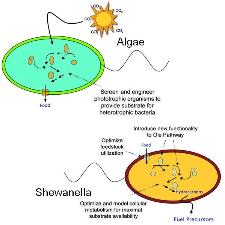
what-plastic-is-safe-to-your-health_51c162fd8fd81

image from “What Kind of Plastic Are You Eating Out of?” http://dailyhealthpost.com/what-kind-of-plastic-are-you-eating-out-of/

Growing Evidence of Links Between BPA and Autism, Cancer, Diabetes, Myriad Health Problems

I found that The Sleuth Journal is reliable. Below is an informative, well-researched article with this and other great infographics, a video, and more.

Ban BPA

image from “Ban BPA From Your Life: 6 Small Steps That Will Help You Live Toxin-Free” http://www.thesleuthjournal.com/ban-bpa-from-your-life-6-small-steps-that-will-help-you-live-toxin-free/, “Page by T SJ – Almost 5 decades later, scientists began seeing disturbing correlations between exposure to BPA and obesity, impaired brain development, various types of cancer, [and other health problems.]”

BPA is Even Worse for Babies and Girls/Adult Females

Common Folk is another reliable source for information. Many European countries are so far ahead of the USA in understanding and refusing to tolerate chemical toxicity and GMO (Genetically Modified Organisms) in their food, agriculture and beverages. We should all learn from and imitate what they’re doing. Avoiding/reducing endocrine disruptors, especially because of their adverse effects on babies and females, is just one of the many areas the EU folks are smarter about than the USA.

effects of packaging on humans

image from “LIVING WITHOUT PACKAGING | Common Folk,” http://commonfolk.eu/plasticfacts/, BPA is a estrogenic plastic by-product used in the manufacture of polycarbonate plastics. It can leach into food or drinks …”

What can we do NOW? Get Better Informed

NEVER Store Hot Food/Beverages or Heat Up Food/Beverages in Plastic or Cover with Plastic Wrap: BPA Gets Worse With Heat

Another good source of information is Renegade Health. This article, about the ways plastic gets into food more readily when the food is heated or already hot, should inspire you to throw out your plastic wrap and plastic containers forever (I hope).

microwave plastic leaching effects

image from “Your Health On Plastics: Endocrine Disruptors in Your Body…” http://renegadehealth.com/blog/2014/03/28/your-health-on-plastics-endocrine-disruptors-in-your-body-the-environment, “How much BPA leaches from these products into food and water depend on the temperature of the liquid or bottle, as when heated in a microwave oven.”

Get A Cloth Shower Curtain and Other Changes to Make to Avoid Exposure to Endocrine Disruptors

Some of this article’s claims, collected by a blogger, below, are not accurate. I checked Snopes.com and included rebuttals of the incorrect claims below it. But the rest of the article is factual and important. DO get rid of your PVC shower curtain!

http://www.care2.com/greenliving/is-your-shower-curtain-making-you-fat.html

For example, it’s not true that there are dioxins in plastic water bottles, so it is a myth that freezing the plastic water bottle makes it unsafe to drink because of dioxins. That water was unsafe to drink, anyway, because BPA is in the bottle at every temperature.
http://www.snopes.com/medical/toxins/plasticbottles.asp

How to Avoid BPA

Great info in the articles and their infographics for the sections, below, about what steps we can take right now and in the future to remove BPA from our lives.

how-to-avoid-bpa

image from http://desdaughter.wordpress.com/2014/04/16/how-to-avoid-bpa/

“Good” vs. “bad” cans:

cans to avoid

image from “Eco-novice: Going Green Gradually: Eat Less Plastic,” http://www.eco-novice.com/2011/04/eat-less-plastic.html, “Fatty, salty and acidic foods are the most likely to experience plastic leaching. One study found the most significant amounts of BPA in canned chicken soup…”

good cans

image from “Bisphenol A (BPA) – Diabetes and the Environment,” http://www.diabetesandenvironment.org/home/contam/bpa “BPA is often found in the lining of cans, and can leach out into the food stored in these cans. It also can be absorbed through the skin…”

Buy/Put Beverages in Glass, Stainless Steel or other BPA-Free Containers:

There are safe, easy to find (now), and inexpensive alternatives, especially for carrying water, storing food, reheating it in microwaves, and all the rest. Check out these tips/hints, below, and get busy!

Glass is preferred for bevs

image from “Health – Part 4,” http://www.bottlesupglass.com/category/health-2/page/4/ “Safety and Quality of Glass for Food and Beverage”

bpa-free bottles

image from “Cut the Crap Series – 10 Fast and Easy Ways to Clean Up…” https://hygeahealthnut.wordpress.com/category/cut-the-crap-series-10-fast-and-easy-ways-to-clean-up-your-lifestyle/, “The federal Food and Drug Administration barred Bisphenol A (BPA) in baby bottles and children’s cups in June 2012 but it is still prevalent [in other containers]…”

Get Politically Active!

Yes: the personal IS political! You want to make change, get involved. Some states and countries have been quite successful in eliminating BPA all together. What about where YOU live?

laws against BPA global

image from “Leading scientists urge Government to ban gender-bending chemicals …” http://www.dailymail.co.uk/news/article-1264400/Leading-scientists-urge-Government-ban-gender-bending-chemicals-baby-products.html

Unknown's avatar

Why posting about fruit is insulting to women: DO NOT PARTICIPATE in this year’s “Breast Cancer Awareness Campaign”

A feminist’s analysis of this year’s “BREAST CANCER AWARENESS campaign”: the reasons that I’m not participating and I’m telling all.

Call me a “spoilsport,” if it makes you feel better. I am frustrated and unwilling to “go along” with this year’s “Breast Cancer Awareness” Facebook “campaign” (and anywhere else it’s trying to occur) for these reasons:

1) Men also get breast cancer. They usually die from it sooner and more often precisely because there is very little “awareness” about males’ getting breast cancer;

male breast cancer

image from takboprintipe.wordpress.com

2) A “cuteness” factor of a zillion does NOTHING to help fence-sitters, if there even are any: how could there be, when 1 in 4 women gets breast cancer? Who could be “unaware” of it mystifies me;

incidences of all cancers 2013

from http://www.cancer.org, “Estimated New Cancer Cases* in the US in 2013. Estimated New Cancer Cases* in the US in 2013. Cancer Incidence Rates* by Sex, US, 1975-2009”

3) Waste of time, networking, and energy. I see nothing in any of these “campaign” solicitations that has a call to action, a place to donate for cure research, or ANYTHING but cuteness and “don’t tell the men.”

All this, for what?

BC colors facebook-win2

image from gerson.org

4) BREAST CANCER IS NOT SEXY, just because it afflicts one’s breasts. This year, it’s fruits. Each fruit is supposed to signify the poster’s MARITAL or RELATIONSHIP status. As if the entire campaign weren’t insulting enough to the intelligence of adult women, THIS is the type of device it uses every year. One year, it was some lame statement that was supposed to indicate unusual places that we like to have sex, but really was about where we put our PURSES (I don’t even carry a purse 90% of the time; bad for my back and shoulder). Another year (see above), our bra color or underwear color or other such nonsense.

It’s all supposed to be pseudo-titillating and sexual, which is another gripe I have.

So, I’m blowing its cover, here. Tough rocks, cutesy women.

I’ve had too many friends and relatives DIE of this horrible disease to find it at all cute or funny, anyway.

Here is what “feminism” actually means.

Feminism

With this information in front of you, how could you NOT be a feminist? You can have fun; some things can be cute. I have an excellent sense of humor. But some situations require serious ACTION.

Here is the disclosure/invitation post:

“Hi Ladies , so here it is that time of year again when we try to raise awareness of breast cancer through a game. It’s very easy and I would like all of you to participate. Two years ago we had to write the color of our underwear on our wall. Men wondered for days what was going on with the random colors on our walls. This year we make references to our love life status as a flavor. Do not answer this message, just post your word on your wall AND send this message privately to all the girls on your friends list. Blueberry is for single, Pineapple is for it’s complicated, Raspberry is for I don’t want to commit, Apple is engaged, Cherry is in a relationship, Banana is married, Avocado is I’m the better half, Strawberry is can’t find Mr.Right, Lemon is I want to be single, Raisin is I want to get married to my partner. Last time the underwear game was mentioned on TV, let’s see if we can get there with this one. Copy and paste this message into a new message and send it to your friends, then update your status with your answer. DON’T TELL THE GUYS.”
[I couldn’t stand all the misspelled “it’s,” so those I fixed. The rest I left “as is.” Pathetic, for a piece of writing; another gripe.]

HORRIBLE. Don’t do this inane “campaign.”

SPREAD THE WORD about breast cancer and give to fund the cures: http://www.bcrfcure.org/

BCRF logo

Unknown's avatar

The Latest Research on Traumatic Brain Injury (#TBI): Causes, Diagnostics, Treatments

While waiting at my neurologist’s office for my second appointment (at which I was cleared to return to regular activities, unrestricted, like WRITING MY BOOKS! YIPPEE!), I read a fascinating article, “Tracking Traumatic Brain Injury: What New Biomarkers May Reveal About Concussion Over the Short and Long Term,” by Gina Shaw, about the latest and greatest advances in Traumatic Brain Injury (#TBI).

Having suffered a “mild-to-moderate” #concussion myself on April 6, I have a keen interest in all of these topics.

The links and website for the article and magazine are below. First, my favorite parts are summarized or quoted, here. [There were no images with the article, so I went and found some (Thanks to Google images!).]

1. “Despite years of research into traumatic brain injury (TBI), the tests currently available to neurologists, emergency physicians, and other experts can’t reliably identify who has sustained a TBI after a blow to the head, and who has not.” [emphasis is mine]

2. “Damage to neurons occurring after a mild to moderate TBI–called axonal injury–is not revealed on these [CT] scans.” [emphasis is mine]

The image I found, below, is generated by one of the latest diagnostic tools, Diffuse Tensor Imaging, or DTI (see #6, below).

TBI Diffuse Axonal Injury

image from trialexhibitsinc.com, “Diffuse Axonal Injury (TBI)”

3. “‘Some studies indicate that having had even a “mild” TBI in early or midlife may increase the risk for dementia in late life, probably at least twofold.'” states Ramon Diaz-Arrastia, M.D., Ph.D., Fellow of the AAN [American Academy of Neurology], director of clinical research at the Center for Neuroscience and Regenerative Medicine at the uniformed services University of the Health Sciences in Bethesda, MD. [emphasis is mine]

4. Even a mild to moderate TBI causes an Axonal Injury = one that disrupts the brain’s structure and chemistry on a cellular level. [emphasis is mine]

TBI Amyloid Plaque over time

image from http://www.alzforum.org, “Amyloid plaques in a cross-section of TBI patients.”

5. 2013 research shows that the same plaque (made of amyloid, a brain protein) that is distributed widely in the brains of and that causes dementia in Alzheimer’s Disease (AD) is found at the site of a TBI, even a mild one. Some researchers are using the anti-amyloid drugs given to AD patients on TBI injuries to avoid or lessen the likelihood of later dementia.

6. There is a new type of MRI called Diffusion Tensor Imaging (DTI) that is promising for seeing the neurological damage caused by TBIs in ways no other diagnostics are currently able to do. This will also aid in detecting where an injured person is in their recovery.

DTI of mild TBI

image from http://www.adlergiersch.com, “Advances in Neuroimaging in Detecting Brain Abnormality in ‘Mild’ Traumatic Brain Injury”

The article describes many other “in the field” (literally, athletic fields, for one) diagnostic tools about to become widely available to determine the extent or presence of a TBI in someone who was knocked on the head.

Read! Share!

http://journals.lww.com/neurologynow/Fulltext/2014/10030/Tracking_Traumatic_Brain_Injury__What_new.16.aspx

http://www.NeurologyNow.com

Unknown's avatar

15 Points about the #Effects of #Concussions on #Meditators’ #Brains

What are the #effects of #concussions on #meditators’ #brains? Many doctors and patients now agree that #meditation helps relieve pain and stress. Therefore, meditation is recommended post-concussion for many with injured brains.

However, I haven’t found anything for my problem: my concussion makes it impossible or difficult/painful for me to meditate. What happens to those who are already long-time meditators (such as I am; 42 years), post-concussion?

It’s fewer than four weeks since my injuries. I still have a lot of trouble and need to take much more time than usual to think clearly enough and to write well enough (neither up to former standards) to put this post together. Forgive its clumsiness, please.

Let me explain, first: the type of meditation I currently do is advanced. This means that the meditation techniques take years to learn. Practice is not just for twenty minutes a day or relegated to a physical posture or on a meditation cushion. This type of meditation involves components of many other types as well as more aspects which are unique to it. It is a Tibetan Buddhist practice called dzogchen (“Great Perfection”) that is supposed to occur all day and into the night (excellent practitioners do it 24/7). It takes years to cultivate this ongoing meditation as a habit.

Therefore, whatever brain parts most meditators are activating, meditators doing dzogchen meditation are utilizing those parts plus a few more, and all the time, once we’re “getting it.”

Post-concussion, the worst after-effect, for me, was being unable to meditate. This is comparable to being unable to eat sufficient food or breathe enough air. We can survive, but we are not well, you see?

What about having had a concussion is preventing me from meditating? Why do certain parts of my brain hurt when I try to meditate?

Finding nothing to answer my questions all in one place, I did some of my own research to help me understand and share what has been happening to me since my injury on April 6.

Here is what I found to be true, complete with PET scans, MRIs of brains and other visuals.

1. Scientists are learning more annually about the ways that meditators’ brains are different than non-meditators:

meditators and nonmeditators brains

image from http://www.exploratorium.edu

Conclusions from above: meditation activates parts of our brain that ordinary brain activities do not.

2. Insight or Vipassana (Vipashana) meditators’ brains have been studied most. Here are some pictures to show how much that type of meditation changes the brains of Insight meditators:

insight meditators brains

image from http://www.nmr.mgh.harvard.edu

3. How else does meditation change one’s brain?

Brain-waves improve from meditation

image from expanded–consciousness.blogspot.com

Meditators’ brains have thicker cortical areas and other parts are also strengthened unusually by meditation. Our brain waves are different even when we are not meditating. Really.

After feeling pain in three particular areas of my brain that hurt (even though my son and others claim we can’t feel pain in our brains… pooh) and the increased pressure in these areas every time I meditated, which made me stop, I went on a research treasure hunt to answer these questions.

4. What parts of the brain are used in meditation and what types of meditation use what parts most?

brain parts and functions

image from http://www.8limbsholistichealth.com

For me, the thalamus and frontal areas were most impacted and affected, so far, since the front of my face/forehead hit the wall, and since those areas are involved in my type of meditation. However, I could imagine that other injuries/affected areas could impact your meditation differently.

5. What about different kinds of meditation and where in the brain they occur?

variations in types of meditation on brain parts

image from http://www.fredtravis.com

Definitely the thalamus and all frontal areas are affected, for me. I guess I don’t feel the impact in the pariental lobe because mine wasn’t so injured. Again, your experiences could vary a lot.

6. What are the effects on various parts of the brain from a concussion? From my recent and current personal experience, I can answer that. These photos also back up my own understanding completely.

I felt pain and pressure immediately after the concussion when I automatically started to meditate which forced me to stop. Repeatedly. Over time, that pain became most apparent in three locations.

“Recent studies have shown heightened activity in the anterior cingulate cortex, frontal cortex, and prefrontal cortex, specifically in the dorsal medial prefrontal area during Vipassana meditation. Similarly, the cingulate cortex and frontal cortex areas were shown to have increased activity during Zen meditation”
http://en.wikipedia.org/wiki/Brain_activity_and_meditation

Thanks to Wikipedia, I began to understand what was happening to me and why.

7. Meditators use these parts of our brain when we meditate:

PET brain images meditation 1

image from uonews.uoregon.edu

When I found this picture, it made me cry. These are the parts that hurt when I try to meditate, all lit up and obvious. I can just point and you can understand.

8. When we look at three brains: one uninjured, one with a concussion, and one with a severe TBI (Traumatic Brain Injury), we notice obvious differences, particularly in these areas mentioned, above:

normal severe TBI concussion images

image from http://www.vitamindwiki.com

To orient you: top of photos = forehead/frontal areas of brain. Look at the differences in these three scans in that area, particularly. Startling, huh?

9. How does a concussed brain show up on an MRI?

MRI_scan_concussion

image from http://www.ninds.nih.gov

I could be wrong, here, but I think these scans are oriented in opposite ways from those in #8. Top = back/neck, or the occipital lobe area. Look, therefore, at the bottoms of these scans to see how the frontal areas are affected.

Remember, though: most concussion injuries and symptoms do not show up on MRIs, CAT scans or X-rays, even when taken on the same day as the injury, much less those taken weeks or months later. Functional MRIs and PET scans are slightly better, but many effects are just not all that easy to visualize with the technology currently available.

10. What other signs of impact (concussion) on a brain can we see?

impact injuries on brain cross cuts

image from http://www.webdicine.com

For best understanding, contrast the picture in upper left with the one in the lower right. That’s my brain. Yuck.

11. Remembering what parts of the brain we use for meditating, look at these before-and-after scans of a concussed brain:

brain before and after concussion scans

image from http://www.policymic.com

This time, the orientation is like this: forehead/frontal area is on the left of each scan; neck is on the right. Notice the frontal areas’ changes from scan to scan. Heartwrenching, to me.

12. Pay particular attention to the “frontal bruise” on this concussed brain (similar to what I experienced on April 6 when I hit the wall with my nose/face and broke my nose/got concussed):

concussion bruise on frontal area

image from kerlanjobeblog.com

Don’t you just have to say “ouch!” after seeing this frontal bruising? Empathy is easier when you can see it all in front of you.

13. Here is that PET scan, again, of a meditating brain. Notice what parts are “activated” (by colors):

PET brain images meditation 1

image from uonews.uoregon.edu

Now you begin to see more clearly how concussions impact meditation?

14. Our brains should look and function this way when we meditate:

meditation-mind-brain-waves

image from blog.bufferapp.com

I sorely miss the feelings of “after,” calmness and joy which I normally would experience all day long. Awful losses, here. Luckily, purports to be temporary.

15. In conclusion, this quote incorporates the research I found and speaks to my particular injuries to explain why I can’t meditate and the effects of that on me: “The two important areas of the brain that feature prominently in meditation research are the frontal lobes, located in the area of the forehead, above the eyebrows and the limbic system which is deep inside the centre of the brain. Generally speaking, these two areas function and interact to influence our behavior, emotions, thinking, and what we’re going to do with our life. In other words together they have a profound influence on our personality, who we are and how we feel. The other parts of the brain [featured in meditation research] are the parietal lobes, at the top of the head, which primarily deals with the physical body, the occipital lobes at the back of the head that deal mostly with vision and the temporal lobes, above the ears, which deal with auditory information.” 
http://www.beyondthemind.com/extras/meditation-the-brain/frontal-lobes-the-limbic-system-meditation-mental-silence/

Best part of all this? IMPERMANENCE. This, too, shall pass. Injuries tend to resolve. Healing does occur.

Best wishes to all who are in recovery phases from TBIs and concussions. May all beings benefit.

Unknown's avatar

The #Vibes DO Matter, Down to our #DNA!

“DNA RESPONDS TO FREQUENCY”

“The Russian biophysicist and molecular biologist, Pjotr Garjajev, and his colleagues explored the vibrational behavior of the DNA. The bottom line was: ‘Living chromosomes function just like solitonic/holographic computers using the endogenous DNA laser radiation.’

“This means that they managed…to modulate certain frequency patterns onto a laser ray and with it influenced the DNA frequency and thus the genetic information itself.

“This finally and scientifically explains why affirmations, autogenous training, hypnosis and the like can have such strong effects on humans and their bodies. It is entirely normal and natural for our DNA to react to frequency.”

Vitality_Tone-new
image from http://www.themichaelteaching.com

“Garjajev’s research group…even captured information patterns of a particular DNA and transmitted it onto another, thus reprogramming cells to another genome. So they successfully transformed, for example, frog embryos to salamander embryos simply by transmitting the DNA information patterns! This way the entire information was transmitted without any of the side effects or disharmonies encountered when cutting out and re-introducing single genes from the DNA. This represents an unbelievable, world-transforming revolution and sensation!”

Sound-vibrates-cells
image from http://www.asabalance.com

“This experiment points to the immense power of wave genetics, which obviously has a greater influence on the formation of organisms than the biochemical processes of alkaline sequences.”

article quotes from: http://themindunleashed.org/2014/01/scientists-finally-admit-second-secret-dna-code-controls-genes.html

Given that we now know, incontrovertibly, that we are affected by vibes, get crackin’ on improving YOURS! And, don’t be a downer to others’, either!

10 Ways to Raise your Vibrations: http://www.mindopenerz.com/10-ways-to-raise-your-vibrations/

Unknown's avatar

The Mysterious Web That Connects All Galaxies In The Universe

Salty's avatarThis and That

To read the article go to
Astronomers Capture The First Image Of The Mysterious Web That Connects All Galaxies In The Universe
http://redicecreations.com/article.php?id=28583

View original post