Unknown's avatar

“Trust the Process,” Guest Post by Krysten Lindsay Hager 

I am excited to host today’s post from another previous CHANGES conversations between authors’ guest (Episode 15; see below for links), blogger and author, Krysten Lindsay Hager

“Trust the Process”

Years ago, whenever I’d go to writing conferences, workshops, or critique groups, there was always one particular type of writer that showed up and made me feel anxious. I would wonder what I was doing with my life and/or career. It wasn’t that this person’s success made me question my work; they’d say something that seemed to imply that if we were not getting our work published, then we didn’t count as “real writers.”

I joined a critique group a few years ago that got me back into enjoying the very act of writing again. I found that having regular meetings was keeping me accountable and I enjoyed getting constructive criticism and feedback. I also appreciated talking about the story with people who were on the journey with me and my characters.

Then, another person came along with the constant talk about all the agents and editors they had met and often dismissing anything that wasn’t “hot” in the industry at the moment. I’ll never forget the day I brought a chapter of my young adult novel to read and I was excited to share it, but right before I went to read, this person declared that no agent or editor would ever be interested in my novel because it was written in first person. Her tone very dismissive, as if I shouldn’t even bother. I sat there feeling so small. I went on to read, but even I could hear the insecurity in my voice. I sounded like a little kid who had been reprimanded.

I went home that night and started to think about my story, how writing it and editing it had brought me so much joy. I had begun to rewrite that novel during a difficult time for me. I had gotten sick and was dealing with a whole new way of life. That story had brought me back, so to speak.

It hit me that the point of the writing process for me hadn’t been whether or not this piece got published, but the enjoyment I got from writing and working on it and sharing it with other people who enjoyed it as well. As I folded laundry that night (doing laundry is my stress reliever), I realized that there was more to writing than just getting to what some called the final destination—-publication. It was about the journey for me.

So, a few weeks later, I returned to the group, determined not to let this person into my head. They again put out little comments about how I shouldn’t bother with a first-person narrative, but this time I took it as an opinion and not the final word.

That night, I started reading a book called The Creative Call, which talks a lot about how it’s not about what the work can do for you or getting it published, but what the work can do for others. Reading that took the pressure off.

However, when I mentioned this very thing to my writing group a few weeks later, some of them weren’t receptive to it. A few of them had publication as their only goal. That’s fine, but for me, this was what I choose to believe: that I would do the work and leave the outcome (and my ego) out of what would make this story successful in my eyes. Even if the book were never published, I felt that writing, finishing, sharing and enjoying it would be enough for me.

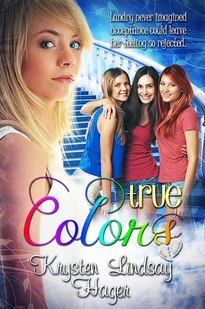
A week after I finished reading The Creative Call, I realized that maybe I should send out my young adult novel, True Colors, to see if it would be something that might help teens dealing with the similar self-esteem/self-image and other young teen issues that my character faces. I knew that trying to navigate through upper elementary and middle school while attempting to fit in as well as dealing with frenemies and mean girls would resonate with many readers. I submitted the story.

True Colors Krysten

In less than two months, I got a contract for the book. I remember sitting at my computer staring at that acceptance email and I felt a calmness come over me. It felt as if a weight had been lifted. I guess I had always assumed I’d be dancing around the room, but it was more like a confirmation that writing was the right path for me. I knew that I was supposed to share my novel. Receiving the contract and knowing that the book (my first book in the Landry’s True Colors Series) was going to be published ended up not being about me at all, but more about what I could share with others.

The books I have written as part of this series are the ones I would have wanted to read at that age. The first one was now going out there into the world, which said to me that maybe there kids out there who need to read about these issues.

A lot of people go into writing wanting fame, money, etc., but I think that takes away from the purpose of writing a book. It’s not what you can get out of it, it’s what you can give back. For me, it has been about those messages and comments I’ve gotten from people who say that, when they see my character, Landry, and her insecurities and worries, they feel less alone in what they are going through. When I heard about a teen who had been upset about dealing with being left out by people she had called “best friends,” then she had read my book and gotten perspective on the situation, well, that made me happier than I was the day I signed that first contract. It made me feel that I had a purpose.

Sure, it took me a while to get to a place where I saw the benefits of enjoying the journey and not focusing on the end goal or numbers. However, it has been so gratifying to appreciate the writing process more fully and to feel connected to my greater purpose.

About Krysten:

Krysten Lindsay Hager
(author photo courtesy of Shannon DiGiacomo)

Krysten Lindsay Hager is a book addict who has never met a bookstore she didn’t like. She’s worked as a journalist and writes middle grade, YA, humor essays, and adult fiction. She is the author of the Landry’s True Colors Series. Originally from Michigan, Krysten has lived in Portugal and South Dakota; she currently resides in Southern Ohio, where you can find her reading and writing, when she’s not catching up on her favorite shows. She received her master’s degree from the University of Michigan-Flint.

Connect with Krysten Lindsay Hager:
Website: http://www.krystenlindsay.com/
Instagram: http://instagram.com/krystenlindsay
Facebook: https://www.facebook.com/KrystenLindsayHagerAuthor
Twitter: @KrystenLindsay
Goodreads: https://www.goodreads.com/author/show/8298036.Krysten_Lindsay_Hager
Amazon author page: http://www.amazon.com/Krysten-Lindsay-Hager/e/B00L2JC9P2/ref=ntt_athr_dp_pel_1
Book trailer provided by Videos by O.
https://www.youtube.com/watch?v=RFp2fPFbvTQ&feature=youtu.be

If you enjoyed this post, please comment/like it here AND go visit Krysten’s sites.

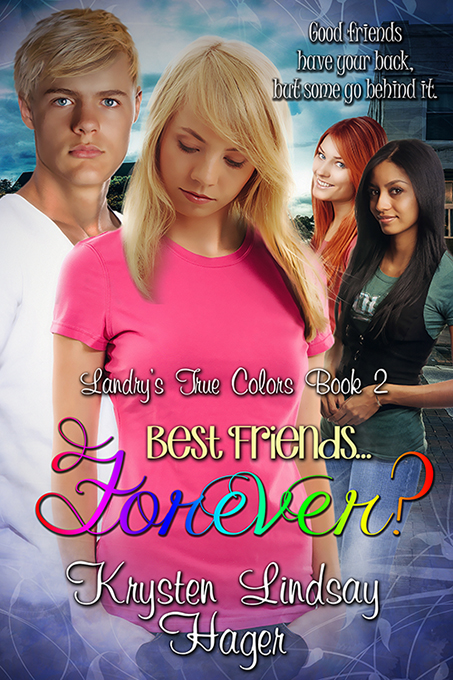
Here is the cover of Best Friends Forever, Book Two in her Landry’s True Colors Series:

BestFriendsForever Krysten 2


Krysten Lindsay Hager was my guest on Episode 15 of CHANGES conversations between authors. Watch conversations with my previous CHANGES guests any time:
https://www.youtube.com/playlist?list=PLPbfKicwk4dFdeVSAY1tfhtjaEY_clmfq

Learn more about and get yourself or recommend someone to be scheduled as a guest:    https://sallyember.com/changes-videocasts-by-sally-ember-ed-d/


Want to be a guest blogger on my site? Visit my “Guest Bloggers Hall of Fame” to review other guest posts, read my guidelines and then contact me if you’re interested: http://www.sallyember.com/guest-bloggers-hall-of-fame/

Unknown's avatar

Won’t Retweet, Won’t do Review Swaps, Won’t “Vote Up” Reviews: Why I Don’t Automatically Play Along with Many Writers’ Groups Anymore

Won’t Retweet, Won’t do Review Swaps, Won’t “Vote Up” Reviews:
Why I Don’t Automatically Play Along with Many Writers’ Groups Anymore

As Holly Near sings in her iconic relationship-gone-sour song, “Started Out Fine,” it “started out fine; we were moving ahead.” [Great song: go watch her sing it!]

Holly’s “Started Out Fine” on YouTube: http://www.youtube.com/watch?v=8Qhxkd6Gn0E

When I first decided to become an independent author and self-publish after having gone the trad route with nonfiction and made a few attempts to go the trad route for fiction, I knew next-to-nothing about the social media circus I was about to join. I was starry-eyed, optimistic, eager and trusting.

I would get reviewers. I would network. I would make online author friends. I’d become part of communities I would find online. Yippee!

Oy.

Sure, I had a Facebook page, I had opened (and never used) a Twitter account, and I was listed on LinkedIn, for professional purposes (but hardly ever used it).

social-sites

I had found Authonomy http://www.Authonomy.com and Wattpad http://www.Wattpad.com and decided to post excerpts on these sites, hoping to begin to get readers, reviewers, friends, colleagues.

My niece set up my first website, Sally Ember, Ed.D., and I began to “blog my book,” posting excerpts there and on Facebook for weeks prior to publication (catching up with both excerpts sites, above, before release day).

I researched and decided to go with Smashwords, first, with a pre-order period (several posts about Pre-orders are on my blog, http://www.sallyember.com), then publish to Amazon Kindle Direct Publishing (KDP) when my first ebook went live.

That was the entirety of my social media presence in the summer of 2013, a few months before I hit the “publish” button on my first of the ten volumes in The Spanners Series. Some of these endeavors resulted in my finding exactly what I was looking for: a community of indie and/or self-pub writers, many of whom were also somewhat new, volunteering to review, comment, enjoy my excerpts and then my book! I was so delighted and grateful!

Some of these new connections invited me into groups I’d previously been unaware of, but I happily became quite active in them, for a while. These groups had members who were (and ARE) so supportive, showing me a variety of ways to be involved in cross-promoting one another’s writing.

At first, it was all sunny skies and rainbows. My ebook was gaining visibility, I was making online friends, gaining more reviews and having a good time. Mutual respect, support, encouragement, laughs, tips, ideas and more were flowing around groups and quite helpful to me. I even had some to share back to them. Awesome…for a while.

???????????????????????????????????????????????????????????????????????
image from: http://www.dreamstime.com

The clouds rolled in all too soon. Has any of this happened to you?
“Sure! I’ll ReTweet [RT] glowing praise for your book(s) [even though I’ve never read anything you’ve written]!”

“Of course, if you read and review my book, I’d be delighted to read and review yours [until I read a few that were AWFUL!]!”

“Please be assured that, if you vote up my book’s good reviews on Amazon or my book on Goodreads’ Lists or put my book on your “shelves” on Goodreads, I’ll do the same for yours [even though… {PICK ONE: I’ve never read these other writers’ books OR I don’t like the genre and would never read them OR I have started to read them but couldn’t continue because they were AWFUL}]!”

“Oh, great! I’d love to be part of this ‘review each other’s blog’ swap. Oh, what? You’re assigning me to an erotica site when my brand is PG-13?!?!? No can do. Oh, it’s required? Oh, you’re now calling me names, like ‘prude,’ and telling me I’m being ‘judgmental’? ‘Bye, then.”

thunderheads_canisbay
image from: http://www.artcountrycanada.com

Struck by scolding/lightning one too many times, I dropped out each of those writers’ groups that had absurd or untenable “member responsibilities.” I eventually dropped out of all but a few groups.

Whew! Relieved!

<strong>My integrity has been restored by establishing for myself some great ground rules:
1) I am not on “Tweet teams” which require members to RT every and all Tweets.
2) I do not do “obligatory” reviews or “swaps.”
3) I do cross-promoting only after I’ve gotten to know/read and respect the other person and his/her writing enough to put my name on a public recommendation.
4) I don’t “vote up” any reviews or books unless I’ve read and agree with the votes.
5) I don’t vote for book covers or books for voting-related rewards unless I actually believe they deserve to win.

The best part of being “older but wiser, now” about how writers use social media? If you see my name on a book or blog review, a promotional Tweet, a shared or reblogged post, you can rest assured I believe in what I’m sharing/promoting.

When I haven’t read the work of the authors and don’t know their blog or them at all except as members’ names, I only share or RT general promotions for the GROUP. That’s the way I handle all that social media group cross-promotion pressure, now.

Also, when an individual requests any of the actions I now refuse to take, I gently let them know I don’t do those actions and some I send to the ALLi (Alliance of Independent Authors) Ethical Code, which I signed and promote on my blog, GLADLY: http://www.theindependentpublishingmagazine.com/2014/11/alli-launch-ethical-author-code.html Go read it. Sign it. Share it. We all should!

ALLiEthicalAuthor_Final-Outlines-300x173

So, however you respect my taste and/or me, you can follow my recommendations or leads as you wish.

All the best to you!

Unknown's avatar

Part I: Letter to my Earlier Self, What I Wish I had Known for #Indiepub #Ebooks 1 and 2

Part I: Letter to my Earlier Self, What I Wish I had Known for #Indiepub #Ebooks 1 and 2

This was originally posted on 11/24/14 as a Guest Blogger on http://www.thebookcove.com/2014/11/author-sally-ember-edd-what-i-wish-i.html, when I was still writing Vol III and before I had written enough of these posts to make a series of “Open Letters.”

Now, there is a series, and I am re-posting them in order, one per week.
(The Book Cove posted one per week, November through December.)
This is Letter One of four, total.

As I get ready to release Volume III, This Is/Is Not the Way I Want Things to Change, in my sci-fi/ romance/ paranormal/ multiverse/ utopian The Spanners Series, I consider what I wish I had known for ebooks 1 and 2 of this series, my first launch and second foray into being an indiepub author after having been traditionally published.

I decided to write a series of letters to my pre-publication self, since I believe in simultaneous time. I know that this letter and all the subsequent ones are already written and I am already reading them before I publish Volume I, This Changes Everything, and Volume II, This Changes My Family and My Life Forever. I’m sharing this information with the public here (again).

Follow that? It helps to be a sci-fi or quantum physics fan, for sure.

Here is Part I of my tips for my earlier self and therefore, all new indie authors who are about to publish their first ebook (or even afterward). There will be a series of such letters advising myself. I need a lot of help!

I appreciate the The Book Cove Reviews for allowing their blog to be the place these letters first appear. My tips had a chance to reach a much wider audience on that site. I hope many budding and newer indie authors besides my earlier self found them helpful when these letters were first published last fall, 2014!

What I Wish I had Known for #Indiepub #Ebooks 1 and 2:
An Open Letter to my Earlier Self

Part I

Dear Earlier Sally,

So, here you are, in December, 2011, writing your first sci-fi novel. You don’t know, yet, that you’re going to become an “indie” author, or even what that is.

Let’s recap what a sorry state you’re in, as an author, and see what, if anything, we can do to rectify this ignorance that could short-circuit your incipient writing career.

  • You still think you’re going to write query letters, try to find an agent, seek a publication “house” and become a published author the way you’ve seen it happen with your previous nonfiction books and countless others’ fiction books. You haven’t even considered not having a print book and haven’t even read or seen an ebook at this point. You have no idea how much this industry is about to BOOM!

    ebook sales to 2013

  • In fact, even though you’ve heard of Kindles and other ereaders, you’ve never seen one and don’t know anyone who owns or uses one, yet. You’ve never heard of or seen anything about Google+, “author platforms,” or blogging by authors. You think those who blog are self-centered, boring, unemployed journalists or stay-at-home workers who have time to surf the net and write drivel about their lives that you can’t imagine anyone wanting to read.
  • You aren’t on or aware of most of social media. For example, Twitter: you have no Followers except by accident (you now have 7). You never tweet, retweet, or favorite anyone’s tweets. In fact, you never read and respond on Twitter at all. Furthermore, your Facebook activity is conducted strictly to stay in touch with friends and family, people you actually know. You belong to no Facebook groups except those that include people you know and have a specific purpose (your high school reunion group, a meditation group).

    Social media icons

  • Additionally, even though someone told you to sign up for and join Goodreads, you almost never visit it and have no idea what it’s for. You also believe that people who use it are just sharing book lists and books they like. You never read or write reviews there or on Amazon and rarely buy books from online stores; you prefer bricks-and-mortar bookstores when you buy books and mostly use lending libraries.
  • You don’t consider yourself a book marketer and have not the faintest idea what book marketing entails, nor do you want to know. In fact, you plan to have all that done by your publisher and perhaps your agent (you’re a little fuzzy on who does what and when). You believe that their experienced and intensive marketing efforts will succeed in getting you/your book on TV, radio, and in print reviews and ads which will make your book rocket to best-seller status very quickly, since you’re sure it’s that good.
  • You’ve ever heard of or used any Google+ Communities, Hangouts, or Circles.
  • You have never heard of Metadata and wouldn’t know how to apply that to your ebooks, either.

    Metadata topics

  • You do not know about most of nor do you belong to any in-person much less virtual writers’ groups, authors’ groups, marketing groups, review sharing groups, or any professional writers’ groups of any kind.
  • You’ve never heard of ALEXA, Google Page Ranks, Google Authorship or KLOUT scores and you don’t know much about having an online presence. The extent of your knowledge is that you check Google every now and then to make sure nobody else is using your name or is saying bad things about you online.

Oy, vey.

Can your writing career be salvaged? Can you become a published author and have ANYONE know it? How will your book get reviews? How will you acquire any followers, much less readers? Will you sell even one book to anyone outside your friends and family?

How and when will you ever figure out that you need to create and maintain a website, build and improve your author’s platform, join and become active in online and virtual communities/groups, become KNOWN as YOU, your brand, online, as a sci-fi author and blogger, a creator and curator of useful content?

Writing Community

Tip #1: Forget the query letters, hunts for agents/publishers and all that trad pub jazz. Indie is the way to go. Ebooks are rocking the readers. Believe me. I know.

Tip #2: You may have noticed that I’ve actually decided to write these letters to you to offer a kind of road map to your salvation as an author. If you read and research each of the words or phrases I’ve put into BOLD in this letter, for example, those are the dots you have to connect, the work you have to do, to create the best future for your books and for you as an author.

Do a lot of it NOW, before you publish, and then keep doing more. That is key!

Stay tuned for Part II and subsequent Parts to this intraself communication which will contain advice for many indie authors as we continue on this journey of educating this indie author, earlier Sally: YOU!

Get to work!

Present Sally
http://www.sallyember.com
http://www.amazon.com/-/e/B00HEV2UEW

Unknown's avatar

Why I write about #politics, #elections, #issues and support Emily’s List #feminist #candidates

I WILL write about #politics, #elections, #issues and support Emily’s List #feminist #candidates…and so should you!

feminist activist causes
image from: http://www.list.co.uk

Maybe you think “social media” should just be for posting pictures that are funny or cute. Maybe you don’t want to offend or alienate anyone. Maybe you’re a coward. Maybe you’re undecided. Maybe you’re ignorant and don’t know enough about anything political to write about it. Whatever your reasons or rationales, cut it out.

If you are a USA citizen or a citizen of any country that allows you to vote and you do not exercise that duty and right for EVERY election, informing yourself (which is easier to do than ever before with information EVERYWHERE) and taking a stand on candidates and issues as adults who care are motivated to do, than I want you reading this post to inspire and educate yourself.

If you’re already politically active and savvy, great: SHARE!

First of all, there is a sea of candidates out there for almost every elected post and many campaigns of mis- and dis-information attempting to muddy the waters further. What’s an interested, concerned citizen to do? Utilize the groups that vet candidates and issues FOR us, that’s what. Find a group/entity who screens, analyzes, evaluates and presents, according to YOUR values and interests, those you’d want to vote for, complete with reasons, and information about whom and what to vote against as well.

Propaganda v science
image from: http://hockeyschtick.blogspot.com

Better yet, if you’re so inclined, RUN for office. Offer yourself to serve on a Board or Commission. Join/donate to/volunteer for a local or state chapter of the League of Women Voters, the National Abortion Rights Action League (NARAL), the National Organization for Women (NOW), or whatever else strikes your fancy. Start small and keep going, because city council members, school board members, mayors, sheriffs, judges and many others in local offices later become state or federal senators, congressional representatives for the state or federal government, state governors, Supreme Court judges, presidents!

As a life-long feminist committed to environmental, social, educational and other more radical values/components that mesh with my Buddhist, nonviolent foundations, I choose appropriate news sources (mostly nonprofits to boot) to help me learn and decide.

Here are a few I use and recommend:

  • Emily’s List http://www.emilyslist.org/, whose mission is: “We elect pro-choice Democratic women to office.”
  • Mother Jones magazine http://www.motherjones.com/, which has been analyzing and reporting from the center of core issues, reporting what many do NOT report and reporting truthfully, paid off by NO ONE, for decades
  • B*TCH Media, whose tagline is “Outsmart the Patriarchy,” which I love even though I do not like their name, and whose mission is to respond to “pop culture,” but does so much more than that http://bitchmagazine.org/
  • The Daily KOS, which has a weekly open thread on ELECTIONS, and with whom I often disagree but respect http://www.dailykos.com/
  • Amy Goodman, Juan Gonzales and the team at Democracy NOW!, independent, ad-free, on TV and public radio http://www.democracynow.org
  • Dissident Voice, which is “a radical [online] newspaper in the struggle for peace and justice,” that sees itself as providing “hard-hitting, thought-provoking and even entertaining news and commentaries on politics and culture that can serve as ammunition in struggles for peace and social justice.” http://dissidentvoice.org/
  • Upworthy.com, which is a curation site, gathering from many sources, including YOU, if you submit, to re-present “things that matter.” http://www.upworthy.com/
  • The Feminist Wire, with an inspiring and laudable mission: “to provide socio-political and cultural critique of anti-feminist, racist, and imperialist politics pervasive in all forms and spaces of private and public lives of individuals globally. Of particular critical interest to us are social and political phenomena that block, negate, or limit the satisfaction of goods or ends that humans, especially the most vulnerable, minimally require for living free of structural violence. The Feminist Wire seeks to valorize and sustain pro-feminist representations and create alternative frameworks to build a just and equitable society.” http://thefeministwire.com/

JFK quote
image made from John F. Kennedy quote

What else can we/should we do, if you believe, as I do, that change is necessary and that many important changes do occur via our elections and efforts in those directions? Here are some ideas. Comment and add your own, please! http://www.sallyember.com/blog

  • Some of you are lucky enough to have an alternative newspaper right in your area, still publishing in print and/or online (The Valley Advocate (New England, USA sites), The Bohemian (CA, USA, San Francisco Bay Area and Central Coast sites), The Boston Phoenix, Women’s Voices Magazine (many locations around the world) are some of my favorites).
    Read them. Subscribe. Submit comments online. Submit “Letters to the Editor.” Tell others. Buy ad space. Distribute or allow your business to become a site for distribution.

  • Donate to and support National and local Public Radio, Pacifica Radio, other alternative online or actual broadcasting entities. They are fewer and further between than ever and are always operating on shoestring budgets with many volunteers. YOU could volunteer!
  • Maybe you want to get your news from a culturally, ethnically or group-specific source, like Al Jazeera, The Advocate (LGBTQIQ), Univision, The St. Louis Jewish Light, Black Press USA, or whichever you prefer.
    Support them. Donate. Buy ad space. Volunteer. Comment online. Support their advertisers.

social change
image from: http://mariamuir.com

Use my sources and ideas or get your own, but get informed and work for the candidates you support, for the issues that matter to you.

It is UNACCEPTABLE to be passive and silent, more worried more about being controversial than effecting necessary changes. Be bold! Just because you are an artistic sort doesn’t mean you get to hide!

artist as activist
image made from quote by Larry Neal

Get involved. March. Demonstrate. Speak. Donate. Host. Participate. Invite. Write. Solicit.

VOTE!!!!!

Unknown's avatar

“Be A Part Of A Movement: #1000Speak for #Compassion” 2/20/15

from the organizers:

“Be A Part Of A Movement: #1000Speak for #Compassion” 2/20/15

1000 Speak for Compassion

“How cool would it be if we could get 1000 bloggers on the same day to write posts about compassion, kindness, support, caring for others, non-judgement etc.?
“We could call it 1000 Voices For Compassion.
“Who’s in?
“When: February 20, 2015

“How: Write a post TODAY on your blog or Facebook or Google + or LinkedIn or Instagram or any other social media you use about #compassion. What does it mean to you? How has it affected you? How can we bring more of it to those who need it?

“Really, there are no rules, just as long as it’s about compassion.”

From the Facebook group devoted to this event:

Let’s get 1000 bloggers to write posts about compassion, kindness, support, caring for others, non-judgment, care for the environment etc, and ALL PUBLISH ON THE SAME DAY (Feb 20th) to flood the Blogosphere with GOOD! Use the hashtag #1000Speak to promote this event.

I am one of the more than 1000, today.

My post about compassion:
As many of you know, I am a Buddhist (in this and many lifetimes, apparently) in the Tibetan Vajrayana Nyingma tradition. During the many times I’ve listened to teachers speak and I have read the writings of others on topic of compassion, the definition of compassion is what stays with me consistently. According to Buddhism, compassion arises spontaneously within us and moves us to do our best to alleviate the suffering of others.

For me, the companion to this definition is the Buddhist view of love. In the Buddhists’ view, when we feel authentic love, we are moved to speak, think and act in ways that would be most likely to bring about the circumstances that generate happiness for the object of our love and do our best to prevent their being unhappy, even when it means we put them first, above ourselves.

Furthermore, His Holiness the 14th Dalai Lama has been quoted repeatedly, as other teachers before and around him have, also, as giving advice along these lines: “If you want to be happy, focus on helping others be happy.”

Add in the multiple lifetimes component, or karma, and we hear this advice repeatedly throughout Buddhist teachings: “If you want to discover what your past lifetimes were like, look at your present behaviors, thoughts and words. If you want to plant the seeds of your future happiness, look at your present behaviors, thoughts and words.”

NOW is what matters most.

Dalai Lama Compassion

Then, there are the instructions and advice for daily living that arise from teachings on The 6 Paramitas (usually translated as “6 Perfections”), such as Pema Chödrön, an American woman who became one of the first Western Tibetan Buddhist nuns, teachers and authors, spoke about in The Places that Scare You, page 98

THE SIX WAYS OF COMPASSIONATE LIVING
Generosity. Giving as a path of learning to let go.

Discipline. Training in not caushing harm in a way that is daring and flexible.

Patience. Training in abiding with the restlessness of our energy and letting things evolve at their own speed. If waking up takes forever, still we go moment by moment, giving up all hope of fruition and enjoying the process.

Joyful enthusiasm. Letting go of our perfectionism and connecting with the living quality of every moment.

Meditation. Training in coming back to being right here with gentleness and precision.

Prajna (or transcendent wisdom). Cultivating an open, inquiring mind.

The Places that Scare You cover

Putting that all together has given me a great blueprint for my life. I base my minute-by-minute and larger decisions on determinations of how I can be most effective in helping others be happy, especially those I love, by practicing the 6 Paramitas. I combine that with seeking what I am able to accomplish that might help alleviate others’ suffering, even that of strangers or beings I do not know or come into contact with in my current circumstances.

With those aims in my heart, I make it my daily spiritual practice to try to live my life imbued with compassion and love for others.

I frequently fail.

I am impatient. I am selfish. I get angry. I am self-centered. I forget my aims. I lose sight of my heart-centered, larger goals by getting trapped in minutiae and short-term satisfaction. I want what I want and too often I see everything as a zero-sum game I am determined to win. I have been trained in these values, these behaviors and these perspectives: they are second-nature to me.

That’s the reason it’s called spiritual practice: we have to keep trying, keep re-dedicating ourselves to the attempt, moment by moment, day by day. These attitudes do not come naturally to me; I was not provided with a lot of role models on how great it is to be kind, to be generous, to be diligent, to be focused on others’ happiness, to put myself second. I have to strive more sometimes than others, but I usually have to try. Hard.

It is difficult. Scary. Frustrating. Discouraging.

But, I am resolute. Committed. Determined. I have taken vows to this effect, starting with the most basic vow that all Buddhists take, the vow not to harm.

My best moments are characterized by a look back, comparing it to now, and noticing that I haven’t had to put in any effort to feel and act in compassionate ways. When these urges arise spontaneously, I am even more joyful. I know I have had a successful moment when the love I feel for someone really does inspire me to be unselfish and put them first.

When embodying the 6 Paramitas as best I can is making others as well as ME happy, it’s a good moment, a good hour, a good day, a good life.

Excellent moments are surrounded by many in which I am ordinary, selfish and ungenerous.

I re-dedicate myself and continue to practice.

Just keep going

Some days, some moments, my compassion and love practices seem to have taken root.

I hope yours do, also.

Participate in #1000Speak by following this link and the links within the following post.
http://driftingthrough.com/2015/01/16/be-a-part-of-a-movement-1000speak/


Very cool #Author moment report: Last month, as I was writing this blog post and looking for an image via Google’s free images, I put in: “‘Keep Going’ Buddhist,” and what came up?
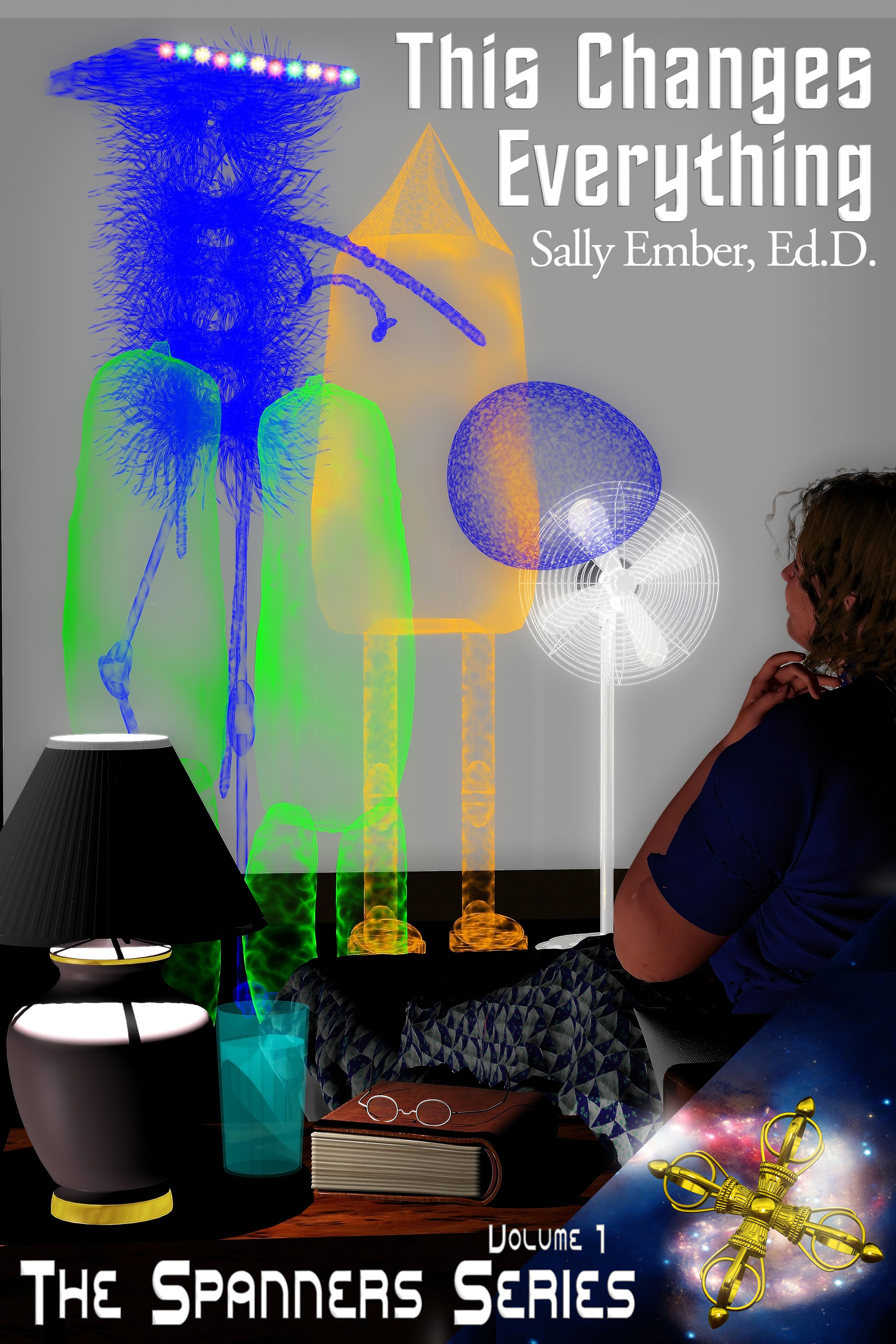
The book cover for my own book, Volume I, The Spanners Series, This Changes Everything!!! It was pretty far down, but it was there!

It is part of my practice to write Buddhist-themed books with practicing Buddhists as characters, but how did Google know that? Wow!
http://goo.gl/ujmgns

This-Changes-Everything----web-and-ebooks

Unknown's avatar

Internalized #Oppression: We All Have It Going On

What is “Internalized Oppression” and why do I claim we all have it going on?

If you have spent a lot of time in political activism, psychological growth, advocating for social justice/progressive causes and feminism, anti-racism, anti-Semitism and other anti-oppression movements of the ’50s, ’60s, ’70s and continuing, as I have, you would know what I’m talking about and have lived long enough to have unlearned some of the IO we all have. Or, you could have come to learn about IO some other way. If not, or if you’re interested in my perspective and some personal stories, keep reading.

I was first trained in 1977 in Massachusetts via the Movement for a New Society’s (MNS) Nonviolence Activism [http://en.wikipedia.org/wiki/Movement_for_a_New_Society

The members of MNS consciously sought to develop tools and strategies that could be employed to bring about revolutionary change through nonviolent means. The three-part focus of MNS included training for activists, nonviolent direct action and community. The main location for MNS activity was in West Philadelphia. Other locations included Boston, Minneapolis, Seattle, Tucson, Western Massachusetts, and more….MNS was unusual in combining feminist group process, broad analysis of interrelated people’s struggles including class and culture, and personal empowerment techniques ranging from music and street theater as political organizing tools to Re-Evaluation Counseling.

I was also trained via Re-Evaluation Counseling (RC) in Massachusetts and New Hampshire starting in 1978 and continuing through 1986. [http://en.wikipedia.org/wiki/Re-evaluation_Counseling]

RC has ambitious social and environmental objectives, including, “The transformation of society to a rational, peaceful, non-exploitative, classless form world-wide. The preservation of all existing species of life and the re-creation of extinguished species. The preservation of wilderness areas and the creation of a completely benign environment over most of the earth, the oceans, and the atmosphere. The exploration of, and eventually becoming at home in, space.”

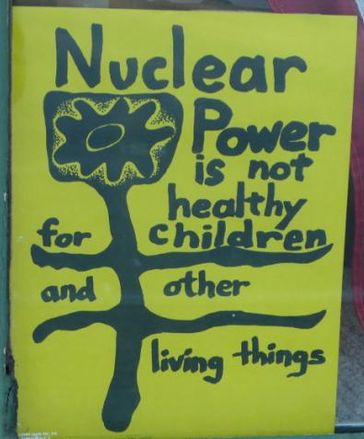
In the late 1970s and early 1980s, I was part of the “Clamshell Alliance,” a successful anti-nuclear energy group utilizing MNS and RC techniques and principles. We “Clams” prevented the second “tower” of the Seabrook, New Hampshire, power plant from being built. This and many other “affinity groups” like it across the continent worked throughout the 1970s, ’80s and ’90s to dismantle the stranglehold the nuclear energy capitalists were gaining on energy production in the USA and Canada. We have them/us to thank for how few nuclear disasters there have been in the USA due to there having been fewer power plants built than proposed.

Nuclear_power_is_not_healthy_poster

MNS and RC were the grandparents of most modern USA and global social justice movements movements; believe me). Their teaching techniques, training exercises, formats for consensus decision-making, use of nonviolence, understandings of social justice issues and oppression and methods for transforming individuals as well as groups have been incorporated into almost every type of social and political change movement around the globe, including Arab Spring and Occupy.

They taught me about Internalized #Oppression (IO): We All Have It Going On.

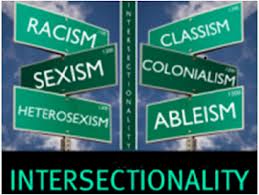
Intersectionality thrives via IO, because the overlapping strength of each oppression with insidious inroads into us and each other creates the systemic continuance of them all.

intersectionality
image from http://decolonizeallthethings.wordpress.com

For example, Height-ism. I am short and getting shorter. For a Jewish/Eastern European-roots female born in the middle of the last century, it’s not uncommon. I stopped growing at age 12, at 5′ 1.5″, at which point I was considered somewhat tall. I didn’t even realize I wasn’t going to keep growing, since everyone around me seemed to be, nor that I was short, until we were being arranged in poses for photos for the high school yearbook in the beginning of my senior year (I know; how could I not know? Well, I just wasn’t thinking about my height). People kept telling me to “get into the middle” or would call out: “Short people in front,” pushing me forward. I looked around in shock: “Oh! I really am short!”

I then spent the last four decades comparing my size to many other people’s and always being shocked at who else was actually my size or smaller, because they all appeared to be SO SHORT but I didn’t see myself as that short. In my inner voice, I was contemptuous, ridiculing, and otherwise snobbish about their smallness, as if I were magically exempt from such derision. Luckily (?), I kept these thoughts to myself.

Randy Newman (amazing singer-songwriter and social commentator) did not keep HIS thoughts to himself. We should all be grateful to him…. We need to laugh, sometimes, at how ridiculous prejudice and bias are, without forgetting how damaging and dangerous these ideas can become when enacted or spoken.

randy-newman-short people

That is classic Internalized Oppression (IO): Version 1) believing ourselves to be outside of/better than/not really representative of the groups we actually belong to, we deride our identity group by condemning other members of it; Version 2) we condemn ourselves for traits considered to be endemic of that group.

With both versions, we perpetuate the cultural and institutionalized oppressions that already run rampant, adding strength to stereotypes and assisting the oppression machine to keep churning out misery. We collude with and give power to the oppressors by “owning” their perspectives. IO is so difficult to uncover or recognize that we actually believe these viewpoints are our own opinions, developed on our own, independently of anyone or any influence: that’s how deluded we are.

So it goes.

How does IO play out? Via sexism, racism, ethnocentrism, ableism, ageism, homophobia/heterosexism, transphobia, classism, etc., oppressions reign supreme. When those within these oppressed groups further and enable the oppressors’ aims in putting us down by loathing ourselves and each other for being members of said groups, that is IO at work.

Example: SEXISM: When women/girls, as individuals of an oppressed MAJORITY, FEMALES, adopt society’s negativity towards females, what happens? We then display “our” views of females by scornfully talking about other females at almost every age (and not just because of differing political positions, intellectual differences or disagreements). Worst of all, IO leads women to be the main enforcers/ perpetrators of some of the worst harm inflicted on female children and other women (genital mutilation, forced child marriage, sex trafficking, bride-burning, foot-binding).

Women/girls who live with unmitigated IO will be motivated to compete unfairly, gossip, spread rumors, backbite, jockey for position, believe in scarcity (zero-sum games) and operate in other ways that undermine each other rather than collaborate and support one another. We “sell out” our own gender in a usually unsuccessful attempt to gain favor from men or stand out as superior to other women.

IO rots “sisterhood,” pitting heteronormative (“cisgender”) women against gender-queers and lesbians, motivating lesbians to exclude female bisexuals. IO inspires white women to believe whatever the oppressors tell us if it seems we may “some day” reach feminism’s goals, such as when white men told suffragettes that abolition was “more important” than women’s having the right to vote, that women should “wait our turn”: most white women accepted this.

When women find it acceptable (not speaking up AGAINST this means you find it acceptable) for females to be labeled “bitches,” “whores,” “sluts,” “tramps” and whatever other derogatory monikers current trends are utilizing to put strong, powerful, sexually active, empowered women down, then that is also IO operating within and among us.

Tina Fey anti-sexism
image from http://www.hercampus.com

IO is in place when a coach tells a mixed-gender or all-male group of athletes to “stop playing like girls,” and the girls on the team or at the location spew hate on the weaker members, continuing the damage caused by this coach.

When mothers, female teachers, any females who interact with young people, dichotomize the children based on supposed gender-based traits so that the girls are positioned by other females as less important, less competent, less valuable, and are forced to be less active or presumed to be less able than the boys, that is IO in action.

Example: RACISM: Racist IO occurs when those from oppressed ethnic/racial groups have “oppression derbies” to evaluate (usually not in public, but with social media, increasingly in public) the relative status of each individual of that group by applying arbitrary, oppressor-based criteria. Furthermore, we devise ways to determine who has the least number or degree of whatever traits of that group are currently despised (curly hair, darker skin, slanty eyes, large noses, thick or thin lips, argumentative/interrupting speech patterns, accents, higher intelligence or perceived skills in particular areas, glasses, other physical features such as stature, body type, breast size, etc.). Then, we assign higher value to those who “pass” or who are taken for NOT belonging to that group over those who display more/stronger group-identified traits. IO wins, there.

no racism
image from http://www.sodahead.com

IO manifests when Black people tell themselves or others (or have TV shows/movies/ music videos/ books which demonstrate) that “lighter skin” is “prettier” or straighter hair is “more professional.”

Best first-read to unlearn racism? A classic, by Professor Peggy McIntosh, “White Privilege: Unpacking the Invisible Knapsack”
http://www.artsci.washington.edu/natsci/Search-committee-materials/unpacking-invisible-knapsack.pdf

ETHNOCENTRISM/ANTI-SEMITISM: When Jewish families determine that their child’s teenage nose is “too large” and encourage or require their child (usually a female) to have plastic surgery to “fix” (break and reshape) their noses, that is IO imposed by the parents onto the children. Similarly, hair-straightening, skin-lightening, lip-thinning or plumping and other feature-changing attempts all stem from some type of racist/ethnocentrist IO most of the time.

Example: ABLEISM: Those with different physical/mental abilities or disabilities position ourselves “above” as many others classified in this way as possible, striving to be seen and appreciated for our strengths, but not giving that same respect and value to those we place “below” us. This classification of individuals within an oppressed group by members of that group is also classic IO in action: we do the oppressors’ work for them.

When a paraplegic calls a quadriplegic a “crip,” that is IO. When we who are older and becoming more hearing-impaired respond with impatience to someone else who can’t hear well, or are self-deprecating about our own inability to hear clearly, that is IO.

AGEISM: When adults presume younger- or -older looking people are teens or elderly and therefore treat them with less respect, that is oppressive. When WE, as members of a targeted age group, have similar negative attitudes because of someone’s actual or presumed age, IO is taking charge.

Telling ourselves (and anyone else) that we/they are less capable, worthy, competent or otherwise valuable because of our/their age (whatever it is) is also IO at work.

HETEROSEXISM: When gay men deride other gay men for being “too faggy” or a “flaming ‘queen,'” or lesbians call other lesbians “bulldykes” or “lipstick lesbians” based on their appearances, that is IO. Being down on ourselves as bisexuals, believing we are “unclear” or people who “can’t make up our minds” means IO has taken over.

Some people believe that oppressed groups can “reclaim” derogatory labels, like “nigger,” “dyke,” “fag,” “kike,” “bitch,” “‘ho'” and others by using them among “ourselves,” but I strongly disagree and so do those who work within the oppression-reduction movements. Using the slave-owners’ terms for the slaves among the slaves does NOT “empower” them: it makes them colluders.

WordsThatHurt
image from http://goodmenproject.com

You don’t “liberate” a derogatory term by using it repeatedly. Instead, we give the oppressors and bigots permission to use horrible names for us publicly and strengthen those terms’ cultural importance because we use those names, too. I don’t use them at all, anymore.

IO gets its main power from us. When we hear messages repeatedly that we aren’t “good enough,” regardless of who we are and how we look, from advertisers that want to sell us products to “make us look better,” these messages creep into our psyches. We then exacerbate and facilitate this brutality onto our own self-esteem when we buy into the ideas that we aren’t attractive because of IO operating on our subconscious.

Example: AGEISM and SEXISM plus LOOKS-ISM: Women and men do not “need” to remove body hair to be “attractive.” Believing that body-hair-free men or women are “sexier” is a social construct, one not followed by most of the world and only recently followed even by modern adults. Body-hair-free adults look more like pre-pubescent children. How is that look perceived as “sexy” by anyone who is mentally healthy?

What can we do to eliminate or reduce Internalized Oppression?

Perhaps you’ll be willing to go on a hunt, excavating your own internal messages and searching for those that are oppressive in order to eradicate or neutralize them. I hope you will.

no isms allowed
image from http://www.industrialantioppression.blogspot.com

Read! Listen to Podcasts or watch videos on this topic: there are thousands of ways to recognize and then unlearn the messages we have internalized that build onto institutionalized oppression.

self-worth
image from http://ink361.com
PEGGY McINTOSh’s article

If your self-improvement efforts are not immediately successful, don’t be discouraged: it can take decades to “unlearn” the oppressive viewpoints which have been inculcated into us all. Just keep trying to notice them and not believe them: that’s a great start. Also, if there are workshops, classes, or other opportunities online or in person (better) to unlearn racism, sexism, etc., or to learn about social justice and oppression, please avail yourselves of them.

It’s never too late to become less biased and to learn to advocate more positively for yourself as well.

Next, don’t allow statements that perpetuate IO to go unchallenged. Speak up. Speak out.

Silence = assent is not just a bumper sticker.

oppression wins via silence
image from http://www.decolonizingyoga.com

Unknown's avatar

“Fever-reducing drugs may help spread flu”: People End Up With More Virus In Their Bodies

reblog from post from a year ago: VERY USEFUL TO KNOW during ‘flu season.
http://www.nydailynews.com/life-style/health/fever-reducing-drugs-raise-spread-flu-study-article-1.1588812

I and my “alternative health” friends and practitioners have been saying for decades (centuries): FEVER is helpful. Let the accompanying fever do its thing, which is to kill the virus/bacteria, unless a fever is dangerously high.

IMPORTANT: Stay away from people throughout the fever period and for at least 24 hours after fever passes: then, you’re no longer contagious.

Salty's avatarThis and That

View original post

Unknown's avatar

You need to reorganize your life if you are outsourcing your #dating activities

I saw this actual ad on Craig’s List in St. Louis:

“Dating Expert 10 Hours a Week (work from home)” was the headline.
He also offered: “compensation: Great! telecommuting okay.”

The ad copy, exactly as it appeared, is in the block quote, below. I decided to respond, which follows.

I am a 30 year old busy executive with a New Year’s resolution of meeting my “dream girl.”

I work full time in corporate America and I simply don’t have a good way to meet available women.

I signed up for match.com more than a handful of times in the past and have met some really great women along the way. I found that it required a significant amount of time to both search for the type of women I was interested in meeting as well as spend the time actually writing back and forth.

I am at the point now where I would like to hire this out rather than continuing to fool with it myself.

So you, my ghost-writer would create a profile for me on a variety of dating sites such as Match.com and OKCupid.com and Fling.com. to search out both casual encounters and long-term relationships. You would ultimately ask some interview questions of me to figure out who I am and what I am about, gather all information necessary to complete the profile including bio, likes and dislikes, relationship goals and photos.

We would share a gmail account and a google voice line. You would search out and find the type of women I am interested in meeting, email them something witty and creative and get them interested in me.

You would then continue the dialogue with them via text message and email up to the point where they are really ready to schedule a date. You would then check my calendar (also on google) where you can see my free and busy times. You would schedule the date, pick the place, the whole nine yards.

I would then get an email from you outlining the discussions with them and a copy of their profile.

Once the date is scheduled I would go and see if there is a connection…

To figure out if you are a good fit for this job please email me a cover letter explaining why you will be a good fit. Also develop a profile for a stereotypical A-type personality executive for match.com. and a profile for Fling.com. Write 10 examples of opening emails that could be used generically to email potential mates.

Please provide also your salary requirements for 10 hours per week of work. Please use subject line of “CL mail expert”

I emailed this young man the following message:

SUBJECT: You need to reorganize your life if you are serious about getting involved with someone

MESSAGE:
Hi,

I am not applying for your job. I am a parent of a son about your age and I have to tell you this: if your life is so busy that you don’t even have time to have a conversation (via text or otherwise) with potential dates, your life is too busy to have a meaningful, satisfying relationship. That is the truth.

You need to reorganize your life if you are serious about getting involved with someone. It is NEVER going to be a good idea to “outsource” your important relationships, such as intimate partner, parent, or your other significant connections to actual humans.

Really.

Best to you,

Sally

super busy
image from http://www.baggagereclaim.co.uk

Any other opinions? Comment here! Email him yourself! mqxx9-4814518745@job.craigslist.org

Apply for the job:
http://stlouis.craigslist.org/wri/4814518745.html

Unknown's avatar

Part III: Letter to my Earlier Self about #Preorders, Guest Blogger Post on The Book Cove Reviews

Part III: Letter to my Earlier Self about #Preorders, Guest Blogger Post on The Book Cove Reviews

This is Letter Three of Four of my “open letter to my earlier self” series that appears on The Book Cove Reviews, http://www.thebookcove.com/2014/12/author-sally-ember-edd-letter-to-my.html, late November – December, 2014, on consecutive Mondays. Letter One appeared 11/24/14; Letter Two on 12/1/14; Letter Four will appear on 12/15/14. This same series will repost on my own site, http://www.sallyember.com 3/26/15 – 4/18/15, on consecutive Mondays as well

SWpreorders

Unknown's avatar

Part III: Letter to my Earlier Self about #Preorders, Guest Blogger Post on The Book Cove Reviews 

Part III: Letter to my Earlier Self about #Preorders, Guest Blogger Post on The Book Cove Reviews

This is Letter Three of Four of my “open letter to my earlier self” series that appears on The Book Cove Reviews, http://www.thebookcove.com/2014/12/author-sally-ember-edd-letter-to-my.html, late November – December, 2014, on consecutive Mondays. Letter One appeared 11/24/14; Letter Two on 12/1/14; Letter Four will appear on 12/15/14. This same series will repost on my own site, http://www.sallyember.com 3/26/15 – 4/18/15, on consecutive Mondays as well

SWpreorders

Unknown's avatar

An Open Letter to my Earlier Self about #Book #Reviews and #Reviewers Guest Post on The Book Cove goes LIVE today

An Open Letter to my Earlier Self about #Book #Reviews and #Reviewers Guest Post on The Book Cove goes LIVE today, 12/1/14, and is part of a series.

http://www.thebookcove.com/2014/12/author-sally-ember-edd-open-letter-to.html

bookreviews_logo

Check on Mondays, 11/24/14 and 12/8 and 12/15/14 for the rest of the series! http://www.thebookcove.com

Unknown's avatar

An Open Letter to my Earlier Self about #Book #Reviews and #Reviewers Guest Post on The Book Cove goes LIVE today

An Open Letter to my Earlier Self about #Book #Reviews and #Reviewers Guest Post on The Book Cove goes LIVE today, 12/1/14, and is part of a series.

http://www.thebookcove.com/2014/12/author-sally-ember-edd-open-letter-to.html

bookreviews_logo

Check on Mondays, 11/24/14 and 12/8 and 12/15/14 for the rest of the series! http://www.thebookcove.com

Unknown's avatar

What I Wish I had Known for #Indiepub #Ebooks 1 and 2: An Open Letter to my Earlier Self Guest Post on The Book Cove

What I Wish I had Known for #Indiepub #Ebooks 1 and 2: An Open Letter to my Earlier Self Guest Post on The Book Cove goes LIVE today and is part of a series.

http://www.thebookcove.com/2014/11/author-sally-ember-edd-what-i-wish-i.html

Social media icons

Check on Mondays in December for the rest of the series! http://www.thebookcove.com

Unknown's avatar

What I Wish I had Known for #Indiepub #Ebooks 1 and 2: An Open Letter to my Earlier Self Guest Post on The Book Cove

What I Wish I had Known for #Indiepub #Ebooks 1 and 2: An Open Letter to my Earlier Self Guest Post on The Book Cove goes LIVE today and is part of a series.

http://www.thebookcove.com/2014/11/author-sally-ember-edd-what-i-wish-i.html

Social media icons

Check on Mondays in December for the rest of the series! http://www.thebookcove.com

Unknown's avatar

We Should All Contribute to Raising All Children

“Man with 25 kids with 15 different women refuses to pay child support” accuses the New York Daily News‘ headline last week. http://goo.gl/9ufQGT

In this story are pathetic vignettes from two or more of this man’s sexual partners who became pregnant with and claimed to have had children with him, all the while ignorant of his other …. 20, 21, 22, 23, 24 children….? Even though this man’s problems with not paying child support had made him Tennessee’s statewide largest “deadbeat dad” in 2012, he still found willing partners and impregnated at least three more women since that public designation.

This scofflaw was known for “driving flashy cars and throwing cash around,” since he apparently owns several nightclubs, then “dressing in rags and claiming poverty” when brought in front of judges whose prosecuting attorneys are apparently too incompetent to do proper research on this man’s net worth.

All I can think about are these 25 children, probably growing up without sufficient resources, continuing the downward cycle, ad infinitum. Multiplied by thousands, hundreds of thousands, millions world-wide, imagine all these children inadequately provided for, however that occurs.

UNACCEPTABLE.

Crying4.jpg

image from http://reason.com

My conclusions and recommendations:

  1. We humans are unable to sustain this system successfully. We will not survive as a species.
  2. We apparently are too stupid, incompetent, ignorant, selfish, misguided, unlucky and/or unable to make intelligent choices and raise children with sufficient support.
  3. We as a species must make it mandatory for ALL humans to contribute to the well-being and support of ALL minors.

Boom.

better children

image from http://jokeallucan.blogspot.com

  • Forget going after individual bio parents, grandparents, foster parents or adoptive parents who have reneged on their parenting duties and/or financial responsibilities.
  • Stop trying to collect “child support” from the uncollectible.
  • Admit that it’s hopeless: we can’t instill parenting skills or knowledge via “parent education” into the addicted, severely mentally disabled, recalcitrant, unwilling or arrogant.
  • Stop relegating youth to the “luck of the draw” for the parenting lottery.
  • End these philosophies that govern current legal and cultural practices: “Oh, your mom is a meth addict? Too bad.” “Oh, your dad is in prison? Tough break.” “Oh, your parents are dead? Oh, well.” “Oh, your parents are mentally ill? We’ll put you in foster care.”

No.

We as humans must figure out a way to reproduce more responsibly AND to raise and educate children more fairly and competently.

In addition, we have to make it impossible for any child to go without basic amenities, food, clothing, education, nurturing and appropriate discipline and structure due to the deficiencies of their birth circumstances.

No government should be allowed to continue to be in power, even to exist, which does not ensure that all young people are well-fed, clothed, housed and educated.

If we continue to assign children to their “fates” based on their bio parents and other environmental circumstances, the caste- and class-based failure we call “society” will continue to populate (privatized, for-profit) prisons with inmates. We will continue sending addicts to rehabilitation centers, keeping them stocked with recurring “patients” that fill the coffers of insurance companies but cure almost no one.

What happens when millions go without sufficient food, medicine or clothing? Earth produces hundreds of millions, probably billions by the end of 2025, with bellies filled mostly with rage.

What fuels terrorism and crime? Dissatisfaction and alienation.

What creates affiliation to community? Fairness and caring.

It costs almost eight times as much to imprison an individual as it does to educate him/her all the way through high school.

costs prison v education CA

image from http://www.safeandjust.org

You do the math.

Let the corralling of the incapable into parenting end now.

The “nuclear” family is, by and large, unsustainable, a failure, with circumstances getting worse for children every decade.

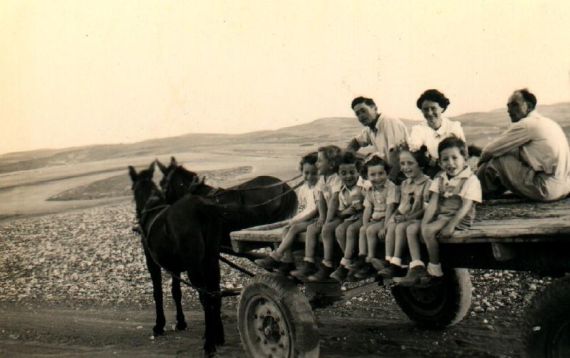
Model childraising on the Kibbutzim, the collective childraising communities in Israel.

  • Put competent, caring, educated, healthy, trained and willing adults in charge of children.
  • Allow all minors to have contact with any safe adults, but not solely to rely on their bio or legal guardians/parents for their upbringing.

biloy-em-hahorim

image from http://www.judaica-hamsa-jewish-star-symbols-and-meanings.com

Let’s level the “playing field” for all young people. Give them all truly equal opportunities.

Comments/questions? Movements? Ideas?

Anyone already have a charity or nonprofit devoted to supporting ALL children?

Tell me about it. I might be able to help start, organize, or publicize these efforts.

SOMETHING major has got to change. For the children. For the species.

Unknown's avatar

We Should All Contribute to Raising All Children

“Man with 25 kids with 15 different women refuses to pay child support” accuses the New York Daily News‘ headline last week. http://goo.gl/9ufQGT

In this story are pathetic vignettes from two or more of this man’s sexual partners who became pregnant with and claimed to have had children with him, all the while ignorant of his other …. 20, 21, 22, 23, 24 children….? Even though this man’s problems with not paying child support had made him Tennessee’s statewide largest “deadbeat dad” in 2012, he still found willing partners and impregnated at least three more women since that public designation.

This scofflaw was known for “driving flashy cars and throwing cash around,” since he apparently owns several nightclubs, then “dressing in rags and claiming poverty” when brought in front of judges whose prosecuting attorneys are apparently too incompetent to do proper research on this man’s net worth.

All I can think about are these 25 children, probably growing up without sufficient resources, continuing the downward cycle, ad infinitum. Multiplied by thousands, hundreds of thousands, millions world-wide, imagine all these children inadequately provided for, however that occurs.

UNACCEPTABLE.

Crying4.jpg

image from http://reason.com

My conclusions and recommendations:

  1. We humans are unable to sustain this system successfully. We will not survive as a species.
  2. We apparently are too stupid, incompetent, ignorant, selfish, misguided, unlucky and/or unable to make intelligent choices and raise children with sufficient support.
  3. We as a species must make it mandatory for ALL humans to contribute to the well-being and support of ALL minors.

Boom.

better children

image from http://jokeallucan.blogspot.com

  • Forget going after individual bio parents, grandparents, foster parents or adoptive parents who have reneged on their parenting duties and/or financial responsibilities.
  • Stop trying to collect “child support” from the uncollectible.
  • Admit that it’s hopeless: we can’t instill parenting skills or knowledge via “parent education” into the addicted, severely mentally disabled, recalcitrant, unwilling or arrogant.
  • Stop relegating youth to the “luck of the draw” for the parenting lottery.
  • End these philosophies that govern current legal and cultural practices: “Oh, your mom is a meth addict? Too bad.” “Oh, your dad is in prison? Tough break.” “Oh, your parents are dead? Oh, well.” “Oh, your parents are mentally ill? We’ll put you in foster care.”

No.

We as humans must figure out a way to reproduce more responsibly AND to raise and educate children more fairly and competently.

In addition, we have to make it impossible for any child to go without basic amenities, food, clothing, education, nurturing and appropriate discipline and structure due to the deficiencies of their birth circumstances.

No government should be allowed to continue to be in power, even to exist, which does not ensure that all young people are well-fed, clothed, housed and educated.

If we continue to assign children to their “fates” based on their bio parents and other environmental circumstances, the caste- and class-based failure we call “society” will continue to populate (privatized, for-profit) prisons with inmates. We will continue sending addicts to rehabilitation centers, keeping them stocked with recurring “patients” that fill the coffers of insurance companies but cure almost no one.

What happens when millions go without sufficient food, medicine or clothing? Earth produces hundreds of millions, probably billions by the end of 2025, with bellies filled mostly with rage.

What fuels terrorism and crime? Dissatisfaction and alienation.

What creates affiliation to community? Fairness and caring.

It costs almost eight times as much to imprison an individual as it does to educate him/her all the way through high school.

costs prison v education CA

image from http://www.safeandjust.org

You do the math.

Let the corralling of the incapable into parenting end now.

The “nuclear” family is, by and large, unsustainable, a failure, with circumstances getting worse for children every decade.

Model childraising on the Kibbutzim, the collective childraising communities in Israel.

  • Put competent, caring, educated, healthy, trained and willing adults in charge of children.
  • Allow all minors to have contact with any safe adults, but not solely to rely on their bio or legal guardians/parents for their upbringing.

biloy-em-hahorim

image from http://www.judaica-hamsa-jewish-star-symbols-and-meanings.com

Let’s level the “playing field” for all young people. Give them all truly equal opportunities.

Comments/questions? Movements? Ideas?

Anyone already have a charity or nonprofit devoted to supporting ALL children?

Tell me about it. I might be able to help start, organize, or publicize these efforts.

SOMETHING major has got to change. For the children. For the species.

Unknown's avatar

Stale writing? 4 Underused Literary Devices: Aphorism, Hyperbole, Tmesis and Zeugma

Stale writing? 4 Underused Literary Devices:
Aphorism, Hyperbole, Tmesis and Zeugma

[Definitions and examples culled and summarized from http://literarydevices.net/]

In the last days of NaNoWriMo [National Novel Writing Month, November] or any other intensive writing period, we authors often suffer from ennui from the endless repetition of putting thousands of words on screen (or, if you are a Luddite, on paper).

We get bored with our style. We are tired of the way we phrase things. We depict the same thing repeatedly. We use similar sentence structure too often. Our dialogue sounds forced, our imagery is trite and our comparisons are about as subtle as the proverbial freight train.

Like, here.

baby yawning

image from http://radioink.com

A reviewer counted the number of times the main character “rolled her eyes” in a best-selling fiction novel: 14 eye-rolls in a book that had fewer than 200 pages. She was described as “gaping” 23 times. Inexcusably poor editing and boring writing, yet that particular book featured sexual bondage and a billionaire lover, so it sold a bizillion copies. Sigh.

Meanwhile, back in literature…. How do we spice up our writing so that we and our readers stay interested, feel stimulated (and not by a cattle prod or whip), and want to keep going? Underused Literary Devices to the rescue, here.

The above-mentioned and other websites have a panoply of Literary Devices, many of which I had never heard of or spent decades forgetting I’d learned in school. Some are only for poetry, but below are four that are usable in any kind of writing.

Have fun!

WAKE UP!

APHORISM
DEFINITION: …is an original thought, spoken or written in a laconic/concise and memorable form, as a statement of truth or opinion. Aphorisms are expressed in a pithy, witty manner which expresses a philosophical, moral or literary principle. Proverbs (as religiously or culturally promoted), Maxims, Adages and (when overused) Clichés are types of Aphorisms.

EXAMPLES: “To err is human, to forgive divine.” from An Essay on Criticism by Alexander Pope

Lao Tsu

image from http://popphilosophy.typepad.com

HYPERBOLE
DEFINITION: Adynaton is an extreme form of Hyperbole, one that is completely impossible to happen in reality, presented as an exaggerated comparison or contrast.

EXAMPLE:

I’ll love you till the ocean
Is folded and hung up to dry

from As I Walked Out One Evening by W.H. Auden

dryingscarf

image from http://cupcakesncraftsbyg.com

TMESIS
DEFINITION: …is a rhetorical device that involves the breaking down of a phrase or a word into two parts as an insertion of a word between a word, a compound word or a phrase (phrasal verbs usually). Tmesis is accomplished by dividing a phrase or word into its components by inserting another word in the middle of that phrase or word. Tmesis works best with words that have more than three syllables.

Fun fact: In Australian English, Tmesis is called tumba rumba.

EXAMPLES:
“This is not Romeo, he’s some other where.” from Romeo and Juliet by William Shakespeare

Eliza Dolitttle: “Fan-bloody-tastic or abso-blooming-lutely” from Pygmalion by George Bernard Shaw)

Audrey Hepburn as Eliza

Audrey Hepburn as “Eliza Doolittle” in the film of My Fair Lady, based on Pygmalion, image from http://www.listal.com

ZEUGMA
DEFINITION: … is a word, usually a verb or an adjective, applied to more than one noun, blending together grammatically and logically different ideas to produce a unique artistic effect, making the literary works more interesting and effective as it serves to adorn expressions and to add emphasis to ideas in impressive style.

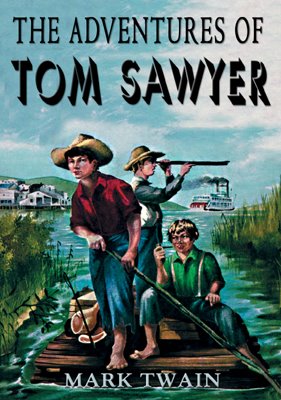
EXAMPLE: “[They] covered themselves with dust and glory.”
from The Adventures of Tom Sawyer by Mark Twain (Samuel Clemens)

Tom Sawyer

Aaahhh. Did you feel that?

Zephyr god

image from http://www.gotbrainy.com

It’s a breath of fresh air blowing in through the million drafty doors and windows in your gi-friggin-normous memory palace, a zephyr that brings in new ideas and high heating bills.

Use them well.

Unknown's avatar

Reblogged: 34 Acts of #Kindness #Aliens Would Appreciate

“Suspended” coffee orders, free meals, conversations and empathy with those in need, assisting without being asked, thank-you notes, taking responsibility, rescues and generosity of all kinds are included in this post.

Just what we need to remind ourselves of what it CAN mean to be human.

Maybe the #aliens won’t keep ignoring us….

We ALWAYS have enough time to be kind.

Sorry note

from The Kindness Blog (link below)

Link to full article here, on The Kindness Blog:
http://kindnessblog.com/2014/11/03/34-examples-of-heart-warming-humanity/

Unknown's avatar

Want to Make A Difference? RUN!

North Bay, CA Peeps: inspired by today’s elections (frustrated or elated)? DO SOMETHING!

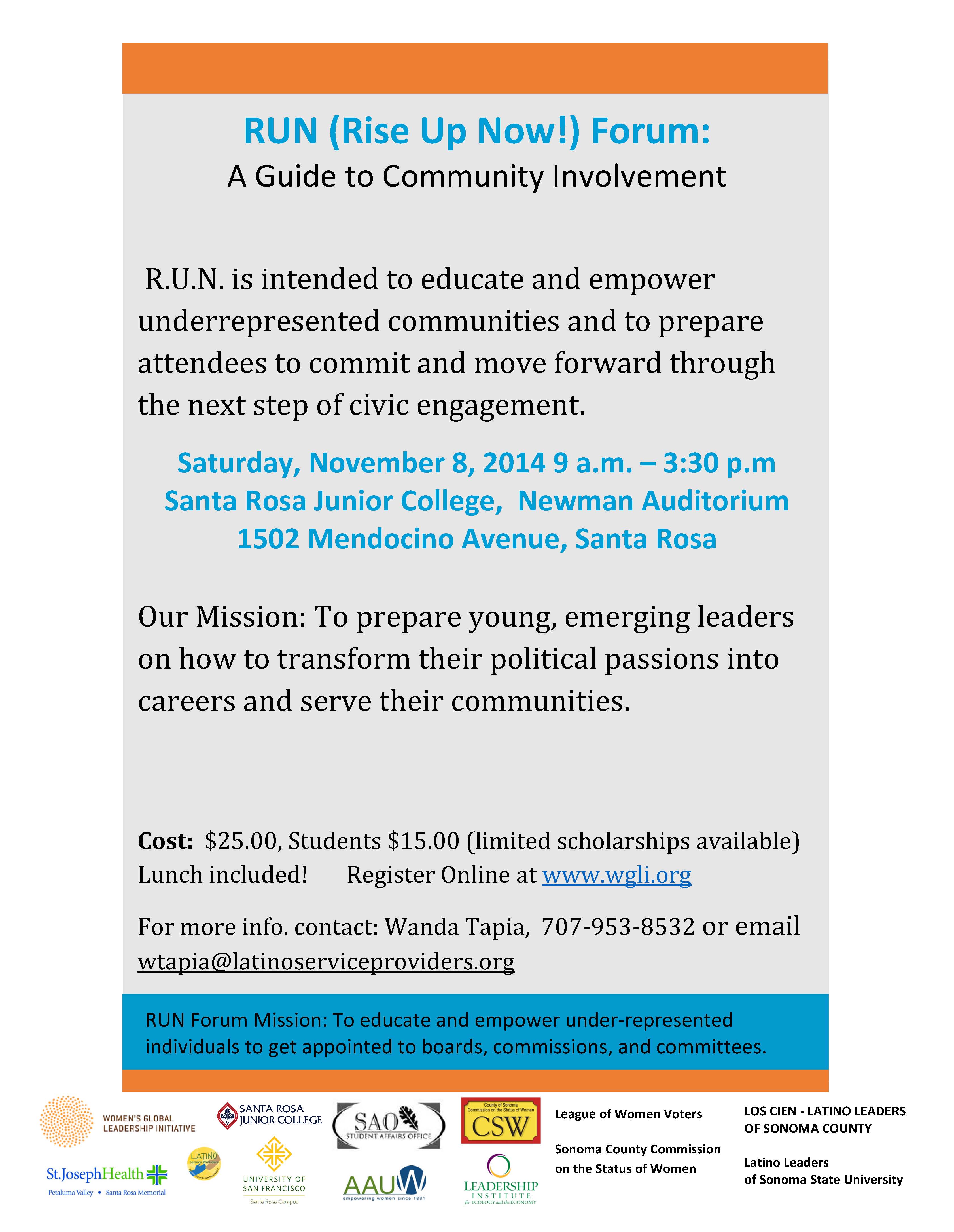
Women’s Global Leadership Initiative (WGLI) and local partners have come together to support and inspire the development of new leaders in the North Bay, CA, area (Sonoma County)!

The Rise Up Now (RUN) Forum is about becoming informed, knowing what you have to offer and taking the next steps!

Come and enjoy a day of inspiring speakers, lunch and being in the company of those who have passion to make things happen.

The RUN Forum provides attendees with the opportunity to learn what it takes to make a difference in their communities by joining committees, commissions, and boards.

Open to all in the North Bay, CA, area and close by who want to make a difference!

ONLY 2 DAYS LEFT TO REGISTER

Please share this important info.

RUN Flyer Nov 8, 2014 real

Go to http://www.wgli.org to register today!

Cost: $25.00, Student $15.00 lunch included.

For more info or to request for scholarship, call or email Wanda Tapia at 707-935-8532, wtapia@latinoserviceproviders.org

Unknown's avatar

5 Ways for #Giving 1% to Offset the Splurging Inspired by the Holidays

Immediately after Halloween (and in some cases, even before it came), commercials in both print and video outlets began the holiday onslaught. Many people do begin shopping this early for their gifts, requesting/making lists for what they want and having/attending parties at which enormous amounts of alcohol and food are consumed.

To counterbalance the ridiculous indulging that occurs in many households in the West over the next two months, I offer 5 Ways for #Giving 1% to Offset the Splurging Inspired by the Holidays.

Post this on your refrigerator or visor in your vehicle and DO THESE THINGS. Please.

  • 1. Donate 1% of what you spend in money For every gift you purchase online, from a vendor or in a store, make a point to put aside 1% of that amount paid for charity. 1%, for the math-challenged, is the amount you see when you move the decimal point over two places to the left: e.g., if it costs $100.00, you put aside $1.00; if it costs $5.00, you put aside 5 cents.
    At the end of your holiday season, add that all up and use the 1% you set aside to benefit the charity of your choice. Remember: libraries, pet shelters, homeless and other social service organizations, youth centers, food banks, clothing drives.

    piggy bank

    image from http://getbookedin.com

  • 2. Volunteer 1% of what you spend in time Keep a journal or online calendar/diary of all the time you spend (notating it in a minimum of fifteen-minute intervals, like a lawyer) celebrating, preparing for, decorating, creating or buying gifts, attending, preparing or cleaning up family meals for these holidays. The amount of time you devote to this “season” will probably amaze you, if you are honest and meticulous in your records. At the end of your holidays, add up all those quarter-hours and multiply by four: this equals how many hours, total, you gave to the holidays. Any time during or after your holiday season, schedule yourself to volunteer 1% (see above for math help) of those hours to benefit the charity, cause, family or event of your choice.

    Volunteering

    image from http://www.care2.com

  • 3. Pass on 1% of what you received in gifts Keep a list of what you received from others. Include holiday cards, presents, food, nights out, alcohol, vacation time, clothing, and other gifts for these holidays. If you have/know any, get kids/teens to do this, also. Consider estimating what each of these costs the giver or is worth in actual dollars. The amount of stuff you acquired may add up to many pages for some of you. At the end of your holidays, add up all those estimated amounts to show the dollar value of what you received from this season’s holidays.
    Find a way to pass on actual gifts (“re-gifting”) or gift cards in the amount of 1% (see No. 1 for math help) of that total value to benefit the charity, cause, family or individual of your choice.

    Toy box

    image from http://blog.turbotax.intuit.com

  • 4. Give up 1% of what you want Make or add to your growing list of what you want from others for the holidays. Include holiday cards, presents, food, nights out, alcohol, vacation time, clothing, and other gifts. Consider estimating what each of these would cost or is worth in actual dollars. The amount of stuff you want may add up to many pages for some of you. At the end of your holidays, add up all those estimated amounts to show the dollar value of what you wished to receive from this season’s holidays.
    Whether or not you received all that you wanted, find a way to pass on actual gifts (“re-gifting”) or gift cards in the amount of 1% (see No. 1 for math help) of that total value to benefit the charity, cause, family or individual of your choice.

    wish list

    image from http://www.thisisamericanrugby.com

  • 5. Demonstrate gratitude for at least 1% of what you have Count your blessings. Literally. Consider how to estimate what each of your privileges, benefits, friends, family, housing, employment, art, music, intelligence, abilities, skills, talents, knowledge, education, property and other possessions and all good fortune, including whatever health you enjoy, is worth in actual dollars. The number of ways you can be grateful should keep expanding. Be creative. Some blessings have no monetary value, but you can assign one, anyway. Make a list. Keep adding to it and placing dollar amounts next to each one that you can. At the end of your holidays, total all those estimated amounts to show the dollar value of what you already have this holiday season.
    Find creative ways to demonstrate your gratitude for 1% of the total value of what you already have (see No. 1 for math help) to benefit the charity, cause, family or individual of your choice.

    Giving heart

    image from http://www.empowher.com

    If you engage in these 5 offsetting actions, you will more thoroughly enjoy every part of the holiday season. I promise.

    Happy Holidays, Everyone!

    Happy Holidays

    image from http://www.smashingmagazine.com

Unknown's avatar

5 Ways for #Giving 1% to Offset the Splurging Inspired by the Holidays

Immediately after Halloween (and in some cases, even before it came), commercials in both print and video outlets began the holiday onslaught. Many people do begin shopping this early for their gifts, requesting/making lists for what they want and having/attending parties at which enormous amounts of alcohol and food are consumed.

To counterbalance the ridiculous indulging that occurs in many households in the West over the next two months, I offer 5 Ways for #Giving 1% to Offset the Splurging Inspired by the Holidays.

Post this on your refrigerator or visor in your vehicle and DO THESE THINGS. Please.

  • 1. Donate 1% of what you spend in money For every gift you purchase online, from a vendor or in a store, make a point to put aside 1% of that amount paid for charity. 1%, for the math-challenged, is the amount you see when you move the decimal point over two places to the left: e.g., if it costs $100.00, you put aside $1.00; if it costs $5.00, you put aside 5 cents.
    At the end of your holiday season, add that all up and use the 1% you set aside to benefit the charity of your choice. Remember: libraries, pet shelters, homeless and other social service organizations, youth centers, food banks, clothing drives.

    piggy bank

    image from http://getbookedin.com

  • 2. Volunteer 1% of what you spend in time Keep a journal or online calendar/diary of all the time you spend (notating it in a minimum of fifteen-minute intervals, like a lawyer) celebrating, preparing for, decorating, creating or buying gifts, attending, preparing or cleaning up family meals for these holidays. The amount of time you devote to this “season” will probably amaze you, if you are honest and meticulous in your records. At the end of your holidays, add up all those quarter-hours and multiply by four: this equals how many hours, total, you gave to the holidays. Any time during or after your holiday season, schedule yourself to volunteer 1% (see above for math help) of those hours to benefit the charity, cause, family or event of your choice.

    Volunteering

    image from http://www.care2.com

  • 3. Pass on 1% of what you received in gifts Keep a list of what you received from others. Include holiday cards, presents, food, nights out, alcohol, vacation time, clothing, and other gifts for these holidays. If you have/know any, get kids/teens to do this, also. Consider estimating what each of these costs the giver or is worth in actual dollars. The amount of stuff you acquired may add up to many pages for some of you. At the end of your holidays, add up all those estimated amounts to show the dollar value of what you received from this season’s holidays.
    Find a way to pass on actual gifts (“re-gifting”) or gift cards in the amount of 1% (see No. 1 for math help) of that total value to benefit the charity, cause, family or individual of your choice.

    Toy box

    image from http://blog.turbotax.intuit.com

  • 4. Give up 1% of what you want Make or add to your growing list of what you want from others for the holidays. Include holiday cards, presents, food, nights out, alcohol, vacation time, clothing, and other gifts. Consider estimating what each of these would cost or is worth in actual dollars. The amount of stuff you want may add up to many pages for some of you. At the end of your holidays, add up all those estimated amounts to show the dollar value of what you wished to receive from this season’s holidays.
    Whether or not you received all that you wanted, find a way to pass on actual gifts (“re-gifting”) or gift cards in the amount of 1% (see No. 1 for math help) of that total value to benefit the charity, cause, family or individual of your choice.

    wish list

    image from http://www.thisisamericanrugby.com

  • 5. Demonstrate gratitude for at least 1% of what you have Count your blessings. Literally. Consider how to estimate what each of your privileges, benefits, friends, family, housing, employment, art, music, intelligence, abilities, skills, talents, knowledge, education, property and other possessions and all good fortune, including whatever health you enjoy, is worth in actual dollars. The number of ways you can be grateful should keep expanding. Be creative. Some blessings have no monetary value, but you can assign one, anyway. Make a list. Keep adding to it and placing dollar amounts next to each one that you can. At the end of your holidays, total all those estimated amounts to show the dollar value of what you already have this holiday season.
    Find creative ways to demonstrate your gratitude for 1% of the total value of what you already have (see No. 1 for math help) to benefit the charity, cause, family or individual of your choice.

    Giving heart

    image from http://www.empowher.com

    If you engage in these 5 offsetting actions, you will more thoroughly enjoy every part of the holiday season. I promise.

    Happy Holidays, Everyone!

    Happy Holidays

    image from http://www.smashingmagazine.com

Unknown's avatar

CONTROVERSY: #Buddhists and #Organ Donation at #Death

As some of you know, I have been a practicing #Buddhist in the #Tibetan #Vajrayana #Nyingma tradition since 1989, informally, and since 1996, formally (in this life, anyway…). These traditions, as taught to me originally by the late His Eminence Chagdud Tulku Rinpoche and by many of the Western Lamas he ordained, including my current teacher, Lama Padma Drimed Norbu (Lama Drimed, as he is known), include very specific preparations for death which we do as a part of our daily practices as well as recommendations as to how we want others to handle our dying and death processes and manage our dead bodies.

CTR

H.E. Chagdud Tulku Rinpoche

In fact, packets and instructions have been sent to students detailing what to give loved ones, friends, medical professionals and hospice workers–anyone attending our dying process and death event—so that, if we are unable to verbally convey our last wishes, everyone will know what we want to happen (and not happen). These written instructions, which each person can modify to their choosing, have been very comforting and useful for the friends and sangha (Buddhist community) members who have faced this while dying or being around meditators who are dying or who have just died.

Because Buddhists in our tradition (and many others) believe that a recently deceased person’s consciousness stays in or around the body for many days after death (up to 49, but certainly the first 3 – 7, for meditators), most directions talk about not moving or even touching the body (or touching it only in specific places, avoiding touching the bottoms of the feet, for example) in order to help the deceased meditators maintain the meditation and move our consciousness intentionally onward while we are are “in” this bardo period (between place/time, rough translation).

Buddhists have special rituals, such as Sur and P’howa, taught and practiced daily or weekly, which involve visualizations and prayers. We also usually include “offerings” of incense or other burnt substances (as in Sur) and music, such as the clanging of the tingshas (small, heavy ritual cymbals) or ringing of bells, and chanting specific mantras to honor, assist and “feed” the recently deceaseds’ wandering spirits during this time.

To commemorate someone’s death, we also light butterlamps (oil lamps or candles suffice), release animals from captivity who were marked for death (bait fish, worms and prey animals in pet stores, for example), dedicating the merit of these actions to their passing more positively while in the bardo and when entering into their next lifetime.

fish release saving lives

“Taiwanese Buddhists release catfish into a river during a ‘mercy release’ ceremony in Taipei.” image from http://www.telegraph.co.uk

With all of this attention to maintaining the dignity and meditation of the dying and dead person, how/when could one donate organs? Sangha members posed these questions to Rinpoche before he passed and to living teachers, with mixed responses. Some indicate that if you want to be an organ donor, you have to choose to give up your chance to do these practices during and after dying/death. Personally, I think this view is an opinion that could be challenged. However, it is widely circulated.

So far, I don’t know of any sangha members who died who also donated their organs, and several have died in the last ten years whom I knew personally and well. I decided to be an organ donor before practicing Buddhism in this life and I have signed up in every state I’ve lived in since, including my most recent move to Missouri, whenever I get a new driver’s license.

I believe in organ donation because it’s the right thing to do, in my mind. Also, six people I know and love received life-saving organ and/or bone marrow donations. I was tested (but not selected) to be one of those donors about twelve years ago.

Jaye Laughing

My dear, recently departed friend, Jaye Alper, enjoying her extra years because of a donated kidney.

How do I reconcile being an organ donor with being a serious meditator who does these time-of-death practices? Like this: None of these pre-modern-science meditators ever faced these decisions and dilemmas, so how could they have prepared for, much less taught about how to make organ donation choices?

Points to consider:

  • Our consciousness does not reside in this body; we use it for a while and then our consciousness moves on. We Buddhists all agree on that, yes?
  • This existence is all illusory, including being in this body.
  • The highest act of generosity anyone can make is to give one’s body. We visualize this in Chöd practice and other meditations daily; why not DO it? Actually GIVE our body parts!
  • At my time of death (and right before, if I’m brain-dead but not physically dead, yet), the most useful thing I can do is to donate my organs so that others may live, see, breathe, etc., by using them.
  • I certainly won’t be needing my organs any longer at that point.
  • If my commitment to meditation practice is strong and steady, it won’t matter where my consciousness “is” when this body is dying and dies. How could it? How much can it really matter where and how this body is moved or touched, then?

Also, and I don’t mean to sound condescending, I believe that a large portion of Buddhist tradition and thought, particularly that which comes from Tibet, is steeped in the superstitions, fears and other unsupportable beliefs that pre-dated Buddhism, such as those from Bön. Furthermore, indigenous Shamanic traditions rooted in many Buddhist cultures share these older views.

However, our commitments to practice generosity, be less selfish, try to make others happy, and our motivation to save lives and alleviate suffering are supposed to triumph over fears for all of these faiths. I hope we can agree on donating organs in these modern times.

Most Motor Vehicle Bureaus have a organ donor registration as part of the license-getting or -renewal process. if you don’t drive, find a way to become listed as an organ donor. Get tested to be a live donor by participating in the Bone Marrow registry as well.

organ_donor_card_

We are all going to die. We meditate on impermanence, on death, every day. We get used to it, as meditators. Let’s do more than become accustomed to death: let’s use it for benefiting others.

Death-meditation

image from: http://www.orderofthegooddeath.com

How great it is to live in a time that allows us to gift others with our body parts and help them live better, healthier, longer lives? As we get closer to the USA celebration of Halloween and the Mexican commemoration, El Día de los Muertos (The Day of the Dead), 10/31, how fitting is it to consider death in productive ways?

Click below to sign up and become a registered donor. Pass this on, please.

http://www.transplants.org/become-organ-donor

Unknown's avatar

No Woman Wants to Have An Abortion, but We MUST Support EVERY Woman’s Right To Choose

No Woman Wants to Have An Abortion, but
We MUST Support EVERY Woman’s Right To Choose

Of course that is true. Books about women’s experiences in choosing to have an abortion, having it, living with the decision, have these titles:

In Necessity and Sorrow, Peace after an Abortion, Healing after an Abortion, Dealing with the Emotional Aftermath of an Abortion, and similar.

Why in 2014, DECADES AFTER after the clarity of the Supreme Court’s 1973 decision in Roe v Wade, is women’s right-to-choose to terminate a pregnancy in the USA even in question?

Here is one main reason: MEN. More than a few very loud, conservative/reactionary, unfeeling, uncaring, ignorant and idiotic men. I call these men names with great care: they deserve every one of these appellations.

Men do not get pregnant

image from http://msmagazine.com

Last winter, Republican Allan Rothlisberg (Junction City, CA) who serves on a major House Committee (Commerce, Labor and Economic Development), stated: “If I was a woman over 50, I wouldn’t need gynecological services” (1/14/14). Bad grammar aside, the guy is a moron when it comes to women’s health care requirements.

Unfortunately, he is TYPICAL of the men in leadership positions spouting garbage. Offensive ridiculousness comes regularly out of those such as Todd Akin (R-Missouri), who invented the delightful term “legitimate rape” and claimed that there is no need for abortion to be legal in the case of rape because “women can just shut that down,” meaning, decide not to become fertilized, when we are raped.

I am not making this up.

Here is the other reason: RELIGION. Or, rather, the co-optation of Christian religious tenets and beliefs, tailoring and lying about the original teachings to “support” their platform. Nevermind that the same people who call themselves “pro-life” vote down tax increases or any funding for FEEDING, HOUSING, EDUCATING, and MAINTAINING HEALTH for actual, living children and adults, and that these same politicians and their supporters also want to exclude immigrants all together from ALL services. So much for being “pro-life” or even following their own Christian precepts.

Jesus policy preferences

image from http://www.criminalizeconservatism.com

As we approach another election, one in which the entire House of Representatives is up for grabs (and this part of Congress is the most culpable when it comes to misappropriation of politics and abusing their power in the name of religion), some facts seem important to know regarding abortion, a key issue (again). Please share. Please talk about this. I know I’m probably “preaching to the choir,” but we all have friends and relatives who could be better informed, and we ALL need to VOTE!

Who gets abortions in the USA?

What are the ages of women having abortions?

Anti-choice marketers would have us believe that most abortion-seekers are “irresponsible teenagers” who need “counseling” and “guidance,” implying that ignorance, carelessness, selfishness and a wanton disregard for life are influencing circumstances and driving abortion decisions.

However (big shock), they are incorrect. Only a small percentage (0.4%) of females who obtained abortions in this time period were under 15 years old. Interestingly, almost equal percentages (7 – 8%) were for women ages 15 – 17 and also for women 35-39. What types of circumstances and emotional characteristics could these demographic groups have in common, besides having an unwanted pregnancy?

ages of women abortion

82% of the women who had abortions in the 11-year period, 1999-2010, were between the ages of 18 – 34, with 34% as the largest single group, and it was for women ages 20 – 24.

Unsurprisingly, “older” women (NOT “ignorant” or in need of “guidance”) also get pregnant and decided to terminate the pregnancy: about 3% were over 40 years old.

What the reasons women choose abortion?

The conservative, anti-choice movement wants us to believe that the “primary” reasons for women’s choosing abortion are “selfish” and therefore not to be supported by law or community attitude. Their pie chart tries to illustrate that “most” women who have abortions do so because a pregnancy comes at the “wrong time” and /or they are “not ready” to have a child at that time. Even so, by their own research (which is questionable), only about one-quarter (27%) of the women gave that as their “primary” reason.

However, look at what the other survey options were and you can understand how so many chose the “not ready” category:

  • “Lack of maturity” Who is going to self-select that reason? Very few: 8%
  • “Relationship Issues” This is so broad as to be almost useless as a survey option. Only 9% selected this.
  • “Fetal Health Concerns” and “Maternal Health Concerns” each received about the same, 3% – 4%, matching “School or Career Concerns” with 4% as well. These combined total about 12%, or one-eighth of the respondents.
  • “Can’t afford the baby” (whose wording is already emotionally loaded, labeling the fetus a “baby” and then impugning the woman’s financial status at the same time) still garnered an almost equal percentage to those who said they weren’t “ready,” at 25%.
  • “Finished childbearing” is fraught with judgment as well, but nonetheless, 20% selected this as their primary reason for terminating the pregnancy.
  • “Rape” unsurprisingly received less than any, at 0.1%, while “Incest” isn’t on this chart (one could argue that all incest is rape, but to exclude it as a reason is significant, since conservatives keep voting down the right to choose, even in the case of rape or incest….).

AbortionReasons

image from http://www.conservapedia.com

The actual facts about USA women and abortion

About half of all women experience at least one unintended pregnancy in our lifetimes. This occurs mostly due to the fact that ALL birth control, even when used correctly and consistently, has a failure rate of at least 1% and most are worse.

Birth control failure rates

image from http://www.abovetopsecret.com

The “Pill,” which is usually thought of as “effective,” fails almost 9% of the time. That means almost 1 out of every 10 women who rely on the Pill for birth control will become pregnant while taking it. In addition to causing all kinds of problems for the women that they were not expecting (no pun intended), pregnant women do not know they are pregnant until many months into the pregnancy (usually when the baby moves), which means the mothers are taking these hormones throughout the crucial first trimester. Birth control pills can have adverse effects on developing fetuses which usually causes birth defects and/or problems for these people later in life because of hormonal imbalances while they were developing in utero. The risk of ectopic pregnancies is also higher in women taking oral contraceptives after conception (which shouldn’t have occurred, but does).

Even worse, women who conceive while using spermicidal forms of birth control are counseled to have abortions because babies born to women using spermicides have astronomical rates of birth defects, up to and including stillbirth. The lesser problems include dwarfism, muscles missing or non-functional (eyelids’ muscles do not work, for example, so the eyes can’t fully open, which, without surgery, leads to blindness in newborns), hip displasia, clubfoot, cleft palate, and worse (New England Journal of Medicine), most of which, if reparable, require one or more surgeries and expensive rehabilitation.

Spermicide problems

image from http://www.nejm.org

Despite these facts, only about one-third of women who unintentionally become pregnant choose to have an abortion. This could be due to the fact that, of those with unintended pregnancies, about 60% already have one child. As I mentioned at the start: NO woman WANTS to have an abortion, and those who have already carried a pregnancy to term, parented a child, are even less likely to terminate. Statistics bear this out: most mothers choose NOT to terminate.

Furthermore, to refute another of the conservatives’ most specious arguments: the majority (73%) of women who choose to terminate a pregnancy ARE “religiously affiliated,” which means we are not ALL “godless heathens” (although, as a Buddhist, I am proud to be “godless” and couldn’t care less about being called a “heathen”).

Abortion stats actual

image from http://naralprochoicewashington.tumblr.com

I could, but I won’t, tell my entire personal story, here. Bare facts: I was “typical” in that I was in my middle-twenties, educated, and pro-child (I was teaching Kindergarten-First Grade at the time). I chose to terminate due to my having been financially and emotionally unready and unable to care for a child at the time I got pregnant, which occurred due to a birth control failure (diaphragm, which has a 4% failure rate).

Please, whatever your story or gender, VOTE in or keep in a pro-choice candidate this November. The right to choose to terminate a pregnancy is a HUMAN right and, unfortunately, sometimes a necessity. Even if the choices are often made in sorrow, they must be safe and legal to make.

Vote smart

image from http://www.kylelife.com

Unknown's avatar

No Woman Wants to Have An Abortion, but We MUST Support EVERY Woman’s Right To Choose

No Woman Wants to Have An Abortion, but
We MUST Support EVERY Woman’s Right To Choose

Of course that is true. Books about women’s experiences in choosing to have an abortion, having it, living with the decision, have these titles:

In Necessity and Sorrow, Peace after an Abortion, Healing after an Abortion, Dealing with the Emotional Aftermath of an Abortion, and similar.

Why in 2014, DECADES AFTER after the clarity of the Supreme Court’s 1973 decision in Roe v Wade, is women’s right-to-choose to terminate a pregnancy in the USA even in question?

Here is one main reason: MEN. More than a few very loud, conservative/reactionary, unfeeling, uncaring, ignorant and idiotic men. I call these men names with great care: they deserve every one of these appellations.

Men do not get pregnant

image from http://msmagazine.com

Last winter, Republican Allan Rothlisberg (Junction City, CA) who serves on a major House Committee (Commerce, Labor and Economic Development), stated: “If I was a woman over 50, I wouldn’t need gynecological services” (1/14/14). Bad grammar aside, the guy is a moron when it comes to women’s health care requirements.

Unfortunately, he is TYPICAL of the men in leadership positions spouting garbage. Offensive ridiculousness comes regularly out of those such as Todd Akin (R-Missouri), who invented the delightful term “legitimate rape” and claimed that there is no need for abortion to be legal in the case of rape because “women can just shut that down,” meaning, decide not to become fertilized, when we are raped.

I am not making this up.

Here is the other reason: RELIGION. Or, rather, the co-optation of Christian religious tenets and beliefs, tailoring and lying about the original teachings to “support” their platform. Nevermind that the same people who call themselves “pro-life” vote down tax increases or any funding for FEEDING, HOUSING, EDUCATING, and MAINTAINING HEALTH for actual, living children and adults, and that these same politicians and their supporters also want to exclude immigrants all together from ALL services. So much for being “pro-life” or even following their own Christian precepts.

Jesus policy preferences

image from http://www.criminalizeconservatism.com

As we approach another election, one in which the entire House of Representatives is up for grabs (and this part of Congress is the most culpable when it comes to misappropriation of politics and abusing their power in the name of religion), some facts seem important to know regarding abortion, a key issue (again). Please share. Please talk about this. I know I’m probably “preaching to the choir,” but we all have friends and relatives who could be better informed, and we ALL need to VOTE!

Who gets abortions in the USA?

What are the ages of women having abortions?

Anti-choice marketers would have us believe that most abortion-seekers are “irresponsible teenagers” who need “counseling” and “guidance,” implying that ignorance, carelessness, selfishness and a wanton disregard for life are influencing circumstances and driving abortion decisions.

However (big shock), they are incorrect. Only a small percentage (0.4%) of females who obtained abortions in this time period were under 15 years old. Interestingly, almost equal percentages (7 – 8%) were for women ages 15 – 17 and also for women 35-39. What types of circumstances and emotional characteristics could these demographic groups have in common, besides having an unwanted pregnancy?

ages of women abortion

82% of the women who had abortions in the 11-year period, 1999-2010, were between the ages of 18 – 34, with 34% as the largest single group, and it was for women ages 20 – 24.

Unsurprisingly, “older” women (NOT “ignorant” or in need of “guidance”) also get pregnant and decided to terminate the pregnancy: about 3% were over 40 years old.

What the reasons women choose abortion?

The conservative, anti-choice movement wants us to believe that the “primary” reasons for women’s choosing abortion are “selfish” and therefore not to be supported by law or community attitude. Their pie chart tries to illustrate that “most” women who have abortions do so because a pregnancy comes at the “wrong time” and /or they are “not ready” to have a child at that time. Even so, by their own research (which is questionable), only about one-quarter (27%) of the women gave that as their “primary” reason.

However, look at what the other survey options were and you can understand how so many chose the “not ready” category:

  • “Lack of maturity” Who is going to self-select that reason? Very few: 8%
  • “Relationship Issues” This is so broad as to be almost useless as a survey option. Only 9% selected this.
  • “Fetal Health Concerns” and “Maternal Health Concerns” each received about the same, 3% – 4%, matching “School or Career Concerns” with 4% as well. These combined total about 12%, or one-eighth of the respondents.
  • “Can’t afford the baby” (whose wording is already emotionally loaded, labeling the fetus a “baby” and then impugning the woman’s financial status at the same time) still garnered an almost equal percentage to those who said they weren’t “ready,” at 25%.
  • “Finished childbearing” is fraught with judgment as well, but nonetheless, 20% selected this as their primary reason for terminating the pregnancy.
  • “Rape” unsurprisingly received less than any, at 0.1%, while “Incest” isn’t on this chart (one could argue that all incest is rape, but to exclude it as a reason is significant, since conservatives keep voting down the right to choose, even in the case of rape or incest….).

AbortionReasons

image from http://www.conservapedia.com

The actual facts about USA women and abortion

About half of all women experience at least one unintended pregnancy in our lifetimes. This occurs mostly due to the fact that ALL birth control, even when used correctly and consistently, has a failure rate of at least 1% and most are worse.

Birth control failure rates

image from http://www.abovetopsecret.com

The “Pill,” which is usually thought of as “effective,” fails almost 9% of the time. That means almost 1 out of every 10 women who rely on the Pill for birth control will become pregnant while taking it. In addition to causing all kinds of problems for the women that they were not expecting (no pun intended), pregnant women do not know they are pregnant until many months into the pregnancy (usually when the baby moves), which means the mothers are taking these hormones throughout the crucial first trimester. Birth control pills can have adverse effects on developing fetuses which usually causes birth defects and/or problems for these people later in life because of hormonal imbalances while they were developing in utero. The risk of ectopic pregnancies is also higher in women taking oral contraceptives after conception (which shouldn’t have occurred, but does).

Even worse, women who conceive while using spermicidal forms of birth control are counseled to have abortions because babies born to women using spermicides have astronomical rates of birth defects, up to and including stillbirth. The lesser problems include dwarfism, muscles missing or non-functional (eyelids’ muscles do not work, for example, so the eyes can’t fully open, which, without surgery, leads to blindness in newborns), hip displasia, clubfoot, cleft palate, and worse (New England Journal of Medicine), most of which, if reparable, require one or more surgeries and expensive rehabilitation.

Spermicide problems

image from http://www.nejm.org

Despite these facts, only about one-third of women who unintentionally become pregnant choose to have an abortion. This could be due to the fact that, of those with unintended pregnancies, about 60% already have one child. As I mentioned at the start: NO woman WANTS to have an abortion, and those who have already carried a pregnancy to term, parented a child, are even less likely to terminate. Statistics bear this out: most mothers choose NOT to terminate.

Furthermore, to refute another of the conservatives’ most specious arguments: the majority (73%) of women who choose to terminate a pregnancy ARE “religiously affiliated,” which means we are not ALL “godless heathens” (although, as a Buddhist, I am proud to be “godless” and couldn’t care less about being called a “heathen”).

Abortion stats actual

image from http://naralprochoicewashington.tumblr.com

I could, but I won’t, tell my entire personal story, here. Bare facts: I was “typical” in that I was in my middle-twenties, educated, and pro-child (I was teaching Kindergarten-First Grade at the time). I chose to terminate due to my having been financially and emotionally unready and unable to care for a child at the time I got pregnant, which occurred due to a birth control failure (diaphragm, which has a 4% failure rate).

Please, whatever your story or gender, VOTE in or keep in a pro-choice candidate this November. The right to choose to terminate a pregnancy is a HUMAN right and, unfortunately, sometimes a necessity. Even if the choices are often made in sorrow, they must be safe and legal to make.

Vote smart

image from http://www.kylelife.com

Unknown's avatar

Lead Lipsticks, Folliculitis with MRSA from Hair Removal, and other Deadly “Beauty” Choices

Deadly Lipsticks

Hold on just a minute: what are you putting on your lips? What are you kissing on someone else’s? LEAD, if you use commercial lipsticks these days, and other poisons.

lipstick-lead

image from: http://rosearden.blogspot.com

Don’t believe me?

“[Researchers in 2013 and earlier found that] women who apply lipstick two to three times daily can ingest a significant amount—–20 percent of the daily amount that’s considered safe in drinking water or more—–of aluminum, cadmium, chromium, and manganese. Depending on the lipstick, in some cases women who slathered it on (14 times a day or more) were meeting or surpassing the daily recommended exposure to chromium, aluminum, and manganese.”

How many ways does the “beauty” industry despise, disrespect and want to murder women? It’s enough to make anyone sick.

Here are some lipstick facts.

Lead in Lipsticks inforgraphic

As of 2007, Burt’s Bees, owned by Clorox but which claims to be a down-home, “natural” product company, had lead in its chapsticks and did not respond to Mother Jones‘ inquiries as of 2013 asking what they had done to eliminate lead. This does NOT just affect adult women: children and men use Burt’s Bees’ lip balms.

Not to single out Burt’s Bees, but I’m hitting that company harder than others because of its atrocious pretense to “natural” ingredients. FRAUD.

Instead of getting the lead out, lipsticks tested in 2007, 2009 and 2013 got WORSE over those years, with products made by Maybelline, Cover Girl, L’Oreal, Revlon, Stargazer, and others, including Burt’s Bees, all selling popular colors/brands of lipstick containing lead.

“Lead, a metal that humans should avoid exposure to entirely, was detected in 75 percent of the samples.”

What if you are lucky enough to have a lipstick that does not have lead? Are you safe, then?

Oh, no, you’re not.

“…[L]ead isn’t the only toxin lurking in your lippy—–a new study finds cadmium, aluminum, and other heavy metals, too.”

The research showed that only a few companies, notably Wet n’ Wild, Bobbi Brown, and Shiseido, had zero lead in their lipsticks as of 2012. However, these companies’ products are not necessarily “healthy” for you, just not deadly.

To learn know more about the toxic and disease-inducing effects of these chemicals when they are ingested by humans (not to mention getting into our water system when wearers wash their faces and hands), please read the article.

(Original article is By Maggie Severns | published 5/6/13 in Mother Jones magazine. Read it!
Lead in your Lipsticks link:
http://www.motherjones.com/environment/2013/05/study-lead-metals-lipstick-top-20)

You want to cover/decorate your lips, anyway?

Please use healthy, all-natural, proven and tested as well as beautiful products: lip glosses, tinted “shimmers” and balms from Badger. Badger Balm‘s products and the company itself are winning significant “green” and “B” Corporation awards annually. ALL Badger products are completely safe, mostly organic, and never tested on animals. They have hair oils, a line of products for men, skin products and much more than lip treatments.

Please check them out: http://www.badgerbalm.com

badger-logo

Now, what about that “extra” hair? If you insist on removing it, how to remove body hair safely?

Hair Removal is Causing Infections: Folliculitis with MRSA and others that can Kill

First, some definitions:
Folliculitis

“Folliculitis is an inflammation and infection of hair follicles, the tiny openings in the skin from which hair grows. Folliculitisis due to an invasion of bacteria that enter the follicles and cause a bacterial infection. Folliculitisis most commonly the result of an infection of staphylococcal bacteria. This causes inflammation and a red rash that is bumpy and itchy. The rash can occur anywhere on the skin or scalp.”

How does one get Folliculitis? Let me count the ways…

“Folliculitisis often caused by an infection that occurs after shaving, waxing, tweezing and other types of hair removal methods.” (The above info is from: http://www.rightdiagnosis.com/f/folliculitis/intro.htm)

The ONLY method that does NOT lead to Folliculitis is mentioned, below. I still do NOT recommend removing unwanted hair, though. Just my personal preference: cut it.

MRSA
Methicillin-Resistant Staphylococcus Aureus = MRSA is basically a “staph” infection that is resistant to treatment/cure by most/conventional antibiotics, which means MRSA is much more dangerous and can be deadly. Some have called MRSA a “flesh-eating” bacteria, but that is a misnomer. MRSA can erode flesh, but not any more often or thoroughly than other untreated bacteria in the staph family.

MRSA ninjas

image from http://www.research.ibm.com

Let’s say you’re a “modern” female or male who wants to get rid of some (or all!?!) of your body hair who doesn’t want infections that maim or kill. Picky, picky. What to do?

First of all, WHY do you have to remove body hair? I haven’t used a razor since 1978 and I am quite happy with that choice. Misplaced vanity and age inspire me to cut my chin hairs, but trimming is very different from actual removal (and completely harmless).

Unless you suffer from a disorder that covers your face, arms, legs and other parts with hair and you are NOT okay with that, I just don’t understand why anyone “needs” to remove hair. Don’t send me comments explaining, though: I am not interested in your rationales. I just want you to do it more safely.

Let’s go on to safe(r) hair removal methods.

HOW are you going to engage in /have you already been doing removal of YOUR body hair? What will result from your chosen method(s)? Are you DIY or do you go to a “salon” or “spa” or other commercial establishment and have them do the removal?

BEWARE!

MRSA, HIV, Hepatitis B, STDs and other infectious/contagious diseases lurk in public spas/salons, worldwide!

“No matter how posh or pricey a salon or spa is, if it isn’t keeping up with health and safety standards, it can easily be a breeding ground for harmful bacteria and germs. Be sure that all non-disposable instruments used are sterilised in an autoclave, a medical-grade device that uses superheated steam to sterilise. It’s the only way to be sure that infectious organisms have been destroyed.”

The article I am quoting, here, was published in India, but the safety recommendations and problems it researched apply everywhere. Not only women are affected, either.

“Men need to make sure that disposable razor blades are used to trim their hair (shaving) so as to avoid hepatitis B and HIV.” This may seem obvious, but you’d be surprised at how many men go to barber shops to get haircuts and never ask if the razors used to shave their NECKS (which is part of providing all “short” haircuts) have been sterilized or used prior to their shaves without having been replaced. This warning applies to electric as well as manual razors.

man-holding-a-blue-razor-in-hand

image from http://www.wisegeek.com

What is required to keep hair removal equipment safe? More than some shops do.

“Dipping the instruments in some solution is not going to kill bacteria and fungi. The place should use either a proper disinfectant or an autoclave for sterilising the instruments. Check the labels. Spa or salon disinfectant should be EPA-registered hospital-level liquid that is virucidal, bactericidal and fungicidal that is 10 per cent bleach; 70 per cent or higher isopropyl or ethyl alcohol.”

Think about ALL the re-usable instruments/tools that come into contact with your body in commercial establishments. I’ve had a pedicure and manicure occasionally in recent years, but I have never asked these questions or checked out these procedures.

I will NOW! This article is worth reading (link below).

Let’s talk about waxing safety measures, since waxing is currently THE most popular and commercialized hair removal method, especially for younger women and most men.

“Body hair removal techniques like waxing sometimes can cause redness, breakouts, severe infections, irritant reactions and ingrown hair. Always check if salon staff doing waxing are using a fresh wax jar and maintaining proper hygiene and sanitation. Confirm that there is no double-dipping (putting an earlier used tool back into the wax) and no double-using (reusing wax) policies to avoid product contamination.”

Re-using wax? Ewww. That is truly disgusting to contemplate. How do they remove all the hair from the wax? Yuck.

There are so many ways for hair removal methods to be done sloppily that I shudder to consider them all, especially due to the severity of the potential outcomes.

“…[If] hygiene and sanitary measures during waxing (especially bikini waxing) go haywire, then there is a risk of getting infected by viruses like herpes, molluscum contagiosum and genital warts, which, otherwise in adults, are sexually transmitted. These can be transferred from an infected client to a healthy customer specially while getting waxed in and around bikini and gluteal areas.”

Picture this: a woman (or man) goes in to get her hair removed. Waxing ensures. All seems to go well UNTIL a few weeks later, s/he develops herpes or warts in the groin area. These diseases are incurable, painful, contagious and recurring. For the rest of the victim’s LIFE and possibly any future partners’ lives.

Don’t even get me started on what imbalance or illness has developed in a modern girl’s or woman’s self-regard that makes her believe her vaginal area is supposed to be almost or completely hairless (making it resemble a pre-pubescent girl’s) or for males to believe that a hairless chest or back (again, relegating “attractiveness” in adult males to pre-pubescence) is all their partners will accept. These cultural constructs make me both sad and furious.

I like hairy, adult, male chests? Am I the only one left who remembers Sean Connery as James Bond, hairy chest exposed, with great affection and attraction? Ahhh.

Sean Connery

Are the so-called benefits of waxing worth the risks?

I say not.

Read on. Please regard and share these extra and specific cautions, below.

Other wax warnings:

  • Do not wax over an area that has had a botox injection for at least 72 hours.
  • Do not wax if you have protruding varicose veins, diabetes, skin eczema or infection.
  • Do not wax if you are using any anti-ageing or acne creams that may contain a retinoid, as skin will be extra susceptible to getting burned and peeled off.

Read full article here:
http://www.tribuneindia.com/2014/20140727/spectrum/fitness2.htm

Deciding you may want to keep your “unwanted” hair rather than acquire even more seriously unwanted problems? Good choice!

Or, if you INSIST or removing hair, try lasers! These are expensive if you buy one for your home or get treatments at dermatologists’ offices, BUT laser removal methods are considered safer than other methods because laser removal “damages the hair follicle at its root without damaging the surrounding skin tissue.”

I usually ignore or deride Fox “NEWS,” but this article quoted above and below seems well-researched and the info corresponds to many others I read. (Credit goes to Julie Revelant (who is a freelancer and does NOT work for Fox NEWS), published 8/29/14: http://www.foxnews.com/health/2014/08/29/4-hair-removal-methods-that-really-work/ ) for the following list (and she gives more info) about SAFE HAIR REMOVAL methods, to date.

  • 1. Diode laser hair removal (GETS MY VOTE)
  • 2. Sugaring (THIS IS STILL WAXING, though)
  • 3. Threading (STILL too much like TWEEZING)
  • 4. Electrolysis (STILL too much like TWEEZING)

If you want to know more about these methods, please go read her article. (Julie Revelant is a freelance writer and copywriter specializing in parenting, health, healthcare, nutrition, food and women’s issues. She’s also a mom of two. Learn more about Julie at http://revelantwriting.com)

I’m sticking with my Badger Balm lip balms and lip shimmers and my hair-cutting scissors for my errant chin hairs.

hair scissors

Meanwhile, I plan to visualize that everyone gains more positive self-esteem, higher self-acceptance and an expanded view of “beauty.”

Also, I wish you all the best, whatever you choose.

Unknown's avatar

#Love According to #Psychology and #Biology

I was going to write an entire post on the biology and psychology of love, but I realized many have already done so and several have collected/written great books on the subjects. There are even videos. So, instead of adding my less-than-expert two cents’ worth, I compiled what I believe to be the best of these and guide you to them, here.

If you, as I do, feel mystified, bamboozled, defeated and enraptured in our lives by love, you WILL find answers, explanations, reasons and perhaps excuses in these researchers’ contributions to the subject. You can find ideas that help you choose better (or refrain from choosing) when deciding how to proceed in your relationship life.

You will not, however, get that person to love you, find a way to get over a broken heart any faster, or make yourself more lovable by reading these books. In fact, if you do read/review all of this material, you’ll probably be a royal pain in most people’s behinds as you quote from them. But, so what? Would you rather be informed or falsely loved?

Okay, okay: that’s a false choice. So, read away, but don’t spout too much from your research.

falling in love sign

image from http://twistales.com

Here is the selection, numbered but not in any priority order:

1. Molecules of Emotion:The Scientific Basis Behind Mind-Body Medicine, the late Candace Pert, Ph.D., pharmacologist and biologist

2. A General Theory of Love, Thomas Lewis, Ph.D., Fari Amini, Ph.D. and Richard Lannon, Ph.D., psychologists

3. Falling in Love: Why We Choose the Lovers We Choose, social psychologist and researcher, Ayala Malach Pines

4. Why We Love: The Nature and Chemistry of Romantic Love, biological anthropologist, Helen Fisher

5. Biology of the Mind: Helen Fisher, Ph.D., biologist, video from TEDxEast

http://youtu.be/fW6AndSUByo

6. Why We Love: 5 Books on the Psychology of Love by Maria Popova, including some of the above with more info about them, on:
http://www.brainpickings.org/2011/04/18/5-must-read-books-on-love/

7. The Science of Love, from Your Amazing Brain‘s site
http://www.youramazingbrain.org/lovesex/sciencelove.htm

In case you thought falling in love was so special, check this out, from the above article: “York psychologist, Professor Arthur Arun, has been studying why people fall in love. He asked his subjects to carry out the[se] 3 steps and found that many of his couples felt deeply attracted after the 34-minute experiment [below]. Two of his subjects later got married.”

how to fall in love:

  • Find a complete stranger.
  • Reveal to each other intimate details about your lives for half an hour.
  • Then, stare deeply into each other’s eyes without talking for four minutes.

And, this:

Dr Donatella Marazziti, a psychiatrist at the University of Pisa advertised for twenty couples who’d been madly in love for less than six months. She wanted to see if the brain mechanisms that cause you to constantly think about your lover, were related to the brain mechanisms of Obsessive-Compulsive Disorder.

By analysing blood samples from the lovers, Dr Marazitti discovered that serotonin levels of new lovers were equivalent to the low serotonin levels of Obsessive-Compulsive Disorder [OCD] patients.

8. What Is Romantic Love? on The Anatomy of Love site:
http://theanatomyoflove.com/what-is-love/what-is-love/

Providing this list of usual “symptoms” of “falling in love” makes one wonder why ANYONE would want to do so and why, once we do, we aren’t immediately taking psychotropic medications to help us get over it!

Behavioral traits of early stage romantic love:

  • Special meaning: the romantic partner is the center of the world, and you like anything they like
  • Intense energy and it’s hard to sleep
  • Loss of appetite
  • Mood swings
  • Separation anxiety
  • Craving
  • Intense motivation for emotional union
  • Possessive[ness]
  • Intrusive thinking

Sure; fall in love. Just don’t get too attached….

Unknown's avatar

#Nobel Prize Winners 2014: Why we should pay attention and be grateful

#Nobel Prize Winners 2014: Why we should pay attention and be grateful
Thanks to these scientists, researchers, activists and one writer, we can now enjoy advances and new inventions very soon in a variety of areas. This year, two women (one quite young) and several men (big surprise, there) were honored by these esteemed prizes. Check out their accomplishments!

  • Literature, Patrick Modiano: “for the art of memory with which he has evoked the most ungraspable human destinies and uncovered the life-world of the occupation.”
    Wikipedia tells us: “Patrick Modiano …previously won the 2012 Austrian State Prize for European Literature, the 2010 Prix mondial Cino Del Duca from the Institut de France for lifetime achievement, the 1978 Prix Goncourt for Rue des boutiques obscures, and the 1972 Grand Prix du roman de l’Académie française for Les Boulevards de ceinture. His works have been translated into more than 30 languages and have been celebrated in and around France, though only a few have been in circulation in English by the time he was awarded the Nobel Prize.” http://en.wikipedia.org/wiki/Patrick_Modiano

    Anybody read any of his books? Not I (yet).

    -

  • Physiology or Medicine, Edvard Moser, May Britt Moser, John O’Keefe: “for their discoveries of cells that constitute a positioning system in the brain.” Their combined research reveals the ways the brain understands its location even when underwater, upside down, without gravity and without visual cues.

    Edvard Moser, May Britt Moser, John O'Keefe

    for ground-breaking research on “The Brain’s GPS: how the brain knows where it is.”

  • Physics, Shuji Nakamura, Hiroshi Amano, Isamu Akasaki: “for the invention of efficient blue light-emitting diodes which has enabled bright and energy-saving white light sources.” We will soon have inexpensive, “green” light sources widely available, thanks to these scientists/inventors.

    Light source

    for inventing/discovering “a new, energy-efficient and environmentally friendly light source” image from http://www.theguardian.com/science/live/2014/oct/07/nobel-prize-physics-2014-stockholm-live

  • Peace, Malala Yousafzai (Pakistan) and Kailash Satyarthi (India): “for their struggles against the suppression of children and for young people’s rights, including the right to education”

    Malala Yousafzai

    Malala Yousafzai is the young woman who was almost fatally shot while trying to get to school in Pakistan. During and after her recovery, she has become a vocal and well-respected advocate for girls’ rights to be educated in countries that oppress women and girls. She is also the youngest-ever recipient of the Nobel Peace Prize.

    Kailash Satyarthi

    Kailash Satyarthi is a globally recognized hero for rescuing children from forced labor, sexual exploitation and slavery and working to prevent these from occurring image from http://www.myhero.ws

  • Chemistry, W.E. Moerner, Stefan Hell, Eric Betzig: “for the development of super-resolved fluorescence microscopy” which “brings optical microscopy into the nanodimension.” We can now SEE the extremely tiny stuff even better than ever. Wow!

    super-resolved fluorescence microscopy

    “A network of filaments in a mammalian cell revealed by fluorescence microscopy. Photograph: Stefan W Hell/Division of Optical Nanoscopy/German Cancer Research Center” image from http://www.theguardian.com

Get more info here:
http://www.nobelprize.org/nobel_prizes/lists/year/?year=2014

Unknown's avatar

10Q begins September 24th, 2014 (Jewish New Year, Rosh Hashanah)

10Q begins September 24th, 2014 (Jewish New Year, Rosh Hashanah)

rosh-hashanah-the-jewish-new-year-falls-on-the-hebrew-calendar-dates-2

image from: http://9pixs.com

“The ten days starting with Rosh Hashanah and ending with Yom Kippur are commonly known as the ‘Days of Awe’ (Yamim Noraim) or the ‘Days of Repentance.’ This is a time for serious introspection, a time to consider the sins of the previous year and repent before Yom Kippur.”
from http://www.jewfaq.org/holiday3.htm

10 Days. 10 Questions.

http://doyou10q.com/

Whether you’re an observant Jew or not Jewish at all or don’t observe Jewish holidays for whatever reasons, this exercise/personal/spiritual practice is an excellent self-assessment/check-in tool to be used during the special ten days that are between the Jewish New Year (Rosh Hashanah) and the Day of Atonement (Yom Kippur). This can be done online, but you can use it during those days or other days, offline or on, for whatever purposes you want, which I highly recommend.

Here is the way 10Q works:

10Q : Reflect. React. Renew.

Life’s Biggest Questions. Answered By You.

  • 1) Answer one question per day in your own secret online 10Q space. Make your answers serious. Silly. Salacious. However you like. It’s your 10Q.
  • 2) When you’re finished, hit the button and your answers get sent to the secure online 10Q vault for safekeeping.
  • 3) One year later, the vault will open and your answers will land back in your email inbox for further private reflection.
  • 4) You may keep your responses secret or share them, either anonymously or with attribution, with the wider 10Q community.
  • 5) Next year, the whole process begins again. Could become an annual ritual even if you’re not an observant Jew.

Do you 10Q? Try it. You will like it.

And, in case you are observant and want to have Tashlich, the ceremonial casting away of “sins,” misdeeds, regrets, mistakes, which usually requires having some moving water nearby that you can go cast these symbolic negativities into during the first afternoon of Rosh Hashanah, you can do THAT online as well!

iTashlich
http://www.itashlich.com

May all beings benefit and have a better year than ever before. Blessings and sweetness to you all! L’Shana Tova!

Unknown's avatar

10Q begins September 24th, 2014 (Jewish New Year, Rosh Hashanah)

10Q begins September 24th, 2014 (Jewish New Year, Rosh Hashanah)

rosh-hashanah-the-jewish-new-year-falls-on-the-hebrew-calendar-dates-2

image from: http://9pixs.com

“The ten days starting with Rosh Hashanah and ending with Yom Kippur are commonly known as the ‘Days of Awe’ (Yamim Noraim) or the ‘Days of Repentance.’ This is a time for serious introspection, a time to consider the sins of the previous year and repent before Yom Kippur.”
from http://www.jewfaq.org/holiday3.htm

10 Days. 10 Questions.

http://doyou10q.com/

Whether you’re an observant Jew or not Jewish at all or don’t observe Jewish holidays for whatever reasons, this exercise/personal/spiritual practice is an excellent self-assessment/check-in tool to be used during the special ten days that are between the Jewish New Year (Rosh Hashanah) and the Day of Atonement (Yom Kippur). This can be done online, but you can use it during those days or other days, offline or on, for whatever purposes you want, which I highly recommend.

Here is the way 10Q works:

10Q : Reflect. React. Renew.

Life’s Biggest Questions. Answered By You.

  • 1) Answer one question per day in your own secret online 10Q space. Make your answers serious. Silly. Salacious. However you like. It’s your 10Q.
  • 2) When you’re finished, hit the button and your answers get sent to the secure online 10Q vault for safekeeping.
  • 3) One year later, the vault will open and your answers will land back in your email inbox for further private reflection.
  • 4) You may keep your responses secret or share them, either anonymously or with attribution, with the wider 10Q community.
  • 5) Next year, the whole process begins again. Could become an annual ritual even if you’re not an observant Jew.

Do you 10Q? Try it. You will like it.

And, in case you are observant and want to have Tashlich, the ceremonial casting away of “sins,” misdeeds, regrets, mistakes, which usually requires having some moving water nearby that you can go cast these symbolic negativities into during the first afternoon of Rosh Hashanah, you can do THAT online as well!

iTashlich
http://www.itashlich.com

May all beings benefit and have a better year than ever before. Blessings and sweetness to you all! L’Shana Tova!

Unknown's avatar

Being #Single vs. Social #Isolation: Benefits and Costs of #Solitude

Headlines and talk show jokes pervaded last week, screaming about the latest research in the USA claiming that being #single is now the “norm” for adults for the first time. What are the benefits and costs of this #solitude? What about increasing social #isolation, especially for #Seniors?

from Bloomberg news, we get these insights and facts:
“Single Americans make up more than half of the adult population for the first time since the government began compiling such statistics in 1976….[That is] 50.2 percent of those who were 16 years or older, according to data used by the Bureau of Labor Statistics in its monthly job-market report.”

single stats

image from: http://www.nbcnews.com

More specifically: “The percentage of adult Americans who have never married has risen to 30.4 percent from 22.1 percent in 1976, while the proportion that are divorced, separated or widowed increased to 19.8 percent from 15.3 percent…”

Among other results of this change, “this exaggerates income inequality…” This worries and affects me and should concern us all in the USA. When so many for so long are un- or under-employed, living on fixed incomes that are unable to cover necessities and bills, we are ALL living in economically unstable situations and we ALL pay.

Singles Bloomberg graphic

image from: http://www.bloomberg.com

For their full article:
http://www.bloomberg.com/news/2014-09-09/single-americans-now-comprise-more-than-half-the-u-s-population.html

From another source, we get these “spins” on the topic: http://www.feelguide.com/2014/09/11/the-united-states-of-bachelors-single-people-now-make-up-more-than-50-of-u-s-adult-population/

“The United States Of Bachelors: Single People Now Make Up More Than 50% Of U.S. Adult Population” and “…there’s new research which indicates that being single can have enormous benefits on your wellbeing.”

Singles Fox Graphic

image from: http://foxnewsinsider.com

Clicking on that link brings us to this headline and the real link for its list. http://www.feelguide.com/2014/02/17/the-top-5-scientific-reasons-why-being-single-is-good-for-your-mind-body-and-spirit/

“The Top 5 Scientific Reasons Why Being Single Is Good For Your Mind, Body, And Spirit” [with its own sources for each of the points in the article; link below this list, here]:

  • 1. Healthier Heart: “…rates of heart disease were lowest among those who had never been married. The difference between those who had been married the whole time and those who had been single the whole time was not significant, but those who were ‘remarried,’ “divorced,’ and ‘widowed’ — all statuses that can come from getting hitched — were significantly worse off.”
  • 2. Fitter Body: “…the ones who had never been married exercised more each week than those who were either married or divorced.”
  • 3. Stronger and more Diverse Social Network: “…’married people are less likely than single people to help, support, visit, and maintain contact with friends, family, and neighbors’…The same is true for partners who are unmarried but living together…. once people get married, they have less contact with their siblings….Single people…may have more emotional energy to share with friends, siblings, parents — and themselves.”
  • 4. “No Settling“: “People who can embrace being single are less likely to end up settling for unhappy partnerships, feeling stuck and unfulfilled.”
  • 5. Enjoy the Benefits of Solitude: “…[T]he solo state has been linked to ‘freedom, creativity, intimacy, and spirituality.’ Singles — especially those who live alone — may have more time for solitude and its many psychological benefits.”

http://www.businessinsider.com/why-its-better-to-be-single-2014-2

One of the correlations to being single, and in my and others’ opinions, a chief reason that being single is more popular, feasible and enjoyable now than ever? The use of social networking sites, especially via internet accessing devices such as phones and tablets, is higher than ever and rising among adults in the USA. Can’t be a coincidence.

Social-Network-Demographics 2014

image from: http://www.linkedmediagroup.com

I am astonished by these stats, which are the highest for FACEBOOK: 76% of adult females and 66% of males online use Facebook! In the age group of 30 – 49, that total is 79%! Even in rural and suburban areas, that figure stays around 70% and higher. In older age groups, that percentage is still quite high: among those ages 50 – 64, 60% are using it, with 45% of Seniors using Facebook.

There has been a meme going around that shows various faces or graphics with these words: “I just spent the day on Facebook instead of being with people” or words to that effect. Truer than ever, now, for most adults, it seems.

Singlehood may be beneficial for many, especially women (many research studies have pointed this out repeatedly in recent years) but social isolation is not beneficial and is increasing, with extremely negative results for Seniors (mostly women) in the USA.

social-isolated-seniors

image from: http://nassembly.com

Being alone does not equal being lonely. Being single does not equate with being unhappy. Okay. Got that. I and many others could fill many blog posts with personal stories of poor relationships’ escape stories, relief at being single, joy in alone time, happiness while on our own.

I have been saying for years that my “chooser” must be broken and therefore, I’m finished with choosing an intimate partner and happier being on my own than in another wrong relationship. If a suitable partner finds me, that might work. But my being the chooser? not going to happen again. I therefore firmly agree with the “not settling” part, above, for myself.

In a major life change spurred by many factors (personal, economic, familial), currently, as many of you know, my mother and I started sharing her condo a few weeks ago. This takes care of many of both of our social and other interpersonal needs just fine. We have our own time and our together time. We help each other and we leave each other to our own devices. We are fortunate to have rhythms and personalities that mesh well.

But, there are actual social and other needs for many adults in the USA that require interaction and assistance from live humans that are largely going unmet, especially for Senior women. What are we as a nation going to do about this? Comments and suggestions, here, please.

Senior woman alone

image from: http://www.goodtherapy.org

Unknown's avatar

#Injuries to the #Mind, #Brain and #Psyche that Cause Difficulties with #Meditation

I have been noticing, since the fall that injured my brain via a #concussion in early April, that I have had unusual and unique (to me) difficulties with meditation (and life) ever since. Add to this several other “injuries” to my mind and psyche due to: disastrous #heartbreak; a difficult #move cross-country (i.e., getting rid of almost everything, going far away from my spiritual/ meditation teacher and spiritual community/ sangha to relocate to my childhood hometown); long-term, chronic #unemployment; disappointing #ebook sales (due to my having been incapacitated during key #marketing time after my accident); unexpected and painful changes to my #health; turning 60, which have led to my noticing many other problems with my #meditation practice in the last several months that I’ve never had before this (I’ve been meditating since 1972 and doing this practice since 1999).

I think, under these circumstances, which would put me over the top on any stressors test, I am doing quite well. However, I want to meditate, not just do well. Why does my mind keep skittering away from my focus when I try to meditate? What is happening in this brain/mind of mine? I have done many retreats, some as long as eleven weeks, and never had anything like these problems before. My talks with other meditators without brain injuries confirmed that only we injured seem to have these types of difficulties.

But, why? And, what to do about them?

I kept hearing this quote as I continued my attempts:

meditation better than nothing

I pray that this is true….

Since I am a life-long researcher and the internet provides endless opportunities for me to look for “answers,” I looked around for others’ stories, cautionary tales or suggestions. I wanted to find more injured meditators I could commiserate with or teachers who could offer me advice.

What did I find? See below.

Not surprisingly, when I looked for links between “stress” and “meditation,” I found millions of links (17,700,000) referring to the help that meditation provides us when we’re stressed. Meditation for stress reduction, managing stress, alleviating stress, etc., abound on the internet and elsewhere.

NOT ONE article or study to be found that discusses how stress impacts meditation. Really? Really.

Here was my “path”:
“Searches related to meditation problems life stressors” which then provided these other key word strings:

  • meditation for stress

  • meditation for stress relief

  • guided meditation for stress

  • meditation for stress and anxiety

  • meditation for stress management

  • meditation depression

  • meditation for stress or sudden shock

  • meditation for stress and anger

Frontal lobe meditation before and after

image from: http://www.paramyogaindia.wordpress.com

I also tried: “Searches related to impact of stress on meditation,” which yielded about 6 million results, but always in the reverse: how meditation helps with stress.

Okay. I must be going about this all wrong. I tried the verbal “OKAY GOOGLE” command and asked: “OKAY GOOGLE: Why am I having trouble meditating?”

I got 1,020,000 results, but these all revolved around problems “beginners” have with “monkey-mind,” or problems many have with setting aside time, being consistent, staying with meditation once they start, etc. I couldn’t look at all one million results, but the associated key word strings confirmed my suspicions: OKAY GOOGLE still did not understand my problem.

Google did offer other choices (some quite hilarious, under the circumstances):

“Searches related to why am I having trouble meditating”:

  • i am having trouble pooping

  • i am having trouble getting pregnant

  • i am having trouble sleeping at night

  • i am having trouble breathing

  • i am having trouble breathing and my chest hurts

  • i am having trouble swallowing

  • i am having trouble breathing deeply

  • i am having trouble logging into my facebook account

I even tried getting more specific with OKAY GOOGLE, asking: “Why does my concussion make it hard for me to meditate?” This query led me to even stranger associations than before, including recommendations for those with concussions to meditate to help heal from their concussions.

Huh?

I don’t know whether to be flattered or to cry when this also had my own article from my blog post in May as the number 3 listing among 11,000,000 results:

concussion | Sally Ember, Ed.D.

sallyember.com/tag/concussion/

May 2, 2014

If I’m one of the “experts,” here, we’re all in trouble.

Don't follow me I'm already lost

image from http:///funny-pictures.picphotos.net

So, I was going to give up on finding “help” but then I tried this search string: “research meditation frontal lobe injuries” and hit the jackpot.

First, this quote (unattributed) kept appearing: “Meditation is a frontal lobe activity,” which affected me deeply. My accident, for those who don’t know, involved my hitting a wall face-first, breaking my nose and impacting my forehead, behind which is the frontal lobe.

Here are some selected quotes from the best article I found, from the UK, that clarifies a lot about the functions of the frontal lobe, its effects on and participation in the activity of meditation, and many other aspects of my experience: very illuminating and helpful.

Case study on function of the frontal lobe

“The frontal lobes play a major role in the regulation of our emotions and behaviour as well as planning, decision making, social conduct, and executive functions. They are vulnerable to damage… [and] are thought to be our emotional control centre [sic; UK spelling] and home to our personality.”

“The frontal lobes are vulnerable to injury and damage due to their location at the front of the skull and their ample size. Magnetic Resonance Imaging studies have revealed that the frontal area is the most frequent region of damage following brain injury (Levin et al., 1987). Statistics show that there is no other component of the brain in which impairment can cause such a wide array of symptoms (Kolb and Wishaw, 1990).”

This began to intrigue me, especially the part about the “wide array of symptoms,” which I can attest to experiencing. Some of my “symptoms” have seemed to be unclearly connected to the concussion until I read more of this article.

“The frontal lobes are involved in problem solving, spontaneity, memory, language, initiation, judgement [sic; UK spelling], impulse control, social cognition (Benson, 1996) and sexual behaviour. Motor function is also seen to be controlled by the frontal lobes (Leonard et al., 1988).”

I have noticed my balance is off, my proprioceptors are off, my sense of security on my feet is reduced, but until I read this, I wasn’t sure if I was suffering from a bit of PTSD and wariness about falling again or actually having trouble. The latter, I believe now, is the case.

“Broca’s Aphasia has also been linked with frontal lobe damage (Brown, 1972). It is supported that frontal lobe damage has an effect on memory and attention (Stuss et al., 1985).”

Ding ding ding: points for all. Unfortunately.

“Mesulam (1986) pointed out from his studies, that some people who have suffered frontal lobe damage show impairments in their everyday life; however they show little or no impairment on clinical neurological assessment tests….[One injured patient was] unable to make decisions and plan…often unable to make simple everyday decisions, such as which toothpaste to buy, what restaurant to go to, or what to wear even after endless comparisons and contrasts Damasio (1985)….This may be characterised as a failure of future memory, the ability to encode delayed intentions, and act on those intentions when the appropriate time arrives.”

Usually I am extremely decisive. Even when there are complex factors, even when I feel ambivalence: before this accident and its injuries to my brain, I was considered a person others could rely on to make the choices they could or would not make. Since then, I have had hesitation, confusion, bewilderment, inability to weigh costs and benefits and many other unusual reactions to being asked to choose even the simplest things. Now I know the reasons for this befuddlement. Good.

“Interestingly, some patients who suffer from frontal lobe damage often do not show any defects on neuropsychological tests. However, when observed in unstructured real world settings, patients frequently demonstrate cognitive difficulties, neurobehavioral symptoms, and deficits in their executive functions.”

I would say, without a doubt, that the most severe deficit to my executive functions has been first my complete inability and then my reduced ability to meditate, since meditation has become the foundation for all the thinking, choosing and behaving in my life via values, personality and habit changes.

TBI as a puzzle

image from: http://www.brainline.org

I can see ways I’ve regressed since the accident and these are disturbing in deep and superficial ways. I’m more impatient, more quick to anger, easily provoked to sadness or hurt. I hide it from those close to me but take it out on customer service representatives of mega-corporations which happen to provide terrible service. Not proud of this at all.

“Studies have found high frontal lobe activation during meditation (Herzog et al, 1990; Lazer et al, 2000).”

IF I COULD MEDITATE, I would, also. I miss meditating so much. But, now I know a bit more about the reasons for my difficulties.

I hope this post and the rest of this article (link, below) help others in similar predicaments.

http://www.ukessays.com/essays/psychology/case-study-on-function-of-the-frontal-lobe-psychology-essay.php#ixzz3ClAyyWOc

Keep trying, keep going: got to believe it will improve.

I’m also going to see if I can talk (or video chat) with my meditation teacher some time soon. I need something.

A quote from Thich Nhat Hanh is what I plan to contemplate until my meditation practice gets back on track.

Thich Nhat Hanh quote

Unknown's avatar

Moving back “home” after living elsewhere for over 40 years

What does it mean, exactly, “home”? I left St. Louis County when I went to college. I have visited frequently because many relatives, including my mom, still live here, but have lived elsewhere since 1972.

When I told people I was coming to live here, people asked “How do you feel about moving back home?” How is a place I lived for only seventeen years over forty years ago “home”? It’s not even the same house.

Olivette house

I lived in a house very much like this one, 1959-1972.

I have been peripatetic in my adult life. I lived in Wisconsin (Madison, 1972-74) and Connecticut (several places in and near Bridgeport, 1974-76) during college. I then lived in every other state in New England for twenty-eight more years, from northern Vermont (St. Albans) in 1976 to southeastern Massachusetts (Westport Point) and Rhode Island (Tiverton) in 1977-78, to my longest stint anywhere (20 years) in southwestern New Hampshire, while living more than a dozen places there (New Ipswich, Sharon, Stoddard, Sullivan and East Sullivan, Nelson, then several places in Keene), ending with southwestern Maine (Saco) in 1998. After New England, southwestern New Mexico (Silver City) for 2 1/2 years, then several places in northern California (near San Francisco: two in Santa Rosa, then one each in Sebastopol, El Cerrito, Hayward) for twelve years.

City, country, suburb and small town: I’ve lived in them all. Now, back in St. Louis. Even in St. Louis, the longest I lived in one spot was our family’s house on Old Bonhomme Road (twelve years), which is the same number of years I lived in one collective/family house in Keene (Water Street).

Water Street likeness

Here is a similar house to the one we lived in on Water Street in Keene for twelve years.

A few times, towards the end of my twelve years in Keene, NH, upon returning from times away I’d feel a sense of coming home as we crossed the city limits’ sign. But, soon after, I moved away from there.

If longevity prevails as the criterion, which of these, then, is “home”?

My mom’s condo is not the “home” I spent my school years in, although this location is “in the neighborhood,” meaning, same school district [LADUE (derived from a French word for those who work for a Duke)]. BTW, LADUE is considered to be one of the best school districts in the USA and in the top 25 of the Midwest. Bragging on that.

572 Coeur de Royale

Now we live in a condo very much like ones in this building.

She now lives in CREVE COEUR (meaning “broken heart,” in French), along with many others from the “old neighborhood” (OLIVETTE, meaning “little Olive”). Not a big change, since this is about a ten minutes’ drive from Olivette.

Many of the landmarks, businesses and roads have changed, moved, been eliminated, but there are still some fixtures I recognize after over forty years. The old are populated/interspersed with the new, as everywhere.

The shell of a fast-food place about to be finished (“BIG BOY”) in which I had my first make-out sessions (with Eric) in 6th grade is now a grassy, flat field after having been two different fast-food restaurants. The bowling alley (NELSON BURTON LANES) where I learned to play pinball and to bowl (badly), and behind which I had my first kiss (from Bobby) is still there, but changed owners and names. The elementary school my siblings and I attended (CENTRAL SCHOOL, which we lived almost across the street from and used to treat as our personal playground) became an alternative high school soon after my youngest sibling went to junior high school.

What makes a place feel like “home”? Here is my test: How does it feel to return after I have been away? Does it seem that I am visiting or coming back?

For about twenty-five years, I considered Boston/Cambridge my hub. I had friends who went to college and then lived there. I took classes, saw clients, attended meetings, visited friends and went to events there often. Logan was the airport we used most often until Hartford’s and then Manchester’s grew. Beantown was the BIG CITY we would go to for those experiences. Cambridge was the intellectual/artsy center of existence. I also went to New York City from New Hampshire, but not as often or as easily (it was more than twice as far by car).

Whenever we’d drive to Boston, as our car crested the first hill that would give us a view of “The Pru” and the John Hancock buildings, my heart would lift. Exciting things happened here.

Boston skyline

The “Pru” and the John Hancock buildings in Boston.

I walked all around both Boston and Cambridge, had several lovers in and around there, used the T (subways/trains) and frequented cafes. I loved going there for many years. But, Boston was never “home.”

Flying or driving into St. Louis, I would look for the Arch as the landmark. But, seeing it, I never felt “Oh. Now I’m home.”

Arch

But, here, unlike many places I’ve lived since I left Keene, NH, I am recognized. After being “invisible” for about fifteen years, it is startling to be called out in public. Last week, while perusing the deli section at Whole Foods, “Sally Fleischmann!” reached my ears. A seemingly strange man called out to me, in surprise at seeing me; a classmate from my high school saw and knew me after not having seen me for many years. I went to a friend’s father’s funeral/shiva and many people there recognized me, called out my name, knew my father. I exercise at the local Jewish Community Center’s building and often know people there or they know me or knew my dad or know my mom or siblings. Does being known or recognized make one feel at home?

Maybe it’s that I just moved back to St. Louis about two weeks ago and I haven’t completely unpacked. I have had visits that lasted over a month here before this, living out of suitcases and drawers as I do now.

I think, as I told one friend, recently, once I pass the five-week mark (and I plan to be completely unpacked by then), I could realize that I now am not visiting and actually live here.

How much longer will it take to feel like “home”? Ask me in 2027.

home

Unknown's avatar

Deadly Eye Makeup and other “Beauty” “Aids”: STOP USING THESE!

I know many people are squeamish about our eyes, as I am. I have had many years of allergies (itchy and runny eyes) and now I have “dry” eyes (ironically? relatedly?), which also makes them itchy and runny. Go figure.

I would be a horrible contact lens wearer; luckily, I am far-sighted, so that never came up. I have “baby cataracts,” which means I have to have surgery in about 10 or 15 years. Just the thought of eye-surgery already gives me the willies.

Perhaps it isn’t necessary, but I will tell you, mostly due to my distaste for having anything near or in/on my eyes: I have almost never worn any make-up, especially eye make-up, unless I was in a play. I hate the way make-up feels and it always bothers my eyes, even when it’s “hypoallergenic.” My eyelids are practically invisible with my eyes open, anyway, so lid makeup is a complete waste.

Furthermore, and increasingly more importantly, I am politically and socially against the entire concept of women’s “needing” to change the ways we look to attempt to conform to some random social norms (which keep changing and, once again, are NOT “universal”).

As a feminist, I have had many arguments with others who are unclear on the concept. They say inane things like: “Feminists are supposed to be in support of whatever women want to do.”

Really? Following that line of irrational thought, we would have no uniformity in the Domestic Violence Prevention movement and no mandatory reporting of DV to give “teeth” to anti-abuse laws that made violence against one’s partner a crime, since many women “choose” to stay with abusive partners and refuse to report the violence. We would also be without a whole host of other improvements to women’s lives. Should feminists “support whatever women want to do?” Of course not.

Mindlessly supporting women’s “right” OR “choice” to wear make-up is no different. Most of make-up is not harmful, I suppose, unless the creation of it harmed animals or the wearer happens to be allergic to it. At least, some make-up is not harmful in any physical way.

But what about the types of make-up, particularly eye makeup, that ARE harmful? These culprits can cause infections, irritations, even blindness or death!

Keep reading, then tell me these types of “choices” are what feminists ought to support.

I realize I’m preaching to the choir, here, since many of my followers are feminists, men, and/or don’t wear much/any make-up. So, please SHARE this post so it finds the women/girls who need to read it!

First, we “look” at make-up/alterations for Eyelashes.

EYELASH EXTENSIONS

Eyelash extensions

With and Without Eyelash Extensions. Image from: http://skinclinicny.com

I’ll give you the conclusion, first: DON’T. Or, if you MUST use eyelash extensions (and I can’t imagine who must, but I guess some of you could), please read the entire article (link below).

“The risks of eyelash extensions are not only an allergic reaction to the glue [used to attach the extensions], but erosion of the inner surface of the eyelid,” says Dr. Orly Avitzur, M.D., one of our medical advisors. “And that can cause permanent damage to your eyelashes.”

eye infection

Eye Infection. Image from: http://unnaturalmakeup.wordpress.com

All right. Suppose I have now convinced you not to “extend” your eyelashes in this way. What about changing their color or trying to give them more “fullness”?

Latisse, which is an FDA-approved treatment for thin lashes, has potential side effects as well, including:

  • Permanent changes in eye color—turning blue, green, or hazel eyes brown
  • Permanently darkened eyelids
  • Hair growth elsewhere on your face, if you’re not careful
  • Itching, redness
  • Lower eye pressure, which could potentially mask glaucoma or other eye problems

So, if I have this right, people who use Latisse to give themselves “better” eyelashes may also give themselves hairy cheeks, itchy, red eyes, changes in their iris’ color, and even make worse (by hiding) their actual eye diseases?

Sure, that’s worthwhile. Going out right now to get myself some of that. Gotta be “pretty,” don’t I?

But, how “pretty” are itchy, swollen, darkened eyelids and/or hairy cheeks?

Some make-up must be safe, you claim. You use/you know women who use it all the time with no ill effects. All right.

But, what about doing a serious costs-gains analysis, weighing the potential ill effects and the potential “benefits”: how can you compare impairing your eyes’ health or even the loss of your eyesight with the “benefits” of having a few hours of “looking better”?

Go ahead, ignore me, the research, the warnings: dye your eyelashes, anyway. What harm could it do?

EYELASH DYES

Eyelash dyes are a big beauty don’t. Currently, there are no color additives approved by U.S. Food and Drug Administration for dyeing or tinting eyelashes, and the FDA cautions against doing so. The dyes can cause blindness.

eyelash-infection

Eyelash/eyelid infection due to make-up. Image from: http://www.beautyglimpse.com

Read the entire article for the list of do’s and don’ts. SHARE!

http://www.shopsmart.org/2014/02/skip-eyelash-extensions-stick-with-mascara.html

What about PERMANENT EYELINER, another way to dye one’s eyelids?

It’s a great idea to get one’s eyeliner inked in permanently, right? Save money, save time: one and done. Until someone goes home crying….

While often cheap, work done by untrained, unlicensed practitioners may require expensive corrections and revisions later. This happens because in order to cut costs, such practitioners use cheap, low quality pigments and do not invest much into acquiring and updating their permanent makeup skills.

Some of the typical problems requiring corrections are odd eyebrow and lip colors, unflattering or asymmetric shapes and pigment migration…. Corrections are a two-step process.

OLYMPUS DIGITAL CAMERA

Image of permanent eyeliner fail and info, above, from: http://www.chicagopermanentcosmetics.com

EYELASH MASCARA

“Well,” you say, “I refuse to go out without a little mascara. That can’t be that bad!”

Oh, yes. Mascara CAN be that bad.

About seven years ago. one brand of $160-tubes of mascara was recalled from the market because it was found to cause infections and other problems, many leading to blindness. Did you hear about that? Probably not. http://consumerist.com/2007/11/17/160-mascara-seized-by-fda-because-it-can-cause-blindness/

What about other types of mascara? Since we know expensive doesn’t equal better, now, what to think?

There are still problems with ALL types of mascara. The tubes are hotbeds for bacteria and some of those DO lead to infections and blindness, regardless of how careful the user is. What to do?

Side effects of mascara

“Mascara is used by most women to lengthen their eyelashes, make them appear thicker and to lay emphasis on the eye area. However, its applicants rarely have knowledge on the adverse side effects of mascara. Mascara contains harmful ingredients that affect the users’ lashes and skin. Mercury, bronopol, parabens and benzyl alcohol are just but a few of the harmful ingredients used to manufacture mascara.”

Some of the adverse effects associated with the use of mascara include:
–Mascara may lead to eyesight problems such as blurred vision and blindness
The presence of an ingredient known as pseudomonas aeruginosa is associated with eye blindness in mascara users.
—Occurrence of cancers and breast tumors
Parabens is a preservative for many cosmetic products including mascaras. When mascara is applied, parabens is absorbed into the body. Frequent application leads to large deposits of the parabens in the body. This has been linked to the presence of breast cancers and tumors amongst women.

—Thinning of eyelashes
–As much as mascara makes your eyelashes appear thicker and linger, its chemical composition reacts with the eyelashes to make them thinner. Mascara clogs up the hair follicles making the growth of eyelashes difficult.
They cause irritation to the eye
–Ingredients such as triethanolamine and methylparaben act as irritants to the eyes. This may lead to eye related problems and skin irritations especially around the eyes.
—Loss of eyelashes
–When applied frequently, mascara tends to dry the eyelashes. Mascara is therefore one of the causes for eyelashes falling out.
—Eye infections
Mascara may enter the eye of the applicant during application or thereafter by rubbing the eyes. The presence of these harmful ingredients may lead to eye infections.
–Mascara has been linked to neurotoxicity and infertility.

All above mascara info is from http://www.foodlve.com/food/how-to-make-your-eyelashes-longer-without-mascara-6744385

If you are that committed to altering your appearance or you’re wearing a costume or something, try the safer alternatives listed in the above article.

COLORED CONTACT LENSES

“Fine,” you say, now. “I won’t use mascara, eyelash extenders, eyelash alterations or dye my eyelids. What about colored contact lenses? They have to be all right, don’t they”

Nope. Look what CBS reported last year (2103) after Halloween! “Color[ed] contact lenses for Halloween may carry blindness risk”

http://www.cbsnews.com/news/color-contact-lenses-for-halloween-may-carry-blindness-risk/

CBS reported:

Part of the risk is that people often don’t go to the ophthalmologist or optometrist to make sure that the contacts fit properly. Improper fit can lead to scratches on the cornea, which is the clear dome of tissue above the colored iris portion of the eye. People can also get an ulcer on the cornea, known as a corneal infection. There’s also the risk of getting conjunctivitis, or pink eye, and having decreased vision. It some cases, these problems could lead to blindness.

And the health risks could occur with only one wearing.

“Wearing it for a couple seconds could cause damage,” Dr. Edward Kondrot, an ophthalmologist and the founder of the Healing The Eye & Wellness Center in Dade City, Fla., said to CBSNews.com. “If it’s poorly fit, you could develop a scratch on the cornea, and it becomes an open wound.”

colored contacts

Colored Contacts for Costume Wearers. Image from: http://buycoloredcontacts.blogspot.com

CBS News reporters then warned/recommended: “If you still really want to wear the decorative lenses, the FDA recommended getting an eye exam from a qualified professional and getting a valid prescription. Buy the lenses from a retailer that requires a prescription and take care to follow the directions.”

So, go ahead: have fun with altering your eyes. Just be safe out there!

Unknown's avatar

#60for60 ENDS Today! 6/21 – 8/22/14

Read about my outcomes for #60for60, for my attempts to engage in acts of kindness and gratitude in the 60 days leading up to my 60th birthday.

Practice-deliberate-kindness-cartoon-final-cropped

image from ulovesomethingmore.com

Pick one or more and engage in them yourself, any time!

Quotation-John-Milton-gratitude-life-manners-experience-blessings-world-kindness-Meetville-Quotes-264505

image from meetville.com

Comment on my blog to wish me “Happy Birthday” and tell your stories on or after 8/22/14.

Enjoy! 6/21 – 8/22/14

60 BD

60 FOR 60:
60 ACTS OF KINDNESS AND GRATITUDE
FOR THE 60 DAYS PRECEDING MY 60TH BIRTHDAY

June 21, 2014 to 8/22/14

1. $
Give a very good tip. SEVERAL times.
2. $
Pay for someone’s gas. No opportunities (not enough extra funds)
3. $
Pay someone’s fees to foster a dog or cat from shelter. No opportunities (not enough extra funds)
4. $
Leave change in a vending machine. No opportunities (not near any machines)
5. –
Volunteer.
6. $
Donate a random amount of money to a homeless person. No opportunities where it would have been private.
7.
Open doors for people. SEVERAL times.
8.
Give genuine compliments to someone’s very unseen blogs. SEVERAL times.
9.
Donate supplies I don’t use. SEVERAL times: Turns out I’m moving!
10.
LetsSayThanks.com Didn’t do.
11. $
Give someone an umbrella: Brought an extra one on my cross-country move. Maybe my sister will use it!
12.
Let someone behind me go in front of me in a line. SEVERAL times.
13.
Clean a neighbor’s curb area or put their garbage cans back after pick-up. SEVERAL times.
14. $
Buy someone’s groceries in the checkout. No opportunities (not enough extra funds, but gave away a LOT of food during my move give-aways)
15. $
Pick up the tab for a random family/person. No opportunities (not enough extra funds, but gave away so many items to single parents and seniors during my move give-aways)
16. $
Buy some carry-out lunch and deliver it to a homeless person. Told story about this in previous post.
17.
Give compliments to people. Several times
18. $
Buy some toys a child might like and leave them on their porch. Gave to a parent, instead.
19.
Post about something useful to others.Several times, according to comments and thanks.
20. $
Go to the bank and deposit money into other’s account. No opportunities (not enough extra funds)
21. $
Pay off someone’s layaway at a store. No opportunities (not enough extra funds)
22. $
Cook lunch or dinner for someone I know and bring to them.Several times, served here rather than delivered.
23. $
Buy a college student’s textbook or lunch. No opportunities (not enough extra funds)
24.
Leave a thank -you note at every farmers’ market vendor’s stall. Thanked them orally, instead.
25.
Collect coupons and leave at laundromats. Didn’t do. Don’t collect coupons. 
26. –
Leave Buddhist magazines at homeless shelters. Donated them to someone who is working at organization that serves homeless youth and families, instead.
27.
Donate clothes, coats, shoes. SEVERAL times: Turns out I’m moving!
28. $
Reserve a coffee at coffee shop. I don’t go to coffee shops.
29.
Read someone’s writing and give constructive feedback, for free, even though I’m a professional editor. Several times.
30.
Send a thank-you note to every family member. Done by email and Facebook posts.
31.
Send a thank-you note to every friend. Done by email and Facebook posts.
32.
Offer to edit, rewrite, or help write something for someone for free. Did four+ times. Great responses.
33.
Respond to someone’s comments with positive statements in FB, LinkedIn, Google+ groups. Several times.
34.
Thank group moderators in above groups.Haven’t done all, but have done some.
35.
Tweet about someone else’s writing, music or art. Several times.
36.
RT or repost someone’s great quote. Several times.
37.
Vote up someone’s submission on Reddit, StumbleUpon, Youtube. Several times.
38.
Thank every cashier and waitron I can’t tip. Several times.
39.
Offer to help someone who seems to need help at stores, farmers’ market, library. Several times.
40.
Donate books to library book sale. Several times.
41. $
Donate food to food bank. Several times.
42.
Offer a ride to someone with burdens walking to the BART or bus. No opportunity.
43. $
Buy a BART ticket and give it away. No opportunities (haven’t been near BART)
44. $
Leave tips in tip jars even when I don’t buy anything. Tipped two people who usually don’t get tipped.
45. $
Donate to my spiritual teacher even when I don’t see him. Actually, got to see him. Wonderful.
46.
Get and give coupons for free ebooks to teachers. No opportunities. 
47.
Write positive reviews for books and rank them on Amazon. Several times.
48. $
Visit one church or temple per month and donate to charity tray/basket Didn’t do.
49.
Send thank-you notes to musicians, writers, artists whose work I appreciate Did a few.
50.
Send thank-you notes to teachers or their children/spouses. No opportunities.
51.
Scan then post/email photos from albums for friends, family and let them know. Several times.
52.
Make Youtube vids thanking writing support groups leaders/members and cover artist, Willowraven, reviewers and beta readers then post. Started CHANGES Hangout On Air 8/6 and do THANK-YOUs in every episode.
53. $
Pay someone’s parking meter. No opportunity (no meters around here).
54.
Compliment a parent on their parenting in public place. Done twice. Fabulous responses.
55.
Compliment/thank a public servant. Thanked some BART guards walking around the Farmers’ Market (near the BART).
56.
Write letter to editor thanking honest, dedicated local politicians. Wish I knew any around here.
57.
Blog about gratitude to my/one’s ancestors. Not done, yet.
58.
Share positive stories about people I knew who are now dead to their living descendants. Not done, yet.
59.
Thank Buddhist sangha members and/or support one’s retreat. Donated books, clothing, ritual items to retreatants/practitioners./strong>
60.

I LOVED doing 60 for 60, even though I didn’t get to them all, I did a lot more than 60 acts!

Find someone else whose birthday is today and wish them “Happy Birthday!” Do kind and generous acts of your own choosing, any day, every day.

https://sallyember.com/2014/06/20/60-for-60-60-acts-of-kindness-and-gratitude-for-the-60-days-preceding-my-60th-birthday/

Unknown's avatar

Bras and Shoes: Breast Cancer, Bunions, Back Strain and “Beauty” Lies

WARNING: Naked breasts appear in this post, for instructional purposes only.

This post is meant to inform about some aspects of modern women’s (and men’s ) lives in Western nations that need changing. Yes, these are “first-world” problems. But, they ARE problems. If you don’t mind the problems these cause or you don’t have these problems, go read something more fun/useful. Or, pass it on to those who might benefit from reading it!

BRAS, ANTI-PERSPIRANTS and BREAST CANCER

BRAS
I have always hated bras. I personally hate wearing them and almost never do. Even when well-fitted, bras inform me that there is a special place in hell for those who design them. Bras itch, ride up, pinch and nonstop bother me.

I also hate the rationales people make for women’s wearing of bras. As a feminist, I am offended and disgusted by the so-called “reasons” for bras because these are based on modern, industrialized, Puritanically based Western cultural biases that “require” teenage or adult females to cover our nipples, to pretend not to have any. Also, we are told that we are “unprofessional” unless we are complicit in disguising our breasts’ shapes. These misogynistic attitudes are NOT “universal” and need to be eradicated.

However, I could put all that hatred aside and just accept that some women want (or claim they “need”) to wear bras, except for three somewhat newly surfacing facts, based on extensive research over many decades:

  • 1) Bras do not work. Gravity wins. It wins BIGGER when women wear bras: bras CAUSE breasts to sag MORE because wearing bras weakens the pectoral muscles that would ordinarily work and strengthen to hold up one’s breasts over a lifetime. With few exceptions, NO WOMEN should wear bras just to “hold them up.” Those whose breasts hurt due to hormonal changes and jiggling makes the pain worse: sure, wear bras. Those with extremely large breasts claim that wearing bras helps “carry” them, HOWEVER: the BRAS cause more shoulder and back pain than their breasts.

    Jean-Denis Rouillon, a professor at University of Besançon in France, authored a study stating that women are better off not wearing bras. They are scientifically unnecessary, and, in fact, could be hazardous to breast health, leading to sagging breasts and increased back pain….”Medically, physiologically, anatomically — breasts gain no benefit from being denied gravity,” Rouillon told France Info radio. “On the contrary, they get saggier with a bra.”
    http://www.medicaldaily.com/bras-make-breasts-saggier-french-doctor-says-women-better-bra-less-244995

  • 2) Bras increase the risk of breast cancer.
    The Susan G. Komen Foundation and the American Cancer Society (ACS) are the main organizations who refuse to properly present summaries and warnings derived from the amassing research that shows a link between increased incidences (“Risk”) of breast cancer the wearing of bras, especially tight ones, for 12 or more hours per day, particularly all night.

    …at least five research studies have shown that there IS a strong connection between breast cancer and bra wearing for many hours per day.
    http://www.inquisitr.com/1202191/your-bra-may-be-killing-you-scientists-call-for-boycott-of-komen/

    lymphatic_system_breast

    Lymphatic Systems of Breasts: image from healthieralternatives.wordpress.com

  • 3) Underwire Bras, in particular, cause health problems.
    The pressure points that underwire bras rest on are critically important, according to Eastern medical knowledge, to the functioning of major systems in the body. However, constant metallic pressure on these points is contra-indicated in all women and can cause a myriad of health problems over time.

    The UnderWires in the UnderWire Bra fall directly onto two very important NeuroLymphatic Reflexes. The one under the right breast goes to the Liver and Gall Bladder. The one under the left breast goes to the Stomach….If a woman keeps the metal UnderWires on top of those reflex points, over time that WILL mess up the functioning of the associated circuits: Liver, Gall Bladder, and Stomach. Bottom Line: It will likely make her sick, slowly and quietly.
    http://www.relfe.com/wp/health/dangers-underwire-bras/

If those three information points do not convince you to stop “supporting” bra-wearing and worse, if you are still committed to wearing bras yourself, that is illogical. Check out this infographic and OTHER problems caused by ill-fitting bras:

ill-fitting bras symptoms

% of Women Having Problems Due to Ill-Fitting Bras: image from http://www.bariatriccookery.com

Almost half the women who wear bras that are ill-fitting (which, according to other research, would include MOST women), suffer skin rashes. Another 35% have shoulder pain. Are you one of these women?

If you are that irrational about bras, you might want to discontinue reading the rest of this post, because things are going to go from bad to worse for you.

ANTI-PERSPIRANTS
(not Deodorants, which merely mask smells)
are those products that attempt to “dry up” or prevent the armpits from sweating. What about the causal connections between anti-perspirants and breast cancer? After much “debate” and “debunking” of the “myth” of this connection by the research FUNDED BY THE COMPANIES THAT MAKE ANTI-PERSPIRANTS in the USA, we finally have unbiased research results from the UK showing several causal links between the key ingredients in anti-perspirants and DNA changes and between the lymphatic blockages intentionally caused by these products that lead to increased incidences of breast cancer in both men and women.

Britain has one of the highest rates of breast cancer in the world and every year almost 13,000 British women die from it. Britons are also among the biggest users of antiperspirant deodorants, getting through £300 million worth of bottles each year. The rising incidence of breast cancer in men may also suggest a connection. Breast cancer in men has doubled in the past three decades to 300 cases per year – a time frame that coincides with the increasing use of underarm products by men.
http://www.dailymail.co.uk/health/article-185071/How-safe-antiperspirant.html

Guess what gets the attention of researchers, health commissioners and the public? when the problems affect MEN. Sigh.

SHOES

Enough about breast cancer? Depressed, yet?

Let’s talk about shoes. I do not understand some women’s obsessions with shoes. I really don’t. But, obsessed or not, most of us wear shoes most of the time.

How well do our shoes serve us? Do they support our best posture, provide safety from h

Luckily for me (!?!) I was in a serious car accident my senior year of high school that caused me to have life-long problems with my right leg. This prevented me from ever getting into wearing “high” heels, or ANY heels, for that matter, for more than about 30 minutes per… year. I say “luckily” because both my mother and her mother had/have bunions and hammertoes. So far, I do not.

I also have many back problems and hip issues from other injuries that continue to plague me and keep me wearing the most supportive, comfortable shoes I can afford.

What about you? Do you go for fashion at the expense of your comfort or health? I hope you don’t.

If you do, read on and perhaps I and the research can change your mind.

hammertoes

Hammertoes: image from http://www.kyforward.com

Bunions, Backstrain and Hammertoes

Because of her own problems with shoes and foot health, Ivey Allison wrote a great post which I recommend you read in its entirety. Here is a salient quote, based on her research:

…almost every shoe on the market, flat or heeled, has a toe box design that is too small and tapered to allow the foot to be properly aligned. The result? Foot deformity — and painful bunions….Every single pair of shoes you own is likely deforming your foot. Permanently.
http://www.xojane.com/healthy/bunion-care-treatment-prevention

The Huffington Post‘s Rebecca Adams & Ellie Krupnick did some great research and wrote summaries of their findings in last October’s post on what shoes are the worst offenders, causing bunions, hammertoes, and back strain, among other problems (not to mention costing ridiculous amounts of money!). here is a sample and the link to the full post:

STILETTOS
Wearing heels shifts your weight to the balls of your feet, which puts pressure on your foot. This also creates a balance problem: It forces your knees and hips forward, hurting your back and legs. Wearing these shoes can cause: hyperextension, ankle sprains, midfoot fractures, neuromas (benign nerve tumors), pinched nerves, bunions and hammertoes.
http://www.huffingtonpost.com/2013/10/09/shoes-worst-for-feet_n_4069370.html

They also summarized the impact and effects of wearing Platform Wedges; Converse-style Sneakers; High-Heeled, Rain or Thigh-High Boots; Ballet Flats; and, Flip-Flops.

Bunion

Bunion: image from my.clevelandclinic.org

The worst offenders? I guess it depends what you think are worse. Each shoe type they mentioned came with its own list of problems, such as:

  • mold, fungus, bacteria, wart viruses and blisters;
  • inflammation, tendonitis, heel pain, strains, fractures and external injuries (e.g. stepping on a nail);
  • chronic stress injuries, particularly to the heel;
  • inflammation, tendonitis, heel pain, strains and stress fractures;
  • inflammation, tendonitis, heel pain, strains, stress fractures and external injuries (e.g. stepping on a nail);
  • hyperextension, midfoot fractures, neuromas (benign nerve tumors), pinched nerves, bunions and hammertoes;
  • hyperextension, bunions and hammertoes;
  • hyperextension, ankle sprains, midfoot fractures,
  • neuromas (benign nerve tumors), pinched nerves, bunions and hammertoes.

Choose which group of symptoms you’re willing to acquire and then merrily (warily) go shoe shopping.

Or, buy better-fitting, healthier, more comfortable shoes.

Comfortable-stylish-walking-shoes-FINN-SANDALS

image from mostcomfortableshoesguide.net

Unknown's avatar

#iamsubject story: I Find Myself Wherever I Live and I Move A Lot!

I am participating in Diane DeBella’s #iamsubject project http://www.iamsubject.com/the-iamsubject-project/. Here is my #iamsubject story.

I Find Myself Wherever I Live and I Move A Lot!

#iamsubject story: I Find Myself Wherever I Live and I Move A Lot!

Whenever I interact closely with females, my menstrual cycle changes its start date. I am never the anchor. I am a mover.

Why?

Maybe because I was born near the beginning of the last hour for a Leo to be born in St. Louis, MO, 1954, so I am almost a Virgo. Being on the cusp shows up all over my life. I don’t completely believe in astrology, but one astrologer read my chart and told me: “You will always be in transition. This is good for being a Buddhist. You are quite familiar with impermanence!”

Or, perhaps it’s due to my never quite belonging in any one place, group or category. Whenever I take a personality or any other kind of test whose results divide people into groups or types, my answers put me in more than one, straddling two or more, often.

Then, there is the ridiculous number of times I have relocated. I lived in fourteen places before the age of 22. During one three-year period, I moved with my infant, then toddler, and his father, my full upright piano, his woodworking tools and wood collection, three times every year)!

The number is about to hit 30 more, totaling 52 places of residence before I turn 60, averaging out to almost one per year. Most of those moves were not of my own choice, meaning: I didn’t want to be a nomad; I had to go. Next month (July, 2014), I have to move again.

I have lived in this place for fewer than eighteen months. Before that, I was housesitting nearby for three months. Before that–almost a record–I had practically seven years in my own place. Luckily, my next move is back to that same town, north of San Francisco, an area I dearly appreciate.

Some people believe that roots are important. I do not know.

The longest I’ve ever lived in one place is twelve years (twice), but even during those periods, I was away for two to four weeks during some summers, attending or working at camps. The longest circumstances have allowed me to stay in one job is almost five years (also twice).

How do I “find myself” when I am not located anywhere in particular? Many philosophers say: “Wherever you go, there you are.” I have become a lifetime believer in that aphorism.

By others’ reports, I am reliable, organized, stable and calm, yet I am also unpredictable, unusual and “different.” How am I “different” and from whom?

  • I do not identify with “stuff.” I do not collect anything for the sake of having a collection.

  • Even though I have framed pictures and art, I do not often hang or display most of it. In this current, almost 18-month tenure, I “never got around to it.”

  • I read constantly, but the books I own do not even fill one bookcase. I always belong to and avidly use libraries.

  • I don’t talk like anyone else in my family of origin. I have no regionally identifiable accent.

Because I’ve lived in so many places–Missouri, Wisconsin, every state in New England, New York state, New Mexico, California, the Philippines), I have an unusual conglomeration of ways to pronounce and articulate certain words, phrases and concepts. I also know some Spanish, Italian, Hebrew, Yiddish, German, French and Tibetan. It’s impossible to determine where I’m “from” by hearing me talk.

Another way I’m a “mover” is that I adapt to and adopt others’ cuisine, ways of living, schedules, customs, preferences and styles rather quickly. Most people see me as having my own unique, eclectic “style.” Little do they know that most of these “ways” aren’t originally “mine” or even from any one person or place.

“My weird ways”:

  • I get up between 3 and 5 AM.
    Because I attended or set up on my own several ten-day to eleven-week Buddhist meditation retreats for the last fifteen years, I got used to rising early. Before that, not my schedule.

  • I eat very differently from the way I was raised.
    Housemates brought me into eating and cooking organic, whole, healthy, mostly local foods in 1977. After a few years of that, the new food habits “stuck.”

  • For over thirty years, I hated and altered my curly hair, then set it free.
    I tried to get my curly hair to “go straight”–I ironed it with a clothing iron, used chemicals, wrapped it in giant curlers or used my head as the largest curler, used hand dryers in public bathrooms–all in the pursuit of unnaturally straight/er hair. Every day, even when I stopped using methods, I brushed and tried to “tame” my wavy/curly hair, usually unsuccessfully. One day, one of my younger sisters who shares these genes of mine showed wearing her hair in an abundance of curls. I asked her how she managed them? She said: “I stopped brushing my hair.” This was a revelation! I haven’t brushed my hair since. It is cooperatively curling on most days.

  • For almost twelve years, I suffered through shaving, then happily stopped.
    I acquired numerous scars from cuts, had painfully ingrown hairs, developed awful deodorant rashes and a host of other problems. I hated shaving, but I kept doing it. One day in 1977, I arrived at an interview to teach in a parent-cooperative school in Rhode Island. The director, a woman a few years older than I, didn’t shave. I was fascinated. Since I was spending the late summer weekend with the group of parents, teachers and staff, I plucked up my courage to ask her about not shaving. She said: “Why shave? It wastes time, causes problems and isn’t necessary. Men have the choice. Why shouldn’t women? I choose not to shave.” Dumbfounded at the simplicity of her argument and eager to discard this horrible habit, I happily haven’t shaved since that day in 1977.

  • I hate bras. Always have.
    I used to wear bras. Mostly I don’t, now. Similarly, this same mentor demonstrated the irrelevance of bras. That was an amazing liberation to my 23-year-old self. I have eschewed bras ever since and research has vindicated us on that choice: bras are BAD for circulation, ventilation, and overall lymphatic health. PLUS, they do NOT prevent, but rather exacerbate gravity’s sagging effects. Unless aging hormones cause me to need “holders,” I do not wear them.

I can attribute my “personality quirks,” “life choices,” and many “unique characteristics” of “mine” to others’ influences. Yet, I don’t feel off-balance each time I incorporate a new aspect or habit, often from someone I am newly acquainted with or getting to know better. I am actually very choosy about which traits I adopt and whom I select to emulate. Having been around thousands of people spanning many places, I can be that particular.

My friends, bosses, colleagues, relatives, neighbors, housemates and acquaintances often offer up one habit of speaking, dressing, interacting, leading, thinking, living that I decided to make my own. THANKS to you all!

With each “move,” I re-affirm the central parts that comprise “me” and jettison everything extraneous. Paring down, weeding out, separating the wheat from the chaff, I spend time being grateful for and treasuring what (and whom) I keep in this peripatetic life.

Here I go, again. Let’s see who I become this time!

Unknown's avatar

My best Give-Away Story: Our Family Table becomes Ryan and Gina’s Family Table

As most of you know, I am moving cross-country this week and spent the last month giving away almost everything substantial I own. By the time I leave, I will have shipped only 5 cardboard boxes and filled just my car (including my sister and HER carry-on bag!).

My mid-Swis, Ellen, and I are driving (after she flies up from LA to Oakland) from northern California to St. Louis, MO, where I will live with our mom. I grew up about 10 minutes from where my mom now lives.

I have had the BEST time arranging for where my “stuff” would next live. Friends, family members and then, strangers arrived in a steady stream to peruse and take things almost every day for the last three weeks. This relinquishing has been poignant, fun, interesting and a bit strange. I actually like to watch “my” things walk out the door, one by one (or by the bag or box), quickly becoming someone else’s possessions.

One of the last things to go (and I wasn’t sure I’d get anyone to take it) was my 5′-round, plywood table and its iron stand, which lived outdoors for the last 18 months.

Please read these emails to find out its story, then look at the photos.

Life can be very sweet!

One bit of background:
After Gina and I emailed back and forth a few times, it was determined, based on all of our schedules, that Gina’s father and Ryan, Gina’s financé, would come to get the table on Friday, mid-day, two days before I left. Ryan and Gina are about to be married.

I told them a few things about the table as they circled it, preparing to move it. As Ryan and his father-in-law picked up the tabletop to carry it to the truck, I asked Ryan: “How are you going to use the table?”
Ryan told me: “We are going to use it for our wedding!”
I smiled and asked: “And then what?”
He replied: “Then, we’re going to keep using it!”

Yeah!

On Friday, August 15, 2014 9:53 PM, Ryan wrote:

Hi Sally,

My father and I got right to work on the table. I attached some photos of the finished top and primered legs.

We will take great care of the table for you.

Thanks again,
Ryan & Gina

I wrote back on Saturday, 8/16, at 7 AM:

Hi, Ryan and Gina,

This makes me so happy!

Thanks so much for taking care of, fixing up and bringing our family/community table which hosted, from 1982 – 2013, countless holiday, birthday, graduation and other rituals’ parties, costume-making and other crafts and arts projects, games’ and toys’ foundations, family meals, work project meetings, tutoring sessions and homework/homeschooling (this table was even featured in the local newspaper in Keene, NH, in 1986, showing my son and me playing an educational game during a homeschool lesson!) into your lives and ceremonies.

This table started out on Court Street in Keene, New Hampshire, in 1982, our family’s first collective households in Keene. It was mounted on a tall barrel that was temporarily filled with fabric; the top was made to be removable so the co-maker, Bonnie, who was doing many sewing projects, could utilize the fabric. We were low on storage space, so, there it was! We celebrated our son’s 2nd birthday and many others’ birthdays in the three years we lived on Court Street with several housemates. We had Thanksgivings, Chanukahs, Christmases and other parties there.

The table came with us in 1985 when we moved to Leverett Street and then in 1986 when we moved to Water Street, also in Keene. We stayed on Water Street for 12 years. During that time, both my son and I had two graduations, each (my master’s and doctorate; his 8th-grade and high school), dozens of birthdays of our families and others, up to 11 people around it for holidays and other parties.

The barrel eventually dried out/fell apart despite many years of repairing and re-circling it with extra metal bands, so Christopher found/made its 4-legged, removable iron stand.

A fledgling Assisted Living/Buddhist Center my then-partner and others started with me in Saco, Maine, received the table when we moved to it in 1998, but then we sold that and we then moved the table and this community to Silver City, New Mexico, in 1999.

The table then followed my peripatetic existence as I lived in five different houses (and it lived on one patio) in Silver City before finding its way with me to Santa Rosa, CA, in late 2001.

There the table was in storage above my housemate’s garage for almost five years. In late 2005, the table happily came out to live with me in Sebastopol, CA, where I used it well for about 8 years.

In late 2013, I had to leave Sebastopol, so the table again went into storage until early 2014, when I moved to Hayward. The table didn’t fit into my little Cherryland house, so it lived outside (that is the way it became so weathered and needed your great craftspersonship to refinish and restore it!). Living alone and not knowing anyone in Hayward, it didn’t get much use but I knew it was there.

So, here we are. I gave the table to you! May you and your loved ones get to enjoy this well-used table in good health and happiness for another 30 years or more!

I’m CC’ing this to: the makers of the table (our friend, Bonnie Insull and my son’s father, Christopher [please forward this, Christopher, to Bonnie]); our son, Merlyn; my mom and some friends and family who lived with and/or enjoyed the use of this table many times with us: they will also be made happy by this news!

I feel much better about leaving it “behind” knowing it’s in such good hands! I love this whole story, so I’m posting it on my blog, with your photos and others I have. http://www.sallyember.com/blog The story will appear Monday, 8/18.

Best to you,

Sally

Sally Ember, Ed.D.
nonprofit manager/educator
author, The Spanners Series

PHOTOS of the Table

Original Craig’s List Give-Away photo, August, 2014:

table

Before and After Refinishing, 2014

BEFORE:

table legs unfinished

table top unfinished

AFTER:

table top finished

table legs finished

Unknown's avatar

Notes from the SUBstitute Teacher Underground: Back-to-School Special Guest Post!

It’s that time, again, when students and adults go back to school. Here’s a report from the point of view of the itinerant substitute teacher in secondary schools in northern California. How much of this story (the “good” and the “bad”) might be true in schools where you live?

Education in the Trenches: My Life as a Substitute Teacher

by D.G. Mitchell

substitute gratitude

image from writemejenb110.wordpress.com

It’s 5:30 AM when I get my first call for a substitute teaching assignment. A robotic voice tells me “This is the XYZ School District” and instructs me to push “1” if I am interested in a job. I’m only half-awake, but I dutifully push “1” and hear the description of a job at one of the local secondary schools.

PE teacher/wood shop. No, thanks. I press another number, telling them, “I can’t take this job, but call me back if you have another.”

Then, I go back to bed. At 8 AM, I’m having breakfast when the robot calls me again. They need an English teacher at another school. Of course, school has already started, but it was an emergency. They’re also getting a little desperate. So I take the job, rushing to get dressed and get out the door, travel mug in hand.

For about two years, I have had this routine, working as a substitute teacher in several school districts in Northern California . Many jobs are listed online, so one can avoid the early wake up call if one finds an assignment the night before. But, I am never quick enough: those jobs get snapped up in a hurry. More often than not, I get the wake-up call. Not knowing if I’ll be working until early each school day is nerve-wracking, but I am glad for the work.

Walking into a new class for the first time is something I never get used to. Years ago, I taught full-time in a junior high school in San Francisco, so I’m not new to teaching. Now, being in semi-retirement, I can always use the extra money, which is why I signed up as a “sub.” I didn’t realize how different “subbing” is from regular, full-time teaching. It’s also not very easy. Some teachers tell me they would never consider doing it.

It was many years ago that I was a full time teacher. A lot of things have changed.

Computer technology is one of the biggest and arguably more positive changes. Standardized testing is another, not so positive. A relaxation of discipline in the classroom, a lowering of expectations, gang violence on and off the streets: these are all definite negatives. It’s a very different world these days.

Let me describe my worst teaching day as a sub. After that, I will try to balance your understanding of my experiences by presenting one of my best days.

I believe that if one maintains a professional attitude, good days can make up for bad ones. See if you agree.

And just to be fair, I won’t mention any specific schools or teachers. I do think some of these observations apply to all schools at one time or another.

Interestingly, my worst-day experience occurred at one of the “better” high schools in the North Bay. I arrived on time, got handed a key and a folder, and tried to figure out where the classroom was before the bell rang. When I plan it right, I have time to review the lesson plans, scope out the classroom, and act as if I know what I’m doing when the kids come pouring in.

Substitute seating problem

image from doug-johnson.squarespace.com

And they did come pouring in, loud and boisterous, nearly oblivious to my presence as the substitute teacher. When the bell rang, they all but ignored the fact that I was standing there, waiting for the class to settle down. It was First Period. Many of the kids came in with their heavy backpacks, hoodies and hats, holding their cell phones and their breakfasts.

My first request to them was to quiet down so that I could take attendance. That was routinely ignored. So I announced again, much louder, that if I called a name and did not get a response, that person would be marked absent. That request almost worked. But many of the kids had ear buds in their ears, listening to music or the radio, so they still did not hear me. And, they continued eating their breakfasts and texting on their cell phones.

I asked: “Are food and drink allowed in this classroom?” I got what is by now a familiar response: “Our teacher lets us do it.”

I was disgusted. There was food everywhere. It was very hard to maintain some kind of order while kids were eating, texting, or plugging their ears with ear buds and listening to music.

It’s hard to believe a teacher actually allows all this, but unfortunately in many high schools, this turns out to be true more often than not. But that wasn’t the end of the problems.

The school announcements came on, beginning with the Pledge of Allegiance. To my dismay, I noticed that fewer than half the class did not bother to stand up for the Pledge. Worse, those that were standing did not say the Pledge or even mouth the words. Most of the kids stayed in their seats, not even bothering to remove their hats or their hoodies.

I wouldn’t have thought this would bother me, but it actually upset me. Maybe because I’m considerably older than these kids and older than many of their teachers, I can’t help recalling another era, when it was unthinkable to show such disrespect for the flag. Maybe I’m showing my age here, but that “other” era was when I was in high school, in the early 60s. As I said before, a lot of things have changed since then.

At this point, I decided to attempt to utilize what is called a “teachable moment.” I temporarily turned away from the lesson plan the regular teacher had provided. Instead, I asked the class: “Why do so many of you refuse to stand up for the Pledge?”

Teachable Moments

image from ontheculture.com

I got a variety of sneers and laughs, but I saw that they were actually thinking about this. So, I pressed on.

Becoming the patriot that I never thought I was, I asked: “Do any of you have family members or friends in the military?” I saw many nodding and some raised their hands.

I chose to follow that question by reminding them that, at this very moment, “Some of your family and friends might be risking their lives for that flag. Did you think about that during the Pledge?”

It suddenly became very quiet. I think I made my point. I could have gone further, ignored the lesson plan and insisted on a short essay on a topic like: “What does the flag mean to you?” But then that “teachable moment” was interrupted when someone got a phone call, two kids got into a fight, and, inexplicably, one kid got up and left the room, never to return.

It was going to be a very long day.

With great persistence, I returned to the lesson plan. I should mention that I was fortunate to have been given a good lesson plan. Sometimes, I get just a brief description of what the class is doing, or maybe I get lucky and I can show some videos. At times, I am without a lesson plan or even a seating chart, so I’m completely on my own. In the schools that observe a “block” schedule, where the basic period length is just under two hours, this lack of direction from the absent teacher can create total chaos for a sub.

Meanwhile, back in the class, I had kids read aloud and answer some written questions. It took a while to get kids to read and to make sure the rest of the class could hear the reader. To a casual observer, it looked and sounded totally chaotic, with the food and garbage, the ear buds, and the low clamor of side discussions. But, in fact, the kids were actually doing the assignment.

However, about 45 minutes into the hour, two girls suddenly walked into the class, ignored my questions (“Who are you? Why are you 45 minutes late?”) and simply sat down as if I didn’t even exist. I was appalled at their disrespect. I asked that they leave to get a note from the office explaining their lateness. They stormed out, calling me some horrible names as they exited.

We tried to return to the assignment.

About 20 minutes later, those two girls returned, with the Assistant Principal. I usually never meet the administrators of a school, so I had to admit I had no idea who this person was nor why these girls were returning.

The Assistant Principal told me to admit them. I requested a private conference with this administrator, outside the door. We stepped into the hall where I explained how these girls had been belligerent to me, called me names, refusing to acknowledge me as a teacher. And, “By the way,” I asked, “why is it OK for these kids to have all their garbage all over the floor in this classroom? Is this typical?”

Unfortunately, the administrator did not see this as a problem. She informed me: “Each teacher can make their own rules for their classroom.”

I pointed out that my Substitute Handbook explicitly stated that there should be “no food or drink in the classroom.” I inquired, “Why is this not enforced?”

She dismissed the whole thing, again saying it was “up to the teacher.”

Substitute handbook

image from http://www.docstoc.com

Not the administration? Doesn’t it work from the top down? I kept those questions to myself, as the Assistant Principal did a quick about-face and walked back to her office.

I re-entered the classroom. That class ended soon after. I collected the papers and the kids left the room, as boisterously as they had entered it. There was a short break, when kids could go out and get snacks (which, of course, students brought back into the classroom the next period).

Things went from bad to worse as the day wore on. The next period was just as bad as the first. Fighting a losing battle with distractions from the food, drinks, cell phones and ear buds, I could not get them to even look at the assignment. I tried to intervene in another very loud and vulgar verbal battle. It could only be resolved by my referring one of the proponents to the Assistant Principal, presumably for detention.

That student also yelled at me as he was leaving, calling me a “faggot” (among other things). At that point, I really started to come apart. I admit, I used some inappropriate language myself to get him out of the classroom. This was not very wise, as I later found out. It was a little better to get him out of the class, but not much was accomplished. In fact, nothing at all. Apparently, the class sided with the disruptive kid so they refused to cooperate with anything I asked them to do after I ejected him

After lunch, as I was preparing for my last class, I had a visit from another administrator, who turned out to be the school’s Principal. She said: “We need to talk.” Those were fighting words; never a good thing.

She arranged for another sub to watch my class so that we could go to an empty classroom. We had a rather uncomfortable discussion. Justifiably, she was appalled that I had used a four-letter word while kicking out the unruly student. Of course, I had been listening to four-letter words all morning, but that was irrelevant. I had to plead guilty.

But, I also recounted some of the “highlights” of my morning, trying to explain to her, based on my having subbed in so many schools in this district, just why this particular school was the most unruly, slovenly and disrespectful (to the teachers, to the flag, to education).

Needless to say, she did not take my criticism of “her” school very well, particularly on the heels of my unprofessional behavior. She told me not to come back to her school. End of discussion.

Substitute Vegas button

image from http://www.zazzle.com.au

Thinking I was through as a substitute teacher, I was surprised to continue to get calls from other schools. Luckily, I returned to several junior high/middle schools that I had particularly liked. Since my original teaching experience in San Francisco had been with that age group, I noticed that I was a lot more comfortable with the younger kids.

Middle school kids seemed to have much less “attitude” than the high school students, and they were basically fun to be around. Not that eighth graders can’t also be a handful (raging hormones, etc), but I never took it personally. Bonus: since my original credential was in English, with these gigs, I enjoyed a lot of very fun assignments, teaching poetry, writing in journals, showing movies.

One of my best teaching days was in an eighth-grade English class at a middle school, where kids were expected to work in teams and come up with an original poem by the end of the period. As a former English teacher, I found this to be the perfect assignment. I had them read a few poems to get started, then talked about rhyme schemes and “scanning” a line. This was something new to them, so they actually showed a lot of interest, especially when I threw out some long technical words, like Iambic Pentameter and Anapestic, and challenged them to come up with some lines in those meters (my own favorite, and my alma mater, The University of Michigan, is a perfect line of Iambic Pentameter; I shared that with the class, as we all recited the familiar rhythm.

Typical eighth-graders, they tried to best and put down each other, occasionally getting a little silly or risqué, but actually enjoying the assignment. They were actually writing poetry. By the end of the period, each team was challenging each other, shouting their lines across the room.

Substitute middle school hands up

image from info.marygrove.edu

Collecting their papers, I felt that they had really learned something and had fun at the same time. I felt validated as a teacher who instructed, not just filling time as another “sub.” On top of that, the school Principal actually came in to see what was going on and gave me a “thumbs up.” That made my day!

Good teaching days are few and far between, as every teacher knows. As a sub, they are even fewer. Returning to the same school and getting to know the kids better each time certainly helps. Getting support from other teachers and administrators also helps. Though I had one bad experience in one particular high school, I had enough good experiences in some of the middle schools to encourage me to continue subbing.

I’ve learned that there are certain things I simply cannot change. Cell phones, texting, electronic devices, computers are here to stay and I have to get used to them. Some teachers will insist that these items stay in the backpacks. As a sub, I don’t always have the authority to make such a rule, but it’s nice to see that some teachers have already instituted it. Food and drink will continue to bother me, as will the ear buds, baggy pants, hoodies, tattoos, and so much more of the current teen culture that I don’t fully understand. But I’m working on it.

It all starts up again in mid-August when the schools resume.

substitute costume

image from miracleon32ndstreet.wordpress.com

I’ll be watching my computer screen to avoid that 5:30 AM wake-up call. And I hope to be seeing some kids that I already know, finding out how they’ve changed over the summer. I always have a hopeful feeling at the beginning of the school year. Maybe this one will be a lot better.

Unknown's avatar

Proven, Long-term Effects on Physical Health of those who suffered childhood Trauma, Abuse, Neglect and Bullying

In case you’ve been unaware of the last several years of research from all over the world, with children, adolescents and adults, some after 40 years since the trauma, they all come to the same conclusions: those who suffer childhood trauma, whether through abuse, neglect, witnessing domestic or neighborhood violence or being bullied by siblings or peers, have observable, lifelong negative consequences to not only our psychological but to our physical health. Traumas include war and threats of warlike activity, sudden natural disasters, neighborhood or school-site gang warfare and violent encounters of other types that children and teens experience, even if “only” as witnesses.

consequences of childhood abuse

image from http://www.acestoohigh.com

Is there any “good news”? Only a bit.

  • When responsible adults who have the power to act curtail or stop the abuse or trauma early on, some of the effects may be reversible.
  • If adults whom the victim/survivor encounters treat the traumatized child, teen or adult consistently and appropriately by supplying effective psychological therapy and immediate environmental improvements, an almost-complete recovery is possible.
  • When the child reports the bullying or abuse or reveals that domestic violence or parental neglect is occurring and the listening adults immediately take the child’s reports seriously followed by taking obvious supportive, preventive and/or protective actions, these responses also improve the child’s chances of developing fewer problems later in life.

Links to some of the research articles recently published are below. My favorite points are in this post. Thanks to all the researchers, reporters/journalists and participants in these studies who made these understandings possible.

May all abuse, neglect, bullying, domestic violence and other causes of childhood trauma CEASE in our lifetimes.

May all children grow up and be educated in safe, healthy environments.

20_circle_TLG network model_Lives of Children_24_07_08

image from http://www.earlytraumagrief.anu.edu.au

Sources and quotes:

I. Abuse Casts a Long Shadow by Changing Children’s Genes

By Eleanor Nelsen

July 2014

http://www.pbs.org/wgbh/nova/next/body/epigenetics-abuse/?utm_source=facebook&utm_medium=pbsofficial&utm_campaign=nova_next

“For abused children, that trauma is just the beginning. Most will likely struggle well into adulthood.”

trauma to early death pyramid

image from http://www.ascd.org

“Living with an abusive parent has increased their risk for depression and other psychological problems while decreasing their chances of successfully maintaining close relationships. Even physical ailments, like type 2 diabetes and heart disease, are more likely in adults who were abused as kids. Early abusive experiences can leave a stubborn imprint on those children’s brains and bodies, and Seth Pollak, a professor at the University of Wisconsin and head of the study, wanted to know how, exactly, abuse was changing these children’s bodies on a cellular level.”

“… people’s experiences exert a strong influence on their biology by silencing genes or turning them back on, significantly changing the way a cell functions without changing its DNA sequence. It’s a phenomenon known as epigenetics.”

“’Epigenetics makes the genes tick,’ explains Moshe Szyf, a professor of genetics and pharmacology at McGill University. Epigenetic changes modify DNA to keep genes from being expressed, and they can explain dramatic differences between cells with identical DNA—for example, how stem cells can turn into either liver cells or heart cells, or why only one of a set of identical twins gets cancer. It’s also, Pollak found, why children who grow up in abusive homes have physical and psychological problems that haunt them well into adulthood.”

“‘… something like parenting, parental care, was flipping the switch.’… trauma might be turning this stress-management gene off…”

“…for children in abusive homes, who are in threatening situations every day, having more cortisol floating around isn’t necessarily bad—at first. ‘You may need to remain vigilant more often. You may need to flip into vigilant state more easily. That’s keeping you alive under harsh conditions, but it’s also making it really hard for you to function.’”

“…The long-term results are the chronic psychological problems like anxiety and depression and chronic physical problems like heart disease and type II diabetes, which often surface years later in victims of childhood abuse.”

“… Having too few receptors for cortisol keeps the immune system from learning to manage inflammation and infections, helping explain why children in abusive homes seem to get sick more often, and are at a higher risk for chronic health problems.”

“’The idea that these things aren’t fixed is really encouraging,’ Pollak says.”

II. Bullying affects children’s long-term health, study shows

February 2014

http://www.medicalnewstoday.com/articles/272762.php

“In the first study of its kind to assess the compounding effects of bullying over 5 years, researchers have found that a child experiences more severe and lasting health implications the longer he or she is bullied, suggesting that early interventions could reverse the “downward health trajectory” that victims of bullying may experience.”

“At any age, bullying was linked with worse mental and physical health, more depressive symptoms and a lower sense of self-worth. And students who reported chronic bullying also experienced more difficulties with physical activities like walking, running or playing sports.”

“‘Our research shows that long-term bullying has a severe impact on child’s overall health, and that its negative effects can accumulate and get worse with time,’ says Bogart.”

“She calls for more intervention around bullying, ‘because the sooner we stop a child from being bullied, the less likely bullying is to have a lasting, damaging effect on his or her health down the road,’ she adds.”

“…recent events may be more important than distant ones to a child’s health, but the team notes that health consequences “compound over time” and may stay even after the bullying has ceased.”

“… their findings emphasize the importance of stopping bullying early and continuously intervening to help with the lingering effects.”

Sally Ember wholeheartedly recommends the nonprofit USA-based organization, Community Matters, for their advising and trainings for improving school climate through research-based and clinically-proven effective bullying prevention and education programs, “Safe School Ambassadors,” for youth, school staff and parents.
Contact them (they offer programs around the world): 707-823-6159 or http://www.community-matters.org

“Medical News Today reported on a 2013 study published in the journal Psychological Science, which suggested victims of childhood bullying fare poorly in adulthood. Findings from the study showed that individuals bullied in childhood were more likely to have a psychiatric disorder, smoke, struggle to keep work and had difficulty maintaining friendships.”

III. BULLYING BY SIBLINGS ANYTHING BUT HARMLESS

compiled in 2013

http://www.elementsbehavioralhealth.com/behavioral-health-news/bullying-by-siblings-anything-but-harmless/

While other forms of bullying are commonly taken seriously and relatively well-researched, bullying between siblings often gets ignored or minimized. However, two recent studies call attention to the potential pitfalls of discounting the effects of sibling bullying. One of these studies indicates that children who bully their brothers or sisters take this activity less seriously than other bullying behaviors, while the other study indicates that sibling bullying can cause just as much mental health harm as other forms of bullying.

Risks associated with childhood trauma

image from http://www.psychiatrictimes.com

“…childhood bullying substantially increases the chances that an individual will develop a diagnosable mental illness during adulthood. These same risks also apply in magnified form to bully-victims, a term used to describe bullying victims who go on to perpetrate acts of bullying on others.”

“… more siblings (85 percent) actually identify themselves as bullies than as bullying victims (75 percent)….[T]his finding points toward a widespread childhood acceptance of sibling bullying as a non-consequential behavior that has no meaningful impact on the well-being of affected individuals. This acceptance also almost certainly reflects the attitudes of the larger culture toward the seriousness of sibling bullying.”

“…both relatively moderate and relatively severe bullying produce a decline in mental health marked by things such as anxiety, depressed moods and uncontrolled outbursts of anger. Moderate physical bullying by a sibling has a greater mental health effect on younger children than on older children. However, the authors found that all other forms of sibling bullying have an equally negative effect on both younger children and teenagers.”

“… current social tendencies to downplay or dismiss the importance of sibling bullying contribute to the problem and seriously increase the chances that sibling bullying and other forms of bullying will continue to diminish the psychological/emotional well-being of large numbers of individuals.”

“…pediatricians can help decrease the impact of sibling bullying by looking for signs of such bullying in their patients on an annual basis.”

IV. The neurobiological effects of childhood maltreatment: An often overlooked narrative related to the long-term effects of early childhood trauma?

by Jennifer Delima and Graham Vimpani

http://www.aifs.gov.au/institute/pubs/fm2011/fm89/fm89e.html

“… some current societal dysfunction may well be an overlooked significant consequence of childhood maltreatment, with its associated trauma effect upon the developing brain. These changes prevent and impair the ability to remediate disadvantage and its effects through purely social policy and justice measures.”

Acts of commission (actions against the child)
Physical– The child is subject to disciplinary action by his/her caregiver(s), with resultant bruising, severe pain, temporary loss of mobility, scars, burns, shaking etc. This may lead in some cases to more serious and life-threatening injuries, including inflicted brain injury.
Sexual – This involves the sexual abuse or exploitation of the child and /or exposing them to sexual acts.
Emotional – The child is subject to repeated verbal abuse, being sworn at or receiving hurtful and demeaning comments about his/herself. This form of maltreatment also includes the child hearing about violent acts perpetrated upon a significant attachment figure for the child.

Acts of omission (actions of failed care)
Witnessing family violence – The child hears or watches aggressive verbal altercations and/or physical violence.
Neglect – This type of maltreatment ranges from failing to provide basic food, shelter, clothing and care (including relevant medical care) to exposure to harmful substances. This is often labelled as “environmental circumstance”, but studies of documented behavioural features and neuro-imaging tests demonstrate that the resultant brain injury patterns are similar to those seen in children exposed to acknowledged trauma and maltreatment.
Sources: Chrousos & Gold (1992); De Bellis (2002); MacMillan et al. (2009)

“Neglectful acts have also been extended to include the exposure of children to cigarette smoke when they are motor vehicle passengers, although this does not yet apply to the unborn foetus. Exposing foetuses to harmful agents (teratogens) could also be regarded as neglectful when there is a known causal relationship between the substance and resultant structural malformations to the developing foetus (e.g., continued thalidomide use despite knowledge of its effect on foetal limb growth, or continued alcohol use with knowledge of its causality in foetal alcohol spectrum disorder). Such actions are neglectful regardless of the intent of the child’s parent, caregiver or other responsible adults.”

“The common factors in trauma or maltreatment that adversely affect early brain development appear to be those events and conditions in which the child experiences or repeatedly experiences, in a prolonged and uncontrolled manner, circumstances that they perceive as being likely to be significantly life threatening for themselves.”

They can use “non-invasive static-scan neuro-imaging tools, such as MRI (magnetic resonance imaging), DTI (diffusion tensor imaging) and SPECT (single-photon emission computed tomography). More recently, assessment with ‘functional MRI’ (fMRI) has provided even further evidence of the impact that maltreatment has upon a child’s brain, including the assessment of not only structural changes but also the dynamic processes occurring within the brain as the child recalls or listens to an account of the varying types of maltreatment to which they have been previously exposed.”

“Maltreatment that comprises severe, prolonged and uncontrolled life stressors activates a prolonged biological stress response. This response is mediated through the limbic-hypothalamic-pituitary-adrenal axis, a system that describes the brain’s interaction with the peripheral body through neural (sympathetic nervous system) and hormonal (adrenal gland) tissues that regulate the body’s response to perceived longer acting stressors (infection, trauma, neglect, substance exposure, etc.).”

“The developing brain is particularly vulnerable to stress, especially with respect to the pre-frontal cortex, hippocampus and corpus callosum. Through prolonged activation of the biological stress response system, structural and functional brain changes occur. The behaviours resulting from chronic stress include poor self-regulation, increased impulsive behaviours, and emotional responses such as high levels of experienced anxiety, aggression and suicidal tendencies and, in some, a learned helplessness from the constant impairment of self-regulation.”

“…the response to chronic stress impairs the function of noradrenaline and dopamine within the limbic system and that this may account for the typical post-traumatic stress disorder (PTSD) symptoms of persistent hyper-arousal and hyper-vigilance that continues to occur after the trauma, despite resolution of the initiating experience. These neurotransmitters also interact with the serotonin system to modify mood and anxiety symptoms.”

“The impact of maltreatment on the brain – structural, functional and behavioural – has been shown to worsen the longer the duration of trauma experience and the younger the age of onset of the trauma experience.”
Substance misuse and dependence

“Early onset adult depressive, suicidal and personality disorders have also been shown to be significantly increased in those with documented histories of childhood maltreatment….This has been postulated to be the outcome of cortisol hyper-secretion.”

“… ‘antisocial’ personality disorder is a more frequent occurrence in those with a history of physical abuse and/or neglect, whereas “borderline” personality disorder is more frequently associated with childhood sexual abuse.”

“Cognitive development and academic performance are also adversely affected by childhood exposure to violence. MRI studies show that exposure to violence is associated with children having smaller intracranial, cerebral and prefrontal cortex volumes, with particular effects on prefrontal white matter, temporal lobe volumes and the corpus callosum….these children have been found to suffer increased levels of depression, dissociation and both externalising (aggression, self-harming) and internalising (depression, anxiety) symptoms.”

“…male children are more vulnerable to the consequences of maltreatment, and this is reflected in changed brain structure….The corpus callosum volume in males is especially decreased in the isthmus region of the corpus callosum, which appears to facilitate more externalising behavioural symptoms of aggression and suicidality.”

“A similar decrease in volume is noted in the superior temporal gyrus and hippocampus, with a resultant observed deficit in executive function ability and sustained attention and focus, a limited verbal response ability, and poor short-term memory and capacity for future planning. Also observed has been a decreased ability to learn through both motor and non-motor means. Further, the cerebellum is generally decreased in volume in these children, with an observed attendant behavioural pattern of having difficulty sleeping, poor concentration and general irritability.”

“Maltreatment in early childhood has also been shown to result in adverse adult onset physical health; in particular, chronic disease and reproductive and adult sexual health problems….childhood abuse and exposure to domestic violence can lead to numerous differences in the structure and physiology of the brain, which affect multiple human functions and behaviours.”

“…not all children are adversely affected in this way. Some of this resilience may be attributed to the ‘neuroplasticity’ of the brain; that is, the ability of neural tissue to modify brain function and response, so enabling a different response to an experienced memory. Neuroplasticity occurs as a result of some synaptic pathways being enhanced rather than others following activities that stimulate specific sensory, motor and language development. This is especially seen in children under the age of 7 years and continues to a lesser degree into the mid-teenage years, but it decreases significantly around the third decade of life, when the brain has reached maturity with completed myelination.”

“…appropriate and early remedial therapy provided to children who have suffered maltreatment (either in utero, or during their childhood), may mitigate many of the adverse behavioural, learning and cognitive effects of the maltreatment.”

“Early identification of such affected children would permit the implementation of remedial social supports, education and behavioural treatment measures to enhance the modifying mechanism of neuroplasticity to reduce the functional neurobiological effects of child maltreatment. Additionally, early modification of the child’s environment to decrease the biological stress response may also assist the expression of the child’s genetic make-up (epigenetics).”

“Elevated cortisol biological stress responses in children and adolescents reflect the prolonged stimulation of the hypothalamic-pituitary-adrenal axis, which normally is an acute stress response system. This prolonged stimulation in turn adversely affects physical and mental health and wellbeing, resulting in conditions such as reduced immune function, cardiovascular disease, dysthymia (persistent mild depression), major depression, oppositional defiant disorder and attention deficit hyperactivity disorder (ADHD). Furthermore, persistent exposure to stress results in damped responsiveness to new stressors.”

“…females tend to express their responses to maltreatment through internalising symptoms such as depression, anxiety and eating disorders, compared to males, who express themselves more through externalising symptoms such as aggression, harm directed at others and suicidality.”

” [However], the younger child tends to display a similar level of distress regardless of the magnitude of stress to which they are responding.”

“…not all children are adversely affected by maltreatment, and this is hypothesised to reflect their access to appropriate environmental and familial supports at the time of the event. Additionally, differential epigenetic responses to environmental circumstances may also play a part. If the biological stress response is rapidly curtailed through appropriate support, and safety and security measures are instigated, then structural changes within the developing child’s brain are likely to be minimised, along with the adverse behavioural consequences.”

“The effects of maltreatment on children extend further than the children and their respective families to affect the wider community. The learning and cognitive deficits observed in these children are then reflected in their poorer educational and life skills development, particularly their capacity for self-regulation. This in turn affects the community’s ability to control violence and ensure an environment that promotes individual safety.”

“Child maltreatment eventually also affects the broader society with which the child’s community articulates. When adults in these communities have also been affected in their own childhoods by significant and chronic maltreatment, and witnessed or experienced personal, family and community violence, as well as engaging in chronic alcohol misuse, the intergenerational “cycle of poverty and community dysfunction” continues; the adults who would normally be responsible for providing the leadership, supervision and caring roles are themselves limited by their own reduced cognitive capacity and executive function ability.”

“Identification of these children through early and appropriate screening … and targeted remedial treatment has the potential to mitigate some of the cognitive, learning and behavioural difficulties that may arise, such as poor literacy, unemployment, incarceration, childhood pregnancy, or substance dependence.”

“Where brain injury results from maltreatment, current social and justice strategies, often introduced relatively late in the individual’s life, are by themselves of little benefit in achieving remediation, as the damage to neuropsychological functioning may be too entrenched to be overcome. This is especially so as most of the remedial programs available commence after the age of 7 years, thus missing the most sensitive ‘neuroplastic developmental’ period.”

“Providing a safe environment for children and their families will enable the next generation of children to achieve their maximum adult potential through normal neurobiological development.”

V. Impact of childhood bullying still evident after 40 years

April 2014
This study was funded by the British Academy and the Royal Society.

http://www.kcl.ac.uk/iop/news/records/2014/April/Impact-of-childhood-bullying-still-evident-after-40-years.aspx

“Dr. Ryu Takizawa, lead author of the paper from the Institute of Psychiatry at King’s College London, says: ‘Our study shows that the effects of bullying are still visible nearly four decades later. The impact of bullying is persistent and pervasive, with health, social and economic consequences lasting well into adulthood.’”

“Individuals who were bullied in childhood were more likely to have poorer physical and psychological health and cognitive functioning at age 50. Individuals who were frequently bullied in childhood were at an increased risk of depression, anxiety disorders, and suicidal thoughts.”

love should never hurt

image from http://www.firstcovers.com

“Individuals who were bullied in childhood were also more likely to have lower educational levels, with men who were bullied more likely to be unemployed and earn less. Social relationships and well-being were also affected. Individuals who had been bullied were less likely to be in a relationship, to have good social support, and were more likely to report lower quality of life and life satisfaction.”
“…’what happens in the school playground can have long-term repercussions for children. Programmes to stop bullying are extremely important, but we also need to focus our efforts on early intervention to prevent potential problems persisting into adolescence and adulthood.’”

Unknown's avatar

Guest Post: “Why Gender Identity? Why Now?” by Connie Dunn

I am honored and excited to continue this week of highlighting two ground-breaking children’s books in the areas of gender and sexual orientation identities (two topics dear to my heart since my doctoral research centered on them) by giving you a chance to meet another author and get to know her work: Connie Dunn is guest posting on my site, today. Welcome, Connie!

Why Gender Identity? Why Now?

by Connie Dunn

connie_dunn photo

In a world where bullying has gone online and children and youth, who act or look different, are more likely to get bullied, is it any wonder that gender identity issues cause those individuals to be at a higher risk. It is concerning and the statistics prove it….

Suicide is the second leading cause of death among young people ages 10 to 24. Suicide attempts by LGB (Lesbian, Gay, and Bisexual) youth and questioning youth are four to six times more likely to result in injury, poisoning, or overdose that requires treatment from a doctor or nurse, compared to their straight peers. Nearly half of young transgender people have seriously thought about taking their lives, and one quarter report having made a suicide attempt. LGB youth who come from highly rejecting families are 8.4 times as likely to have attempted suicide as LGB peers who reported no or low levels of family rejection.

from http://www.TheTrevorReport.com

Hate crimes continue to grow. In Oakland, CA, a teen, who identified as female, wore a skirt to school last November and another teen at the school set the skirt on fire. The teen had second and third degree burns. In Cleveland, Ohio, two trans-women (MTF or Male to Female) were killed in two different incidents, both were considered hate crimes. Hate crimes in New York, San Diego, Canada, and many other places identify gay and lesbians as the victims. The trend of increased hate crimes now show that anti-gay crimes and anti-racial crimes are about equal, according to Brian Mustanski, Ph.D. in an article published in Psychology Today (June 2013).

When I first introduced my new book When Panda Was a Boy: A Collection of Stories on Gender Identity for K-8, I was joyfully surprised that it was met with:
“This is so needed in the world!” “Where have you been?” “I wish I had this book when I was young.”

I actually was prepared for people’s negative responses over what can be a controversial topic. Instead, I have been pleasantly greeted with open arms, which definitely says a lot about how LGBTQ people of all ages are being met by the larger community. But make no mistake; this is still a “hot button” issue.

Panda- Cover

BUY HERE! http://publishwithconnie.com/whenpandawasaboyonamazon

When I first decided to write these stories, it came from my heart strings being pulled. I just couldn’t imagine anyone throwing out a child over their gender identity, whether that be trans (transgender, transsexual, or gender neutral), bisexual, gay, or lesbian. Our gender choices come from our DNA. No one wakes up one day and says, “Hmmm, I think I’ll be a ‘trans’ today.” Instead, it’s something that brews within their core being. Children as young as 2 ½ may begin showing tendencies toward the opposite gender than what their genitalia mandates. It doesn’t mean that they will ultimately be a trans. If a child is supported for who they are in all capacities, they will grow up to be who they are supposed to be.

One hurdle our society must get over is that people who are LGBTQ don’t seek it out as a rebellion; it is part of who they are. It’s in their DNA, which is not changeable. There are no choices to override DNA; it’s simply who you are just like your eye or hair color is part of who you are.

More youth and young adults are supporting trans by identifying as trans, which can be transgender, transsexual, or gender neutral. While most supporting people may be heterosexual; they also want to buck the binary system. There are many people who just don’t want to be “genderized.”

When young children begin to explore who they are between three and five years of age, sometimes as young as two-and-a-half, they explore gender. What happens is that our parents redirect us toward a stereotypical gender based on acceptable societal standards. When a little boy starts to play with dolls, a parent or other adult may say, “Boys don’t play with dolls!” So, they learn: “it’s not safe to be who I am.” These children stuff down these feelings. They don’t really go away; they just get pushed down inside of us. When a little girl wants trucks and cars, a parent will usually say, “Girls don’t play with cars and trucks, they play with dolls.”

Then, when these children go through puberty, another “who am I” comes up for them. This identity extends into gender but also includes their spiritual, religious, political, fashion, virtuous, non-virtuous, and so many other things. Gender is a huge part of who we are and what role we play in family and society. Again, these teenagers explore, but some will again be redirected to stereotypical gender roles. Once again, these youth learn: “It’s not safe to be who I am.” Maybe when these people get into their 20s, 30s, or even into midlife, they will again explore to find “who they are.”
This is also why I wrote When Panda Was a Boy. Young children explore gender, but they don’t often see themselves in storybooks unless they fit into that stereotypical role. Parents do not have the communication skills to deal with these issues, because it just isn’t discussed in most parenting circles. There are few role models in society, so my stories help parents find the right responses to support their children through their gender identity searches.

The stories in When Panda Was a Boy “are gentle stories and I approach the stories in a natural and age-appropriate way.

  • In “Amara’s Birthday Request,” Amara asks her mother for a penis. When Mom explores this with Amara, she finds out that Kamal, a boy at school, has told her that girls cannot sail a ship. Her mother assures her that she can do whatever boys can do. That’s all Amara needed to know.
  • In the story, “When Panda Was a Boy,” Lisa doesn’t want to have a tea party with Grandma, even though Grandma is wearing her fun tea party hat. Instead, Lisa wants to jump in mud puddles with Panda, her stuffed bear. When Grandma encourages the tea party, Lisa tells her that she’s all done being a girl. Lisa is very adamant about not doing any girl things. She tells her Grandma that she’s going to be a boy. Lisa finally asks Grandma if she will still love her if she’s Max or Fred. Grandma assures her that she loves Lisa even if she is Max or Fred.
  • In “Charlie Is a Girl,” we explore some of the obstacles that Christina faces in becoming Charlie. She takes charge in talking with the principal to make it all work out for her to start her school year as Charlie. She even takes a copy of the law that was passed giving her the right to be Charlie, but she finds the biggest item on the agenda was what “restroom” was Charlie going to use? They even worked that out by giving Charlie a key.

Handling things in age-appropriate ways are best, as long as that doesn’t mean stereotypical talk, such as “boys don’t dance, they play football” or “girls don’t play football, they dance.”

These types of statements may seem harmless, but what the child cannot say back to you is that he or she doesn’t feel that gender on the inside. We actually harm kids by telling them what is appropriate and what is not appropriate for their gender. Some crossover is natural. Sometimes it is a sign that there are tendencies toward being trans. Time always tells. Being supportive in this growth is just as important as helping them learn to walk or ride a bike.

When children feel guilty that they cannot be the child that you, the parent, wants them to be, they often cope with these feelings by trying to commit suicide or committing suicide. As parents, we want to help our children to become the best they can be. Why is it so hard to not see being lesbian, gay, bi-sexual, or transgender as part of who our child is? To ask them not be who they are is to reject them. Our children try, but failing in that, they move on to depression and manic depression and suicide. No one really wants that for their child.

Children who have a bad self-image, which LGBT children are prone to have, are at higher risk of being bullied. This behavior can also be fatal. A fragile child may not be strong enough to battle with a bully. Again, suicide is often what they see as their best choice, “so no one has to deal with the outcast.”

It is my hope that When Panda Was A Boy will help children in grades K-8 to feel normal about their gender choices, both in to whom they are attracted and to what gender they are inside. No matter what gender is on the outside, children as young as four or five may express their inner gender. Parents can help their children by being supportive and following their lead.
*****************************************

Connie Dunn is an author, speaker, and book writing coach. Her book, When Panda Was a Boy: a Collection of Stories on Gender Identity for K-8, is available in paperback and Kindle from Amazon.com (http://publishwithconnie.com/whenpandawasaboyonamazon).

Connie also teaches people to write and publish their books. You can find other information about her, her books, and courses at Publish with Connie (http://publishwithconnie.com/)

To receive a FREE Parent’s Guide: 10 Tips for Parents on Talking about Gender Identity to Your Children Sign up at: http://whenpandawasaboy.publishwithconnie.com.