Unknown's avatar

Commemorating an Extraordinary Teacher and Person: Bill Heyde, who passed on 10/26/16

Celebrating an Extraordinary Teacher and Person:
Bill Heyde, R.I.P., 10/26/16, reported by the Ladue Education Foundation in St. Louis, MO, USA

bill-heyde
Mr. Heyde, circa 1973, courtesy of the Ladue Horton Watkins High School yearbooks, as published for his obituary in the St. Louis Post Dispatch

Dear Friends of Mr. Heyde,

I am saddened to share with you the news that our wonderful Mr. Heyde passed away on Wednesday. His health had recently been improving, and he was scheduled to return to his assisted living facility, but his life came to a close on October 26, 2016. As you all know, he had a life-changing impact on many of his students’, colleagues’, and friends’ lives.

Visitation will be on Sunday, October 30, from 2:00-6:00 p.m. at Bopp Chapel, 10610 Manchester Road in Kirkwood, MO.

The funeral service will be Monday, October 31 at 10:00 a.m. at Bopp Chapel.

Burial will be immediately following the service in Cape Girardeau.

Condolences may be sent to Bill’s sister: Adelaide Parsons and her husband Robert, 3120 Independence, Cape Girardeau, MO 63703.

In lieu of flowers, the family has asked that donations be made to two of Bill’s favorite organizations:
Missouri Scholars Academy Development Fund
c/o Honors College
210 Lowry Hall
University of Missouri-Columbia
Columbia, MO 65211

and

The Ladue Education Foundation
9703 Conway Road
St. Louis, MO 63124

Here is the link to the obituary in the St. Louis Post-Dispatch: http://www.legacy.com/obituaries/stltoday/obituary.aspx?n=william-albert-heyde-bill&pid=182178423&fhid=6378

For those of you who missed it the first time around, here is the link to the clever rap written and performed by 1972 alumnus Steve Levin to honor Mr. Heyde in 2015: https://youtu.be/tA5F3XdNcwI

As a grateful former student of Mr. Heyde’s, I’m so glad I was in St. Louis for the wonderful event honoring him as an amazing teacher and person in April, 2015!

Mr Heyde and students circa 1970
Mr. Bill Heyde and students, Ladue High School, circa 1970?

We had a BLAST!
Bill H and Bill W - Copy
Bill Heyde and Bill Weiss

Doug Cassel and Tom Newmark - Copy
Doug Cassel and Tom Newmark (sorry it’s blurry)

Jim McKelvy - Copy
Jim McKelvy and ??

Mark Zooie and Mr H mock debate - Copy
Mark Zooie (sp?) in mock debate

Randy Rubin mock debate - Copy
Randy Rubin in mock debate

Scott Anderson and Glenn Caplin - Copy
Scott Anderson and Glenn Caplin (former Debate captain)

Tripp Frolichstein mock debate - Copy
Tripp Frolichstein in mock debate

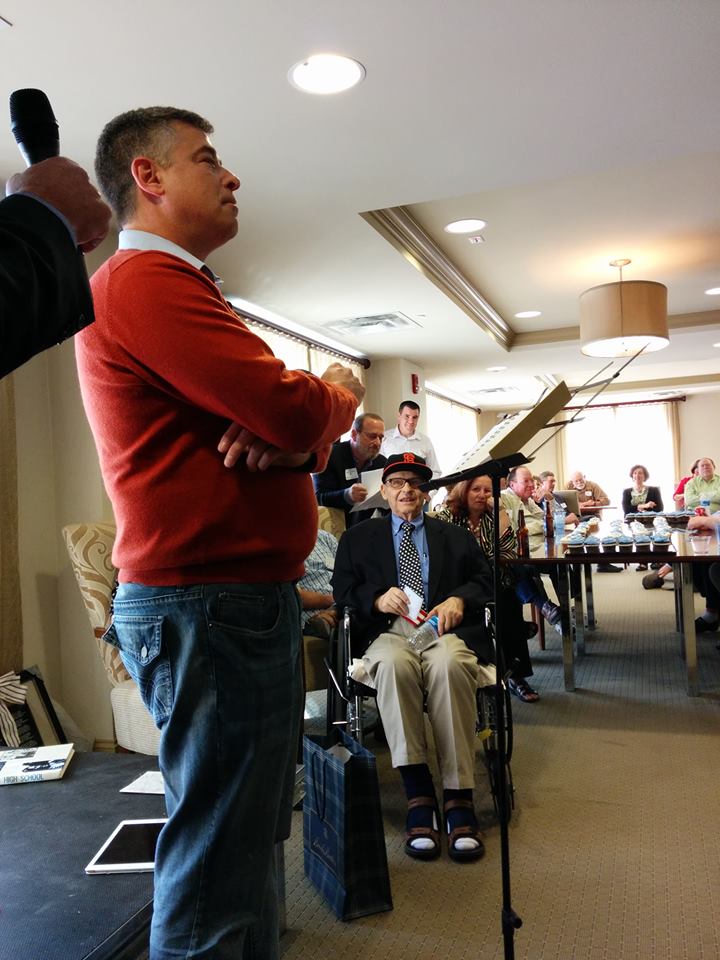
At the actual event, many people contributed to a large scrapbook and to the event’s festivities, including an amazing speech by former Missouri state debate champ, Neal Osherow, and an incredible original poem/rap, written and performed by former debater, Steve Levin https://youtu.be/tA5F3XdNcwI, and a mock debate (pictures, above) with many former debaters. So much fun! So much respect, admiration, love, re-connecting.

Mr. Heyde gave a prepared speech (but mostly from his memory!!) of the history of the debate team at Ladue Horton Watkins High School in St. Louis and that was fascinating. There were many former debaters and Speech competitors there (as I was, having won 4th place at the Missouri state level with my acting partner, Karen Raskin, in Duet Acting!), and students of Mr. Heyde’s. Excellent turnout: many had to be turned away due to fire code restrictions!

Thanks, Ladue Education Foundation organizers, for imagining, creating and hosting this excellent festival!

Here is my letter, sent to Mr. Heyde in 2012 and again in 2015 for this event:


Hi, Mr. Heyde,

I just found out how to contact you and wanted to thank you. You may not remember me, since you have had thousands of students, so let me jog your memory: I was then Sally Fleischmann (Jonathan’s next-younger sister) at Ladue High School (we have 2 younger sibs you may also have taught, Wendy [now, Ellen] and Lauri). I took your Advanced Composition class in 1970-71. I was one of the only students to get a “B+” on a first draft, while most received “D”s and “F”s. So, I suppose I can’t give you credit for ALL of my writing skills and abilities, but please, read on.

Another memory jog: One of the essays written for your class (about game-playing imagery in a short story by William James) was published in that year’s LHS creative writing journal. I then went on to torment Ms. Cannon in the Advanced Placement English class my senior year by never getting less than a “B” on any written paper, while acting up in her class a lot (I did win the vote [along with our class President, Andy Eder] for “Class Clown” in our yearbook’s “Senior Superlatives,” after all…).

Although I had been published, starting as a 4th-grader, in school and camp newsletters, for short stories, articles, poetry and songs, and again as a freshman, in Missouri Youth Writes, for a poem, prior to having your class, I felt that this essay’s being published was my first “adult” placement. As an actual adult, I have had short stories, poetry, articles, nonfiction books, songs and plays published and produced by others, and served as an editor/rewriter/proofreader for many publications.

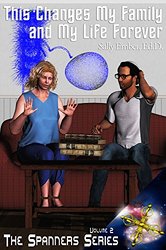
In 2013, I became a blogger (Sally Ember, Ed.D., http://www.sallyember.com), and a self-published science-fiction author with Volume I, This Changes Everything, of The Spanners Series</strong>; in 2014, I added Volume II, This Changes My Family and My Life Forever, and I hope to add Volume III, This Is/is Not the Way I Want Things to Change, in 2015 and seven more after that! In 2014, I began hosting my own talk show, conversations between authors, CHANGES, and I often think of you while talking to others about their writing. I also write reviews for Goodreads and Amazon, and while critiquing others’ books, your phrases about what constitutes “good” or “bad” writing often come to mind.

I credit you and want to thank you for modeling for me (and many others, I’m sure) how to teach and inspiring me to teach composition and writing to adolescents and young adults. I went on, after teaching elementary school and middle school language arts, to teach writing: for five summers at Upward Bound; for several years at three community colleges; for five years at two different universities; and, for six years in community education locales, including Corrections Education, in several states. While acquiring my Master’s and doctorate at UMASS/Amherst, I taught writing in Peter Elbow’s peer review process’ domain. I also have had occasional contract work as a researcher/ writer/ editor/ proofreader. I know that your recognition of my writing as “good” (a characterization you did not give out to many pieces) set me on this path.

I think of you often, as a great teacher and someone who inspired me to write more and to teach writing. Even 43 years later, I can picture you perfectly, gesticulating strongly, your necktie blowing about as you passionately enjoined us to become literary critics, not just essay-writers. “Literary criticism” was a foreign concept to me as a junior in high school, until your class. I had learned about symbolism, metaphor and allusion, even how to cite quotations. But, putting it all together analytically, originally, and interestingly? Never even crossed my mind, until you gave us your assignments.

You opened me to a whole new intellectual world. I remember with intense clarity the exact moment when I first “got” what you were trying to convey, and understood (in a very basic way, but still, understood) how to construct a critique. I was astonished. It was as if you had been decrypting a code, helping us to begin using a secret language within English. I really was thrilled to be part of this new “club.”

Yes, I am a geek. I usually read over 250 books a year. Yes; I do. I have, since elementary school, been an avid reader. I was also an athlete: a runner, a cheerleader in 9th grade, a gymnast and field hockey player; also, I am a musician and singer/actor; and, in high school, I was “popular,” including having been elected/selected to that pinnacle for girls in that era, a cheerleader. This is to say to your students that these “identities” are not mutually exclusive: being inducted into the National Honor Society and having lots of friends happily co-exist in many, and I heartily encourage your students to cultivate both their brains and their hearts.You will help them, I’m sure.

I mainly wanted you to know what a great influence and help you were in my professional life, and what warm memories I have of your class. Never think your import was forgotten or unsung, even if we don’t find you to tell you: THANK YOU!

Best to you and your students, past, current and future. Write on!

Take care,

Sally (Fleischmann) Ember, Ed.D.


Do you have a teacher, coach or other mentor you’d like to thank? Start by commenting here and keep on sharing! #thankateacher

Mr Heyde and one student
Mr. Bill Heyde and student, Ladue High School, circa 1970?

Unknown's avatar

Yizkor is the Memorial Service Recited 4x/year during #Jewish Holiday Services

Yizkor is the Memorial Service recited four times each year during #Jewish Holiday Services and it happens this week for Yom Kippur.

Want to learn more? “My Jewish Learning” is a great website for the curious or Jewish-estranged/ignorant: http://www.myjewishlearning.com/article/yizkor-the-memorial-service/

Many people light a special, 24-hours-burning yahrzeit candle each year to commemorate the anniversary of a loved one’s death and most Jewish people light one tonight, the Eruv (evening before) Yom Kippur.

yahrzeit-candle

I have not been a practicing Jew for over 45 years, but almost every tradition and religion has ceremonies to honor the dead at least once every year.

In the Nyingma Vajrayana Tibetan Buddhist I am a a part of, we do a daily practice (puja) that includes prayers for the recently deceased (“recently” means anyone who departed within the last 49 days, which has special meaning for Buddhists) and an annual practice for all who have ever died whose karma we pray to improve, during an extended set of prayers and commemorations (a Drubchen). Want to know more? Red Tara (Jetsunma) is the daily puja sadhana (text) and Red Vajrasattva is the Drubchen‘s practice referred to, here. Here is my spiritual community’s (sangha‘s) website, which has a lot of information, including a link to its bookstore, Tibetan Treasures: http://chagdudgonpa.org/

For whatever reasons, maybe because my step-uncle, Jerry Leavitt, died somewhat suddenly (but he was 90 years old…) last week, this week I am especially moved to remember all those I/we have lost, who have passed “too soon” or even those who have had a “good, long life.”


Meg Christian’s beautiful memorial song, “The Ones Who Aren’t Here,” is at 19:45 on this wonderful concert recording from 1983, “Meg & Cris at Carnegie Hall.” Tears and memories abound.

I “recite” some of their names, here. May their memories be a blessing. A”h, z”l, and zt”l

A”h is short for alav/aleha hashalom, which means ‘peace be upon him/her.’ Alternately, z”l stands for zikhrono/zikhronah livrakha, meaning ‘May his/her memory be a blessing,’ and zt”l stands for zekher tzadik livrakhah ‘May the memory of this righteous one be a blessing.'” (From the above “My Jewish Learning” website.)

Passed during high school or college years, from Horton Watkins High School, Ladue, Missouri, USA, in the 1970s:
Jim Haller (motorcycle accident, 1971)
Barbie Dietchmann (cancer, 1988)
Alan Bierman (car accident, 1970)
Lisa Brie (car accident, 1970)(and 2 more I didn’t know, killed in the same car accident as Lisa and Alan)
Barbie Korman (cancer, 1970)
Ellis Markman (a distant cousin of ours and from my class; accident/drug overdose)
Gary Fonarow (heart attack)

Passed later, but “too soon,” from my graduating class or the one before mine (my older brother, Jon’s, class), from Horton Watkins High School, Ladue, Missouri, USA:
Debbie Kean (the sister of two dear Camp Hawthorn counselors; Mike passed before she did)
Elice (Liccey) Bierman (Alan’s sister, friend from Camp Hawthorn and school)
David Ross (my first high school boyfriend)
Jeff Gall (a cousin of my sister, Lauri’s, husband, and in my class)
Joel Roufa (the only kid who punched me in the stomach in grade school)

Passed friends and teachers, taken “too soon,” from the 1970s – 2000’s:
Joan Levinson (the person who most supported and inspired me to get my advanced degrees) (cancer)
Mary Buren (one of my first New Hampshire friends) (cancer)
Marcia Watermolen (my son, Merlyn’s, first Waldorf teacher) (cancer)
David Taylor (fellow actor and star of plays I helped direct; taken by AIDs, in the 1980s)
Cynthia Toth (former housemate, sangha member, friend, my age) (cancer)
Russell Wilfand (one of my best friends at the time of his untimely and sudden death, December, 2007) (stroke)
Jaye Alper (long-time friend and “sister”, of kidney disease, then cancer, April, 2012)
Martha Alsup and Susan Galvin (murdered while on vacation, in their late 30’s)
Iris Markman (Ellis’ mother, theatre/dance teacher at Ladue, also distant cousin of ours; cancer)
“Papa” Joe Richardson (chorus teacher at Ladue; cancer)

Family:
Great-grandparents, great aunts/uncles, aunts/uncles and grandparents, cousins (the ones I knew) , and my father, Ira Fleischmann
“Les” (Sylvester) Harris (stepfather)
“Mama” Sarah Epstein Klein and “Papa” Samuel Klein
Mildred “Mimi” Klein Cytron Bright
Stanley Cytron
William Grosblatt and Agnes Pickle Grosblatt
Bea Grosblatt
Samuel Fleischmann and “Yetta” (Gertrude) Grosblatt Fleischmann
Ben Fleischmann and Ruth Fleischmann
Janice Cytron Rosen and Milton Rosen
Melissa “Missy” Rosen and Lisa Rosen
Nancy Fleischmann Levin
Ethel Klein Trost, Florence Klein Switow, Harry, Jimmy and Eddie Klein
Naomi Leonson Wagner

Family Friends, “Aunts” and “Uncles,” and Friends’ Children:
Margie Klearman
Betty Hoffman
Karky Gitlin and Maury Gitlin
Ed Sorg
Aram Gurian
Max Bassinson
Isabell Schwerin-Whyte
Emily Weiss
Harvey Mizes

My First Buddhist Teacher and the Teacher of my Teachers, His Excellence Chagdud Tulku Rinpoche

If I have inadvertently forgotten anyone, please add/include them and forgive my poor memory.

HUGS to all who have lost someone recently or who miss them, still.

lit-candles

Unknown's avatar

10/2-10/11/16: 10Q: Reflect. React. Renew.: “Life’s Biggest Questions. Answered By You.”

You don’t have to be Jewish or celebrate #Jewish High Holy Days (Rosh Hashona, Jewish New Year’s, and Yom Kippur, the “Day of Atonement”) to want to spend some time considering your life and your goals/accomplishments each year. I was raised Jewish, but I am a practicing #Buddhist.

It’s free! doyou10Q.com and #DoYou10Q are the connection points.

10Q: Reflect. React. Renew.: “Life’s Biggest Questions. Answered By You.”

The title and all the info, below, come from the 10Q site. Visit! Sign up! Do it!
http://doyou10q.com/

10 Days. 10 Questions.
10-q-logo

Answer one question per day in your own secret online 10Q space. Make your answers serious. Silly. Salacious. However you like. It’s your 10Q. When you’re finished, hit the magic button and your answers get sent to the secure online 10Q vault for safekeeping.

One year later, the vault will open and your answers will land back in your email inbox for private reflection.

Want to keep them secret? Perfect. Want to share them, either anonymously or with attribution, with the wider 10Q community? You can do that, too.

Next year the whole process begins again. And the year after that, and the year after that.

Do you 10Q? You should.

doyou10q

Click hereto get your 10Q on.

10Q begins October 2nd, 2016

http://doyou10q.com/


Here are some of mine from 2015 and 2014:
2015

Describe a significant experience that has happened in the past year. How did it affect you? Are you grateful? Relieved? Resentful? Inspired?

Your Answer:

I was able to reconnect with my meditation practice in March & May and again in early Sept. through instruction and connection with my spiritual teacher, Lama Drimed, after many false starts, attempts, painful absences and confusions as well as hurt feelings on my part.

So happy about all that!

Describe an event in the world that has impacted you this year. How? Why?

Your Answer:

The upholding of Marriage Equality laws and the enforcing of them across the USA and in other countries feels like a giant victory.

Looser laws, releasing noncriminals from prison when their only “crime” is possession of marijuana, and eventual legalization of marijuana/cannabis use across the USA and other countries also seem imminent, due to the vast success (economic and social) of those places in which it is already legal and those changes have already occurred; another set of great victories.

I appreciate the egalitarians’ winning. I appreciate common sense’s prevailing. I appreciate nondiscrimination’s being enforced. Feels right and good.

Have you had any particularly spiritual experiences this past year? How has this experience affected you? “Spiritual” can be broadly defined to include secular spiritual experiences: artistic, cultural, and so forth.

Your Answer:

Due to a TBI [Traumatic Brain Injury] in April, 2014, I went from not being able to meditate for almost one year (after meditating consistently for over 42 years) to restoring my practice, slowly, bit by bit. Very grateful to my spiritual teacher, sangha and good fortune that this has been possible.

Returning to my practice is like coming home.

How would you like to improve yourself and your life next year? Is there a piece of advice or counsel you received in the past year that could guide you?

Your Answer:

My meditation teacher reminded me that meditation practice in our tradition comes from our heart center, not our brain area. The Tibetans use a term that means “heart-mind” when talking about the mind.

My wish to improve myself and my practice is to keep it centered in my heart. “Meditation: it’s not what you think.”

2014
Describe an event in the world that has impacted you this year. How? Why?

Your Answer:

Many science discoveries: proof of the multiverse, ability to teleport particles, invention of pre-tractor beam technology, getting paralyzed rats and others to walk, moving limbs and other things with just the mind: so much!

Very exciting, and all goes into research I use for The Spanners Series books!

What is a fear that you have and how has it limited you? How do you plan on letting it go or overcoming it in the coming year?

Your Answer:

Fear getting more unhealthy instead of more healthy over the next several years. Fear not getting my full meditation practice/brain function restored. Fear being unconnected to community/friends, no lover, no one close to me where I live.
Plan to keep exercising, eating better, reaching out to Buddhist and other groups (writers, Jews, work) to make friends.
Plan to stay in touch with my teacher.

What are your predictions for 2015?

Your Answer:

Movement toward reducing and ending full-impact football, hockey, etc. (headers in soccer, e.g.), in youth and college sports.

More states’ legalizing marijuana.

More states’ ratifying gay marriage.

Proof of alien life on other planets.

Unknown's avatar

Another tale of terrible customer service from #YouTube: Why do we allow it?

Some of you may know that #YouTube “flagged” and “removed” CHANGES conversations between authors‘s 51st Episode’s title and description for what would have been my upcoming Hangout On Air (HOA) live video three weeks ago and

changes-theme-image_3

By the way:

Watch conversations with my previous *CHANGES* guests any time: https://www.youtube.com/playlist?list=PLPbfKicwk4dFdeVSAY1tfhtjaEY_clmfq
Learn more about and get yourself or recommend someone to be scheduled as a guest: https://sallyember.com/changes-videocasts-by-sally-ember-ed-d/

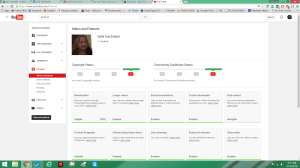
But, wait: it gets worse! YouTube then suspended my livestreaming privileges, funneling me into what could have been a three-month-long “appeal” period, FOR NO REASON. YouTube’s ridiculous ‘bots claimed I violated their Terms of Service with a Copyright Violation (completely false).

screenshot-48

screenshot-49

That was called my “first strike.” Apparently, if a creator gets three of these, YouTube’s insane ‘bots summarily shut down the creator’s account, permanently.

I finally heard back from YouTube, after complaining on Twitter and elsewhere for three days straight and seeking advice on YouTube and HOA fora for 3 weeks. I received a notice that I am no longer “suspended,” but (see below) it displays horrible customer service.

I am flummoxed and need advice. Please weigh in!

I was advised before publishing this post to “let it go” because “YouTube has over 500 hours of video uploaded every minute” and can’t possible vet it all with humans. And, to let it go because “nothing I say will change anything.”

Wow! YouTube/Google has BILLIONS of dollars and can’t hire enough staff to run their sites properly? Boo hoo. Hire more people, Google! You can afford it. Better than alienating your customers, if you care (obviously, they do not!).

Both hinted at possible retaliation if I made any noise.

Screw that. I’m a make-noise kind of person.

So, my major complaints are these:

1) This YouTube “team member” who wrote this mostly form-letter email offered:
—no apology
—no explanation of what the “violation” was presumed to have been consisting of
—no way to tell why my set-up actually got flagged
—no information on how to prevent getting flagged in the future, and
—no statement of YouTube’s clearing my account of “strikes.”

But, I checked, and there are now no strikes!

screenshot-52

2) This entire fiasco was all YouTube’s fault: I never violated any Terms of Service! But, they still inserted their standard, not-so-subtle, victim-blaming paragraph in this email.

Because this was THEIR MISTAKE, why do they not remorsefully announce that they are removing this bogus “first strike” from my creator’s account tally? They DID do this….

bad-youtube

3) But, contrary to the wording of this email, below:
—there WAS NO CONTENT TO BE FLAGGED
—this video never streamed, therefore
—there was nothing to be “taken down,” BUT
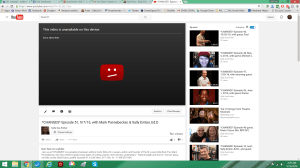
—my original title and description exist, but with no video and no way to re-activate it that I can see!

screenshot-53

4) How (and with what) did anyone (human or ‘bot) “review my video”?? For what?

5) And, how do I set it up (again) and have it work, this time?

Apparently, since this happened as I was attempting to complete and save my set-up page, this unstreamed video was flagged for its title and description, during set-up! However, I used almost the exact same wording I have used for the previous 50 Episodes of my talk show, CHANGES conversations between authors, as before. Even if it had streamed, there is no “copyright” violation possible. Each Episode is always just I and one author talking about our own work and general topics. period.

6) How can YouTube be run by crazed ‘bots and idiotic, irresponsible humans who apparently have a policy to “shoot first, ask questions never”? Why do they have a policy and process that presumes guilt and offers no timely recourse or explanation when they are wrong.

presumed-guilty

Why do we users/creators put up with this?

7) And, given all the problems HOA hosts/users have been having with the new (since 9/12/16) YouTube-only-HOAs as detailed in a Google+ tech group I subscribe to, I’m reluctant even to try to set up this or any Episode any time soon.

You decide if I’m overreacting and how best I should respond. Send your comments to this website http://www.sallyember.com/blog on this post or email your suggestions directly to me: sallyember AT yahoo DOT com Advice welcomed, because I am steaming mad and likely to do/write things I regret all over social media right now. Thanks!

Here is YouTube’s “you may now get out of jail” email, unedited:

Hey Sally,

I’m reaching out on behalf of the YouTube Creator Support team to connect regarding your live streaming issue.

It looks as though live streaming was disabled due to some of your content being flagged and taken down. We count on our community members to know our Community Guidelines and to flag content they believe violates them. We review all flagged content quickly, and if we find that a video does violate the guidelines, we remove it. Occasionally, a video flagged by users or identified by our team is mistakenly taken down. When this is brought to our attention, we review the content and take appropriate action, including restoring videos or channels that had been removed. In this case, we were able to review your video and get it reinstated, as well as reinstated your live streaming capabilities!

Thanks so much for bringing this to our attention and should you ever have any additional questions or issues, please feel free to reach out the Creator Support team here.

Take care,
TEAM MEMBER’s name withheld
Partner Operations Manager
creator-support@youtube.com

Unknown's avatar

New job report, 2 days in…

New job report, 2 days in…

HiSET FEATHER

FYI: rolling registration for “Doors to Success” High School Equivalency (HSE) “HiSET” (no longer called the G.E.D. in Missouri) exams preparation, academic skills improvement and life/jobs skills program for youth ages 17 – 23, in both Maplewood (mornings) and Hazelwood/Spanish Lake (mornings and afternoons), in St. Louis County, Missouri, USA, throughout the year! 314-415-4940 for more information and to sign up for an Orientation (occurring about twice/month). Also, Parkway area AEL has regular Adult Education and English-as-a-Second-Language (ESL) classes year-round, too, in dozens of locations around the County.

1) role-played and coached a student on her first job interview (will find out today how she think the actual interview went);

2) explained to a student studying history what economic and social classes are, what defines them and how they impact politics as well as which groups were denied the vote in the USA and for how long;

3) collaborated with a student to choose her assignment topics for critical reading and vocabulary building and she chose to include a story about Uri Geller (friends, family members and readers of The Spanners Series by Sally Ember, Ed.D., Volume I, This Changes Everything, know why that is funny);

4) figured out how to and did “open” the space for the afternoon session (not uncomplicated);

5) went over pre-testing and class assignment results with two students and explained/discussed which questions were actually “wrong” because they didn’t know the answer and which were “I read it too fast or not carefully” issues;

6) explained to three students how test-makers try to trick test-takers and how not to be fooled;

7) when asked “What were things like for you when you were 17?” related the story of my taking several hours off from school to sit in our dad’s car and listen to the radio in the school parking lot, waiting to hear what lottery draft number was going to be assigned randomly to my one-year-older-than-I brother and my then-boyfriend. Told her how I sat there, alone, crying and praying they would get a high number, meaning, they would not be drafted for the war in Vietnam.

the-vietnam-war-13-728

I explained how that was horrifying because others I knew would and did get drafted. Got teary telling her what a scary, terrible time that was for all the boys and people who loved them.

She was very quiet and got teary, too, and then said; “I meant, what music did you listen to?” We laughed.

All in all, a good two days! Thanks, Parkway Area Adult Education and Literacy, for including me in your teaching staff for “Doors to Success”!

AEL logo real

P.S.: #7 reminded me (a little too late…) of an incident that happened to my dear friend and fellow parent, Bill Whyte (Badger Bill), with his daughter, Emily Schwerin-Whyte, when she was about four years old in the early 1980s.
Emily asked her father, a renowned expert on visualization, stress management, relaxation and such: “Daddy? What is ‘stress’?”
Bill, in his best fatherly voice, was about to launch into an explanation of stress fit for a 4-year-old when he has the perspicacity to ask: “What do you mean, Emily?”
She answered: “Oh, you know: like ‘seamstress.'”
He said that he blew out a long breath and was relieved that he hadn’t burdened his pre-schooler with his prepared, long, drawn-out explanation that she hadn’t really requested….

I should have remembered that!

Unknown's avatar

How to Estimate Agenda Times for a Meeting/Workshop in the USA

How to Estimate Agenda Times for a Meeting/Workshop in the USA
OR

Time Management for the Eternally Optimistic and Always Late Facilitators/Leaders

I have worked in nonprofits, educational and other venues for which meetings (workshops, Board meetings, conference convocations, etc.) are a necessity. I cannot count how many times I have sat through a session run by someone else who could not figure out how to manage the time for the stated agenda, nor how to create an agenda that could actually be completed in the time allotted.

Frustrating, insulting and disrespectful to those in attendance, and otherwise a TIME WASTER.

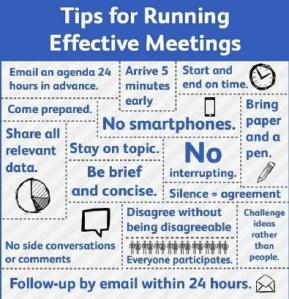
running effective mtgs
image and meme info from http://www.inspiredemployee.com “Running Effective Meetings”

My friend and colleague, Mario Cossa, and I have coined the term “pre-crastinators” endearingly to refer to ourselves. Pre-crastinators are prepared early so that we are able to and do send out agendae AS PROMISED, distribute minutes or preparatory materials in advance and do not make other wait.

Leaders are training people with every move
—I never start late, even if I and only a few others are on time, because if I did, then I would be dishonoring those who made the effort to be punctual and training participants/members to believe that being on time won’t matter in the future.
—Similarly, I always end on time, unless I have asked the group for permission to extend our time and been granted that.

When an item requires more time
I must notice this so that we can take a break from the agenda to discuss this dilemma PRIOR to the ending time and list what our options are. The members can then let me know if adding a specific number of minutes to complete a specific item/task is acceptable or if we have to postpone that item’s completion.

If we run late, then, it is as a group and not based solely on my decision or due to poor planning. These approaches to time management show respect and organizational control. Therefore, I make sure that I/we can conclude the event and its agenda by the end of our agreed-upon time limit, with designated items labeled in advance that must be discussed at more than one meeting.

start and end on time
image from http://http://www.slideshare.net/gretchenrubin/gr-14-tips-for-running-a-good-meeting-2/2-1_Very_obvious_Start_on “Start and End on Time”

Therefore, I offer my pearls of wisdom from decades of managing time extraordinarily well. Take notes.

Let’s use an hour-long session as the prototype for this list of tips.

Opening, Closing and Pacing a Session

  • Allow three minutes extra for “entry” and “ending” than whatever you have planned. TOTAL TIME: 6 minutes
  • Allow one minute between agenda items/activities for transitions. TOTAL TIME: 6 minutes
  • Include announcements, brief introductions, setting meeting format/ground rules (if needed), selecting timekeepers/co-facilitators (if desired), site’s logistics (for longer sessions, the locations of bathrooms, break times, fire exits) thank-you’s and other necessities up front or at the end: allow about two minutes for each. TOTAL TIME: 4 minutes

    opening the mtg
    image from http://vismap.blogspot.com “Opening the Meeting”

  • Allow a “next steps” agenda item preceding the conclusion of any session for at least five minutes to have participants be assigned/volunteer for tasks, set time expectations/deadlines, and confirm/set the next meeting date/place/leadership. TOTAL TIME: 5 minutes
  • Remind people of the last session(s) or read and accept the minutes to get everyone back into this group’s objectives from wherever they each just came to your session from, especially if more than two weeks have elapsed between sessions. Allow 5 minutes for this re-cap. TOTAL TIME: 5 minutes
  • Make sure everyone has a chance to speak during an hour-long session by inviting individuals by name to contribute at least once. During the wrap-up, ask if anyone has anything else to say before ending. Allow 4 minutes for this. TOTAL TIME: 4 minutes

You actually have only 30 minutes for your “hour-long” session’s actual agenda. Truly. And, that is only if you start and end on time. Schedule more sessions if you need more time.

What about introductions?
—NEVER use your precious session’s time for longer introductions of members’ UNLESS that is the sole purpose of your session.
—When your group has more than five people and you have only scheduled one meeting, you can’t use more than about 15-30 seconds to “meet” each other by way of self-introduction for each person.
—Be clear about that up front and then model the proper format for the group by going first.

quick intros
“Quick Introductions”

Generating and Upholding Realistic Time Expectations

  • For a 30-minute agenda, no item should be allocated more than 10 minutes unless it is the main focus of the entire session.
  • Sub-divide any complex item’s components into 3- to 10-minute slots to keep people’s attention and keep you (the leader/time-keeper) on task.
  • For a 30-minute agenda, a maximum of 3 items should actually require group discussion and/or voting/ consensus/ confirmation of learning. If you have more, you need a longer meeting time.
  • Allow up to twelve minutes, total time, for each major agenda item, start to finish, including transitions between sub-items. If any requires more than 12 total minutes, postpone/table some of the decision/learning to the next meeting.
  • Put the designated/expected times for each item right next to it.

Sample-Agenda-copy
image from http://northboundsales.com “Sample Agenda with Times Listed”

People Management
I do not let others hijack my meetings or workshops with unending stories, unfiltered confessions, boring and repetitious contributions (like your own voice much?) or other time-wasters.
I make sure everyone has a chance to speak who wants to contribute.
When I run the meeting or workshop, everyone can relax, listen and participate well.
I facilitate with humor, grace and firmness.
People LOVE my workshops and meetings because I use their time respectfully.

  • If you have groups whose members consistently keep on “running off” verbally, rotate the timekeeping and agenda-maintenance roles (per meeting or per item) and don’t assume these all yourself.
  • Bring a visible/audible timer and use it for each item. Set the timer to go off or have the timekeeper announce when there is one minute left for that item and again when that item’s time has elapsed.

    timer
    “Visible/Audible Timer”

  • When more time is actually needed for an item than was anticipated (new issues or problems arose, a useful activity or discussion is occurring), discuss extending the time and get consensus about that with the group AND announce that you/we are deciding that some other item(s) will now have to wait until the next meeting OR we can agree to postpone finishing this one until our next meeting.
  • Rephrase, reframe or thank each contributor with as few words as possible.
  • When someone starts to be repetitive or repeat someone else’s contribution, interrupt them with something like this: “I appreciate your enthusiasm/interest/knowledge, but we don’t have time to go over the same ground here. Do you have anything new to add?”
  • Remind people to add to/refer to rather than repeat others’ contributions by saying: “I agree/disagree with [THAT PERSON], AND/BUT…” and thank them for their conciseness in advance.
  • Use your hands and face as traffic/time controllers: hold up one finger, a hand in a stop-gesture, use a calming/quelling gesture, a nod, a frown, a smile, a slight shake of your head with clear intention. Point to the agenda (which should be posted where all can see it as well as handed out on paper) and your phone or watch or the wall clock. Count down with your fingers and say: “Two more minutes on this item.”

ending the mtg
image from http://vismap.blogspot.com “Ending the Meeting”

  • Be firm and grateful, both.
  • Briefly summarize what was accomplished, next session’s tasks, and meeting date/time/place before leaving.

success signs of mtg
image from http://www.opensesame.com/ “Signs of a Successful Session”

Good luck!

Unknown's avatar

#Buddhist #meditation Mini-#Retreat at Home: Report from the Homefront

#Buddhist #meditation Mini-#Retreat at Home: Report from the Homefront

May 27 – May 30, 2016, all-day, four-day mini-retreat at home: YIPPEE! Did it! First one since my TBI (Traumatic Brain Injury)/concussion/broken nose/hurt eyes in April, 2014; first one in St. Louis. [I called it a “mini” retreat because I usually did at least three weeks’ and up to 11 weeks’ retreat, prior to this.]

I offer this post as a description and explanation for newbies and the curious, but I do not discuss the details of my practice with anyone but my teacher and fellow practitioners.

SCHEDULE:
A typical meditation schedule consists of Tüns (meditation/practice sessions) segmented by meals, breaks, exercise, sleep and personal hygiene time. When we do individual retreats, often we set our own schedules. I modeled this summer’s mini-retreat schedule mostly on the same schedules I followed while on individual retreats at the main meditation center (Rigdzin Ling in northern California), and at my residences in Silver City, New Mexico, and Santa Rosa, Sebastopol and Hayward, California, 1999 – 2014.

Home Mini-Retreat Schedule 2016

3:30 – 4:15 AM— Wake up, ablutions, etc.
4:15 – 5:30 AM— First Tün (meditation/practice session)
5:30 – 6 AM— Breakfast
6 – 10:30 AM— Second Tün (with two ten-minute breaks)
10:30 – 11 AM— Lunch
11 AM – 12 PM— Third Tün
12 – 1 PM— Nap (during first third, usually; see below). Otherwise, Fourth Tün
1 – 3 PM— Exercise (swimming/driving to and from) with moving meditation for 35 minutes while swimming
3 – 5 PM— Fourth/Fifth Tün
5 – 5:30 PM— Dinner
5:30 – 8 PM– Fifth/Sixth Tün (with one ten-minute break)

Total meditation time: about 11-12 hours/day, so about 40 hours (I ended before dinner on May 30).

LOCATION:
When I was fortunate enough to be at RZL, I often sat on a cliff overlooking a pond, river and mountains in the distance, above the main buildings of the center. For other types of practices, meditators prefer or must be indoors or even in a cave or place of complete isolation and darkness for most of the time.

Many people doing the dzogchen Tibetan Vajrayana practice of awareness (rigpa) meditation, trek chöd, as I do, prefer to sit where we have an unbroken view of the sky.

man sunrise meditatiion
NOT what my home retreat looked like at all, this year

There aren’t many cliffs and sky views near where I now live, in St. Louis, Missouri, USA, and I didn’t want to spend a lot of time driving to a spot at which there would be no food, no bathroom, no easy place for this mostly injured body to sit, and no place to swim. Hence, a home retreat. I could almost see the sky, sometimes. I could see trees, bushes, a street and parking lot. Didn’t matter at all. I wasn’t involved with any of it. We keep our eyes open for this type of meditation, but with a “soft focus,” not paying particular attention to anything while noticing everything.

living room retreat spot 2016
Where I did most of my sitting practice: on the living room couch, learning against these cushions on the left, looking out the glass doors of the patio/deck to the right.

WHAT WE DO and DO NOT DO:
We also hear, smell, feel everything. We are not “checked out,” if we are practicing successfully. We are fully awake while doing our practice, sitting in oneness—in awareness (rigpa, Tibetan)—as often as we are able. We return to this awareness every time our attention wanders. That is the practice of trek chöd (Tibetan), in the simplest terms.

For this type of meditation practice, in retreat, practitioners usually don’t recite mantras, pray (except at the beginning and end of each retreat or even each Tün, if we want), use our malas (Tibetan prayer beads on a string, predecessor of the Catholic’s rosary), chant, visualize, play ritual instruments, enact stories, light incense, fill/offer water bowls, open our shrines or speak. Our practice is stripped-down to sitting and breathing.

The entire retreat is usually conducted in strict silence, which means that we make no eye contact when we do encounter people and we do no talking, writing, reading, or any other communicating (when necessary, we use “functional speech” only). We put away and turn off all cell phones, computers, communication or writing/reading/viewing devices of all kinds. We don’t write letters or answer the phone unless we are in a longer retreat during which we must communicate with family, friends, colleagues, neighbors occasionally to reassure them we are all right or respond to something urgent.

When we are fortunate (and/or wealthy), we have someone to “serve” our retreat: they shop for, prepare and serve our meals, sometimes even cleaning up for us, leaving us free to meditate for more time each day. That is part of the wonderful service that active meditation centers often provide retreatants. Sometimes, though, during non-busy times, when I was at the center, I still had to cook and clean up after my own meals, but I didn’t have to shop.

For home retreats, I have to do it all myself. I manage that by cooking a great big pot of soup and another big amount of something I can dole out each day for my two main meals and then have something small (a bowl of cereal, e.g.) for dinner.

Eating lightly at night is important for me, anyway. During a sitting and silent retreat like this, unlike the more active ones, our appetites get smaller and smaller as the retreat progresses, so we need less food.

THE RETREAT COMMITMENT:
It is important to make a firm commitment to one’s retreat by scheduling the entire period in advance and sticking to it. It is also important to make a daily schedule and adhere to it. Many also maintain/take a vow of celibacy to maintain during retreat (no sex or sex acts); some do not.

We all abstain from intoxicants (recreational drugs, alcohol) during retreat. If we have taken Layperson’s Buddhist Vows (or Five Main Precepts), as I have, we also never get intoxicated/inebriated. I don’t drink or use drugs, anyway, but for many meditators, retreat boundaries include that they refrain from engaging in the use of these substances during retreat.

Even if we get sick, someone dies, and/or there are other seemingly significant events that occur, we strive not to break our retreat commitments. Unless it is to save our own or someone else’s life or involves getting medical care to restore our health so that we can practice better afterwards.

It is important to let our friends, family and neighbors know, especially if we are doing a home retreat, that we won’t be answering phones or responding to texts or emails, for example, during these times/these days so they don’t worry. That way, we prevent someone from getting “wrong view” about meditation/meditators (e.g., not understanding our commitment, they think we are rude, unkind, insensitive, unless we communicate to explain).

We do not waver from this commitment or break our silence for any reason. These commitments and guidelines are called “retreat boundaries.” At the risk of generating “static” and negativity for our next potential retreat, we do not leave the grounds of a closed retreat (the “cloister”) or end our retreat prematurely. Some teachers give dire warnings about practitioners’ breaking boundaries that will result in creating negative future retreat karma, but I don’t like responding to threats. I maintain commitments because I want to do it.

Making and keeping these commitments strengthen the practitioner’s practice foundation and create/maintain a strong “container” for successful meditation practice. I feel good when I keep my chosen boundaries.

This time (or for any other home retreats), I did not have a completely strict, cloistered retreat: just isn’t possible. I drive to and from the pool, shop on the the first day for food and cook when necessary (more often on longer retreats). I also responded to a few communications from people who didn’t know I was in retreat and/or to reschedule things I had forgotten to reschedule. But, mostly, I did keep the strict retreat boundaries and commitments.

THE RETREAT EXPERIENCE:
Buddhist teachers talk about the entire retreat’s span of time as being divided roughly into three parts: “getting in,” “being in” and “rising out.”

“Getting in” is the first third. During this, we acclimate to being on retreat, letting go (sometimes slowly, sometimes more readily) of our daily concerns, activities, personae, thoughts, obligations and settling in to the schedule.

We always “open” our retreat with setting our intention and reaffirming our motivation and with gratitude, with prayers and thanks to our teachers. Usually, other directions are given to us in advance by our teachers.

Sometimes, we make offerings and/or have a ritual feast and prayers (tsog). Sometimes we continue our daily practices for the first day or so. Sometimes we do some preparatory readings (from teachings, notes, books) to remind us of the practice we are about to engage in and how to approach it.

Frequently, a lot of tiredness manifests early in this first third. If so, it is recommended that we nap a lot, recovering from the stress and strife of our usual lives’ demands. The peace, quiet and low-key nature of retreat bring us to a recognition of how exhausted and depleted we have gotten. Extra sleep is then necessary to restore ourselves and to be able to practice better for the rest of the retreat.

The middle third is “being in.” By then, accustomed to the schedule, needing fewer or no naps, we are ready and eager to practice for each Tün. We know what we are doing, we are glad to be doing it, it’s working as well as it will. Depending upon how long this period is and how quickly we are able to dive in, we can get very deeply immersed or only partially, but this is the main part of our retreat’s practice time. Whatever signs of accomplishment we may get usually begin to show up in this portion.

The last third is “rising out.” Sometimes gradually, sometimes more quickly, our minds and bodies begin to leave the depths and rise to the surface, preparing us for returning to our daily lives. For longer retreats, we spend part of this time still in retreat and the last part of it again in practices of formal gratitude. We “close” on the last day with offerings and/or a ritual feast and prayers (tsog), and dedicate the merit (the blessings and benefits of our practice) to all beings.

For the last day/hours or so, we are actually not still in retreat, exactly, but beginning to engage again in the more “ordinary living” aspects (whatever we haven’t been doing and must return to, such as driving, doing laundry, talking/communicating again).

We often don’t realize how deeply we are “in” until we begin to “rise out.” When we have been in a strict retreat for more than a few days, this gradual “return to duties” is very important for safety and acclimating to ordinary life. Otherwise, we can get into serious trouble or even accidents if we go back too suddenly to our busy, complicated home lives and schedules.

WHAT’S NEXT?
We usually meet with our teachers during or after our retreats (when we are so lucky as to be able to do that), to “offer our retreat experience” to the Lama by telling him/her about our experiences, insights, possible signs of accomplishment and/or knowledge acquired/applied successfully. We also bring questions, problems, concerns and “stuckness” that occurred during our retreat to this same meeting (or whenever we next meet) so that we may request guidance and answers from our teachers.

Usually during these meetings or subsequent ones, we get instructions, guidance for the next period of our practice, assignments/options for reading and/or attending live or video teachings. We might even schedule our next retreat(s).

I didn’t get to meet with my teacher at the end of this retreat, but I did see him for a private interview just last month, so I feel very blessed.

HAVING A MEDITATION TEACHER:
Tibetan Buddhists stress the importance of meditating under the guidance of and with instruction from a qualified meditation teacher. I completely agree with this. It is not sufficient to talk with other meditators, read books, listen to teachings on video or audiotapes or in person and then put ourselves into retreat and get ourselves out and go back to our lives.

Without a teacher who is more experienced and qualified to teach and guide us to listen to our experiences and direct our practice, we are certainly running the risk of there being a lot we will miss, misunderstand, misinterpret or just plain get wrong.

There are many qualified teachers in many parts of the world, now. I have put live links to some of them, above, when listing my teachers or main center. There are listings of some centers in Buddhist magazines, websites and other places online.

If you are not lucky enough to have found a teacher with whom you work well or you don’t live close enough to any teachers or centers who host visiting teachers, keep looking/trying. It is well worth the effort.

Where are the Buddhists Around Here?
There are several centers who host qualified teachers in the St. Louis area and throughout the Midwest, of all Buddhist traditions. Very close to where I now live is a Tibetan Buddhist practice group that includes some people who have met some of my own teachers and who use some of the same practice texts that I do. There are two others groups that are “cousins” to my lineages/practices and some of those people have also met some of my teachers and share some practices with mine. Khentrul Lodrö T’hayé Rinpoche‘s main center, Katag Chöling, is about a six-hour drive from here, in Arkansas. These are listed, below:

Blue Lotus Dharma Center somewhat eclectic, mixed Tibetan Vajrayana and Chan (Chinese Zen) practices Blue Lotus Dharma Center
Do Ngak Chöling Tibetan Nyingma Vajrayana Buddhism http://dongakcholing.org/
Katag Chöling Khentrul Lodrö T’hayé Rinpoche‘s main center, https://katogcholing.com
Kagyu Droden Kunchab—Saint Louis, Mahayana and Vajrayana Buddhism, http://www.kdkstl.org

MY TEACHERS:
I am beyond-words grateful to my teachers.

Lama Drimed
My beloved Buddhist teacher, Lama Padma Drimed Norbu (Lama Drimed), about 2012

Whatever I was able to accomplish from this mini-retreat or any other part of my practice was entirely due to the blessings, teachings, support and care from my dear teachers, particularly Lama Drimed and the late H.E. Chagdud Tulku Rinpoche (photos above and below), as well as my mom (in whose home I now live), other Lamas, especially Lama Shenphen Drolma and Khentrul Lodrö T’hayé Rinpoche, and sangha (spiritual community of fellow practitioners scattered now around the world) of meditating sisters and brothers: THANKS to you all!

Chagdud Rinpoche
the late His Eminence Chagdud Tulku Rinpoche, my first empowering lama and my teacher’s teacher, about 2001, and his Yangshi (designated and recognized reincarnation), about 2013

I dedicate the merit (benefits) of my retreat to all beings.

Unknown's avatar

Crush, Harassment, Unrequited Love and Stalking: Which do you know about?

Crush, Harassment, Unrequited Love and Stalking: Which do you know about?

Remember the expression: “mooning over someone?” (circa 1960s)> This described when we have a strong attraction for an oblivious person, one whom we might not even know well. We carry these feelings of yearning inside, in silence, but these feelings are not as invisible as we might believe (or wish), usually.

What about “having a crush”? Do people still “get crushed out” on another person? Usually pre-teens and teens do, but older ones can as well.

crush meme
image from http://www.picturequotes.com

When does unrequited love and its concomitant circumstances, activities and feelings become a crime or a symptom of mental illness?

Can our inner world be measured on some continuum or scale? Is there a set description of behaviors or frequency of actions that forces us to admit we have a problem? When does desire become obsession? When does wishing to be noticed become compulsion?

How many of his/her interests do we take on as our own so that we can be where s/he is “for our own reasons” (sports event, concert, coffee shop, dog show, political rally, nature walk…whatever)? How many times can we “drop by,” drive by, “happen to be” where our love object is/lives and pretend (especially to ourselves) that it is “just a coincidence”?

We think: what if it only takes “one more” for his/her to “come around”? This happens in fiction; can’t it happen for us? How many “secret admirer”-type notes, flowers, emails, texts, other little gifts can we offer or send, leave on someone’s car or doorstep in inbox, before that person feels uncomfortable enough to call the police and get a restraining order?

And, what about the recipient? How many contacts, requests, invitations, gifts does the object of our affect have to endure before s/he can hold up a hand and demand that we petitioners cease and desist? Don’t we each have a right to privacy, inviolate boundaries, being left alone if we so choose?

Have you been on the receiving end of any of this unexpected attention? At what point does it become unwanted to the point of harassment or stalking?

stalker not crush

Are signs of affection and sexual interest able to be labeled officially “unwanted” only after we realize (and then indicate overtly) that we do not reciprocate that person’s feelings and interest?

I ask because two of the main characters in my utopian/sci-fi/romance books in The Spanners Series, Clara Branon and Epifanio Dang, are embroiled in an on-again/off-again, does-he-or-doesn’t-he? (return her affections) multiverse/multiple timelines set of scenarios.

logoAuthorsDen

I wonder if I’m depicting Epifanio’s reactions and position accurately or fairly, or Clara’s persistence as if she’s mentally healthy when, perhaps, she is not. In some of them, Epifanio feels a bit stalked, we find out, but “comes around.” In others, his conversations and encounters with Clara prompt him to discover that he does return her affection (a bit belatedly or surprisingly… to him). In still others, he does not share her feelings.

If you are unlucky enough not to have read even Volume I of my series (This Changes Everything, free ebook on Smashwords, Kobo, iBooks, nook, Amazon; paperback $17.99 on CreateSpace and Amazon) what do you think of some of these real-life examples, below?

1) A well-educated, professional woman is in a high-powered, public position. Her male boss engaged in serial, non-stop harassment: he gave her horrifying, unwanted amounts of sexual interest and attention, and all the while he was married. She let him know right off not to touch her, to stop leaving notes, discontinue his arranging/ asking her to work late and be alone with him, etc., but he didn’t end any of it.

It seems pretty obvious that he violated every law and standard of human decency and scared the living SH*T out of her to boot. Plus, remember: he was already married. Plus, she TOLD HIM that she was completely not interested from the start. Plus, he was her boss. This went on for YEARS.

At one point, she asked for and got a transfer. But, a few months later, he re-arranged entire departments’ configurations to get back into her area and become her boss AGAIN!

She finally had to quit her job (on the advice of her medical provider because this guy and this situation were ruining her health). So, she’s suing for loss of income, mental anguish, being terrorized, etc., and because apparently she reported this to higher-ups and they DID NOTHING.

Clear harassment case, right?

sexual-harrassment-in-the-workplace
image from http://www.xceliq.com

But, what if this had been the other way around?

2) What if the attention, gifts, contrivances to be alone and touch the person at work are mostly (but not exclusively) coming from an underling toward her boss? Rather than a male boss harassing a female employee, what if a female employee begs for attention from her boss? AND, they are both single.

Add these facts: the boss keeps inviting this employee to go to the movies, take walks, eat lunch out together, share many snacks and private conversations, for years. He chooses repeatedly to confide in this employee, but they offically do not “date” or even share a kiss or any sexual contact. However, this boss touches his employees (including this one) frequently (on the shoulder, on the hand, on the head, an arm around a waist or shoulders of both males and females).

Only after the employee makes her feelings known in a letter to her boss does he say “no.” She then stops asking or inviting him further and retreats to professional behavior, but he is clearly uncomfortable from that point on.

What options does that boss have when the employee is otherwise exemplary in her position and perhaps indispensable to a small company? How can that boss claim he was “harassed” when so much of their relationship was completely mutual?

Would not this be labeled a “mutual workplace romance,” just one without the overt sexual element, and one in which—unfortunately for them both—all the feelings were not mutual?

divorcing workwife meme

I think some cases are crystal clear, but others are more murky.

3) What do you think about relationships between consenting adult teachers and adult students, particularly when the student approaches the teacher and is the one asking for affection to be returned?

What if, when the student is checking if the feelings are mutual, s/he finds out they are not? Is the relationship able successfully going to be able to revert to more formal role relationships or is it ruined?

4) What about when peers have unequal feelings: neighbors, friends, colleagues, fellow members of whatever group? What if some or one of these pairs is already in a relationship?

Before we know for sure that our feelings of affection and perhaps love are going to be unrequited, it’s all fine, especially if we haven’t revealed anything and the other person can be ignorant or pretend not to know (yet). Or, is it?

Are other people actually that dense? Do they really “not know”?

To be sure, then, we have to ask. Right? How can we find out our status without asking? Aren’t there countless movies, TV shows, books and other examples from our lives in which the person who knows first about loving the other one “should have said something sooner” because the feelings really were mutual, but both were afraid to say so? A lot of time can be “wasted” by not declaring our feelings, true?

Here is my favorite movie scene (with a song, of course) in which the love revelation is welcomed and the feelings ARE mutual:


or https://youtu.be/rm5MDenG5QY
Russell Brand and Alec Baldwin, “I Can’t Fight This Feeling Anymore,” from Rock of Ages.

Consider, though, when the feelings are not mutual: once we ask about theirs and reveal our own feelings, but we are not “on the same page,” is everything doomed between us? Do things between us become awkward to the point of having a relationships that is impossible to salvage?

crush hearts

Your stories and comments are welcomed here. I’m curious.

Unknown's avatar

Happy Birthday to our Son, Merlyn T. Ember!

Today is the anniversary of the birth of our wonderful son, unnamed at the time and for 20 more days, was born. I became a mother and you became an actual human after swimming around in my imagination for many years and in my womb for nine months. SO GLAD!

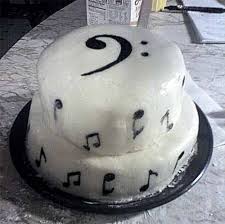
bass cake
image from designrshub.com

So, later in May the year of his birth, our son became Merlyn Timli 0 Ember. We gave him in his name the middle figure of “0” (which is a zero, not the letter “O”) to be a placeholder, awaiting the day he might want to choose his own name. True to his independent and somewhat contrarian nature, when he decided what he wanted to do with his name, Merlyn deleted the zero.

“Merlyn” means “Child of the Light,” and “Of the Immortals.” We chose to give him the original Celtic spelling and used those meanings.

Merlyn, with his first initial “M,” is also “named after” two family relatives: his father’s father, Morton Briggs (alive at that time, following Protestant tradition), and my mother’s mother, Mildred Klein Cytron Bright (then deceased, following Jewish tradition).

“Timli” is a name his dad, Christopher R. Briggs Ember (or, now, Ember Briggs) created, and the definition of this invented name is “He who paints in the sky with his fingers.”

“Ember” is the name Christopher and I chose to take on, adding it to our own names so that Merlyn’s surname could be “Ember.” The Ember Days are the days of change, the two or three days before and after every Solstice and Equinox. This name seemed apt since having a child (our first and only) certainly began many days of change for Merlyn’s parents!

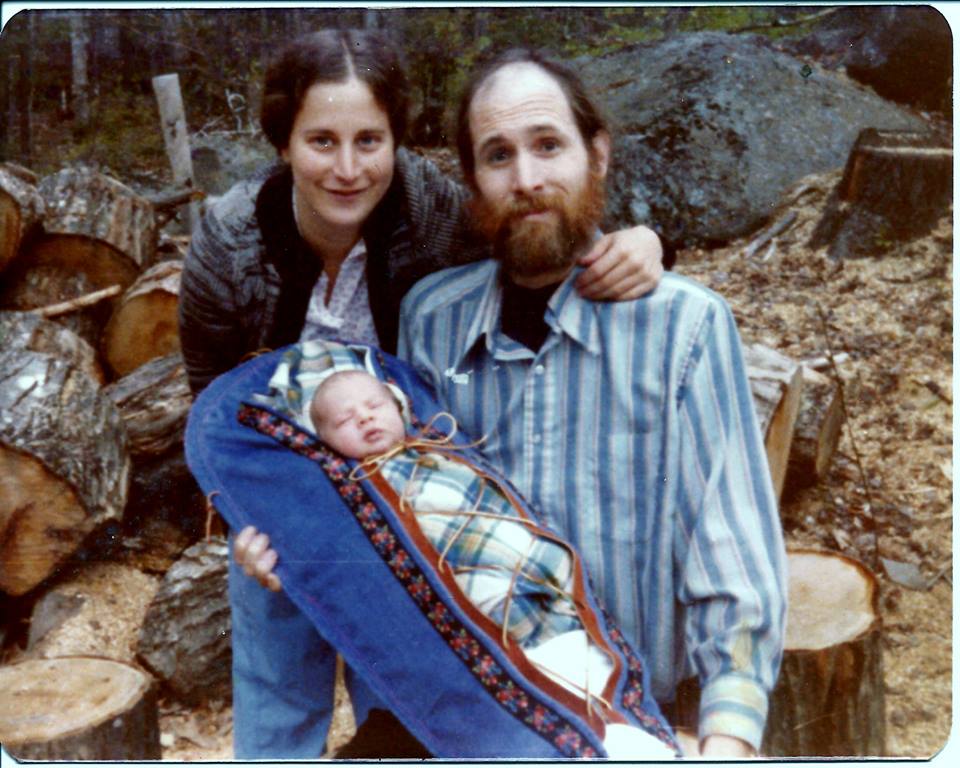
Cradleboard M C and I

Merlyn in the cradleboard Emmy Rainwalker made for him, with his parents, May, 1980

[NOTE: Laws in New Hampshire at the time dictated that unmarried women could only give our children our own surnames, and I had no wish to give Merlyn my birth name. So, we chose a new surname for our new family. Christopher and I were deliberately and consciously unmarried, calling ourselves “Partnered,” for several reasons: lesbians and gays could not marry at that time; women became men’s property in New Hampshire when married in 1980; and, we both were marriage-averse for individual/personal reasons.]

I am so grateful that Merlyn’s birth occurred intentionally (and quite fortunately) at our rented home in Stoddard, NH, attended by three lay midwives: Katie Schwerin, whose family lived as housemates of ours and are still our good friends; Emmy Rainwalker (Ianiello), who was a former housemate and good friend; and, Cindy Dunleavy, the “senior” midwife who had trained Katie and Emmy and became our good friend.

Midwives

Also in attendance or present soon after Merlyn’s arrival were other housemates and several good friends: Bill Whyte (Katie’s husband; thanks for the great black-and-white photos, Bill!), Mia Mason (six years old and Katie’s daughter), Emily Schwerin-Whyte (Katie and Bill’s daughter, born in the same house four months prior), Tashin and Toqueem Rainwalker Story Talbot (two months and almost five years old, Emmy and Medicine Story’s children), Dana Dunleavy (three years old, Cindy’s son), Nina (a friend of Katie’s whose surname escapes me), Pamela Faith Lerman (our friend and David’s sweetie), David Eisenberg (a current housemate of ours and a friend), and Zea Moore (family friend). Good thing we had a very large bedroom!

Merlyn and I 1981 cr

Merlyn and I, 1981

We personally knew and/or were related to a total of over twenty children born within one year of Merlyn. He has cousins one year older and one year younger than he is on both sides, and he was born into what felt like an exploding baby boom, a loosely-knit but connected network of families with children around his age. He grew up in collective households with housemates who often included other children and in close connection with several in particular with whom he is still close as adults. We had buying clubs (food co-ops’ predecessors) we belonged to in several towns nearby for collective purchasing of bulk, organic and healthy foods and supplies. We exchanged childcare, kids’ clothes and baby equipment, recipes, chores, tools and handiwork. We celebrated birthdays, weddings, holidays and other occasions at one another’s houses, often ours.

HappyBirthdayGuitar
image from handmademusicclubhouse.com

These other families and their children became our extended family which included children who were students at public and Waldorf schools as well as homeschoolers; Merlyn was all three at one point or another.

Many of these adults and children were/are musicians, as Merlyn is. Our diverse community also included storytellers, teachers, woodworkers, roofers, artists, singers, dancers, therapists, the aforementioned midwives, political activists and social change leaders, construction/building tradespeople, office workers, gardeners, writers, herbalists, acupuncturists, massage therapists, composers, actors, directors, nonprofit social service workers, playwrights, spiritual teachers and leaders, computer techies, farmers/maple syrup makers, publishers, business owners, bookkeepers, retail workers, restaurant workers and many more.

Our ethnic and religious origins included Jewish, Sufi, Buddhist, Hindu, agnostic, Native American, atheist, British Isles/Western European, Chinese, African, Eastern European, and many more. We were/are lesbian, gay, bisexual, queer, transgender, questioning, and unknown or unprovided.

Some of the places we lived right before and after Merlyn was born had no electricity or running water (or even walls). We played board and card games, invented and actual sports games. Most of us intentionally had no televisions or war toys. We put the non-TV-watching time to great use.

We READ a lot! We put on plays, played music, talked a lot with each other, rode bikes, ice skated, sledded, swam, cooked and did “kitchen opera,” made costumes, hiked, walked, repaired, recycled and re-used (long before it was required), spent time in Finnish/Dutch-type saunas and Native American sweat lodges, canned and preserved food and herbs, sang and drummed and worked in ever-changing configurations of children and adults together.

Merlyn, you have become an amazing adult: kind, compassionate, intelligent, capable, worthy of and earning respect and admiration from colleagues, employers, bandmates, friends and peers. I am very proud to be your mother!

I hope, on this anniversary of the day of your birth, in your first year since 1999 of living back in the town you spent most of your growing-up years, that you and your sweetie, Lauren, celebrate in multiple ways with friends and your dad. I wish for you to enjoy a great birthday and many more, healthy, happy and prosperous ones to come!

I love you! Thanks, again, for making me a mother!

S M and C at Jake and Sandys wedding

I, Merlyn and Christopher, 2013

Unknown's avatar

Why I #write utopian, #Buddhist-infused, #multiverse #scifi/rom #novels & why you should #read & share them.

Reposted from 10/30/13 and 2/5/15

Writers are often exhorted to write the books we want to read that seem not to exist, yet. I am following that advice with The Spanners Series, especially Volume I, This Changes Everything, which is now PERMAFREE, and also with subsequent volumes (Volume II, This Changes My Family and My Life Forever, released 6/9/14; look for Volumes III and IV in 2015).

I am an avid reader and have probably read hundreds of thousands of books in my 56 years of reading independently and quickly, sometimes devouring ten books a week. If I say books like mine—a series like The Spanners—don’t yet exist, I’m probably correct.

logoAuthorsDen
All buy links, reviews, interviews, readings and more: http://www.sallyember.com/Spanners Look right; scroll down.

Why am I writing #science-fiction/#romance, #Buddhist-infused, #multiverse/#multiple timelines #utopian #novels besides the reason already given? And, why should you read them? Because we live in a deteriorating, or degenerating Age, according to #Tibetan Buddhists (and probably many others I’m not bothering to research right now).

When I first hear this claim, I disbelieve it. Aren’t most things “improving” for humanity? Modern medicine, technology, transportation, knowledge of all types: in the 20th and 21st centuries, we are experiencing incontrovertible advances, mind-blowing progress, right? Plus, that POV is just such a downer!

Why would the Buddha’s followers propose and then Buddhist teachers and scholars maintain such a doom-and-gloom perspective on life? It’s not enough that Buddha focused his teachings on suffering and impermanence? Most Buddhists must be depressed: that’s what I thought.

I could understand why Tibetans, having been living under horrible oppression, genocide and cultural destruction under Chinese rule for decades, would be so pessimistic. But, we’re in the good ole’ USA: things are great here, right?

Not so much. I won’t go into the facts we all know now (even more than ever, thanks to Snodwen and Manning) about how screwed up the USA has been and still is, nor how terrible the economy is here and everywhere. I won’t provide the list. We all know too well the horrors of our modern life. Modern tragedies, however, are actually not even relevant to this discussion.

The “degenerating” part of our Age has little to do with actual external conditions. Our deterioration involves humans’ not being able to learn #dharma, not being able to find qualified and worthy Buddhist teachers, not being able to practice meditation well or at all. The Buddha’s teachings and Buddhists practitioners are what are degenerating, in what is called “The Third Age” or “The Latter Day of the Law.”

You can look this up. http://en.wikipedia.org/wiki/Three_Ages_of_Buddhism

My point is, dystopian futures abound. Most sci-fi writers, even those that include romance in their stories, write of increasingly worsening conditions on and around this planet and across the Universe. They pile on the violence, showing increasing discord, more political and social unrest, deaths and destructions even worse than we have now. We already have too much awfulness for me to want to read about even worse futures.

Enough, already: I believe we need some hope, ideas of how else things could go, whether or not I always believe they will take these turns. Since I can’t find this optimism in the daily news or libraries’ and bookstores’ fiction, I decide to create it. I need this in my personal life, for the USA, for the continent, the water, air and land: I am imagining routes for improvement for the planet and the entire universe.

When I #meditate, especially during a #retreat phase in which I was #contemplating lives of beings in the “God Realm,” it occured to me repeatedly that we live in opulence amid squalor, all over the planet. Beauty smack dab in the middle of ugliness, every day. #Yin and #yang. We do have to “take the good with the bad,” but do we have to emphasize the “bad”?

I do not.

In my novels, even when things are “bad,” there is more good than bad. Buddha teaches often that we have to discern between “good” and “bad” even as we know these are illusory. Many teachings expound on how there is NO “good” or “bad,” no “birth” and no “death,” no “coming” and no “going.”

While you puzzle over that, I’m going to continue my utopian illusions in The Spanners Series. In my current and future multiverses, beings, including humans, will have love, better conditions and dharma: they/we have it all!

Furthermore, I’m going to HOPE—even though we are instructed to meditate partly in order to relinquish all hope and all fear—that YOU read my books and enjoy them as much as I enjoy writing them.

Please let me know! Write your comments here on this and other posts, on excerpts from my novel, and whatever else occurs to you. Let’s converse!

Unknown's avatar

How do #authors actually find #readers? I’m stumped.

How do #authors actually find #readers? I’m stumped.

3 paperbacks

So far, since becoming a fiction author in 2013, I have spent time on most popular sites and established a presence on several, I have yet to find a lot of readers. I mostly find: authors (a LOT); those providing services to authors (even more); potential authors (a few); and, trolls (I block, but they do pop up).

I first published my ebooks via Smashwords which then distributed my ebooks for me to iTunes/iBooks, nook (Barnes & Noble), Kobo and many other affiliates globally. I then published to Amazon Kindle. As of last fall, I now have paperback formats available via CreateSpace (where I offer discounts; see below) and Amazon as well.

You may ask: what else have I done, so far? A LOT!…

—I belong to several dozen and am active in several Facebook, LinkedIn and Google+ groups/communities and I am less active but do belong to a few groups on Goodreads.
—I have author and book pages pretty much everywhere they’re free to have and manage to update them regularly (I hope).
—I have posted my free ebook (see below) on dozens of sites that allow free books to be posted for free.
—My first Spanners Series ebook, This Changes Everything, is permafree.
—The second volume, This Changes My Family and My Life Forever, came out about a year ago and the third one, This Is/Is Not the Way I Want Things to Change, released last December, so I have the supposedly magic number of 3 books out, now.
—All 3 are out since late 2015 in both ebook and paperback formats.
—I offer discount codes for the paperbacks on my own site.
—I participate in occasional sales organized by two Facebook groups (Clean Indie Reads #CR4U and Fantasy and Science-Fiction Network #FSFnet) I am actively involved in (several per year).
—I give free ebooks to reviewers and always follow their guidelines and wait to be invited before sending the ebook to them.
—I have had more than a few reviews for each book, but not up to 50 for any (yet).
—I actively sought readers/reviewers on BuView and got a few but not as many as who accepted my free ebooks.
—I never pay for reviews or participate in review swaps.
—I post interesting, varied non-fiction content (never all about my books or asking others please to buy my books).
—I re-blog.
—I re-share posts.
—I thank others for re-sharing (not always).
—I retweet (but not everything).
—My posts go up on many sites.
—My WordPress blog is cross-posted on Tumblr and on several other sites automatically.
—I re-post my own on Pinterest and StumbleUpon about once a month, to give them another set of views.
—I put most of my Google+ posts into Collections about once/month, which also gives them a boost in views.
—I do occasional reviews, usually outside my own genre (#scifi) and post my reviews on Goodreads, Amazon, and sometimes my own blog as well.
—I invite and host guest bloggers on my site.
—I guest blog/give interviews on others’ sites regularly.
—I have articles/reviews that have appeared on very popular sites, some of which have paid me for my posts.
—I have buy links, interview and review links and other links on my own site (look right; scroll down).

I am frequently on

Twitter.
Facebook with both an individual and a Spanners Series page.
Google+ with both an individual and a Spanners Series page.
Pinterest, with many Boards and not all related to my books, either.
YouTube (I have my own channel and a video talk show, CHANGES conversations between authors, since 8/2014 and posted book trailers, author readings).
LinkedIn.
—I started a Patreon #crowdfunding campaign over a year ago, but haven’t garnered much dough.

I am also on/use

Authors’ Database
Authors’ Den
New Book Journal
Koobug
Bublish

I am occasionally on

Goodreads.
Library Thing.
Shelfari.
BookLikes.
—and other many other author/book sites.
—I visit and comment on many blogs.
—I have been on and listen to/comment on a few Blog Talk Radio shows’ sites.
—I was on Authonomy (it closed, but I did get some great reviews from posting my WIP on that site) and am still on Wattpad with excerpts.
—I used the Pre-order function, with half-price discounts for all three ebooks, several weeks prior to each book’s release on Smashwords and Amazon and other sites.
—I post excerpts from my books while they’re in Pre-orders on my blog.
—At the end of each book, I post the first Chapter of the next volume in the The Spanners Series.
—I post a CTA (Call To Action) asking for reviews, followers and readers at the end of each book.

Started but stopped…

—I joined and posted for a while on Ask the Expert and Quora, but got too busy to keep doing that.
—I joined Reddit but I hated the way the monitors interacted with posters and the rules are too rigid, so I quit.
—I joined Medium and some other sites (can’t even remember them all) but hardly use them. Apparently I have followers, but unless my blog is cross-posted on a site, I don’t know what they are following.

I’ve learned to do/decided to do these actions and listings because I spent a lot of time researching prior to and since publishing my first ebook. I read and followed the instructions for “how to find readers” from many “experts,” but I still usually encounter the above categories of people. Not to say authors and others aren’t readers, but I’m looking for those who identify as such and not elsewise in the industry.

I want more people to read, review, enjoy and comment on my books: doesn’t everyone?

added TODAY (3/15/16): Share! #Booksales best achieved NOT on #TWITTER, FB, LI or G+! Use #Youtube! http://www.digitalbookworld.com/2016/the-authors-three-step-test-for-sellability/

How do YOU attract more readers?
How do you know what works among all the things you’re doing to market yourself and your books?

All suggestions and anecdotes welcomed, except forget recommending I go on Instagram. I hate that site.

Thanks!

Sally Ember, Ed.D.

Please comment here: http://www.sallyember.com/blog or email me: sallyember AT yahoo DOT com

Unknown's avatar

“Skills I Don’t Have”: reblogging from Sally Ember, Ed.D.,’s Guest Post on Charles Yallowitz’s site in December, 2015

Thanks to author and blogger, Charles Yallowitz, who was my guest on Episode 9 of CHANGES conversations between authors and is in my Guest Bloggers’ Hall of Fame, for inviting me to be a guest on his site today (12/10/15) which occurs during the week of the release of another in my #scifi (science-fiction)/ #romance/ #multiverse/ #utopian/ #paranormal (psi skills) series for adults/Young Adults and New Adults: Volume III, This Is/Is Not the Way I Want Things to Change, of The Spanners Series, now available in both ebook and paperback formats.

This is also the season of my expanding both Volume I, This Changes Everything, and Volume II, This Changes My Family and My Life Forever, into paperback formats on #CreateSpace and #Amazon.

Please check below and on my website for blurbs, covers, links and more information as well as #discount codes!

Skills I Don’t Have

Yes, I do have a lot of skills, talents, experience areas and abilities. BUT, there are many I lack and never so obviously as these last two months, as I attempted and finally succeeded in getting Volume III of my science-fiction ebook series to completion, in time for its 12/8/15 planned release date and all three of The Spanners Series‘ first Volumes into paperback format (after not having been able to work on the half-finished draft for over a year or to think clearly or organize appropriately and while still being very slowed down and impaired as well as fatigued from a TBI [Traumatic Brain Injury] in April, 2014).

I had no idea how to approach getting my ebooks (which I had formatted myself [pre-TBI], using Smashwords’ excellent Guides) into print formats for paperback sales. I knew they needed to be reformatted but I had no experience with making that happen.

I also am very limited, even pre-TBI, with layout and desktop publishing: mechanical, physical, graphic art-type skills and software are not my things. I don’t have much experience with Adobe Create Suite and do not own that program. I don’t do newsletters on the newer software and don’t have any art ability whatsoever.

My mottos: keep trying and ask for help.

When it doesn’t work (the first dozen times!), keep trying.

When I can’t figure it out (after days of attempts), ask for help.

Fortunately, I have a great cover artist, WillowRaven, for The Spanners Series’ ebook covers. She and I collaborated on all three of my covers and plan to for the next seven: I provide ideas and some photos; she does the deciding-what-works and the actual art.

I can’t draw.

I can't draw
image from http://designyoutrust.com

Therefore, since I knew from previous conversations that I needed new covers, I started the paperback conversion process by emailing with WillowRaven. She immediately wrote back that I should have told her from the beginning I wanted paperback formats and that it would have been a lot easier/better if she had created those versions first.

Challenge number one. But, that damage was not irreparable, luckily.

From our email conversations and other research I had already done, I realized I needed to incorporate with my own imprint. I next emailed with local writers/ publishing network folks and found out what to do.

It took a few days, but I managed to name, create and start my own imprint, Timult Books, complete with free logo (Thanks, Logo Garden!).

logo_1833057_print high rez  transparent

I then learned how to get (from Bowker) and found out about a huge sale on (thanks for my online network!) my first self-owned ISBNs. Registered Timult Books with the state and Bowker, bought 20 ISBNs at a great discount and was then ready to send the extra materials (blurb, review quote—for the new back covers and “spines”) to Willowraven.

WillowRaven also needed accurate page counts so that the covers would fit correctly. I had never put my ebooks into print before and had no clue how many pages each book was (about 130K words), especially given the new sizing (5″ x 8″) and formatting (mirrored margins, with inner at 1.25″ and the rest at 0.5″). I also found MANY inconsistencies and typos that had to be corrected for each Volume as I reformatted, which changed the pagination as I went along.

Plus, paperbacks require and I decided to add some new pages of “front matter.” Then, I added a new page of “back matter” about the series.

It took me several days and many attempts to get the formatting right on CreateSpace (with lots of help from online forum people, Facebook group members and others: THANKS!)

AND, for whatever reasons, every time my computer went to sleep, the formatting reverted from 5″ x 8″ to 5″ x 7.99″ and changed the margins!!!??? I had to check each time I reopened the document, for each section (there are more than a dozen), to make sure they were correct AGAIN before converting each Volume to a PDF for uploading the new versions to CreateSpace for approval.

So, of course, the first page counts I sent WillowRaven were WRONG.

As were the second batch.

Third time, CHARM.

The three new paperback “wrap” covers were ready very quickly. Thanks, Aidana!

Fail better.

Fail Better
image from http://stuffaverylikes.com

I know a lot about MS Word and use Open Office’s version of it, but there are still many formatting details I’m unfamiliar with and don’t understand. I read many online forum posts, instructions online, etc., and STILL don’t understand some of that (TBI problems, I’m sure).

Why do the page numbers keep changing when I move a page break?
What’s with the “CONVERT” and “NEXT CONVERT” Sections thing?
Why do my running headers not always “run”?
Why does my computer’s “sleep” mode tell Open Office to revert its formatting?

I am IRRITATED beyond description and very impatient by the fourth day of these glitches. But, I persevere. Another good thing for this time period: I’m not around a lot of people.

Incompetent and Annoying.

Incompetent and annoying
image from http://quotesgram.com

I do finally get everything to work well enough to upload and order my proofs. So excited when they arrive, but then I start reading them aloud.

OY, VEY!

SO HUMBLING!

Despite my own and others’ having proofread each Volume, reading each book aloud allows/forces me to notice a ridiculous number of typos, inconsistencies, mistakes and other things that must be fixed on EACH PAGE! I had to use long-form, lined post-its to list each mistake because I had to mark each page multiple times. Every few pages had a post-it filled with edits to be made.

I ended up with hundreds of fixes needed to input in order to complete the revision of each of the books, all to be accomplished without changing the starting page of any Chapter or section (didn’t want to have to change the Table of Contents AGAIN, which I had done by hand since I couldn’t figure out how to have it happen automatically), and WITHOUT CHANGING THE PAGE NUMBER TOTALS!!! (see above)

The space between my skills level and what I needed to get these tasks done on my timetable was growing daily. Also, the TBI-induced fatigue and slowed-down aspects made everything take many times longer than pre-TBI.

Mind the Gap.

Mind the Gap
image from http://www.brillianceflooring.com

Once I had the proofs proofed, I could re-submit them and then they were ready to be sold.

Yeah! It’s happening! I have paperbacks!

I have been hearing from family and friends that “if only you had your books in paperback, I would read them.” Now, I do! So excited!

I emailed and messaged everyone the great news! Now, those without ereaders or those who don’t like reading longer books on them CAN read my books. I even sent them discount codes, specially large, just for my friends and family.

I sat back and awaited the sales to come pouring in (I have a large family and dozens of colleagues and friends on that email list).

Two weeks later: I have sold one book.

ONE.

Nothing can mend a broken heart (except the old BeeGees, of course). And, duct tape.

Duct tape for every repair.

DuctTape
image from http://www.destinationmadness.be

Okay. Perhaps science-fiction novels, especially those that are over 500 pages long, a unique mixture of Ursula K. Le Guin, Tom Robbins, Robert Heinlein, Sherri Tepper and Marge Piercy with a little of Linda Hirschhorn and His Holiness the XIVth Dalai Lama mixed in, aren’t for everyone.

But, ONE sale from all of those who supposedly love/like and support me? That’s close to two hundred people!

I know I have trouble connecting the dots….These kind of tests, below, confound me, even pre-TBI.

Limited Spatial Intelligence.

spatial orientation test
image from http://www.sciencedaily.com

But, even I know what one book sale in two weeks means (week ending December 5, 2015, as I write this post).

It’s too soon! Chanukah doesn’t start until December 6 and Christmas is weeks away!

I come from a family and friendship circle of procrastinators! I am one of only a handful who gets things done early or on time. Really! They’ll start buying/gift-giving soon. I’m sure of it.

Right?

Still learning (at age 62).

Michelangelo still learning


For those who are ready to gift-give and/or add to your own to-be-read lists, here you go:

Three paperback books here.

3 paperbacks

NOW available in ‪#‎paperback‬ on ‪#‎CreateSpace‬ and on Amazon:
This Changes Everything, Volume I, The Spanners Series by Sally Ember, Ed.D., is only $17.99 in paperback https://www.createspace.com/5837347 
and FREE as ebook everywhere ebooks are sold, such as http://www.amazon.com/dp/B00HFELTG8   
https://www.smashwords.com/books/view/376197

This Changes My Family and My Life Forever, Volume II, is $19.99 https://www.createspace.com/5844431
ebook @$3.99, https://www.smashwords.com/books/view/424969  
http://www.amazon.com/dp/B00KU5Q7KC

This Is/Is Not the Way I Want Things to Change, Volume III, is $19.99 https://www.createspace.com/5844474
ebook @$3.99 https://www.smashwords.com/books/view/588331
http://www.amazon.com/dp/B0177Z1KRM

Happy Holidays!
Go to my website: http://www.sallyember.com/Spanners for book trailers, blurbs, discount codes and more!

‪#‎scifi‬ ‪#‎romance‬ ‪#‎utopian‬ ‪#‎adults‬ ‪#‎YA‬ ‪#‎NA‬ ‪#‎fiction‬ #createspace #selfpublishing #indiepub #indieauthor #formatting #ebooks #paperbacks #TheSpannersSeries #SallyEmberEddAuthor #CHANGES

Unknown's avatar

Video of #Tibetan #Buddhist Center in Brazil that is part of my #Sangha

If there is a companion video to this excellent one of our sister sangha and main center in Brazil, Chagdud Khadro Ling, for Chagdud Gonpa’s Rigdzin Ling in California, our main center, I don’t know of it. If you do, please share! If you’ve already seen this, sorry for the repetition.

Chagdud Khadro Ling temple
Khadro Ling‘s main temple in Tres Coroas, Brazil.

In Portuguese with English subtitles, beautiful photography and informative narration and scenes of #Tibetan #Buddhist practice, shrines, temples, items, meditation and practitioners, this video captures the quality and feeling of the land, buildings, intention, activities–the ambiance–very well.

The center (Rigdzin Ling) I spent so much time in from 1999 – 2008 (first visited in 1989; did up to 11-week-long retreats there, two more that were 6 -7 weeks and several that were 2 – 4 weeks, silent retreats, and several 11-day-long ceremonies/meditation practices, Drubchods) is in northern California between Eureka and Redding, but it looks a lot like these photos and our practices are the same.

RZL Tara House
Rigdzin Ling‘s main temple, Tara House, in Junction City, CA USA

For those who do not know, some background: This is my sangha (spiritual community of practitioners and teachers), started by my original teacher, His Eminence Chagdud Tulku Rinpoche, the teacher discussed in this video. Rinpoche passed in 2002. His newest (15th) incarnation/yangshi/tulku is about 10 years old, now.

Chagdud Rinpoche
H.E. Chagdud Tulku Rinpoche in 2001 and his yangshi in about 2009

To give perspective, Rinpoche was a contemporary of His Holiness the 14th Dalai Lama: they studied with many of the same teachers before the Chinese invaded Tibet and both escaped to India in 1959 as young men. Rinpoche came to the USA (California) in the mid-1980s with his American wife (second), Jane, who became known as Chagdud Khadro (in the video as well). They started building centers along the USA’s West Coast. In 1991, as the video states, they visited South America/Brazil and moved there in 1995.

Tulku Jigme, CTR, Chagdud Khadro, 2001
Tulku Jigme Rinpoche (Rinpoche’s son), Chagdud Tulku Rinpoche, and Chagdud Khadro, Brazil, 2001

The person Rinpoche designated to be his spiritual heir and director is my root/main teacher, Lama Padma Drimed Norbu, known as Lama Drimed.

Lama D in forest tsog 2013
Lama Drimed, forest ceremony (tsog), 2013

May all beings benefit, all Lamas live long and continue to teach, and all practitioners continue to meditate and serve all beings.

Watch the video here:

https://youtu.be/S0d5KoF8288

or

https://www.youtube.com/watch?v=S0d5KoF8288

or

For more information: http://www.chagdud.org

Enjoy! Write back with comments, questions! Share!

http://www.sallyember.com is my main site and blog and has info about my Buddhist-themed science-fiction/ romance/ utopian/ multiverse novels, with discount codes and links, reviews, book trailers, more, about the first 3 ebooks and paperbacks in The Spanners Series, as well as posts about my #meditation practice and retreats.

Unknown's avatar

Advocacy, Entitlement and Knowing When to Complain: The Rights of Poor People

Advocacy, Entitlement and Knowing When to Complain: The Rights of Poor People

If you are new to this blog, you may not know that I was in an accident about two years ago that resulted in a broken nose and concussion as well as other injuries. The concussion was not one of the “good” kind, meaning, I have still not completely recovered.

This deterioration in my health caused me to run through my savings and unemployment benefits in California and have to rely on others. Finally, I am privileged to benefit from my mother’s having space and a generous heart, allowing me to move in with her in St. Louis about 18 months ago.

Missouri, however, is not a great place to live if you are indigent. This post is the third in a series about my experiences here. This third one is on poor people’s rights. The second was on food for indigent people in Missouri (published February 16, 2016, http://wp.me/p2bP0n-1BL). The first one was on health care (published February 9, 2016, http://wp.me/p2bP0n-1By).

This post is important because it looks at the underlying issues that make a difficult situation (being poor) worse or better for each person. The intersections of perceived or claimed race/ethnicity, perceived or claimed gender, perceived or claimed social class, perceived or claimed age, home/best language, physical and mental health and (dis)abilities, perceived or claimed religion, perceived or claimed sexual orientation, and economic status in the city of St. Louis, Missouri, USA, in the mid-20teens, can adversely influence, improve or neutrally affect one’s experiences every moment.

“Intersectionality” is an important part of understanding how poverty impacts each person and family differently. Therefore, in this series, I need to bring in the politics of social identity. We all have to learn to address these overlapping oppressions and unfair treatments to help ourselves understand how everything is NOT actually “equal” regardless of the similarities in two people’s incomes.

intersectionality
Intersectionality includes all of these components of one’s social identity.

It’s not “all good.”

It doesn’t have to be this way.

It ISN’T what it IS “naturally”: people and then institutions run by people make things this way and create/perpetuate systems that keep them this way.

Missouri is one of the worst places to be if you’re poor, but it’s not even the worst by any standards. Your experience all depends on the other components of your social identity. If you’re believed to be a white male, seemingly in good health and able-bodied, perceived to be heterosexual, assumed to be Christian, speaking mid-Western-accented English like a native, have at least some college education and otherwise seeming to be a USA “mainstream” guy between the ages of 25 – 65, you are going to be much better treated and fare better even when you’re poor than if you do not claim or cannot pull off having others believe you have all or any of those social identities.

If you’re also not a felon, have a place to live (a legal address) and (the use of) a car, you’re probably not going to be poor for very long.

Unless you’re obese. Unless you’re smelly. Unless you’re an addict. Unless you’re perceived to be “not one of us” in whatever way “us” is defined: then, you’re in some trouble. But, even with those cards stacked against you, as a poor assumed-to-be-white & -Christian with some education who speaks adequate English and can pass for straight and male and under age 65, you’re still going to be better off than anyone who isn’t.

no isms allowed

Change one aspect—gender—and things automatically get much worse. Change two—ethnicity/race and gender—and you’re doomed.

Check this out, from Everyday Feminism, June 20, 2015 by Carmen Rios “These 5 Statistics Prove That We’re Feminizing Poverty (And Keeping Women Down in the Process)” http://everydayfeminism.com/2015/06/feminizing-poverty/
— “Despite the overall poverty rate declining in America, 18 million women remain below the poverty line.”
—“Women are poorer than men in every state, regardless of education or geographic location. And for women of color, elderly women, and LGBTQIA+ women, it’s even worse.”
—“The poverty rate for Native American, Black, and Latina women is almost double the poverty rate for white women.”
—“For women, and especially women of color, the fight to raise the minimum wage to $10.10 or $15 is very personal—and could be the difference, for them, between barely surviving and finally thriving.”
—“…over a lifetime, women lose an average of $434,000 to the wage gap.”
—“One of the most important aspects of intersectional feminism is the understanding that when we fight for the most marginalized women, we liberate all women along with them.”

And, from other sources (see below) that add in education and other factors to race/ethnicity and gender with income levels:
—“White households take home between $10,000 to $20,000 more per year than their Black counterparts in every age bracket”
—“Enrollment in ‘high poverty’ schools for Black children is 41 percent, 38 percent for Hispanic children, 31 percent for American Indian/Alaska Native and a mere six percent for Whites.”
—“Even when Black and minority children attend mixed schools, they are more likely to be tracked into remedial or basic classes while their White counterparts take advanced, honors level courses.”
—“70 percent of students arrested or referred to law enforcement for school-related infractions were Black or Latino.”
—“While people of color only comprise about 30 percent of the US population, they account for 60 percent of those imprisoned.”
—“There is no such thing as unbiased, unpolitical education.”
—“People with ‘Black’ or ‘ethnic-sounding’ names are less likely to get callbacks for interviews.”
—“Blacks are more likely to be born into poverty and are less likely to escape it.”
—“Whites are 2-3 times more likely to make it into the middle class in their lifetimes compared to their black counterparts.”

poverty-is-violence
from http://iamarevolutionary.wordpress.com
Poverty IS violence. It has to stop.

Find a well-vetted nonprofit that advocates and works to end poverty and understands intersectionality and contribute, volunteer, blog about their work! Here is one: http://www.results.org/

Good news! We made this mess; we can clean it up.

Mandela quote about poverty
Nelson Mandela, Audre Lorde, Martin Luther King, Jr., Angela Davis, Gloria Steinem and so many more have spoken out about the nature of the human-made elements of our social and political systems and the oppressions they systematize.

WE are the ones who must advocate, complain, recognize that we are entitled to better and that so is everyone else, and ACT!

—Do not sit by and watch passively when others are mistreated, disrespected, unfairly scheduled or managed, especially when you are in any position of better privilege: it is your DUTY to advocate whenever you are able.
—Write letters, blog, make phone calls, picket, march, show up and let those in power know you are not satisfied with the “status quo.” Be specific.
—VOTE! It is your DUTY and responsibility as a USA citizen who can vote (if you are one) to use that right in EVERY election. It is the LOCAL elections that most affect people who live near you, and regional and state office holders who make laws that affect us all. Federal elections matter, too, but not as obviously or as immediately.

WIN_20141104_095753 I VOTE! And, as of early March, I am working as a election-day supervisor at a local polling place!

—THEREFORE, do not ignore bond issues, council and mayoral elections, county positions, state office holders’ elections and only vote on presidential ballots. ALL VOTES MATTER!

Want to know more? Have a read:

From October, 2015, inGenere.it: “Intersectionality. Putting together
things that are often kept apart” by Jeff Hearn
http://www.ingenere.it/en/articles/intersectionality-putting-together-things-are-often-kept-apart

From February, 2015, NPR: “Study: Black Girls Are Being Pushed Out of School” by Karen Grigsby Bates
http://www.npr.org/sections/codeswitch/2015/02/13/384005652/study-black-girls-are-being-pushed-out-of-school

From February, 2015, the the Frisky: “18 Things White America Needs To Reconcile To Truly Become Colorblind” by Tiffanie Drayton
http://www.thefrisky.com/2015-02-26/18-things-white-america-needs-to-reconcile-to-truly-become-colorblind/

If you appreciated this series, please reblog/share it, comment, ask to be a guest blogger and contribute your own point of view or write on a related topic: http://www.sallyember.com

This third post was on advocacy and intersectionality (published on February 23, 2016, http://wp.me/p2bP0n-1C2).
The second was on food for indigent people in Missouri (published February 16, 2016, http://wp.me/p2bP0n-1BL).
The first one was on health care (published February 9, 2016, http://wp.me/p2bP0n-1By).

Unknown's avatar

Food Stamps and Food Issues for Poor People in St. Louis

Food Stamps (SNAP, EBT) and Food Issues for Poor People in St. Louis

If you are new to this blog, you may not know that I was in an accident about two years ago that resulted in a broken nose and concussion as well as other injuries. The concussion was not one of the “good” kind, meaning, I have still not completely recovered.

This deterioration in my health caused me to run through my savings and unemployment benefits in California and have to rely on others. Finally, I am privileged to benefit from my mother’s having space and a generous heart, allowing me to move in with her in St. Louis about 18 months ago.

Missouri, however, is not a great place to live if you are indigent. This post is the second in a series about my experiences here. This one is on food for indigent people in Missouri. The first one was on health care (published February 9, 2016, http://wp.me/p2bP0n-1By).

This post is about the government-subsidized “food support,” formerly called “Food Stamps,” now called “SNAP” for Supplemental Nutrition Assistance Program.

snaplogo

What makes Missouri so bad for poor people? For one thing, this state is very Republican-dominated. Despite many of the speeches given by congressional and senatorial representatives from this party, their votes speak loudly: they keep lowering the amounts poor people can receive in all types of assistance and have repeatedly voted to reduce food support. This state also still calls its program “Food Stamps,” but adds “SNAP” so people will know what it is. http://dss.mo.gov/fsd/fstamp/

Missouri’s unfortunate and lethal combination of machismo, arrogance, obstinacy and ignorance have caused millions of Missourians who cannot afford to buy sufficient amounts or types of food for themselves and/or their children to go without food, especially near the end of each month’s benefits period (the food money runs out). Not only are the benefits woefully and abysmally low, even at their highest levels, they arrive in one lump at the beginning of each monthly period. Even the best budgeters can’t make insufficient funds last throughout a month.

“Missouri is among states where legislators this year have considered bills that would curb welfare benefits” and continues to demonstrate its disdain for the poor, blaming the victims and putting economic pressure on the weakest of us to try to shore up the state’s failing budget. The Democratic Governor, Jay Nixon, vetoes these bills, but then the “representatives” usually have the votes to override his vetoes. On it goes, this heinous battle for who can sink the lowest first. http://www.huffingtonpost.com/2015/05/04/missouri-welfare-restrict_n_7209458.html

Missouri and other state SNAP programs are now in the computer age. SNAP currently issues a debit-type card to recipients which is an EBT (Electronic Benefits Transfer) unit that looks a lot like any other debit card. I’m sure this has alleviated a lot of the embarrassment many users had previously felt when producing their pink paper food stamps at the grocery check-out line. Now, we kind of “blend in,” putting our card through the same reader everyone who uses credit or debit cards uses to make our payments.

SNAP to health
from http://www.snaptohealth.org

Except when we don’t. Most times, even when I tell the register operator that I am using an EBT for SNAP, they punch in the wrong codes and it doesn’t work. Or, they do it correctly, but neither of us knows exactly how much the receipt total will be for until the card is used (SNAP card users get to avoid paying the tax on food that others pay). Worse, there is no way prior to being in the check-out process for a user to know exactly how much is left on the EBT to use.

Here is a typical process for me.
—I get in line (can’t use the self-service machines for EBT/SNAP)
—I put my food on the conveyor
—I get to the card reader while the register operator is still scanning my food so that I am sure to mention to him/her that I am using SNAP
—S/he nods or otherwise acknowledges that I told him/her this (important to get confirmation: they often do not hear me or don’t know what I mean)
—I put my EBT card through the reader.
Hopefully, it reads my card correctly (doesn’t always) and
—I press the right buttons (always confusing, since the buttons are arranged differently in every card reader I’ve seen, so far: not always using the same colors designating the choices or putting the choices in the same position)
—We get to the end of the food scanning
—S/he presses whatever buttons (not always correctly) to accept my EBT card as payment
—I either do or do not have sufficient funds on the card to pay for this amount of food (which I only know at this point)
—If so, we proceed and I am done
—If not, we have to start over with the reader, putting only the amount I actually have into the register operator’s process to take only that amount from my EBT
—Then I have a choice: pay in cash or use a debit card (if I have the funds) for the rest, or put the rest of the food back/don’t take it home.

I think it’s obvious that this process is not quick, or at least, not as quick as using cash or a debit/ credit card. When the lines are long, I dread getting into one because these “delays” cause impatience to arise in those in line behind me. I have a fairly thick skin, so to speak, so I don’t care about how impatient people are. We all have to wait, sometimes.

However, others do care about others’ opinions, so it makes many SNAP users anxious to go through the check-out process, as you can well imagine. Many times, when I was more flush, I gave the SNAP users in lines ahead of me some money when their EBT cards were shown to carry insufficient amounts for the entire purchase and the users clearly didn’t have any cash or funds to cover the rest of the food.

Confession: I was less likely to offer money when the purchases of the SNAP user seemed “frivolous” or “junky” to me. Awful judgment call on my part and really, none of my business. But, at the time, I felt quite high-and-mighty, telling myself I was “doing them and their kids a favor” if they didn’t get to bring home that sugary or salty treat. Why, I wonder now, does anyone believe we suddenly have the right or ethical duty to pass judgment on someone’s food purchases simply because they’re poor? We leave all the horrible choices of the middle- and upper-class to themselves, so why do we believe we are entitled to assess those of the poorest among us?

News flash; poor people are not stupider, less informed, less competent or any other judgment the better-off can levy just by being currently without enough money. Money does NOT make anyone smarter, more informed, competent or anything else, automatically. We all know plenty of wealthier people without a clue, don’t we?

In other horrible news, SNAP makes us “re-qualify” every year even if our benefits are for a two-year period. This means recipients are able to be—and, in my case, I was—penalized if we earn even a little bit of money. My SNAP benefits were reduced by half (and were insufficient to begin with) when I reported that I had earned some income from freelance proofreading/editing and doing occasional childcare, even though the total earned was less than $1000/month and more often, not even half that. Look at the chart below for how low these monthly benefits are for an entire month and picture this: you have ONLY this amount to pay for all food for 4.3 weeks (30 – 31 days):

Family size: 1 2 3 4

Maximum benefit level: $155 $284 $408 $518

So, if you’re math-impaired, consider these actual figures:
—the individual SNAP allotment comes to about $36/week, or $5.14/day per individual.
—For a family of two, it comes to $33/week/person, not even $4.70/day, which is LESS per week than if you’re on your own.
—For a family of three, usually one parent and two children, they get only $32/week/person, which is $4.53/day per person!
The larger the family, the less the family gets per person.

What is the logic, here? That kids eat less than adults? Incorrect, unless they’re under 7 years old.

Or, maybe they live in a fairy-tale land, in which they believe larger families can buy “in bulk.” Well, that only works if a family has enough money in hand to purchase the larger amount of chicken or rice or beans, which they often would not have, since the total amount provided by SNAP and workers’ wages is insufficient. When a family doesn’t have enough money to buy food, how can anyone buy MORE food per grocery visit?

Doesn’t work.

Over the last 2 years of my own experiences as a poorer person but one who has many resources others do not have (a great and safe place to live, family members to help me, a car, higher education and advocacy skills, among the best) and seeing these SNAP figures, above, I understand the motivation that spurs poorer people to become criminals just to make ends meet. Why the hell not?

I’m not advocating a life of crime, but I certainly can empathize the reasoning better, now.

When our government fails to support those in the most need, what are the needy supposed to do?

Meanwhile, some help is better than none. How can people get fed, then?
—If a family has young children or the mother is pregnant, that mom and kids can also get further food support (very restricted, but food and juice, nonetheless) from WIC (Women and Infant Care) and (minimal) cash from TANF (Temporary Aid to Need Families, formerly known as “welfare”).
—If one is disabled and/or a senior, one can get Social Security disability and/or retirement benefits to supplement these paltry SNAP monthly allotments.
For basic SNAP information and links to your state’s SNAP website: http://www.fns.usda.gov/snap/supplemental-nutrition-assistance-program-snap

Good news! Many health food stores, farmers’ markets and alternative grocery stores now accept SNAP.

we accept SNAP

However, the poorer among us face an entirely different problem that I personally don’t experience (that good fortune is due to my being able to live with my mom). Those who live in “high-poverty” areas now often inhabit regions that have become what are known as “food deserts”: because the larger chains and independent grocery stores refuse to locate or stay in these neighborhoods, there is literally nowhere to go grocery shopping. If you live in a “food desert,” you are screwed. Bad enough that you already have less means (no car, no money for gas), horribly skimpy SNAP funds and little time (those who do have jobs work hourly and must show up on time and leave when they’re scheduled to leave, period). You now are somehow also supposed to travel great distances (often when there is no viable public or any public transportation, so how are you going to accomplish that?) to get to a decent, fairly priced grocery store or to get anywhere that sells any fresh food at all.

People who live in “food deserts” can sometimes purchase food that is close to where they live, but it is usually from “convenience” stores or gas stations’ stores. Their “food shelves” and “hot bars” are typically stocked with low-nutrition, high-fat, high-sodium, high-sugar, deep-fried or microwavable, high in “empty” (simple) carbs, over-priced options only: no fresh fruit, no fresh vegetables, not much good protein, almost no complex carbs and very few choices that are even close to being healthy.

YOU might be able to help change this! https://www.dosomething.org/facts/11-facts-about-food-deserts Help populate “food deserts” with good food sources and/or bring better public transportation to these areas.

And, just when you thought things couldn’t get much worse, now it’s 2016. SNAP recipients between ages 18 – 49 stand to lose what little SNAP benefits we do get if we aren’t working “sufficiently,” but more of us than ever still need SNAP and many cannot work or work “sufficiently.”

Want to know more? Have a read:

From January, 2016, Cleveland.com: “Over 1 million face loss of food stamps over work requirements”
http://www.cleveland.com/nation/index.ssf/2016/01/over_1_million_face_loss_of_fo.html

From January, 2016, American Enterprise Institute: “Are SNAP benefits really too low?” by Angela Rachidi
https://www.aei.org/publication/are-snap-benefits-really-too-low/

From February, 2016, the Times-Picayune of Greater New Orleans: “Despite ‘recovery,’ more Americans using food stamps, at a higher cost”
http://www.nola.com/politics/index.ssf/2016/02/despite_recovery_more_american.html

Next in this series, February 23, 2016: Advocacy, Entitlement and Knowing When to Complain: The Rights of Poor People http://wp.me/p2bP0n-1C2

This second is on food for indigent people in Missouri, published on February 16, 2016, http://wp.me/p2bP0n-1BL.
The first one is on health care, published on February 9, 2016, http://wp.me/p2bP0n-1By.
The third post is/was on advocacy and intersectionality, (to be) published on February 23, 2016, http://wp.me/p2bP0n-1C2.

Unknown's avatar

My Experiences with being Indigent in Missouri: County/Federally Funded Clinics

My Experiences with being Indigent in Missouri: County/Federally Funded Clinics

If you are new to this blog, you may not know that I was in an accident almost two years ago that resulted in a broken nose and concussion as well as other injuries. The concussion was not one of the “good” kind, meaning, I have still not completely recovered.

This deterioration in my health caused me to run through my savings and unemployment benefits in California and have to rely on others. Finally, I am privileged to benefit from my mother’s having space and a generous heart, allowing me to move in with her in St. Louis about 18 months ago.

Missouri, however, is not a great place to live if you are indigent. This post is the first in a series about my experiences here. This one is on health care for indigent people in Missouri.

What makes Missouri so bad for poor people? For one thing, this state is very Republican-dominated. Among other horrors, this means its idiotic legislature refused to approve the expansion of Medicaid in 2013, 2014, 2015 or 2016 for the new USA health care systems (Affordable Care Act, or “Obamacare”) that some other states, like California, were smart enough to utilize.

Missouri’s unfortunate and lethal combination of machismo, arrogance, obstinacy and ignorance have caused millions of Missourians who cannot afford even the minimal payments (over $200/month plus co-pays, for me) to be without any health care or insurance if we are not over 65 and/or disabled or under 18, because these the only groups Medicaid and Medicare cover in Missouri at this time.

St. Louis is somewhat Democratically dominated, which means some of its legislators and leaders applied for and received federal and state funds to create a health insurance “work-around,” called “Gateway to Better Health.” https://www.stlgbh.com/programoverview

GBHLogoAlt5

They are quick to tell us that this is NOT an insurance plan because it is not “portable” excerpt for emergencies, and even then, not so much. What it does do is entitle its few qualified users to avail ourselves of its paltry network of federally qualified health care clinics located within St. Louis County and surrounds.

The closest clinics in these networks to where my mom lives are minimally (with no traffic) about a 30-minute drive in any of three directions, and only one houses the pharmacy (the furthest one, of course). I chose the one that was “closest,” which is about 28 minutes from our condo. It is in Ferguson.

Yes. That Ferguson.

Despite having been only a few months since the demonstrations, riots and protests surrounding the murder and announcement of the appalling lack of indictment of the murderer of Michael Brown, I decided to utilize this clinic solely because of its location. However, I didn’t understand until I got there that Ferguson is very spread-out, geographically. This clinic is not located close to the site of any of the disturbances. Even so, this clinic has an unarmed (at least, no visible gun) guard. I found out later that all the clinics have guards; the pharmacy has two.

Prior to this set of experiences, my only contact with federally qualified health care clinics had been as a volunteer reception clerk/translator for the Jewish Community Free Clinic in Sonoma County (no guards) in the mid-2000’s which served many farmworkers and other newly arrived immigrants with little English and no health insurance, and as a co-writer of a grant to start a regional clinic in southwestern New Mexico in the early 2000s (which was funded and is still running but which I never visited because I moved to California before it opened). I had never been a patient in such a clinic before 2014.

Here are some of my experiences as a patient, 2014 – 2016, in the Betty Jean Kerr People’s Health Center on West Florissant, in the city of Ferguson, and the main BJK PHC clinic in St. Louis city on Delmar Boulevard (to access the pharmacy). http://www.phcenters.org/

Some are positive, many negative, some neutral.

Let me start by saying I am grateful for many aspects of this stop-gap health care coverage (NOT insurance), such as:
—- to have access to three necessary prescription medications at no or low-cost (the BJK PHC pharmacy does not carry my alternative thyroid medicine, even though CVS does)
—- to have a clinic to go to when I need to check on my health status for chronic conditions (hypertension, hypothyroid)
— to have regular blood work done and reviewed to make sure my medications are the right dosage and are working (hypertension, hypothyroid; very nice and competent phlebotomists whom I found out are NOT clinic employees but located on site from another agency; the internist never discusses my results with me at the time and rarely provides any follow-up from these results until three months later, so what is the point of that?)
— to get a referral from my “primary care doctor” (whom I saw four times, then switched away from because he was awful) to a neurologist to continue my care and get further diagnoses/prognoses for the after-effects of the concussion/Traumatic Brain Injury (very useful)
— to have another colonoscopy procedure (I turned 60 in 2014, and since my grandmother had died of colon cancer, I was supposed to have had my second check-up last year but had missed it due to having moved and having had no health care for a while) (thankfully, clear)
— to have a biannual mammogram (thankfully, clear, but the technician was rough with me and cut my skin which caused a stubborn infection that took months to heal)
— to have a triannual pap smear and gynecological check-up (thankfully, all clear as well, but with an awful ob/gyn who insulted me and treated me disrespectfully; won’t be seeing her again; see below)
— to have a dental check-up and cleaning (thankfully, no problems) up to twice a year (I have gone twice but the second visit was horrendous and did not result in my having services; see below)
— to have a clinic to go to when I need to check on my health status for acute conditions (which I haven’t done and probably would not use it for, since I use homeopathics and herbs for most viruses and infections).

Here is the main problem: this clinic (and probably many others like it) are health care “mills.” They get reimbursed for procedures, not time. If doctors order blood work, diagnostics that require machines or surgery to provide the data for the diagnoses, like urinalysis, the clinic gets paid for each component. If they just talk to a patient, very little money comes to them.

So, guess what?

These doctors order a lot of unnecessary diagnostics:
annual X-rays for dental patients even when we don’t need or want them and national and regional guidelines do NOT recommend having X-rays every year any more for anyone without serious dental problems that require them (I do not have any serious problems, luckily); they would not give me an exam, a cleaning or a polishing of my teeth because I refused to allow X-rays 12 months after the first set were done
blood work every three months to “qualify” me for my prescriptions even though the results are NOT used to determine whether I receive them nor what dosage to provide for me; I cannot get my prescriptions refilled unless I submit to these blood tests
urinalysis every three months even though I have no symptoms and have had none for problems that these diagnostic could analyze and I never hear about the results then or later; however, patients are not allowed to use the urinalysis rest room while still in the waiting area, and because many of us need to use the rest room while we are waiting for our appointments (which are never on time), we therefore, can’t provide a usable sample by the time we are called
annual mammogram (which I will not do that frequently, since biannual or triannual are now recommended for my age group and health status) and annual pap smear (ditto) when national and global guidelines do NOT recommend doing these so often for any women without history of cancer
X-rays for muscular problems which show nothing, since X-rays cannot show muscles well; my former internist insisted I get an X-ray prior to getting any other diagnostics when I told him I was having pain in the muscles and nerves of one hip; my bones are fine and have been for many decades, but he wouldn’t listen to my patient-provided information at all (another reason I ditched him); then he “forgot” to order the other diagnostics for six more months (two more visits; another reason I switched internists last fall)

Is it relevant or irrelevant that I was one of only two Caucasian-looking people in the entire clinic— staff and patients included—for all of my 10 visits, to date? FYI, the actual population of St. Louis County, demographically (2010 and updated census) is: 70% “White,” 24% “Black,” about 4% “Asian,” 3% “Hispanic,” and about 1% “other.”

How significant is it that I have to wait more than 20 minutes every time I go, even when my appointment is supposedly the first one scheduled? For about 5 minutes or fewer per visit with my internist, I have to be at the clinic for over 2 hours, mostly waiting: between blood work and being seen, urinalysis and being seen, nurses checking my vitals and being seen, etc. Who, besides those who are under- or unemployed or on salary (and wouldn’t be here, then) has time for this insult to our value?

The doctors I have seen are almost without exception disrespectful to the patients: they don’t listen to or regard the information I provide with careful consideration.

For example, even when I told him I had no interest in getting any unnecessary medications, even for pain, this internist insisted on putting unnecessary and unwanted prescriptions into my record and making those recommendations in a print-out they gave me after each visit (which I did not fill).

Worse, the ob/gyn doctor was mean-spirited in her language (which I won’t repeat here) when describing my genitals and tried to scare/threaten/shame me into getting an unnecessary procedure. Luckily, I am informed and I remembered what my previous ob/gyns had told me about my body, so I felt fine about ignoring her, but what if I hadn’t been so fortunate?

Third, and what prompted this blog post, the dentist was horrible. This dentist insisted that I get X-rays. I told her that I didn’t need or want them after only one year since the last set and that the current guidelines agreed with me. She then adamantly refused to clean or examine my teeth if I did not agree to having these unnecessary X-rays. She claimed this was the clinic’s “policy,” but when I asked to see this supposed policy in writing, she refused to provide it. She then went to get the guard, who threatened to call the police if I didn’t immediately leave. According to him, even though this was during my appointment time, this dental chair was “needed for another patient” (!?). I told them both I was not leaving until they showed me this X-ray requirement in writing.

They started yelling. I yelled back. Despite my lack of fear and not feeling intimidated, I was finally so disgusted and frustrated that I no longer wanted her or anyone else there even to touch my teeth.

I left.

What kind of “health care” clinic tries to force unnecessary procedures, medications and diagnoses on its patients and then threatens us when we refuse to comply?

peopleslogo2

USA federal clinics, I now know. So do many others. Want to know more? Have a read:

From May, 2015, New Yorker magazine: “Overkill: An avalanche of unnecessary medical care is harming patients physically and financially. What can we do about it?” by Atul Gawande http://www.newyorker.com/magazine/2015/05/11/overkill-atul-gawande

and, from the MinnPost, also in May, 2015: “How an ‘avalanche of unnecessary medical care’ is harming us — and what can be done about it,” by Susan Perry
https://www.minnpost.com/second-opinion/2015/05/how-avalanche-unnecessary-medical-care-harming-us-and-what-can-be-done-about-

And, right here in good ole’ Missouri, August 13, 2015: “Missouri Hospital Agrees to Pay United States $5.5 Million to Settle Alleged False Claims Act Violations”
http://www.justice.gov/opa/pr/missouri-hospital-agrees-pay-united-states-55-million-settle-alleged-false-claims-act

Furthermore, recent nation-wide problems: “Top 5 Healthcare Fraud Cases in 2015”: http://www.medicfp.com/top-5-healthcare-fraud-cases-in-2015/
This is so awful: “Even though the amount of money recovered in 2015 is impressive, that is just a drop in the bucket for the amount of healthcare fraud that occurs, and is never reported or recovered each year. The U.S. spends over 3 trillion dollars on healthcare benefits each year, and according to a recent FICO study, roughly 10% of healthcare expenditures are fraud. This means that our country loses over 300 billion a year to healthcare fraud, nearly 1 billion dollars every day!”

From Florida to California, including almost every state, here the “worst offenders of 2015”:
http://www.healthcarefinancenews.com/slideshow/biggest-healthcare-frauds-2015-running-list

Users, beware.

Next in this series: Food Stamps and Food Issues for Poor People in St. Louis http://wp.me/p2bP0n-1BL

This first one is on health care, published on February 9, 2016, http://wp.me/p2bP0n-1By.
The second is/was on food for indigent people in Missouri (to be) published on February 16, 2016, http://wp.me/p2bP0n-1BL.
The third post is/was on advocacy and intersectionality, (to be) published on February 23, 2016, http://wp.me/p2bP0n-1C2.

Unknown's avatar

My First Experiences with #CreateSpace and #Self-Publishing #Print-On-Demand (#POD) #Books

My First Experiences with #CreateSpace and #Self-Publishing #Print-On-Demand (#POD) #Books

Originally published 11/17/15 as a Guest Post for Krysten Lindsay Hager‘s site to honor the upcoming release of the first three Volumes of The Spanners Series in print and Volume III in ebook format November/December, 2015. Thanks, Krysten!

Curiousity. Hubris. Arrogance. Ignorance. Obstinance. Perseverance. Commitment. Obsessiveness. Attentiveness. Perspicaciousness. Collegial support. Desperation. Need. Willingness to fail repeatedly. Tears. Yelling. Tearing hair out. Back aches. Multiple attempts. Luck.

These are what it takes to become a self-publisher who does her own formatting for both ebooks and print-on-demand formats. Oh, yes: especially hubris and collegial support.

After many weeks of learning (a LOT of learning), practicing, attempting, failing, succeeding, failing, continuing, I can honestly say that not many things in my life have ever been so challenging AND so rewarding. Birthing a child comes to mind. Completing my research, writing and publishing for my dissertation fits this as well.

However, I must say that neither of those seems the same kind of satisfying as conquering CreateSpace to generate the three print format versions of The Spanners Series ebooks in the last several weeks. I spent a total of over 100 hours on this project (not kidding) and I’m not finished, yet.

To accomplish these goals, first I started my own imprint, Timult Books.

I created a logo for that via Logo Garden.

logo_1833057_print high rez  transparent

I bought my own ISBNs under that imprint (and got an AMAZING deal on them, thanks to my online community!).

I registered my publishing company with the state of Missouri.

I listed each of my first three novels with Bowkers in their print formats (I can’t list them under Timult Books in their ebook formats because Smashwords and Amazon already do that, apparently, since I didn’t buy my own ISBNs for those).

I solicited and received a template and much advice and lists of do’s and don’ts from many in my online community (whom I’ve already thanked in previous posts).

I worked with my cover artist, the patient and helpful WillowRaven, to create the print covers (“wraps”) for what would appear on the backs and spines (which I hadn’t had to consider, before).

I created new Front Matter (Copyright page, Dedication page, blank pages) and a Series page at the end of my ebooks and print books that list Timult Books as the imprint/publisher (which I am the sole proprietor/owner of, so it’s all still mine).

I chose the paperback format books’ size (5″ x 8″), covers’ finish (glossy) and papers’ color (cream) and notified her of those choices (these were her recommendations).

I reformatted each entire book, but I didn’t know that my over-300 “page” ebooks would come to over 500 pages each! I had to allow for pagination and facing page/Chapter start requirements, running headers, page breaks, specialized margins (for the size and number of pages) and more formatting alterations that ebooks do not require.

logoAuthorsDen

I redid the Table of Contents (SEVERAL TIMES!!!: don’t do this too soon, either!) to put in page numbers (no page numbers in ebooks!).

I notified my cover artist of the number of pages (THIS HAS TO BE EXACT! Don’t tell her/him too soon!).

I researched and chose the price points for Volume I ($2 less than the others two) and Volumes II and III ($19.99).

I put my books through the formatting “review” process and made all changes, then resubmitted.

I ordered the print proof of Volume I. At many’s direction, I read it aloud to check for errors. DO NOT SKIP THIS STEP!

I was ASTONISHED to discover that I had to make over 500 corrections/ changes (not kidding) to fix mistakes, typos and newly arisen formatting problems as well as to make other edits so that all three Volumes would be in harmony with the formatting (italics, capitalization, phrasing and other language choices) that have become standard for my series by the completion of Volume III but which were NOT “standard” for Volume I at its publication time two years ago or when I published Volume II almost 18 months ago.

I have to do the same read-aloud and resubmit for both Volumes II and III, which are winging their ways to my doorstep and probably are going to arrive by time you read this post.

Pleased to report: so far, great SUCCESS! Volume I Proof copy arrived 11/6/15 and it’s awesome!

TCE proof

—-Volume I, This Changes Everything, is available in print on CreateSpace for $17.99!
PLEASE PURCHASE PRINT FORMAT BOOKS DIRECTLY FROM CreateSpace: I get a larger royalty that way, and your price doesn’t change!
Volume I CreateSpace POD link: https://www.createspace.com/5837347

Volume II (after Thanksgiving):

This-Changes-Everything----web-and-ebooks

As an ebook, it is PERMAFREE:
Volume I Amazon ebook link: http://www.amazon.com/dp/B00HFELTG8   
Volume I Smashwords ebook link:https://www.smashwords.com/books/view/376197

Dr. Clara Ackerman Branon, 58, begins having secret visits from holographic representations of beings from the Many Worlds Collective, a consortium of planet and star systems in the multiverse. When Earth is invited to join the consortium, the secret visits are made public. Now Earthers must adjust their beliefs and ideas about life, religion, culture, identity and everything they think and are.

Clara is selected to be the liaison between Earth and the Many Worlds Collective and she chooses Esperanza Enlaces to be the Media Contact. They team up to provide information to stave off riots and uncertainty. The Many Worlds Collective holos train Clara and the Psi-Warriors for the Psi Wars with the rebelling Psi-Defiers, communicate effectively with many species on Earth and off-planet, eliminate ordinary, elected governments and political boundaries, convene a new group of Global Leaders, and deal with family’s and friends’ reactions. 

In what multiple timelines of the ever-expanding multiverse do Clara and her long-time love, Epifanio Dang, get to be together and which leave Clara alone and lonely as the leader of Earth?

This Changes Everything spans the 30-year story of Clara’s term as Earth’s first Chief Communicator, continuing in nine more Volumes of The Spanners Series.

Are YOU ready for the changes?

—-Volumes II and III are in process (I have to check and fix anything via the print proofs, then resubmit and we’re on) and right behind that one, each at $19.99.

—-Volume II, This Changes My Family and My life Forever, becomes available during or right after Thanksgiving week.  
Volume II CreateSpace POD link: https://www.createspace.com/5844431

Volume III: (after Dec. 7):

final cover print

Available as an ebook for $3.99:
Volume II Amazon ebook link: http://www.amazon.com/dp/B00KU5Q7KC
Volume II Smashwords ebook link: https://www.smashwords.com/books/view/424969

Intrigued by multiple timelines, aliens, psi skills, romance and planetary change? Clara and the alien “Band” are back.

Now as Chief Communicator, Clara leads the way for interspecies communication on- and off-planet. Fighting these changes are the Psi-Defiers, led by one of the oldest friends of the Chief of the Psi-Warriors, its reluctant leader, Rabbi Moran Ackerman. Stories from younger Spanners about the first five years of The Transition fill Volume II.

How would YOU do with the changes?

—-Volume III, This Is/Is Not the Way I Want Things to Change, becomes available in both print and ebook formats the same day as its wide release, 12/8/15, right on schedule.

Volume III CreateSpace POD link: https://www.createspace.com/5844474

Spanners - volume 3 cover final

In pre-orders NOW through 12/7/15 in ebook format for half-price, $1.99. Releases 12/8/15 as an ebook for $3.99:
Volume III Amazon ebook link: http://www.amazon.com/dp/B0177Z1KRM
Volume III Smashwords ebook link: https://www.smashwords.com/books/view/588331

Clara, Moran, Espe, Epifanio and the alien Band of holos are back. Psi-Defiers launch increasingly violent protests during this five-year Transition, attempting to block Earth’s membership into the Many Worlds Collective. Earth’s nations and borders must dissolve and Psi-Warriors must strengthen in their battle against the rebels.

Clara, as Earth’s first Chief Communicator, also juggles family conflicts and danger while creating psi skills training Campuses to help Earth through the Psi Wars. Clara timults alternate versions of their futures as the leaders’ duties and consciences force them to make difficult choices across multiple timelines, continuing to train and fight.

Will the Psi-Warriors’ and other leaders’ increasing psi skills, interspecies collaborations and budding alien alliances be enough for Earth to make it through The Transition intact? If there is no clear path for Clara’s and Epifanio’s love, does she partner with Steve or go it alone?

What do YOU do with wanted/unwanted changes?

All buy links, book trailers, excerpts, author interviews and more: http://www.sallyember.com Look right; scroll down.

Or, go right to Amazon, my Sally Ember Author Central page, and find links to each book in each format here: http://www.amazon.com/-/e/B00HEV2UEW 

If you don’t use a Kindle, go to Smashwords for all formats of ebooks, or go to iBooks, nook or Kobo directly for ebooks.

3 paperbacks

Unknown's avatar

#Summer #Camp as Sanctuary and Crucible

#Summer #Camp as Sanctuary and Crucible

Some of the best memories of my whole life are from the seven years I spent at Camp Hawthorn, 1963 – 1969. This was a St. Louis-based, Jewish Community Center Association [JCCA, or “J”]-run residential summer camp in central Missouri. Camp Hawthorn was very rustic (no electricity in the sleeping cabins, no air conditioning even in the few buildings that had electricity except for the main office and infirmary, latrines instead of flush toilets, showers without roofs or doors, gravel roads).

Camp meant: campfires, friendships, canoeing, waterskiing, swimming; first crushes, kisses and dances; camping in tents and under the stars; games, sing-downs, folk singing and dancing; art projects, camp-crafts and nature walks; motor and sail boat rides and much more. Humid, sunny, summer heat filled our time, with the occasional thunderstorm or even tornado warning, for three- to four-week-long sessions. When I was lucky, I got to stay for seven weeks.

Camp was a sanctuary from my sometimes dangerous and often dysfunctional home life. Camp was also a crucible for my development as a competent, skilled, courageous feminist, comfortable in my body and in nature, able to make friends easily and become a leader.

Camp Hawthorn‘s property had been a fire and low-security prison before the J turned it into a summer camp in Missouri on the Lake of the Ozarks from the 1920’s to the 1960’s. Near a small town, Kaiser, Missouri, but not much else but forests and the lake, we felt as if we were millions of miles from “civilization.” Our dad had been a camper there in the 1930s. I and all of my siblings were campers at the JCCA camps, but only we three eldest were lucky enough to have been at Camp Hawthorn.

Housing only about 200 people, total, in four “Villages” of about 40 campers and 10 staff per Village, and one CIT [Counselors-In-Training] section for up to two dozen teens and six or more staff [which had its own camp for the last four weeks each summer, Red Bud, a few coves over from Camp Hawthorn], Hawthorn had some general staff cabins and bunkhouses, one “Mess Hall,” one outdoor amphitheatre, five “Rec” Halls (one for each Village and one central one), one swim dock/area next to the one “boat house” and boating dock/area on the lake, and some outbuildings for arts and crafts, nature, the infirmary and office and one central “Specify” bathhouse (to use it, one had to stand at the door and call out “WIC” or “MIC” [Woman In Camp or Man In Camp]: depending on the response from those inside, you could enter or wait (you had to match). You could walk all over its property, including “down the hill” to the lake and over to each Village’s furthest corner, in under two hours, easily. Camp Hawthorn was compact and knowable.

When the JCCA got kicked out of its rented space, it negotiated to purchase/buy out another Jewish summer camp’s property (Camp Wah-Kon-Dah). Sadly, after 1969, Camp Hawthorn was no more.

The J relocated its residential summer camp to a different part of the Lake of the Ozarks, morphing into the larger, much more modern and ever-expanding and -improving Camp Sabra starting in 1970, near Rocky Mount, MO. This coincided with my being too old to be a CIT and too young to be a regular staff member, so I had started working from home for the summer, resigned to working at the local pre-schoolers’ camp at the J, attended by my youngest sister (11 years my junior), until I got the call. The assistant director and his wife had a three-month-old baby but they both had jobs at the camp (she worked in the office) and needed a part-time babysitter to come live at camp and help out. Was I interested?

I took my leave from the pre-schoolers camp, said a tearful but joyful good-bye to friends and family, and took the next ride from the J to Rocky Mount. There, I was reunited with many of my beloved staff members and fellow campers (but only one about my age) and also “joined” my (begrudging) one-year-older brother (who worked there at the boating dock for a few weeks, but he got sick and had to go home), to work at Camp Sabra during its premier summer.

It was weird being there as the babysitter: not really staff, certainly no longer a camper. I had all the freedoms of being on staff, especially at night, but no actual affiliation to anyone who talked to me or worked with me (six-months-old Craig didn’t speak, yet). Seeing some of my beloved counselors from Hawthorn working at Sabra was almost great, but they were not there “for me,” which was also strange. We didn’t quite know how to relate to each other.

After a few weeks, I even dated one of them, a young man I had known while a camper with him on the staff at Hawthorn (he is almost 6 years older than I). We had brief somewhat chaste sexual encounters and hurried conversations that didn’t go well. Extremely surreal. For me, it was like dating a teacher or something equally bizarre.

He claims not to remember this….I remember a lot.

I left that summer gig at Camp Sabra near the end of August, just before my 16th birthday, to get my driver’s license and get ready for my junior year. Even though I was hired (by that very same young man, later Camp Sabra‘s director for many years) about seven years later to be a Village leader, I never did work at Sabra again, because the Missouri camps’ schedules for staff didn’t work for me, who was then working in Rhode Island: I couldn’t go to staff training week because I had to finish out the school year at my teaching job.

I held on to my memories of Camp Hawthorn and attempted to “find” it again by working at several other camps (in New York, Maine and New Hampshire), and another day camp at the St. Louis JCCA. Throughout college and my young adult to middle-aged adult life, I tried to replicate my experiences at camp, but nothing I ever did or anywhere I lived for a summer felt as great as being at Camp Hawthorn had.

However, the abilities I developed, the sense of myself as strong and capable, having so much fun while being busy every day, being outdoors most of the hours for weeks at a time, making such great friends (several are STILL my friends, 50+ years later!): how great is all that for youth? Irreplaceable, for sure.

Are you an alum of one of these or another great camp? Find your former bunkmates and counselors, donate photos and funds, enjoy reunions and family weekends at Camp Sabra (or yours) and more: http://www.campsabra.com/alumni/

sisters 2015 Camp Reunion
My sisters and I were at the 45th Reunion of a combined group from Camp Sabra, with earlier Camp Hawthorn campers and staff and some from Wah-Kon-Dah, August, 2015, St. Louis, Missouri.

Terry Schaller and I Camp Reunion 2015
One of my first and many years’ camp friends, Terry Schaller, and I, Reunion, August, 2015, St. Louis, Missouri.

Aubrey Herman and Mike Lainoff 2012
Aubrey Herman, one of Camp Sabra‘s first Directors and former Camp Hawthorn staff (and that erstwhile boyfriend I mentioned, but he denies it…), with long-time Camp Hawthorn and first-year Sabra Director, Mike Lainoff [his wife and office manager for the camp was recently deceased, 11/29/15; miss you, “Fritzi”!], 2012

I vividly remember the wonderful smells of the lake and rivers, the views of the tendrils of fog and dew rising from the early morning water and grass, the soft sounds of our canoe paddles in the water when no motorboats were around. The scent of an outdoor fire, the smell of motorboats running on freshwater lakes, young kids’ sweat and earnestness when trying hard to learn new skills all bring me right back to being at summer camp, every time.

River canoeing view
River view from canoe

Shabbat at Camp Hawthorn 1950s
Shabbat [Jewish Sabbath, Friday night service], campers all in white, Camp Hawthorn, 1950s or 60s One of the only times I didn’t mind attending Jewish rituals were these Friday nights at Camp Hawthorn. The services were blissfully brief, and we then sang, danced, did skits and had fun. Perfect.

sailing-4
photo from Camp Sabra website, sailing on the lake

I thank you all (most are nicknames), and sorry if I forget anyone!
STAFF: Big Mike, Fritzi, Bunny, Maxine, Big Mama, Stolie, Soapy, Nate, Ned, Pinky, Twinkle, Howdy, Nix, Ron, Susie, Jay, Frank, Corky, Brenda, Chuck, Aubrey, Woody, Paula, Mimi, Big Al, Randy, Craig, Vicki, Sue, Melanie, Nancy, Linda, Candy, Buddy, Aaron, Glen, Bobby, Mark, Amy, Joanne, Fred, Rich, Vic, Gary, Frank, Cookie, Bobbi, Stan, Frank, Jerry, Barry, Smokey, Fritz, Danny, Sue, Johanna, Little Mike, Hawk, Katie, Kim, Renee, Mark.
CAMPERS: Suzanne, Terry, Terri, Diane, Janet, Sam, Joyce, Marlon, David, Jeff, Sheldon, Glenn, Jon, Walter, Bob, Jack, Steve, Marty, Beth, Marcy, Debbie, Sharon, Ronnie, Katie, Kathy, Melissa, Jay, Elice, Diane, Phyllis, Wendy, Judy.

Want to send your child or sponsor another child to attend camp this or any summer? NOW is the time to register! http://www.campsabra.com/

Unknown's avatar

Why do I Torment Myself with Sappy Movies in December?

Why do I Torment Myself with Sappy Movies in December?

  • These movies make no sense. The internal logic falls apart almost immediately, or at least within the first quarter hour. There are wizardly Santas, wish-granting entities or objects, time-travel, alternate realities, magic spells and “coincidences” galore in these movies. I don’t only have to “suspend my disbelief”: I have to turn off my brain almost entirely.
  • The characters are two-dimensional, predictable and ridiculously simplistic. No one can possibly be that shallow, that stupid, that naive, that obvious. Yet, there they are, in film after film, on USA, TNT, TBS, Hallmark, AMC and other movie channels and network television stations.

    romantic movies ruin relationships
    image from http://memegenerator.net

  • These plots and characters are idiotic. The stories are anti-feminist or anti-intelligence or both. The messages, especially for women, include such tropes as: “Don’t have an interesting career or meet anyone ‘new’: go ‘home’ and be with someone from high school so that you can live within your family’s sphere because that’s the only way to ‘be happy.'” For those with successful careers or high-powered jobs, the messages are: “Being a successful person can’t possibly make you ‘happy’; only ‘love’ can do that.”

    Repeated favorites are also the usual “beginning” in which they have the “meet-cute between some ‘ordinary’ person and someone ‘royal/wealthy.'” Next, we “hear” these messages: “Despite your complete unsuitability, s/he will want to be with you. Even if you’re a hotel maid or other ‘peon’ with nothing in common regarding backgrounds or experiences, don’t worry: you’ll live ‘happily ever after.’ So, everyone should aspire/expect to be swept up by someone rich and powerful at any moment. Never mind if that person is your employer, your subject, your client/patient or your nemesis: ‘it’s all good.'”

  • The endings and beginnings are unsatisfying and incomplete: inevitably, these movies end with the main characters’ having their first (and sometimes only) kiss, or their wedding ceremony, or their engagement/proposal and response, or some other “beginning.” However, this event occurs after about 90 minutes’ worth of false starts, wrong turns, disrespect and/or disregard. How could they trust each other (or themselves, for that matter) after one or both of them has ignored the signs and/or the other person, misread them or misunderstood them for their entire relationship up to that point?
  • These characters lie and cheat their way to “happiness.” Often, one or both has been about to begin with /marry someone else entirely. Then, at almost the last minute, one or both of the main characters changes his/her mind and breaks that relationship off in order to be with the other main character instead. There is also usually no honesty from the deceiver regarding how long s/he has harbored feelings for the other protagonist, either. Yet, somehow, all lying and liars (if they are the protagonists, that is) are forgiven.

    hallmark-christmas movies
    image from http://smilingldsgirl.com

  • The protagonists hurt others. Let’s talk about the person whose heart s/he just broke by calling off the engagement/wedding, ending the ongoing relationship. Usually, the filmmakers/writers make that person seem “deserving” of being rejected by showing him/her to be unreliable, like being a cheater or a liar, or being secretly (not-so-secretly) a jerk or insincere, just in it for the money or status, for example. But what about when that person is actually great, but has the misfortune to be suddenly “wrong” for the protagonist? We don’t see how the rejected ones cope with the ending of their dreams, do we?
  • The romantic couple starts with a shaky foundation. How can there be any trust in the person who just betrayed their beloved? How can the new love, the family, the friends, support this change of heart so readily?
  • How can these people trust their own judgment? One or both of them was about to be committed to one person, then, after very little stimulation or information, they make a decision to end that and commit to someone else, all in a very short span of time while relying on very little “real-life” experience of being involved with the new person. Of course, this new “love interest” or “best friend-turned-lover” is conventionally beautiful/handsome. That doesn’t hurt, eh?
  • Then, there is the issue of questionable compatibility. Seriously: these two main characters have not spent much time together, never been intimate or even kissed, and suddenly, they decide they are perfect for each other and decide to get married? Unless they are acknowledging that many marriages head into divorce quite quickly, how can anyone be glad that these two people are starting a long-term commitment without sufficient information and experience about each other?
  • How do they live with the way they started? I try to imagine the moments after that kiss, or on the honeymoon, or about a month or so into their new relationship. Wouldn’t one or both of them ask: “Honey? How is it that you love me/want me now, but you didn’t for x number of weeks/months/years? What exactly was your problem then and how do I know you won’t develop that problem again?” or something like that.

    romance movie pack
    image from http://www.amazon.com

  • Why do I do this to myself? Why do I watch so many of these movies each year? It’s as if I’ve been ensorceled, doomed to watch helplessly while believing uselessly in these “happy endings,” time after time, even though I know how false they are.

I admit it: I get weepy when they “find” each other. I still enjoy the seemingly “happy ending.”

Maybe I’m always hoping for a “happy ending” to a romantic story of my own.

Wish me good luck with that.

hopeless-romantic_design
image from http://everydaylifewithmo.wordpress.com

Unknown's avatar

Part II of “A Reluctant Buddhist” by Sally Ember, Ed.D., Appears 11/13/15 on The Buddhist Door

Part II of “A Reluctant Buddhist” by Sally Ember, Ed.D., Appears 11/13/15 on The Buddhist Door

Find out how…:
“…did I end up becoming a devoted, long-term student of Nyingma-lineage Tibetan Buddhism, studying, practicing, and completing my Ngöndro (foundation practices) in two-and-a-half years (“as if my hair were on fire”) while in full-time graduate school, working full time, and raising my son?

“…did I go from being unwilling even to enter the teaching venue or shrine room to being eager and willing to help start and/or expand and also, sometimes, live in and be a cook, coordinator, board member, bookkeeper, umze (chant leader), stupa mantra roller/packer, and more for not one, but three Dharma centers (in Maine, New Mexico, and California)?

“… did I transition from not even talking to Wyn for ten years to having him as Lama Drimed (Padma Drimed Norbu) become my root lama and main, then sole, Dzogchen meditation teacher and practice and retreat guide?

“…did I come to learn Tibetan well enough to be able to read, write, speak, and translate?”

http://www.buddhistdoor.net/features/a-reluctant-buddhist-how-it-took-me-eight-years-to-start-practicing-in-this-life-part-ii


Missed Part I? Find it from September 4, 2015, at Buddhist Door
http://www.buddhistdoor.net/features/a-reluctant-buddhist-how-it-took-me-eight-years-to-start-practicing-in-this-life

Unknown's avatar

10 Days. 10 Questions: #10Q

10 Days. 10 Questions.
10 Q logo

If you are Jewish or celebrate Jewish holidays, sunset on 9/13/15 began Rosh Hashonah, the #Jewish New Year: L’Shana Tovah (May you have a sweet and healthy New Year)!

Whether you observe Jewish holidays as a #Jew or Jewish ally or are interested in Jewish customs and new traditions, you may be interested in this new tradition, #10Q, for personal growth and reflection. The “10” refers to the 10 days that include the first day of the two-day Rosh Hashonah celebration and the Day of AtonementYom Kippur—September 22-23, on the other end.

There are many traditions associated with each of these holidays and the days between, but I do not practice them because I am not an observant Jew; I am a practicing #Buddhist. However, last year I found out about 10Q and really appreciated it. So, I did it in 2014 and I am doing it again this year.

Just a reminder: the 10Q site goes into lockdown at the end of Sunday, September 27th. You have till then to fill in your answers and send them to the Vault for safe-keeping. After that, you won’t be able to see the answers until next year–and if you don’t send them into the Vault, you won’t ever see them again. Once you submit, you can relax and look forward to the eve of Rosh Hashanah 2016, when your 2015 answers will be coming back to you.

I recently received my responses to last year’s questions, received earlier this week, as promised (see below for explanation of 10Q). It was fascinating to me to read what I had written because, as many of you know, I suffered a severe brain injury in April of 2014; last fall, I was still in very bad shape, mentally. I don’t even remember much about writing these responses much less what I wrote, so it was with great curiosity that I opened the reporting email with my responses inside.

These 10Q‘s 10 questions (one for each of the 10 days) are very personal; I do not choose to share my responses. But, I will say this: the exercise of responding is a great one, regardless of your religious affiliation.

Summary: I achieved many of the goals and aspirations I put out in my responses!

I heartily encourage each of you to visit this site and respond to the questions, starting on Rosh Hashonah, 2015, which is tomorrow, Sunday, 9/13/15. Read more about 10Q and then click on a link or two, below.

There are/were also live 10Q events happening in New York City, Los Angeles and San Francisco (see below) and perhaps elsewhere, or you could have one. Check these out!

May all beings benefit.

Answer one question per day in your own secret online 10Q space. Make your answers serious. Silly. Salacious. However you like. It’s your 10Q.

When you’re finished, hit the magic button and your answers get sent to the secure online 10Q vault for safekeeping.

One year later, the vault will open and your answers will land back in your email inbox for private reflection.

Want to keep them secret? Perfect. Want to share them, either anonymously or with attribution, with the wider 10Q community? You can do that too.

Next year, the whole process begins again. And the year after that, and the year after that.

Do you 10Q? You should.

Click here to get your 10Q on.

10Q began September 13th, 2015

10Q: Reflect. React. Renew.
Life’s Biggest Questions. Answered By You.

10Q LINKS:
http://doyou10q.com/about
http://doyou10q.com/faq
http://blog.doyou10q.com/

10Q 2015 QUESTIONS (I plan to add one each of the 10 days):
“1. Describe a significant experience that has happened in the past year. How did it affect you? Are you grateful? Relieved? Resentful? Inspired?”

“2. Is there something that you wish you had done differently this past year? Alternatively, is there something you’re especially proud of from this past year?”

“3. Think about a major milestone that happened with your family this past year. How has this affected you?”\

“4. Describe an event in the world that has impacted you this year. How? Why?”

“5. Have you had any particularly spiritual experiences this past year? How has this experience affected you? ‘Spiritual’ can be broadly defined to include secular spiritual experiences: artistic, cultural, and so forth.”

“6. Describe one thing you’d like to achieve by this time next year. Why is this important to you?”

“7. How would you like to improve yourself and your life next year? Is there a piece of advice or counsel you received in the past year that could guide you?”

“8. Is there something (a person, a cause, an idea) that you want to investigate more fully in 2016?”

“9. What is a fear that you have and how has it limited you? How do you plan on letting it go or overcoming it in the coming year?”

“10. When September 2016 rolls around and you receive your answers to your 10Q questions, how do you think you’ll feel? What do you think/hope might be different about your life and where you’re at as a result of thinking about and answering these questions?”

“BONUS Q: What are your predictions for 2016?”

10Q 2015 EVENTS:
San Francisco:
Ctrl + Alt + Del: Tashlique at Ocean Beach
Sept. 14, 2015, 5 p.m. – 7 p.m.
Ocean Beach near Fulton (across from Beach Chalet)
FREE
https://www.facebook.com/events/1624398931151639/

Reset your system with our modern spin on a 600-year-old Rosh Hashanah ritual called tashlique. This custom of ridding ourselves of all our bad vuggum (karma) from the previous year and getting a fresh start for the new one is traditionally enacted by tossing bread into the ocean. Join us by the shore at Ocean Beach (near Fulton) for a brief, engaging ritual and joyful noise accompaniment from shofar* blowers, bag pipers, members of Jazz Mafia and the Ministers of Sound of the Saint John Will-I-Am Coltrane African Orthodox Church. Bring stale bread to share and a shofar, if you have one, to blow along with some of San Francisco’s finest players. Enjoy our twist on the traditional sweet with s’mores and Rocky’s Fry Bread.

New York City

NYC 10 Q event Blank-Slate-Full-Plate-Final-9-2-15
September 23, 2015, 6 – 9 PM

Los Angeles
One Day Retreat in Topanga, CA: Reflect & Renew

10 Q Topanga Taste-of-the-East-Revised-2015
September 19, 2015, all day
Facilitated by Michael Kass & Zoe Gillis

Unknown's avatar

#Buddhism and Intimate #Relationships: What’s the Deal?

#Buddhism and Intimate #Relationships: What’s the Deal?

staying in love
image from http://indulgy.com

I went on an online hunt for the latest in advice, opinions, experiences and perspectives on this topic, intimate relationships and/or #love, from a #Buddhist perspective, restricting myself to postings from the last twelve months.

NOTE: Buddhists use this definition of “love”: the wish for the one you love to be happy. So, if you love someone, you will do everything you are capable of to help that person achieve temporary and long-lasting happiness—regardless of what loving that person requires of you—unselfishly, unstintingly, the way a parent would strive for a child.

Dalai Lama Love is wanting others to be happy
image from http://peacelovepotager.blogspot.com

Here are what I found and some of my comments and questions about how to be a Buddhist in close relationships.

Next? Your comments!


From the Buddhism Stack Exchange (“a question and answer site for people practicing or interested in Buddhist philosophy, teaching, and practice. It’s built and run by you as part of the Stack Exchange network of Q&A sites. With your help, we’re working together to build a library of detailed answers to every question about Buddhist philosophy, teaching, and practice”), which has a page on Buddhism, marked Beta, with the subtitle from September 2, 2015: “Do buddhists fall in love?”
http://buddhism.stackexchange.com/questions/11266/do-buddhists-fall-in-love

This site provides a lot of info on the various subdivisions of Buddhism, including Theravada, Mahayana and Zen, and Vajrayana. Since I practice Tibetan Vajrayana Nyingma Buddhism, I focused on the responses that seem to be from the Vajrayana point of view.

Several responses were posted, but my favorites are these two, excerpted below.

One writer, Andrei Volkov (“Non-sectarian practitioner in the tradition of Chogyam Trungpa Rinpoche, heavily influenced by Korean Zazen and studies of Pali Canon. Dedicated to serious practice since 1995, and independent of others with regard to the Buddha’s message since 2012”), posted his response to the question posed (with a lot of explanatory material from the questioner that accompanied this question), “Do buddhists fall in love?”

In Vajrayana schools…emotions, including romantic love, are considered a form of energy that can be put to use… Vajrayana would still appreciate the inherent fakeness of love, the mechanical nature of which comes from a match of partners’ stereotypes and preconceptions.

[E]ven if a Vajrayana practitioner could play with the fire both in context of its ego-melting properties as well as for pleasure, they would not take it one-sidedly as an untrained run-of-the-mill person would do….Vajrayana view includes both sacred and illusory aspects of love. In Vajrayana we are trained to see things from all the sides at the same time. Love is both sacred and a giant trick, as far as Vajrayana is concerned.

The predominant Buddhist sentiment here is that being disappointed/disenchanted (= “sober”) is a …healthier state than the state of intoxication by an object of mind. While Vajrayana is 100% aligned with this most fundamental of Buddhist principles, we do allow ourselves to get drunk, both metaphorically with love, and occasionally even literally—–while staying fully accountable for the consequences—–a trait of the universal adult.

I also appreciated this perspective, posted by “Buddho” (gave no bio info):

Modern neuroscience is catching up with Buddhism in this department it appears. Scientists have found romantic love activates the same addictive parts of the brain as cocaine….

…Buddhism likens romantic love to an addiction, an attachment, and a danger.

…However, love…can also be about selflessness, … sacrifice and … self improvement…. This is the raison d’être for the Vajrayana school of romance as a valid path to enlightenment….


Another point of view comes from Bkikshuni Thupten Chödron, teacher, author and Abbess. Ani [Buddhist honorific for a nun] Chödron is a Western white woman who was one of the first to take Buddhist nun’s vows. http://thubtenchodron.org/biography/

Ani Chödron posted a marriage ceremony prayer that she asks the partners say to each other and to their friends and family, which I excerpt, below:
http://thubtenchodron.org/1995/06/wedding-readings-dharma/

…We aspire to make our spiritual path the core of our life together. We will help each other on the path to enlightenment, watering the seeds of love, compassion, generosity, ethics, patience, joyous effort, concentration and wisdom in each other. As we age and undergo the various ups and downs of cyclic existence, we aspire to transform them into the path of love, compassion, joy and equanimity.

…We recognize that external conditions in life will not always be smooth, and that internally, our own minds and emotions sometimes get stuck in negative ways of thinking. When this happens, we aspire to see all these circumstances as a challenge to help us grow, to open our hearts, to accept ourselves, others and life itself; and to generate compassion for all others who are also unhappy or suffering at that moment. We aspire to avoid becoming narrow, closed or opinionated, and will help each other see all the various sides of a situation and to bring acceptance, flexibility and equanimity to it.

…We aspire to remember the disadvantages of ignorance, anger and clinging attachment and to apply Dharma antidotes when these arise in our minds and to help each other do so, also.

…Day to day, as we progress along the path, we aspire to be patient with ourselves and others, knowing that change comes slowly and gradually…

I have attended a few Buddhist wedding ceremonies and heard about others. They usually include a portion of the vows that ends with “until impermanence intervenes” instead of the more traditional and secular “until death do we part.”


I’ve also heard and read Buddhist teachings that indicate one great reason to be in intimate relationships, whether platonic or sexual: when we are in relationship, we see our own minds better and face our challenges daily with ourselves.

I can attest to the experiences I have had with this exact situation from times I have been on individual, silent retreats: as long as I do not interact with anyone (no eye contact, no conversations, no communication of any kind) and, better yet, don’t even encounter anyone else in a significant way, I believe that I am doing “great” with my practice. I am so patient, so generous, so kind, so loving, so compassionate, so able to rejoice in others’ successes and happiness, so calm and so earnest about wanting to alleviate suffering for all beings. Oh, yes. Ahhhh.

On retreat, I am practically a saint….until I am thwarted or confronted with someone’s saying or doing something I don’t want or preventing me from getting what I do want.

Could be that someone puts their shoes where I usually put mine. Sometimes, I have to wait longer than usual for a meal. Perhaps someone stands where I want to stand, preventing me from seeing something I want to see. Maybe someone “takes” “my” parking space.

parkingspot
image from http://www.smilesforall.com

Provoked by the smallest of infractions or distractions, my ordinary mind and all its selfishness, attachment, pride, jealousy, anger and ignorance rear all their heads at once. There go my delusions of equanimity and of Bodhisattva grandeur: shattered!

The only “realization” I can honestly claim to have is this: I am so far from liberated, I can’t even read the sign for “enlightenment, this way —>.”

It seems to be true that the main spiritual advantage to being in an intimate relationship is that we get our spiritual comeuppance every day, many times a day, and can harbor no such illusions about our proximity to “enlightenment.” When we are engaged in intense, personal relationships with others and paying attention to our own minds, whether that occurs with colleagues, a lover/partner or with friends, our tasks are to be grateful for the challenges, to be glad of the opportunities to grow and improve.

Buddhist teachings exhort us to continue focusing our criticisms on ourselves and our generosity on our partners. We learn to see every interpersonal encounter as a chance to “look in the mirror” and see ourselves better rather than “look out the window” and point at or blame others for our confusions, hurts and complaints. We consider our sangha, the other members of our spiritual community, to be our “guide,” which means they show us the nature of our minds merely by being in our lives.

Lao Tsu knowing others knowing ourselves

This does not mean we shouldn’t remove ourselves from an abusive relationship or ignore people who harm us or others. That is a misconstruction of these instructions. Buddhism also doesn’t encourage “co-dependency” while inspiring unselfishness: fine lines, always.

We simply try to maintain our focus on our own minds when we are feeling angry, resentful, proud, jealous, or afraid. We are attempting to see clearly the nature of our emotions as empty—having no substance—and to discover the source of our own suffering as ignorance, on the path to becoming more patient and spontaneously compassionate toward others.

CONCLUSIONS

If we aren’t interacting in any serious way with others, if we have no “skin in the game,” if all our relationships are superficial, short-term, and insignificant, we won’t be inspired to improve ourselves because, as I believe about myself when I’m alone on retreat, we’ll mistakenly conclude that we are “just fine the way we are.”

Are you in any relationships in which you are “all in,” allowing yourself to be completely vulnerable, exposed, authentic? Or, do you hold yourself back, keep some in reserve, never fully commit or reveal yourself? Only by immersing ourselves in an intense human relationship of some kind can we fully learn to understand our own minds and emotions honestly.

Why hold back? None of us lives all that long….

I am not in a close relationship with a lover right now, but I wish I were. I am in close contact with family members and a few friends, but none of those relationships brings the challenges right to my heart/mind that a lover does. Maybe some day, again…

Trouble is, I am very picky and I have a lot of experience, so I am not inclined to be in a relationship just to be in one. Not now.

My personal ads (when I ran them) did not get many relevant “hits.” Could be because these are my criteria and descriptions: “Serious meditators, only. People my age (61) or thereabouts, only. Kind, intelligent, humorous, interesting people only. No drinkers or smokers. One or no pets. No kids at home.”

I’m willing to be with either a woman or man, which opens up the field considerably, but my chosen categories otherwise make my acceptable potentials (and those who might find me appealing) very small. Also, I’m a Buddhist who was raised Jewish, a feminist and a radical, politically. Unless the other person is, also, or has experience with people similar to me, they probably won’t understand or respect me properly, nor I, them.

Then, add in these facts and you’ll see the pool shrinks into one that holds almost zero candidates: I don’t like to shop except for food that we’ll eat, and I prefer organic and food farmers’ markets, when possible. I don’t wear make-up or perfume or dress up readily. I don’t shave. I don’t wear bras. I’m honest. I’m somewhat psychic. I’m short, but people tell me I’m intimidating even when I don’t say a word. I’m a writer, a blogger, and a talk show host who likes to spend a lot of time alone to accomplish these things. I swim a lot, but I can’t hike (bad leg and back). I don’t have much money (yet). I eschew most sports, don’t like gambling, am not pleased with or want to go to most movies.

I get up at 3 AM and go to bed at about 8 PM, although, with naps, I can push the bedtime back a bit. I’m extremely intelligent and highly educated (doctorate), and I’m not as patient as I ought to be with potential partners who are not well-educated, don’t read much, and/or don’t know how to express themselves and/or don’t talk much. I’m very funny and I appreciate humor, but not if it’s disrespectful or implies derogatory opinions of groups or individuals.

I don’t like most movies or TV programs and won’t watch them. I fall asleep at classical concerts (although I like some of that music) and detest opera. I don’t want to attend most plays or public performances, but there are some I really would like to see.

I’m also not a “Barbie doll.” Therefore, I don’t want to be with someone whose main criteria for a lover start with or center on appearance and “fitness.” I appreciate certain physical qualities, but those aren’t my “screen” and I am not interested in people who screen that way.

I want friendship and interest first, love to have a chance and time to evolve, and for sex to occur as we get to know each other, not as the way to get to know each other. I haven’t had sex for over five years. I can wait.

You see the problems, yes?

subset almost nil
image from http://www.cs.uni.edu

If there is anyone at all left in my subset, what are the odds that this person is alive and living within 15 – 20 miles of me in St. Louis, Missouri USA, right now, AND that I would meet up with him/her by chance and s/he would recognize me and I, him/her?

Let me know when you find such a person(s).

The truth is, because I have had dozens of relationships in my life, from those lasting one-night to twenty+ years, and I have an adult child I am close to and love dearly, as I do his partner, and I have many friends around the country and connections around the world, and relational experiences from dozens of years of living collectively, working closely with and living with people, I have the grounds for being choosy. I’d rather be “alone” than be in a relationship that isn’t healthy or spiritually nourishing.


Love isn’t easy. Love doesn’t always offer fun and sex. Love doesn’t usually include roses or violins.

Is love worthwhile? How should a practicing Buddhist (or anyone conscious) best engage in close relationships?

You tell me. http://www.sallyember.com/blog

Unknown's avatar

Featured today on Buddhist Door, Part I of my stories of being a “Reluctant Buddhist.”

Featured today on Buddhist Door, Part I of my stories of being a “Reluctant Buddhist.”

http://www.buddhistdoor.net/features/a-reluctant-buddhist-how-it-took-me-eight-years-to-start-practicing-in-this-life

Thanks, Frances McDonald and Buddhist Door, for this opportunity.

Look for Part II to go LIVE on 11/13/15, my dear Lama Drimed’s birthday!

May all beings benefit.

Unknown's avatar

“Rabbit, Rabbit, Rabbit” and other Superstitions

“Rabbit, Rabbit, Rabbit”: we’re supposed to say this before we say anything else on the first day of each month, or else…? What?

Good luck
image from http://www.azgamingguide.com

Where do your superstitious rituals, habits, beliefs come from? Your family? Your religion? Your heritage/culture? Your locality? Other “traditions”?

Sports players, gamblers, racers, stock market sellers and buyers and many others are notorious for their rituals that supposedly bring good luck or avoid bad luck. Watch a baseball game some time and notice all the tics, obsessive/compulsive, repetitive behaviors and rituals the players engage in, particularly the batters and pitchers.

What are the differences among “superstitions,” “faith-based rituals,” “religious beliefs,” and “traditions”?

Do you cross yourself or genuflect in some other way that is not part of a prayer ritual when entering a cemetery?

What about lifting your feet when you cross over railroad tracks?

Ever hold your breath while crossing a bridge or going through a tunnel?

Why do you “cross your fingers” for good luck or behind your back when you’re telling a lie?

crossing fingers
image from http://www.servantleadershipinstitute.com

Do you feel guilty, disloyal, unfaithful, heretical, afraid or nervous when you decry, pooh-pooh and/or refuse to adhere to superstitious or other rituals even when you are certain there is no basis in scientific or other fact to support continuing to believe or do those things?

Even when you know it’s silly—i.e., unfounded in anything rational—do you perform the ritual or continue to have the belief, anyway? Or, do you follow the ritual in front of believers, out of respect or not to “rock the boat,” but in private or among unbelievers, you do not follow it, and you might even disparage it and/or those who do follow it?

Do you believe that if you break or crack a mirror, you acquire 7 years of “bad luck,” unless you do or say… what…?

broken mirror
image from http://www.giftypedia.com

List some rituals, beliefs, and other behaviors associated with superstition with me (here are some of mine) and their purported effects or purposes:

  • Saying “Rabbit, rabbit, rabbit” on the first day of every month, as the first utterances (otherwise, it is “too late”):
    — to bring good luck to the speaker for the month.

  • When walking with someone and separated by a lamppost or other upright object or another person temporarily, saying “Bread and butter” as you part:
    — to avoid bad luck; to keep you “together” in the future.

  • When speaking, if I and another person(s) say the same exact words at the same exact time, one of three things must occur: 1) The first person to notice it says: “Jinx! You owe me a soda!” and the other(s) must “pay up” soon; 2) Both (or all three) people link pinkies and say “Jinx!” or 3) The first person to notice says “Jinx!” and the other person(s) may not speak again until someone says their first name aloud.
    — I have no idea why any of these occurs. Does anyone?

  • When anyone spills salt, throw some over my left shoulder.
    — to avoid bad luck.

    spilled-salt
    image from http://www.bristolfarms.com

  • When anyone says something nice about a person in my hearing, especially a baby, I must say “Kinahorah,” which is Yiddish, transliterated, and means:
    — “there should be no evil eye.”

  • When anyone says their age aloud in front of another (honestly or lying), especially in response to someone’s question, someone else or the questioner must say “Kinahorah.”
    — see above.

  • Put a new penny into any coin purse, purse or wallet before giving it as a gift.
    — Ensures the new owner will always “have enough.”

  • When someone, including myself, is traveling, especially in an airplane, I must imagine three “magic circles” or one “magic circle” three times surrounding the traveler and imagine that those circles extend to all who travel (best done on take-off, for an airplane I’m in).
    — to ensure safety while traveling.

  • When anyone spills a beverage or food, including drinking water, onto the table or floor or self, the spiller or someone else must say: “May we always have more than enough.”
    — to avoid not having enough that some could overflow without harm to the drinker/eater in the future.

  • When you or someone else loses an eyelash, put it on a finger and have the owner blow it away while making a wish.
    — to guarantee the wish will come true.

    eyelash wish
    image from http://www.babble.com

  • When sewing a button, tear or hem while still wearing the garment, sewer must put a piece of thread in one’s mouth while sewing.
    — to avoid “sewing one’s brains together.”

  • Don’t walk underneath a stepladder that is open or a straight ladder propped up against the wall.
    — to avoid bad luck.

    ladder-sepia
    image from http://paperchipmunk.com

  • Don’t be first OR always strive to be first…in a line/queue, to step off the curb to cross the street, to speak in a group, to go through a revolving door, to get into a cab or hansom-type vehicle, to arrive at a public event/in an audience, to arrive at a party.
    — to ensure good luck or avoid bad luck.

  • When blowing out birthday candles, must make a wish before they’re all blown out and must blow them all out in one breath.
    — to guarantee the wish will come true.

  • When you see the first star on any night, say: “Star light, star bright, please grant my wish tonight,” then, make a wish silently.
    — to guarantee the wish will come true.

What other superstitions do you/have you subscribed to/been taught/ been around in your life? COMMENT HERE! Share! http://www.sallyember.com/blog

Unknown's avatar

Although she won’t listen, I’m giving my 16-year-old self advice: Guest Post on Krysten Lindsay Hager’s blog

Although she won’t listen, I’m giving my 16-year-old self advice: Guest Post originally on Krysten Lindsay Hager’s blog

I turn 61 today, so in a great age inversion, I’m again sending advice to my 16-year-old self: this was originally posted on May 7, 2015, on http://www.krystenlindsay.com/blog/although-she-wont-listen-im-giving-my-16-year-old-self-advice-by-sally-ember-edd. Thanks, Krysten!

Maybe she’ll listen THIS time…?


Dear 16-year-old Sally,

Sally 1971
Sally at 16

From the impossibly ripe old age of 61, I send you/me advice, based on knowing how things turn out for us and recognizing choice points we could decide differently about, if we are so inclined.

If so, given the simultaneous nature of time and quantum physics’ declaration that anything that CAN happen DOES happen, we will make millions of different choices, rendering some of this advice moot. Even so, here we go.

1) Friends
The “cool” kids aren’t better friends. In fact, they’re usually so intent on keeping their “cool” status (which is always precarious) that they can be deceitful, mean-spirited, unfaithful, disloyal and unreliable in every way. Cultivate and BE the type of friend who cares more about being a good friend than anyone’s perceived (and quite temporary) status. Keeping good friends is a lot more important than attaining “cool” status.

Status in high school will be long-forgotten and completely irrelevant as soon as you graduate. Decades after high school is over, you’ll still be friends with the people worth befriending. You won’t even remember the names of those you were so keen to impress at 16 or why you (or anyone) thought they were so “cool.”

Do you still like graphs and diagrams? Here are four quadrants explaining the four types of friendships people can have and where one’s distribution of friends are likely to fall.
—Quadrant 1 (Q1) is in the TOP RIGHT = IDEAL, which are friendships that are Healthy and Enjoyable, both. If you’re lucky, most of your friendships belong here.
—Quadrant 2 (Q2) is in the BOTTOM RIGHT = PROBLEMATIC, which are friendships that are Healthy but Not Enjoyable You can change what you think is “enjoyable,” but you can’t create “healthy” so easily. Change your point of view.
—Quadrant 3 (Q3) is in the TOP LEFT = PROBLEMATIC, which are friendships that are Enjoyable but Not Healthy What makes these “enjoyable”? Really? Cut it out. Get out.
—Quadrant 4 (Q4) is in the BOTTOM LEFT = “COME ON,” which are friendships that are Neither Health NOR Enjoyable if your’re smart, NONE of your friendships belongs here.

Friendship quadrant
image from http://waitbutwhy.com

2) Relationships with Boys (and Girls)
You will mostly be infatuated and not in love. Feelings of attraction, interest, lust, even love are not the same as being “in love,” but they SEEM to be and can fool you. These other feelings can be very strong and important, but they aren’t meant to help you choose a life partner, just a date or a relationship for a few months. Plan accordingly.

Never blow off a good friend (male or female) to go on a date or spend more time with your date or sex partner. Sex partners/dates will change frequently; friends can last a lifetime, if you’re careful and sincere. Be a good friend and you’ll HAVE good friends.

Great litmus test for whether or not your feelings are deep and/or significant for a date/sex partner: imagine that one of you is in a serious car accident and left with injuries that cause that person to become a quadriplegic. Would either of you be loyal and devoted enough to the other to take care of the paralyzed partner for the rest of your lives? You might never have sex again with that person (or, if you’re monogamous, with anyone else, either). You might never be touched again by/touch that person (paralyzed: remember?). You might never sleep in the same bed, never dance together upright, never take walks next to each other holding hands.

NOW: are you still convinced that you’re “in love”? That’s okay. Have a good time, but don’t make life-long promises.

young-couple-man-wheelchair-11763960
image from http://www.dreamstime.com

3) Sex, Birth Control, Sexuality, STDs, Sexual Identity
You don’t need to be in love to have sex. You don’t need to be having sex to purchase/acquire birth control and STDs protection (condoms, pills, IUDs, etc.), and, in fact, DON’T WAIT! If you are even considering having intercourse or fluids-exchanging sex with ANYONE, go to Planned Parenthood or a free clinic or your doctor and find out what your best choices are. BE PREPARED.

It is not romantic, fun, easy or worthwhile to become pregnant at 16 or contract an STD, ever. Get educated. Find out what is contagious, how easy it is to get pregnant even before or without having actual heterosexual intercourse, how quickly and easily fluids can be exchanged that carry diseases between sex partners and be SMART and PREVENTIVE.

If you can’t talk about these things with your potential sex partner, if you can’t take off your clothes and touch each other with some lights on, if you can’t talk about what you like and don’t like regarding sexual touching, YOU ARE NOT READY TO HAVE SEX and/or YOU ARE WITH THE WRONG PERSON. For real. Don’t do it.

90% of sexual pleasure is in your BRAIN. So, if you’re not feeling safe, cared about, respected, listened to, wanted, known, you won’t climax (come; have an orgasm) AND you won’t feel good afterwards about what you’re doing with that person.

Consent must be given and received before having sex, but it is NOT an obligation to give (or get) consent.

Sex WON’T “fix” a relationship, “bring you closer” or make a tentative connection “better.” It’s just sex. You might temporarily feel more connected after having some sexual contact, but when your clothes are back on, you’re back to being yourselves and you’re stuck with whatever relationship you already have.

Having sex doesn’t cause you to become more mature, smart, “cool,” or ready for responsibility. You’re still YOU; you’ve just added sex to the mix and that is usually NOT a good idea at your age. TRULY.

Be honest with yourself. What turns you on? What/which kinds of people? Are you attracted only to certain types of people? One or more genders?

Here are some clues: “Nice” is NOT boring. Meanness doesn’t signify someone with higher intelligence, just a facility with sarcasm. Humor that is unkind reveals a person using it who is not kind. Pretty eyes, a great voice, fascinating hands or other body parts do NOT lead to having a good relationship: a PERSON has to be attached to these features whom you actually like.

Sex aids
image from http://www.nydailynews.com

4) School, Science and Writing You will have some horrible science teachers and some excellent English/writing teachers. Your math teachers will mostly be all right, but not great. Same with social studies and other subjects: good, but not great. Don’t let the qualities of your teacher determine what YOU are interested in pursuing.
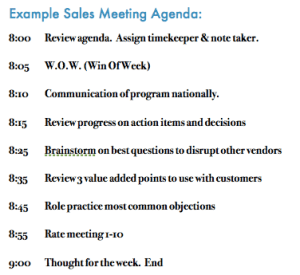
You will use writing throughout your life, for almost everything related to education and work. So, continue to improve your writing/editing skills. You will never regret becoming a good writer.

If you love science (or anything else), stick with it, even if the teachers are awful in high school. It gets better in college and beyond. You can also learn on your own throughout your life, so learn how to learn: that is key.

High school is only 4 years of your life: don’t let it define you or your future choices overly much. Right now, high school is one-fourth of your years on earth, but the older you get, the smaller that percentage becomes. By the time you’re thirty, these four years aren’t even one-eighth of your life. See?

Dr. Seuss quote
quote from The Places You’ll Go by Dr. Seuss.

5) Meditation and Religion You won’t feel connected to Judaism, regardless of how many years you are forced to attend religious education classes and how many of your friends and family members are Jewish. That’s all right.

You will find meditation, then Buddhism to be spiritual “home” for you. Say “yes” when your friends offer to bring you to meditation classes. Say “no” when people try to push you into anything that doesn’t feel right to you.

You will have to pave your own way, even though you’re the only one in your family to travel this spiritual path. You’ll be happy with yourself and you don’t harm anyone else, so go for it.

Buddhist meditation pose
image from http://www.opendharma.org

I hope you’ll take these pieces of advice to heart and follow them. If not, you’ll not be any worse off, at least.

Love,

Older Sally


Sci-fi/romance author, former writing teacher and editor and LIVE talk show host of the almost weekly G+ HOA/Youtube videochat, CHANGES conversations between authors, Sally Ember, Ed.D., is my guest blogger today.

Profile pic fewer distractions 2015

“I have been passionate about writing since I was nine years old, when I wrote and published my first story, a fairy tale about an inquisitive princess (see? I started out autobiographical). Always competitive, I’m absurdly proud that I won prizes for my poetry, stories, songs and plays early in life. Did I use up my creativity good karma too soon?

“I was born Jewish on the cusp of Leo and Virgo, which seems to mean that my life has been infused with change. Currently, I meditate, write, swim, read and host CHANGES most Wednesdays, 10 – 11 AM Eastern time, USA, in St. Louis, Missouri. I have one older brother and two younger sisters (none lives in St. Louis but we’re in close contact) and I used to have seven step-sisters and two step-brothers (we’re not in touch).

“I began meditating at age 17 with Transcendental Meditation (T.M., like the Beatles) and have been meditating for over 40 years. I became a Buddhist in 1996 (in this lifetime, anyway).

“In my ‘other’ professional life, I have worked as an educator and upper-level, nonprofit manager in colleges, universities and private nonprofits for over thirty-five years in New England (every state), New Mexico and the San Francisco Bay Area before returning to live in St. Louis, MO, in August, 2014. I have a BA in Elementary Education, a Master’s (M.Ed.) and a doctorate in education (Ed.D.).

“I enjoy blurring the lines between fact and fiction in a multiverse of multiple timelines, often including exciting elements of utopian science fiction and Buddhism. My sci-fi /romance/ speculative fiction/ paranormal/ multiverse/ utopian/Buddhist-infused, Jewish-themed ebooks for New Adult/adult/YA audiences, The Spanners Series, which are unique, uplifting, intriguing and challenging, according to readers. Vol I, This Changes Everything, is now FREE everywhere since Vol II, This Changes My Family and My Life Forever, released June, 2014. Look for Vol III, This Is/Is Not the Way I Want Things to Change, in 2015, and Vol IV – X in subsequent years; about two per year is the plan.

“I have one son, Merlyn, who is a computer network engineer and musician. Merlyn, my sisters, my mom and several friends serve as my beta readers and sounding boards for much of my writing and also contribute ideas and characters for my books, as do others in my family and friendship circles (voluntarily or not). The stories in The Spanners Series are completely true and all these characters and situations exist in some timeline or another.

“Since I alternate the POVs and focus on characters and situations to feature those who are younger/YA/NA for even-numbered Volumes of The Spanners Series and feature older adults (primarily) in odd-numbered Volumes, I plan to ‘crowdcreate’ Volume VIII with younger writers and Volume IX with those closer to my age (older adults). I invite readers to submit to me your ideas and suggestions and/or volunteer to collaborate in other ways for either of these Volumes (your choice) no later than January 31, 2016. sallyember AT yahoo DOT com

logoAuthorsDen

“I am also a some-time editor/proofreader, infrequent reviewer (but PLEASE do not send me your books or requests; I choose what to review and I rarely do it since I focus on writing and hosting), frequent blogger and talk-show host, so I geared the ‘rewards’ for my Patreon Crowdfunding campaign to be useful to those who choose to donate (as little as $4 gets a donor something). The Patreon page features videos of me singing (a capella; be nice) an original song about my campaign and describing the campaign goals and rewards. Link is below.

“I blog regularly on a wide range of topics and I also include reviews, interviews, guest blog posts, and excerpts from my ebooks. Visit and comment, follow, ‘like,’ and share.” http://www.sallyember.com/blog

BOOK BLURBS:

Volume I, This Changes Everything, The Spanners Series, by Sally Ember, Ed.D., PERMAFREE

This-Changes-Everything----web-and-ebooks
Dr. Clara Ackerman Branon, 58, begins having secret visits from holographic representations of  beings from the Many Worlds Collective, a consortium of planet and star systems in the multiverse.  When Earth is invited to join the consortium, the secret visits are made public. Now Earthers must adjust their beliefs and ideas about life, religion, culture, identity and everything they think and are. The MWC selects Clara to be the liaison between Earth and the Many Worlds Collective and she chooses Esperanza Enlaces to be the Media Contact. They team up to provide information to stave off riots and uncertainty. The Many Worlds Collective holos train Clara and the Psi-Warriors for the Psi Wars with the rebelling Psi-Defiers, communicate effectively with many species on Earth and off-planet, eliminate ordinary, elected governments and political boundaries, convene a new group of Global Leaders, and deal with family’s and friends’ reactions. In what multiple timelines of the ever-expanding multiverse do Clara and her long-time love, Epifanio Dang, get to be together and which leave Clara alone and lonely as the leader of Earth? This Changes Everything spans the 30-year story of Clara’s term as Earth’s first Chief Communicator, continuing in nine more Volumes of The Spanners Series. Are YOU ready for the changes?

Volume II, This Changes My Family and My Life Forever, The Spanners Series $3.99

51-N7O96ZSL._UY250_
Intrigued by multiple timelines, aliens, psi skills, romance and planetary change? Clara and the alien “Band” are back in Volume II, This Changes My Family and My Life Forever. Now as Chief Communicator, Clara leads the way for interspecies communication on- and off-planet. Fighting these changes are the Psi-Defiers, led by one of the oldest friends of the Chief of the Psi-Warriors, its reluctant leader, Rabbi Moran Ackerman. Stories from younger Spanners about the first five years of The Transition fill Volume II. How would YOU do with the changes?

LINKS:
WordPress Blog and main Website: http://www.sallyember.com
Tumblr: http://sallyember.tumblr.com/
Twitter: @sallyemberedd
Pinterest: http://www.pinterest.com/sallyember
FB Spanners Seriespage: https://www.facebook.com/TheSpannersSeriesbySallyEmber
Personal Facebook: https://www.facebook.com/sally.ember (Sally Sue Fleischmann Ember)
Google+ Spanners Series page: http://goo.gl/tZKQpv
Personal G+: https://plus.google.com/u/0/+SallySueEmber
Youtube Channel: The Spanners Series books’ trailers, author readings, CHANGES shows and more:
https://www.youtube.com/channel/UCqnZuobf0YTCiP6silDDL2w/videos?view_as=public
Patreon Crowdfunding Campaign: http://www.patreon.com/sallyember
Amazon Author Central: http://www.amazon.com/Sally-Ember/e/B00HEV2UEW/
Amazon ebooks’ pages:
Vol I: http://www.amazon.com/dp/B00HFELTG8
Vol II: http://www.amazon.com/dp/B00KU5Q7KC
Smashwords: https://www.smashwords.com/profile/view/SallyEmber
Vol I: https://www.smashwords.com/books/view/376197
Vol II: https://www.smashwords.com/books/view/424969
Kobo:
Vol I: https://store.kobobooks.com/en-US/ebook/this-changes-everything-3
Vol II: https://store.kobobooks.com/en-US/ebook/this-changes-my-family-and-my-life-forever
Barnes & Noble nook:
Vol I: http://www.barnesandnoble.com/w/this-changes-everything-sally-ember-edd/1117444256?ean=2940045417921
Vol II: http://www.barnesandnoble.com/w/this-changes-my-family-and-my-life-forever-sally-ember-edd/1119080804?ean=2940045805957
iBooks/iTunes:
Vol I: https://itunes.apple.com/us/book/this-changes-everything/id746840776?mt=11&ls=1
Vol II: https://itunes.apple.com/us/book/this-changes-my-family-my/id853674553?mt=11
Goodreads: https://www.goodreads.com/author/show/7237845.Sally_Ember
LinkedIn: http://www.linkedin.com/in/sallyemberedd/en
Wattpad: http://www.wattpad.com/myworks
Library Thing: http://www.librarything.com/profile/sallyember
BookLikes: http://sallyember.booklikes.com/
Shelfari: http://www.shelfari.com/authors/a1002726320/Sally-Ember-Ed-D-/books
Authors’ Database: http://authorsdb.com/authors-directory/5338-sally-ember-ed-d

Covers and Logo Art by Aidana Willowraven: http://www.willowraven-illustration.blogspot.com/

Archived CHANGES conversations between authors LIVE shows: https://www.youtube.com/playlist?list=PLPbfKicwk4dFdeVSAY1tfhtjaEY_clmfq 
Authors can learn more about and get yourselves scheduled on as guests:  https://sallyember.com/changes-videocasts-by-sally-ember-ed-d/ 

Unknown's avatar

How I use Science Research in my Science-Fiction Writing for The Spanners Series

How I use #Science #Research in my #Science-Fiction #Writing for The Spanners Series

First, Some #Tech History

Typewriters to Word Processors
I am old enough to remember learning to type on a manual typewriter whose action was so “hard” or difficult that I had to slam each finger onto the keys to get them to hit the ribbon with enough force to get sufficient ink to mark the typing paper. If I were trying to make carbon copies, I had to hit the keys even harder or the copy wouldn’t be impressed with the keys enough for the carbon paper to work properly.

Luckily, I was already a piano student (from the age of 9) by the time I started typing (age 10) and I took my only formal typing class the summer I turned twelve. By then, my fingers were very strong. I do not know how others learned to type and made it work without being pianists. Even with my hours of piano playing every week, I still found it tiring and challenging to type with enough force on these typewriters to make the keys impress the carbon paper, especially when making more than one copy.

manual typewriter
Keys on a Manual Typewriter

The first revolution was the IBM “Selectric” (invented in 1961, but got to me and my part-time jobs in St. Louis, MO, in the late 1960s and early 1970s), which had a spinning ball rather than key action. This made the typing of the letters cause the ball to spin, putting the typed letter in contact with the ink ribbon without having to use as much force. My days of a typewriter jam were almost over (I became an extremely fast typist, but the machine could not keep up!).

The early 1970s brought further great relief from typewriter drudgery with the electric typewriters (soft-touch, less force-required) and then the amazing automatic carriage return. Remember that lever we had to yank on at the end of every line? Gone!

typewriter_jam
Typewriter Jam
image from http://ecocatlady.blogspot.com

Finally, the best invention for writers and secretaries: the correction key, which worked by back-space-erase-retype action. Before this functional key existed, typists had to use special typewriter erasers (those round ones with the feathery ends so we could brush off the eraser dust from each part of the page) and carbon paper erasers for any mistakes, OR (usually) retype the entire page for one mistake! For larger mistakes or the carbon copies, we newly could use “Liquid Paper” or “Wite-Out”(THANKS, Bette Nesmith Graham, who invented this in her kitchen in 1956!), which also was a revolution in making typed pages appear mistake-free even when they were not.

Liquid_paper_products_Womens_Museum
Liquid Paper display at the Women’s Museum
image from http://en.wikipedia.org

Card Catalogs and Index Cards
Along with these trips down memory lane for typists, which brought us to word-processing/computer-like typewriters and, finally, word-processing software for home computers (the BEST!), we have the trajectory across the last fifty years for researchers. Remember those little pencils that were ubiquitous in libraries for use near the card-catalogs?

I used to spend hours or days or weeks cross-referencing, by hand, with my fingers and tired eyes, to find authors, titles, types of printed works, or microfiche/ microfilm copies of materials. Then, some were not allowed to be “checked out,” only used “in-house.” Or, some had to be requested via Interlibrary Loan, which could take months.

The photocopier was an electrifying (LOL) invention that allowed us to take home pages we wanted to study or read. We could mark them up and use them to take further notes on when items couldn’t be taken out of the library, but they cost a lot per page for my budget. I invented my own shorthand to take copious notes very quickly, a system I learned to use in lecture classes as well. I could quickly crib information from precious materials I couldn’t afford to make copies of in the large numbers of pages I needed for a project.

I am a speed-reader, fast note-taker, and quick thinker. Still, this type of research was slow and laborious since I had to read each page to determine what I wanted to notate, photocopy or ignore. Every resource also had long lists of their own resources which I usually had to follow-up on (and was grateful for the “trail”), but many items were one-of-a-kind and not available when I needed them.

Index cards, notebooks, looseleaf binders, photocopies, smudged ink and so much paper, paper, paper: I was drowning in it. We had to ORGANIZE: color coding, use of tabs, physically taping-moving-retaping the cards or notes on large pieces of paper or a bulletin board, wall or floor. It is at this point I would notice the gaps and have to trudge back (often through snow and ice; not kidding) to the library.

floor outlining
Floor Outlining
image from http://fairfieldwriter.wordpress.com

I was SO excited to use removable tags and “post-it” notes when they came into our lives: 1968, serendipitous discovery by Dr. Spencer Silver at 3-M, of the reusable glue; and Arthur Fry, mid-1970s for the mass-market applications, like “post-it” notes and removable tabs. If I only could keep it all straight and remember my own process. For example, was I using blue for my thoughts or quotations…?

Art Fry oppfant Post-it-lappene og forandret måten vi kommuniserer på. Gul lapp på pannen med lys idé tegnet .
Arthur Fry, inventor of the “Post-It” note
image from http://en.wikipedia.org

Research Access and Writing, First Major Innovations
Fast-forward to the 1990s and (thanks to Al Gore…), the World Wide Web, or as it’s now known, the Internet. At first, not a lot was available to “laypeople.” Research didn’t change for me much during my graduate schools years (1991-96, for my Master’s and doctorate). The scanning interfaces were horrible: grainy and hard to read, with many odd mistakes and quirky formatting problems. Plus, most items weren’t scanned in and scanners were still prohibitively expensive and large, so not widely utilized. Professional journals, esoteric sources and other materials still needed to be found and used at libraries or in person.

The biggest boon and the one I still praise daily is the word processing personal computer. Best parts of that: copy, cut and paste functions. Gone forever are the days of using actual scissors (although I love that the “cut” icon is a pair of scissors). I no longer use sticky tape or post-its to move text around and it’s easy to create outlines that I can change quickly.

First-time, ever: specialized software programs that allowed us to create bibliographies as we write, using sources freely in our properly-positioned footnotes and endnotes, all automatically formatted to the chosen “style” guide, if we were clever enough to input the data correctly. Incredible!

endnote foot note dialogue box
Endnote/Footnote Dialogue Box

Using Science Research in my Science-Fiction Writing

A Researcher’s Paradise!
Now, in the mid-20-teens, the Internet is alive, well, thriving and chock-full of information. Google, Yahoo, MSN, Wikipedia and other -pedias, specialized news sources and wikis along with nonprofit organizations’, professional associations’ and corporate websites populate the web with more facts than anyone could gather. I can capture and bring them to me via my home computer’s browser with the entry of a few simple search terms.

I am now overflowing with science breakthroughs, breaking news and older sources, with accompanying images, data and video/audio files. I am in a researcher’s paradise!

Word-Processing Software’s References and Resources
We have our own dictionary and thesaurus right within our word processing programs, with grammar and spell-checking functions operating within our own preferences and parameters. We can change these, add words and terms, personalize it all at will.

We can also become completely autonomous as bloggers, authors, producers of content of all sorts. We can independently research, write, edit and format an entire book in electronic or print format from our homes or offices: this is the true revolution of “desk-top publishing.”

My Evolving Research and Writing Process
Best part, for this sci-fi writer: science information on any topic, any time, at my fingertips. I have changed the way I write because of what is available and how I can use it in my books. I used to be an avid outliner (remember the notecards and color-coded tabs?), but usually, now, I mentally sketch out what I want to write about and what characters to include.

Then, throughout the year, I gather tidbits of information that I believe I may want to use. I get links to articles from organization’s or group’s pages’ and friends’ posts on Facebook, Google+, LinkedIn, Pinterest, Twitter and other social media sites.
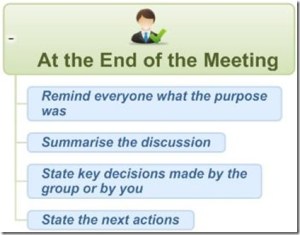
When something piques my interest, I don’t have to go anywhere to read it. I don’t have to take notes or pay to copy the entire article. I don’t have to carry backpacks filled with heavy books, research journals and articles home.

Oh, no; I do not!

Instead, with a few “clicks,” I travel online to the site to copy and paste part or all of the article and its URL to a word processing document. It is then stored in my research folder with a specific title and date. I review it in its entirety or portions of it later, usually on the day I plan to consider using it.

Screenshot (28)
Screenshot of my research folder’s contents

When I’m ready to write, I begin to mine my research folder for its gold and other ores. When I find something I may want to use (for its facts, explanations, ideas or announcements), I copy and paste parts or all of each article right into my story or book draft. Sometimes, early on in my writing a book for The Spanners Series, I’m not sure what I’ll use, exactly, so I paste them all “at the end.”

When I’m ready to place items by subject somewhere in the chapters set-up, I move the paragraphs or entire articles to that chapter, by topic. As I write, I read more carefully to learn from the parts I’ve captured.

BUT, I am careful NOT to not use these authors’ exact words or do much paraphrasing. Instead, these snippets become my “notes,” acting like outlines, as guides. The sections I’ve pasted show me where I want to take my characters, my plot, or even my series by providing me with the science and facts to back up the next part of the world I’m building and the story I want to tell.

Once I’ve utilized this chapter’s store of ideas and facts (of course, attributing and giving credit in my Appendices when I use any part more literally than conceptually), I put each accessed article into my “USED” folder in my computer. Then, as I write, I delete the “notes” from the copied-pasted nonfiction/research articles’ sections of the draft.

All that is left in each chapter are my own ideas, in my words, with my characters, my plot. I then move on to another source or chapter section.

Summary of All the Changes: Pros and Cons
This process sometimes wreaks havoc with daily word counts, but I’ve learned how to distinguish consistently the “notes” sections separately from the written portions. What I love about this evolving process is how time- and resource-efficient and budget-friendly it is. There are only a few steps, with nothing to photocopy or borrow, no handwritten notes and bits of paper to misplace, fewer or no pieces of paper.

Plus, when I find out I’m missing something crucial or want to go in a new direction, I can open a browser tab and find a new information source in about one minute on my computer, from where I am already sitting. When inspiration strikes, I can “scratch” my creative “itch” immediately. Right away, I can find out if my new idea is feasible by setting the data up right within my draft, look it over, consider it all, then resume writing.

I can easily and quickly re-arrange entire sections, chapters, and themes, distributing ideas and information among my draft volumes as I write each one of my 10-book Spanners Series. For each of the three Volumes I have completed and the one I’m currently midway through, I have re-organized the chapters multiple times. I have changed sections, moved paragraphs and altered the events in timelines (my series includes multiple timelines) so that the chapter sequence changes almost weekly for a while.

I keep track of all these events, data and movement by using header dates for each chapter. I list them in my series’ spreadsheet by chapter and title. I also include some of the chapter’s content, characters and its current Volume number in the cell.

Screenshot (27)
The Spanners Series’ timeline spreadsheet, screenshot

Given the fluid nature of ebooks and self-publishing, it would not surprise me to find out, years from now, that I want to re-arrange the sequence within or of the Volumes I’ve already published significantly! Doing that wouldn’t even be difficult, since self-publishers can withdraw and resubmit Volumes for distribution whenever we want.

Of course, there is one big problem: too much sitting! I have to remind myself to take breaks, get up, walk around, go swimming 5 – 6 times each week, take naps, go outside and walk around. The temptation to stay inside and keep working is so much greater than in the past because everything I need is “right here”!

I also have to be careful not to have another incident of RPI (Repetitive Stress Injury) to my arms, fingers, hands and wrists, which I had severely in my first semester of graduate school. I learned exercises, ways to sleep, the use of ice and NSAIDs to avoid overusing my home computer as I transitioned from relying on an electric typewriter. When there is no paper to load, no carriage level for returns, no ribbon to change and no carbon paper, we don’t move around physically enough.

We have to remember: raise our eyes to look out a window to change our eyes’ focus from near to far, remove our hands from the keyboard to stretch our arms, shoulders, necks, backs, fingers. We need to get up and actually (HORRORS!) leave the keyboard and screen for frequent breaks, or we will ruin our bodies.

Many (like my son, not pictured, but his set-up is similar) now use standing desks and ergonomically designed keyboards with vertical access to prevent the worst harm and future injuries. However, exercise and frequent “away” periods are the best ways to avoid physical problems from developing due to computer overuse.

ergonomic desk set up
Ergonomic Desk and Keyboard Set-up
image from http://www.instructables.com

However, I would not trade the convenience of this era for all the manual typewriters and liquid paper in the multiverse. Thanks to all the inventors, developers, creators, scientists, researchers and writers who made/make this all possible for the rest of us!


This Changes Everything, Volume I, The Spanners Series, by Sally Ember, Ed.D., Permafree

This-Changes-Everything----web-and-ebooks
Volume I cover

Dr. Clara Ackerman Branon, 58, begins having secret visits from holographic representations of beings from the Many Worlds Collective, a consortium of planet and star systems in the multiverse. When Earth is invited to join the consortium, the secret visits are made public. Now Earthers must adjust their beliefs and ideas about life, religion, culture, identity and everything they think and are.

Clara is selected to be the liaison between Earth and the Many Worlds Collective and she chooses Esperanza Enlaces to be the Media Contact. They team up to provide information to stave off riots and uncertainty. The Many Worlds Collective holos train Clara and the Psi-Warriors for the Psi Wars with the rebelling Psi-Defiers, communicate effectively with many species on Earth and off-planet, eliminate ordinary, elected governments and political boundaries, convene a new group of Global Leaders, and deal with family’s and friends’ reactions. 

In what multiple timelines of the ever-expanding multiverse do Clara and her long-time love, Epifanio Dang, get to be together and which leave Clara alone and lonely as the leader of Earth?

This Changes Everything spans the 30-year story of Clara’s term as Earth’s first Chief Communicator, continuing in nine more Volumes of The Spanners Series.

Are YOU ready for the changes?
http://www.amazon.com/dp/B00HFELTG8 </a
https://www.smashwords.com/books/view/376197

This Changes My Family and My Life Forever, Volume II, The Spanners Series, by Sally Ember, Ed.D., @$3.99

final cover print
Volume II cover

Intrigued by multiple timelines, aliens, psi skills, romance and planetary change? Clara and the alien “Band” are back.

Now as Chief Communicator, Clara leads the way for interspecies communication on- and off-planet. Fighting these changes are the Psi-Defiers, led by one of the oldest friends of the Chief of the Psi-Warriors, its reluctant leader, Rabbi Moran Ackerman. Stories from younger Spanners about the first five years of The Transition fill Volume II.

How would YOU do with the changes?
https://www.smashwords.com/books/view/424969  
http://www.amazon.com/dp/B00KU5Q7KC

This Is/Is Not the Way I Want Things to Change, Volume III, The Spanners Series, by Sally Ember, Ed.D., planned pre-orders 11/1/15 – 12/7/15 @$1.99; planned release 12/8/15 @$3.99; Cover Reveal 10/26/15!

logoAuthorsDen
The Spanners Series logo

Clara, Moran, Espe, Epifanio and the alien Band of holos are back. Psi-Defiers launch increasingly violent protests during this five-year Transition, attempting to block Earth’s membership into the Many Worlds Collective. To join, Earth’s nations and borders must dissolve and Psi-Warriors must strengthen in their battle against the rebels.

Clara, continuing as Earth’s first Chief Communicator, also juggles family conflicts and danger while creating psi skills training Campuses to help Earth through the Psi Wars. Clara timults alternate versions of their futures as the leaders’ duties and consciences force them each to make difficult choices across multiple timelines while continuing to train and fight.

Will the Psi-Warriors’ and other leaders’ increasing psi skills, interspecies collaborations and budding alien alliances be enough for Earth to make it through The Transition intact? If there is no clear path for Clara’s and Epifanio’s love, does she partner with Steve or go it alone?

What do you do with wanted/unwanted changes?


LINKS

http://www.sallyember.com  main website
http://www.amazon.com/-/e/B00HEV2UEW  author page
https://www.twitter.com/sallyemberedd Twitter: @sallyemberedd
https://www.facebook.com/TheSpannersSeriesbySallyEmber Spanners Series’ page on FB
https://www.facebook.com/sally.ember
http://www.pinterest.com/sallyember
http://goo.gl/tZKQpv Spanners Series’ page on Google+
https://plus.google.com/u/0/+SallySueEmber/about/p/pub Sally Sue Ember on Google+
https://www.youtube.com/channel/UCqnZuobf0YTCiP6silDDL2w/videos
https://www.goodreads.com/author/show/7237845.Sally_Ember  

More purchase/free links on Kobo, ibooks and nook as well as reviews, book trailers, author interviews and readings, blog posts, research, series updates and more on Sally’s website: look right, scroll down. http://www.sallyember.com

Cover art and logo by Aidana Willowraven: http://www.willowraven-illustration.blogspot.com/

Unknown's avatar

“Family-Friendly” is a Thin Disguise for Discrimination: They are on the Wrong Side of History

“Family-Friendly” is a Thin Disguise for Discrimination:
They are on the Wrong Side of History

Who else is on the “wrong side of history” regarding expressions of and legal sanctions toward and behaviors sourced by prejudice, bias, discrimination, hatred against ethnic, racial, religious, gender and other social identity groups?

Adolph Hitler. Austria and Germany. George Wallace. Richard Nixon. Phyllis Schlafly. Anita Bryant. The United States of America. Several Catholic Popes. Margaret Thatcher. Great Britain. Mao Tse Tung. China.

The list is, unfortunately, endless, if we keep going into history and across the globe. Humans seem to have an unlimited ability to be irrational and small-minded.

Fortunately, we do learn. We do grow. Some more slowly than others, as we see all too often, but change we do. One of the main ways people change is through exposure, a personal “eye-opening” moment that educates them (“leads them out”) away from their irrationality and biases.

The other way is through enforcement, such as the enlightened few and the majority collaborating to change the laws that require citizens to change behaviors accordingly. When behaviors change, minds can follow: not always, and not completely, as we see with the laws of integration and other civil rights for Blacks in the USA NOT eliminating racial biases and racism, but these are certainly steps in the right direction.

The current social and political landscapes—right here, right now—are changing rapidly with respect to fairness, acceptance and legal rights for those with all sexual orientations and gender identities exactly as they did with racial intolerance in the 1960s.

As usual, some are being dragged, kicking and screaming, into this new way of being. They are simply not keeping up, are they? Laws often get “ahead” of some people’s mindsets. AREN’T WE LUCKY? The haters may keep on hating, but they have no legal, moral or individual “right” to impose their “opinions” any longer.

Some definitions, for those unclear on these concepts:

3definitions
from: http://littlelaughter.wordpress.com

bias-prejudice-discrimination-5-638
from http://pt.slideshare.net

Current circumstances:
I am an author who publicly proclaims myself a feminist. Anyone who knows me or reads me online or reads my books also knows I am Buddhist, Jewish, and bisexual, and I am vocally an anti-discrimination, anti-oppression activist.

I am also a reader who occasionally does reviews. Therefore, I do agree that each reviewer has the right to refuse to review any book we do not want to review. We do not have to give reasons, either.

However, I do not agree with the opinions, prejudices and biases this reviewer expresses when she gives some (but not all) of her reasons for discontinuing her reading of and refusing to review my book.

In fact, when we allow such actions to be fueled in these ways, not commenting, not confronting, we are aiding and abetting the institutional oppression rampant in literary circles. “If you’re not part of the solution, you’re part of the problem” is never truer than in these circumstances.

Some would say that she would have been off not saying anything, but since she did, here we are.

Read below and comment, please! http://www.sallyember.com/blog

After finding me on a reviews-seeking site, this reviewer emailed me, saying that she wanted to review all three books in The Spanners Series. She wrote a few days later, saying she had started and was liking my first book.

Then, the next day, this potential reviewer sent me this email:

From: xxx

I will not be able to review your books. I have just come to a part that is [sic] conflict with my site. I have a family friendly blog and your book contains content that my readers would find offensive. It would also put at risk some of my advertising spots on my site that demand only family friendly content.

I understand that you were just trying to get across the point about non-discrimination but your content concerning sexual affiliation will not work with my site.

Best of luck to you,

xxx

“Hi, xxx,

“I have no idea what you mean by ‘not family-friendly’ or ‘offensive,’ since my books are accepted by ‘[Facebook authors’ group],’ a strict group on Facebook which promises readers fiction that won’t make them recoil. For example, I use no swear words stronger than ‘damn’ or ‘shit,’ there are no explicit sex scenes, no gratuitous or obvious violence, and no traumatic scenes in my books: they are PG-13.

“If you are objecting to any mention of or acceptance of alternative sexual orientations and gender identities to heterosexual or straight people or cis-gender people, if that would be something you or your followers find ‘offensive,’ then, please: DO NOT READ MY BOOKS.

“And, by the way, discrimination, bias and prejudice are NOT ‘family-friendly’ to any families I would want to be connected with, ever. Use of that terminology to describe what you are perhaps claiming is absurd.

“Since more than 10% of every population of humans on this planet are actually gay, lesbian or bisexual and at least 5% are transgendered, whose families are you ‘protecting’?

“If what I am assuming, in fact, are your positions, I find your views to be extremely offensive, and so would most of the rest of the world, at this point in time. Marriage equality and sexual identity acceptance are legal in many countries, including this one, and discrimination is NOT.

“I welcome you and your readers into the 21st century any time you’re ready to come.

“If I have misunderstood, I apologize. Please explain. I would welcome your further description of what, exactly, is ‘in conflict with’ your site and specifics as to your presumptions about your advertisers’ objections to the content of my books.”

Sally

She responded:

From: xxx

What is offensive is that you mention any sexual affiliation at all. I would not blurt out in a book that I was heterosexual. I would not refer to sex at all. It is irrelevant and has no place in a family friendly book. You can have any sexual orientation you want and that is your business but I don’t have to and will not promote it on my site. The fact that you felt you needed to make a political statement with your book is your business but I won’t be a part of it.

As I said Good Luck to you but I will not be doing this review.

xxx

Curious as what others who might be “in her camp” would say, I posted our email exchange on the group site I am part of, the one I mentioned, above, and asked for opinions.

I received the following anonymized responses (I didn’t include them all; some are repetitive or off-topic).

Then, I wrote a few responses, below.
Why do I bother? Because Education.

stop_prejudice_now_prop_watermark
from: http://teachersteachfromtheheart.blogspot.com

“Need[ Facebook Group members]’ opinions, please! Just had this exchange with a potential reviewer and I’m burning mad. (She approached me, BTW, asking to review my books via a [reviews-seeking/reviewers-finding site] last week!).

“She emailed me this earlier today…” (same as above, posted)

FB group’s responses:

From AAA:
“She has the right to her viewpoint, and I don’t think she should be dressed down, scolded, or insulted for it. I thought your words were rather condescending and insulting.

“OTOH, she should have done her research first before approaching you, and rather than try to take YOU to task for what she didn’t agree with in your books, she should have just politely said ‘sorry, I was wrong, it’s not going to work out this time.'”

From BBB:
“The old saying I’ve tried to remember is not to lower oneself to another’s level in order to argue or debate. It’s not ever worth it.”

From CCC:
“It’s her site, she can do as she wishes, just as you are able to write about anything you want to. This enters into the forbidden realm of writers who snap at reviewers for not liking what they wrote. She didn’t give you a bad review on her site, which she could have. She simply declined to review at all. It could have gone a LOT worse for you.”

From DDD:
“Sally, I totally get where you’re coming from, having experienced this kind of reaction (my books include gay characters who are treated as normal people). I’m living vicariously through your email because I’ve wished I could say something like that to reviewers who’ve one-started me because of it. smile emoticon But I’m inclined to agree that it’s better to steer clear of these rhetorical boondoggles. I’d just let this go and get on with writing. Your audience is out there, but it’s not this lady or her blog followers.”

From EEE:
“It’s her site. She is entitled to her opinion and the way she manages her site. We have our rules here, but IMHO, even shit and damn are not family friendly. She was polite. I’m sorry that you were not.”

From FFF:
“I have to say also, the reviewer could have gone ahead with her review, as she’d promised you one. She could have been completely open and honest about her opinion, and put it on her public site.
“Instead, when she saw it was something that she didn’t believe she could endorse, she privately messaged you, letting you know that she’d have to back out.
“This was gracious of her to do.
“So to be treated badly was not something that I feel she deserved.”

From GGG:
“PG-13 does not constitute ‘family-friendly’ in my mind. I have a 9, 7 and 4 year old, and I don’t even let them watch most PG movies.”

From HHH:
“Unfortunately, I have to agree with what many others here have commented. In addition, I have to point out that you ASSUMED her problem with your book was the fact that there are gay characters. She simply wrote that she came ‘to a part’ that conflicted with her site. The thing that may have bothered her could’ve been profanity, or whatever else is in your book. It can be dangerous to reprimand someone for their stance – especially since she could always turn around and decide to write a poor review, or even one-star your book.

“On a personal note, I write both Christian AND secular stories (things that would give Junot Diaz a run for his money in the department of shock value). So I can honestly say that even the words you listed are not ‘family friendly,’ meaning appropriate for all ages. As far as homosexuality is concerned, I have a #LiveAndLetLive philosophy on life. That means that I do not judge someone else for their lifestyle choice. However, that doesn’t mean I want my six year old reading about it. Again, it’s a subject not necessarily appropriate for all ages.”

From Me:
to HHH: “She came right out and stated what her concerns were. I didn’t assume what she objected to at all. I assumed her reasons, because she did not state them. Also, I did not expect any 6-year-olds to read this book; it’s way too complicated and sophisticated. PG-13 is the rating i always state. Thanks for your comments, though.”

From JJJ:
“Wow. And she was so polite…”

From Me:
“Since when are expressions of bias, prejudice and discrimination ‘polite’??? If her objections were obviously about my having Jewish or Black characters, would you be defending her ‘family-friendly’ smokescreen???”

From JJJ:
“She made her reasons for choosing not to include your work on her site clear to you in a very polite manner. Tolerance works both ways.”

From Me:
“To JJJ and others here: I appreciate all your comments, but for some of you, I am disappointed. SOME don’t seem to know the difference between being ‘impolite’ and being against someone else’s being discriminatory, Number 1.

“Number 2, it is not the job of those who are not being tolerated to return such intolerance with tolerance. I was not ‘impolite’ to her: I was direct and I expressed my thoughts and feelings. I did not call her names, I did not insult her.

“Remember: she VOLUNTEERED to read my books and had already sent me an email prior to this saying how much she was enjoying the first one. Then, she came to a part she didn’t ‘tolerate,’ which she and her groups, of which some of you are obviously members, seem to think it’s just fine to insult and demean. That is plain wrong. She doesn’t have to like it. She could have just said “It’s not for me” and DNF or not even written me. But, she chose to ‘explain.’

“Those who are not heterosexual or cis-gender do not deserve to be treated as if we are threats, are wrong to be ‘this way,’ or by our very existence, are ‘problems’ for ‘families.’ We ARE in families!

“I will defend to my dying day the right of all who are discriminated against to object strenuously to such discrimination, wherever it appears, however ‘nicely’ it is phrased.

“Maybe some of you are too young or didn’t have these experiences, but I grew up in Missouri under Jim Crow laws. I grew up with signs on stores and country clubs that said : ‘No Dogs, No Jews, No Niggers Allowed.’ Should I have greeted those racists with ‘tolerance’????? I am a Jewish, female bisexual. Our country is in the exact same place now with LGBT rights and biases as it was then with Jews and Blacks.

“Remember when women weren’t treated as ‘humans,’ weren’t allowed to vote, sit with men, drive, own property? Would you all be so ‘tolerant’ if she had said her ‘family-friendly’ group doesn’t want to read books with autonomous female characters, that all women be subservient to their families’ males to be considered ‘family-friendly’? Whoever doesn’t see the connections, here, I’m sad for all of you.”

From JJJ:
“Comments about the relative politeness of exchanges of views are not an automatic acceptance of intolerance or prejudice. In fact they are no comment at all about the relative merits of the content of the exchange – just the manner in which comments have been delivered.”

From Me:
“Thanks for all of your ideas, comments, and responses, here. Group. I am sorry that some of you still believe that strongly worded disagreement is ‘impolite,’ but we’re going to have to agree to disagree, there. Best to you all.”

hate-crimes-305
from: http://www.calgary.ca

Okay, Followers/Readers and Other Peeps: Weigh in! What do you believe/do?

Please leave comments on this blog! Thanks! Best to you all!

1) Should we authors all just “be polite” when confronted with reviewers’ prejudices?

2) Should we authors “be silent” when potential or actual reviewers express their biases and refuse to “serve” us at the “review” lunch counter because our books or characters don’t meet with their “approval” (don’t have a right to exist)?

3) Is it incumbent upon us all not to allow any reviewer to give or imply that their personal, political, religious or other biases as/are sufficient “reasons” for refusing to review a book? Or, do you recommend letting that go unchallenged?

4) Does simply having LGBT characters make a book “unfriendly” to “families” and/or inappropriate for youth?

Unknown's avatar

What is it like to host a live talk show? My guest post on Inger Kenobi’s site!

What is it like to host a live talk show?.

ALSO: watch Inger’s and my Episode 20 on CHANGES: https://www.youtube.com/playlist?list=PLPbfKicwk4dFdeVSAY1tfhtjaEY_clmfq and look: OPENINGS 8/26 and beyond! Welcome new authors of any age, genre, publication method!

Watch conversations with my previous CHANGES guests any time!

Learn more about and get yourself on or recommend someone to be scheduled as a guest for CHANGES conversations between authors:  https://sallyember.com/changes-videocasts-by-sally-ember-ed-d/

Unknown's avatar

Why I Started a LIVE Talk Show: *CHANGES* conversations between authors on Google+ Hangouts On Air (HOA) and YouTube

“Why I Started a LIVE Talk Show: CHANGES conversations between authors on Google+ Hangouts On Air (HOA) and YouTube”
originally posted on http://www.asidefromwriting.com on July 6, 2015

CHANGES Theme Image_3

In early April, 2014, I had just completed and uploaded Volume II, This Changes My Family and My Life Forever, of my science-fiction/romance/ multiverse/ utopian/ paranormal (psi) ebooks in The Spanners Series for adults, New and Young Adults, and joined two new writers’ groups in the East Bay (one in Berkeley and one in Hayward, California, where I had been living), when I was in a terrible accident. The resulting broken nose has been healing fine and didn’t require surgery; the concussion has proven to be a lot more problematic.

For several months, it was as if I were in a fog. I wasn’t allowed to do any serious computer work, reading or thinking (I had been about halfway through Volume III, This Is/Is Not the Way I Want Things to Change, when I got hurt). Since I couldn’t wear my glasses without causing myself enormous pain (glasses would be sitting on the broken nose, right?), and I was overwhelmingly aphasic, exhausted, confused and injured, unable to process much, the respite from writing, reading and working seemed necessary. The accident had also caused extreme damage to my arms, hands, shoulders and upper back, so keyboarding wasn’t all that feasible, anyway. Plus, when I did type, I made more errors than words, typed very slowly (usually over 100 WPM; then, about 40 WPM, with numerous mistakes).

However, once the enforced hiatus was over, I still couldn’t return to my regular life. My memory was horrible, both short- and long-term. I couldn’t find words, or the right words, to speak or write. I no longer sounded as if I were drunk, but I was still extremely slower and less able, all around, than I had been prior to the brain injury. I usually function in the top 10 percent of intellectuals, with an extremely large vocabulary and many types of intelligence. I had been fortunate, up until the accident, to be a wide reader of many subjects, with both formal and informal education beyond the doctoral level and a larger variety of knowledge, experiences and insights than most people. Post-concussion, I was barely above-average and often, not even that.

Before the injury to my brain, I had been writing my fiction series quite quickly, often exceeding 2,000 words per day. My creativity seemed boundless, my energy matching it. Volume I’s first draft had been completed in under two months, and it was over 130,000 words. I had developed a spreadsheet to record my (very brief) notes on my series’ dozens of human, animal and alien characters, multiple timelines, overlapping realities, historical and future events and people, but most of the series’ details and plans had been in my brain which had been injured to the point of being severely compromised.

In July of last year, I discovered all I could create were short, nonfiction blog and other posts, and it took “forever” to finalize each one, since I typed sentences that were riddled with errors. Each post needed to be proofread multiple times. I could barely read others’ blogs and reblog/share, almost couldn’t read short pieces/stories.

Yes, after a few months I was improving and could do these with increasingly better understanding, but I still couldn’t return to my fiction series. My “executive functions” and “working memory” were still extremely low-performing due to the post-concussion syndrome I had been diagnosed with in June.

I wasn’t well enough to return to my “regular” life of work or writing, but I was well enough to be bored. Luckily, I had discovered Google+ the previous year. During the winter and spring of 2014, I had been attending Hangouts On Air (HOAs) somewhat regularly.

After my accident, watching videos was about the only thing I could do, since reading, writing and other glass-wearing activities were excluded. I attended and participated (when that was allowed) in many HOAs by leaving comments, questions, and interactions with others also viewing or presenting, on topics ranging from books, book marketing, authors, writing, marketing, social media, spirituality/meditation and more. I watched most on Google+, but they were also archived so I could watch those I missed on YouTube, where I found even more entertaining, informative videos. (Find me on Google+ as Sally Sue Ember)

I got into watching one HOA in particular, Lights, Camera, HOA!, run by an excellent trio of women: Meloney Hall, Rayne Dowell and Sheila Strover.

After I attended a few shows, Rayne read Volume I of my series and reached out to invite me onto the show to learn more about being in/on a HOA. The entire reason for this show’s existence is to help newbies (like me) get comfortable with the HOA format and technology, both on- and off-camera. I LOVED it! What a great service this show provides. THANK YOU! https://plus.google.com/u/0/+Bigupticksociallightscamerahoa/about

As a former actor/performer, being “on camera” wasn’t hard for me. As a writer/author, being able to interact with viewers LIVE was so much better than having readers I almost never hear from or meet. I was hooked on HOAs and wanted my own. I learned everything I could in the next several months, wondering if I’d be able to manage my own show.

What could I have a HOA about, exactly? There were an infinite number of choices. By then, I had been interviewed on several radio shows online and submitted many “author interview” posts to others’ websites, so I was familiar with that format and was beginning to feel it was somewhat overused. Frankly, and no offense to the current website(!), I find most author interviews to be awfully repetitive and, well, boring.

I did NOT want to interview authors, but I wanted to meet more authors and talk about writing as well as many other interesting topics. By the end of July, four months post-injury, I still couldn’t write for my series, but I was able to talk better and listen very well. I decided to launch in August and to have a show that I would want to watch.

Since I wanted to be around other writers and hear about their experiences, hoping to be entertained and inspired until my own writing would (hopefully) be accessible to me again, I posted on Twitter, Facebook groups and in general, Pinterest, LinkedIn, and Google+ communities to invite authors to be guests on CHANGES conversations between authors. I also ranged around to those sites that posted award winners in science-fiction, particularly, and invited many of those authors on my show as well.

CHANGES YouTube Image_3 best

The response has been more than gratifying. I welcomed Dr. Shay West as my first guest for my August 6, 2014, premier Episode, with several more super authors scheduled to be on subsequent shows. Since then, with a few planned and even fewer unplanned exceptions, I have had an Episode each week. The live show airs three or four times per month (with one week off, to rest) on Wednesdays, 10 – 11 AM Eastern time, USA, and TODAY, August 5, 2015, I air my one-year anniversary show!

Amazing authors have been guests on CHANGES (http://goo.gl/1dbkZV on my website for full schedule of past and upcoming guests). I have had guests who joined me live and/or hail from France, Spain, England, Scotland, Ireland, Germany, Canada, Israel, Guyana, and many states in the USA. The authors I have talked with enrich me weekly (and my viewers as well, I hope), writing in every fiction genre and including those who also write nonfiction, plays, screenplays and poetry.

Ethnically, my guests have been American mixed-Causasian, African-American, African-Jamaican, Spanish, English, Indian (continent, not tribe), Russian, Jewish, German, Norwegian, Israeli, Guyanan, Irish, and Greek (so far). Editors, publishers (magazine and book), and translators, with an age range, as of today, August 5, 2015, of 15 – 78 years old, are in my CHANGES guests club.

Our conversational topics list is too lengthy to include here, but has been exactly as I had planned: wide variety, high-level subject discussions that are informative, entertaining, insightful, funny and poignant. My guests and I share personal and professional stories, discuss books and writing, publishing and editing, book cover artists and much more.

I am quite happy to say that, as of August 5, 2015, CHANGES Episodes (now up to 37, http://goo.gl/1dbkZV on YouTube) have garnered audiences as large as over 1000 in one day, totalling over 3600 views, so far.

My YouTube channel went from having 2 to almost 50 subscribers. I now have over 3000 followers on Google+ and Facebook, each (although some are the same people, I’m sure), and over 5000 on Twitter. Pinterest followers’ number has quadrupled; so has LinkedIn’s.

I know these are small numbers compared to many, but I’m happy that my network is growing. We receive many compliments, positive comments and excellent questions for each CHANGES Episode from viewers who watch live or later, and more watch weekly.

Since starting CHANGES, I’m delighted to report that downloads of Volume I of my series, which is permafree since I uploaded Volume II (right before my accident), are steady. I do wish for better sales for Volume II, but I’ve heard a series has to have at least three books released “to really take off.”

What’s Next?
CROWDFUNDING to meet my Goals

—I wish to convert the *CHANGES* videocasts into podcasts, for those who prefer to listen-only, but the podcast hosting sites are not free.
—I also wish to pay for my next book covers,
—I need to buy better equipment for my home videocasts, and
—I must keep writing.

However, the concussion has severely limited my ability to work and I am in deep debt. If you’d like to help, http://www.patreon.com/sallyember has a video about my goals and rewards to donors in which I sing (really; not so well, but, hey; I’m not a professional singer!), and more information.

$4 gets you a free ebook; larger donations earn you deep discounts on professional editing, proofreading and writing tutor services, all of which can do well, despite the concussion.

Concussion Recovery News
As of May, 2015, I am back to writing new parts of Volumes III and IV! Slowly, much more laboriously, with an ongoing need for referrals to notes and dictionary, thesaurus and spell-check than remembering going on, but glad to be writing!

I wish I could open up my brain and retrieve the Spanners Series ideas that had been so accessible, so easily before the concussion and look them all over, but…

logoAuthorsDen

The network of authors, book bloggers, book marketers and other writers I have been developing over the last two years has blossomed into a group I can call upon for help, advice, and exchanges. That has proved amazingly gratifying as I trumpet my announcement, below, because many have stepped forward to play a role in this next phase.

Good news: I finished the Beta readers’ draft of Volume III, This Is/Is Not the Way I Want Things to Change, in late July! Five wonderful writers are reading it right now and will offer their sage wisdom on its improvements by late September. I then hope to be finished with the final proofed version no later than mid-October. I have already begun the cover design process with Aidana Willowraven, The Spanners Series‘ cover artist. The Cover Reveal is planned to occur on Alesha Escobar‘s site in late October. Pre-orders start 11/1/15 and the release of Volume III is scheduled for December 8, 2015!

Wish me luck!

How Else You Can Become Involved
Beta readers for upcoming draft of Volumes IV and reviewers of all Volumes welcomed! Contact me: sallyember@yahoo.com

Also, watch a few Episodes of CHANGES any time: http://goo.gl/6xjSKl Please comment on YouTube or go to the original G+ Event page for that Episode and comment/ask questions, get more info and links. I will respond!

Become/Refer a Guest! #Authors and #bloggers, especially those in sci-fi/speculative fiction, but not only those: learn more about and get yourself on CHANGES, and #Readers, recommend an #author to be scheduled as a guest.

OPENINGS 8/12/15 and later this fall! For more info, schedule and past/upcoming guests list, visit here: http://goo.gl/1dbkZV.

CHANGES Trailer Image_3

Also, I’ve invited former guests and others I appreciate to Guest Blog on Wednesdays, with excellent posts, so far! Check out the Guest Bloggers’ Hall of Fame on my site (see below) for previous and upcoming posts.

I strongly suggest you check out others’ HOAs as well: there are some great shows out there in Google+ land! Two good places to find them (and another great G+ community, User2User: LIVE!):
https://plus.google.com/u/0/communities/101944073205735325459 for User2User-Live!
Http://www.hangouteventscalendar.com for the HOA Calendar

For updates about and links to available Volumes of The Spanners Series, me as an author, my own and guest blogger’s posts, Patreon and much more: http://www.sallyember.com has all links and info. Look up or to the right and scroll.


May all who are ill recover and all who are in pain find comfort.

Best to you all!

Unknown's avatar

Why I have Always Hated Independence Day in the USA

Why I have Always Hated Independence Day (July 4th) in the USA

I am not the only one, either.

Fireworks
I could enjoy the fireworks from a great distance and up high, only. Sometimes I could get to my own or someone else’s rooftop or high window and watch from afar and admire the colors without hearing the awful noises: those I could appreciate, somewhat. But, I never forgot, even as a little girl, that these contraptions are supposed to represent bombs and I hate bombs, I hate war, and I, according to my mom and my own memories, have always hated fireworks up close. Still do.

illusion of democracy fireworks
image from http://www.247newsworld.com

Troy Patterson REALLY hates fireworks: http://www.slate.com/articles/life/a_fine_whine/2009/07/fireworks_suck.html

Patriotism
I am deeply disappointed in this country and have been for as long as I can remember. How can anyone around my age (60, born in 1954), whose first clear memory of a President is the insane, lying criminal, Richard M. Nixon, be patriotic?

The USA, in the 1950s, 1960s and 1970s, drafted and then sent millions of my classmates (and they were BOYS) to their maiming, mental health breakdowns, drug addictions or deaths in Korea, Vietnam, Laos and Cambodia FOR NO GOOD REASON.

ALL the “wars” the USA has “fought” since World War II have been nothing but thinly disguised efforts to make some a-holes richer and further the political agendae of yet another group of ignorant buffoons that the people of this country keep electing.

It is shameful, embarrassing and horrible that the USA is STILL DOING THAT today in Iraq, Afghanistan, and anywhere else the war-mongers can stir up enough jingoism to get people to volunteer.

When Barbara Streisand sang “America, the Beautiful” for Bill Clinton’s campaign show, I cried. Not because it was so wonderful or she was so great, and not because I was moved by Clinton (the women-exploiting, lying sack of sh*t). No. I cried because I cannot feel what I wished I could feel: I can feel no pride and no love for a country I have lived in all my life.

Whatever does anyone have to be proud of? What is there to love besides the lands’ natural wonders (the ones we haven’t yet ruined) and the people we already care about?

The USA shows up far too low or is the lowest on the ranked lists, lowest among ALL “modern,” or “Westernized” countries, in too many categories to count. I’m talking about our ratings on handling issues that really matter, like infant mortality, educational attainment (high school graduation), child poverty, racist police violence, racist incarceration, numbers incarcerated, numbers of addicts/alcoholics, gun violence/mass shootings, domestic violence, rape, homelessness: on and on and on.

Aaron Sorkin nailed this problem (our mistaken belief in the USA as the “greatest country in the world”) in the rant he wrote for Jeff Daniels’ news anchor character to give in the HBO TV show, Newsroom (responses start after audience-member’s question at 3:10; Daniels’ actual rant begins at about 4:40): https://www.youtube.com/watch?v=Rpn0vh2Rj0Y or https://youtu.be/Rpn0vh2Rj0Y

Are YOU an American and proud? How? I really want to know how you reconcile the actual dismal facts of this country’s historical record and current terrible policies and behaviors around the world with your desire to be a patriot: they don’t make enough booze in the world to drown out the noise of that cognitive dissonance for me.

Celebrating War
At its core, Independence Day, July Fourth, celebrates the Revolutionary War and the newly formed United States of America’s “victory” in it. As a lifelong pacifist who abhors violence and would avoid it in every case, except as a last resort or best tactic to prevent further harm and death (as in World War II), I deplore all uses of violence and especially warfare.

Scotland recently had a VOTE to determine whether or not it should become independent from Britain. Did anyone consider that option in 1776? I highly doubt it. Maybe it wouldn’t have worked; we can’t know. But I do not want to celebrate the deployment of violent methods to achieve something that may well have been attainable by nonviolent means and certainly was not necessary.

Hundreds of thousands of people died in the USA’s Revolutionary War and subsequent wars of “independence” around the world, due to the USA’s “shining example.” I am as ashamed of all of those wars as if I had started them myself.

I also DO NOT SUPPORT THE TROOPS who currently serve in the USA military, since they serve as volunteers who decided to go kill people the USA and its deluded allies have no business killing, to destroy and steal property we have no business wrecking, and otherwise to wreak havoc in other people’s countries FOR NO GOOD REASON.

These “wars” have NOTHING to do with the attacks on the USA on 9/11/01 and have actually increased the terrorism in the world rather than helped it abate. If you don’t believe me, look at the rise in terror attacks and the growth of ISIS. How else do you explain those?

No one made them go. No one should have volunteered. If no one had volunteered, the “war efforts” would have died in one year or a few months. Truly.

NO ONE should have volunteered. Period.

Why would ANYONE “support” those “troops” and these activities? I really want to know.

The USA’s “image” or “brand” has been “slipping” in the world everywhere but Western Europe for over a decade because of our hypocrisies, torture training centers and usage of torture, pollution and degradation of the planet’s resources due to corporate greed and war-mongering at others’ expense. http://www.pewglobal.org/2014/07/14/chapter-1-the-american-brand/

That is another reason NOT to “celebrate” this country on July 4th.

Gratitude and Wishes
Whom am I grateful to? Bradley/Chelsea Manning. Julian Assange. Edward Snowden. Bernie Sanders. Daniel Ellsberg. Karen Silkwood. Rosa Parks. Bree Newsome.

Rolling-Rebellion-Taos-4th-of-July-Parade-gratitude1-e1405261595292
image from: http://www.globalresearch.ca

I Wish…the USA would join the world in better living and cooperation. Start with these:
–Sign the nuclear non-proliferation agreement.
–Provide universal healthcare for all citizens in the USA for free.
–Provide college educations at public universities to all students for free and eliminate/forgive ALL student loan debt right now.
–Sign the reduction in land-mines agreement.
–Sign the reduction in carbon emissions agreement.
–Sign all treaties that attempt to stop human trafficking, sex slavery, child abduction and forced human drug smuggling from occurring.
–Improve and provide housing, alternative health care, better education, enough food and actual public safety (better policing) for ALL our own citizens.
–Model caring, democratic living for the world.
–Stop all forms of discrimination based on religion, appearance, gender, sexual orientation, and other types of social identities.
–Stop all forms of rape, sexual attacks and domestic violence by enforcing the existing laws and making better ones everywhere.
–Reduce child abuse and child poverty by providing more opportunities for jobs and meaningful employment at living wages for all citizens who want to and are able to work.
–Provide free childcare and pre-school to all children.
–Stop all armed conflicts, destroy all mass weapons we own and stop producing them.
–Repurpose the military budget to serve our citizens better (see above).

rebellion-when-injustice-becomes-law-e1412174046276
image from: http://kellidgordonlibertyblog.wordpress.com

What do you wish? Comment here. http://www.sallyember.com/blog

Best to you on this weekend, whatever you’re doing. I wish I could celebrate. Instead, I will meditate on world peace.

Unknown's avatar

Johnson’s Shut-Ins: Jumping In with Fear, Enjoying the Ride

Johnsons Shut Ins title
(unknown person in this photo)

Johnson’s Shut-Ins: Jumping In with Fear, Enjoying the Ride

Some of my clearest memories, among my fondest and most thrilling times, are of the several visits I made while a teen and young adult to this amazing state park in central Missouri. I attended and then worked at several summer camps which made this wonderful location part of our overnight trip schedule, so I was privileged to go there again and again in the late 1960’s and early 1970’s when the water was clean, the river was running high and the place was mostly undiscovered.

What is it? What makes it so special? From a scientific/geologic/historic standpoint, there are these facts:

The story of Johnson’s Shut-Ins starts over a billion years ago when the igneous rocks, pink granites and blue-gray rhyolites, were formed from volcanic activity.

Igneous rock is one formed from molten rock, magma, and other volcanic materials (e.g., ash deposits).
Granite rock (a type of igneous rock) is formed from magma that cooled below the earth’s surface and then was exposed later.
Rhyolite rock (another kind of igneous rock) is formed from magma and volcanic ash and debris flows that spewed out onto the earth’s surface and then cooled.

Above the park the East Fork of the Black River flows through a broader valley formed in dolomite bedrock. Then the river hits the more resistant igneous rock and the valley becomes narrow and steep-sided or “shut in.” Along the banks of the stream, look for the Ozark witch hazel which blooms in late winter and early spring.

http://mdc.mo.gov/discover-nature/places-go/natural-areas/johnsons-shut-ins

There are the natural beauty and sensory pleasures of the cool but not freezing water, the rushing but not crushing rapids, the clean and clear water, the variety of smells, sights and adventures to be experienced which you’d have to go there to know. But, here are some photos and a few stories to help you believe you were there with me.

For the Walkers
For the less adventurous, those who’d rather sunbathe than swim, the large rocks offer plenty of opportunities to lie around and enjoy others’ splashing and yelling without moving much. My friends and I would divide into groups: walkers, floaters, swimmers and jumpers. The walkers usually stopped out and sunbathed a lot and didn’t go as far down the river as the others. Many of them barely got wet. Personally, I didn’t see the point of being a walker, but some people just didn’t want to get wet.

Johnsons Shut Ins 6

For the Floaters
Floaters enjoyed the water but weren’t great with longer swims and had no interest in climbing and jumping in from higher and higher plateaus. They would use the rapids to shoot down little ladders into shallow pools, climb back up and do that or another section many times and stay in the central “shut-ins” area for hours, whopping, hollering, splashing and laughing. I’d join the floaters for a while, but I felt the need to move on to more exciting parts very soon.

Johnsons Shut Ins 9

The walkers and floaters could see parts of where the swimmers and jumpers were going, but not all. Mostly, these first two groups were less willing to go deep, go high, go far. Walkers and floaters still had a blast and probably had no care for or interest in what they were “missing” because what they were doing was incredibly fun and went on for many and varied sections of the shut-ins.

Johnsons Shut Ins 8

For the Swimmers
Some of us swimmers and jumpers would re-visit the shut-ins sections to hang out with our walker and floater friends, eat our lunches, warm up, talk, shoot down the rapids for a while, then swim further on again. We’d do this back-and-forth for hours.

Johnsons Shut Ins 7

If you can imagine the sounds of the rushing water, the shouts and laughter of the kids and teens, the sweet smells of the trees, water, flowers and plants, the beauty of the rocks and formations and the rush of excitement we’d feel, you have some of the sensory pleasures swimmers and floaters especially enjoyed.

Johnsons Shut Ins 3

We swimmers, though, just had to keep going. Beyond the shut-ins sections were three ever-larger and deeper pools, kind of like small lakes, culminating in the pool with the three jumping platforms. The feeling of being pushed and pulled around by the rapids in the shut-ins for hours was with us until we got to the third pool. By then, the calm, clear water of the first two pools had changed our vibrations and soothed our nerves.

For the Jumpers

Jumpers are swimmers who can conquer, or jump in with fear. Jumpers had to be strong, enduring swimmers who could tread water, go deep and surface, climb and jump in repeatedly (or at least once) without flagging because there were no lifeguards and no easy way to get rescued if a swimmer or jumper got exhausted.

Johnsons Shut Ins 5

Some swimmers came through all three pools just for the love of swimming and some came to watch the jumpers. Maybe they were revving up to jump, but many swimmers never did. Or, some jumped, but only from the lowest platform rock (about 6 feet above the water). There was an intermediate platform rock, which we estimated to be about 20 feet above the water, which many jumpers used but most never went higher.

Then, there was the highest jump, from a rock area that was about 40 feet above the water. It was also set kind of far back, so jumpers not only had to be brave enough to climb up (clambering up a narrow trail without steps which was very slippery and had no handholds), foolish enough to jump off from 40 feet high, but also, we had to be skillful enough to jump OUT in order to clear the jutting rocks beneath this platform area so that we would get to the water and not break a body part hitting the rocks first. There was a small area to take a few steps (but not run) before jumping, or jumpers could just propel our bodies forward and out as we jumped: that’s what most did.

NOTES: The first photo, below, which shows a human-made diving board, was not the way it was when I was there. There was no diving board. We had to jump out to avoid those rocks and had no help from an extending board.

Johnsons Shut Ins 1

I remember climbing up to the highest jumping area for the first time at the age of fourteen, thrilled and frightened in equal measure. When I got to the top, I was so scared I could only sit and watch as several other jumpershurled themselves off the cliff. I let kid after kid go ahead of me, not daring to take a turn.

I felt that I couldn’t do it. I was panting, sweating, shaking from fear. I looked at the climbing trail and knew I couldn’t climb back down, either. It was incredibly treacherous with sliding pebbles, shifting dirt and narrow rock formations that made it barely possible to go up and impossible to reverse direction. There would be no going down except by jumping.

Each jumper hooted and hollered, making it seem so fun, I just ached to do it. But I was immobilized by my terror, hunched down behind the jumping area, for about thirty minutes. Luckily, no one paid me any attention and I could be in my own world, contemplating my fate.

I was up there so long my swimming suit felt dry. Finally, there was no one else up there for a minute. I felt the urge come over me to DO IT. I stood up, my legs shaking. I crept to the edge of the cliff and looked down, checking the exact location of the jutting rocks that I’d only seen from below before. They jutted out REALLY FAR.

This photo shows the perspective of that highest jumping area as I remember it.

Johnsons Shut Ins 10

I was only 5′ tall. How would I propel myself out beyond them? I imagined breaking my arm or leg, hitting the rocks if I misjudged my jump.

No way. I could do this.

A big whoosh of internal courage rushed into me. Grabbing onto it before it could disappear, I took a few steps back, then raced forward and hurled myself OUT, bicycling my legs as I’d seen others do to get more distance beyond the rocks below me.

It seemed to take forever to reach the water. I had time to think about how long it was taking. But, no one had told me and I hadn’t bothered to notice that I needed to keep my arms and legs close to my body. I hit the water with a smack, my legs slightly open and my arms out to my sides. IT HURT LIKE HELL! My inner thighs were on fire and my inner arms felt as if I’d hit walls with them.

I sunk down further in the water than I wanted to, then frantically kicked to get back to the surface, blowing out water and gasping for breath when I broke clear, hurting all over.

I felt exhilarated! I HAD DONE IT! My friends and a few strangers around me cheered and hollered at me. As my head cleared and the aching subsided, I looked around, smiled, and held up one arm high above my head, fist clenched. YES!

Now that I knew I could do it and had learned that I needed to keep my body more like a pencil after I bicycled out, I was eager to do it again. So, I did.

Several times that day, several times the next day, I clambered up and immediately jumped from that highest point. I learned to love the fall, letting time stretch out. Knowing the entry wouldn’t hurt, that I could get my breath and come up just fine, made it that much more enjoyable.

For several years after that, on each visit, into my early twenties, I made my first jump with tremendous fear and enjoyed the rest. It was one of my favorite things EVER to do.

At each summer’s visit, for my first jump I had to climb up and then let several jumpers go first as I got myself psyched up to jump again. I never stopped being afraid of that height. I just kept cimbing up and jumping anyway, feeling the fear while enjoying the ride.

What Lies Beyond
The Black River goes on from the third pool, but we couldn’t swim or hike any further safely. Some of it looks like this, from above, which seems as if it would be a fun ride down the rapids, like the shut-ins that came before, except there was no way to get back by climbing back up or around and up, the way we did in the actual shut-ins sections.

Johnsons Shut Ins 2

If you ever want to go
First of all, make sure the Black River is running well: not too high (from flooding) and not too low (from drought). Second, plan to camp out in the park and stay a few days. You’ll love it that much. Bring your own everything; there’s nothing much nearby in the way of restaurants, stores, etc.

The MO State Parks page states:
“This natural area is within Johnson’s Shut-Ins State Park. The 2-mile Shut-Ins trail provides access to the natural area. Inquire at the park office about the hiking trail.
“To reach the park office: from the intersection of MO Highway 21 and MO Highway N north of Pilot Knob (Iron County) go west nearly 13 miles to the park entrance on the left (south). Follow the signs to the park office.
“Swimming is allowed in the shut-ins at your own risk.”
http://mdc.mo.gov/discover-nature/places-go/natural-areas/johnsons-shut-ins

Unknown's avatar

#Classes I won’t be taking any time soon or at all

As a lifetime educator and someone who believes in being an autodidact as well as a formal student, having earned three degrees and many certificates, I could easily imagine myself taking a class or two some time in the future.

The Cognitive Rehabilitation therapist I worked with recently in my now more than year-long journey recovering from Post-Concussion Syndrome mentioned some research that indicated that the surest and fastest way to rebuild brain functions and regain memory is to learn something new.

Great! I love learning!

lifelong-learning
image from http://slworkshop.net

So, I perused the local listings for free or inexpensive classes, since I’m not economically able to fund expensive classes right now. Mostly, the offerings made me shake my head and laugh, which inspired me to write this post.

#Classes I won’t be taking any time soon or at all

  • Concealed Carry (CCW) Class
    “Complete the Missouri or Florida concealed carry permit training requirements in 1 day for only $90! This price includes EVERYTHING from course materials, gun rental, ammunition and range time. There are no extra charges!”

    As a nonviolent, anti-NRA, anti-guns, Buddhist meditator, I can say with certainty that this tops the list of classes I will NEVER take.

  • Learn the Secrets of Lasting Happiness and Success
    “In less than 4 hours, you will learn how to become the person you want to be in the place you want to be. Enter your details below and Circles University will email you an exclusive coupon to access this $149 course ABSOLUTELY FREE when it launches. Don’t miss this exclusive early bird offer available for a strictly limited time.”

    I actually went to the Circles University website just to see what it offered.

    Oh, my goodness. Egregiously New Age and otherwise misleading and awful stuff, there.

    PASS.

  • Deeper meaning of Zohar
    “Free Zohar ‘Crash Course.’ Book of Radience, Zohar. If you’re interested in The Zohar and everything it has to offer at a deeper level, we recommend starting with a beginner course in the fundamentals of Kabbalah. Courses are free, and are available for self-study and as live video classes.”

    I was born and raised Jewish but we never even talked about the Kaballah. The first time I heard about it was when I was in my thirties. I was friends with a former Catholic almost-nun (postulate who left the convent). She was interested in Jewish mysticism and thought to ask me about it. I stumbled and responded: “There is Jewish mysticism?”

    Soon, I was hearing about Hollywood and other celebs adopting/studying Jewish mysticism: it was competing with yoga as the new spiritual fad for a while. That really turned me off.

    Still turned off. Plus, Adam Sandler make a movie that used almost the name as “Zohar” (“Zohan”) for his weird character.

    Enough said.

    No, thanks.

  • Friday Night Bible Study + FREE Dinner
    “What we do: Start with dinner, sing songs, Bible study/discussions & end with dessert/ice cream. Who can come: All students & singles below the age of 30.”

    Even more than I dislike Jewish mystical subjects would be how much I despise the Bible, especially the “New Testament.” Can’t think of many things I’d rather NOT study, but add the Koran and the Bhagavad-Gita to round out the list of topics of study about which I am NOT spending any of my time learning.

    Luckily, for this one, I’m way too old. LOL.

  • Interested in a Mary Kay skin class” [sic]
    “I am selling Mary Kay
    “And I need 10 women or men too book a skin care class with me and learn something new about your skin [sic]
    “FREE
    “FUN
    “I can come too you or you can come too me [sic]
    “Also looking for people who are interested in learning about Mary Kay and becoming your own boss” [sic]

    I wish this woman would commit to taking an English class. I would tutor her for free. I would.

    I also hate everything to do with make-up (unless it’s for clowns, Hallowe’en, theater or movies), both using it and the entire industry that creates, researches, sells and supports make-up, so I’m clearly not her target audience.

    I kept looking.

    commit-yourself-to-lifelong-learning-source
    image from http://iusphcareers.wordpress.com

  • Make Glass Beads and Ornaments”
    “Learn the art of glass bead making [sic] or ornament production with individualized one on one classes [sic]. All supplies and materials included. You will be able to take home beads or ornaments from your first lesson on. $35 per hour. 18 and over only.”

    I like arts and crafts. I like glass. I’m clumsy and lack talent, but, hey: they didn’t stipulate to needing talent or grace.

    However, I don’t celebrate Christmas or have any use for ornaments, and I can’t think of more than one use I’d put glass beads to: as the filler in a vase, which I rarely use since I am not a fan of cut (dead) flowers.

    Skipping this class, too, although I’d love to know why one has to be over 18 to enroll: can this class possibly be X-rated???

  • Bartending: a recession-proof career”
    “Whether you are looking to supplement your income or as a career change, bartending is a recession-proof career where you will meet new people, have lots of fun, and earn great money!

    The Bartending Institute has been placing people behind bars since 1979.”

    While I appreciate the last pun and the unintentional truth-telling that surely is behind it, gotta say I hate the entire concept of selling, drinking or purveying alcohol. Always have.

    Even more, I intensely dislike being around people who are getting increasingly intoxicated, especially men. This aversion to being in the presence of imbibing leads to my dislike of weddings, wakes, graduation parties, office parties and most other mainstream gatherings.

    Sigh.

    Bartending is not something I will ever learn.

  • Become a GravOxy Fitness-Certified Rebounceologist

    I had never heard of any of this, but the jargon intrigued me and made me laugh. Also, sparked many questions:

    —Why is it “re”bounce and “re”bound?
    —What are they bouncing and bounding on FIRST?
    —Why is the certification to become a rebounce”ologist,” which means someone who studies “rebouncing,” rather than having finishers become certified teachers of “rebouncing”?

    I clicked on the listing.

    Oh, my.

    I provide, below, the definitions they offered: priceless. I especially like the capitalization choices and their claims of what constitutes a “science.”

    (By the way, aren’t gravity and evolution still listed as “theories”?)

    “‘Rebouncing uses acceleration, deceleration and gravity to strengthen
    every one of your cells simultaneously in a vertical plane. You cleanse your
    lymphatic system and triple your white blood cells in 2 minutes. No other
    fitness class embraces this energy! [“embraces this energy“?]

    Rebouncing offers an extensive range of health benefits that cannot be
    found in any other form of exercise. Rebouncing is also a comfortable and
    an engaging wellness option for children, seniors, special populations and
    sedentary individuals. However, not all Rebouncing techniques, or
    rebouncers (aka ‘rebounders‘) are equal and, unfortunately, there is a lack
    of instructor education. [What? Not all participants in the classes to become certified are equal, or not all who come to classes on rebouncing are equal? What group of people would be “equal”?]

    GravOxy Rebouncing is unique in that it incorporates the sciences of Gravity
    and Oxygen to maximize the effectiveness of workouts in a safe manner. Just
    as importantly, GravOxy Rebouncing can be used by any individual (from
    athletes to seniors), no matter the age or conditioning level.’ [What happened to the inequality concern?“]

    “Tuition for the certification is $450, which includes the instruction, all course materials and the complimentary use of a PROFESSIONAL-GRADE BELLICON REBOUNDER….”

    I went to their website to get a look at what this REBOUNDER actually looks like.

    gravoxyfitnessplatforms
    image from http://gravoxyfitness.com/gravoxy-fitness-platforms/

    Oh, no. That is NOT happening. Jumping on a tiny trampoline? Seriously? Not with MY body karma.

    No, thanks.


That’s my current list.

So far, so bad.

I will keep looking, but I’m not optimistic.

Am I too picky, am I not the target demographic (for ANYTHING?), or am I living in the wrong place? What about a MOOC [Massive Open Online Course]?

To be researched further…

keep-educating
image from http://buckslib.org

Unknown's avatar

Look whose QUIRKS are featured today on Keely Brooke Keith’s site?

Look whose QUIRKS are featured today on Keely Brooke Keith’s site? MINE, of course! Go visit, comment, follow, please, and SHARE!

http://www.keelybrookekeith.com/2015/05/author-interview-series-sally-ember.html

Unknown's avatar

Part IV: Letter to my Earlier Self about #Blog #Hops and #Virtual #Book #Tours

Part IV: Letter to my Earlier Self about #Blog #Hops and #Virtual #Book #Tours

This is Letter Four of Four of my “open letter to my earlier self” series that first appeared on The Book Cove Reviews, http://www.thebookcove.com/2014/12/author-sally-ember-edd-letter-to-my_15.html, late November – December, 2014.
Letter One appeared on my site, http://www.sallyember.com/blog , on 3/26/15.
Letter One posted on 3/26/15; Letter Two appeared on 4/4/15 and Letter Three on 4/11/15.

blog-hop-for-writers

image from http://phyllisiturner.com

I published my first ebook in December, 2013, and my second in June, 2014. I intend to publish my third in April, 2015. What I wish I had known before my first ebook went into pre-sales in November, 2013, about Virtual Book Tours and Blog Hops and other kinds of “shared” PR continues to grow. I write these Open Letters in order to share my wisdom “backwards” to my earlier self from today’s vantage point.

Dear Sally,

Now that you know you are going to be an indie published author, and you know you’re going to start with only ebooks and then see what happens, your choices about book marketing are more limited than if you were going to have both print and ebooks available or if a major or even minor publisher were backing your books. Mostly, your entire author platform and writing life are going to exist almost exclusively online.

That all means no book signings (you have no books to sign). It also means that you will have few or not any public readings, at least, not yet, since those usually go with book signings. You won’t be paying for much publicity since you have almost no budget for it, so forget print ads, posters, or other signage in the “real” world. Your PR is going to all be virtual.

What does this new type of non-in-person, non-print PR include besides your blog? You will have online “stores,” places that sell your books online, where the cover, blurb and reviews live. You can post your photo and bio there (on some, anyway). You should have author pages and book pages on vendor sites. What else?

Blog Hops and Virtual Book Tours.

Well, no wonder you have no idea what a “Blog Hop” or “Virtual Book Tour” is: You just barely started to blog last August, 2013, and barely know what blogging is. You have recently published your first fiction book while is also your first ebook. It’s hard to be more of a newbie than you are!

When someone invites you to “join” a Blog Hop or be part of a Virtual Book Tour, you don’t know what you’re saying “Yes” or “No” to, do you? How could you?

First of all, go visit/go on a Blog Hop or Virtual Book Tour at least once, each. Be a visitor to one or more that have some of the same organizer(s), authors and/or books as the Blog Hop or Virtual Book Tour you’re considering as a participant.

Take notes: what do you like/not like? What is confusing/clear? How appealing are the promos, widgets, banners, graphics? Since you are also a reader, consider: would YOU be more or newly interested in these authors/these books because of this Blog Hop or Virtual Book Tour?

If the answer is “NO,” stop there. You might want to join a Blog Hop or Virtual Book Tour, but not THIS one.

Visit some more until you can say “Yes” to these questions, above.

Now that you know what you like, it’s time to get more educated. There are hundreds of (free or fee-based) webinars, Google+ Hangouts On Air (HOAs), teleseminars, podcasts, blog posts, and, don’t forget: BOOKS and EBOOKS devoted to explaining everything about creating or joining a Blog Hop or Virtual Book Tour and all aspects of book marketing.

I won’t even try to recap it all here. Nonfiction can or should be marketed differently than fiction, short fiction differently than long. Target audience for and chosen genre/subgenre of your writing change the PR scene as well. Poetry and memoirs are in their own niches. Etc.

Attend, read, watch. Take more notes.

There was an excellent month-long series of educational events and posts I attended last May, 2014. Well worth it. Thanks, D’vorah Lansky! The Book Marketing Challenge has both free and paid options. Look into them! Email D’Vorah and ask about the next round: support@bookmarketingmadeeasy.com

blog-hop-150x150 BMC 2014

image from http://buildabusinesswithyourbook.com/community-blog-hop/

If you are leaning toward “Yes,” before deciding whether or not to join a particular Blog Hop or Virtual Book Tour or to create your own, regardless of how enticing the organizers or instructors make it sound or you found theirs to be, there are some key questions to ask:

  • What are the requirements? Are they easy, moderately easy or arduous to fulfill? If you have to create or acquire a lot of new graphics, redesign or add to your website, write new blurbs or text to fit their guidelines, is it worthwhile? Answer the other questions, below, to determine that.
  • What’s in it for you? Are you allowed to promote/feature your own books, your blog, or just others’ books and blogs?

    Virtual Book Tour

    image from http://acupofteaandabigbook.blogspot.com

  • How much of your precious writing time will be given over to this endeavor?
  • How long does it go on? Does that timeframe work with your schedule (i.e., for visiting others’ sites, cross-promoting, posting widgets/modifying your own site, commenting, etc.)?
  • Can you be ready to submit everything by the deadlines and post on your day as scheduled?
  • How much does it cost to join, e.g., do you have to provide a “Raffle” prize, a “giveaway,” or any other “swag,” discount coupons, gift cards, or what? Is that affordable?

    Vegas Vacation Book Tour

    image from http://www.crystaljordan.com

  • What amount of traffic is likely to be driven to your site from these other sites, i.e., how many followers do they have, what are their ALEXA scores?
  • Are the other Blog Hop or Virtual Book Tour participants in the same or similar or at least compatible genres/subgenres with yours?
  • Are the other blogs/sites/books/authors’ brands compatible with yours (NSFW [Not Safe For Work] vs. SFW [Safe For Work], for example)?
  • Is this organized by a paid promoter or someone else with experience organizing a Blog Hop or Virtual Book Tour so that there is at least one person who will handle the responsibilities of corralling, collecting, scheduling, managing this event professionally and well?
  • How many other participants’ sites are being visited on the same day as yours? Do that number and variety seem likely to be competitive, supportive, confusing, appropriate?
  • What possible benefits will there be and how likely are they to accrue to YOU?

    monthly book sales

    image from http://www.rtbookreviews.com

  • Having answered all these questions, is this Blog Hop or Virtual Book Tour a worthwhile endeavor?

Bottom line, Sally, is that your writing time MUST be a priority, but you also have to put in time to create relationships in order to find readers, get more visible, be part of an online community with important and meaningful connections, and, oh, yeah, MARKET your books. Be cautious, be discerning, be wise.

I hope you are finding this series of Open Letters helpful to your decision-making and planning for your first and subsequent book launches and ongoing marketing and promotions. I might add to this series as I get even more experienced; we’ll see.

Meanwhile, don’t forget to ENJOY the ride!

Best to you!

Your future Sally

Unknown's avatar

Why I write about #politics, #elections, #issues and support Emily’s List #feminist #candidates

I WILL write about #politics, #elections, #issues and support Emily’s List #feminist #candidates…and so should you!

feminist activist causes
image from: http://www.list.co.uk

Maybe you think “social media” should just be for posting pictures that are funny or cute. Maybe you don’t want to offend or alienate anyone. Maybe you’re a coward. Maybe you’re undecided. Maybe you’re ignorant and don’t know enough about anything political to write about it. Whatever your reasons or rationales, cut it out.

If you are a USA citizen or a citizen of any country that allows you to vote and you do not exercise that duty and right for EVERY election, informing yourself (which is easier to do than ever before with information EVERYWHERE) and taking a stand on candidates and issues as adults who care are motivated to do, than I want you reading this post to inspire and educate yourself.

If you’re already politically active and savvy, great: SHARE!

First of all, there is a sea of candidates out there for almost every elected post and many campaigns of mis- and dis-information attempting to muddy the waters further. What’s an interested, concerned citizen to do? Utilize the groups that vet candidates and issues FOR us, that’s what. Find a group/entity who screens, analyzes, evaluates and presents, according to YOUR values and interests, those you’d want to vote for, complete with reasons, and information about whom and what to vote against as well.

Propaganda v science
image from: http://hockeyschtick.blogspot.com

Better yet, if you’re so inclined, RUN for office. Offer yourself to serve on a Board or Commission. Join/donate to/volunteer for a local or state chapter of the League of Women Voters, the National Abortion Rights Action League (NARAL), the National Organization for Women (NOW), or whatever else strikes your fancy. Start small and keep going, because city council members, school board members, mayors, sheriffs, judges and many others in local offices later become state or federal senators, congressional representatives for the state or federal government, state governors, Supreme Court judges, presidents!

As a life-long feminist committed to environmental, social, educational and other more radical values/components that mesh with my Buddhist, nonviolent foundations, I choose appropriate news sources (mostly nonprofits to boot) to help me learn and decide.

Here are a few I use and recommend:

  • Emily’s List http://www.emilyslist.org/, whose mission is: “We elect pro-choice Democratic women to office.”
  • Mother Jones magazine http://www.motherjones.com/, which has been analyzing and reporting from the center of core issues, reporting what many do NOT report and reporting truthfully, paid off by NO ONE, for decades
  • B*TCH Media, whose tagline is “Outsmart the Patriarchy,” which I love even though I do not like their name, and whose mission is to respond to “pop culture,” but does so much more than that http://bitchmagazine.org/
  • The Daily KOS, which has a weekly open thread on ELECTIONS, and with whom I often disagree but respect http://www.dailykos.com/
  • Amy Goodman, Juan Gonzales and the team at Democracy NOW!, independent, ad-free, on TV and public radio http://www.democracynow.org
  • Dissident Voice, which is “a radical [online] newspaper in the struggle for peace and justice,” that sees itself as providing “hard-hitting, thought-provoking and even entertaining news and commentaries on politics and culture that can serve as ammunition in struggles for peace and social justice.” http://dissidentvoice.org/
  • Upworthy.com, which is a curation site, gathering from many sources, including YOU, if you submit, to re-present “things that matter.” http://www.upworthy.com/
  • The Feminist Wire, with an inspiring and laudable mission: “to provide socio-political and cultural critique of anti-feminist, racist, and imperialist politics pervasive in all forms and spaces of private and public lives of individuals globally. Of particular critical interest to us are social and political phenomena that block, negate, or limit the satisfaction of goods or ends that humans, especially the most vulnerable, minimally require for living free of structural violence. The Feminist Wire seeks to valorize and sustain pro-feminist representations and create alternative frameworks to build a just and equitable society.” http://thefeministwire.com/

JFK quote
image made from John F. Kennedy quote

What else can we/should we do, if you believe, as I do, that change is necessary and that many important changes do occur via our elections and efforts in those directions? Here are some ideas. Comment and add your own, please! http://www.sallyember.com/blog

  • Some of you are lucky enough to have an alternative newspaper right in your area, still publishing in print and/or online (The Valley Advocate (New England, USA sites), The Bohemian (CA, USA, San Francisco Bay Area and Central Coast sites), The Boston Phoenix, Women’s Voices Magazine (many locations around the world) are some of my favorites).
    Read them. Subscribe. Submit comments online. Submit “Letters to the Editor.” Tell others. Buy ad space. Distribute or allow your business to become a site for distribution.

  • Donate to and support National and local Public Radio, Pacifica Radio, other alternative online or actual broadcasting entities. They are fewer and further between than ever and are always operating on shoestring budgets with many volunteers. YOU could volunteer!
  • Maybe you want to get your news from a culturally, ethnically or group-specific source, like Al Jazeera, The Advocate (LGBTQIQ), Univision, The St. Louis Jewish Light, Black Press USA, or whichever you prefer.
    Support them. Donate. Buy ad space. Volunteer. Comment online. Support their advertisers.

social change
image from: http://mariamuir.com

Use my sources and ideas or get your own, but get informed and work for the candidates you support, for the issues that matter to you.

It is UNACCEPTABLE to be passive and silent, more worried more about being controversial than effecting necessary changes. Be bold! Just because you are an artistic sort doesn’t mean you get to hide!

artist as activist
image made from quote by Larry Neal

Get involved. March. Demonstrate. Speak. Donate. Host. Participate. Invite. Write. Solicit.

VOTE!!!!!

Unknown's avatar

#Writing as Excavation of the Soul

Repost from 12/2/13

For me, #writing fiction and poetry always involves digging up artifacts and dirt. My own and others’ buried treasures, junk, secrets and lies are uncovered, examined, deemed worthy “as is” or refurbished, cleaned up and presented within the text.

Writing #ClaraBranon, as her and about her, is the most autobiographical fiction I’ve ever written. I decided to gift Clara with most of my own “stories” and history, to see what would happen when a version of me is involved in the circumstances and relationships Clara encounters. It’s a roller-coaster for me, delving into my own life to pull up people, events, emotions, reactions, wishes, fears, griefs and successes and foist them onto Clara.

Usually, she does a lot better than I do or I already have with these events and has a much higher “success” rate with her conversations and intimacies than I can claim. In many ways, I feel envious of her. I also do not want her life, especially the public part. But, I do sometimes wish I had her personal strength and courage.

Oh, wait; I do. I must. I also have her creativity, the fire that burns within her, since I gave it to her. Of course I do.

Then, why is it so much easier to see this in Clara than in myself? I believe I make a character in my own image and deliberately make her better than I am only to discover that she can’t be better than I am because I made her. Not to put too fine a point on it, but the whole “God-made-humans-in-‘His’-own’-image” story has similar issues, yes?

As a fiction and poetry creator, as a #Buddhist well aware of the illusory nature of all phenomena, as a fabricator and dreamer, I am well aware of the fantasies I make into a semblance of reality with each paragraph or stanza I put into words. I paint pictures of scenes, drawing upon deep emotional bonds and reactions in order to do it, but we all know none of this is “real.” Right? Except for the parts that are true, that is.

The exhilarating, terrifying ride of writing one’s own stories in whatever forms is that others are going to read them and get to know things about me and my inner world I would never tell them, otherwise. My best defense, then, is to mix these true tales with pure fiction.

Sometimes serving up this admixture seems to be a cop-out move on my part, as I feel a taunting voice within me saying: “Na, na: you can’t know me! You don’t know what parts of this are ‘mine’ and which are completely made up. So there! Try and figure it out. I’ll never tell!”

This is the gauntlet every writer throws down to one’s readers: “Catch me, if you can!”

I do leave breadcrumbs for your journey, especially on Pinterest: http://www.pinterest.com/sallyember and here in my blog posts. Happy treasure hunting, readers!

Please let me know what you find and what labels you decide to put on each trinket. We can compare later. Start with Volume I, This Changes Everything (NOW FREE) and ask: “Who is #EpifanioDang?” Move on to “Are there really #aliens coming or already here from the #ManyWorldsCollective?”
http://www.sallyember.com for buy links, reviews, interviews and more. Look right; scroll down.

Continue with a chapter-by-chapter analysis of world history, politics, biology, religions, the arts and meditation and keep going: The Spanners Series has so much to offer you, including Volume II, This Changes My Family and My Life Forever, which released 6/9/14, and Volumes III and IV coming out in 2015!

Enjoy! Write Reviews! Share!

Unknown's avatar

Is all disagreement “negativity”? When did that happen? I DISAGREE!

THIS POST IS DEDICATED TO MY MIDDLE SISTER, W. ELLEN E. FLEISCHMANN, A MISSOURI STATE CHAMPION DEBATER, WHOSE BIRTHDAY IS TODAY!

Is all disagreement “negativity”? When did that happen? I DISAGREE, and I am not being “negative,” unless we’re in a debate, in which case my “side” is “con” (as opposed to “pro”).

This issue has arisen in various ways over the last two years or so, since I became a indie author, blogger and online participant. However, in my latest foray into online “conversations,” I engaged in an exchange that has been very disappointing.

An online acquaintance who moderates one of the Facebook groups I belong to has a public website that includes a blog where she often posts reviews. I’ve been following her site and occasionally reading her posts. Otherwise, we don’t know each other.

A bit of background: I don’t usually comment on hers or anyone’s reviews unless one is particularly well-written or I happen to vehemently agree or disagree with it, which was the case, here. This is a public site and she allows for comments.

This reviewer (who shall remain nameless) posted rave comments for the 50 Shades trilogy, including her wish to speak with E.L.James (making it seem as if she had an “author crush” on E.L. James, which I have no issue with at all). It was her calling the main relationship portrayed in 50 Shades “the greatest modern love story” of her time (this reviewer is about 20 years younger than I am, by my estimate; perhaps younger), that compelled me to respond.

I thought carefully about what I felt and thought and how I wanted to convey these bits, edited and revised my comments a few times before I posted them for approval. Then, I went on to my day’s other business.

Unfortunately, I received the following message (see below for our email chain) later that day.
Her decision not to “approve” or post my comment on her site and her intense, personal reaction surprised and appalled me, as you will see by my email response to her.

I’m not trying to start any kind of conflict or flame war. I really want to know what you all think. (See below.) Here are my main questions to you, my blog readers:

—-Are we supposed to withhold responding when we have ANY disagreement between us and any members of our online “community”?
—-Is ALL disagreement “negativity”?
—-Do we have to speak in “soft tones,” “soft-pedaling” anything that might possibly be critical, because so many writers/bloggers seem unable to tolerate being criticized?
—-Are we supposed to keep our sites (and purportedly, our lives) free of all conflictual conversations by not approving critical comments?
—-Do those of us who have criticisms to levy have to refrain or risk being called “trolls,” or banned/kicked out of review groups, comments sections, social network platform groups, etc.?
—-Do only “yes” people and “supporters” feel (and get) welcomed online?

not every critic is a hater

I can’t recreate my exact comment, but here is the gist:

Your post made me feel sad and I feel sorry for you. What world do you live in, that these two-dimensional characters and their dysfunctional sex and interactions constitute any kind of “love story,” much less “the greatest one”? James’ depiction of her disempowered, ignorant female lead character is insulting to women everywhere. The “billionaire” male lead is selfish, clueless about healthy relationships and awful to his “girlfriend.” The “plot,” thin as it is, is implausible. Some of the “play” depicted in the sex scenes is not credible or even possible (people have tried to recreate it with laughable and/or injurious results).

I reviewed and disliked all three books, giving many considered reasons. Please go read my reviews. I also consider E.L. James’ writing among the worst to receive public acclaim, so as an editor, author and reader, I challenge your evaluation of the writing of these novels. Your opinions caused me to feel discouraged.

Here are the first email I got from this reviewer, below, and our exchange below that.

Subject: Blog Comment

“I was really on the fence with whether or not to approve your comment, Sally, or to respond to it. Because realistically the best way to deal with negativity is to not feed into it. So in this case, I’m going to respond privately.

“In answer to your question: ‘What world do you live in?’ I live in a democratic world where everyone is entitled to their own opinion, and since it is my blog, I am free to express it. You chose to read my blog, just as you obviously chose to read Fifty Shades of Grey. And like all readers in the world, we all have different viewpoints on how we interpret a book. You have no right to judge my opinion, just as I have no right to judge yours.

“However, the fact that you chose to try and publicly insult me on my blog, saying that you feel sorry for me for my opinion, that you feel saddened by it, is extremely hurtful.

“I have supported your posts on [the Facebook group I moderate] since its inception, and I am disgusted that you would even try to publicly insult me, as I have never done anything but provide you with support. I did not approve your comment.”

comment not approved

I’m reading this, stunned. Really? These two lines, in the same paragraph, written without irony?
“I live in a democratic world where everyone is entitled to their own opinion…” followed by
“You have no right to judge my opinion, just as I have no right to judge yours.”

If we have a “democratic” right to our opinions, isn’t judgment a form of opinion? Why does she think we “have no right” to judge anyone else’s opinions? That is so absurd I don’t even know where to start with a response.

And, a deletion of my comment follows this “explanation”? I’m sputtering and laughing, both.

What IS a review, if it’s not exactly that: one reader and possibly another writer JUDGING another’s opinions and writing?

What is the function of comments on reviews, if not to JUDGE that review (like it, dislike it, agree/disagree)?

I considered, took some deep breaths, decided it was worth my time to respond. Maybe she could learn something… Maybe not.

I wrote, revised a few times, then responded:

Subject: Re: Blog Comment

“Dear XXX,

“It is your blog, your review and your opinions: all true. But, if the only comments you ‘approve’ on your site are those that agree with you, make you feel good and support your opinions unequivocally, you will stagnate.

“Your choice.

“I did not set out to be nor do you have to take my comments as ‘hurtful.’ I was expressing my dismay, my personal (as a female and feminist who is a lot older than you) and my professional (as a writer who has been writing a lot longer than you) sorrow at your conclusions and approval of those books. I read them all, too. I reviewed them all, too.

“If you want to go and comment on my reviews, please do. Say whatever you want, as a reviewer, a writer and a reader: that is your right. I encourage you to do so.

“Your previous support of my posts is appreciated, but your using that as if you ‘paid’ for my approval forever by doing so is insulting to me. Stop approving, stop supporting, if you think you ‘deserve’ some special and DISHONEST responses from me for doing so.

“If you want to close off conversations between us because you disagree and get hurt feelings when I don’t like what you write or post, I can’t stop you, but please; don’t make it as if I did anything wrong. You have a public blog. Comments are public. I did not ‘publicly insult you.’ I responded to your public post, in public, where comments belong.

“Sheesh.

“Sally”

She wrote back:

Re: Re: Blog Comment

“I will not respond to your negativity, Sally.

“We obviously do live in two different worlds. I’m happy to stay in mine.”


I did not and will not respond directly to her. I gave up on her: not apparently willing to be learning; not worth my time.

Instead, I am writing this post and asking for YOUR opinions.

Maybe I could have phrased my comment more “gently,” in some misguided attempt to protect her, but I would NEVER consider doing that for a man or someone my own age. Wouldn’t I be subjecting her to gender and age bias if I were to withhold, “dumb down” or soft-pedal my considered and professional opinions just because she’s a woman and/or someone younger than I am? She presents herself as a professional in public so I treated her as one.

Why doesn’t she expect some responses that don’t please her and have a better way to manage her own feelings about them? Why can’t she handle disagreement and criticism with more grace, or, even better, engage in a conversation with me about her points of disagreement, defend her opinion, argue her points, instead of playing the “hurt” and “insulted” cards? Why is all right for her to judge my comments but not all right for me to judge her review?

Are we “fellow authors” and reviewers/bloggers really obligated—no; supposed to—send all comments in which we disagree with a blogger to them privately, first? Why?

I vehemently disagree with these ever-expanding hiding-from-public-view practices. I am certain that hiding disagreements results in the disappearance of complex, nuanced dialogue and provides the public with pablum, instead. Then, the only thing readers get is a distorted picture of author engagement, in which we all hold hands and sing “Kum Ba Ya” all the time. When we post only glowing reviews, readers are misled and we breach the public trust.

When some label comments they don’t like as “negativity” and relegate disagreement to the private realm, we are all then left with sanitized, white-washed, dishonest and hypocritical non-dialogue in all public spaces: what is the point of engagement, then? Just keep patting everyone on the back, regardless of value, worth, logic, perceptions?

Not all disagreement is “negativity.” Not all conflicts between us should position one person as “good” and the other as a “troll.” Yes, there are “trolls.” I am not one of them, and this person should realize that. I am not hurt, just pointing out the obvious.

If she really can’t tell the difference between my expressing my honest opinions, while I am respecting but not liking hers; if she can’t see that I am not liking that she came to the conclusions she did or made the choices she did, but I am taking the time to tell her that as one professional to another, then I am led to give up on her.

Authors and bloggers, in my view, do not “earn” uncritical support (or maybe you think you do and you want it, but I do NOT) just by joining a group or getting to know each other online. If you are my professional “friend” or colleague, PLEASE tell me the truth. I don’t want applause; I want critiques and engagement that matter.

Just so you know: I do not go around looking for people to disagree with. I am busy. Most of my posted comments are supportive and positive, and I don’t post a lot of those, either.

HOWEVER, when something disturbs and moves me enough to write to someone about it, that writer should be grateful: I read his/her piece, respected the author enough to consider their opinions or positions, and responded from a thoughtful place.

When I am writing to the reviewer or blogger in order to provide my emotional as well as logical responses, that is further proof that I believe in this author or blogger enough to take MY precious time to craft and post a response.

If this blogger and any others do not understand that all thoughtful comments, however contradictory or critical, are a gift, their censorship is going to make honest dialogue even more rare.

Some writers apparently don’t have the courage to stand by their own public proclamations and engage publicly with people who do not agree with them. I term this behavior “unprofessional” and deem them unworthy of my time and opinions in the future.

BTW: I went to her FB group to see if she (the moderator) had kicked me out, and so far, not. However, she posted and pinned this query, right after our email exchange:

“Since this group is becoming more and more of a spam magnet, and not so much about [the group’s stated topic] anymore, I’m thinking it’s time to put it to rest?

“If anyone cares to keep it open, please respond with a comment, and I’ll see what reception I receive.

“I’m thinking about opening another one using a different name and with a slightly different purpose. Thoughts?”

Shutting down this group and using a different name to start another one?

Coincidence? I doubt it.

PLEASE post your comments here, on my main blog, to this any any other post:
http://www.sallyember.com/blog.
ALL comments that are not SPAM are ALWAYS approved.

comment approved baby
image from http://www.phoenixheart.net

Keep writing, keep commenting, keep reading, keep approving.

Best to you all.

Unknown's avatar

Never-before-released Autobiographical Info about ME in Today’s Feature

Look who’s featured on today’s “Wednesday Writer’s” slot on Jnana Hodson​’s site? ME!

Never-before-released autobiographical info about ME in today’s feature!

Please visit, comment, follow:

https://frugaljnana.wordpress.com/2015/02/04/1812/

Unknown's avatar

10 Criteria for Joining #Online #Groups/#Communities for #Writers

10 Criteria for Joining #Online #Groups/#Communities for #Writers

What is the value of social networks in easing the loneliness of the solo writer? How do online groups/communities provide opportunities for sharing ideas? How do today’s writers, especially for those newly published or about to seek options in publication, benefit from building communities of virtual friends?

There are now thousands of online groups/communities a writer can join. Some are only available via membership in existing social media sites, such as Goodreads, Facebook, LinkedIn or Google+. Others are stand-alone groups that have their own websites and memberships but may also host a page on any of the other social media sites to attract and inform potential members and continue to post info to members regularly.

Then, there are the groups, chat rooms or fora one can join, lurk on and/or contribute to on Yahoo, KindleBoards, Smashwords, Bublish, Authonomy, Jukepop Serial, Wattpad, and probably hundreds more, Add to that specific professional sites’ groups, such as Romance Writers of America, Science Fiction Writers of America, Mystery Writers of America, etc., plus international groups and marketing sites and it makes one’s head spin.

If you are a blogger as well as a fiction writer, if you are a new and/or indie pub author or just one of millions who has no outside PR firm hired to market your books, you NEED groups/communities to get your “brand” known, find readers, attract followers and fans, get “pingbacks,” improve your ALEXA rating, your KLOUT or SNAP scores, get a Google Page Ranking for your website….

Don’t you?

How does a busy writer wade through all these opportunities to decide where to plant one’s online presence “flag” and still have time to write? The discerning writer who actually wants to protect your time and keep writing while marketing effectively can use these 10 criteria to choose your online memberships.

10 Criteria for Joining #Online #Groups/#Communities for #Writers

Join-us-banner

image from: http://www.tabularasa.com.au

DECIDE whether or not to:

1. PAY or stick with FREE memberships?
Some groups are free; some start out free or have a free level but change into/have paid memberships that provide additional services or opportunities to those who pay. If you have an unlimited budget or find yourself drawn to one or more of these groups and can afford it, go ahead and become a paid (upper-level) member. Some of these groups’ upper levels really do offer services to authors that are useful; some just say they do but when you read carefully, the “services” are not much more than occasional tweets.

Beware of those that over-promise, do not deliver, or are vague about what paid membership avails members of before paying. Research them: search for the group’s hashtag or tweet handle and then privately message someone [not the leader] about specific ways that being a paid member benefits him/her.

So far, the most I have paid to “belong” to any group or purchase any “marketing” service was $15 and it wasn’t worthwhile. If you do join a group and pay your fees or dues, make sure you’re getting what you pay for and only renew if it’s worth it: no automatic renewals!

pay dues

2. Participate in “review swaps”?
As a newbie desperate for reviews for seemingly invisible books, I found these groups to be so tempting. They seemed so supportive. They offer REVIEWS, sometimes in great quantity, sometimes with rankings and votes as well. But, free or not, these review “exchanges” come with several “prices,” and I personally decided the prices were too high.

For one, I am not comfortable providing pre-arranged and necessarily positive reviews (usually these swaps require/request a review rating of 4 or higher) for books I haven’t yet read in order to get the same for my own books (which the “reviewers” may or may not fully read). I “got into trouble” for daring to critique the books I read for being under-edited, overwritten, poorly constructed, badly plotted, shallow, etc.

Second, and much more chilling: if you join these groups and participate, you run the risk of having any or all of your reviews summarily removed from Amazon for not being inauthentic (some rightly so).

Third, some social media sites (Goodreads, for one) monitors members’ activities and sends messages to those members it believes are abusing the site, such as by “buying” or “trading” votes on Listopia, for example, or providing “fake” 5-star reviews to numerous members’ books. If you even get accused and especially when caught, you will discover that most sites’ TOS say they can suspend your account permanently and remove your books’ reviews, rankings, votes, etc., often with no warning and no recourse.

banned from Amazon

Although I joined some of these groups initially, I found out all of this later. Then, I removed myself within a few months of joining. I never paid to join.

If you are comfortable with the risks and conditions, go right ahead and participate.

3. Participate in Blog Hops and other “required” activities?
Some of these are great and worth doing. Others, not so much.

Look around, visit a few, comment, see what happens. THEN, decide.

4. Join a “Tweet” team or use group hashtags when posting?
This is highly recommended by some, disregarded by many. When someone posts nothing on Twitter but lists of others’ handles and the group’s hashtag, NO ONE CARES. Don’t do that.

But, if your group actually retweets, comments, replies, shares, ENGAGES with each others’ tweets or posts, that is worthwhile and those groups are worth joining.

5. Become a regular responder/poster or stay in the “shadows” (read/lurk but don’t comment, “LIKE,” +1 or post)?
I highly recommend lurking/reading many days’ or months’ worth of posts for some “Boards,” Communities or Groups before posting yourself. Get the “culture” of the group: the tone, the topics, the length, the repartee, the purposes. See if these resonate with you and your “brand” or style. If yes, go right ahead and join in the conversation. If not, move on.
Do not join a group to argue, criticize, lambast or attack.

Remember: the internet is “forever”: if you get into a “flame war,” readers/fans and publishers (and employers) can find it years later. Perhaps use a pseudonym for controversial posts.

Zooey Deschanel quote about trolls

6. Become a “help offered,” “help requested” or both type of participant?
You can become a resource to others on many sites (Quora, Ask an Expert, Reddit, etc.) or request help yourself.

Respect, assistance and expertise are admired. Whining, complaining, false information or bragging: not.

7. Join as yourself, your brand/books/website, your pseudonym?
EVERYTHING you post becomes part of your brand unless you use pseudonyms. The intentional and judicious use of pseudonyms is recommended, particularly if you write in vastly different genres (children’s books and erotica) or want to comment on controversial topics but not affect your brand.

If you become a “content curator,” offering information, help, creative/fun posts, and these are consistent (or at least not contradictory) with your brand, go for it! Join groups and comment/post frequently as yourself. Get to know/be known by the members, become a fan /follower of theirs.

I belong to several groups whose members and I are becoming virtual friends. We support each other’s efforts.

encouragers-wanted

image from: http://anupturnedsoul.wordpress.com

These are the groups worth joining and continuing to be active in and are valuable even when you have little time. If you comment here with one of yours, I’ll share some of mine!

Dump the rest.

8. Join any genre-specific or topic-specific groups?
If you are a “genre” writer, then, YES: join one or more of these groups.

I belong to sci-fi, romance, paranormal, ebooks, indie pub, fantasy, “clean” indie, female-oriented, YA, speculative fiction, blogger, author, writer, marketing, science, tech, G+ HOA help and many other groups that I interact with, enjoy and learn from weekly.

Be sure to read and follow each group’s posting guidelines carefully to avoid getting disliked, kicked out or otherwise censored.

9. Offer any giveaways, have contests, provide guest spots yourself?
If you have print books or swag, go right ahead and offer it/them. I highly recommend that you think of what you have to offer and start offering (e.g., free PDFs of writing tips, samples of your writing, free passes, discount coupons) whenever you can.

I have a blog (http://www.sallyember.com/blog) and an almost-weekly Google+ Hangout On Air (CHANGES HOA), so I can and do offer guest blog opportunities and guest starring spots. If you’d like to propose a guest blog topic and date and/or be on CHANGES, get in touch with me here: sallyember@yahoo.com

I am also a series ebooks novelist, so I offer the first book in The Spanners Series, This Changes Everything, as “permafree,” which is highly recommended for newbies to do, once we have subsequent books for sale.

When you are doing many other types of writing and interacting regularly with several online groups/communities, you can occasionally plug your own books! Like, NOW!

logoAuthorsDen

10. Enter any contests or pay for reviews or marketing?

When a group’s entire purpose is to further its own ends and fill its coffers with entry fees, service charges, etc., these make me suspicious. But, I am naturally cynical.

I decided early on not to pay to enter any writing contests, not to pay for reviews, not to pay for “members’ services” and mostly not to pay for marketing. These are my decisions and not everyone agrees with them.

Some individuals offer a combination of free and for sale services/marketing, so you can decide which you want to participate in/join. I have met several great people and had excellent experiences in some groups in this way: I participated in their free activities and then did not continue when the next steps required payment since I couldn’t afford or did not need those services at that point. I do give these “helpers” regular “shout-outs” and thank them publicly for all they do/have done, actions which I hope make up for my lack of financial support to them.

The professionals left me alone when I asked them to do so. The ones who wouldn’t stop emailing and kept on when I asked them to stop or when I told them I wasn’t buying got relegated to spam and ignored.

You have to decide for yourself. However, if you are considering paying for any of these, please research the contest, reviewers, PR person, etc., thoroughly.

Writing Community

It’s bad enough not to win or not to get what you paid for; it’s worse when you’ve paid a lot. BEWARE!

If/when you find groups worth joining, please comment about them here.

Best of luck to you all!

Unknown's avatar

Dear #Indie #Authors: If You Don’t Want an Honest #Review, Don’t Ask Me to Write One

AuthorsWarning
image from: http://www.pieceofcakepr.com

If You Don’t Want an Honest Review, Don’t Ask Me to Write One

Some background…
I’m an educator and an editor: I don’t mean to be harsh, but I have a red pen in my mind when I read. Can’t turn it off. Is every piece of my own writing perfect? Not by a long shot. HOWEVER, my proofreading skills, grammar-checking and spelling are excellent, particularly when applied to others’ writing.

I used to teach English writing, grammar and spelling. I have worked as an editor, proofreader and paid writer. I also used to teach kids, teens and adults, all grades, many subjects, pre-Kindergarten through graduate school, including English to Speakers of other Languages (ESL) and literacy/numeracy to adults with severe learning disabilities. I used to train/supervise and evaluate student teachers and classroom teachers. I have a B.A., master’s and doctorate in education, specializing in multicultural and teacher education.

I have had nonfiction, articles, poetry, and short fiction published and plays produced prior to self-publishing my sci-fi/romance ebooks. I write The Spanners Series‘ ebooks intentionally in the present tense, BTW, which confounds many readers and reviewers until they understand the reasons.

Degrees are no guarantee of excellence in any area, as we all know, nor is quantity of publications any indication of quality. My education and experiences are important to note, however, for background.

As a reader: I used to read about 10 books PER WEEK for dozens of years, mostly fiction. Now I read less, but mostly fiction, with some select nonfiction and recently, online pieces and blogs.

I know some stuff.

Really.

Current state of my life…
I’m also very busy. I rarely even agree to attempt a review because I’m so busy.

I’m therefore justifiably extremely picky about what I choose to read and even pickier about what I decide to review.

So, if I agree to review your book but I find that it is not well-written, not carefully edited or proofread, or otherwise NOT going to be getting a stellar review from me, I first will email you and explain my criticisms. Sometimes, I will do your critique in detail, at no small loss to my own writing time, because I truly wish to be helpful. I might not even be able to finish your book; it could be that bad.

negative-reviews-image
image from http://www.brookeharrison.com

When I review your book and it’s not very good news for you…
I will tell you that I usually get paid $100 for these kinds of critiques. I am not joking. I am also not extorting you, just making a point and asking for you to share the wealth, if you ever have any. Paypal button is on my website. You can donate $1, out of respect.

Because, if I do deign to finish your book (because your bad writing and many mistakes hurt my eyes, you should realize that I am doing you a HUGE favor to keep reading under those circumstances; imagine a musician having to listen to someone sing who is tone-deaf!), be amazed. If I further agree to review your flawed tome, the FIRST proper response from you, the author, is: THANK YOU, Sally.

Negative reviews can be helpful

How you could best react to my comments about your book…
If you are serious about being a writer and intend to continue, you should express your eagerness to consider my critique carefully. Think about how you can try to make corrections, do revisions, improve in the future. Do SOMETHING that makes me believe that I haven’t wasted my time.

If you have received only positive reviews up to this point while my criticisms are warranted and accurate, then your other “reviewers” have a very poor professional “eye” or are lying to you to “spare your feelings.” They did you a grave disservice and misled you horribly.

That is not my fault. I am pointing this out so you’ll know whose opinions to trust.

Do not hide behind those “good” reviews and do not make excuses. Do not whine about being “new” or “inexperienced.” Do not complain to me that you did not have enough money to hire an editor or proofreader, so you did it yourself or used your cousin.

If your book is not ready for publication, DO NOT PUBLISH IT. Really.

Honestly: I have given this a lot of thought before I tell you that your book is not currently good enough to merit a positive review. I give you my professional reasons for assigning your book its low rating.

What not to do when you get my email…

  • Do not call me names. (Seriously?)
  • Do not act as though I have offended you personally by critiquing your writing professionally.
  • Do not tell me you have now gone to read my book or my reviews (but not before this???) and have determined from your brief perusal (my books are over 130K words or 300 pages long) that you do not respect me or my writing and, therefore, can ignore what I’m telling you.
  • Do not tell me not to contact you and then keep emailing me or following my blog, posting about my review on YOUR blog and “calling me out” as a bad reviewer or writer, just to make yourself feel better. Your behavior is beyond appalling. You ASKED ME FOR A REVIEW, remember?
  • Do not trot out your credentials, degrees, numbers of previously published and much-loved books: I do not care. I am reading THIS one and reviewing THIS book and only this book, and my assessment stands.
  • Do not tell me how much more you know than I do about_______________(fill in the blank). That is not relevant. This is not a competition. If you actually know that much about good writing but did not apply it to this book adequately, get going to do it better next time instead of wasting your energy deriding me for noticing all the ways that you did not apply your knowledge well in this book.
  • Do not position yourself as my enemy, my judge or my combatant. What is your purpose in doing that? If my honest review of your book inspires you to denigrate me, a fellow author who donated her time and expertise to try to help you write better, there is a lot wrong with your approach to seeking and receiving reviews that I do not have the time or interest in detailing here.

News flash: Every negative review is NOT to be dismissed cavalierly by your declaration that your book “is not for everyone,” although some reviewers’ opinions certainly can be dismissed in that way. If I took the time to read and review your entire book (and almost always, I do NOT), then I thought (I hoped) that I would like your book. By definition, that means your book was written for me.

What’s true about me and you…
I am not a “troll.” I am not being unfair. I am not “slamming” you or your book. I take no pleasure in having to write a negative or mixed review. I agonize over what I know will hit you hard, especially if you have been surrounded by people telling you, sometimes for years, how great your writing is. Your writing might be entertaining, interesting or creative, and I probably already told you that. Great it is not.

I am an ethical, hard-working author who occasionally tutors writing, edits or proofreads (for money) and writes reviews (rarely, and always for free). If I mention to you that I do this for money, the “this” is not reviewing, it is my tutoring writers and editing. By taking the time not just to offer a review, but to email you (more than once, sometimes) and converse with you about specifics and ways you could improve, mistakes you made, recommendations I’m making, I have now ventured into the arena of work I usually get paid to perform.

I tell you that not to extort money from you, but to let you know that, if you find my insights valuable and you ever have “extra” money, I’d appreciate a donation that recognizes my having GIVEN you my professional expertise, having gone above and beyond what reviewers usually do. It’s an opportunity to respond with courtesy, not a requirement.

I respect most other authors tremendously. However, I am not reviewing your ideas or taking into account your desire for success, however strong they may be. I am professionally reviewing your book, author to author, editor to author, proofreader to author, educator to author.

If I have reviewed your book and you are dissatisfied with my opinions, suggestions or corrections, I strongly recommend you let it go. I will not engage with you beyond providing my critique. I do not want to get into a “flame war,” bloggers’ conflict, take sides, or other such middle-school-era nonsense.

I have writing to do.

If you are too thin-skinned (read: unprofessional), not ready, not willing to improve, AND, if you don’t know enough to respect my opinions and experience much less my expertise, so that, really, you do not want my honesty, DO NOT ASK ME TO REVIEW YOUR BOOK.

Please.

Ask your cousin.